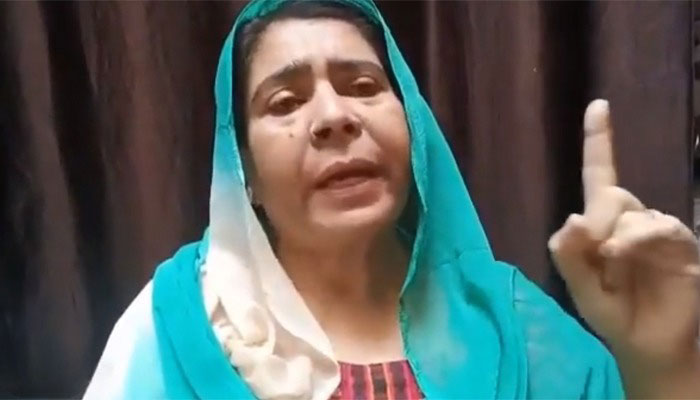
On April 18, Aligarh Police filed a case against Samajwadi Party leader from Aligarh Rubina Khanum after she threatened Hindus for raising voices against loudspeakers in mosques. She said if they kept raising their voice against loudspeakers in mosques, Muslim women would recite Quran outside temples.
Aligarh Circle Officer Shwetabh Pandey, in a statement, said an FIR had been registered against Rubina for the alleged comments against a community in a viral post.
Uttar Pradesh | An FIR had been registered against a woman (Samajwadi Party leader Rubina Khan) over her alleged comments against a community in a viral post: Aligarh Circle officer Shwetabh Pandey pic.twitter.com/7CxEPVYefA
In a video statement, Rubina said, “A new war has started in our country against the loudspeakers in mosques. The Hindu miscreant groups like Bajrang Dal are threatening they would recite their Mantras and Hanuman Chalisa on loudspeakers. This is wrong. In the holy month of Ramzan, you are obstructing our religious practices.”
मस्जिदों से लाउडस्पीकर उतारे तो मुस्लिम महिलाएं मंदिरों के सामने पढ़ेंगी कुरान, सपा नेता रुबीना खानम की चेतावनी pic.twitter.com/B8j11elB1c
She added, “Loudspeakers are in both mosques and temples. They are following their religion. It is a matter of our religion. I want to tell these miscreants if they keep harassing us, Muslim women will take over the matter into their hands. We will sit outside the temples and recite Quran ‘peacefully’. We are not like you. We will recite Quran peacefully.”
She threatened Hindus that if they kept causing trouble in the name of loudspeakers, they would face the consequences. She further blamed the BJP government for creating communal tension between Hindus and Muslims. She said, “There is a temple nearby where I live. They play their Bhajan on loudspeaker. We did not object. Do not try to provoke the Muslim community. The Muslim women will take the matter into their own hands. We are not wearing bangles. Don’t underestimate us. Don’t play with our emotions.”
ABVP had announced Hanuman Chalisa recitation at 21 locations
Reports suggest that Hindu organizations in Aligarh had sought permission to recite Hanuman Chalisa over loudspeakers at 21 intersections. Rubina’s comments reportedly came after the announcement. On April 13, it was reported that Akhil Bhartiya Vidyarthi Parishad had submitted a request for permission but it denied by the administration.
‘We will cut off their hands’ Rubina’s controversial statement over Hijab row
This is not the first time SP leader Rubina has made a controversial statement. In February 2022, amid the Hijab row, Rubina had said, “Don’t make the mistake of thinking women are weak. If the self-esteem of our sisters and daughters is attacked, we will become the Queen of Jhansi and Razia Sultan and cut off their hands.” She further added those who were protesting against Hijab were ‘Raavan’ of Kalyug.
On Monday, the Hubballi police arrested 15 more people in connection with the Hubballi riots that occurred on Saturday night outside the Old Hubballi police station.
According to the reports, the Hubballi police have so far arrested 103 people, and all the accused have been remanded in judicial custody for 14 days.
The court has also sent Abhishek Hiremath, who is accused of allegedly posting “provocative” content on social media, to judicial custody till April 30. He was produced before the court by the Hubballi Police on Monday.
Abhishek’s counsel has moved an application for bail, which is likely to be heard on Tuesday. Meanwhile, the Hubballi police have given protection to Abhishek’s parents and have moved them out of the city, fearing possible attacks on them.
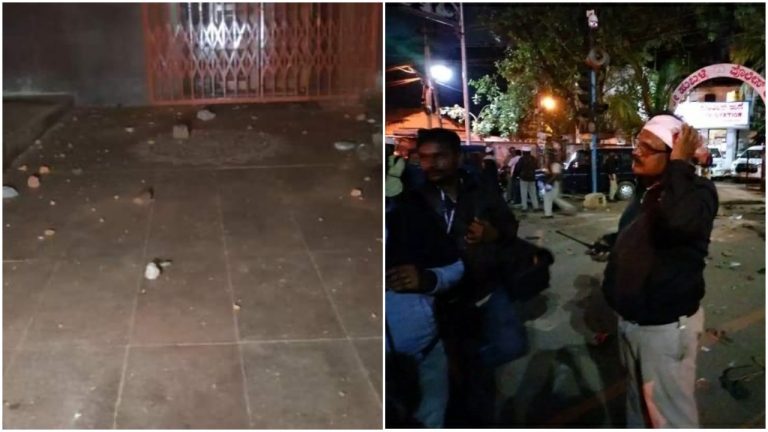
On Saturday, Abhishek was arrested by Hubballi Police on the charges of allegedly posting ‘derogatory content’ and ‘hurting religious sentiments’. The social media post had allegedly hurt the sentiments of the Muslims in the city. Angered over a social media post, the enraged mob had pelted stones at the old Hubli police station, a nearby temple, and a hospital.
Stone pelting by Muslim mob at Old Hubli Police Station. Injured 4 policemen including Inspector, mob also pelted stones on Hanuman temple and hospital
The Muslim mob had injured a few policemen and damaged several police vehicles, section 144 was imposed in the city to curb the violence. The police commissioner Labhu Ram had informed that four policemen, including one inspector, were injured during the violence.
Among the arrested is the husband of an AIMIM councillor from the city, the party run by Asaduddin Owaisi.
Following the attacks, the Chief Minister of Karnataka Basavaraj Bommai has hinted at a bigger conspiracy behind the attacks. He has suggested that the attacks could be pre-planned, and the organisations involved in the violence should remember that strict action will be taken against them for disturbing the law and order situation.
The violence at Hubli was not an isolated instance of stone-pelting in the country this Hanuman Jayanti. Similar events in different contexts occurred in Delhi’s Jahangirpuri and Andhra Pradesh’s Kurnool when Hanuman Jayanti Shobha Yatras came under stone-pelting attacks.
On April 17, a clash between two communities took place in Mumbai’s Aarey Colony after a ‘Kalash Yatra’ was attacked near a temple in Goregaon. The incident took place at around 8 PM when the Kalash Yatra was being taken out from the Shiva Temple located in Gautam Nagar. Everything was peaceful till it reached Aarey Colony in Goregaon East, where the clashes erupted. Video of the incident went viral on social media in which the two groups could be seen attacking each other.
Mumbai: Clash breaks out in Aarey colony during ‘Kalash Yatra’; 8 injured & 25 arrestedhttps://t.co/9oAOndkLI0
The Police rushed to the spot and controlled the situation. Additional Commissioner of Police Pravin Padwal said in a statement that 25 people had been arrested in the matter. He added the incident happened due to a ‘personal misunderstanding’. He said, “We have arrested 25 people, and the situation is peaceful now. The cause of the conflict was a personal misunderstanding. No one has been admitted. Some people suffered minor wounds. We have registered the case.”
DCP Somnath Gharge said, “Misunderstanding between the groups was the cause of the conflict. Nobody is admitted to the hospital. 2-4 people have sustained minor injuries. We have slapped the sections of rioting and 307.”
The Police patrolling has been increased in the area, and teams were looking for the other accused.
Section 144 imposed in Amravati
A similar incident took place in Amrawati after a saffron flag was hoisted at Dula Gate on the occasion of Hanuman Jayanti in Achalpur city of Amaravati. The administration imposed Section 144 to maintain law and order. ADSP Shashikant Satav said the Police arrested 16 people in the matter. Over 600 police officials were deployed to Achalpur-Paratwada twin city and Kundli village to avoid any clashes.
Communal tension in several states
Ram Navami Shobha Yatras on April 10 and Hanuman Jayanti Shobha Yatras on April 16 were attacked across several states. Violence was reported in Karnataka, Rajasthan, Madhya Pradesh, Odisha and Jharkhand on Ram Navami, while in Delhi, Uttarakhand and Andhra Pradesh, violence was reported during Hanuman Jayanti.
The Muslim mob pelted stones and attacked the devotees with swords and batons on different locations. In Delhi, shots were fired too.
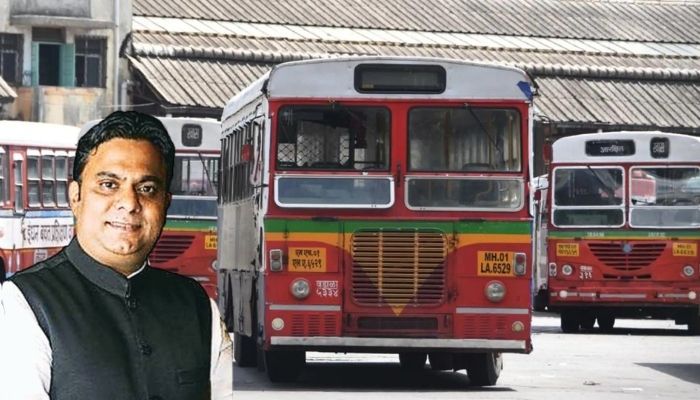
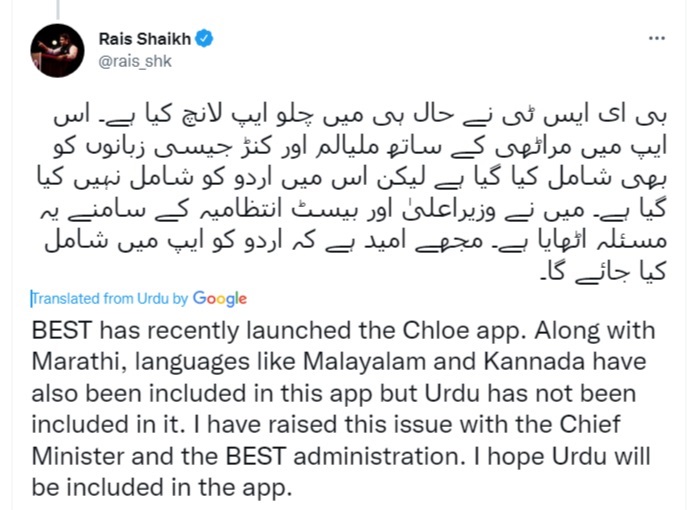
On Monday (April 18), Samajwadi Party leader Rais Shaikh wrote to Maharashtra Environment Minister Aaditya Thackeray, demanding the inclusion of the Urdu language in the ‘Chalo app‘ meant for booking BEST (Bombay Electric Supply & Transport) buses.
Shaikh, who is an MLA from the Bhiwandi East constituency, had also written to the BEST general manager Lokesh Manager about the matter. Citing sources, The Times of Indiareported that the BEST was looking into the ‘request’ made by the Samajwadi Party leader.
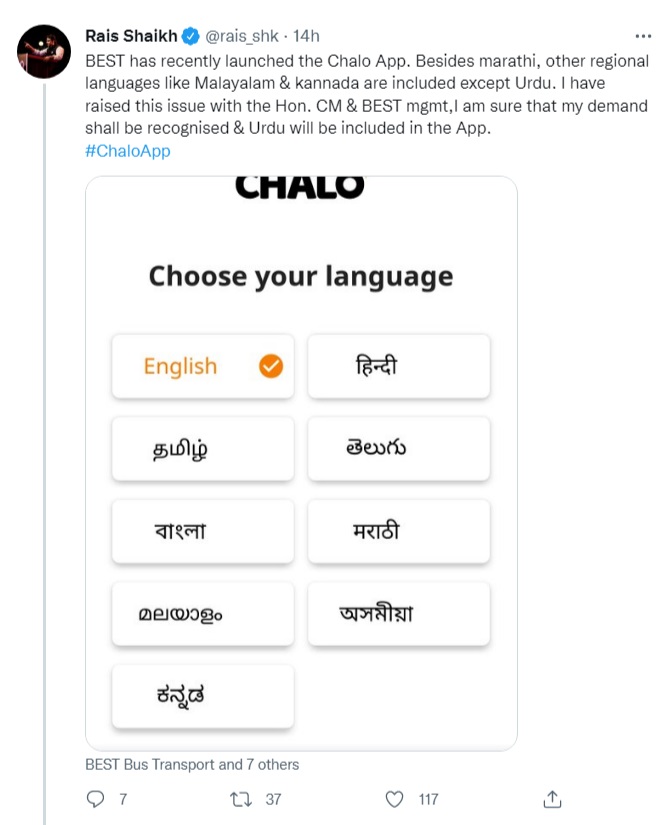
In a tweet on Monday, he remarked, “BEST has recently launched the Chalo App. Besides Marathi, other regional languages like Malayalam & Kannada are included except Urdu. I have raised this issue with the Hon. CM & BEST management, I am sure that my demand shall be recognised & Urdu will be included in the App. #ChaloApp.”
Screengrab of the tweet by Rais Shaikh
“BEST has recently launched the Chalo app. Along with Marathi, languages like Malayalam and Kannada have also been included in this app but Urdu has not been included in it. I have raised this issue with the Chief Minister and the BEST administration. I hope Urdu will be included in the app,” he posted in another tweet in Urdu.
Screengrab of the tweet by Rais Shaikh
Rais Shaikh further claimed that about 80000 students, who frequently used BEST buses for travel, are enrolled in Urdu medium schools run by the Brihanmumbai Municipal Corporation (BMC). “There are other private Urdu medium schools as well,” he added.
The demand made by the Samajwadi Party leader for the inclusion of the Urdu language in the Chalo app also received support from Muslim activists. One Irian Machiwala told The Times of India, “Many Muslims travel by BEST bus. It will be helpful for people who have studied in Urdu medium school.”
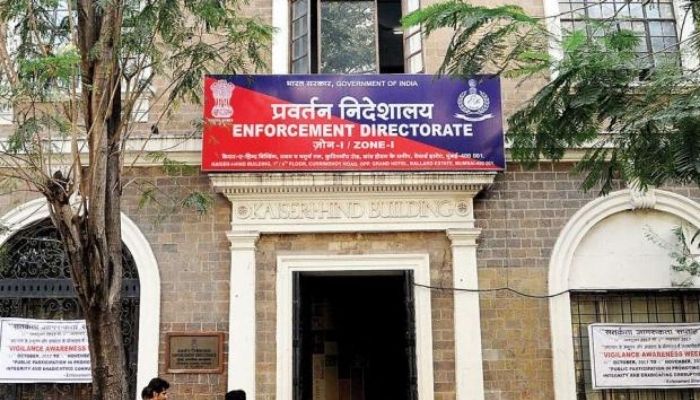
Recently, the Enforcement Directorate or the ED was in the news for attaching properties of various Maharashtra leaders and their affiliates after recording provisions of the Prevention of Money Laundering Act (PMLA) in different cases. On March 22, the ED provisionally attached immovable properties belonging to Maharashtra CM Uddhav Thackeray’s brother-in-law Shridhar Patankar worth Rs 6.45 crore.
Soon, properties belonging to Shiv Sena troubleshooter Sanjay Raut and his wife Varsha were attached in reference to the Patra Chawl land scam case. It was for tainted Nawab Malik of the NCP next, to find his properties including a 147.79-acre agricultural land in Osmanabad to be attached by the ED under the recent money laundering case against him.
As far as the common larger perception goes, one wonders whether the properties so attached can be accessed by the accused while the investigation is on. So what does the provisional attachment of a property entail – does it mean that the property is sealed during the course of the investigation? The intent to attach a property is to stop the accused from reaping the benefits from the asset. However, the accused can release the property through an application in courts or tribunals. Let us dissect what the law on the attachment of properties says by discussing questions that are often raised in the rough and tumble of the political discourse.
Provision of the law on the attachment of properties
The Enforcement Directorate has powers to provisionally attach a property as prescribed in Section 5(1) of the Prevention of Money Laundering Act, 2002 and the property concerned is to be confiscated by the Government in terms of Section 9 of the PMLA. To establish a crime for attaching a property, understanding the concept of ‘Proceeds of crime’ is important.
As per the latest amendment in 2019 via the Finance Act, the ‘proceeds of crime’ refers to “any property derived or obtained, directly or indirectly, by any person as a result of criminal activity relating to a scheduled offence or the value of any such property or where such property is taken or held outside the country, then the property equivalent in value held within the country”.
It has been clarified by the ED that any attachable property may or may not be directly obtained through means of a scheduled offence. The purpose of an ED attachment is to strip off the benefits to be incurred by the accused, while he/she holds the property as an asset. Until the judicial trial is complete, the property remains out of bounds for the accused until he is freed of all the charges. The law however has provisions for the accused to access the property by applying applications in High courts or tribunals.
Live properties such as shops, malls, restaurants, hotels, etc can continue to function even if the property is sealed. Commercial establishments can run even after the properties and attached while the law provides for the resting of operational profits with the ED. Upon this inclusion, businesses can go along sharing their profit with the government agency or can get a stay on this from the courts, based upon the outcome of the case.
What happens when properties are sealed?
Contrary to the popular understanding, Provisional attachment orders issued by the ED do not lead to immediate sealing of a property. Often the accused continues to live and enjoy his property while the matter remains pending in one court hearing after another. For example in 2018, when the ED had attached 50% of Congress leader P Chidambaram’s bungalow in New Delhi’s Jor Bagh, his family continued to enjoy the property until an eviction notice was sent to his son, Karti Chidambaram, who in return has secured legal protection against the notice.
The ED order for attachment of property is valid for 180 days for confirmation by the Adjudicating Authority under the PMLA. If the action of attachment is not approved by the Adjudicating Authority or the Government, the property is automatically released. If the attachment is approved, then the accused has a window of 45 days to challenge the ED action in the Appellate Tribunal followed by the higher courts.
What happens to the assets when they are attached for a long time?
Attached properties may remain locked for years, and their condition may start deteriorating. One may witness many jerkwater attached properties lying alone in the city, often in high-end areas. The provision for maintenance of such properties has not been highlighted yet in legal parlance. When vehicles are attached, they are parked inside the Central Warehousing Corporation. While cases continue for years, vehicles keep rotting inside the warehouses, the parking fee of which is paid by the ED.
On April 18 (Local Time), billionaire Elon Musk said on Twitter that if he manages to acquire the company, he will slash the company’s board salary to $0. He said, “Board salary will be $0 if my bid succeeds, so that’s ~$3M/year saved right there.” Musk was replying to Gary Black of The Future Fund LLC, who had said the reason behind the board not accepting Musk’s offer was that the company pays them hefty annual salaries that clock to anywhere between $250,000 to $300,000 per board member. Notably, the board members own next to no stock in the company.
Board salary will be $0 if my bid succeeds, so that’s ~$3M/year saved right there
Replying to another post, Musk had roped Jack into the conversation where a Twitter user Chris Bakke had pointed out that the board members own almost zero stock in the company. Musk wrote, “Wow, with Jack departing, the Twitter board collectively owns almost no shares! Objectively, their economic interests are simply not aligned with shareholders.”
Wow, with Jack departing, the Twitter board collectively owns almost no shares! Objectively, their economic interests are simply not aligned with shareholders.
Interestingly, Twitter founder Jack Dorsey has been posting cryptic messages every now and then. In a recent post, he endorsed a tweet that read, “Good boards don’t create good companies, but a bad board will kill a company every time.” There are assumptions that Jack took a dig at the current board of directors at Twitter. In 2008, he was removed from the post of CEO. Jack is also planning to leave the board by the end of this year.
To a comment on his endorsement that read, “If look into the history of the Twitter board, it’s intriguing as I was a witness on its early beginnings, mired in plots and coups, and particularly amongst Twitter’s founding members. I wish it could be made into a Hollywood thriller one day,” Jack replied, “it’s consistently been the dysfunction of the company.”
it’s consistently been the dysfunction of the company
Musk’s colleagues have jumped in his support. David Sacks, a South African entrepreneur and partner of Musk’s at X.com, said on Twitter that poison pills should be illegal. He said, “Every company run by a weak management team should be in play.”
Poison pills should be illegal. Every company run by a weak management team should be in play.
Recently, Elon Musk made an offer to take over Twitter and make it private. He said the company has a lot of potential, and he could help Twitter in using it better. However, the Twitter Board decided not to accept the offer and opted for the Poison Pill. It is noteworthy that though the Poison Pill is in place, it is not possible for the Twitter Board to stop Musk from acquiring the company.
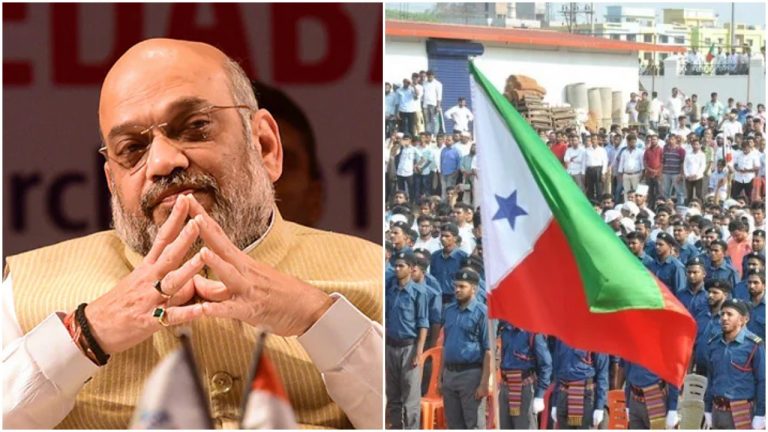
On Monday, the Ministry of Home Affairs clarified that certain media reports about a meeting to decide on banning the notorious radical Islamic organisation Popular Front of India (PFI) were inaccurate.
A few days ago, there were reports in the media that the centre was considering banning the radical Islamic organisation Popular Front of India (PFI), an organisation accused of instigating riots and violence in many states in the country. The reports suggest the Modi government will decide on the ban next week.
The reports had suggested that the Ministry of Home Affairs has adequate proof paving the way for this organisation to be blacklisted. Solicitor General Tushar Mehta informed the Supreme Court in April 2021 that the Centre was in the process of banning PFI.
The PFI is already outlawed in numerous states, but the government intends to ban it through a centralised notification. This group, which was founded in 2006, has come under scrutiny for its suspected involvement in a variety of anti-social and anti-national actions.
However, according to the latest clarification by the Home Ministry, no such meeting has taken place to decide on a ban on PFI.
Ministry of Home Affairs says that media reports about a meeting on banning of PFI is inaccurate. No such meeting has taken place today.
Popular Front of India (PFI) is an outgrowth of the Students’ Islamic Movement of India (SIMI), which was proscribed in 2001 following the 9/11 terror attacks in the United States, according to the NIA dossier. The NIA used the fact that the same people had served on the boards of both organisations to buttress its argument. Meanwhile, according to the ED’s investigation, this group was crucial in generating funding for anti-CAA protests.
In 2020, six members of PFI’s political branch, the Social Democratic Party of India (SDPI), were arrested in connection with the attempted murder of RSS activist Varun Bhoopalam. They also planned to assassinate Chakravarthy Sulibele, a renowned right-wing ideologue, and Bengaluru South MP Tejasvi Surya. There is a mountain of evidence pointing to PFI’s direct role in the anti-Hindu Delhi riots in 2020.
Also, on April 14, when violence erupted during Ram Navami processions in Goa, Gujarat, Rajasthan, Madhya Pradesh, Jharkhand, and West Bengal, MP BJP chairman VD Sharma claimed that the PFI was responsible for rioting and stone-pelting in Khargone, prompting a curfew.
After the National Investigation Agency (NIA) submitted to the Home Ministry a thorough dossier listing the Islamic group’s suspected ties with terror-related instances that the agency had examined, calls for a ban on the Popular Front of India gained new traction in 2017. The NIA had placed the PFI, and its political branch, the SDPI, as suspects in the Bangalore blast case, the Kerala professor palm-chopping case, and Kerala love jihad case, among other cases, in its dossier.
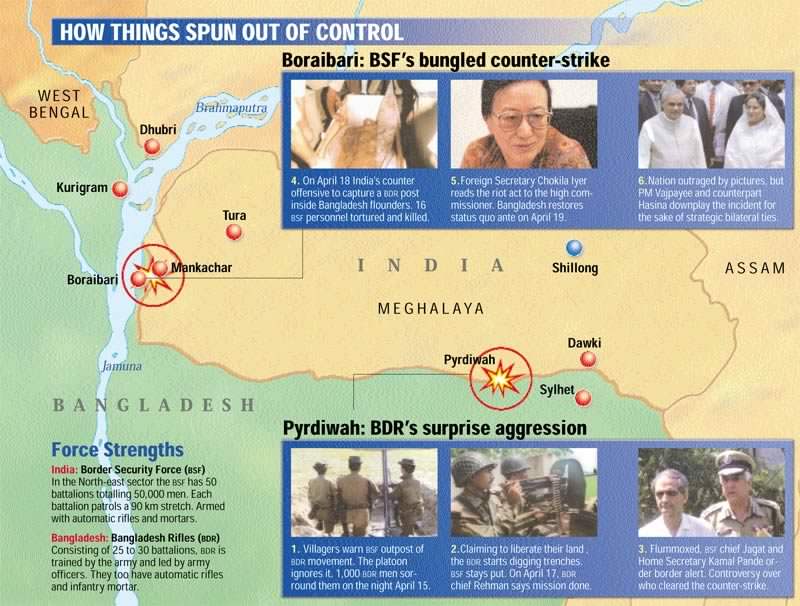
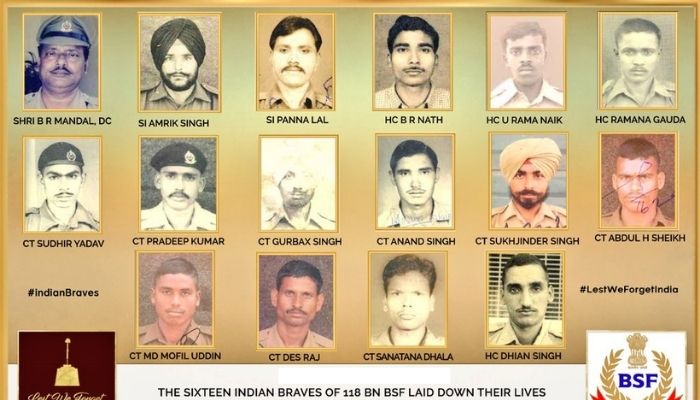
On the fateful day of April 18, 2001, about 16 jawans of the Border Security Force (BSF) were brutally killed by the troops of the Bangladesh Rifles (BDR) and a frenzied mob of locals. The incident took place in the Boraibari village in Kurigram district in the Rangpur Division of Bangladesh.
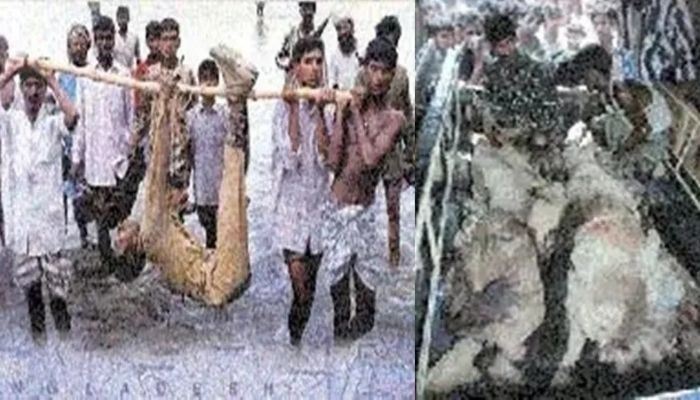
The Indian jawans were tortured, and their bodies were mutilated beyond recognition. The body of one of the BSF officers was hung from a pole, tied with ropes and ferried around like a dead animal. Some of them were shot through their eyes.
When the bodies of the BSF jawans were handed over to the Indian authorities, they showed visible signs of mutilation and torture. Most of them were shot dead at point-blank range.
The adventurism of Bangladesh Rifles in Indian territory
India and Bangladesh share a 4,096 km long border, which was marked by the presence of large enclaves (Chitmohols) and counter enclaves until the historic Land Boundary Agreement of 2015.
Till then, India was in possession of 71 Bangladeshi enclaves while Bangladesh was in possession of 102 Indian enclaves. The two sides had disputes over the territorial rights of some of the enclaves and stretches of land alongside the border.
Bangladesh had staked its claim on the Indian village of Pyrdiwah (also called Padua), which is located in the East Khasi Hills district of Meghalaya. While border skirmishes between the BSF and BDR (now Border Guards Bangladesh) were not a new phenomenon, things spiralled out of control on April 15, 2001.
About 1000 troops of the erstwhile Bangladesh Rifles intruded into the Indian territory in the hopes of capturing Pyrdiwah. Although the act of aggression took the Indian Border Security Forces by surprise, the contingent of 31 jawans posted at the site held their ground.
In a day’s time, three additional companies (more than 300 BSF personnel) were deployed in Pyrdiwah. Despite a flag meeting, the Bangladeshi troops refused to recede and demanded that the BSF show proof that the village belonged to India.
When the Indian side showed them the papers, the BDR escalated their demands and sought original documents. All the while, the Bangladesh Rifles made it clear that were carrying out orders from Dhaka.
Screengrab of the magazine excerpt of India Today
While speaking to The New Age about the Bangladeshi adventurism in Pyrdiwah, the then BDR Director-General Falzlur Rahman had said, “During the liberation war in 1971 we had a training camp in Padua in Sylhet which Indian forces occupied until 2001.”
He had claimed, “BSF was constructing a road linkage between their Padua camp in our land and another camp of theirs 10 kilometres away during 2001, through the no man’s land and lands in our possession. I started sending ‘situation reports’ to the home ministry, but did not get any response.”
“I went through the laws and found that BDR can construct temporary operational camps in the sovereign lands of the country. Having no response from the government, our soldiers went there to acquire possession of the land by setting up three temporary camps to cordon BSF’s Padua camp on April 15 and 16 of 2001,” Rahman had informed.
Indian response and the ‘unplanned’ Boraibari siege
“Hundreds of people living in villages around the Meghalaya-Assam-Bangladesh trijunction, who had left their homes following the clashes, are yet to return. Meghalaya Chief Minister Mowlong said that the State shared a long border with Bangladesh and its people often suffered owing to disturbances on the border. An end to this problem was essential, he said. The Meghalaya government is providing food and relief materials to villagers who had to leave their homes because of the border disturbances,” the Frontline had reported.
Patrolling was increased in the immediate aftermath of the Bangladeshi troops’ intrusion into the Indian territory. Gurbachan Jagat, who was the then Director-General of BSF, had issued an alert and said, “If they could suddenly get belligerent in Pyrdiwah, there was no way of ruling out similar incidents elsewhere.”
Meanwhile, the Border Security Force was chalking out plans to retaliate and capture a post located, deep within the Bangladeshi territory in Boraibari. A contingent of 50-60 BSF personnel, belonging to the 118 Battalion, entered the Boraibari village on April 18, 2001. They were led by Deputy Commandant BR Mondol.
India Today had reported that the choice of the post was wrong, given that Boraibari was not an ‘adverse possession’. Although the village was inhabited primarily by Indians, the Borabari residents were said to be antagonistic to India over alleged civilian killings.
“The BSF’s relationship with local residents is poor as they come in the way of smuggling, a prime source of livelihood for villagers on both sides of the border. Besides, most families in that area are part of a single extended family, separated by a line on the map which is difficult to define. To them, those guarding the ‘border’ are keeping families apart. The Indian side is certainly more vigilant in this matter and in the last five years almost a hundred villagers have died in BDR-BSF conflicts,” wrote Afsan Chowdhury in Himalmag.
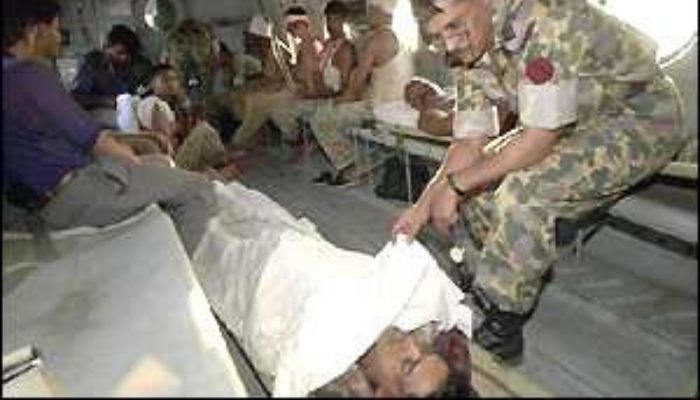
Injured Bangladeshi soldier, image via BBC
The village had no clear demarcations unlike Pyrdiwah and lay next to the Assam border, separated by only a fence. Whether 118 Battalion Deputy Commandant BR Mondal was taking orders from the Ministry or acting on his own still remains unclear.
In the words of Gurbachan Jagat, “I asked for intensive patrolling. Crossing the fence was not part of the brief.” Reportedly, Mondol split the BSF contingent into 3 groups and led only one of them. His contingent had a total of 16 men. The 118 Batallion did not anticipate the chain of events that followed.
“Mondol had neither the numerical strength nor the firepower or the communication back-up that is crucial to counter-attacks. Mondol and the party walked through a gate along the fence and took a nullah to reach Boraibari. They were totally unprepared for what followed,” read a report in India Today.
The brutal killings of Indian jawans
The Indian jawans were discovered by the residents of Boraibari village. Announcements were made on loudspeakers by the local mosque that the villagers were in danger at the hands of the Indian forces.
The mosque authorities had incited the locals to gather, which in no time surrounded the BSF personnel. Aided by Bangladesh Rifles, the locals snatched away the wireless sets and weapons from the jawans.
According to BSF Director-General Gurbachan Jagat, the BSF personnel could have fired in self-defence but they are trained to not attack civilians. It is believed that Mondol felt that he could handle the situation, given that he was a Bengali.
India Today had reported, “But the rule changes if there is a life-endangering situation like the one in which the BSF men found themselves. Why did the party not try and send out a wireless message to warn their seniors? “Mondol probably felt that being a Bengali, he could handle it himself,” says a BSF officer.”
BSF jawans martyred in Boraibari massacre, image via Twitter/LestWeForgetIndia
According to a report in the Frontline, the BSF opened fire on a BDR camp while the latter gave the impression that none was stationed at the camp. “But they struck when the BSF moved closer to the camp. With the help of quick reinforcements from nearby border posts and the support of the people of the village, the BDR launched a full-scale counterattack.”, it said.
“Heavy exchange of fire continued for more than two days, forcing nearly 10,000 people to flee their homes. The bodies of BSF men were lying in the paddy fields for more than two days as the fight continued. The people recovered several bodies from the fields and handed them over to the BDR later. Two injured BSF men were flown to Dhaka by helicopter for treatment,” the report added.
The Indian jawans were brutalised and tortured in an inhumane manner and their bodies were mutilated and paraded like animals. Following the diplomatic intervention, Bangladesh Rifles withdrew from Pyrdiwah village on April 19, 2001, and handed over the bodies of martyred BSF Jawans on April 20 of that year.
India’s response to the Boraibari massacre
In the aftermath of the Boraibari massacre, the Indian government’s angst was directed toward the Bangladesh Rifles instead of the Sheikh Hasina government. The then Foreign Minister Jaswant Singh had remarked, ”It is now up to the government of Bangladesh to act against the perpetrators of these crimes and restore confidence and trust.”
Given that the Hasina government had been historically friendly to India and general elections in Bangladesh were near, New Delhi was cautious about its criticism of the Bangladeshi Prime Minister.
This, however, gave an opportunity for Sheikh Hasina to downplay the Borabari massacre and claim that the Bangladesh Rifles killed the Indian troops in self-defence. While she avoided tendering an apology over the brutal killing of Indian jawans, she had claimed to conduct an independent probe into the matter.
“It is well within our rights to review the relationship (between the two countries) if Bangladesh does not punish the perpetrators within a reasonable time,” Minister for State ID Swami had said.
Former Indian high commissioner to Pakistan, G. Parthasarthy, had even hinted at the Pakistani hand in the matter. “It could be Pakistan’s plan to open another front on India’s eastern sector in order to divert Indian troops from Kashmir where the passes will be opening shortly,” he told India Today.
The Indian government paid homage to the martyred BSF jawans and announced ₹10,000 to every family affected by the intrusion of Bangladesh Rifles in Pyrdiwah, ₹2 lakh for the reconstruction of the village church and school. At the same time, the government also announced new 15 TV sets for BSF posts on the border with Bangladesh.
The National capital’s Jahangirpuri area was marred with violence on the occasion of Hanuman Jayanti when a mob of fanatics pelted stones and fired shots at Hindu Devotees taking out the Shobha Yatra to mark the occasion. Several Hindu devotees and police personnel were injured during the course of the attack.
One of the Hindu devotees named Umashankar Dubey, who was amongst those injured in the brutal attack, spoke to Aaj Tak and described the ferocity exhibited by the Islamist mob.
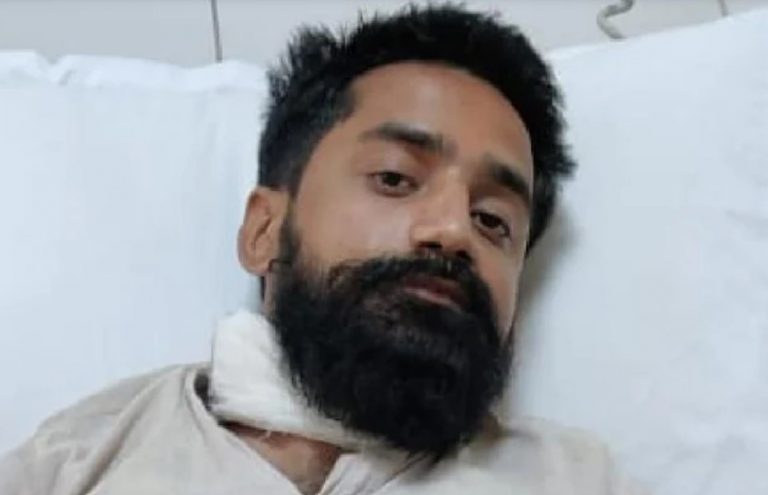
The rampaging mob hit Umashankar Dubey, who was leading the Shobha Yatra, with a sword on his neck, leaving him critically injured. He is currently undergoing treatment in a Delhi hospital.
Speaking to Aaj Tak, Umashankar said that the riots began at around 5:30 pm on April 16, 2022. Intially, a mob of 70-80 fanatics began protesting. Within minutes, the crowd started to swell, recalled Umashankar, adding that before people in the procession could even realize it, a volley of stones and bottles began to rain down from the roofs of nearby houses.
Umashankar stated that Ansar was present in front of the mosque in C block with 60-70 people at the time. Ansar told his aides not to spare anyone taking part in the procession.
He further added, “I told Ansar that these people are unarmed and that he should not harm them, but Ansar retaliated by saying that they will have to pay for what they did”. The victim stated that Ansar was talking about a three-month-old incident in which Ansar threatened Bajrang Dal workers at a Hanuman Chalisa recitation event. Ansar then threatened the Bajrang Dal workers with dire consequences if they did not stop such activities.
Umashankar added how the names of Munna Bengali, Arif, Rafi, and Alam were mentioned during the violence. He added that most of the rioters were Bengali Muslims.
It may be recalled that the owners of small shops in the Jahangirpuri area, who were also targeted in the violence that followed the stone-pelting, had also claimed that the Rohingyas and Bangladeshi Muslims were responsible for the crimes that took place in the area. The shop owners said that they are fed up with the criminal activities of the Rohingyas and Bangladeshi Muslims who are living in the surrounding area.
Recalling the horror, Umashankar further said that the Islamists had struck him on his neck with a sword, that left him soaked in blood and writhing in pain. The police present there had rescued him and pulled him into their van, but Umashankar got down again to rescue his fellow devotees. “I took my workers from the back alley to save them from the rabid Islamists, but we were greeted with a volley of stones and chemical filled bottles,” said Umashankar recalling how the Islamists had attacked them during the violence.
The matter de-escalated only after the police arrived, said Umashankar, while lying on the hospital bed.
Earlier in the day, OpIndia had spoken to locals regarding the violence. H Block resident Dinesh told OpIndia that such incidents were not new for Jahangirpuri.
He said there had been several major incidents in the area that were not even discussed in the media. He mentioned how young boys are seen harassing women. He claimed several Hindu women have been raped in the area and when they try to file a complaint, the Police starts harassing them. He further claimed that a woman in Jahangirpuri was raped for 15 days some time ago. He further added that Hindus never disturb the Muslims during their Muharram processions and every year Muharram processions happen without any incident.
Dinesh termed the stone-pelting incident on Hindu devotees a conspiracy and said Police personnel have been beaten up several times in Jahangirpuri. He added that even small children carry knives and commit crimes in the area.
Jahangirpuri riots
On April 16, Islamists attacked Hanuman Jayanti Shobha Yatra in Jahangirpuri, Delhi. Several people were injured, including police personnel. So far, 40 people have been arrested by the Police in the case, including prime accused Ansar and Aslam. There have been allegations that Ansar is an Aam Aadmi Party member, and the party is yet to respond to the same.
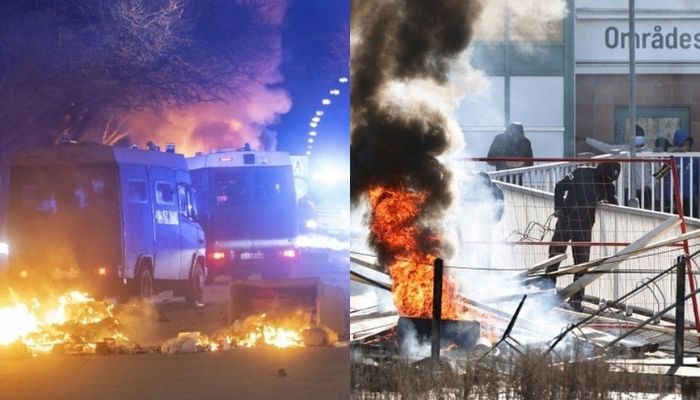
Riots roiled cities across Sweden after Danish anti-immigration party Stram Kurs on April 14 announced to burn a copy of the Quran. On the next day, i.e Friday, nine police officers were injured after a violent mob attacked the police and engaged in arson attacks in the city of Orebro in central Sweden.
The clashes and rioting that followed the Quran-burning demonstrations have come up as a challenge before the nordic country in maintaining peace and law and order while diplomatic concerns have also been raised by International Islam over the issue.
Following the primary skirmishes that erupted in Orebro and Linköping, the city of Norrkoping saw Police officers firing warning shots at rioters on Sunday. The violence across cities in Sweden was sparked after the chief of the Danish anti-immigration party, Rasmus Paludan decided to burn a copy of the Quran in the Muslim-dominated neighbourhood of Linkoping. Citing blasphemy, resident Muslims in large numbers in the city square to protest.
Far-right Danish politician Rasmus Paludan burned a copy of the Holy Quran in a neighbourhood in Sweden’s Linkoping, which is densely populated by Muslims, on April 14.
While he was burning the Quran under police protection, the crowd shouted at Paludan pic.twitter.com/4G1V1cSq79
The protest resulted in stone-pelting on the police while the mob also carried out arson attacks. Vehicular movement was closed down over some roads in the Muslim-dominated neighbourhood of the city. Apparently, the rioters broke through police cordons and set four vehicles on fire, in the violence that followed in Orebro. On Monday, the Swedish police said 26 police officers and 14 civilians had been injured in the violence and that more than 20 vehicles had been damaged or destroyed. Rasmus Paludan, a Swedish politician has vowed to burn down the Quran again while he is touring the country to gather political support.
Response of Middle East countries on Quran burning in Sweden
Responding to the violence, Sweden has been attacked by Muslim countries, especially the Islamic countries in the Middle East, over the acts of ‘deliberate provocation’ against Muslims by senior political leaders in the country. Saudi Arabia, in a statement, has condemned the act of burning the holy book in Sweden saying, “deliberate abuse of the holy Quran by some extremists in Sweden, and provocation and incitement against Muslims”.
Earlier, Iraq’s foreign ministry summoned Sweden’s charge d’affaires (deputy ambassador), Hakan Rooth over the incident. In a strong condemnation, Iraq said that the incident “bears grave implications on Sweden’s relations with all Muslims.” In Tehran, on Monday, The Foreign Ministry of Iran too condemned the ‘sacrilegious move’ of burning the Quran under the ‘pretext of freedom of speech and with the support of the Swedish police.’ Iran called for immediate and decisive action by the Swedish government to end any desecration of the Holy Quran furthermore.
The event was responsible for “defiling of the sanctities of more than two billion Muslims of the world and hurting their feelings as the worst form of abusing freedom of speech,” Iran’s letter to the Swedish diplomat said.
Arrest by the authorities
More than 40 people have been arrested after the clashes that followed between Muslim protestors and the Police in Sweden. Eight people were arrested in Norrkoping whereas 18 people were detained in the neighbouring city of Linkoping where the protests emerged for the first time.
The incidents of stone-pelting against Police forces and civilians have emerged as a common feature worldwide during the month of Ramzan. India saw stone-pelting at a Police station in Hubli, Karnataka over an alleged outrage over a social media post. On Sunday, Palestinian extremists threw stones to block Jewish visitors at Temple Mount at a bus near Jerusalem’s Old City.