Home Blog Page 3464

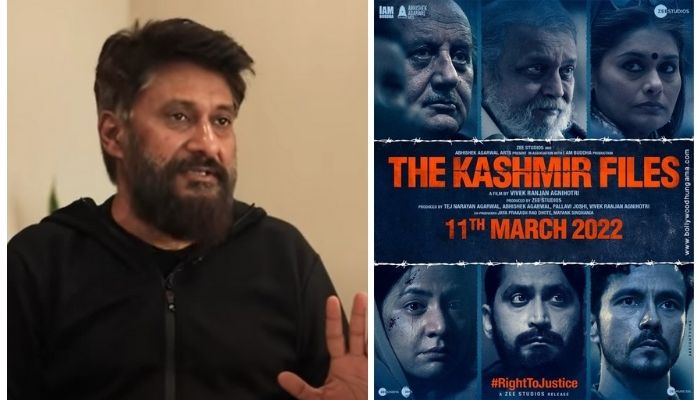
Leading OTT platform wanted The Kashmir Files to not use the term ‘Islamic Terrorism’ or insert ‘Hindu terrorism’ in dialogues, Vivek Agnihotri reveals

Filmmaker Vivek Agnihotri’s multi-starrer ‘The Kashmir Files’ which aims at capturing the authentic stories of The Kashmiri Hindu Genocide in a cinematic way, is all set to hit the screens on March 11, 2022. The movie trailer has caught the nerve among the audiences on the internet whereas the special screenings of the film in Jammu and Delhi witnessed standing ovation from the audience with an outpouring of emotion.

In a detailed interview with OpIndia CEO Rahul Roushan, The Kashmir Files director Vivek Agnihotri talked in length about the process of making the film, the challenges his team faced and how he made sure that the film gets a theatrical release. Agnihotri also described how leading OTT (Over-the-top) platforms work inside a restricted framework of certain ideologies and how it affected ‘The Kashmir Files’ when a platform approached him to release the film on OTT instead.

At around 27 minutes into above video while talking about how fixed narratives are peddled while making films in the industry, Vivek Agnihotri narrated an incident from 2020 when the Head of a leading OTT platform in the country approached him to release ‘The Kashmir Files’ on his platform. The rise of Covid-19 cases meant the complete closure of public spaces like cinema halls. This made even big banner production houses ditch the theatrical release and instead feature their films on platforms like Netflix, Amazon Prime, Disney+ Hotstar, Sony Liv, Zee 5, etc.

Vivek Agnihotri said, “What I am saying here can be verified. The head of one-of-the most talked about OTT companies was keen on buying the film at a very vulgar price. If I were a typical commercial-minded filmmaker, I would have signed the deal there itself.”

However, Vivek was taken aback when the executive asked him in open on whether any specific adjective was used for terrorism which is talked about in the film. According to Vivek, the executive asserted, “We have a global policy that we do not use the term ‘Islamic terrorism’ in any of our films. I hope you are not using that.”

“How is this even possible? When the calls of Ralive, Tsalive, Galive (Convert to Islam, leave the valley or die) were given, it was nothing but Islamic terrorism. The calls of converting to Islam, Raj Karega Allah (only Allah will rule) were openly given.” Vivek replied staunchly. He further added, “This was not the case of targeting political opponents telling people to leave the valley because they don’t agree with their ideology. This was also not a case of cultural targeting alone where say the celebration of festivals like Diwali was opposed.”

“The incitement against Hindus was clear and so was a message to them – either convert or flee and those who did not budge were killed. The calls threatening Hindus to leave the valley while leaving their women were also given. Alongside Hindus, Sikhs were also killed in the genocide only because of their religion and not because of their economic stature as suggested by journalists like Barkha (Dutt),” said the filmmaker while describing the genocide of Hindus that unfolded in the Kashmir valley in the 1990s.

“It is like making a film on The Holocaust without mentioning Nazi Germany and Hitler. So who killed the Jews,” Vivek Agnihotri asked. To this proposition, the OTT company head replied, “It is also true that Muslims were also killed. So then, you will have to use the term ‘Hindu Terrorism’ as well.” Agnihotri said that he told the OTT executive that the Muslims who were killed during genocide were not killed by Hindu terrorists but by Islamic terrorists for calling out the genocide and standing by the Hindus.

‘This is how a control is created with a one-sided narrative,” he added and said that they eventually left the office of the OTT platform. Though Vivek Agnihotri didn’t directly name the OTT platform, he hinted that its head directly admitting about the platform not doing well in Indian markets. Incidentally, Netflix CEO Reed Hastings had recently confessed in public about the slow growth of the video streaming company in the Indian market.

The ideological isolation of the film is not restricted to limiting its release but has also resulted in film critics like Anupama Chopra seemingly sabotaging the film before its release. NDTV was caught tweaking the SEO settings by calling The Kashmir Files a ‘propaganda film’ months before its release. The film has also landed into legal troubles with certain people wanting to stall its release.

When asked by a fan about why The Kashmir Files was not featured on the popular The Kapil Sharma Show aired on Sony TV, Agnihotri said his team was not invited because the film did not have a ‘big commercial star.’

Going beyond the economic and ideological isolation or be it the legal battles in front of the film’s release, Vivek Agnihotri reiterated that he has made The Kashmir Files because he has faith in his audience. “I respect the intelligence of the audience. Even The Tashkent Files and Buddha in a Traffic Jam were made out of respecting the audience’s intelligence. I sensed that only the people would get the film,”

The Kashmir Files is set for its theatrical release on March 11, 2022. The film stars Darshan Kumar, Anupam Kher, Mithun Chakraborty, Pallavi Joshi, Chinmay Mandlekar and Bhasha Sumbli in lead roles.

‘Pure fiction and work of a rogue individual’: Actress Sonakshi Sinha dismisses reports of non-bailable warrant against her

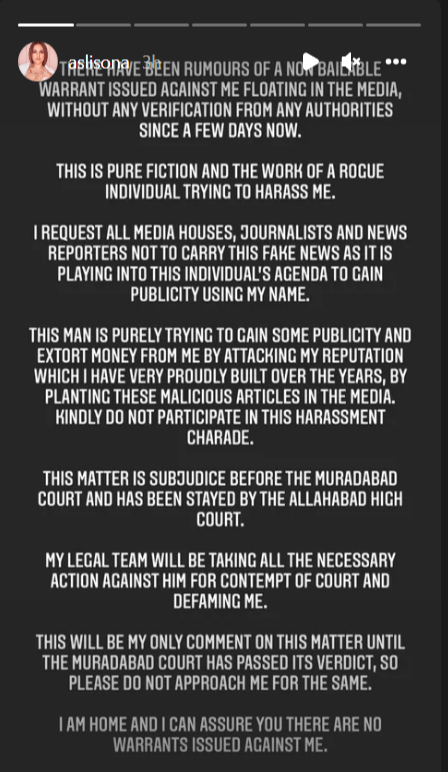
Two days after it was reported that a non-bailable warrant had been issued against Sonakshi Sinha in connection to a fraud case, the Bollywood actress has dismissed the media reports as ‘rumours.’

In an Instagram story posted on Tuesday (March 8), Sinha wrote, “There have been rumours of a non-bailable warrant issued against me floating in the media, without any verification from any authorities since a few days now. This is pure fiction and the work of a rogue individual trying to harass me.”

She further added, “I request all media houses, journalists and news reporters not to carry this fake news as it is playing into this individual’s agenda to gain publicity using my name.”

The Bollywood actress claimed that the unnamed man has been trying to gain publicity at her expense and extort money from her by tarnishing her image. She has requested the media to not fall prey to the accused’s nefarious plans.

While rejecting ‘rumours’ about any warrant against her, she said, “This matter is subjudice before the Muradabad court and has been stayed by the Allahabad High Court. My legal team will be taking all the necessary action against him for contempt of court. This will be my only comment on this matter until the Muradabad Court has passed its verdict…”

She has asked the media to respect her privacy and reiterated that there are no warrants against her.

Media reports about non-bailable warrant against Sonakshi Sinha

Reportedly, Sonakshi was signed for the ‘India Fashion and Beauty Awards’ event for which she charged a whopping amount of Rs. 37 lakh. As per media reports, event organiser Pramod Sharma asked the ‘Dabangg’ actress for his money after she failed to attend the event.

The award show was organised by Sharma at Delhi’s Siri Fort Auditorium on September 30, 2019. For the event, Sonakshi was approached through Abhishek Sinha, operator of Talent FullOn Company and Exeed Entertainment. In the deal, ₹28,17,000 was paid to Sonakshi Sinha in four instalments in June whereas Rs. 5 lakh was paid to the company as commission.

After a written agreement, the actress had shot promotional videos for the event but did not turn up for it finally. Sharma alleged that Sonakshi’s manager refused to refund him the money. He even tried to reach the actress multiple times but did not get a reply from her side.

SC to hear PIL seeking VVPAT verification at the beginning of counting, rejects urgent hearing request by Chandrababu Naidu

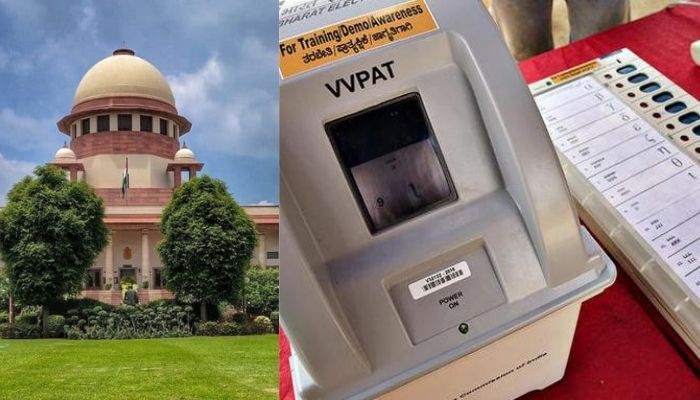
The Supreme Court on Tuesday has agreed to hear a PIL by an RTI activist seeking that VVPAT slips be verified before counting the votes of assembly elections which is scheduled on March 10, 2022. The PIL filed by The RTI Activist Rakesh Kumar has been listed before the court as a matter of urgent listing and will be heard before the court tomorrow on March 9.

Senior Advocate Meenakshi Arora mentioned the PIL before the Chief Justice of India for urgent listing for tomorrow as the counting of votes in five states which underwent assembly elections is due on March 10, just a day ahead. Chief Justice N V Ramana questioned the timing of the PIL and stated that it has put pressure on the court to issue a direction within very little time. He asked, “If you come at the last minute, how can we help? The counting is the day after tomorrow. Even if we hear this tomorrow, can we issue such a direction?”

To this, Adv. Arora replied that there is no point in verifying the Voter Verified Paper Audit Trail (VVPAT) slips before the counting as at that time election agents would not be present. However, she asked whether the Election Commission can be asked to be present tomorrow for a hearing. Following this CJI Ramana agreed, “Let the Election Commission of India be here tomorrow, let us see what can be done”, CJI said.

Rakesh Kumar in his application has sought that the number of polling booths where mandatory VVPAT verification is done should be increased from 5 per constituency to 25 or in proportion to the size of the constituency. In his petition, he contended that during the last round of counting of votes, counting the VVPAT paper slips of the 5 randomly selected polling stations is not properly done after the candidates and/or their agents become aware of the outcome of the elections.

The VVPAT is a process of providing automated feedback to voters using a ballotless electronic voting machine (EVM). In 2019, when the then Andhra Pradesh CM N Chandrababu Naidu submitted a writ petition in the apex court over the suspicion in the accuracy of the EVMs, The SC had directed the Election Commission to increase the physical VVPAT verification from 1 to 5 booths per constituency.

SC rejects urgent hearing petition of Chandrababu Naidu

As per the latest reports, the SC has declined to urgently hear a petition filed by former Andhra CM N Chandrababu Naidu seeking a change in the procedure of VVPAT verification ahead of the March 10 counting.

The EVM hacking bogey

As soon as the possible outcomes of the elections are out, opposition parties in India start levelling allegations about the accuracy of EVMs. Minutes before the Delhi assembly elections of 2020, Congress veteran Digvijaya Singh accused that the EVMs can be tampered with to get desired results out of elections. In 2021, when the first phase of Assembly elections in Bengal was about to start, the TMC raised the EVM issue claiming that the votes are being automatically transferred to the BJP.

It is amply clear by now that the ‘Tempering of EVM’ toolkit continues to repeat itself every time an opposition party looms over the fate of losing elections. When a similar petition was raised before the SC demanding 100% VVPAT verification in the 2019 Lok Sabha elections, the court dismissed it saying, “We won’t entertain such a plea over and over again. Can’t come in the way of people electing their representatives. Let country elect its government.”

It is notable here that even after repeated allegations and an open challenge thrown by the Election Commission of India to prove how the EVMs can be hacked, not a single opposition party has ever been able to provide a shred of actual evidence to support their claims.

IT Dept raids premises linked to Aaditya Thackeray’s close aide Shiv Sena leader Rahul Kanal

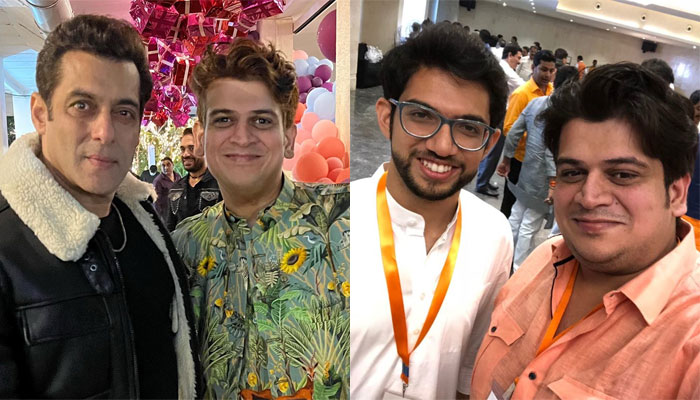
On March 8, the Income Tax department has initiated fresh raids at premises linked to Rahul Kanal, a Shiv Sena leader and others at Bandra and Kandivali in Mumbai. Kanal is a close aide of Maharashtra minister Aaditya Thackeray as well as actor Salman Khan and has often participated in events linked to Khan and his organization, Being Human.

He has been seen multiple times with Shiv Sena leader Aditya Thackeray on several events, such as Christmas celebrations last year.

The IT department has initiated the searches in connection to the alleged tax evasion case of Yashwant Jadhav, chairman, standing committee, Brihanmumbai Municipal Corporation (BMC). Kanal is a member of the education committee of BMC, a core member of Yuva Sena, and a trustee at Shri Sai Baba Sansthan Trust, Shirdi. IT department has also conducted raids at the premises of Bajrang Kharmate, deputy regional transport officer (RTO) and Sadanand Kadam, a cable businessman.

IT department had raided premises linked to Jadhav on February 25, where they found benami properties worth 130 crores. The department said a few BMC contractors were raided as well, and undisclosed income worth Rs 200 crores were unearthed. They also found evidence of alleged nexus between Jadhav and other contractors.

Kharmate, who was also raided on Tuesday, made it to news earlier when he was called by Enforcement Directorate to record a statement as Sachin Waze, dismissed Police Officer, had named him in a statement in a money laundering case linked to ex-home minister Anil Deshmukh. Waze had claimed to have overheard about the exchange of Rs 40 crores, half of which went to Singh via Kharmate and the rest were sent to Deshmukh. However, no evidence was found by the investigating agency for the alleged transfer of money to Singh or Deshmukh.

Tamil Nadu: DMK minister PK Sekar Babu’s daughter seeks police protection from her father after inter-caste marriage

On Monday, Jaikalyani, daughter of Tamil Nadu state Hindu Religious and Charitable Endowments Minister PK Sekar Babu wrote to the Bengaluru Police Commissioner Kamal Pant seeking protection from her father. Jaikalyani said that she and her husband, Satish Kumar are receiving death threats from her father.

According to the reports, PK Sekar Babu is a close aide of CM MK Stalin and has been opposing the relationship of his daughter with Satish Kumar. Jaikalyani, in the memorandum submitted to the Commissioner stated that her father had arrested Satish Kumar and took him into custody for two months after they both had attempted to marry each other earlier. Reports mention that Satish Kumar belongs to the Dalit community and is a driver by profession.

In September last year, the couple had first tried to get married. Satish Kumar also had released a video where he had said that he and Jayakalyani were in a relationship for six years. “PK Sekar Babu got to know about us in January, 2021. We didn’t speak for a while. But later, we started talking again and in August, we ran away together from Chennai. I’m scared now. There are threats to my family from Sekar Babu,” he had said.

“I suspect the role of my father behind this. I am an adult. We both love each other and have got married,” Jayakalyani was quoted. She added that she and her husband are receiving threats that if they return to Tamil Nadu they might have to give up their lives. She also stated that she ran away from her home as PK Sekar Babu had forced her to get married to some other person whom she did not like.

It is important to note that the DMK government has always encouraged inter caste marriages. The government had last year thought of reintroducing the Anjugam Ammal Memorial Intercaste Marriage Assistance scheme. The original scheme was introduced in 1967 to encourage inter caste marriages and later renamed after Anjugam Ammaiyar, the mother of the late DMK supremo, M Karunanidhi.

The DMK govt had also offered monetary aid to those from the Adi Dravidar or Scheduled Tribe communities marrying outside their castes. The scheme didn’t exclude Christians or Muslims either.

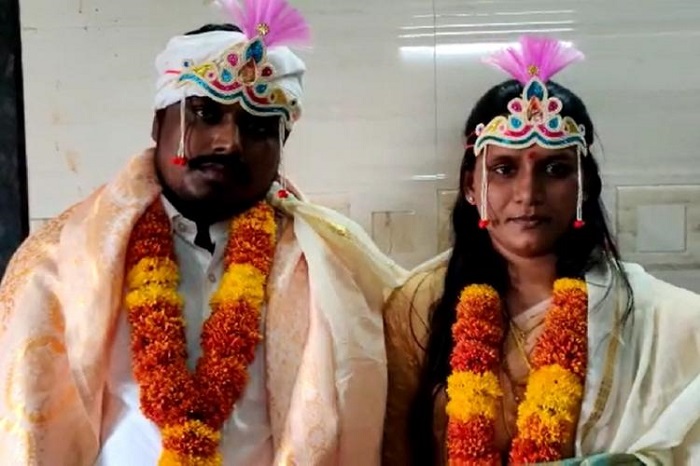
Jaikalyani and Satish Kumar got married as per the Hindu traditions. Reports mention that a Hindu organisation helped them in the process after they were approached by the couple on social media. The couple has requested the Bengaluru Police to provide security to the couple, the Hindu organisation said.

Taliban extends greetings to Afghan women on International Women’s Day, promise facilities in ‘light of Islam and accepted tradition’

The Taliban government in Afghanistan have issued a statement on International Women’s Day, claiming they are committed to addressing the plight of Afghan women. In the statement that is being widely shared on Twitter, the Taliban in Afghanistan, who are known for institutionalising large-scale gender-based discrimination and violence against women, wished all the Afghan women on International women’s day.

Abdul Qahar Balkhi, the spokesperson of the Ministry of Foreign Affairs of the Islamic Emirate of Afghanistan Tweeted on International Women’s Day (IWD), which is celebrated globally on March 8 every year. “May the #8thMarch #InternationalWomensDay be auspicious for all women,” Tweeted MoFA spokesperson, IEA.

Wishing that this day “be auspicious for all women”, the statement read, “Protracted war in Afghanistan has been extremely detrimental for women. IEA (Islamic Emirate of Afghanistan) is committed to addressing the plight of Afghan women and providing facilities for an honourable and beneficial life in the light of the noble religion of Islam and our accepted traditions”.

The statement issued by the Taliban on the occasion of International women’s day

Given the Taliban’s long history of gynophobic misogyny, the statement is quite ironic. When the Taliban ruled Afghanistan from 1996 to 2001, they were infamous for violating women’s rights. As a result, when the Taliban retook control of Afghanistan on August 15 of last year, Afghan women’s rights activists were suspicious that the new rulers would be any different than the Taliban who had previously ruled the country, despite their promises to uphold women’s rights.

Since the hardline Islamist group took over the country on August 15, the Taliban had been under pressure from the international community, which has generally halted assistance for Afghanistan, to commit to safeguarding women’s rights.

As a part of its broader campaign to provide a more moderate face and seek global legitimacy, the Taliban had also announced that they have relaxed their stance on women and would respect their rights in accordance with the Islamic Sharia.

However, seven months after the Taliban took control, Afghan women’s long-held worries have become a terrible daily reality. The Taliban, in its 7 months of ruling, has closed most girls’ secondary schools, created barriers to women and girls pursuing higher education, banned co-education terming it as the ‘root of all evils in society’, banned music and the employment of female employees in the local radio stations, banned women from most paid employment, abolished the Ministry of Women’s Affairs, restricted women’s movement, including preventing them from leaving the country alone, dismantled Afghanistan’s system that provided protection from gender-based violence, and created barriers to women and girls accessing health care.

Earlier, there were reports that the Taliban gangs are targeting children as young as 12 during their hunt for sex slaves since they took over Afghanistan. Women and girls are among the most at-risk Afghanis under the new Islamist regime after the Jihadist organisation launched a door-to-door search for sex slaves.

In fact, in the month of August last year, OpIndia reported how an Afghan woman was reportedly set on fire by Talibanis for “bad cooking”, and many others are being forced into sex slavery.

In the same month, Khatera, 33, who had fled to India last October after being shot 8 times by the Taliban that eventually rendered her blind, made harrowing revelations about the terror outfit that has now suddenly pivoted on its stance on women, promising to respect the rights of women, although with a caveat that they should conform to the Islamic Sharia Law.

In her interview with News 18, Khatera said the Taliban not only tortured and killed women but even fed their dead corpses to dogs.

CMIE’s Ajay Shah, a close aide of Congress leader P Chidambaram, under CBI scanner in NSE co-location and algo trading scam: Details

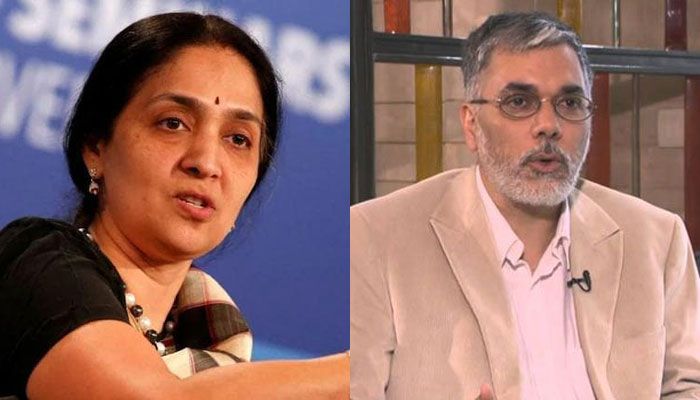
The Central Bureau of Investigation (CBI) has examined Ajay Narottam Shah, a close aide of former Finance Minister and Congress leader P Chidambaram in 2018 co-location and algorithm scam. Currently, Shah is serving as a research professor. He was named in a May 2018 FIR in the co-location and algorithm scam. During UPA’s tenure, Shah had served as a consultant to the Ministry of Finance, the Centre for Monitoring Indian Economy, and the Indira Gandhi Institute for Development Research.

In its investigation, the investigating agency has found the former National Stock Exchange (NSE) MD and CEO Chitra Ramakrishna had provided confidential data to Ajay Shah and Infotech Financial Services while being fully informed that the firm was providing software to the brokers. Notably, Sunitha Thomas, sister-in-law of Ajay Shah, is the director of Infotech Financial Services. Thomas is the wife of Suprabhat Lal, who was then-senior vice president of NSE.

Back in 2009-10, NSE had contracted Infotech Financial Services to develop software. Shah provided assistance in developing the software ‘Chanakya’, which was used by the brokers. These brokers had access to a secondary server from where they got data before the other brokers in a co-location facility. In 2018, CBI mentioned that Shah had collected NSE trade data during 2005-06 under the pretext of doing research. He played a vital role in exploiting NSE TBT architecture and provided support in developing the algo software using his research data which was illegal.

When the scam was exposed in 2015, SEBI, in its investigation, had found that Shah was in an official contract on data sharing with NSE after 2012. Earlier, he and his wife collected the data presenting themselves as researchers. Chitra Ramkrishna and other NSE officially categorically denied sharing any data with Shah. However, Shah had informed SEBI, and he and his wife were signatories to a data-sharing agreement with NSE. The then-Chief Technology Officer of NSE, Ravi Apte, had also told SEBI that he had facilitated data transfer to Shah based on the agreement. He also claimed Ravi Narain, former MD of NSE and Ramkrishna, had requested the data transfer to Shah.

CMIE and its links to Congress

Ajay Shah is one of the directors at the Centre for Monitoring the Indian Economy or CMIE. Its surveys and data are often used by Congress and opposition parties to target the central government. In 2019, CMIE had come up with pessimistic estimates of “jobs” in India even though the country was seeing a steady 7% growth and reports had suggested in 4 years, 18 million jobs were created in the transport and professional sector alone.

The co-location scam – what we know so far

Since 2018, CBI has been probing the co-location scam against a stockbroker based out of Delhi. First of all, it is essential to understand what are co-location facilities. These are dedicated spaces with pre-installed infrastructure, including bandwidth, power supply etc., that a third party can take on lease to carry out high-frequency and also trading. These are often used by traders to either set up their system or trade in the stock market.

In 2009, NSE started providing co-location services. Notably, NSE was charging a hefty amount for these services, making it possible only for a handful of traders to opt for co-locations. Because of their close proximity to the stock exchange servers, the traders got quick access to the price feed, i.e. the buy and sell quotes resulting in quicker trade and high profits.

In the co-location scam, it was alleged that some brokers who were in contact with the insiders took advantage of NSE’s data delivered a ‘first come, first serve basis to make profits. Known as the ‘tick-by-tick’ data feed that would provide the brokers connected to NSE server that has the least load would get quicker information about buy/sell order, order modification, order cancellation etc., compared to other traders who would connect to the server later. In the stock market, the difference of milliseconds in obtaining the data and reacting on it means a huge difference in the profit share.

Due to the fact that brokers connected to the server via co-location facilities were getting information earlier than the other brokers, unlike the broadcast where everyone gets information at the same time, they made huge profits going against the market regulations. The whistleblower who informed the agencies about the alleged scam said that a trader agency named OPG Securities was able to spot the server with the least load with the help of insiders at NSE’s IT department and got connected to NSE servers before other brokers. It was alleged multiple IPs were addressed to a single server to access the first two to three connections making the stream crowded for the other traders.

The Securities and Exchange Board of India (SEBI) initiated a probe in the matter in 2015. SEBI first set up a cross-functional team to investigate the case. The Technical Advisory Committee at SEBI recommended bringing in an expert committee. A report was submitted to SEBI in 2016, and it was revealed NSE violated the norms and benefitted a handful of brokers.

Initially, NSE dismissed the allegations and did not take any step to find out if there was a possible scam. Later, SEBI instructed the NSE board to initiate an investigation by an external agency. NSE was further instructed to the revenues from co-location services and from fibre connectivity in an escrow account. Since the revelation was made into the scam, SEBI has tightened the regulations and addressed concerns linked to algo trading and co-location facilities.

SEBI fined Chitra Ramakrishna Rs 3 crore, NSE, Anand Subramanian, former Group Operating Officer (GOO) and Rabi Narain (former MD and CEO) were fined Rs 2 crore each and V R Narasimhan, CRO and compliance officer, was fined Rs 6 lakh. SEBI restricted Ramkrishna and Subramanian from associating with any market for three years. Narain was restricted for two years from associating with any market. Further restrictions were imposed on NSE to ensure such scams do not happen in future.

A few weeks ago, CBI had arrested Subramanian, and on March 6, Chita Ramkrishna was arrested in the scam case. Ramkrishna was sent to CBI custody for seven days for interrogation.

The case of mysterious ‘yogi’

During the investigation, CBI came to know about a mysterious Himalayan “yogi” who was in touch with Ramkrishna. She had shared classified information with the so-called Yogi, and he was providing personal and professional guidance to her, allegedly including the NSE’s matters. Initially, it was believed Subramanian was the Yogi, but later SEBI, in its final report, rejected the claim. Chitra used to say the alleged Yogi had supernatural powers and he could appear at any place at will. It was also alleged Chitra had appointed Subramanian on Yogi’s recommendation and later promoted him to the board of directors.

Russia declines to attend the hearing at the International Court of Justice on its invasion of Ukraine

On Monday, The International Court of Justice was hearing the plea by Ukraine on the allegations of genocide against Russia under the Convention on the Prevention and Punishment of the Crime of Genocide, 1948. However, the hearing saw no representative from the Russian side after seats from the Russian delegation were seen empty.

On February 24 while declaring war on Ukraine, Russian President Vladimir Putin said in his televised address, “The purpose of this operation is to protect people who, for eight years now, have been facing humiliation and genocide perpetrated by the Kyiv regime,” Contesting this claim, Ukraine filed an application with the International Court of Justice accusing Russia of “planning acts of genocide in Ukraine” on February 27, 2022.

In a hearing to Ukraine’s application that followed yesterday, the Russian side refused to appear to the top UN court in Hague. Russian ambassador to the Netherlands (where ICJ is located) informed the court that his country will not be participating in the due hearing. What followed was Ukraine contending its application by ’emphatically denying’ the claims by Russia of Kyiv targeting the regions of Luhansk and Donetsk and accused Russia back of perpetrating a ‘genocide’ by targeting Ukrainian nationals in its act of invasion.

The Permanent Ukrainian representative Anton Korynevich said, “the Russian Federation has falsely claimed that acts of genocide have occurred in the Luhansk and Donetsk oblasts of Ukraine, and on that basis recognized the so-called ‘Donetsk People’s Republic’ and ‘Luhansk People’s Republic’, and then declared and implemented a ‘special military operation’ against Ukraine,”

He went further to accuse Russia of the same by saying, “Russia is intentionally killing and inflicting serious injury on members of the Ukrainian nationality, the actus reus of genocide under Article II of the [Genocide] Convention.” With the application, Ukraine also filed a request for the indication of provisional measures against Russia.

ICJ expresses regret over Russia’s boycott

Joan Donoghue, President of the ICJ expressed concerns over Russia’s absence from the proceedings. Donoghue stated that the Federation of Russia was sent certified copies of the application by Ukraine and its request for the indication of temporary measures. She remarked that according to Article 74 Paragraph 1 of the rules of court, a request for the indication of provisional measures shall have priority over all other cases.

Russia has however dismissed the grievances of the court by not turning up at the ICJ hearing. Amidst the undergoing geopolitical crisis, fate has loomed over the possibility of Russia complying with any orders issued by the International Court of Justice.

What is the Genocide convention in the ICJ?

In a move to counter Russia, the Ukrainian side has referred to the Convention on the Prevention and Punishment of the Crime of Genocide, 1948 in its case in the ICJ. Signed by both Ukraine and Russia, the Article IX of the Genocide Convention gives rights to the International Court of Justice in Hague to resolve disputes between contracting Parties concerning the interpretation, application, or implementation of the Convention. It is an international treaty signed by over 152 countries till date, that criminalizes genocide perpetrated by state actors and obligates state parties to enforce its prohibition.

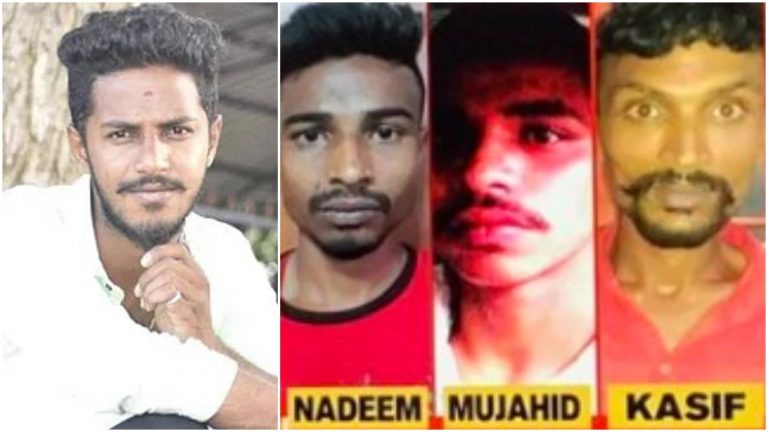
Karnataka: Police invoke UAPA charges against Kasif and 9 others accused in Harsha murder case, suspect a ‘larger conspiracy behind the murder’

The Karnataka police have pressed charges under the stringent Unlawful Activities (Prevention) Act, 1967 against the persons arrested in connection with the murder of Bajrang Dal activist Harsha. The 26-year-old Harsha was brutally hacked to death near Kamat Petrol Pump on NT Road in Shivamogga, Karnataka on February 20 over a Facebook post in connection to the hijab controversy.

UAPA is invoked in cases involving threats to national security and national integrity. Since the Karnataka police are “suspecting a larger conspiracy behind the murder” of Harsha it has decided to invoke UAPA against the accused namely, Mahammad Qasif (Kasif), Syed Nadeem, Rihan Sharief, Asif Ullah Khan, Abdul Afnan, Nihan, Faraz Pasha, Abdul Khadar Jilan, Abdul Roshan and Jafar Sadiq. 

Under the UAPA, police gain custody of a suspect for 30 days and have 180 days instead of 90 days to file a charge sheet. The law’s stipulations also make it difficult for an accused person to obtain bail.

Moreover, there are possibilities that once the local police investigation is completed, the government may turn the case over to the National Investigation Agency (NIA).

The police said that after the investigation team completed its probe it handed over the accused to judicial custody. The police took the ten accused into their custody and interrogated them for 11 days until Monday, March 7.

Harsha was stabbed to death by a gang of Muslim youths on the night of February 20 near Kamat petrol bunk in the Shivamogaa district of Karnataka. He was a tailor by occupation and hailed from Seegehatti. Harsha was a member of the Hindu organisation Bajrang Dal, and was seen sporting saffron shawls to demand uniformity in the dress code of schools and colleges.

A friend of the Bajrang Dal activist claimed Harsha had been under surveillance for the past few weeks and that the murder was a “well-planned plot.” Harsha’s friend, who requested anonymity, said the Bajrang Dal activist had also received multiple calls from unknown numbers.

The cold-blooded murder of the Bajrang Dal activist had provoked a wave of protests across the area, forcing the district administration to impose a curfew and close educational institutions.

People on social media, too, had expressed their anger at the heinous murder of the Bajrang Dal activist. Hashtag #JusticeForHarsha trended on social media platforms as support for the murdered Harsha poured in. From actress Kangana Ranaut and Raveena Tondon to BJP leaders and prominent members of the society expressed their anger over the cold-blooded murder.

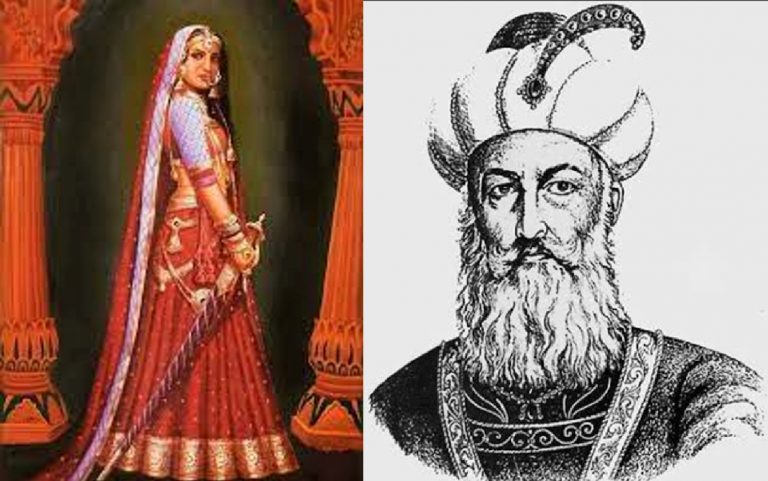
Did you know: Chalukya Queen Rani Naiki Devi had once defeated Islamic marauder Muhammad Ghori in the battle of Kayadara

We hear stories about the bravery of kings again and again. However, our queens and princesses have never shied away from displaying their heroism and gallantry in order to stand for our country. In search of India’s richness and splendour, several foreign countries ventured to gaze up to the land of India. Thousands of valiant sons and daughters of this land responded appropriately to all foreign powers’ invasion attempts.

However, the amount of information the laymen have about heroic men in India doesn’t match that of brave women. It is critical that we understand and appreciate the contributions of women to our country and society. Be it Queen Velu Nachiyar of the South, Queen Abbakka, or the queen of Jhansi, who fought against the British, we know much about them but there are many who still don’t find their place in history textbooks and movies or TV serials.

On this Women’s Day, we will explore the tale of a queen who not only displayed otherworldly bravely in forcing Islamic invader Mohammad Ghori to flee but also exhibited remarkable benevolence in sparing his life. Naiki Devi, a queen from Gujarat, not only oversaw the affairs of the empire but also ended up fighting against external invaders.

Who was Rani Naiki Devi?

Rani Naiki Devi was the daughter of Mahamandaleshwar Parmadi, the king of Kadamba. Naiki Devi possessed a wide range of abilities, including horse riding, archery, combat skills, and weapon-wielding. Raja Ajaypal, the Solanki ruler of Gujarat (also known as the Chalukyas), married her. Raja Ajay Pal’s reign was short-lived since he died only four years after ascending to the throne. Mulraj II, the son of Naiki Devi and King Ajay Pal, was installed on the throne, but Rani Naiki Devi remained to govern the empire as Raj Mata.

Aspirations of Muhammad Ghori

Muhammad Ghori invaded India between 1175 CE and 1206 CE, capturing Multan (1175), Punjab (1179), Peshawar (1180), Sialkot (1185), and finally Delhi (1192). After capturing Multan in 1175, Muhammad Ghori planned to strike India in search of wealth. Soon after, he led a major army march to Uch in Pakistan’s Punjab province’s southernmost district. From there, he was able to traverse the desert and begin his journey towards Anhilwara (capital of Chalukyan Kingdom). At the time, Gujarat and Rajasthan were part of the Chalukyan kingdom.

Ghori was obviously confident that the Chalukyas were susceptible to invasion since they lacked a monarch. Because he had a significantly greater army at his disposal, he considered the Hindu queen as weak and easily conquered.

When Rani Naiki Devi learned that Ghori planned to invade her by crossing the desert and landing in her capital city of Anhilwara, she appealed to nearly all neighboring Kingdoms for help in preventing the invasion and safeguarding the kingdom. She did get help from Chalukyan nobles including the leaders of the Naddula Chahamana, Jalor Chahamana, and Arbuda Paramara clans.

The Battle of Kayadara (1178): Ghori Vs Rani Naiki Devi

Naiki Devi realized that her preparations were insufficient to defeat Mohammad Ghori. So, she devised a battle strategy that would benefit her soldiers. She picked Gadarghatta, a rugged region in the slopes of present-day Mount Abu, as the battlefield. This was in the vicinity of Kasahrada village. This location is in the Sirohi district of modern-day Rajasthan.

She picked the terrains because she knew Ghori’s army was full of experienced warriors, including steppe nomads who were outstanding archers and superior armored cavalry. Ghori and his warriors, in addition to having a technological edge, were motivated by religious enthusiasm and were passionate about eliminating non-Muslims and transforming the entire territory into an Islamic land.

Ghori’s army was unfamiliar with the narrow hill passes of Gadaraghatta, giving Naiki Devi and her allies a significant advantage and balancing the odds in a superb maneuver. As a result, when Ghori and his army came, she rode into combat with her son on her lap, leading her troops.

The rest is all history now. The small Chalukyan army and its troop of war elephants routed the invading force, which had previously defeated Multan’s formidable sultans. The Rajput war elephants were armored and lined up like mountainside steel. They crushed the morale of Ghori’s seasoned armored cavalry.

Ghori’s performance in the battle was a colossal failure. He fled the battlefield with a few of his men to save his life.

His pride had been crushed, and he never attempted to conquer Gujarat again. Instead, he turned his attention to the more susceptible Punjab, intending to penetrate north India through the Khyber Pass.