Home Blog Page 3544

ED seizes assets worth Rs 48 lakhs from journalist Rajeev Sharma in Chinese espionage case

0

On Saturday, the Enforcement Directorate (ED) attached assets worth Rs 48.21 lakh of freelance journalist Rajeev Sharma, who also worked with The Quint, in connection with a case under the Official Secrets Act.

According to the reports, a money-laundering investigation has been initiated against Rajeev Sharma. His Delhi’s Pitampura- based residential property has been seized by the authorities and his assets have been booked under the Prevention of Money Laundering Act (PMLA), 2002.

The Enforcement Directorate had arrested freelance journalist Rajeev Sharma in July 2021 for supplying confidential and sensitive information to Chinese intelligence officers in exchange for remuneration.

The Delhi Police also has filed an FIR against Sharma and charged him under the provisions of the Indian Penal Code, 1860 and the Official Secrets Act, 1923. The initial probe revealed that Sharma had supplied confidential and sensitive information to the Chinese intelligence officers, in exchange for remuneration, thereby compromising the security and national interests of the country.

The further investigation by the ED pointed out that Sharma was being provided money by a Mahipalpur-based shell company that was run by Chinese nationals, Zhang Cheng aka Suraj, Zhang Lixia aka Usha and Qing Shi, along with a Nepalese national named Sher Singh alias Raj Bohara.

Reports mention that the said Chinese company was acting as a conduit for the Chinese intelligence agencies to provide remuneration to Rajeev Sharma. The remuneration was being paid in cash through carriers as well as through cash deposits. Rajeev Sharma also received money using the bank account of his friend in order to conceal his involvement in criminal activities, the agency said.

The freelance journalist had earlier worked with United News of India, The Tribune, Free Press Journal, Saakaal and others as a journalist. As a journalist, Rajeev Sharma was covering defence and foreign affairs for around two decades. He had written several columns for the Chinese newspaper Global Times, the mouthpiece of the Communist Party of China for the last several years. He had also written columns with left-wing publications such as The Quint, DailyO etc.

‘Jan Ki Baat’ opinion poll: 56% favour Yogi Adityanath as UP Chief Minister, AAP may win Punjab

Ahead of the upcoming Vidhan Sabha polls in Uttar Pradesh, Uttarkhand and Punjab, polling agency ‘Jan Ki Baat‘ in association with India News published an Opinion poll for the three key States on Saturday (January 15).

The Jan Ki Baat Opinion poll survey for the State of Uttar Pradesh was conducted between December 22 last year and January 10 this year. A total of 20,000 people participated in the survey, between the age groups of 18-35 years (30%), 35-45 years (45%) and 45 years+ (25%). As per the findings, the BJP is set to grab an estimated 39-40% of the total votes and between 226 to 246 seats in an Assembly of 403.

Opinion poll survey suggests that the Samajwadi Party (SP) will be the runners-up with 144-160 seats and a vote share of 34.5-36%. It also estimates that BJP will win 50 out of 86 seats reserved for the Scheduled Castes (SCs), followed by Samajwadi Party (32 seats) and BSP (4 seats).

Screengrab of the Opinion poll conducted by Jan ki Baat

About 56% of the participants want to see Yogi Adityanath as the Chief Minister of Uttar Pradesh. The other CM candidates in descending order of preference include Akhilesh Yadav (32%), Mayawati (9%) and Priyanka Gandhi (2%).

Besides the Jan Ki Baat survey also states that the key issues surrounding the elections include Caste/Religion (25%), Development (20%), Law and Order (20%). At the same time, about 85% of participants believe that PM Modi will draw votes for the BJP during the upcoming Vidhan Sabha polls.

Interestingly, around 45% of people opined that Yogi Adityanath must contest elections from the Mathura constituency while 15% suggested his bastion of Gorakhpur.

BJP may clinch Uttarkhand, AAP distant third

Jan Ki Baat conducted an Opinion Poll survey in Uttarkhand between December 21, 2021, and January 9, 2022. A total of 5000 people, belonging to age groups 18-25 years (18%), 25-30 years (22%), 35-45 years (40%) and 45+ years (20%) participated in the survey. The polls for Uttarakhand predicts a close contest, with BJP marginally ahead of Congress.

The findings suggest that BJP may clinch the elections with a 38% vote share (34-38 seats), followed by Congress with 36% vote share (24-33 seats). AAP is likely to bag 2-6 seats with a 13% vote share. If this prediction becomes true, a Congress-AAP alliance can happen to grab power in the state.

Interestingly, about 40% of participants have rated the performance of the incumbent BJP government as ‘Good.’ As per the survey, migration, development, health and education are primary election issues in the Uttarkhand Vidhan Sabha polls.

Screengrab of the Opinion poll conducted by Jan ki Baat

Opinion Poll suggests comfortable AAP victory in Punjab

With a sample size of 10,000 people, Jan Ki Baat conducted an Opinion Poll survey in Punjab between December 21, 2021, and January 11, 2021. According to the survey, AAP leads the race in Punjab with 58-65 seats (38-39%), followed by Congress with 32-42 seats (34.5-35%). Shiromani Akali Dal (SAD) is a distant third with 15-18 seats (19-20%), followed by the BJP with an estimated 1-2 seats (5-6% vote share).

An estimated 33.4% of respondents stated that the performance of the incumbent Congress government is poor while about 23.4% of them rated it as ‘good.’ The underlying issues of the Punjab election centre around inflation, development, unemployment and the drug epidemic in the State. Jan Ki Baat estimates that 48% of women voters will vote for AAP, followed by Congress, SAD and BJP.

Screengrab of the Opinion poll conducted by Jan ki Baat

On January 8, the Election Commission of India (ECI) announced the dates for the Vidhan Sabha elections in 5 States, namely, Goa, Punjab, Manipur, Uttar Pradesh and Uttarakhand. While briefing the media, Chief Election Commissioner Sushil Chandra informed that the elections in the poll-bound States will commence from February 10, 2022, to March 7, 2022.

Elections in the State of Uttar Pradesh will be conducted in 7 phases, followed by Manipur with 2 phases. Elections in Goa, Uttarkhand and Punjab will be conducted in a single phase. According to the Election Commission of India, the votes will be counted on March 10, 2022. ECI informed that all physical campaigning will be ceased until January 22, 2022, in light of the rising cases of Coronavirus.

Atmanirbharta in Indian Army: Indigenisation of defence manufacturing is helping to build a new and strong India

The foreign aggressions and wars remain in the collective memory of every Indian as a reminder of sacrifices made by our freedom fighters and soldiers. While we are indebted to the Indian army, Air force and Navy for protecting our sovereignty, integrity and national interests, the role of the Indian Army is paramount, keeping in mind that any confrontation with either neighbour – China or Pakistan – will be mainly fought by Indian ground forces. Thus, the Indian army plays a significant role in preventing the belligerence of enemies at our borders. For instance, in 2020, when we had witnessed Chinese aggression at Galwan valley, it was the Indian army who gave a befitting response to the Chinese aggression.

As rightly said by former Prime Minister Atal Bihari Vajpayee, “We can choose our friends but not our neighbours”, the possibility of aggression from China and Pakistan is unavoidable. Therefore, it is inevitable for India to strengthen and modernize its defence forces so as to prepare itself against any kind of expansionism, and cement its presence as a regional superpower in South Asia. Against this background, this article attempts to reflect on the indigenization process of the Indian Armed Forces, particularly the Indian Army.

While indigenization of the Indian Army is critical for national security, it also keeps intact the technological expertise within the borders and is evidently needed to boost the strategic capabilities. It also helps in employment generation and acts as a catalyst to nationalism and patriotism. It will not only solidify the trust and confidence of Indian forces but will also bolster a sense of integrity and sovereignty.  In this context, when we talk about Atmanirbhar Bharat, the legacy of Lokmanya Tilak’s economic nationalism is reflected in the initiative launched by Prime Minister Narendra Modi. Considering the vast potential of India in various sectors, this unique initiative, ‘Atmanirbhar Bharat Abhiyaan’ campaign not only aims to make India a self-reliant country from economic perspectives but in all spheres including defence.

In order to make this campaign more efficient and result-oriented, which ultimately helps in making India a manufacturing hub and self-sustained country, initiatives like Digital India Mission and Make in India are accelerating the desired changes in manufacturing sectors. Since the launch of this flagship campaign, the government of India has made several bold reforms in various sectors which also includes defence areas, to achieve self-reliance in defence manufacturing.

Against this context, the Ministry of defence has already scrapped multiple defence import projects in a bid to promote the Atmanirbhar Bharat initiative. These projects will be further provided to the Indian private defence manufacturers. This decision from the central government comes at a time when the Centre is finalizing the new Defence Production and Export Promotion Policy which will pave the way ahead for boosting defence production within the country and help facilitate their export to friendly foreign countries.

Besides, the Defence Ministry has also approved proposals worth Rs 7,965 crore for modernization of the Armed Forces under ‘Make in India’. Furthermore, Defence Ministry in its statement said, “All of these proposals (100 per cent) are under ‘Make in India’ with focus on design, development and manufacturing in India”. According to the Minister of Defence, Rajnath Singh, in the past seven years, India has exported defence-related products worth Rs 38,000 crore, now the government wants to achieve the defence export target of Rs 35,000 crore by 2024-25, adding that the country is exporting defence equipment to around 70 countries.

He further mentioned that the country will soon become a state-of-the-art technology provider not only for the Indian armed forces, but for the world. More recently, the Philippines has approved a $374.96 million contract for the purchase of a shore-based anti-ship variant of the BrahMos missile from India. This is the first export order of the BrahMos supersonic cruise missile system which is jointly developed by India and Russia.

If we talk about the indigenization of the Indian Army, the ongoing indigenization process is running at full pace. Earlier, India had stopped imports of 101 weapons and platforms including sniper rifles, towed artillery guns, surface to air missiles, howitzers, bullet-proof jackets, radar warning receivers, missile defence systems, helicopters among others. Under the able leadership of former Chief of Defence Staff late Gen. Bipin Rawat, the self-reliance in all three wings of Indian armed forces, air, naval and land was of utmost importance, he was a strong votary of self-reliant India and was instrumental in starting indigenous production of many arms and equipment within India.

The induction of Indian-made artillery and weapons is one of the key reasons behind the growth of the Indian defence manufacturing environment. Underlining the country’s progress in the field of indigenous production of defence systems and mechanisms, Chief of Army Staff, General Manoj Mukund Naravane said that the Indian Army has been undergoing full-fledged modernization and the Armed Forces have been increasingly looking at indigenous solutions for its operational needs. In December 2020, the Ministry of Defence cleared the induction of 180 Arjun Mark-1A tanks in the Indian Army. These battle tanks are indigenously produced by the Defence Research & Development Organization (DRDO).

In this regard, the Indian private companies are now getting the desired recognition in defence manufacturing. Companies like Larsen and Toubro, Bharat Forge and Mahindra are getting contracts from the government on a priority basis. Earlier, the defence wing of Larsen & Toubro had been awarded an important contract by the Ministry of Defence for the supply of four regiments of Pinaka weapon systems which have been already deployed at the China front, significantly strengthening the defence capabilities of the Indian Army. The TATA Group, Bharat Forge and Mahindra Defence are making heavy armoured protection vehicles for the Indian Army to ensure better mobility and protection for infantry soldiers.

The Indian Army has also ordered an advanced version of ‘SWITCH tactical UAV’ drone, indigenously developed by an Indian company, ideaForge. These specialized drones are made to operate in high altitude areas like Ladakh and Kashmir. Moreover, to give a further thrust to the Indian defence ecosystem, the State-owned Ordnance Factory Board (OFB) has been split into seven different companies which will work in seven different areas. It is pertinent to mention that the new Defence PSUs are 100 per cent government-owned corporate entities which will help in improving the country’s self-reliance in defence preparedness.

If the Indian government continues with the same spirit of modernizing the defence forces with the help of indigenization, it will certainly bring big changes on the ground, preparing the land force for any sort of threats posed by potential adversaries. Given the defence export potential of India, indigenization can also give a big boost to the Indian economy. The efforts of the involved stakeholders, policymakers and successful implementation of the self-indigenization campaign will be pivotal in realizing this dream.

It may be noted that with proper support and assistance of the Government, the manufacturers will be able to fulfil the demands of armed forces, and will also strengthen their position to confront the challenges/ threats effectively. As India is moving forward with the unique Atmanirbhar Bharat campaign, it can help facilitate the need of being battle-ready, even on any sort of sudden attacks. Undoubtedly, the concept of Atmanirbharta envisioned by PM Modi will certainly help to build a new and strong India.

Virat Kohli steps down as India Test captain following series defeat in South Africa

On January 15, Virat Kohli announced that he is stepping down as the captain of the Indian Test Cricket team, a day after suffering a defeat in the Test series against South Africa. In a statement released on his social media accounts, Kohli said, “Everything has to come to a halt at some stage and for me as Test Captain of India, it’s now.”

“There have been many ups and also some downs along the journey, but never has there been a lack of effort or lack of belief. I have always believed in giving my 120 per cent in everything I do, and if I can’t do that, I know it’s not the right thing to do. I have absolute clarity in my heart and I cannot be dishonest to my team,” he further added in a statement released on social media.

Kohli expressed his gratitude to BCCI, former India coach Ravi Shashtri and ex-captain MS Dhoni in his statement announcing his resignation as the test captain.

“I want to thank the BCCI for giving me the opportunity to lead my country for such a long period of time and more importantly to all the teammates who bought into the vision I had for the team from day one and never gave up in any situation. You guys have made this journey so memorable and beautiful,” Kohli said.

Thanking Ravi Shashtri and MS Dhoni, Kohli said, “To Ravi Bhai and the support group who were the engine behind this vehicle that moved us upwards in Test Cricket consistently, you all have played a massive role in bringing this vision to life. Lastly, a big thank you to MS Dhoni who believed in me as a Captain and found me to be an able individual who could take Indian Cricket forward.”

Virat Kohli-BCCI controversy

The development came weeks after Kohli was embroiled in a controversy with BCCI after he was replaced as the ODI captain of the Indian Cricket team by Rohit Sharma. Days before travelling to South Africa tour, Kohli had convened a press conference in which he claimed that he was informed about the decision just one and half hours before the decision was taken officially.

He had also refuted assertions made by Sourav Ganguly that the Board had tried to dissuade him into not relinquishing the T20 captaincy. The prolific Indian batsmen had denied reports that said BCCI had requested him to stay on as T-20 captain, stating that the decision was well-received by the team management. He said that the decision was taken as a progressive step, there was no hesitation in accepting the resignation, and there was no request to him to withdraw the resignation.

Election Commission extends ban on physical political rallies and roadshows till Jan 22

0

For the approaching assembly elections, the Election Commission has extended the prohibition on physical demonstrations and public meetings for another week, until January 22, in the wake of the resurgent COVID-19 outbreak, driven primarily by the highly transmissible Omicron variant.

The commission had earlier prohibited rallies till January 15 for the assembly elections in Uttar Pradesh, Uttarakhand, Punjab, Goa, and Manipur, which will take place next month.

However, the Commission has allowed some concessions, which include permission for holding indoor meetings of a maximum of 300 persons or 50% of the capacity of the hall. The EC has instructed all political parties to abide by the provisions of MCC and the broad guidelines of Covid.

In light of the mounting Covid-19 instances, the Election Commission met with the Union Health Secretary on Saturday to decide whether to prolong the prohibition on public rallies in five poll-bound states.

Election Commission bans physical public rallies, political roadshow amidst surging COVID-19 cases

Because of the rising number of instances of coronavirus infection in the country, the Commission banned all sorts of demonstrations until January 15, and only virtual campaigns were allowed. Political parties are prohibited from organizing any padayatra, cycle ride, or roadshow, according to the Election Commission’s instructions. The commission has recommended political parties to use digital media to promote.

ECI recommended political parties and candidates to conduct their campaigns as much as feasible through digital, virtual, media platforms, or mobile-based mode rather than physical mode during a press conference on January 8th, maintaining strict compliance with COVID safety requirements.

The ECI also instructed the District Election Officer to select designated public gathering sites with well-defined access and exit points. It further said that the District Election Officer should ensure that meeting/rally organizers establish markers for social distance standards in advance.

All election officials must have three doses of vaccine, according to the election commission. In addition, the Election Commission has issued guidelines for the number of vehicles in a convoy, the distance between two vehicles, the maximum number of people in a group for door-to-door campaigning, a code of conduct for victory celebrations, and polling station arrangements, among other things.

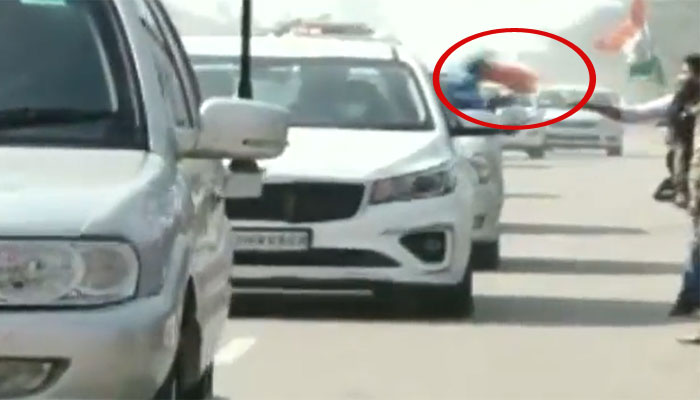
Despite the fact that the Election Commission has issued several warnings, various political parties, including the Samajwadi Party and the Congress, have been witnessed flouting all rules.

Uttar Pradesh: SP MLA Nahid Hasan arrested under gangster act a day after filing nomination from Kairana for assembly elections

Samajwadi Party candidate for the Kairana constituency in Uttar Pradesh and notorious gangster Nahid Hasan has been arrested by the police on Saturday 15th January 2022. This arrest has been made by the police in connection with the Gangster Act imposed on SP MLA Nahid Hasan about 11 months ago. Kairana police arrested MLA Nahid Hasan and amidst tight security, presented him in court from where he was sent to 14-day judicial custody.

Recently Samajwadi Party has declared its first list of candidates for the upcoming Uttar Pradesh assembly elections, where the party had announced the name of Nahid Hasan for the Kairana seat. Nahid Hasan was the first to file the nomination in the first phase of Uttar Pradesh assembly elections 2022 yesterday in Shamli Collectorate, and the very next day he has been arrested by the Kairana Kotwali police. After arresting him, police presented him in court, and he was sent to 14-day judicial custody on court orders. He was presented in Additional District Sessions Court in front of a Fast Track Court bench. At that time police and PAC personnel were deployed in large numbers around the court.

About eleven months ago, that is, on 13th February 2021, Shamli police had imposed the gangster act on the two-time SP MLA from Kairana. Hasan has multiple criminal cases against him and is called the mastermind behind the Hindu exodus that was seen in the city. In February 2021, the UP Police imposed the Gangster Act on 40 people, including SP MLA Nahid Hasan and his mother, former MP Tabassum Hasan. Since then, Nahid Hasan was wanted in the case.

There are many criminal cases registered against Nahid Hasan. He is also called the mastermind of the exodus of Hindus from Kairana. There is also a case of fraud in land-deals against Nahid Hasan. Nahid Hasan has been declared a fugitive by the special court in Shamli. While Nahid Hasan is the sitting MLA of SP from Kairana, his mother Tabassum Hasan has been an MP from Kairana.

‘No God but Jesus’: 4 arrested for threatening, offering money to a Hindu villager in Madhya Pradesh to convert to Christianity

The Madhya Pradesh Police on Thursday arrested four people for forcing a Hindu villager named Manohar Bansal to convert to Christianity in the Guradi village of Sehore District. Four days ago, the accused Christians had approached Bansal and offered him money to convert to Christianity.

The enraged villagers trapped him and handed him over to the Icchawar Police Station, confirmed Sehore Superintendent of Police Mayank Awasthi.

According to reports, the four accused Christians had approached the village and were trying to lure the villagers. A Hindu villager, Manohar Bansal had reported this to the Icchawar town Police station. Some villagers had also reported that the four accused were constantly threatening the local people to convert to Christianity. They were saying, ‘there is no God other than Jesus’.

Bansal in his complaint mentions that these four Christians had pressurized him a month ago to accept Christianity. They met him again this month to push him to convert. Reports mention that he was offered free education for his children, a well-paying job, free medical facilities and access to cash whenever needed.

The accused have been identified as Tagraj, Rajaram Malviya, Sunil Malviya and Tej Singh and have been charged under Section 3 and 5 of the Madhya Pradesh Freedom of Religion Act.

The amended Madhya Pradesh Freedom of Religion Act penalizes religious conversions through fraudulent means including those for the sake of marriage. In cases involving religious conversion of members of Scheduled Castes, Scheduled Tribes and minors, a provision has been made for the imprisonment of two to 10 years and a Rs 50,000 fine.

Growth in imports from China slows down during Modi govt while India’s trade with other countries increase at a much higher rate

Despite sour relations with China over aggressions at the border, India’s trade relations with the county continues on an upwards trend. India has a trade deficit with China for a long time now, which means India imports far from China compared to exports across the Himalayas. According to reports, India-China trade grew to a record $125 billion in 2021, despite tensions in Ladakh and elsewhere.

Of this bilateral trade, India’s import from China was valued at $97.52 billion, while China’s imports from India was $28.14 billion, resulting in a trade deficit of $69.38 billion for the year 2021. Reportedly, India’s imports from China increased substantially at 46.2% due to increased imports of medical products and raw materials by the pharmaceutical industry due to Covid-19.

While increasing trade deficit with China is concerning given the Modi govt’s push for made in India, it is not as bad as it seems. Because, in recent years, the overall trade deficit had shown signs of decline, and even though trade with China has gone up, the same with other countries have gone up at even higher rates.

The growth in imports from China was minimal in recent years, compared to very high import growth during the UP regime. From 2003-04 to 2013-14, imports from China had increased by a whopping 1,160% which went up from $6.05 billion to $61.60 billion during this period. Compared to that, the imports have gone up by just 8% from 2014-15 to 2020-21. The imports from China in 2014-15 was $60.41 billion, and the same in 2020-21 was $65.21 billion.

In fact, while the trade deficit with China had gone up exponentially during the UP rule from 2004 to 2014, the growth trend has been arrested during the NDA rule from 2014, and had come down in 2020 before going up last year. The trade deficit with China in 2020-21 was $44 billion, down from $48 billion in 2014-15. Although it went up in 2021, as it was mainly fuelled by increased imports of pharma products due to the pandemic, it is expected that it will not be a recurring phenomenon.

The trade deficit with China had gone up by almost 24 times from 2004-05 to 2013-14, which has been substantially controlled during the Modi govt.

Another important point to be noted is that while India’s trade deficit with China comes and control and the import growth rate came down, China’s share in the increase in India’s trade also has also decreased.

For the period January to November 2021, India’s trade with Australia had gone by 102%, while it had gone up by only 44% for China. Trade with several other countries like South Africa, Belgium, UAE, Thailand, USA, Indonesia etc increased at a higher rate compared to China for the first 11 months of 2021.

The growth rate for India’s trade with China was even less than the growth of India’s total international trade, which had gone up by 50% to reach over $290 billion.

This shows that as India has become a major trade partner globally, its trade with all other countries has gone up substantially. And more importantly, trade with other countries have gone up at a much higher rate compared to the trade growth rate with China.

‘Will teach you a lesson once our govt comes to power’: Md Ashraf arrested for threatening UP traffic police in viral video

The Sambhal Traffic Police in Uttar Pradesh arrested a man named Mohammad Ashraf for threatening a traffic police officer for issuing a challan on him, a video of which had gone viral on the internet. The police informed about the development on its official Twitter account.

The Sambhal police confirmed that the video is three days old. The youth who is seen in the viral video threatening the UP traffic police with dire consequences once “their government comes to power in the state” has been identified as Mohammad Ashraf, a resident of Mian Sarai in Sambhal district in Khairabad, Uttar Pradesh, said the police.

The police added that Ashraf, who had misbehaved with the traffic cop when they cut his challan for riding the bike without a helmet, had been arrested under relevant sections of the IPC.

In a video, that is being widely circulated on social media, Mohammad Ashraf is heard arguing with the traffic cops who impede him from driving without a helmet. The incident reportedly took place on the evening of January 13, 2021 (Thursday). Harendra Singh Jat is the name of the traffic police officer whom Md Ashraf threatens in the video. Harendra Singh Jat reportedly works as a sub-inspector in Sambhal police’s traffic department.

In what transpired, Ashraf was driving without a helmet when he was stopped at the Chandausi crossing by sub-inspector Harendra Singh Jat and his team. Ashraf, initially, attempted to contact a leader of the Samajwadi Party (SP) over the phone. But, when the policeman provide him with a challan for not wearing a helmet, the infuriated Ashraf started threatening the cops. “Challan aur bada kar kat lo, har cheez ka kat lo..hum batayenge jab humari sarkar aayegi”, said Asraf which translates to (cut a bigger challan, charge me with what you want. I will teach you a lesson when our government comes to power).

When the officer, who was recording the entire act on his phone the video, asked Ashraf what he exactly implied, the youth said that either he will leave Sambhal or he would make sure the officer leaves Sambhal town. “Ya to hum nahi rahenge ya tum nahi rahoge”, said the youth before arrogantly leaving on his bike.

Sharing this video, BJP leader Sambit Patra wrote, “It is the fight of 80% of the people of Uttar Pradesh against these 20% people with such fanatic mindset.”

Mohammad Ashraf first accuses UP police of pulling his beard, admits crime and apologises after arrest

According to sources, after police took cognisance of the aforementioned video and launched a probe, Md Ashraf, in his defence, posted another video on January 14. In it, he accused the traffic cops of abusing him and pulling his beard. Ashraf said that he had also submitted a letter to the Human Rights Commission in this context. However, unruffled by Asraf’s baseless allegations, the Sambhal police promptly took action and arrested him.

Following his arrest, Ashraf in another video was seen admitting and apologising for misbehaving with the cops.

In this third video which is being shared online, Ashraf is heard explaining that he was upset when the incident occurred since he was being challaned for the second time that day and that in a fit of rage, he misbehaved with the cops, for which he apologised.

Financially doomed Pakistan to grant permanent residence to wealthy international investors including Chinese and US-based Sikh nationals

According to Dawn, Pakistan’s government has planned to provide permanent resident status to foreign investors in order to attract large investments from affluent Afghans, Chinese, and American Sikhs.

Dawn reported that the government aims to attract large investments from affluent Afghans who are already investing in Iran, Turkey, and Malaysia. The Pakistani government also expects that owing to their fondness for Sikh sacred places in the country, US-based Sikh nationals will be willing to invest in various areas in Pakistan.

“In line with new National Security Policy, through which Pakistan declared geo-economics as the core of its national security doctrine, the government has decided to allow permanent residency scheme for foreign nationals, the new policy allows foreigners to get permanent resident status in lieu of investment,” Fawad Chaudhry, the Minister of Information in Pakistani Government stated in a tweet late Friday night.

In recent utterances, Prime Minister Imran Khan intimated that he intended to entice prominent Chinese businessmen to come and settle in Pakistan who had shifted their businesses to other countries in the region.

Pakistan’s economy, in particular, is in dire straits. The country is experiencing unprecedented inflation, which is driving up the cost of everyday items. For a long time, the Financial Action Task Force (FATF) has kept Pakistan on its grey list, pressing it to do more to investigate and prosecute senior leaders and commanders of UN-designated terror organizations who are implicated in terror funding.

In Pakistan, discrimination against minorities is on the rise. Its residents are fleeing to other parts of the globe in search of a better life. According to a report in the Times of India, Pakistani citizens make up more than 70% of citizenship applications in India.