Home Blog Page 3567

As West Bengal starts to become West Bangladesh, time to remember how Bangladesh was formed to realize the goals of Lahore Resolution

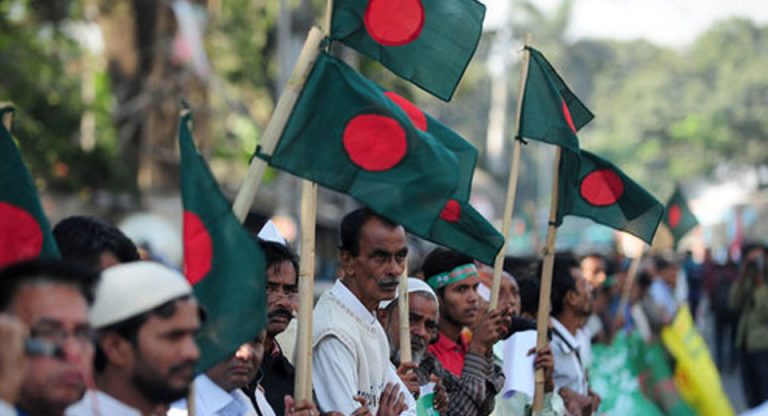
Fifty years of the formation of Bangladesh is being celebrated quite enthusiastically in West Bengal. The spiritual bond of the Bengali language and culture between two Bengals is being rediscovered and championed. Bengali language movement of 1952 by the students of Dhaka University is also almost universally being accepted as the basis of the Bangladesh independence movement. The creation of Bangladesh is being portrayed as the emergence of a secular space on the eastern border of India. At this juncture, it is very important to expose this lie on the fiftieth anniversary of the formation of Bangladesh.

Whenever the word Pakistan is uttered, a negative picture of a strict Islamic country emerges. When East Pakistan became Bangladesh, most people felt relieved that there would be no Pakistan on our eastern border. There was hope in West Bengal that it would no more be plagued with the constant influx of Hindu refugees from Islamic East Pakistan. And ‘secular’ Hindu Bengali historians, artists, intellectuals, political parties (even some Hindutva activists) painted a rosy sentimental picture about the newly formed country called Bangladesh.

But if we turn the page a little back, we will see that even after the partition of the country into Pakistan, the eastern wing of Pakistan was called East Bengal. In 1955 it was officially named East Pakistan. The name Pakistan (meaning Holy Land) was coined by Chowdhury Rahmat Ali after the names of the states of Punjab, Afghanistan, Kashmir, Sindh, and Baluchistan. There was no mention of Bengal in it. There is no mention of the word Pakistan in the Lahore resolution of 1940 which is considered as the basis and fundamental guide for creation of Pakistan. The Lahore resolution explicitly mentioned that “that the areas in which the Muslims are numerically in a majority as in the North-Western and Eastern Zones of India, should be grouped to constitute “Independent States” in which the constituent units shall be autonomous and sovereign”.

Eminent writer and political leader of East Pakistan/ Bangladesh, Abul Mansur Ahmed has explained it very clearly in his autobiographical book – “One Pakistan has been replaced by two Pakistans in accordance with Lahore Resolution. The Government of India has assisted us in implementing the Lahore Resolution …. The Lahore resolution does not mention the word “Pakistan”, only the Muslim majority states. This means that the name of the states should be decided by the people later. The western people have named their state ‘Pakistan’. We, Easterners have named ours ‘Bangladesh’. There is no reason to be confused. ” (Amar Dekha Rajnitir Panchash Bachhar [Fifty Years of Politics As I Saw It] –pp. 808 3rd Ed. by Abul Mansur Ahmed, Naoroj Kitabistan, Dhaka, 1975).

East Bengal and West Bengal were formed on 20 June 1947 by a vote in the Bengal Legislative Assembly. All the Muslim members of the Bengal Legislative Assembly were against the division of Bengal and voted in favour of annexing the whole of Bengal to Pakistan. Those Muslim members demanded a united Bengal not to protect the language and culture of Bengal but to gain control over a larger landmass including the rich and prosperous city of Calcutta. Two most prominent political leaders in favour of a united Muslim-majority independent Bengal were Shaheed Suhrawardy and Sarat Chandra Bose. Muslim Leaguer Shaheed Suhrawardy was then Primer of Bengal and also infamous as ‘butcher of Calcutta’ because of his role in Great Calcutta Killings.    Congressman Sarat Chandra Bose was the brother of Netaji Subhash Chandra Bose.

Debates on the status of the Bengali language in Pakistan started from the time of the creation of Pakistan. Was it due to love for Bengali language and culture? After the partition of the country, all the Bengali newspapers published in East Bengal and who spoke in favour of the Bengali language had Arabic names – Paygam, Dainik Azad, Ittefaq, Insan, Insaf etc. The name of the most important organization championing Bengali language was Tamaddun Majlis. This is an Islamic example of love for the Bengali language. Bengali-speaking Muslims still name their children in Arabic.

On 23 February 1948, Dhirendranath Dutta, leader of Congress Party in in the Constituent Assembly of Pakistan demanded that Bengali be made the state language. He was supported by three Hindu members namely Premahari Barman, Bhupendra Kumar Dutta and Srishchandra Chattopadhyay. Prime Minister Liaquat Khan (elected from East Bengal) and Chief Minister of East Bengal Khwaja Nizamuddin vehemently opposed it. No Muslim member of East Bengal supported this demand. However, shortly the movement to make Bengali the state language was intensified due to economic reason.

In the words of Abul Mansur Ahmed, “If Urdu is made the state language, the educated society of East Pakistan will become ‘uneducated’ and ‘unfit’ for government service overnight. By replacing Persian with English as the state language in the mid-nineteenth century, British imperialism made the Muslim educated society “uneducated” and incapable of public service overnight.” (Purba Banglar Bhasa Andolan O Tatkaleen Rajnity [Language Movement of East Bengal and Politics of that Time]vol , pp 19 b Badaruddin Umar, Anandadhara Prakashan, Dhaka, 1970).

This was the crude reality of the Bengali language movement. Of course, the students of Dhaka University and a section of intellectuals added some emotional components associated with mother tongue. But love for mother tongue was not absolute. In an article published in December 1948, the eminent linguist and scholar Muhammad Shahidullah wrote: “Language of religion has the place next to mother tongue. For this, I will say with all my heart, like Bangla we want Arabic. The birth of the state of Pakistan will be meaningful on the day when Arabic will be accepted as the state language of the whole of Pakistan”. (Pakistaner Rashtrabhasa Samasya [Problem of State Language of Pakistan], Dainik Azad, 29 July, 1947). The process of the Arabization of the Bengali language has been going on since then.

In 1954, Bengali became the state language of Pakistan. In all official notifications from currency notes to postage stamps Bengali was used along with Urdu. The language movement was over. But this victory of the Bengali language did not affect the ongoing persecution of Bengali speaking Hindus in East Bengal / East Pakistan. It continued as usual. In 1950, during the language movement, Jogendranath Mandal, the law minister of Pakistan, a leader of the Scheduled Caste Society, a supporter of the Pakistan movement, fled to India to save his life.

In this context, another myth about the sacrifices of Bengali speaking Muslims only for the Bengali language needs to be demolished. It is true that in 1952 police fired on agitating students of Dhaka University and four Bengali speaking Muslims (none of them were students of Dhaka University) were killed. But ‘secular’ intellectuals of both the Bengals consciously ignored the sacrifices of eleven Hindu Bengalis in the Bengali language movement in Silchar, Assam in 1961. Out of eleven martyrs nine were Hindu refugees from East Pakistan including a young girl named Kamala Bhattacharya. So Bengali speaking Hindus never had any mercy from the Bengali speaking Islamists in East Pakistan/ Bangladesh.

Since the creation of Pakistan, almost all the political parties of East Bengal/ East Pakistan had complained against discrimination by West Pakistan in all facets of life – jobs, education, industry, agriculture, trade. The first democratic election of East Bengal (not yet East Pakistan) was held in 1954. The United Front which won the election massively, was composed of four political parties of East Bengal, namely Awami Muslim League (later Awami League), KrishakShramik Party, Nezam-e-Islam and Ganatantrik Dal. The United front announced 21-point package programme in the election manifesto, drafted by Abul Mansur Ahmed of Awami Muslim League. The 19th point of the programme was – “The Lahore Resolution proposed full autonomy of East Bengal leaving defence, foreign affairs and currency only under the central government. In the matter of defence, arrangements shall be made to set the headquarters of the army in West Pakistan and the naval headquarters in East Bengal and to establish ordnance factories in East Bengal, and to transform Ansar force into a full-fledged militia equipped with arms”. However, the United Front government did not last long.

After a long period of military rule, a general election of Pakistan was held in 1970. Awami League under the leadership of Sheikh Mujibur Rahman won almost all the seats in East Pakistan and claimed to be invited to form the government. The basis of this huge election victory of Awami League was the six-point charter of demands framed in 1966.The first sentence of the first paragraph of the charter was, “Pakistan must be built into a true federation based on the historic Lahore resolution.” In other words, the Awami League had never deviated from the raison d’etre of creation of Pakistan. The six-point demands were all about East Pakistan’s economic issues. The last demand was the formation of an armed force for the security of East Pakistan (from Indian invasion). There was no mention of Bengali language and culture in the charter.

The military government of Pakistan and the major political parties of West Pakistan did not accept this victory of the Awami League and the following military intervention compelled Awami League to demand total separation from Pakistan. A so-called liberation war (MuktiYuddha) began. Historically such liberation wars go on for years and decades. Here, only nine months later, with a 14-day Indian military intervention gave birth to a new country – Bangladesh.

Politically, Bangladesh became a newly independent country with a new secular constitution. But, shortly within three years, Bangladesh rolled back to the old mould of Pakistan. The secular constitution was scrapped, Islam was made the state religion. The opening words ‘bismillah-ar-rahman-arrahim’ (In the name of Allah, the Beneficent, the Merciful), were added in 1997. Following the tradition of Pakistan, persecution of Hindus continued and at least ten million Bengali Hindus had been kicked out from Bangladesh in the last 50 years.

How are the Bengali Hindus Living there? After the attack on idols, temple vandalism and attacks on the Hindu community across Bangladesh during Durga Puja last October, 2021, prominent Bangladeshi educationist and writer Muhammad Zafar Iqbal (brother of the legendary writer Humayun Ahmed) wrote in one of his social media posts on October 19, 2021, “for last few days I am feeling myself impure. It seems that I am immersed in a dirty sewer. Not only me, but many people like me in this country have the same feeling, it seems that a large part of the nation is drowning in depression. The reason must be understood by everyone. Durga Puja, which is considered to be the biggest festival of Hindus, is at the center of the biggest violence this time. I can’t even comfort myself that this is an isolated incident. Starting from Comilla, it did not stop in Comilla, it spread all over the country. Which means there are horrible communal people all over the country, they are not hiding, they are open in public, proudly carrying out their operation. … ..When the time for Durga Puja comes, the work of making idols starts all over the country, since then I feel a kind of suppressed unrest inside myself. Inevitably I get the news that the idols are being smashed here and there in the country. When the puja starts, I hold my breath”. Do you find any difference between Bangladesh and (East) Pakistan?

Famous Bengali writer and thinker Annadashankar Roy wrote – (during a visit of Dhaka after formation of Bangladesh) “We asked Sheikh (Mujibar) Saheb, ‘When did the idea of ​​Bangladesh come to your mind?’ –  He smiled and said, in 1947. I was a part of  the team of Mr. Suhrawardy (then Prime Minister of United Bengal under British rule and known as ‘Butcher of Calcutta” for his alleged role in riot in Calcutta). He and Sarat Chandra Bose (brother of Netaji Subhash) wanted United Bengal. I (Mujib) also wanted a country for all Bengalis. ” (Indrapat, Kando Priyo Desh, Kolkata, 1979, Quoted in Bangabandhu Kibhbe Amader Swadhinata Enechhilen [How Bangabadhu Gave Us Independence] pp15 by Muntasir Mamun, Maola Brothers, Dhaka, 2013)

Do the people of West Bengal smell anything? The slogan of ‘Joy Bangla’, very popular in Bangladesh, is nowadays being heard in the streets of West Bengal too. The ruling party of the state is popularizing this slogan to transform West Bengal into West Bangladesh to make their vote bank happy. In the fiftieth year of the formation of Bangladesh, the heirs of Sarat Chandra Bose and Suhrawardy are again dreaming of merging Hindu majority West Bengal into Islamic Bangladesh to fulfil the spirit of Lahore resolution. Even Hindutva activists have now become Gandhites and care less about these ‘communal’ issues.

Now it is time to wait for West Bengal to become West Bangladesh.


Author- Mohit Ray

The author is a well-known environmentalist, refugee rights activist and state committee member of BJP in West Bengal. He has authored a number of books on the environment and Bangladesh issues.
Gujarat: Another youth from Anand gets death threats over social media post, days after Dhandhuka youth gets killed over ‘blasphemy’

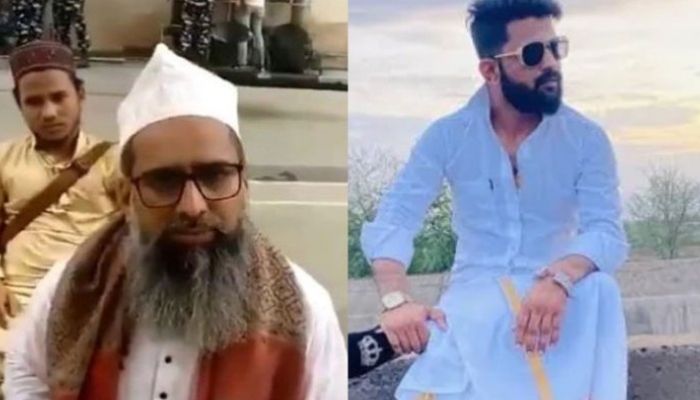
A Hindu youth from Anand in Gujarat has received death threats over a phone call from a Muslim youth for sharing a social media post. According to the reports by News18 Gujarati, a Hindu youth named Ilesh Parmar who lives in Petlad of Anand in Gujarat has received such threats from one Hani Sayyad. Ilesh Parmar had posted a status on his WhatsApp profile in which Lord Krishna was glorified.

Enraged at this, the accused has threatened him of death first on the chat and then over a phone call. As the audio clip of the call went viral, the news spread all over in Anand. Meanwhile, a case has been registered by the police in this matter.

What is heard in the call recording?

In the audio clip of the threat call that went viral, it is clearly heard that the accused is threatening Ilesh Parmar for posting a WhatsApp status praising Lord Krishna. The audio recording was shared by News18 Gujarati on its Twitter handle.

The talk is shared briefly as follows:

Ilesh: Hello

Accused: Hello! I will kill you Ilesh

Ilesh: Where are you, come over here

Accused: Now I am near your farm, but you have gone to college in Petlad, right?

Ilesh: Yes I go to Petlad college, so what will you do?

Accused: Why did you put that status?

Ilesh: Why would I send it to you? It is my profile. I don’t have your number saved in my phone. You delete my number and you will not see my status then. It is that much straight.

Accused: No, no, no. You remove that status. I have taken a screenshot of that and if you don’t delete the status, I will see you.

Ilesh: Ok. Do whatever you can.

Accused: Even if you do a police complaint, I will see you.

Ilesh: Do whatever you can. I don’t need anyone.

Accused: Whether you be at college or at home, I will kill you on Monday.

Ilesh: Yes try to kill me.

Accused: I will not go back home unless I kill you. Come to Petlad for college on Monday, I will see that you won’t go back alive.

Ilesh: Why not tomorrow? I can be in Petlad tomorrow.

Accused: You just remember the day. I will come to Petlad and kill you.

Ilesh: Ok. Will see.

Repeatitive incidents

Last week, a Hindu youth Kishan Bharwad, aged 27, was killed by two bike borne Muslim men over allegations of blasphemy. Bharwad had put up a post on social media which contained an image of Prophet Muhammad. Sharing an image of Prophet Muhammad is considered blasphemy in Islam.

After arresting and investigating Muslim clerics and youths involved in this case it was revealed that they were building a bigger network to target and kill more such Hindu youths a different places in Gujarat. The incident that happened at Anand holds serious importance because of this backdrop.

Petlad town of Anand in Gujarat is communally sensitive. Police have taken cognizance of this incident registered a case and the matter is being investigated further. It will also be checked if this matter is also connected to the Kishan Bharwad murder case and subsequently exposed the network of attacking Hindus for social media posts.

Arrested accused reveal more information about Kishan Bharwad case

Meanwhile, in another shocking revelation in the Kishan Bharwad murder case, the arrested accused have informed in the police investigation that they had actually planned for the murder of another Hindu youth in Porbandar. As reported by Zee 24 Kalak, they had also contacted the local Muslim youth of Porbandar to execute the plan, but at the last moment, the Muslim youth from Porbandar refused to kill the Hindu youth.

This is why they took the Dhandhuka plan on priority and killed Kishan Bharwad. It is notable that the Porbandar youth was also the target of this Jihadi network because he had posted something on social media which according to the accused Muslims is an act of blasphemy.

Accused Shabbir and Imtiyaz both were arrested by the police. Zee24Kalak has reported that both of them had hired a Muslim youth from Porbandar for a similar target killing but he refused at the very last moment. They had also contacted a Muslim youth from Jamnagar to execute a similar killing job. According to the report, Qamar Gani Usmani had visited Ahmedabad and Surat 6 months ago. Many young Muslim boys from Gujarat were in connection with him. Earlier, the Pakistan connection was also exposed in this whole matter.

Modus Operandi

During the police investigation, Shabbir and Imtiyaz had spoken about the way these killers used to operate. In Dhandhuka’s Kishan Bharwad murder case and in the unexecuted or unsuccessful plans of Porbandar and Jamnagar, the hired killer would keep a close watch on the target Hindu youth as in who does the target meet regularly, what are the places usually visited by the target, who is the target accompanied by at what time of the day, etc.

The list of the targets can be still long and the number of Muslim youth in contact with the Jihadi mentors can also be higher than revealed. State ATS is doing further investigations in this case.

Kangana Ranaut speaks up for Kishan Bharwad, calls out ‘Humanists’ for silence over the murder

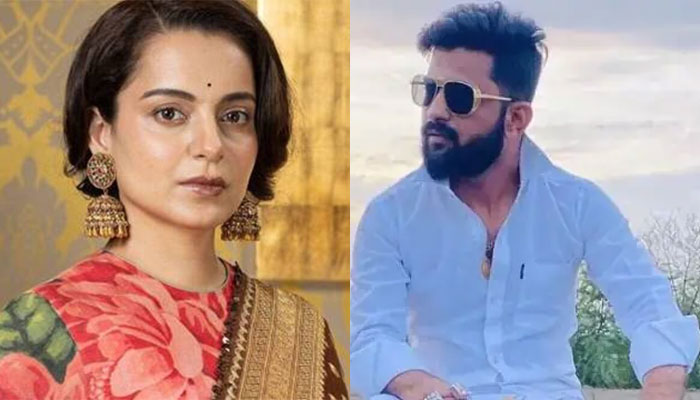
On January 29, actress Kangana Ranaut expressed her anger over the murder of Kishan Bharwad, a 27-year-old man from Gujarat who was shot dead over an alleged derogatory post on Prophet Muhammad. In a Facebook post, Ranaut said his murder was planned by a mosque and maulvi over FB post. She urged the government to take strong action against the accused.

She said, “Kishan Bharwad murder was planned by a mosque and maulvi over a FB post because he thought God did not like his post. Killing in the name of God needs to stop, we are not living in some medieval age, and Govt needs to take strong action against such Killings. Kishan was hardly 27 years old and had a two months old daughter, he was asked to delete his post and apologise he did the same, yet he was brutally killed by four men, he is nothing short of a martyr. He died for everyone’s freedom, such people are the ones who are stopping this nation from becoming Afghanistan … his widow should get pension, Om Shanti”

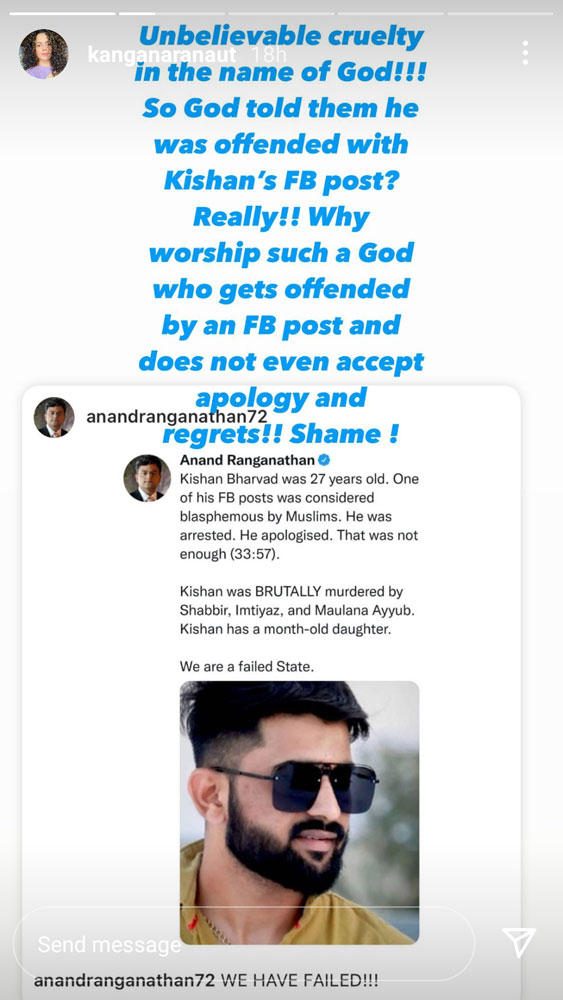
Ranaut also shared stories on her Instagram account. In one of the stories, she shared a screenshot of scientist and author Anand Ranganathan’s post in which he had talked about the death of Kishan Bharwad. Ranaut said, “Unbelievable cruelty in the name of God!!! So God told them he was offended with Kishan’s FB post? Really!? Why worship such a God who gets offended by an FB post and does not even accept apology and regrets!! Shame!”

Story in support of Kishan by Kangana. Source: Instagram

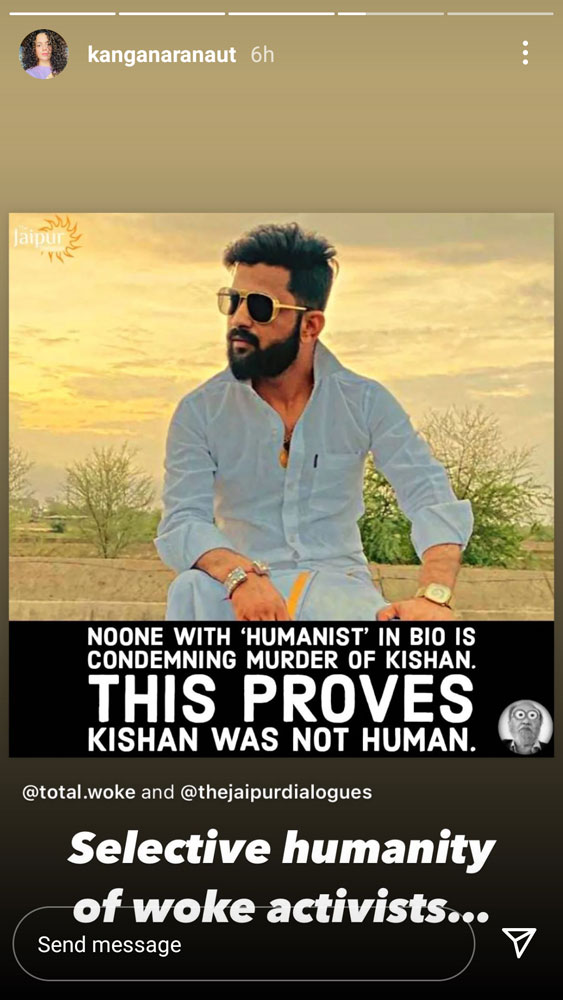
Ranaut continued to share stories on the matter. In a follow-up story, she called out so-called ‘humanist’ and questioned them for not condemning the murder of Kishan. She said, “No one with ‘Humanist’ in bio is condemning murder of Kishan. This proves Kishan was not human. Selective humanity of woke activists…”

Story in support of Kishan by Kangana. Source: Instagram

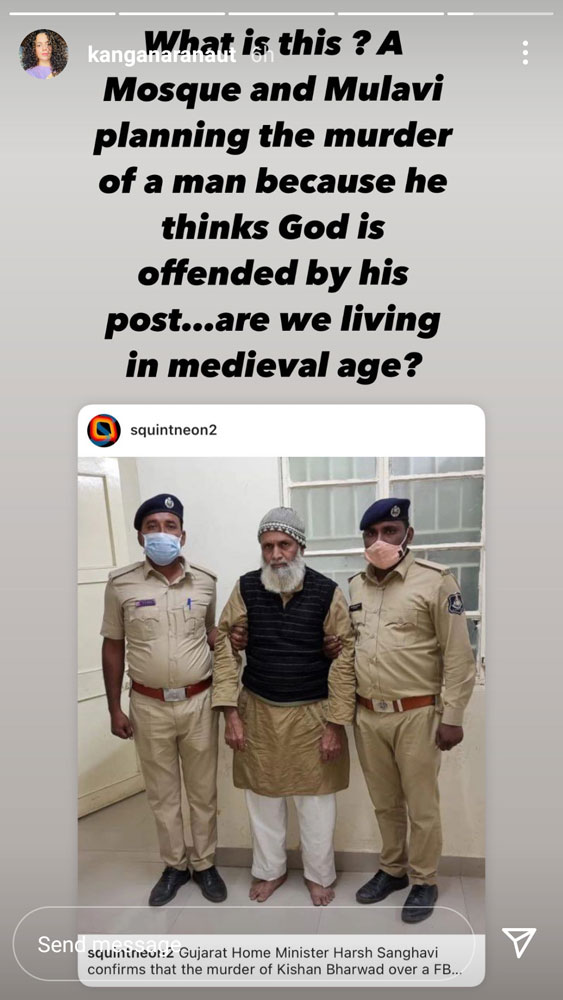
After the arrest of the maulvi alleged to be involved in the murder of Kishan, she shared another story in which she question if we were still living in the medieval age. She said, “What is this? A mosque and maulvi planning the murder of a man because he thinks God is offended by his post… are we living in medieval age?”

Story in support of Kishan by Kangana. Source: Instagram

The murder of Kishan Bharwad

On January 25, Ahmedabad youth Kishan Bharwad was shot dead by two bikers in Dhandhuka taluka. Kishan was on his way home, two bikers came and shot at him. He died on the spot. It was alleged that Kishan had shared a post on social media platform which Muslims find offensive. According to sources, the video shared by Kishan on social media had an image of Prophet Muhammad.

After the uproar, Kishan did not leave home for days. On Tuesday, he stepped out on his bike. According to an eyewitness, the two men who fired at Kishan were riding behind him, and at a turning at Modhwada, they fired their first shot. However, they missed it and then they fired again. He died on the spot, said the eyewitness.

Gujarat ATS and Gujarat Police initiated an investigation in the case. The two suspects, Shabbir and Imtiaz, were arrested by the police. Two maulvis were also arrested for instigating the attack and providing weapons for the kill. The pistol and bike used in the crime have been recovered by the police.

Bhopal: Man gives triple talaq to his wife after she filed dowry and molestation case against him and his family

0

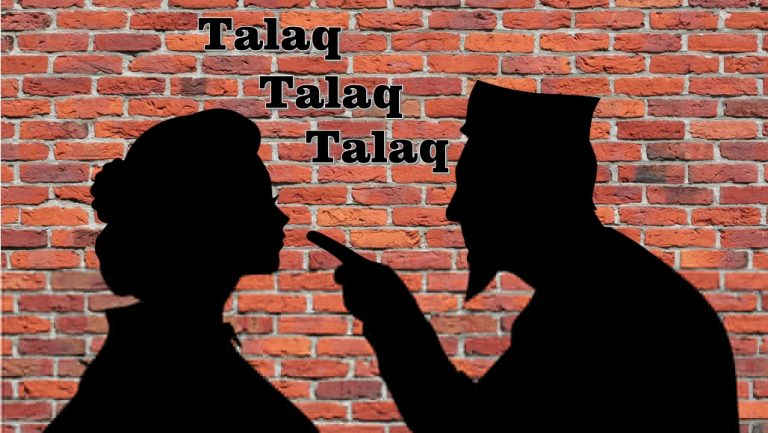
On the complaint of a woman, the Talaiya police station in Bhopal, Madhya Pradesh’s capital, has lodged a case of triple talaq (Muslim Women’s Marriage Protection Act) against her husband. The woman informed the police that her husband was abusing her by standing outside her house and that when her parents intervened and prevented the son-in-law from harassing her, he said Talaq three times and left, stating the relationship has ended.

It has been found that a case of dowry against the husband and another case of molestation against his brother-in-law was filed in the police station based on the woman’s complaint. Angered by this, the husband went to his wife’s residence and uttered Talaq three times. The Police are investigating the matter.

The 23-year-old woman from the region, along with her father, had filed the complaint with the Talaiya police station. She had married a man from the Gautam Nagar police station area on August 7, 2020. Her husband is employed by a private company.

According to reports, her husband and in-laws began pestering her for dowry soon after they married. Every day, her spouse used to beat her. His brother-in-law used to keep a bad eye on her, due to which she had filed a case of dowry against her husband and in-laws at Gautam Nagar police station last year. A charge of molestation was also brought against the brother-in-law. The case is still proceeding in court. She is currently staying at her parents’ house.

The woman informed the police that her spouse came outside her house about 2:15 P.M. on Friday and began abusing her. When her parents intervened to stop their son-in-law from abusing her, he began abusing them as well. He also moved away threatening to break the relationship after uttering talaq three times to his wife. 

It may be noted that the divorce by uttering triple talaq has been made illegal by the government in 2019. Keeping the promise made to Muslim women, the Modi govt had enacted The Muslim Women (Protection of Rights on Marriage) Act, 2019 to end the practice of Muslim men divorcing their wives instantly by saying the words talaq three times in a row.

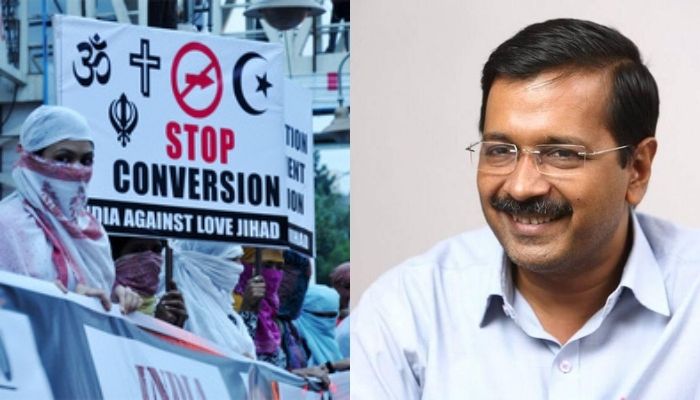
Kejriwal bats for a law against forced religious conversions, says conversions through influence, money or threat is wrong

In a surprising turn of events, now Arvind Kejriwal has batted for an anti-forced-conversion law. On Saturday, Delhi Chief Minister and Aam Aadmi Party (AAP) Arvind Kejriwal expressed his wish for a law to be made against forceful religious conversions. Kejriwal, while talking in a press conference in Punjab’s Jalandhar, said that he is against forceful conversions and that religion is a matter of personal faith.  

While talking in the state of Punjab which is about to go for polls on February 20th, AAP leader Arvind Kejriwal took a stand against religious conversions happening forcefully. Kejriwal was asked about his view on coercion of the poor into converting to a new religion through money and influence. Upon this, Kejriwal added, “I am of an opinion that religion is a private matter. Everyone has a right to pray to whichever God, believe in whatever religious text he/she wishes. If conversions are happening through influence, money or threat then it is outright wrong.”

When asked about whether a law should be made to stop such conversions in the country, he said, “Yes, such a law should definitely come into force. But the law should not be used to harass anybody.”

While religious conversions of Hindus are rampant today, many BJP ruled states have enacted a law to curb forceful religious conversions pertaining to contextual realities. In 2020, the Yogi Adityanath led BJP Govt in Uttar Pradesh had passed ‘The Uttar Pradesh Prohibition of Unlawful Conversion of Religion Ordinance, 2020’ which attracts a jail term for up to 10 years to offenders found guilty in mass conversion practices. Considering the menace of grooming Jihad in the state, the Madhya Pradesh Government had enacted a law aimed at preventing religious conversion using fraudulent means.

In December 2021, The Karnataka state assembly passed ‘The Karnataka Right to Freedom of Religion Bill, 2021’ to keep a check upon the rampant fraudulent conversions through missionary activities ravaging the state. The BJP ruled states of Haryana and Assam are already considering such laws in the respective states. With the advocacy of Arvind Kejriwal for the issue, all eyes will be on him whether he plans to enact such a law in AAP governed Delhi or promises to propose such act in states where his party goes for polls this year.

NTPC Ltd requests Railways to change the name of its NTPC exam and avoid the confusion amid controversy

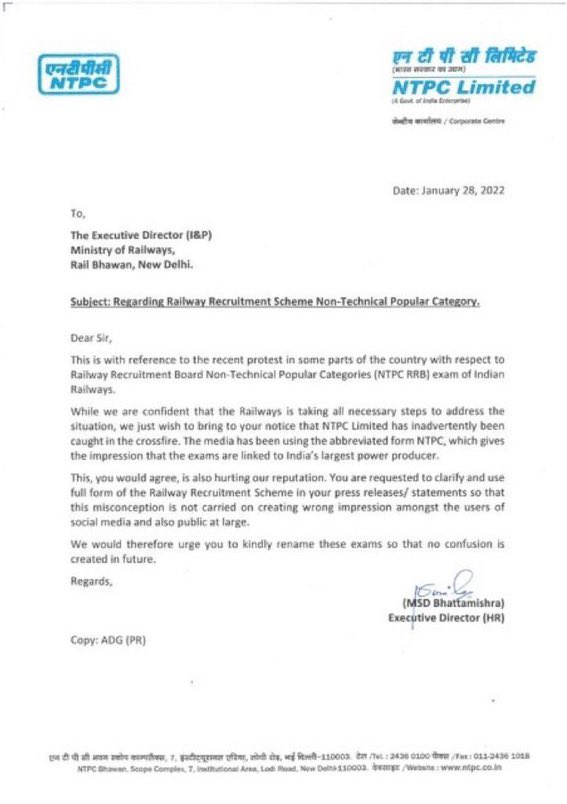
NTPC Ltd, the largest state-owned power generation company in the country has requested Indian Railways in a letter dated 28th January 2022 that railways should change the name of its NTPC exam which has caused great confusion among the aspiring candidates so far.

The NTPC in the name of the power generation company stands for National Thermal Power Corporation while that in the name of the NTPC exam of railways stands for Non-Technical Popular Categories. NTPC Ltd has said that it has created a wrong impression about the company. Railways examinations are in the middle of controversies owing to the aspiring students’ violent outrage at Gaya in the last week.

NTPC Ltd writes to the Railways

Pointing specifically to the similarity in names of the exam and the company, the power generation giant in its letter has said “This is with reference to the recent protest in some parts of the country with respect to Railway Recruitment Board Non-Technical Popular Categories (NTPC RRB) exam of Indian Railways.”

Expressing concern over the way this issue is being reported with the abbreviated names of the exams, NTPC Ltd has further said “While we are confident that the Railways is taking all necessary steps to address the situation, we just wish to bring to your notice that the NTPC Ltd has inadvertently been caught in the crossfire. The media has been using the abbreviated form NTPC, which gives the impression that the exams are linked to India’s largest power producer.”

NTPC Ltd has written a letter to the ministry of railways.

MSD Bhattamishra is the Executive Director (HR) of NTPC Ltd and he has written the letter on the company’s behalf. The letter further says “This, you would agree, is also hurting our reputation. You are requested to clarify and use the full form of the Railways Recruitment Scheme in your press releases or statements so that this misconception is not carried on creating the wrong impression amongst the users of social media and also the public at large. We would therefore urge you to kindly rename these exams so that no confusion is created in the future.”

Shiv Sena goes further ‘secular’, makes a U-turn on Nathuram Godse

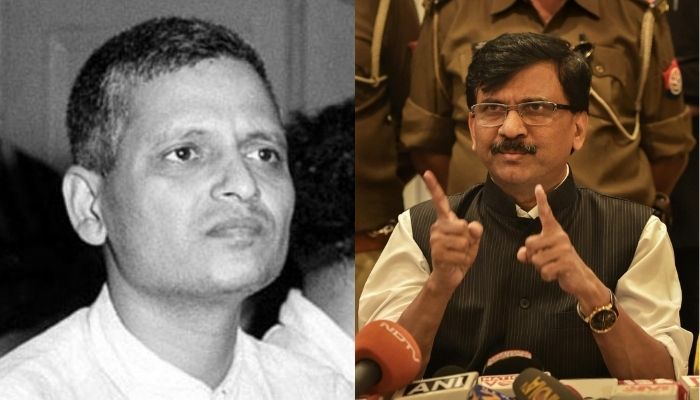
Shiv Sena has changed its stance diametrically on the issue of Nathuram Godse. On January 30, Shiv Sena Rajya Sabha MP Sanjay Raut said that If there was a real ‘Hindutvawadi’, then he would’ve shot Jinnah, instead of Gandhi.

On Sunday, the Shiv Sena leader was talking to the media about Nathuram Godse on MK Gandhi’s death anniversary. Sanjay Raut was asked to comment on Rahul Gandhi’s claim that a ‘Hindutvavadi’ (Godse) had killed Mahatma Gandhi. He replied, “Had anyone been a real Hindutvavadi, he/she would have shot Jinnah, why would one shoot Gandhi?”

He added, “The demand for a (separate) Pakistan, was a call given by Jinnah. If you were a real man and had guts, then you would have killed the man who spread violence through the partition. Such an act would’ve been an act of patriotism.” Talking about Gandhi he added, “To kill Gandhi, who was a saint was not right, according to me. The world even today mourns Gandhi Ji’s death”

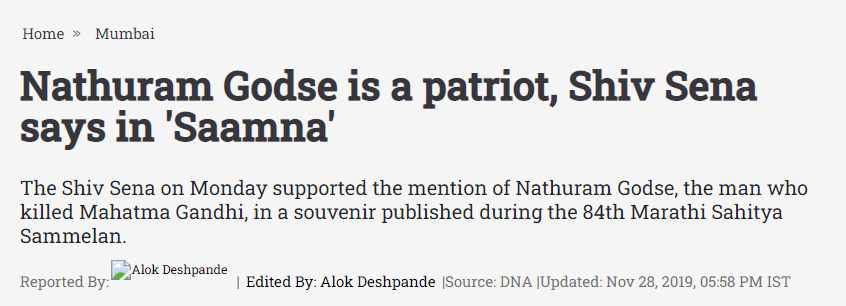
Shiv Sena hailing Nathuram Godse as a patriot, as reported by DNA in November 2019

A controversy had erupted in 2010, when the souvenir of the 84th Marathi Sahitya Sammelan had a mention of Nathuram Godse, the man who assassinated MK Gandhi on January 30, 1948. NCP leader Jitendra Awhad had demanded the photo of Ishrat Jahan, a terrorist killed by police in an encounter in Ahmedabad in 2004, to be mentioned in the souvenir instead. 

The Shiv Sena mouthpiece ‘Saamana’ said, “Those who hate Nathuram are in love with Ishrat. Do they want Ishrat’s photo to be published in the souvenir instead of that of Nathuram?”. Contrary to the recent statements, the party held Godse as a leader who took pride in ‘Swadesh and Hindutva’. The editorial in Saamna further said, “He (Nathuram) always stood for united India. Is it anti-national to harbour such feelings? He was a real patriot.”

Shiv Sena had hailed Nathuram Godse as a patriot who was angered by partition and the subsequent killings of Hindus. In an interesting jibe at Sonia Gandhi, the article had claimed that ‘Pandit’ Nathuram Godse ‘had not come from Italy’ and instead was a staunch patriot.

It was only in August last year, that Sanjay Raut had taken a so-called moderate stance on Nathuram Godse questioning his act holding Gandhi responsible for partition and killing him instead of Jinnah. On Sunday, Raut seems to have reiterated this stance owing to Shiv Sena’s alliance with Congress and the NCP in Maharashtra.

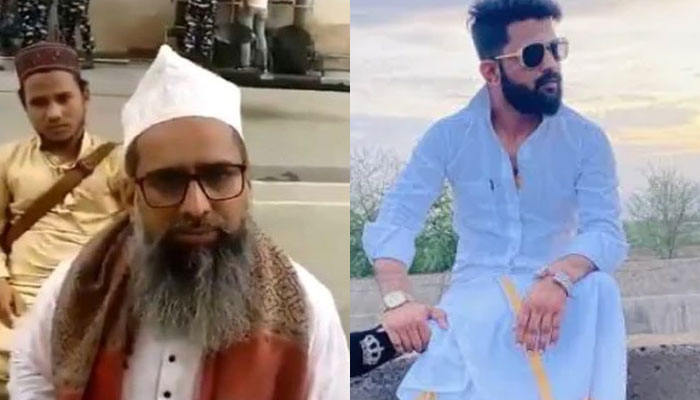
Gujarat ATS detains Maulana Qamar Gani Usmani in Kishan Bharwad murder case, had incited prime accused to kill Kishan for ‘blashphemy’

0

Gujarat ATS has detained Maulana Qamar Gani Usmani from Delhi in connection to the murder case of Kishan Bharwad. Usmani is accused of abetting Kishan’s murderer Shabbir. Gujarat Police, on the other hand, have recovered the weapon used in the murder.

As per reports, Usmani had given an inflammatory speech and incited Shabbir to kill Kishan. Usmani is associated with Tahreek Farogh-e-Islami or TFI. Last year, he was arrested in the Tripura riots case as well. According to a report by News Nation, Shabbir has told Police that Usmani had told him that if he found anything blasphemous, it was his right to pick up weapons and take action. News Nation further added that Gujarat Police has claimed Usmani’s organisation has links to Pakistani terrorist organisation Tehreek-e-Labbaik.

Earlier, the pistol and bike used in Kishan’s murder were recovered in the area near Sir Mubarak Bukhari Dada dargah in Dhandhuka by Gujarat Police. Two suspects, Shabbir and Imtiyaz, helped the police in recovering the weapon and bike. As per reports, both of them used the bike as a mode of transport to kill Kishan. Shabbir fired the shot while Imtiyaz drove the bike. The weapon and ammunition were reportedly given by Maulvi Ayyub of Ahmedabad’s Jamalpur region. He was also arrested by the police.

Gujarat Police has also apprehended Wasim Sama and Zubair, the brothers of another accused Azim from Morbi, for interrogation. Maulvi, who resided in Ahmedabad, had got a pistol from Azim. However, as per local media reports, by the time police reached Thoral to arrest Azim, he had escaped. Two of his brothers, who police believe are also radicalised, are taken into custody and are being investigated.

Kishan, who was shot dead in Dhandhuka while riding his two-wheeler, had allegedly published a post on social media where he had added a picture of Prophet Muhammad. Kishan was killed as retaliation to this alleged blasphemous post on social media, for which he had later apologised on camera. Reportedly, Kishan had shared a video on social media which had an image of Prophet Muhammad. Sharing such an image is considered blasphemy and usually beheading, killing of people who share such an image is considered as justified punishment by Islamists. Therefore, even after Kishan had apologised, it was not deemed enough, and he was killed for the ‘blasphemy’.

Who is Maulana Qamar Gani Usmani?

Maulana Qamar Gani Usmani is the chief cleric of Tahreek-e-Farogh Islami or TFI. He was arrested in connection to the Tripura riots along with three associates in November 2021. He was booked under relevant sections of IPC and UAPA. He had spent 21 days in jail before getting bail in the case. After getting bail, Usmani said in a speech he never asked Allah to free him from jail. He said, “It was Allah’s grace that I got bail in 19 days even though people do not get bail even after six months if they are booked under UAPA.”

In February 2021, Usmani had justified the murder of Kamlesh Tiwari. He had said, “There is a conspiracy to ruin the lives of Muslims. There is an attempt to make India just like Spain. To achieve it, they are testing how much Muslims in India love their Prophet. This is why Kamlesh Tiwari was asked to do blasphemy. If you remember, that time people had come to roads to protest. There was fear someone would kill Tiwari, so he was sent to prison.”

He added it was not a punishment but an attempt to save Kamlesh Tiwari from getting killed. Tiwari was killed in cold blood in Lucknow on October 18, 2019.

Canadian PM Justin Trudeau goes into hiding as farmers join truckers in protest against vaccine mandate

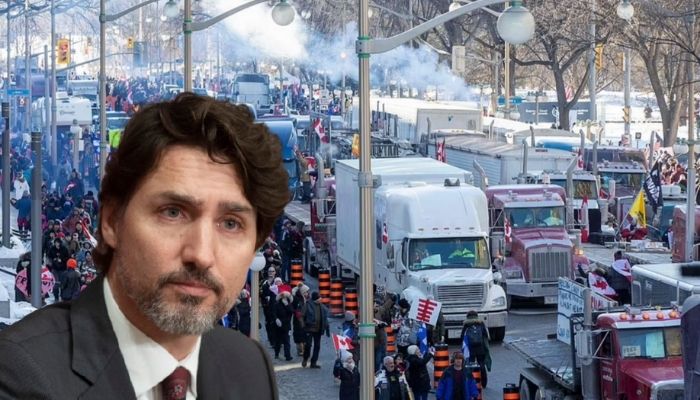
On Saturday (January 29). Canadian Prime Minister Justin Trudeau and his family have moved to a secret ‘undisclosed’ location in Ottawa, citing security concerns, after thousands of truckers carried out protests in the city over vaccine mandates of the Canadian government. The protests by truckers received a boost after farmers also joined them with their tractors, worsening the situation for the PM.

As per reports, Trudeau and his family had to vacate the Rideau Cottage in the New Edinburgh neighbourhood of Ottawa due to its close proximity to the protest site. The Office of the Prime Minister refused to comment on the development, highlighting security reasons. Accordingly, the Canadian Prime Minister’s travel itinerary has been tweaked to replace the ‘city name’ with ‘national capital region.’ It must be mentioned that Trudeau has been in isolation for being in contact with his Coronavirus infected child.

CBS reported that the decision to move the Prime Minister was taken in the backdrop of the Rideau Hall gate crashing attack of 2020 during which a Canadian armed forces member named Corey Hurren (46) crashed his car into the gates of Trudeau’s residence. Fortunately, the Canadian Prime Minister was not home at the time of the incident. Hurren was armed with several weapons including a rifle.

The Trucker Freedom convoy in Ottawa

Reportedly, a convoy of 2700 trucks had entered Ottawa on Saturday to protest against the ‘undemocratic’ Covid-19 policies of Justin Trudeau including mandatory vaccination for truckers entering Canada through the US-Canada border. Dubbed the ‘Freedom convoy’, it has amassed support from all sections of the public including prominent people like Donald Trump Jr, Joe Rohan and comedian Russel Brand.

The truckers entered the Canadian capital city from all sides and blocked a main street near the Canadian Parliament. The protests initially began in the Western part of the country after the government directed mandatory 14-day home quarantine for unvaccinated truckers, who have crossed the US-Canada border. They have received support from conservative groups, opponents of Trudeau and the protests quickly gained momentum in other parts of Canada as well.

As per reports, the truckers have been camping near Parliament Hill and demanding reversal of all vaccine mandates in the country. A truck driver Harold Jonker told BBC, “We want to be free, we want to have our choice again, and we want hope – and the government has taken that away.”

He further added, “The intent is actually to stay until all these mandates are dropped. Some people can stay one day, some people can stay five days but all the truck drivers are used to camping in their trucks all week long. We are staying here until we can go back to work.”

While speaking about the matter, Ottawa police chief Peter Sloly informed, “The demonstrations this weekend will be unique – fluid, risky and significant. They are national in scope, they’re massive in scale.” He had hinted at the possibility of ‘lone wolf attacks’ amidst the protests.

The Canadian government ended the truckers’ exemption to the vaccine mandate, meaning Canadian truck drivers need to be fully vaccinated if they want to avoid a two-week quarantine and pre-arrival molecular test for COVID-19 before crossing into Canada.

Farmers join truckers

In the meanwhile, now farmers in Canada also have joined the truckers in the protest against the mandate. Videos shared on social media show farmers in their tractors marching onwards Ottawa to join the blockades and protests.

According to updates by Twitter users, hundreds of farmers have already arrived in Ottawa in their tractors.

Justin Trudeau and impact of vaccine mandates

Earlier on Friday (January 28), Justin Trudeau refused to relent to the demands of ‘fringe groups’ and dismissed the concerns of truckers as ‘unacceptable views.’ He remarked, “What we are hearing from some people associated with this convoy is completely unacceptable. We know the way through this pandemic is to get everyone vaccinated. The overwhelming majority, close to 90 percent of Canadians, have done exactly that.”

His stringent vaccine policy comes at a time when Canada is grappling with rising inflation and supply chain issues, caused due to Coronavirus pandemic, bad weather and labour shortage. It must be mentioned that Canada’s economy is heavily dependent on truckers who transport food and grains from across the border. According to the Canadian Trucking Alliance, the new vaccine mandate can remove about 16000 drivers from the roads.

‘Insinuation about India’s UN vote is utter rubbish’, India’s ex-envoy to UN slams NYT over Pegasus report, says he was not approached for comments

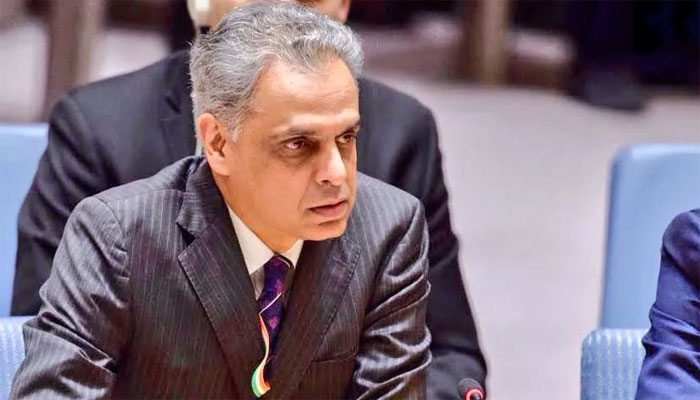
Syed Akbaruddin, former Permanent Representative of India to the United Nations, has said that a New York Times Report connecting India’s vote in UN on Israel with the purported purchase of the Pegasus software from Israeli company NSO is utter rubbish. “The insinuation about India’s UN vote is utter rubbish…”, he tweeted reacting to a tweet posting the NYT article.

In the report on how Israel was using the Pegasus software for diplomatic leverage, NYT had insinuated that India’s pro-Israel vote in the UN was linked to the purchase of the software. However, Syed Akbaruddin, who was the Permanent Representative of India to the United Nations during that period, has completely denied the allegation.

The former diplomate reiterated it today, saying that the insinuations about India’s UN vote are erroneous. During an interview with NDTV, Akbaruddin said NYT never approached him about India’s vote favouring Israel in the UN in 2019. In its report, New York Times had said, “In June 2019, India voted in support of Israel at the UN’s Economic and Social Council to deny observer status to a Palestinian human rights organisation, a first for the nation.” NYT has speculated here that India voted in favour of Israel in exchange for alleged access to Pegasus spyware.

‘I am amused’ said Akbaruddin

Akbaruddin, who had served as Permanent Representative to the UN in New York between January 2016 to April 2020, said he was amused when he learned about the speculations NYT had made about India’s vote against an NGO at the UN. He said, “It was a mundane case of a Palestinian NGO that came in the NGO committee, which is a tiny committee of the UN ECOSOC (Economic and Social Council).” He added that initially, no country had a problem with the NGO, so it was pushed for approval to ECOSOC.

However, later, several countries came up with evidence of the NGO’s alleged connection with terrorist organisations that were not revealed in the initial submission. He said, “We ourselves have many concerns about NGOs being infiltrated by terrorists. Therefore when this case came up, and my colleague who handles this committee came to me and asked ‘ambassador, what do we do?’ and without blinking an eye, I said, ‘well, if there is a terrorist concern and all they are asking is to delay this to the next meeting so why should we have a problem at all.’ I never consulted anybody. I never asked anybody. I gave the direction because it was in consonance with our policy, and we voted on the right side of the history there.”

He further added no one from Delhi ever contacted him on the matter. It was about an NGO and not about Palestine itself. He said, “I am little surprised that New York Times picked up a disparate vote on a small NGO and linked it to a bigger story.”

‘Nobody from NYT approached me’

When he was asked if he knows NYT ever approached anyone from the Indian mission to get information about the vote, Akbaruddin said, “Both Mike and I have moved on, and NYT certainly did not contact me.”

NDTV reporter questioned if the vote was against India’s stand on two-nation theory in the case of Israel and Palestine, to which Akbaruddin said, “First of all, this was not about the two-nation theory. It was about an NGO. If we looked at it as an issue of NGO that perhaps had terrorist links and a year before we had abstained on the similar thing.” He further added India was working on a framework under which we said every NGO should be vetted for the UN-designated list.

He said, “If NYT was serious, they certainly would have contacted me. I would have said the same thing I am telling you, and the matter would have ended there. Nobody came to me. If this was such a sensitive issue, then somebody would have sensitised me. Or, later on, would have said you have done the right thing. Nobody questioned me over this, and the matter ended there. I am surprised New York Times has done shoddy work on this.”

Rahul Gandhi used the NYT Pegasus story to target the Modi government

NYT published a report on January 28 regarding their year-long investigation into the controversial Israeli spyware Pegasus. The New York Times article mentions how various countries had purchased the software from its maker NSO, which included India. The report says that Pegasus was part of the $2 billion defence deal India had signed with Israel in 2017 during PM Modi’s Israel visit. Unlike the previous allegations regarding the software, the New York Times article does not make any allegations about its misuse.

After the NYT article came up, the Congress party has started attacking to govt over the issue, led by Rahul Gandhi. The former Congress president has alleged that the Modi govt has used the software to spy on primary democratic organisations, political leaders and members of the public. He alleged that the govt had targeted everyone, including govt functionaries, opposition leaders, armed forces and judiciary, by tapping their phones.

However, unlike what Rahul Gandhi and his party are alleging, the New York Times article does not mention anything about how the Indian govt used the software. It just said that along with dozens of other countries, including the USA, India also had acquired the Pegasus software in 2017.

The Supreme Court has already formed a committee to investigate the allegations regarding the use of Pegasus. The court has also asked the people who had alleged that their phones were hacked by the govt using the tool to submit their phones to the committee for forensic analysis of the devices. Several people have submitted their phones accordingly, and their phones were returned after making a copy of the same for analysis. However, it is not known whether Rahul Gandhi has submitted his phone or not.