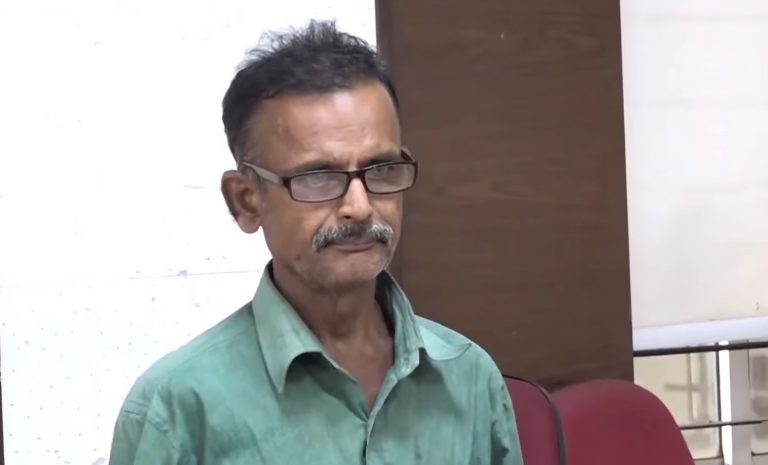
A 62-year-old Christian man in Karnataka has been arrested for desecrating several Hindu temples by dropping used condoms. Devadas Desai (62), son of John Desai, was arrested by Mangaluru South Police for dropping used condoms at various temple premises and in donation boxes in temples in the region. The police were looking for the accused behind such repeated desecrations for a year, and finally made the arrest.
At least five temples in Mangaluru had lodged complaints with the police after used condoms were found inside temple premises. However, the police were unable to find the culprit. But after a used condom was found inside a donation box at a temple in Korajjana Katte village on December 27, the man was finally nabbed. After the temple management complained to the police about the incident, CCTV footage from the temple and nearby areas were checked, and the man was seen dropping something in the donation and leaving the place.
Based on CCTV visuals, the police nabbed the person, and he confessed during interrogation that he had desecrated several temples in a similar manner.
“Five cases were registered at various police stations where used condoms were thrown in different temple premises in Mangaluru. With the help of the CCTV footage, our team managed to nab the accused,” Mangaluru Police Commissioner N Shashikumar said. The police informed that the accused has been identified as Devdas Desai, a native of Unkal in Hubbali, who has been living in Mangaluru for the past 20 years.
“Since his father’s days, the family has been practising Christianity. He left his wife and child many years ago and is not in touch with them. He is an ardent Christian,” Commissioner Shashikumar added. Police said that Desai desecrated religious places of other religions to make people follow his religion.
The accused used to work as an auto driver, but had left the job due to old age, and has been collecting plastic and selling it to scrap dealers to earn a livelihood.
Although five complaints of such incidents were reported, the accused has revealed that he has desecrated 18 places in total. The Police further informed that Desai had desecrated only Hindu religious places, but other holy places as well, including Gurudwaras and mosques.
“The accused had dropped used condoms in Gurudwaras as well as Mosques in the region. He has also revealed all the areas where has done such acts. When asked about how he can recall all the places clearly, he said he had worked as an auto driver for over 15 years and is well versed with all the places. He used to collect used condoms from waste dumps. We have also found some writings against other religions from his house,” Shashikumar said.
Apart from used condoms, Desai had also dropped letters to hurt the religious feelings of devotees, and disfigured images of politicians in the donation boxes.
Talking to the media, the man defended his action saying he was doing it to spread the message of Jesus. “I am spreading the message of Jesus from the past 15 years. The Bible says that except Jesus there is no other god. I used to drop these condoms as impure gifts must be given to impure places. I don’t have any remorse, the god has given us a life of 70 years and I am already 62 years old,” Desai reportedly said.
Police have found that the accused is not mentally ill, he can read and write, and answers all questions asked, making it clear that he was desecrating the temples fully aware of what he was doing.
It may be noted that in January this year, used condoms and posters of disfigured images of then CM BS Yediyurappa and his son BY Vijayendra with Christian messages were found from the hundi of Koragajja Guligajja Daivastana, near Ullal in Mangaluru. Defaced images of PM Modi, Amit Shah, JP Nadda and other BJP leaders were also found in the posters. Now it can be confirmed that Devadas Desai was behind this incident.
In an exclusive conversation with Goa Chronicle Executive Editor Sonakshi Datta, a mother of a now 18-year-old boy spoke about her family’s struggle in the fight for justice for her son, who was raped and sodomised by a Christian priest, Fr. Lawrence Joshi, in 2015, when he was 12-years-old. The pastor of the Church in Shivaji Nagar, Dadra in Mumbai was sentenced to life in prison by the Special POSCO Court.
“Fr Lawrence has been punished now but I had known, right back in 2015 that he would perish when he wronged my son. Lawrence had confessed about sexually exploiting my then 12-year-old son in front of me and my husband, going down on his knees, and had asked us to forgive him stating that such a ‘mistake’ would not be repeated in the future”, she said while conversing with the Goa Chronicle Executive Editor Sonakshi Datta.
It may be noted, that in 2015, the 12-year-old victim had told police that he and his brother went to the church in Shivaji Nagar, Dadar, on November 27, 2015. After the prayers, he was called inside by Fr. Lawrence under the guise of keeping a box. When the boy went inside, the pastor closed the door from the inside and sexually assaulted the minor. The minor had been left injured and bleeding. The boy added that the priest had done something similar a few months before the incident also. He had confessed the same in front of the magistrate too.
Pastors followers stage ‘morcha’, spread lies about the victim’s family
Recalling the harrowing incident and the repercussions it had on her son and her family, the victim’s mother claimed that when the family went to file a complaint against Lawrence, his followers staged a ‘morcha’ against them, accusing the victim’s family of spreading falsehoods about him for monetary benefits.
She added that whenever she went to court, the pastor’s supporters made derogatory remarks about her. She use to be alone in the courtroom, while the pastor had a slew of supporters standing by him, offering him biryani like delicacies, recalled the victim’s mother.
Minor attempts suicide, church goes on to shield the accused
The mother lamented that Father Lawrence had exploited her son three times and that her now 18-year-old son was still the same traumatised 12-year-old child who cannot go out in public for fear of being victimised again. She said this while confessing that her son still holds her hand for support.
The mother went on to describe how her distraught son had attempted suicide twice and was currently undergoing psychological counselling.
Further revealing the church’s obnoxious practises, she stated that after she notified the Vice President of the church about Lawrence’s wrongdoings and requested justice, he answered: “Let it be, leave it; he is a boy after all.”
She said she had also taken her son to the Cardinal of the church following his horrific encounter, but all the Cardinal said was that he was travelling for Rome and would resolve problems when he returned. The Cardinal has, however, remained aloof to the family and has never bothered to check in on the victim. “The church members continue to harass my family and most probably, would never leave us alone”, she rued.
She then described to Goa Chronicle how the church members held “morchas” (processions) outside her home and teased them in the streets about her son being raped. Her family, until today, has never been consoled by the church or the Cardinal, added the victim’s mother.
“Right from 2015 till now, one person, Brother Jo Soros of The Society of St Vincent de Paul (SSVP) stood by our side and assisted us through the hard times. SSVP always stands by the poor to help them. On the other hand, the Cardinal kept lying through his teeth saying he helped us and assisted us financially for my son’s treatment”, the boy’s mother added.
Even now, she claimed, when she and her husband went to church, people literally spat at them and pointed fingers at them, claiming their child had been raped. Despite all this, their trust in God has been unshakeable and would stay so, said the mother, asserting further: “I have turned into an immensely strong mother now.”
“Come what may, we will not get frightened and I am sure that even the Cardinal would be punished soon”, the mother said, looking determined in her struggle against the Church’s evil practises.
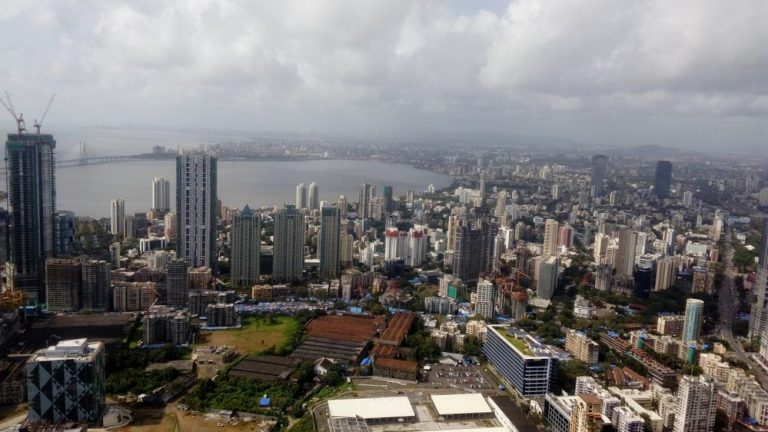
Mumbai Police have issued a high alert after receiving intelligence reports that Khalistani elements could carry out terrorist attacks in the city on new year eve. All holidays and weekly offs for the cops posted in Mumbai have been cancelled on December 31 in view of this threat.
“All police holidays & weekly holidays have been cancelled tomorrow and every policeman posted in Mumbai will be on duty. Information was received that Khalistani elements could carry out terrorist attacks in the city, after which the Mumbai Police has been on alert”, ANI quoted Mumbai police as saying.
All police holidays & weekly holidays have been cancelled tomorrow and every policeman posted in Mumbai will be on duty. Information was received that Khalistani elements could carry out terrorist attacks in the city, after which the Mumbai Police has been on alert: Mumbai Police
In view of the situation, tight security has been arranged at major railway stations in Mumbai, including Mumbai, Dadar, Bandra Churchgate, Chhatrapati Shivaji Maharaj Terminus, Kurla and other stations. Quaiser Khalid, the Commissioner of Police for Mumbai Railway informed that more than 3000 railway officers will be deployed tomorrow to monitor the security at railway stations.
Restrictions under section 144 of the CrPC are already in place in Mumbai, although it was imposed due to Covid-19. Any kind of new year celebrations and gatherings in any closed or open space, including hotels and restaurants, bars and pubs, have already been banned by BMC in the city in the wake of the emergence of Omicron variant of Coronavirus.
The high alert of a possible Khalistani terror attack in Mumbai comes in the wake of emergence of Sikhs for Justice (SFJ) link with the Ludhiana court bomb blast. German police have arrested SFI leader for involvement in the blast, and reportedly he was involved in conspiracy to more blasts in Delhi and Mumbai. Notably, the bomb in Ludhiana court had gone off while being planted in a bathroom, killing the accused who was planting the bomb.
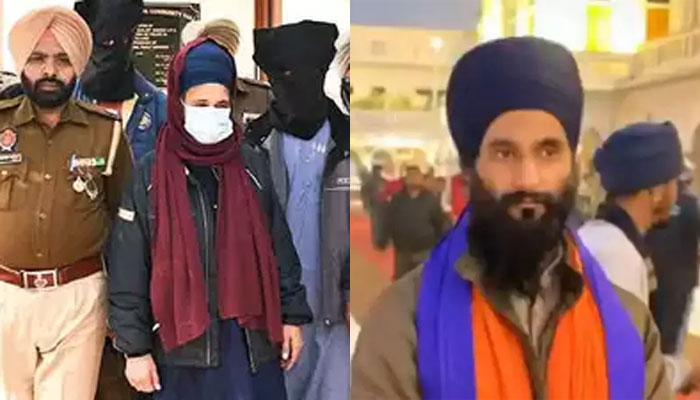
Patiala Police arrested 28-year-old Jagmeet Singh, his mother 50-year-old Jasvir Kaur and his friend 23-year-old Ravinder Singh for allegedly campaigning for the so-called Referendum 2020 of terrorist organisation Sikhs For Justice. They have been accused of appealing to the Sikhs on social media to vote for the referendum. Jagmeet Singh had made headlines as the face of farmer protests in November 2020 when his videos went viral facing water cannons of Haryana Police.
As per reports, Police said the trio has no previous case registered against them. Jagmeet and his mother originally hail from Durgapur village in Gurdaspur. However, currently, they are living in Banur’s Housefed Society. His friend Ravinder hails from Jasda village in Mandi Gobindgarh in Fatehgarh Sahib. All three have been campaigning for the referendum for some time. The trio has been sent to six-day police remand. The investigation is underway to find out if they had received any foreign funds for the campaigning.
The trio is accused of campaigning for a referendum in Rajpura during langar that was being organised to mark the martyrdom of Mata Gujri and the sons of Guru Gobind Singh. A case has been registered against them under Sections 153 A, 505 (2), 505 (3), 120-B of the Indian Penal Code.
GS Bains, DSP, Rajpura confirmed that Jagmeet was the same person whose video had gone viral during farmer protests last year. He said, “The trio accused were campaigning for a referendum in connivance with banned organisation Sikhs For Justice (SFJ) and were also motivating the masses to vote online for the referendum. Jasvir was the key campaigner. The bank accounts of all the accused are being examined to search if they got any foreign funding.”
HS Bhullar, SSP, Patiala said the Police recovered seized 692 forms and pamphlets, plastic plates, spray bottles, pens, and other campaigning material for the so-called Referendum 2020. He said, “Jasvir’s brother-in-law Manjit Singh was area commander of Babbar Khalsa International group, whereas her husband, Kuldip Singh, was working as a superintendent with Chandigarh Transport Undertaking. Ravinder is Jagmeet’s friend.”
On the other hand, the farmer leaders said they would see if he was being punished for participating in farmer protests. SS Pandher, leader of Kisan Mazdoor Sangharsh Committee, said, “We will take serious notice if Jagmeet has been punished for supporting farmers’ agitation.”
Jagmeet Singh’s viral video
On November 25, 2020, when protesters were marching towards Delhi to mark their protest against the now-repealed Agriculture laws, the Haryana Police used water cannons to disperse the protesters.During that time, Jagmeet stood in front of the water cannon and did not move for several minutes. Videos of Jagmeet went viral on social media platforms, and supporters of the farmer agitation hailed him as a ‘hero’.
During farmer protests, evidence showed that the movement was captured by anti-India forces, including Khalistani organisations, Naxal sympathisers and professional protesters. Khalistani terrorist organisations SFJ had announced a cash reward for anyone who hoisted the Khalistani flag on Red Fort on January 26, 2021. Two flags with Sikh Holy symbol were hoisted amidst riots in Delhi. Links to Khalistani sympathisers like Mo Dhaliwal were also revealed during the farmer protests.
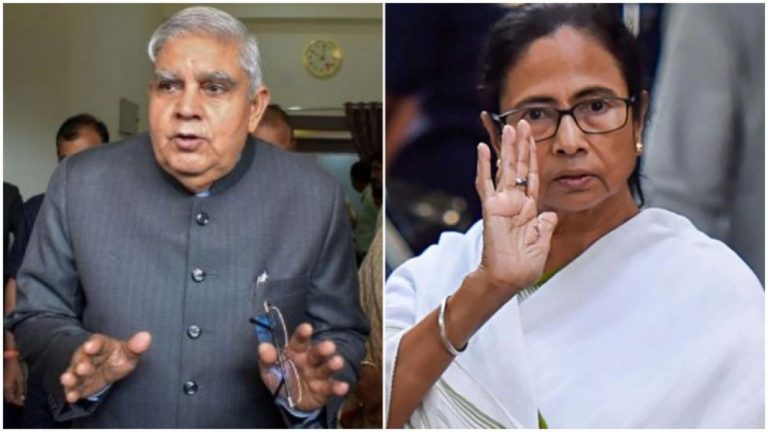
Trinamool Congress (TMC) MP Saugata Roy has accused West Bengal Governor Jagdeep Dhankhar of sending him ‘provocative messages’ against Chief Minister Mamata Banerjee every day. While terming it an unethical act, Roy alleged that Dhankhar often tweets against the TMC-led government after meeting BJP leader Suvendu Adhikari and Home Minister Amit Shah.
Roy, however, has neither specified the kind of messages he allegedly receives from the Governor nor offered a specimen of any such message. Besides, the mode of messaging is also not clear.
However, the Governor has not responded to this daily diatribe of the TMC, but he has vehemently protested after Mamata Banerjee mocked him as a ‘Raja sitting in the Raj Bhavan.’
“Raj Bhavan me ek raja baithata hai. Wah kya nahin bolta hai. BJP ke president se bhi bada.” Bengal chief minister had hit the Governor during her political programme in Goa.
The Governor expressed shock that TMC officials, ministers and even CM have been publicly using the foulest and vituperative language to defame and insult the post of the Governor. Dhankar said that on December 16, he had urged the CM for interaction as constitutional functionaries must act in harmony to serve people. But she did not respond to his offer of dialogue and deliberation.
Stunned @MamataOfficial “राज भवन में ऐक राजा बैठता है”stance, while on a political visit to Goa- unexpected act of impropriety
On Dec 16 urged CM for interaction as constitutional functionaries must act in harmony to serve people.
— Governor West Bengal Jagdeep Dhankhar (@jdhankhar1) December 29, 2021
The Governor is also understood to have personally conveyed his anguish and anger to Bengal CM over her Raja in Raj Bhavan remark. In his message to Bengal CM, the Governor said her statement against him was hurtful and not in sync with constitutional norms of fact scenarios.
Functionaries @AITCofficial and Ministers @MamataOfficial have publicly used most foul vituperative language defaming & insulting Governor.
Undeterred by these would continue to earnestly work to secure governance as per constitution & law. Present scenario alarmingly worrisome. pic.twitter.com/FDPJyXyjAS
— Governor West Bengal Jagdeep Dhankhar (@jdhankhar1) December 29, 2021
Governor Dhankar said that undeterred by such insinuations, he would continue to earnestly work to secure governance as per constitution and law. Besides, he termed the present scenario alarmingly worrisome.
The Bengal Governor has long been facing insinuations as he objected to the state government undermining constitutional norms while running the government. Besides, the state government has been accused of undermining the position of the Governor.
Position of Governor as Chancellor undermined
For instance, in a recent case, the government appointed vice-chancellors at 24 universities without the approval of the Governor-Chancellor who is the appointing authority.
In another case, private universities of Bengal were allegedly discouraged from attending a meeting called by the Governor on December 20, State education minister Bratya Basu even threatened to seek legal opinion to nominate Mamata Banerjee as Chancellor of universities instead of governor.
Gorkhaland Territorial Administration (GTA) a den of corruption: Governor
The Governor has also shot off a letter to the state government to seek a report on the functioning of the Gorkhaland Territorial Administration (GTA) has become.
Calling GTA ‘a den of corruption’ he wondered no CAG audit of GTA was done for a decade since inception. Pointing towards ‘serious dereliction of duty’ he said that in spite of his firm directives, the report was made available to him.
Law of ruler, not rule of law in Bengal
Governor has been very critical of the law and order situation in Bengal and he also criticised the government for blatant violations of human rights in Bengal. On Human Rights Day he said that people were so scared that they even cannot express their fear.
A pastor in Songadh taluka of Tapi district has been arrested on allegations of raping a minor girl. His wife, who has been accused of filming the incident and using it for blackmailing the minor girl, has also been arrested. As per reports, the incident occurred in May this year but the complaint regarding the same was registered at Songadh Police station on Tuesday.
Pastor Baliram Kokni and his wife Anita were subsequently arrested and produced before the court. The duo have been sent to police custody for four days. The minor girl worked as a farm labourer and went to the church for prayers. The accused then developed contacts with her and her parents. As per reports, the pastor and his wife called her to Songadh on pretext of getting KYC done and then allegedly raped her.
A report in Sandesh states that the girl was first raped in May in the hut in her farm. On next day also the pastor allegedly raped her by luring her by stating money will be deposited in her bank. During both the assaults, the pastor’s wife Anita was reportedly present. On 31st May 2021, the couple again called her to Songadh on pretext of getting her KYC done where she was allegedly raped a third time.
Shockingly, the pastor’s wife Anita, reportedly recored the heinous crime on the phone. The minor girl in her complaint has alleged that she was blackmailed with the pictures and clips of the assault. Police suspects that the minor girl did not file a complaint earlier for fear of her videos and pictures going viral on the social media.
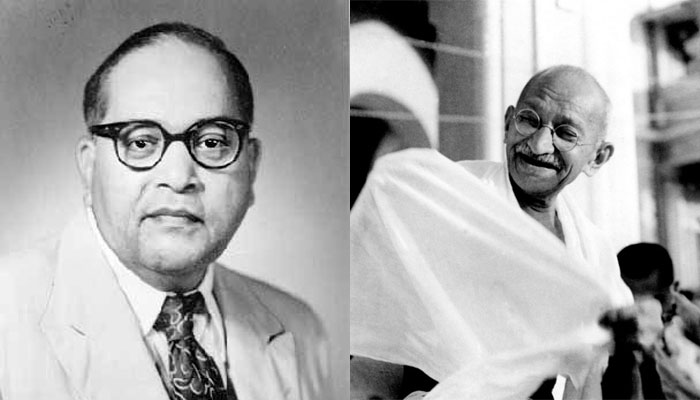
A lot of noise is being made over criticism of MK Gandhi after Kalicharan Maharaj’s recent speech at the Raipur Dharma Sansad. The Chhattisgarh government headed by Congress’ Bhupesh Baghel has now arrested Kalicharan and many people are asking an important question. Is MK Gandhi beyond criticism? Why are some political leaders so touchy and indignant about Gandhi being criticised?
Author and scientist Dr Anand Ranganathan today shared some statements written by Dr BR Ambedkar wherein he had criticised MK Gandhi and his style of politics in a not so subtle manner.
What Kalicharan Maharaj has said on Gandhi is nothing compared to what Dr Ambedkar had said on Gandhi, a tiny fraction of which I attach as proof.
Dear bhakts of Mahatma Gandhi, let me see if you have the guts to go after Babasaheb. Bloody hypocrites. pic.twitter.com/MnQGU5GEQK
Dr Ranganathan questioned those who are demanding the arrest of those criticising Gandhi if they would go after Dr Ambedkar too. While sharing an excerpt from an article Dr Ambedkar wrote about Gandhi, he said, “What Kalicharan Maharaj has said on Gandhi is nothing compared to what Dr Ambedkar had said on Gandhi, a tiny fraction of which I attach as proof. Dear bhakts of Mahatma Gandhi, let me see if you have the guts to go after Babasaheb. Bloody hypocrites.”
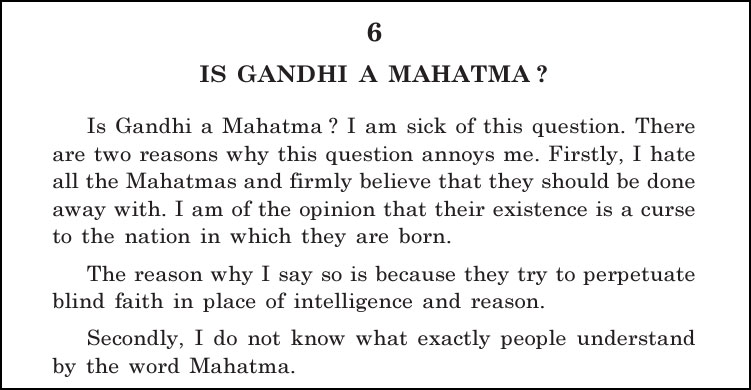
The excerpt Ranganathan shared was from the article ‘Is Gandhi A Mahatma?’ Dr Ambedkar wrote for a Marathi Magazine Chittra. It was published in its Dipavali Special Number, J 938. It is also available on page 66 of ‘Dr Babasaheb Ambedkar – Writings and speeches volume 17 part II‘ available on Ministry of External Affairs website.
In the article, Dr Ambedkar talked about how the politics of Gandhi was hollow and noisy. He said, “The politics of Gandhi is hollow and noisy. It is the most dishonest politics in the history of Indian polity. Gandhi was the man responsible for eliminating morality from politics and instead introduced commercialism in Indian politics. Politics has been denuded of its virtue.”
In the 1,800+ word article, Dr Ambedkar extensively talked about why he had a problem with Gandhi being referred to as Mahatma. He said he was sick of the question ‘Is Gandhi a Mahatma’. Explaining why the question annoyed him, he said, “Firstly, I hate all the Mahatmas and firmly believe that they should be done away with. I am of the opinion that their existence is a curse to the nation in which they are born. The reason why I say so is because they try to perpetuate blind faith in place of intelligence and reason. Secondly, I do not know what exactly people understand by the word Mahatma.”
Excerpt from Is Gandhi A Mahatma?’ by Dr Ambedkar from ‘Dr Babasaheb Ambedkar – Writings and speeches volume 17 part II’ Source: mea.gov.in
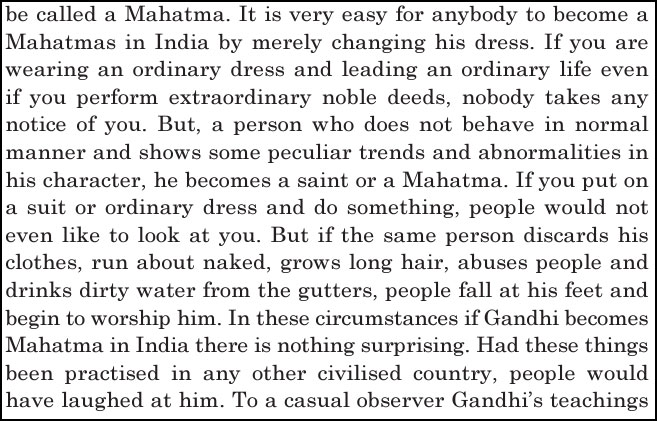
Explaining how people were referred to as Mahatma in India at that time and how easy it was to become one, Dr Ambedkar said, “It is very easy for anybody to become a Mahatma in India by merely changing his dress. If you are wearing an ordinary dress and leading an ordinary life, even if you perform extraordinary noble deeds, nobody takes any notice of you. But a person who does not behave in normal manner and shows some peculiar trends and abnormalities in his character, he becomes a saint or a Mahatma.”
Excerpt from Is Gandhi A Mahatma?’ by Dr Ambedkar from ‘Dr Babasaheb Ambedkar – Writings and speeches volume 17 part II’ Source: mea.gov.in
Dr Ambedkar said he was not surprised Gandhi became Mahatma in India because people had the tendency to worship those who “discards his clothes, run about naked, grows long hair, abuses people and drinks dirty water from the gutters.” He added, “people fall at his feet and begin to worship him. In these circumstances if Gandhi becomes Mahatma in India there is nothing surprising.” Hinting India was an uncivilised country, Dr Ambedkar said, “Had these things been practised in any other civilised country, people would have laughed at him.”
Dr Ambedkar expressed his confusion why people fussed over Gandhi over the teachings like ‘Satya’ and ‘Ahimsa’ that originally came from Lord Buddha. “Nobody except an ignorant fool or congenital idiot would give credit to Gandhi for originality in this matter. There is nothing new in the pronouncement that ‘Truth and Non-violence’ are necessary for the preservation of human civilisation. There is nothing new that Gandhi has added to the maxim,” he said.
He added Gandhi did not provide answers to many questions regarding in what circumstances the world should uphold the noble principle of ‘truth’ and consider violence a ‘right action’. He said Gandhi’s character leaned more towards cunningness than seriousness or sincerity. “He has managed to keep himself in the forefront by means of cunning and inherent shrewdness. A person who has faith in his capacity and character faces the realities of life in a bold and manly manner,” Dr Ambedkar added.
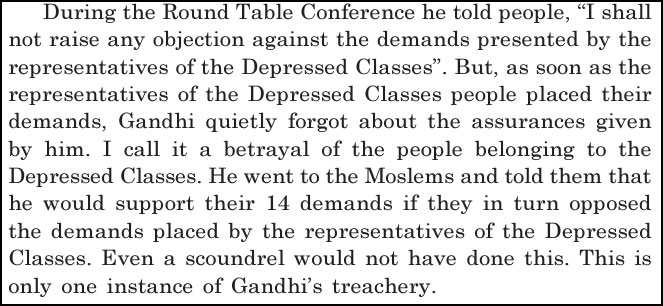
“Treachery and deceit are the weapons of the weak. Gandhi has always used these weapons,” said Dr Ambedkar. He mentioned how during the Round Table Conference, he promised not to raise any objection against the demands to be tabled by the Depressed Classes. However, as soon as they tabled their demands, he objected to the same. “I call it a betrayal of the people belonging to the Depressed Classes,” Dr Ambedkar said. He added, “He went to the Moslems and told them that he would support their 14 demands if they in turn opposed the demands placed by the representatives of the Depressed Classes. Even a scoundrel would not have done this. This is only one instance of Gandhi’s treachery.”
Excerpt from Is Gandhi A Mahatma?’ by Dr Ambedkar from ‘Dr Babasaheb Ambedkar – Writings and speeches volume 17 part II’ Source: mea.gov.in
He further added how Gandhi, in order to humiliate Nehru, opposed the proposals made to amend the Nehru Committee’s Report during an open session of Congress. He said, “The corrections which were proposed to be made in the Nehru Committee Report were suggested by Mr Jinnah for the benefit of his community. But, when Gandhi came to know about it, he thought a great deal more had been given to the Moslems by Pandit Motilal Nehru than what he wanted In order to humiliate Pt. Motilal Nehru he vehemently opposed these proposals.”
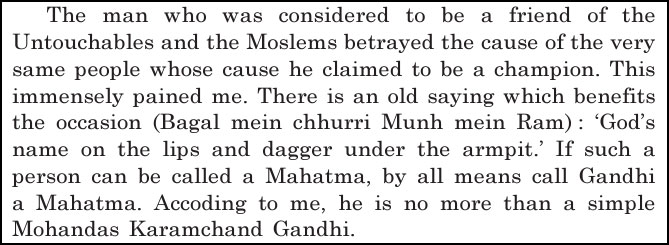
Dr Ambedkar also blamed Gandhi for the hostile relation between Hindus and Muslims. He said, “Hindu-Moslem hostility is the result of the deceitful action on the part of Gandhiji. This immensely pained me. There is an old saying which benefits the occasion (Bagal mein chhurri Munh mein Ram) : ‘God’s name on the lips and dagger under the armpit.’ If such a person can be called a Mahatma, by all means call Gandhi a Mahatma.”
Excerpt from Is Gandhi A Mahatma?’ by Dr Ambedkar from ‘Dr Babasaheb Ambedkar – Writings and speeches volume 17 part II’ Source: mea.gov.in
He added, “The politics of Agarkar and Tilak was based on honesty and truth. It was not hollow and noisy. But the politics of Gandhi is hollow and noisy. It is the most dishonest politics in the history of Indian polity. Gandhi was the man responsible for eliminating morality from politics and instead introduced commercialism in Indian politics. Politics has been denuded of its virtue.”
Dr Ambedkar urged Hindus to find a way to get rid of the pernicious saintly idiosyncracies of Gandhiji in Indian public life. He said, “If the Hindu India does not realise it today, it will take a long time to retrace its steps. Majority of the Indian population is illiterate, ignorant and uncivilised. This may not be the fault of the people. The privileged few of the society have deliberately kept the masses ignorant and illiterate. As a matter of fact it is impossible to fight against the Mahatma on the strength purely of logic and rationalism.”
Dr Ambedkar questioned the saints and mahatmas of that time and equated Gandhi to them. He said they had learned the ways to befool people. He questioned if Hindu would try to change the minds of ‘mahatmas’ so that they try to serve India rather than themselves.
Uttar Pradesh lies on the hallowed grounds that saw the rise and fall of various important chapters in Indian history. Modern India has seen a flux of political entities, leaders, trends and issues in Uttar Pradesh over the years. Pandit Govind Ballabh Pant, leader of the Congress Party, was the first Chief Minister to lead an elected Assembly in Uttar Pradesh in 1951, followed by Sampurnananda, Chandra Bhanu Gupta and Sucheta Kripalani.
Supported by Ram Manohar Lohia and Raj Narain, and Jana Sangh’s Nanaji Deshmukh, Chaudhary Charan Singh formed the first non-Congress government in 1967, leading the Samyukta Vidhayak Dal (SVD), a coalition that had parties as disparate as the Communist Party of India (Marxist) and Bharatiya Jana Sangha (BJS), along with the Swatantra Party, Republican Party of India and Praja Socialist Party. The next few decades saw a Congress resurgence (which also had six Chief Ministers from 1980 to 1988!) followed by the Janata Party experiment.
In 1991, the politics around Mandir and Mandal (Commission) saw the tussle between two OBC heavyweights: Mulayam (Singh Yadav) vs Kalyan (Singh), while the first Dalit-OBC coalition took power in UP in 1993, with Mulayam Singh Yadav and Mayawati allying to form the government. The latter would go on to become the first Dalit Chief Minister to be sworn in, in 1995. The next couple of decades saw the rise and fall of governments by Kalyan Singh (BJP), Ram Prakash Gupta (BJP), Rajnath Singh (BJP), Mayawati (BSP), Mulayam Singh Yadav (SP) and Akhilesh Yadav (SP).
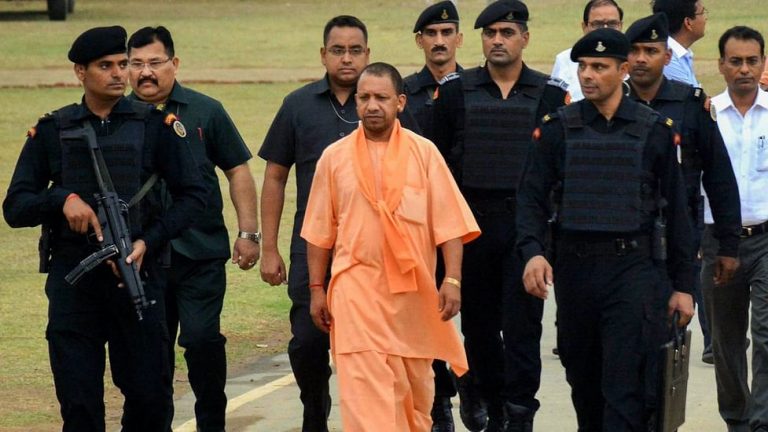
Prime Minister Narendra Modi’s charisma, BJP’s caste arithmetic of wooing non-Jatavs, non-Yadav OBCs and upper castes, along with the reverse polarization of Hindu votes due to the excessive wooing of Muslim voters by SP and BSP, smart and aggressive social media campaigning by the BJP, infighting in the Samajwadi fold and a divided opposition helped the Bharatiya Janata Party to seize power in 2017. In a rather surprising move, instead of going for state bigwigs like Rajnath Singh, Uma Bharti or Keshav Prasad Maurya, the BJP opted for Yogi Adityanath, the politically powerful Sanyasi from Gorakhpur in eastern Uttar Pradesh, as its Chief Minister.
Yogi was a popular face who had been a Member of Parliament from Gorakhpur for five consecutive terms. A disciple of Mahant Avaidyanath who was himself a disciple of Mahant Digvijay Nath, he followed his Guru and Guru’s Guru in taking up the mantle of the Gorakhnath Math as well as pursuing an assertive Hindu brand of politics from Gorakhpur. He was controversial in certain sections of the populace and media, with Amnesty International even saying that “Adityanath has been one of Uttar Pradesh’s most polarising politicians.” However, many people across the state also felt that if there was anyone who could bring the complete disarray of UP under the SP’s Yadav factions, it had to be the Mahant from Gorakhpur. As we move towards the upcoming state election in Uttar Pradesh, let us look back at the last five years and see how the Yogi government has fared in Uttar Pradesh.
Gundaraj No More
Crime is one of the most debilitating factors that has hindered the growth and development of Uttar Pradesh over the decades. As per the data released by the National Crime Records Bureau (NCRB) in late March of 2021, the crime situation has considerably improved in the state. Uttar Pradesh has seen a reduction of rape cases from 59,445 in 2018 to 49,385 in 2020, with a charge sheeting rate of 77.1% in 2020, as well as among the highest conviction rate of such crimes today. This has been due to proactive steps taken by the Yogi government, which include women helpdesks, night security cover scheme, UP-122 India App, anti-Romeo squads and pink booths.
The state has also seen a sharp fall in instances of murder and cyber-crime. The NCRB has shared that the state government has also recorded a high rate of charge sheeting at 49.9% for cyber-crimes, although the number of cases has increased from 6,280 in 2018 to 11,097 in 2020. Police disposal of IPC crime cases has been positive with 2,81,162 cases charge sheeted in all (with a charge sheeting range of about 77%) and 3,65,628 cases disposed of, in 2020. Uttar Pradesh has seen a dramatic decline of almost 20% from the year 2016 to 2020, in cases of murder. 3,904 arms were seized from anti-national elements in 2020. There were about 1.6 murder cases per 1 lakh population in 2020. As per the NCRB data, the state went from 65,155 cases of violent crimes in 2018 to 51,983 in 2020. While the rate of total crime against individuals belonging to Scheduled Castes (SCs) has been 30.7% in 2020, the charge sheeting has been proactive with a rate of charge sheeting of 84.3% in 2020.
The government has prioritised stringent law enforcement (with 75 police districts and 75 AHT units in 2020) and undertaken legal, administrative and awareness-building activities to reduce crime in the state. One of the major positive turns in the manner in which the state government has handled police functioning is the transparency in postings and the establishment of stable tenures for personnel. Earlier Gundas and Bahubalis (strongmen) ran riot across Uttar Pradesh and while they still remain a menace, some drastic steps have helped in reducing their influence. In August 2020, the number of people who were booked under the National Security Act (NSA) was the highest in 4 years. Corruption has also been dealt with, with a strong hand, with 105 cases charge-sheeted in 2020 by the Anti‐Corruption Bureau, Vigilance and Lokayukta under Prevention of Corruption Act, 1988 and related sections of IPC.
This is even as the number of corruption cases reported rose briefly from 84 in 2018 to 134 in 2019, before decreasing to 62 in 2020. Recently, Chief Minister Yogi Adityanath said that the state administration had attached properties of criminals worth over ₹1,800 crores demolished illegal encroachments. There has been a relentless crackdown on certain infamous gangster-politicians of Uttar Pradesh such as Mukhtar Ansari (Bahujan Samaj Party) and Atiq Ahmed (Samajwadi Party). As per police reports, around 90 of Atiq Ahmed’s gang members have been arrested and properties connected to him worth ₹325 crores have been seized and frozen. while 244 members of Ansari’s gang have been acted against and properties worth ₹194 crores have been seized. In this way, the entire ecosystem around these gangster-politicians has been dismantled, thereby disabling them and removing the possibility of them operating their extortion rackets and other criminal syndicates.
Business, Economy and Employment
Uttar Pradesh suffered from various systemic problems, including misgovernance and corruption (with the Comptroller and Auditor General of India saying that the Akhilesh Yadav government allowed irregularities worth ₹97,000 crores under various departments between 2014 and 2017), which led to the state suffering from a lack of industrial and business contributions and investments thriving in the state. It was in the 14th position in the nationwide `Ease of Doing Business ranking. Today it is second in the rankings and third in the list of states with the highest Gross Domestic State Product (GSDP), as per the Ministry of Statistics and Programme Implementation (Government of India), with a nominal GDP of ₹17.05 lakh crore.
What led to this transformation?
In the past few years, the state government has taken a number of policy decisions to attract investment to the state, primary among which is to create an investor-friendly environment. This is closely tied to the clampdown on law and order problems in the state. In 2017, there was a consultation with various investor-friendly states like Gujarat and Karnataka to create a coherent policy on business, followed by various sector-specific policies.
Chief Minister Yogi Adityanath (right) with President of India Shri Ramnath Kovind (centre) and Governor of Uttar Pradesh Shri Ram Naik (left) at the concluding ceremony of the UP Investors’ Summit 2018. (Source: Wikimedia)
An Investors’ Summit in UP also helped boost this drive significantly. Over ₹17.05 lakh crore has been brought into the state as an investment over the last 4.5 years, with half of the same said to have materialised while the rest remains under process. Companies like Microsoft, Britannia, Brahmos, Bharat Dynamics Limited, AB Mauri and Samsung have established bases across Uttar Pradesh, from Chitrakoot and Lucknow to Jhansi and Noida. When it comes to the MSME sector, Uttar Pradesh has used the interesting One District One Product (ODOP) model under the Yogi government, which describes the model as follows
The UP Government’s One District-One Product Programme aims to encourage such indigenous and specialized products and crafts in UP that are found nowhere else – like the ancient and nutritious ‘Kala Namak’ rice, the rare and intriguing wheat-stalk craft, world-famous chikankari and zari-zardozi work on clothes, and the intricate and stunning horn-bone work that uses the remains of dead animals rather than live ones, a nature-friendly replacement for ivory.
Department of MSME and Export Production, Government of Uttar Pradesh
90 lakh MSMEs are said to have been established in the state, with the generation of 5 lakh self-employment opportunities each year. There is said to be an export of ₹89,000 crores and above from Uttar Pradesh, while the state is nationally placed first in food processing, handicrafts, ready-made garments and carpets. Innovative initiatives like the multimodal logistics hub in Greater Noida will be instrumental in attracting Foreign Direct Investment (FDI).
An Egalitarian Evocation
The growth story of Uttar Pradesh is not one of crony capitalism and isolated development of only specific sections or strata of society. The capital boom has trickled down to every section of the population, either through development policies, direct debit or infrastructure pushes. Housing and welfare have been major points that the government has focussed on. Recently, Yogi Adityanath highlighted that since coming to power in 2017, his government has provided houses to 42 lakh people from economically weaker sections of society.
In its last supplementary budget in the Assembly before the 2022 elections, ₹4,000 crores have been allocated for the provision of assistance to labourers of the unorganised sectors. Given the movement of migrant labourers during the COVID lockdown, the government has provided livelihood to 26 lakh labourers in 2021 and also decided to provide ₹500 as a monthly livelihood allowance to more than 3 crore labourers of the unorganised sector, including agricultural labourers, NREGA employees and street vendors.
The government has also kept aside ₹670 crores for increasing old-age and farmers’ pension. One of the benefits of having the same party (BJP) in the centre and the state has been the seamless integration of schemes and policy directions, with the state government has successfully implemented 42 central government-run schemes in the state. This particularly includes the central government’s crop insurance scheme – the Pradhan Mantri Fasal Bima Yojana (PMFBY), for which the state government has recently begun a statewide drive since 1 December 2021.
Housing under the PMAY scheme in Gorakhpur. (Source: PMAY)
The BJP government in UP has also tried to employ a two-pronged approach comprising of direct debit and employment generation to help citizens avail themselves of greater opportunities and resources. The government is said to have provided more than ₹5 lakh crore to people under the Direct Benefit Transfer (DBT) scheme while around 4.5 lakh youth of the state are said to have been employed in the past 4.5 years. Since the implementation of Kanya Sumangala Yojana on 1 April 2019, almost 11 lakh beneficiaries have received the advantage under this scheme, which envisages payment of ₹15,000 to a girl from the time of her birth up to the point she gets admission to graduation or diploma course. The government has doubled the per capita income of its citizens, from ₹43,000 per year in 2015-2016 to ₹95,000 in 2021.
In Conclusion
The UP government under Yogi Adityanath has reined in criminal elements and gangster-politicians in Uttar Pradesh, besides steering a massive push in investments and growth, which has not only benefitted the few but people from various cross-sections of society, in the state. The government has to look at truly emulating Narendra Modi’s slogan of sabka haath, sabka vikas‘ – development and welfare without discrimination. We can only hope that it does its best in these last few months of its stint, and its mandate is refreshed by the electorate in the state.
For, indeed, Yogi is Upyogi for Uttar Pradesh and BJP should be able to reclaim its UP-ward move!
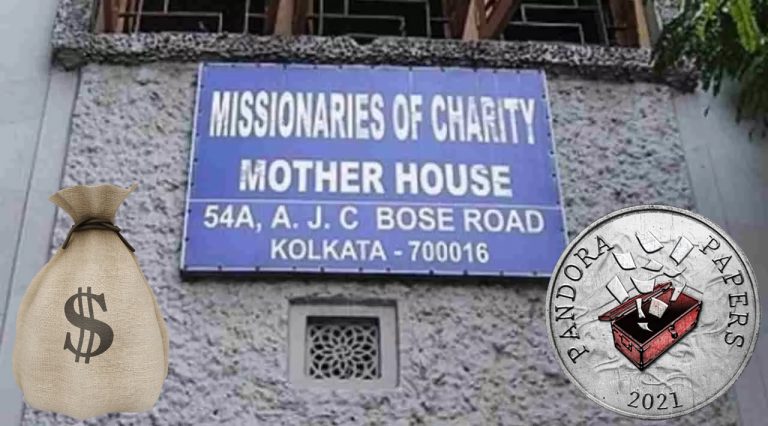
Days after Missionaries of Charity had revealed that its FCRA renewal application was rejected for not meeting eligibility conditions as per rules, it has been found that the Christian evangelist organisation has been large amounts of money from a company based in tax haven Panama. Of the total ₹75 crores received as donations from foreign donors, more than 17% came from this mysterious company with links to companies named in Pandora papers.
Social media user named The Hawk Eye made the revelation on Twitter today, after going through the FCRA returns filed by Missionaries of Charity available on the FCRA website. As per the 76-page return filed by the NGO, it had received ₹75,19,03,116.67 from foreign sources in the financial year 2020-21 from 406 donors, including 347 individuals and 59 institutions.
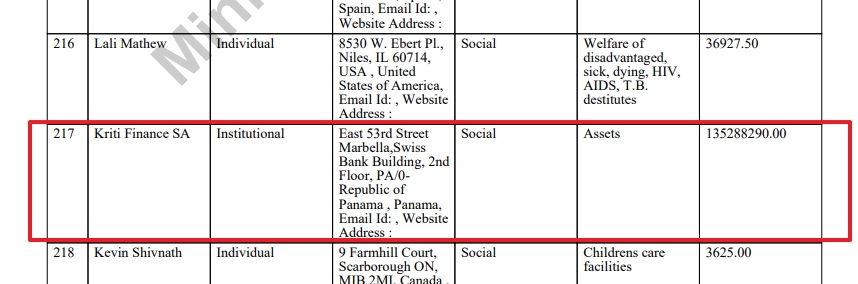
Among the donors, Missionaries of Charity in USA made the highest contribution of ₹44.19 crore in eight donations. However, the second-highest contributor for 2020-21 is a surprise, as it is Kriti Finance SA which donated a whopping ₹13,52,88,290.00 during the year. This is an asset management company based in Panama City in Panama.
From FCRA return of Missionaries of Charity
When The Haw Eye looked into the past FCRA returns of the NGO, it was found that another Panama based entity Simi Foundation has been donating large amounts of money to MOC. And the address of Simi Foundation is given as C/o Kriti Finance, which means Simi Foundation is directly linked with Kriti Finance. From 2016-17 to 2020-21, around ₹32 crore has been routed from these Panama based entities to Missionaries of Charity.
While analyzing this freaking 76pg high-magnitude FCRA report, I found something catchy. Out of 75Cr (FY20-21), MoC, India has received 44Cr from MoC, USA. Usually, u may see names of other NGO/corporate as donors. However, 2nd highest donor (13.5Cr) here is Kriti Finance SA, 2/ pic.twitter.com/wBn8bWfhqi
As Panama is known to be tax heaven, and little is known about this Kriti Finance, this raises questions on the source of funds that MOC received. It is almost certain that some other entities/individuals has routed the money using the Panama firm to Missionaries of Charity in India, and further probe is needed to reveal the actual source of this huge donation.
Interestingly, Kriti Finance SA’s Director and President is one Edgardo E. Diaz, who was named in the Pandora papers. Edgardo E. Diaz is also a Director and President in another Panama based company Barrymil Investments SA. Recently it was revealed that Wockhardt chairman Habil Fakhruddin Khorakiwala had incorporated this firm, and he and his family members hold shares in this offshore entity.
According to the Hawk Eye, Edgardo and two other directors of Barrymil are also directors of another Panama based company Furwood Investment, and all these entities are managed by the same law firm, Alemen, Cordero, Galindo & Lee.
Hawk Eye also questioned why this important link of Missionaries of Charity with the Panama based firm was not highlighted by media, especially Indian Express which had published the Pandora papers in India.
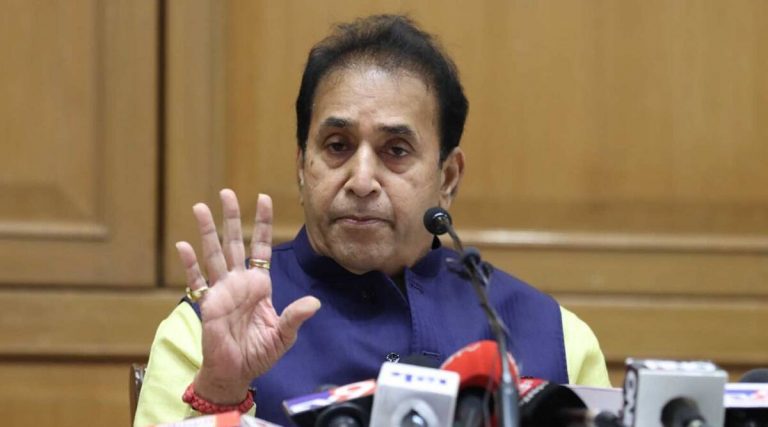
The Enforcement Directorate (ED) in its 7000 plus pages supplementary charge sheet against former Maharashtra Home Minister Anil Deshmukh has said that Deshmukh and his family members have laundered over Rs 50 Crores through different companies.
Deshmukh, who was till recently Maharashtra’s Home Minister, is a senior leader of the Nationalist Congress Party (NCP) is in jail after his arrest on November 2.
In the charge sheet filed before special PMLA Court in Mumbai, the ED further claimed Deshmukh was the primary beneficiary of the money laundering of a sum of Rs 4.7 Crore allegedly collected between December 2020-March 2021. ED said that the arrested Mumbai cop Sachin Vaze had extorted the said amount from bars and hotels across Mumbai on the instruction of Anil Deshmukh who was the Home Minister of Maharashtra.
ED has now formally named Deshmukh’s two sons Hrishikesh and Salil in the complaint besides their CA Bhavik Panjwani. In the previous charge sheet, ED had named 14 accused including Vaze.
Though, the ED so far has not recorded statements of Deshmukh’s sons about their role in the alleged money laundering. The ED has listed as many as 27 dummy companies under the indirect control of Deshmukh’s family.
These companies were used to launder money as the bribe amount was shown as donations made to Deshmukh’s trust, Sai Shikshan Sanstha by a few Delhi-based firms. The ED has rejected Deshmukh claiming that the money was loans and CSR (Corporate Social Responsibility) funds received from the companies.
The ED has attached the statements of former chief secretary of Maharashtra Sitaram Kunte and former Mumbai police commissioner Param Bir Singh.
Probe on Shiv Sena leader and transport minister Anil Parab continues
The ED probe has yet not concluded as the agency is still investigating whether Maharashtra transport minister Anil Parab laundered money through the transfer and posting of a dozen police officials. Vaze in his statement has claimed that Parab had received crores in bribe for transfers of police officers in Mumbai.
The ED has yet not received from Maharashtra Police the copy of the report prepared by former state intelligence department commissioner Rashmi Shukla. She had recorded telephonic conversations of some influential persons discussing transfer-posting of police officers in exchange for money.