Home Blog Page 4170

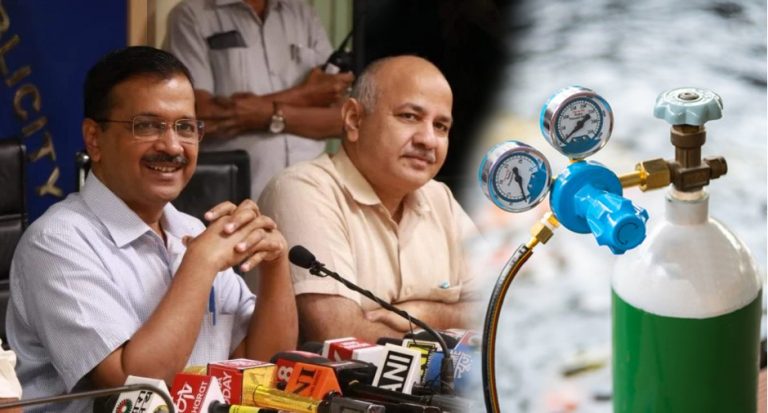
If Delhi government was exaggerating oxygen demand, why there was an oxygen crisis in April? All your questions answered

An Interim Report on the audit of medical oxygen demand and consumption in Delhi prepared by a Supreme Court appointed committee has confirmed what was being suspected, that the Delhi govt was grossly overestimating its oxygen demand during the months of March and April. The sub-group constituted as per the apex court to study the oxygen situation in Delhi has said that the state was demanding much more oxygen than required, and had hampered the oxygen supply chain in the entire region.

After the report came out, BJP leaders and social media users came down heavily on the Arvind Kejriwal government for playing ‘Oxygen Politics’ during such a pandemic. However, some left-liberals and journalists could not accept the audit committee report and questioned if there was no demand for oxygen in Delhi, why hospitals were sending SOS for oxygen and why they had stopped admitting patients due to lack of oxygen. People asked, why so many people died due to lack of oxygen, and why people were standing in long queues to refill oxygen cylinders.

These questions are legitimate, and at the first glance, it creates the impression that the audit report might be flawed. But actually, that is not the case, and the report actually does not say that there never any oxygen crisis in Delhi.

The SOS messages from hospitals, the urgent hearing at courts, the images of queues of oxygen cylinders, the black marketing of oxygen cylinders and concentrators, all of them are real, the people in Delhi suffered all of them. But it does not make the Interim Report false. Both are correct, here is how.

The oxygen demand vs consumption calculations mentioned in the report are based on extensive studies and actual data of oxygen supply, and they do prove that the Oxygen requirement in Delhi was not to the extent that Delhi govt was demanding. But despite this, the people of Delhi suffered, and there is only one reason for the same, mismanagement by the AAP government in Delhi.

Delhi didn’t arrange transport facilities for oxygen

When the second wave of Covid-19 hit the country, the union govt took several steps to increase oxygen availability. Industrial oxygen producers were asked to produce medical oxygen, and later use of industrial oxygen was banned. The Railways ran Oxygen Express trains, tankers were imported to transport oxygen. The state governments also took steps their level to ensure smooth supply of oxygen, and the corporate sector also extended their help by supplying medical oxygen from their plants.

Amid all this, Arvind Kejriwal government was sitting idle doing nothing. Being a city state, Delhi does not have industries that produce oxygen, several other states also do not have such plants. Hence, the central govt had allocated oxygen to various states based on their projected demand from the oxygen producing states and plants. The individual states then started collecting the oxygen from their allocated plants.

But the Delhi govt didn’t do that, they were expending the central govt to transport the Liquid Medical Oxygen from the nearby states to Delhi. It is on record that the Delhi government had not arranged a single tanker to move the precious gas. On 24th April, the Delhi High Court had slammed the Delhi govt for not arranging cryogenic tankers. This means, after a month the second wave had started, the Arvind Kejriwal government had not arranged a single tanker to collect the oxygen allocated by the centre. The hospitals in Delhi were being supplied by the suppliers like Inox using their own tankers, but additional tankers were needed to collect oxygen allocated from other plants in nearby states, which was the responsibility of the state govt.

Delhi govt had given the excuse that as they are not an industrial state, they don’t have tankers. But that is an illogical excuse, as even in the industrial states, the state governments don’t have tankers. They hire tankers from private transport and logistical companies. Moreover, Delhi may not have large industries, but it is a trade hub. Which means, hundreds of transport firms operate from this region. With proactive planning, the state govt could have hired tankers on time from such private companies in Delhi and nearby states.

Similarly, the Indian Railways had started the Oxygen Express initiative to transport oxygen tankers across the country on 19th April, and immediately after that, states like Maharashtra, Uttar Pradesh, Andhra Pradesh etc had sent requests for the trains. But not Delhi, for more than a week. When the central govt had taken a novel initiative to transport oxygen at a faster speed, Arvind Kejriwal didn’t opt for that, so that he can play politics by telecasting a confidential meeting with the Prime Minister.

Delhi didn’t arrange storage facilities for oxygen

When there is increased supply of oxygen to cater to increased demand, there is also a need to increased storage facility to store the oxygen. But during the oxygen crisis, another serous shortfall in Delhi hospitals was revealed, criminal shortage of storage tanks. Almost all hospitals didn’t have cryogenic tank facilities so store the oxygen supplied to them. They either refilled individual cylinders, or stored the gas in small tanks. This meant, they required replenishment daily, sometimes more than once in a day, which may not be possible during a crisis situation.

The PESO report included in the oxygen audit interim report confirms this lack of storage facilities in Delhi. It describes how Delhi govt had returned oxygen tankers back to the suppliers, and had asked them to store the oxygen in their own plants, as there was no place to store them in Delhi. PESO had found that if the demanded 700 MT is supplied daily, there won’t be enough storage capacity to store it in the city.

Due to such lack of facility, Delhi was actually lifting less oxygen than what was available to it, and the rest was lying with the suppliers. When the PESO had written to oxygen suppliers why there was shortfall in oxygen supply to Delhi, they had given reasons like returning of oxygen by Delhi govt, not lifting allocated oxygen from their plants by Delhi govt, lack of storage tanks in Delhi etc.

As a reason, a large quantity of oxygen allocated to Delhi was actually sitting idle with the oxygen suppliers, therefore, it can be said that was excess oxygen.

Mismanagement in allocation to hospitals

In normal times, hospitals deal with oxygen suppliers directly for their requirement. But when oxygen crisis emerged during the second wave of Covid-19, Delhi govt had allocated specific hospitals to the supplies. It was supposed to smoothen the distribution of oxygen, but the allocation was done so badly that it ended up contributing to the oxygen crisis in Delhi. The Delhi govt prepared the allocations without considering the capacity of the suppliers, the requirement of the hospitals, and other logistical issues.

The state govt had issued multiple lists with overlapping names, prompting the oxygen suppliers to approach the High Court to know to which hospitals they should supply. While some hospitals were not even in the lists, depriving them of oxygen as suppliers were to distribute oxygen only to those hospitals which had been allocated to them.

On the other hand, multiple suppliers were allocated to same hospitals, forcing the tankers of the suppliers to wait for hours as other suppliers were unloading oxygen. The Interim Report contains a letter from oxygen supplier Goyal group to hospitals saying how they were facing difficulties in delivering oxygen. They informed that when their tankers arrived at hospitals, the tankers had to wait for hours as Reliance tankers were unloading oxygen. In one such incident, one Goyal tanker loaded with oxygen had to wait for 20 hours. This was a risky situation for the tanker driver to wait for such long time at a Covid hospital, and it had disrupted the oxygen supply chain as the tankers were held up for hours.

This shows that there was no planning involved in supplying oxygen to the hospitals, and while some hospitals were getting supplies from multiple suppliers, some were not getting it at all.

Black marketing

Black marketing became rampant as oxygen crisis hit the state, and the Delhi government also failed to check it. It took the High Court to point out that there were discrepancies in capacity and supply of oxygen of the suppliers, clearly indicating the suppliers were black marketing the gas.

The High Court had slammed the AAP govt for railing to curb black marketing of both liquid oxygen and oxygen cylinders. The court had observed that no account was being kept on the supply of oxygen by the dealers, which was creating an artificial shortage. The court had said that while a substantial quantity of oxygen was being supplied to cylinder refillers, there was no mechanism to monitor the supply from these refillers to the hospitals.

While the HC had slammed the Delhi govt for black marketing of oxygen, social media was filled with accounts of people who had had encountered black marketers. Social media users had revealed how the cylinder suppliers had put ‘not available’ sign on their shops, to sell the cylinders at a high price. As many Covid-19 patients were taking treatment at home due to non-availability of hospital beds, their families had to purchase oxygen from such blacker marketers at very high prices.

No oxygen infrastructure in Delhi hospitals

While the AAP government does not fail to give full page ads boasting about their ‘achievements’, the oxygen crisis revealed another criminal shortfall in the city, almost none of the hospitals in Delhi has captive oxygen plants. The crisis hit the Delhi hospitals because all of them are dependent on suppliers for oxygen.

As the Covid-19 pandemic had hit the nation, the union govt had allocated funds to states to build PSA Medical Oxygen Plants at hospitals, which can produce in-house oxygen. Delhi was allocated 8 oxygen plants under the scheme, however, only had been set by April.

Moreover, there was no initiative from the state govt to install oxygen plants in its own hospitals. And they also didn’t urge the private hospitals to install their own plants for a year. The hospitals in Delhi are among the richest in the country, they have the resources to install oxygen plants. But neither of them bothered to install such plants.

In contrast, much poorer state Assam had built 10 oxygen plants in a year using both central and own funds, foreseeing the increased oxygen demand. Then health minister Himanta Biswa Sarma had also taken personal initiative to revive oxygen plants that were lying operational at various industrial units. Had the Delhi govt used such planning, they could have built oxygen plants in the city hospitals, making them less dependent on suppliers.

Delhi govt mismanaged oxygen supply, then exaggerated its demand

Therefore, the cause of the oxygen crisis was not that Delhi was getting less oxygen, the cause was the govt was lifting less oxygen, they were storing less oxygen, and there was gross mismanagement in every aspect of the oxygen supply chain. The fact that the city was hit by an oxygen supply does not mean that the Interim Report is incorrect and Delhi was not demanding excess oxygen.

Multiple studies and reports had shown that Delhi’s oxygen requirement was not that high as claimed by the AAP government, and the same has been confirmed by the oxygen audit, which was vehemently opposed by the Delhi government. It is also notable that immediately after the Supreme Court had ordered the oxygen audit, the oxygen crisis in Delhi had disappeared, with the state govt asking the centre to reduce its allocation. This indicates that the oxygen crisis was artificial.
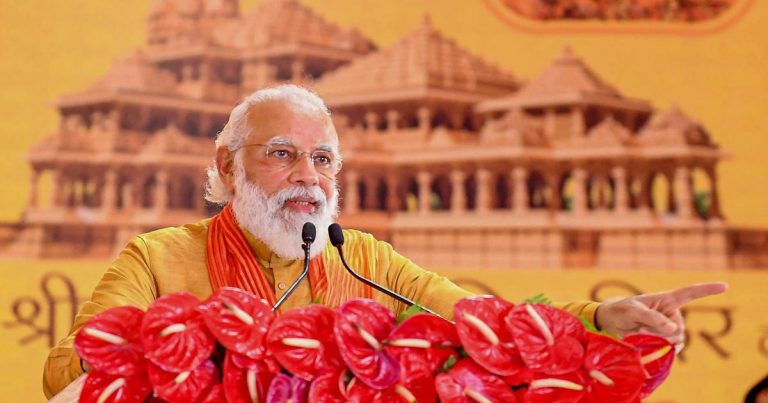
PM Modi talks to CM Yogi Adityanath, discusses plans to develop Lord Ram’s Ayodhya: Here is what he said

On Saturday (June 26), Prime Minister Narendra Modi conducted a virtual meeting with Uttar Pradesh Chief Minister Yogi Adityanath and reviewed the future vision of the city of Ayodhya. The virtual meeting was also attended by Deputy CMs Keshav Prasad Maurya, and Dinesh Sharma, besides other Ministers of the UP government.

As per a statement by the PMO, a proposal was laid to develop Ayodhya as a sustainable smart city, spiritual centre, and global tourism hub. During the meeting, PM Modi was informed about various aspects of Ayodhya’s development and infrastructure projects such as road construction, expansion of railway stations, highways, and an airport for improved connectivity.

Besides, the construction of a Greenfield township, a world-class museum, and a tourist facilitation centre were also discussed during the meeting. The township will house ashrams, hotels, Bhavans of various States, and provide lodging for devotees. During the meeting, PM Modi emphasised that Ayodhya should be developed through futuristic infrastructure such that it matches our human ethos.

The statement by PMO added, “Special attention is being devoted to the development of infrastructure around the Saryu river and its ghats. Cruise operation on the Saryu river will also be made a regular feature. The city will be developed to ensure sustainability with adequate spaces for cyclists and people on foot. Traffic management will also be done in a modern manner using Smart City infrastructure”.

Future generations must aspire to visit Ayodhya: PM Modi

Citing sources, Live Hindustan reported that PM Modi had called for collective efforts to celebrate the identity of the city and preserve its cultural vibrancy. He said, “Ayodhya should manifest the finest of our traditions and the best of our developmental transformations.” He also described the city of Lord Ram as the ‘cultural consciousness’ of every Indian.

PM pointed out that the future generation must aspire to visit Ayodhya once in their lifetime. PM Modi emphasised that the development work of Ayodhaya should be through public participation and Lord Ram could bring people together in this way.

The Bhoomi Pujan event in Ayodhya

The 500 years of struggle came to fruition for millions of Hindu devotees across the world as Prime Minister Narendra Modi performed the Ram Mandir’s Bhoomi Pujan at 12.44 pm on August 5, 2020. PM Modi who returned to Ayodhya after 29 years, expressed gratitude to all citizens of this nation, Indian diaspora across the world, and all the Ram Bhakts on today’s auspicious occasion.

“Ram Janmabhoomi has got its freedom today. Like August 15 is Independence Day for the country, today holds a similar significance for crores of those who devoted their lives for the cause of Ram temple”, said PM Modi addressing the luminaries and dignitaries present for the Ram Mandir’s Bhoomi Pujan ceremony.

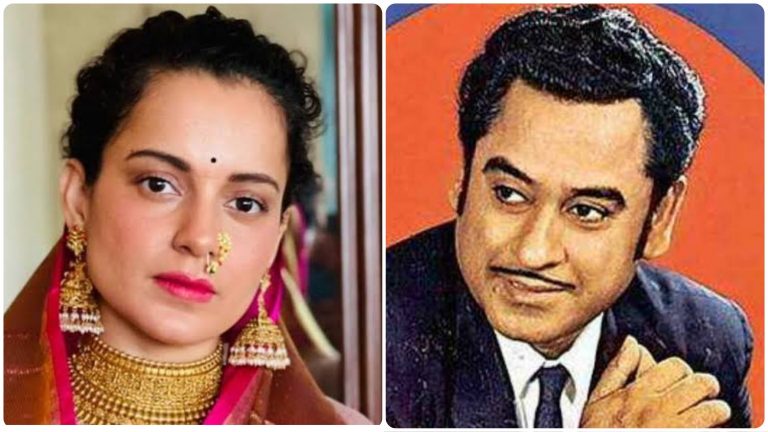
Kangana Ranaut likens her passport renewal woes to the ban on singer Kishore Kumar during the Emergency

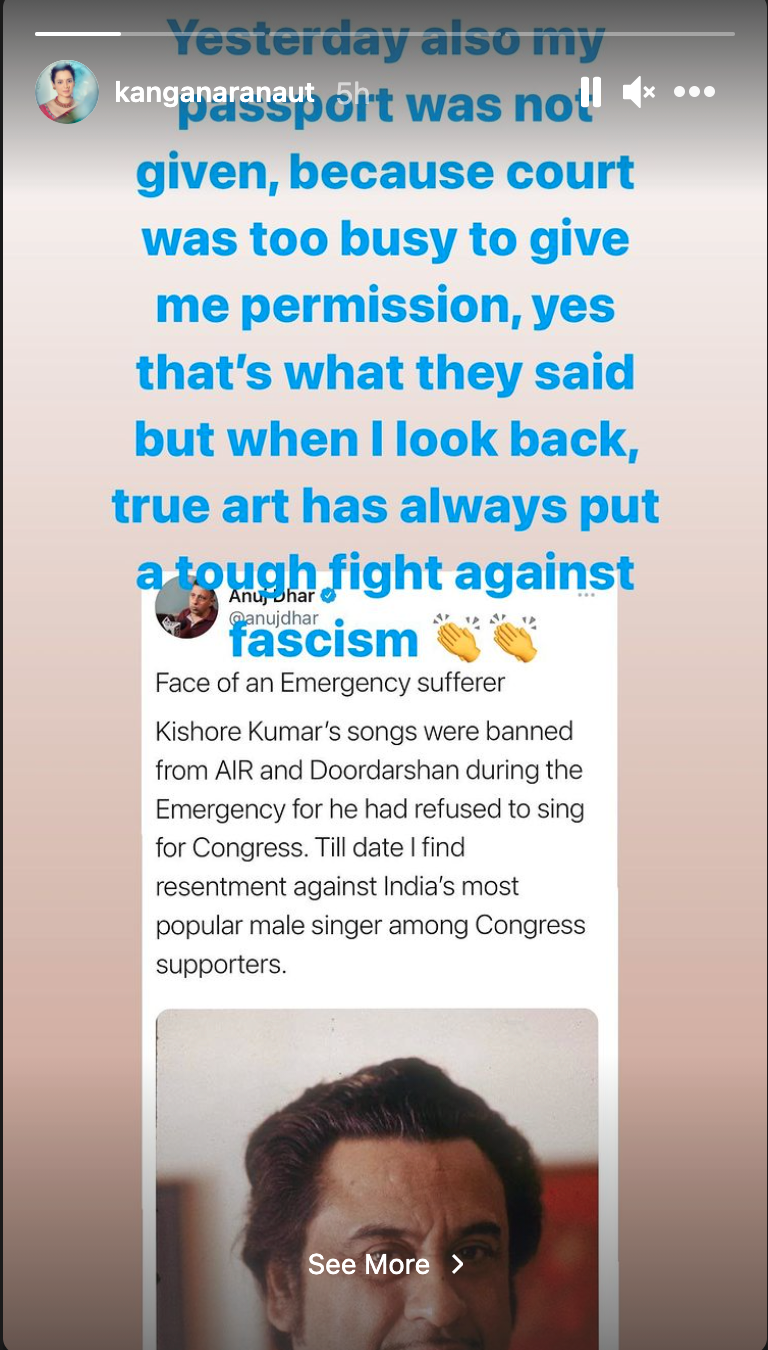
A day after the Bombay High Court adjourned the hearing on an application filed by actor Kangana Ranaut seeking renewal of her passport to the next week, the ‘Manikarnika’ actress equated her plight with the ban faced by the legendary singer Kishore Kumar during the Emergency period.

On her Instagram account, Kangana Ranaut shared a tweet about Kishore Kumar’s struggle with the government during the Emergency. “Face of an Emergency sufferer. Kishore Kumar’s songs were banned from AIR and Doordarshan during the Emergency for he had refused to sing for Congress. Till date I find resentment against India’s most popular male singer among Congress supporters,” the tweet read.

Source: Instagram.com/kanganaranaut/

When an emergency was imposed in 1975, singer Kishore Kumar was blacklisted from the All India Radio and Doordarshan as the singer had refused to perform at a political rally in Mumbai. Sanjay Gandhi asked Kishore to sing for the event, but the latter refused. Following the snub, the I&B Minister Vidya Charan Shukla, who was considered close to Sanjay Gandhi, banned all Kishore Kumar songs on AIR and Doordarshan.

Alongside the tweet, Kangana shared a message in which she likened her tussle with the government with the ban faced by Kishore Kumar during the emergency. “Yesterday also my passport was not given, because the court was too busy to give me permission, yes that’s what they said but when I look back, true art has always put a tough face against fascism,” Kangana wrote.

The Bombay High Court on Friday adjourned the hearing on actor Kangana Ranaut’s interim application seeking renewal of her passport to the next week. A bench of Justices S S Shinde and G A Sanap allowed Ranaut’s counsel, advocate Rizwan Siddiquee, to seek an urgent hearing on the application on Monday, June 28.

Kangana Ranaut approaches Bombay HC after passport authority rejects her renewal request

For the uninitiated, Kangana had approached the Bombay High Court after the passport authority had rejected her renewal request. The actor had last week said she was eager to travel to Budapest for the shoot of her upcoming film. However, the passport authority raised an objection to the renewal of her passport citing an FIR that has been filed against her over alleged hateful tweets.

Meanwhile, Kangana’s co-star, Arjun Rampal has already reached Budapest for the shooting schedule. The film will star Kangana as Agent Agni, who will be seen taking on Arjun, the antagonist. Kangana had recently even shared a still from her movie and expressed her excitement about getting back to work on sets of Dhaakad.

Protestors against farm laws violate Covid-19 safety norms, breaks barricades in Chandigarh, attempt to enter Raj Bhawan

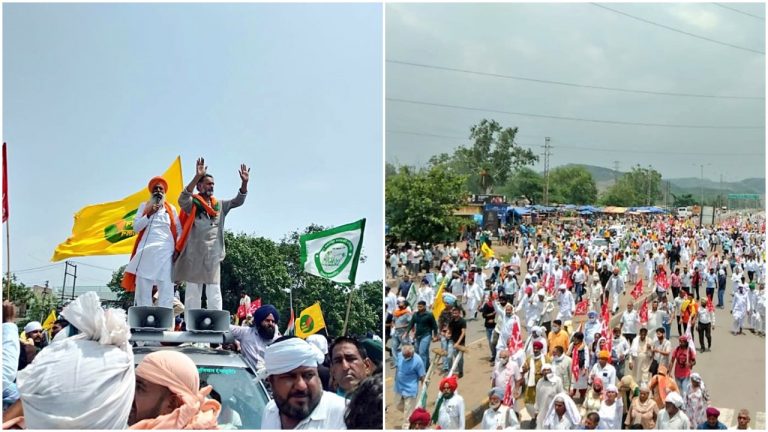
Thousands of ‘farmers’ resorted to vandalism on the streets of Chandigarh on Saturday as they broke police barricades during their protest against the Modi government over the passing of three farm laws.

According to the reports, several protestors marched towards Chandigarh from Punjab and Haryana to protest against the centre for passing the three farm laws. The protestors wanted to submit memorandums to the respective Governors demanding the withdrawal of the farm reforms initiated by the Modi government.

The protests were organised by Samyukt Kisan Morcha (SKM), who marched towards the Raj Bhavans of Punjab and Haryana in Chandigarh. These protestors violated all social distance norms and other Covid-19 protocols by assembling in large numbers, thus risking another onslaught of the pandemic in the Union Territory.

The SKM had announced to observe June 26 as “Kheti Bachao, Loktantra Bachao” (save farming, save democracy) day on the completion of seven months of the farmers’ protest in the country. Farmers from Punjab have been illegally squatting on the borders of the national capital since November to protest against the three farm laws passed by the Modi government.

As the police tried to stop these protestors, they broke police barricades and attempted to enter the Raj Bhavan area forcefully. The police tried using water cannons to stop the violent protestors, however, they failed as the protestors continued to break the barricades and marched ahead. One of the protesting farmers even climbed on top of a water cannon vehicle.

Earlier, emergency services were halted in the city after protestors stormed the city to protest against the farm reforms. An ambulance carrying a critical patient got stuck on the Chandigarh-Panchkula border after protestors had blocked the streets. The Chandigarh police had to make arrangements for the movement of the ambulance through an alternate route.

Announcing the protests, SKM leader Yogendra Yadav had said the “farmers” would hold a protest march from Gurdwara Nada Sahib to the Raj Bhavan in Chandigarh. “We will organise a peaceful march and submit a memorandum to the President of India through the Governor,” he had claimed.

24 years ago, Harry Potter and the Philosopher’s Stone was published the first time: How the author’s pandering has shaped its legacy

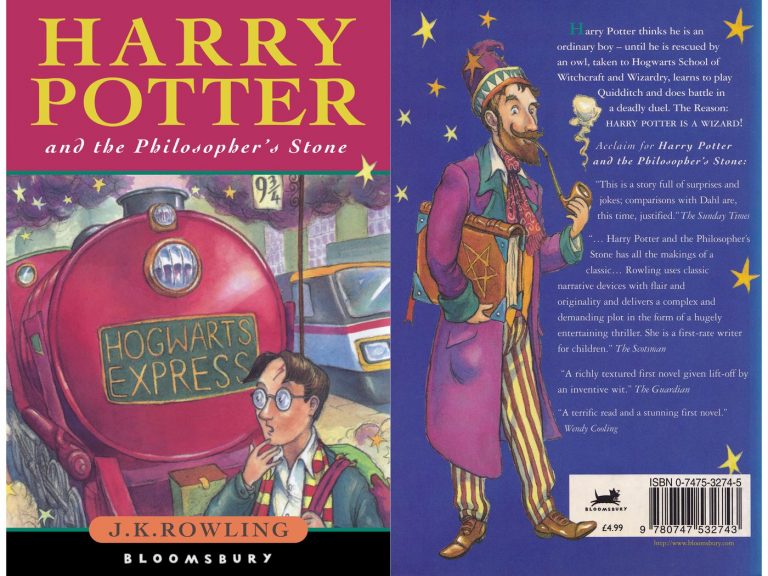
24 years ago, on this very day, the first book in the Harry Potter series by J.K. Rowling was first published in the United Kingdom by Bloomsbury. Harry Potter and The Philosopher’s Stone marked the beginning of the boy wizard’s story that would go on to become one of the most widely read fantasy series of all time.

Since then, a lot of water has flown under the bridge and the series which has inspired millions across the world to take up reading as a habit has a mixed legacy as things currently stand. Most of it does not even have to do with the story per se but with the conduct of the author who is still widely respected for her literary genius.

Pandering to the Left

One of the things that left a bitter taste in the mouth of many fans is the incessant pandering to leftist political objectives by J.K. Rowling herself. In her attempt to garner greater social acceptability, she, intentionally, twisted essential parts of the story and intrinsic features of her characters to cater to political demands by snowflakes.

For instance, out of the blue, she declared one day Albus Dumbledore was homosexual and had romantic feelings for dark wizard Gellert Grindelwald. There was no rhyme or reason in the declaration, and there was nothing in the books to suggest that Dumbledore is gay.

Even more so, it is not clear how his sexual orientation is relevant to the story. It is not, that is precisely why the story does not discuss his sexual orientation. But in an environment where LGBT groups were building pressure for greater representation, the author conveniently declared after the publication of the last book that the greatest wizard of all time was gay.

That wasn’t all. J.K. Rowling claimed years later that Hermione Granger’s race was not mentioned in the books after a Black actress was cast for the role in a Broadway play. This was despite the fact that there are numerous hints in the books to suggest that Hermione is White and that the movies and the book covers explicitly depict her as a White individual.

The race of the character is irrelevant to the whole story but it marked another occasion when the author was willing to engage in needless political pandering. The gesture is unlikely to have sparked the reaction that it did if Rowling was willing to admit that she imagined the character as White but it was perfectly alright for a Black actress to play the role.

Pandering could take J.K. Rowling only so far…

The incessant pandering, however, was not enough for Rowling to end up in the good books of the Woke Left. She was trolled viciously online when she said recently that biological sex is real and only women can menstruate. Her comments were in response to an opinion piece that spoke about ‘people who menstruate’.

The world might have not caught on yet but in snowflake circles, women are referred to as ‘menstruators’ or ‘vulva owners’ because according to them, these are not derogatory terms for women but more ‘inclusive’. The terms were sparked by the notion that ‘trans men are men’ and since they menstruate, it is not inclusive to suggest that only women can menstruate.

Despite her reasoning being scientifically sound, she was labeled a ‘TERF’ (Trans Exclusionary Radical Feminist) even though there was nothing radical about her suggestions. As such, it is an inversion of reality. The position that men can also menstruate is the radical stance here, not the other way around.

The legacy of the Harry Potter series

Undeniably, the Harry Potter series is one of the greatest fantasy series to have been written thus far. Of course, it is perhaps not on the same league as A Song of Ice and Fire by George R. R. Martin and The Lord of The Rings by J.R.R. Tolkien but it remains one of the most loved stories to have been ever written.

Due to the pandering, however, Rowling has become one of the most controversial authors of our times. Some might argue it was unnecessary but as an individual, it is her right to express her political opinions and ultimately, it is she who has to live with the consequences that follow.

Since the publication of the last book of the series, Harry Potter and the Deathly Hallows, the snowflake community claims almost exclusive ownership of the fanbase since most have either grown out of it naturally or have gained mixed feelings about the saga due to the political stances of the author.

Simultaneously, the snowflake community itself has developed mixed feelings regarding the book and significant sections of it have virtually ‘cancelled’ it because J.K. Rowling is apparently a ‘TERF’. Nevertheless, it is one of the most popular books that are spotted at snowflake and Leftist protests.

Harry Potter and The Philosopher’s Stone

Regardless of the controversies surrounding the author, the book series remains a great story and one that children should be ideally told to read. At the core of it, the story is of an orphaned boy who overcomes all odds with help from his teachers and friends to defeat his one great enemy and ultimately finds family.

It is a story of good versus evil but most importantly, it is also the tale of a mother’s love and how the world is a terrible place but still, there are things in this world worth fighting for, struggling for. All of this makes the story a good platform to teach children the morals of life.

Maharashtra: BJP launches state-wide protests demanding restoration of OBC quota; Congress protests against BJP

The Other Backward Classes (OBC) reservation has turned into a raging political issue in the state of Maharashtra. The opposition, BJP, has called for state-wide protests demanding the restoration of the 27% political reservation for the community that was quashed by the top court last month.

The OBC community in Maharashtra is on the brink of losing their political reservations in local bodies across the state after the Supreme Court last month rejected the state government’s review petition concerning reservation to the OBCs. It ruled that the reservation in favour of the OBC in local bodies should not result in exceeding the 50% cap in reservation quota determined by it.

The court had also directed the state to set up a dedicated commission for accumulating empirical data, on basis of which the reservation quota of the community could be fixed. This effectively means that no seat will be reserved for the OBC community in the forthcoming local bodies comprising municipal corporations, municipal councils, zilla parishads, panchayat samiti and gram panchayats, at least for this year or until the state government completes the entire process.

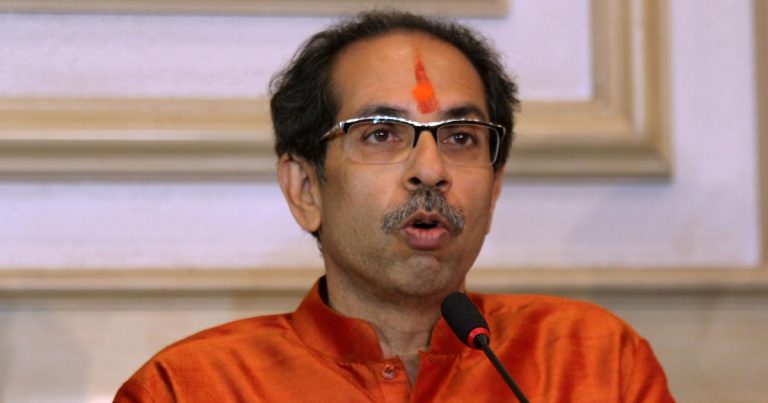
The Maharashtra BJP has blamed the Uddhav Thackeray-led Maha Vikas Aghadi government responsible for the current predicament of the OBC community. State BJP chief Chandrakant Patil said, “The OBC community lost the reservation owing to the negligence of the Uddhav Thackeray-led MVA (Maharashtra Vikas Aghadi) government. BJP has decided to protest against this government. Around 100,000 workers will hold the ‘jail bharo’ andolan in the state on June 26.”

Besides Patil, BJP national secretary Pankaja Munde also opened front against the MVA government. Munde said the party would be holding ‘chakka jam’ at around 1,000 places on Saturday. She said the Maha Vikas Aghadi government was misleading the people of Maharashtra and wrongfully blaming the Centre for the Supreme Court’s verdict.

Congress launches agitation against the BJP

In opposition to the BJP’s protest, the state’s Congress unit has declared that it will be carrying out agitation against the BJP-led Central government, holding it responsible for the quashing of the quota for the community in the Supreme Court. The party said that the Centre is not providing the census data, which led to the situation.

State Congress president Nana Patole on Friday said, “The State government had sought empirical data on OBCs from the Central government, which was to be presented in the Supreme Court. The Centre did not give the data. The whole mess is a result of the Centre’s policy and Congress will protest against the Central government on June 26.”

Supreme Court quashes OBC reservations in local bodies in Maharashtra

Earlier last month, the Supreme Court ordered the cancellation of additional OBC reservations in local bodies. The apex court also rejected the reconsideration petition filed by the Thackeray government in Maharashtra. This decision of the Supreme Court has ended the additional political reservation for OBCs in Gram Panchayats, Zilla Parishads and local bodies.

Earlier, the Supreme Court had quashed Section 12 of the Maharashtra Government’s Zilla Parishad Act. The apex court had also clarified that even if certain categories are reserved based on the population, the reservation cannot exceed above 50 per cent. The Supreme Court had directed OBCs to hold Zilla Parishad elections as per the legal reservation as they cannot be given reservation above 27 per cent. Considering the anger of the OBC community, the decision was appealed by the Thackeray government. However, the apex court rejected the Thackeray government’s appeal and upheld its decision.

Mass conversion racket: Umar Gautam reveals how they targeted non-Muslim girls from rural areas as it is easier to lure, brainwash them

Earlier this week, the Uttar Pradesh ATS busted a massive ISI-funded conversion racket after it arrested Maulana Mohammed Umar Gautam and his accomplice Mufti Qazi Jehangir from Delhi for allegedly forcing over 1,000 people to adopt Islam. The duo, who ran an organisation named Islamic Dawah Centre (IDC), along with their other associates, were charged for mass conversion of people into Islam through inducements such as marriage, job and money and mental pressure.

The two accused, who are in seven-day custody remand from Wednesday (June 23), are being interrogated by the ATS regarding their conversion programmes and their links with Pakistan’s ISI, among other things.

Now, according to a report by Hindi daily Amar Ujala, the ATS has confirmed that during their interrogation the duo has disclosed yet another modus operandi of their mass conversion racket. They have revealed that they targeted girls in the rural areas as they were easier to prey on.

The ATS recovered a list with names of 31 non-Muslim girls who fell into their conversion trap and most of these girls belonged to the rural areas. On questioning, the accused reportedly told the ATS officials that it was easier to brainwash girls living in villages into embracing Islam. They are mostly uneducated and belong to lesser privileged families. So it becomes easier to lure them with jobs and financial aids, which was what Umar Gautam exactly did to lure his target into embracing Islam.

Girls from rural areas were easier targets since they belonged to economically backward sections

After the revelation, ATS once again re-examined the list of 31 women recovered from the Islamic Dawah Center (IDC), the organization belonging to the conversion racket’s prime accused Mohammad Umar Gautam. According to ATS sources, after re-checking the list, it was found that as many as 12 out of the 31 girls who had fallen into the conversion trap were from rural areas.

Besides belonging to rural areas in Uttar Pradesh, there were women who belonged to villages of Jharkhand, Bihar, Uttar Pradesh, Guwahati. The gang members gauged the victim’s vulnerabilities and accordingly use it to their advantage to trap the victims and convert them to Islam. Since most of these rural girls belonged to the economically backwards class and were financially oppressed they became easier targets for Umar Gautam and his cartel.

Umar Gautam and Mufti Jahangir Qasmi may have received funding from terrorist Hafiz Saeed 

Prior to this, the ATS has made several startling revelations in the case. According to Zee News, sources within the Uttar Pradesh police have confirmed that they suspect the conversion racket run by Mufti Qazi Jahangir Qasmi and Mohammad Umar Gautam had funding from India’s most wanted terrorist and Jamaat-ud-Dawah chief Hafiz Saeed. The Zee News report said that the Hafiz Saeed connection to the religious conversion case came to the fore during the interrogation of the accused. 

Mass conversion racket link with Zakir Naik surfaces

It recently revealed how the religious conversion racket was being operated as ‘motivation camps’. Moreover, Islamic Dawah Centre- Umar Gautam’s organization’s links with infamous Islamist preacher Zakir Naik’s aide was also unearthed.

Umar Gautam and accomplice had plans to use impaired children as human bombs after conversion

OpIndia reported earlier Umar Gautam and Qasmi’s plan to first convert the hearing and speech impaired children into Islam and then use them as human bombs. The perpetrators brainwashed the differently-abled children into hating non-Muslims, accepting Islam and were planning to use them as suicide bombers as the scope of retaliation from such children is limited, informed a senior official.

Racket funded by Pakistan’s ISI

Amidst all these startling revelations made in the case, it was revealed how the entire religious conversion racket was funded by some foreign organisations, Pakistan’s ISI and other Arab countries.

In fact, many victims’ families have come forward to narrate how they fell prey to this mass religious conversion racket. The father of a victim named Manu Yadav had alleged that he received a threat call on his son’s mobile number from Pakistan asking him not to cause hindrance in the conversion of his son.

Fatehpur teacher narrates ordeal

Besides, a lady teacher named Kalpana Singh from Nurul Huda English Medium in Fatehpur, Uttar Pradesh has revealed how Umar Gautam had visited the school she taught in with 20-25 other Maulanas in the year 2020, to brainwash them to adopt Islam by assuring financial security. She had also confirmed how the school under Umar Gautam’s influence began teaching toddlers Urdu and Arabic in class. 

Uttar Pradesh: Muslim man poses as Hindu to lure girl and rape her multiple times, kin of man threaten to leak her videos

A girl from Balipur village in Ballia district, Uttar Pradesh has approached the police with a complaint against a Muslim youth for posing as a Hindu to befriend her. According to a report by Times Now, the victim has accused him of rape and blackmailing. Based on a complaint, the police have registered a case against the accused, identified as Azhar Guddu of Katra village in Uttar Pradesh’s Pratapgarh district.

The girl alleged that the youth faked his religious identity to befriend the girl. He later raped her multiple times on the pretext of marriage. The youth’s father and brother also threatened her using obscene videos. They allegedly told her that they would leak the videos on social media if she approached the police.

The Muslim youth Azhar Guddu posed as Ankit Mishra to befriend the Uttar Pradesh girl

According to the information gathered by the police, the girl met the youth in the year 2017 in Pratapgarh. She was pursuing industrial training in Pratapgarh then. Azhar Guddu introduced himself as Ankit Mishra, son of Prem Sagar. Azhar even created fake social media accounts in the name of Ankit Sharma.

They gradually became friends and got into a relationship. Later he forced her to have physical relations with him. The girl alleged that the youth raped her several times on the pretext of marrying her once his sister gets married.

On May 14 this year, Azhar revealed to the girl that he was a Muslim and was already married. Later, when she went to his house, Azhar’s brother and father threatened her with her intimate videos and pictures and warned her against approaching the police. She alleged that they told her that they would circulate her vulgar videos on social media if she filed a police complaint.

“She also claimed that the accused and his family duped her of Rs 3 lakh, and said that they would fight the case with this money if she dared to approach the police.”

Meanwhile, KP Singh, the Prayagraj Inspector General (IG) said that the accused Azhar Guddu surrendered in court on June 23, after which he was sent to jail. The police are further probing the case, the IG added.

Pakistani woman appeals to Indian govt to grant travel visa to marry her Indian boyfriend, who she met on Facebook

After waiting for more than a year to meet her partner living in India, Pakistani national Suman Rantilal has appealed to the Modi government to grant her special permission to enter India on compassionate grounds so that she could marry her long time Indian boyfriend and start her married life in India, reports Times of India.

According to the reports, Suman, a teacher by profession, has been waiting for over a year and a half to marry her boyfriend Amit Sharma from Gurdaspur, Punjab, who she found on Facebook. Suman Rantilal, who lives in Karachi, has not met Amit ever since the couple met on Facebook in September 2019.

Suman said she has submitted all the required travel documents with the Indian high commission in Pakistan, however, her visa has been denied on the grounds of Covid-19 as both countries had banned cross-border travel. “I am waiting to travel to India and marry Amit,” said Suman speaking to TOI from Karachi on Friday.

Suman met Amit Sharma on Facebook in 2019 and fell in love, and decided to get married. As passenger traffic between the two nations has been temporarily suspended since March 2020 to prevent the spread of the virus, Suman could not get a visa to travel to India.

Speaking to Mint, Amit Sharma had narrated his love story, saying that he first found Suman on Facebook in September 2019 while checking out photos of Janmashtami celebrations in Karachi. Sharma, who works as a sales manager at a rooftop sheet manufacturer, said he sent a message to Suman.

After a few days, Suman replied to Amit, who then exchanged their phone numbers after hours of chatting on Facebook. Apparently, two months later, in November, Amit proposed to Suman. The couple then decided to tie the knot, however, they are finding it tough to get a visa to travel across the border.

It is not just Suman, many others from both countries are waiting for their respective governments to lift the travel ban. Fufoora, a Pakistan national married to a man from Qadian in the Gurdaspur district, has been stuck on the other side of the border since the travel ban was enforced and hoping to rejoin her husband as soon as possible.

Bombay HC summons The Udaipur Times for ‘impermissible reporting’ on trial related to Dawoodi Bohra community: Details

The Bombay High Court on Monday this week issued a notice to the Udaipur-based newspaper, the Udaipur Times, for its “impermissible reporting” of the actual trial related to the Dawoodi Bohra community before the Bombay High Court.

The bench headed by Justice Gautam Patel took objection to a report published in the Udaipur Times. He noted that the report contained editorial comments on the cross-examination itself, including remarks on Mr Chagla, a lawyer representing the defendant, as well as some comments about him as a judge presiding over the trial.

An interim application was filed before the court by defendant Mufaddal Burhanuddin Saifuddin, who alleged that even after the explicit direction, the plaintiff Taher Fakhruddin Saheb provided access to trial records to The Udaipur Times even although the trial is yet to be completed.

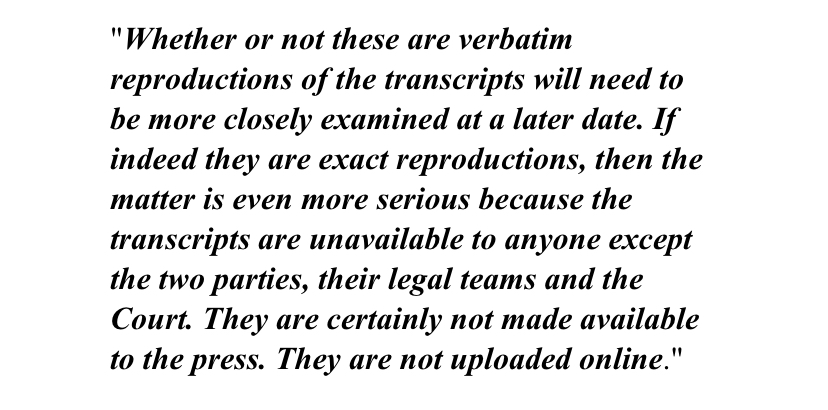
In its order, the court observed that The Udaipur Times got access to one or more sessions of the cross-examinations of witnesses before the bench. In addition to this, the court also noted that a journalist or reporter with the Udaipur Times did indeed have access to the trial record or the trial itself after pausing the material annexed to the Interim Application.

Admitting that the news daily did publish the excerpts of the cross examination, the court said:

source: Live Law

Court asks The Udaipur Times to appear before the court

The court came down hard on the plaintiff, asking him to explain how he felt entitled to share restricted information with The Udaipur Times despite being clear and unambiguous words of the order.

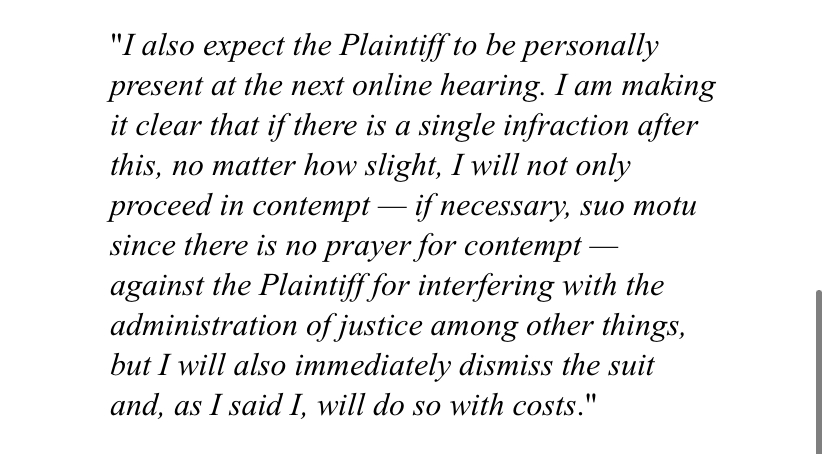
The court also asked the plaintiff to submit an explanatory affidavit with an appropriately worded apology and an undertaking. Issuing a stern warning, the court observed:

source: Live Law

The Court summoned The Udaipur Times to appear before the Court online on July 19 either through an authorized representative or by an Advocate appropriately directed to explain its conduct.

The petition filed in Bombay HC over leadership of Dawoodi Bohra sect

The case pertains to a petition filed by the plaintiff, Khuzaima Qutubuddin alias Taher Fakhruddin in June 2014 in Bombay HC seeking to be declared as the 53rd Da’i-al-Mutlaq of the community and challenging the claim of Syedna Mufaddal Saifuddin, the son of Syedna Mohammed Burhanuddin, to the leadership. He has claimed in his suit that his half-brother, Syedna Mohammad Burhanuddin, the 52nd Da’i who passed away in January 2014, had conferred Nass (pronounced him as the successor) in 1965 in secret.