Home Blog Page 4263

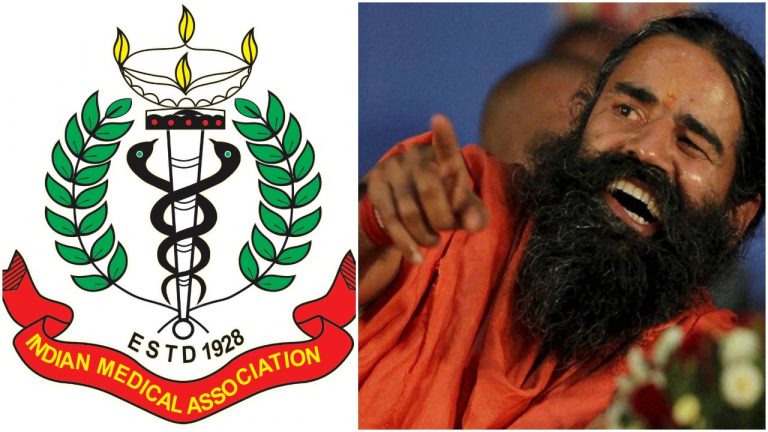
IMA continues to bully Baba Ramdev, now sues him for Rs 1,000 crore over his statements on Allopathic medicine

Following controversial remarks made by Baba Ramdev over the efficacy of modern medicine, the IMA continues to bully and threaten the Yoga Guru as they now want to sue him for his statements. Days after the Yoga Guru fired 25 questions to the Indian Medical Association and pharma companies over the efficacy of the Allopathic treatment, the IMA has sent a defamation notice to him.

In the latest turn of events, the Indian Medical Association (IMA), Uttarakhand division has sent a Rs 1000 crore defamation notice to Baba Ramdev for his statements on allopathic medicine.

As per the latest notice, the IMA has threatened Baba Ramdev, saying that if he does not post a video countering the statements given by him and tender a written apology within the next 15 days, they will be demanding Rs 1,000 crores from him.

The letter from IMA comes a day after the Uttarakhand unit had written a letter to Uttarakhand Chief Minister Tirath Singh Rawat to “take strict action” against Yoga Guru Baba Ramdev for voicing his opinion on the ill-effects of the Allopathic system of medicine.

In the letter addressed to the CM, the IMA had claimed that Baba Ramdev’s remarks have “demoralized” and “angered” the medical fraternity. As a corrective and damage control measure, IMA had urged the state government to take ‘prompt and strict action’ against Baba Ramdev. 

Ramdev had withdrawn the statement

It may be noted that Baba Ramdev has already withdrawn his statement on the request of union health minister Harsh Vardhan. The minister had written to the Yoga guru saying that his statement on allopathic medicines was “extremely unfortunate”, and had asked him to withdraw the remark, saying it disrespects ‘corona warriors’ and can break the morale of healthcare workers.

Following the letter from the union minister, Ramdev had responded by saying that he is withdrawing the statement. “”Hon’ble Minister, I have received your letter. I withdraw my statement, putting to rest the controversy over various medical practices”, he had said.

IMA vs Baba Ramdev

In a video that went viral on social media, Ramdev was allegedly heard saying that allopathy is a hollow practice and that many people have lost their lives due to allopathic medicines.

To this, the Indian Medical Association had taken a strong objection and even threatened to move Court if the Union Health Ministry does not take cognizance of the remarks made by Ramdev. The Health Ministry had issued a letter to Ramdev directing him to retract his statements.

Ironically, the letter was ironically also signed by the National President of the IMA Dr JA Jayalal who wanted to use the platform of the Indian Medical Association as a springboard to share the “love of Jesus Christ” and be a “living witness to God and encourage young medical students and doctors to receive Jesus as their personal saviour”.

In response to IMA’s attacks, Baba Ramdev too had launched an attack on the Indian Medical Association on Tuesday firing 25 pointed questions at them. With these questions, Ramdev tried to highlight the shortcomings of allopathy with him asking for permanent solutions to some of the most common diseases.

Taking a sly at the ongoing debate, Ramdev had also asked if allopathy has any treatment for the growing hatred and violence and also a cure that can put an end to the fight between allopathy and Ayurveda.

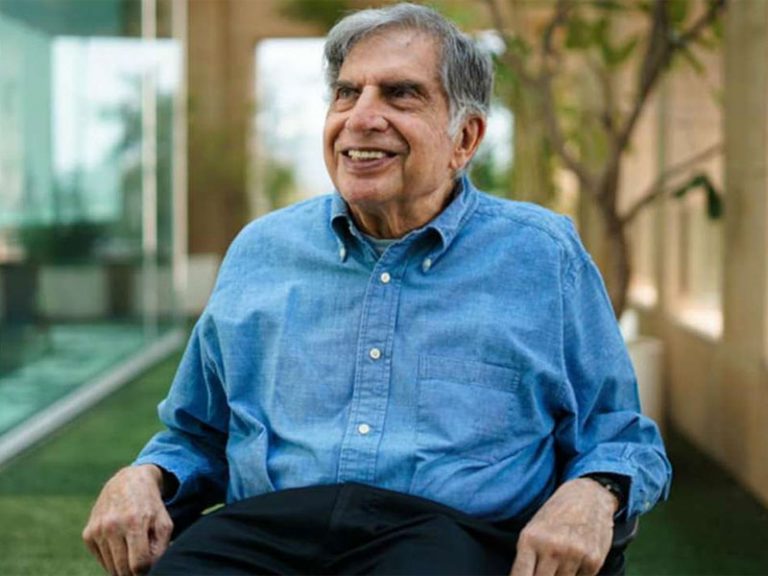
Tata Steel to pay salaries of employees who passed away due to Covid till retirement age. Here is how Tatas have risen to the occasion in the past

Covid-19 is affecting the families emotionally and economically, especially in cases where the only bread earner of the family has succumbed to the Wuhan coronavirus. Corporate houses, including Borosil and OYO, have come forward to assist families of employees who have died due to Covid. On May 23, Tata Steel, one of the largest corporate houses in India, announced that families of the employees who died due to the Covid-19 infection would continue to receive salaries till 60 years of age of the deceased.

In a Tweet, the group said, “Tata Steel has taken the path of ‘Agility With Care’ by extending social security schemes to the family members of the employees affected by COVID19. While we do our bit, we urge everyone to help others around them in any capacity possible to get through these tough times.”

In the statement, the company said, “With you, a promise of yesterday, today and tomorrow.” It added that the company stands with the affected families with a deep sense of loss at the demise of the employees during the pandemic. “The family will get the last drawn salary till 60 years of age of the deceased employee/nominee along with medical benefits and housing facilities,” it added.

The company further added that the company would bear the education expenses of the children till they graduate and will continue to provide medical and housing facilities to families of all the frontline employees of Tata Steel who have died due to Covid.

TATA’s philanthropical projects during Covid and beyond

During the Covid pandemic, TATA group came forward along with several other corporate houses to provide support and assistance to the people in need. In March 2020, the conglomerate committed to contributing Rs.500 crore to fight the Covid-19 pandemic. In April 2021, when the country was facing an acute medical oxygen shortage, the steel industry stepped in to provide oxygen to the hospitals.

Between April 1 and May 18, the company supplied over 30,000 tons of medical oxygen.

In April, the company imported 14 cryogenic containers to assist in Oxygen transport. 

After two weeks of the 26/11 attack, Ratan Tata had formulated Taj Public Service Welfare Trust to provide relief to the families affected by the terror attack. The work of the trust is not limited to the 26/11 attack but to any Indian affected by war, terrorist attack, bomb blasts or natural disasters.

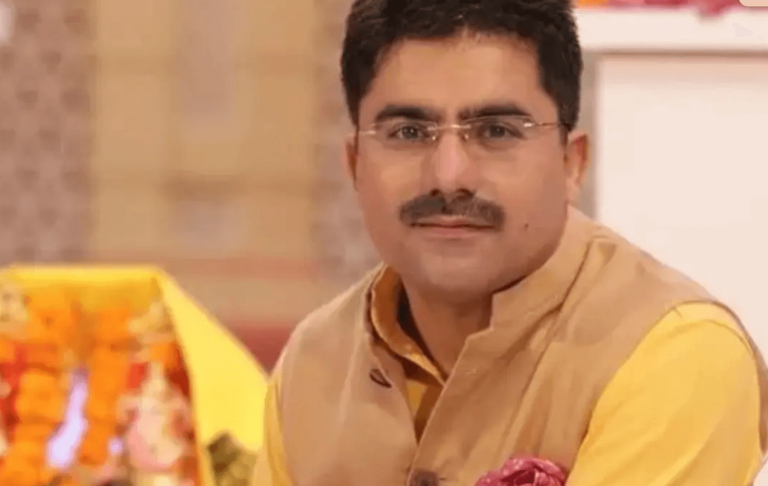
‘Rohit Sardana’s immense wealth’: Videos and images with fake claims on deceased journalist go viral

Following the untimely demise of Aaj Tak journalist Rohit Sardana, multiple images and videos have gone viral on social media making claims that Sardana had accumulated immense wealth.

Rohit Sardana’s ‘property’ fake claims

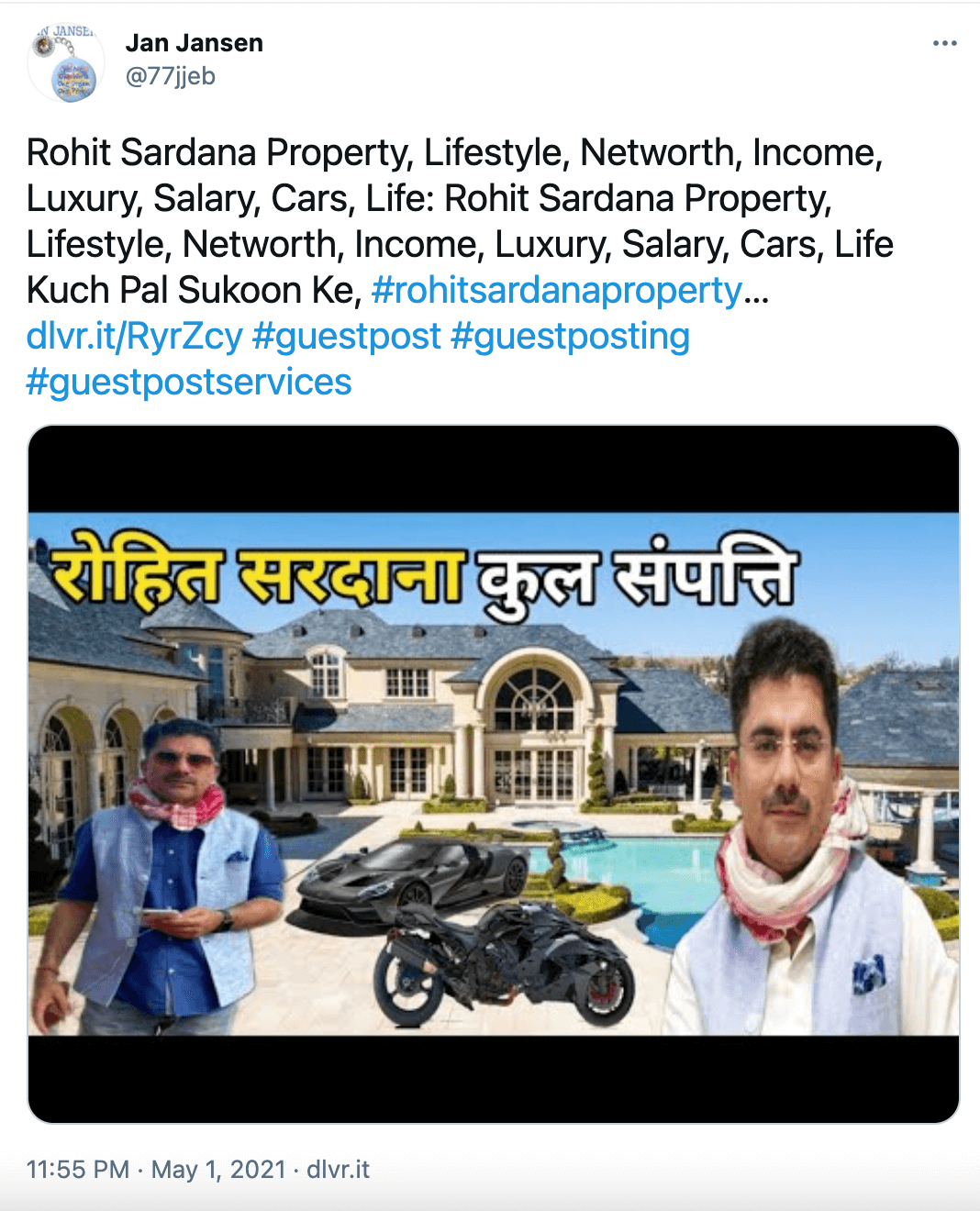
YouTube channel ‘Kuch Pal Sukoon Ke’ and others uploaded many such videos on YouTube with suggestive thumbnails to imply that Sardana and his wife, Pramila Dixit, have both accumulated a lot of wealth and have multiple bungalows and cars.

image courtesy: @rohitsardana

The images were shared today on Rohit Sardana’s account today which is being operated by his family.

Rohit Sardana’s ‘lifestyle’ (image shared by @rohitsardana on Twitter)

The grieving family said that they have a 1450 sq ft house in Dundahera village in Ghaziabad, which is purchased on EMI and another car, Hyundai Creta, also on EMI. As property, they have their two daughters and immense love of crores of people. “We don’t need sympathy but do not badmouth the departed who did not even once thought of getting vaccination in VIP category,” his family posted on Twitter.

Aaj Tak journalist Rohit Sardana passed away on 30th April, 2021, owing to COVID complications. He is survived by his wife and two daughters.

‘My father was medically murdered’: Actress Sambhavna Seth accuses Delhi’s Jaipur Golden Hospital of negligence

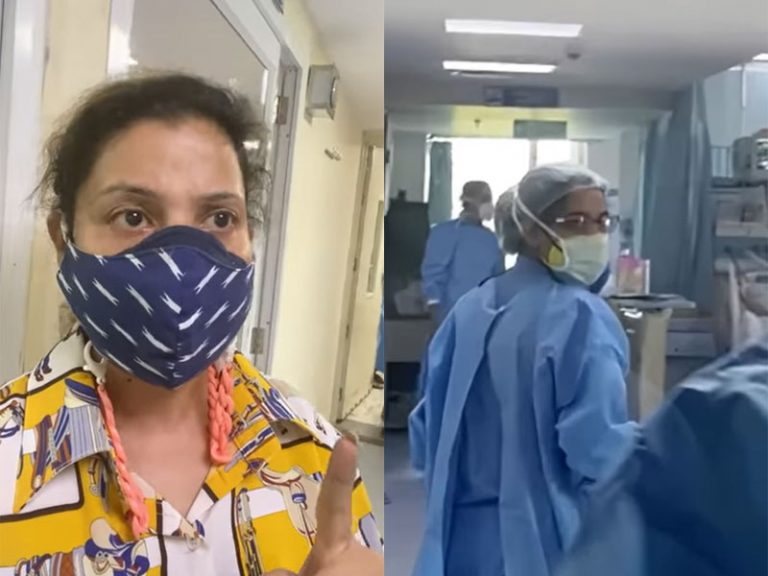
On May 22, Actor Sambhavna Seth took to her social media accounts and alleged that her father was “medically murdered” at Jaipur Golden Hospital, Delhi. In the video, she accused the hospital of negligence towards his father who was admitted to the hospital after contracting a Covid-19 infection.

In the Instagram video with the title “They Killed my Father,” she wrote that his father passed away two hours after recording the video. “Losing my father was the biggest fear of my life which I have faced. Now I am fearlessly going to fight for the truth as taught by my father my whole life. I may or may not defeat these big sharks in this fight but definitely gonna pull them out of this godly water and show their real faces.” She added just like the world cannot be just black and white, every doctor cannot be equivalent to God.

Urging his followers for support, she said, “I know every one of you who has been to hospitals in these tough times has faced similar medical negligence but couldn’t fight for it due to various reasons but now we all can fight together by sharing this video.”

Sambhavna further informed that her lawyers have initiated legal action against the hospital and are in the process of sending a notice. She said, “My lawyer advocate Rohit Arora and Advocate Koshima, Senior Associates at Lex Laureate, are in the process of initiating the legal battle by sending the Jaipur Golden Hospital a Legal Notice.”

Sambhvna alleged negligence in the video

In a 7-minute long video, Sambhavna alleged that the hospital staff members were not taking proper care of her father. Accusing one of the nurses for misbehaving, she said, “The nurse asked me to take care of my father myself as she is busy. I want to know whom she is treating.” She further alleged that when she pointed out that the oxygen saturation was at 55, the nurse said, “it is good oxygen level.” In a tweet she claimed that the hospital was busy in saving the nurse.

One of the hospital staff was heard in the background who alleged that his father was removing the oxygen mask when no one was around. Sambhavna added, “I thought the hospital is close to my house so it will be better to admit my father here, but I was wrong.” The hospital staff standing there kept on insisting her to move out from the ICU and stop recording the video.

On May 24, she uploaded a follow-up video. She said, “You think that it was about the nurse who misbehaved. It was not just about her. I saw them misbehaving with other patients as well. When I saw my father’s oxygen level at 55, it was obvious for me, being a daughter, could not tolerate.” She further said that people are questioning how she reached inside Covid ward. She said, “Thank God I reached inside the Covid ward. If I hadn’t, you would not have seen the reality.”

Sambhavna’s vlog

She further alleged that the food that families bring for the patients is kept aside. “My father’s breakfast was kept aside. He had not eaten a single bite since morning or drank water.” She said she was not calling every doctor or nurse wrong, but there are evils among us. Her associate, Avinash, in the video, said, “We have all the answers to the queries that we are receiving, but as it is a legal case now, we cannot reveal everything as it will affect the case.”

‘My father was getting better’: Sambhavna

Sambhavna said that her father was getting better, and she made a video about it too. “Then what did the hospital do that affected my father’s health so badly?” she added. She alleged that the main doctor did not meet her. Only the assistant doctor came to talk to her on the day when her father passed away. She said, “The assistant doctor came and told me that I could not go inside as they were reviving my father and changing the course of the treatment. After 2 minutes, he said, ‘oh, your father got a cardiac arrest.’ They already knew my father was gone and were lying to us.”

‘My father was not given ICU bed’

She alleged that the hospital claimed they gave her father an ICU bed, but in reality, it was a makeshift room for Covid patients. She said, “My father was not even in the ICU. They kept on claiming they gave him an ICU bed.” She further added that her brother had sent her a video of the ward where their father was initially admitted. There were twelve beds in the ward, and all 11 were empty. “The hospitals are making fools out of us by saying there is no space for the patients. I am going to expose them,” she added.

Sambhavna further added that the fight was not over after her father’s death. The hospital allegedly took several hours to release the body. “The ambulance driver asked for Rs.30,000 and said he would do it in Rs.27,000 though the cremation ground was not even far from the hospital.” Avinash added, “no one knows if the body they got belongs to their family member or not. They are just cremating them after taking the name of God.”

 They asked everyone for the support and urged them to share videos of negligence they faced in the hospital.

WhatsApp moves to Delhi HC against Indian govt’s new IT rules, claims it will harm privacy protection policies

Facebook-owned messaging app WhatsApp has filed a case in the Delhi High Court against the Indian government, seeking to block the new IT rules that come into effect from Wednesday, 26 May.

According to the reports, WhatsApp has filed a petition against the Government of India on May 25 in the Delhi High Court protesting against the new IT rules that require “significant social media intermediaries” like WhatsApp to “trace” the origin of particular messages sent on the service.

The petition asks the Delhi High Court to declare that the new rules as null and void as they ‘violate privacy rights guaranteed by the Indian constitution as per WhatsApp.

As per the recently notified Information Technology (Intermediary Guidelines and Digital Media Ethics Code) Rules 2021, social media intermediaries with more than 5 million users and providing messaging services will have to enable the identification of the first originator of problematic content that may harm the country’s interests and several other provisions described in the rules.

The social media intermediaries like WhatsApp will have to trace the originator of the content on the basis of a judicial order passed by a court or by a competent authority under section 69 of the IT Act. As per the new Digital Media Ethics Code promulgated by the ministry of information technology, social media intermediaries will lose protection from lawsuits and criminal prosecution if they fail to adhere to the code.

As per reports, the plea by WhatsApp is yet to clear High Court registry and it is not clear when it will get a hearing date.

WhatsApp claims the new rules violates privacy

Even though the new rules demand the intermediaries to unmask those people credibly accused of wrongdoing, WhatsApp claims it cannot do that alone in practice. According to WhatsApp, the messages are end-to-end encrypted, and they need break encryption for receivers and “originators” of messages to comply with the law.

“Requiring messaging apps to trace chats is the equivalent of asking us to keep a fingerprint of every single message sent on WhatsApp, which would break end-to-end encryption and fundamentally undermines people’s right to privacy. We have consistently joined civil society and experts worldwide in opposing requirements that would violate the privacy of our users. In the meantime, we will also continue to engage with the Government of India on practical solutions aimed at keeping people safe, including responding to valid legal requests for the information available to us,” said WhatsApp spokesperson speaking to Business Standard.

Ironically, WhatsApp, which is decrying the news rules on the pretext that it would violate individuals’ privacy, has silently enforced its own controversial privacy rules to share its user data with other Facebook companies. The arbitrary decision to update its privacy norms has led its users to believe that WhatsApp would now be able to peek into its users’ personal messages and share the personal data of users with Facebook.

The petition comes at a time when the Indian government has been demanding higher transparency from tech giants including Facebook, Google’s parent company Alphabet, and Twitter, who have been enforcing their own rules arbitrarily to censor contents without any respect for Indian rules and regulations.

Meanwhile, Google and Facebook has said on Tuesday that they are attempting to comply with the new rules.

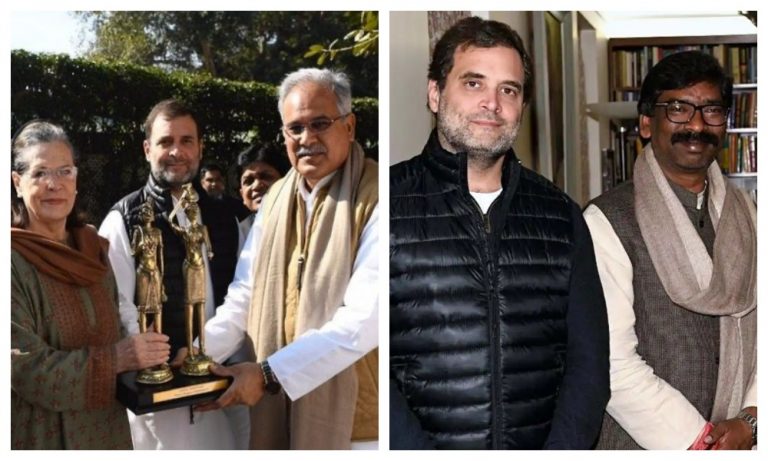
Jharkhand wasted 37.3% vaccines, Chhattisgarh 30.2%, much higher than national average of 6.3%

Despite advisory from Ministry of Health to states to keep wastage of vaccines less than 1%, states like Jharkhand have recorded wastage as high as 37.3%.

Chhattisgarh was second state to record vaccine wastage above 30% at 30.2%. Tamil Nadu recorded wastage of vaccines at 15.5%, Jammu & Kashmir at 10.8% and Madhya Pradesh at 10.7%. These states have recorded vaccine wastage way higher than national average of 6.3%.

While Congress is alliance partner in Jharkhand, it is the ruling party in Chhattisgarh.

According to a report by ET Now, two weeks back Haryana topped the list of wasting vaccines at 6% for Covishield and 10% for Covaxin. However, Haryana Additional Chief Secretary Rajeev Arora said that the state has brought it down to 3.1% and 2.4% respectively.

Vaccine wastage

Vaccine wastage in all vaccination programmes is unavoidable. However, efforts should be made to minimise the wastage. Vaccine wastage can happen during transportation, storage and even at vaccination centres.

The COVID-19 vaccines are supplied in a 10-dose multi-dose vials. Chances are that some bottles may be broken while being administered. Also, if a 10-dose pack is opened and not all doses are used, the remaining go waste. This has been one of the biggest contributing factors in vaccine wastage.

Further, the vaccines need to be stored at a particular temperature. Failure of it can result in wastage of vaccines. Pilferage and theft can also not be ruled out. Another way the vaccines may be wasted is contamination.

Wastage Multiplication Factor (WMF) is taken into consideration while planning the vaccination programme.

As per MoHFW’s guideline, WMF = Wastage Multiplication Factor = 1.11 for COVID-19 vaccine, assuming an allowable programmatic wastage of 10% [WMF = 100/(100 – wastage) = 100/(100-10) = 100/90 = 1.11]

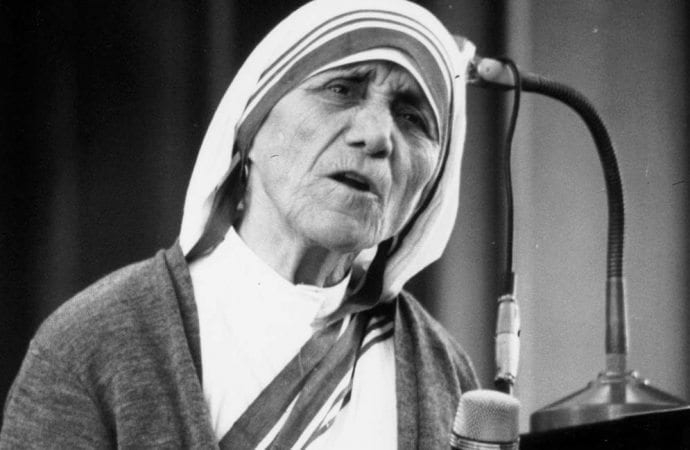
Tonsuring, daily self-flogging, and disallowed from taking baths: Ex-Nuns reveal how Mother Teresa’s Missionaries of Charity worked like a ‘cult’

For years, Mother Teresa has been accused of being a fraud. Her problematic history of following primitive health practices and her evangelical zeal to convert the weak and the vulnerable into the Christian fold were long cited by her critics to call out the unwarranted adulation that was showered on her.

Christopher Hitchens, an English-American socio-political critic, and public intellectual, was one of the staunch critics of Mother Teresa and had described her organization as a ‘cult’ that promoted suffering and did not help those in need. Last Tuesday, a new podcast titled  “The Turning: The Sisters Who Left,” was released that aimed to explore the assertion made by Hitchens years ago.

In the latest podcast, women who submitted themselves to the service of Mother Teresa and dedicated their entire lives to her Missionaries of Charity have spilled the beans about the closed Catholic congregation. It is, perhaps, for the first time, that the members of Missionaries of Charity(MC) have laid bare in public what it was to lead a life inside the closed walls of Mother Teresa’s Charity.

From providing ‘military training’ to ‘isolating’ nuns from the rest of the world to the daily routine of ‘self flogging’, forcing them to wear spiked chains pointing inwards to not allowing them to take bath, ex-sisters have blown the lid off the wicked practices that continued inside the Missionaries of Charity, making it a cult organisation.

secret rituals

The podcast starts with the account of one Marry Johnson, who spent 20 years in Mother Teresa’s organisation before retiring through official channels in 1997. “One cannot always know where to make the distinction between religion and cult,” Johnson remarked.

The podcast lends heavily from the memoir of Johnson, which includes her experiences working as a sister at the Missionaries of Charity. Johnson mentions that the Catholic congregation, a closed society, had scandalous ceremonies and secret rituals, including tonsuring the hairs of new recruits and burning them, characteristics that are usually associated with cults.

According to Mary, all the new recruits are hustled into taking the vow of poverty, chastity, subservience, unwavering and complete devotion to the service of the poorest of the poor. The Missionaries of Charity proscribed nuns and sisters from having friendships. They were forbidden from indulging in “luxuries” such as cleaning themselves and taking a shower.

Sisters were also prohibited from receiving phone calls from their family members, except in emergency circumstances. They were not even free to visit their own home. The Missionaries allowed them to visit their home only once every 10 years.

“I think Mother Teresa took everything to its most radical conclusion. All the contact with my family had been severed off. I used to get homesick a lot,” Mary recounts in the podcast.

Mother Teresa’s congregation proscribed nuns from building friendship, taking a shower

Mary tells Mother Teresa was a stickler for maintaining the vow of chastity. She was so obsessed with swearing her allegiance to celibacy that it bordered on paranoia, says Mary, adding that Mother Teresa was fanatically passed that on to everybody else, ultimately resulting in the ban on touching each other and limited physical contact with people they cared for.

Mother Teresa also held a dim view of fostering camaraderie and building friendship within her charity group. Sisters were repeatedly warned against growing closer friendship bond with each other. If anyone saw a sister getting kind of closer to one sister than to another, they would immediately be called out on it.

The rules against indulging in luxury were so rigorous that even bathing was considered a decadent exercise. Mary realised this pretty early on when she took a quick cold shower, making sure that she does not break poverty by switching on the hot water faucet. However, she had no inkling that she was expected to wash with just a tin can of water. When she caught by a sister for using a shower instead of a tin can, she was subjected to harassment.

Mary had signed up for the service in the Catholic family in 1977. Shortly after initiation in the Missionaries of Charity, Mother Teresa led a ritual that saw her hair cut off to the point that she was almost tonsured, then thrown in the fire as the sisters sang a chant.  

Sisters of Mother Teresa’s order were forced to flog themselves daily

Shedding light on another ritual, Mary said as a part of ‘the discipline’ sisters were expected to flog themselves with a sheath of knotted cords every evening in the form of penance. Except for Sundays or big feasts days, sisters and nuns had to daily beat themselves with the cord. It started off with 15 strokes and increased progressively, Mary remembers. At the time when she became a professed sister, she would have to flog herself 50 times daily.

“Beating yourself every day is a stark reminder that you are a sinner, taking away any sort of pride. You are someone who needs to beat yourself,” Mary said.

Mary also hinted that such circumstances would have inevitably led some of the sisters to derive sadomasochistic and erotic pleasure from their own beating. “I think a lot of things do get twisted or can potentially get twisted around when all the sexual energy and drive has to be repressed or diverted. I would not be surprised if nuns and sisters were deriving sadomasochistic pleasure from their own flogging,” Mary said.

Escaping the Missionaries of Charity was extremely difficult. Nuns were required to go out ‘two by two’ and were never allowed to just walk out. One could not have walked five to six paces on its own before being stopped by somebody, Mary said.

Mary admits after she left the MC, she found herself questioning the very assumptions, including her belief about God, that was taught at the convent for so many years.

Missionaries of Charity isolated and brainwashed sisters: Ex-nun

Another nun Ex-nun Colette Livermore had similar experiences to share about her service for Mother Teresa’s Missionaries of Charity. She alleged that the charity isolated the nuns and sisters and institutionally brainwashed them.

In the podcast, she reminisced an incident where her superiors held back letters from her family as a ‘sacrifice’. This meant she missed one of the letters from her mother informing her about the medical ailment of one of her brothers, who was critically ill and had slim chances of survival. When her mother called the convent, Colette was allowed to take the call but she was denied permission to visit the hospital.

Kelli Dunham, who began her training in the same convent as Mary in 1994, said the idea behind the training at the Missionaries of Charity is just like military training to break you down into nothing. “In those days, the ultimate goal it seemed was to make you feel as lonely as possible so that you would only depend on God,” Kelli said.

Kelli said the training was like a ‘boot camp’ where sisters were expected to exhibit absolute adherence to rules she struggled to observe strict conformity to the extreme ‘life of poverty’.

Mother Teresa: A not so sacred saint

Born in Skopje (then a part of the Ottoman Empire), the Albanian nun followed the Roman Catholic sect of Christianity. After a few years of living in the Ottoman Empire, she moved to Ireland and subsequently to India (where she breathed her last in Calcutta) in 1997. 

Mother Teresa became a nurse at the age of 16 by joining the Loreto Abbey in Ireland. Two years later, she was given the name Sister Teresa. In 1929, she moved to Calcutta(Kolkata), where she became a teacher and, 15 years on, headmistress at a convent school. In 1946, she founded the Missionaries of Charity, which was officially established as a religious congregation in 1950.

For years, the mainstream media painted Mother Teresa as a benevolent leader indulging in helping the poor and the weak. It was only decades later that the Missionaries of Charity was exposed for his egregious practices. Several authors, intellectuals, who studied and came to know about the religious congregation flagged their dubious practices. The congregation was accused of forcefully converting people on the pretext of “social service”. Many foreign media outlets such as Huffington Post, New York Times and Washington Post have highlighted the pitiful conditions of the “hospitals” and “orphanages” run by this missionaries. 

After years of living in fear for criticizing the ‘Mother’, Dr Aroup Chatterjee finally opened up to The New York Times about the disgusting reality of “hospitals” run by the missionaries. According to Dr Chatterjee, he found a ‘cult of suffering’ in the hospitals run by the missionaries. He saw children screaming in agony as they were tied to their beds by the missionaries, and dying patients crying out of misery as they were given no relief other than Aspirin to reduce the pain. 

A report published in the Washington Post revealed that patients who were dying in the hospital run by the missionaries were forced to convert to Christianity before their death. In 1994, Christopher Hitchens and Journalist Tariq Ali released a documentary film called ‘Hell’s Angels’ which brought the disgusting reality of Teresa’s organizations out in public.  

Pakistan: Midair kiss by couple causes uproar, complaint filed against airline for not stopping ‘indecent behaviour’

A couple was found kissing on the domestic Karachi-Islamabad AirBlue flight on May 20. It has now caused an uproar after co-passenger and lawyer Bilal Farooq Alvi lodged a complaint to the Civil Aviation Authority (CAA) against the airline for not stopping the ‘indecent’ behaviour.

As per reports, when the couple began kissing, the fellow passengers started complaining about the same. Air hostess requested the couple to stop kissing. However, they continued to kiss. Hence, the air hostess then gave them a blanket so that they can kiss in some privacy. Passengers say that when they asked the couple to stop kissing, they hit back with ‘Who are you to tell us anything’.

Advocate Bilal has filed a complaint against the airline staff for not taking action to stop the couple.

Alvi was upset that instead of getting the couple to stop kissing, the air hostess actually gave them blanket to keep their kiss under wrap.

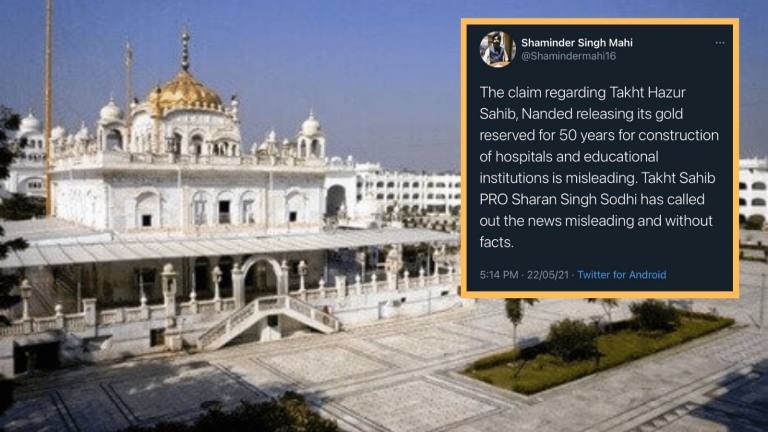
Viral claim about Gurudwara Takht Shri Hazur Sahib donating gold of 50 years for hospitals is fake. Here is the truth

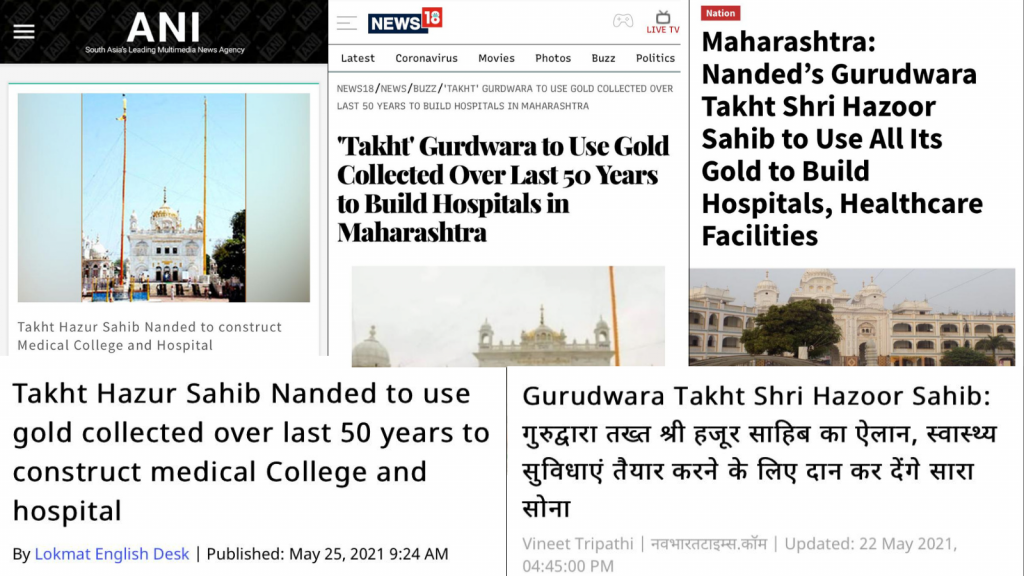
A popular claim on social media about Gurudwara Takht Shri Hazur Sahib located in Nanded, Maharashtra to use 50 years worth of gold collected from donations to build hospitals has been found to be misleading.

The claim was picked up by multiple media networks with some senior journalists also propagating it on Twitter.

Media reports on viral claim

Claim picked up from a 2020 video

The claim was based on a video uploaded in 2020 where Jathedar Kulwant Singh who was then recently discharged from the hospital had recommended that the gold donated to the Gurudwara should not lie idle and be put to good use. He had said that an ailing person in Nanded has to either rush to Hyderabad or Mumbai for treatment and hence it is time the city should have its own facilities.

He urged the devotees to rather donate for building hospitals and schools. “We have put a lot of gold on buildings and Gurdwaras..It is my opinion that a hospital or medical college should be built,” added Kulwant Singh.

Claim of using gold for hospitals misleading 

Soon after the news was widely shared on social media, journalists from especially the Punjabi media declared the claim to be misleading. 

Upon verifying the news with Takht Shri Hazur Sahib’s PRO, several journalists revealed that the news of releasing gold collected over 50 years for schools and hospitals is misleading and without facts.

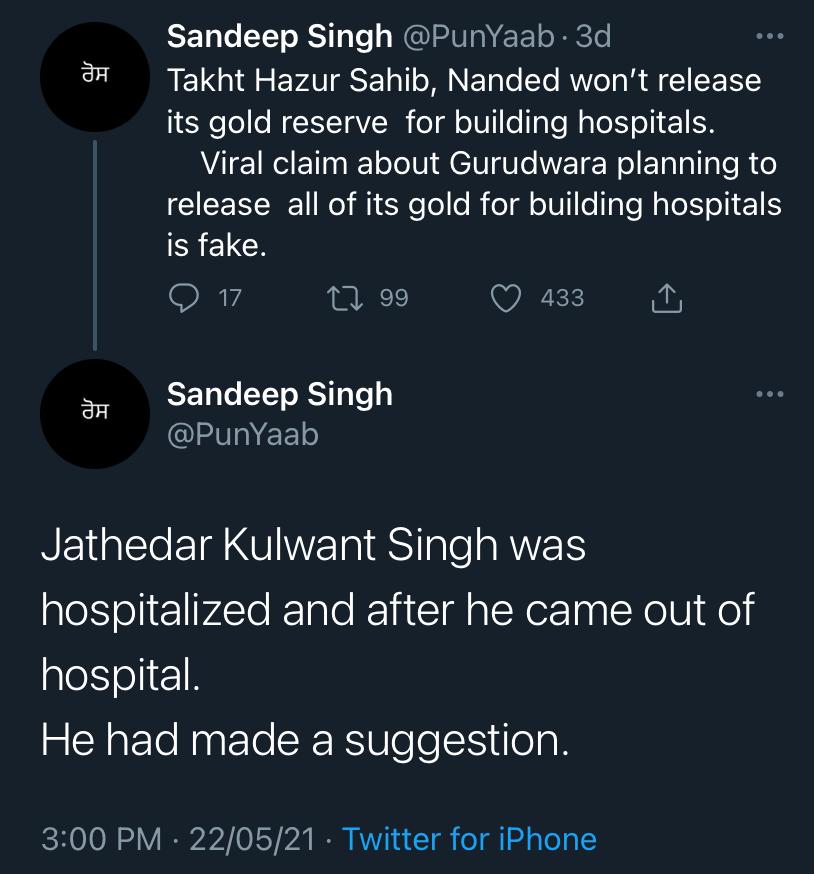
A popular Punjabi Journalist Sandeep Singh was one of the first to bust the claim.

Image Source: Twitter

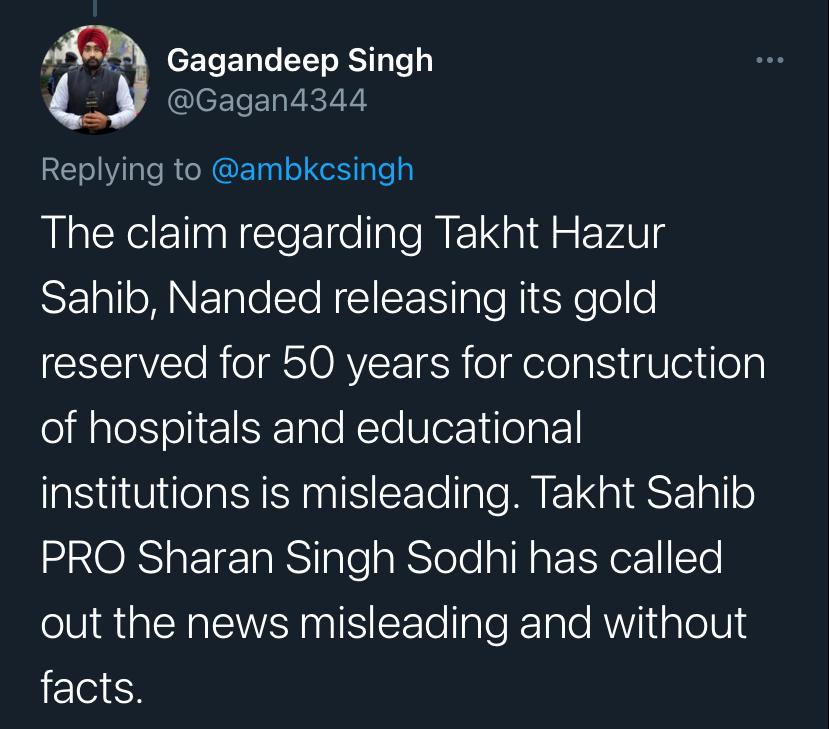
Replying to KC Singh’s post lauding the Gurudwara for its contribution, Gagandeep Singh, a journalist with TVPunjab informed that the Gurudwara has already called out the claim to be misleading.

Image Source: Twitter

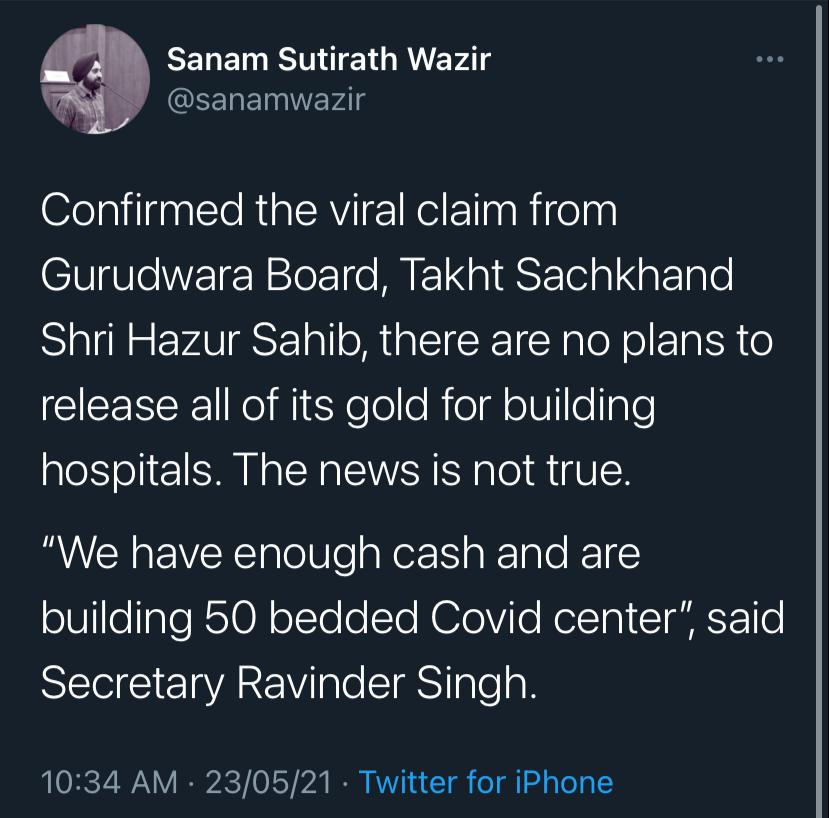
Sanam Wazir a journalist and human rights activist Tweeted saying, “Confirmed the viral claim from Gurudwara Board, Takht Sachkhand Shri Hazur Sahib, there are no plans to release all of its gold for building hospitals. The news is not true.”

He also quoted Secretary Ravinder Singh who revealed, “We have enough cash and are building 50 bedded Covid center.”

Image Source: Twitter

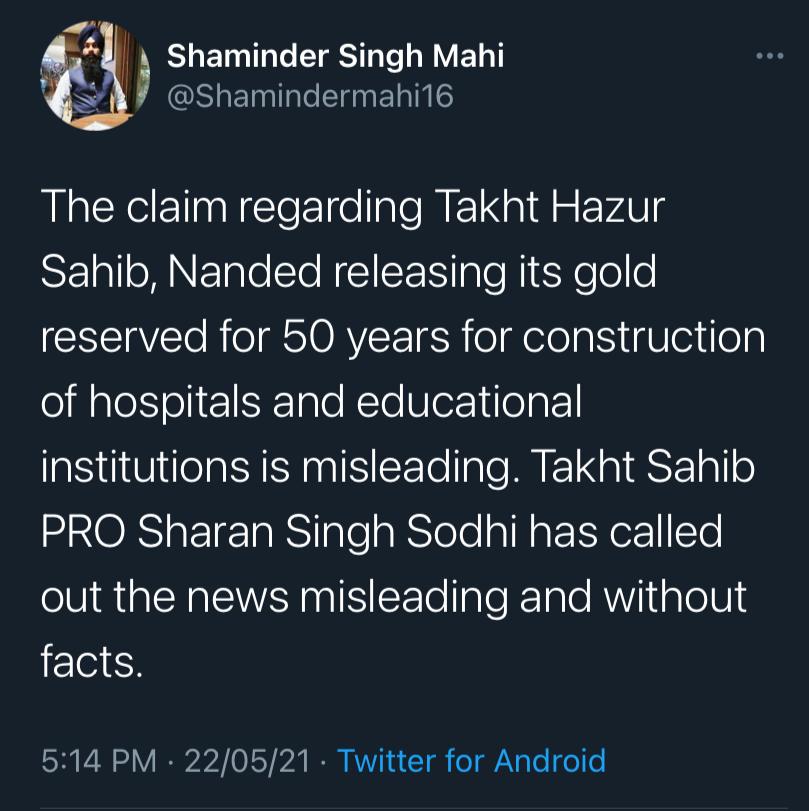
Another journalist Shaminder Singh Mahi who also in his profile has mentioned ‘misinformation debunker’ revealed that the claim indeed is misleading as informed by Gurudwara’s PRO Sharan Singh Sodhi.

Image Source: Twitter

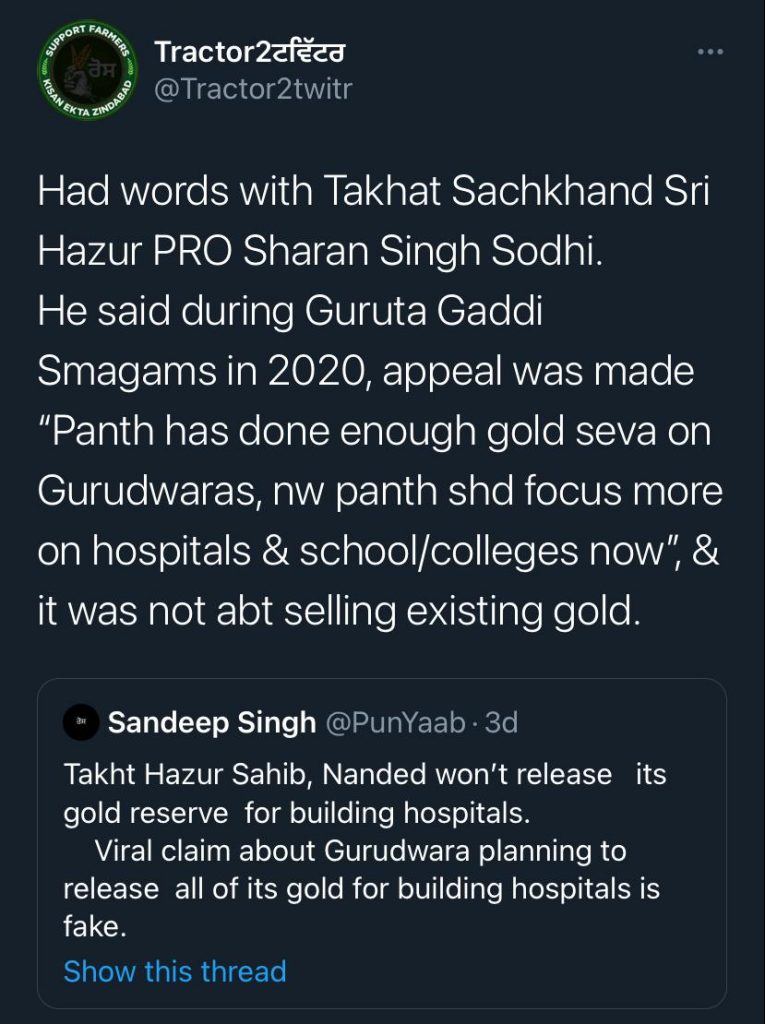
Another netizen claims to have confirmed the fact with the PRO of the Gurudwara himself and revealed that the claims were made in 2020 and in no way indicated the selling of existing gold.

Image Source: Twitter

Takht Shri Hazur Sahib is among the holiest sites in Sikhism. About 4,000 pilgrims from Punjab had remained stranded for about a month at the Gurdwara last year owing to the nationwide lockdown amidst the pandemic out of which more than 100 were found to be Covid positive.

The claims that the Takht Shri Hazur Sahib in Nanded is going to release its gold collected in the last 50 years for building hospitals, are fake.

Goa Police destroyed crucial evidence in Tarun Tejpal case, says Sessions Court, state govt to challenge acquittal

The Goa Sessions Court that recently aqquitted former Tehelka editor Tarun Tejpal had said in its judgement that the prosecution failed to produce crucial evidence, including CCTV footage, and the investigation officer committed several omissions during the investigation in the rape case.

According to the Bar and Bench, the Sessions Court, in its verdict, stated that there were several omissions and changes of versions of the depositions of the prosecutrix in the case.

Acquitting Tejpal in the rape case, the Sessions Court had noted discrepancies in the evidence submitted by the prosecution, which was deliberate as per the defence. In its 527-page order, the court said that there were glaring contradictions in the statements made by the prosecutrix, and the investigating officer had not questioned the prosecutrix about such discrepancies.

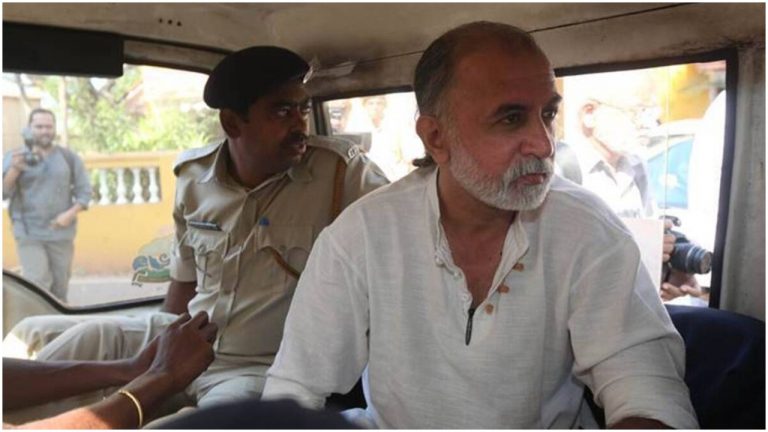
Tarun Tejpal, the founder and former editor-in-chief of Tehelka, was acquitted of all charges in the case of sexual assault and rape of a junior colleague by a Session Court in Goa. Judge Kshama Joshi on May 21 acquitted Tejpal of all charges in the sexual assault case.

Investigation officer did not submit evidence, CCTV footage missing

The investigating officer had failed to submit crucial evidence to the court, and CCTV footage recorded on the day of the incident is also missing, the court noted. The court also that the investigating officer did not record the statements of certain witnesses, despite their willingness to depose.

The emails exchanged between the prosecution, and the defence witnesses were located on the Tehelka server. However, those crucial emails were not procured by the officer during the investigation, the verdict noted.

The additional sessions court at Mapusa, acquitting Tarun Tejpal, held that Goa police destroyed “clear proof of evidence” by not producing the CCTV footage of the first floor of the five-star hotel where Tejpal was accused of sexually assaulting his junior colleague.

On CCTV footage, the court noted that the investigation officer had given directions to other investigating officers to download CCTV footage only of the ground floor and second floor and not the first floor to deliberately destroy all traces of CCTV footage of the first floor.

“The IO viewed vital CCTV footage of the guest lifts on the first floor and knowing that the said CCTV footage shows the accused and prosecutrix exiting the lift during the relevant two minutes on the first floor and that the same would exonerate the accused and despite the fact that the DVR containing the CCTV footage should have been attached by the IO at the earliest to preserve the crucial footage, deliberately delayed the seizure of the DVR and in the meanwhile destroyed the CCTV footage of first floor, thereby destroying clear proof of the accused’s defence,” the Court said.

Several omissions in the investigation, prosecution failed to prove Tejpal’s guilt: Court

In a scathing observation, the Sessions Court said that the investigating officer had committed several omissions while conducting the investigation. Noting the investigation was not carried out properly, the court observed that the investigating officer had failed to ask basic questions to the accused in the case.

“No empirical data to show how a button on the lift panel can keep the doors closed when the lift is stationary between floors. No verification on how the buttons on the lift panel could be pressed to facilitate the commission of any crime. No report from the company which made the lift to find out the functioning of the lift. No interrogation of the prosecutrix on what the accused did on the lift panel with his hands during the alleged incident and how he pressed the lift buttons,” the court noted.

The Session Court, which granted the rape-accused Tarun Tejpal on May 21, concluded that the prosecution had failed to prove the guilt of the accused beyond reasonable doubt and, hence, declared acquittal of Tejpal.

Interestingly, soon after the verdict was pronounced in favor of the journalist, an official statement was released, wherein he had thanked Congress leaders like Salman Khurshid and Kapil Sibal amongst others for helping him in the legal battle.

Goa to challenge Tejpal’s acquiital

Meanwhile, the State of Goa has challenged the order acquitting Tejpal before Goa Bench of Bombay High Court.

Far-left journalist Tarun Tejpal was accused of forcing himself on a colleague against her wishes inside an elevator of the Grand Hyatt, Bambolim, Goa, on November 7, 2013, during an official event. He had stepped down as editor for six months after being accused of sexual assault.

Tejpal was arrested in November 2013 and later released on bail in July 2014. The trial against Tejpal started in 2017. Meanwhile, Tejpal had filed a petition in the Bombay High Court seeking dismissal of the case against him, claiming that the charges were fabricated. Both High Court and Supreme Court had also dismissed the plea in 2019.