Home Blog Page 4451

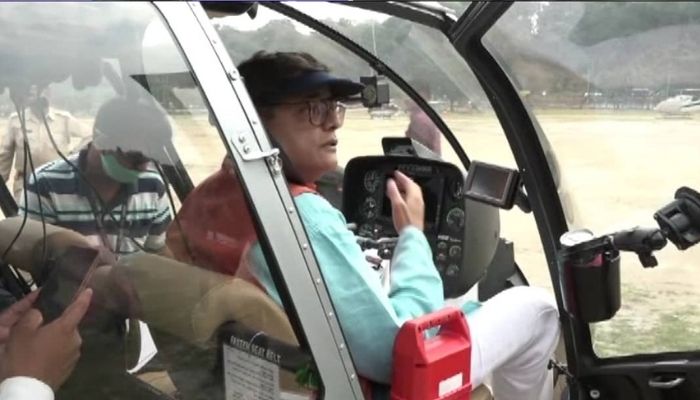
BJP leader Jay Panda seen flying his own helicopter for campaigning in Assam ahead of polls: Details

Ahead of the upcoming State Legislative elections, BJP spokesperson and National Vice President Baijayant Panda Jay Panda was spotted driving a helicopter during his campaign trail.

TV9 Bharatvarsh Editor Amod Rai tweeted that Jay Panda has been going to election rallies and party meetings in his own helicopter. “He has a calm, soft-spoken and spontaneous personality He is working as a silent worker of the BJP,” Rai added.

It must be mentioned that Jay Panda is a trained pilot with over 1833 hours of flight experience. He studied at the Michigan Technological University in the United States and has a dual degree in Engineering and Management in Communications.

“Interestingly, what makes him stand out of the crowd is that he is a pilot as well. He has flown over 1833 hours till now. And now in the election season, helicopters are indeed an attraction for the public. Copters flying high up in the air, landing at election rallies are a common sight. In poll-bound Assam, Panda has been seen to be flying a copter, which has further garnered public attention. Besides being an active politician, this is a feather to his cap as a pilot,” reported The Truth Today.

Odisha government seized a helicopter of Jay Panda in 2018

After deserting his erstwhile party Biju Janata Dal, a helicopter flown by Jay Panda was seized by the police in Odisha in September 2018. The Odisha government had accused him of flying his chopper at a supposedly ‘low altitude’ over ‘eco-sensitive zone’ in Chilika Lake. It claimed that the flight caused panic among the tourists.

“A local cop from Puri has come to Bhubaneswar airport & “seized” the hangar & the helicopter I fly. Clearly, facts have no bearing, & cops privately admit “orders from 3rd floor’. Brazen attempt to handicap my movement around Odisha, but they cant stop me,” jay Panda had tweeted.

Haryana court judge transferred hours before pronouncing the quantum of sentence for convicts in Nikita Tomar murder case

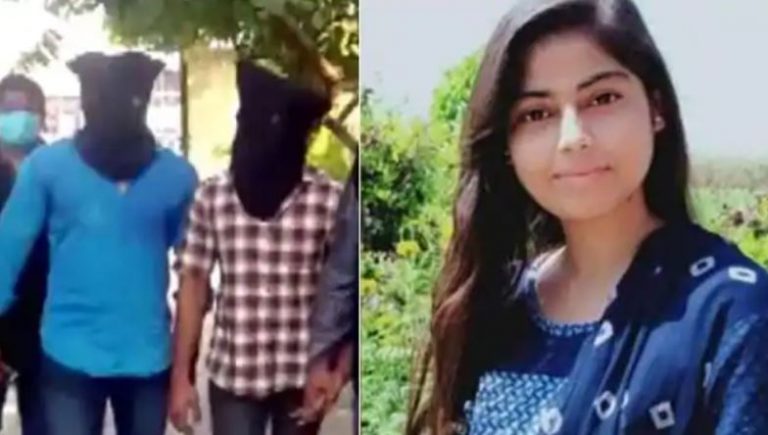
In a new twist in the Nikita Tomar murder case, the Faridabad’s district sessions court judge, who had convicted prime accused Tauseef and his friend Rehan in the sensational case has been transferred. The court is supposed to announce the quantum of sentence for the convicts today. Tauseef and Rehan have been brought to Faridabad court for the proceedings.

The Judge has, however, been transferred from Faridabad to Rewari, reports News 18 Hindi. However, it is not clear when the judge has been asked to join in his new place. It can be assumed that few days will be given for the shift and hence the same judge may deliver the verdict announcing the sentence.

While convicting prime accused Tauseef and his friend Rehan in the Nikita Tomar murder case, the Faridabad court judge had fixed March 26 for pronouncing the quantum of sentence for the convicts.

On March 24, in a hearing that lasted for not more than 12 minutes, the Faridabad fast track court had convicted Tauseef and Rehan for the brutal killing the 21-year-old student Nikita Tomar in October last year. The third accused, Azruddin, who had supplied a weapon to the accused, has been acquitted.

Nikita Tomar, a 20-year-old girl was shot dead in broad daylight on October 26, 2020, by her school mate outside the Aggarwal college in Ballabgarh, Faridabad district of Haryana. The crime was caught on camera. The trial for this murder case began on December 1, 2020.

Tomar had filed a molestation complaint against Tauseef a few months prior to her murder. However, the family later dropped the case. Her family had alleged that Tauseef started hounding her again and pressuring her to embrace Islam. 

Reportedly, Tauseef is the grandson of Kabir Ahmed, a Congress leader. Moreover, Tauseef’s late uncle Khurshid Ahmad was a Congress MP of Haryana and was an ex-Cabinet minister of Haryana. Khurshid Ahmed’s son and Taufeeq’s cousin brother Aftab Ahmed was elected as MLA from Nuh, Mewat on the ticket of Congress Party and has been a Minister as well.

Supreme Court refuses to stay the sale of electoral bonds, says enough safeguards are already present

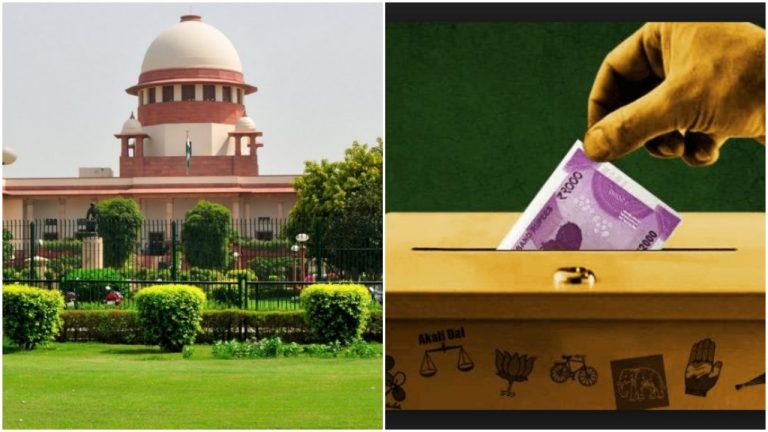
The Supreme Court on Friday dismissed an application that had sought a stay on the sale of Electoral Bonds ahead of the upcoming State Assembly elections in West Bengal, Assam, Kerala, Tamil Nadu and Puducherry. A Supreme Court bench comprising of Chief Justice of India SA Bobde, Justice AS Bopanna and Justice V Ramasubramanian refused to stay the release of the fresh set of electoral bonds ahead of the assembly elections in five states.

Hearing a petition filed by NGO Association for Democratic Reforms (ADR) seeking an interim direction to bar the sale of Electoral Bonds, CJI Bobde said, “Since the bonds were allowed to be released in 2018 and 2019 without interruption, and sufficient safeguards are there, there is no justification to stay the electoral bonds at present”.

Activist-advocate Prashant Bhushan, representing the controversial NGO, had claimed that there was a serious apprehension that any further sale of electoral bonds before the upcoming state elections in West Bengal, Tamil Nadu, Kerala and Assam, would further increase illegal and illicit funding of political parties through shell companies.

The petition had sought that the apex court should not further open the window for the sale of EBs during the pendency of the instant writ petition.

However, the Election Commission of India had opposed the stay on the sale of the bonds. The ECI had submitted that they were not opposed to electoral bonds but want more transparency. Electoral Bonds is one step ahead unaccounted cash system, ECI said. The issue of transparency can be considered at the final argument stage, and there should be no interim stay, the ECI had argued.

The Attorney General had asserted that the bonds ensured that political funding was completely routed through the banking channel, thereby eliminating black money.

Electoral Bonds:

Electoral Bonds have been proposed as a way of reforming election funding in the Union Budget 2017. Introduced with the Finance Bill 2017, the Electoral bonds are instruments or securities that can be used to donate funds to political parties.

The Electoral Bonds, which were notified in the year 2018, ensures that the funds being collected by the political parties are accounted for clean money.

Any individual who wishes to donate to a political party can buy these bonds by making payments digitally or through a cheque at the State Bank of India. Then they can gift the bond to any registered political party. The political party can convert these bonds back into money via their bank accounts.

Fire breaks out at a mall in Bhandup with COVID-19 hospital on the top floor, hospital says ‘no casualties due to fire’, BJP says ‘BIG LIE’: Details

0

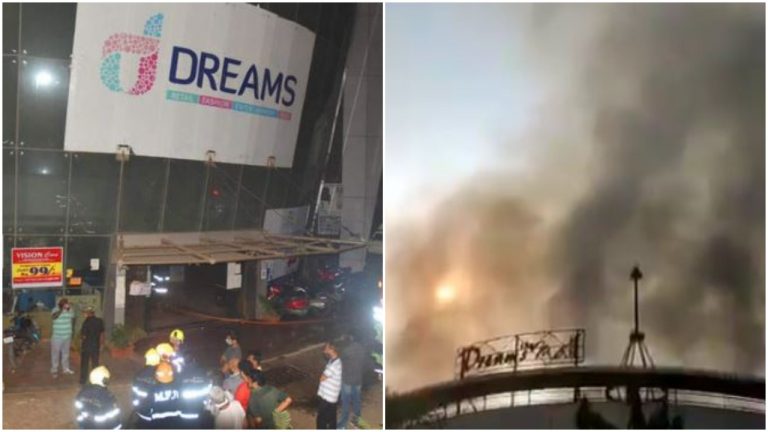
A massive fire broke out on the intervening night of Thursday and Friday at a mall in Mumbai’s Bhandup area, which also accommodates a COVID-19 hospital on its top floor. The fire has engulfed 10 people so far, while scores have been evacuated, in a rescue operation, which continues thus far. A total of 14 fire engines and 10 jumbo water tankers are sent to the site to douse the massive fire. As many as 76 COVID-19 patients were admitted to the hospital, which is located on the third floor of a mall.

Until Friday early morning, two casualties were reported. The BirhanMumbai Municipal Corporation (BMC) reported that two people had died in the fire. The Sunrise hospital, however, refuted the claim saying that those two deaths were not linked to the fire incident. There were two dead bodies (due to Covid) that were also evacuated. There was no casualty due to fire,” the hospital said in a statement on Friday morning.

It also said that the fire broke out on the first floor of the mall. “The smoke reached the hospital located at the top floor. All fire alarms beeped and hence all patients were safely evacuated due to the smoke to the fire refuge area,” the statement said.

“This hospital was started in exceptional circumstances of Covid last year and has helped in saving many patients from Covid deaths. It is functioning with all due compliances like fire licence nursing home licence etc. The hospital staff did a fantastic job in safely evacuating patients on wheelchairs and beds to the refuge areas and by following the fire drills,” the statement further said.

Contrary to what the hospital said in its statement, BJP leader Kirit Somaniya alleged that Sunrise Hospital had been operating illegally without attaining an occupancy certificate (OC). He alleged that BMC had issued an illegal conditional OC to the hospital during COVID. No safety/fire system was in place, Tweeted the BJP leader.

Kirit Somaiya said he has asked Bhandup Police to register a criminal complaint against the Sunrise Hospital owner and arrest him as soon as possible.

CNN News 18 has also accessed documents which show that Dreams Mall, Bhandup flouted fire safety norms. There were no fire safety norms at the mall. Earlier, BMC had carried out an assessment on Mumbai malls regarding the fire safety norms and Dream Mall was amongst the 29 malls which were declared unsafe as it did not comply with the fire safety norms, reports CNN News 18.

According to Deputy Commissioner of Police (DCP) Prashant Kadam, around 22 fire tenders reached the hospital to douse the flames. As many as 76 COVID-19 patients were admitted to the hospital, which is located on the third floor of a mall.

Speaking about the incident earlier today, Mumbai Mayor Kishori Pednekar said, “This is the first time I have seen a hospital in a mall. This is a very serious situation. Seven patients were on ventilators. 70 patients have been taken to another hospital. There will be an investigation to ascertain the cause of the fire.”

Maharashtra govt goes after IPS officer Rashmi Shukla who tried to investigate transfer racket in 2020, BJP sees red: All you need to know

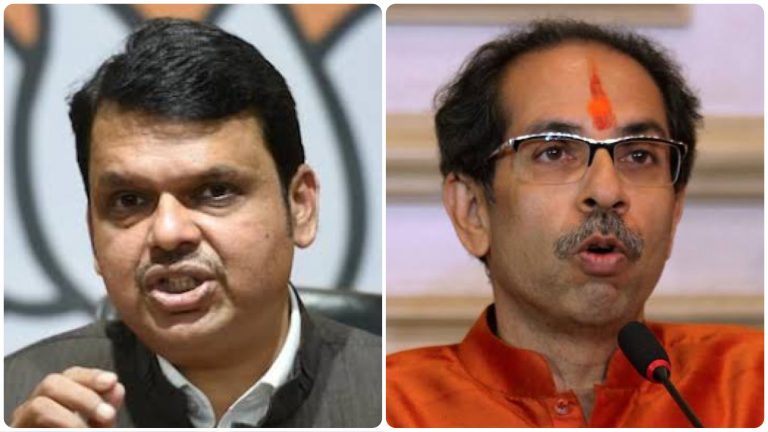
As the Maha Vikas Aghadi government in Maharashtra reels from what seems like an existential crisis, it appears to have marshalled all the resources at its disposal to extricate itself from the mess it has found itself in following the Antilia bomb scare incident. Recently, Devendra Fadnavis made a startling revelation that Uddhav Thackeray ignored a report on transfer posting racket in the state police. Now, the Maharashtra Government has placed more focus on punishing the whistleblower who may have provided data to the former chief minister than disproving his allegations.

To this end, Sitaram Kunte, the Chief Secretary of the Maharashtra Government recently submitted a report, recommending strict action against senior IPS officer Rashmi Shukla for tapping the phones of politicians illegally. However, his report makes no mention of punitive action to be taken against corrupt officials and minister for offering millions of rupees in lieu of transfer/prime posting.

Chief Secretary of Maharashtra claims IPS officer Rashmi Shukla may have leaked data to Devendra Fadnavis

In his report that was released on Thursday, Chief Secretary Sitaram Kunte claimed that the former Additional Director General of Police (Intelligence) Rashmi Shukla may have leaked her confidential letter on the alleged corruption in transfers in the police department to Leader of the Opposition Devendra Fadnavis (BJP). Kunte cited Shukla’s letter dated August 25, 2020, to the then Maharashtra DGP Subodh Jaiswal which was released in the public domain by Fadnavis two days ago.

Furthermore, the report which was submitted to Chief Minister Uddhav Thackeray, stated that there was no wrongdoing in the police transfers and all transfers of police officers made between September 2-October 28, 2020. It added that the transfers were based on the recommendations of the Police Establishment Board. Kunte also accused Shukla of misusing the permission obtained for phone tapping under the Indian Telegram Act.

“Even after the letter was stamped as ‘Top Secret’, Shukla seems to have leaked the letter, which is a very serious matter. If it is proved, she will be liable for strictest action against her,” Kunte said in his report. “She had intercepted the phone calls and exposing these names also threatened the privacy of the officials.”

Kunte also repudiated the claims made by the BJP that no action was taken on Shukla’s report. The Chief Secretary shared the summary of the findings into her claims presented to Thackeray on August 31, 2020. He said that there was no concrete evidence barring the call record detail analysis and a CID inquiry into the matter was deemed ‘undesirable’. Stating that no malpractice could be established in Shukla’s report, Kunte said action against police officers would have caused serious discontent among them.

The transfers mentioned in Shukla’s letter, however, did not actually take place, and “there is no misdeed in transfers as well,” said the chief secretary.

In reference to the speculation about more data in the pen drive, Kunte said there was no accompanying pen drive when Shukla sent her letter to the state government. This is in stark contrast to the claim made by Fadnavis that he had 6.3 GB of data containing the transcript of phone tapping.

As the controversy surrounding the transfer of police officers swells, the BJP has asked the phone tapes to be made public.

Rashmi Shukla, Commissioner of Intelligence Department, her letter and her suspicious of nexus between politicians and the police in transfer scam

In August 2020, Rashmi Shukla, Commissioner at the State Intelligence Department, had written a letter to Subodh Kumar Jaiswal, Director General of Police, informing him of the alleged transfer racket.

The letter, dated 25th August 2020, states, “Upon the receipt of numerous complaints alleging that a network of ‘brokers’ had emerged, particularly individuals with firmly ingrained political connections, are engaged in arranging desired postings for police officers in exchange for massive monetary compensation.”

“In order to authenticate these charges, the phone numbers of the individuals allegedly involved in this dubious activity were placed under telephonic surveillance, with due regard to the established process. The reason for surveillance was to curtail the commitment of criminal offence(s) and prevent the possible breach of trust Consequently, upon review of the gathered data, it is clear that there is significant merit in these allegations,” it adds.

Rashmi Shukla states further, “It has been discovered that the afore-mentioned ‘brokers’ are in close contact and embroiled in these negotiations with several influential and. The police officers ranging from Inspectors to several high-ranking IPS officers are in contact with such undesirable individuals.”

Rashmi Shukla emphasises that the matter should be brought before the attention of CM Uddhav Thackeray as it would severely undermine the credibility of the ruling dispensation. A day later, DHP Jaiswal acknowledges the receipt of the letter. He too recommended that the matter be brought before Uddhav Thackeray and a comprehensive enquiry into the allegations.

Devendra Fadnavis makes explosive revelation, claims Uddhav Thackeray overlooked police transfer posting racket in state

During a press conference on March 23, former Chief Minister of Maharashtra and leader of Opposition Devendra Fadnavis alleged that Chief Minister Uddhav Thackeray chose not to act on a report exposing a racket related to the transfer of police officials which was bought to his notice. He further said that CM Thackeray decided to keep mum just to save his government.

He said, “The chief minister did not take any action through the General Administration Department comes under him. The report has been with the government since August 2020 but to date no action on it. Seems like he shielded and protected this entire racket to save his government.”

In his statement, Fadnavis said that he has a copy of the report along with 6.3 GB of data that includes call recordings and documents. He added that the data would be shared with the Union Home Secretary for investigation by the Central Bureau of Investigation (CBI).

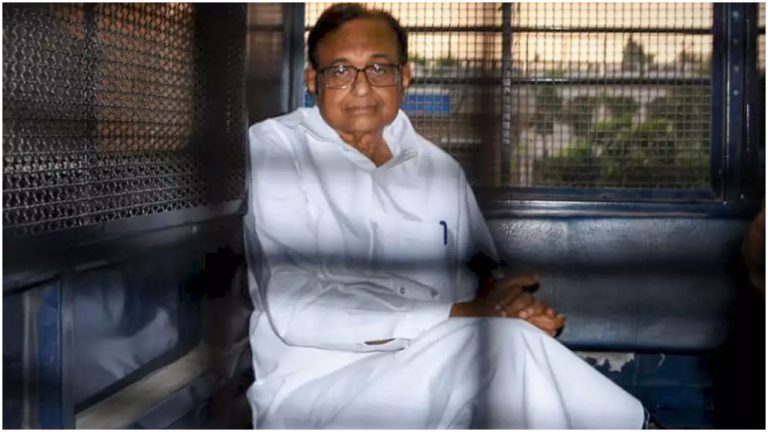
INX Media scam: Chidambaram was involved in money laundering, directed firms to help Karti’s business interests, says ED charge-sheet

On Thursday, the Enforcement Directorate listed details of investments made by former Finance Minister P Chidambaram and his son Karti Chidambaram from the alleged proceeds of corruption in the INX media scam, reported Times of India.

In its charge-sheet filed against former finance minister P Chidambaram, his son Karti, their chartered accountant S Bhaskararaman and others, the ED stated that the investments increased nearly ten times from Rs 6.5 crore to Rs 65.9 crore in a matter of months. The ED alleged that the accused P Chidambaram and his son Karti Chidambaram had received money as gratification from INX Media.

“INX Media Pvt Ltd had made payments of Rs 6.5 crore, detected till date, to several shell companies of Karti P Chidambaram in India and outside India. The first illegal gratification of Rs 3 crore was made through Span Fibre and Satyam Fibre to ASCPL, Kriya and CBNPMC, the companies, beneficially owned by Karti as part of P Chidambaram’s direction,” the charge-sheet noted.

In the charge-sheet, the Enforcement Directorate (ED) has alleged that former Union Finance Minister P Chidambaram had directed former INX Media promoters to “help” his son’s business interests. The central probe agency said that the 75-year-old Congress leader was “very much involved” with his son and MP Karti Chidambaram in the process of money laundering.

Chidambaram was involved in companies owned by Karti, says ED charge-sheet

As per ED, the accused P Chidambaram was “involved” in the working of the companies beneficially owned by Karti, some of which have also been made accused in the case. The ED said it had recovered emails from seized digital devices that reveals how Karti consulted his father regarding matters related to a company “beneficially owned” by him in the past – Advantage Strategic Consulting Pvt Ltd (ASCPL).

The charge-sheet said that the first instalment of the “illegal gratification” received from INX Media, Karti’s firm Advantage Strategic Consulting Pvt Limited (ASCPL), invested Rs 1.5 crore in purchasing 1.5 lakh shares of Vasan Health Care. Later, ASCPL sold 30,000 shares of Vasan Health Care to Sequoia (SCI-GIH) for Rs 22.2 crore, while another 36,245 shares were sold to Vasan Medical Hall for Rs 18.6 crore.

The accused gained a income of Rs 29.4 crore through the proceeds of sales, generating a profit of Rs 18.4 crore, the ED claimed. Most of these transactions happened in a span of two years. The accrued income and two other instalments of money received from INX Media, the “proceeds of crime” of Karti controlled shell firms reached Rs 65.9 crore, the ED claimed.

The charge-sheet claimed that these proceeds were laundered by “investing in properties outside India” through a subsidiary, ASCSPL, raised in Singapore. Karti purchased Surridge Farm in London and Gava Club in Spain from the proceeds of crime, the ED said.

A special court also took cognisance of the charge-sheet on Wednesday. The court has asked Chidambaram and his son to be present in court on April 7 when charges will be framed. Meanwhile, Congress leader Chidambaram has denied the ED’s charges and claimed that the summons was a routine court process.

INX Media scam:

P Chidambaram is accused in the INX Media scam, which involves charges of bribery and lobbying in granting foreign investments worth over Rs 300 crores to INX Media. INX Media, later known as NewsX, was owned by Peter and Indrani Mukherjee of the sensational Sheena Bora murder case. Chidambaram is accused of misusing his power as the finance minister to grant INX Media an FIPB clearance.

The former Union minister was arrested by the CBI after a high-level drama where CBI officials had to scale the walls of his residence on August 21, 2019. Later, the ED had taken custody of Chidambaram on October 17, 2019, before his bail order came for the CBI case. The Congress leader and his son are currently out on bail.

If opposition political parties don’t criticise external vested interests, they will lose more support internally than gain globally

The Indian parliament, in retaliation to London’s actions sometime prior, discussed the case of racism in the UK’s Oxford University, where Indian student, Rashmi Samant was forced to resign as President of the University’s student union for apparent racist and anti-Semitic social media posts. Member of Parliament (MP), Ashwini Vaishnaw, raising the issue stated, ‘Even the Hindu religious beliefs of her parents were publicly attacked by a faculty member, which went unpunished.’ S Jaishankar responded by stating, ‘We will take up such matters with great candour when required. We will monitor these developments very closely.’

Ashwini also discussed racism within the British Royal family, which has dominated headlines in recent days. India, as a member of the Commonwealth, the head of which is the Queen, has the right to discuss racism in the British Royal Family, as it impacts the organization of which India is a powerful member. India should also comment on the London police’s highhanded approach at a vigil in Chaplam in honour of a rape victim, which is a disgrace to democracy.

The UK Parliament had conducted a 90-minute discussion on the farmers’ agitation, a fortnight ago. Their MPs had expressed concern about the safety of farmers and targeting of journalists covering the agitation. The Indian government reacted by summoning the British High Commissioner and issuing a démarche. The Indian High Commission in London issued a statement, ‘We deeply regret that rather than a balanced debate, false assertions – without substantiation or facts – were made, casting aspersions on the largest functioning democracy in the world and its institutions.’

Earlier the Canadian Prime Minister, Justin Trudeau, had commented on the same subject and was rebuked by India. Subsequently, he had to eat humble pie when he was compelled by domestic pressure to call Modi and request for the release of vaccines for Canada. Post arrival of vaccines in Canada, posters emerged praising Modi for his generosity in accepting the Canadian request. These came as an added rebuke to Trudeau.

US lawmakers, in their individual capacity, had commented on Indian actions on abrogating Article 370. Such was the nature of comments that the Indian foreign minister cancelled his meeting with the top leadership of the US House Foreign Affairs Committee after they insisted that sponsors of two draft resolutions criticising India would attend. With peace reigning in Jammu and Kashmir, those who adversely commented on India are currently silent. On the contrary, they would be seeking another avenue on which to comment.

The US-based NGO ‘Freedom House’ released a report that classified India as ‘partly free’, down from ‘free’ earlier, and Sweden-based Varieties of Democracy Institute categorised India as an ‘electoral autocracy’. S Jaishankar criticized these comments and stated, ‘It is hypocrisy. We have a set of self-appointed custodians of the world who find it difficult to stomach that somebody in India is not looking for their approval, is not willing to play the game they want to play. So, they invent their rules, their parameters, pass their judgements and make it look as if it is some kind of global exercise.’ On the contrary, members of the Indian opposition claimed these comments were realistic.

Senator Robert Menendez, Chairman of the Senate Foreign Relations Committee wrote a letter to US Defence Secretary, prior to his visit to India, stating, ‘In meetings with Indian counterparts, I strongly encourage you to make clear that in all areas, including security cooperation, the US-India partnership must rest on adherence to democratic values.’ The Indian government, on the contrary, should have raised racism and hate crimes on Asian Americans in the US, quoting the Atlanta incident as Indians are a large community in the US.

Nations commenting on Indian farmer protests are the same who have approached WTO accusing India of adopting protective measures in its farm sector. Canada raised 65 questions against India’s agriculture policies between 2017 and 2020 mainly concerning MSP policies. In May 2018, the US and EU targeted India’s MSP on food grains, claiming it was above the permitted 10% market price.

There are reasons why international politicians and NGO’s feel they can criticize the Indian government and its internal decisions, even though these are adopted following democratic protocols. Firstly, is the Indian political scenario, where opposition parties’ welcome criticism of the nation, assuming it to be criticism of the government. In all recent cases, the opposition supported anti-India comments.

Secondly, is the unwillingness of the Indian democratic system to discuss issues within other nations even if they concern the Indian diaspora. Thirdly, India is a growing economic power, beginning to display its standing on the global stage. This has hurt many developed nations, whose economy India has overtaken or is overtaking. Commenting on India gives these countries irrelevant politicians a feeling of importance. Fourthly, it is the vote bank of the Indian diaspora in these countries. Finally, is that Indian origin politicians abroad consider it their right to comment on Indian matters, even though they have no link with India.

An interesting fact is that while irrelevant global politician’s and NGOs comment, their government leaders do not. They know the value of enhancing ties with India. UK and US are two recent examples where governments have backed India, while their politicians have commented negatively. Boris Johnson is visiting India with the hopes of signing a £100 billion trade deal.

India possesses the world’s fifth-largest economy and the third most powerful military as also remains the globe’s most lucrative market. Global leaders are making a beeline to India to ink trade and defence deals. By holding its ground against China, India has displayed it is no pushover. Indian vaccine diplomacy has proved its global outreach and respect. The days of being goody boys in foreign policy, where nations, irrelevant politicians and funded NGOs can openly comment on Indian internal matters should now be things of the past. India should, on the other hand, discuss issues concerning the Indian diaspora abroad.

If India does not act it will become a soft target for small countries, irrelevant politicians and international bodies with a biased agenda to interfere in its internal decisions. However, for this to happen, we need mature politicians who look at ‘nation first’ rather than jumping to join the bandwagon of Indian critics. Irrespective of the political party in power, false comments on India’s internal matters, if uncriticized by opposition political parties, places them in poor light before the national public. They will lose more support internally than gain in global standing externally. 

(This article has been written by Retired Maj Gen Harsha Kakar and was first published on his blog. It has been reproduced here with due permission).


Panipat: Human skeletons found in house were of Ahsan Saifi’s wife and two children whom he had killed in 2016

The Haryana police have finally solved the mystery behind the three human skeletons that were recently unearthed in a house in the Shiv Nagar area of Panipat. The police have reportedly arrested one person named Ahsan Saifi from Uttar Pradesh in connection with the skeletons.

The current owner of the house had found three skeletons buried beneath the floor of a room in the house. The skeletons surfaced when the floor of a room in the house was dug for carrying out some renovation work. After the recovery of the skeletons, the police had filed a case of murder and causing destruction of evidence. An investigation was initiated in the case.

Ahsan Saifi killed his second wife, his son, a relative and buried them in the house

Police reportedly confirmed on Thursday that they have solved the mystery behind the skeletons. It was revealed during investigation that the present owner of the house had reportedly bought the house from a person named Pawan in 2017. Pawan, who worked in a sugar mill, had purchased the house from Ahsan Saifi. Saifi is currently living in Kashiram Awas Colony in Bhadohi, Uttar Pradesh with his third wife. He was traced by police and arrested.

After interrogating Saifi, Police found that the skeletons found in the house were of Ahsan Saifi’s wife, his son and a minor relative (some reports mention wife and two children) whom he had killed and buried in the house. Saifi reportedly confessed to killing his second wife Nazneen, his son Sohail and a relative named Shabir.

According to police, Saifi worked as a carpenter and has been active on social media. He had created a profile on a popular matrimonial website. He allegedly duped gullible women who were seeking grooms on matrimonial sites on the pretext of marrying them. Saifi had met his second wife Nazneen, a resident of Mumbai, on the matrimonial website. He married her without informing her about his first marriage.

After burring them in the house, Saifi sold the house and married for a third time

He shifted to Panipat after marrying Nazneen and kept his first wife and children at Muzaffarnagar, Uttar Pradesh. When Nazneen came to know about his first marriage, she had objected to Ahsan visiting his first wife and children, causing a rift in their relationship. In November 2016, Saifi allegedly had killed Nazneen and two children by poisoning them. After killing them, he buried their bodies by digging a pit in a room in the house. He then sold the house to Pawan and got married for the third time.

Ahsan Saifi was produced before a local court by the police. The court has sent him to a 10-day police remand.

Watch: Congress councillor brutally assaults a woman in Chhattisgarh after her 4-year-child accidentally breaks nameplate

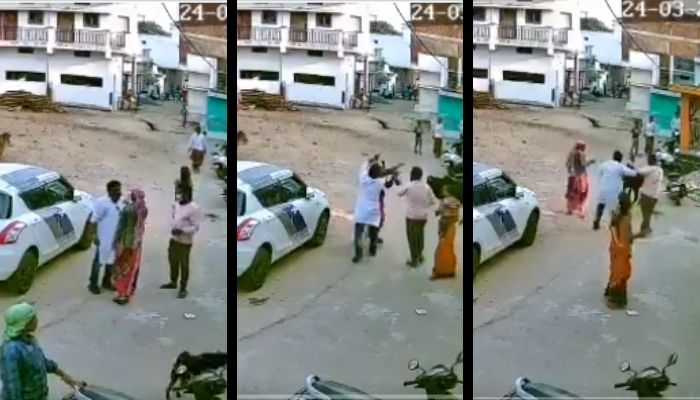
On Wednesday (March 24) afternoon, a Congress councillor brutally assaulted a woman in broad daylight in Gobranawapara in Raipur in Chhattisgarh.

As per reports, the accused has been identified as one Mangraj Sonkar. The incident took place after the 4-year-old son of the victim (Durga Sahu) accidentally broke the nameplate of the car. At around noon, Sonkar’s son thrashed the infant after learning about the incident. When the Congress councillor returned home in the evening, he learnt that his car was ‘damaged’.

An infuriated Mangraj Sonkar then called the victim and verbally abused her. When Durga Sahu complained that his son had thrashed her toddler, he got further enraged and slapped her. When her husband tried to intervene, the accused pushed him aside and continued assaulting Durga Sahu. Mangraj Sonkar openly harassed the victim while the locals stood and watched as mute spectators.

Video of the incident captured on CCTV camera

A nearby CCTV camera has captured the video of the incident, which has now gone viral on social media. Mangraj Sonkar is the councillor of ward No. 16 of Gobranawapara municipality. Following the act of hooliganism and assault, Durga Sahu filed a complaint at the Gobranawapara police station. A First Information Report (FIR) was registered against the accused.

FIR lodged against Congress councillor

Krishnachand Sidar, the police-in-charge of Gobranawapara station, confirmed to the media that a case was lodged against Mangraj Sonkar under Indian Penal Code Sections 294 (Obscene acts and songs), 323 (punishment for voluntarily causing hurt) and 506 (criminal intimidation). The police have now claimed to arrest the Congress councillor soon.

As losses due to roadblocks continue to pile on, ‘farmers’ dance and sing during 12-hour ‘Bharat Bandh’

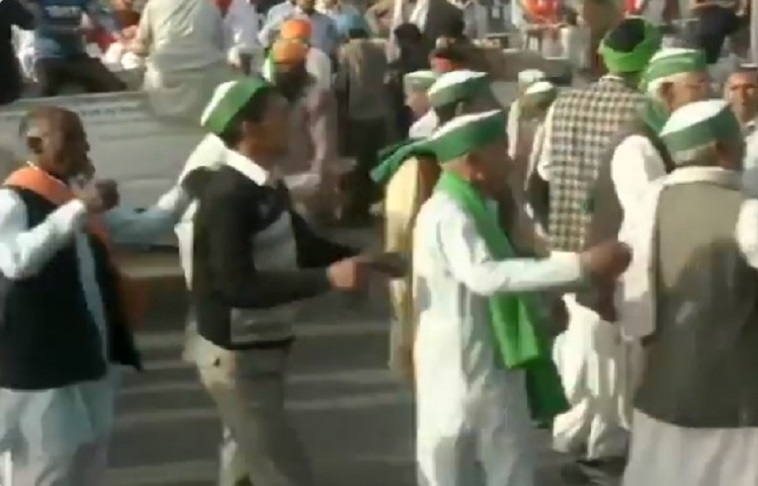
Even as the country continues to suffer a massive revenue loss caused to the illegal squatting on public lands and blocking of roads due to the farm protests, the so-called farmers danced and cheered on Friday near the Ghazipur border by blocking National Highway-9 as they joined the Bharat Bandh strike.

On Friday, a group of protesters who have been illegally squatting near the Ghazipur border for the last four months were seen singing and dancing at the protest site during the 12-hour ‘Bharat Bandh’. The Bandh was called by Samyukt Kisan Morcha against the farm reforms brought in by the Modi government.

The Samyukt Kisha Morcha had given a call for ‘Bharat Bandh’ on Friday to mark four months of their agitation at Delhi’s borders, demanding the three farm laws’ repealing. The bandh, which began at 6 AM, will continue till 6 PM, farmers’ body Samyukt Kisaan Morcha said.

Meanwhile, Congress leader Rahul Gandhi on Friday extended his support for the “Bharat Bandh” called by protestors against the three farm laws.

In a tweet in Hindi, Gandhi said India’s history shows that “satyagraha” ends atrocities, injustice and arrogance. The movement should be in national interest and peaceful, the Gandhi-scion added.

Protests continue to cause massive losses to the exchequer

The protestors cheering and squatting on public roads have caused significant financial damage to the country’s exchequer as losses are mounting day-by-day with continued blocking of national highway along the borders of the national capital. The protests have impacted business in at least four states surrounding Delhi, in addition to the daily losses suffered by the NHAI. It is estimated that the agitation has already led to an approximate loss of Rs. 814.4 crore in toll collection.

The Confederation of All India Traders (CAIT) had said that the farmers’ agitation has caused a business loss of Rs.50,000 crore in Delhi-NCR by January.

Despite the losses, the so-called ‘farmer’ leaders, with the continued support of opposition parties, are trying to keep the agitation alive with protests, roadshows and Bandhs in different parts of the country. However, the protests and bandhs have only managed to receive a lukewarm response across the country.

It is worth mentioning that the ‘farmer’ protests that allegedly began as an opposition to the farm laws have now taken the form of political protests. The protests that began in September had turned violent, culminating in the violent Republic Day riots in the national capital. The protestors, joining hands with certain Khalistani elements, had led an insurrection against the country and had invaded Red Fort on January 26.

Unleashing violence on the streets of Delhi, the violent rioters had desecrated the national flag at the ramparts of the Red Fort and had unfurled the Khalistani flag. Despite all this, the organisers of the protest continue to defend the protests as non-political and peaceful.