Home Blog Page 4582

Delhi Court sends Khalistani supporter Deep Sidhu to seven-day police custody for his involvement in Republic Day violence

0

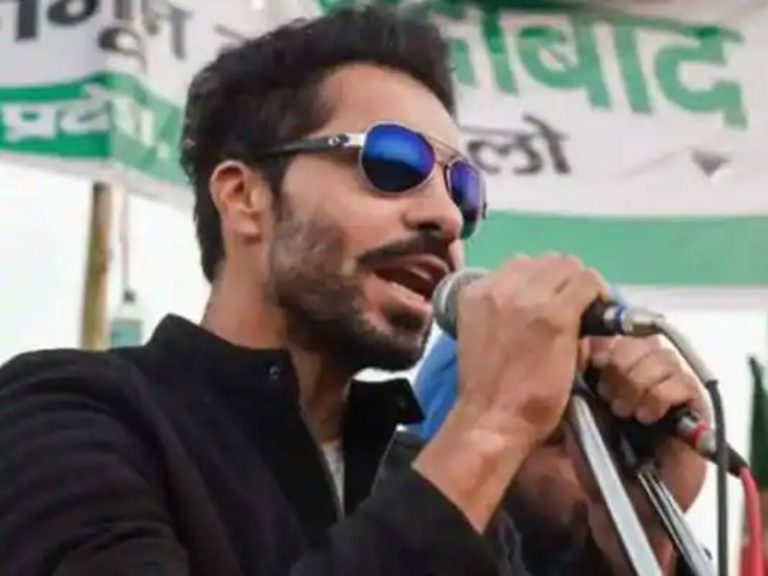
A Delhi Court has sent actor and Khalistani supporter Deep Sidhu to seven days police custody. Earlier in the day, the Special Cell of the Delhi police informed that they have arrested Deep Sidhu for his role in instigating violence and the vandalisation at Red Fort on Republic Day during the farmers’ tractor rally. 

As per reports, Sidhu was traced by Delhi Police using advanced surveillance technology.

We reported how Sidhu was tracked down and arrested in an operation led by Delhi Police’s DCP Sanjeev Yadav. Sidhu was seen in the video footage of the Red Fort violence. He was absconding since then.

His arrest came days after the Delhi Police announced a cash reward of Rs 1 lakh each for information leading to the arrest of Deep Sidhu, Jugraj Singh, Gurjot Singh and Gurjant Singh. 

Sidhu has been hiding since the day of the Red Fort violence and has been releasing social media videos to blame other ‘farmer leaders’ who have spoken against him. The Khalistani supporters had brutally attacked the security personnel and police officials stationed at Red Fort, they had disrespected India’s national flag by hoisting two other flags with Sikh symbols on the Red Fort.

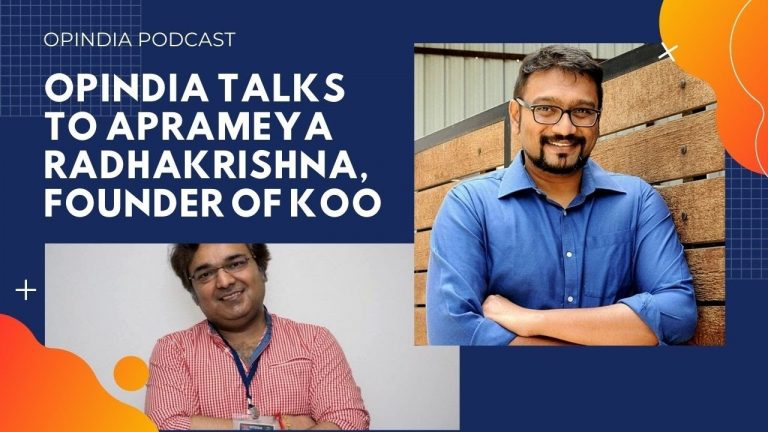
‘No headmaster like Twitter censorship’: OpIndia talks to Aprameya Radhakrishna, cofounder of Indian Twitter alternative Koo

In today’s time, it is uncertain if the microblogging platform Twitter will be a sustainable platform for nationalist Indians to voice their opinion and have a healthy discussion. Also, there is a need for an India-made platform to give a better user experience to the Indian community. With so much diversity in a packed nation like India, a US-based company cannot provide enough features to unify the Indian community. This is where Koo, the Made-in-India microblogging app, comes into the picture. 

In March 2020, Koo became available for the Android platform. Founded by Aprameya Radhakrishna and Mayank Bidawatk, Koo is now available for iOS and Web as well. Still, the latest features are available on Android and later gets introduced on other platforms. Deemed as the Indian alternative for Twitter, Koo has to gain momentum as Indian leaders, including Piyush Goyal and Government Agencies including MeiTy, Indian Posts and others, have either talked about or created a profile on the platform.

Koo was first recognized on a wider platform when it won the AatmaNirbhar App Innovation Challenge held by the Government of India in August 2020. Prime Minister Narendra Modi also talked about it during the Mann Ki Baat episode. The app has already clocked over a million downloads. The founders aim to target the internet users in India who are not well-versed with the potential of social media platforms.

Koo’s founder’s interview with OpIndia

Rahul Roushan discussed with Aprameya about Koo and tried to understand the future plans for the app. There are a lot of questions, doubts, suggestions and possibilities for Koo, which were talked about in over an hour long discussion.

The birth of Koo

When Aprameya and Mayank were brainstorming about the name for the app, they thought of different animals that can be used to represent communication. However, in the end, the bird suited the most. Aprameya said that just because one company uses a bird does not mean we must ditch it altogether.

The name Koo came from the bird Koyal. In India, this particular bird is often associated with happy sounds and memories. Koo also aims at providing a robust and relaxing environment for Indian users; thus, the name fits perfectly. The colour Yellow again is often termed as a happy colour that fits in the aim of the app. Co-founder Mayank designed the bird in the logo as, at that time, they did not have any designer in the team.

Indian languages are the USP for Koo

Unlike other social media applications, Koo is available in several Indian languages, including Hindi, Marathi, Kannada, Telugu, Tamil, Bengali, Gujarati, and of course, English. Aprameya said that they are planning to target not only the Indian users who are looking for an alternative to Twitter but also those who have not yet explored the power of microblogging.

Koo will add more languages in the coming months. The idea is to provide a platform to users where they can share and find topics based on the language and region. For example, if someone has a language set to Kannada, the user will see topics that concern Karnataka. If he wants to see the topics that are trending in the Hindi universe, all he needs to do is change the language to Hindi from the settings.

Currently, for any app, the trending topics show the popular topics based on location and what you regularly follow and global or country-based topics. On the other hand, in Koo, the trending topics are based on the language universe you are using.

The whole app functions in the language you have chosen, making it easier for non-English speakers to access the app easily. In the coming days, Koo will provide an option to change the language from the home screen for a seamless user experience.

Koo will get better with time

Currently, Koo is in an unsaid Beta version. The team is testing the features, introducing new features and factoring in suggestions given by the users. The mission is to build the app for India. For example, the developers at Koo are working on a very innovative feature that will allow you to post Koo in different languages in one go.

Suppose you have typed a Koo in English, but you also want it to send it in Hindi or Marathi. Koo will show you the translation, and if you see it error-free, you can go ahead and post it in multiple languages. As auto-translators are not perfect, there will be an option to edit the translated tweet as well. In this way, you will be able to post Koo in multiple communities in one go and reach out to a larger group. People from other communities will be able to see your profile in their language.

In most countries, such features are not required. But in India, people are often well-versed in at least three languages. Such a feature that allows you to post and read in multiple languages makes it easier to connect to your roots. Koo, in a way, will help in unifying India. Similar changes will keep getting introduced in Koo to make it a more feasible option for the Indian audience.

Policies are essential

As of now, there is a limited user base on the app. But with time, Koo will require its own policies to be in sync with the law of the land. Koo will soon have a team of experts to formulate a policy that will allow them to curb speeches that can cause self-harm or law and order issues. However, it will not become constrained and ‘headmaster-like’ similar to Twitter.

Koo believes in communicating with the government. As it is registered in India, the priority will be to create an environment where Indian laws are followed while providing open space for everyone to share their thoughts and opinions.

Getting the verified batch

There is an option to apply for a verified batch on Koo, which is open for all. However, it would be best if you were a well-known personality who is searched and talked about. Even if it is a negative press, Koo will consider verifying the account.

Is Koo leftist or fascist?

Koo’s official handle follows a left-leaning journalist, which is the main concern for the users with different political views. When Aprameya was asked about it during the discussion, he said that when Koo was being developed, several team members had the user credentials that may have to lead the misunderstanding. Koo believes in healthy discussion, and there are several leaders from different political parties already on the platform.

Koo is secure

The personal information users share on Koo is encrypted, and the servers are located in India. Though Koo is using AWS India for servers, they are looking for Indian alternatives. Currently, Koo is not monetizing the app; thus, there is no question of sharing the information with a third party. However, capital is essential when you want to compete with an international tech giant. Koo will always give preference to Indian investors before knocking on the door of foreign investors. In any case, the team at Koo will take the decisions and not the investors.

Koo is not only looking for capital but also will explore options to monetize the app. However, it is not going to be a one-way road like other apps. Koo will provide an option to opt-out from sharing your information. Koo aims to be transparent with its users and will provide all the options necessary to ensure privacy.

Koo is ready for the crowd

Every product has an identity, and Koo wants to be identified as the platform where everyone can share thoughts and opinions. Of course, more features will come in future that will expand its usage, but at this moment, Koo wants to concentrate on becoming the best Twitter alternative for Indian users. As the user base is increasing quickly, it is advisable to join the platform and secure the handle you want to choose as Koo does not have any option as of now to retrieve handles.

Though Koo is currently a team of ten, they are prepared for the masses. However, the company is also looking to expand its horizons and want to expand its team. Those interested in joining team Koo were requested to mail Aprameya Radhakrishna at [email protected].

Congress troll tries to defame India’s vaccine diplomacy by spreading falsehood about Coronavirus expiry date: Here are the facts

In the global fight against the Coronavirus pandemic, India has emerged as a true world leader. At the time of crisis, India is successfully running the largest vaccination drive in the world and also exporting vaccine doses to other countries. However, habitual sceptics and anti-India propagandists have been peddling misleading narratives since the beginning to undermine the country’s majestic achievement.

On Tuesday, Congress troll and conspiracy theorist Saket Gokhale resorted to scaremongering against the Coronavirus vaccination programme in India. In a tweet, he claimed, “The truth behind Modi’s so-called international vaccine diplomacy. India has been “gifting” & sending Covid-19 vaccines to other countries & touting it as a form of help & benevolence. But here’s the catch: the vaccines being sent are those that expire in April.”

Furthermore, Gokhale alleged that India is lagging behind its vaccination drive. “…A lot many of the vaccine doses manufactured as long ago as Oct 2020 are nearing their expiry date. Modi is sending these vaccines to other countries purely because India has no use for them. And they got no use either,” he added.

The Congress troll’s tweet further provoked his followers to not only question the ‘safety’ of the vaccines but wonder how the production of these vaccines began in October itself.

Production of vaccines began 8 months prior to its approval

It must be mentioned that the Serum Institute of India (SII), which is supplying Covishield vaccine(developed by Oxford-Astrazeneca) to the Indian government, commenced the production of the vaccine 8 months before its efficacy was established. In October last year, SII received permission from the government to pre-produce and stockpile vaccine doses.

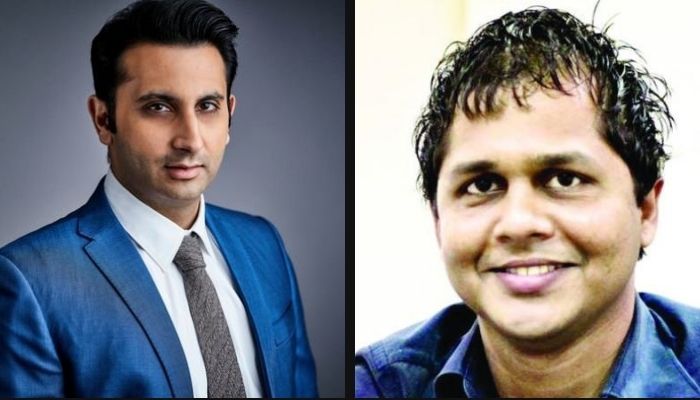
The mass production in advance paid off as the vaccine got approved by the Drugs Controller General of India (DCGI) on January 3. In a tweet on the same day, CEO Adar Poonawalla informed, “Happy new year, everyone! All the risks Serum Institute of India took with stockpiling the vaccine, have finally paid off. COVISHIELD, India’s first COVID-19 vaccine is approved, safe, effective and ready to roll-out in the coming weeks.”

Within just 9 days, the first consignment of Covishield (Oxford-AstraZeneca) vaccines arrived in the National Capital from SII in Pune. And the immunisation programme kickstarted from January 16 this year. Had it not been for this early production of 50 million doses, India’s vaccination drive could have delayed by several months. As such, Saket Gokhale’s assertion that the vaccines were produced in October last year should therefore come as no surprise.

Is April the expiry date of Covishield vaccines?

Another point raised by the Congress troll was the expiry date of April. Gokhale had suggested that the vaccines would be useless after April. Mia Mala, who is associated with the Bhekisisa Health Journalism Centre, informed that SII had only 6 months worth of data to work with and as the expiry date specified the month of April. It can now be extended, given that the data is now available for more than 6 months.

“We have data for 6 months, but many vaccines last for longer, they stay stable for a year. But because the Covid vaccines are so new, we don’t have data for 12 months because they haven’t existed for 12 months. So even though it may say expiry date of April, that April expiry date could be postponed to May because we now have data that this vaccine says stable for longer than 6 months,” Mia remarked. Her comments came at the backdrop of South Africa’s decision to put the Covisheild vaccines on hold.

The South African Health Ministry officials have now reached out to SII to inquire if expiry dates could be extended. Assuming that the vaccines expire in April as Gokhale suggested, SII has the capability to produce millions of new vaccine doses. Dr Suresh Jadhav, Executive Director (SII) had earlier said, “Serum has a stock of another 50-60 million doses. It is also producing at a monthly average of 50-60 million which will go up to 100 million a month by April.”

Vaccination drive in India as compared to other countries

Ministry of Health (MoH) Secretary Rajesh Bhushan informed on Tuesday that 63,10,194 (6.3 million) vaccines have been administered till date since the programme began on January 16. Just on Monday, around 2,23,298 health workers were vaccinated. Bhushan said, “The country’s COVID-19 case fatality rate is amongst the lowest in the world at 1.43% while the global average stands at 2.18%…97% people satisfied with overall vaccination experience — as per the feedback received by the Health Ministry.”

Although the vaccination programme began late in the country as compared to developed nations such as the United Kingdom and the United States, India has been faring well in the list. The US and the UK have administered 41 and 12 million vaccine doses respectively while Brazil has vaccinated 3.6 million people. India has also successfully lept forward on the diplomatic front by supplying vaccine doses to Bhutan, Maldives, Nepal, Bangladesh, Myanmar, Mauritius, Seychelles, Saudi Arabia, South Africa, Brazil, Morocco and other countries.

New York Times in tatters: Celebrated journalist loses job to ‘Cancel Culture’ as far-left radicals strengthen their influence on the paper

0

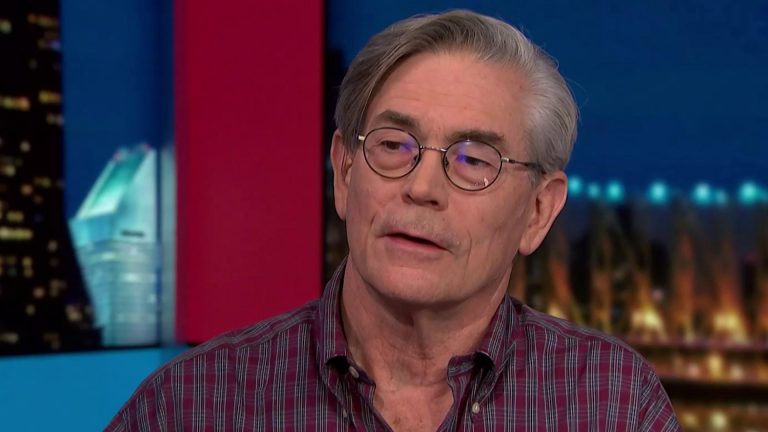
Chaos erupted in a Facebook group of former and current New York Times writers, soon after the forced ‘resignation’ of star science writer Donald McNeil Jr. from the paper. As reported by Washington Free Beacon, McNeil’s departure sent shockwaves amongst the Times writers. While some justified his dismissal, others claimed that this sets a ‘troubling precedent’.

NYT hired Donald McNeil Jr. in 1976. Since then, he has won numerous awards for journalism. However, his ouster is taking place two years after the incident which triggered his dismissal took place. He had accompanied high school students on a trip to Peru in 2019. To a question from a student about whether one of her classmates should have been suspended for using the derogatory n-word, he ended up speaking the offending words himself.

An internal Times investigation found his judgment wanting but stopped short of firing him.

However, when the neoliberal news website The Daily Beast published an account of the incident two years after, it kicked up a storm. “We do not tolerate racist language regardless of intent,” Dean Baquet, the NYT’s executive editor, told staff in an email. McNeil’s unceremonious departure, coupled with Baquet’s email telling staff that ‘intent doesn’t matter’ when it comes to racist words, caused a perfect storm of bitter debate amongst the Times’s employees.

Washington Free Beacon further quoted Steven Greenhouse, a journalist with New York Times, who questioned the worker solidarity. “And why didn’t the NewsGuild do far more to defend and protect the job of a long-time Times employee, one who at times did tireless, heroic work on behalf of the Guild to help improve pay and conditions for all NYT employees?” he was quoted saying.

NYT crossword columnist Deb Amlen accused Greenhouse of an excessive focus on the “perpetrator,” arguing that he and others should shift their attention to the people McNeil had “harmed.” “Why is it that the focus in discussions like this almost always [is] on ruining the perpetrator’s life, and not those who were harmed by [his actions],” she asked.

This is just the latest racial controversy embroiling the New York Times, which saw a revolt among minority staffers over the summer of 2020 after publishing an op-ed by Sen. Tom Cotton, a Republican Senator from Arkansas. Opinion editor James Bennet ultimately lost his job for allowing the op-ed to run.

The NYT executive editor, Dean Baquet’s statement in particular has come under heavy fire. “‘We do not tolerate racist language regardless of intent’ might be the most racist statement I’ve ever read,” said Lawrence De Maria, an award-winning crime and finance reporter. “It demeans ALL races.”

The debate also spilled over onto Twitter. NYT reporter Michael Powell, who specializes in free speech issues, sparked backlash from colleagues when he tweeted a statement from the nonprofit literary organization PEN calling McNeil’s ouster “chilling.” NYT reporter John Eligon, who covers racial issues for the Times, responded by accusing him of racism: “You often wonder what your white colleagues who are lovely to your face are actually thinking or saying about you — or people like you — behind your back,” he wrote.

The lack of clear standards has generated frustration internally. “I don’t think anybody feels like we have any clarity about what happened with that incident or other alleged incidents,” one New York Times reporter told the Free Beacon. “[W]e demand transparency of other people, and we don’t have it in our own processes.” 

It has also raised questions about who really edits the paper: the NYT executive editor Dean Baquet or the radicals who work for him. “Dean and AG [Sulzberger] make a decision, and then are bullied by a vocal minority into changing their minds,” NYT contributor Robert Worth said in the Facebook group. “This is not the NYT I know.”

The incident is being cited as a perfect example of Cancel Culture, where an innocuous incident from your past is dredged up and presented in the worst possible light, in order to extinguish your present day employment opportunities.

It is definitely difficult to believe that the same Robert McNeil Jr., who won a First Place award from the U.S. National Association of Black Journalists for his work covering the AIDS epidemic in Africa, is also somehow a racist who harbors animosity and ill will towards black people. This obvious contradiction lies smack dab in the middle of this controversy, and we anticipate this won’t be the last controversy to arise out of the New York Times.

Kolkata: 8-year-old girl found with her throat slit and teeth broken. All you need to know

0

The detective department of Kolkata police Monday arrested a 43-year-old man, who was allegedly involved in the rape and murder of an eight-year-old girl in north Kolkata on the night of February 3. The accused identified as Ranvir Tanti alias Raghubir, a resident of Balia in the Begusarai district of Bihar, is the second arrest made in the case so far.

The police came to know of Raghubir’s whereabouts after they arrested the first accused, a security guard of the abandoned building in Kolkata’s Jorabagan area where the minor was found brutally murdered on the morning of February 4. Investigation revealed that he had an accomplice.

“Based on scientific evidence gathered by the forensic team and investigation by the detective department, Ram Kumar, the security guard, was detained. He was arrested after a long interrogation,” Murlidhar Sharma, joint commissioner of police (crime) said after the first arrest.

The Kolkata minor’s partially clothed body was found on the staircase, with throat slit, broken teeth and torn hair

According to reports, locals found the body of the minor lying partially clothed on the staircase of a residential building in Jorabagan. Moreover, the minor’s throat was slit, her teeth were broken and her hair was torn, which hinted that the accused might have sexually assaulted her before murdering her in cold blood. The evidence also pointed to the fact that the victim must have put up a strong resistance against her assaulters before she died.

Evidence recovered shows clear signs of struggle

“The recovery of a blood-stained knife, four of her teeth, a clump of hair and clear signs of struggle at the murder spot showed that the girl had put a fight before she was killed,” an investigator reportedly said.

The class three student, who lived in Sovabazar, had gone to visit her maternal uncle and was and was playing in the lane in front of his house on Wednesday evening when she went missing. She was last seen around 8:30 pm that night.

Locals and child’s family accuse Kolkata police of inaction

After the news of the heinous incident spread, locals gathered and created a ruckus at the Jorabagan police station. They accused the Kolkata police of not taking action when the family of the deceased had approached the police with a missing complaint. “Police did not take action when the family had reported that she was missing,” the protesting locals alleged.

Locals also opined that the perpetrators might been known to the girl because otherwise it would be difficult for anyone to kidnap a child from the lane which remains crowded.

The Class 3 girl had come to meet her grandmother at her Jorabagan house on Wednesday. She was accompanied by her teenaged elder sister. The girl was seen playing on the road with others in the evening. We last saw her at 7.45 pm. By around 8 pm we noticed that she was missing and started a search for her. We then went to the police station and were told that a kidnapping FIR could be lodged only after 24 hours later. Cops said they would come to search the area but no one came from the police station,” reports quoted the child’s aunt as saying. 

Agnimitra Paul, the president of the BJP’s state women’s front also met the victim’s mother and assured her support.

Speaking on the brutal incident, Ananya Chakraborti Chatterjee, chairperson of the West Bengal Commission for the protection of child rights, said: “We have sought a report from the police commissioner. If it is proved that the girl was sexually abused, beaten and murdered, the guilty would surely get life term imprisonment. The judge may even sentence him to death.”

Accused charged under POCSO Act and for murder

Meanwhile, the two accused men have been charged under several sections of the Indian Penal Code, including 302 (murder), and section six of Protection of Children from Sexual Offences Act (POCSO).

Police said they are waiting for the postmortem report to determine whether the girl was raped. They said that they are also scanning CCTV footages of shops nearby, to find more details in the case.

Chinese expert and WHO claim Chinese coronavirus did not originate in China

A joint team of the World Health Organisation and Chinese expert mission who presided over the investigations into the origins of the COVID-19 pandemic on Tuesday declared that the evidence to determine that coronavirus was being spread in China’s central Wuhan before December 2019 was insufficient and inconclusive.

In a press briefing, Liang Wannian, head of Chinese expert mission, claimed that there was “not enough evidence” to determine if the virus had spread in the city prior to December 2019. “There is no indication of the transmission of the Sars-Cov-2 in the population of the period before Dec 2019,” Wannian said.

Ben Embarek of the WHO team that collaborated with the Chinese expert mission said that the focus of the study was to determine if coronavirus had ‘previous history’ and was in circulation before December 2019.

In an attempt to deflect the blame of endowing the world with a deadly contagion, the Chinese expert even suggested that the coronavirus might have originated outside China. The Chinese Health Commission expert also contended that the coronavirus which causes COVID-19 could have been circulating in other regions before it was detected in the central Chinese city of Wuhan at the end of 2019.

The WHO scientists also asserted that the global health body’s mission to China to probe the origins of the coronavirus has failed to detect the animal source. However, ever since the pandemic swept the globe, scores of scientists and epidemiologists have consistently claimed that the coronavirus might have originated in bats and could have jumped to humans via another mammal.

Wannian said the transmission from animals was the likely route of the emergence of the infection but so far “the reservoir hosts remain to be identified”. He also added that the studies have demonstrated that the virus could be carried long-distance on cold chain products, alluding to the possible importation of the virus—a hypothesis vigorously peddled by China after it was blamed for the lack of transparency and its shoddy handling of the initial outbreak.

China drew flak for downplaying the COVID-19 pandemic

China faced severe criticism for allegedly understating the severity of the initial outbreak of COVID-19 pandemic in late December 2019 and not being entirely forthcoming to alert the WHO of human-to-human transmission. As a result, the virus spread like a wildfire, jumping from one place to another and within no time, a legion of countries across the world started reporting the COVID-19 flare-ups.

As the coronavirus continued its relentless assault, the international clamour for an impartial inquiry into the origins of the virus gained momentum. After initially blocking an independent investigation into the pandemic, China agreed to have a fact-finding mission probe into the emergence of the pandemic, although the team was accompanied by a group of Chinese experts.

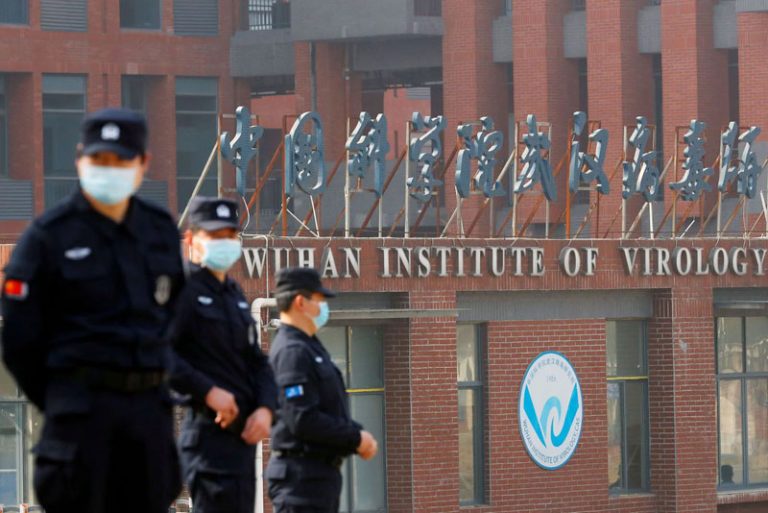
The team arrived in Wuhan last month, on January 14, and after two weeks of quarantine, visited key areas such as the Huanan wet market, which was linked to earlier outbreaks, as well as the Wuhan Institute of Virology, an institute widely suspected of being involved in inorganically developing the coronavirus. The first cases of a pneumonia-like illness were reported in December 2019 in Wuhan, a central Chinese city with a population of over 11 million people.

WHO accused of conniving with China to understate the coronavirus outbreak

While the joint team of WHO and Chinese experts gave a clean chit to China and claimed that the evidence to link the origins of coronavirus to China was not sufficient, it is noteworthy to mention that the WHO and China have been accused of working in cahoots with each other after the coronavirus spread across the world.

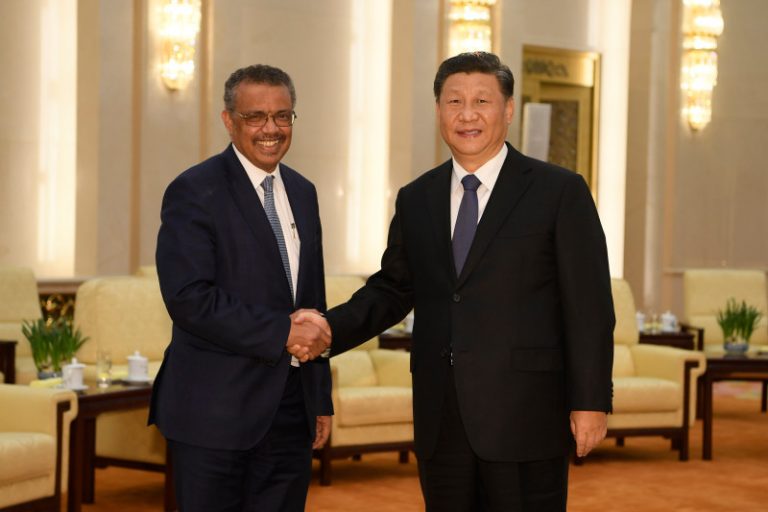
According to a report published by The Hill in July 2020, it was alleged that Tedros, the WHO chief, not only turned a blind eye to what happened in Wuhan but also, after meeting with Xi in January, helped China to play down the severity, prevalence and the amplitude of the deadly COVID-19 outbreak. It was also being alleged that the WHO Director-General defended China despite its gross mismanagement of the highly contagious disease.

Even though the deadly disease had met the criteria like the transmission between people, high fatality rates and worldwide spread, WHO, which is the apex body responsible for public health, took months to declare the COVID-19 outbreak as a pandemic.

The report threw light on the secret behind the cosy and symbiotic relationship between China and the World Health Organisation chief. China had reportedly pledged $20 million to help the WHO fight the COVID-19 outbreak, for which Tedros, the former minister of health and minister of foreign affairs for Ethiopia now the WHO chief, thanked Xi. The report divulged that China had invested heavily in Ethiopia, which is Tedros’s homeland. Ethiopia, now called East Africa’s “Little China” is China’s bridgehead to influence Africa and a key to China’s Belt and Road initiative there. This is the reason which deliberated Tedros to publicly praise the country, even though China knowingly misled the world, the report surmised.

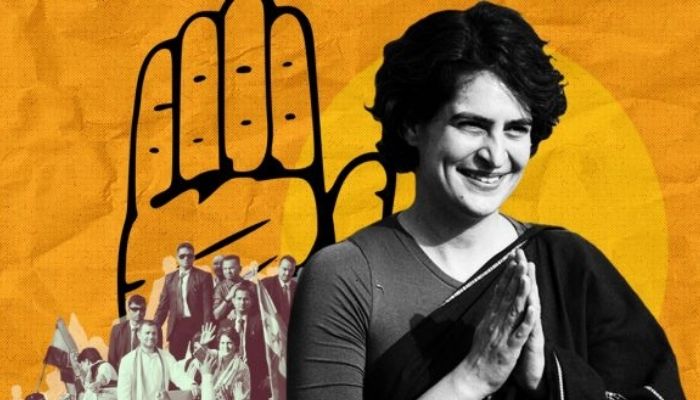
Priyanka Gandhi lies, gets caught, Congress lies about Priyanka Gandhi lying, get caught again

The Congress party and its leader Priyanka Gandhi, who has been at the forefront of the anti-farm law protests that in turn have been spearheaded by Khalistani elements, have been caught in their own web of lies. On Monday, popular Twitter handle ‘Political Kida’ pointed out a tweet by Gandhi wherein she shared a fake story about an ’emotional union’ between a farmer and his soldier son.

Priyanka Gandhi, who is the General Secretary of the All India Congress Committee for Uttar Pradesh, had tweeted on Sunday (February 7), “Immediately, after he was sanctioned a leave, a soldier went to Delhi to meet his father. He was tear-eyed. His father has been fighting for his identity and existence for the past 75 days (referring the elderly man as a farmer who has been participating in the anti-farm law agitation).”

She further claimed, “And this corporate-friendly government has the audacity to call them terrorists, traitors and conspirators? The opportunist and fraud government must be ashamed of itself”. Her ’emotional’ Twitter post was accompanied by a picture of an elderly man holding onto the cheeks of a young man, dressed in a soldier’s uniform.

Hours after Congress scion Priyanka Gandhi posted the tweet, India Today’s Anti Fake News War Room (AFWA) found that her tweet was misleading. Although India Today fact-checked other Twitter handles who posted the same story, it is clear that the Congress leader lied in her tweet. The news portal concluded that the picture was not taken in Delhi, as claimed by Priyanka Gandhi, but in Ludhiana in Punjab. After her tweet was debunked, the Congress scion quickly deleted her tweet.

When Twitter handle ‘Political Kida’ pointed it out, Congress Secretary (Communications) Dr Vineet Punia alleged that Priyanka Gandhi never posted any such tweet. Instead of questioning the Congress leader, Punia labelled Political Kida as a ‘fake’ news purveyor and urged Twitter India to take notice.

But, his enthusiasm was short-lived as the Twitter handle shared the archived link of Mrs Gandhi’s tweet.

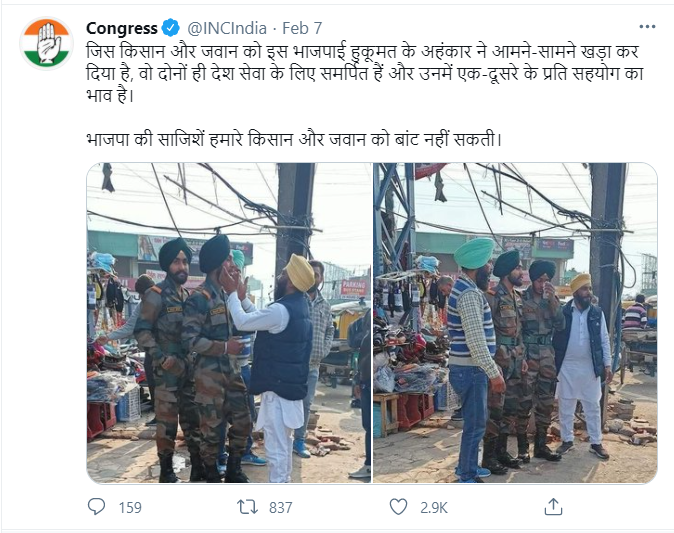
Opindia also found that the official Twitter handle (@INCIndia) of Congress Party had also shared the same picture with a similar misleading claim on Sunday. “The BJP rulers have brought the farmer and the solider at crossroads with each other. But both of them are committed to the service of the nation and they co-operate with each other. BJP’s plan is to drive a wedge between a farmer and a soldier will not succeed”, the tweet read.

Screengrab of the tweet by Congress’ Twitter handle

At the time of writing, the official handle of the Congress party did not delete the tweet. It is interesting to note how the chain of lies caught the grand old party and its leader Priyanka Gandhi off-guard. Although Mrs Gandhi was the first to post the fake story about the reunion of a ‘farmer and a soldier’, she did not apologise for her tweet. Another Congress leader, Dr Punia, then lied about the fact that Priyanka Gandhi peddled fake news on the micro-blogging site. While the saga of fake news continued, the official handle of the Congress party forgot to delete the tweet.

Congress lies about rioter’s death

In a shameful display of political opportunism, Congress party continues to flog the dead horse regarding the unfortunate death of a rioter named Navreet Singh during the Republic Day violence after his tractor overturned. The protestor was killed on Republic Day after his tractor turned turtle while he was trying to break barricades.

Soon after, several media portals, journalists and politicians started peddling the fake news that Navreet Singh died of a bullet injury after Delhi police shot him. Delhi police had issued a clarification soon after stating that the protestor died of injuries sustained by him after his tractor turned turtle. Delhi police’s clarification was confirmed by the postmortem report of the deceased protestor that stated that he had died of “shock and haemorrhage as a result of antemortem head injury”.

In a classic case of political opportunism, Priyanka Gandhi along with other Congress leaders left for Rampur in Uttar Pradesh to meet Navreet’s family members.However, in utter disregard for truth, the Congress party continues to peddle the narrative that Navreet Singh died after being shot by the Delhi police. In an apparent effort to further politicise the issue, Congress scion Priyanka Gandhi Vadra met the family of Navreet Singh.

China claims it has nothing to hide on coronavirus but made two crucial virus databases inaccessible in Sept 2019. Here is what we know

Where did Chinese coronavirus come from? It is a million-dollar question that is making every government, virologist, and other experts scratch their heads. The reason? China, from where the deadly virus was first reported, is sitting on the answers yet claim it has nothing to hide. China has not really been too helpful and forthcoming in helping the world know about the origins of the pandemic, and one can only speculate what went wrong as the dragon is keeping mum.

China-WHO investigation to find origins of Covid-19

In May 2020, during the World Health Assembly, health ministers had passed a resolution to request WHO to work with its partners and countries to identify the source of the Covid-19 virus. In November 2020, World Health Organization announced that it would soon launch an investigation to find the origins of Covid-19. Without revealing the names of the international team members of epidemiologists, virologists and researchers with expertise in public health, animal health and food safety, WHO informed that they had their first virtual meeting on October 30, 2020 about the possible investigation in Wuhan.

A spokesperson claimed the investigation “will be open-minded, iterative, not excluding any hypothesis that could contribute to generating evidence and narrowing the focus of research.” The researchers planned to have a closer look at the Huanan meat and animal market that is believed to be the possible source of the outbreak. WHO also claimed that China had pledged on access for COVID origins probe. WHO emergency expert Dr Mike Ryan told a news briefing that they expected to have a team on the ground soon. “We need to be able to have the international team join our Chinese colleagues and go to the ground and look at the results and outcomes of those phase 1 studies and verify these data on the ground,” he added.

It is still a mystery, though, how this market had played a role in spreading the virus as in a November 5 report [PDF], 336 samples, including frozen animal carcasses, were collected from the market in January 2020, out of which none had any traces of Covid-19. However, out of 842 environmental samples collected, 69 were tested positive for the virus. Out of these 69 samples, 61 were from the western wing of the market. The report stated, “Preliminary studies have not generated credible leads to narrow the area of research.”

The WHO team is investigating wild and farmed animals sold in the market that includes foxes and raccoons. They will also trace the journey of animals through China and across borders. It will look at the hospital records in Wuhan to determine if the virus was spreading before December 2019.

The investigation began in January 2021

A 14-member team was formulated including eight international experts, five WHO experts, and one representative from OIE (Keith Hamilton, head of preparedness and resilience) to visit China and initiate an investigation under the leadership of Peter Ben Embarek, WHO scientist for food safety and zoonosis. Before the team started the journey, Embarek had said it “could be a very long journey before we get a full understanding of what happened”. he further said, “I don’t think we will have clear answers after the initial mission, but we will be on the way, and hopefully in the coming months that will be completed by additional missions.” The rest of the team will work on the investigation remotely.

The team reached China on January 14, 2021. According to Embarek, it is essential to find out the origin of the virus for three reasons. “One is if we find the source and if it’s still out there, we can prevent future reintroduction of the same virus into the human population. Second, if we understand how this one jumped from bats into humans, we can perhaps prevent similar events in the future. Third, if we can find the virus, what it looked like before it jumped to the human population, we could potentially be in a better position to develop more efficient treatments and vaccines for this disease,” he said.

Possible reasons for spread of coronavirus

Several scientists have speculated that the Covid-19 virus jumped from animals, such as bats, to humans. It is also a possibility that there was an intermediate stop to another animal. Similar zoonotic spillover has happened before, for example, in the case of the Ebola outbreak of 2014 in West Africa.

There is another possible pathway that needs to be investigated and that the potential lead from the laboratory. There can be many ways that can lead to such leaks, including improper disposal and a laboratory worker getting infected who may have passed it to others. There are around 11 million people in Wuhan. It is considered to be a significant hub and center for virus studies in China. There are six known facilities with BSL-3 laboratories that handle infectious agents. Several published papers have made it clear that some of the institutes in Wuhan are actively researching coronavirus.

The dark day that plunged the world into lockdown

Shi Zhengli, famously called the ‘bat woman’ of China, has actively worked on coronavirus and has identified dozens of strains that can potentially cause an epidemic. Her team has extensively studied and experimented on coronavirus found in bats that are very similar to the one that has caused the global pandemic.

On December 30, 2019, the director of Wuhan Institute of Virology called her and asked her to drop whatever she was doing and rush to the laboratory. They had identified a potentially new strain of the virus that caused severe acute respiratory syndrome (SARS) like symptoms in two patients. Her team investigated the cases that further spread in the coming months. It was named SARS-CoV-2, commonly known as Covid-19.

Dr. Shi claimed that when she came to know about the outbreak, she checked her laboratory records to check if there had been any mishandling of the experimental materials. She further said that the genetic sequences her team had worked on did not match the Covid-19 genome, which was a relief for her. Shi had told Scientific American that it “really took a load off my mind.”

The mysterious ‘cover-up’

The story is much complicated than it appears. China has been accused of actively covering up the early stages of the pandemic. It has been trying its level best not to get the blame for the global pandemic. In fact, President Xi Jinping failed to warn the general public in China or abroad and only announced about the potentially highly infectious virus in mid-January. By that time, most people in China had already reached or were travelling to celebrate Chinese New Year with their family, causing the wildfire-like spread of the virus.

Since the announcement of the pandemic, China has been making dubious claims that Covid-19 originated outside China. From blaming the United States to mink farms to India, China has pointed fingers at several agencies for the spread. In one theory, it claimed that the virus was brought to China in contaminated packaging of frozen food from abroad. In another theory, it blamed the U.S. military biodefense laboratory at Fort Detrick. In November 2020, it even went ahead and blamed India for being the origin of the virus. In the past few months, it has been spreading disinformation about the virus that has raised suspicions that either it is trying to distract the international agencies from finding something against it or it is trying to conceal something.

‘Gain of function’ research

It is well known that Dr. Shi has been conducting ‘gain of function’ research on bat coronaviruses. It involves modifying the genome of the viruses and introduce new properties to them. These properties make it possible for the virus to jump between different host species easily. Though such researches are deemed highly controversial, it is believed that such researches can provide a chance to develop effective countermeasures such as a broad coronavirus vaccine. However, such researches have the potential to create a danger that never existed before. A minor error in handling the modified virus can cause a leak to the outer world, causing a deadly spread across the globe.

The research Dr. Shi has been doing is well-funded by China, United States and Europe. The grant documents show her work was aimed to determine the possible spillover of bats coronavirus from one species to another. Her research involved creating a series of novel chimeric viruses that can use different spike proteins from some unpublished natural coronaviruses. The resulting novel viruses would be tested on human cells in culture and infect lab animals for testing. It also included experiments on mice with genetically modified cells that can respond as similar to human respiratory cells.

Her institute had collected thousands of samples from bat caves in China. The National Institutes of Health also funded her research through EcoHealth Alliance, a New York-based nongovernmental organization. Peter Daszak, president of EcoHealth Alliance, is also a member of the WHO virus origin investigating team, and he is leading a separate investigation.

In February 2020, Shi published a paper in which the researchers stated that the close phylogenetic relationship to RaTG13 provides evidence that 2019-nCoV may have originated in bats. Based on her findings, Daszak had said, “It’s crystal clear that bats, once again, are the natural reservoir.” In June 2020, he had said, “It’s incredibly important to pinpoint the source of infection and the chain of cross-species transmission.”

Every expert has emphasized on the fact that it is essential to determine the origin of the virus. To determine if the virus was leaked or there was a laboratory accident at the Wuhan Institute of Virology or another lab in China, the investigators need complete access to the research these institutes have done. They also need access to archived lab notes, records of experiments and data, communication between the scientists via emails and other methods, bat samples, viral strain samples, sequences from where WIV collected the samples and comparison documents to understand the genetic blueprint of their research. All the information will help in developing the genetic blueprint of the pandemic virus.

China’s inability to open up and to miss critical database

Such investigation requires transparency and verification of data and sample provenance. However, China has not quite been forthcoming on the data. There was a critical database that had all the information about Dr. Shi’s work at WIV. According to DRASTIC, a network of researchers and scientists, this particular database is the most important bat coronavirus database in China that holds over 22,000 samples and some of their genetic sequences along with the WIV virus sampling trips that the institute has been doing for many years.

As per the reports, the institute has so far collected 15,000 samples from bats that cover over 400 viruses. It also holds over 100 unpublished sequences of bat coronavirus that are crucial for investigating the origin of the pandemic.

Of all the samples, what investigators are interested in the most are the full sequences of eight viruses that were sampled in an unidentified location in Yunnan province. The information about these was only recently disclosed in an addendum to the February 2020 paper by Dr. Shi. The addendum was published in November 2019.

According to the paper, between July 1 and October 2012, WIV received 13 serum samples that were collected from 4 patients who showed severe respiratory disease. The number of patients later rose to six. These patients had visited a mine cave in Tongguan town, Mojiang County, Yunnan Province, China, to clean bat feces so that it can be cleared to mine copper. They were admitted to the First Affiliated Hospital of Kunming Medical University on April 26-27, 2012. The samples that WIV received were collected by the hospital staff in June, July, August and September 2012.

By 2018, with WIV laboratory was improved with next-generation sequencing technology and capability. They performed further sequencing of the bat virus and obtained an almost full genome sequence of a sample that was renamed RaTG13. In 2020, they compared the SARS-CoV-2 (Covid-19) sequence with RaTG13 and found it has 96.2% similarity in the sequence. Out of the six people total infected by the unknown virus in 2012, three had died.

Now the problem is that a limited portion database was password-protected, and it is not accessible. It is possible that WIV kept it protected to ensure scientists from WIV were the first to write scientific papers about the viruses and sequences. Things got weird on September 12, 2019, when, according to DRASTIC, the public data became unreachable from outside the institute. Dr. Shi, however, claimed that her institute has nothing to hide, and they made it offline for security reasons.

Another portal of virus databases that were created by the National Virus Resource Center, affiliated with WIV, also went offline. All the key virus database managed by WIV are not accessible to the outer world.

Infection was reported in autumn 2019, says the US

Former Secretary of State Mike Pompeo, during his final days in the office, had stated that there is a reason to believe that researchers in WIV became sick in autumn 2019 before the first identified case of the outbreak. He said, “The US government has reason to believe that several researchers inside the WIV became sick in autumn 2019, before the first identified case of the outbreak, with symptoms consistent with both covid-19 and common seasonal illnesses.” However, the United States did not provide any evidence on the statement. Experts believe that if the US government has some information about the initial infection, it should release it and declassify all the intelligence related to the spread of the virus.

China must open doors to WIV

If WIV, as the Chinese government and Dr. Shi claims, has nothing to hide, the institute must open the closed doors to the scientists. Dr. Shi can safely open up the databases to the scientists that can help the investigators to understand the evolution of SARS-CoV-2. It should provide all available records of bat sampling, viruses and sequences, along with the verified information provenance. It is a fact that every person across the globe has the right to know the origin of the pandemic. Wuhan Institute of Virology and the Chinese government may have the much-needed clues about the origin of the virus and possible similar situations in the future. It will be a major step towards finding the answer to all the questions if experts get access to relevant databases and laboratory records as China has nothing to HIDE after all.


Newsclick, ties to ‘Urban Naxal’ Gautam Navlakha, Newslaundry, other Left portals and the 30 cr money laundering case: Details

The Enforcement Directorate on Tuesday conducted raids at the home of Newsclick founder and Editor-in-Chief Prabir Purkayastha. Initial reports suggest that the office of the digital media platform was raided as well.

According to sources, the Enforcement Directorate on Tuesday conducted searches at more than 10 locations in Delhi and the NCR region to investigate the proceeds of crime related to PPK NEWSCLICK Studio Private Limited under the provisions of the Prevention of Money Laundering Act. The company is alleged to have received over Rs. 30 crores in 3 years.

The funds thus received does not appear to have any connections with the main business activity of the company said sources. It is further alleged that the funds were disbursed to journalists/activists in the name of salary or consultation fee. The beneficiaries include those associated with Teesta Setalvad. Other beneficiaries include Gautam Navlakha, Paranjoy Guha Thakurta among others.

Sources say that the beneficiaries “prima facie do not appear to be connected with the provision of services as claimed to be exported against the foreign inward remittances.” Sources also mentioned a US based company called Viking Systems International Inc. which has worldwide presence in naval architecture and marine engineering solutions for offshore oil and gas industries.

According to its website, NewsClick is owned by PPK NEWSCLICK Studio Private Limited. Prabir Purkayastha is the Director of the company. Pranjal Pandey is an Additional Director and raids were conducted against him as well, initial reports suggest.

Who is Prabir Purkayastha?

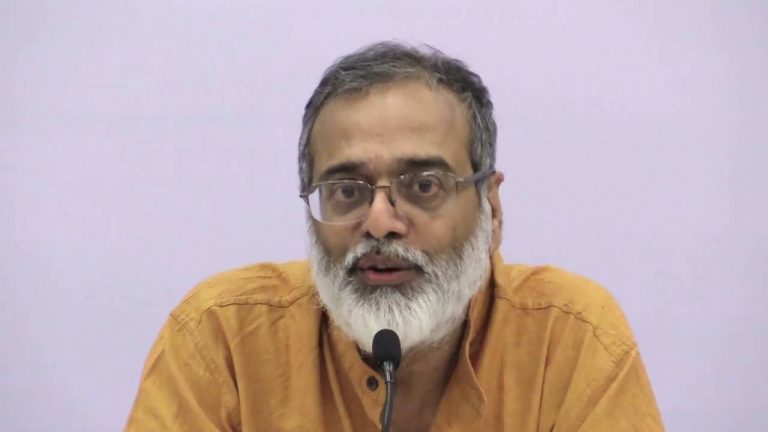
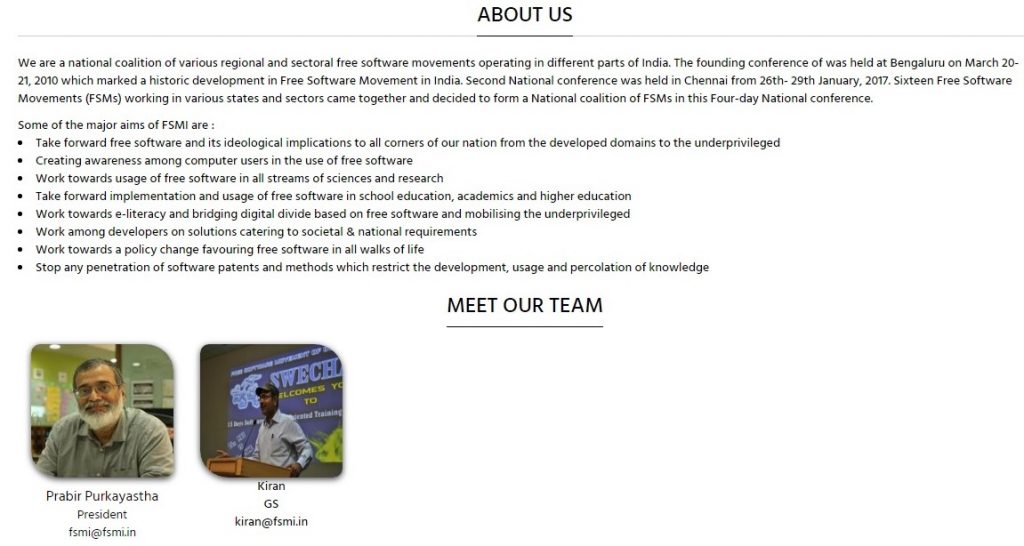
Apart from being the Editor of Newsclick, Prabir Purkayastha is an engineer and a “science activist”. He also happens to be the president of the “Free Software Movement of India” (FSMI). In 2017, “Sixteen Free Software Movements (FSMs) working in various states and sectors came together and decided to form a National coalition of FSMs”. The FSMI was a result of that.

The goals of the FSMI include taking “forward free software and its ideological implications to all corners of our nation from the developed domains to the underprivileged” and “Creating awareness among computer users in the use of free software”.

Prabir Purkayastha is the president of FSMI

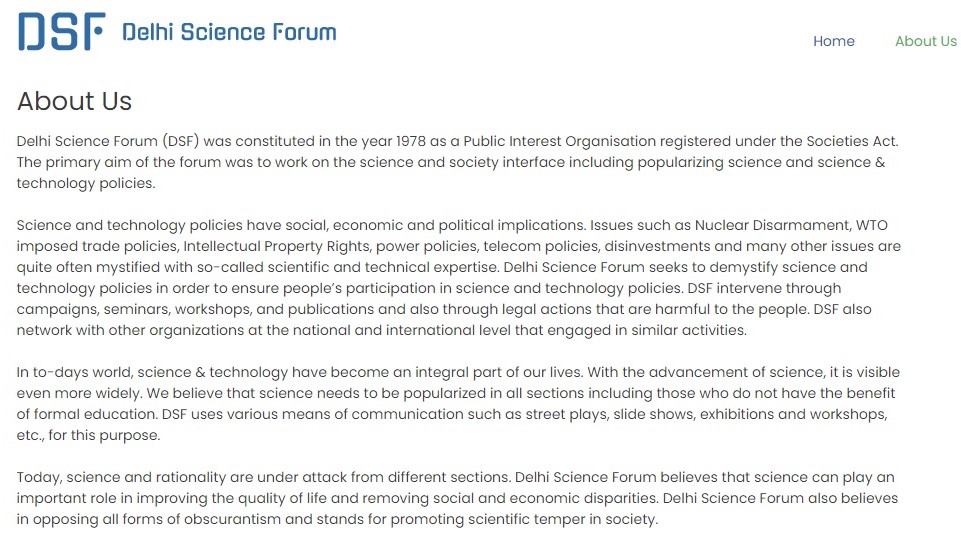
Prabir Purkayastha is also reportedly a founder member of the Delhi Science Forum (DSF). The DSF has Kamala Menon as its secretary currently.

According to its website, “Delhi Science Forum (DSF) was constituted in the year 1978 as a Public Interest Organisation registered under the Societies Act. The primary aim of the forum was to work on the science and society interface including popularizing science and science & technology policies.”

Prabir Purkayastha is a founding member of the Delhi Science Forum

According to the Software Freedom Law Center (SFLC), “He has written and published extensively a variety of science and technology policy issues in several leading journals and newspapers including ‘Economic and Political Weekly’, ‘Times of India’ and a number of Delhi Science Forum publications.”

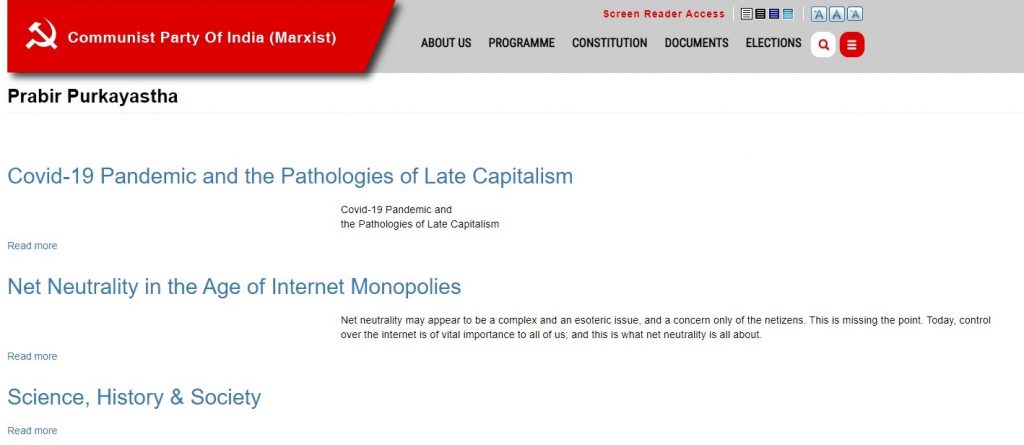
His columns have also appeared in the official website of the Communist Party of India (Marxist). In those columns, he speaks of “Covid-19 Pandemic and the Pathologies of Late Capitalism” and other matters.

His columns have appeared on the official website of the CPI(M)

Prabir Purkayastha has also addressed events organised by organisations that receive funds from abroad, including from the Omidyar Network. He is also the Director at multiple companies. He is a Director at the Startacus Software Private Limited (SSPL), Sagrik Process Analysts Private Limited, PP Connect Media Private Limited among others.

Ties with Gautam Navlakha

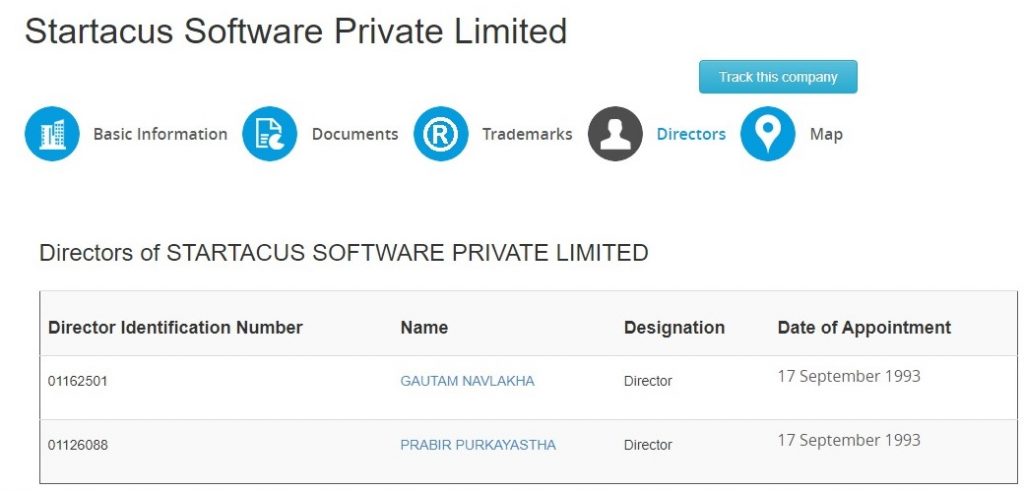
Most interestingly, at SSPL, Gautam Navlakha was also a Director with Prabir Purkayastha. Gautam Navlakha is one of the ‘Urban Naxals’ arrested in the Bhima Koregaon case and allegedly has links with Pakistan’s ISI. Following his arrest, it was reported that Gautam Navlakha was in touch with Hizbul Mujahideen terrorists as well.

Gautam Navlakha and Prabir Purkayastha were Directors at Startacus Software Private Limited (Source: ZaubaCorp)

In the extremely unlikely event that the Gautam Navlakha, director of SSPL, is not the same person as ‘Urban Naxal’ Gautam Navlakha, Newsclick needs to come clear on this. The current status of SSPL is listed as “strike off”.

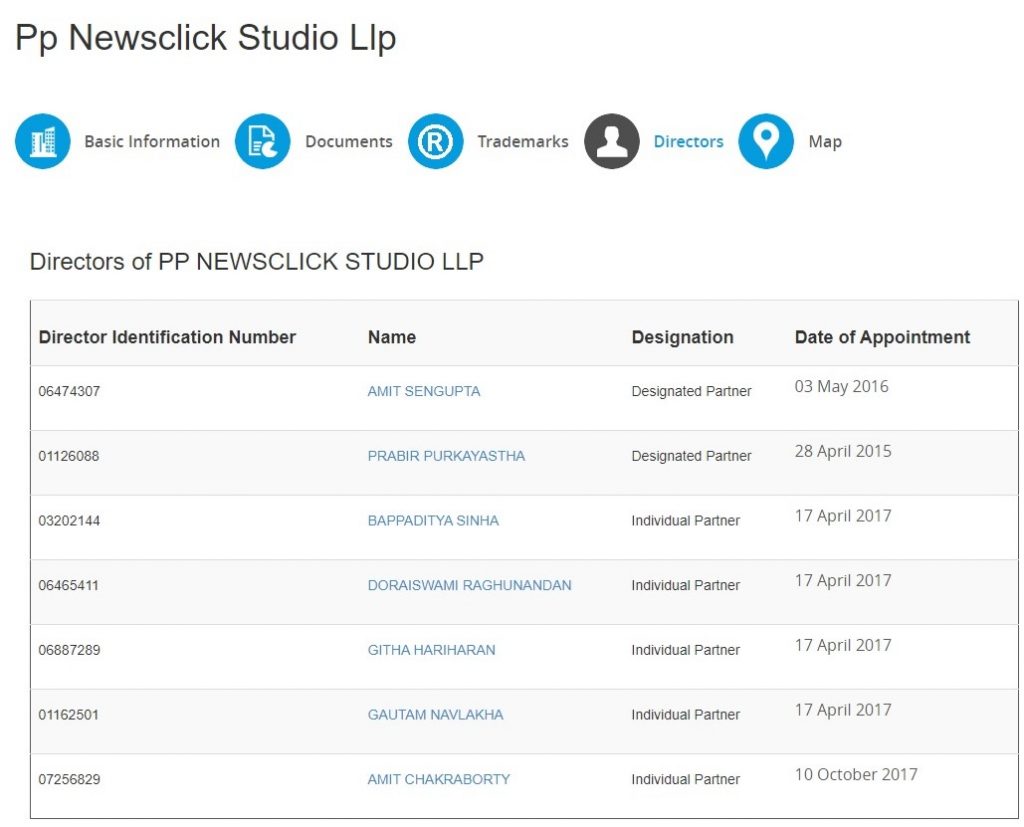
Even more shockingly, Gautam Navlakha was an “Independent Partner” of PP NEWSCLICK STUDIO LLP where he was appointed to the position on the 17th of April, 2017. It is pertinent to note here that PPK NEWSCLICK Studio Private Limited, the current owner of Newsclick, was incorporated on the 11th of January, 2018, 10 days after the Bhima Koregaon violence.

Source: ZaubaCorp

All of this points to a very suspicious chain of events. The current status of PP NEWSCLICK STUDIO LLP says, “Converted to CMP and Dissolved”. It is also to be noted that Prabir Purkayastha and Gautam Navlakha were appointed as Directors of SSP in September 1993.

Gautam Navlakha was then appointed as Independent Partner of PP NEWSCLICK STUDIO LLP in April 2017. That is a connection spanning over 24 years.

DIGIPUB News India Foundation

The DIGIPUB News India Foundation (Digipub) was “formed by digital media organisations with the intent to help ensure the creation of a healthy and robust news ecosystem for the digital age. The aim is to build a platform that represents digital news media organisations, with its membership open to digital-only ventures, as well as media commentators and independent journalists active in the digital news space.”

The prominent founding members of the organisation included Alt News, Newsclick, Newslaundry, Scroll, The News Minute, The Quint, The Wire and among freelancers, the names include Akash Banerji, Faye DeSouza, Paranjoy Guha Thakurta and Neha Dixit.

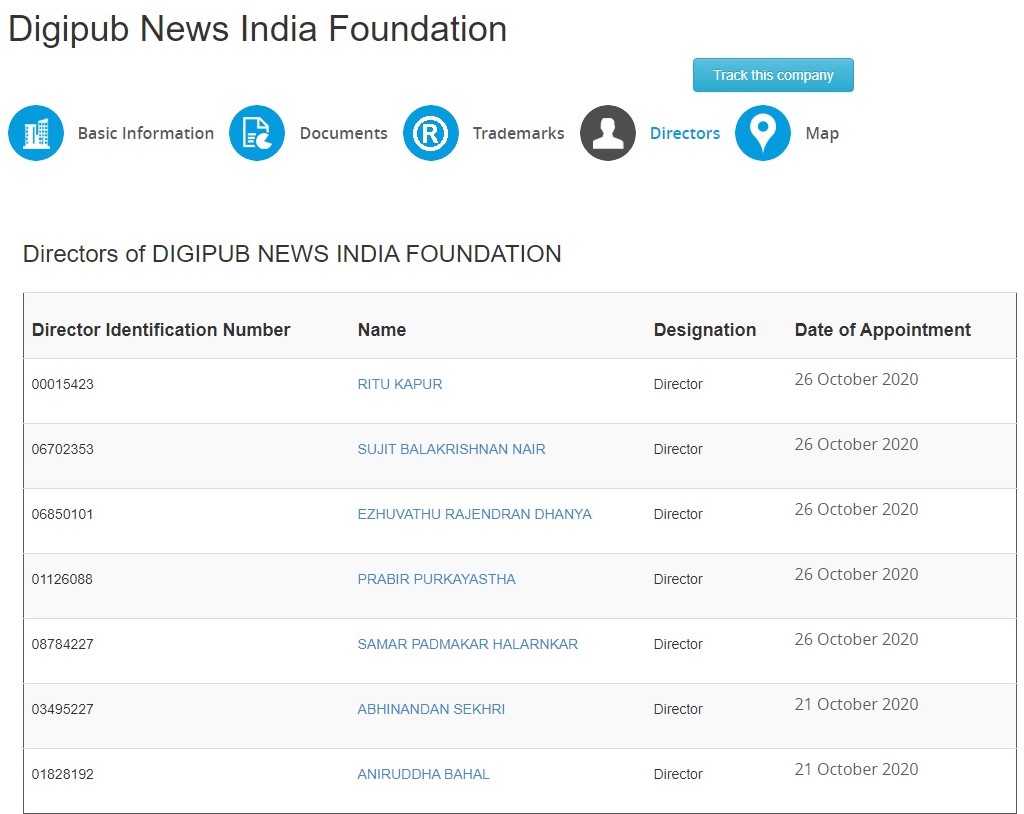
According to ZaubaCorp, Prabir Purkayastha was one of the Directors at Digipub. Other Directors at Digipub included The News Minute’s Dhanya Rajendran, Newslaundry’s Abhinandan Sekhi, and Ritu Kapur of The Quint.

The Directors of Digipub

Hindu religious sites lying in a state of decay, says a commission set up by Pakistan Supreme Court

0

The Supreme Court of Pakistan has reportedly slammed the Evacuee Trust Property Board (ETPB) in Pakistan for neglecting the Hindu religious sites in the country based on a report submitted to it. According to reports, a one-man commission was set up by the Supreme Court comprising of Dr Shoaib Suddle, with three supporting members namely Dr Ramesh Vankwani, Saqib Jillani and the attorney general of Pakistan.

Hindu religious sites lying in a state of decay: Commission

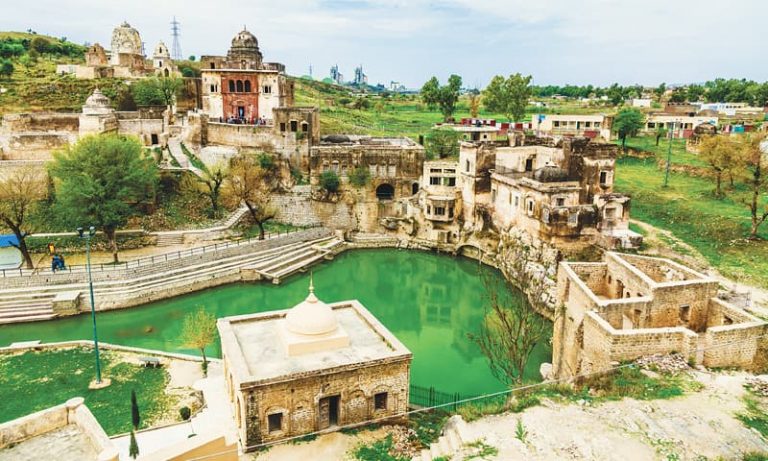
The report of the commission that was submitted before the Supreme Court on February 5 presented a worrisome picture of the Hindu community’s most revered religious sites in today’s Pakistan. The report said the sites have been lying in a state of decay. The commission visited the Katas Raj temples, Chakwal and Prahlad Mandir, Multan on January 6, 2021, and January 7, 2021, respectively and saw that the sites were lying neglected. The report called for a collaborative effort to renovate Terri Mandir, Karak, Katas Raj temples, Chakwal, Prahlad Mandir, Multan and Hinglaj Mandir, Lasbela.

A letter of the ETPB reportedly stated that out of 365 Hindu temples in Pakistan, only 13 (3.6%) are being managed by the board, 65 (17.8%) have been left to the Hindu community and the remaining 287 (78.6%) have been abandoned to the land mafias. “It is indeed strange that even in this age of technology the ETPB has yet to get the evacuee properties Geo-tagged. That the statistics of Gurudwaras though give a relatively bit better picture (18 or 17.1% out of 105 being managed by the ETPB), it still is far from appearing envious. That ETPB, with its staff, spread in all corners of Pakistan and huge paraphernalia, is managing 13+18=31 worship places out of total 470 (or only 6.6% of the total)”, the Commission reportedly stated. On January 5, the Supreme Court had directed the ETPB to submit a detailed report of all temples, gurudwaras and other religious sites across Pakistan which came under its purview.

Commission calls ETPB an outdated body, suggests amendments

The commission in its reportedly called out the ETPB for not responding to the Supreme Court directions on time and not cooperating in the reconstruction of the Terri Mandir that was torched by Islamic fanatics in December last year. “That as a last resort, Pakistan Hindu Council requested the ETPB to accord them permission to start restoration work of from their own resources (the ownership staying with the ETPB). Yet the ETPB neither visited the site during the construction phase nor afterwards. Nor did ETPB show any interest in assessing the number of pilgrims coming to Teri from as far as Sindh by road, and hardships faced by them”, the report stated. The Commission termed the ETPB an outdated body and suggested amendments to turn it into a corporate body that can deliver its aims and objects efficiently, fairly and transparently in close cooperation with the evacuee communities.

The Commission recommended the Supreme Court to form a Working Group consisting of Chairman ETPB, Federal Secretary Heritage, Provincial Secretary Archaeology, DG Walled City Lahore, Mr. Nayyar Ali Dada (Architect), Prof. Sajjad Kausar (former Principal NCA), Prof. Sajida Vandal and one representative each from Hindu and Sikh communities.