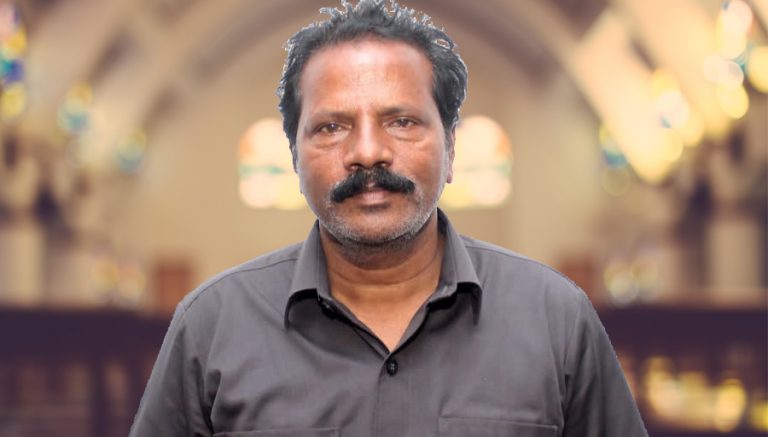
A Christian pastor from Vellore, Tamil Nadu has reportedly been arrested for allegedly cheating people and swindling money in the name of scholarships for Children’s education. The pastor named Victor Jesudasan swindled the money of several people including a labourer from Kangeyanallur in the name of providing them scholarships for their children’s education.
Jesudasan took Rs 20,000 from a labourer
According to reports, Kumar, a labourer, needed money for the education of his two children- a son and a daughter. He came to know that a trust run by Jesudasan of Anthonyar Koil Street in Salavanpet area of Vellore was providing scholarship for the education of children. Kumar met Jesudasan and sought his help. Jesudasan asked Kumar to deposit an amount of Rs 20,000 for availing the scholarship. Kumar gave the said amount to the pastor. However, even after several days, Kumar did not receive any money from the pastor. When he asked the pastor about the money, the pastor gave him a cheque. Kumar took the cheque to the bank where it bounced. When Kumar confronted Jesudasan and demanded his money, he hurled abuses at him and threatened him.
Made fake promises to several people and took their money
Kumar decided to take action against Jesudasan and lodged a complaint with DIG Vellore seeking action against Jesudasan. An investigation was initiated by the police against Jesudasan on the complaint of Kumar. During the investigation, it was found that Jesudasan was involved in many fraudulent activities. Jesudasan had reportedly taken money from about 10 people from Kangeyanallur making similar promises to them. He promised these people to buy house, provide old-age allowance, scholarships, sewing machine, vehicles for disabled and so on in the name of the trust that he ran. Jesudasan, who has been arrested by the police, is also involved in a case of money laundering worth Rs 2 lakh 27 thousand.
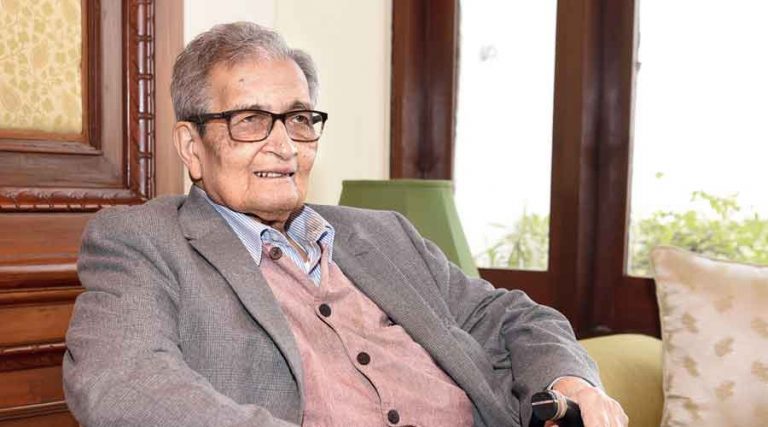
Some time ago, Amartya Sen found himself much alarmed by the increasing popularity of Ram Navami festival in West Bengal. So he apparently went to his four-year-old granddaughter and asked who her favourite deity was. Maa Durga, the child replied. And that’s when Dr. Sen arrived at his profound realization: Maa Durga is part of the culture of Bengal, Shri Ram is not. This is what he preached last year from a pulpit at Jadavpur University.
Those who are trying to draw partition lines between Maa Durga and Shri Ram have come to teach us about the idea of India. And the idea of Bengal, which according to them, may or may not be part of the larger idea of India. Let that sink in.
In fact, Durga Puja is known as Akaal Bodhon (out of season worship) in Bengal. This refers to Shri Ram needing to leave for Lanka, before which he had to invoke the goddess Durga out of season. For the Ashtami puja, Shri Ram prepared to worship the goddess with 108 blue lotuses. But the goddess steals one lotus, trying to test his devotion. Distraught at finding just 107 blue lotuses, Shri Ram gets ready to take out one of his eyes as the missing offering.
And yet there are people like Amartya Sen who are trying to separate Durga from Ram.
But leave that aside for a moment. What is Amartya Sen trying to say here? That the culture of Bengal is defined by the cultural practices of his family? Anyone who practices anything slightly different is an outsider? Is this not the textbook definition of xenophobia? And where are the hordes of liberals who lecture all day about tolerance and diversity? Does Amartya Sen’s xenophobia get a pass because he is not a fan of the BJP?
Of course it does. Right now, “good xenophobia,” re-branded as regional pride, is the main campaign plank of liberals as Bengal gets ready for Assembly elections in May 2021. Today, Amartya Sen is back; this time saying that people of Bengal cannot be worthy heirs of Tagore unless they support his beloved ‘secular’ parties.
Yes, the same ‘secular’ parties which gladly gave away two-thirds of Bengal to Pakistan. That is why the remainder is called West Bengal, remember? What about East Bengal? What happened there to the great Bengali tradition of worshiping Maa Durga? The great Bhadralok intellectuals like Amartya Sen rarely ever speak on this. All they care about is tearing West Bengal out of the larger Hindu fabric of India. We know exactly what happens when this fabric tears. They say that in 30 years, there won’t be any Hindus left in Bangladesh.
You will observe that folks like Amartya Sen are obsessed with things like who is the ‘heir’ to what, which implies a fascination with royalty. Indeed, like any court intellectual, Sen has an easily foldable ego that allows him to grovel before kings and queens. When in England, he insists that only Christian faith schools are acceptable. No question of secularism there. You must follow the religion of her majesty the queen of England. He had a chance meeting with Rahul Gandhi and decided almost immediately that the latter would make a great Prime Minister. Rahul was a prince, after all. Amartya Sen has a natural reverence for that.
This is in contrast to Amartya Sen’s contempt for the people and their verdict. When PM Modi was elected in 2014, Amartya Sen sneered that he would “allow” Modi to rule. Yes indeed. Seventeen crore people voted for BJP in 2014, but it is Amartya Sen, India’s emperor apparent, who gets to “allow” Modi to rule. He even added a rider: “allow” him to rule in a democratic way. Again, teaching democracy to the man who just won seventeen crore votes. And groveling before the queen of England and her religion. That’s Amartya Sen for you.
When somebody tries to criticize Amartya Sen, there is an unsaid counter-argument that comes up. Did you win a Nobel? Then, how dare you criticize someone who did? Now, Amartya Sen is too clever to call himself a Marxist, but he has admitted to engaging seriously with Marxism all his life. You might have observed that no biologist today engages seriously with creationism. No physicist today engages seriously with flat earth theories. When Amartya Sen’s competence was put to test in the real world, he achieved nothing at Nalanda University. Exactly like Marxism has achieved nothing in the real world. So a flop in the real world and a world renowned expert while engaging with failed theories. There is no doubt that Sen is an “intellectual.”
It has been over a month since the protesting ‘farmers’ started camping on the four border sites along the Haryana-Delhi border. It has caused massive inconvenience to the public. However, the farmers’ association have now threatened to block the Eastern and Western peripheral expressways if the talks with the government fails to deliver any results favouring them.
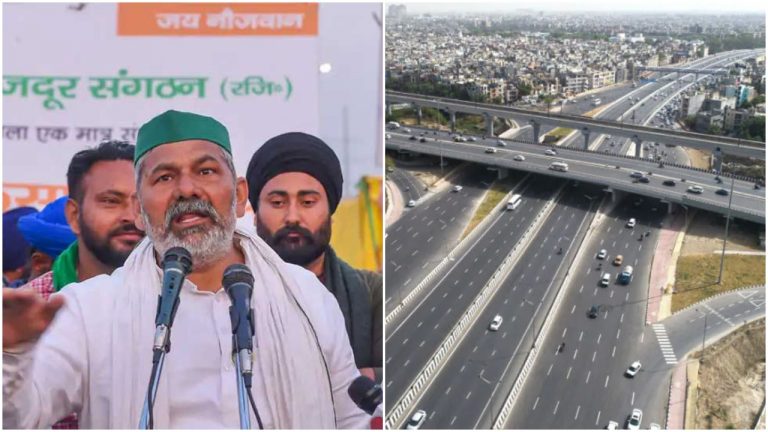
According to Economic Times journalist Aman Sharma, ‘farmer’ leader Rakesh Tikait of the Bharatiya Kisan Union on Wednesday issued a warning saying that so-called farmers will block both the Eastern and Western Peripheral Expressways too if their scheduled talks with the government on the three farm laws fails to address their concerns.
Farmer leader Rakesh Tikait: says farmers will block both the Eastern & Western Peripheral Expressways too if talks fail today https://t.co/HfaeunVqXA
The Eastern and Western Peripheral Expressways, which were built to reduce air pollution in Delhi, have now become a lifeline for the citizens and commuters of Delhi to exit and enter into the national capital as the so-called protestors have now blocked multiple borders that connect Delhi.
The two expressways are now the only route to northern India from Delhi-NCR as farmers have blocked the Singhu border on National Highway-44 which move towards Panipat. the Tikri border on NH-9 that leads to Rohtak and the Auchandi, Safiabad, Piao Maniyari and Saboli borders have also been blocked by the protestors.
Rakesh Tikait calls for occupation of roads, urges opposition leaders to join the protests
Rakesh Tikait, the alleged farmer leader, on Wednesday urged the opposition parties to join the protests and also called the blocking of roads. Speaking to the media, he said that it was essential to have strong opposition in the country whom the govt fears but here they do not and claimed that this is why farmers had to come on roads.
“Opposition should sit in pitched tents& stage protest on roads against the farm laws,” Rakesh Tikait, Bharatiya Kisan Union at Ghazipur border, essentially calling for a ‘Chakka Jam’ or a deliberate occupation of roads to cause massive inconvenience to the public.
It’s essential to have strong opposition in the country whom the govt fears but here they don’t. This is why farmers had to come on roads. Opposition should sit in pitched tents& stage protest on roads against the farm laws: Rakesh Tikait, Bharatiya Kisan Union at Ghazipur border pic.twitter.com/2l4XQYAt5m
Essentially, the so-called farmers leaders are threatening to block people from accessing roads and other public properties if the government fails to accept their irrational demands.
A year since Sharjeel Imam called for ‘chakka jam’
Interestingly, the threats to create anarchy on the streets of Delhi by the so-called farmer leaders of the country, exactly a year after Anti-CAA protests mastermind and radical Islamist Sharjeel Imam had issued a similar warning of causing massive inconvenience to the public through ‘Chakka Jam’ in Delhi if the government failed to revoke the Citizenship Amendment Act.
He had urged Muslims in India to come out on streets and block the roads. He had also called for cutting off of the Siliguri Corridor also known as Chicken’s Neck which connects the entire North East India to mainland India.
As the government did not give in to the demands of the far-left ‘protestors’ and Islamists, rioting mob went on a rampage against the Modi government unleashing massive communal riots in the North-east Delhi in February this year causing more than 50 deaths in the city.
The threats by the likes of Tikait, urging protestors and other opposition parties to camp on roads causing blockades could also turnout to be another law and order nightmare of the Modi government.
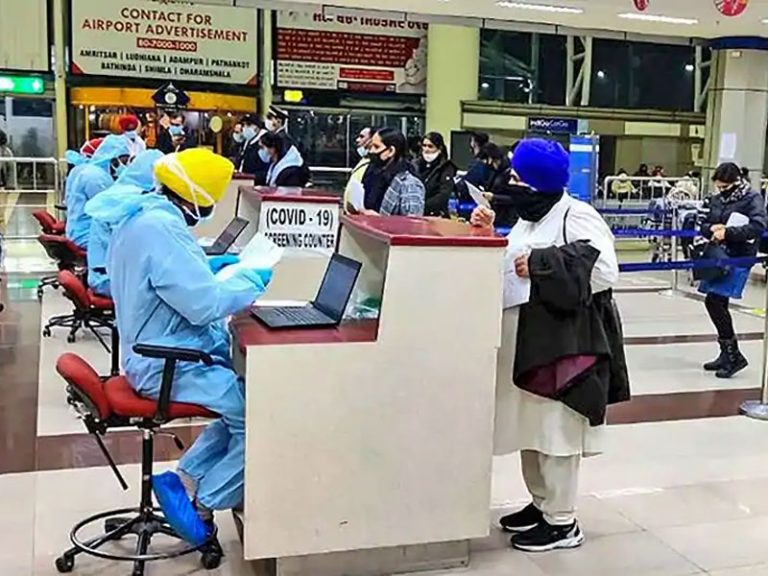
Amidst the worries of new COVID strain Sars-Cov-2 that was first reported in the UK, the irresponsible behaviour of UK flyers across India is adding to the problem. As per a report by Hindustan Times, while authorities are trying their best to locate hundreds of UK returnees since November last week, several of them are untraceable. They have given incomplete or wrong addresses and switched off their phones that have increased the worries of the authorities in states like Delhi, Karnataka, Telangana and Punjab, among others.
The woes of Karnataka
Since November last week, Karnataka and Telangana have seen the maximum number of returnees from the UK. According to the health ministry, From November 25 to December 23 midnight when the flight ban was imposed, around 33,000 passengers came from the UK and landed at different airports across the country, as per the HT report. According to Karnataka Medical Education Minister Dr K Sudhakar, 2,406 people came to Karnataka, and 570 were untraceable.
While the state health ministry and the police are trying to trace these people, they have switched off their mobile phones showcasing irresponsible behaviour. Of the 1,614 passengers who were tested for Covid-19 in Bengaluru, 26 were tested positive, including the three who were tested positive for the new strain of the virus. Sudhakar said, “I have been promised that within 48 hours all of them will be traced.” Among the 570 missing passengers, 204 gave the address of Bengaluru.
90 travellers went missing in New Delhi
As many as 90 passengers among the returnees from the United Kingdom have gone missing in Delhi. These passengers either gave wrong contact information or had wrong or old addresses mentioned on their passports. Since November 25, around 14,000 passengers landed at IGI Delhi. Out of these, 1,500 were from Delhi. After testing, 20 were found to be positive for Covid-19. It has to be noted that not all districts in Delhi provided data about the returnees missing. Hindustan Times mentioned in its report that out of eleven districts, they could get numbers from only five districts.
Telangana administration running from pillar to post
As per the Telangana government, out of 1,100 UK returnees in the state, 279 were not traceable. Dr G Srinivasa Rao, director of public health of the state, said that they had forwarded the details to district officials. About the remaining returnees, he said that the rest of them had been traced and tests are being conducted after taking swab samples.
The state health officials and administration has been trying to locate, trace and contact each of the UK returnees. As per latest reports, 156 were yet to be found.
Punjab’s trouble increases as many go missing
Though the administration has not revealed how many UK returnees have been traced yet, Dr Rajesh Bhaskar, nodal officer for Covid in the state, 1822 returnees landed in IGI Delhi, and 1,604 returnees landed at GRDI Amritsar since Diwali. “We are yet to complete the task of tracking all of them. Our district administrations are on toes to track them. There is a large number who are yet to be traced. We are expected to come out with the exact figures by Wednesday evening,” he said.
Tamil Nadu traced almost all returnees
Tamil Nadu has so far recorded one positive case for the new strain. Health Secretary J Radhakrishnan said that they have managed to trace almost all returnees since December 1. “We have provided details of a few who could not be traced,” he said.
27 missing in Odisha
The Odisha health department has said that out of 181 returnees from November 30 to December 21, they could not trace 27. Director public health, Dr Niranjan Mishra said that these passengers gave vague addresses and wrong contact information.
In Bhubaneswar, BMC Commissioner Prem Chandra Chaudhary informed that in the first phase, 20 UK returnees were identified, of which 3 were tested COVID positive. In the second phase, around 60 returnees have been identified so far and testing is on. He added that though zonal teams have been formed, many people have used their international phone numbers for ticket booking which is making tracing difficult.
20 untraceable in Uttarakhand
As per Abhishek Tripathi, chief operational officer, Uttarakhand, out of 227 people who have returned from the UK in the past one month, they could not trace 20 passengers. Majority of the passengers were from Dehradun. They gave wrong addresses and mobile numbers that led to the issue.
Uttar Pradesh: 2-year-old infant becomes first to be tested positive for the new strain
Uttar Pradesh Chief Minister Yogi Adityanath has asked all concerned authorities to be strict with tracing the UK returnees. As per the reports, a two-year-old from Meerut became the first one to be reported positive for the new strain. Meerut CMO Dr Akhilesh Mohan said “We had a list of over 1,650 persons who returned from the UK or via the UK after November 23. Of these, we have been able to screen more than 1,500 persons and only 10 have tested positive for Covid-19 pandemic. The genome sequencing report of five was received today while that of others is awaited.”
Principal Secretary, health and family welfare, Alok Kumar, have asked people not to take the Covid protocols lightly. He said that while the number of cases in UP is going down, the new strain is more contagious. “However, the prevention for both was the same. Therefore, wearing a mask, following social distancing and washing hands with soap and water or using sanitisers was the safest bet at the moment,” he said.
Covid-19 status in India
According to the Ministry of Health and Family Welfare, so far, India has reported 1,02,44,582 cases of Covid-19. There are 2,62,272 active cases while 98,34,141 have been discharged. 1,48,439 deaths have been attributed to COVID-related complicatios so far.
The Indian government has decided to extend the temporary suspension of flights to and from the United Kingdom till January 7 2021 over the new fast-spreading strain of the coronavirus in that country. The decision to extend the interim suspension was announced by the Union Civil Aviation Minister Hardeep Singh Puri on Twitter.
“Decision has been taken to extend the temporary suspension of flights to & from the UK till 7 January 2021,” tweeted Puri, adding, “Thereafter strictly regulated resumption will take place for which details will be announced shortly.”
Decision has been taken to extend the temporary suspension of flights to & from the UK till 7 January 2021.
Thereafter strictly regulated resumption will take place for which details will be announced shortly.
It is pertinent to note that the development came after 20 people, who came from the UK to India, have tested positive for the new strain of COVID-19 variant, which is 20 per cent more infectious. On Tuesday, it was reported that six UK returnees tested positive for the new Covid-19 strain.
Puri had earlier said that the country is likely to extend the temporary suspension of flights to and from the UK beyond 31 December. “I foresee a slight extension of the temporary suspension,” the civil aviation minister had said.
India temporarily halts flights to and from the UK amidst the detection of new coronavirus strain
Earlier on December 21, India had temporarily halted all flights originating from the UK to India till 31st December in the wake of a more-infectious mutated coronavirus strain detected in the United Kingdom.
Besides temporary suspension, the ministry had also stated that as a measure of abundant precaution, passengers arriving from UK in all transit flights (flights that have taken off or flights which are reaching India before 22nd Dec at 23.59 hrs) should be subject to mandatory RT-PCR test on arrival at the airports concerned.
For the most part of the year 2020, nations, people and cultures worldwide have been glued to the news and discussions and given into general fear surrounding the Coronavirus pandemic. Since the early deaths started in Wuhan, China, over 81 million people have been infected and over 1.79 million people have died. Over 46.3 million have recovered as per Worldometre data. India continues to have one of the best recovery rates at nearly 95%.
However, the pandemic, as it was declared by WHO earlier in 2020 has ruled over news space, public, political spheres and private conversations. Words like ‘calamity’, ‘extinction’ and ‘end’ have been used by all platforms, sometimes with good intentions, to make people follow rules. Sometimes with the intention to create more page views, grab attention and screen-time.
Is it really that bad? Will humanity be able to survive this current pandemic or future ones? We don’t know. But is it the worse that has happened to us? No, not at all, not even by a long shot. We as a species, as clusters of humans residing in different cultures, nations and geographical areas, have definitely endured far, far worse than Coronavirus. The world has faced worse and though battered and bruised, it has picked itself up each time and moved on. Every culture, every nation in the world has its own stories of defiance, resilience and endurance. Here, we discuss some of the catastrophes, both natural and man-made, that had dealt heavy blows to humankind. But eventually, we have endured and moved on.
The eruption of Tambora in 1815: The year without a summer
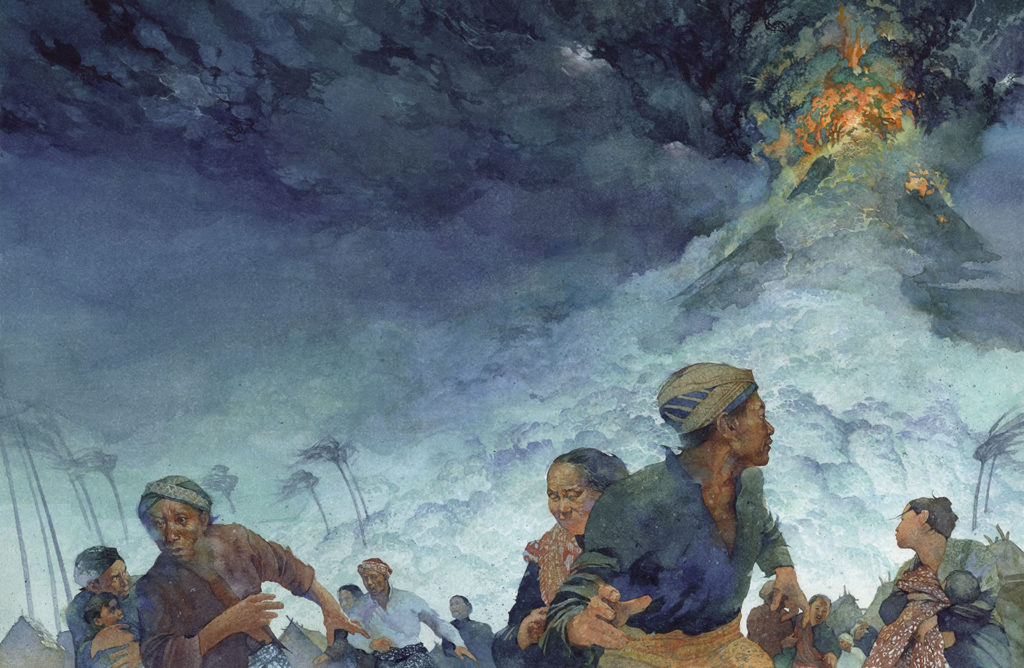
The eruption of Mount Tambora volcano in Indonesia’s Sumbawa in 1815 is widely believed as the worst, most destructive explosion on earth in at least the recent 10,000 years of the planet’s history. The eruption was so dangerous that propelled pyroclastic flows rained upon surrounding areas and seas up to dozens of miles away and a dense cloud of smoke, volcanic gases and debris was flung 25 miles into the sky as the three volcanic peaks collapsed one after the other, creating a huge caldera and killing over 90,000 people in Sumbawa and Lambok, the first few thousands by the burning hell that rained from the sky, the rest by starvation and smoke.
An artistic representation of the Tambora eruption: Image via the Smithsonian Magazine
Tambora’s eruption was so powerful that the deaths and damage were not limited to the immediate impact zone. The blast, given the score of 7 out of 8 in US Georgia University’s Volcanic Explosivity Index, threw up more than 100 megatons of sulphur aerosols into the earth’s atmosphere, a phenomenon that triggered a series of catastrophic events for years to come. It literally changed the earth’s climate.
The sulphur aerosols made a layer around the earth, acting as a solar radiation filter and reflected sunlight away. As a result, the global average temperature dropped. The effects generated cold waves that ravaged crops in the USA, destroyed paddy cultivation in vast swathes of China, and disrupted the Monsoon winds in the Indian Ocean. What followed was hunger, starvation, mass migration, diseases and deaths, all over the world.
The resulting atmospheric conditions caused epidemics in Europe. Millions in China starved to death, sold their children into slavery and suffered. In India, three consecutive harvests failed, famine ravaged eastern India and all that death and destruction then caused a deadly Cholera epidemic, killing millions of people due to starvation and disease. The entire northern hemisphere was gripped by a cold wave and gloom so deadly that the following year, 1816, is called “The Year Without Summer”.
For India, it was also a year without monsoon. The effects of Tambora eruption lasted for years. Governments at that time did not understand it as much as we do today, because geology and climatic studies were still far behind. The next major eruption in Indonesia, that of the Krakatoa in 1883, was much better studied. It is only in recent decades that the destructive and far-reaching consequences of volcanic eruptions are being minutely examined and researched.
Just a reminder, Tambora, and Krakatoa are just two of the 147 volcanoes that Indonesia has. The Sunda Trench sits directly above the subduction zone where the heavier Indo-Australian oceanic plate is pushed under the Asian landmass of the Burmese plate, a geological nightmare that has millions of tons of hot lava swirling constantly for thousands of years. 76 out of those 147 volcanoes have been historically active, meaning, they have a recorded history of an eruption. Also, Krakatoa’s “child”, Anak Krakatoa has been rumbling for years. We are, basically, at the mercy of mother earth’s whims. Before we curse 2020, let us just be reminded that the Krakatoa eruption of 1883 was 10,000 times more powerful than the Hiroshima nuclear bomb, and Tambora eruption was far more powerful than Krakatoa. All our efforts to ‘combat climate change’ and plans for ‘sustainable development’ can literally be turned to ash if just one volcano decides to have a little fun.
Earthquakes, floods and Tsunamis
Earthquakes are arguably the worst killers as far as natural disasters go. The death toll is instant and staggering. A major earthquake striking a bustling city means deaths in hundreds of thousands within a few minutes. The Shaanxi earthquake in China in 1556 killed over 8 lakh people in just 20 seconds. The earthquake has been recorded in vivid details in the old records of the province. The local annals say that the massive earthquake levelled mountains, altered the course of rivers and created huge fires that went on for months.
The Antioch earthquake in the ancient Turkish city 526 AD and the Tangshan earthquake in China in 1976 are believed to have killed 3 lakh and 2.5 lakh people respectively, laying waste to bustling cities within just seconds.
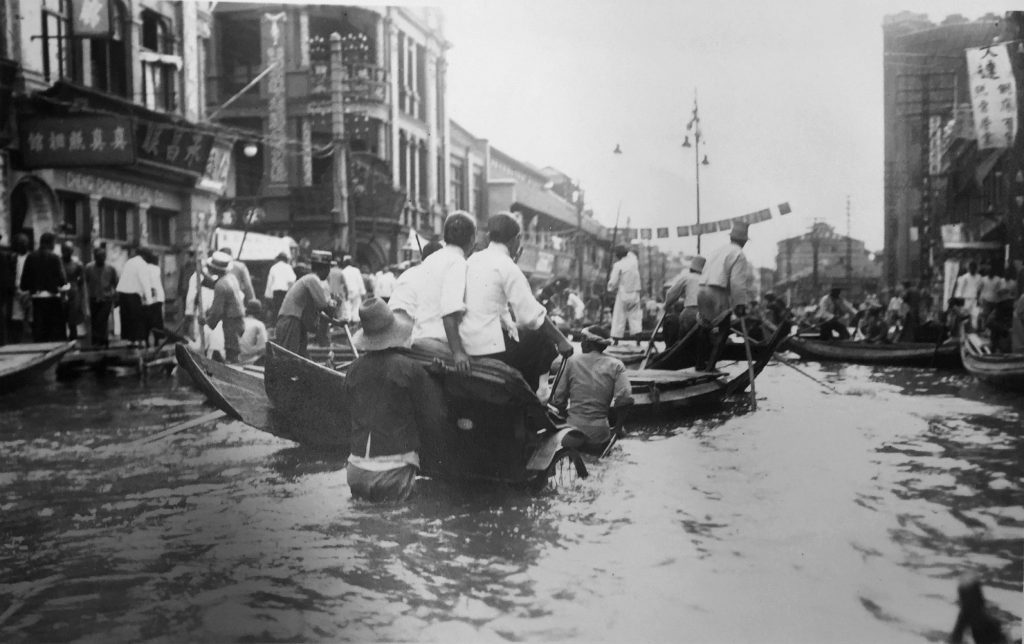
The Yellow River in China, known locally as the Huang He, in three devastating floods in 1887, 1931 and 1938, has killed over 8.5 lakh, 9 lakh and 5 lakh people respectively, and those are the lower estimates. These three floods are regarded as one of the worst floods in human history, with the 1931 flood taking the crown for the worst flooding disaster ever in the world. Millions were displaced, and disease and starvation ravaged the region for months.
1931 flood in China, image courtesy: Chinadialogue
India was among the worst affected nations in the 2004 Tsunami. The Tsunami created somewhere in the geological faultiness deep within the sea off Sumatra, engulfed crowded beaches, bustling port cities and holiday resorts bustling with large crowds in Thailand, Malaysia, Indonesia and several other places. Banda Aceh of Indonesia was swallowed by 100-foot waves, the rolling mountains of water that just kept coming. The 2004 Tsunami is considered the worst in recorded history, killing over 2,30,000 people within a few minutes along the busy coasts of the Indian Ocean.
The above names are just some of the worst of the many, innumerable natural disasters that have stuck humanity again and again. Every year, floods in several Indian states kill and displace millions of people. Modern technology, relief measures, early warning systems and infrastructure developments have made our responses better. But there is no denying that no matter the progress we make, our efforts will always be minuscule before the wrath of nature.
Communism
The above-mentioned disasters were natural. However, when it comes to kill-count, there is a global disaster that has plagued the world for decades, killing millions mercilessly by starvations, famines and torture. That disaster does not come from nature. It is a pandemic of the human mind, one that spreads like a virus, infects healthy nations and brings the population to its knees, inflicting death and violence wherever it travels. It is called communism.
Joseph Stalin
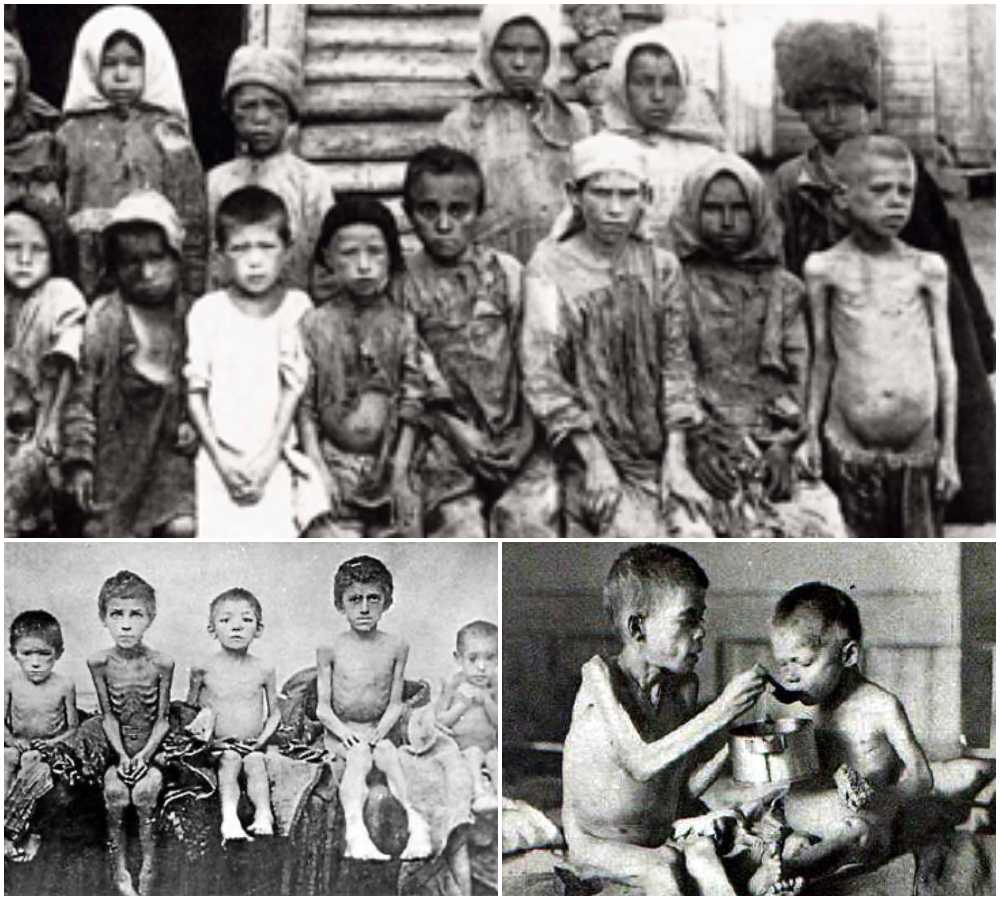
As explained by Ilya Somin in his articles, communist states have killed over 100 million people in a century. In Russia, Joseph Stalin’s attempts to collectivise agriculture and production caused 6 to 10 million deaths. Stalin mandated collective agriculture, banning independent farming by the masses, and sending dissenters to Siberian prison camps. Millions starved in Russia and Ukraine, hundreds of thousands perished in the prison camps. When the Ukrainian production could not meet Stalin’s quota, he punished them further by taking away whatever they had. In Ukraine, Stalin’s forced famine is termed ‘Holodomor’ by joining the words for hunger (holod) and mor(extermination or mass-murder).
Images from Ukraine’s ‘Holodomor’, the famine caused by Stalin, courtesy: The Morning Sun, The Ukrainian Week and orthochristian.com
Stalin’s atrocities were not limited to the Soviet famine, he followed it by the ‘Great Purge’ where anyone who he disliked was sent to prison to be tortured or killed. Wealthy peasants, politicians, military personnel, ethnic minorities, none of them were spared. The death toll from the Purge alone is estimated to be over 1.2 million.
Mao’s ‘Great Leap Forward’: The greatest mass-murder ever
The same model was adopted on a bigger scale by China’s Mao Zedong, which he called ‘The Great Leap Forward’. Like Stalin’s collectivisation in Russia and Ukraine, Zedong’s collectivisation caused man-made famines, food shortages, starvation and poverty, which the communist rulers made worse by rationing food, torture and brutalisation.
Mao Zedong’s ‘Great Leap Forward’ is called the single largest mass-murder in the history of the world. Over 45 million Chinese were killed, starved, punished and left to die. He killed over 45 million people in just four years, between 1958 and 1962. The worst part, the mannerism in which Zedong’s orders were enforced. 3 million people were killed just for the slightest infraction, like stealing a potato, hiding a handful of grains and crimes as such. Such was the plight of the people that instances of cannibalism were reported from Chinese villages, people had tried to eat each other out of hunger. The great irony? Even after so many years, it is still problematic to talk about the greatest mass-murder in history in today’s China. The CCP just refers to it as a ‘series of natural disasters’.
Ethiopia, Cambodia, North Korea etc etc
Marxist leader Mengistu Haile Mariam ruled Ethiopia from 1977 to 1991 after the communist ‘revolution’ overthrew the regime of king Haile Selassie in 1974. What followed was a macabre reign of terror, mass murder, political purge and brutality that is known as the ‘Ethiopian Red Terror‘. Mass killings of civilians, dumping the bodies in mass graves and widespread state-sponsored killings were the norm. Known as the “Butcher of Addis”, Mengistu was the leader of the ‘Derg’, a military junta that had taken over the country. Civilians, dissenting politicians and just about anyone suspected of not being supportive of the Marxist regime, were rounded up and killed, often entire families along with small children. 500,000 people were said to have been killed by Mengistu’s Derg, between 1976 and 1978.
After the Derg’s fall in 1991, the subsequent governments had worked to bring Derg culprits to trial. However, Mengistu had fled to Zimbabwe and still continues to live a comfortable life there. In 2007 he was declared guilty of genocide in absentia. But the efforts to extradite him from Zimbabwe have not been fruitful so far. He lives in a lavish government property with high security.
In Cambodia, the ‘Khmer Rouge’ led by communist Pol Pot, brought in a dreadful, macabre genocide that is estimated to have killed 2 million people between 1975 and 1979, just four years. It was almost 1/4th of Cambodia’s population at that time. Pol Pot, called ‘Brother Number One’, like his other Communist predecessors around the world, was apparently trying to create a ‘classless society’. That included forcefully evicting city dwellers into the countryside to work as labourers. As it had happed before in Russia and China, millions starved to death because the comrades messed up the country’s economy. Christians, Buddhists, Muslims were all killed equal fervour. 70% of the Cham Muslim ethnic group was wiped out.
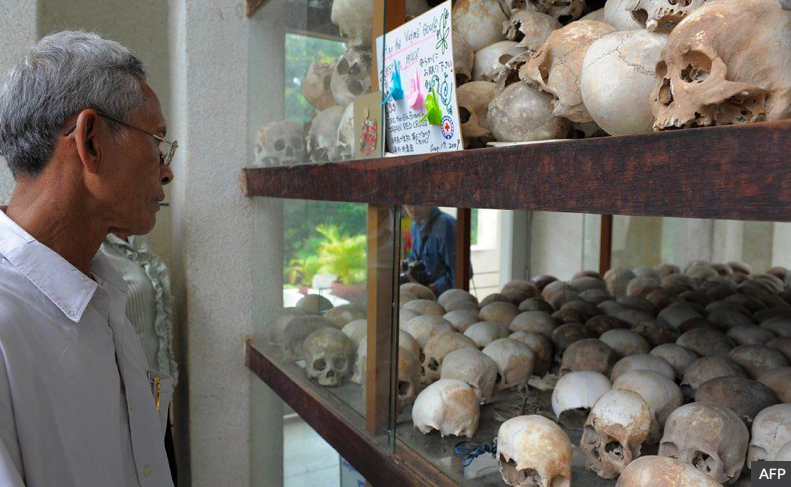
Skulls of the prisoners of S-21 on display at the museum in Cambodia. Image via BBC, AFP
In the infamous Khmer Rouge torture prison of Tuol Sleng, known as S-21, of over 14,000 inmates, only 15 people survived. When two journalists had reached there after the fall of the Khmer Rouge regime, they had found bloated up dead bodies, tied up in chains and hundreds of photographs of torture victims all over the walls. Cambodia now has converted the old high school into a museum to remind itself of the past.
North Korea is still a communist state. Man-made famines, resulting from the regime’s policies have killed millions. An innumerable number of civilians, South Korean prisoners and peasants have been murdered. Estimates vary. A number of events of mass-murder have occurred. There have also been reports of mass rapes of women by DPRK officials, along with reports of forced abortion and infanticide. Since the communist DPRK doesn’t bother itself about the ‘liberal’ views of transparency, communication and democracy, we will probably never know how many have perished inside the prison state.
Colonialism
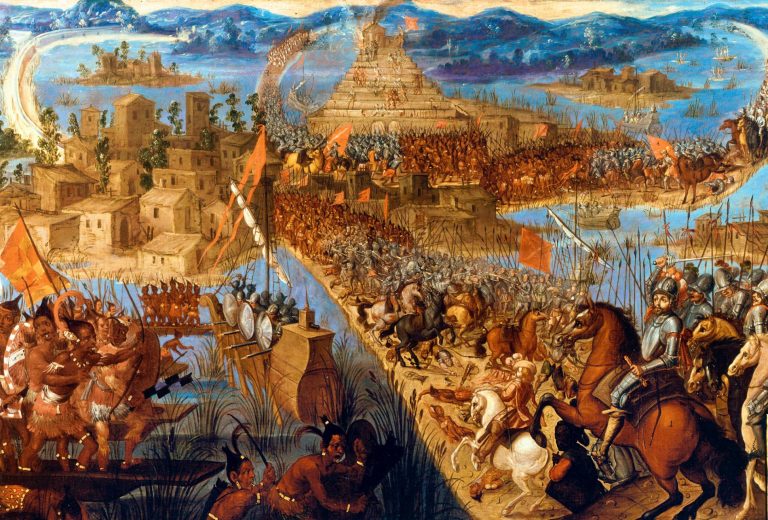
The Europian colonisation of the Asian, African and American lands made the colonising countries rich beyond their imagination but brought only misery, diseases and slavery for the native populations. When Spanish conquistadors arrived in South America, they were astounded seeing the wealth of the native empires. Shiploads of gold, silver and gems were brought back to Spain, but in exchange, the natives got smallpox, Jesus, wars, starvation, slavery and in the process, their entire civilisational history was brutally wiped out. City after city, village after village, kingdom after kingdom fell to Spanish guns, and the virus that the Spanish ships brought to the natives, deadly smallpox. About 8 to 10 million of the population was wiped out to wars, atrocities and smallpox.
But far worse than the loot and plunder, what made the Conquistadors’ acts more abhorrent was the brutal, swift and systematic cleansing of the indigenous culture, stories, literature and artefacts. The Spanish didn’t just loot their gold and silver, they destroyed the Mayan, Aztec and Incan civilisational memories. They made the natives forget their gods, their language and their history.
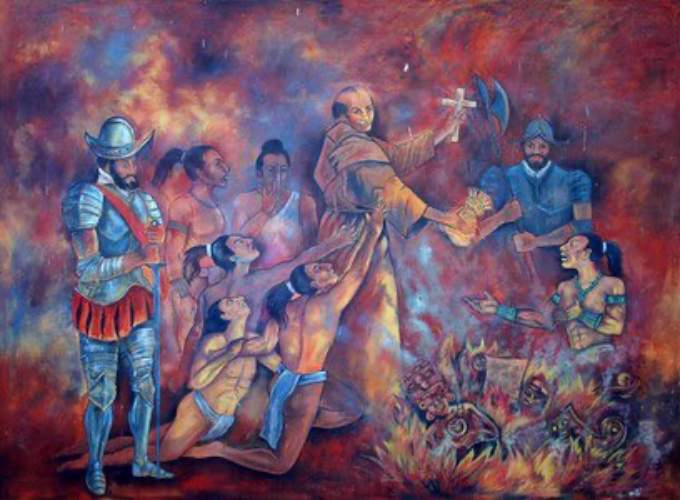
In 1562, Catholic priest Diego de Landa had carried out brutal religious persecution of the last remaining Mayan descendants. As the war-trodden, defeated, diminished Mayans watched, the priest burned thousands of idols, religious artefacts and codices in large pyres. The codices were the written records of the Mayan civilisation, their stories, their practices and their faith. Landa not only forced the natives to convert into Christianity under brutal torture, he turned their culture into ash right before their eyes. The same fate came for innumerable Aztec treasures and Incan wealth.
Bishop Diego de Landa burning Mayan codices, image via Twitter
India is often hailed as the ‘colonial success story’. Colonial apologists cite India’s thriving democracy, railways, relative prosperity and culture to emphasise how the British Raj ‘enriched’ India. However, in this rose-tinted narrative, they do not mention the brutal invasion of Indian lands, the loot and plunder and the famines that were forced upon the brown people by the Raj. A Cambridge University study states that between the 200+ years of the British raj, there was no increase in the per capita income of the Indian people.
Be it the British colonisation of India, the British, French and Spanish colonisation of Americas, or King Leopold’s rule in Congo, the stories of loot, plunder and exploitation of the native population are more or less the same. The British may not have been the Catholic fanatics like their Spanish friends, but they did loot and plunder India with equal fervour and zeal.
The Bengal famine of 1943 killed over 3 million people. Research has proved now that the famine had no reason to be there, no natural cause. The Bengal famine was caused purely because of Churchill’s policy failure. And he was well aware of that. When asked about the millions of Indians starving to death, he had famously stated that the famine was due to the Indian’s own fault for “breeding like rabbits”. Indians are a ‘beastly people with a beastly religion’, as per the British hero.
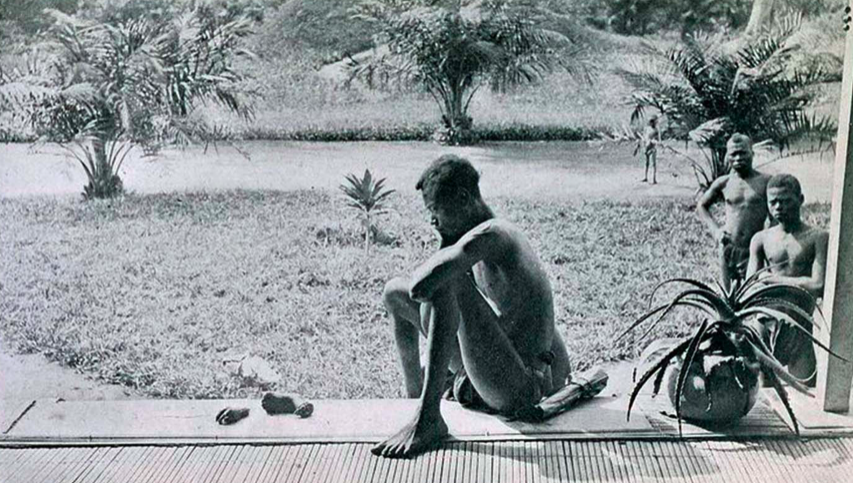
King Leopold II of Belgium ‘owned’ the ‘Congo Free State’ from 1885 to 1908. He was not the ruler, he was the owner of the land which he held as his private property. He extracted ivory and rubber from the land to sell in the international market and the rules were so brutal that 10 million natives died. Their hands and feet were chopped off for not meeting the daily collection quota, even those of children.
A Congolese man staring at the chopped off hand and foot of his 5-year-old child, a punishment for not meeting the rubber collection quota. Photograph by Alice Seeley Harris, courtesy: rarehistoricalphotos.com
World Wars
The first World war saw the deaths of 20 million people. Of them, 9.7 million were reportedly military personnel and 10 million were civilians. Over 21 million were injured. By the Second World War, humanity had progressed to far more lethal weapons and far more effective bombs. Hitler killed over 6 million Jews in his concentration camps before WWII even started. When the wars were over and the murder frenzy ended, the world had lost 75 million more humans. Lost between the list of casualties are countless tales of pointless violence, deliberate genocides and a million stories of depravity and barbaric human behaviour.
Diseases
Compared to the macabre shadows of hopelessness and death that the epidemics of the past have inflicted on human history, the current Chinese virus almost seems puny, feeble. The plague of Athens had started around 430 BC and had lasted about 5 years. The Black Death that struck Europe and Aisa in 1347 is believed to have wiped out entire cities, killing almost half the population in some European countries. The Smallpox that the Spanish had gifted the native Americans, along with the Spanish conquest, nearly killed 90% of them. Throughout the 17th, 18th and 19th centuries, plagues continued ravaging the newly industrialised cities, leaving millions dead in their wake.
The Spanish Flu of 1918 is said to have killed all over the world, WWI proved to be the ultimate super-spreader, taking the Flu wherever soldiers went and wherever civilians fled. Kill count is estimated to be between 30 and 50 million. The plagues also instigated research, studies and various treatment and prevention methods. Even today, epidemics like Ebola, Zika and Swine Flu continue to threaten us.
All the above-cited instances are mere glimpses, a random sampling of the vast experiences of deaths, disaster and calamities endured by humanity as a whole. We have not even discussed civil wars, invasions, religious persecutions and thousands of other conflicts, calamities that have, and continue to hit us. Humans have been enduring all these since millennia and will continue to endure till our species roam this planet. Compared to the instances cited above, we are far better equipped, better informed and more prepared for coming challenges.
Yes, Coronavirus did deal us a massive blow. Yes, so many have died and suffered. The global economy has struggled. But it is also true that we will bounce back faster, stronger than ever. We adapted quicker, we communicated better and we did fight back. 2020 is going to be ‘the blank year’ for most of us. The year of no holidays away from home, the year of no parties, the year of no school picnics, the year of no large family gatherings. But if we look at the past, we cannot deny that we have been far more fortunate than those nameless, faceless victims of countless calamities before our time. Humanity has made some terrible mistakes, but it has also learned and moved forward. 2020 has been bad, but at least not as bad as 1945, or 1943, or 1815, or 1347.
In August 1947, India witnessed a perhaps unprecedented situation where a large chunk of its territory was cut away and given for the creation of an Islamic country named Pakistan with a hope that this would be a step in achieving the peace that the subcontinent had longed for several hundred years. However, this was not meant to be. Partition of India that was seen by many as a ‘solution’ but it turned out to be a den of a whole new set of old and new problems.
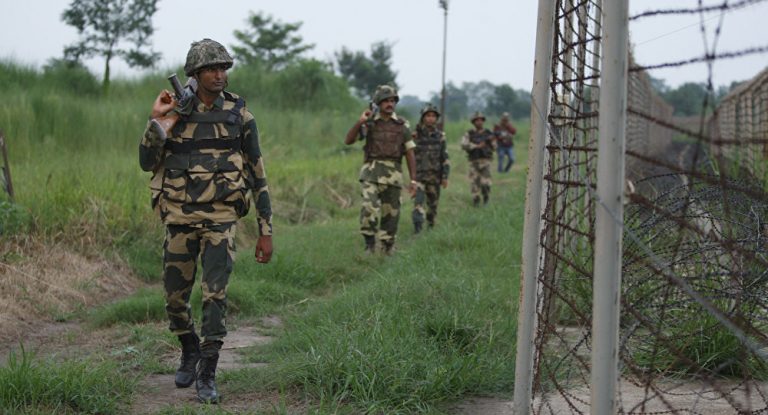
Ever since the partition of India, apart from an ‘all-weather enemy’ in the form of Pakistan, India also got a never-ending border dispute with Pakistan that arose due to the Islamic nation’s illegal claim over the Indian territory of Jammu and Kashmir and continues till date. Besides the several other ways that Pakistan keeps adopting to create problems for and in India, one of its constant and go-to strategies has been firing and shelling along the Line of Control (LoC).
Establishment of United Nations Commission for India and Pakistan(UNCIP)
In order to investigate and mediate the dispute between the two countries regarding Jammu and Kashmir, the United Nations Security Council (UNSC) adopted a resolution in 1948 that established the United Nations Commission for India and Pakistan (UNCIP). The UNCIP existed between 1948 and 1950. The objective of the Commission was to make arrangements for holding a plebiscite in Jammu and Kashmir. After consultation with both the parties, the Commission passed a three-part resolution in 1948. The three parts of the resolution were-
Ceasefire
Terms for truce
Procedures for negotiation regarding the plebiscite.
Both the countries accepted the resolution and ceasefire was achieved on December 31, 1948.
Karachi Agreement 1949
In July 1949, India and Pakistan signed the Karachi agreement officially known as Agreement Between Military Representatives of India and Pakistan Regarding the Establishment of a Cease-Fire Line in the State of Jammu and Kashmir. The Karachi Agreement was supervised by the Truce Committee of the UNCIP. From July 18, 1949, till the signing of the agreement, the military representatives of India and Pakistan negotiated to demarcate the positions under their control. An 832 km long ceasefire line was established under the Karachi agreement which was to be supervised by military observers. These military observers formed the core of the United Nations Military Observer Group in India and Pakistan (UNMOGIP). In March 1951, after the termination of the UNCIP, the Security Council decided that UNMOGIP would continue to supervise the ceasefire in Kashmir.
Situation post-1965
The situation along the ceasefire line became tense in 1965 when both the countries went to war after India launched a full-fledged attack on Pakistan following its attempts to infiltrate its forces into Jammu and Kashmir and stir an insurgency against India. The war caused thousands of casualties on both sides. After several interventions of the Security Council and the Secretary-General to restore peace along the border, resolution 211 was adopted by the Security Council in September 1965 demanding the two countries to restore ceasefire and withdraw armed forced to the positions held before August 5.
The ceasefire was accepted by both countries. Though the ceasefire was temporarily achieved, the issue of Jammu and Kashmir could not be resolved. Russia mediated between India and Pakistan at Tashkent in order to create a permanent solution to the problem. Tashkent Declaration was signed between India and Pakistan at the end of the mediation. Indian Prime Minister Lal Bahadur Shastri had mysteriously passed away soon after signing the mediation. Even after signing the Tashkent Declaration Pakistan did not give up its Guerrilla war in Jammu and Kashmir.
Conversion of ceasefire line to LoC
Following the Indo-Pakistan war of 1971 also known as the Bangladesh Liberation war, the Shimla Agreement was signed between India and Pakistan. Through the agreement, both the countries vowed to reduce the conflict and improve their mutual relations. The agreement converted the ceasefire line to the Line of Control (LoC). The Indian side has maintained that converting the ceasefire line into the LoC made the UNGOMIP insignificant as its purpose was to monitor the situation along the ceasefire line that no longer existed.
Unending ceasefire violations by Pakistan
No agreement or resolution or no amount of external intervention could help the deteriorating situation between the two countries that resulted in the subsequent military engagements like the Kargil War, Operation Meghdoot. Pakistan’s Guerilla war in Jammu and Kashmir continues till date. Pakistan has been infiltrating terrorists into the Indian borders with the hope of destabilising the country or at least inflicting as much damage on it as it can. The two countries once again expressed their resolved to maintain peace along the LoC by agreeing to a ceasefire along the border in 2003. But, just previous agreements and resolutions, this agreement also failed to improve the situation along the LoC.
Ceasefire violations by Pakistani troops along reached the highest this year since the 2003 agreement. Around 5,100 ceasefire violations by Pakistani troops have been recorded in this year. Shelling and firing along the LoC has also become a sort of reflection of Pakistan’s mood as after the abrogation of Article 370 in August 2019, Pakistan resorted to heavy firing along the border in Jammu and Kashmir. Total number of ceasefire violations recorded in 2019 were 3,289 and out of this 1,565 violations happened in August alone. So far as the ceasefire violations and infiltration along the LoC are concerned, the situation does not seem to be improving anytime soon.
Maharashtra government, in a bid to boost tourism in the state, will now be organising bollywood tours amongst others. Tourists going to Mumbai will now get an opportunity to visit locations for film and television series shootings and interact with actors. State Directorate of Tourism and Starcraft Entertainment Prime Limited have reportedly gotten into an MoU for the same.
Further MoU was signed to promote the upcoming Mumbai Film Festival. Son of Maharashtra Chief Minister and Tourism Minister, Aaditya Thackeray believes that Bollywood is a huge attraction for people from across the country and world. Hence, the same would be a pleasure to watch from buses. The Bollywood tourism circuit will also show bungalows and residences of popular movie stars.
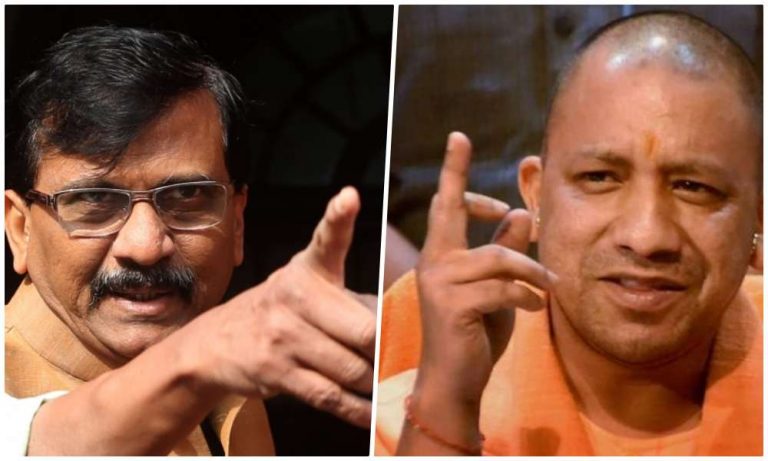
This move comes days after Uttar Pradesh Chief Minister Yogi Adityanath announced grand plans of making India’s biggest film city in Gautam Buddha Nagar. Shiv Sena’s Sanjay Raut, while reacting to the announcement had cried that UP wants to ‘take away’ the film city from Mumbai. Maharashtra CM Uddhav Thackeray had also ‘warned‘ Yogi Adityanath ahead of his Maharashtra visit that he will not let anyone take away business from his state.
UP CM Yogi Adityanath, however, maintained that he was not taking away anything from Mumbai and Maharashtra but only building something new.
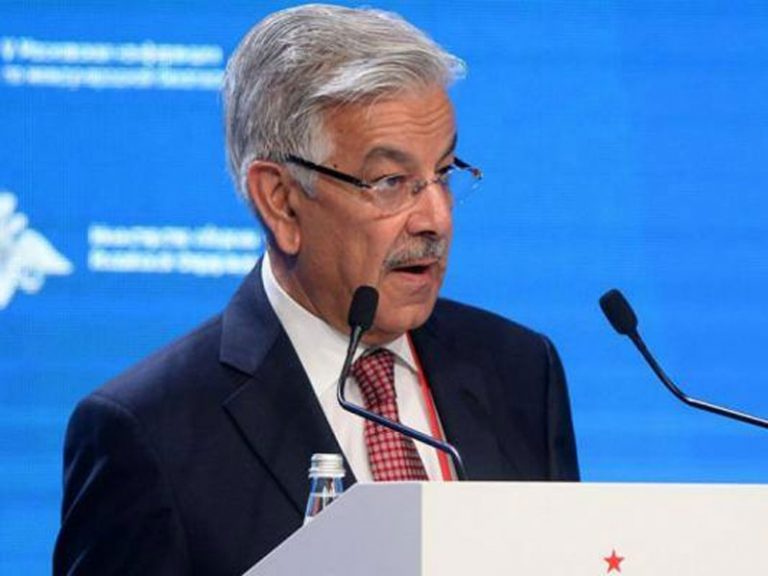
The anti-corruption officials in Pakistan have arrested Pakistan Muslim League-Nawaz (PML-N) leader and former foreign minister Khawaja Muhammad Asif, on Tuesday for allegedly having assets beyond means of income. Marriyum Aurangzeb, Pakistan Muslim League-Nawaz (PM-N) spokesperson said that he was taken into the custody by the National Accountability Bureau (NAB).
As per the statement released by NAB’s Lahore office, the arrest was executed in “assets beyond known sources of income case.” The bureau further added that Asif had a Dubai work permit (iqama) from 2004 to 2008. During this period, he had earned a total of PKR 136 million for his services as a consultant legal advisor. In November, NAB had directed Asif to submit the details of the salary he had received along with other information, but he had failed to comply.
Pakistani daily Dawn cited NAB and said that Asif was elected as senator in 1991. At that time his total assets were worth PKR 5.1 million. By 2018, his assets increased to a total of PKR 221 million, which is not justifiable with his sources of income. NAB further said that Asif was running a Benami company using his employee, Tariq Mir’s name. In Tariq Mir and Company’s account, a total of PKR 400 million were deposited, but there were no income sources attached to the deposit. This year, NAB had alleged that he established an illegal housing complex by the name Kent Housing Society in Sialkot.
Nawaz Sharif’s reaction
The arrest of Khawaja Asif, who is a close aide of former Pakistani Prime Minister Nawaz Sharif, has stirred up the political arena in the neighbouring country. Former PM Nawaz Sharif in a statement lashed out at Imran Khan’s government over his arrest and called it a joke. In a tweet in Urdu, he said, “The arrest of Khawaja Asif is morally wrong. The government’s bewilderment can be seen from such heinous acts. They are bringing their end closer.”
خواجہ آصف کی گرفتاری سلیکٹرز اور سلیکٹڈ کے گٹھ جوڑ کا انتہائی قابل مذمت واقعہ ہے۔ ایسی بھونڈی حرکتوں سے حکومتی بوکھلاہٹ کا اندازہ لگایا جاسکتا ہے لیکن ان حرکتوں سے یہ اپنے انجام کو مزید قریب لا رہے ہیں۔ اندھے سیاسی انتقام کے دن گنے جا چکے ہیں۔
Sharif’s daughter and PML-N Vice President Maryam Nawaz has called the arrest “kidnapping by NAB.” In a statement, she said that ‘someone’ had called Asif and asked him to stop supporting Nawaz Sharif. She added that the person claimed that the cases against Asif would be dropped if he stops standing by Sharif. When Asif refused, he threatened him to be prepared for the consequences.
میں حلفاً کہہ رہی ہوں خواجہ آصف صاحب کو کہا گیا کہ آپ نوازشریف کے بیانیے سے اختلاف کریں اور کہیں مجھے نوازشریف کے بیانیے سے اختلاف ہے آپ کے خلاف مقدمات 15,20میں ختم ہوجائینگےلیکن انہوں نےکہا آپ نےمجھے جو سزا دینی ہےدیں نہ میں نوازشریف کے بیانیےسے پیچھےہٹونگا نہ انکا ساتھ چھوڑونگا pic.twitter.com/i1jDsnWvP3
Asif is now among several leaders facing corruption, including party president Shehbaz Sharif, senior members Hamza Shehbaz, Rana Sanaullah, Javed Latif, Ahsan Iqbal, Shahid Khaqan Abbasi, Saad Rafique, among others. The arrest is being linked to the protests being organized by Pakistan Democratic Movement, an alliance of 11 opposition parties, across Pakistan demanding Prime Minister Imran Khan’s resignation.
As Punjab farmers go vandalising and destroying Reliance Jio towers to protest against the new farm laws, NDTV’s Sreenivasan Jain got schooled by Gurcharan Das, former CEO of Procter & Gamble, India.
.@OnReality_Check | "The root of the problem is it is difficult to do reforms in a democracy," Gurcharan Das, Author and Former CEO of P&G India on the backlash to the #FarmLaws in Punjab, with protestors now attacking Jio telecom towers in the state pic.twitter.com/dRTHEiobqg
Sreenivasan Jain, while holding a discussion on how protesting farmers in Punjab have taken to vandalism and looting, asked Das about the 1500 Jio towers vandalised in Punjab. Das, however, before responding to the law and order situation in Punjab, explained how reforms in a democracy like India are hard.
“The root of the problem is it is difficult to do reforms in a democracy. Therefore, all reformers spend 80% of their time selling the reform and 20% of their time doing the reform. The problem is since ’91, the reformers have not sold the reforms. Therefore, people think that the reforms make the rich richer, corporates bigger and the poor poorer. But that is not true. We know that poverty has been declining 1% per year since 1991,” he said.
Das pointed out how the poverty in India has reduced and the middle class has expanded. “Reality here is that Indians still confuse being pro market as being pro business. So there is a stigma. The stigma of capitalism. Hence you always have a small group in a reform which loses out. In this case, that small group is very wealthy. And they have paid for the lot of the protest. And the mistake Modi made like all the reformers is that he did not sell the reform well,” he added.
At this point, Jain cut him short and said how this opens up a whole another debate and went on to claim that many of the things Das said might appear contentious. He then went on to ‘correct’ Das and claimed that it is not the rich farmers who are protesting.
In the well organised Punjab farmers protest, facilities such as gyms, massage chairs, malls, tattoo parlours, live pizza counters and even DTH connections have been arranged for. Organisations with dubious and shady connections as well as pro-Khalistani organisations have been reportedly garnering support and raising funds for these protests as well.