Home Blog Page 4718

The curious case of Punjab CM Capt Amarinder Singh and his Pakistani ‘friend’ Aroosa Alam

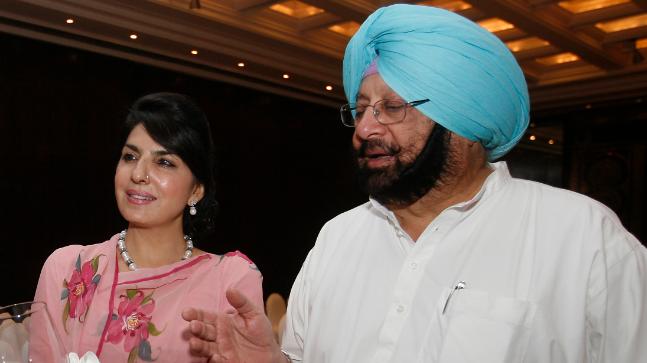
It is, perhaps, a little-known fact that Punjab chief minister Captain Amarinder Singh shares a close relationship with the former Pakistani defence journalist Aroosa Alam. The duo has manifestly been low-key about their lesser-known ‘affair’ and has often shied away from talking about it in public.

Senior journalist Seema Mustafa had called Alam ‘The First Lady of Punjab’. AAP leader Sukhpal Khaira had used critical epithets to describe her because of her nationality and the fact that she had stayed inside the Punjab Chief Minister’s Official Residence. Author Shobhaa De had characterised her as Amarinder Singh’s live-in partner.

However, the mystique surrounding the relationship between Singh and Alam has only grown since then.

Who is Aroosa Alam?

Aroosa Alam is a former Pakistani defence journalist and was known in Pakistani circles for having close ties with the military establishment. Alam is the daughter of Akleen Akhtar, also known as the famous General Rani, a socialite who was described by the Pakistani media as the “muse and mistress” of Pakistani leader Yahya Khan.

General Rani was also considered as the brains behind Khan and certain access to him. Consequently, she became the gateway to the General, and her importance in military establishment scaled new heights. Alam inherited her mother’s military network.

Alam was widely credited for her investigative reports on the Agosta-90B submarine deals that reportedly led to the arrest of then Pakistan naval chief Mansurul Haq in 1997.

However, she rapidly rose into prominence after joining the South Asia Free Media Association (SAFMA) that was involved in promoting peace and friendship between the Indian and Pakistani journalists.

Just like Capt Amarinder Singh, Aroosa was also married. She had two kids and her husband had an obscure personality that no one really remembered. Aroosa had a special fascination for India and was keen on travelling to India and meeting Indians.

Aroosa Alam—a muse and a lady friend of Punjab CM Captain Amarinder Singh

Aroosa met Captain Amarinder Singh for the first time during one of his visits to Pakistan. Both were linked for the first time in 2007 when they were seen together a number of times. But, Aroosa had instantly clarified then that they were ‘just friends’. However, she subsequently shed her initial awkwardness and since then has been quite forthright about her relationship status with Captain Amarinder Singh.

In Punjab, Aroosa is known to be a muse—a special, close, lady friend of the former Maharaja of Patiala and current chief minister of Punjab, Captain Amarinder Singh. She is a well-accepted hostess in Chandigarh, spending a considerable amount of her time among the elites of the city, regaling them with her love for yoga, and of course, Punjab chief minister. It seems like Aroosa has inherited more from her mother than just her military connections.

However, on the expected lines, the duo’s relationship was unacceptable to Captain Amarinder Singh’s wife, Preneet Kaur. She was profoundly upset over the alleged affair of her husband with Alam but eventually came to terms with it. The relationship, nonetheless, continues to be a sensitive issue for Kaur. She has never gone public about it. Alam, on her part, never visits Patiala where Singh’s wife Kaur resides. She virtually lives in Chandigarh and visits India through roads.

Proud of the beautiful and everlasting friendship with Maharaj Sahab: Aroosa Alam

Alam was a prominent face on the hustings for the Punjab assembly elections in 2017 where she was seen campaigning for Captain Amarinder Singh. Aroosa was amongst the distinguished guests who occupied the VVIP seats at the swearing-in ceremony of Capt. Amarinder Singh. While the Punjab chief minister has still been tight-lipped about his relationship with Alam, the latter has shunned all inhibitions to talk about her bond with Maharaj Saahab, as she addresses Capt. Amarinder Singh

Alam was also present at the launch of Captain Amarinder Singh’s biography ‘The People’s Maharaja’ in February 2020. It is pertinent to note that the book has a dedicated chapter on Singh’s relationship with Aroosa, who had openly described that her friendship with Singh was beautiful, will last long and was something that she was very proud of.

Aroosa is also acutely aware of the eyebrows that are raised because of association with Punjab chief minister. “My relationship is a sensitive issue even back home, I am a Muslim woman and you know how people back home think,” said Aroosa in February 2018 when she was in Chandigarh.
USA’s Tibetan Policy and Support Act: India needs a more assertive policy too, as it has much more at stake

After weeks of intense negotiations between Democrats and Republicans and uncertainty over President Donald Trump’s signature on the massive spending bill, the President finally signed into law The Consolidated Appropriations Act 2021 on December 27, 2020. With a $2.3 trillion spending package, this bill is considered to be the largest spending bill, and the longest bill (5593 pages) ever passed by Congress. 

Among other issues, this bill contains the “Tibetan Policy and Support Act of 2020”. Unlike the Tibet Policy Act of 2002, the new act is substantially more comprehensive and assertive. For instance, section 13 of the Tibet Policy Act 2002 have a clause that reads: 

“The Secretary of State shall make best efforts to establish a branch office in Lhasa, Tibet, of the United States Consulate General in Chengdu, People’s Republic of China, to monitor political, economic, and cultural developments in Tibet.” 

In the Tibet Policy and Support Act of 2020, this demand is coupled with the policy statement that read: 

“The Secretary may not authorize the establishment in the United States of any additional consulate of the People’s Republic of China until a United States consulate in Lhasa, Tibet, is established under subsection.” 

For Tibetans worldwide, under the leadership of the Central Tibetan Administration (Tibetan government-in-exile) and the blessing of His Holiness the Dalai Lama, this historical act is a matter of great joy and pride. In fact, ‘Tibet’ has been mentioned 130 times in these 5593 pages long bill. No other countries, except China (131 times), have been mentioned more. Other related issues, such as Uyghurs and Hong Kong, have been mentioned only 1 and 25 times, respectively.  

Succession or reincarnation of His Holiness the Dalai Lama

One of the most significant insertions in the new Act of 2020 is an issue relating to the “succession or reincarnation” of His Holiness the Dalai Lama. The act categorically stated that:

“decisions regarding the selection, education, and veneration of Tibetan Buddhist religious leaders are exclusively spiritual matters that should be made by the appropriate religious authorities within the Tibetan Buddhist tradition and in the context of the will of practitioners of Tibetan Buddhism” and “the wishes of the 14th Dalai Lama, including any written instructions, should play a key role in the selection, education, and veneration of a future 15th Dalai Lama; and interference by the Government of the People’s Republic of China or any other government in the process of recognizing a successor or reincarnation of the 14th Dalai Lama and any future Dalai Lamas would represent a clear abuse of the right to religious freedom of Tibetan people.”

The act further stated that any Chinese official who directly interfered with identifying future Dalai Lama would be sanctioned. 

The act also applauded the Tibetan exile community for the practice of democracy in exile. It acknowledged the Central Tibetan Administration and Sikyong (President) as the representatives “to the greeted extent” of the aspiration of the “Tibetan diaspora” around the world. Another significant insertion to the act is section 343, i.e., Policy regarding the environment and water resources on the Tibetan Plateau. The act stated that the U.S. would encourage a regional framework on water security among riparian countries. 

The importance of Tibet for India

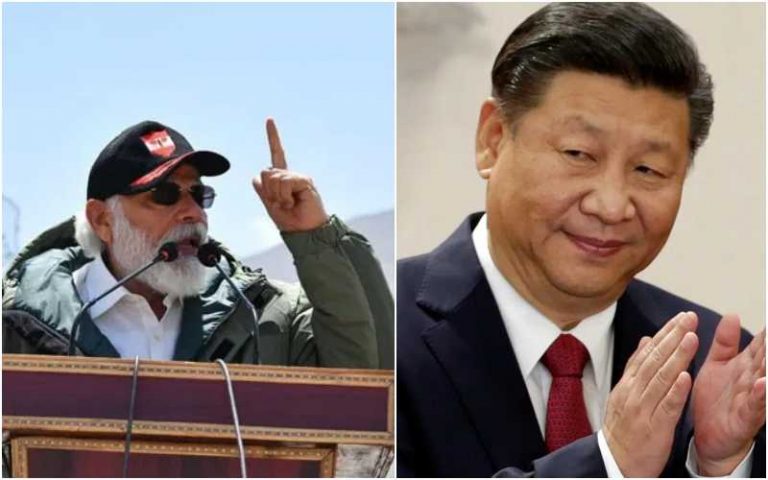
Throughout the recorded history of Tibet, no other civilization or country have been more grateful for Tibet than India. His Holiness the Dalai Lama, upon whom the hopes of six million Tibetan rest, often identify himself as a “Son of India.” Just like any Indian, Tibetans too will celebrate if India occupies a more prominent role on the international stage as it deserves. The biggest obstacle for India’s more prominent role on the international stage, such as becoming a permanent member UN Security Council, is accelerating China’s aggression.

The continued Chinese aggression on the Indian border region of Ladakh and Arunachal Pradesh has become too costly both in terms of human casualties and fiscal burden. In one of my empirical analyses, I have shown that from 1954 – 2019, the continued Chinese occupation of Tibet cost the Indian tax-payer US$ 462.8 billion (without any adjustment to inflation and exchange rate fluctuation), i.e., about US$ 7.16 billion annually. 

It is now high time that India should also adopt a more assertive stand on the Tibet issue in dealing with China. One strategy is to adopt India’s version of Tibet policy similar to the Tibet Policy and Support Act of 2020 of the US. India currently has an executive policy (not a law) on Tibetans in India called “Tibetan Rehabilitation Policy 2014.” While this policy was a significant development for Tibetans’ welfare in India, it is devoid of any substantive relevance on core issues of Tibet, that is, destructive Chinese policies in Tibet and Tibetans’ demand for freedom in Tibet.

In terms of relevance, the issues addressed in the US government’s Act, such as reincarnation of the His Holiness The Dalai Lama and environment and water resources on the Tibetan Plateau, have a far more direct implication on India than the US. Just like Tibetans, millions of Indians, particularly in states like Jammu & Kashmir, Himachal, Uttarakhand, Sikkim, West Bengal, and Arunachal worship His Holiness the Dalai Lama. Similarly, on the Tibetan plateau’s water resources, as mentioned in the Tibet Policy and Support Act of 2020, rivers from Tibet supply fresh water to an estimated 1.8 billion people. Almost half of the water (48%) that flows from the Tibetan plateau runs directly into India. Without a more assertive policy framework from India, China’s status as upper riparian and absolute control over these rivers not only gives China a chokehold on India’s economy but could cost the catastrophic loss of countless human lives. 

It is high time that India should take a firm stand to deal with China by adopting a more assertive policy framework regarding Tibet or by affirming the illegal nature of the Chinese occupation of Tibet and recognizing Tibet as an occupied territory. Ultimately, Tibet’s freedom is India’s best long-term security.

China tops the list of human rights abusers of 2020 prepared by UN Watch

0

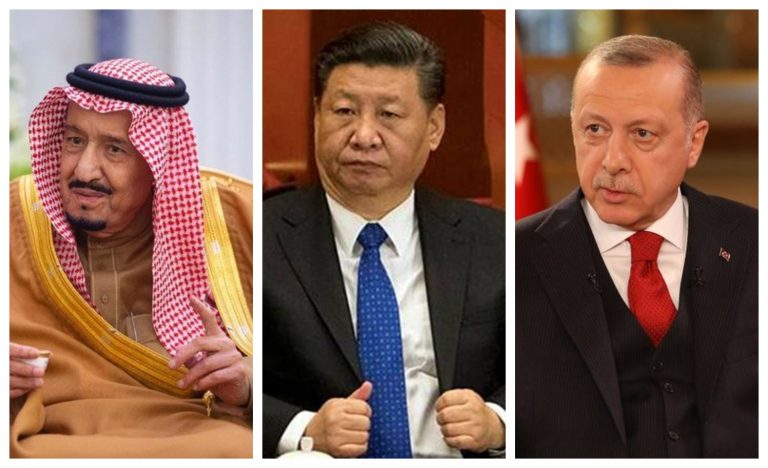
UN Watch, a United Nations accredited NGO that monitors the UN and fights for human rights and opposes dictatorship and double standards, has released a list of top ten countries that have been the worst abusers of human rights in 2020 as per the NGO. The ‘Top 10 Human Rights Abusers of 2020’ list features countries includes countries China, Russia, Saudi Arabia, Turkey and Iran.

Unsurprisingly, China has been recognised as the worst human rights abuser of this year as per the list. China has been ranked first in the list for forcing a million Uyghurs into camps, imprisoning human rights activists, ‘crushing Tibet’ and for suppressing the voices of people like Dr. Li Wenliang who sounded the alarm about the Wuhan virus and prosecuting journalists like Zhang Zhan who reported about the virus.

China is followed by Iran that has been placed at the second number in the list. Iran earned its place in the list by executing wrestler Navid Afkari and journalist Ruhollah Zam speaking against the Iranian regime. Iran also allegedly funded Syrian mass murder and Hezbollah terror, arrested women for not covering their heads, bombed a passenger jet killing 176 people on board and massacring peaceful protestors.

Central African country Republic of Cameroon has secured the third place in the list of human rights abusers. The Cameroon government allegedly tortured a journalist named Samuel Abuwe, massacred children in English-speaking schools as part of anglophone crisis that has claimed 3,000 live and displaced 50,000 people since 2016, threatened political rivals with extrajudicial killings and committed gender violence.

The fourth slot in the list of top ten human rights abusers has been filled by Venezuela. Venezuelan government has been credited with a range of human rights violations including freezing the assets of a food pantry that provided meals to underprivileged children, assassinating the people who criticised the Venezuelan President, forcing opposition leader to flee, holding fake elections and neglecting a humanitarian crisis that created about 5 million refugees.

Saudi Arabia has occupied the fifth place in the list of human rights abusers for allegedly imprisoning human rights activists like Loujain al-Hathloul and Raif Badawi, imposing travel restrictions on the critics of the regime and bombing Yemen schools, hospitals killing thousands.

The NGO had placed Zimbabwe at the sixth spot for arresting a journalist who exposed corruption in the health ministry, targeting critics of government by abducting and torturing them and harassing teachers who criticised the government’ handling of Covid-19.

Cuba has been ranked seventh in the list for allegedly arresting and denying human rights to rapper Denis Solis who wrote songs criticising police, crushing portestors and muzzling media, promoting drug trafficking, blocking food and medical aid and sending doctors abroad as slave labour.

Eighth place in the list has been occupied by Turkey for sentencing human rights activists and journalists, cutting off the water supply of 460,000 Kurds and fueling wars in Syria.

North Korea has been ranked ninth in the list for killing a fishing captain who was allegedly listening to international radio at sea, neglecting a hunger crisis that resulted in millions starving, detaining thousand of people in camps where they are subjected to forced labour and summary executions and forcing children to attend public execution.

The tenth place has been occupied by Russia in the list. The Russian government allegedly poisoned opposition leader Alexei Navalny, held 362 political prisoners, tortured detainees, persecuted 300 Jehovah’s witnesses, bombed schools, hospitals and markets in Syria and supported tyrant Lukashenko in Belarus.

Sushant Singh Rajput death probe: Investigation is open and no aspect ruled out yet, says CBI

The Central Bureau of Investigation on Wednesday stated that it is still conducting the probe in the alleged suicide case of actor Sushant Singh Rajput and it has not ruled out any aspect as of 30 December 2020.

“The CBI is conducting investigation in a thorough and professional manner using scientific techniques. During the investigation, all the aspects are being looked at and no aspect has been ruled out as on date,” a CBI letter addressed to the BJP leader Subramanian Swamy said.

The CBI, in its letter, also added that its investigating team and senior officers have visited the place of the incident numerous times for better understanding of the circumstances related to the incident.

The Forensic Medicine Experts from New Delhi also visited the place of the incident, Mortuary of the Cooper hospital during the night and had a discussion with the autopsy surgeons to understand the procedure of postmortem adopted by them, the letter added.

“During investigation, all the concerned witnesses have been examined to understand the circumstances, apprehensions raised by the complainant and his family members and other independent sources. Intensive and thorough investigation has been carried out in this regard,” the letter said.

BJP MP Subramanian Swamy writes a letter to PM Modi seeking CBI probe into Rajput’s death

The letter by the CBI was in response to BJP MP Subramanian Swamy’s letter to the Prime Minister Narendra Modi in July 2020, seeking a comprehensive probe, including by the CBI and other central agencies, into the death of actor Sushant Singh Rajput, whose body was found hanging in his Mumbai apartment on June 14.

Swamy had alleged in his letter to the prime minister that the actor’s death was a case of murder and not suicide.

He had said that a CBI probe has become “even more necessary” after an FIR was registered by the Bihar police in Patna on a complaint filed by Rajput’s father.


DMK members celebrating Stalin’s ‘doctorate’ received from a bogus university in the UK: Read details

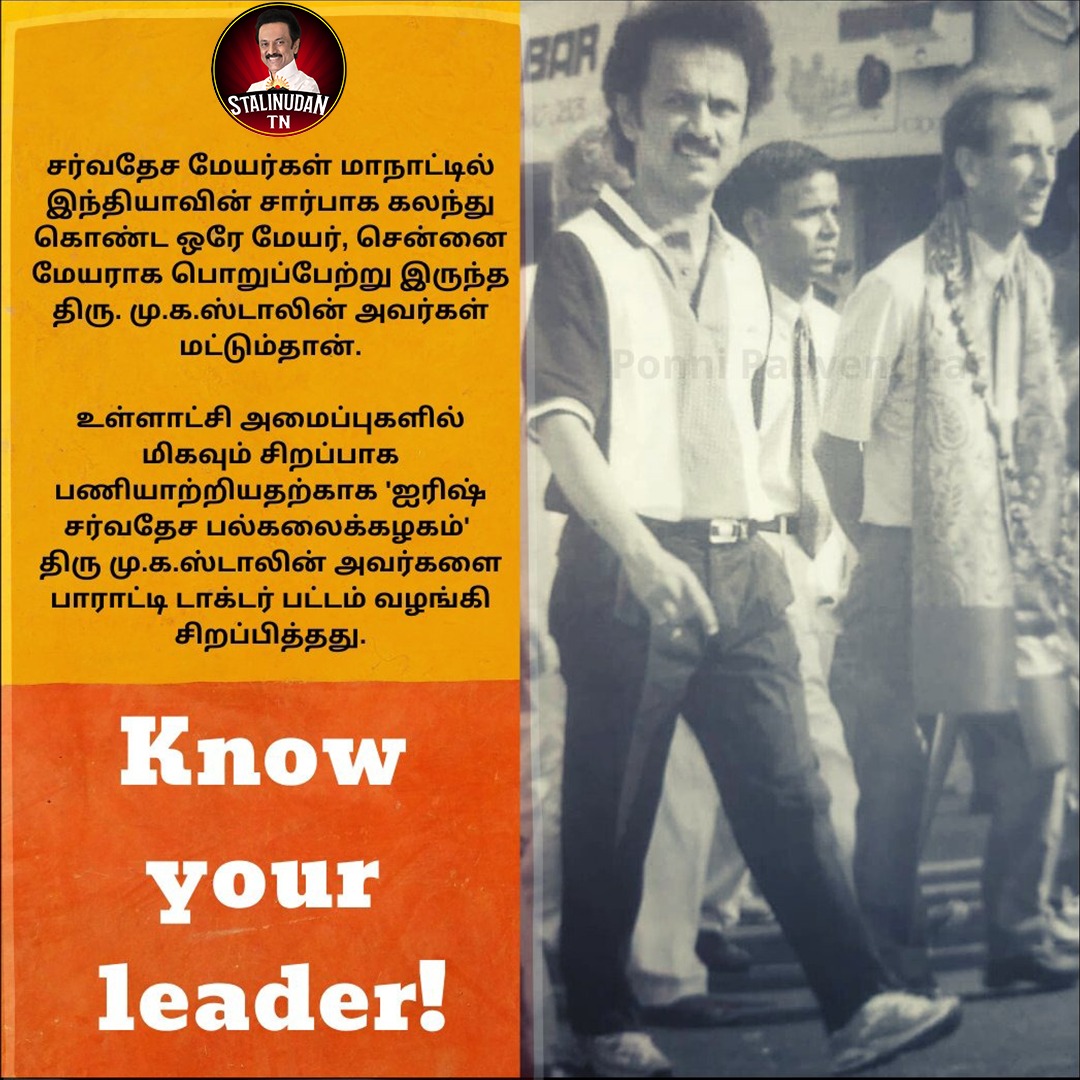
Recently, the Dravida Munnetra Kazhagam (DMK) social media cell and supporters of party chief MK Stalin took to social media, as part of MK Stalin’s image-building exercise, to post an infographic claiming the DMK chief was awarded a doctorate by the ‘Irish International University’ when he was Mayor of Chennai.

According to a report by The Commune, the pro-DMK social media accounts posted images of Stalin stating that MK Stalin was the only Mayor from India to have participated in the ‘International Mayors Conference’ and was awarded a ‘doctorate’ by the ‘Irish International University’ for his contribution to ‘local governance’.

DMK supporters claiming that Stalin received an honorary doctorate degree from ‘Irish International University’

However, it turns out that the Irish International university is an ‘unaccredited and bogus’ university that has lured students and offered ‘sub-standard and worthless degrees’.

According to a 2008 report by BBC, the bogus Irish University was nothing but a scam that offers sub-standard and worthless degrees and lures foreign students. The report has criticised the UK government for allowing such universities to flourish in the UK – virtually unchecked for several years. The investigative report of the BBC went on to describe it as an educational scam that targeted foreign students.

Similarly, another report by The Irish Times had also called the Irish International University as a “bogus university” that “targets overseas students with the promise of earning an Irish university qualification online that holds “international recognition”.

It seems like the DMK supporters, in their hurry to further false propaganda favouring their party chief DMK, ended up scoring a massive self-goal.

Russian couples protest against COVID-19 restrictions by kissing in packed trains

Condemning the COVID-19 restrictions in Russia, several couples in the country protested against the Russian government in a unique manner by kissing their partners in crowded trains.

According to the reports, the Russian couples are now using ‘kissing in public’ as a way to show their dissent. Several videos have now gone viral in which couple were seen kissing their partners in crowded subways.

One such incident was reported from the Russian city of Yekaterinburg. Interestingly, this protest was held by the group in the honour of a newly-released song Let’s Kiss by the band Pink Glasses, reported Life.

The couples claimed that they were protesting against the coronavirus restrictions in music concerts and restaurants after 11 pm. The trains are extremely crowded and thus, they can express their dissent in more powerful ways, they said. However, as trains are also crowded, these public acts of kissing could now be a source of infection.

The protesting couples claimed they had no intentions of disrupting public services or of hurting anyone’s sentiments. The protesting ‘kissers’ said that they wanted to highlight that it is illogical to ban people from attending music shows and visiting nightclubs at a time when the metro is packed with commuters every day.

“Musicians are speaking out against unreasonable COVID-19 restrictions because the virus is considered a higher risk at concerts and in restaurants after 11 pm than on a crowded subway during rush hour,” the protestors said.

The Ram Mandir Trust wants IIT engineers to help modify the foundation model. Read why

The Shri Ram Janmbhoomi Teerth Kshetra trust has asked the engineers from the Indian Institutes of Technology (IITs) to formulate a better model for Ram Mandir’s foundation after a stream of the Sarayu river was reportedly found flowing below it.

The committee, chaired by former principal secretary to the prime minister Nripendra Misra, overlooking the temple’s construction held a meeting in this regard on December 29. During the meeting, it was realized that the existing model for the foundation of the Mandir would not be feasible because of the stream of the Sarayu River flowing below the temple site. The trust has requested the IITs including IIT Mumbai and IIT Delhi, to propose a better model for a strong foundation.

The committee is discussing two options. The first is to use Vibro stone columns to support rafts on which stones can be placed. The second option is to improve the grip and quality of the soil by adding a specially engineered mix to it.

Vishwa Hindu Parishad (VHP) chief Alok Kumar said that the engineers from top institutes of India would work on the model to ensure structural stability of the Ram Mandir in Ayodhya. The idea is to ensure that the pillars last a thousand years. Kumar said that the process of designing the foundation pillars for the temple was postponed after they found the stream of Sarayu river.

Cracks noticed during tests

As per a report in Hindustan Times, Kumar said, “When the testing of the pillars was carried out, it was found when pressure was applied, they sank by about four inches. Since, the area is already in a seismic zone, we have decided to come up with a structurally safe option.”

Kumar said that around 700 ton of weight was put on the testing pillars to tests how they react to pressure and weight. The experts also conducted tests to access the effects of earthquakes on the pillars, as the region is a seismic zone. They noticed cracks during the tests.

Kumar said that the members of from IIT Delhi, IIT Mumbai, IIT Roorkee, National Building Research Institute (NBRI), Tata Consultancy and Larsen & Toubro would be working together to ensure the structure holds for many years to come.

Landholding may increase to 108 acres

Kumar said that the Ram Janmabhoomi Teerath Kshetra trust is also negotiating to increase the complex’s landholding. Currently, it is spread over 70 acres. After increasing it to proposed 108 acres, more structures such as a museum, a gathering place and a prayer hall can be added to the complex. He said, “We are trying to negotiate with those who own the land around the temple; if they agree to part with the land they will be compensated.”

Tamil Nadu: Doctor caught for drunk driving steals police patrol vehicle to go home

In a bizarre incident, a 31-year-old doctor, who was heavily intoxicated, stole a police vehicle after they caught him in a drink and drive case.

According to the reports, the incident took place in the wee hours of Monday on Harrington Road, Chennai. The accused has been identified as S Muthu Ganesh, a native of Arakkonam, Ranipet district, who currently practises at a private hospital in the city.

The incident occurred on Sunday near Kilpauk in Chennai. The Chennai Police stopped the doctor, who was driving under the influence of alcohol heavily. Initially, the police asked him to blow into the device, however, he refused to blow into the device and tried to drive past by showing his hospital identity card. However, the police insisted that he blow into the breathalyser, which showed that he was driving under the influence of alcohol

The police reportedly asked the doctor to return home by hiring an auto because his vehicle was seized. The doctor, who initially left to his residence, came back and picked up an argument with the police, demanding that his vehicle be handed back. When police officers refused, Ganesh drove away with a police patrol vehicle. Muthu Ganesh then rammed the police vehicle into an autorickshaw, also injuring three persons. 

The police soon chased Ganesh. He has been handed over to the Kilpauk police who arrested him and remanded him in judicial custody.

Leftist organisations instigated farmers in the name of Sikhism and Guru Govind Singh to participate in protests: Suggest reports

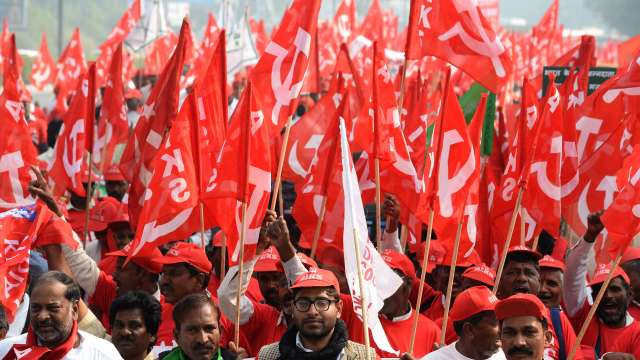
The ongoing farmers’ protests along the Delhi border is not a spontaneous agitation but a carefully manufactured conspiracy by leftist organisations against the central government, a report broadcasted on India TV said. In his prime time show ‘Aaj Ki Baat’, veteran journalist Rajat Sharma exposed the nefarious designs and elaborate plans made by the left-leaning organisations to gin up farmers into launching protests against the Modi government.

Sharma alleged that political parties averse to the central government have been resorting to lies and propaganda to mislead farmers into believing that the three newly introduced Agriculture laws were against their interests. Sharma spoke to many farmers in various cities of Punjab, who confessed to the involvement of the leftist organisations in kindling protests against the current regime.

Sharma said that an array of vile tricks and machinations were employed by the leftists to get unwitting farmers to the Delhi borders for protesting against the central government. Photos of those who had died a natural death were circulated in far-off villages in Punjab stating that they were ‘martyred’ during the farmers’ protest in Delhi in order to generate resentment against the Modi government. The farmers are also fed with lies that demonstrators are dying in the protest while the government is simply watching over.

“The propagandists are goading people into joining the protests in the name of Sikhism and Guru Govind Singh. Those who oppose them are branded as enemies of the community and are threatened with banishment from the society and this is all happening under the pretext of farmers’ protests,” Sharma said.

Appeals made to Sikh pride and Guru Govind Singh to get farmers to participate in the protests

According to Sharma, the leftist organisations were preparing for the last five months to launch protests against the central government to recapture their lost political ground. Fear-mongering about the new laws was extensively used to scare the farmers into believing that the government would capture their lands. They were galvanised into participating in the protests by appealing to their pride, Sikhism and Guru Govind Singh.

Vijendra Singh, a farmer from Sangrur revealed how the leftist organisations had been befooling farmers in his villages to join the protests. He said that when lies about new farm bills did not stick with the people, the leftists tried to enlist them for the protests by citing Sikhism and Guru Govind Singh.

Farmer Vijendra Singh exposes leftist propaganda of inciting people to join the protests

“The farmer associations of the Malwa belt farmers hold great sway in the region and they all have strong ties to the leftist organisations. Initially, when the three Farm Bills were passed, these organisations started promoting in the villages that the Modi government has legislated ‘Black Laws’ and these legislations would destroy our farm produce and enable corporates to take over our lands. Gradually the people bought into their propaganda and their popularity started soaring high,” Singh said.

However, Singh added that after some time people who had extended their support to the movement dug deeper into understanding the laws passed by the government. It is then that they realised that the furore over the laws was unwarranted and they started parting ways from the movement. Realising that their agitation was petering out, the leftist organisations then linked the protest to the Sikh pride since Punjab is predominantly Sikh, Singh said.

Comrade leaders defrauded money from villagers to finance Delhi protests

Singh further adds, “As they realised that people were not joining in the protests, the leftist organisations tried to link the protests with the Sikh pride. They instigated people stating that Guru Gobind Singh snatched the lands from the Mughals but this just Modi. We will press our knee against Modi’s neck.”

The farmer also said that the comrade leader in his village sought a donation of Rs 200 per acre of land from people which was then used to finance the farmers’ protests in Delhi. Singh said that the leftist leaders fleeced money from the villagers by selling a Rs 2.5 bottle of water at Rs 20.

“Most of those who are protesting in Delhi are leftist supporters and cadres. I don’t deny that farmers have not joined the protests but they were deceptively enlisted for the protests by appealing to Sikh pride which is very dear to us here in Punjab,” Singh said.

“Hang in there” – Celebrated Hollywood actor Anthony Hopkins celebrates 45 years of sobriety with a hopeful message

Are you feeling low towards the end of miserable and mischievous 2020 that tortured every bit of your soul with a pandemic and countless deaths? Well, there is some hope left. Soon-to-be 83 celebrated Hollywood actor Anthony Hopkins has posted a message celebrating 45 years of his sobriety. While sharing his gratitude as he made it to 45 years of being sober, the actor’s hopeful message will definitely put a smile on your face.

In his message, he said, “Well, new year is coming. It’s been a tough year, full of grief and sadness for many, many, many people. But 45 years ago today, I had a wake-up call. I was heading for disaster. I was drinking myself to death. I’m not preaching, but I got a message, a little thought that said, ‘Do you want to live or die?’ and I said, ‘I want to live.’ And suddenly the relief came, and my life has been amazing, and I may have off days and little bits of doubt, and all that, but all in all, I say hang in there.”

Hopkins continued and said, “Today is the tomorrow you were so worried about yesterday. You young people, don’t give up. Just keep in there. Just keep fighting. Be bold and mighty forces will come to your aid. That’s sustained me through my life.” Hopkins finished his wishes for the new year and said, “this is going to be the best year.”

The Welsh actor is currently living in Malibu. He started his career back in 1960 in theatre and got his big break in 1968 historical drama The Lion In Winter opposite Peter O’Toole and Katharine Hepburn. He had admitted to being drunk and hungover a lot of time during his career. When he was 38 years old, he committed to sobriety and 45 years down the lane he is now a happy old man who just made the year-end little hopeful for many.

Hopkins has been nominated for Academy Award five times, and in 1992 he won Oscar for his brilliant performance as Hannibal Lecter in the 1991 thriller-horror The Silence Of The Lambs.