Home Blog Page 4787

‘Whistleblower’ Pradeep Poonia’s Twitter account suspended, points fingers at WhiteHatJr

0

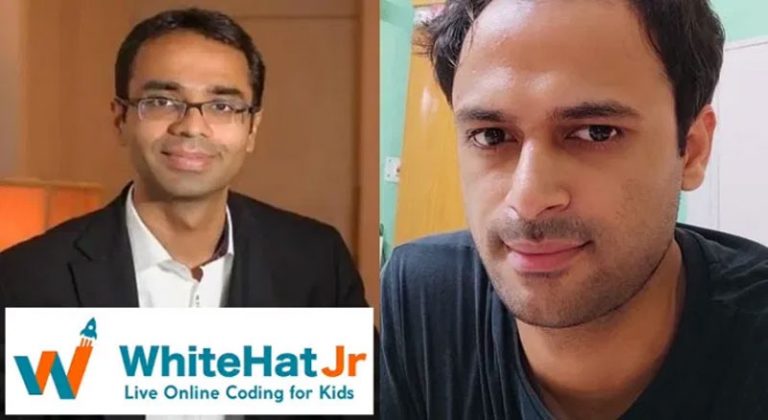
The fight between Software Engineer Pradeep Poonia and WhiteHatJr is becoming murkier every day. In the ongoing case in High Court, the next date for the hearing was set for January 6, 2021. Meanwhile, Pradeep Poonia has alleged that WhiteHatJr and its founder Karan Bajaj are not leaving any stone unturned to silence his voice. As per the LinkedIn post of December 7, Poonia said that his Twitter @WhiteHatSnr account was suspended, and WhiteHatJr is allegedly behind the suspension.

WhiteHatSnr suspended from Twitter

In the post, he mentioned that so far, 17 YouTube videos, 2 YouTube channels, 2 Reddit accounts, 1st Twitter handle, 1 Quora account, and 3 LinkedIn articles have been removed. He further added that the company had forced him to remove 12 tweets and 4 videos using legal muscle.

High Court ordered Poonia to take down tweets

On November 23, the Delhi High Court had ordered Pradeep Poonia to take down specific tweets against WhiteHatJr. The court had specifically asked him if he wanted to say that ‘housewives are uneducated.’ In his Tweets, Poonia had reportedly alleged that the teachers on the WhiteHatJr platform are not educated and pointed in a ‘derogatory’ way that how ‘housewives’ can teach programming. The court had also restrained him from commenting on the educational or professional background of the teachers.

The court said, “You are saying that their teachers are housewives, are you saying they are uneducated persons? How can you be so derogatory towards them? Of course, this is defamation.” The court was also displeased by the fact that Poonia had posted personal numbers of the teachers on social media platforms. Justice Gupta said, “Who are you to put their numbers in the public domain? Who has given you this right?”

“Is this not malicious that you are stating their teachers are housewives? Even if they are housewives what is the problem if they’re doing part-time jobs?” Justice Gupta further questioned Poonia. The court had ordered Poonia to take down specific tweets dated 12.09.2020 regarding the number of teachers at WhiteHat Jr, 5.09.2020 alleging WhiteHat to be a pyramid scheme, and other specific tweets dated 11.10.2020, 3.09.2020, 22.09.2020, 20.10.2020, 23.10.2020 respectively, Live Law reported.

The court also restrained him from hacking or unauthorized accessing of the internal communication platform SLACK. The court asked him not to post any internal communication between WhiteHatJr’s employees on social media platforms. He was directed to remove specific videos as well.

What was the case?

WhiteHatJr and its founder Karan Bajaj had filed a defamation suit of Rs.20 crore against YouTuber and alleged whistle-blower Pradeep Poonia. In a series of allegations, Poonia had accused WhiteHatJr of misleading its customers with fake stats and advertisements. Karan Bajaj, the founder of WhiteHatJr, alleged that in early September, Poonia started posting on various social media platforms against WhiteHatJr. He had called his claims sinister and defamatory in nature. Bajaj had alleged that WhiteHatJr filed takedown notices to social media platforms, and they were removed only to be reuploaded again and again by Poonia.
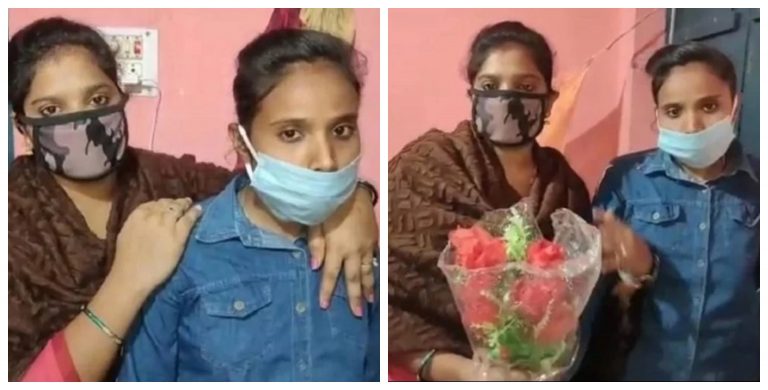
Jharkhand: Lesbian cousin sisters marry each other in a temple, had fled from home to live together

0

Two homosexual cousin sisters from Jhumri Telaiya in Kodarma district of Jharkhand, who were missing since past few days, have reportedly married each other. The family of the women had filed a complaint after they went missing. Last week on Thursday, their family members found out that they had been living in a rented house in the Chandwara area after ‘marrying’ each other. They families traced them and forcefully brought them back.

The families had brought the women to the police but the police turned them away, refusing to interfere as the women are adults.

According to reports, the women have been ‘together’ for the past five years. Last month, they ran away and got married in a temple on November 8. They wanted to move to another city to avoid any trouble. One of them is reported to be 24-years old and the other 20-year old. One of them is a graduate while the other one is 12th pass.

The women said that no matter what troubles came their way, they would always stay together. They are not ashamed of their relationship. The women said that they are well aware of the fact that homosexual relationships have been decriminalised. They said that they were inspired by the relationship of New York-based lesbian couple Anjali Chakraborty and Sophie Sandals.

Both the sisters had started living in without informing their families before they got married in a Shiv temple. This is said to be the first case of same-sex marriage in Kodarma district.

Court had decriminalised sexual relations between consenting adults of the same-sex

In 2018, a five-judge Bench of the Supreme Court had decriminalised homosexuality between consenting adults by removing a part of section 377 that had mentioned homosexuality as ‘unnatural’ and punishable under the law.

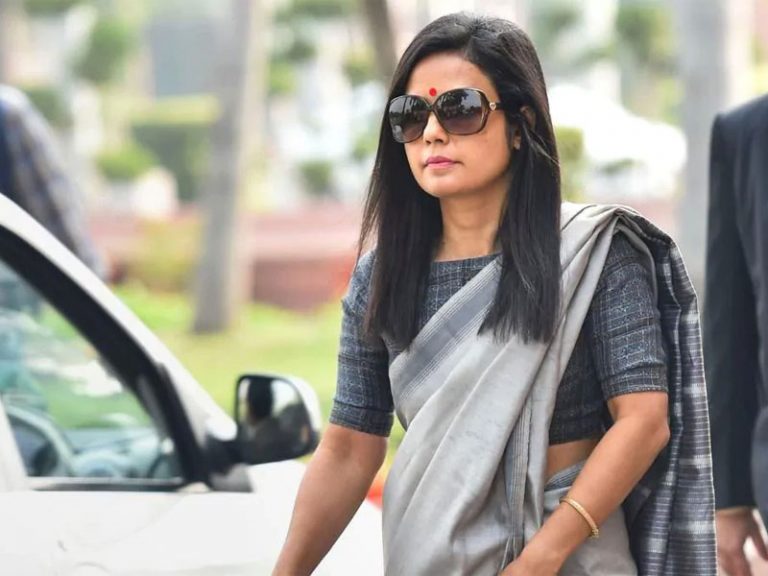
TMC’s Mahua Moitra says media persons are worth ‘two paisa’, then defends her statement with a meme

On December 8, Trinamool Congress (TMC) MP Mahua Moitra’s videos appeared on social media platforms in which she was heard calling media persons “two-paisa worth”. A person at the party meeting was asked to leave by the MP. As per the reports, when he introduced himself as a reporter, Krishnanagar MP Moitra got furious and asked him to leave. The incident took place on Sunday in the Nadia district.

In the now-viral video, she was heard saying in Bengali, “Who has called ‘du poisar’ (two-paisa worth) press here? Do remove these elements from the venue. Some of our party members invite such people to closed-door meetings to see their faces on TV. This is not done.”

Kolkata Press Club expressed displeasure

Kolkata Press Club has issued a statement in which they said they are deeply concerned about the comments. They said, “In a democratic setup, the importance of journalism and the respect it commands is known to all. Journalists braving adverse situations as part of their professional struggle and social responsibility are respected globally.” Snehasis Sur, a veteran journalist and president of the Kolkata Press Club, criticized her statement and said, “We don’t need to hear from Moitra how this institution has contributed to journalism during the Independence struggle, the Bangladesh war or the Emergency.”

“I was not talking to the press,” explains Moitra

Indian Express has quoted her defending the remarks. She said that the reporter was called by someone who was unhappy with the recent changes in the organization. It was a closed-door meeting. When she was asked about the criticism by Kolkata Press Club, she said, “Press Club should instead give training, not everyone with a mobile phone can be called a ‘journalist’. It was a closed-door meeting and I do not allow my workers to carry phones.”

Moitra described the whole incident in her words. She said that Bapi Chatterjee, a TMC leader, was the party president in Gayeshpur last year, but he was replaced by Mintu Dey. However, political strategist Prashant Kishor later reinstated Chatterjee that angered Dey. Chatterjee was labelled as an outsider as he was from the Kalyan area located in the neighbourhood of Gayeshpur.

On Sunday, she went to the party meeting to resolve the internal issues. When she reached there, they were holding placards that read, “Outsider president manbo naa (We will not accept an outsider as president).” There were altercations between the supporters of Mintu and Bapi when she arrived at the venue.

On entering the auditorium, she noticed only Bapi’s men were present, so she went outside to call Mintu and his supporters. She noticed a huge gathering outside and saw some people recording the conversation with the party workers. She said this was the time she made the remarks, “Why do you call the two-paisa worth press to our closed-door meetings? Why are you all so interested to get your pictures published in papers?”

She further said, “What I said was between me and my party workers. I didn’t tell this to the journalists. I saw a man standing at a distance recording all this on his mobile.”

Mahua defends her statement with a meme

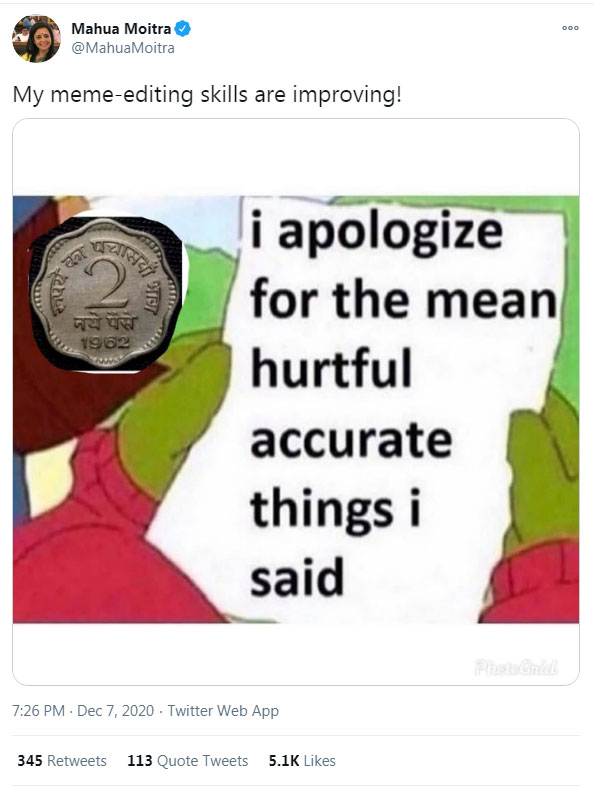
Though during the conversation with the news agency, she said the person she referred to as ‘two-paisa press’ was ‘not’ from the press, and she spoke to ‘real journalists’ after the meeting, her meme on Twitter seems to say that she meant whatever she said.

Tweet by Mahua Moitra defending her statement

Moitra had shared a tweet in which she wrote, “My meme-editing skills are improving!” with the image on which she had placed an old 2-paisa coin with the text “I apologize for the mean hurtful things I said.”

Moitra’s statement attracted in-party criticism

TMC’s panchayat minister Subrata Mukherjee held a press conference at TMC headquarters and said what Moitra said is not the party’s opinion. Mamata Banerjee believes in the media and shares information with the press. We maintain a cordial relationship with the media even if you write against us.”

Moitra had tried to use her parliamentary privilege against Zee News

Mahua Moitra has been in the news often for rather controversial reasons. She had once shown “the middle finger” to a news editor on live TV. Her maiden speech in the Lok Sabha was in the news for being allegedly plagiarised. However, when Zee News Editor Sudhir Chaudhary said that it was plagiarised, Moitra had tried to browbeat Chaudhary by submitting a breach of privilege motion against Chaudhary claiming that he had falsely reported her maiden address in the lower house of the parliament. However, the Lok Sabha speaker Om Birla did not accept the breach of privilege motion submitted by the Trinamool MP then.

Moitra had then proceeded to file criminal defamation charges against Sudhir Chaudhary and Zee News. When Zee News and Sudhir Chaudhary did not relent, Moitra had started a number of public rants against the media house, calling them derogatory words like “thieves, paid news, budbak” etc. In response, Zee News had also filed a criminal defamation suit against her.

Uttar Pradesh: Communal tension after grave was dug next to a Hindu temple to bury a dead body

Communal tension prevailed in Bilsi town of Budaun, Uttar Pradesh, after a grave was dug next to a temple. As reported by Jagran, in a bid to spoil communal harmony, some people dug up a grave for one Sameer, son of Sakuri, next to a Hindu temple.

When people saw a grave was being dug next to a temple, they raised objections. The land was also a private property of some people there. Following this, people of both communities got into an argument.

Upon getting information regarding the incident, a team from administration as well as police officials reached on the spot. Tehsil team checked up the records and informed that the land is recorded as a temple. It was also private property of some people. Hence, the grave could not be dug up there.

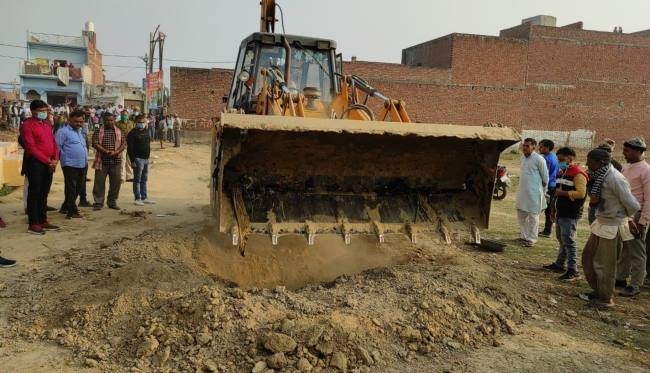
The police controlled the situation and a JCB was called in to fill up the dug up grave.

As per the report, one Sameer passed away on Monday after a trolly filled with bricks fell on him. On Tuesday, his family members started digging up the grave right next to the temple to bury him. When they got to know about it, the temple’s chairman Anuj Varshney, Tehsildar Ashok Soni as well as SHO Dharmendra Kumar reached on spot with his team.

Sameer’s family was adamant to bury him next to the temple despite being informed that the land is registered as a temple and in name of few private individuals. They relented only after police showed strictness, as per the report.

First meeting of Constituent Assembly: Speech by Dr Sachidananda Sinha proves that India never understood the mindset behind Muslim League

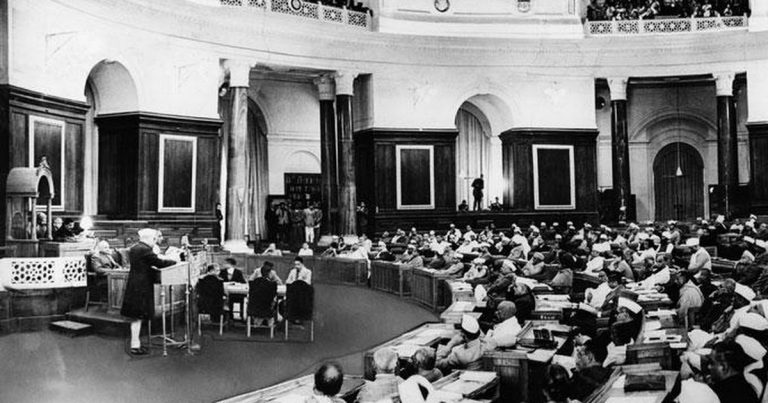
The 9th of December 2020 marks the 74th anniversary of the first meeting of the Constituent Assembly. The Constituent Assembly met for the first time on this day in 1946 where Dr Sachidananda Sinha was elected as the temporary chairman. The remarks that were made by the Chairman then encapsulates perfectly so much that is wrong with the founding principles of the Indian State.

In his address, Dr Sachidananda Sinha mentioned that the Muslim League had opposed the formation of such an Assembly until the adoption of the resolution demanding a separate Islamic state. Even then, the Muslim League demanded that two Constituent Assemblies be formed, one each for the two independent states that it had proposed.

Dr. Sachidananda Sinha stated, “But until the adoption of the resolution on Pakistan, in March 1940, by the Muslim League, that political organization had not favoured the idea of a Constituent Assembly as a proper and suitable method for framing a constitution for this country. After the adoption of that resolution, however, the attitude of the Muslim League seems to have undergone a change in favour of the idea of a Constituent Assembly-one for the areas claimed by the League for a separate Muslim State, and the other for the rest of India.”

“Thus it may be stated that the idea of a Constituent Assembly, as the only direct means for the framing of a constitution in this country, came to be entertained and accepted by the two major political parties in 1940, with this difference that while the Congress desired one Constituent Assembly for India, as a whole, the Muslim League wanted two Constituent Assemblies, in accordance with its demand for two separate States in the country,” he added.

In the same speech, however, the temporary Chairman of the Constituent Assembly went on to glorify a man who was one the pioneers of the creation of Pakistan and one of the most significant proponents of the two-nation theory. He said, “Let us not forget to justify the pride of the great Indian poet, Iqbal, and his faith in the immortality of the destiny of our great, historic, and ancient country, when he summed up in these beautiful lines: 

Yunan-o-Misr-o-Roma sabmit gaye jahan se,
Baqi abhi talak hai nam-o-nishan hamara. 
Kuch bat hai ke hasti mit-ti nahin hamari, 
Sadion raha hai dushman daur-e-zaman hamara.

It means: “Greece, Egypt, and Rome, have all disappeared from the surface of the Earth; but the name and fame of India, our country, has survived the ravages of Time and the cataclysms of ages. Surely, surely, there is an eternal element in us which had frustrated all attempts at our obliteration, in spite of the fact that the heavens themselves had rolled and revolved for centuries, and centuries, in a spirit of hostility and enmity towards us.””

Quite clearly, even after Mohammed Iqbal made it clear his ideological orientation, a politician as consequential as the temporary Chairman of the Constituent Assembly of India glorified such a man. It should have been clear how dangerous this man was and yet, Dr. Sachidananda Sinha could not look past the fact that he was a poet and might have spun together a few pretty words sometime.

This soft spot for poets and ‘intellectuals’, no matter how dangerous their ideas are, has continued to haunt India ever since independence. The minute that someone exhibits his poetic inclinations, all his crimes are forgiven and dangerous ideas whitewashed. There has been a shift of late but our intellectual fraternity continues to remain caged in the prisons of the past. One only need take a look at the manner in which the ‘intellectual’ fraternity continues to stand by Varavara Rao despite his vile zealotry.

It also demonstrates that the fascination and the soft spot that the Secular establishment of independent India has for Pakistan is not a new phenomenon. It is something that has was engraved into the national character of the Indian Republic by the men and women who led India at the time. It is also precisely why the ‘Aman ki Aasha’ nonsense still held credibility for so many years after independence.

Even after multiple wars, which India inevitably won, Pakistan was treated with an atrocious degree of kindness which, frankly, it was not worthy of. And it stems from the fact ever since independence, India has demonstrated a lack of clarity in identifying the existential threats to its cultural identity. Mohammed Iqbal pioneered an idea that was destined to lead to a civil war and genocide of Hindus and yet, people at the top continued to glorify him as a poet and actually believed that he had positive sentiments about the country we call our home.

The ‘large heartedness’ towards existential threats that is engraved into the national character of India as a consequence of the political choices made by the elites of the time is something that India, as a nation, needs to grow out of quickly. It is more than well past time to abandon such foolhardy endeavours. The current ruling dispensation has demonstrated a willingness to rectify the follies of the past. But clearly, there is a long way to go still.

Opposition has created fear psychosis in the minds of farmers: Professor Ashok Gulati

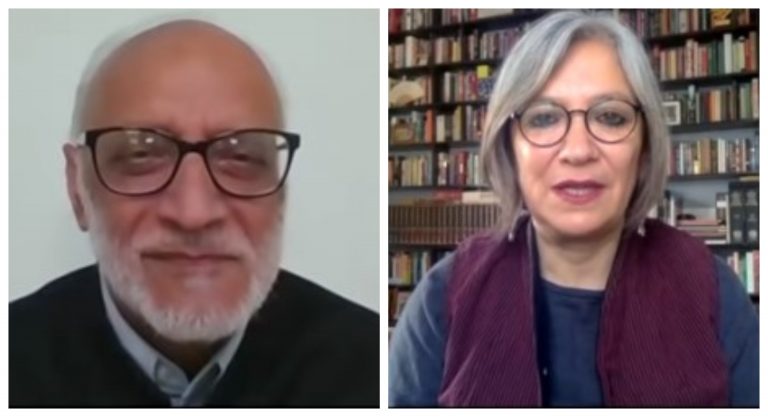
In an interview with journalist Jyoti Malhotra at the Print, Professor Ashok Gulati, a well-known agricultural economist, busted the myths surrounding the farm laws that are being opposed by ‘farmers’ who are demanding the government to repeal them.

Professor Gulati said pointed out that there has been a commuication gap between the government and the farmers regarding the laws. “Well it’s unfortunate to see that there is so much of opposition to these farm laws. My take on this is that they have not been communicated properly to the farmers”, he said.

The professor who is an Infosys chair on agriculture at the Indian Council for Research on International Economic Relations (ICRIER) said that the communication gap has been fully exploited by some political parties and activists to create a fear psychosis among the farmers. Professor Gulati highlighted that the process of marketing reforms in agriculture began in 2003 under Vajpayi government when a model law was sent to state governments in order to contemplate on liberalising agriculture marketing.

System worked better with direct buying and selling

He said that during the lockdown when the APMC Act was withdrawn, the government saw the possibility of doing away with mandatory sale of agricultural produce in mandis as the supply chains remained unaffected even after withdrawal of the Act. The APMC Act was withdrawn to avoid crowding of farmers in mandis. Direct sale and purchase of agricultural produce helped the agrarian sector sustain during the lockdown period.

“Only sector that has not suffered during the Covid period despite the severest lockdown is agriculture. That is from where they (government) found that if they allowed direct buying and all that and proper supply lines are built then the system will function much better rather than this mandi system”, explained Professor Gulati.

Contrary to the opposition theory that Parliament has hurried the farm laws, Professor Gulati said that enough discussion has taken place on farm laws for 17 years. He pointed out that even the 1991 reforms were not properly discussed and the industry kept opposing them for a long time. However, he acknowledged that the opposition had a right to question if they felt that the bills were not discussed enough.

Only 6 per cent farmers gained from the MSP

On the question that the small farmer might get exploited by private buyers under the new laws, Professor Gulati claimed that more the 90 per cent of the farmers sell their produce to private buyers. “Only six percent of the farmers have gained from the MSP even when MSP has existed since 1965”, he said quoting the Shanta Kumar panel report and the NSSO 70th round situation assessment survey.

Punjab farmers biggest beneficiaries of government subsidies

Debunking the narrative that farmers from across the were protesting against the farm laws, Professor Gulati stated some figures and said that out of total 146 million farmers households in the country, Punjab has only 1.09 million farmer households. He said that the farmers from Punjab were the biggest beneficiaries of the MSP.

Busting the misconception that Punjab farmers, who are the ones mainly opposing the farm laws, were the biggest contributors to the buffer stock, he said that Punjab farmers contributed less than one third during the last wheat season. He said that Madhya Pradesh was the top contributor to the common pool in wheat category. “But whatever the Punjab farmer brings in the mandi, you know market arrival, of that almost 95 per cent is bought by the government. Nowhere else this happens”, said Professor Gulati.

Those protesting not farmers but those who will lose under the new laws

Professor Gulati said that MSP was just a notional price, an indicative price and not a legal price. And it has been so since it was introduced. He explained that under the MSP system only the government is mandated to buy at the MSP whatever quantity it purchases and private buyers could not be forced to buy at MSP.

He said that those protesting against the farm laws were not the farmers but actually those who would lose under the new laws. “Who are the losers? Not the farmers”, he said. Regarding the demand of some states about the MSP, Professor said that the if the states have a problem with the central laws, they can make their own decision with respect to MSP and see for themselves how long the system will work.

Speaking on contract farming, Professor Gulati elaborated that there are three main models in it viz. the MNCs, the Co-operatives and the domestic private sector. Explaining why there was a need for private participation in procurement process, he gave the example of milk and poultry sectors which are flourishing with private buyers.

He said that during the period from 1965 till 1990s wheat and rice formed the staple food but with rising income, dietary habits have changed with more nutritional food items like milk products, vegetables and fruits being added to the plate. Thus there is a need of diversification in the agriculture sector. “Punjab is 20 years behind a diversification, at least”, claimed Professor Gulati.

He said that the Punjab Chief Minister Captain Amarinder Singh told him that he had said on 1985 that Punjab must diversify from wheat and rice to high value agriculture. Professor Gulati highlighted the flaws that exist in policy-making in the country that focused less on productivity and more on votes. He said that the agricultural reforms envisaged under the farm laws are in the interest of the country.

AAP sits on dharna outside Kejriwal’s house, because he could not join farmers due to imaginary house arrest

As borders along Delhi remain sealed and the residents are held hostage to the ongoing farmers’ protests, similar on the lines of the Shaheen Bagh demonstrations that took place earlier this year, the Aam Aadmi Party has decided that this time around they would not repeat their past mistake and take the edge off Delhi’s inhabitants’ restiveness by providing them with a good dose of entertainment.

In this pursuit, AAP and its leaders earlier today ludicrously alleged that their leader Arvind Kejriwal was under house arrest. As it turned out, it was just a figment of their imagination, ruined by a prompt clarification by the Delhi Police which said that Kejriwal was not held under house arrest and the forces were just a part of a general deployment to avoid clashes between AAP and other political parties.

However, so invested were AAP leaders in their self-created fiction of Kejriwal’s house arrest that they refused to accept Delhi Police’s clarification and instead launched a sit-in protest outside the Delhi chief minister’s residence, alleging that the AAP supremo Arvind Kejriwal was held under house arrest.

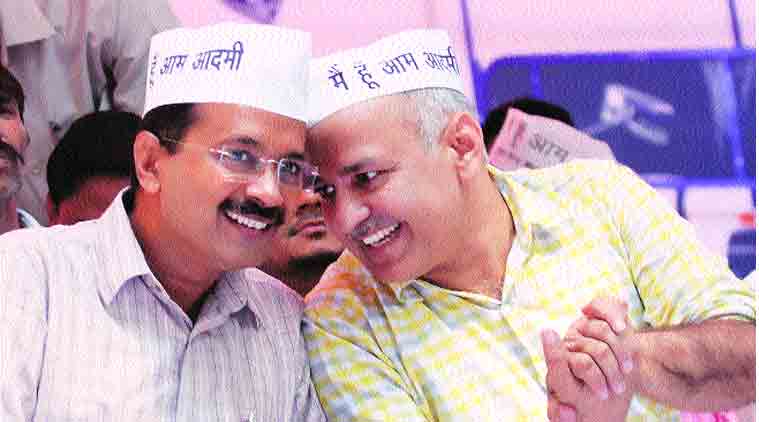
Manish Sisodia and AAP leaders sit on a dharna outside Kejriwal’s residence

A huge ruckus ensued outside the Delhi CM’s house, with Deputy Chief Minister Manish Sisodia and a group of AAP workers trying to barge into the CM’s residence.

While the police stated that only a small group of people including Sisodia could meet the AAP chief, the Deputy Chief Minister was resolutely bent on getting everyone who had gathered on the road inside Kejriwal’s residence.

Speaking to the media, Sisodia alleged vendetta from Delhi Police, alleging that the action was initiated because Kejriwal had refused to convert the stadiums into temporary jails to detain the farmers.

Subsequently, AAP leaders and supporters started raising slogans against the Delhi Police, in a bid to exert pressure on the police personnel manning Kejriwal’s residence and force them to remove the barricades. Thereafter, Sisodia and other leaders sat on a dharna in protest.

AAPians float the rumours of Kejriwal’s house arrest

Earlier today, as the Kejriwal backed Bharat Bandh spectacularly failed in Delhi, AAP supporters and sympathisers rushed in the defence of their leader and his government. Pinning the blame of the failure of Bandh on the Centre and PM Modi, AAPians alleged that the Modi government is afraid of Kejriwal and has therefore house arrested the Delhi CM for extending his support for the farmers.

The official Twitter account of Aam Aadmi Party tweeted that Delhi CM Arvind Kejriwal has been put under house arrest. Soon after the tweet, scores of AAP supporters descended on social media websites, furiously tweeting in support of the Kejriwal government and accusing the central government of being so afraid of the AAP chief that they had to put him under house arrest.

However, Delhi Police rubbished the rumours of house arrest floated by AAP supporters. Police said that the security has been increased around CM’s house to avoid a clash between AAP and other party workers. As quoted by ANI, DCP North Delhi Anto Alphonse said that the CM has not been put under house arrest. In a tweet, DCP North Delhi shared an image from outside Kejriwal’s house and said that he continues to exercise his right to free movement within the law of the land. The DCP North Delhi reiterated that AAP’s claim of Kejriwal being put under house arrest is incorrect.

Hours after the Delhi Police rubbished fake claims of house arrest of Arvind Kejriwal, a CCTV footage surfaced online that further debunked the outlandish allegations of Aam Aadmi Party (AAP).

Zee News journalist Jitender Sharma had shared the video wherein Arvind Kejriwal was seen visiting a wedding venue at 9:25 pm on Monday night. Kejriwal was escorted by his staff members, while one of them carried two bouquets of flowers.

Kejriwal and his supporters have a history of indulging in attention-seeking stunts

Aam Aadmi Party chief Arvind Kejriwal and his supporters have often displayed such kind of an inflated sense of self-importance. On several occasions in the past, AAP supporters have pulled off such attention-seeking stunts to hog limelight and remain in news.

In December 2018, AAP had alleged that a man had hurled chilli powder on Arvind Kejriwal. The Delhi chief minister and his supporters instantly painted the aggressor as BJP man and accused the BJP of attacking him. However, several reports in the aftermath of the incident claimed that the accused, Anil Sharma, who had flung chilli powder on Kejriwal, had confessed that the attack was orchestrated by AAP leaders as a publicity stunt.

Indonesia: Highest Muslim body to provide Covid vaccine with halal certificate, expected to boost immunization process in the Muslim-majority country

0

The highest Muslim body in Indonesia is expected to issue a halal certificate for the experimental Coronavirus vaccine developed by China based Sinovac Biotech. The Indonesian Ulema Council Halal Product Guarantee Agency and Institute for the Assessment of Food, Drugs and Cosmetics has completed its study and a fatwa and halal certification is expected soon, Human Development and Culture Minister Muhadjir Effendy told the media.

“The government will provide a vaccine that is proven safe and passes clinical trials under World Health Organization recommendations,” said Minister of Health of Indonesia Putranto. The Halal certification for the experimental COVID-19 vaccine, should its usage be approved, would prove to be crucial in strengthening the immunization process in Indonesia, which is the world’s most populous Muslim majority country.

Around 1.2 million doses of the experimental Coronavirus vaccine developed by Sinovac Biotech arrived in Indonesia on Sunday but Hermawan Saputra of the Indonesian Public Health Expert Association said that it will be enough for only 600,000 people as each person requires two doses. “It does not really have significant meaning. The government should guarantee that there will be enough to for distribution to the entire country,” he said.

According to Saputra, if the experimental Coronavirus vaccine passes the third phase of the clinical trials, then the immunisation process could begin by the middle of next year.

Islamic opposition to vaccines

Islamic fundamentalists have regularly opposed vaccines which has hurt the immunization process with respect to various other significant ailments. Most significantly, immunization against Polio has suffered greatly due to opposition from Islamic fundamentalists. Not only in India and the Indian subcontinent, but the same phenomenon has been observed in African countries as well.

Most recently, a Pakistani ‘expert’ has claimed that Coronavirus vaccines are part of a nefarious agenda of Bill Gates and the World economic Forum to turn humans into slaves and feed them lab made meat.

Watch: Rohit Sardana offers hilarious analogy to explain what ‘Godi Media’ means

0

There is a term that is greatly in vogue among detractors of nationalist media channels and journalists. The term ‘Godi Media’ is often used by politicians from opposition parties and their supporters to suggest that media channels and journalists that do not peddle the narrative they want them to peddle are the lapdogs of the NDA government at center and the BJP.

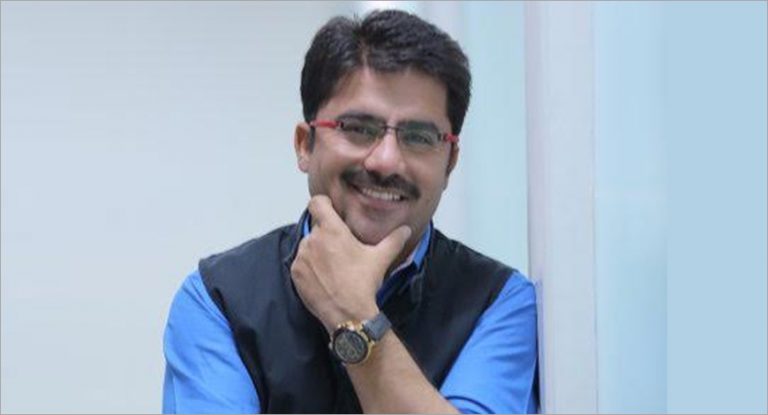
Rohit Sardana, who is very often accused of being part of ‘Godi Media’ was asked recently by one of his viewers what the term means. He provided a rather hilariously accurate answer to that question. Quite exasperated with the term, Rohit Sardana appears to have decided that he has had it with the usage of the term.

Rohit Sardana said, ‘Let me tell you what Godi Media is. Everyone is surely aware of lumpen elements that lurk in every neighbourhood. You will notice that they have their eyes on the girls of the area. If they like some girl, they will tell friends that she is their Bhabhi (sister-in-law). But if the girl does not reciprocate the sentiments, then they will attempt to malign her character.’

‘The situation is similar now. The political parties on whose lap we are not sitting, they will go around calling us ‘Godi Media’. Their threat is that we should sit on their laps or they will call us Godi Media. Now, what can we say to that? Only you (viewers) can deal with such people,’ he added. He said, ‘When we report something that suits them, they shower praises on us. When we report something they do not like, they say Godi Media. Their pain is similar to those lumpen elements who malign the character of girls.’

The term is widely used by pro-Congress media persons and opposition leaders against journalists and media houses who don’t toe the Congress line. Opposition party supporters have called almost every journalist that by now, from Anjana Om Kashyap to NDTV.

Not just stubble burning, Punjab tops India in depleting ground reserves level: Read the research

Every year, as winter descends on Northern India, the plummeting mercury brings with it a marked deterioration in the air quality. One of the principal reasons for this worsening of pollution levels is the practice of stubble burning observed by farmers mainly in Punjab and Haryana.

Since the last few years, the stubble burning has become an annual ritual for the farmers in Punjab and Haryana, who burn an estimated 35 million tons of crop waste from their paddy fields after harvesting as a low-cost straw-disposal practice to reduce the turnaround time between harvesting and sowing for the second (winter) crop.

Punjab the top state with the highest number of stubble burning incidents

While several northern states contribute towards the pollution caused by stubble burning, the contribution of Punjab is particularly stark. It recorded highest number of incidents of stubble burning this year among the northern states. The incidents of crop burning in Haryana and Uttar Pradesh have drastically come down but Punjab has seen a marked increase in the number of stubble burning incidents that contributed to the exacerbating pollution in the Delhi-NCR region.

Even though the Supreme Court had rapped the state governments on the growing number of stubble incidents, advising them to incentivise the farmers to give up burning the residual, the Congress government in the state has conspicuously failed in stopping the farmers from doing the same.

As per data released by the Punjab Remote Sensing Centre, the State witnessed 73,883 incidents of stubble burning between September 21 and November 14, which is the highest since 2016. In 2019, Punjab had reported 51,048 cases of stubble burning and 46,559 such incidents in 2018.

Depleting groundwater a menace of equal proportion as stubble burning

Not just stubble burning, Punjab is also racked by the menace of depleting water reserves. The groundwater resources of Punjab paints an alarming picture as agriculture experts in the state have expressed shock and worry over the diminishing water indices from the state. As a per report published in January 2020, the state will have a net groundwater availability of -14.58 billion cubic metre (BCM) within the next 25 years and even the domestic and industrial water supply will reduce by 1.22 BCM.

An eminent agriculture expert Sucha Singh Gill of IIM, Ahmedabad, said that while Punjab had a net ground water availability of only 21.58 BCM, it was consuming at much higher levels of 36 BCM. A latest government report on Punjab’s groundwater resources observes that the groundwater pumpage has increased from 149% (of naturally available recharge) in 2013 to 165% in 2018. It also holds the distinction of being the state with the maximum percentage of wells showing groundwater depletion among all states in India.

A report tabled in Rajya Sabha a couple of months ago by the Department of Water Resources, River Development and Ganga Rejuvenation stated that 79 per cent of the assessment units showed the annual groundwater extraction in Punjab was more than the assessed annual extractable groundwater resource. In 2019, it was 76 per cent.

Injudicious use of water, power subsidies exacerbated the groundwater reserves of Punjab

Agriculture experts believe that the genesis of the crisis could be attributed to the power subsidies extended by the government to the farmers that allowed them to withdraw water 24/7 without bearing any individual consequences. They contend that 95 per cent of the Punjab’s total water consumption goes to agriculture and a major part of it is wasted.

According to Sushil Gupta, Regional Director of the Central Ground Water Board, injudicious surface water irrigation policies, indiscriminate groundwater extraction due to free electricity, along with irrational irrigation and agricultural practices have led to a situation where the fresh ground water reserves in the state have depleted at an alarming rate. He has also claimed that the south-western part of Punjab is facing severe water logging issues, which is the cause for excessive wastage of water.

Punjab stares at a dystopian future as groundwater reserves shrink at an alarming rate

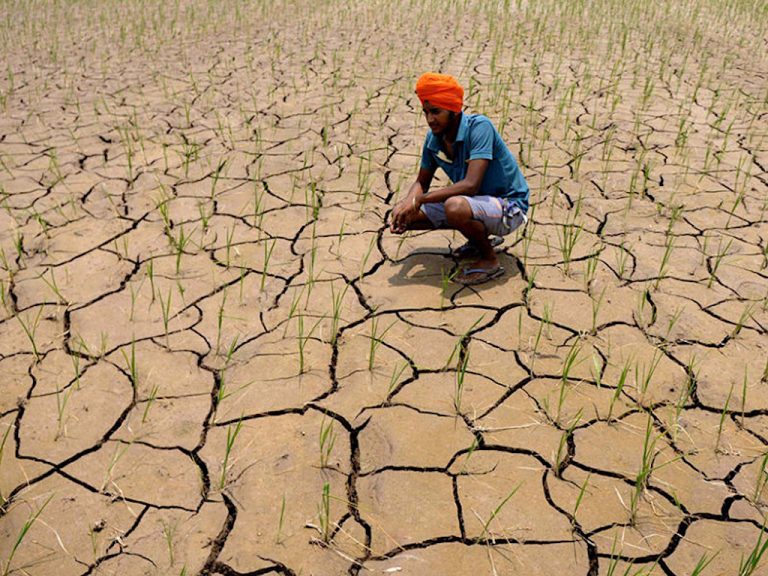
Given its current rate of extraction of water, its already depleting groundwater reserves and a lack of overarching government policies to address the issue of shrinking water resources, experts believe that a dystopian future lies ahead as Punjab would soon turn into a desert.

Heeding to the grievous situation in Punjab, the government had suggested the farmers in the state to diversify their crop produce and reduce their dependence on water-guzzling crops. Through crop diversification and the Direct Seeding of Rice(DSR) technique introduced this year, Punjab has made reasonable progress in saving its water reserves. However, experts believe that such efforts are far from sufficient, and only sustained, comprehensive and concerted efforts over longer durations of time would help Punjab reach sustainability level groundwater.