Home Blog Page 5092

People who think govt control of temples will rid them of inter-jati conflict assume that a pro-Hindu govt will always be in power

There has been a systematic destruction of the Hindu way of life by attacking the institutions that are at the core of Dharmic religious and philosophical thought. In turn, this has created a fertile ground for the Abrahamic religions to slowly creep up on to the various susceptible populations, aided by the govt led destruction of temples and their resources. Eating away at the various activities that were originally a part of the temple’s aegis of functioning. Viewing it through the single lenses of govt control, though, does not do justice to the various other aspects of society within which these temples are situated. One such is the jati-varna system. 

A number of artisan jatis were originally associated with a wide plethora of activities that were a part of the temple ecosystem and economy. Eventually, as these activities got eaten away at and the temples became poorer because of the govt sucking away their funds, these jatis moved away from artisanry, cultivation and ritualistic activities that they were involved in.

Eventually, as landholding patterns changed and the numerically significant castes could exert their hegemony through the democratic process, the ever-present inter-jati competition assumed new proportions. What earlier was a more or less horizontal stratification with immense fluidity of movement of various castes depending on the changing power, society and economy of the times have now more or less coalesced around the control over material resources, we see its impact in the sugarcane lobbies of Marathwada and West UP. This has also been witnessed recently in the demand for reservations in govt jobs and colleges. This inter jati competition is not alien to the Indic civilisation nor it is the bane of it as claimed by left-wing historians.

Firstly, this inter jati competition has also been a very important positive contributor to the resurgence of Dharmic movement across the country, as witnessed in recent years these politically mobile cultivator castes have provided the cadre and electoral base for India’s political shift to right. The one umbrella under which these disparate jatis have united themselves is the umbrella of Dharma. This has been witnessed particularly in Ram Janmabhoomi movement where mobilisation occurred from all jatis from all parts of India.

This has also been a hallmark of ground-based temple movements wherein the local stakeholders belonging to castes directly associated with the temple and formed a large chunk of the temple devotee base were among the ones to most aggressively fight for deity’s rights (like in Sabarimala where the local vanavasi tribal communities and Nairs served as the guardians of the traditions of the temple after the controversial Supreme Court verdict). If anything, inter jati competition, has a major contribution to getting temples back into the hands of traditional stakeholders as these jatis are themselves going to benefit from such an outcome. On the contrary, govt control solely benefits a select section of elite class which has nothing to do with temples or their proper running and management. 

Secondly, the people who work under the assumption that govt control will rid the temple administration of the inter jati conflicts are using a fatuous argument. They are basing their arguments on the logic that a pro-Hindu government with the best interest of deities and devotees will always remain in power, with the best interests of the stakeholders at heart. They not just foolishly underestimate the virulent theologies of Abrahamic religions but also the inroads the thought has already made into the minds of millions of Indians which will take decades to undo. Together this serves as a potent combination to threaten gains made even under an avowedly right-wing government.

Thirdly, the best way to undermine the surviving local stakeholders and their traditions is to suffocate them under govt control. While govt control might somehow (assuming best interests) control the inter jati conflict for the control of such temples (assuming such a conflict exists for temple control), it will ensure that even the temples under care and control of SC/ST/OBC communities will end up being run by appointees of the ruling governments.

Madurai veeran temples are almost entirely managed and run by the SC/ST/OBC communities, same is the case with Draupadi temples, control over which is mostly in the hands of Vanniyar community in Tamilnadu. The state governments are controlled by lobbies and interests which invariably are linked to the dominant castes of that region. Alienating local castes from organically developed traditional temple administration mechanisms will ensure that they are pushed further into the clutches of Abrahamic thought. This will be “legitimate” as it will be through “democratic institutions” but the steps will be as undemocratic as the process has become. 

Fourthly, a lot of drama around the control of temples by these dominant castes did not exist in the first place and was fanned by political parties who wanted to both gain control of temples through their own functionaries and wished to whip jati pride for electoral gains. Chamundeshwari Temple in Karnataka is a prime example of this politicking by major players for control over temples.

Chamundeshwari was a private temple of the royal family that the govt had absolutely no right entering into but wanted to do so for its own benefit. Postulating that govt control is a solution to protect temples from such inter jati conflicts is like saying that these political parties will somehow become altruistic, ideal versions of themselves as soon as they come to power. 

There must be a realisation that vouching for govt control is a slippery slope, rather a government with the best interest of Dharma at heart would ensure that the credible and long term mechanisms are built to ensure that the temples are returned to their traditional stakeholders under traditional management structures.

It might seem difficult for a cash strapped govt to refrain from utilising temple funds to bail itself out, or to generate revenues for itself through illegitimate means through the control of such temples and later use seemingly legitimate but ill-founded arguments to attempt so (like inter jati competition and such). 

It is nevertheless important for a Dharmic resurgence to ensure that the diversity of temple management institutions and legitimate stakes of the local devotees are upheld. Shri Krishna Janmbhoomi Trust borne through the efforts of Shri Madan Mohan Malviya and a group of philanthropists provides a template as to how to establish such institutions where there is a gap of such, it would be beneficial for all if such relatively modern mechanisms are studied in conjunction with traditional means of ensuring the rights of all stakeholders. 

(This article has been written by Anjali George. She is an activist, writer and a reformer and one of the pioneers behind the ‘Ready To Wait’ movement, that was launched to ascertain the rights of the indigenous women in opposition to a politically motivated attack on the tradition of Sabarimala temple. She serves on the Board of Frankfurt City’s Council of religions, Indic Collective, and Shaktitva foundation. She is also the chairperson of People for Dharma)

Shah Faesal steps down as president of political party he founded, could return to administrative services

Shah Faesal, who had floated the Jammu and Kashmir Peoples Movement (JKPM) with perennial protester Shehla Rashid, has stepped down as the president of the fledgling organisation. Furthermore, there is speculation that he will head back to the administration after he was informed that his resignation has not yet been accepted.

“State Executive Committee of J&K Peoples Movement (JKPM) in an online meeting today discussed the ongoing political developments in the state. In the said meeting, the request of Dr. Shah Faesal to spare him from the organisational responsibilities was discussed. Dr Shah Faesal had informed State Executive Members that he is not in a position to continue with political activities and wants to be freed from the responsibilities of the organisation,” a statement issued by the party said.

“On this occasion, Dr Shah Faesal’s contribution as a well-wisher of the people of J&K was recalled and best wishes were accorded to him. It was further unanimously decided to appoint current Vice President Feroze Peerzada as President for the party in the interim till formal elections can be held for the post of President,” it added.

Feroze Peerzada said he is not aware what Shah Faesal has planned for his future. “We don’t know what exactly he will do. He has been talking about going for studies to the United States. There are also reports of his joining back the administration. We don’t know exactly as of now,” he stated.

Earlier, it was reported that Shah Faesal has been informed by authorities that his resignation has not been accepted. He was made a part of the IAS cadre in Jammu & Kashmir after he had topped the civil services in 2010. In 2018, he had left for the USA to pursue further studies in the USA and following his return, he had established the JKPM.

It is not clear whether he will join the administration. Intriguingly enough, it has been suggested in the past that Shah Faesal is NSA Ajit Doval’s asset to create a ‘managed opposition’. Swati Chaturvedi and others have hinted at the possibility that the former bureaucrat is an Indian government asset.

However, we had said that it was unlikely to be so because of a variety of reasons and that Swati Chaturvedi and others were playing right into Home Minister Amit Shah and Ajit Doval’s hands by creating confusion in the minds of people. The decision to step down as the president of the JKPM does appear to hint that Shah Faesal has never been Doval’s asset.

DU Professor Apoorvanand mastermind behind the Delhi riots conspiracy, says Delhi riots accused Gulfisha

A shocking revelation has come to the fore with regard to the Delhi riots that erupted in the national capital earlier this year. An accused, Gulfisha alias Gul, who has been arrested under Unlawful Activities Prevention Act (UAPA), has made a big disclosure about the Delhi riots. Zee News reports that according to Gulfisha, Delhi University professor Apoorvanand has been the mastermind behind the conspiracy to incite riots in Delhi. A Burqa-clad Khwateen team had been prepared for the riots. Gulfisha claimed that Apoorvanand had issued them an advance heads-up presaging riots.

Furthermore, Gulfisha also added that Professor Apoorvanand also lavished praises on the students after riots ensued in the national capital. However, he asked them to not name him or the ‘Pinjra Tod’ group if they are caught by the police for stoking riots. The professor had sent us a message for the riots, following which we were asked to collect stones, empty bottles, acid, knives and the Khwateen members were asked to stuff dry red chillies, Gulfisha said.

Riots were incited to portray Indian government as anti-Muslim

She also said that Professor Apoorvanand told them that the Jamia Coordination Committee(JCC) was going to organise a movement at 20-25 places across Delhi and the purpose of the movement to portray the Indian government as an oppressive regime that discriminates against the Muslims. “This will only happen if riots take place under the guise of the protests,” Gulfisha quoted Professor Apoorvanand.

The report further states that Gulfisha had created two separate WhatsApp groups for the riots through which the riots were planned. She added that she would wear a burqa and go to lanes and bylanes and convince women and children to come to the anti-CAA and anti-NRC protests. She said that the reason to bring in women was that if police forcibly picks them up then it will create a huge scene like Shaheen Bagh.

Umar Khalid played central role in coordinating Delhi riots conspiracy between different organisations

Regarding Umar Khalid’s role in Delhi riots, Gulfisha said, “We had clandestine meetings with Professor Apoorvanand, Umar Khalid and Digar members. Umar Khalid told us that he had good relations with PFI and JCC. There is no shortage of money. With their help, we will overthrow the Modi government. Umar Khalid treated Professor Apoorvanand as his father.”

Zee News report further states that Gulfisha said she came in touch with Pinjra Tod’s Devangana and Paroma Rai through which she got in touch with DU’s Prof Apoorvananad and Rahul Roy. Through Roy she met Umar Khalid. “It was then that Prof Apoorvanand and Rahul Roy explained to us that we can bring the government on its knees by protesting under the guise of citizenship laws,” she said.

She added that from JCC members helped them in protests in all the forms. “Umar Khalid used to give us money and give provocative speeches to get people to join the protests,” she adds.

Uttar Pradesh: Nadeem and Imran kidnap, rape Dalit girl in auto, injured in a police encounter

0

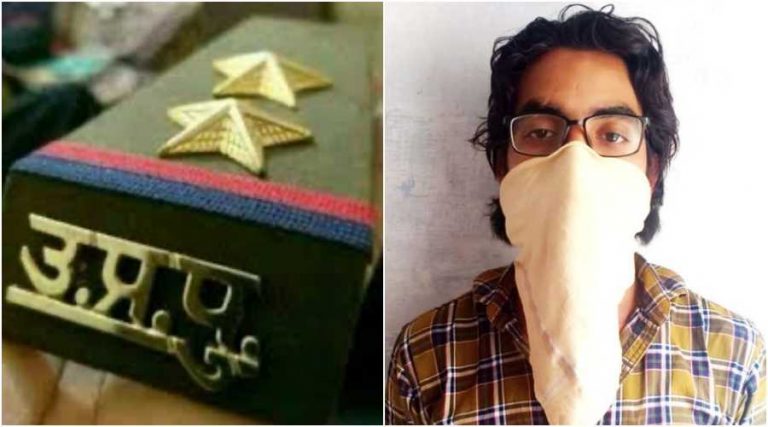
On the night of August 4, a 19-year-old Dalit girl was raped by two persons named Nadeem and Imran in Greater Noida, reported Swarajya. The victim was rescued only after an encounter between the cops and the perpetrators.

As per the report, the girl who hails from Hathras in Uttar Pradesh had boarded an autorickshaw at 11 pm on August 4 from Surajpur to Pari Chowk in Greater Noida. She had planned to board a bus to Agra. When she took the said autorickshaw, the victim saw a man sitting beside the driver. During the journey, she dozed off but woke up to realise that she was being taken somewhere far from her actual destination. Reportedly, she asked the driver to stop the vehicle but it was in vain. The man sitting next to the driver threatened the victim at gunpoint and then raped her.

Encounter with the police

Following the assault, the duo then tied the hands and feet of the girl while she screamed for help. Reportedly, her cry reached a patrolling police vehicle which then chased the auto-rickshaw. The SHO of Knowledge Park police station, Varun Panwar, had directed the vehicle to stop but it did not. Leaving the victim behind, the duo got out of their vehicle and open fired at the police. Reportedly, they shouted, “maaro saalon ko police wale hain (kill the cops)” and fired shots at thee police. This resulted in an encounter with the police, during which the perpetrators were shot in the leg.

The Uttar Pradesh police had also released a video, following the bloody encounter with the perpetrators. In the said video, the duo could be seen limping and were being escorted to the police van. According to Shalabh Mani Tripathi who serves as the press advisor to UP CM Yogi Adityanath, both Nadeem and Imran could be rendered disabled for life. Reportedly, Nadeem had been a history-sheeter and was earlier booked for molesting women in the Greater Noida area.

Details of the FIR

The accused were arrested and their autorickshaw (number UP16BT7180) was seized. Two pistol and cartridges were also recovered. Reportedly, four First Information Reports (FIRs) were registered on the basis of the statement of Panwar. According to FIR Number 241, the accused had been marked as ‘unidentified’ and booked under Indian Penal Code (IPC) Sections 342 (punishment for wrongful confinement), 376 (rape), and the SC/ST act. Another FIR (number 242) identified the accused as Nadeem and Imran. They were booked under the Indian Penal Code (IPC) Section 307 (attempt to murder).

FIR Number 241 (Courtesy: Swarajya)
FIR Number 242 (Image Courtesy: Swarajya)

Two other FIRs (243 and 244) were registered against the duo under Section 25 (possession of firearms) and Section 27 (illegal use of firearms) of the Arms Act.

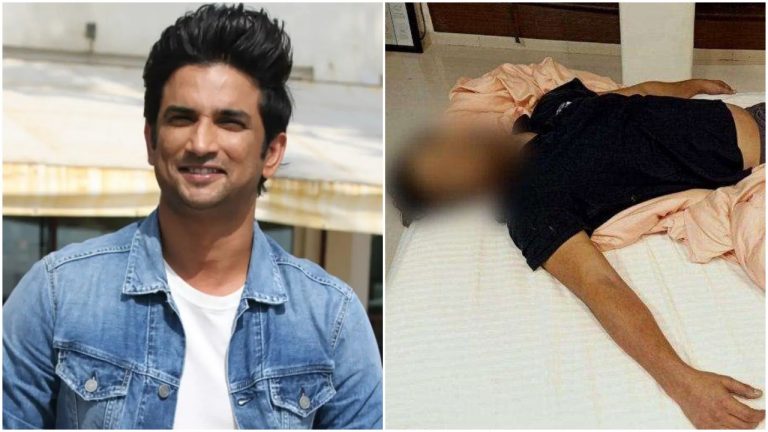
After requesting CBI inquiry in Sushant Singh Rajput death case, Rhea Chakraborty objects to the same, invokes Bihar elections

Bollywood entertainer Rhea Chakraborty and her family members arrived at the Enforcement Directorate’s office in Mumbai at 11 AM today for questioning in an alleged money laundering case linked to the death of her friend and actor Sushant Singh Rajput. Soon after, the actor moved the Supreme Court with a fresh plea alleging “unfair” media trial and attempts to pronounce her guilty for the actor Sushant Singh Rajput’s death.

Rhea Chakraborty, who had once stressed on a CBI inquiry into the untimely death of Sushan, is now seen objecting to the CBI inquiry and calling the investigative agency, on which she had then placed her trust, discriminatory. She alleged that CBI, who otherwise does not bother to investigate financial scams of thousands of crores, has, in a drop of a hat, registered a case against her, even without there being a jurisdiction in the foundational case, and is falsely trying to implicate her.

Rhea, flustered with her name appearing in the inquiry, goes on to invoke the Bihar elections, insinuating that the death case of Sushant was being isolated and blown out of proportion since the death of Sushant Singh, who hailed from Bihar, unfortunately occurred just in wake of elections in Bihar.

Calling out the media reports, the Bollywood entertainer furthered that “Media had convicted accused in 2G and Talwar case in similar fashion where each and every accused was later on found innocent by the Courts”.

In her bewilderment, Rhea Chakraborty forgets that the CBI, to whom she had attributed adjectives like “illegal” and “against the notion of Federalism” and now calls discriminatory, is the same investigative agency she had counted on, a month after actor Sushant Singh Rajput’s death on June 14.

Rhea Chakraborty demand CBI probe in Sushant Singh Rajput’s death case

The struggling actor had taken to Twitter on July 16 to demand a CBI probe into the case.

Rhea Chakraborty’s old Tweet demanding a CBI probe in Sushant Singh’s death case

Tweeting to Home Minister Amit Shah, Rhea had said that it had been over a month since Sushant Singh Rajput’s death and requested for a CBI inquiry. “I am Sushant Singh Rajput’s girlfriend Rhea Chakraborty, it is now over a month since his sudden demise. I have complete faith in government, however, in the interest of justice, I request you with folded hands to initiate a CBI inquiry,” Rhea tweeted on July 16. She further added, “I only want to understand what pressures, promoted Sushant to take this step (of alleged suicide),” she tweeted.

Indians, how they get ‘secularism’ so horribly wrong and how the atmosphere changed after Islam and Christianity entered India

Indians are generally highly intelligent. Yet when it comes to secularism, most intellectuals, media and politicians get the concept wrong, so wrong that it looks as if Indians were purposely fed wrong information.

Contrary to the general perception in India, ‘secular’ is not the opposite of communal. Communal as such is not objectionable. It means ‘pertaining to a community’. In Germany, elections to local bodies are called “communal elections” (Kommunalwahlen). 

‘Secular’ means worldly and is opposed to religious. ‘Religious’ in this context referred to Christianity, to an organized, dogmatic religion that claims that it is the sole keeper of the Truth, which all must believe blindly. 

What is this revealed truth? In short: the human being is born in sin, which dates back to Adam and Eve. But fortunately, some 2000 years ago, God had mercy on humanity and sent his only son Jesus Christ to earth to redeem us by dying for our sins on the cross, then rising from the dead and going back to his father up in heaven. However to be able to get the benefit of Jesus’ sacrifice, one must be baptized and become a member of the Church, otherwise, one will be singled out for eternal hell on Judgment Day.

Understandably, such claims did not appeal to those who used their intelligence, but for many centuries they had to keep quiet or risk their lives.  The reason was that for long the Church was intertwined with the state, and harsh laws made sure that people did not question the ‘revealed truth’. Heresy was punished with torture and death. Even in faraway Goa, after Francis Xavier called the Inquisition to this colony, unspeakable brutality was committed against Indians. In many Muslim countries till today, leaving Islam is punishable by death, as both these religions insist on one belief, the one which is in their holy book.

Significantly, those centuries, when Church and State were intertwined, when the clergy prospered and the faithful sheep suffered are called the dark ages. And the time when the Church was forced to loosen its grip, is called the era of enlightenment, which started only some 350 years ago. Incidentally, India had a hand in it. When Indian knowledge reached Europe, it fostered greatly scientific progress, and this played a crucial role in curbing the influence of the Church. 

Now the idea that reason, and not blind belief in one ‘revealed truth’, should guide society, took root in Europe and this lead to the demand for separation between State and Church. Such separation is called secularism.

Today, most western democracies are secular, though many still grant Christianity preferential treatment. For example in Germany, the Constitution guarantees that the Christian doctrine is taught in government schools. Nevertheless, the present situation is a huge improvement over the dark ages. 

In India, however, the situation was different. Here, the dominant faith of the Indian people never demanded blind belief in an unreasonable doctrine. Their faith was based on insights of the Rishis and on reason, intuition and direct experience and involved a long tradition over many thousands of years. It expressed itself in a multitude of ways. Plurality is the hallmark. It allows the one Brahman, the cause for the universe, be worshipped in the forms of many deities who are ultimately all one with Brahman. Their faith was about trust, devotion and reverence for the One Source of all life. It was about doing the right thing at the right time according to one’s conscience. It was about the Golden Rule: not to do to others what one does not want to be done to oneself. It was about having noble thoughts, about how to live life in an ideal way. It was about Satya and Dharma. 

However, this open atmosphere changed when Islam and Christianity entered India. Indians, who good-naturedly considered the whole world as a family, were despised, ridiculed and even killed in big numbers only because they were ‘Hindus’ (which is basically a geographical term). Indians did not realise that dogmatic religions were very different from their own, ancient Dharma and that pluralism was not allowed. For the first time, they were confronted with merciless killing in the name of God/ Allah. 

During Muslim rule, Hindus had to lie low for fear of their lives, and during British rule, they were ridiculed and cut off from their precious Sanskrit tradition with the help of ‘education’ policies. Naturally, this took a toll on their self-esteem. Till today, this low self-esteem is evident, especially in the English educated class. Nevertheless, it is a great achievement and testimony of the fighting spirit of Indians that Hindu Dharma survived for so many centuries under foreign occupation, whereas the west succumbed completely to Christianity and over 50 countries to Islam in a short span of time.

Coming back to secularism. Though Hindu Dharma survived and never dictated terms to its followers nor to the state, ‘secular’ was added to the Constitution of India in 1976. Maybe, because after Independence Muslim and Christian representatives had pushed for special civil laws and other benefits and got them, which is against secularism.

However, even after adding ‘secular’, the government seemed eager to benefit specifically the dogmatic religions, which secularism is meant to counter. 

Why would ‘secular’ be added to the Constitution and then not acted upon? It’s a mystery. But over time, most Indians came to understand by ‘secular’ the complete opposite of what it means. They believe that secularism means fostering Christianity and Islam, both of which have no respect for Hindus and whose divisive dogmas condemn all Hindus to eternal hell. 

Media and politicians helped to muddy the water. They called parties that represent a religious group, ‘secular’, instead of ‘religious’. When the state gave in to demands by Christianity and Islam, it was called ‘secular’. WHY did the government do this? 

It is an absurdity. Can you imagine the Jews honouring the Germans with preferential treatment instead of seeking compensation for the millions of Jews killed? Yet Islam and Christianity that have gravely harmed Indians over centuries got preferential treatment by the Indian state, and India’s own beneficial, plural dharma that has no other home except India, is pushed into a corner. And to top it all, this is called ‘secular’!

Obviously Indians have not learnt from the European experience during the dark ages. Hindus have not yet realized that the dogmatic religions really want to put the mind of all humans into a strait jacket. They say it openly: “We alone have the full truth. All must accept it.”

It is surely wise for the state to ignore demands by the dogmatic religions which insist on blind belief in unverifiable, unreasonable and divisive dogmas, and which foster only their own members.

 Yet this advice does not apply to Dharma.

It would be a disaster if the state would also ignore Dharma and become a-dharmic. Dharma is the backbone of a harmonious society. It needs to flourish, needs to be taught to children. And of course politicians, too, need to follow dharma, need to follow their innate knowledge about what is the right thing to do. When this happens, India has a great chance to become again the famed golden bird and the Guru of the world.

Meet Kanta Murti, the woman who guarded a manhole and saved hundreds of lives as heavy rains flooded Mumbai

As torrential rains in Mumbai continues to pummel the financial capital of the country, inundating various parts of the city, Kanta Murti, a 50-year-old pavement dweller took it upon herself to avert the dangers emanating from the rising levels of water in the Matunga suburb of the city.

Realising that the water levels in Matunga were crossing dangerous mark, Murti forced open a manhole on Tulsi Pipe Road in Matunga West to let out the flowing waters to recede. However, while all her savings and tent were washed away in the rolling rains, she stood there for 7 hours to warn the motorists and vehicles about the open manhole. The video of Murti’s bravery had gone viral on the Internet.

Kala, along with her fellow footpath dwellers spent an anxious night on August 3 as the water continued to touch alarming levels. By next morning, the road and the footpath were deluged in more than 3 ft of water. A few motorbikes that were parked on the road had begun to float away. Worried that BMC would not turn up to drain the water, Kanta herself opened the manhole and stood there guarding it to warn the oncoming motorists.

Speaking to the media, Kanta said, “I wrenched open the manhole drain water & stood there to warn vehicles. BMC officials came later and chided me for it.”

Kanta lives on footpath and sells flowers to support education of her three daughters. Her five other kids are married and she is the sole bread-winner of her family. Kanta’s husband is differently-abled after being paralysed in a tragic railway accident.

Did you know? 1962 Sino-India war could have been avoided had former PM Nehru paid heed to professional military advice

Almost six decades ago, on October 20, 1962, China had attacked India. Provoked by a territorial dispute and tensions over Tibet, the war was short and India lost to China. India’s belief that it can never be attacked by China did not let the Indian army prepare, and the result was the standoff between 10,000-20,000 Indian troops and 80,000 Chinese troops. The 1962 Sino-India war continued for about a month and ended on November 21, 1962, and China emerging victorious.

This is a historical truth that the then Congress government led by former PM Jawaharlal Nehru and his defence minister VK Krishna Menon had fallen short of expectations in their dealings during the 1962 war with China, leading to the debacle. It is said that Army warned then Defence Minister Krishna Menon in 1961 about the need to prepare for a Chinese invasion. However, the warning fell into deaf ears and the follies made by the then Congress government left a deep-seated scar on the history of India, as explained in a 2012 article by India Today journalist Gaurav Sawant.

Jawaharlal Nehru warned of a possible attack by China, almost two and a half years before the 1962 Sino-India war

Shockingly, the then government, led by Jawaharlal Nehru, was warned of a possible attack by China, almost two and a half years before the first wave of Chinese troops overran the border in 1962, but Nehru and the then defence minister Krishna Menon, did not feel the need to take professional military advice, and the result was that India suffered its worst-ever defeat during the Indo-China conflict in 1962.

Author and journalist Gaurav C. Sawant in his report in Mail Today in 2012 wrote how, the Army commander had tried to warn of possible Chinese attacks in the coming years, which the then Congress government led by former PM Jawaharlal Nehru had ignored, costing India dearly.

SSP Thorat predicted China’s attack to which Nehru turned a deaf ear

As per the article by Gaurav Sawant, on March 17, 1960, Lt Gen SPP Thorat, commanding the Eastern Command, had conducted a military exercise that accurately predicted the timing and nature of a possible Chinese attack.  

The report had warned about possible Chinese attacks in the coming years, image via Daily Mail UK

SPP Thorat wrote an assessment after a year-long study of the Chinese build-up across the McMahon Line. In his report, Thorat had said that the Sino-Indian ties, that had remained friendly in the past, had undergone a considerable change.

“This is primarily due to the claim made by China upon large territories which are clearly ours. She (China) has also refused to recognise the McMahon Line as the international boundary and has made deliberate incursions into our territory in Ladakh, Uttar Pradesh and NEFA (NorthEast Frontier Agency, now Arunachal Pradesh)… We are required to resist to the full and evict any further incursions by China. This requires us to be fully prepared to undertake immediate military action…” his assessment said.

Gen Thorat’s ‘Exercise Lal Qila’, conducted in Lucknow on March 17, 1960, was perhaps the most detailed military drill carried out, writes Sawant. Thorat knew that the Chinese would attack. He made detailed studies of Intelligence Bureau (IB) reports, the terrain, the time taken by Chinese troops to cover distances and their preparations to accurately predict a Chinese attack.

The then Army commander Gen Thorat’s secret report a predicting Chinese attack, image via Dailymail UK

He wrote in his assessment report: “The task was to defend our territory and that of Sikkim against aggression from Pakistan and China and be prepared to give military assistance to Nepal and maintain law and order in the Naga Hills and Tuensang Agency (NHTA).”

The former director-general of infantry, then a young captain, Lt-Gen Guru Bakshi, said: “In 1959, we as young officers were addressed by Gen. Thimayya. The impression we got was that the government, especially then defence minister VK Krishna Menon, was not interested in professional military advice. Gen. Thimayya had red flagged the Chinese build-up. The civilian leadership was not listening.”

Lt-Gen Shantanu Chowdhary, the former vice-chief of army staff, said: “Sadly, there was a lack of coordination between the top military and political leadership. Had effective preparations been done, when Lt-Gen Thorat warned, the situation would have been very different.”

Reportedly, Gen Thorat had also batted for the utilisation of the air force in an offensive role during the 1962 Sino-India conflict, but the Nehru government had not paid heed to the suggestion.

Recently, Air Chief Marshal NAK Browne also said that had air power been used then, the results of the war would have been different.

Author and military historian Kunal Varma said: “Then defence minister was not convinced that China would attack India. (Then PM) Nehru went with his view and the rest is history. Had Lt-Gen Thorat’s report been taken in the right spirit, India would have been better prepared.”

Air Marshal Denzil Keelor’s video

In fact, in June this year, a video had resurfaced on the internet amidst the ongoing debate over the historical blunders committed by the Congress party, especially during the Nehruvian era, revealing how India under the leadership of the country’s first Prime Minister Jawaharlal Nehru lost strategic areas due to the follies committed by him.

In the video, Air Marshal Denzil Keelor (Retd.) was heard speaking about the 1962 India-China war, stating that India lost the war to China because of Jawaharlal Nehru’s failure. He said that Nehru has then relied on diplomacy and ignored the armed forces, because of which India lost.

Had Jawaharlal Nehru paid attention to the detailed studies in 1960, India’s defeat at the hands of the Chinese could have been avoided. Keelor had stated that at the time of the war, Indian Army’s soldiers did not even have proper woollen clothing to face the weather and the difficult terrain of the Himalayas.

Jawaharlal Nehru viewed the army with suspicion. He did not, ever, pay attention to his army’s submissions and did little to strengthen or bolster the army. There have also been reports that Nehru and his defence minister VK Krishna Menon had then insidiously conspired to discredit General Thimayya (Chief of Army Staff from 1957 to 1961, who ahead of the 1962 Indo-China War), setting in motion a chain of events that contributed to India’s defeat in the Himalayas.

Jaane kahaan gaye woh bots: The story of how Congress lost their ‘winning edge’ online

The Congress party and its IT Cell has embarked on a novel initiative on Twitter. After losing a poll conducted by India Today on the social media platform, they have resorted to making allegations that the BJP employed bots to tilt the poll in its favour. The poll asked people on social media who their preferred candidate for the office of Prime Minister was.

Poll by India Today

Along expected lines, Narendra Modi won the poll comprehensively. However, Congress supporters and IT Cell accounts on the platform accused the BJP of winning the poll using bots. It is, of course, a bewildering allegation given that the poll results are consistent with every opinion poll that has been conducted over the past six years and the results of the 2019 General Elections proved abundantly which politician was the more preferred candidate for Prime Minister.

The Congress party, however, decided the best course of action was to claim that the BJP had won the Twitter Poll using bots and somehow, the IT Cell managed to link it to EVM machines. The Congress party’s shenanigans involving EVMs are well known but using the results of a Twitter poll to rake up its conspiracy theories of EVM manipulation is indeed a bit of a stretch.

Saral Patel is the National Convener of Congress Social Media Department

Consistent with the narrative planted by Saral Patel, Congress supporters claimed that the results of the Twitter poll is clear evidence that the BJP won the elections through EVM manipulation.

Congress supporters are not taking Twitter poll defeats sportingly

Others are asking people to ‘imagine’ the extent of EVM manipulations in the country given that the Twitter poll was allegedly manipulated by the BJP with bots. It is ridiculous, of course, but the mere fact that we are even discussing this issue shows that the Congress party has long since distanced itself from the last remaining bits of its sanity.

Source: Twitter

While one would expect someone from the Congress party to step in and put an end to the madness, it is clearly not happening. They are receiving great praises for suffering an apocalyptic meltdown over a defeat in a Twitter poll. One cannot be sure whether Rahul Gandhi was this dejected after leading Congress to debacle in two consecutive Lok Sabha Elections.

Source: Twitter

One cannot be sure whether the Congress party actually believes these lies or if they know these are not truths but are lying anyway. It’s hard to say which one is worse precisely.

Source: Twitter

There is a much easier explanation for this that does not require anyone to put their faith in delusions. The India Today poll was circulated widely on social media as is evident from the number of retweets it received on Twitter. It is quite possible that Rahul Gandhi was leading at some point during the polling but that was before supporters of the Prime Minister took notice of the poll.

After Modi supporters saw that Rahul Gandhi was leading, they voted in the poll and circulated it among their own friends. Accounts with huge follower counts surely quote-tweeted the poll and asked their followers to vote as well. All of this can happen very quickly and within a couple of hours, the whole scenario can easily change.

Furthermore, it is only to be expected that the politician who enjoys a far greater popularity across the country will also enjoy greater popularity on social media. Online poll victories for the more popular politician is not surprising. Nonetheless, there is an interesting story to be told here. The Congress party, which is accusing the BJP of using bots, is known to have used bots in the past to counter the social media dominance of the BJP.

In October 2017, the party’s bid to relaunch Rahul Gandhi was aided by a horde of Russian, Kazhak and Indonesian bots. With help from these bot accounts, the Congress party witnessed a massive surge in its social media activity. If one were not aware of what was actually happening, he or she must have thought that the Congress party was gaining in popularity.

The mainstream media, again, true to its nature, hyped up Rahul Gandhi and claimed that the Congress party was ‘finally getting its act together’. Thus, the party which crafted a narrative of its resurgence using bot accounts is accusing the BJP of employing bots and somehow linking it to EVM manipulation. Intriguing, certainly.

Not merely bots, ‘fake girls’ could also be seen on social media aiding attempts to relaunch Rahul Gandhi. There was enough evidence to indicate that the Congress party was using pictures of random girls on the internet in order to increase the fan following of the scion of the Nehru-Gandhi dynasty.

Thus, for the Congress party to accuse the BJP of using bots to win Twitter polls appears a bit ridiculous given its own conduct in the past. Furthermore, its attempt to cast aspersions on the legitimacy of the 2019 General Election results on the basis of the results of an online reveals the intellectual bankruptcy that has gripped the party.

Contrary to the allegations made by the Congress party, it is, of course, infinitely more likely that the Congress party is not winning the online polls because it is not employing as many bots as they used to. Under any circumstance, it is preposterous to claim that the BJP is using bots on Twitter to show Narendra Modi is more popular than Rahul Gandhi.

The far likelier scenario is that without national level elections anytime soon and campaigning for the Assembly Elections disrupted by the Coronavirus crisis, the Congress party is not investing in bots as much as they did prior to the Lok Sabha elections. And in the absence of bots, their online popularity has taken a heavy drubbing.

‘Human rights activist’ Aakar Patel incites Muslims to demand separate electorates, a demand that was rejected by the Constituent Assembly of India: Read details

Former head of Amnesty India, which claims to be a humanitarian organisation, Aakar Patel, has decided it is time for him channel the spirit of Mohammed Ali Jinnah and make an elaborate defence for the creation of Pakistan. During an elaborate meltdown on micro-blogging site Twitter, Aakar Patel said it was time for Muslims in India to demand proportional representation in the Parliament and elected bodies.

Aakar Patel whitewashed the real reasons behind the creation of Pakistan and claimed that partition occurred because the Congress at the time refused to accede to the ‘legitimate’ Muslims demand for proportional representation. He claimed that Independent India has proved Jinnah correct. Thus, the ‘humanitarian activist’ blames Hindus for the Muslim demand to establish a separate Islamic state.

Source: Twitter

Aakar Patel also said that Indian Muslims should demand proportional representation. A ‘proportional representation’ would mean that a certain number of seats in elected bodies would be reserved for Muslims. Some individuals also take it to mean that a certain number of positions within the bureaucracy and the Army should be reserved for Muslims.

Source: Twitter

The activist also said that he does not agree with a ‘soft approach’ and insisted that a constitutional change from political parties on proportional representation is the minimum that Indian Muslims should accept.

Source: Twitter

While inciting Indian Muslims to demand reserved seats or separate electorates, Aakar Patel insisted that the “Hindu Rashtra will not concede rights”, implying that it is a legitimate demand.

Source: Twitter

The activist also made an ardent defence of Jinnah, the Jihadist who called for a ‘Direct Action Day’ that directly led to the massacre of Hindus. He said that Jinnag was a ‘South Bombay Gujju’ and more ‘urbane’ than the average Indian, as if that excused his Jihadist inclinations.

Source: Twitter

Quite conveniently, for a person who belongs to the coterie of individuals that accuses Narendra Modi of working against India’s constitutional valuers, Aakar Patel appears only ever willing to the opinions of the Constituent Assembly on the matter. The issue of separate electorates was discussed by the Constituent Assembly of India, charged with drafting the Constitution, and it was summarily rejected for its communal hues.

Shri R.K.Sidhva said during a debate on the matter, “My Friend, Mr. Muhammad Ismail, while arguing yesterday stated that without separate electorates the Muslims will not get justice and they will not get that representation which they desire. If my Friend, Mr. Muhammad Ismail even at this stage believes in the two-nation theory-communalism-then certainly he will have no place. But there are many persons like Mr. Lari, who told his co-religionists that “even at this stage you are talking of the two-nation theory and separate electorate: please forget all this.””

He also elaborated on why the system of proportional representation will never work in India. He stated, “In a small group this system can be exercised. Besides, those who are acquainted with the system know that proportional representation is cumbersome process and it has to be understood by an intelligent person. Mr. Lari wants to introduce this system in an electorate ranging from 50,000 to a lakh of voters. In Belgium and Switzerland there are hardly a few lakhs of population leave aside the small number of voters in their constituencies. In our country there are 40 crores of people and we have constituencies with voters numbering from 50,000 to a lakh. A system of proportional representation cannot work here. From the material supplied by the Constituent Assembly Office I find that in one country they experimented with this system and they had to revert to the majority ballot box system. In a general election this system can never work.”

Even Jawaharlal Nehru was against separate electorates as he believed it would create enmity between the majority and minority communities. Nehru remarked, “As soon as you get something that can be called political democracy, then this kind of reservation, instead of helping the party to be safeguarded and aided, is likely actually to turn against it. But where there is a third party, or where there is a n autocratic monarch, or some other ruler, it is possible that these safeguards may be good. Perhaps the monarch may play one off against the other or the foreign ruler. But where you are up against a full-blooded democracy, if you seek to give safeguards to minority, and a relatively small minority, you isolate it. May be you protect it to a slight extent, but at what cost? At the cost of isolating it and keeping it away from the main current in which the majority is going.”

“It is a bad thing for any small group or minority to make it appear to the world and to the majority that “we wish to keep apart from you, that we do not trust you, that we look to ourselves and that therefore we want safeguards and other things”,” he added. The strongest words, however, came from from Sardar Vallabhbhai Patel who said, in no uncertain terms, that separate electorates have no place in India.

Sardar Vallabhbhai Patel, who was then the Chairman of the Advisory Committee on Minorities, said, “Those who claim that in this country there are two nations and that there is nothing common between the two, and “that we must have our homeland where we can breather freely”, let them do so. I do not blame them. But those who still have that idea that they have worked for it, that they have got it and therefore they should follow the same path here, to them I respectfully appeal to go and enjoy the fruits of that freedom and to leave us in peace. There is no place here for those who claim separate representation.”

Sardar Vallabhbhai Patel did not stop there. He continued, “For a community to think that its interests are different from that of the country in which it lives, is a great mistake. Assuming that we agreed today to the reservation of seats, I would consider myself to be the greatest enemy of the Muslim community, because of the consequences of that step in a secular and democratic State. Assume that you have separate electorates on a communal basis. Will you ever find a place in any of the Ministers in the Provinces or in the Centre? You have a separate interest. Here is a Ministry or a Government based on joint responsibility, where people who do not trust us, or who do not trust the majority cannot obviously come into the Government itself. Accordingly, you will have no share in the Government. You will exclude yourselves and remain perpetually in a minority.”

It is important to remember that the stalwart of the independence era was speaking at a time when the country had just recently undergone a partition. Quite clearly, he was not willing to tolerate irrational demands from the Muslim community at such a time. It was also clear that the demand for separate electorates was made by only the Muslim community and others such as Jains, Buddhists and Sikhs did not really feel the need for it.

Thus spoke the venerable Patel, “I remember that the gentleman who moved the motion here last time, in August 1947, when asking for separate electorates, I believe, said that the Muslims today were a very strong, well-knit and well-organised minority. Very good. A minority that could force the partition of the country is not a minority at all. Why do you think that you are a minority? If you are a strong, well-knit and well-organised minority, why do you want to claim safeguards, why do you want to claim privileges? It was all right when there was a third party: but that is all over. That dream is a mad dream and it should be forgotten altogether. Never think about that, do not imagine that anybody will come here to hold the scales and manipulate them continuously. All that is gone. So the future of a minority, any minority, is to trust the majority.”

Therefore, the question regarding the issue of separate electorates is one that has already been settled. It was settled during the Constituent Assembly debates itself. Hence, for activists such as Aakar Patel to rake up the issue now is a pathetic attempt to incite Indian Muslims on the promise of mythical carrots that do not exist.

There is absolutely zero chance that separate electorates will be accepted in India without a great deal of bloodshed and communal strife. There was also great consent among the politicians of the independence era that separate electorates fanned the sentiments of separatism which contributed to the formation of Pakistan. That ‘human rights activists’ of 2020 are demanding something that has the potential to unleash an era of unbridled calamity only speaks volumes about where their loyalties lie.