Home Blog Page 5112

Karnataka police books 61 accused under UAPA for involvement in Bengaluru riots

The Karnataka police have invoked the Unlawful Activities (Prevention) Act (UAPA) against the 61 accused in the Bengaluru riots case.

According to the reports, Karnataka police chief Praveen Sood informed Chief Minister BS Yediyurappa that the some of the accused in the riot case have been charged under the stringent provisions of UAPA.

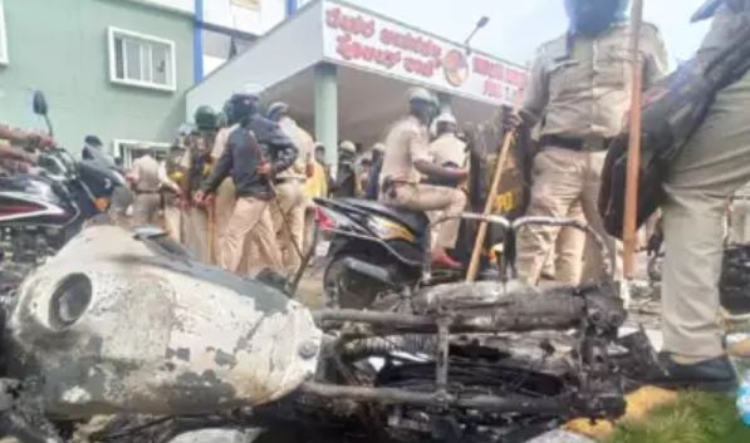
Following the August 11 violence in Bengaluru, unleashed by organised Muslim mobs, more than 400 people were arrested. The Muslim mob had unleashed terror on the streets of Bengaluru and had burnt down two police stations, the home of the Congress MLA as well as several vehicles.

“UAPA has been invoked in the case recently as more facts about the incident have emerged during the investigation,” Kamal Pant, Commissioner of Police said.

The stringent action against the riots accused comes days after the Karnataka government had decided to recover the cost of public and private properties destroyed in the Bengaluru violence last week, from the rioters. 

The state government had informed that it will request the Karnataka High Court to appoint a Claims Commissioner to assess the damage caused to properties in the riots as per the guidelines of the Supreme Court and fix the recovery cost.

Bengaluru Crime Branch questions Congress corporators

A week after the horrific Bengaluru riots, that left four dead and over 60 policemen injured, the Bengaluru Central Crime Branch (CCB) has questioned two Congress corporators, including a former mayor, in connection with the violence.

R Sampath Raj, who is a former mayor and corporator from DG Halli and Pulikeshi Nagar corporator Abdul Rakeeb Zakir was questioned by the Bengaluru police.

Reportedly, the CCB questioned them about the internal differences in the party between MLA Akhanda Srinivasa Murthy and the party’s corporators in his assembly segment ahead of the elections to the city civic body later this year.

Amidst chants of ‘Allah Hu Akbar’ and ‘Nara e Taqbeer’, Muslim mob unleashed violence in Bengaluru

On August 11, a Muslim mob went on a rampage and unleashed brutal violence and arson in Bengaluru over a Facebook post that was allegedly derogatory to Prophet Mohammad. The Muslim mob hit the streets near DJ Halli and KG Halli police station areas on Tuesday evening and attacked a Congress MLA’s house after one of his relatives had allegedly made a derogatory Facebook post.

More than 60 police personnel were injured in the stone-pelting and the subsequent riots unleashed by the irate Muslim mobs. At least 10 vehicles, including Innovas of two DCPs, were damaged in front of the stations. The mob also set fire to the vehicles in front of the DJ Halli police station.

During the pre-planned attack, the Muslim mob, carrying petrol bombs and other weapons, also barged into the nearby police quarters and attacked the premises. The Muslim mob was seen raising Islamic slogans like ‘Allah-hu-Akbar’ and ‘Nara-e-Taqbeer’ outside the police station.

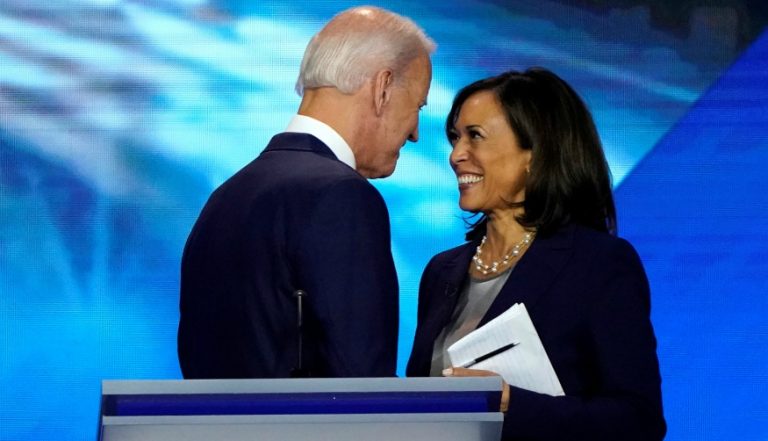
Throwing India to the radicals: Biden, Harris and why India is the perfect target of hate for the American left

Left to his own devices, Joe Biden would have no hostility towards India. I mean, the man is a middle of the road, establishment Democrat from Delaware. He’s not the problem: the problem is his party. Rather, what his party has become.

Let us first establish what we mean by “friend” or “enemy” of India. We should neither expect nor are we entitled to any emotional connection in the common sense of the word. The US President puts the US first. India’s PM puts India first. That’s exactly how it should be. The only reason we can “expect” friendship from the US is because, at the moment, India and the United States share several geopolitical interests.

It does not take very much for a US President right now to be a friend of India. In fact, all that the US President has to do is put American interests first and it will automatically work in India’s favour. That’s why under ordinary circumstances, an establishment Democrat like Biden would have been a “friend” of India — easy peasy.

The only way that could make a US President hostile to India is if they have a specific agenda against us. Which will hurt the US as well. Biden has no such agenda, but his party does. In fact, if I was an American, I would worry whether the current Democrats are even friends of America. India comes much later.

A lot of people are tempted to compare the Democrats to the Indian National Congress. I don’t agree. The Congress is and continues to be, opportunistic. The Congress panders to the ‘secular’ community because they are the last remaining core voters of the Congress. The Congress makes, every now and then, feeble attempts to pander to Hindus.

The Democrats are worse. More dangerous, rather. They have an outright anti-American agenda. The party now runs on twin engines of Islamism and Communism. Folks like Alexandria Ocasio-Cortez are bigger fans of Stalin and Castro than Washington or Jefferson or Lincoln. They genuinely hate America and the American way of liberty. People like Rachida Tlaib or Ilhan Omar despise the United States and everything about it (except its prosperity, which they soak up like parasites). These people would rather lose the election than give up on their anti-American agenda.

The Indian National Congress puts power first. The Democrats put their radical anti-American agenda first.

I should admit this characterization is grossly unfair to the average American Democrat. Why would a hardworking common Democrat bred in California or Oregon or Ohio or New York hate America? They don’t. Rather their party has been hijacked by an anti-American gang.

In fact, I suspect that Biden’s candidature itself is a silent uprising by rank and file Democrats that hardly anyone is talking about. The most vocal and radical elements in the Democrats wanted Stalin’s ghost brought back from the dead and made President of the United States. The ones militating from college campuses and Hamas bases in Palestine.

Meanwhile, the ordinary Democratic voters in the primaries quietly longed for a return of the Obama years. They didn’t like the cruel tone of Trump’s politics. They wanted someone who tinkers with America around the edges: not abolish the country. That’s why Biden is the candidate, Obama’s vice-president.

The problem is that Biden is old and weak. And losing it with every passing day. The fear is that the radical elements in his party will take over. Or at the very least, he has to give them something.

This is where the risk to India comes from. India could be that something that Biden tosses in front of the wolves from the radical wing of his party. To tear apart and devour.

When I express these fears, some people rush to say that India is not that significant to American politics. I would argue that is exactly why I am worried. Because India is a bundle of contradictions that makes it an absolutely perfect target for the Islamist radicals in the Democratic Party.

The contradiction around India is exactly the point. India is not Swaziland or Cameroon that nobody has heard about it. Everyone has heard about India, but almost nobody knows about India.

I dare you to give another example of a country that fits into this strange gap. A country that all Americans have heard about, but know nothing about. Americans have heard of Germany or Brazil but they also know a lot about Germany or Brazil. Americans have never heard of Swaziland and they know nothing about Swaziland.

Only India. They’ve all heard of us. They know nothing about us.

That’s what makes India the perfect target for hate. You take the blank mental space that India already occupies in the mind of every American and fill it up with lies, causing them to hate us. That’s what the New York Times and Washington Post are doing with their relentless propaganda. They are filling up the vacant space with lies.

Indians are easy to demonize. They follow a religion that is completely alien to most Americans. I am really talking about Hindus here. Because we all know anti-India hate is really about anti-Hindu hatred.

What else makes India the perfect target? When people hate, they don’t like to feel like bullies. India is a large and powerful country. That makes it easy to hate India without any sense of guilt.

More about the demography. When thinking about a country, people start with the assumption that the minority is persecuted, not the majority. Hindus are a majority in India. That makes it easy to adapt the standard global rhetoric of majority-minority and demonize the Hindus.

This is where Americans not knowing about India comes in so handy to the left. Americans don’t know that the supposed majority lived in slavery to the minority for 800 years. They don’t know how the majority paid a tax to the minority simply for the right to keep their religion. They don’t know about the destruction of our places of worship, about the cultural genocide of centuries that we faced.

That’s the difference between India and Israel. Everyone knows what the Jewish people have been through. So when someone points out that Israel is a Jewish majority nation, Americans can contextualize that with well known history of anti-Semitism. They can see why Jewish people would need a homeland.

The problem is nobody knows what we Hindus have been through. Nobody understands why Hindus would need a homeland. They just hear about a Hindu majority and assume that the majority would be dominating the minority.

Another thing that makes us easy to demonize is the Indian model of ‘secularism’ and simply the way our constitution is framed. And how it differs from the American model. Tell the Americans that India is giving refuge to Hindus, Buddhists, Sikhs, Jains, etc and they will ask: why is the government making a law with a religious test?

The confusion is understandable. The average American simply does not understand the Indian model of secularism, nor the Indian model of social justice. Americans are taught to believe that the state should not discriminate between people in any way.

But that’s not the Indian model. Our model is “positive discrimination” in thousands of ways. In roughly one-third of panchayats across India, the post of pradhan is reserved for women! Nobody sees this as disenfranchisement of men. Do Americans know this? Do they know that across one-third of India, no male is allowed the most basic democratic right to represent his village?

We Indians just don’t see it that way. We see it as a good thing for empowerment of women.

To give an even more fun example, Yogi Adityanath’s govt has decided that all the jobs at one station on Noida metro will be reserved for transgenders!

An American would find this sort of obvious discrimination unthinkable. But our model is simply different from theirs. So when the New York Times pulls out just one thread of CAA from this vast fabric of thousands of strands of positive discrimination that make up India, Americans think it’s wrong.

They have never seen the rest of the strands. To say nothing of the outright unfair ones, like the government of India controlling all Hindu places of worship.

So let me itemize:

(1) India is far away from America.

(2) It’s major religion is different from everything Americans know.

(3) Nobody knows what the majority in India has historically faced at the hands of the minority.

(4) Our constitutional model is very different from theirs.

(5) We are big enough that you can hate us without feeling like a bully.

(6) AND you get points from the Islamist lobby for hating us.

From the point of view of Biden: India is the perfect target he can throw before the radicals in his party. He has to give them something to use their energy on. A target to tear apart causing minimal damage to the American establishment, which Biden really cares about.

And the choice of Kamala Harris just made it worse. The Democrat case against India had only one weak point. What if white Americans feel like they are being racist when they hate us? Americans are very sensitive to this charge. Now that Harris has a sliver of Indian heritage, they are immune to that accusation as well.

And make no mistake. The Islamist overdrive against India is target practice for their much more difficult target: Israel.

This is a pretty dire picture for India. Is there hope? Maybe.

As I said, I don’t believe the average Democrat hates India. Why would they? It makes no sense. But what do you do then with the radicals in the Democratic party? Radicalism, by its very nature, tends to thrive among those who are not in power. A Democratic President in the White House would have a mellowing effect on radicals in his party. They are the incumbent. They have to keep a grip on themselves. By his core nature, Biden isn’t radical. He is not even close. If he bats out one mellow term in office, it might actually push the Taliban takeover of the Democratic Party back by a generation.

Like I said, excuses to find hope. But straws in the wind, nevertheless.

UK-born Head of Christian Evangelical Mission in Odisha sexually assaulted minor boy in shelter home, arrested

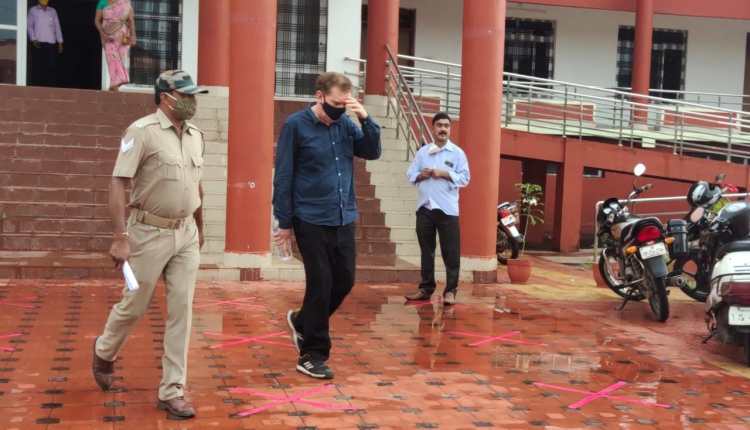
According to reports, Odisha Police have arrested a 68-year-old missionary John Patrick Bridge, founder of Faith Outreach Odisha, who hails from the UK, for sexually assaulting a minor boy at a shelter home. He runs free shelter homes, daycare centres and boarding schools in Jharsuguda, Odisha.

Bridge filed a bail plea in a local court that was rejected. Police have booked him under SC/ST (Prevention of Atrocities) and POCSO Act. According to a report in local daily Pragativadi, Police arrested him after a former inmate filed a complaint against him. The complainant stayed in the shelter in 2015 and was a minor when he was assaulted at the shelter. The district administrator gave the investigation to a senior police official.

Similar cases filed before against Bridge

There are similar charges against Bridge filed previously as well. New Zealand embassy had filed the complaint on behalf of a New Zealand citizen against Bridge.

According to the website of Faith Outreach Odisha, Bridge was born in 1952, and he came to India in 1977. In 1983, he married Delphine Titra Gerson, a Tamil South Indian and established the organization with her. They started as an orphanage that slowly grew into several children’s homes, daycare centres and training centre for volunteer. The couple is using these centres to convert the kids to Christianity. Majority of the kids living in these homes or shelters belong to poor tribal families. He was granted Indian citizenship in 1992.

SC rejects Prashant Bhushan’s plea for sentencing by another bench, Bhushan says wont apologise for tweets

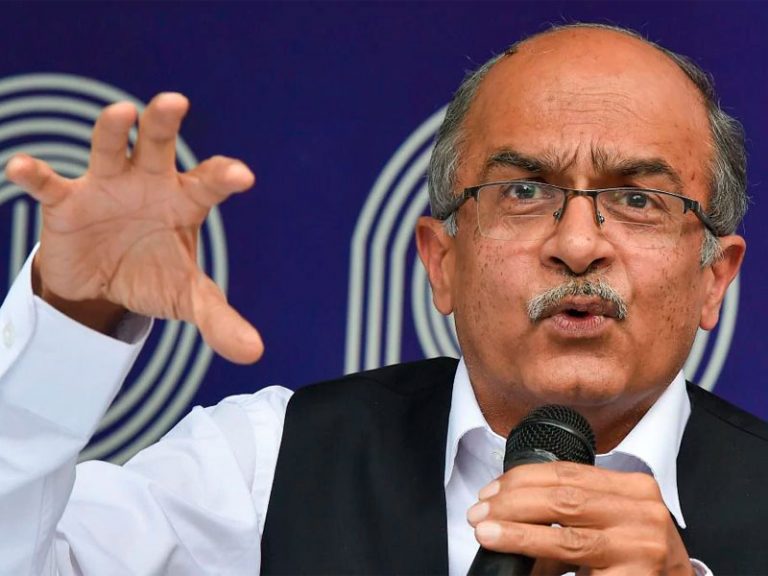
The Supreme Court on Thursday rejected Prashant Bhushan’s plea to review his statement on the quantum of his sentence in two days by another bench. The next hearing of the case may take place on 31st August 2020. Bhushan was held guilty of contempt of court earlier this month.

Bench questioned the delay in filing the review petition

The Supreme Court bench comprising Justice Arun Mishra, Justice Gavai and Justice Murari set 20th August 2020 to pronounce the sentencing verdict. During the hearing of the arguments on sentencing advocate, Dave asked the court to adjourn the hearing of the arguments on sentencing in light of the review petition Bhushan intend to file in the prescribed time. Justice Mishra refused to consider the argument and said it can be filed after the verdict. Justice Mishra added, “Don’t worry, we will be fair to you… Even if you are not fair to us.” Justice Gavai said that it appears to the bench that the review petition will be sought when one of the Judges on the bench has retired.

The SC bench headed by Justice Mishra told Bhushan that if he does not balance his comments, he will destroy the institution and the court does not punish for contempt so easily. “There has to be Lakshman Rekha for everything. Why should you cross the rekha?” Justice Mishra said. He further added that the court welcomes good cases in public interest and gave 2-3 days time to Bhushan to rethink his statement where he said he wont apologise for the tweets.

The bench observed that it can be “very lenient” only if the person concerned can show a sense of remorse from the core of his heart.

Prashant Bhushan’s statement on the court’s verdict

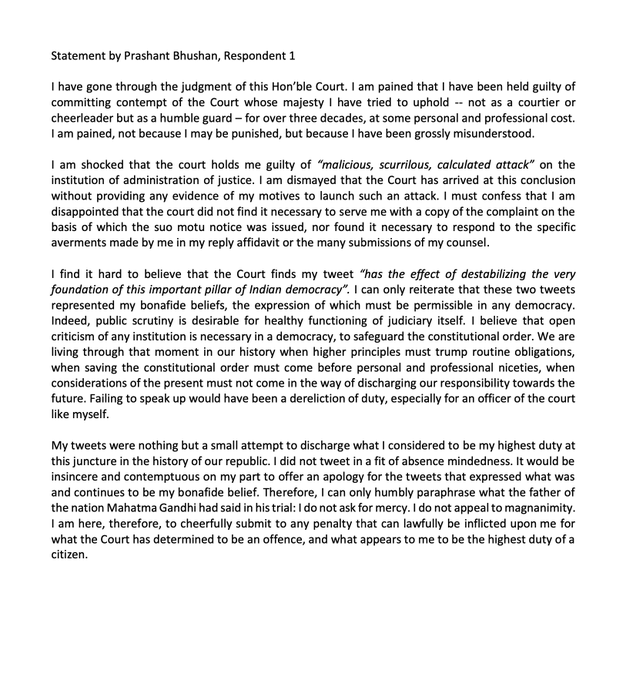
Advocate Dhavan informed the court that before he says anything on sentencing, Prashant Bhushan wanted to make a statement. Bhushan said that he is pained to learn that the court found him guilty. He said that he was misunderstood and he was shocked to learn that the court passed the verdict without providing any evidence about his motives. Bhushan claimed that his tweets were an attempt to discharge his duty as a citizen. He added, “I submit to any penalty which the court may inflict. It would be contemptuous on my part to offer an apology.”

Prashant Bhushan’s statement on holding him guilty in contempt of court (credit: Bar and Bench)

Bhushan cited Mahatma Gandhi in the court and claimed that he does not seek ‘mercy’. He added that he will not apologise for his tweets and will cheerfully accept the punishment.

What was the case?

On 14th August 2020, the Supreme Court of India held advocate Prashant Bhushan guilty for contempt of court. Bhushan had tweeted in twice in June once against the last 4 CJIs, and another tweet on CJI riding a bike. The court took suo motu cognizance of the case and issued notice to Bhushan and Twitter. After lawyers appeared for Twitter US in Supreme Court, they withheld the tweets by Prashant Bhushan until further notice or till the judgment comes in the case. The Supreme Court has given two days to Bhushan to reconsider his statement to the court over his sentence.

‘Will Sonia Gandhi do the same for Balasaheb’: Netizens question as Uddhav Thackeray offers floral tribute to Rajiv Gandhi

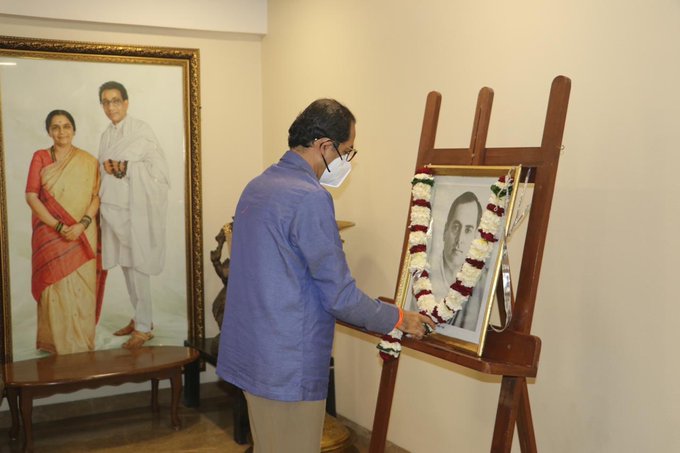
On the occasion of the birth anniversary of former PM Rajiv Gandhi, Maharashtra CM and Shiv Sena chilf Uddhav Thackeray has reportedly offered floral tributes.

As soon as the image of the Maharashtra CM paying respects on the birth anniversary of Rajiv Gandhi was circulated, several social media users started questioning whether the Shiv Sena will ever witness a similar gesture from Sonia Gandhi when she remembers and pays respect to their founder Balasaheb Thackeray.

Some social media users also highlighted the irony of Balasaheb’s son paying a floral tribute to Rajiv Gandhi before the firebrand Hindutva leader’s picture.

Some Twitter users asked whether Rahul Gandhi will be seen paying respects to Shiv Sena founder Balasaheb in a similar manner.

Some users went a step ahead and rememberered Balasaheb’s famous words about Congress and its supporters.

Today is Rajiv Gandhi’s 76th birth anniversary. The former PM and Congress leader was born in 1944 in Mumbai.

Shiv Sena had forged an alliance with a the Congress and NCP for the formation of Maharashtra government after the 2019 assembly elections. Many political watchers and supporters had seen the Congress alliance as Shiv Sena’s betrayal of the ideologies followed by Balasaheb Thackeray, the party’s founder.

Russian opposition leader and critic of Vladimir Putin ‘poisoned’, admitted at ICU after becoming unconscious in a flight

0

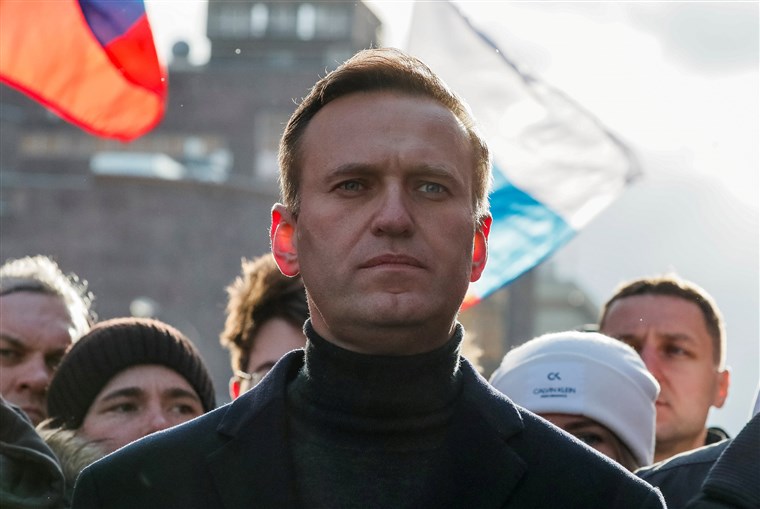
Russian opposition leader Alexei Navalny is in intensive care and unconscious after being allegedly poisoned.

In a series of tweets on Thursday, Navalny’s Press Secretary Kira Yarmysh reported that Navalny lost conscious after his flight from Tomsk, Siberia to Moscow took off. As Navalny fell ill, the pilot made an emergency landing in Omsk, where he was rushed to a hospital.

“We believe Alexei was poisoned by something mixed into his tea,” Kira Yarmysh wrote saying that it was the only thing he drank in the morning.

Speaking to the Russian media, she added that Navalny drank the tea in the airport just before boarding the plane. Reportedly, he felt uneasy on the plane and started sweating.

“I asked him whether some water would help, and he said no. Then he went to the toilet, and lost all consciousness,” she added. She also said that a number of police officers arrived at the intensive care ward.

She reportedly said that the changing behaviour of doctors created a suspicion of foul play. “The doctor saw me in the corridor, said that ‘some things were confidential’ and led police officers to another room.”

“He became very sick, and they struggled to bring him round. He’s still screaming in pain. No one is saying what’s wrong with him,” said a passenger who was travelling alongside Navalny.

Alexei Navalny – an anti-corruption blogger

The 44-year-old Alexei Navalny, who rose from being an anti-corruption blogger to become the face of opposition in Russia, is a staunch critic of Russian President Vladimir Putin. Earlier, he had made allegations against the senior officials in the Russian government, which allegedly made him many enemies inside the government.

Navalny, a son of an army officer, grew up mainly in Obninsk. He has a law degree and also has a fellowship at Yale. Navalny had also attempted to run for the presidency in 2018 but was blocked on legal grounds.

‘Dhan-Kuber’ of Indian sports BCCI hurts patriotic sentiments by awarding IPL sponsorship to China-backed Dream 11

The ‘Dhan-Kuber’ of the Indian sports arena, the Board of Control for Cricket in India (BCCI) has now awarded the ‘Title Sponsorship’ of this year’s IPL to China’s tech behemoth Tencent backed controversial Fantasy sports platform ‘Dream 11’.

It seems that at a time when the Narendra Modi government at the centre is, with its iron-hand, teaching a tough lesson to deceitful China, which had most cowardly and brutally martyred 20 of our brave soldiers in Galwan valley close to the LAC in a few weeks back, the board has not aligned with it.

Our soldiers were martyred, not so long ago and the government, in a bid to hurt China’s financial interests, had banned a total of 106 apps of China including some of the very big names like Tik-Tok, Baidu Search Engine and Wechat, hitting the dragon where it hurt the most.

China, which through its mouthpiece ‘The Global Times’ was further falacious tropes against India and even taking a threatening tone, was hit hard by this. After that, when the Chinese phone-maker Vivo gave up the Title Sponsorship of the IPL, the whole country, which is already united firmly against China to boycott its goods and services, rejoiced.

High Patriotic Hopes Shattered       

Hopes were high that the IPL title sponsorship would certainly go to some Indian company with no connections with the dragon or at least a non-Chinese company. When Tatas, one of the most patriotic Indian companies, showed interest, it was being assumed that the BCCI would give up the ‘only-for-money’ kind of attitude and award it to one of the oldest Indian companies.

When IPL Chairman Brijesh Patel informed that Dream 11 has been awarded the title sponsorship of the IPL, ‘the Vivo-ouster’ episode started looking more like an eyewash.

The hurried way in which the IPL is being organized in the gulf (slated to be held from September 19 to November 10 at three venues in the UAE) despite the fact that India is reeling under China originate mysterious Coronavirus pandemic which has so far infected over 2.5 million in India alone and claimed the lives of over 50 thousand people, also give rise to doubts doing the rounds in the mind of many common cricket lovers.

Interestingly, China-backed Dream 11 was already an ‘official partner’ of the BCCI and organizes the controversial fantasy version of the IPL. This fantasy IPL is also looked down upon by many cricket lovers as a ‘promotion ground’ for betting and gambling. A case of huge ‘tax evasion’ against Dream 11, in which the status of Fantasy cricket, as a sort of gambling, is also under examination is currently sub-judice in the apex court.

Fans feel cheated 

A cricket fan in Ahmedabad, the city that had seen one of the strongest anti-China-protests after Galwan incident, said, ‘when the whole of the country looks united to boycott China, and under the brave leadership of PM Narendra Modi, trying to hit it back financially, the BCCI is not looking like behaving in a patriotic manner.’

Another such fan also expressed his annoyance. ‘Cricket has over the last few decades somehow turned into the most popular game in the country at the cost of the national sport of Hockey and other Indian games and the role of big multinational companies behind it to exploit the huge Indian markets, is quite obvious. Now at a time of the most serious national crisis in many years (the Chinese aggression and Corona crisis together), the BCCI is rather than promoting Indian companies, taking sides with the Chinese ones and their moles in India.’

‘I was expecting such a development since I saw the interview of BCCI treasurer, Arun Dhumal, a few weeks back in which he had said that so long as the Chinese companies have the right to do business in India there was no harm in BCCI getting sponsorship from them. He had also said that the cricketing body was, in fact, helping the government get a part of the money from the Chinese companies with this act,’ he said.

‘This presumably was the most absurd logic. He perhaps forgot (or may have feigned to do so) that by using the sponsorship of team India and big cricketing events like the IPL, the Chinese companies get immensely benefited. They reach out to almost every household in India and in turn sell their products. And the huge money, they thus make in our beloved country is siphoned out to China, which kills our soldiers with baseball bats and sticks wrapped with barbed wires, is much-much bigger than the comparatively petty amount that the BCCI gets for the title sponsorship,’ he added saying that as a common Indian he and numerous like him hoped that good senses prevail upon the BCCI and it gets rid of such Chinese or China back sponsors. 

‘Otherwise, the people of India will also show them their ‘rightful’ place. Amid Corona crisis, we are living happily without any cricket since March and we can even become used to it.  For any patriotic Indian the country comes first. Standing with the enemy and their associates, in the name of cricket is not tolerable,’ he stressed.

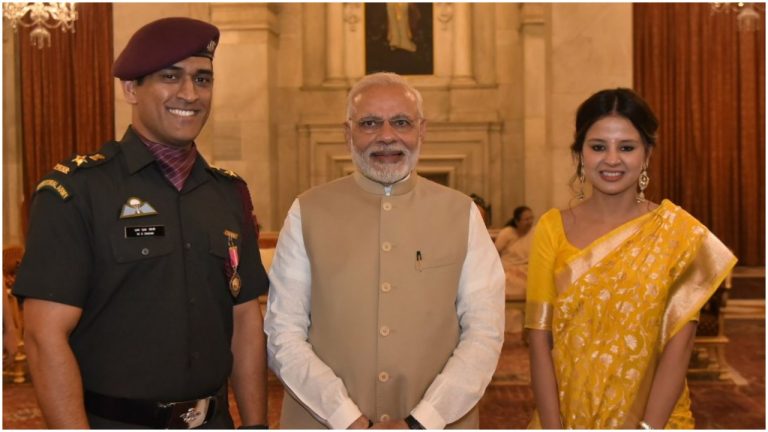
PM Modi writes an outstanding tribute to MS Dhoni on his retirement. Read the letter

On Thursday, former Indian captain MS Dhoni, who retired from international cricket on August 15, shared a letter of appreciation written to him by Prime Minister Narendra Modi.

Taking to Twitter, Dhoni shared the letter saying, “An Artist, Soldier and Sportsperson what they crave for is appreciation, that their hard work and sacrifice is getting noticed and appreciated by everyone. thanks PM @narendramodi for your appreciation and good wishes.”

In a two-page letter, Prime Minister Narendra Modi paid tribute to the former India captain by penning a touching letter. In his letter, the Prime Minister also acknowledged Dhoni’s contributions to cricket and highlighted how big an impact he left on the national discourse.

Read the letter written by Prime Minister Modi to Mahendra Singh Dhoni:

On 15th August, in your trademark unassuming style you shared a short video that was enough to become a long and passionate discussion point for the entire nation. 130 crore Indians were disappointed but also eternally grateful for all that you have done for Indian cricket in the last decade-and-a-half.

One way to look at your cricketing career is through the prism of statistics. You have been one of the most successful captains, instrumental in taking India to the top of the world charts. Your name will go down in history as being one of the world’s batting greats, among the greatest cricketing captains and certainly one of the best wicketkeepers the game has seen.

Your dependability in tough situations and your style of finishing matches, particularly the 2011 World Cup Final, will forever be etched in the public memory for generations.

But, the name Mahendra Singh Dhoni will not be remembered merely for his career statistics or specific match-winning roles. Looking at you as just a sportsperson would be injustice. The correct way to assess your impact is as a phenomenon!

Rising from humble beginnings in a small town, you burst onto the national scene, made a name for yourself and most importantly made India proud. Your rise and conduct thereafter gives strength and inspiration to crores of youngsters who like you have not been to cushy schools or colleges, neither do they belong to illustrious families but they have the talent to distinguish themselves at the highest levels.

You have been one of the important illustrations of the spirit of New India, where family name does not make young people’s destiny but they make their own names and their own destinies.

Where we come from does not matter as long as we know where we are headed — this is the spirit that you have exuded and inspired many youngsters with.

Many of your memorable on-field moments exemplify a particular generation of Indians. This generation of Indians does not hesitate to take risks and back each other’s abilities in even the toughest situations— seen in the way you took risks many a time in backing little known youngsters to deliver in high pressure situations. The 2007 T-20 World Cup Finals is a perfect example of this spirit.

This generation of Indians does not lose their nerve in decisive situations; we saw that in many of your innings and games.

Our youth does not lose heart in the face of adversity and, most importantly, are fearless, just like the team you led.

No matter what hairstyle you sported, your calm head remained the same in victory or defeat, which is a very important lesson for every youth.

I would like to also mention your special association towards India’s armed forces. You were most happy being among our army personnel.
Your concern towards their welfare has always been remarkable.

I hope Sakshi and Ziva get to spend more time with you. I convey my good wishes to them as well, because without their sacrifices and support nothing would have been possible. Our youth could also learn from you how to balance professional and personal priorities; I remember seeing a picture of you playing with your cute daughter even as everyone around you was celebrating a victory in a particular tournament! That was vintage MS Dhoni.

Wishing you the very best for your future endeavours.

Mahendra Singh Dhoni quit from international cricket as India celebrated its 74th Independence Day. The two-time World Cup-winning captain shared an emotional video on Instagram covering his entire cricketing journey with the Men in Blue. Meanwhile, Dhoni will continue to play for Chennai Supers Kings in IPL 2020 starting September 19 in the UAE.

As Congress tries to paint Rajiv Gandhi as the catalyst in reclamation of Ram Janmabhoomi, book by close friend shatters that myth: Here are the details

After 500 years of struggle, Hindus of India finally reclaimed their right to the Ram Janmabhoomi in Ayodhya. The Congress, which until now, refused to even acknowledge the very existence of Lord Ram, had jumped to take the credit for the Ram Mandir. From party bigwigs like Kamal Nath to Delhi Youth Congress, all claimed that it was former Prime Minister Rajiv Gandhi who had ‘opened the doors of Ram Mandir’.

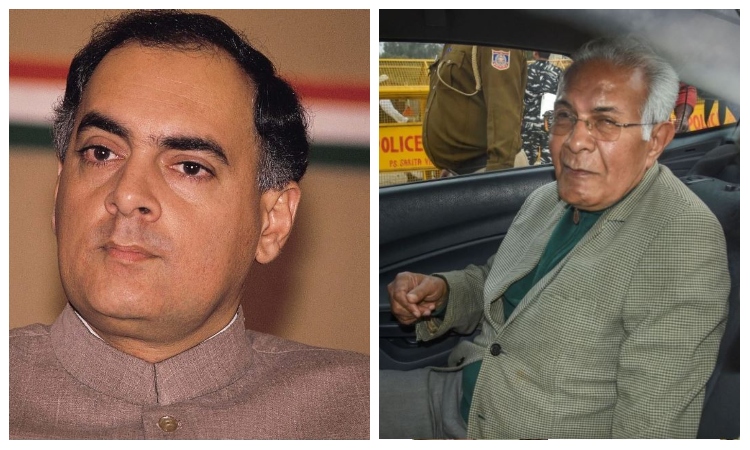
However, a book was written by one of Rajiv Gandhi’s close friend and associate, Wajahat Habibullah, likely to come out in October this year, reportedly busts the Congress’ bubble, as the tell-all memoir claims that late Prime Minister Rajiv Gandhi was not even aware of the unlocking of the disputed structure at the Ramjanmabhoomi site in February 1986.

Rajiv Gandhi had denied having any prior knowledge of the unlocking: Habibullah’s book

Habibullah, IAS from the Jammu and Kashmir cadre, was in Rajiv Gandhi’s PMO then. As per excerpts published in India Today, Habibullah, in his memoir- ‘My Years With Rajiv Gandhi: Triumph and Tragedy’, has written that when he had asked Rajiv Gandhi, the then prime minister, whether he was involved in the decisions leading up to the unlocking of the disputed structure at Ramjanmabhoomi site in February 1986, Rajiv Gandhi has instantaneously replied with a no.

No Government has any business to interfere in matters like the determination of the functioning of places of worship. I knew nothing of this development until I was told of it after the orders had been passed and executed,” Rajiv Gandhi was quoted as telling the author.

Taken aback by the late Prime Minister’s reply, Habibullah recollects questioning Rajiv Gandhi furthers: “But, sir, you were the Prime Minister”. To this, the Congress leader had replied, “I was indeed. Yet I had not been informed of this action, and have asked Vir Bahadur Singh (then chief minister of UP, under whose watch, and as rumoured, under whose instructions the magistrate had taken this fateful, or shall I call it fatal decision) to explain. I suspect it was Arun (Nehru) and Fotedar (Makhan Lal) who were responsible, but I am having this verified. If that is true I will have to consider action.”

The conversation, according to the author, took place in September 1986, when he accompanied the then PM in his Boeing while flying to the drought-hit Gujarat.

It is pertinent to note that a local court in Faizabad, on February 1, 1986, had vacated a stay order passed in 1949 that status quo should be maintained at the Babri Masjid-Ramjanmabhoomi site.

Habibullah had served as the chief executive at Rajiv Gandhi Foundation, the Union textile secretary, became India’s first chief information commissioner, chairman of the National Minorities Commission and government interlocutor for Jammu and Kashmir, goes on to make several startling revelations in his memoir.

The India Today report by Rasheed Kidwai further states that in a chapter titled, ‘Unravelling of the Indian Tapestry’, Habibullah reveals what had transpired between Rajiv Gandhi, his cousin Arun Nehru and Vir Bahadur Singh over the unlocking of the disputed structure at the Ramjanmabhoomi site. 

He writes that Rajiv Gandhi had acted against cousin Arun Nehru for the Ramjanmabhoomi ‘indiscretion’ and dropped him as the Minister of State for Internal Security in November 1986. Arun Nehru, despite his unceremonious exit, had reportedly displayed little acrimony and continued his work as a regular MP and family man till he regrouped with VP Singh against Rajiv Gandhi in July 1987.

Arun Nehru was responsible for the unlocking, not Rajiv Gandhi, says book

“Any instructions received by Vir Bahadur Singh (who incidentally owed Arun Nehru his position) from Arun Nehru, would be construed by the CM to have been the orders of the Prime Minister. There had been no discussion on any matter concerning the Masjid in the ongoing files of PMO. This I knew since I was the officer dealing with communal relations,” writes Habibullah as per the report. The quote asserts how Rajiv Gandhi, despite being the PM, was completely ignorant of the developments in Ayodhya.

In the book, Habibullah has reportedly also mentioned how the ‘removal of locks’ was mostly Arun Nehru’s work and later, when Rajiv Gandhi spoke to Vir Bahadur Singh and came to know that the UP CM had probably misunderstood Arun Nehru’s words as Rajiv Gandhi’s words in the matter, Singh had avoided meeting Arun Nehru.

As per the India Today report, Habibullah has written that it was a coincidence and an inadvertent error on his part that made him realise that Arun Nehru had probably orchestrated the opening of locks by making the UP CM believe that the order came from Rajiv Gandhi himself.

Habibullah, who had studied with Rajiv Gandhi in Doon School as well, writes that according to him, Rajiv Gandhi also found it difficult to communicate with his cousin Arun Nehru.

As per the report, Habibullah has also written that he had asked Rajiv Gandhi about how Congress can even think that the opening of the locks could give them any benefit (of Hindu votes), because, as per him, most of Congress was ‘secular’ and they cannot exploit the ‘development’ to its maximum use, and eventually it will be the right-wing which will hijack the “outcome”.

“I can understand that since the removal of the locks was not going to change the status quo in any way, but would earn the support of sections of the Hindu community for your party, was it not realised that such a benefit could only be limited since the core of the Congress remained secular and the development could not be exploited to its maximum since it would be the extreme right-wing that would hijack the outcome, which it could trumpet as its triumph?

The Congress leader did not want Ram Mandir dispute to be settled

Interestingly, one such other upcoming book by Roderick Matthews had also revealed Congress’ vile intentions in dealing with Ram Janmabhoomi dispute. It had laid bare how Congress party under the leadership of Rajiv Gandhi did not want Ram Mandir dispute to be settled and had withdrawn support after the then PM Chandra Shekhar had almost resolved the age-old issue.

Shah Bano Case: When Rajiv Gandhi overturned SC judgement protecting Muslim women’s right to maintenance during talaq

In 1986, the Indian state headed by Rajiv Gandhi set a dangerous precedent of catapulting to Muslim hardliners. The Mohd. Ahmad Khan vs. Shah Bano Begum & Others case and the subsequent legislation passed by the Rajiv Gandhi government in 1986 is often remembered as a pivotal moment in India’s political history.

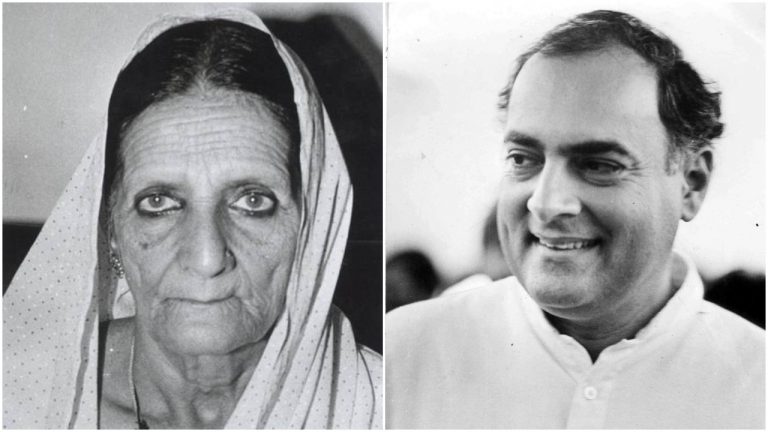
It all started when Shah Bano, the 62-year-old Muslim woman, filed a petition in court in April 1978 demanding maintenance from her divorced husband Mohammed Ahmad Khan, a renowned lawyer in Indore, Madhya Pradesh. Shah Bano’s husband Khan divorced her by uttering triple talaq later in November stating he was not obliged to pay her any maintenance as she is not his wife under Islamic law.

The two were married in 1932 and had five children — three sons and two daughters. Shah Bano’s husband had forced her to move out of the residence three years before, after living with Khan and his second wife.

Shah Bano, who went to court against her husband, filed a claim for maintenance for herself and her five children under Section 123 of the Code of Criminal Procedure, 1973. In August 1979, Shah Bano won the maintenance case in the local court, which ordered Khan to provide her with the maintenance of Rs 25 per month. However, Khan contested the claim on the grounds that the Muslim Personal Law in India required the husband to only provide maintenance for the iddat period after divorce.

Years later, Shah Bano filed another plea seeking for revised maintenance in Madhya Pradesh High Court. In April 1985, in a historic judgment, the Supreme Court ruled in favour of Shah Bano and upheld the decision by the High Court stating that she was entitled to be paid for maintenance by her husband.

As the Supreme Court upheld the right to alimony in the case, the judgement ignited a political controversy regarding the claim of the judicial overreach in cases that are attached to Muslim personal law. The historic judgement, which had laid the ground for Muslim women’s fight for equal rights in matters of marriage and divorce in regular courts, did not go well within the Muslim community.

Rajiv Gandhi succumbs to pressure of Muslim hardliners

The Muslim hardliners, clerics pushed the then Rajiv Gandhi government, elected in 1984, to pass the Muslim Women (Protection on Divorce Act), 1986. This law overturned the Supreme Court’s verdict in the Shah Bano case. The 1986 Muslim Women (Protection on Rights of Divorce) Act diluted the Supreme Court judgment and allowed maintenance to a divorced woman only during the period of iddat, or till 90 days after the divorce.

The Muslim Women Act in 1986, virtually pitted women’s individual rights against the rights of a religious group and the latter with their street veto power were capable of enforcing the law will over a weak, minority appeasing government led by Rajiv Gandhi.

Most importantly, it took 33 years to correct the historic blunders made by the Rajiv Gandhi government. In 2019, the Narendra Modi government passed the Muslim Women (Protection of Rights on Marriage) Act, 2019 in the Parliament of India criminalising triple talaq and delivered justice to several crores deserted Muslim women just like Shah Bano.

Arif Mohammad Khan – most vocal opponent of Rajiv Gandhi’s Muslim appeasement

The then Prime Minister Rajiv Gandhi, who had towed the line of Muslim hardlines in an effort to appease the community, had surprisingly faced resistance from within his government in the form of Arif Mohammad Khan.

Arif Mohammad Khan, who was the Minister of State in Rajiv Gandhi government, had passionately defended the Supreme Court judgment in the Shah Bano case on the floor of the Parliament. However, with Muslim hardlines began to pressurise Rajiv Gandhi, the government took an u-turn to bring a law to bypass the apex court’s judgement in the Shah Bano case.

As Rajiv Gandhi gave into the pressure of the clergy to reverse the SC decision, a dejected Arif Mohammad Khan decided to walk out of the Rajiv Gandhi Cabinet and also quit the Congress party.

In an interview recently, Arif Mohammad Khan, who is currently serving as the Governor of Kerala had mentioned how he was pressured by the Congress party to withdraw his resignation. The four-time former MP Khan had said that Congress leaders Arjun Singh and Narasimha Rao had asked to withdraw his resignation.

Reportedly, PV Narasimha Rao had said to Arif Mohammad Khan that he was absolutely right to resign morally but politically it was going to become inconvenient for the party and the leadership if he did not take the resignation back. Khan had also recounted how PV Narasimha Rao, a minister in the Rajiv Gandhi government, had remarked that it was not the duty of their party to uplift Muslims and if “they want to lie in the gutter, let them be”.