Multiple instances of intellectual property theft and espionage activities in the United States, perpetrated on the behest on the Communist Party of China (CCP), have come to light in recent years. The US Justice Department has recently unearthed one such case wherein a Singapore national created a ‘fake’ consultancy firm and used social networking sites such as Linkedin to recruit US government employees and pass off sensitive information about the government to the Chinese authorities.
Jun Wei Yeo, who operated under the alias of Dickson Yeo, worked for the Chinese Intelligence. Yeo, a Singapore national and a Ph.D. student at the National University of Singapore’s Lee Kuan Yew School of Public Policy (LKYSPP), created a fake consultancy in 2018 and posted job advertisements to lure the US military and government employees with security clearance. His consulting firm bore the same name as an existing US-based consulting company working in the field of public and government relations.
As per reports, on receiving resumes from the government employees, he would forward them to the Chinese officials. Besides running a fake consulting firm, the accused also used professional networking sites such as Linkedin to recruit ‘susceptible people’ with access to sensitive information about the US government. Following the directives of Chinese Intelligence operatives, he identified the vulnerabilities of potential targets, including financial constraints and dissatisfaction with existing work.
Yeo began working with Chinese Intelligence in 2015
Reportedly, Yeo would then pay his recruits to write reports about sensitive, non-public information. He misled them into believing that they were writing these reports for his clients in Asia and not the Chinese government. The accused began working with the Chinese authorities in 2015 and would initially solicit sensitive information from high-profile individuals in other Asian countries.
But, soon, at the behest of Chinese Intelligence, the United States government became his sole focus. As per the report, he avoided detection by law enforcement and ‘knowingly’ recruited people in the US. His PhD supervisor, Huang Jing, had his permanent residency of Singapore revoked for trying to influence foreign policy at the directives of an ‘unknown government.’
Yeo pleads guilty in US Court
On Friday, Jun Wei Yeo pleaded guilty in the U.S. District Court for the District of Columbia to creating a fake consulting firm in the US to collect sensitive information for the Chinese authorities. Reportedly, he confessed to targeting an army officer and several government employees to gather non-public information.
Assistant Attorney General John C. Demers, representing the US Justice Department’s National Security Division noted, “The Chinese Government uses an array of duplicity to obtain sensitive information from unsuspecting Americans. This is yet another example of the Chinese government’s exploitation of the openness of American society.” Acting Attorney General Michael R Sherwin said that the guilty plea by Yeo was a testimony to the nefarious plans of the Chinese government to target Americans. “We will continue to prosecute those who use deceptive practices on the Internet and elsewhere to undermine our national security,” he conceded.
Although the maximum penalty for the said crime is 10 years, the Court will pronounce its verdict about his actual sentence on Oct 9 this year. The law enforcement officials have also warned government employees and those with high-security clearance to be wary of ‘implausible’ job opportunities.
Donald Trump accuses China of espionage
Accusing China of misconduct, US President Donald Trump earlier said, “They raided our factories, offshored our jobs, cut out our industries, stole our intellectual property, and violated the commitment under the World Trade Organisation (WTO).”
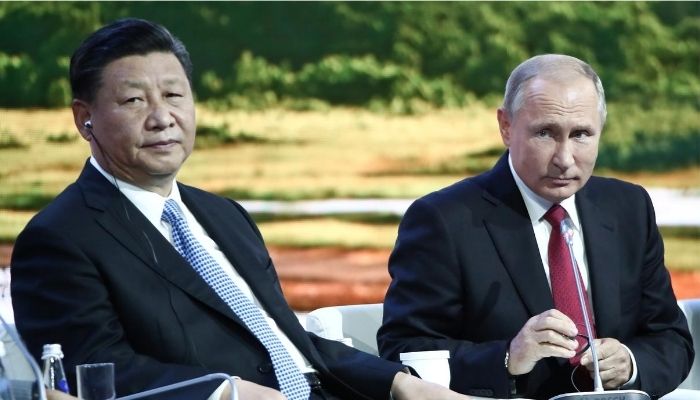
Russia has reportedly suspended the delivery of S-400 ‘Triumf’ surface-to-air missile systems to China. The development comes at the backdrop of recent accusations of ‘espionage’ made by Russia against the Communist-ruled country. As per the report, the resumption of future deliveries is yet to be announced.
As per reports, the S-400 ‘Triumf’ surface-to-air missile systems are highly advanced defence systems and are capable of hitting the target at a height of up to 30 kilometers and a distance of 400 kilometres. Reportedly, China had received the first batch of the said missile systems in 2018. UAWire in its report noted, “This time, Russia announced the postponement of the delivery of missiles for the Chinese S-400 system. To a certain extent, we can say that it is for the sake of China. Getting a gun is not as easy as signing an invoice after receiving a weapon.”
Reportedly, the Chinese government has, however, viewed the setback as a positive move. According to Chinese newspaper Sohu, China is of the belief that the delivery of missile systems at this point in time would have gravely affected the ‘anti-pandemic efforts’ made by the People’s Liberation Army (PLA) and, in turn, create troubles for the country. Sohu informed that using the defence systems was complicated. It reported that while China had sent its personnel to Russia for training, the Russian government is yet to send technicians to put the missile systems to service.
Espionage accusations against China
However, in spite of good relations between the two countries, Russia had accused one of its leading Arctic researcher, Valery Mitko, of spying at the behest of China. Mitko was the President of the Arctic Academy of Sciences in St. Petersburg. Reportedly, he had handed over a document containing ‘state secrets’ to the Chinese authorities in 2018 when serving as a visiting professor at Dalian Maritime University in China.
The 78-year-Mitko has however rubbished the allegations by claiming that the information brought by him from Russia to the Chinese university was available in the public domain. Reportedly, the said document contained information about underwater communications, navigation and monitoring of submarines.
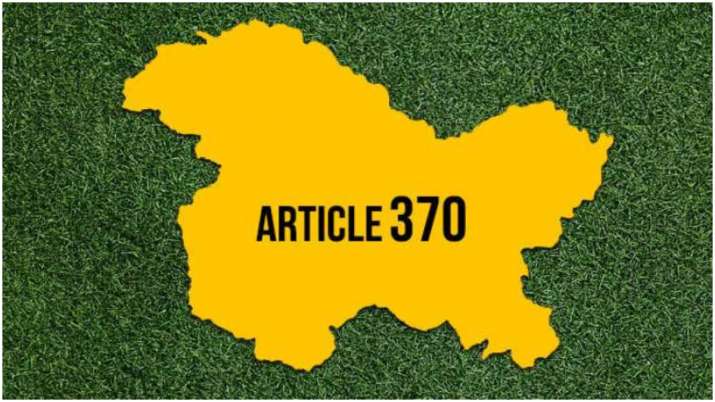
On the first anniversary of the abrogation of Article 370, the Pakistani propaganda machine has swung into action and has organised a series of visits/events leading up to August 5, in a bid to once again dredge up the issue of Jammu and Kashmir, documents released by retired Major Gaurav Arya revealed.
A tweet posted by retired Major Gaurav Arya brings to light Pakistan’s nefarious plans ahead of the first anniversary of the abrogation of Article 370. The documents titled as “Flow chart 5th August–Black Day”, enlists the visits and events that Pakistan has arranged to build a “tempo” days preceding August 5—the day when the Indian government announced the annulment of the Article 370 that granted a special status to the then state of Jammu and Kashmir—and enabled greater integration of the state with the Union of India.
Pakistan Army (ISI & @OfficialDGISPR) has planned a series of events/visits leading up to 5th August, the first anniversary of the abrogation of Articles 370 & 35A. Attached is a copy.
— Major Gaurav Arya (Retd) (@majorgauravarya) July 27, 2020
Pakistan’s propaganda spectacle to show India’s move to abrogate Article 370 in a bad light
The “tempo building” activities listed in the document shared by Major Gaurav Arya included a planned visit of Foreign Media to the Line of Control in July with the objectives of demonstrating that Foreign Media are allowed to freely report from Pakistan occupied Kashmir, along with tarnishing India’s image by stressing on restrictions on reporting and censorship in Jammu and Kashmir.
On August 4, a day before the first anniversary of the abrogation of Article 370, Pakistan had reportedly planned a visit of UNMOGIP(United Nations Military Observer Group in India and Pakistan) to showcase the free movement of UNMOGIP in Pakistan Occupied Kashmir as against the alleged restrictions faced by them in Jammu and Kashmir. Pakistan’s Public Relations Division was also tasked with the responsibility of promoting a propaganda video of about 2:28 minutes to spotlight the purported Indian brutalities and resilience of Kashmiris.
The proposal forged by Pakistan’s Public Relations Division, ISPR(Inter Services Public Relations), Ministry of Information and Broadcasting, Ministry of Foreign Affairs, ISI and Publication Division have arranged a host of activities to be organised on August 5, the day when India invalidated Article 370 last year.
Under the plan envisaged by Pakistan, ISPR DG is to issue a statement on August 5, 2020, reassuring Pakistani Army’s support for the Kashmiris. A high-voltage media blitzkrieg is ordered to gin up ant-India sentiments among Kashmiris. The campaign includes special supplement in all Urdu and English newspapers, turning all channel logos to Black as a mark of opposition against India’s move, the special transmission of alleged Kashmiri struggle against India. A special edition of Hilal and a special song for Kashmiris is also commissioned.
Pakistan PM to mouth off anti-India propaganda on August 5
The document released by Major Gaurav Arya also mentioned that Pakistan PM Imran Khan will be visiting Muzaffarabad, Pakistan Occupied Kashmir, to address the illegitimate Legislative Assembly and spew vitriol against India over its sovereign decision of hollowing out the Article 370 and turning Jammu and Kashmir into a Union Territory.
Furthermore, a white paper will be submitted to the UNMOGIP by the Ministry of Foreign Affairs and ISI, reminding them of the plebiscite to be conducted in Jammu and Kashmir. However, it is yet not clear whether Pakistan has agreed to fulfil the condition of ending its illegal control over Pakistan Occupied Kashmir before asking for a plebiscite in the Indian state of Jammu and Kashmir.
Pakistan to release videos of Pakistani stooges of Kashmiri origin, Indian politicians criticising centre’s move to annul Article 370
The propaganda spectacle outlined by Pakistan also includes a video package of criticism of the Indian government by Pakistani stooges of Kashmiri origins, Pakistani propagandists masquerading as activists and certain pro-Pakistani International organisations. Besides, the Public Relations Division of Pakistan has also put up a package of International criticism of the Indian government. Interestingly, the Pakistani plan also mentions a video package of criticism of the Indian government by Indian political leaders.
Social media campaign and tweets from friendly countries to mount International pressure on India
A Twitter campaign is also ordered to denounce the Indian move of abrogation of Article 370, with neo-Islamist President of Turkey, PM of Malaysia, and the Chinese Foreign Office putting out tweets in conformity to Pakistan’s stance on the abrogation of Article 370.
Protests and demonstrations are also chalked out by the Pakistani propaganda machinery in its embassies around the world, perhaps, in their bid to internationalise the issue of Jammu and Kashmir and draw the international attention towards the abrogation of Article 370, notwithstanding its numerous failures at the same in the last 12 months.
It has been twelve years but I still remember that day very clearly. I had my career goals set perfectly in front of me. I was studying to be a chartered accountant, interning at one of the Big Four auditing firms in Ahmedabad. As a fairly privileged middle-class upbringing with focus on scoring good marks and getting into good colleges, I was hardly interested in politics. Till I got a phone call from Gandhinagar one day in 2008. “CM saheb vaat karshe, (CM sir will speak to you)” the person on the other line said.
My earliest memories of politics is seeing images of former Prime Minister H D Deve Gowda sleeping in the Parliament in newspaper. I was too young. It was only later I read up on how Sonia Gandhi was instrumental in forming and collapsing that government. For years of unstable governments followed by a decade of policy paralysis.
It was only in 2004 when I was old enough I started understanding politics better. My first vote was in Gujarat state assembly elections in December 2007. As a secular, liberal, middle-class individual, I thought mixing religion with politics would polarise our country even further. It would be years before I would understand that in India, religion is politics and the polarisation is to such an extent that we’ve return point of no-return.
By 2008, the preparations for 2009 general elections had already started. L K Advani was the Prime Minister face for the BJP. I had always held him responsible for 2002 riots. I believed that had he not led the Rath Yatra in the 90s, and had the Babri Masjid not have been demolished, perhaps I would not have to be apologetic for 2002 riots. And really, why can’t we just have a hospital or a school there? I’m sure God resides in our hearts, I thought, and does not really care for a temple when there is so much poverty around.
While my family has always been BJP supporter, we hardly discussed politics at dinner table. Except my aunt. She was active in politics in Surat and once even fought and won corporation elections. But that was it. In 2008 during Raksha Bandhan, she was visiting us. She said that all BJP karyakartas were going to the CM residence him a Rakhi. I asked her if I could tag along. She agreed.
I quickly wrote a 4 page letter. I wrote to the Chief Minister of Gujarat Narendra Modi that we need to move beyond the Ram Temple. I told him that the world is going through major climate crisis and we will run out of non-renewable energy resources soon and that there is poverty and malnutrition that needs to be addressed. I asked him whether the temple is really needed. That can we not focus on the bigger picture?
When we reached Gandhinagar, there was a serpentine queue to meet the Chief Minister. Unlike everyone else, I was not carrying a Rakhi. I was meeting the Chief Minister of my state demanding answers, not my brother on a festival. I folded my hands and handed him the letter. I told him that I have written something as a voter and as a citizen of India and I would be grateful if he goes through it. He passed on the letter to the gentleman standing next to him and few minutes later we were on our way home.
Four hours later, as I sat in my room, I got a call where the person on the other line said that the Chief Minister will talk to me.
Narendra Modi had read a letter written on paper by a completely random girl who just walked up to him and told him she had something to say.
The then Gujarat Chief Minister asked me what made me think that he does not have concerns regarding the environment, which I very prominently pointed out. He told me about the green energy and how Gujarat has the highest carbon credit in the country. Chief Minister Narendra Modi told me about the solar panels above the Narmada canal and the plan of rooftop panels.
On my question on the Ram Temple, he said that it is about faith. When crores of Hindus believe that Bhagwan Ram was born there and there should be a temple at a place where it once stood, it is our duty to reclaim what is ours. “But what about issues like poverty and malnutrition? Aren’t they more important than the Mandir?” I asked. Narendra Modi told me that poverty and malnutrition along with scores of other issues are equally important and are being tackled. He told me that for one thing to be achieved other need not be sacrificed.
It made sense. My chief minister’s answers satisfied me. I Googled about all the claims he made regarding infrastructure and environment and the state government was indeed implementing them. In 2012, Gujarat continued to lead in carbon credits. In 2019, Gujarat launched an emissions trading scheme so as to encourage industries to bring down air pollution. Since then I started paying a closer attention to the things going on around me in the political landscape. In 2008 it was in pipeline and in 2019 the state govt owned Sardar Sarovar Narmada Nigam (SSNNL) announced will set up a 100 MW canal-top solar power generation project on the branch canals of river Narmada at an estimated cost of Rs 100 crore.
Alas, the BJP lost 2009 elections. It was hailed as defeat of the ‘communal forces’. It was then that I started noticing that the BJP is more or less ‘reacting’ to the action of the then ruling party which thrived on ‘appeasing’ the second largest majority community in India. That it was the then ruling party which believed that the Muslims have the first right on resources. That while they claim that everyone is equal, some were more equal.
Over the years, I saw how mainstream and international media went out of its way to downplay the Godhra carnage where 58 Hindus were burnt alive. Following the carnage, widespread communal riots took place in Gujarat where thousands lost their lives. However, even after all these years, there is a section of media which downplays the carnage and spreads falsehoods such as the fire was ‘set from inside’ the car. Many also claim that the fire was ‘accidental’ and the Muslim mob was wrongly accused. A Judicial Commission set up to enquire into the incident had found that it was indeed set on fire, and courts had sentenced several people based on this. Recently, a special SIT court convicted one Yakub Pataliya in the 2002 train burning case and awarded him life imprisonment. Prior to that, a trial court had convicted one Farukh Bhana and one Imran Sheru for setting the train on fire.
But entire community was painted communal by the same people who cry themselves hoarse that terrorism has no religion. It is as if terrorism has no religion only if the perpetrator is a Muslim. But, entire Hindu community needs to be ‘ashamed’ for a crime committed by any Hindu. As if the ‘biggest minority’ religion not only has first right on resources but also right to innocence.
To add to the vicious narrative, I learnt that it was not L K Advani who was responsible for 2002 riots. That the neighbouring Congress-ruled states did not offer us help when Modi reached out to them.
That Ashok Gehlot, Digvijaya Singh and Vilasrao Deshmukh of Congress in Rajasthan, Madhya Pradesh and Maharashtra sat and watched as my state burned.
In 2014, I was sure Narendra Modi would lose. Not because he was wrong but the perception regarding him on social media and mainstream media was such that perhaps the country would not elect a leader who is perceived to be so ‘communal’.
15 May 2014 image of Narendra Modi
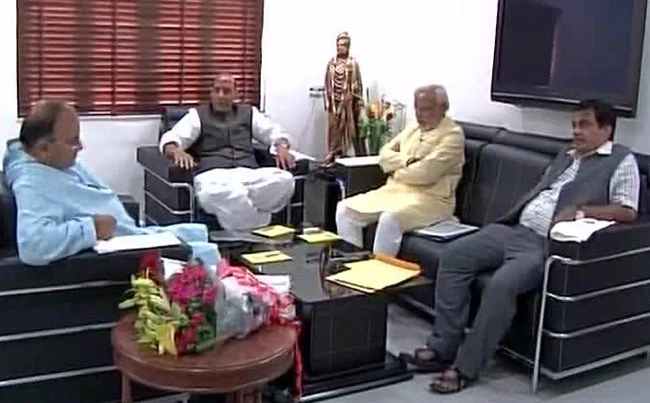
On 15th May 2014, this image was circulated in the media from CMO Gujarat. The tall BJP leaders had come to meet Modi. Media circles were rife with rumours that they were there to make Modi ‘understand’ to not be too adamant if there is no clear majority. That should the BJP reach out to Sharad Pawar if it falls short of clear majority, he should perhaps soften up. Sharad Pawar, as we know, ‘invented’ an extra bomb blast in 1993 in Mumbai to promote ‘Hindu Muslim harmony’.
Nobody knows what was discussed there except these people.
But stranger things have happened. Narendra Modi won with a thumping majority.
By this time, I had understood that Mandir has to be built and that too at Ayodhya. Because Babri mosque, like many other Islamic and Mughal structures in India, was built after demolishing the Hindu temple. If Mandir can be demolished to make way for a mosque, a Mandir can come up on the land reclaimed. I was still not sure it would, though.
You see, the principles of taking the backseat because you belong to the ‘majority’ religion are so deeply ingrained that deep down I was sure the Supreme Court will rule that a school or a hospital will be built there. Because we are just too afraid of ‘offending’ and ‘hurting religious sentiments’ of people. For years we have shied away from asserting ourselves as a Hindu lest anyone mistake us for ‘communal’. I always thought the Ram Mandir will be an election promise, not because the BJP does not have the will but because we have bigger bullies who’d rather let the country burn if it paints Hindus as the violent, extremist community.
In November 2019 when Supreme Court ruled in favour of Ram Mandir, I still could not believe it. That ‘Mandir Wahin Banayenge’ is not a slogan anymore but it will be a reality.
Today we are few days away from Bhoomi Pujan of the Bhavya Ram Mandir. The Gujarat Chief Minister who told me to have faith will now be there as Prime Minister of our great nation. Because after decades of waiting, Ram Lalla is coming home.
Those who want the mosque or a hospital, well, they can make one too. Just across the Sarayu and pray to Lord Ram from a distance.
Because whether you like it or not, Mandir Wahin Ban Raha Hai.
Ek hi naara, ek hi naam, Jai Shri Ram, Jai Shri Ram.
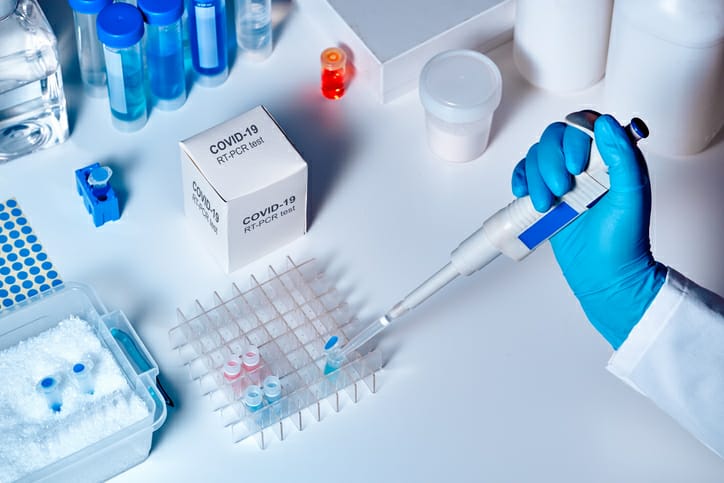
On Monday, a team of 20 researchers, led by the Israeli ambassador Dr Ron Malka, has reportedly arrived in Delhi from Israel to develop a rapid testing kit for Coronavirus that can provide results within 30 seconds. Since the outbreak of the Wuhan Coronavirus, Indian PM Narendra Modi and Israeli Prime Minister Benjamin Netanyahu had three telephonic conversations wherein they emphasised on the need for mutual assistance in fighting the deadly virus, besides a commitment to technological and scientific research.
As per reports, the researchers at Israel’s Ministry of Defence are working closely with Defence Research and Development Organisation (DRDO) and India’s chief scientist K Vijay Raghavan to develop the rapid testing kit. The researchers from Israel have arrived in India to conduct the final stages of testing in order to determine the effectiveness of such kits.
Final stages of testing to be done in India with thousands of samples
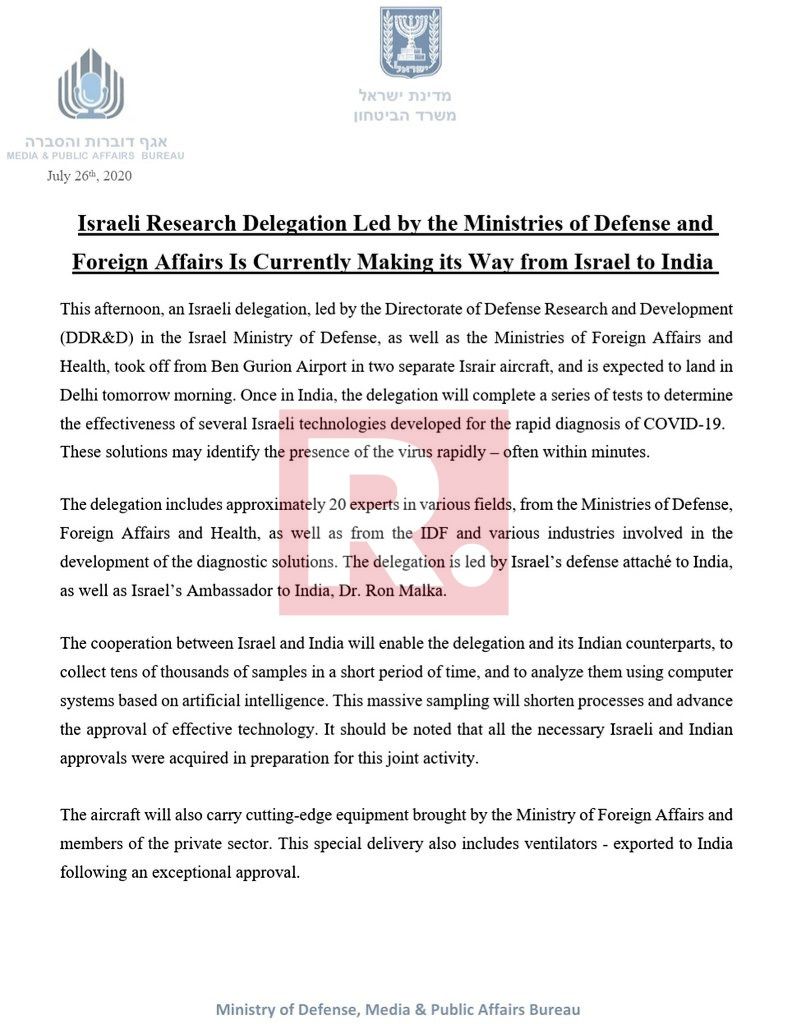
“The cooperation between Israel and India will enable the delegation and its Indian counterparts to collect tens and thousands of samples in a short period and to analyse them using computer systems based on Artificial intelligence,” the press release read. It further noted that the massive sampling, which will be conducted in India, will shorten the development process and ease the approval of the technology.
Press release (Photo Credits: Republic World)
The rapid testing kits will be a game changer, concedes Ron Malka
According to Ron Malka, the Israeli ambassador to India, the 30-second testing kit can become a ‘game-changer’ in the fight against the Wuhan Coronavirus pandemic. He said, “We also bring on this special flight some of our best scientists, our latest development, medical systems, and equipment…They are developed in Israel especially to fight COVID-19 and were found to be very useful. We are happy to share these technologies with our friends here in India.”
Special flight from Israel brought advanced respirators
The Israeli ambassador to India informed that the special flight from Tel Aviv will bring advanced respirators from Israel, the export of which is banned in the country. Ron stated that the rules were changed especially for India. An official statement read, “The aircraft will also carry cutting-edge equipment brought by the Ministry of Foreign Affairs and members of the private sector. This special delivery also includes ventilators – exported to India following an exceptional approval.”
Delhi’s Karkardooma court on Monday rejected the bail plea of 3 persons accused of the brutal murder of Hindu youth Dilbar Negi during the Delhi riots in February this year. The court said that the violence at the scene was horrific, killing innocent people and causing severe damage to public property.
The court held that at this stage, the bail of the accused and their release could hamper the investigation. The incident took place on 24th February.
North East Delhi violence: A Delhi Court while dismissing bail pleas of 3 accused in killing of Dilbar Negi stated that violence at crime scene was horrific, loss of innocent lives & damage to property of public was enormous. Their release at this stage may hamper investigation.
The crime branch of Delhi Police had registered charge sheet against 12 people in the murder of Dilbar Negi during the Delhi Riots in February that erupted under the garb of protests against Citizen Amendment Act. In the charge sheet, police noted that a Muslim mob had targeted properties of Hindu families and burnt Dilbar Negi alive inside the sweet shop where he worked.
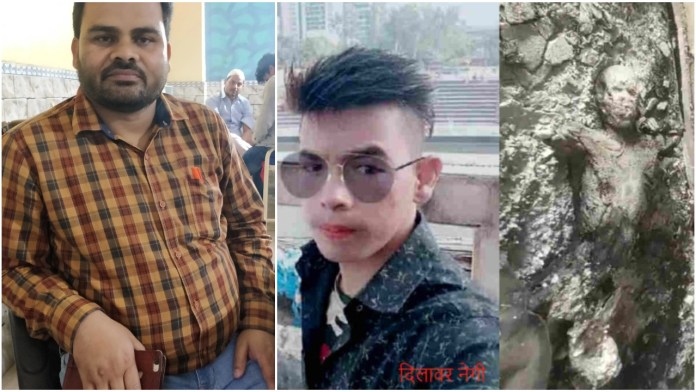
The brutal murder of Dilbar Negi
The accused in the case are currently in judicial custody. They have been charged with rioting, murder, criminal conspiracy and causing communal tension between two groups based on religion. The police said in the charge sheet that a Muslim mob came from Brijpura Pulia in north-east Delhi. They started rioting and targeted properties of Hindu families. Police were able to recover the body of Dilbar Negi on 26th February from the warehouse on the backside of Anil Sweets. Negi was resting there after having lunch when the mob attacked him.
Negi, a young man from an impoverished family from rural Uttarakhand, was brutally attacked by the mob. The violent mob had chopped off Negi’s limbs and had burnt him alive inside the sweet shop.
At least 53 people were killed during the riots, and 200 were injured. Public and private property was severely damaged. In the well-planned riots, the Muslim mobs attacked with bricks, acid bottles, petrol bombs and weapons.
Among those who were killed were Ratan Lal, head constable Delhi Police and IB officer Ankit Sharma. Several police officers, including ACP and DCP, were seriously injured in the riots. Ex-AAP leader Tahir Hussain is one of the main accused in the Delhi Riots cases. You can read OpIndia’s detailed coverage of anti-Hindu Delhi Riots based on charge sheets filed by police here.
The Communist Party of India(CPI) is having a hard time stomaching the fact that the dream of millions of Hindus to see a magnificent Ram Temple in Ayodhya is finally about to be fulfilled. With the Bhoomi Pujan ceremony of Ram Temple just days away, the left has lodged a strong protest against the scheduled broadcast of the ceremony on state-run TV channel Doordarshan, and written a letter to the central government demanding not to air the programme.
#राम_मंदिर_निर्माण शुरू हो रहा है, वामपंथियों के पेट में मरोड़ उठनी शुरू हो गई। सांसद बिनय बिस्वम ने चिट्टी सवाल उठाया है कि @DDNational कैसे 5 अगस्त का कार्यक्रम लाइव दिखा सकता है। ये सेकुलर नहीं। 2013 में हमने पोप के चुनाव की प्रक्रिया 2 घण्टे लाइव दिखाई थी वो सेकुलर था ? pic.twitter.com/uTHCYUVzF8
The CPI, in its letter against the broadcast of the Bhoomi Pujan ceremony that is scheduled to happen on August 5, asserted that the use of Doordarshan to televise the religious function at Ayodhya is against the “accepted norms of national integrity”. Citing the long-standing legal dispute, which according to CPI had been a source of conflict and discord, the party suggested the government to avoid telecasting the groundbreaking ceremony.
“The demolition of the Babri Masjid in 1992 and the subsequent mobilization around the Ram Janbhoomi Temple in Ayodhya has been a source of conflict and disharmony in the country for decades now,” the letter written by CPI to the Information and Broadcast (I&B) Ministry read.
Mentioning the Section 12 2(a) of the Prasar Bharti Act, which governs the operations of Doordarshan, the CPI said that the National Broadcasting agency should abide by the provision of ‘upholding the unity and integrity of the country and the values enshrined in the Constitution’ as enshrined in the Act.
The CPI further opined that as a national broadcaster of a country founded on the ‘principles of secularism and religious harmony’, the usage of Doordarshan to videocast a religious ceremony in Ayodhya on August 5 is in contravention to the prevailing norms of national integrity.
“Considering the historical dispute over the land where the religious function is about to take place, it would be mature for the government to desist the attempts to politicise the issue and ensure that the secular image of the country is not undermined, wrote CPI”s Binoy Viswam in the letter.
In its conclusion, CPI asserted, “As a broadcasting channel governed by an arm of the State, the use of Doordarshan to telecast the religious function in Ayodhya must be avoided.”
Bhoomi Pujan of Ram Temple in Ayodhya on August 5
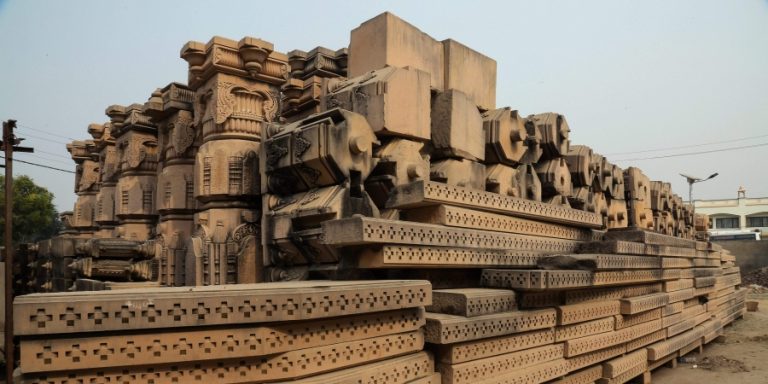
Preparations are underway in Ayodhya for the historic Bhoomi Pujan for the construction of the Ram Temple on August 5, 2020. Prime Minister Narendra Modi will be visiting Ayodhya for the ceremony on August 5. The ceremony will be graced by Defence Minister Rajnath Singh, UP Chief Minister Yogi Adityanath among several other invitees. Keeping in accordance with the coronavirus guidelines, the ceremony will be attended by not more than 200 people.
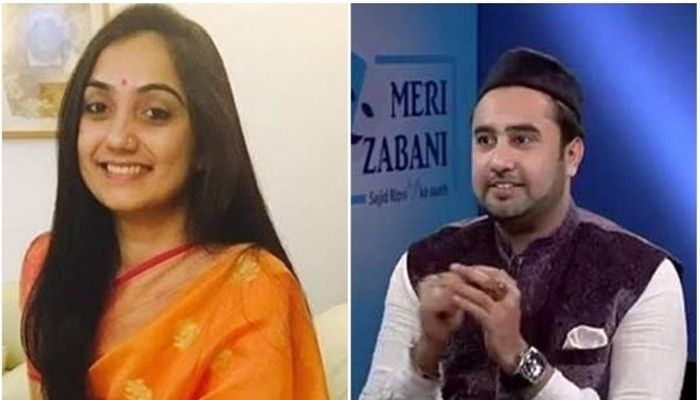
Three days after Aam Aadmi Party (AAP) leader Syed Asad Abbas went on a sexist tirade against BJP leader and spokesperson Nupur Sharma during a panel discussion on Republic TV, the National Commission for Women (NCW) has taken cognisance of the matter.
Rekha Sharma, the NCW Chairperson, has issued a notice to Abbas, asking him to provide a ‘satisfactory explanation’ for his objectionable and misogynistic comments. She has directed him to tender an apology to the BJP politician for his crass behaviour. The notice read, “The National Commission for Women strongly condemns and protests such irresponsible and disparaging views of a public figure on national television which shows extreme disrespect to women and damages the dignity of Indian women in general.”
The NCW Chairperson has also written a letter to Praveen Sood, the Director General of Police in Karnataka. She has requested for an investigation into the matter and a feedback to be communicated to the Commission through email or fax.
:@NCWIndia has issued notice to MC Abbas for using a sexual slur & attacking my character on 10 PM @republic debate dt 24/7/2020
During a Republic TV debate on 24 July, Dr Abbas lost all semblance of decency and started hurling abuses. He went on to say that people like Nupur Sharma were “nothing other than Rakhi Sawant of Prime Time”. Dr Abbas also told her, “Aunty ji, go join an Ekta Kapoor serial” and then, proceeded to call her an “Ekta Kapoor Vamp”. Several people on the debate took exception to the rants of Dr Syed Asad Abbas. While Arnab Goswami condemned the use of abuses instead of responding to the issue at hand, other panellists like Touseef Ahmed Khan also condemned the conduct of Dr Abbas.
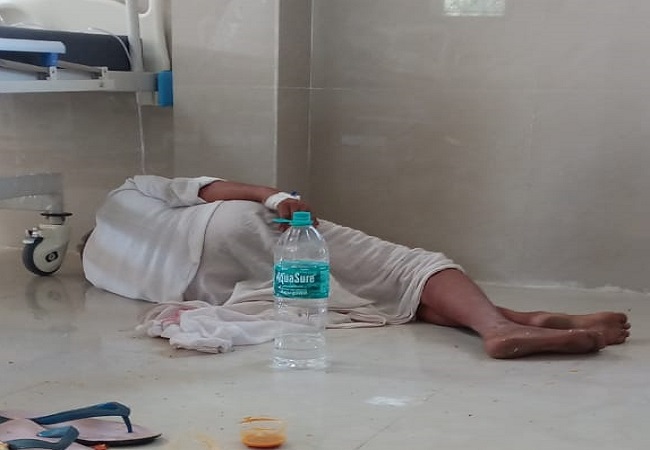
In an unexpected and bizarre incident, a Covid-19 patient reportedly lost his life after falling off the bed in the district hospital of Karimnagar on Sunday. According to the reports, the 70-year-old patient was suffering from coronavirus infection. He slipped off the bed while sleeping, causing the oxygen supply tube to snap. He was declared dead by the doctors later.
#Telangana | A #COVID19 patient fell off the bed in sleep and died after the oxygen supply was cut off leading to breathlessness. The incident occurred in #Karimnagar government hospital in Telangana on 26 July. pic.twitter.com/n5BUnKBu7e
The deceased was a 70-year-old male from Venkataiahpalli in Gangadhara Mandal. He was getting treatment for Covid-19 infection since 22nd July. Doctors put him on oxygen support following difficulty in breathing. On Sunday, he slipped off the bed and that resulted in disruption of the oxygen supply. No one tried to help him due to the fear of infection. The fellow patients said that they informed the hospital authorities about the fall. However, it is alleged that no one came to attend him, and he died while struggling to breathe.
A video of him lying on the floor and audio recordings of the fellow patients have gone viral over the social media. The hospital has reported the incident. On Sunday, 51 cases were reported in Karimnagar while Telangana has recorded 1,593 new Covid-19 cases.
Deceased patient on floor. Credit: Newsroom
According to the Ministry of Health and Family Affairs, India has reported 14,35,453 Covid-19 cases till date. 9,17,568 have reportedly cured, and 4,85,114 cases are still active. 32,771 people have lost their lives due to complications associated with Covid-19.
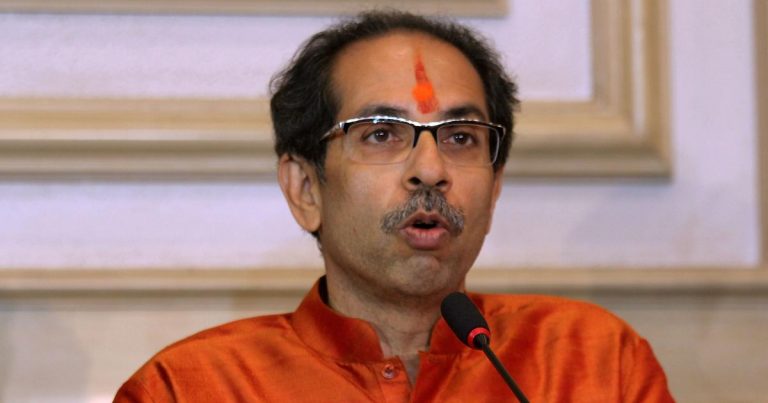
The Vishwa Hindu Parishad on Monday issued a sharp rebuke after the Maharashtra chief minister Uddhav Thackeray suggested that the Bhoomi Pujan ceremony of the Ram Temple in Ayodhya should be done via video-conferencing.
Press Statement: Uddhav Thackeray’s Statement on Ram Janmbhumi shows a fall of what once was a Hindutava Party lead by the legendary Shri Bala Sahab Thackeray: @AlokKumarLIVEpic.twitter.com/Fm627nxQld
— Vishva Hindu Parishad -VHP (@VHPDigital) July 27, 2020
“The statement of Shri Uddhav Thackeray only shows his blind opposition and we do mourn such a fall of what was once a Hindutva party lead by the legendary Shri Bala Sahab Thackeray,” a statement released by VHP said.
Alok Kumar, the International Working President of the VHP, cited that Bhoomi Pujan is an essential and sacred ritual that entails seeking the blessings and permission of Mother Earth before embarking upon any construction activities. Affirming that such rituals cannot be performed through e-conference, Kumar averred how the activities across the country are being carried out in accordance with the COVID-19 guidelines given by the government.
The statement also adds that the Bhoomi Pujan ceremony will be done in compliance with the health and security advisories, and participation will be restricted to about 200 persons, terming the public health concerns raised by Uddhav Thackeray as “false pretensions”.
Uddhav Thackeray suggests e-bhumi pujan for the construction of Ram Temple in Ayodhya
The statement from VHP came on the heels of Shiv Sena supremo Uddhav Thackeray’s suggestion that the ground-worshipping ceremony for the Ram Temple construction in Ayodhya can be conducted through video conferencing in the wake of coronavirus pandemic in the country.
“An e-Bhoomi Pujan can be done. The ground-breaking ceremony can be done through video conferencing. This is an event of joy and lakhs of people could attend it if we broadcast it via video conference. Will we allow the spread of the coronavirus?” Thackeray said in an interview with the Shiv Sena mouthpiece Saamana.
He further added, “This is no ordinary temple. The ceremony is scheduled during the time when we are grappling with the coronavirus pandemic and religious gatherings have been banned. I can go to Ayodhya for the ceremony, but what about lakhs of Lord Ram devotees. Will you stop them? You can do e-Bhoomi Pujan through video-conference,” he said.