Home Blog Page 5216

Pakistan: Maulana threatens China after Chinese companies ban Pakistani employees from offering namaz

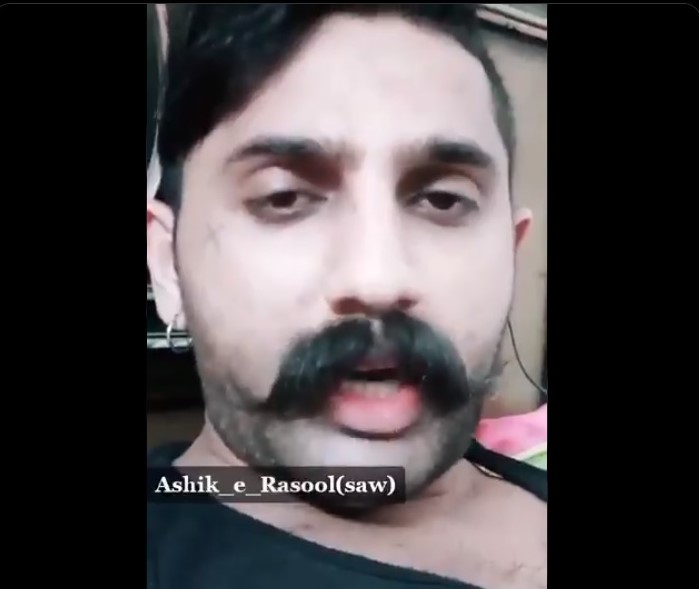
A Pakistani maulana has threatened China and asked the Chinese companies to follow the law of the land after various Chinese companies ban Pakistani employees from offering namaz, the Islamic prayer. In a video that has gone viral on social media, a visibly upset maulana can be heard threatening China to not interfere in their religion.

Un Chinese ko bolo yeh unke baap ka mulk nahin hai (tell those Chinese this is not their country,” he could be heard saying. “When some people gather and protest, they’d be scared. Then even their father will let you offer namaz. Today morning someone was asking that they’re afraid of losing job and hence can’t protest against Chinese companies for stopping namaz. This is our country, not their daddy’s. When we go to their country, we follow the rules,” he said.

You have to make people respect you. “Make them realise that ‘you have come here, you are the real guest’. You will work as per our laws. Then they will let you offer namaz,” he can be heard saying. It is unclear when the video has been shot and if it is a recent threat to China over reports of namaz being banned.

Chinese companies ban Pakistani employees from offering namaz

As per reports, many Chinese companies in Pakistan have disallowed its Pakistani employees from offering namaz, one of the five basic tenets of Islam. A video shared by Twitter user Farah Khan reveals how one Pakistani employee of a company was beaten up by his employers for allegedly offering namaz.

In the above video, a person can be seen bleeding who is being taken away by his colleagues as the person recording the video claims that the man was beaten up for offering namaz. The person recording the video clims that he was beaten up badly when he was offering namaz. “Chinese are not letting Muslims offer namaz. I appeal to the Prime Minister Imran Khan to take action,” he says.

However, it still remains unclear whether the ban on namaz and/or the threat of the maulana to China are recent or dated.

New swine flu virus with ‘pandemic potential’ identified by researchers in China: Study

Amidst the Coronavirus pandemic that has infected more than 1 cr people and killed over 5 lacs worldwide, researchers have reportedly found a new strain for swine flu in China which possesses genes of pandemic potential. Even though the flu virus is transmitted from pigs, scientists fear that it can mutate and facilitate human-to-human transmission.

As per reports, the new virus strain is named G4 and it has descended from the same H1N1 strain that had caused a pandemic in 2009.

In a paper, ‘Prevalent Eurasian avian-like H1N1 swine influenza virus with 2009 pandemic viral genes facilitating human infection’ published in the journal Proceedings of the National Academy of Sciences, scientists have highlighted measures to contain the virus and close monitoring of workers in the swine industry. While researchers have noted that the new strain from swine flu is not an immediate problem but has the potential of a global outbreak and thus requires close monitoring. As per reports, people have no immunity to the virus as it is relatively new.

As per the report, the swine flu pandemic began in 2009 in Mexico. However, it was less fatal than Coronavirus as aged people had some immunity to the virus (A/H1N1pdm09), due to its similarity with other flu viruses. People are now protected from the swine flu by the annual flu vaccine. And the new virus strain (G4 EA H1N1) that has been discovered in China is similar to the Swine flu virus of 2009 but with additional modifications.

Current vaccines cannot protect against new flu virus strain

Professor Kin-Chow Chang and other co-authors of the research paper have observed that the new virus strain can multiply rapidly in cells that line the human airways. They also noted that the current flu vaccines, available in the market today, cannot provide immunity against the new strain but stated that it can be modified to do so. Reportedly, more than one in 10 people, working in the swine industry, have already been exposed to the virus.

As per reports, the researchers conducted experiments with ferrets and found that the virus strain is highly infectious and replicates faster than other viruses and in ferrets. The study warned that human infection due to the virus can trigger a human pandemic. Scientists have been able to isolate 179 swine flu viruses from 30,000 nasal swabs of pigs between that were collected between 2011 and 2018 from slaughterhouses in 10 provinces in China.

Over 4% population already exposed

The paper found that about 4.4% of the general population have also been exposed to the new strain of the Swine flu virus. Scientists say that while evidence for the animal to human transmission of the virus existed, they failed to ascertain the human-to-human transmission aspect.

Professor Kin-Chow Chang observed, “Right now we are distracted with coronavirus and rightly so. But we must not lose sight of potentially dangerous new viruses. We should not ignore it.”

Bharat Biotech’s potential COVID-19 vaccine ‘Covaxin’ enters clinical trials after DGCI approval

Bharat Biotech, one of India’s leading Bio-Technology companies, has got approval for human trials of their potential Covid-19 vaccine Covaxin from Drug Controller General of India on 29th June. DGCI, the drug regulator body, has permitted the company to conduct phase I and phase II clinical trials for the first indigenous Covid-19 vaccine that are expected to begin in July. Bharat Biotech has developed the potential vaccine in collaboration with the National Institute of Virology, and Indian Council of Medical Research (ICMR).

Promising pre-clinical studies led to trial approval

The company presented the results of pre-clinical studies of the potential vaccine that ensure safety and immunity response. The pre-clinical trials of the potential Covid-19 vaccine took two months to complete after getting approval from the regulatory body. Krishna Ella, Chairman and MD of Bharat Biotech, said, “The collaboration with NIV was instrumental in developing this vaccine. The proactive support and guidance from CDSCO have enabled approvals to this project.” The vaccine is being developed in a high containment facility in Hyderabad.

Ella added that their ongoing research and expertise in forecasting epidemics had enabled them to successfully manufacture a vaccine for the H1N1 pandemic. “Continuing our focus on creating the only BSL-3 containment facilities for manufacturing and testing in India, Bharat Biotech is committed to advancing vaccine development as a matter of national importance to demonstrate India’s strength in handling the future pandemics.”

Race to develop vaccine for Covid-19

There are around 86 teams working across the globe to develop vaccines for Covid-19. Some of them have already entered clinical trials. According to the World Health Organization, 13 vaccines are undergoing clinical trials. 129 vaccines are currently in the pre-clinical evaluation phase. In India, Zydus Cadila, Serum Institute of India and other Indian pharma companies are developing a vaccine for the infection.

Rising Covid-19 cases in India

As per the Ministry of Health, out of 5,49,946 cases in India, 3,34,821 patients have been cured while 16,893 have lost their lives due to complications related to Covid-19. 2,15,125 cases are still active in the country, with Maharashtra having maximum cases, followed by Tamil Nadu and Delhi.

Andhra: 3 days after Kurnool incident, another gas leak in Vizag kills 2 persons, 4 hospitalised

On Monday, two factory workers died and four were reportedly hospitalised, following the leakage of Benzimidazole gas at a pharma company, Sainor Life Sciences Pvt Limited in Vizag, Andhra Pradesh at 11:30 pm in the night. The area falls under the jurisdiction of the Parwada police station.

Inspector (Parwada) informed that the gas did not spread anywhere besides the factory and that the situation was under control. The factory was visited by the police Commissioner RK Meena, and the District Collector V Vinay Chand. Reportedly, the two deceased workers have been identified as one Narendra and Gowri Shankar. The cause of the gas leak has not yet been ascertained. However, it is believed to have caused due to unforeseen technical reasons.

The incident took place at the factory which is located at the Jawaharlal Nehru Pharma City (JNPC) area in Vizag. The injured were rushed to the hospital. As per reports, the condition of one patient is said to be critical and he has been put on a ventilator. State Chief Minister YS Jagan Mohan Reddy enquired about the accident and his office had informed that the factory had been temporarily shut down as a precautionary measure.

3 days after the Kurnool gas leak incident

On June 27, ammonia gas leakage in a chemical plant owned by former MP S P Y Reddy had caused the death of a general manager and hospitalisation of four other employees. The incident had occurred in the factory owned by SPY Agro Industries in Nandyala town of Kurnool district. Welding work of a gas pipeline was underway when the incident happened.

Gas leak at LG Polymers in May

This is not the first time that such an incident has come to light. In May this year, at least 12 people, including one child, had died and about 500 people had fallen ill after a gas leak in a chemical factory named LG Polymers. People in the vicinity were taken to hospital after they complained of burning sensation in eyes and breathing difficulties. After the report of gas leak poured in, police and ambulance were called on the spot. The leakage reportedly happened at around 3 AM near the Naiduthota area which is close to Gopalapatnam.

Lucknow: Priyanka Gandhi close aide and UP Congress’ minority cell chief Shahnawaz Alam arrested for role in anti-CAA violence

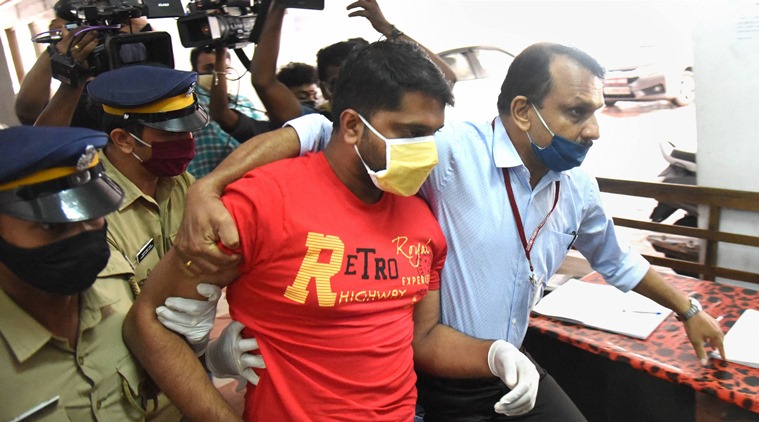
Lucknow police on Monday arrested Shahanwaz Alam, the chairman of the Uttar Pradesh Congress minority cell for his alleged role in the anti-CAA riots that took place in December 2019. Congress leaders circulated a CCTV video in which cops were taking a person from outside an apartment located close to the Chief Minister’s residence. He is believed to be a close aide of Congress General Secretary and Congress Interim President Sonia Gandhi’s daughter Priyanka Gadhi Vadra.

DCP central Dinesh Singh issued a statement in which he confirmed that they had arrested Shahanwaz for his involvement in anti-CAA protest on 19th December 2019 in Lucknow that turned violent. He added that they arrested Alam after gathering evidence against him.

Congress leaders protest against the arrest

Ajay Kumar Lallu, UP Congress chief and Aradhna Mishra, state Congress legislative party leader reached the Hazratgant police station with party workers following Alam’s arrest. They got into an argument with the senior cops while enquiring about the arrest. The Congress leaders alleged that police lathi-charged the Congress workers to disperse them.

Ashok Singh, UP Congress spokesman was quoted by India Today as saying, “Shahanwaz, his driver and a party worker, were picked up by the police on Monday late evening. However, the police arrested Shahanwaz and released the other two people. The cops also impounded a vehicle. This government is behaving like an autocrat and is unnecessarily targeting Congress leaders and workers who are exposing the wrongdoings of the state government.” He added that Ajay Lallu was also arrested earlier and now other leaders are being arrested.

Who is Shahanwaz Alam?

Hailing from Balia district, Shahanwaz Alam was appointed as the head of Uttar Pradesh minority cell in January 2020. He has been a member of AISA, the communist party’s student wing during his college days and actively participated in student politics.

Day after Govt of India banned 59 Chinese apps, TikTok India releases statement, claims does not share data with Chinese govt

The Chinese video sharing app TikTok’s India office today released a statement where it said that after the banning of 59 Chinese apps on security concerns by the Government of India, TikTok is invited to meet the concerned authorities and submit clarifications.

In a statement, Nikhil Gandhi, head of TikTok in India claimed that TikTok continues to comply with data privacy and security requirements and has not shared information of users to any foreign government including the Chinese government. TikTok claims that even if such a request comes in future, it will not share user data.

TikTok, WeChat, CamScanner and other apps banned

On Monday, the Government of India banned 59 apps over security and privacy concerns. The Ministry of Information Technology, invoking its power under section 69A of Information Technology Act, with the relevant provisions of the Information Technology (Procedure and Safeguards for Blocking of Access of Information by Public) Rules 2009 has ordered a block on the use of 59 apps saying that these apps are “engaged in activities which are prejudicial to sovereignty and integrity of India, defence of India, the security of the state and public order”.

‘So problem only with Dhoni’s Balidan badge?’ Netizens express anger as ICC shows off ‘Black Lives Matter’ logo West Indies players will wear in upcoming series

On Monday, the International Cricket Council showed off the ‘Black Lives Matter’ logo the West Indies players will sport in their upcoming test series against England.

Soon, Indian cricket fans took to Twitter to question ICC on their reservation against former Indian skipper Mahendra Singh Dhoni wearing the Balidan insignia on his wicketkeeping gloves which had apparently upset the ICC in 2019.

Dhoni was wearing the paratrooper insignia during the cricket World Cup in 2019.

According to the global body governing cricket, it is against the regulations. When asked whether Dhoni could be punished for breaching ICC rules, Furlong said that at present Dhoni is only requested to remove the insignia and there will be no punishment for the first time offence.

The dagger insignia called the Balidan Badge is a distinct insignia of the special forces forming part of the Parachute Regiment.  The badge can only be worn by Paramilitary Commandos. Dhoni, who was conferred an honorary rank of Lieutenant Colonel in the Parachute Regiment in 2011, was flaunting the Balidan Badge as a mark of respect for the Armed Forces. The former Skipper had also undergone training under the Para Brigade in 2015.

However, with ICC flaunting the ‘Black Lives Matter’ logo, Indian fans were visibly upset.

Dhoni wearing the Balidan badge came months after the ghastly Pulwama attack where Pakistan-backed terrorist killed CRPF soldiers in a suicide attack. Following this, Indian armed forces destroyed terror camps in Balakot and the tensions at the border had escalated.

What ICC rules say

As per rule G.1 in ICC’s Clothing and equipment Rules and regulation guideline, “Players and team officials shall not be permitted to wear, display or otherwise convey messages through arm bands or other items affixed to clothing or equipment (“Personal Messages”) unless approved in advance by both the player or team official’s Board and the ICC Cricket Operations Department. Approval shall not be granted for messages which relate to political, religious or racial activities or causes. The ICC shall have the final say in determining whether any such message is approved. For the avoidance of doubt, where a message is approved by the player or team official’s Board but subsequently disapproved by the ICC’s Cricket Operations Department, the player or team official shall not be permitted to wear, display or otherwise convey such message in International Matches.”

Hence, what appears is that the ‘Black Lives Matter’ logo, which is related to ‘racial activity or cause’ is ‘preapproved’ by the ICC unlike Dhoni’s badge, which was asked to be removed.

Black Lives Matter

Black Lives Matter is an organised movement in many countries of the world against the racial discrimination and police brutality against African-American people. It was founded in 2013 in response to the acquittal of Trayvon Martin’s murderer. Trayvon Martin was a 17-year-old African-American boy from Florida who was shot dead by George Zimmerman after physical altercation. The movement regained momentum recently after Minneapolis cops killed an African-American man George Floyd by choking him even as he kept requesting that he can’t breathe.

Madras High Court summons three Tuticorin police officers in Jayaraj and Bennix custodial death case, takes note of cops interfering with investigation

The Madras High Court has summoned two police officers and a constable in Tamil Nadu in the Jayaraj and Bennix custodial death case. They have been asked to appear before the court on Tuesday at 10.30 am. The court has also asked the state to transfer the three cops, Deputy Superintendent of Police C Prathapan, Additional Deputy Superintendent of Police D Kumar and police constable Maharajan at Santhankulam in Tuticorin, in order to conduct a free and fair inquiry into the case.

The development came after the Judicial Magistrate accused the cops of trying to obstruct him while he was investigating the Jayaraj and Bennix custodial death case at Santhankulam in Tuticorin. According to the magistrate’s report to the court, the constable had allegedly told the magistrate that no one could harm them. “You cannot do anything to us,” constable Maharajan had reportedly said.

Madras High court notes cops interfering with investigation

The High Court noted that the magistrate’s report “clearly shows the district police administration is doing everything to prevent him from proceeding with the inquiry”. It also said the constable had made disparaging remarks.

The Judicial Magistrate had been tasked to investigate the death of the father and son-duo in police custody in Tuticorin after it generated a huge outrage in Tamil Nadu.

3 discrepancies between the FIR filed by Tuticorin police and the CCTV footage

Earlier in the day, Times Now reported glaring discrepancies between the FIRs filed by Tuticorin police and the CCTV footage accessed by the news channel suggesting that the father-son duo did not argue or abuse the police, or roll on the floor as the Police had claimed in the FIR.

Contrary to the claims made by the Police, the CCTV footage suggests that firstly, there was no crowd in front of the shop as alleged. Secondly, there is also no evidence from the CCTV that the duo threatened or abused the Police. Thirdly, the Police claimed that the injuries were self-sustained and a cause of the two of them rolling on the floor. Again, there is no evidence of it from the CCTV footage.

The CCTV footage suggests that the father and son were cooperating fully with the Police and walking towards the Police van in peace and contrary to the claims of the Police in the FIR, there isn’t the slightest hint of aggressive.

Custodial Death causes great outrage

P Jayaraj and his son J Bennix reportedly died after they were picked up by the Police for opening their mobile accessories shop open on June 19 when the lockdown was still in force in the state. It is alleged that they were tortured in custody, which led to their death in the hospital later.

Allegations of sexual torture has been levelled against the Police. According to eyewitnesses, their genitalia was also damaged and they were thrashed brutally. People on social media claim that the policemen shoved batons inside the anus of the father and son several times. The Madras High Court has ordered a probe into the incident and Chief Minister Palaniswami has assured that strict action will be taken based on the findings of the probe.

India to get its first batch of 4 Rafale fighter jets armed with missiles by July-end

Amidst border standoff with China, India is all set to strengthen its air power with the induction of Dassault-made Rafale fighter jets which are scheduled to arrive in India by July end.

India will receive the first batch of 4 to 6 Rafale fighter jets, armed with the Meteor air-to-air missiles and Scalp cruise missiles. The development came after India had asked France to speed up the delivery schedule of the 36 Rafales, under the deal inked in September 2016, even as tensions continue to simmer between India and China along the Line of Actual Control in Eastern Ladakh.

According to sources, the batch of allotment of the Rafale jets, flown by Indian pilots, are likely to arrive at the Ambala air base on July 27 after a stopover at the Al Dhafra air base near Abu Dhabi. The fighter jets are likely to undergo mid-air refueling through IL-78 tanker aircraft of IAF during their flight from UAE to India.

The delivery of Meteor missiles, which have a strike range of 120 to 150 kilometres and can foil any missiles launched by Pakistani or Chinese jets, along with the 300-KM range Scalp air-to-ground cruise missiles have already started, reports claimed.

According to the original delivery schedule, Rafales were to arrive in India by May this year, with the remaining of the 36 jets to be delivered by April 2022. However, due to the coronavirus pandemic across the world, the delivery of the first batch of Rafale fighter jets got delayed by over two months. India had now asked France to abridge the entire delivery schedule, on account of the rising tensions along the LAC with China.

Rafales are set to play a significant role in further augmenting capabilities of the IAF and add to its superiority which it currently enjoys over the People’s Liberation Army-Air Force(PLAAF). The operational dynamics for achieving “air dominance” will change with the induction of the Rafale fighter jets, armed with Meteor beyond visual ranger(BVR) missiles, which are powered by Ramjet engines to fly at Mach 4 speeds.

IAF has already mobilised Sukhoi-30MKI, MiG-29 and Jaguar fighters into the forward air bases along the LAC to serve as a deterrence against Chinese misadventure.

In October 2019, Defence Minister Rajnath Singh took formal delivery of the first Rafale jet built for the Indian Air Force (IAF) at the Dassault Aviation’s final assembly facility in Merignac during his visit to France for the 2nd India-France ministerial-level annual defence dialogue.

According to earlier reports, 18 Rafales will be deployed at the Ambala(17 Golden Arrows squadron) and Hasimara (101 Falcons squadrons) airbases to combat the threat emanating from Pakistan and China.

GOI bans TikTok and 58 other Chinese apps, says they engage in activities that threaten Indian national sovereignty, integrity and defence

The Indian government has red-flagged usage of 59 China-linked apps, including TikTok as being a threat to national security. The Ministry of Information Technology, invoking its power under section 69A of Information Technology Act, with the relevant provisions of the Information Technology (Procedure and Safeguards for Blocking of Access of Information by Public) Rules 2009 has ordered a block on the use of 59 apps saying that these apps are “engaged in activities which are prejudicial to sovereignty and integrity of India, defence of India, the security of the state and public order”.

The ministry in its press release said that it has recently been receiving complaints from various sources including several reports about the misuse of some mobile apps available on Android and iOS platforms for stealing and surreptitiously transmitting users’ data in an unauthorised manner to servers which have a location outside India. The compilation of these data poses which threat to national security and sovereignty and is a matter of deep concern said the statement.

“The Computer Emergency Response Team (CERT-IN) has also received many representations from citizens regarding security of data and breach of privacy impacting upon public order issues,” the press release mentioned.

59 Chinese apps including TikTok banned by GOI

The Ministry of Electronics and Information Technology (MeitY) stated that the 59 apps that have been banned by the Government of India.

List of 59 Chinese apps banned in India

This development has come at a time when some Indians are already calling for a ban on Chinese products. Additionally, the Confederation of All India Traders (CAIT)  has released a list of 500 Chinese items for boycotting. The list includes FMCG products, consumer durables, toys, furnishing fabrics, textiles, builder hardware, footwear, apparel, kitchen items, among others. CAIT Secretary General Praveen Khandelwal said that the aim is to reduce import of Chinese-finished goods by $13 billion by December 2021.