Home Blog Page 527

Communal tension at Thiruparankundram hill in Madurai: Islamists claim ownership while authorities allow non-veg food near Murugan Temple, ‘miscreants’ paint Jain caves green

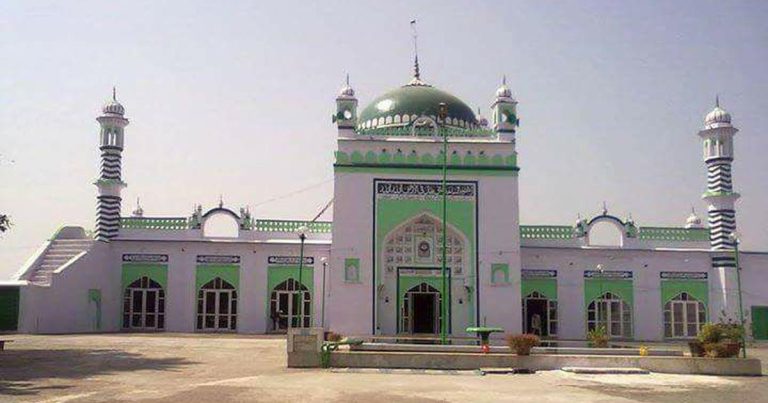
On Wednesday, 22nd January, the Tamil Nadu police in the Madurai district issued orders barring the Muslim community members from transporting livestock for sacrifice to the claimed Sikandar Badusha Dargah located atop the Thiruparankundram hill. The police said that the community was allowed to transport cooked meat and consume and pray on the hill, but the ban was only imposed on the transportation of livestock like chicken, goat, etc for sacrifice.

The said order created religious tension in the district as the hill also houses the old Murugan Temple, close to the Dargah. Indian Union Muslim League MP Nawaz Kani took cognizance of the event and talked to the police. However, the authorities firmly stated that the restriction would remain in place for the transportation of animals for sacrifice atop the hill.

“For several decades, devotees used to take goats and hens atop the hill for sacrifice, cooking, and consumption. This has been in place for several decades. From now on, those who are climbing the hill will be allowed to take meat, but there is a temporary ban on taking live animals. I met the Madurai Police, and we are discussing this matter. The practice that was in place till now should be restored” Kani was quoted as saying as he added that the property on the hill was a Waqf property.

He also highlighted the instance of the Gyanvapi structure and the Kashi Vishwanath temple in Varanasi and said that the duo have been co-existing for years now, similarly, he said the Murugan Temple and the Sikandar Badusha Dargah would co-exist atop the Thiruparankundram hill. He said that the restrictions were temporary and that these would be lifted soon allowing Muslims to pray without any restriction at the Dargah.

Kani’s visit to Dargah (India Today)

Following this, Tamil Nadu BJP chief K Annamalai commented on the issue and stated that Kani was trying to make a difference between the two religious communities. “In the spiritual land of Tamil Nadu, all religions have their own rules of worship at their places of religious worship. Their sanctity must be preserved. But the events taking place at Thiruparankundram Subramanya Swamy Temple (Murugan Temple) are unpleasant,” he said.

He further added that Kani’s action would hurt the religious sentiments of the people worshipping the Murugan temple and would also pose a threat to the sanctity of the temple. “To foment division, the MP consumed non-vegetarian food at Thiruparankundram Subramanya Swamy Hill. This is not only completely wrong but also a religious riot. For all these years, the people of Tamil Nadu have been living in social harmony and respecting the rituals of all religions. A Member of Parliament acting to spoil it is foolish. Totally unacceptable,” he added.

Restrictions imposed on Annadhanam offered at Palani Dhandayuthapani Swamy temple

While Muslims are allowed to bring non-vegetarian food to the Thiruparankundram hill, food safety officials in Dindigul have issued stringent orders requiring prior permission for devotees offering Annadhanam (food-offering) at the Dhandayuthapani Swamy temple in Palani. Thaipoosam festival is starting on 11 February in the temple, for which preparations are underway. Amid this, the Food Safety Department in Dindigul has mandated that anyone wishing to distribute Annadhanam to the devotees on Padayatra must first obtain official permission.

Failure to comply with this order will result in a fine of ₹1,000. The department also ordered that plastic bags should not be used and areas where food is served must be cleaned after meals.

Palani Murugan Temple is considered the third abode of Lord Muruga, and devotees have started to arrive ahead of the Thaipoosam festival. The devotees offer food to other pilgrims, but now the authorities are restricting this practice, requiring prior permission.

Jain caves painted green

In the midst of this controversy, another issue emerged in which a few ‘unidentified’ miscreants painted ancient ‘Jain caves’ green on the hill causing outrage from the Hindu community. The vandalism was brought to the notice by Shankar, Assistant Conservation Officer of the ASI who filed a complaint under the Ancient Monuments and Archaeological Sites and Remains Act, 1958 (AMASR Act), and the Prevention of Damage to Public Property Act, 1984 (PDPPA).

Jain caves painted green (The commune)

How did the communal issue escalate?

The entire issue is believed to have begun last year on 27th December after a Muslim family led by Syed Abu Dahir, a 53-year-old from Malaiyadipatti attempted to take animals on the hill for sacrifice. The police detained the family which further irked 20 Islamists to protest against the police. Recently on 5th January, a massive protest by Muslims was organized at the bottom of the hills where the protestors demanded free access to pray at Dargah atop the hill. Given this, the police made several detentions after the Muslims engaged in a major scuffle with the authorities. The Muslims claimed that Sultan Sikandar built the Sikandar Badushah Thozhugai Pallivasal approximately 400 years ago.

On 18th January then, the Muslims led by the SDPI organized Sammanboj on the hill in which they had planned to sacrifice goats and chickens for meals. The police were informed about the plans backed by several social media posts that affirmed the Muslim community’s intentions. Hindu Munnani members meanwhile resisted Muslims’ effort to sacrifice animals on the hill, one of Lord Murugan’s six sacred abodes. They said that Muslims were attempting to convert the hill into an Islamic place of worship.

The police then posed barricades on the site informing the Muslims that sacrificing the animals was prohibited atop the hill, however, they could carry the cooked meat and consume it there. Following this, clashes erupted between Jamath members and the police, further intensifying the situation.

On 21st January, DMK Manapparai MLA Abdul Samad conducted and unofficially survey of the hill and claimed control of the premise. Indian Union Muslim League MP Nawaz Kani also claimed that the entire property was Waqf property and every Muslim had the right to pray at Dargah the way he wanted. He reiterated that the sacrifice of animals atop the hill was an old tradition and that it should continue.

It is crucial to note that Thiruparanundram Hill is a religious site and is of crucial significance to Hindus due to the presence of ancient Jain caves and Lord Murugan Temple atop. Several Hindus have worshiped the temple for centuries. The Jain caves on the hill also date back to the 2nd century BCE and these have Tamil Brahmi inscriptions on them, as surveyed by the Archaeological Survey of India (ASI).

However, the Muslims who are creating chaos around the hill have begun claiming the hills as ‘Sikandar Hills’ behind the Sikandar Badusha Dargah.

Muslims claiming ownership of the hills, calling it ‘Sikander Hills’

One may think that these claims by Muslims are recent after the police orders, however, the Muslims have been trying to claim the hills from the 19th and 20th centuries. The hill which is of most significance to Jains and Hindus is being claimed as ‘Sikandar Hills’ by the Muslims, posing a threat to the sanctity of the temple and Jain caves. Notably, in the past also the legal authorities affirmed that the Hills housed the Lord Murugan temple primarily and that Lord Muruga was the primary deity of the region.

In the year 1931, the Islamists made similar claims saying that the hill was a Muslim property and that its name was ‘Sikandar Hills’. The Privy Council on 12 May 1931 took cognizance of the matter and said that Thiruparankundram Temple had proven its historical possession of the unoccupied portions of the hill, treating it as its property for generations.

The council was hearing the matter over the confiscation of endowed villages and the presumption regarding the temple’s ownership of the wasteland around the temple. “the question at hand is whether any presumption should be drawn from the confiscation of the endowed villages concerning the property rights in the wasteland situated within the Ghiri Veedhi, which forms part of the Malaiprakaram. It is admitted that the village of Thiruparankundram, where the temple is located, was part of this endowment,” the Privy Council judgment read.

The Thiruparankundram Temple is one of the most revered temples in the southern part of India dedicated to Subramanya, the son of Lord Shiva. The shrine of the deity has also been carved from within the hill indicating the elongated and original presence of the temple for centuries. Around the hill is the two-mile pilgrim’s path where the devotees offer circumambulation (pradakshina) to the deity. The said path, Ghiri Veedhi is considered as the temple’s property. In 1144, the same was called the Malaiprakaram of the temple.

Historical records show no interference by Mahomedan invaders

During the council judgment in 1931, the Subordinate Judge clarified that ‘prakaram’ is the outer area of the temple and ‘Malai’ means hill. “The Thiruparankundram Temple had proven its historical possession of the unoccupied portions of the hill, treating it as its property for generations,” the subordinate judge said. Notably, historical records also show no interference by Mahomedan invaders on the hills.

Some of the Muslims, reportedly, might have built residences on the hilltop in the past, forcing the Hindus there to accept such development. However, the rights of the temple remained with the Hindus as granted by the East India Company, which recognized the temple’s ownership over the land. The then government also considered the entire hill to be temple property, as affirmed by the Subordinate judge.

“During some interval of Mahomedan domination that mosque and some Mahomedan houses were built, but this was an infliction which Hindu occupants of the hill could have been forced to put up with. Thus, rights which temple could assert against Respondent were rights which East India Company granted to them,” the original documents regarding the case read.

Local Hindus have alleged that under the guise of religious festivals, parts of the hill have been systematically encroached upon over time by the local Muslims. Meanwhile, the Tamil Nadu government’s HR&CE Department has also been accused of Muslim appeasement politics contributing to the further escalation of communal tensions.

Bombay High Court acquits a father convicted of raping his daughter by trial court; father was accused because he was opposing her relationship with a boy

0

The Nagpur bench of the Bombay High Court recently acquitted a middle-aged man who was convicted of raping his minor daughter by the trial court. In a judgment given on December 5, 2024, a bench of Justice G A Sanap acquitted the father citing lack of evidence.

Justice Sanap noted that in ordinary circumstances, a daughter would not level such an allegation and a father would not sexually assault his daughter. “It is true that in ordinary circumstances, a daughter would not level such an allegation against her own father. Similarly, in ordinary circumstances, the father would not also sexually assault his own daughter. However, considering human psychology and tendency, mistakes can occur, even in the case of the father, who is the ordinary saviour of the children,’ Justice Sanap observed.

The bench was hearing an appeal by the father challenging his conviction, dated February 23, 2021, in the sexual assault case by a special court. He was granted 10 years of imprisonment along with a Rs. 5000 fine by the special court under the provisions of the Indian Penal Code and the Prevention of Children from Sexual Offences Act (POCSO).

The father looked after the alleged victim and her brother

The Judge noted that the complaint was filed 7 years after his wife left the appellant. He further observed that the appellant had not remarried ever since his wife left him and had been taking care of his two children, including the victim. The judge also took notice of the fact that the victim confided in her maternal grandmother about the alleged sexual assault and not in her paternal grandmother with whom she had been residing for years.

“It is not a case of the victim that she was not close to her paternal grandmother. The victim girl did not disclose any incident to her paternal grandmother and her younger brother. The appellant looked after the well-being of the victim and her younger brother. He did not perform the marriage even after desertion by the first wife. As compared to a paternal grandmother who was residing with the victim, the maternal grandmother, was more trusted by the victim girl, ” the judge noted. The victim had testified that her mother had left her, and her father, an alcoholic, started abusing her when she was in Class 3 and that she disclosed this to her maternal grandmother and not to her paternal grandmother with whom she had been residing.

No evidence except the ‘bare words’ of the victim

Citing a lack of evidence, except for the victim’s testimony, Justice Sanap noted that the appellant has been shouldering his family’s responsibility from age 25. “Even if it is assumed that the father was addicted to liquor, it would not weigh in favour of the prosecution. The victim has nowhere stated that the appellant did not look after their well-being and maintain them. He looked after the victim in the absence of her mother, would not have committed such an act with her. When the wife of the appellant left him, he was hardly 25 years of age. On the date of lodging the report, he was 35 years of age. He single-handedly looked after the well-being of the children and his old-aged mother. He was the only earning member of the family and must have toiled hard to earn and sustain the family. This is another vital circumstance, ” the judge noted

Father was opposing the victim’s marriage with a boy of her choice

Examining the evidence on record, Justice Sanap observed that the victim implicated her father in a false case because he was opposing her marriage with the boy of her own choice with whom she had intimacy.

“The appellant, being a caring father, did not accept the proposal of marriage of the boy with his daughter. In my view, it seems to be the cause for the prosecution against the appellant. It shows that the victim and the boy had intimacy. In my view, the strong opposition to the marriage by the appellant seems to be the cause of his misery. It seems that his approach was proper. He was not wrong when he suggested that the boy was not the proper match for the victim. The appellant being guardian of the victim, was the proper person to find a suitable match for his daughter. The victim-daughter had ideas and plans in her mind, “the judge said while acquitting the appellant.

Just as 2 more temples burn to ashes, Bangladesh govt denies persecution of Hindus, lies to US official and blames India for spreading ‘misinformation’

“We do not want to use the word minority. Everyone is a citizen of Bangladesh and everyone has equal rights. The few isolated incidents that have occurred since 5th August are mainly political, not religious, reasons,” Bangladesh Home Affairs Advisor Lieutenant General (retd) Jahangir Alam Chowdhury claimed before the United States (US) Charge d’Affaires in Dhaka Tracey Anne Jacobson on the afternoon of 21st January, according to a report in The Daily Star. He added that the Indian media is spreading lies that minorities are not being oppressed in Bangladesh.

Meanwhile, Islamists attacked two temples on Tuesday in Kashiani of Gopalganj and set them on fire, reported Dhaka Tribune. The incident happened in the wee hours of 21st January in the Kashiani upazila’s Tarail Northpara village of Fulkra union, where a Durga temple and a Shitala temple were attacked. Both temples suffered severe damage from the flames, which destroyed worship materials and idols. However, the perpetrators are yet to be identified. The authorities also arrived at the scene to evaluate the damage after learning of the occurrence. This is the latest attack on minorities and their religious places in Bangladesh that started after the ‘students revolution’ overthrew Sheikh Hasina government.

Promoth Biswas, who worships at the temples every day, spoke of his dismay at witnessing the destruction. “I went to the temple for my usual morning prayer on Tuesday and found the bamboo door open. Inside the Durga temple, I saw that the worship materials had been burned. Additionally, the statue of Shitala Devi in the nearby Shitala temple had been set on fire using straw. I immediately informed others about the situation,” he voiced.

OC Mohammad Shafiuddin Khan of the Kashiani police station verified the instance and promised that an inquiry will be carried out. “I visited the site after receiving the news, and we are taking legal action. However, as of now, no one has filed a formal written complaint,” he alleged.

Notably, the Bangladeshi administration led by chief advisor Muhammad Yunus has consistently propagated the narrative of “no atrocities on minorities,” while simultaneously attributing blame to the Indian state and its media for spreading disinformation. However the horrific developments coming out of the country reveal entirely different ground realities. Jahangir Alam Chowdhury who met with Tracey Ann Jacobson at his office at the Secretariat also advocated for the relocation of further Rohingya Muslims from Myanmar to the United States.

“The United States has been in a leadership role in humanitarian assistance and rehabilitation of the Rohingya from the beginning. They have already rehabilitated a significant number of Rohingya. I urge the United States to rehabilitate more,” he urged. According to Tracey Ann Jacobson , the biggest contributor to the rehabilitation and development of Rohingya refugees is the United States. In order to better the lives of the Rohingya, the US development agency US-Aid is collaborating with regional non-governmental organizations (NGOs) in Bangladesh. About 17,000 Rohingya have previously been resettled by the US and this process is still going on.

The meeting covered a wide range of subjects, including border security, the problems faced by minorities, cooperation in the agricultural sector, counterterrorism, the Rohingya issue, the Police Reform Commission, mutual cooperation in strengthening the capacity of law enforcement agencies and mutual interests. According to the Home Affairs Advisor, the US is one of Bangladesh’s main development partners. Many Bangladeshi students travel to the US each year to pursue higher education and the country remains a partner in the security and counterterrorism sectors.

Furthermore, he added that they have been helping Bangladesh by giving police and other law enforcement authorities cutting-edge training and equipment to improve their skills. He then asked for additional training on human rights problems for the police and on human trafficking concerns for the Coast Guard and Border Guard Bangladesh (BGB). “We will continue to increase the United States’ support for Bangladesh’s development,” the US Charge d’Affaires stated. She admitted that 30 percent more students are now able to study in the US than earlier.

She also assured, “We will provide more training to law enforcement officers. However, we must ensure that the officers return to their respective positions after the training.” Jahangir Alam Chowdhury, on the other hand, declared that the border situation is very normal. Next month, the two nations will meet in Delhi at the level of the director generals of the BGB and BSF (Border Security Force).

Punjab and Haryana HC slams AAP govt, asks how can they have no money for forensic labs but lavish spending on advertising and cars

In an embarrassing turn of events for the Aam Aadmi Party government in Punjab, the Punjab and Haryana High Court has asked the state government’s Chief Secretary to provide details of the expenses on advertisements promoting the government’s performance and ‘achievements’ in the current fiscal year. The court rebuked the AAP government for taking a position that there was a shortage of funds for allocating the budget for buying modern technology tools for Forensic Science Laboratories while huge amounts are otherwise being spent.

While hearing a regular bail plea by one Vinay Kumar in a Narcotic Drugs and Psychotropic Substances (NDPS) case on 21st January 2025, Justice Sandeep Moudgil said, “The State Government, through its Chief Secretary is directed to furnish a detail of expenses met out in this running financial year i.e. from 01.04.2024 till 20.1.2025 on the publication of the advertisements qua the performance and achievements of the Government and the new vehicles purchased for the police officials. Necessary information to be furnished within a period of one week from today by way of an affidavit of Chief Secretary, Government of Punjab.”

The NDPS case against Vinay Kumar and the AAP government’s admission of Punjab’s FSLs lacking basic facilities

During the earlier hearings in the matter, petitioner-accused Vinay Kumar’s counsel alleged that Vinay Kumar was actually taken into custody on 14th September 2023 from the house of one Mohit Sharma but in the records, he was been shown to be arrested on 16th September. This petitioner’s claim was backed by the CCTV footage and a CD which was placed on record in the court. Subsequently, the High Court directed the state counsel to examine the footage submitted by the petitioner’s counsel and file a status report accordingly.

To court the court’s dismay, the state counsel informed that the footage was sent to the Central Forensic Science Laboratory (CFSL), Chandigarh, for analysis. However, the FSL lacked the basic facilities to analyse the video clips or compact disks.

“This Court was at a dismay to know that in Punjab the facility to examine the CD or any other video clip is not available either in FSL, Mohali or at the other 4 RFSLs situated at Mohali, Amritsar, Bathinda and Ludhiana,” the court said.

In the affidavit filed on 8th August 2024, the Aam Aadmi Party government in Punjab attempted to ‘explain’ that four Regional FSLs including the one in Mohali do not have the facility of audio, video identification system and video spectral comparator, mobile firing rest system and photography set up with digital SLR with PC Compatibility.

In two affidavits filed, including one by Dr Rakesh Kumar Gupta, Chemical Examiner, Chemical Laboratory, Punjab Kharar, the court was informed that Rs 99.40 lakhs were allocated for the upgradation of infrastructure of lab in Kharar, in addition to installing computers and other equipment for bar-coding.

While multiple affidavits were filed informing about the allocation of funds and its usage in the upgradation of FSLs and recruitment of analysts etc, the Secretary, Government of Punjab, Department of Home Affairs and Justice also filed an affidavit dated 12.04.2023 in CRM-A-2300-MA-2017 stating that all the four established FSLs/RFSLs are being upgraded, however, the court observed that it nothing but a “farce” as despite the tall claims of fund allocation and expenditure for upgradation of forensic labs in Punjab, when the CD is present petitioner Vinay Kumar’s case was sent to FSL, phase IV -SAS Nagar, Mohali (Punjab) for examination but the same was returned back the CIA, Tarn Taran with the remark/ report dated 22.08.2024 that “facility for examination of video/DVR/CCTV does not exist in the Forensic Science Laboratory, Punjab.”

High Court miffed over lack of basic necessities in FSL labs

Due to this, the state counsel sought a short adjournment to comply with the court’s order dated 9th August 2024. However, On 19th November 2024, the Punjab and Haryana High Court was informed that the necessary equipment are still not through the required process is underway and the State was directed to file an affidavit of the Home Secretary with the comprehensive schedule and action plan for upgradation of FSL, Mohali as well as RFSLs situated at Bathinda, Amritsar and Ludhiana within two weeks. Mohali FSL’s director who assisted the State Counsel said that a tender notice inviting bids would be published within a week and discussions have been held for purchase of forensic hardware and software. The State sought one month time on 11th December 2024 to complete the purchase process.

However, on Tuesday (21st January 2025), an affidavit by Dr Ashwani Kalia, Director of the Punjab FSL, was filed, in which he detailed the progress in procurement of video forensic tools. Dr Kalia informed the court about a meeting held by the Technical Evaluation Committee on January 9, 2025, regarding the supply and installation of the equipment. He assured the court that the process would be completed within four weeks and that by the next hearing in the matter, equipment would be ready to verify the genuineness and veracity of CCTV footage or clips.

To the High Court’s disappointment, Dr Kalia apprised the court that the upgradation process for the other three forensic labs could not be initiated due to lack of funds and budget allocation as of yet.

Calling another plea filed by Dr Kalia “Amazing” wherein he claimed that there is “serious budget restraint to purchase the equipment for the rest of three RFSLs.”

Justice Sandeep Moudgil came down heavily on the Punjab government and said that the “court cannot accept” such a response from the Director, of Forensic Science Laboratory, Punjab. The court noted that “budget requirement and sanctioning of the same could have been expedited within a few hours or in a couple of days had the State Government shown its willingness to armour itself with the modern investigative/scientific techniques, especially, in this digital and artificial intelligence era.”

Further reprimanding the Aam Aadmi Party government, the High Court said, “By no stretch of imagination, the State could take a stand of shortage of funds or budget allocation for the purpose which is involved in the instant petition i.e. to investigate crime before this Court wherein otherwise also there is patently huge amount is spent.”

Justice Moudgil also noted that the law enforcing agency should be equipped with all necessary facilities since an inordinate delay in filing challans hands undue leverage to the accused.

HC seeks details of expenditure from AAP govt

The High Court ordered the CM Bhagwant Mann-led state government to furnish details of its expenditure in current financial year on the publication of advertisements hailing its performance and achievements. The court also directed the AAP government to provide details about the purchase of new vehicles for police officials. The court gave the state government one week to provide these details.

Hence, the State Government, through its Chief Secretary is directed to furnish a detail of expenses met out in this running financial year i.e. from 01.04.2024 till 20.1.2025 on the publication of the advertisements qua the performance and achievements of the Government and the new vehicles purchased for the police officials. Necessary information to be furnished within a period of one week from today by way of an affidavit of Chief Secretary, Government of Punjab,” the court said and adjourned the matter to 29th January.

All excerpts taken from relevant court order

Punjab has the highest per-capita debt in the country

Notably, Punjab has been facing financial crises in the recent past. The RBI data indicated that Punjab’s debt-GSDP ratio and per capita debt are the highest in the country compared to other states. Punjab’s debt-to-GDP (%) in FY 2024-25 (budget estimate) has been reported to be 44.1% while the fiscal deficit 3.8%. While the state’s financial condition is worsening, the AAP government has been prioritising “image management” more than economy management. In March 2024, it was reported that the AAP government spent Rs 7 crore in the Ludhiana district alone on promotions.

While the state’s outstanding debt stands at Rs 3,43,626 crores, as of November 2024, and is likely to increase by Rs 4,50,000 crore by the end of the AAP government’s term in 2026-27, the Bhagwant Mann government has been squandering taxpayers’ money on advertisement polishing its own image and distributing freebies at the cost of drying up state exchequer. With such misplaced priorities, it is not surprising that the state’s forensic labs are grappling with a lack of basic facilities leading to the dragging of criminal cases in the courts.

Uttarakhand government notifies Uniform Civil Code, becomes the first state in India to do so

Uttarakhand on Wednesday notified the Uniform Civil Code (UCC) which contains clarity of legal provisions for marital conditions and protection of individual rights and social harmony, an official statement read.

According to the state government, this act applies to the entire area of the state of Uttarakhand and is also effective on the residents of the state living outside Uttarakhand.

Uttarakhand has become the first state in India to implement a Uniform Civil Code (UCC), aiming to simplify and standardize personal laws related to marriage, divorce, succession, and inheritance.

The UCC applies to all residents of Uttarakhand, except Scheduled Tribes and protected authority-empowered persons and communities.

This Act does not apply to the Scheduled Tribes (ST) notified under Article 342 and Article 366 (25) of the Constitution and protected authority-empowered persons and communities under Part XXI have also been excluded from its purview.

To streamline and simplify the legal processes related to marriage, a public welfare system promoting the protection of individual rights and social harmony has been provided in the Uniform Civil Code Act, 2024 of Uttarakhand, the statement added.

Under this, marriage can be solemnised only between those parties, none of whom has a living spouse, both are mentally capable of giving legal permission, the man should have completed at least 21 years of age and the woman 18 years of age and they should not be in the ambit of prohibited relationships.

Marriage rituals can be performed in any form under religious customs or legal provisions, but it is mandatory to register marriages taking place after the implementation of the Act within 60 days.

Whereas marriages taking place from March 26, 2010, to the implementation of the Act will have to be registered within 6 months. Those who have already registered as per the prescribed standards, although they are not required to register again, will still have to acknowledge the registration done earlier.

Marriages solemnised before March 26, 2010, or outside the state of Uttarakhand, where both the parties have been living together since then and fulfil all the legal eligibility criteria, can (although it is not mandatory) get registered within six months of the coming into force of the Act, said an official statement.

Similarly, the work of acceptance and acknowledgement of marriage registration is also required to be completed promptly. After receiving the application, the sub-registrar has to make an appropriate decision within 15 days.

According to the statement, if no decision is taken on the application related to marriage registration within the prescribed period of 15 days, then that application is automatically forwarded to the registrar; whereas, in case of acknowledgement, the application will be considered automatically accepted after the same period.

Along with this, a transparent appeal process is also available if the registration application is rejected. There is a provision of penalty for giving false information for registration under the Act and it has also been clarified that the marriage will not be considered invalid merely due to non-registration. Registration can be done both online and offline.

To implement these provisions, the state government will appoint a registrar general, Registration and sub-registrar, who will ensure the maintenance and monitoring of the relevant records.

This Act also lays down who can marry and how marriages are to be solemnised and also provides clear provisions on how both new and old marriages can be legally recognised, the statement added. 


(This news report is published from a syndicated feed. Except for the headline, the content has not been written or edited by OpIndia staff)

One year of Ram Lalla’s Homecoming: A milestone in India’s Dharmic Renaissance and Civilisational Reawakening

January 22, 2025, marks one year since the culmination of the centuries-long struggle Hindus had waged to reclaim their God’s birthplace as PM Modi performed the Pran Prasthistha ceremony of Ram Lalla at the newly constructed sprawling and majestic Ram Mandir.

It was exactly a year back when Ram Lalla was reinstalled to his rightful abode, after 496 long agonising years when it fell victim to Islamic iconoclasm, losing its character when the Mughals destroyed a pre-existing temple and raised a mosque over it to humiliate the country’s majority, Hindus.

Across the country, the day occasioned celebrations as Hindus installed statues of Ram Lalla, Lord Ram, Goddess Sita, and Lakshman at several roubdabouts, open market places to commemorate the first anniversary of the epoch-making triumph of the Hindu civilisation.

More importantly, the day symbolizes a significant milestone in India’s path towards a steadfast Dharmic renaissance. The construction of the Ram Mandir in Ayodhya has awakened the long-slumbering Hindu consciousness, encouraging people to fight for what is rightfully theirs within the framework of constitutionally mandated recourse.

Echoes of “Jai Shri Ram” resonated from every corner of the country, creating an atmosphere of unity and triumphant celebration seldom seen on such an overwhelming scale, and second only to the day when Pran Prathistha of Ram Mandir was performed. The long-cherished prophecy, “Ram Lalla Aayenge, Mandir Wahin Banayenge,” had not only come true but had also gotten a year old.

Amidst the jubilant festivities, the moment also called for reflection on how the realisation of the Ram Mandir reinforced the cultural battle to reclaim what had once belonged to the Hindu heritage but had fallen victim to the iconoclastic attacks by invading Muslim marauders.

Ram Lalla’s return signifies not only religious fulfilment but the relentless courage of millions who kept the dream alive through generations. It is a testament to the enduring struggle against centuries of oppression, from the destruction wrought by Islamic invaders to the economic exploitation of British rule, and the marginalization under post-independence political narratives that suppressed Hindu identity and aspirations.

The Ram Janmabhoomi movement stood against historical iconoclasm, typified by sites like Mathura’s Krishna birthplace and Varanasi’s Gyanvapi complex. These locations remain symbols of India’s unresolved heritage conflicts, where temples were replaced by mosques under imperial rule. Despite independence, efforts to reclaim cultural pride faced ideological resistance from politicians and intellectuals committed to minority appeasement.

The Ram Mandir has, therefore, become a rallying point for civilizational healing and revival. It reaffirmed the notion that the wrongs of history can be righted, inspiring future efforts to reclaim heritage sites and restore spiritual centres central to the Indic worldview.

The realisation of Ram Mandir emboldened Hindus to believe in their ability to overcome centuries of injustice and oppose decades of gaslighting by Marxist-Nehruvian “distortians”, who guilt-tripped Hindus to suppress their demands to reclaim their civilizational heritage.

The Pran Pratishtha was not just the end of a struggle but a call to renewed action in safeguarding cultural and religious freedoms. The return of Ram Lalla to Ayodhya heralded a broader restoration of dharma and civilizational pride, inspiring continued devotion, service, and efforts toward a more harmonious and just society. With its first anniversary, we have completed a significant milestone, a launch pad to prepare ourselves for similar battles ahead as Gyanvapi and Sambhal beckon us.

Amidst uncertainty surrounding TikTok in the US, Meta lures TikTokers to Instagram and Facebook by offering cash rewards and other deals

Taking advantage of the uncertainty surrounding TikTok in the USA, Meta has announced a program under which cash rewards will be given to eligible TikTok creators for posting reels on Facebook and Instagram. On Tuesday, the company promised cash bonuses, content deals and support to grow their communities to eligible TikTok creators who will join the company’s social media platforms.

The TikTok creators will reportedly also get access to the Facebook Content Monetisation program which allows creators to earn for their videos, photos, and text posts on Facebook. In addition, some selected TikTok creators will also get a one-year trial of Meta Verified including a verified badge, account support, and impersonation protection.

Creators can make up to $ 5,000 within 90 days

The program named ‘Breakthrough Bonus’ will allow creators to earn up to $5,000 within 90 days for regularly posting videos on Instagram and Facebook. The eligibility requirements for the program are that the creators must be adults based in the US and have an ‘existing presence on a third-party social app’ like TikTok and link to it in the application, have a professional Instagram or Facebook account. Besides, the creators should not be participating in any of Facebook’s other monetisation programs.

Meta will be paying “eligible TikTok creators to help jumpstart their growth on our apps,” a Meta spokesperson told Business Insider. The spokesperson added that Meta will soon ink “content deals” with some TikTok creators “to help grow their communities on Instagram and Facebook.”

As per the program, the creators will be required to post at least 20 reels on Facebook and 10 reels on Instagram each month during the first 90 days of the program, and also share content at least 10 days each month. Meta has also optimised its ranking systems to allow newer creators to break through to new audiences. Creators can also show their Instagram, TikTok or YouTube handles and follower counts in their Facebook profiles to boost their credibility. Meta is also taking measures to promote Reels, its short-term video format, among TikTok creators. The company has notably increased the time limit for Reels from 90 seconds to 3 minutes.

Meta is also making changes to its short video format Reels to make them more appealing for TikTok users. One major change is increasing the length of Reels to 3 minutes in the USA, double the length of the current 90-minute limit.

Meta also said that it has optimised its ranking systems to allow newer creators to break through to new audiences. The company will also allow creators to show their Instagram, TikTok, or YouTube handles and follower counts in their Facebook profiles to boost their credibility on its platform.

Trump delayed Tik Tok ban by 75 days

On Monday, President Donald Trump signed an executive order to delay the TikTok ban deadline by 75 days. He told the Department of Justice not to enforce the penalties of the ban. While the app had gone offline in the USA, it was back online after 12 hours. However, the app is still missing from the app stores of Apple and Google.

Do you know, Saif Ali Khan’s family is in a court battle with the govt of India over properties worth ₹15,000 crores: Enemy Properties Act Vs Pataudi royal family

The troubles of Bollywood actor Saif Ali Khan do not seem to end anytime soon. While the actor was discharged from hospital after treatment for injuries sustained in the knife attack during an alleged robbery attempt at his house in Mumbai, his ancestral properties worth Rs 15000 crore in Bhopal belonging to his family may soon be taken over by the Central government.

This comes after the Madhya Pradesh High Court lifted the stay on the ancestral properties of the Pataudi family which means that the Central government may seize control of these properties under the Enemy Property Act 1968. This act allowed the government to take over the properties of those who migrated to Pakistan after partition in 1947.

The properties that may come under government control include the Flag Staff House, where Saif Ali Khan spent his childhood, Noor-Us-Sabah Palace, Dar-Us-Salam, Ahmedabad Palace, Kohefiza Property, and others. 

On 13th December 2024, a single bench of the High Court directed the Pataudi family to bring their case to the appellate authorities within 30 days. However, it remains unclear whether the family had done so. “it is directed that if representation is filed within thirty days from today, then the appellate authority shall not advert to the aspect of limitation and shall deal with the appeal on its own merits. In the above terms, the petitions stand disposed of,” Justice Vivek Agarwal said.

Reports say that since the situation was unclear, the Bhopal district administration declined to comment in this regard. However, Bhopal Collector Kaushalendra Vikram Singh stated that any action will be taken only when there is clarity on the High Court order.

Notably, Nawab Hamidullah Khan, the last king of Bhopal, had two daughters: Abida Sultan and Sajida Sultan. According to custom, the eldest child, Abida Sultan, inherited the property. However, Abida moved to Pakistan in 1950, and following her father’s death, her sister Sajida Sultan, who stayed in India, became the legal owner.

Sajida Sultan, Saif Ali Khan’s grandmother, inherited the land after Abida left. The Enemy Property Act was passed in India in 1968, and the ownership of Nawab’s property has been a source of contention since the Custodian of Enemy Property for India designated it as enemy property in 2014.

Two years later, the Modi government’s ordinance said that heirs would have no rights over “enemy properties” which also included those claimed by the Pataudi family.

In the year 2019, the court recognised Sajida Sultan as the legitimate successor, and her grandson, Saif Ali Khan, inherited a portion of the property. However, since Abida Sultan migrated to Pakistan, the Central government claimed the assets as enemy property.

Congress’s benevolence towards “enemies” of India to the Modi government’s “seize and auction” action

Interestingly, back in 2016, the Congress party notorious for its Muslim appeasement politics vehemently opposed the Modi government when it tried to make amendments to the Enemy Property Act even at the cost of jeopardising national security.

In December 2016, the President of India re-promulgated the Enemy Property Act Ordinance for the 5th time. While the Modi government’s bill to amend the Act was passed in Lok Sabha, it faced immense opposition, particularly from Congress and Samajwadi Party. A PIL was also filed by Congress leader Hussain Dalwai in the Supreme Court in this regard, however, the Supreme Court refused to entertain the plea.

As the Custodian of Enemy Property for India (CEPI), there are about 13,000 enemy properties in India including those which belong to people who migrated to Pakistan and China. These properties are worth thousands of crores. However, given the lack of imperative to amend the Act to unlock its full potential and strict implementation, these properties fell into the hands of either the heirs of those who moved to enemy countries at the time of conflict or in the hands of dubious elements. Meanwhile, Pakistan enacted the Enemy Property Act there and in 1949, Pakistan promulgated the Evacuee Property Act, which stated that the property of a person even though he was a Pakistani citizen, who had a distant relative who had migrated to India would have their property marked as “evacuee property”.

OpIndia earlier reported about how Bangladesh enacted the Enemy Property Act to arbitrarily declare Bengali Hindus as “enemies” and confiscate their properties. Not only Pakistan and Bangladesh but even China has disposed of enemy properties over the years.

While Congress’s Muslim appeasement politics is no hidden secret, the party gave a ticket to Mohammad Amir Mohammad Khan, the son of Raja of Mahmudabad who migrated to Pakistan after partition. Raja of Mahmudabad was treasurer of the Muslim League and a close ally of Mohammad Ali Jinnah who was responsible for India’s bloodied partition.

In 1985 and 1989, Congress gave a ticket to the Raja’s son Amir in state assembly elections. Even the Supreme Court ruled in Mohammad Amir Mohammad Khan’s favour and conceded enemy property to the tune of Rs 30,000 crore. In this case, Amir was represented by Congress leader and advocate Salman Khurshid. Later, Congress and other ‘secular’ party leaders made sure that the UPA government did not even table the Enemy Property Act ordinance before the parliament.

It was only after the Modi government brought the amendment of Enemy Property Act in 2017, which ensured that the heirs of those who migrated to Pakistan and China during Partition and afterwards will have no claim over the properties left behind in India, that enemy properties were taken over by the government on large scale and sold. This amendment nullified the 2005 Supreme Court order in favour of Mohammad Amir Mohammad Khan. With this amendment, any transfer of enemy property by people or entities declared as enemies post-1968 war, was declared void.

Back in 2018, the Modi government decided to auction off over 9,400 ‘enemy properties’ worth over Rs. 1 lakh crore. These properties belong to those who have left for Pakistan and China and took the citizenship of these countries. In 2018, OpIndia reported that the highest number of these properties were located in Uttar Pradesh numbering 4,991, followed by West Bengal with 2,735. Of the total properties, about 9,280 belong to Pakistani nationals and some 126 belonged to the Chinese. By 2023, Indian government earned around Rs 3400 crore by selling movable assets such as shares and gold assets marked as enemy property.

AAP makes a joke of the middle class and election manifestos- promises nothing after winning, asks Modi govt to do everything

On Wednesday, 22nd January, the Aam Aadmi Party (AAP) supremo Arvind Kejriwal released a ‘middle-class manifesto’ ahead of the Delhi Assembly Elections and raised seven demands including education, health, tax rebate, and pension from the centre. The party also demanded that the Union Budget slated to be presented in February this year should completely be dedicated to middle-class men.

Addressing a press meeting, Kejriwal said that the party would become the voice of middle-class people and would ask the government to stop tax-terrorizing them. “Today, we appeal to the Central government to recognize India’s true superpower the middle class. I announce that AAP will be the voice of the middle class from the streets to the Parliament. We demand that the next national budget be dedicated to the middle class,” Kejriwal said.

Kejriwal made 7 demands to the Central government, which are as follows-

  1. The education budget should be increased to 10 per cent from 2 per cent, and the fee for private schools should be capped.
  2. Subsidies and scholarships be given for higher education. 
  3. The health budget should be increased to 10 per cent, and tax should be removed from health insurance.
  4. The income tax exemption limit should be increased to Rs 10 lakh from the present Rs 7 lakh.
  5. The Goods and Services Tax (GST) should be removed from essential commodities.
  6. A strong retirement plan and pension schemes for senior citizens should be announced, and there should be free medical services for senior citizens in all government and private hospitals across the country. 
  7. Senior citizens should get a 50 per cent concession in rail travel.

Kejriwal slammed the Centre for its financial policies and alleged that it was imposing ‘tax terrorism’ on the middle-class people. “People have to pay taxes while they are alive, but now the government has created a situation where they have to pay even after death. Amid this tax terrorism, how can someone even dare to chase their dreams?” Kejriwal said.

“For a married couple, family planning has become a financial decision. Due to such issues, many Indians are leaving the country. In 2020, around 85,000 people left India for foreign nations. This is a matter of great sorrow for our country,” he added further criticizing the political parties for reducing the middle class to what he described as a ‘slave mindset’.

Meanwhile, PM Modi took cognizance of the event and said that AAP was notorious for making false promises. It is important to note that the AAP has been making false promises to the citizens in the past few months in the wake of the Delhi Assembly elections and every time has been exposed rightly. In the given case, he claims to be standing behind the middle-class people saying that he will be the people’s voice but apparently fails to actually make any kind of promise to the middle-class. Instead, he is attempting to make a place in the minds of the voters by targeting the Centre as he asks them to ensure the fulfilment of 7 demands that he has made today.

AAP made fraudulent promises to women, and senior citizens last month

It is crucial to note that the AAP in December had made a promise to offer free medical and healthcare services to citizens aged above 60. Former AAP CM Arvind Kejriwal while announcing the scheme stated that the citizens would be able to avail the benefits of the scheme at private and government hospitals.

It also promised Rs 2100 per month to every woman under the Mukhyamantri Mahila Samman Yojana. For this, the party members had begun collecting data from the women claiming that they would get money based on the forms filled. On 25th December, the AAP revealed that around 1.15 million people had already signed up for the said schemes and that around 1,50,000 among them who are senior citizens had signed up for free health care.

However, later the fraud of the AAP leaders was exposed after the Health and Family Welfare Department of the Government of the National Capital Territory of Delhi and the Women and Child Development Department, of the Delhi Government said that no such schemes were announced by the state and that no persons were authorized to collect the data for the schemes.

Issuing an official notification the Women and Child Development Department of the Delhi Government said, “It is emphasized that since no such Scheme is in existence, the question of acceptance of the form/application for registration under this non-existent Scheme does not arise. Any private person/political party who is collecting forms/applications or collecting information from applicants in the name of this scheme is committing fraud and has no authority.”

It warned the women citizens of Delhi to stop sharing personal information through fraudulent forms. It added that the data could be leaked posing a threat to the identities of women applicants. “No official authority has been ordered to collect personal data of the citizens in the name of the fraudulent schemes,” it added.

Kejriwal has a huge history of making fake promises and telling lies to the citizens of Delhi for the political benefit of the party. Be it during the COVID spread or free ration scheme or regarding the cleanliness of the Yamuna River, AAP’s promises and boasts somehow almost always end up in hot air. OpIndia has time and again exposed Kejriwal for making fraudulent promises to the public. All such reports can be read here.

Notably, AAP during the Punjab elections had also promised to provide a monthly financial aid of Rs 1,000 to women in the state. This promise too remained unfulfilled forcing the Punjab women to protest against the government. “Why hasn’t Kejriwal kept the promises made to us three years ago? When will he fulfil them? We filled out a form for Rs 1,000 three years ago. It’s been more than three years, but we still haven’t received any money,” the women yelled as they protested outside the residence of AAP Convenor Arvind Kejriwal on January 4th.

The education model by AAP stood exposed in the past

The AAP supremo in the press meeting stated that the party raised its education budget from Rs 5000 crores to Rs 10000 crores and then to Rs 16000 crores aiming to provide better education to the Delhi students. He said that his party believed that education was the only mode through which a major push could be given to the civilians to make this country a better place.

However, it is interesting to note that the Delhi model of education was exposed several times amid which several Delhi municipal authorities and opposition leaders revealed how the party was practising corruption in the name of providing better facilities to the school-going children. In 2022, Ramvir Singh Bidhuri, the leader of the opposition in the Delhi Legislative Assembly criticized the party for claiming to have the best education model in the state. He said that as per the Performance Grading Index of 2019-2020, Delhi did not even stand in the top 5 of the list which includes all the states and the Union Territories. 

“In the performance in the domain of learning outcome, Delhi stands in the 32nd position among all states and UTs. Delhi is in the 6th position from the bottom. This implies that even after hefty spending in the name of education, students of schools in Delhi are performing very poorly,” he said calling the AAP’s policy a sham.

Bidhuri stressed that the condition of Delhi University colleges funded by the Delhi Government was also very poor. The government was unable to pay salaries to the teaching and non-teaching staff in the colleges fully funded by the Delhi government. Bidhuri stressed that the condition of Delhi University colleges funded by the Delhi Government was also very poor. The government was unable to pay salaries to the teaching and non-teaching staff in the colleges fully funded by the Delhi government. According to a November 2021 news report, 12 Delhi University colleges financed by the Delhi government experienced a funding crisis since their assigned funds were reduced.

In 2019, several Municipal Corporation of Delhi (MCD) schools had posts for teachers, and principals vacant and the student enrolment had also drastically reduced. More than 5,000 students in 14 schools were forced to sit on floors, as there were no desks and benches, and 44 schools did not have Jal Board water connections. The same was the plight of 40,000 students in 100 schools of North MCDA. There were 14 schools without a campus of their own.

Kejriwal claimed that students from private schools began joining government schools. However, data by 2018 showed that the number of enrolments in private schools had been on the rise and that in the government schools were reducing.

Recently, in 2022, the vigilance directorate recommended a detailed investigation by a specialized agency into the alleged irregularities and corruption by the Kejriwal government in the construction of 2,405 classrooms in 194 government schools in Delhi. The Central Vigilance Commission had outlined “grave irregularities” in the Public Works Department’s (PWD) construction of over 2,400 classrooms in Delhi government schools in a report dated February 17, 2020. The report was not taken seriously by the AAP until the then-governor, ordered an investigation into the matter.

Health scheme saw cut in Delhi budget last year

Notably, Kejriwal asked the Center to increase the health budget by 10% and also said that senior citizens deserved free medical aid. However, in the last Delhi Budget, the AAP government reduced the budget allotted to the health sector by around Rs 1000 crores. The budget was reduced from Rs 9742 crores in 2023 to Rs 8685 crores in 2024. For schemes and projects also, the allocation was reduced from Rs 4830 crores to Rs 3423 crores.

In her Budget speech, then-Finance Minister Atishi said the government was providing free treatment to more than 81,000 OPD patients daily and 65,806 IPD patients monthly in its 38 hospitals. She added that 64,000 people received free medicines, tests, and treatment at the 530 mohalla clinics every day.

While the AAP time and again lauds the Moholla clinics, the failure of the scheme cannot be ignored. In August 2023, senior Congressmen and the minister for health and family welfare in the government of Karnataka, Dinesh Gundu Rao visited the Delhi government’s mohalla clinic at Panchsheel Park on 4 August and termed it “overhyped.” He even went one step ahead and called his experience “disappointing.”

In 2022, a case of a toddler falling sick because of dextromethorphan poisoning in the Moholla clinic came to the fore. The child was taken seriously ill after she was administered dextromethorphan syrup by a mohalla clinic in the city. The toddler was then immediately rushed to Kalawati Saran Children’s Hospital and put on a ventilator support system after suffering from respiratory failure.

In December 2021, 16 children were poisoned and admitted to Kalawati Saran Children’s Hospital in New Delhi after allegedly consuming a cough syrup that was administered by a mohalla clinic run by the state government. 3 of those 16 children died in the incident.

It is worth noting that Arvind Kejriwal-led Aam Aadmi Party(AAP) had launched ‘Mohalla Clinics’ as their flagship healthcare model to strengthen the primary healthcare system in the city. However, several such incidents were reported after which the truth of the Moholla clinics was exposed.

Focus on freebies could derail Delhi’s capex

Ahead of the state assembly elections, the AAP in Delhi is focusing too much on providing freebies to civilians to obtain votes. Amid this, the revenue expenditure for the state could increase eventually burdening the state’s capital. A report by PRS Legislative Research highlights that in FY25, the revenue expenditure would increase by 8% over the revised estimates for FY24 while the capital outlay is estimated to decrease by 29% in the current fiscal over the RE for the last fiscal. “Between 2015-16 and 2021-22, on average, Delhi spent 39% lower on capital outlay than budgeted.  This was much higher than average underspending on capital outlay by states (19%),” it says.

In the given case, as Kejriwal claimed to have voiced concerns for the middle class, it felt more like he was mocking the entire community for not being on either side of major significance. He claimed that the centre was making the middle class the victim by imposing heavy taxes on them but eventually failed to provide any solution to the alleged problem.

Kejriwal further blatantly alleged the centre of ‘tax terrorism’ and attempted to compare the centre policies to the state amid the state assembly elections. Instead of making actual promises under the ‘Middle-Class Manifesto’, the party further asked the centre to ensure developmental upgradations for the middle class in the wake of the Delhi Assembly polls. This is as weird as the party and its policies are.

Delhi goes to polls on February 5th and the results for all 70 seats of the Legislative Assembly will be announced on February 8th.

Iraq passes new laws giving more power to Sharia Courts: As activists say it will legalise child marriage, read how India grapples with Islamic laws

In a startling move, the parliament of Iraq enacted three controversial laws on 21st January. It approved changes to the nation’s personal status law that opponents contended would effectively legalize child marriage. Islamic courts now have more jurisdiction over family issues, including inheritance, divorce and marriage, based on the amendments. Iraq’s 1959 Personal Status Law, which unified family law and introduced protections for women, is reportedly undermined by the law, according to several activists.

The proponents of the modifications who were mostly conservative Shiite lawmakers described them as an initiative to lessen Western influence on Iraqi culture and bring the law into line with Islamic values. According to current Iraqi law, the majority of marriages must take place at the age of 18. Many Shia religious authorities in Iraq adhere to the Jaafari school of Islamic law, which permits marriages between girls as young as nine years old. The recent amendments would allow clerics to govern in compliance with their understanding of Islamic law.

Furthermore, the parliament passed a general amnesty bill that is perceived as favouring Sunni detainees and as allowing those engaged in embezzlement and corruption to get away with it. A land restoration measure that addressed Kurdish territorial claims was also passed by the chamber. The amendments to the civil status law, per human rights activist and Iraqi Women’s League member Intisar al-Mayali, “will leave disastrous effects on the rights of women and girls, through the marriage of girls at an early age, which violates their right to life as children, and will disrupt the protection mechanisms for divorce, custody, and inheritance for women.”

Allegations of procedural irregularities and mayhem marked the end of the session. A parliamentary official stated that “the legal quorum was broken because half of the lawmakers present in the session did not vote.” He was speaking on condition of anonymity as he was not authorized to remark publicly. He added that while some members climbed on the parliamentary podium, others vehemently opposed it. Many lawmakers voiced their displeasure with the voting procedure after the session, which saw all three contentious laws and each backed by a different bloc, be put to a vote simultaneously.

An independent MP named Raed al-Maliki conveyed, “Regarding the civil status law, we are strongly supporting it and there were no issues with that. But it was combined with other laws to be voted on together and this might lead to a legal appeal at the federal court.” Mahmoud al-Mashhadani, the speaker of the parliament, hailed the adoption of the laws in a statement as “an important step in the process of enhancing justice and organizing the daily lives of citizens.”

On the other hand, Noor Nafea Ali, an independent lawmaker, called the session a “farce” and pointed out that the bills were enacted without the required number of votes. Meanwhile, according to a security official, an explosion at an ammunition stockpile killed at least three policemen on 21st Jnauary including the national security chief of the al-Tarmiyah district north of Baghdad, and injured four more.

The explosion happened as a joint force of the Iraqi army and the national security service conducted an operation after intelligence reports of the Islamic State (IS) group’s activity and an ammunition cache in the area, informed the official, who spoke on condition of anonymity because he was not permitted to brief the media.

The Islamist attempts to impose Sharia Law in India

There exists a clear intention and wish among several individuals of a particular community to impose the Sharia law in India as well. Open and covert appeals to enforce the same in the nation or its regions have been voiced and frequently by a many, including the dreaded jihadi organizations like the outlawed Popular Front of India (PFI), Students’ Islamic Movement of India (SIMI) and even mainstream Islamic leaders, parties and politicians. In any case, terrorist groups from Bangladesh, Pakistan and other nations seek to subjugate India and Hindus to either eliminate or treat them as sub-humans under the law.

Afghanistan under Taliban authority or areas under IS or ISIS (Islamic State of Iraq and Syria) rule provides a stark illustration of what life resembles for women and non-Muslims in a nation with Sharia law. The manner in which the Taliban has restricted women’s basic freedoms including education in spite of its claims to the contrary revealed plenty about the dark reality of being governed by such an archaic law. This is further demonstrated by how non-Muslim women, especially Christian and Yazidi females suffered abuse and assault at the hands of ISIS where they were traded like livestock and raped at the hands of their captors.

The status of minorities especially Hindus in Pakistan and Bangladesh, which complies with the law in both letter and spirit yet again exemplifies the horrors endured by infidels in Sharia law. Their miserable condition resulted in the foundation of the CAA (Citizenship Amendment Act) 2019. More importantly, although the law consistently dehumanizes and exploits women and non-Muslims, many in India want to see it enforced throughout the nation since it is consistent with their Islamic ideology and beliefs.

The calls of “gustakh e rasool ki ek hi saza sar tan se juda” (behead those who insult Prophet Muhammad and Islam) that are echoed in the streets of the nation at every incident perceived of blasphemy is another manifestation of the Sharia law where religious fervor supersedes rationalism, logic and even the sanctity human life. Notably, the slogan was originally taken from Tehreek-e-Labbaik Pakistan, an extremist-turned-political outfit formed by the late Khadim Hussain Rizvi in the Islamic Republic.  

The tragic killings of innocent Hindus that occurred in the aftermath of the edited video shared by Mohammed Zubair of Alt News featuring former Bharatiya Janata Party spokesperson Nupur Sharma show the gruesome fate that alleged blasphemers often face, as evidenced repeatedly in various Islamic nations. Mob justice prevails in these states and those who manage to evade such violence ultimately confront a similar end through the legal frameworks imposed by the respective Sharia governments.

AIMPLB, Sharia Law and opposition to UCC

The main goal of the All India Muslim Personal Law Board (AIMPLB) is to protect Sharia law from any legislation that allegedly violates it. “We have more than 100 Sharia courts in India under AIMPLB and there are several others running under Imarat-e-Sharia across states including Bihar, Orissa, Jharkhand, under Imara-e-Sharia Assam and Karnataka. Jamiat Ulema is also running Sharia courts,” its spokesperson Qasim Rasool Ilyas disclosed. “We are planning to establish Sharia courts wherever there is a Muslim population,” he added.

Funnily, he claimed that the AIMPLB is trying to lessen the strain on the Indian courts, which are governed by the Constitution, by setting up Sharia courts. The Muslim organization earlier announced plans to establish Darul-Qaza, or Sharia courts, in every region of the nation in 2018. Therefore, it also opposed the Muslim Women (Protection of Rights on Marriage) Act of 2019 and any changes to the divorce laws for Muslim women. The board even released a book titled “Nikah-O-Talaq (Marriage and Divorce)” to defend Sharia law.

It has long opposed the UCC (Uniform Civil Code), claiming that it would be “against the spirit of the Constitution” and that “implementing the Uniform Civil Code will deprive citizens of the privileges provided to them by personal laws (guided by Sharia law).” The board even threatened that its implementation would result in hampering peace and harmony in the country. AIMPLB has applied every effort to uphold Sharia law in the nation, from challenging the Supreme Court’s decision to permit divorced women to seek maintenance following the “iddat” (a period of waiting and abstinence that a Muslim woman observes after the death of her husband or a divorce) to contesting the Uttarakhand UCC law.

Muslim lawmakers and leaders are mostly rejecting the long-awaited legislation because they consider it to be incompatible with the regressive Sharia law. The protest is also coupled with serious threats undermining the country’s law and order. “We are against the UCC and if it is forced upon us, the reaction will be the same as it was for the CAA and NRC (National Register of Citizens). The Muslims of the country will never tolerate it at all,” warned the president of Hyderabad-based Tahreek Muslim Shabban, Maulana Mushtaq Malik, last year.

Controversial Samajwadi Party leader Abu Asim Azmi expressed similar sentiments and conveyed, “1400 years ago a constitution of Islam was formulated but the government wants to make amendments even in that. They want you to marry according to their laws and divide your properties as per them. What shall we do? Should we follow the government’s Uniform Civil Code or the teachings of the Holy Quran and Allah. The situation is deteriorating in the country and Muslims are worried.”

Notably, the Muslim leaders and groups are fighting against the constitutional UCC only because they want religious Sharia law in the country. Their hypocrisy is revealed, though, as they only want it to apply to their personal laws and not the criminal code.

Presence of Sharia law in marriages and other walks of life

The Madhya Pradesh High Court made a startling judgement last year when it pronounced that a marriage between a Muslim boy and a Hindu girl is not lawful under Mohammedan law. The court stated that even if the marriage is registered under the special marriage act, it will be regarded as an irregular (or fasid) marriage under Muslim personal law. The couple’s request for police protection was denied by the court, which added that neither the Hindu girl were willing to convert to Islam nor the couple want to live together without getting married. The court also ignored the argument that the Special Marriage Act permits such interfaith weddings and hinted that the Hindu girl must convert to Islam in order to marry the Muslim male for the marriage to be recognized by Sharia law.

Moreover, in a landmark decision in last August, the 1935 Assam Muslim Marriages and Divorce Registration Act and Rules, which were a remnant of colonial rule, were repealed by the government of Himanta Biswa Sarma which led to significant changes to Muslim marriages such as the elimination of Qazis (the marriage and divorce registrar), the prohibition of child marriages, compulsory registration of weddings. Section 8 of the act made child marriage legal by requiring legitimate guardians to apply for marriage registration if either the bride or the groom, or both, were minors.

Sharia law influences not only significant aspects such as marriage but also enforces strict limitations on everyday life, especially for females. “When we enquire about what we see, it is that there is an intermingling of men and women. Not just that, women are exposing their bodies and doing this exercise. The programme has even abolished the thought that men and women seeing one another is haram (forbidden),” general secretary of All India Sunni Jamiyyathul Ulama, Kanthapuram A P Aboobacker Musliyar voiced recently while criticising popular physical fitness program Multi-Exercise Combination (MEC-7), in Kerala. He declared that the program was in violation of Islamic norms.

The opposition to the reclamation of Hindu temples, including the Ram Mandir, which were ravaged by Islamic rulers, represents another facet of Sharia law that is increasingly evident in India, both directly and indirectly, and in multiple forms. AIMPLB, Islamist political parties like All India Majlis-e-Ittehadul Muslimeen (AIMIM) whose leaders are notorious for spreading hateful rhetoric against Hindus and many promiment Muslims have been vehementaly against the reclamation of temples by Hindus.

They have been challenging every move by the Hindu side in the courts and the street. The violence perpetrated by Muslim mob which transpired during the survey of Shahi Jama Masjid in Sambhal was an exmaple of the same. Interestingly, Waqf which is infamous for making fraudulent ownership claims about public and private properties including temples in India is also an integral part of Sharia law. Hence, there has been such a fierce agitation against the Waqf amendment bill by Muslim groups and leaders. It is unfortunate that the opposition supports such elements for the sake of vote-bank politics and Muslim appeasement.

Conclusion

The imposition of Sharia law in its complete form often serves as a mechanism for the severe oppression of non-Muslims, child marriages and the public flogging of women through unfounded accusations, thereby infringing upon their human rights and turning their existence burdensome, as evidenced in Afghanistan and Iran where females have been murdered over headscarfs.

Otherwise, like in Bangladesh and Pakistan, it turns into a tool to single out non-Muslims and persecute them on bogus grounds. Overall, the law consistently yields dire consequences for non-Muslims, which is why radical elements advocate for its application in India, aiming to replicate the efforts of Islamic invaders to cleanse the land of Hindus and make it into an Islamic nation which was also highlighted in PFI’s vision document.