Home Blog Page 583

Donald Trump says US should not get involved in conflict in Syria, says Russia-backed Assad’s defeat may be the best thing for Russia

As the rebel forces in Syria have reached Damascus and preparing to seize the city, American president-elect Donald Trump has said that the USA has nothing to do with it, and US forces should not get involved in the conflict.

“This is not our fight. Let it play out. Do not get involved!” Trump posted on Truth Social, saying that even though Syria is a mess, it is not America’s friend and the United States should have nothing to do with it.

Donald Trump also accused former president Barrack Obama of refusing to honour his commitment of protecting the Red Line In The Sand. Notably, Obama in 2012 had said that the US would launch an offensive if Assad used chemical weapons on rebels. But when the Assad regime used the deadly Sarin gas to kill almost 1400 people, the US refrained from launching an assault in Syria.

As the Russia and Iran-backed Assad regime is likely to be defeated by the rebel forces, Trump said that it may actually be the best thing that can happen to Russia. He said that “there was never much of a benefit in Syria for Russia, other than to make Obama look really stupid.”

He posted, “Opposition fighters in Syria, in an unprecedented move, have totally taken over numerous cities, in a highly coordinated offensive, and are now on the outskirts of Damascus, obviously preparing to make a very big move toward taking out Assad. Russia, because they are so tied up in Ukraine, and with the loss there of over 600,000 soldiers, seems incapable of stopping this literal march through Syria, a country they have protected for years. This is where former President Obama refused to honor his commitment of protecting the RED LINE IN THE SAND, and all hell broke out, with Russia stepping in. But now they are, like possibly Assad himself, being forced out, and it may actually be the best thing that can happen to them. There was never much of a benefit in Syria for Russia, other than to make Obama look really stupid.”

Notably, Rebels in Syria have made rapid advances and have reached the outskirts of Damascus, and the fall of the city looks like a possibility. The opposition forces moved at a rapid speed after seizing several cities in the war-torn country, and have reached the outskirts of Damascus, ready to launch their final assault on the capital city.

The rebels have faced little resistance, as the Syrian armed forced have retreated from most places instead of fighting. Many soldiers of Assad’s force have fled to Iraq, while some have joined the rebel forces.

In a highly symbolic move, the rebels took down a statue of Hafez al-Assad, father of current president Bashar al-Assad, in the city of Jaramana, just 4 km from Damascus. 

‘India has no interest in weakening US Dollar’: EAM Jaishankar responds to Trump’s threat to BRICS nations

0

External Affairs Minister S Jaishankar on Saturday reacted to President-elect Donald Trump’s threat to impose 100 per cent tariffs on BRICS nations, stating that India has “no interest” in weakening the US dollar.

Speaking at the Doha Forum on Saturday, Jaishankar reflected on the positive relationship India had with the first Trump administration, highlighting the restart of the QUAD under Trump’s presidency.

“We had a good relationship, a very solid relationship with the first Trump administration, yes there were some issues mostly trade-related issues, but there were a whole lot of issues on which Trump was very international, and I remind people that it was actually under Trump that the QUAD was restarted,” he said.

He also noted the personal connection between Prime Minister Narendra Modi and President-elect Trump, which has contributed to the strong bilateral ties between the two countries.

“There a personal relation between PM Modi and Trump…Where the BRICS remarks were concerned. We’ve always said that India has never been for de-polarisation, but right now there is no proposal to have a BRICS currency. The BRICS do discuss financial transactions…US is our largest trade partner, we have no interest in weakening the dollar at all,” he added.

Jaishankar was addressing the 22nd edition of the Doha Forum panel on ‘Conflict Resolution in a New Era’ where Qatar Foreign Minister Sheikh Mohammed bin Abdulrahman bin Jassim Al Thani and Norway Foreign Minister, Espen Barth Eide were also present.

EAM Jaishankar is on an official visit to Qatar and Bahrain from December 6-9.

In Bahrain, he will co-chair the 4th India-Bahrain High Joint Commission (HJC) with the Foreign Minister of Bahrain; Abdullatif bin Rashid Al Zayani. EAM will also participate in the 20th edition of the IISS Manama Dialogue in Bahrain on December 8.

Earlier on September 9, EAM Jaishankar held a meeting with Qatar’s Prime Minister Mohammed bin Abdulrahman Al Thani in Saudi Arabia. The two leaders discussed taking forward bilateral ties.

Sharing details regarding his meeting with Qatar PM, Jaishankar stated, “Began the day with a good meeting with PM & FM of Qatar @MBA_AlThani_. Discussed taking India-Qatar bilateral ties forward. Appreciated his insights and assessments on regional developments.”

The two leaders had earlier held a meeting in Doha in June.

The two leaders had held talks on strengthening bilateral ties across various sectors and addressing key regional challenges.

Jaishankar conveyed warm greetings and wishes from Prime Minister Narendra Modi to Qatar Amir Amir, Tamim bin Hamad Al Thani, and Qatar PM.

Further, he underscored the robust nature of the India-Qatar relationship, emphasising cooperation in political, trade, investment, energy, technology, culture, and people-to-people exchanges.

(This news report is published from a syndicated feed. Except for the headline, the content has not been written or edited by OpIndia staff)

Syria: Rebels reach Damascus after capturing major cities, encircle the capital city ahead of the ‘final phase’ of the assault

Rebels in Syria have made rapid advances and have reached the outskirts of Damascus, and the fall of the city looks like a possibility. The opposition forces moved at a rapid speed after seizing several cities in the war-torn country, including the largest city Aleppo. As per the latest reports, insurgents linked to the Jihadi group Hayat Tahrir al-Sham (HTS) have reached the outskirts of Damascus, ready to launch their final assault on the capital city.

The rebels have said they have begun their “final phase” of encircling the capital, and will launch an invasion soon. They have already captured the Damascus suburbs of Maadamiyah, Jaramana and Daraya, ready to enter central Damascus.

The rebels trying to overthrow the Bashar al-Assad government have already taken control of several provinces including Hama, Homs, and Daraa. They also claimed to have captured a major military base.

An insurgent commander posted on Telegram that have started carrying out the “final stage” of their offensive by encircling Damascus. The rebel alliance is fighting Syrian President Bashar al-Assad’s troops from the northern and southernmost parts of the country, surrounding Damascus.

The rebels have faced little resistance, as the Syrian armed forced have retreated from places like Palmyra, Hassaka, Deir Ez Zor etc. In some places, the military have even switched sides and joins the invading rebels. After the fall of Aleppo, Syrian forces have crumbled across the country, and the opposition forces have captured several major cities and provinces.

While Syrian military denied that it had withdrawn from the outskirts of Damascus, it admitted that forces were withdrawn from other places. The military said that its forces in the southwestern cities of Daraa and Sweida were “redeployed” to new positions.

Apart from Aleppo in the north, the rebels have seized Hama in the centre and Deir al-Zor in the east, Quneitra and Suweida in South, among other places.

Notably, Assad regime is facing multi-faced assault, as different groups are heading towards Damascus from different sides. The Free Syrian Army is moving from South, and is just on the outskirts of the city. Hay’at Tahrir al-Sham is advancing from the north, where they have captured Homs. Similarly, local militia groups have launched an offensive from south.

After capturing cities, the rebels have freed people from jails on a mass scale. Large number of people jailed for their opposition to the govt are being released from the prisons.

In a highly symbolic move, the rebels took down a statue of Hafez al-Assad, father of current president Bashar al-Assad, in the city of Jaramana, just 4 km from Damascus. Hafez al-Assad was responsible for the massacre of over 40,000 Syrians in Hama in 1982.

Syria’s President Bashar al-Assad remains in Damascus amid the mounting assault on his regime. The govt denied reports that he has left the city, asserting that he is continuing to perform his duties from his office in Damascus.

Mosque and 4 shops in Muzaffarnagar declared ‘enemy property’: Know about the UP land row linked to first Pakistan PM Liaquat Ali Khan

A property dispute in Muzaffarnagar, western Uttar Pradesh, has made headlines as a mosque and four shops near Muzaffarnagar Railway Station have been declared “enemy property” following a recent investigation by the authorities. The disputed property is linked to the first Prime Minister of Pakistan, Liaquat Ali Khan.

Historical significance of the property

The dispute over the land in question dates back to 1918 when Rustam Ali Khan, father of Liaquat Ali Khan, first occupied the land. The land was later transferred to Liaquat’s brother, Sajjad Ali Khan. Liaquat was born in Karnal, Haryana, and later migrated to Pakistan after Partition in 1947. After he moved to Pakistan, his properties in India were designated as enemy property as per the law. This classification applies to properties belonging to individuals who moved to Pakistan or China during wartime.

Claims of illegal construction and investigation

The fresh controversy about the land surfaced when the convener of the Rashtriya Hindu Shakti Sangathan, Sanjay Arora, filed a complaint in 2023 stating that the mosque and shops on the disputed land were constructed without legal approval. He said, “There are no documents for this property with the Waqf Board. When an individual moves to Pakistan, their land is either illegal or enemy property.”

His complaint prompted the authorities to initiate an investigation. The case was later referred to the Enemy Property Office in Delhi. Following a thorough investigation into the matter, the officials confirmed the property’s status as enemy property, attributing its ownership to Rustam Ali Khan, who migrated to Pakistan during Partition. In the report to the Ministry of Home Affairs, the officials mentioned that the land was in the name of Sajjad Ali Khan.

Counterclaims by local businessmen

However, a local businessman, Mohammad Athar, has disputed the designation of the land as enemy property. He has insisted that the land was endowed to the Waqf Board by Rustam Ali Khan. He said, “The mosque at this property existed before Partition. We have presented all the evidence to prove this, and we hope the government reconsiders its decision.”

Legal complexities of enemy property

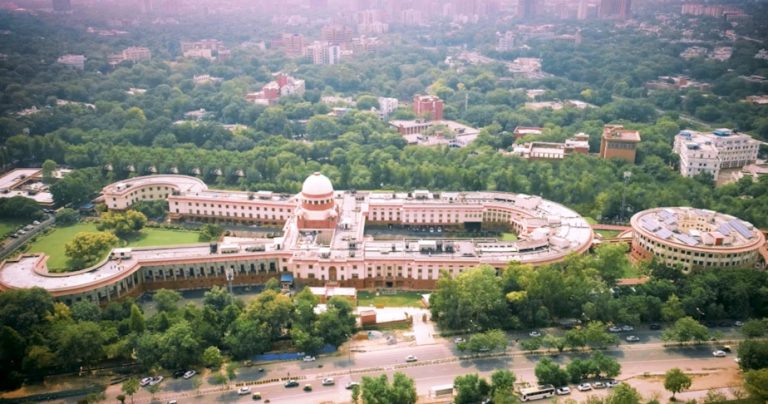
The designation of enemy property has been a contentious issue in India, with numerous disputes arising since the Partition. In 2005, the Supreme Court ruled that properties belonging to those who migrated to Pakistan were also classified as enemy property. The ruling further added layers of scrutiny to properties in India linked to Pakistani nationals.

The race to lead I.N.D.I. Alliance begins – Mamata Banerjee wants to lead but Congress disagrees, RJD says Lalu Prasad should lead the coalition

Only six months after the Lok Sabha Elections 2024 results, the race to lead the I.N.D.I. Alliance has begun, with Trinamool Congress chief Mamata Banerjee expressing her desire to lead the alliance and Rashtriya Janata Dal claiming the throne for Lalu Prasad Yadav. On 6th December, Banerjee expressed concerns over the I.N.D.I. Alliance’s performance in recent Assembly Elections and by-polls and said that she is ready to lead the alliance. Interestingly, Banerjee has claimed she is the mastermind behind the formation of I.N.D.I. Alliance. She said, “I formed the INDIA alliance. If those leading it cannot manage it properly, then give me a chance. I am ready to lead the alliance from Bengal itself.”

The Trinamool Congress stated that the Mamata model has been successful in defeating the BJP. TMC leader Kunal Ghosh said, “Bengal is her priority. The opposition needed a united front, and that’s why Mamata initiated INDIA. Mamata has no desire for any position in Delhi, but if given responsibility, she can easily manage the alliance while staying in Bengal. The model Mamata has built in Bengal has proven effective in stopping the BJP. Mamata and Hemant Soren have successfully halted the BJP in direct contests. This is not against anyone, but the Congress must introspect on why it is unable to defeat the BJP in direct contests.”

Her statement reportedly came days after TMC’s Kirti Azad called for giving her the throne to I.N.D.I. Alliance. In a statement, Azad had said that Banerjee was a better face to lead the opposition alliance and she has perfect record against Prime Minister Narendra Modi.

Left, SP, and Shiv Sena echo Banerjee

Notably, the Left has also raised questions about Congress’s position in the alliance. D Raja said, “Congress needs to do self-reflection. The current situation demands a meeting of the I.N.D.I. Alliance. Congress failed to bring its allied parties together in the recent Haryana and Maharashtra elections. Had Congress listened to the allied parties, the results of Lok Sabha and Haryana-Maharashtra would have been different.”

Shiv Sena (UBT) leader and MP Sanjay Raut suggested that his party wants Banerjee to stay with the alliance. He said, “If there are any differences, they are only minor ones. We will go to Kolkata and talk to her.”

Interestingly, Rahul Gandhi’s good friend Akhilesh Yadav’s party leader sided with Banerjee. Samajwadi Party leader Udaiveer Singh suggested that the alliance leaders should consider letting Banerjee lead the alliance. He claimed it would help the I.N.D.I. Alliance grow stronger. He said, “Mamata stopped BJP in Bengal. We [SP] have close relations with Mamata Banerjee. We support her 100%. Wherever the alliance failed to form a government, Congress was in the lead. If the results were not in the alliance’s favour, the responsibility lies with the Congress Party.” He further added that BJP lost 45 seats in UP and West Bengal because of SP and TMC.

Congress disagreed with TMC

However, Congress and other parties are not in sync with Banerjee’s claim to the throne. Congress MP Imran Masood agreed that Banerjee is a senior leader but claimed no one other than Rahul Gandhi is capable of leading the nation. On the other hand, Congress leader Varsha Gaikwad said, “Mamata Banerjee thinks like that [that she can lead the I.N.D.I. Alliance], but we do not think that. Only her party runs on her commands. We will do whatever Congress tells us to do.” Lok Sabha MP Manickam Tagore called it a “good joke”.

RJD sees Lalu Prasad Yadav as leader of the alliance

RJD, however, wants Lalu Prasad Yadav to lead. RJD spokesperson Mriyunjay Tiwari said, “The real architect of the alliance to fight BJP was Lalu Prasad Yadav. He made the first meeting between the opposition parties happen in Patna in the first place. Banerjee was also part of the meeting. Everyone is working on fighting elections against BJP in their respective states. We were victorious in Jharkhand. Banerjee successfully fights BJP in Bengal. Bihar will see elections in 2025. Our alliance is ready to fight BJP.”

NDA says it is focused on public welfare

JDU spokesperson Neeraj Kumar, responding to Mamata Banerjee’s statement, remarked, “This is an internal matter of the INDI alliance. However, Mamata Didi’s comment clearly indicates disagreement among alliance partners who are running governments even from the foundation of corruption and, in some cases, from jail. Who is responsible for the lack of coordination within the INDI alliance is for them to figure out. Meanwhile, the NDA is focused on serving the public.” On the other hand, BJP leader Mukhtar Abbas Naqvi said, “The INDI alliance has many dynasties but only one ambition. Everyone has their own aspirations, each wanting to head the alliance because they know they are never coming to power.”

NIkah-Namas must be bilingual including Hindi or English as Urdu is not known widely, only registered Qazis to conduct Muslim marriages: Rajasthan High Court

0

In an important judgement, the Rajasthan High Court has ordered that Nikah-Namas issued during marriage as per Islamic traditions must be bilingual, and they can’t be in Urdu only. The court said that not everyone understands Urdu, therefore the Nikah Namas must also include Hindi or English versions along with the Urdu text.

A single judge bench of Justice Farjand Ali issued the direction to the state to ensure that Nikah-Namas, which are Muslim marriage certificates, are issued in bilingual formats. The order was issued by the court while hearing a plea to quash an FIR lodged by a Muslim woman named Ishrat Bano who alleged irregularities in her marriage to Adnan Ali.

In support of the plea to dismiss the FIR, the petitioners had submitted the Nikah-Nama issued by a Qazi as evidence of the marriage. However, as the Nikah-Nama was in Urdu, it posed a difficulty in hearing the case, as it was not understood by court officials who don’t know Urdu.

The court said, “It is not comprehensible as to what document wants to convey in view of having no knowledge of Urdu language.” The court stated that the marriage documentation is significant as a legal and societal instrument, and it should be easily understood.

The court said, “Marriage, as we all know is an important sacrament and is considered as a sign of cohabitation between a male and a female which is acceptable in the civil society and is valid in the eyes of law. Nikah is performed as per the rituals of the Muslim law in a community gathering by the person having knowledge of performing the Nikah ceremony. This kind of sacred relationship should be recognized by a document which is unambiguous, vividly clear, explicit and transparent.”

The court observed that Nikah-Nama (marriage certificate) can be taken as evidence in confirmation of oral pleading of the fact of marriage. But when the contents of the certificate are not understood by the employees of government institutions, public institutions, private institutions and many other departments etc., it creates a problem. It creates a confusing situation, and it can also increase complications.

Therefore, the court felt that the situation should be corrected, and Hindi or English should be added to the Nikahnama. The court ordered the printing of Nikahnama proforma in bilingual forms, in Urdu and Hindi or English, to eliminate the complexities.

The court also ordered the maintenance of a record of people who are authorised to issue Nikahnamas, saying that only authorised people should issue Muslim marriage certificates. Responding to the court’s instructions, the state government’s counsel assured to hold high-level discussions on the guidelines/circular for issuing the certificate of Nikah in bilingual form and to maintain a register in the District Collector’s office recording the names of Qazis etc eligible to perform the Nikah ceremony.

‘Congress suffering because of their silence on atrocities meted out against Hindu minorities in Bangladesh’: BSP chief Mayawati

0

Questioning the “silence” of Congress on the Bangladesh issue, Bahujan Samaj Party (BSP) chief Mayawati on Saturday said that because of the “mistake” of Congress the people there are suffering.

“Hindus are becoming victims of crimes in large numbers in the neighbouring country Bangladesh. Most of them are Dalits and people from weaker sections…Congress party is silent and is now shouting ‘Be careful’ only for Muslim votes,” the BSP chief said addressing a press conference.

She further said that Congress, the Samajwadi Party and its supporters are “two sides of the same coin.”

“In such a situation, the central government which the BJP is leading should fulfil its responsibility. So that the Dalit class people who are becoming victims of exploitation do not have to suffer… or they should be brought back to India by talking to the government there, because of the mistake of Congress, they are suffering losses,” she added.

This came after allegations against the Bangladesh interim government of atrocities against Hindus in the country.

The unrest in Bangladesh almost dried up the trade-in Integrated Check Post Fulbari Indo-Bangladesh border. Most of the exchange counters at the border were found empty.

Earlier, the Ministry of External Affairs said that Foreign Secretary Vikram Misri will make a visit to Bangladesh on December 9 and meet his counterpart there.

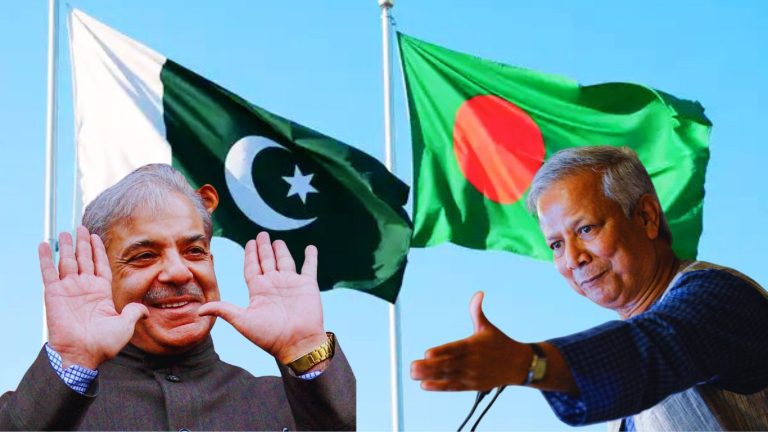
This comes amid strained ties between New Delhi and Dhaka following reports of several attacks on minorities, especially Hindus under the current interim government led by Muhammad Yunus.

(This news report is published from a syndicated feed. Except for the headline, the content has not been written or edited by OpIndia staff)

Bihar: Islamists attack annual Ram Vivah procession with stones and sticks near a mosque in Darbhanga

0

On 6th December, a Ram Vivah procession was attacked in the district of Darbhanga, Bihar. According to media reports, Islamists attacked the procession with stones and sticks as it passed by a mosque in Bajitpur on the occasion of Vivah Panchami. The attack led to chaos, leaving several devotees injured. The victims were rushed to hospital for treatment, and a heavy police force was deployed in the area to control the law and order situation.

The annual Vivah Panchami procession is a local tradition that has taken place for over three decades. On the day of the attack, the procession began in the village of Tarouni and was en route to Bajitpur. Violence erupted as the procession passed by a mosque. Locals alleged that objections were raised by a group of radicals before stones were thrown at the procession. According to eyewitnesses, some radicals also attacked the devotees with sticks, further escalating the violence.

Speaking to Dainik Bhaskar, Nago Das, organiser of the annual procession, said that the devotees picked up the children and ran towards the Ram Janki temple to save themselves. The radicals pelted stones for 15 minutes. After the police arrived, the devotees resumed the procession.

A local resident, Pinki, told the media that the radicals often create a ruckus during Hindu festivals, whereas Hindus have never interfered in their festivals.

An eyewitness, Rajrani, said, “When the procession was passing through here, the other side [Muslims] objected to the music being played. They surrounded a boy and tried to drag him away to beat him. The participants of the procession saw this and rushed to save him, which led to a clash between them.”

Route of the procession and chain of events

According to media reports, the procession started at 5:30 PM from Trauni village in the Bahadurpur Police Station area. It was scheduled to reach Bajitpur Durgamandir via Pathantoli and then return to Trauni village. When the procession reached Pathantoli, the radicals attacked it at around 7:45 PM. The police arrived at the spot by 8:15 PM, and by 9 PM, the situation was brought under control.

No prior approvals for the procession, claim officials

Police officials revealed that no prior intimation or permission was sought for the procession this year. Residents, however, asserted that the procession has been carried out peacefully for decades and they do not take any permission for the same. Officials, on the other hand, maintained that they were not informed about the route or timings of the procession.

Darbhanga Superintendent of Police, Ashok Kumar, said in a statement that investigations are underway and police are reviewing CCTV footage from the area to identify those involved in the attack. SP Kumar stated: “Efforts are underway to identify the culprits and ascertain their motives. CCTV footage from the area is being reviewed, and those involved will face strict action.”

Police camp overnight to maintain peace

The incident prompted senior officials, including the SDO, City SP, and DSP, to remain stationed in the affected areas overnight. Police conducted a flag march in the affected areas to reassure residents and prevent further escalation of violence.

The situation was under control by the morning. Police have initiated an investigation into the root cause of the violence and the possible involvement of any organised groups. Authorities have emphasised their commitment to maintaining peace and have promised a thorough and impartial investigation.

Local outrage over first-ever disruption

Local residents have expressed shock over the attack. They stated that the Ram Vivah procession had been a peaceful tradition for decades and that no such incident had occurred in the past. Several locals questioned why this year’s procession became a target when the same route has been in use for years.

Supreme Court’s special bench to hear petitions challenging the constitutionality of Places of Worship Act on 12 December

0

The Supreme Court of India is set to hear a batch of petitions on December 12, challenging the constitutionality of certain provisions in the Places of Worship (Special Provisions) Act, 1991.

This Act prohibits the filing of lawsuits to reclaim places of worship or change their character from what existed on August 15, 1947.

A special bench consisting of Chief Justice of India Sanjiv Khanna and Justices PV Sanjay Kumar and KV Vishwanathan will hear the case at 3.30 pm.

The pleas challenged the Places of Worship Act saying that the Act takes away the rights of Hindus, Jains, Buddhists, and Sikhs to restore their ‘places of worship and pilgrimages’, destroyed by invaders.

Daughter of the Kashi Royal Family, Maharaja Kumari Krishna Priya; BJP leader Subramanian Swamy; Chintamani Malviya, former Member of Parliament; Anil Kabotra, a retired army officer; advocates Chandra Shekhar; Rudra Vikram Singh, resident of Varanasi; Swami Jeetendranand Saraswati, a religious leader; Devkinandan Thakur Ji, resident of Mathura and a religious guru and advocate Ashwini Upadhyay among others have filed the pleas in the apex court against the 1991 Act.

The petitioners claim that the Act violates the principles of secularism and the rule of law, and that it takes away their right to approach the court and seek judicial remedy. They also argue that the Act deprives them of their right to manage, maintain, and administer their places of worship and pilgrimage.

The 1991 provision is an Act to prohibit conversion of any place of worship and to provide for the maintenance of the religious character of any place of worship as it existed on August 15, 1947, and for matters connected therewith or incidental thereto.

Jamiat Ulama-i-Hind had also filed a plea in the top court challenging the petitions filed by Hindu petitioners saying that entertaining the pleas against the Act will open floodgates of litigations against countless mosques across India.

India Muslim Personal Law Board had also moved the apex court opposing a batch of petitions challenging the validity of certain provisions of a 1991 law.

Committee of Management Anjuman Intezamia Masjid which manages the mosque in the Gyanvapi complex has filed an intervention application in the case and sought dismissal of pleas challenging the Places of Worship Act.

One of the pleas challenging the Act stated, “The Act excludes the birthplace of Lord Rama but includes the birthplace of Lord Krishna, though both are the incarnation of Lord Vishnu, the creator and equally worshiped all over the world.”

The pleas further stated that the Act blatantly offends the right of Hindus, Jains, Buddhists, and Sikhs to restore, manage, maintain and administer the places of worship and pilgrimage guaranteed under Article 26 of the Indian Constitution.

The petitions filed have challenged the constitutional validity of Sections 2, 3, 4 of the Places of Worship (Special Provisions) Act 1991, which it said violates the principles of secularism and rule of law, which is integral part of Preamble and basic structure of the Constitution.

The pleas said that the Act has taken away the right to approach the Court and thus right to judicial remedy has been closed.

Section 3 of the Act bars the conversion of places of worship. It states, “No person shall convert any place of worship of any religious denomination or any section thereof into a place of worship of a different section of the same religious denomination or of a different religious denomination or any section thereof.”

Section 4 bars filing of any suit or initiating any other legal proceeding for a conversion of the religious character of any place of worship, as existing on August 15, 1947.

The Places of Worship Act 1991 is void and unconstitutional for many reasons, the plea said, adding that it offends the right of Hindus, Jains, Buddhists, and Sikhs to pray, profess, practice and prorogate religion (Article 25), petitions said. It also infringes on their right to manage, maintain and administer the places of worship and pilgrimage (Article 26), pleas added.

The Act deprives these communities from owning/acquiring religious properties belonging to the deity (misappropriated by other communities) And also takes away the right to take back their places of worship and pilgrimage and the property which belongs to the deity, stated the pleas.

The Act further deprives Hindus, Jains, Buddhists, and Sikhs to take back their places of worship and pilgrimage connected with cultural heritage (Article 29) and it also restricts them to restore the possession of places of worship and pilgrimage but allows Muslims to claim under Section 107, Waqf Act, the pleas added.

“It is respectfully submitted that the Central Government by making impugned provision (Places of Worship Act 1991) in the year of 1991 has created arbitrary irrational retrospective cutoff date, declared that character of places of worship and pilgrimage shall be maintained as it was on August 15, 1947 and no suit or proceeding shall lie in the court in respect of the dispute against encroachment done by barbaric fundamentalist invaders and such proceeding shall stand abated,” the PILs stated.


(This news report is published from a syndicated feed. Except for the headline, the content has not been written or edited by OpIndia staff)

India asks citizens to leave Syria at the earliest as rebel groups continue to seize more cities

On 6th December, the Ministry of External Affairs, Government of India, issued a travel advisory for Syria, asking Indian nationals to avoid all travel to the country until further notice. Furthermore, the ministry requested Indians there to remain in touch with the Indian Embassy in Damascus. The ministry also asked those who could leave the country to do so immediately. The advisory has been issued in view of the escalating violence following a major offensive by rebel forces.

The ministry said, “In view of the situation prevailing in Syria, Indian nationals are advised to avoid all travel to Syria, until further notification. Indians currently in Syria are requested to remain in touch with Indian Embassy in Damascus at their emergency helpline number +963 993385973 (also on WhatsApp) and email ID [email protected] for updates. Those who can, are advised to leave by the earliest available commercial flights and others are requested to observe utmost precaution about their safety and restrict their movements to the minimum.”

ANI quoted MEA Spokesperson Randhir Jaiswal saying there are currently 90 Indian nationals in Syria, out of which 14 are working in various United Nations organisations. In a press briefing on 6th December, Jaiswal said, “We have taken note of the recent escalation in fighting in the north of Syria. We are closely following the situation… Our mission remains in close contact with our nationals for their safety and security.”

Violence escalated in Syria

In last few days, insurgents linked to the Jihadi group Hayat Tahrir al-Sham (HTS) launched a major offensive in Syria and captured several key cities, including the largest city in the country, Aleppo. The civil war in Syria had been stagnant for over 14 years before this attack.

The insurgents reportedly aimed to push towards Homs, with their ultimate target being Damascus, from where President Bashar al-Assad’s government operates. The rebel group’s advance was followed by setbacks faced by Hezbollah and Iran against Israel, as they are major supporters of the Assad govt.

On 5th December, the insurgents reportedly advanced deeper into Syria and captured the central city of Hama, which is the fourth-largest city in the country. The next target of the insurgents appears to be Homs, which is a crucial crossroads city. If they manage to take control of Homs, it will affect Assad’s control over Syria.

Reportedly, on 7th December, insurgents managed to take control of Daraa, which is the birthplace of the 2011 uprising against Assad. According to the Syrian Observatory for Human Rights, local armed groups took over Daraa on Saturday.

Following the insurgents’ attack on key cities in Syria, Iran and Iraq issued a joint statement on 6th December, warning that the recent attacks would lead to regional instability. The statement was issued after a meeting between the foreign ministers of the three countries.

The ministers said, “There is no alternative to coordination, cooperation, and diplomatic consultation” if the “risks of escalation” are to be avoided. They further emphasised the “need for Arab, regional, and international action to bring about peaceful resolutions to the challenges facing Syria and the region.”

Notably, Iran has already pledged to provide Assad’s government with whatever support is required to tackle the insurgents. Iraq is keeping its security forces on high alert. Over the weekend, Syrian ministers are expected to meet their allies from Russia, Iran, and Türkiye.

Aleppo’s renewed conflict raises fears of wider instability

The renewed fighting in Aleppo highlights its importance as a key battleground in Syria’s long civil war. Once the country’s cultural and commercial hub, Aleppo has often been the focus of battles between rebel groups and government forces. The latest advance by Hayat Tahrir al-Sham (HTS) is the most significant challenge to areas controlled by President Bashar al-Assad’s government in years. Many fear this offensive could lead to more destruction, similar to the devastating 2016 siege when Russian airstrikes heavily damaged the city and forced the rebels to surrender.

HTS’s attack on Aleppo is part of a larger plan to weaken government-held areas. After capturing parts of Idlib and Hama, the rebels are now eyeing Homs, a key city. If Homs falls, it could seriously impact Assad’s control over Syria.

The Assad government’s allies, including Russia, Iran, and Hezbollah, have quickly responded by sending reinforcements and launching airstrikes to stop the rebels. This new wave of fighting has raised international concerns, as it comes during an already tense period in the region, with Israel involved in conflicts with Hamas and Hezbollah. However, with Russia already involved in the war in Ukraine and Iran and Hezbollah busy defending themselves against Israel, their ability to support the Syrian govt is limited.

Experts warn that Aleppo’s return to intense conflict could cause wider instability. If major powers like Russia and Turkey get directly involved in the fighting, it could further complicate the fragile situation in the Middle East, making it harder to bring any hope of peace to the region.