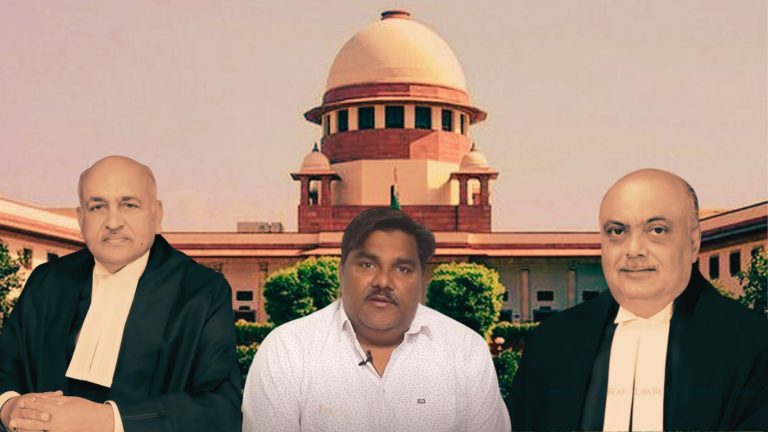
A division bench of the Supreme Court comprising Justices Pankaj Mithal and Amanuddin Ahsanullah found itself in a fix while hearing the interim bail plea of Delhi Anti-Hindu riots accused Tahir Hussain on Wednesday. Former Aam Aadmi Party Councillor Tahir Hussain filed a plea before the Apex Court seeking interim bail for contesting the upcoming Delhi Assembly elections as a candidate of the All India Majlis-e-Ittehadul Muslimeen (AIMIM) candidate.
Unable to decide whether Hussain should be granted bail or not, the division bench passed a split verdict. The bench referred the matter to the Chief Justice of India (CJI) Sanjiv Khanna to be presented before a three-judge bench. Justice Pankaj Mithal rejected Hussain’s bail plea while Justice Ahsanuddin Amanullah’s opinion was that his plea should be allowed. “Since our opinions have differed, let Registry place this matter before the Chief Justice of India for the constitution of a third judge or to place it before a three-judge bench”, Justice Mithal remarked.
Justice Mithal was against granting Hussain bail
Justice Mithal said that allowing interim bail to Tahir Hussain would set a wrong precedent opening floodgates of pleas by jailed persons seeking interim bail on similar grounds. “If interim bail is allowed for contesting elections, it will open a pandora’s box. Since elections in the country are all year round, every prisoner will come out with a plea that he wants to participate in the elections and therefore he wants interim bail. This will open floodgates of litigation and this cannot be permitted,” Justice Mithal said. He added that it may also prompt multiple petitions for interim bail to come out of jail for voting which is prohibited for prisoners under the Representation of People Act.
Taking notice of the serious allegations levelled against Hussain, Justice Mithal weighed the possibility of him influencing the witnesses if allowed to go out of jail. Justice Mithal clarified that the right to campaign for elections is not a fundamental right. He rejected Hussain’s bail plea stating that it is up to the discretion of the court to decide whether interim bail should be given for such a purpose.
Justice Mithal noted that even if Hussain’s plea was allowed, he would remain in jail as he is yet to get bail in the money laundering case against him. “This (present interim bail) is an academic exercise! If you don’t get bail in all cases, this bail will not mean that you will walk out,” he added.
Justice Amanullah was in favour of granting Hussain bail
Justice Ahsanuddin Amanullah said that Hussain’s bail plea can be allowed on certain conditions. “It is settled law that magnitude of offence and gravity is not the only criteria for bail cases. I am of the view that, subject to appropriate conditions the petitioner be granted bail. Bail only until the forenoon of February 4, 2025,” said Amanullah J. He said that Hussain could be released on the condition that he would not be allowed to speak on the Delhi riots cases while campaigning.
“He would also promptly surrender before the jail authorities after the expiry of the term granted,” he added. Justice Amanullah questioned the prosecuting agency for failing to complete the trial promptly. “In four years only four or five eyewitnesses were examined? If this case was so important…he has not been out for a single day. You cannot have unlimited liberty to castigate someone. This is not Article 21, it has been denied, ” he said.
Responding to Justice Mithal’s view that Hussain would not be able to walk out without getting bail in the money laundering case, Justice Amanullah said, “Why should the Supreme Court wait for the trial court to decide something? We cannot anticipate that he will not get bail…If we (Supreme Court) wait for the trial court, then it is like we are subservient to the trial court”.
The ASG urged the SC not to grant Hussain bail
Additional Solicitor General (ASG) SV Raju, appearing on behalf of the Delhi Police, urged the court not to allow Hussain’s plea citing the seriousness of the allegation against him. He mentioned that Hussain’s role in the 2020 Delhi anti-Hindu riots was not limited to instigating rather he ‘orchestrated’ the riots and his house was the ‘epicentre’ from where directions were issued and weapons were recovered.
Tahir Hussain approached the Supreme Court seeking interim bail after his bail plea was rejected by the Delhi High Court on January 14, 2025. The High Court emphasized the seriousness of the allegations against him, highlighting his involvement in the violence that led to the deaths of 59 people. However, the Court has granted Tahir Hussain custody parole to allow him to file his nomination papers and participate in campaigning for the upcoming Assembly elections.
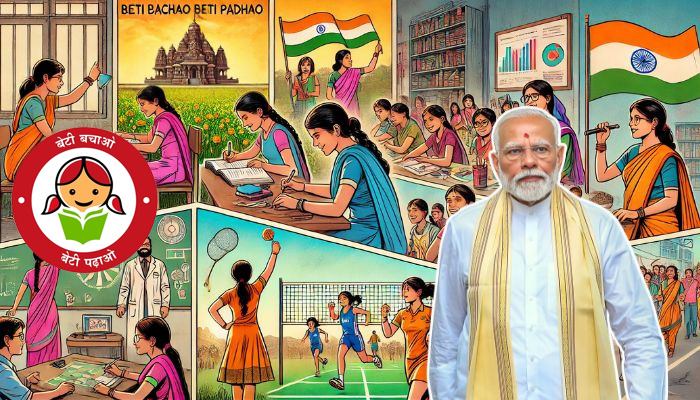
On 22nd January 2025, the Beti Bachao Beti Padhao (BBBP) scheme completed its 10 years. The scheme was launched by Prime Minister Narendra Modi on this day in 2015 in Panipat, Haryana. The first decade of the scheme has been impactful.
Marking the completion of a decade of BBBP, Prime Minister Narendra Modi wrote on X, “Today we mark 10 years of the #BetiBachaoBetiPadhao movement. Over the past decade, it has become a transformative, people-powered initiative and has drawn participation from people across all walks of life.” Notably, in just one year, there was a dramatic rise in birth of girl child in Haryana.
Today we mark 10 years of the #BetiBachaoBetiPadhao movement. Over the past decade, it has become a transformative, people powered initiative and has drawn participation from people across all walks of life.
He added that the scheme has been instrumental in overcoming gender biases and at the same time it has created the right environment to ensure that the girl child has access to education and opportunities to achieve her dreams.
#BetiBachaoBetiPadhao has been instrumental in overcoming gender biases and at the same time it has created the right environment to ensure that the girl child has access to education and opportunities to achieve her dreams.
The PM said, “Thanks to the dedicated efforts of the people and various community service organisations, #BetiBachaoBetiPadhao has achieved remarkable milestones. Districts with historically low child sex ratios have reported significant improvements and awareness campaigns have instilled a deeper sense of the importance of gender equality.”
Thanks to the dedicated efforts of the people and various community service organisations, #BetiBachaoBetiPadhao has achieved remarkable milestones. Districts with historically low child sex ratios have reported significant improvements and awareness campaigns have instilled a…
“I compliment all stakeholders who have made this movement vibrant at the grassroots level. Let us continue to protect the rights of our daughters, ensure their education and create a society where they can thrive without any discrimination. Together, we can ensure that the coming years bring even greater progress and opportunity for India’s daughters,” PM Modi added.
I compliment all stakeholders who have made this movement vibrant at the grassroots level. Let us continue to protect the rights of our daughters, ensure their education and create a society where they can thrive without any discrimination. Together, we can ensure that the coming…
The flagship initiative was aimed at addressing gender disparities, improving the Child Sex Ratio (CSR), and promoting education for girls. Over the years, the scheme has achieved significant milestones. Here are the six achievements the Central and state governments have achieved.
Improvement in the sex ratio at birth
One of the most important aspects of the scheme was to improve the sex ratio at birth. Over the decade, it rose from 918 in 2014-15 to 933 in 2022-23. This reflects the effectiveness of nationwide awareness campaigns against gender-biased practices.
Increased enrolment in secondary education
In 2014-15, 75.51% of girls were enrolled in secondary education. The numbers have seen a substantial boost, with the Gross Enrolment Ratio (GER) increasing from 75.51% in 2014-15 to 79.4% in 2021-22. Educational initiatives under BBBP have been instrumental in this progress.
Focus on skill development
Beti Bachao Beti Padhao has partnered with the Ministry of Skill Development and Entrepreneurship to promote vocational training for young girls and women. Initiatives such as ‘Khelo India’ have also contributed to identifying and nurturing talent in sports among girls.
Rise in institutional deliveries
Institutional deliveries have increased from 87% in 2014-15 to over 94% by 2019-20. This improvement has significantly enhanced maternal and infant health outcomes, reducing mortality rates.
Holistic Empowerment through Mission Shakti
The government has integrated Mission Shakti into BBBP, which has expanded the scheme’s scope, ensuring safety, education, and economic empowerment of women. Programmes such as self-defence camps, awareness campaigns, and menstrual hygiene management have been game changers.
Community engagement and awareness campaigns
Activities like ‘Selfie with Daughter’ and ‘Beti Janmotsav’ have gained national attention, fostering community involvement. Events celebrating National Girl Child Day and campaigns focused on gender equality have further strengthened the scheme’s impact.
Research findings on the Beti Bachao Beti Padhao scheme
A study by Dr K Barathiraja and AS Naveenkumar, published in the South Eastern European Journal of Public Health (SEEJPH) in September last year highlighted the substantial progress achieved through the Beti Bachao Beti Padhao (BBBP) scheme in Dharmapuri District, Tamil Nadu, between 2019 and 2023. The research was based on data collected via various sources including RTI.
The research underscores the scheme’s impressive outcomes, particularly in healthcare and education. Educational enrolment for girls witnessed significant growth, with primary level enrolment increasing by 25% and high school enrolment by 24%. This is attributed to the comprehensive interventions under BBBP, which have fostered greater access to education for girls. Healthcare access has also improved markedly, supported by initiatives benefiting over 1,333 Anganwadi centres and bolstering maternal and child health services in the district.
The funding for the scheme grew from ₹25,00,000 in 2019-2020 to ₹30,00,000 in 2022-2023, enabling broader multi-departmental coordination. Resources were strategically allocated across education, health, social welfare, and law enforcement departments, ensuring a balanced approach to addressing gender equality.
The study also highlighted the role of community engagement in the scheme’s success, with widespread participation in educational and healthcare initiatives. The researchers noted that BBBP has mobilised collective efforts from various stakeholders, creating a robust support system for empowering girl children.
This study was about only one district. Similar results have been noticed across nation. Efforts have been made by both central and state governments to address gender-based issues which added strength to BBBP scheme.
BBBP has now entered its second decade. The government is aiming to sustain the momentum with a multi-sectoral approach. The focus is expected to remain on long-term policies and active community participation to empower every girl child.
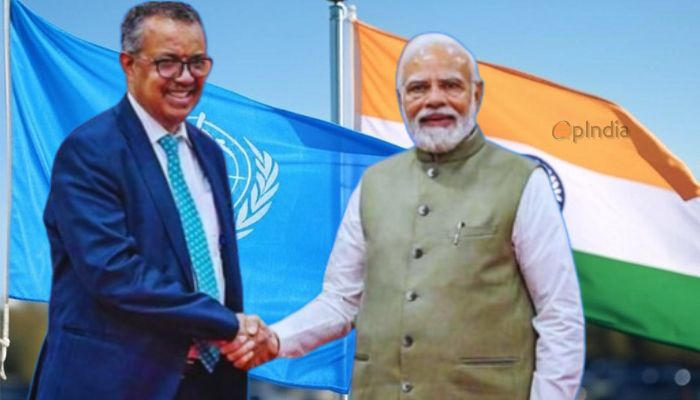
Immediately after assuming office, US President Donald Trump signed the executive order withdrawing from the World Health Organisation (WHO) on Monday (20th January). The decision came owing to the global health agency’s Covid pandemic mishandling and other global health crises.
“The United States noticed its withdrawal from the World Health Organization (WHO) in 2020 due to the organization’s mishandling of the COVID-19 pandemic that arose out of Wuhan, China, and other global health crises, its failure to adopt urgently needed reforms, and its inability to demonstrate independence from the inappropriate political influence of WHO member states,” the executive order signed by President Trump reads.
Disproportionate financial burden, surging Chinese influence and more: Why the USA decide to go from being one of the largest contributors to withdrawing from WHO?
The executive order signed by President Trump further pointed out that the United States bears a disproportionate financial burden of funding WHO compared to other countries, particularly China. The executive order says that WHO demands “unfairly onerous payments from the United States, far out of proportion with other countries’ assessed payments. China, with a population of 1.4 billion, has 300 percent of the population of the United States, yet contributes nearly 90 percent less to the WHO.”
In a statement made in the Oval Office on Monday, President Trump said that the US had paid $500 million to the WHO, while China, despite its much larger population, contributed only $39 million. This significant imbalance, according to Trump, was a key factor in his decision to cut ties with the organization.
“We paid 500 million dollars to the World Health Organization, while China, with 1.4 billion people, paid just 39 million. It seemed a little unfair to me,” Trump said.
Interestingly, China has extended support to WHO after Trump signed an executive order to withdraw from the health agency.
The Trump administration also pointed out WHO’s failure to adopt “urgently needed reforms”, hinting at a wider discontent over the global health body’s structure, accountability, and effectiveness in handling health issues worldwide. Besides, political influence of member states on WHO has also been a source of discontent of the newly-inaugurated Trump administration.
Even during his electoral campaign, Trump had emphasised on the necessity for the United States to re-evaluate the country’s commitments to international organisations based whether such bodies are in line with the US’s narrative or serving the country’s interests efficiently or not.
The United States has historically been a significant contributor to both the WHO’s emergency appeal and its overall budget, which is set at $6.8 billion for 2024–2025. According to WHO data, the United States donated approximately 34% of the funding available for health emergencies over the last two years, with previous contributions reaching 50%. It also provides around one-fifth of the WHO’s total funding.
Under the Biden administration, the United States remained the WHO’s top financier, accounting for about one-fifth of the agency’s $6.8 billion annual budget in 2023.
While the US has been a key contributor to World Health Organisation so far, however, the country’s withdrawal from WHO means that it will no longer be contributing huge amounts of funds to the health agency. This would potentially diminish WHO’s influence in global health policy and emergency responses. The US government’s decision to withdraw from WHO can also isolate the country from international cooperation on health issues, however, the country would try to come up with more direct and effective US-led health initiatives outside the WHO framework to curb the adverse impact of withdrawing from WHO.
Meanwhile, WHO has issued a statement lamenting the US’s departure from the organisation. WHO outlined its role in “protecting the health and security of the world’s people, including Americans, by addressing the root causes of disease, building stronger health systems, and detecting, preventing and responding to health emergencies, including disease outbreaks, often in dangerous places where others cannot go.”
WHO comments on United States announcement of intent to withdraw
The World Health Organization regrets the announcement that the United States of America intends to withdraw from the Organization.
WHO plays a crucial role in protecting the health and security of the world’s… pic.twitter.com/DT3QJ49bhb
The health organisation expressed hope that the Trump administration would reconsider its decision to withdraw from WHO and indulge in “constructive dialogue to maintain the partnership between the USA and WHO, for the benefit of the health and well-being of millions of people around the globe.”
As a disproportionate financial burden and Chinese influence emerged as major reasons behind the US’s withdrawal from WHO, it is crucial to understand who funds this health organisation and how these funds are utilised.
Who funds WHO?
WHO has two main sources of funding, first, Member States paying their assessed contributions (countries’ membership dues), and second, voluntary contributions from Member States and other partners.
The assessed contributions are a percentage of a country’s gross domestic product (the percentage is agreed upon by the United Nations General Assembly). Member States approve them every two years at the World Health Assembly. They cover less than 20% of the total budget. This implies that 80% of WHO’s funding comes from “voluntary contributions” made by member states, NGOs, philanthropic organisations or other private entities.
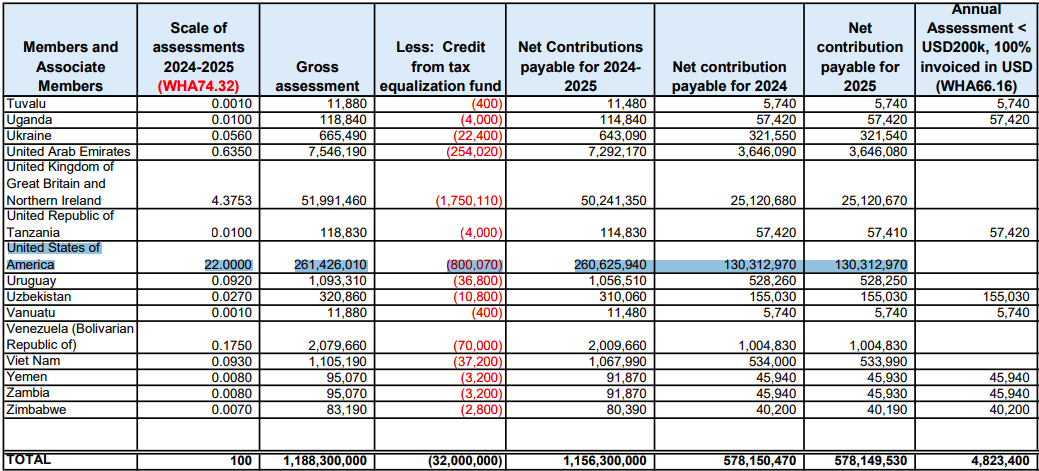
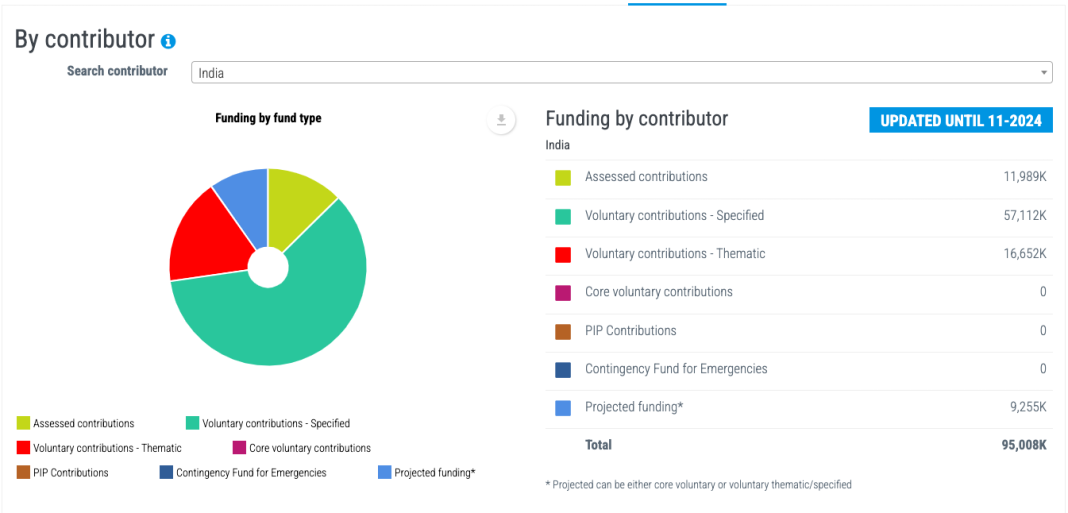
As per WHO’s data, the US’s net contributions payable for the years 2024-2025 stood at $ 260,625,940. Meanwhile, India’s net contributions payable for 2024-2025 were recorded at $ 11,989,020.
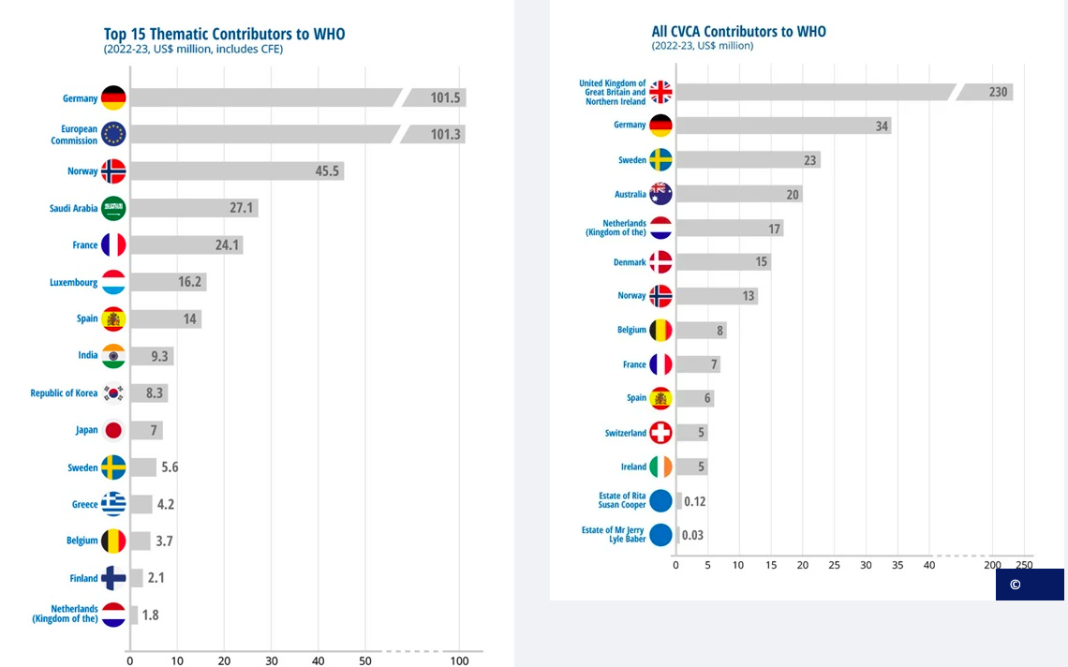
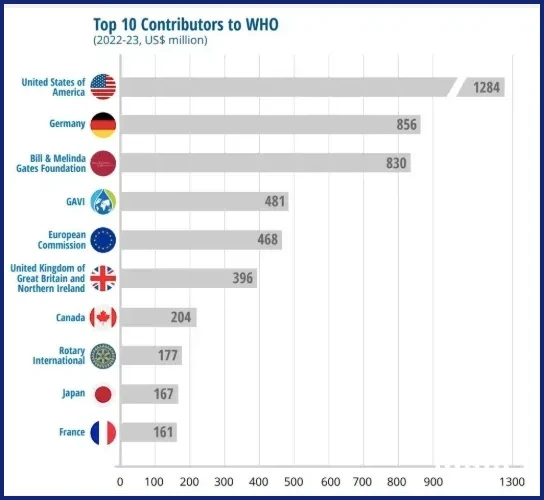
During the 2022–2023 biennium, the United States contributed US$ 1.284 billion to WHO, followed by Germany and the Bill & Melinda Gates Foundation (BMGF). BMGF has been a major contributor to WHO with its donations making up to 12% of WHO’s total funding.
The BMGF’s increased influence in WHO has been widely debated, particularly, concerns have been raised about a single private foundation being a major donor to WHO allowing Bill Gates to decide the health agency’s priorities if not absolutely become a decision maker setting global health agenda.
WHO’s contributors data for the years 2022-2023
Back in 2020, Lawrence Gostin, faculty director for the O’Neill Institute at Georgetown University had raised alarms about BMGF’s mounting influence in WHO and said, “If a private foundation were to become WHO’s highest donor, it would be transformational. It would enable a single rich philanthropist [Bill Gates] to set the global health agenda. The big concerns are that the Gates Foundation isn’t fully transparent and accountable. By wielding such influence, it could steer WHO priorities.”
Not to forget, Bill Gates who recently sparked criticism for indicating that India is a “laboratory to test new ideas”, had back in 2020 called then-President Trump’s decision to halt WHO funding, “as dangerous as it sounds”.
The other among the top 10 contributors for the year 2022-2023 included the vaccine alliance GAVI, the European Commission, the United Kingdom of Great Britain and Northern Ireland, Canada, Rotary International, Japan and France.
For its next budget spanning 2025-2028, WHO has obtained $1 billion in pledges, as announced by the health agency in October 2024. The financing commitments from various European governments, foundations, and organisations accounted for nearly $700 million of this total. Meanwhile, $300 million was raised from reaffirmed investment commitments. The financing was revealed during the WHO Investment Round Signature Event during the World Health Summit in Berlin in October, which was co-hosted by Germany, France, and Norway.
Germany emerged as a key contributor to WHO funding, investing approximately $400 million over four years, with an additional $260 million in voluntary funding. Wellcome, a UK-based philanthropic foundation, offered $50 million, with the Institute for Philanthropy, Resolve to Save Lives, and the World Diabetes Foundation each committing $10 million. The WHO Foundation also made a large pledge of US$ 50 million, drawing support from the commercial sector, particularly pharmaceutical companies including Boehringer Ingelheim and Novo Nordisk.
Is WHO losing credibility and independence?
The World Health Organisation has been accused of mishandling pandemics over the years. Be it the allegations of alarmism during the H1N1 outbreak in 2009, or the slow and nearly ineffective initial response to the Ebola outbreak in West Africa in 2014 and a delay in declaring it a Public Health Emergency of International Concern (PHEIC) causing a widened scale of the outbreak, or the more recent late declaration of a global health crises when Covid-19 outbreak allegedly due to superfluous trust in China’s narrative, WHO has been receiving flak for its handling of major global health crises.
In fact, a report by a panel set up by WHO called the combined response to Covid pandemic by WHO and global governments a “toxic cocktail”. The report found that the deadly virus killed over 3.3 million people globally with over 159 million infected.
“The situation we find ourselves in today could have been prevented. t is due to a myriad of failures, gaps and delays in preparedness and response,” co-chair Ellen Johnson Sirleaf, a former president of Liberia said.
China’s influence over WHO has been a major concern, particularly after the Covid outbreak. Back in 2020, US Senator from Idaho and Chairman of the Senate Foreign Relations Committee Jim Risch called to form an independent investigation against the World Health Organization alleging that the organization has been a political puppet of the Chinese government and the organization is unwilling to hold Chinese communist party responsible for the pandemic. President Trump had also accused the WHO of being heavily funded by the US but functioning in a more China-centric fashion.
On 14th January 2020, the acting head of WHO’s emerging diseases unit, Maria Van Kerkhove, downplayed the Covid threat, saying there is “limited human-to-human transmission” in Wuhan. Later, it issued a clarification, saying that human transmission was “possible” and “may” be happening. Six days later, Zhong Nanshan, a Chinese epidemiologist and a government adviser confirmed that the virus could actually spread between people. Moreover, when countries began imposing a travel ban on Chinese nationals to prevent the spread of Corona virus, not only China but WHO also opposed this saying that there is no need for steps that “unnecessarily interfere with international travel and trade.”
In 2021, WHO went a step ahead and claimed that the Coronavirus did not originate in China. The WHO joined by a Chinese expert mission claimed that the virus may have originated outside China. Back in 2020, the Trump administration had demanded investigation into WHO and China’s relationship alleging that it poses a threat to the US’s sovereignty.
The shameful episode of Peter Daszak being a part of the UN ‘investigation team’ that went to Wuhan despite his involvement in the Gain of Fuction research projects in the very same lab, and his earlier attempts to give a clean chit to the Wuhan Institute of virology did not flatter WHO’s image either. Throughout the pandemic, WHO maintained a ‘let’s not offend China’ stand.
Should India withdraw from WHO?
As the United States decided to withdraw from the World Health Organisation, a question arises if India should also consider withdrawing from the global health agency, particularly in the wake of mounting Chinese influence in the global health agency. However, before addressing the question of whether India should stay or withdraw from WHO, it is pertinent to understand WHO’s impact on India.
The World Health Organisation sets international health regulations and standards helping countries, particularly, developing countries like India in managing public health crises, and pandemics and enhancing health infrastructure. Over the years, WHO has provided India with technical guidance, training and resources to help the country in areas such as disease surveillance, outbreak response and health policy development. Besides, India’s membership in WHO allows it to partake in global health research, collaborative studies and data sharing. This has been crucial in tackling diseases like Tuberculosis (TB), malaria and several non-communicable diseases. WHO also supports India’s programmes on HIV, antimicrobial resistance and immunisation.
Notably, while WHO may not be the sole source of funding for India’s various health programmes, the USA’s withdrawal from the agency would have an impact on India’s health initiatives and also prompt other Member States to increase funding to WHO.
In July last year, India committed USD 85 million to the WHO Global Traditional Medicine Centre to support a cross-sectoral program of work to strengthen the evidence base for traditional medicine by providing data and evidence on traditional medicine policies, practices, products, and public use. As per WHO, this agreement was a part of “a US$ 250 million investment from India in support of the establishment of the WHO Global Centre of Traditional Medicine in 2022, which includes financial support for the workplan of the Centre, interim premises and a new building.”
WHO’s data on India’s contribution to the health agency (updated till 11-2024)
In November 2023, India’s Ministry of Ayush and WHO signed the Project Collaboration Agreement to standardise Traditional and Complementary Medical Systems, integrate their quality and safety aspects into the National Health System, and disseminate them at the international level. The first contract was signed in 2016 to take Traditional Medical systems like Yoga, Ayurveda, Unani, and Panchakarma to the global level and the second contract was signed in 2017 to strengthen the system of Ayurveda, Unani and Siddha medical systems.
It is undeniable that WHO’s collaboration with India has benefitted the country in tackling health issues. In 2014, India was declared Polio-free as WHO backed India’s extensive immunisation campaigns. WHO also played a key role in supporting India’s Revised National Tuberculosis Control Program (RNTCP), contributing to the development of strategies for TB control and elimination. The intergovernmental health agency also supports India’s measures to achieve Universal Health Coverage (UHC) which also includes supporting the implementation of the Modi government’s successful Ayushman Bharat scheme. Besides, WHO has also helped India strengthen its healthcare system, improve healthcare service delivery, enhance quality of care, and build healthcare workforce capacity. Its efforts in formulating and developing public health guidelines and standards to enhance healthcare practices across the country have also been significant.
India’s collaboration with WHO also compliments its role in global health governance allowing it to have an influence in shaping global health policies by active participation in discussions and advocacy in specific health agendas especially in the context of developing countries, and colluding with other member states to influence policy decisions at World Health Assembly and other WHO-related forums.
Interestingly, back in 2023, British-Indian cardiologist Dr Aseem Malhotra had alleged that WHO had lost its independence and that the Indian government should “ignore” WHO’s advice on health issues. Malhotra even asserted that India should withdraw from WHO. He pointed out that a major chunk of WHO’s funding comes from commercial entities that have the least interest in people’s health and that their main interest is in minting money by deceiving people.
“Seventy per cent of the funding of the World Health Organisation comes from commercial entities…. As long as the WHO is getting industry funding or funding from vested interests, it should not beconsidered independent and the Indian government should ignore its advice. Those commercial entities are not interested in your health, they will make money by deception,” Malhotra said.
However, just as the United States raised concerns about growing Chinese influence in WHO and allegations against WHO chief Tedros Adhanom Ghebreyesus of being pro-China as well as the alleged role of influential lobbyists for big pharma and private foundations having a significant say in WHO’s decision making and determining its policy, India needs to weigh all the factors if it decides to withdraw from the UN’s intergovernmental health agency.
On one hand, leaving WHO would allow India greater financial autonomy as the funds it allocates to WHO could be invested directly into its healthcare systems or channelled the funds to other less biased global forums outside the WHO framework, on the other, India would risk losing global influence in deciding international health policies and responses to outbreaks. Besides, India would also lose access to vital data and research on global health issues it WHO currently provides to India as a member state. Much like the US, India would also have to face global criticism if it decides to leave WHO especially given the stark differences in the healthcare situation in the two countries.
While the concerns around WHO’s declining credibility and independence are not unfounded, instead of withdrawing from WHO, India should push for reforms within WHO while continuing to benefit from global health cooperation. The country, however, should take measures to reduce reliance on WHO for health strategies as too much reliance on the UN body will detract India from its efforts at developing its indigenous health solutions as per the country’s socio-economic conditions. At this point, it would be more detrimental than beneficial for India to withdraw from the World Health Organisation. Thus, it would be better for India to leverage membership to advocate reforms within WHO while also emerging as a key player in filling the vacuum created by the US’s departure from WHO.
China and Europe would also want to fill the void created by the US, however, since Europe’s resources are mostly engaged in the Russia-Ukraine war, India would not want to miss this opportunity even though private foundations and philanthropies like the Bill and Melinda Gates Foundation will also step up efforts to fill the lacuna created by US’s exit. This could be India’s chance to bolster its position as the leading voice of the global south.
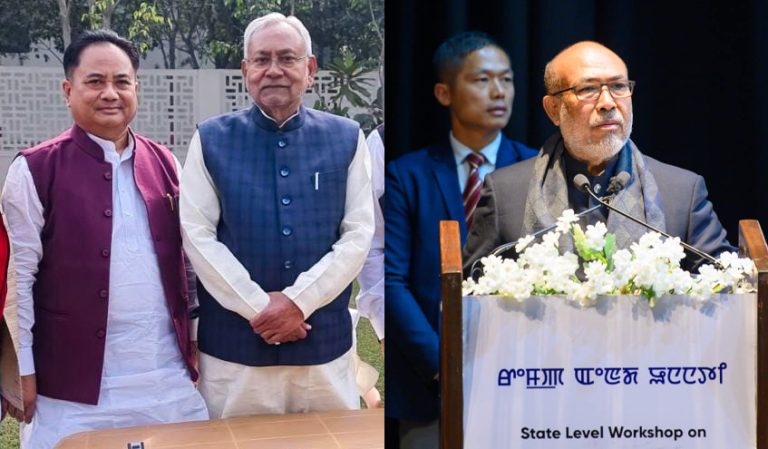
Hours after the Manipur unit of JD(U) announced withdrawing support from the Biren Singh-led NDA government in Manipur, the JD(U) removed its state president for taking the decision unilaterally. The party said that it continues to support the NDA govt, and that its Manipur president Kshetrimayum Biren Singh wrote the letter withdrawing support without consulting the central leadership.
In a statement, JD(U) national spokesperson Rajiv Ranjan Prasad called the reports of the party’s decision to sever ties with the BJP in Manipur “misleading and baseless”. He said that the party’s Manipur president Kshetrimayum Biren Singh wrote the letter independently and didn’t consult the party’s central leadership regarding the same.
Rajeev Ranjan Prasad told ANI, “This is misleading and baseless. The party has taken cognizance of this and the president of Manipur unit of the party has been relieved of his position. We have supported NDA and our support to the NDA government in Manipur will continue even in future. Manipur unit did not have any communication with the central leadership, they were not taken into confidence. He (Manipur JDU chief) had written the letter on his own. Considering this an act of indiscipline, action has been taken against him and relieved of his position.”
#WATCH | Delhi: JD(U) national spokesperson Rajeev Ranjan Prasad says, "This is misleading and baseless. The party has taken cognisance of this and the president of Manipur unit of the party has been relieved of his position. We have supported NDA and our support to the NDA… https://t.co/PhAJwAp4xnpic.twitter.com/usvowgta3n
He added, “We are with the NDA and the state unit will continue to serve people of Manipur towards development of the state.”
Notably, the letter written by Kshetrimayum Biren Singh said, “In the election to State Assembly of Manipur held in February/March, 2022, six candidates set up by Janata Da l(United) were returned. After a few months, five MLAs of Janata Dal(United) defected to BJP. Trial under Tenth Schedule of Constitution of India of the five MLAs is pending before the Speaker’s Tribunal. After Janata Dal(United) became a part of INDIA bloc, support to the BJP led government was withdrawn by Janata Dal(United) by informing the office of Hon’ble Governor, Leader of the House(Chief Minister) and Speaker. As such, seating arrangement of the lone MLA of Janata Dal (United) in Manipur, Md. Abdul Nasir is made in the Opposition Bench in the last session of Assembly by the Speaker.”
The fired Manipur JD(U) chief further wrote, “It is, hereby, further reiterated that Janata Dal(United), Manipur Unit does not support the BJP led state government in Manipur, and our lone MLA, Md. Abdul Nasir, shall be treated as an opposition MLA in the House.”
JD(U) won six seats in 2022 Manipur assembly elections. But later five of them joined BJP. Their disqualification under the Tenth Schedule of the Constitution is pending before the Speaker’s tribunal.
BJP has 37 MLAs in the 60-member house, and has the support of 5 NPP MLAs and 3 independents. Therefore, even if the lone JD(U) MLA withdraws support, the govt faces no trouble.
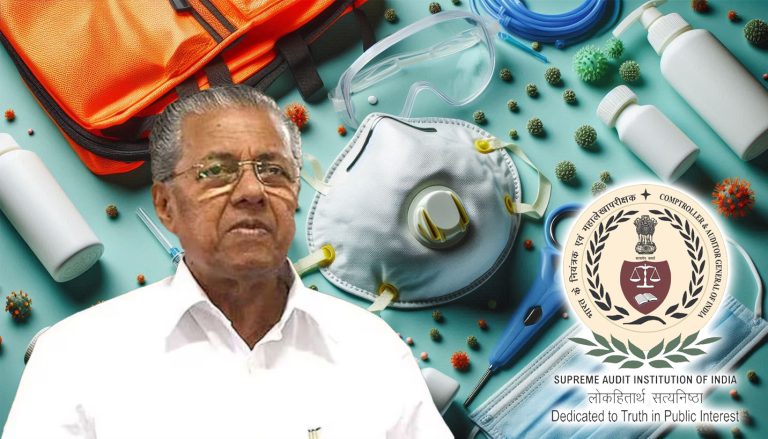
A report by the Comptroller and Auditor General of India (CAG) has flagged some serious irregularities of the Kerala government regarding purchasing Personal Protective Equipment (PPE) kits, N95 masks, and other essential commodities during the COVID-19 pandemic. The CAG report entitled ‘Performance Audit of Public Health Infrastructure and Management of Health Services’ for the period between 2016 and 2022 was presented in the state assembly on Tuesday.
The report highlighted various flaws in the state’s health infrastructure, including shortage of manpower, poor infrastructure, inadequate supply of drugs, and a lack of minimum essential services as prescribed by Indian Public Health Standards (IPHS) in the state’s health sector.
The Kerala government chose vendors selling at up to 300% higher rates
As per the CAG report, the Vijayan-led government in Kerala refused to purchase the PPE kits from a firm that was supplying the kits at a lower rate and instead purchased the kits from a vendor that was selling the kits at much higher rates. This was done despite the state government order that fixed a rate of Rs. 545 per unit of PPE kit to regulate the market prices during the pandemic. The state government allowed special sanctions to the Kerala Medical Services Corporation Ltd. (KMPSCL) to procure PPE kits, N95 masks, and other essential medical equipment.
Notably, for no apparent reason, the KMPSCL reduced its purchase order from 25,000 units to 10,000 units from the firm offering the base rate and increased orders from 15,000 to 2 lakh units from the vendors charging up to 300% more than the standard rate. The audit report found that the Kerala government’s decision to prefer companies offering inflated rates over companies offering base rates led to an additional expenditure of Rs. 10.23 crore. As per the CAG report, on March 28, 2020, the Kerala government purchased PPE kits for Rs. 550 per unit, and just two days later it purchased the kits at Rs. 1550 per piece.
“Although the procurement was made during an emergency, this does not justify cancelling orders that were more economical for the government. The purchases made from new suppliers at much higher rates resulted in additional expenditure of Rs. 10.23 crore,” the report said. The report alleged that the Kerala government gave undue favours to San Pharma Company. The KMPSCL made a full advance payment to San Pharma, which was selling at Rs. 1550 per unit, violating the authorised limits set by the State Level Crisis Management Group (SLCMG). Besides, the KMPSCL made the full advance payment without even verifying the quality of the kits.
Unsatisfactory implementation of centrally sponsored schemes
The centrally sponsored schemes were not properly implemented by the LDF (Left Democratic Front) government in the state as per the CAG report. “Under the Pradhan Mantri Jan Arogya Yojana (PMJAY), inordinate delay in the payment of insurance claims of beneficiaries was noticed. A District Implementation Unit to support the implementation of PMJAY and a combined unit for anti-fraud, medical audit, and vigilance at the state level with district-level officers were not formed. The number of beneficiaries covered under Janani Suraksha Yojana and Janani Shishu Suraksha Yojana Karyakram was low,” the report stated. The basic patient amenities like seating facilities, toilets, drinking water, ramps, etc. were not taken care of in district and taluk hospitals. The report also pointed out a shortage of staff, including doctors, nurses, pharmacists, and lab technicians, against sanctioned posts in the hospitals.
The report found the doctor-to-population ratio to be most adverse in 2 out of the 14 districts in Kerala. In 13 districts, the shortage of accredited social health activists ranged from 3 to 33 per cent.
Opposition hits out at the state government
VD Satheesan, the leader of the Opposition from Congress, slammed the Kerala government after the findings of the CAG report. He accused the government of being involved in corruption. He said that the state government saw the COVID-19 pandemic as a ‘golden opportunity to fill its own pockets beyond saving the lives of the people’. “The report tabled by the CAG confirms all the allegations raised by the opposition regarding corruption during the COVID-19 pandemic,” alleged Satheesan. He accused CM Vijayan and former Health Minister KK Shailaja of being complicit in the corruption. “The corruption took place with the knowledge of the Chief Minister and former Health Minister KK Shailaja. The first Pinarayi Vijayan government carried out this massive looting during the pandemic when people were living in uncertainty,” he said.
KK Shailaja defends the state government
Former Health Minister of Kerala KK Shailaja dismissed the allegations regarding the purchase of PPE kits in the CAG report saying that the PPE kits had to be bought at higher prices due to shortage. “When there was a shortage of PPE kits, the prices increased. Then, a few kits had to be bought at a higher price. Although lakhs of kits were purchased, only a few were bought at inflated prices. The extraordinary time called for such a decision,” she claimed.
Responding to the allegations of the opposition, she said that the issue was raised several times by the Congress-led UDF in the assembly and a clear answer was given. Therefore, the issue need not be raised ‘repeatedly’.
During the pandemic, the Kerala government was also accused of violating the privacy of people under quarantine. The Communist-led government allegedly collected the personal information of 1.75 lakh people of the state under quarantine, including details of their symptoms and health conditions. The data was compiled by the grassroots-level workers of the state and was transferred to a private company – Sprinklr.
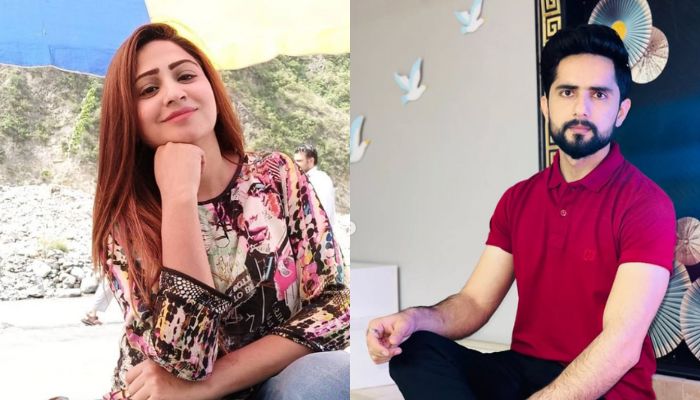
On 21st and 22nd January, prominent Pakistani YouTubers Sohaib Chaudhry and Sana Amjad came forward with chilling accounts of abduction and torture. Both YouTubers had vanished, only to return with shocking details about their disappearance. Their sudden absence sparked widespread speculation on social media platforms, with rumours ranging from voluntary exile to being hanged by the Pakistan Army for their pro-India content. However, in detailed video accounts shared on their YouTube channels, they revealed that a coordinated campaign had been orchestrated to silence their voices and threaten their families.
Sohaib Chaudhry recounts torture and mock executions
Sohaib, well-known for addressing controversial political issues, described his ordeal in painstaking detail. In the video, he said, “At around 2 AM, armed men stormed my home, blindfolded me, and took me to an undisclosed location.” Over the next three weeks, Sohaib was subjected to physical and psychological torture. “I lived in constant fear, thinking each day might be my last. They even staged a mock execution to terrify me into submission.”
He alleged that his captors were linked to a major political party and that they pressured him to join their ranks. “They told me I had three fabricated FIRs against me and warned me that if I didn’t comply, they would destroy my life,” he said.
Despite the threats, Sohaib remained defiant. He added, “Their methods only strengthened my resolve. I will continue to expose the truth and fight for justice.”
He further challenged his abductors, declaring, “You can imprison me for 21 years, but you cannot silence me. I will not stop speaking against corruption and the misuse of power in Pakistan.”
Sana Amjad reveals threats against her mother
In a video statement, Sana Amjad revealed a disturbing aspect of her ordeal, threats against her family. She said, “They targeted my mother, a widow, to force me into submission. They used fake calls and pretended to deliver a wedding card to gain access to her house.” Sana added that unknown individuals intimidated her mother, demanding her location. “My mother refused to disclose anything, despite their threats. This incident left her traumatised and fearing for her life,” she said. Notably, she had recieved notices over her content few months back and there were investigation against her.
Sana, known for her pro-India stance, consistently advocates dialogue between India and Pakistan. Her videos have drawn ire from powerful figures. She questioned, “They believe praising India is a crime in Pakistan. But if leaders, including the Prime Minister, can do so, why can’t I?”
She also shared that during her captivity, she was subjected to verbal abuse and constant intimidation. “They told me that to silence my voice, they would have to ‘switch me off.’ But their torture has removed all my fear. I will continue to make videos that tell the truth,” she vowed.
A pattern of silencing dissent
Both YouTubers suggested that their abductions were part of a broader effort to suppress critical voices in Pakistan. Sana said, “In 2019, I stood in Liberty Market, openly asking people about their views on India. Back then, it wasn’t a problem. Why is it an issue now, in 2024? What has changed?”
Sohaib added, “It’s common in Pakistan to accuse someone of blasphemy or label them an ‘Indian agent’ to destroy their reputation and silence them. I was accused of praising India, but I will continue to speak facts. India’s GDP is ahead of Pakistan’s, and that’s the truth.”
Furthermore, he criticised the lack of support from fellow content creators. “Where are those who claim to champion free speech? Many stayed silent during my disappearance, either out of fear or selfishness,” he said.
Social media silence and international support
Both YouTubers thanked their supporters and Indian media for amplifying their plight. Sana expressed disappointment with Pakistani media and influencers. “Indian media stood by us, but most of our own media chose silence. This silence speaks volumes about the challenges we face as independent voices in Pakistan,” she remarked.
Sohaib, who plans to release more videos with evidence of his allegations, said, “I will expose the people responsible for my abduction. Each proof will show how political parties use intimidation to suppress dissent. They can no longer hide behind their power.”
The future remains uncertain
Both Sohaib and Sana acknowledged the risks they continue to face. Sohaib candidly stated, “My life is still in danger. They may succeed in their plans to eliminate me, but they cannot kill the truth.” Sana echoed his sentiments, adding, “Even if I am silenced, my videos will remain to speak for me.”
The shocking revelations have highlighted that freedom of speech is increasingly under siege in Pakistan. Their ordeal is a stark reminder of how Islamic states like Pakistan treat those who dare to dissent against the government.
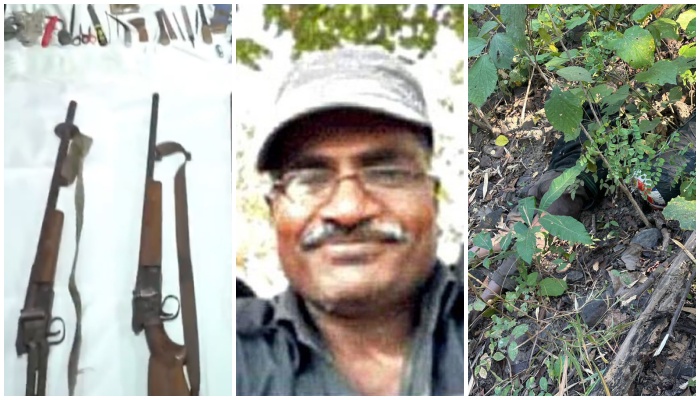
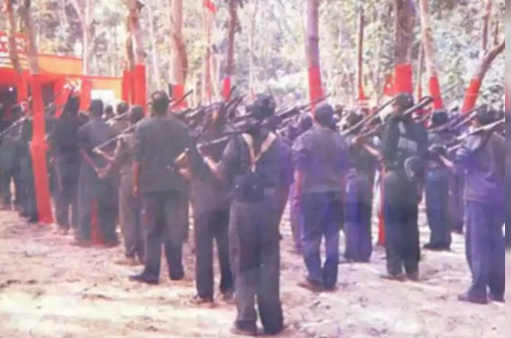
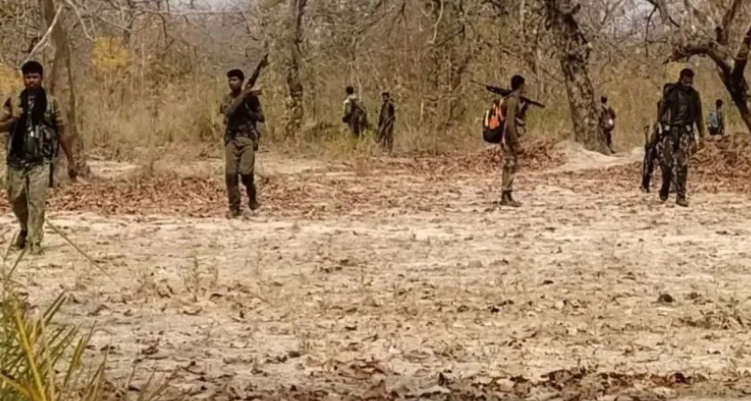
The Chhattisgarh Police on Monday, 20th January, conducted a joint operation with the Central Reserve Police Force (CRPF) and the Special Operation Group (SoG) Odisha to kill around 16 Naxalites in the Gariaband district near the Odisha-Chhattisgarh border. As per the reports, the security forces also recovered a large number of weapons and ammunition, including AK-47s, SLRs, INSAS, and other automatic weapons from the accused Naxalites.
Earlier, the Gariaband Superintendent of Police, Nikhil Rakhecha, in a statement, stated that more than 14 Naxals were killed during a joint anti-Naxal operation by the Gariaband Operation Group E30, Cobra 207, CRPF 65 and 211 Battalions, and SOG Nuapada. However, later two more dead bodies were recovered taking the toll of deaths to 16.
Notably, the security forces were also able to kill a member of the Naxalite Central Committee, Jairam alias Chalpati, who had a reward of one crore on his head. Home Minister Amit Shah lauded the operation and hailed the officers for taking a step ahead to make India a Naxal-free country.
“Another mighty blow to Naxalism. Our security forces achieved major success in building a Naxal-free Bharat. The CRPF, SoG Odisha, and Chhattisgarh Police neutralized 14 Naxalites in a joint operation along the Odisha-Chhattisgarh border. With our resolve for a Naxal-free India and the joint efforts of our security forces, Naxalism is breathing its last today,” he said.
Another mighty blow to Naxalism. Our security forces achieved major success towards building a Naxal-free Bharat. The CRPF, SoG Odisha, and Chhattisgarh Police neutralised 14 Naxalites in a joint operation along the Odisha-Chhattisgarh border. With our resolve for a Naxal-free…
Chhattisgarh Deputy Chief Minister Vijay Sharma also said that the elimination of Jairam was a success for the security forces and many automatic weapons had been seized in the encounter.
“14 Naxalites have been killed in 2 days. The special thing is that Odisha cadre CC member Jairam has been killed in Chhattisgarh and the killing of a CC member is the first such incident in the history of Naxal operations to date. Overall, there must have been a reward of more than one crore rupees on his head. So the police have had a big success. Many automatic weapons have also been recovered in this… By March 2026, Naxalism will be completely eradicated not only from Chhattisgarh but from the whole of India,” he said.
VIDEO | Visuals of huge cache of arms and ammunitions recovered following an encounter along the Chhattisgarh-Odisha border in Chhattisgarh's Gariaband district, in which 14 Naxalites have been killed. pic.twitter.com/Wgd7MIEO8V
The Odisha Police released an official statement in the case and said that they had obtained intelligence inputs about the presence of a large number of Maoists since 19th January. “Since the night of January 19, there were intelligence inputs about the presence of a large number of Maoists in the Kularighat reserve forest of Chhattisgarh, just 5 km from the border of Nuapada district of Odisha. A joint inter-state operation was launched by Odisha and Chhattisgarh police and CRPF personnel in the border areas of Nuapada district of Odisha and Gariaband district of Chhattisgarh on the night of 19th January,” it said.
The police said that the slain Naxals included women cadre too and a large quantity of firearms, ammunition, and Improvised Explosive Devices (IED) including one SLR were recovered by the security forces on the very same day.
“In continuation to the above, in the ongoing operation, 12 more Maoists have been killed during the late night and early morning encounter with the SOG team during the ongoing joint inter-state operation on the early morning of 21 January 2025. The number of Maoist casualties may increase. Arms and ammunition have been seized in massive amounts,” the police added in an official statement.
Naxalism set roots in India in 1960s-70s
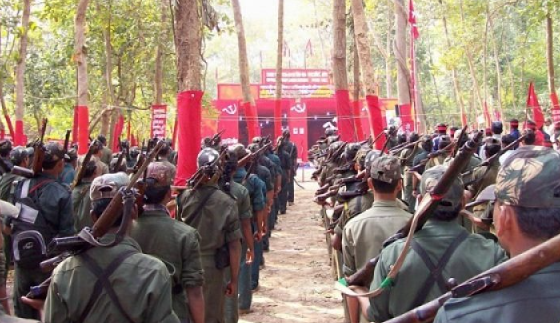
It is crucial to note that the movement of Naxalism began in the late 1960s when the locals from the Naxalbari village of West Bengal rebelled against the landlords who allegedly tortured the peasants over a land dispute. The movement soon spread to less developed areas such as Chhattisgarh, Odisha, Andhra Pradesh, and the eastern part of Maharashtra, Karnataka, etc. However, later these Naxals began supporting Maoist political sentiments and ideology that aimed at capturing state power through armed insurgency and mass mobilization.
Since then, India has faced security threats at the hands of insurgency groups, often supported by Communists and even terrorists. At times, the involvement of ISI Pakistan has also been reported in such cases. Currently, though many states have Maoist activities, Chhattisgarh is the only state in India where Maoists maintain a significant presence and the ability to launch large-scale attacks.
Over one-third of all Maoist-related violence and between 70% and 90% of all Maoist-related deaths have occurred in Chhattisgarh over the decade.
The movement has been posing a threat to India’s democratic system for years, but if we go on to specifically look at the data from the past two years, several security personnel have been killed, many innocents have been killed assuming they were ‘police personnel’ and many others have faced threats.
Naxal incidents from the past two years
In November 2023, a few hours before Prime Minister Narendra Modi’s rally in Kanker, Chhattisgarh’s Bastar region, Naxals murdered three villagers, labeling them as “police informers.” It was reported that, alone in the Bastar region, the Naxals had murdered 569 innocent villagers in the past 10 years.
In addition to their targeting of security forces, politicians, and government officials, Naxals have consistently resorted to the abduction and execution of villagers as their standard operating procedure. In addition to their targeting of security forces, politicians, and government officials, Naxals have consistently resorted to the abduction and execution of villagers as their standard operating procedure.
In April of that year, an IED blast by Naxal terrorists killed 10 personnel of the District Reserve Guard (DRG) and a civilian driver. The IED blast was aimed at the vehicle carrying the DRG personnel. The incident occurred in the Aranpur area of Dantewada during an anti-Naxal operation. Many jawans were injured and several vehicles were damaged.
#WATCH | On reports of an IED attack by naxals on security personnel in Dantewada, claiming the lives of 11 personnel, Chhattisgarh CM Bhupesh Baghel says, "There is such information with us. It is very saddening. My condolences to the bereaved families. This fight is in its last… https://t.co/n1YV67sIoipic.twitter.com/CC8Dj0uAca
In March 2023, an officer of the Chhattisgarh Armed Forces (CAF) was killed by unidentified Naxals in an explosion triggered by an improvised explosive device (IED) blast in Bijapur of Chhattisgarh. The police informed that the officer belonged to the 19th battalion of CAF’s D-Company and was a native of Uttar Pradesh. The Naxals fled the area taking advantage of forest cover.
In February 2023, BJP district vice president Sagar Sahu (47) was killed at his home in Chhote Dongar village, by Naxals in Narayanpur, Chhattisgarh. Two Naxalites reached Sahu’s home on a bike, knocked on his door, and fired two rounds from an AK-47 as soon as the door was opened. Following the encounter, both Maoists rode away into the jungle.
Sahu killed by Naxals (Times Now)
On February 5 of that year, Neelkanth Kakkem, the head of the Usoor Block (Bijapur District) of the BJP Mandal, was dragged from his house and mercilessly hacked to death by axes and knives in front of his family by Maoists.
In November 2023, a CRPF jawan was injured in a Sukma IED blast set off by Naxals in the midst of the state elections.
In 2019, at least 15 security personnel and one driver were killed in a Maoist attack in Maharashtra’s Gadchiroli district. Naxals had also allegedly set ablaze 27 machines and vehicles near a road construction site in Kurkheda of Gadchiroli district.
Recently in July 2024, two personnel of the Special Task Force (STF) were killed and four others were injured after Naxalites denoted an improvised explosive device (IED) in Chhattisgarh’s Bijapur district. “The incident took place on Wednesday night in Tarrem area when a joint team of security personnel was returning after an anti-Naxalite operation in forests on the tri-junction of Bijapur-Sukma-Dantewada districts,” the police was quoted as saying.
In January 2025, 2 personnel of the Border Security Force were injured when Maoists set off an improvised explosive device (IED) in Chhattisgarh’s Narayanpur district. This happened on 17h January, 5 days after a 10-year-old girl was injured in Sukma district and two policemen sustained wounds in Bijapur district in similar pressure IED blasts.
Notably, on 6th January of this year, Eight police personnel and their civilian driver were killed when Maoists blew up a vehicle with an IED in the Bijapur district.
It is crucial to note that these are a few incidents reported from the last two years in which either innocent villagers or government officers have lost their lives at the hands of left-wing extremists (LWE). As per the government data released in July 2023, there have been 7,649 LWE-related incidents and 2,020 deaths since 2014. In 2023 alone around 31 security personnel lost their lives and in 2024 around 23 did, all at the hands of Naxal leaders.
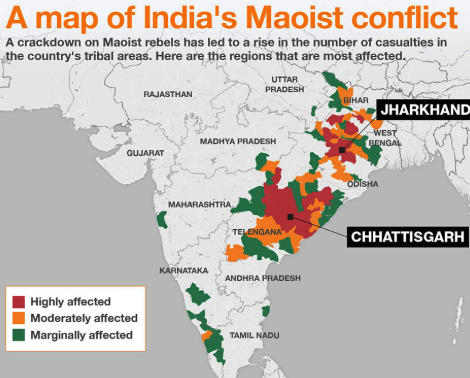
Naxal-affected districts in India
Notably, the districts affected by Naxalism in the country of India are Giridih, Gumla, Latehar, Lohardaga, West Singhbhum- in Jharkhand; Bastar, Bijapur, Dhamtari, Mohalla-Manpur-Ambagarh chowki Gariyaband, Kanker, Dantewada, Kondagaon, Mahasamund, Rajnandgaon, Khairgarh-Chhuikhadan-Gandai, Sukma, Kabirdham, Mungeli, Narayanpur- in Chhattisgarh; Bolangir, Kandhamal, Malkangiri, Kalahandi, Nabrangpur, Rayagada, Nuapada- in Odisha; Bhadradri Kothagudem, Mulugu- in Telangana; Alluri Sitarama Raju in Andhra Pradesh; Kannur, Wayanad- in Kerala; Balaghat, Mandla, Dindori- in Madhya Pradesh; Gadchiroli, Gondia- in Maharashtra and Jhargram in West Bengal.
Image- Drishti IAS
These districts continue to be affected by the presence of Naxal leaders and Maoists however, there has been a decline in the Maoist violence and the Left Wing Extremism in the country under the national BJP rule.
Maoist violence decreasing under Modi-rule
The Ministry of Home Affairs in the year 2021 stated that the Maoist violence in the country had gone down by 77% since 2010. The government said that steadfast implementation of the National Policy and Action Plan to address the Left Wing Extremism had led to a 77% fall in the LWE. The National Policy and Action Plan (2015) is a multifaceted strategy that includes development projects, security measures, and protection of the rights and entitlements of local communities. Reports mention that violence from 2258 incidents in 2009 had come down to 509 in 2021. Also, the number of resultant deaths has reduced by 90% from 1,005 in 2010 to 98 in 2022.
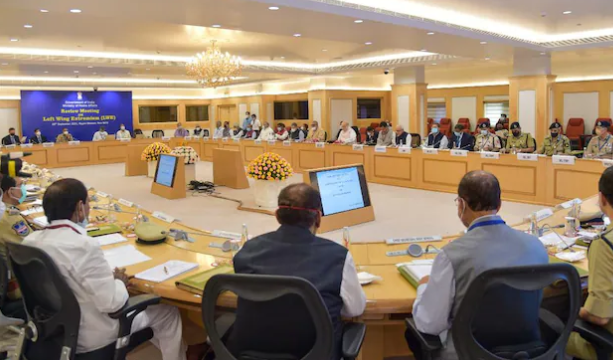
The Indian government has taken several measures to eradicate Left-Wing extremism. The Ministry of Home Affairs in the year 2006 formed a special division to address effectively the Left Wing Extremist insurgency in a holistic manner. The LWE Division implements security-related programs aimed at increasing capacity in LWE-affected regions. The Division also keeps an eye on the LWE situation and the countermeasures implemented by the states that have been impacted.
The LWE Division further coordinates the execution of various development schemes of the Government of India’s Ministries/Departments in LWE-affected States. In the past few years, the Indian government has also conducted several anti-Naxal operations killing Naxalites, in a step forward to make India a Naxal-free country.
On 16th January 2025, twelve Naxal terrorists were neutralized during an encounter between the security forces and Naxalites in Bijapur, Chhattisgarh. The encounter ensued when a joint team of security personnel was conducting an anti-Naxalite operation in the forest of the south Bijapur region.
On 12th January 2025, 5 Naxals including two women, were killed in an encounter with security forces in Bijapur. Security forces intensified anti-naxal operations in Bijapur after a ghastly IED attack was carried out by Maoists on a vehicle of security forces on January 6th.
In June 2024, eight Naxals were killed in an encounter in Chhattisgarh’s Narayanpur district. “The gunfight between Naxals and security forces broke out in the forest of Abhujmad when a joint team of the security personnel from four districts, Narayanpur, Kanker, Dantewada, and Kondagaon was out on an anti-Naxal operation,” the police said.
In October 2024, security forces in Chhattisgarh conducted the state’s largest anti-Naxal operation in its 24-year history resulting in the death of 31 Maoists, with no casualties on the side of the security forces.
In January 2025, two women Naxals were killed in an encounter with security forces in Gariaband district of Chhattisgarh.
In July 2024, 12 Naxalites were killed in a major anti-Naxal operation in the Wandoli village on the Chhattisgarh-Maharashtra border. CM Eknath Shinde had taken cognizance of the event and congratulated the state police on the operation.
In November 2024, Naxalite Vikram Gowda was killed in a gunfight in the state of Karnataka.
On 22nd January 2025, security forces in Jharkhand neutralized two Naxals.
Amit Shah echoes zero-tolerance towards LWE & 100% implementation of govt schemes
There are several such cases to cite from the past two years portraying the Centre’s non-tolerance approach towards Naxalism. Home Minister Amit Shah in October 2024 lauded the state efforts and said that all LWE-affected states, working shoulder to shoulder, are committed to completely eliminating Naxalism by March 2026. He mentioned that Prime Minister Modi has set the goal of making India a developed nation by the year 2047, and our 8 crore tribal brothers and sisters have a very important role in it.
Amit Shah lauding state efforts to combat Naxalism
“The biggest obstacle in bringing development to remote areas and tribal communities today is Naxalism. Naxalism prevents education, healthcare, connectivity, banking, and postal services from reaching villages. In order to ensure that the development reaches the last person in society, we must completely eliminate Naxalism,” Shah opined.
“Through the joint efforts of the central and state governments, we aim to replace the darkness created by left-wing extremism with constitutional rights and start a new era of development and trust instead of the violent ideology of left-wing. With a zero-tolerance approach towards left-wing extremism and 100% implementation of government schemes, we want to fully develop the LWE-affected areas,” he added.
Development by centre in LWE affected areas
As per the data released by the Centre, more than 10,300 km of roads have been already constructed in LWE-affected areas under the specific schemes. 2,343 mobile towers have been installed under Phase I and a work order has been issued for 2,542 towers under Phase II of the mobile connectivity project for LWE Affected Areas. Rs 3,078 crore has been released to the Most LWE affected districts under the scheme ‘Special Central Assistance (SCA)’ to fill the critical gaps in public infrastructure and services. A special focus has further been given to the skill development and entrepreneurship of the youth. 47 ITIs and 68 Skill Development Centers (SDC) have been approved under the Skill Development Scheme in 47 LWE Districts affected by LWE’.
For financial inclusion of the local populace in these areas, 1,236 bank branches have been opened, 1,077 ATMs have been installed and 14,230 banking correspondents have been made functional in most LWE-affected districts under the leadership of PM Modi. Further, 4,903 post offices have also been approved for LWE-affected areas in the last 7 years, of which, 3,053 have been made functional.
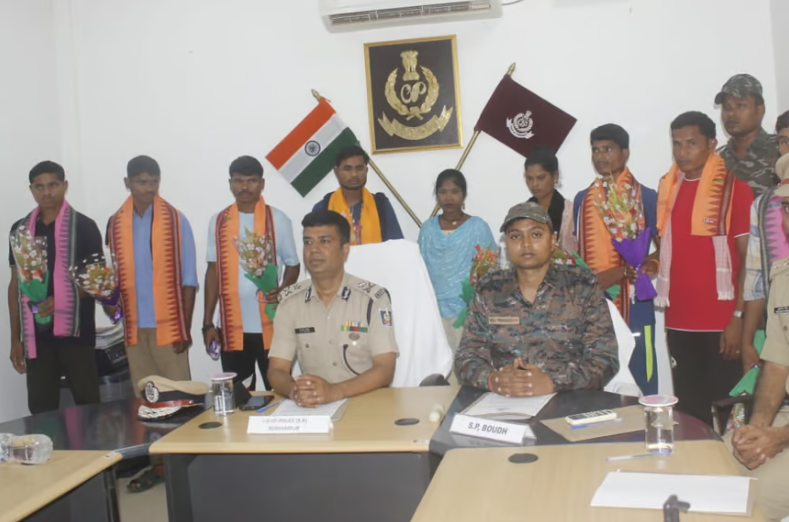
As per recent data, from 2014-2024, around 8551 Naxal terrorists have been neutralized, and many thousands have surrendered across the country. In major events in 2024-2025, 11 Naxals surrendered in Gadchiroli, Maharashtra; six surrendered in Karnataka; in December 2024, 11 surrendered in Odisha; in April 18 Naxals surrendered in Chhattisgarh’s Dantewada in April 2024; in July 4 surrendered from the state; 9 surrendered in Odisha; and the list goes on.
Nine Naxals surrendered in Odisha (The New Indian Express)
Conclusion: Difference between India’s social, and economic realities and Maoist ideology needs to be highlighted
Though the center is taking massive steps to fight the problem of Naxalism, there are several areas in Chhattisgarh, Jharkhand, and even parts of Maharashtra that remain affected by the problem. Notably, considering the Centre’s efforts through a holistic approach focusing on development and security-related interventions, the LWE problem can be successfully tackled. The extremists certainly do not want any kind of development in LWE-affected areas and so their frequent targets remain school buildings, roads, railways, bridges, health infrastructure, and communication facilities. As stated by the Centre, these attacks stem from a “desire to keep the population in their areas of influence marginalized to perpetuate their outdated and failed ideology”.
The influence of LWE has held up development in several affected areas across the nation. Civil societies and media must recognise this and raise their voices against Naxal activities, pushing extremists to abandon violence and surrender to the authorities. The difference between India’s social, economic, and political realities and Maoist ideology needs to be highlighted as violence can in no way lead to a democracy that strives to offer accessible means and resources to address grievances.
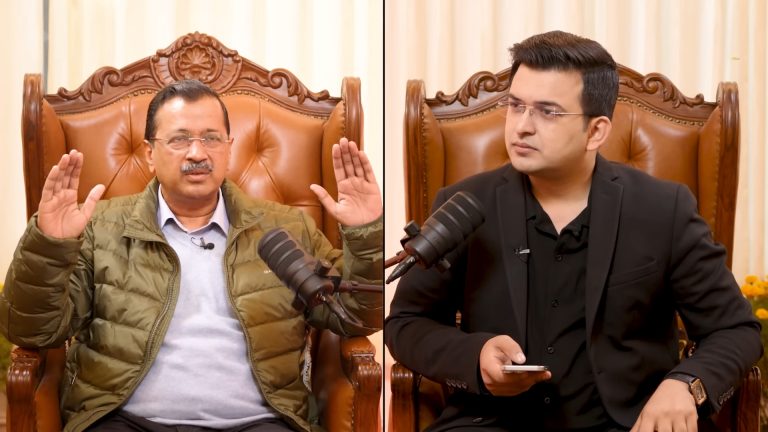
Ahead of the assembly election in Delhi, the pollution of the Yamuna River has become an election issue, with opposition parties targeting the ruling Aam Aadmi Party for failure to fulfil its promise of cleaning the river. Amid this, former CM Arvind Kejriwal has made a shocking claim, as he has denied spending around ₹7000 crore to clean the river.
The AAP supremo made the claim in an interview with journalist Subhankar Mishra. During the interview, Mishra cited a 2023 report by the Delhi Pollution Control Committee saying that nearly ₹6,856.91 crore was spent in five years, from 2017 to 2021, to clean the Delhi stretch of Yamuna, and asked why there was no visible sign of the work done after spending such a huge amount.
To this, Arvind Kejriwal shot back at the journalist, accusing of alleging that AAP has pocketed ₹7000 crore of govt money meant for cleaning river water. When Subhankar Mishra tried to explain that he was not alleging corruption, and only wanted to know why the river remained dirty after spending the amount, Kejriwal counter-questioned him asking where the money had been spent.
When Mishra said that it was reported by major media houses, the former Delhi CM said the reports are wrong. He said that the journalist should use his brain to know that the report is wrong. Kejriwal kept trying to play the victim by pretending that the journalist was accusing the party of misappropriating the money, adding that if the party had so much money, CM Atishi would be doing crowd funding her election campaign.
Notably, the Delhi Pollution Control Committee is an autonomous regulatory body in the Delhi government, and its budget is part of the budget of the Government of the National Capital Territory of Delhi.
Arvind Kejriwal refused to directly address the issue of why the Yamuna has not been cleaned yet, only listing the causes of why the river is dirty. He didn’t forget to target other states for the issue, blaming people from other states of settling near the river.
Delhi Pollution Control Committee report of spending around ₹7,000 crore to clean Yamuna River is wrong, claims Arvind Kejriwal, says he does not know how much was spent pic.twitter.com/TUbaZQAdeZ
The former CM did say that his govt has built sewer pipeline networks in the colonies on both sides of the river but refused to divulge how much was spent on it. He said that the govt is in the process of building new sewer treatment plants and upgrading the existing ones, and assured that the river will be cleaned by the next term.
The AAP leader also declined that he had promised in 2015 to clean River Yamuna within 5 years so that people could go for picnics at the river, claiming that he said this only in 2020. But when Mishra said he said it in 2015 and there are videos of the same, Kejriwal said it does not matter whether he said it in 2015 or 2020, as he has now promised to complete the job in his next term of the AAP govt.
Arvind Kejriwal has been promising a clean Yamuna River for 10 years, with no result, and now he has claimed the Delhi Pollution Control Committee report of spending around ₹7000 crore is also wrong. In 2015, the AAP supremo had promised to clean and revive the water body within a span of 5 years i.e. by the year 2020. “We will revive Yamuna within five years,” he had claimed then.
In November 2019, he said his government has planned to clean the Yamuna in the next four to five years, claiming that people would be able to take a dip in it. In December same year, he promised that by the next elections in 2025, he would take the whole village for a dip in the Yamuna.
In January 2020, just before the assembly elections, Arvind Kejriwal claimed, “The Yamuna will be cleaned and made pollution-free. We promise that after five years, anyone will be able to take a dip in the Yamuna without fear of diseases due to dirty water.”
That five years have also passed, and Kejriwal has made another promise to clean the river by the next term. In the meanwhile, data obtained from the Delhi Pollution Control Committee (DPCC) suggests that the pollution in the Yamuna River has doubled between 2015 and 2023.
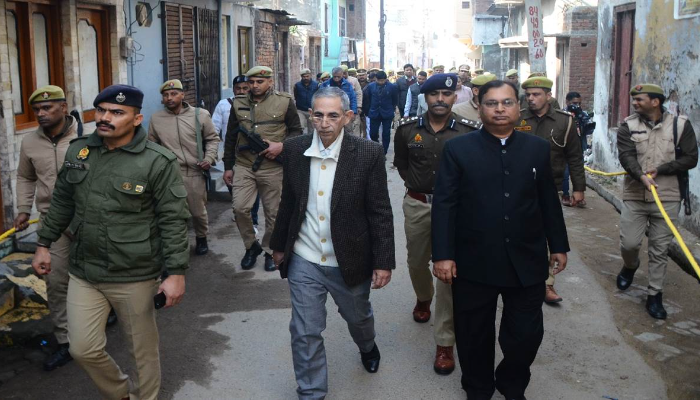
Muslim-dominated Sambhal in Uttar Pradesh has recently been in the news following the unrest during a court-ordered Archaeological Survey of India (ASI) survey of the Shahi Jama Masjid. The violence against authorities led to casualties, injuries and destruction of property. Notably, there have been anti-Hindu riots in the region on multiple occasions, including in 1976, 1978, 1986. Likewise, there have been frequent reports of Hindu migration from there as well.
Yogi Adityanath, the chief minister of Uttar Pradesh, recently addressed the state assembly and highlighted the same issues.
The violence of 1986 which was largely forgotten, has been grabbing attention again as stories emerge. Due to politicial reasons, many victims still await justice. A son has applied to the Judicial Investigation Commission regarding the murder case of his father, who was killed while being locked inside a store. He stated that his family used to deal in wholesale sugar and the shopkeeper who murdered his father was their retail customer, reported Dainik Bhaskar.
“He took my father inside the store and, with the assistance of his staff, assassinated him when the rumors began to circulate following the deaths of two Muslims,” the son shared. Rashtra Bandhu Rastogi, who lives in the Sambhal Kotwali neighborhood of Kot Purvi, submitted the petition to the Judicial Inquiry Commission on 21st January at the PWD Guest House. He informed that the 1986 violence claimed the life of his late father, Bhagwat Sharan.
He expressed, “I revealed everything about the incident. The intersection of Chaman Sarai and the hospital was marked with a flag. There was a rumour at the time that two Muslims had been murdered by Hindus which resulted in a lot of tension and something akin to an unofficial curfew was imposed. Pushpa Singhal of the BJP (Bharatiya Janata Party) had arrived that day, and my father had gone out of the house to hear her speech.”
“He needed to buy sugar and went to Kheru Halwai’s shop to do so. My father walked into his shop after the shopkeeper directed him to come inside because he might tumble in the crowd that was shouting from the direction of Ghantaghar market. He shut the store’s front door and then the employees along with the owner murdered him,” Rashtra Bandhu Rastogi recounted the horrific incident.
According to him, the only reason his father was killed since he was the first to bring RSS (Rashtriya Swayamsevak Sangh) to Sambhal. His acquaintance Kallu called him inside the shop to end his life, per a report in News18 Hindi. Rastogi was one of the people that moved out from Khaggu Sarai many years ago. He relocated to Sambhal’s Kot Purvi locality with his family. Rashtra Bandhu Rastogi mentioned that his father founded RSS in Sambhal. The former fought the case against all of the accused for half of his life, but he was unable to obtain justice owing to hostile witnesses.
The location of the temple in Khaggu Sarai was once home to numerous Hindu households, according to Rashtra Bandhu Rastogi, who had experienced the hardships of migration in Sambhal. However, people left Sambhal after the bloodshed there. He once owned several warehouses but then lost everything and now in his old age works in a post office to make ends meet. The accused even attacked him multiple times when he went to court to seek justice for his father. He asserted that a large scale riot would have transpired if the police had not been present during the rioting by Muslim mob on 24th November.
Rashtra Bandhu Rastogi stated that his father had gone out to buy sugar at the time of the unrest in Sambhal in 1986 when the rioters came from behind. His father was well-known in the community and was associated with the RSS. A shopkeeper had called him and assured him that he would be saved if he came inside the store. However, he was the one who stabbed his father with a knife after the shutter was pulled down. Afterward, an ice cutter was used to slash him from neck to head and he passed away from the assault.
He unveiled that the perpetrator was well known to their family. “We used to sell sugar and sulfur at wholesale prices. He used to make batashas (sweets) by taking the material in retail from our place. The murder was planned. I also filed a complaint from Moradabad, and despite a lot of effort and advocacy, he was not punished. The case lasted for three or four years. Due to litigation, I was in financial despair, and my business failed as well. I had to stop doing carpet business with Muslims. I was unable to fight the case in the high court because of my poor economic state.”
Rashtra Bandhu Rastogi informed that the judicial inquiry team had arrived and he had presented the case to them. “We informed them that we had not received justice at the time and requested for the same at the earliest. We told them that we survived the events of 24th November 2024 but my father was slain in 1986.”
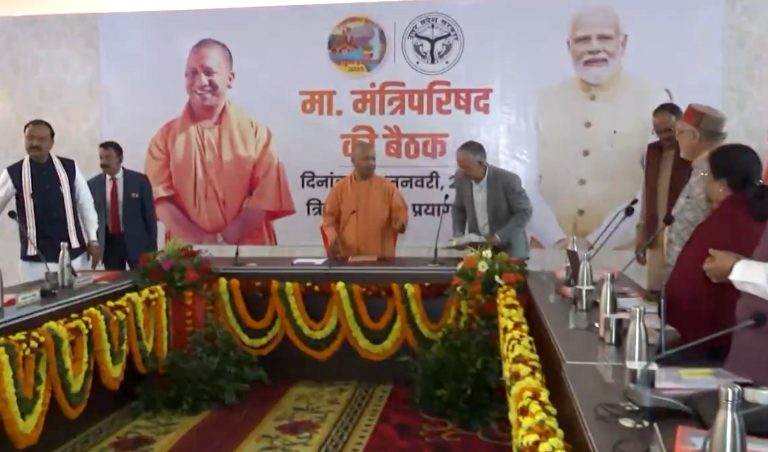
A special cabinet meeting of Uttar Pradesh government, chaired by Chief Minister Yogi Adityanath commenced on Wednesday at Maha Kumbh in Prayagraj.
UP Deputy CM Keshav Prashad Maurya has informed that important decisions will be taken in the meeting.
“Many important decisions will be taken in the Cabinet meeting today. All cabinet members along with the CM will also take a holy dip at Sangam today.”
Earlier, Uttar Pradesh Deputy Chief Minister Brajesh Pathak who is also attending the meeting, welcomed saints and devotees in Maha Kumbh.
“I welcome all the saints and seers who have come here to attend the Maha Kumbh. There will be a Cabinet meeting here and all members will take a holy dip,” Pathak said.
UP Minister Om Prakash Rajbhar said, “We will be briefed only after the cabinet meeting. Afterwards, all the ministers will go together to take a dip (in the Ganga).”
All 54 ministers of the Uttar Pradesh cabinet have been invited to this meeting, which is expected to approve several significant proposals and schemes for the state.
Following the meeting, Chief Minister Yogi Adityanath, along with the entire cabinet, will take the holy dip in the sacred waters of the Triveni Sangam.
This isn’t the first time CM Yogi has led his cabinet to the Sangam. In 2019, during the Kumbh Mela, he took a ceremonial dip along with his ministers, Akhada Parishad President Narendra Giri, and other saints.
Maha Kumbh is one of the largest and most significant religious congregations in the world. The key ‘snan’ dates left are: January 29 (Mauni Amavasya – Second Shahi Snan), February 3 (Basant Panchami – Third Shahi Snan), February 12 (Maghi Purnima), and February 26 (Maha Shivaratri).
Uttar Pradesh police deployed over 10,000 personnel, including local police and paramilitary forces for the event’s security. The National Disaster Response Force (NDRF) has deployed a “water ambulance” stationed at Sangam to ensure the safety of devotees.
The Maha Kumbh began on January 13 and will continue until February 26.
(This news report is published from a syndicated feed. Except for the headline, the content has not been written or edited by OpIndia staff)