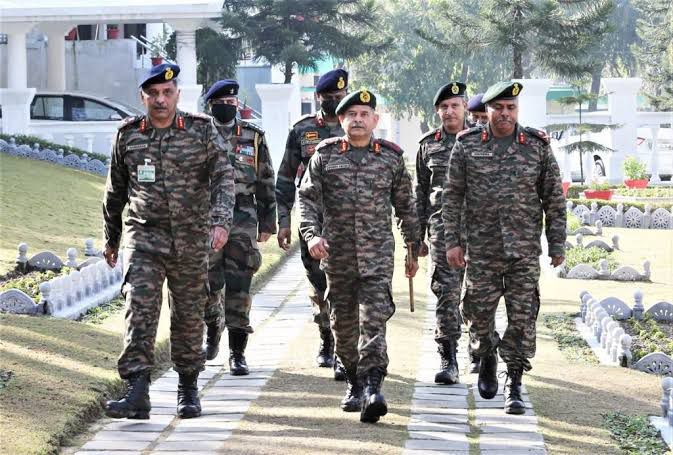
Indian Army chief Gen Upendra Dwivedi on Monday termed Pakistan as the epicentre of terrorism and said that 80 per cent of terrorists active in Jammu and Kashmir are Pakistanis.
In his annual Army Day press conference, Gen Dwivedi blamed Pakistan for the violence levels in the Union Territory saying it was being orchestrated by the epicentre of terrorism that is Pakistan.
“If the support is not forthcoming the way India is looking at it, this kind of terrorist infiltration will continue to be there,” he said.
The Army Chief said that the parliamentary elections and assembly elections in the Union Territory both had nearly 60% voting.
“It means that the local population is going with the peace. People of Jammu and Kashmir are shunning violence and violence is being orchestrated by our Western adversary Pakistan,” the chief said.
Gen Dwivedi, who has handled counter-terrorist operations very closely as Northern Army Commander, said that as of now, “We have inducted 15,000 additional troops in the year 2024 and that is why you will find that the violence level has gone down where we have been able to neutralize 73 terrorists out of which 60% were Pakistan terrorists.”
(This news report is published from a syndicated feed. Except for the headline, the content has not been written or edited by OpIndia staff)
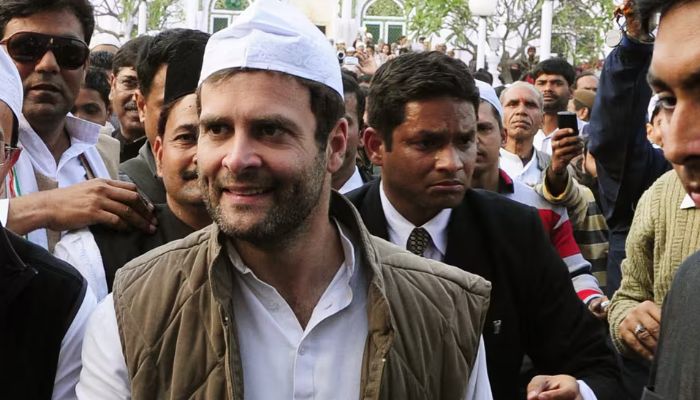
Ahead of the Delhi assembly elections, the Congress party has decided to go with its tried and tested Muslim appeasement strategy as Congress prince Rahul Gandhi is set to launch its election campaign from a Muslim-dominated Seelampur. While Seelampur was once a Congress bastion, the Aam Aadmi Party has over the years managed to make the constituency its turf by winning the last two assembly elections from this seat.
Congress has named its upcoming rally in Seelampur as “Jai Bhim, Jai Samvidhan” rally hinting at its attempt to woo not only its Muslim votebank but to also lure Dalit voters to its fold by positioning the party as a defender of the constitution and social justice. With this, the party seems to give a message to not only Seelampur but also the neighbouring constituencies like Gokulpuri, Seemapuri, Timarpur, and Burari with significant Dalit voter presence.
It must be noted that 55-60% voter base in northeast Delhi’s Seelampur constituency is Muslim and thus Congress would want to regain the lost ground, especially after Chaudhary Mateen Ahmed, a once Congress leader switched allegiance to the Aam Aadmi Party. Ahmed’s son Jubair Ahmed is contesting the election under AAP’s ticket while AAP MLA Abdul Rehman has joined Congress after being denied a ticket by AAP.
By picking a Muslim-dominated Seelampur constituency to launch its electoral campaign, Congress leader Rahul Gandhi apparently wants to pander to the Muslim votebank which has gradually drifted towards the other anti-BJP alternative—AAP by catering to the “minority khatre mein hai” narrative and positioning itself as the protector of the community.
Alongside the Muslim voters, the Congress party also aims to win back Dalit voters taking mileage from the recent controversy over Dr Ambedkar regarding Union Home Minister Amit Shah’s comments wherein he said that taking Ambedkar’s name has become a “fashion”. Rahul Gandhi and other Congress leaders are often seen flashing a pocket-size copy of the constitution and continuously attacking the BJP in the name of attack on the constitution, democracy and whatnot.
Seelampur’s strategic location also makes it of immense political importance since it bridges the gap between Northeast Delhi, East Delhi, and Chandni Chowk. If the Congress party’s traditional “Bheem-Meem” strategy plays out well, they may give tough competition to the other Muslim appeasing opponents Aam Aadmi Party and the BJP.
It is widely known that the Muslim community and Dalits are capable of consolidating their votes and playing a decisive role in the elections. Since this vote bank comprises nearly 30% of Delhi’s population, the Congress party intends to harness the demographic leverage.
Another interesting factor about Seelampur is that it is a communally charged constituency, not to forget several anti-CAA protests were held here in 2020. Congress party’s decision to field former AAP MLA Abdul Rehman from Seelampur itself indicates its desperation to rally support from the Muslim community. Not to forget Abdul Rehman was named in the FIR by Delhi Police for ‘provoking the crowd’ to join the anti-CAA protests. Rehman was accused of leading a mob on December 17, 2019, which eventually led to violence and arson.
In the run-up to the Delhi Assembly polls, Muslim-dominated areas of Seelampur had seen unprecedented violence led by Muslim mobs to protest against the Citizenship Amendment Act. On the eve of the Delhi assembly elections 2020, the mosques in the riot-hit Seelampur and Okhla had urged Muslims to vote in large numbers. These were the very areas where Muslim mobs had gone on a rampage and caused riots as a result of their opposition to the CAA. Alongside, Abdul Rehman who is now contesting on the Seelampur seat on a Congress ticket, the former five-time Congress MLA Mateen Ahmed, who has now joined AAP was also named in the FIR.
Whether Congress’s endeavour to woo the Muslim vote bank pays off or not will only be known after the election results, however, the party giving ticket to a person accused of leading a mob that unleashed violence during anti-CAA protests in 2020 and then picking a Muslim-dominated Seelampur to open election campaign, Congress party is demonstrating that it will go any length to appease Muslim voters.
On 13th January, the Mahakumbh 2025 commenced in the holy city of Prayagraj, marking a spiritual celebration for millions of Hindus worldwide. This festival stands as a testament to faith and the vitality of ancient traditions, with roots as old as time itself. However, over the years, attempts to distort and dilute such sacred Hindu customs have been evident. One such attempt is the transformation of the once-proudly called “Rajasi” and “Amrit Snan” into the now-familiar but historically misplaced term “Shahi Snan.”
The ancient roots of Kumbh Snan
Since time immemorial, the act of a holy dip at the Kumbh has held immense spiritual significance. The tradition predates Islamic rule in India and has been a cornerstone of Sanatan Dharma for centuries. However, the term “Shahi Snan” has now replaced the original terminology, and questions have been raised from time to time about its origins. Why is this sacred ritual associated with an Urdu word? What was it called before the advent of Persian and Urdu influences? These questions have led to in-depth discussions among scholars and spiritual leaders alike.
How ‘Rajasi or Amrit Snan’ became ‘Shahi Snan’
To find answers to all these questions, OpIndia consulted Vishalbhai Rajyaguru, a Sanskrit scholar and a senior government officer. Rajyaguru revealed that before the Mughal era, the Kumbh Snan was known as ‘Amrit Snan’ or ‘Rajasi Snan.’ He explained that the term ‘Shahi,’ meaning royal or majestic in Urdu, is a Mughal addition to the tradition. During the Mughal period, Persian and Urdu were promoted, often at the cost of native practices and traditions. The grandeur of the processions of Naga Sadhus, Aghoris, and other ascetics, often arriving on elephants, horses, and chariots, was likened to royal processions. This visual spectacle, he noted, was described in Urdu as ‘Shahi.’
What the Hindu texts say
Source: OpIndia Gujarati
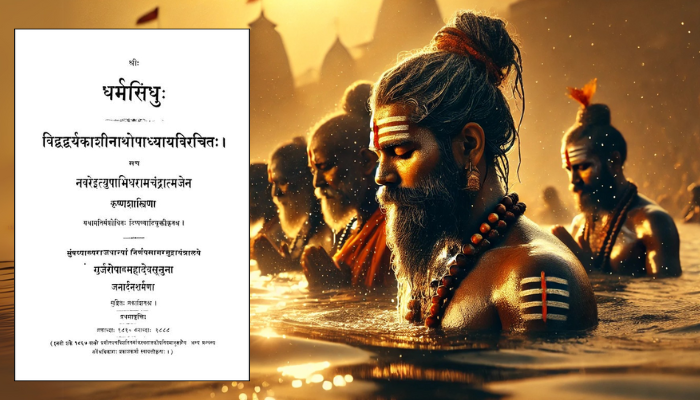
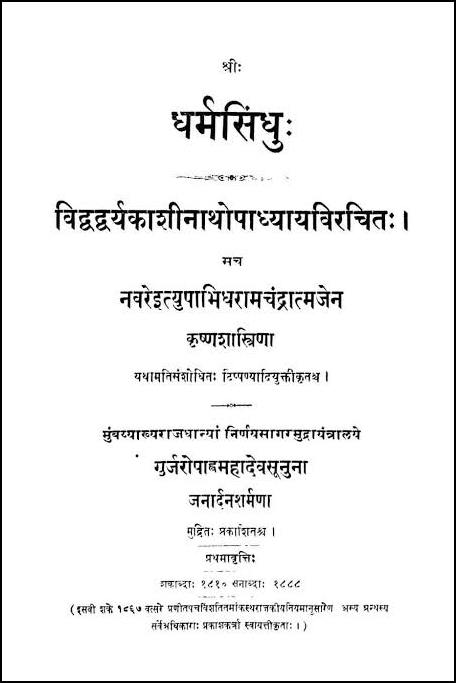
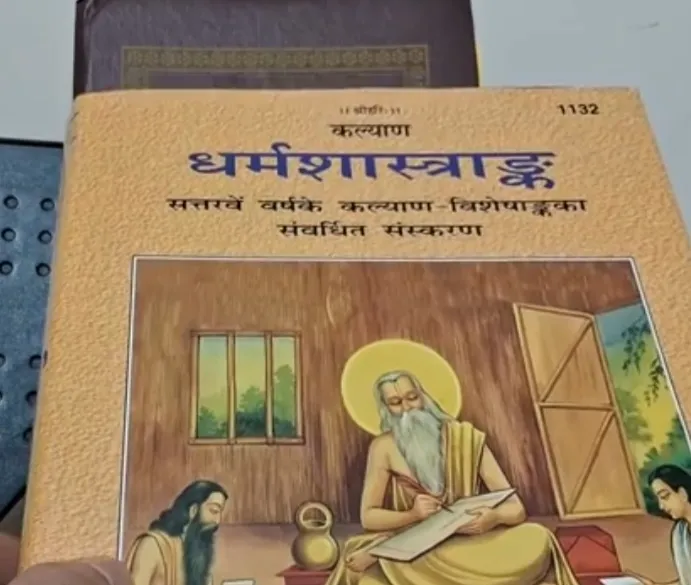
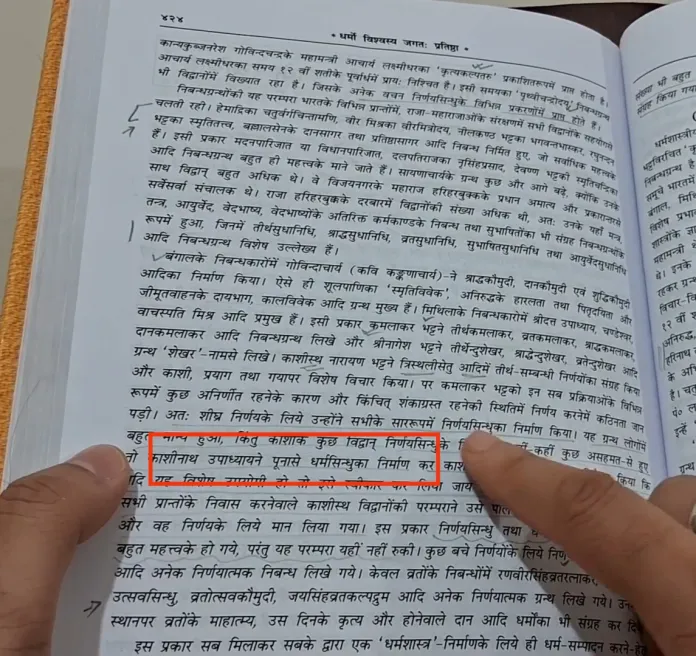
To understand the traditional nomenclature further, OpIndia delved into Sanskrit texts, specifically the Dharmasindhu. It is a reliable and authoritative text from the 17th-18th century. It was composed by Kashinath Upadhyay. The text draws upon the Vedas, Puranas, and other Hindu scriptures. According to the Dharmasindhu, the sacred Kumbh bathing ritual was called ‘Amrit Snan’ or ‘Rajasi Snan.’ This indicates that even centuries after the Mughal rule began, the original terms persisted before eventually being overshadowed.
Source: OpIndia Gujarati
Yogi government restores ancient Sanatan heritage
For years, sadhus and saints associated with various Hindu Akharas have opposed the use of ‘Shahi Snan,’ urging the government to revert to the traditional terminology. The Uttar Pradesh government, under the leadership of Chief Minister Yogi Adityanath, undertook a thorough investigation into the historical context and, acknowledging the sanctity of the tradition, renamed it ‘Amrit Snan.’ This change symbolises a return to the roots of Sanatan culture, undoing the distortions of the Mughal era.
Source: OpIndia Gujarati
The return to the original term highlights a larger effort to protect and respect India’s ancient traditions. As the Mahakumbh unfolds, it not only shows the strength of these practices but also reminds us of the cultural endurance that has survived centuries of outside influence. OpIndia will continue to explore this topic and share updates as we find more.
The article was first published in OpIndia Gujarati, which can be checked here.
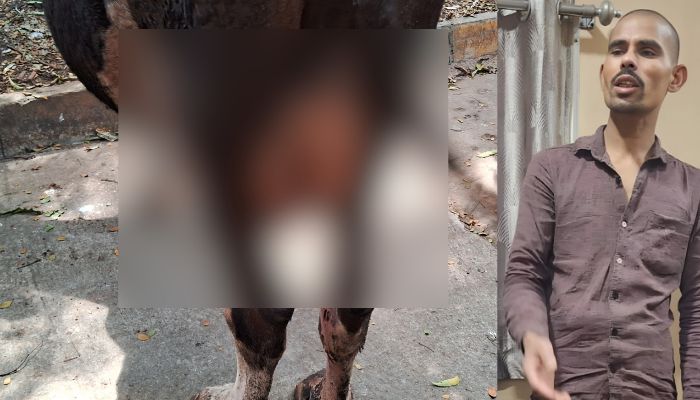
On the night of 12th January, Bengaluru Police arrested 30-year-old Sheikh Nasru for allegedly chopping off the udders of two cows and injuring another in the Vinayakanagar area of Chamarajpet. Nasru originally hails from the Champaran district of Bihar. According to the police, Nasru was in an inebriated state at the time of the crime.
Speaking to the media, Deputy Commissioner of Police, S Girish, said that Nasru acted alone and no evidence suggests that others were involved in the crime.
The incident occurred in the early hours of 12th January. Nasru was apprehended by the police on the same day at night. He has been sent to judicial custody until 25th January. According to media reports, he works as a helper in a plastic and cloth bag stitching shop located just 50 metres from the site of the incident.
Further investigation in the matter is underway.
Horrifying video of the injured cows accessed by OpIndia
OpIndia has accessed videos of the injured cows and the site of the incident.
Incident sparked outrage in the area
The incident came to light on 12th January when Karna, owner of the cows filed a complaint at Cottonpet Police Station. Bharatiya Janata Party (BJP) leaders condemned the incident and called it result of ‘Jihadi mindset’.
In a statement, Karna said, “I am deeply upset. The cows were tied near our house at night, and we found out about this cruel act in the morning. We don’t know who did this…I want justice.”
Content of the FIR
OpIndia accessed the FIR filed in the matter. In his complaint, Karna said that he earns a living by maintaining eight cows and selling their milk.
Every day, he tethers four cows near his house, and the remaining four are tethered behind the Dandumariamma Temple due to a lack of space. On 11th January, he tethered the cows, fed them fodder, and went to his house to sleep at around 11 PM.
At around 4:30 AM on 12th January, his neighbour, Sudhakar, informed him that some unknown individuals had cut the ropes securing the cows. Alarmed, he rushed to the spot where the cows were tied.
The Chief Minister of Karnataka, Siddaramaiah, had directed Police Commissioner B. Dayananda to launch an investigation into the matter and take strict action against the miscreants.
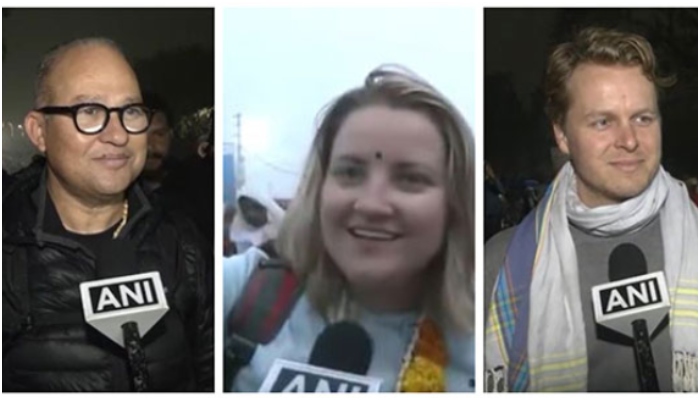
The most awaited Maha Kumbh Yatra began on Monday, 13th January in the city of Prayagraj, Uttar Pradesh with crores of Hindu devotees taking a dip in the confluence of the Ganga, Yamuna, and Saraswati rivers. Amid this, several foreign visitors also visited the holy site and praised the state for star arrangements of the event. The foreigners also praised the country and hailed Hinduism saying that they could see the true essence of Indianness at the Maha Kumbh.
Kumbh Mela is the world’s largest religious and cultural gathering based on scientific concepts and every Sanatani wishes to take a dip in Prayagraj Kumbh at least once in a lifetime. The holy event began today at around 3:30 am and by 9:30 am around 60 lakh devotees had already taken dip. A large number of people came across the world among which one Russian woman hailed the country for its culture.
“‘Mera Bharat Mahaan’… India is a great country. We are here at Kumbh Mela for the first time. Here we can see the real India – the true power lies in the people of India. I am shaking because of the vibe of the people of this holy place. I love India..,” the Russian devotee said.
#WATCH | Prayagraj | A Russian devotee at #MahaKumbh2025, says, "…'Mera Bharat Mahaan'… India is a great country. We are here at Kumbh Mela for the first time. Here we can see the real India – the true power lies in the people of India. I am shaking because of the vibe of the… pic.twitter.com/vyXj4m4BRs
Another visitor from Brazil after the holy dip said that the water at Kumbh was cold but the hearts of people were filled with warmth. “I practice Yoga and I am searching for Moksha. It’s amazing here, India is the spiritual heart of the world… Water is cold but the heart is filled with warmth,” he said.
#WATCH | Prayagraj | A Brazilian devotee at #MahaKumbh2025, Fransisco says, "I practice Yoga and I am searching for Moksha. It's amazing here, India is the spiritual heart of the world… Water is cold but the heart is filled with warmth." pic.twitter.com/as1oBQXmGl
One of the devotees from South Africa stated that he was in awe of the Indian culture and people here. He said that the city where the Kumbh is being organized was clean and that the people here were friendly. “It’s so beautiful. The streets are clean, the people are so friendly and happy. Thousands and thousands of pilgrims are here and we are just enjoying their company. We practice Sanatan Dharma and we are actually loving how the holy event is being organized and managed,” he added.
#WATCH | Prayagraj | A devotee from South Africa's Cape Town at #MahaKumbh2025, says, "It's so beautiful. The streets are clean, the people are so friendly and happy… We practice Sanatan Dharm…" pic.twitter.com/Q5PUnSriuy
Sadhvi Bhagawati Saraswati, originally from Los Angeles & a graduate of Stanford University, has been living at Parmarth Niketan, Rishikesh, for almost 30 years now. She also participated in the event. “This is not just an opportunity to take a holy dip at Sangam, this is an opportunity for people to take a holy dip in their belief in their devotion. This is the strength and greatness of Indian culture…This is neither a rock concert nor a sporting event. Who have people gathered for in such large numbers? For their devotion, for their belief. All government arrangements made here – with the strength of their devotion, PM Modi and CM Yogi, are unfathomable,” she said.
#WATCH | Prayagraj, UP: Sadhvi Bhagawati Saraswati, originally from Los Angeles & a graduate of Stanford University, who has been living at Parmarth Niketan, Rishikesh for almost 30 years now participates in #PrayagrajMahakumbh2025.
Fermin Ezcurdia from Spain expressed great enthusiasm to be in India on Mahakumbh. “I am very excited about India. It is a wonderful country.12 years ago I was at the previous Kumbh Mela for four days. It was insufficient for me; very little. Now I have come for 30 days,” he said.
The hospitality arrangements for the grand festival of Maha Kumbh in Uttar Pradesh’s ‘Sangam Nagari’ Prayagraj are all up to the mark. In a perfect blend of modernity, grandeur, and spirituality, a Dome City has been set up in Prayagraj Maha Kumbh. Arrangements to enjoy the panoramic view of Sangam through a speed motorboat have been made for the tourists. In addition, the Tourism Department is operating a special training program for Maha Kumbh. Under this program, guides, taxi drivers, vendors, and sailors who take people on a tour of the city are being deployed.
As an estimated number of 40 crore devotees will be arriving in Prayagraj, maintaining cleanliness is a major concern for the administration. Keeping this in view, about 10 lakh green toilets are being installed in the entire Sangam area. Special hospitals and trains have been arranged.
The Mahakumbh held once every 12 years, began on January 13th and would conclude on February 26th, 2025, in Prayagraj. The main bathing festival, known as the “Shahi Snan” (royal baths), will take place on January 14th (Makar Sankranti), January 29th (Mauni Amavasya), and February 3rd (Basant Panchami).
As part of the preparations for the Mahakumbh Mela 2025, Uttar Pradesh Police will use underwater drones for enhanced security. Inspector-General of Police (IG) PAC East Zone Prayagraj, Rajeev Narain Mishra Speaking to ANI, said that an underwater drone was tested on December 25th, and will be used by the water police and the Pradeshik Armed Constabulary (PAC).
In Gujarat’s Dwarka, the district administration is undertaking a demolition drive against illegal encroachment. Recently, the officials razed the Hazrat Panj Peer Dargah, which was illegally constructed on the land owned by the Gujarat Maritime Board (GMB) in Okha.
In the last three days, thousands of square meters of government land have been made encroachment-free by demolishing about 200 illegally built houses in Bet Dwarka, Dwarka.
गुजरात के देवभूमि द्वारका जिले के ओखा में गुजरात मेरीटाइम बोर्ड (GMB) की ज़मीन पर अवैध रूप से बनी हज़रत पंज पीर की दरगाह को प्रशासन द्वारा ध्वस्त किया गया.. पिछले तीन दिनों से देवभूमि द्वारका के बेट-द्वारका में अवैध रूप से बने करीब 200 घरों को गिरा कर 24000 वर्ग मीटर सरकारी… pic.twitter.com/i3ud1QJ0HD
Other than this, the authorities also took bulldozer action against illegal encroachment spread over about 4,000 square feet on Pirotan Island. This step was taken to protect national security and the marine ecosystem of the area. Pirotan Island is located near five SPMs (Single Point Mooring), which supply 60 percent of the country’s crude oil. The island is also part of the Marine National Park and illegal encroachment was causing significant harm to marine life, especially coral reefs. Besides, an increased presence of illegal mazars hinted at the threat of demographic change in the area.
Taking to X, Gujarat’s Home Minister Harsh Sanghavi said, “Bet Dwarka is the land of faith for crores of people across the country. We will not allow any illegal encroachment on Krishna’s land. It is our responsibility to protect our faith and culture. The Bhupendra Bhai Patel government in Gujarat has shown zero tolerance for illegal encroachment.
बेट द्वारिका देश भर के करोड़ों लोगों की आस्था की भूमि है। कृष्ण भूमि में किसी भी अवैध अतिक्रमण को नहीं होने देंगे। हमारी आस्था और संस्कृति की रक्षा करना हमारी जिम्मेदारी है।
Bhupendra Bhai Patel government in Gujarat has shown zero tolerance for illegal encroachment. pic.twitter.com/gaa8ZBKMoL
As per the Gujarat government’s Department of Information, the increased unauthorised movement of people due to the occupation has raised serious concerns for national security. The place was at risk of becoming a landing point for NDPS (Narcotic Drugs and Psychotropic Substances) )-related activities. The occupation and related unauthorised activities posed a serious risk to vital industries and defence.
Pirotan Tapu (Island) in Jamnagar, Gujarat, is now free from all illegal encroachments!
Pirotran Island, part of Marine National Park, is crucial for national security & marine life. Yesterday, 9 illegal religious structures spanning 4000 sq ft were removed from the island,… pic.twitter.com/QX8bPYjZB8
In an X post, Home Minister Harsh Sanghavi informed about the bulldozer action in Pirotan Island and said, “Pirotan Tapu (Island) in Jamnagar, Gujarat, is now free from all illegal encroachments! Pirotran Island, part of Marine National Park, is crucial for national security & marine life. Yesterday, 9 illegal religious structures spanning 4000 sq ft were removed from the island, restoring its natural state.”
According to reports, a total of 1,000 personnel, including senior officials and police officers, are involved in the entire operation. Before the action commenced, senior officials from the administration and police department devised a detailed plan and completed all necessary preparations. The district police chief, along with other officers and administrative officials, remained present on the ground to keep an eye on the process, even during the operation.
Additionally, drone cameras are being utilized to monitor the action. It is not yet determined how long this operation will last, nonetheless, given the extensive number of structures involved, it may take a considerable time to conclude.
Notably, Bet Dwarka is located on the western edge of India, just 2 kilometres away from Devbhoomi Dwarka. This small island houses a temple dedicated to Lord Krishna, which holds immense religious significance for Hindus. Millions of devotees visit the temple annually to offer their prayers. While access to the island was previously only possible via sea, a bridge has now been constructed, facilitating easier travel.
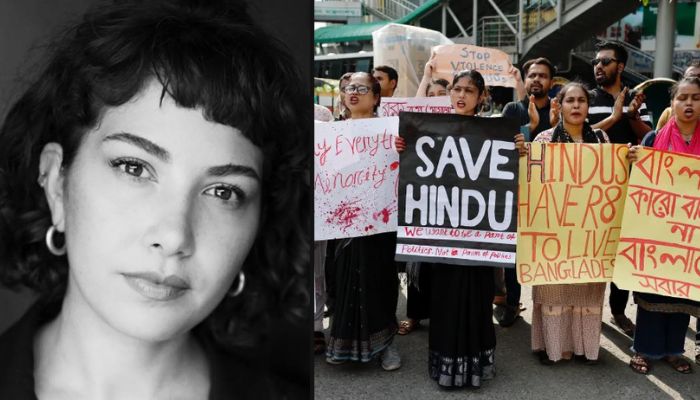
British-Iranian journalist Sahar Zand has documented the plight of the Hindu community, who are left at the mercy of the violent Muslim mobs in Bangladesh since the undemocratic ouster of Sheikh Hasina as Prime Minister.
The radio documentary was released on Friday (10th January). Through the 26-minute-long documentary, Zand punctured the attempts made by the Muhammad Yunus regime to downplay attacks on the Hindu community.
As part of the project, she took the help of two local Hindu activists Bonamali and Sukanto. The young journalist first visited a Hindu-majority village (name withheld) where mobs burnt down the storehouse of a Hindu family.
Screengrab of the radio documentary on anti-Hindu violence in Bangladesh
She witnessed the horror first-hand and described the sight as ‘gut-wrenching.’ Zand saw a charred barn, collapsed roof and scorched straw and crops.
“No one was injured but for the barn’s owner (a paddy farmer), the loss is catastrophic. (It has) wiped out over a year’s income…The owner, blackened from fighting the fire, is still in shock and too afraid to speak on the record,” she was heard saying.
The young journalist was taken aback by the arson attack and the subsequent destruction. She learnt that the Hindu victims often do not speak up for fear of retaliation.
7-9 cases of attacks per week in Northern Bangladesh: Hindu activist
Bonamali told Sahar Zand that attacks on the Hindu community take place daily, accounting for up to 8-9 cases each week in Northern Bangladesh alone. “These include rape, extortion, the destruction of homes and temples, and even murders,” the journalist stated.
One of the Hindu activists informed, “Most of the people are thinking about leaving the country and they have already packed their important things. They are prepared, ready to leave this country. This is the plan of every Hindu in Bangladesh.”
“We are feeling like there’s nothing left in this country for us. That’s why lots of people go to the border and try to leave this country,” he continued.
Hindus of Bangladesh tried to flee to India
Sukanta told Sahar Zand that many Hindus tried to swim to India following the fall of Dhaka. However, they had to return due to tight patrol on the border.
The young journalist learnt about the story of 14-year-old Hindu boy Jayanta, who was killed by Bangladesh Border Guard (BGB) while trying to escape to India. Jayanta had learnt about attacks on Hindus in Bangladesh through Facebook posts.
“When he said goodbye, I thought he was going to come back in a couple of hours. But he never came back. A few days later, I heard that my son was no more. That he got shot at the border,” the victim’s ailing mother told Sahar Zand.
Bonamali and Sukanta informed the British-Iranian journalist that stories like Jayanta’s are common.
Sahar Zand interviews radical Islamic cleric
Sahar Zand added, “In recent years, Bangladesh has seen a rise in Islamist extremism. While many condemn the attacks against minorities, some Islamist leaders stand accused of inciting violence on Hindus, deepening communal tensions.”
At about 10 minutes into the radio documentary, she was heard speaking to a radical Islamic cleric by the name of Mahmudul Hasan Gunovi. He is a member of the extremist ‘Hefazat-e-Islam Bangladesh’ group.
Zand noted, “Released on bail just before Hasina’s government fell, his fiery rhetorics have reportedly fuelled anti-Hindu sentiments, sparking widespread concern over his growing influence.”
Mahmudul Hasan Gunovi had claimed innocence when confronted about his arrests for inciting violence against Hindus. The radical Islamic cleric also spewed vitriol against RSS and ISKCON, accusing them of conspiring to turn Bangladesh into a ‘Hindu land.’
He tried to rationalise his provocative speeches and sermons by claiming that they were directed towards ‘Hindu extremists’ and not ‘regular Hindus.’
During the documentary, Mahmudul Hasan Gunovi was then confronted about his inciteful Facebook posts, wherein he claimed that Hindus would undoubtedly conspire against Muslims.
He then justified lynchings in the garb of blasphemy and rationalised his celebration over a Hindu youth being almost killed by a violent Muslim mob.
“A mob actually delivered justice by killing a person who insulted our Prophet…People would just know that this is the law of Islam. If somebody insults the Prophet, he is killable,” the Islamic cleric was heard saying.
Bonamali and Sukanta pointed out that his inflammatory rhetoric and that of other clerics have contributed to the spike in anti-Hindu attacks.
One of the activists highlighted how the demonisation of ‘idol worship’ is resulting in extremists breaking Hindu idols kept within temple premises.
President of Hindu crematorium narrates ordeal
The British-Iranian journalist visited a Shiva temple, which was destroyed by extremists. “The one sacred site now lies in ruins,” Sahar Zand noted.
She met Shankar Rai, the President of Satida Hindu crematorium in Pirganj. He informed, “On 6th August, a big mob came in. There were over 100 of them. And the people, they broke all the buildings here”
Rai narrated, “They were really organised and we weren’t expecting them. So, we couldn’t do anything. We were really afraid and we didn’t have the power to stop them. Only Muslims came here. They want us to go away so they can take over our land.”
“It is because we are born Hindus. That’s why we’re facing this ordeal right now,” he emphasised.
Crematorium converted into make-shift mosque, Sahar Zand comes under attack
Sahar Zand learnt about a Hindu crematorium in Thakurgaon district, which was destroyed by Muslim mobs and re-purposed as a mosque.
“In place of the Hindu crematorium, now stands a small mosque. Its newly built tin roof and brick walls, a stark replacement. Outside, a handful of men linger in conversation. One of them unmistakably dressed as an imam,” she noted.
Soon, a Muslim mob attacked her local producer. “Suddenly, Saqib (local producer) is being punched and kicked as he scrambles back towards the car. We try to escape but it’s too late,” Sahar Zand narrated.
Minutes later, her car was attacked. “Bricks are jammed under our tyres and our car keys are snatched away, along with our phones. We’re stranded. Trapped, we sit frozen inside the car, watching in horror,” she reminisced.
Zand continued, “Some spit against the windows. My heart pounds, and then a chilling silence falls over the crowd. We see a group of men, captured. One word cuts through the murmurs. Gasoline. After about three hours of being in the car, they were shaking our car, they were screaming, until the police arrived and they let us go.”
The British-Iranian journalist noted that law enforcement authorities were slower when mobs were attacking the Hindu community.
Despite this, Hindu activists Bonamala and Sukanta are reluctant to leave Bangladesh and are willing to fight for the community on their own.
Attack on Hindus in Bangladesh since the ouster of Sheikh Hasina
OpIndia has been vetting and reporting cases of atrocities on Hindus since the ouster of Sheikh Hasina on 5th August 2024.
There have been at least 205 attacks on Hindu temples, shops and businesses within 3 days of the fall of Dhaka.
We previously exposed how Muslim students have forced as many as 60 Hindu teachers, professors and government officials to resign from their positions.
Human rights activist and exiled Bangladeshi blogger, Asad Noor, has recently revealed that the minority community is now being coerced into joining ‘Jamaat-e-Islami’.
On 6th September, a procession of Hindu devotees carrying the idol of Lord Ganesha came under attack in the Kadam Mubarak area in Chittagong city of Bangladesh.
Ahead of the Durga Puja celebrations, a radical Muslim man named Yasin Mia vandalised the idols of Goddess Durga and other Hindu deities in Gouripur town in the Mymensingh district of Bangladesh on 25th September.
In the latest series of attacks, idols of Goddess Durga and other Hindu deities were vandalised at the Rishipara Barwari Puja Mandap and the Manikadi Palpara Barwari Pujamandap on 28th September and 1st October respectively.
The attacks were carried out in Sujanagar upazila in Pabna district in Rajshahi Division of Bangladesh. While a total of 4 idols were defaced at the Rishipara Barwari Puja Mandap, another 5 Hindu idols were destroyed at the Manikadi Palpara Barwari Pujamandap.
On 3rd October, 7 idols of Hindu deities were destroyed at the Gopinath Jiur Akhara Durga Puja mandap in Kishoreganj, Dhaka Division, Bangladesh.
On 5th November, the Hindu community came under attack from police and law enforcement authorities in Hazari Goli in Chittagong city of Bangladesh.
On 29th November, a violent Muslim mob attacked Hindu minorities and vandalised 3 temples in Patharghata in Chittagong district of Bangladesh.
The Hindu religious sites that the Muslims targeted included the Shantaneshwari Matri Temple, the Shoni Temple, and Shantaneshwari Kalibari Temple. The attack took place immediately after the conclusion of Jumma Namaz.
On 30th November, a prominent Hindu journalist named Munni Saha was arrested by the police from Karwan Bazar in Dhaka city of Bangladesh.
A group of extremists attacked the Mahashmashan Kali Mata Mandir, vandalised 7 idols of deities and stole gold ornaments on 13th December 2024.
On 19th December, a Muslim man identified as Alal Uddin vandalised an idol at the Polashkanda Kali Temple and then attempted to create a fake alibi. The incident occurred in Haluaghat upazila in the Mymensingh district of Bangladesh.
Another 37-year-old Muslim man identified as Azharul vandalised several idols of deities in Haluaghat Upazila in the Mymensingh district of Bangladesh.
The recent arrest of Chinmoy Krishna Das Prabhu and his aides, attempts at banning Hindu organisation ISKCON and stiffling Hindu protests with cases of ‘sedition’ highlight systematic persecution under the interim government of Muhammad Yunus.
Prime Minister Narendra Modi on Monday said that Jammu and Kashmir are becoming a hub of tunnels, bridges and ropeways, adding that the world’s highest tunnel, railroad bridge and rail lines are being built here.
The Prime Minister was speaking after inaugurating the newly constructed Z-Morh tunnel in Sonamarg located in Jammu and Kashmir.
The Prime Minister said that the world is in awe after witnessing the marvellous engineering of the Chenab Bridge.
Addressing the inaugural ceremony of the Sonamarg Tunnel, PM Modi said, “Our Jammu and Kashmir is becoming a hub of tunnels, bridges and ropeways. The highest tunnel in the world is being built here. The highest railroad bridge in the world is being built here. The highest rail lines in the world are being built here. The world is in awe after seeing the engineering of the Chenab Bridge.”
PM Modi said that there’s a time for everything, and all things will happen in their designated time. As PM Modi inaugurated the Sonamarg Tunnel today, he said that he had come here as ‘sevak’
“Today I came here as ‘sevak’ in between you. A few days ago I got the opportunity to lay the foundation stone of your railway division in Jammu. This was your very old demand. Today I have got the opportunity to hand over the Sonamarg Tunnel to the country. One more long pending has been fulfilled. This is Modi, ‘wada karta hai to nibhata hai’. There’s a time for everything, and all things will happen in due course. When I speak about the Sonarmarg Tunnel, this will ease the lives of the people of Kargil and Leh. This tunnel will reduce the hardships of the people of J-K and Ladakh,” the Prime Minister said.
PM Modi reminisced his old days stating that he used to come to Kashmir valley as a BJP worker and used to travel several kilometres on foot for hours.
He said, “Two days ago, our CM shared some pictures, after seeing those pictures, I was excited to come between you people. When I worked as a BJP worker, I had to come frequently. I have spent a lot of time here, whether Sonamarg, Gulmarg, Baramulla or Ganderbal. we used to travel several kilometres on foot for hours and the snowfall used to be very heavy even then. But the warmth of the people of Jammu and Kashmir is such that we did not feel the cold. Today is a very special day, as every corner of the state is in a festive mood. Today, Maha Kumbh has started in Prayagraj, and crores of people have come for a holy dip. The whole of India celebrates Lohri, Makar Sankranti, Pongal, and Magh Bihu. I wish for all success of all.”
Highlighting that this weather is called ‘Chilla-i-Kalan’ in the valley, the Prime Minister stated that this weather brings new opportunities for tourist destinations like Sonamarg, as tourists from all over the country are flocking here.
PM Modi said, “This time of the year is of Chilla-i-Kalan here in the valley. This weather brings new opportunities for tourist destinations like Sonamarg. Tourists from all over the country are coming here. The work on this tunnel was actually started in 2015 only when our party came into government. I am happy that this tunnel is completed in our government. This tunnel will bring various tourism opportunities in Sonamarg.”
“Now, Kashmir is being connected with railways. People are happy with the developmental works. Schools and colleges are being constructed. This is the new Jammu and Kashmir. The whole nation is engaged in making India a developed nation. It is possible when no part of the family is left in the race of development. For this, our government with a resolution of Sabka Saath Sabka Vikas is working,” he added.
The Sonamarg Tunnel project, around 12 km long, has been constructed at a cost of over Rs 2,700 crore.
It comprises of the Sonamarg main tunnel of 6.4 km in length, an egress tunnel and approach roads. Situated at an altitude of over 8,650 feet above sea level, it will enhance all-weather connectivity between Srinagar and Sonamarg en route to Leh, bypassing landslide and avalanche routes and ensuring safer and uninterrupted access to the strategically critical Ladakh region.
The newly inaugurated Sonamarg tunnel will also promote tourism by transforming Sonamarg into a year-round destination, boosting winter tourism, adventure sports, and local livelihoods.
Along with the Zojila Tunnel, set for completion by 2028, it will reduce the route length from 49 km to 43 km and boost vehicle speed from 30 km/hr to 70 km/hr, ensuring seamless NH-1 connectivity between Srinagar Valley and Ladakh.
This enhanced connectivity will boost defence logistics and drive economic growth and socio-cultural integration across Jammu, Kashmir, and Ladakh.
(This news report is published from a syndicated feed. Except for the headline, the content has not been written or edited by OpIndia staff)
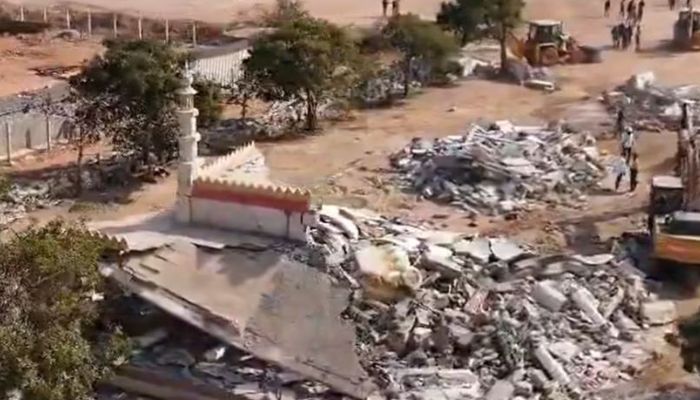
In the Sambhal district of Uttar Pradesh, the action against illegal encroachments continues and the district administration has ordered the demolition of illegal shops built next to the mosque in Sambhal. One of the illegal shops has been demolished so far during the digging of an old baori in the area. It has emerged that the shops were built on government land, however, the mosque committee used to collect rent from them. Now they have been given a 24-hour ultimatum to remove illegal encroachments.
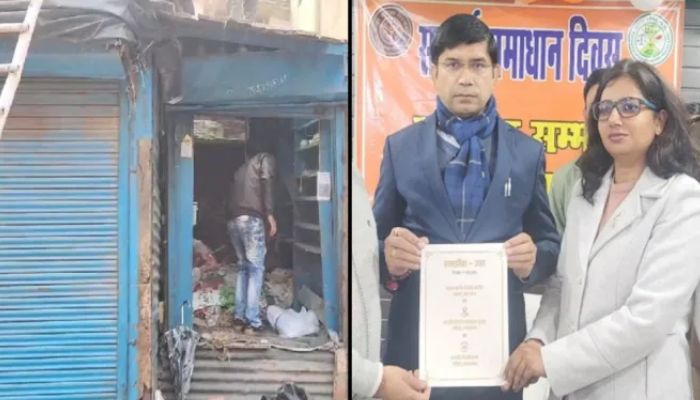
Reports say that while digging the baori next to the mosque built in front of Sambhal Kotwali, DM Rajendra Pansiya saw encroachment around it. When he inquired about this on Sunday (12th January 2025), it was found that 12 shops built there were illegal. One of these shops was demolished immediately. Apart from this, an ultimatum was also given to the remaining 11 shops. SDM Vandana Mishra said that these shops were constructed by occupying the road and they were found to be illegal during measurement.
The shopkeepers of the identified illegal shops failed to show any documents related to the shops. Subsequently, Sambhal SDM Vandana Mishra held a meeting with the shopkeepers and gave them an ultimatum to remove this encroachment within 24 hours or else the administration would demolish all the shops through bulldozers. It also came to light that the shops were built by occupying government land and the mosque committee used to collect rent from them. Some shopkeepers have started removing their goods after this ultimatum.
Meanwhile, the administration has now formed a committee to protect the pilgrimage sites and historic baoris that have been found in Sambhal. Kalki Dev Tirth Samiti has been formed to promote religious tourism and conservation in Sambhal. The head of this committee is the DM of the district Rajendra Pansia and the co-chairman is SP Krishna Bishnoi. Apart from this, many saints and dignitaries of the city have been included in it.
The DM has informed in this meeting that out of 68 pilgrimage sites in Sambhal, 34 have been identified and work is ongoing on them. In the same meeting, an MoU was signed between this committee and Patanjali Group. Earlier, the work of digging and beautifying many pilgrimage sites in Sambhal had already started, among which Chandausi’s baori (stepwell) is a prominent landmark.
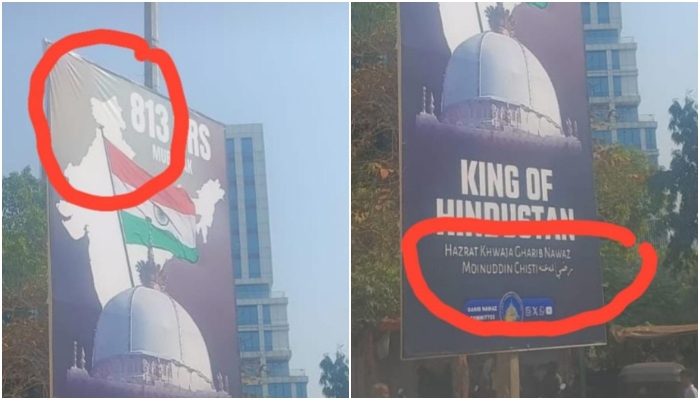
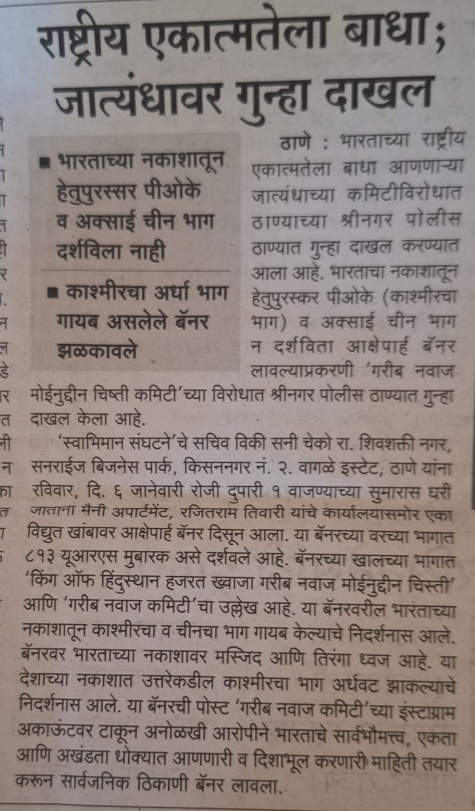
Last week, the Thane police in the state of Maharashtra filed a complaint against the ‘Garib Nawaz Moinuddin Chishti Committee’ for deliberately displaying a distorted map of India. The committee, as per the authorities, put up a huge poster in the city showing India’s map that deliberately excluded Pakistan-Occupied Kashmir (PoK) and Aksai Chin. Notably, both these regions are part of India.
The complaint has been filed by a member of one ‘Swabhiman Sanghathana’. The Secretary of the group noticed a huge flex board put up by the Chishti Committee in the Padwal Nagar, Thane West area, near the Rajitram Tiwari BJP Jan Sampark Karyalaya. He complained that the banner was deliberately put up in the area and that it insulted the country and its citizens by skipping PoK and Aksai Chin.
As per the local report, the incident took place on Sunday, January 5th. Apart from the distorted map of India, the banner also hailed Garib Nawaz Moinuddin Chishti by terming him the ‘King of Hindustan’. The board also had a picture of a Masjid and a flag of India, probably indicating the ‘rule of Islam’ over India.
Similar banners were put up in several places in the locality. Garib Nawaz Chishti Committee shared the same on Instagram saying that the banners were put up on the occasion of ‘Urs Mubarak of Sarkar Garib Nawaz and Sarkar Mulan Wale Baba’.
OpIndia exclusively obtained the photo of the banner. The local report also claimed that the Garib Nawaz Chishti Committee on Instagram posted the same banner. The post though seemed deleted. However, another post posted by the committee regarding the event confirmed that the controversial banners were put up in the area.
An FIR in the case has been filed at Shrinagar Police Station in Thane in which the complainant has stated that the accused committee members deliberately displayed a distorted map of India. The complainant also added that the act posed a threat to the sovereignty, unity, and integrity of the nation.