Home Blog Page 6053

Jammu and Kashmir: Investor summit scheduled to be held for the first time in October postponed to November

0

The Investor Summit which was to be held for the first time ever in Jammu and Kashmir in the month of October has now be postponed by a month. The summit which was supposed to happen on October 12-14, 2019, will now take place around November 8.

There is also a press conference expected by Governor Satya pal Malik shortly where he is expected to officially make this announcement.

The Modi-led government is trying to push a development drive in Jammu and Kashmir since it successfully revoked Article 370 in the valley. In its endeavour to do so, a special developmental plan for Jammu & Kashmir had been worked out which included the setting up of industries, state of the art educational institutes, healthcare facilities etc.

Keeping the development in J&K in mind, the Confederation of Indian Industries (CII) President, eminent banker Uday Kotak has announced an investor’s summit in J&K in October, in which major industrial groups are expected to participate and unveil concrete ideas for investment in sectors including hospitality, pharmaceuticals, agro-processing and healthcare.

The State Administrative Council (SAC) which met under the chairmanship of Jammu and Kashmir Governor Satya Pal Malik, accorded sanction to the holding of J&K Investor Summit, 2019. The event was to begin in Srinagar on 12 October. It was being told that more than 2000 investors would be invited to this program. The honour ceremony associated with this was to be held in Jammu on 14 October.

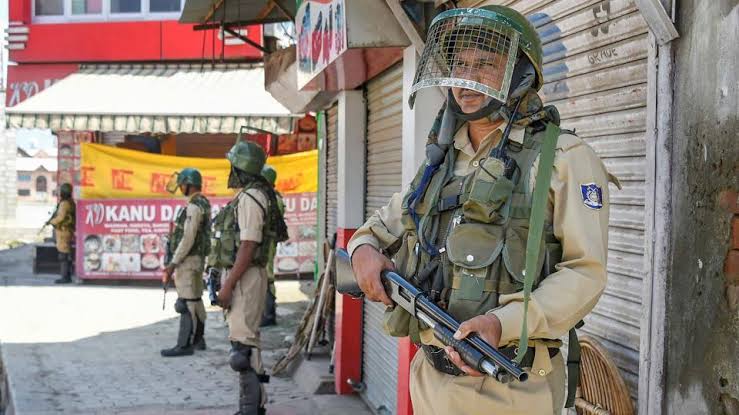
But, considering the present situation in the valley, the Government has decided to delay the summit by a month. Though normalcy has been steadily returning back to the valley, the Government probably wants to wait until conditions become absolutely normal in the valley.

At the beginning of the month, according to a statement by the Jammu district Deputy Magistrate Sushma Chauhan, Section 144 (against a gathering of more than 4 people) had been withdrawn from Jammu municipal limits. All school and colleges were set to open from August 10.

The section 144 was already relaxed in Udhampur district where schools opened on August 9 after remaining closed for 5 days. The markets were also opening from 11 AM to 5 PM, and the administration had informed that section 144 will be lifted gradually.

The people in the valley who were confined indoors during the first few days since Article 370 was repealed in the valley, gradually moved out of their houses and started normal daily life. Residents dwelling there had welcomed the audacious decision of the Narendra Modi government, which will transform the future of Jammu and Kashmir.

Maoists shot dead RSS Pracharak in Chattisgarh, leave pamphlet on the spot to terrorise villagers

Suspected Maoists have shot dead a Rashtriya Swayamsevak Sangh (RSS) activist Dadu Singh Koratiya in Konde village of Kanker district of Chattisgarh. Located about 200 kms from the state capital Raipur, Kanker, is one of the seven most affected districts of Bastar in the state.

As per the reports, police on Wednesday said that Singh, a RSS pracharak, was killed by suspected Maoists as a pamphlet was found at the crime scene. Singh was shot with a pistol and his body has been sent for post-mortem.

“We are investigating the actual motive behind the killing and whether the person killed was from RSS background”, K L Dhruv, SP Kanker said. Dhruv asserted that the left-wing terrorists have been pushed to the backfoot due to various successful operations against them in the past. He further added that this crime is their attempt to instil fear amongst the villagers.

The police have already launched a search operation in the area.

The pamphlet, which was found at the crime scene, was left by the North Bastar Divisional Committee (CPI, Maoist), wherein Koratiya has been referred to as an active RSS pracharak and an antagonist to the interests of Dalits and tribals.

“He was killed owing to his involvement in anti-tribal activities and we warn the senior leaders and workers of the BJP and the RSS to desist from such activities,” read the letter.

The police said that Koratiya was called outside his house wherein the Maoist shot him with a pistol from a close range. Last year, Koratiya had escaped an attack on his life by Maoists on the eve of Independence Day at the time he was visiting his farmland. This year, however, he succumbed to the left-wing extremism.

ED summons Congress leader Ahmed Patel’s son Faisal Patel in Sterling Biotech bank fraud case

The Enforcement Directorate has summoned Faisal Patel, son of senior Congress leader Ahmed Patel, in the Sterling Biotech money laundering case. Faisal Patel is being probed by the ED for his links with the Sandesara brothers, the owners of the pharmaceutical company, who are accused in a ₹5,000 crore fraud case.


The ED has asked Faisal Patel tor appear for questioning on Thursday.

On July 30 this year, the ED had also grilled Ahmed Patel’s son-in-law and advocate Irfan Siddiqui in connection with the case.

Sterling Biotech is under investigation as it had taken a loan worth Rs. 5,000 crores from a consortium of banks including Andhra Bank, but the loan has turned into a non-performing asset (NPA). According to ED, the Sandesara group allegedly cheated several banks and its total outstanding against banks and investors may go beyond Rs 10,000 crore.

As per the chargesheet filed in the case, owners of Sterling Group, Nitin Sandesara and Chetan Sandesara, had floated close to 300 shell companies to fraudulently move and layer the loan money abroad.

During the probe by ED, the group’s links with Ahmed Patel was revealed. Several persons questioned by ED in relation with the case had revealed the involvement of Ahmed Patel, his son, Faisal Patel, and his son-in-law, Irfan Siddiqui in the scam.

Sunil Yadav, an employee of the Sandesara group, had said that he had handed over cash to Faisal Patel’s chauffeur and that the cash was to be delivered to Ahmed Patel’s son on behalf of Chetan Sandesara.

The CBI had booked Sterling Biotech, its directors and senior officials, and some unidentified persons in connection with the alleged bank fraud case. The FIR alleged that the total pending dues of the group companies were Rs 5,383 crore as on December 31, 2016.

‘This is why aliens won’t talk to us,’ Elon Musk on Congress party’s tweet that has left the world puzzled

The Congress party issued a statement on Twitter recently that could only be described as utterly bewildering. It claimed that the BJP had “gone on record to support Pakistan in its attempts to fuel divisive politics in India.”


We, at OpIndia.com, are not entirely sure what this tweet meant considering the fact that it was former Congress President and son of the current Congress President, Rahul Gandhi, whose words were quoted by Pakistan to further its agenda on Kashmir at the United Nations.

As far as we are aware, the BJP had only slammed the Congress party for indulging in irresponsible rhetoric that undermined Indian national interests. Apart from people associated with the BJP, ordinary people too were extremely perturbed by the Congress’ stance on the matter.

Unable to make much headway on the issue, OpIndia.com approached subject-matter experts to help us decipher the Congress party’s cryptic tweet. First on our list was ACP Pradyuman of the CID. After hearing us out, he said gravely, “Iska matlab samjhe, Daya? Dal me kuch kaala nahi, poori Dal hi kaali hai (Do you understand, Daya? It isn’t that there’s something black in the Dal, the whole Dal is black).” He wouldn’t say anything further.

We then approached noted intellectual Rarundhati Oy to help us understand Congress’ logic behind the tweet. She said, “It is an ugly manifestation of the toxic and fragile masculinity and the overarching heteronormativity of the Patriarchal Colonial Indian State that refuses to recognize the autonomy and the free expression of the intrinsically diverse populace of Kashmir and their sexuality that is demonstrated both in the BJP’s comments and the Congress’ response to it.” Noting that her explanation was even more confusing than the Congress party’s tweet, we realized we had to move on to greener pastures.

Unfortunately for us, Chacha Chaudhury’s brain, which is reputed to work faster than a Computer, suffered a system failure after the tweet was read out to him. Five minutes later, we were informed by NASA that a volcano had erupted in Jupiter. Thanos, on the other hand, threatened to wipe out half the planet after hearing the Congress party’s tweet. Harry Potter told us that he wished Voldemort had killed him.

Aliens from the Andromeda Galaxy were unavailable for comments. ET regretted ever coming to Earth after we approached them. Jadoo from Koi Mil Gaya told us that there wasn’t enough Dhoop (sunshine) in our solar system for him to be able to decipher the tweet. Founder of SpaceX and CEO of Tesla, Elon Musk, said, “This is why aliens won’t talk to us.” Joe Rogan suggested that we try Ayahuasca for an answer to the question but we decided it wasn’t in our best interests.

Controversial journalist Alex Jones believed the Congress party was responsible for Jeffery Epstein’s suicide after reading the tweet. Intriguingly enough, the FBI and the CIA were of the same opinion and told us that they would treat the Congress party’s twitter handle as a national mental health hazard henceforth. The Clintons, meanwhile, were just glad that they were off the hook and were too interested in partying than answering our question. Popular conservative commentator Ben Shapiro said his FACTS and LOGIC were no match for the Congress party’s tweet. Clinical Psychologist Jordan Peterson told us we should clean our rooms before attempting to decipher that tweet.

Closer home, IITian and Delhi CM Arvind Kejriwal told us, “Sab milay huay hain ji (Everyone is involved in this).” Mamata Banerjee and Naveen Patnaik were more concerned with which state gets the credit for Rosogolla than the content of the tweet, they cut the phone promising to send over a bucket of Rosogollas for the entire OpIndia team. Popular actor and now Lok Sabha MP, Sunny Deol, told us that “uprooting that goddamned handpump was way easier than this”.

When we posed the question to the CBI, they passed the question to P. Chidambaram, who is currently in their custody. Chidambaram promised to answer the question in lieu of his release, but the CBI would have none of it. “This is exactly the kind of transaction you tend to attempt that has landed you here in the first place,” we heard them tell the senior Congress leader as we prepared to take our leave.

Despite our best efforts, we were unable to find what Congress exactly meant when it said the BJP had supported Pakistan. Next, we intend to approach Tony Stark to help us with Time Travel so that we could go back in time and pose the question to some eminent personalities from the past. We hope that Albert Einstein or Nicola Tesla will have the answers we seek.

Madhya Pradesh: Distressed farmer from Dewas sings a song asking CM Kamal Nath to keep his promise and waive off his loan

Madhya Pradesh farmers have been stranded amidst Congress’ misadventure and politics of farm loan waiver since the party came to power in the state. A distressed farmer in Dewas, Madhya Pradesh has now resorted to an innovative way to reach out to the Chief Minister Kamal Nath attempting to draw his attention at his troubled state.

A farmer in Dewas made a video in, which he sings songs to draw the government’s attention requesting them for help by waiving off his loan as promised by Kamal Nath government.


In the video, the farmer sings: “Karz maaf kiya jayen, samarthan mulya diya jayen, hum par Kamal Nath thoda dhyan diya jayen” (waive off loans, respect our support, Kamal Nath give us some attention).

Additionally, the farmer demanded that government should help them recover the price for the standing Soya crop in Dewas that has suffered pest attack. He sang: “Bheek mangte nahi, haq humara hain yeh. Daam faslon ka humko, uchit de do….” roughly translated as “we are not begging, instead it is our right to get the right price for our crops.”

The farmer feels that perhaps social media is the only way he can reach out to the Kamal Nath government, which is otherwise, not paying attention to the farmer’s plight. He says that Kamal Nath is our representative and head, if he will not listen to us then who will? “This is my attempt to bring the farmers plight to his notice,” said the farmer from Dewas sector in Madhya Pradesh.

Congress came to power in Madhya Pradesh over promises of farm loan waiver, however, Kamal Nath led Congress government’s promise in Madhya Pradesh to waive-off farms loans under Jai Kisan Rin Mukti Yojana has turned out to be a debacle. After assuming power in in the state they cleverly altered the conditions to waive-off farms loans in contrast to their earlier stand.

The false promises of loan-waivers has created a stir amongst the poor farmers in the state. Recently, in a video which surfaced, a farmer exposed the government’s farm loan waiver sham. A Madhya Pradesh farmer confronted Congress leader Jyotiraditya Scindia in a public meeting in Bhopal on May 12 and alleged that farmer loan waiver as promised by the Congress government hasn’t been fulfilled yet

Amidst what can be seen as a massive loan-waiver scam brewing in the state, the distressed farmers had in February, threatened to commit ‘mass suicide’ after their names appeared on the state government’s loan waiver list even though they do not have any dues or have loans far smaller than the ones that are listed.

In January, Kamal Nath govt waived off over 120 crore non-existent farm loans. Depressed and helpless farmers in Madhya Pradesh have been committing suicide over the false promises made by the Congress government, but somehow the government remains unmoved.

While P Chidambaram continues in CBI custody, Supreme Court extends his interim protection from ED arrest till Thursday

0

The Supreme Court today extended the interim protection given to scam-tainted UPA era former finance minister P Chidambaram from arrest by Enforcement Directorate. The apex court is hearing his petition against Delhi High Court order rejecting his anticipatory bail plea.

The apex court granted protection to Chidambaram from ED custody even while the CBI continues to interrogate him in custody in his culpability in the INX Media case.


P Chidambaram was arrested by the Central Bureau of Investigation(CBI) on August 21 and was subsequently sent to 4-days custody by a special CBI court. On the expiry of the custody period, the court had extend his custody by 4 days till August 30 on CBI’s request. Another investigative agency, the Enforcement Directorate, which found sprawling properties owned by him in 12 countries, is seeking custody of P Chidambaram for questioning him in cases related to money laundering.

Yesterday, the SC granted interim protection to Chidambaram from arrest by the ED till Wednesday. Today, the SC extended his protection till Thursday. The hearing the case will continue tomorrow.

Chidambaram’s counsel Dr AM Singhvi yesterday asserted that the former union minister’s custody is sought by the ED only for “humiliation, humiliation and humiliation”. However, prosecutor advocate Solicitor General Tushar Mehta today retorted back saying the ED is seeking Chidambaram’s custody only for “prevention, prevention with Capital P”.

It is notable to mention here that the other central government agency, CBI is displeased with Chidambaram’s evasive answers to their questions and is currently contemplating on securing court’s permission to conduct a lie-detection test on him.

According to reports, the ED has further claimed that Chidambaram and his associates have been trying to tamper with evidence, trying to sell-off assets abroad and close various foreign bank accounts which he and the other co-accused in the INX media case been operating through shell companies.

In an affidavit filed in the Supreme Court, the investigating agency has claimed that Chidambaram has bank accounts in as many as 12 countries, namely, Argentina, Austria, British Virgin Iceland, France, Greece, Malaysia, Monaco, Philippines, Singapore, South Africa, Spain and Sri Lanka.

Pakistan fruit-seller asks Turkish biker to recite Kalima to prove she is Muslim, says Muslim women don’t wear ‘such clothes’

0

A recent video shared by a female Turkish biker reveals the deeply entrenched religious supremacism and discrimination against women prevalent among average Pakistanis. In the clip shared by female Turkish biker Asil Özbay, one Pakistani fruit-seller can be seen inquiring about her religion before selling her fruits and moralising her for not wearing an appropriate gear as prescribed by Islam.


The fruit seller asks Asil to prove that she is a Muslim by reciting the Muslim Kalima. This reveals the widespread religious supremacism and bigotry against non-Muslims among Pakistanis as a Pakistani fruit seller sought faith of one of his buyers before selling her fruits. The fruit seller also proceeded in denouncing Asil for wearing a uniform that did not conform to the Islamic norms.

After Asil pronounced the Muslim Kalima, the fruit seller goes on to claim that according to Mohammed, women are not supposed to wear attire as donned by the biker. He said, “Mohammed says one shouldn’t wear this uniform. You are a woman. Muslims do not wear such kind of uniform because everybody watches your body. It is not preferred for a woman to wear such uniforms.”

This video serves as a reality-check about Pakistanis whose leaders have recently fallen over themselves to claim lofty principles of secularism while criticising India’s move to invalidate Article 370 as communal and against the Muslim majority in Jammu and Kashmir. The ideology espoused by the concerned Pakistani fruit seller unveils the hatred that an ordinary Pakistani harbour for non-Muslims simply because one’s faith is the not same as his.

The snippet also shows that women in Pakistani worldview are second-class citizens who have no right to wear an attire they are comfortable with and instead depend on the validation from men around them and comply with archaic medieval practices.

Shiv Aroor on India’s Most Fearless 2: They practised unquestioning loyalty to their units and men, and when it came to it, placed the mission above their lives

‘India’s Most Fearless 2: More Military Stories of Unimaginable Courage and Sacrifice’  has been written by Shiv Aroor and Rahul Singh, Penguin Ebury Press, 2019. Shiv Aroor is an editor and anchor with India Today television, with experience of over a decade covering the Indian military. Rahul Singh has covered defence and military affairs at the ‘Hindustan Times’ for over a decade, in a career spanning twenty years.

The book details tales of valour and courage of the Indian Army. In this sequel, Shiv Aroor and Rahul Singh take their readers through the unheard stories of some talked about and others, lesser-known recent anti-terror operations by the Indian Army. Detailing the Balakot airstrikes as well, the new book has broken records and is bringing stories of courage and the indomitable will to the readers.

OpIndia spoke to Shiv Aroor, the co-author of the book about the process of writing this book, his motivations, and how, writing about martyrs and the heartbreaking stories of their families changed him.

Following are the excerpts of the interview.

Tell us about your new book. This is your second book which tells the stories of India’s Bravehearts. How has the experience been thus far?

India’s Most Fearless 2 is the second in the series of our books with untold stories of recent military heroes. The book begins with a detailed account of the planning and execution of the IAF airstrikes in Balakot and is followed by 14 stories of individual heroism from the three armed forces, including many from the Special Forces. When we wrote the first book in 2017, in which we brought to readers a first-hand account of the post-Uri surgical strikes by the Army officer who led the mission, we knew readers would immerse themselves in these stories — what we weren’t prepared for was the enormous popularity of these tales. It’s what drove us to write this new second volume, and we’ll be writing more.

Weirdly enough, as inspiring and motivational these stories, somehow are, such stories never quite get told in India. Why do you think that is?

Great question. That’s actually precisely why we created India’s Most Fearless series. We constantly get feedback, Nupur, about how inspirational and elevating these stories are. But to be totally honest, our intention as authors wasn’t to inspire or elevate. We realised, precisely like you suggest in your question, that these are stories that we as journalists hear about, but never manage to tell in the kind of detail that the feats deserve. Fleeting mentions on social media, the odd citation or YouTube video, and heroes usually have the most ephemeral acknowledgement from the public.

But as I said, this wasn’t just about giving these heroes the memory they deserve, but about giving the public some truly stunning stories. It would be a pity if these stories simply faded with time until they could barely be recalled beyond the families and units of heroes. We’ve found an amazing and enduring audience with India’s Most Fearless that agrees wholeheartedly with us — that these are amazing stories that people would plainly love to read.

I understand that a lot of these stories are quite heartbreaking for the families. Can you tell our readers about the ones that affected you the most personally?

To us, all of the stories were heartbreaking at one level or another. If they don’t actually involve loss — and many of the stories in India’s Most Fearless 2 do end in sacrifice — all of them involve men and women being forced into situations where they must decide literally between life and death. It’s a cliche we use often, but the writing of these books has sobered us up hugely about what ‘life and death’ really means. If the heroes themselves have shattered us as we wrote about them, their families have all but silenced us with their quiet pride, pragmatism and zero demand for attention.

It always occurred to us that the hair-raising nature of these stories would leave angry families looking for someone to blame. What we have always found is whatever anger there is about loss is subsumed by a curious mix of grief and pride that is difficult to describe. We’re still trying to fully capture that emotion. All of the stories affected me very personally — I would sometimes need a fortnight away from writing simply to feel normal again. I would feel ashamed that I had the luxury of such a break from the ‘trauma’ of writing about these missions. If I had to name two stories from this second volume, they would be the stories of Capt. Pawan Kumar and Lieutenant Navdeep Singh.

What was the most difficult part in writing these stories?

These stories are based on extended conversations with the military personnel in question or their closest comrades who were with them in their final moments. Also, their families. To those who’ve lived through these deep traumas, recounting them was to relive those wounds. It’s one of the reasons why they usually remain locked away for life. We were always deeply aware of this as we asked questions and went about recreating the stories. We needed to be constantly mindful that this wasn’t a straightforward journalistic exercise. We needed to be sensitive to how we crafted the stories, while also ensuring we were able to access all details that made these stories what they are. I will readily confess there was a sense of guilt when I pried into deeply personal moments. Amazingly, the families and comrades of heroes always noticed this and offered comfort — that the telling of these stories should offset any sense of guilt. They truly exist on a separate level.

From the stories that you have written, what did you learn about the values and virtues of the Indian Army?

For one thing, that the men that we’ve written about are so strikingly like us in so many ways — they navigate the same mundane everyday things that we do. From arranging bank loans or Aadhar cards to video-calling with their families or apologising to girlfriends for not being able to take calls. All this while being in situations that are truly difficult to imagine. The values and virtues that one discovered in the writing of these stories are not some lofty ideals. They’re actually painfully, elegantly simple. These are or were men who practised a code of unquestioning loyalty to their units and men, and when it came to it, placed the mission at hand above their own lives. The other enormous learning has been about the huge personal premium that officers and soldiers place, not on taking lives but saving lives. It’s a brutal, difficult line.

In your book, you ask whether personal stories of martyrs are even necessary to amplify their heroism, brave men who put their lives on the line as a matter of daily routine. I guess we are both aware of how you feel about it but I would like you to elaborate on that particular train of thought.

It’s the truth. There are countless stories of individual military heroism that are cast into relief by the context of family and past. It’s one of the reasons why a soldier’s back-story is as important as his present. You could argue that this applies to everything — it does — but I mean this in the way that there’s a special quality in soldiers. Whatever the reasons they decided to join the armed forces — and no, these are mostly not for sentimental reasons — the nature of their work gives them a quality that is difficult to describe. And when you’ve volunteered for a career that, by its definition, means danger at one point or another, the journey to that point is of enormous consequence. Every one of the backstories in our book has been elevating, educative.

You say in your book, “if you look hard enough, every soldier has a shattering back story”. Why do you think we don’t hear enough of them? We often learn more about the families of terrorists and cow smugglers than our Bravehearts. Why is that?

Everyone has a back story, but it was very clear that the backstories of soldiers simply weren’t told enough. And that’s because even the acknowledgement of soldiers in the press is fleeting. This isn’t a complaint — that’s the nature of the media and public attention. But with India’s Most Fearless, we have sought specifically to tell readers that soldiers have backstories that are riveting. We don’t think people look at soldiers as robotic figures on the border. But how many really want to know more?

What motivated you to begin writing these stories? Was there a particular incident that made you feel that yes, you had to do it?

It actually began in 2017 with a story about a young Indian Air Force pilot that I did for my site Livefist — he had just received a gallantry award and I decided to write up a piece about how he had safely landed his MiG-29 after the canopy blew off mid-flight. The story went viral and was a storm on discussion groups, Whatsapp groups etc. The popularity of the story pushed my friend and co-author Rahul Singh to suggest (yes, the books were his idea!) that we work together and find more such stories for a book series. We went to the armed forces with a very ambitious list of missions/heroes that we wanted details and access to. We topped our list with the 2016 surgical strikes, certain in our minds that the Army would turn us down. To the deep credit of the forces, they saw great value in the stories we were hoping to tell and opened their doors to us. And let me take this opportunity to also say that none of our stories was edited or censored by the forces. They allowed us to be journalists and storytellers.

The second book in the series has forewords by the Chief of Army Staff and the Chief of Air Staff and the Chief of the Naval Staff. Apart from what appears in the book, did they offer any other words of compliment or encouragement or thoughts about the book that you would like to share with our readers?

The chief of the forces has been enormous engines of support in the crafting of India’s Most Fearless. When we told them what we were hoping to do, all they did was open their doors and provide us with access to the units, officers, families and mission logs. They saw enormous value in the idea that military men and women who would otherwise be forgotten beyond award citations and some renown in military circles, could be known by an India-wide, the perhaps worldwide audience. That both these books have been bestsellers is very gratifying proof that they were right. The daily feedback we receive from units across the country (frequently from units deployed in J&K, where many of our stories are based) is a constant reminder that we must never stop writing. The words of Army chief General Bipin Rawat at the launch of our first book in the series in 2017 are words we still hold on to: “Our men and women in uniform have never let us down. Never the service. Never the country.”

Union government denies forming Group of Ministers on Jammu and Kashmir, says media reports not true

The Indian Government has clarified that it hasn’t formed a Group of Ministers (GoM) to look into the affairs of Jammu & Kashmir. The denial came following reports by mainstream media outlets claiming that a group of five ministers has been formed.


The PTI had claimed in its report on Wednesday, which was reproduced by various media outlets including TOI, Business Standard, Deccan Herald, Economic Times and The Week among others, had claimed that a GoM had been constituted to look into the development, economic and social issues in the Union Territories of Jammu & Kashmir and Ladakh that is due to come into existence on the 31st of October.

The report had claimed that according to government ‘sources’, “Law Minister Ravi Shankar Prasad, Social Justice and Empowerment Minister Thawar Chand Gehlot, Agriculture Minister Narendra Singh Tomar, Minister for the PMO Jitendra Singh and Petroleum Minister Dharmendra Pradhan are part of the group.” It was also reported that the first meeting of the group will take place in the first week of September.

The Government has now asserted that such claims are untrue and no such GoM has neither been formed nor under consideration.

Pakistani Minister rebukes Rahul Gandhi again for his stand on Kashmir, asks him to ‘stand tall’ like Nehru

Pakistani federal minister Chaudhry Fawad Hussain took to Twitter today to rebuke Congress ex-president Rahul Gandhi for his flip-flop on India’s decision to revoke Article 370 which gave a separate status to Jammu and Kashmir and a subsequent bill aimed to bifurcate the state into two Union Territories.

Enraged by Rahul Gandhi’s turn-around, Fawad wrote that this “confusion” was the biggest problem with Congress’ politics. Dressing down the Congress scion, the Pakistani minister said that Rahul should learn lessons from and “stand tall” like his “great-great” grandfather, India’s former Prime Minister, Jawaharlal Nehru.


The Pakistani Minister appeared quite irritated by the sudden U-turn Rahul did on the recent Kashmir issue, in which, for all this while, Congress had been one with Pakistan. After months of mirroring Pakistan’s lines and casting doubts on the government over issues of national security, Rahul Gandhi’s sudden modified tune left Pakistan completely flummoxed.

Rahul had tweeted today saying that though he disagrees with the government over many issues, he wants to make it clear that ‘Kashmir is an integral part of India’. He also asserted that there is no room for Pakistan or any other country to interfere in it. Rahul’s statement was significantly different from what his party’s Lok Sabha chief had stated in the parliament.

Rahul then stated that there is violence in Jammu and Kashmir and it is because Pakistan instigates and supports it. He added that Pakistan is the prime supporter of terrorism in the world.

However, this is not the first time Pakistani minister has shown disappointment in Rahul Gandhi, who along with his party have mostly acted as an abettor to the terror state.

Earlier, in response to one of Rahul’s Tweet, Fawad had expressed angst over Rahul Gandhi not winning 2019 elections and Tweeted: “Had you been a leader and a man enough would have taken a just stand on #Pulwama Today world would have been better sans #ModiMadness Your coward politics allowed India to become a prey of Fascism and Extremism”.

Fawad Hussain had then said that Rahul Gandhi was a coward to not take a “just” stand on Pulwama.

Actually, Pakistan for all this while had been savouring Congress’ rhetorics which aligned well with that of its own. It had recently written to the United Nations accusing India of carrying out human rights violations in Jammu and Kashmir. As usual, this time too, Pakistan quoted former Congress President Rahul Gandhi to back up their claims of human rights violation.

Pakistan in their letter mentioned that former Congress President Rahul Gandhi has also ‘noted’ that “people dying” in Jammu & Kashmir, in light of events “going very wrong here”.

After India’s decision to abraograte Article 370, Pakistan had repeatedly used the statements of Congress leaders to further its argument.

Pakistani analysts and strategists in their media debates had even named the Congress as a ‘sympathiser’ of Pakistan. Recently, Imran Khan had even copied Rahul Gandhi’s favourite lines against RSS and the BJP and had stated that the RSS and PM Modi are planning a Nazi-like imposition of Hindutva ideology in India.

Moreover, during the Pulwama attack, several people from within the Congress party and its cronies had floated the theory that Pulwama was not perpetrated by Pakistan backed terrorists but was an “inside job” by the Modi government. This was also a stand vehemently peddled by Pakistan to shield itself after sending state-sponsored terrorists to bleed India.

It must be mentioned here that as a response, after the government conducted the Balakot airstrikes deep inside Pakistan territory to neutralise JeM terror camps, Pakistan and Congress had in one voice demanded proof of the airstrikes from the Modi government.

During the Pulwama attacks and after India’s retaliatory Balakot airstrikes, Pakistan had used Congress and other opposition leaders’ statements to peddle its nefarious agenda.

However, what still remains a mystery is the sudden switch in Rahul’s stance on the Kashmir issue. Whatever might be the reason, be it a desperate attempt to save his own party from losing all respect in the eyes of the Indian voter or a temporary glitch, this is for certain that this slambang may cost the Congress party dearly. It might lose all its credibility within Pakistan which it had carefully crafted in these many years.