Home Blog Page 611

“Sufficient material to show terror activity”: What Madhya Pradesh HC said rejecting bail of Zakir Naik inspired ISIS terrorist, who formed WhatsApp group to “establish Sharia in India”

The Madhya Pradesh High Court recently denied bail to Mohammed Shahid Khan, an Islamic terrorist who was arrested by the National Investigation Agency in 2023 when it busted the ISIS Jabalpur module. While denying the bail, the court noted that accused Shahid and other co-accused were “not only supporting the activities of terrorist organization but also they wanted to stand their own organization with the intention to ruin the Constitution of India.”

In an order pronounced on 6th January 2025, a division bench of Justices Sushrut Arvind Dharmadhikari and Anuradha Shukla observed that religious terrorism is “tragic and dangerous” and the court cannot express “undue leniency” to a person accused of terrorism and other unlawful activities. The bench rejected Shahid Khan’s plea against the decision of a trial court denying bail to the accused ISIS Jihadi.

Before delving into what the court said in its judgement, the Jihadi Mohammed Shahid Khan’s arguments and the prosecution’s opposition, it is pertinent to recall who exactly is Mohammed Shahid Khan and his terror activities.

Mohammed Shahid Khan was arrested by the NIA and ATS from Jabalpur, Madhya Pradesh in May of 2023. He and two others, Syed Mamoor Ali and Mohammad Adil Khan, were nabbed for being part of an ISIS module in the state. The agencies had recovered weapons, ammunition, incriminating documents and electronic gadgets during their search. The plot was connected to ISIS’s operations to radicalise naive Muslim youth via social media and on-the-ground “Dawah” (invitation to embrace Islam) initiatives.

The three were the subject of a case filed under multiple sections of the Unlawful Activities (Prevention) Act and the Indian Penal Code. Kasif Khan, another suspect, was later apprehended by the NIA in August of the same year. NIA then filed a chargesheet against all of them. According to the inquiry, they were aggressively targeting democratic institutions and people, including well-known politicians, since they were motivated by the ideology of the terrorist group.

“The module had been conducting meetings in local religious places and houses, and hatching plans to spread terror in the country by unleashing violent attacks at the instance of the ISIS leadership. They had also been engaged in collecting funds, disseminating ISIS propaganda material, motivating and recruiting youth, and procuring deadly weapons,” the NIA unveiled. The module was a component of the worldwide ISIS network that used sleeper cells and localized units spread throughout several states to destabilize India.

The criminal appeal was filed before the Madhya Pradesh High Court by accused Mohammed Shahid Khan through his counsel under Section 21(4) of the National Investigation Agency Act of 2008, challenging the ruling that denied the appellant bail. The appellant was arrested for committing an offence punishable under Sections 120-B (Punishment of criminal conspiracy), 153-A (Promoting enmity between different groups on the grounds of religion, race, place of birth, residence language, etc., and doing acts prejudicial to maintenance of harmony), 153-B (Imputation assertions prejudicial to national integration), and 295A (Deliberate and malicious acts, intended to outrage religious feelings of any class by insulting its religion), 17 (Punishment for raising funds for terrorist act), 18 (Punishment for conspiracy, etc), 20 (Punishment for being member of terrorist gang or organisation), 38 (Offence relating to membership of a terrorist organisation), 39 (Offence relating to support given to a terrorist organisation) and 40 (Offence of raising fund for a terrorist organisation) of Unlawful Activities (Prevention) Act, 1967.

Zakir Naik’s Jihadist Influence, Dawah to Hindus, WhatsApp groups and terror conspiracy: The revelations made in the NIA investigation into the ISIS Jabalpur module

The NIA found that during the nationwide lockdown in the year 2020 in the wake of Covid pandemic, the accused persons Syed Mamoor Ali, Adil Khan and others started learning about comparison of religion through watching the videos of Zakir Naik, an Islamic hate preacher, reading Quran and Hadees. Accused Jihadi Adil Khan was influenced by fugitive Zakir Naik’s jihadist rhetoric to a great extent and gained knowledge about the geopolitical landscape pertaining to countries like Syria, particularly Sham, Israel, United States, Saud Arabia and Khurasan among others. The accused drew a Quranic significance to Jihad and became convinced that Shariyat or the rule of Sharia must be imposed all over the world and people should not follow man-made laws.

Similarly, the NIA found that co-accused Syed Mamoor was “listening and watching Islamic lectures delivered by Islamic orators such as Zakir Naik, Syed Faiz, Dr. Israr Ahmad etc. and was also watching videos of Anwar-Al-Awlaki. He started searching about Jihad and corroborated the same with Quran for developing Jihadis ideology as he wanted to spread Sharia law all over the world,” the court order reads.
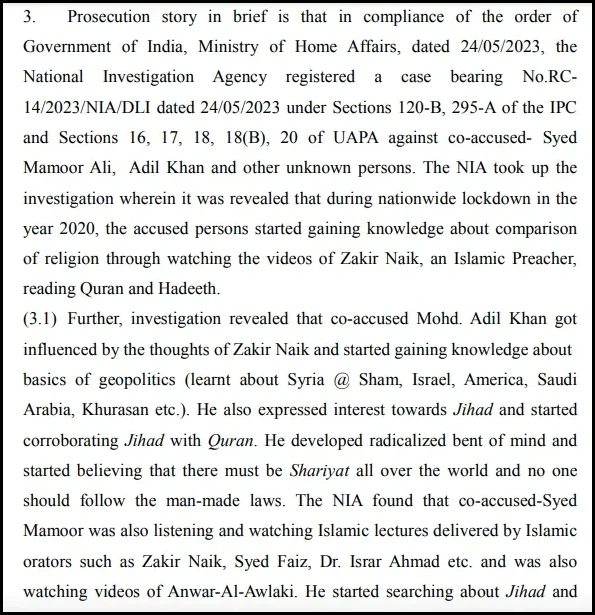
Excerpt from the MP High Court’s order dated 6th January 2025 (Source: mphc.gov.in)

The NIA probe revealed that Syed Mamoor was giving Dawah to Hindus and accused Jihadi Syed Mamoor was distributing pamphlets carrying Islamist propaganda. It is pertinent to note that Dawah in Islam means to proselytise or call upon non-Muslims to convert to Islam. In June 2023, OpIndia reported about the NIA seizing Dawah documents titled “Dawah to Hindus” from the possession of Jihadi Adil Khan. This document divided into 12 chapters contains extremely derogatory language for Hindu Devi-Devtas and misquoted Hindu scriptures.

Adil Khan who was on the agency’s radar since August 2022 and his aides were promoting ISIS propaganda through social media and on-ground ‘Dawah’ programmes to carry out terrorist activities at the behest of ISIS. The NIA had stated the arrested terrorists were receiving funding for carrying out Dawah programmes and disseminating ISIS propaganda. Jihadi Adil Khan also ran a YouTube channel with around 92,000 subscribers. Most of his subscribers were not based in India. The cover picture of terrorist Adil Khan’s YouTube channel read, “Religion of Truth (Islam) to prevail over all religion”. As the NIA launched an investigation into the matter the said YouTube channel spreading Islamic Jihadist propaganda was deleted.

The NIA investigation uncovered that present appellant Mohammed Shahid Khan and co-accused Kashif Khan were also listening to the speeches of Islamic hate preachers like Zakir Naik and were involved in the unlawful activities of other accused persons.

“All the accused persons were watching Islamic lectures to provoke Jihad and implement Sharia law all over the world including India. All the accused persons became close friends and started discussing Quran and Hadeeth and Jihad too. They all started sharing radicalized thoughts with each other. They had a common mind of establishing Sharia law in India through violent means. They used to visit Falah Darain Masjid for offering Namaz, where they used to discuss Jihad through violent means and Khilafat based on Shariyat,” the court order reads.

The accused prepared pamphlets similar to the ISIS and Al-Qaeda flags and pasted one such pamphlet on the wall of a mosque named Ahle Hadees to attract their co-religionists of a similar Jihadist mindset.

In August 2022, accused terrorist Kashif Khan created a WhatsApp group named “Pics” and added Shahid Khan, Adil and other people. The accused Jihadis began sharing videos, audio and other material related to ISIS, Jihad and Shariyat to radicalise the group members. In addition, the Jihadists also began sharing derogatory materials on Hindu deities. In December 2022, Kashif added Mamoor to the WhatsApp group and changed the group’s name to Fisabilillah which means for the sake of or the cause of Allah and its display picture to a flag similar to that of ISIS. The accused were discussing Jihad, Shariyat and Khilafat in the group.
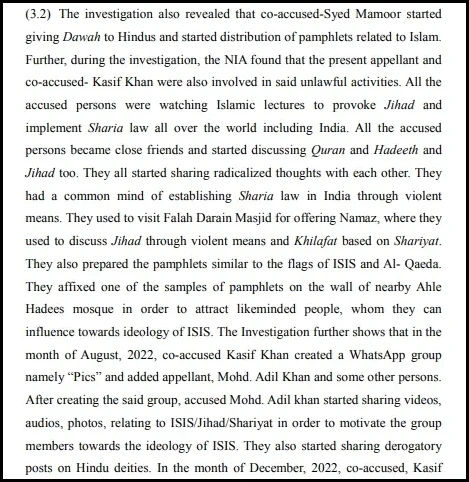
“In order to escape themselves from the radar of  Investigation Agency, they decided to use code names for ISIS such as “eye S”, “eye ass”, “eye as”, “eye sis”, “eye see”, “Dhadiwale”, “Dawlah”, “1515”, “15”, “Mujahideen” and “Eye s fisabilillah”. They also decided that present appellant would be the Ameer of the group,” the court order reads.
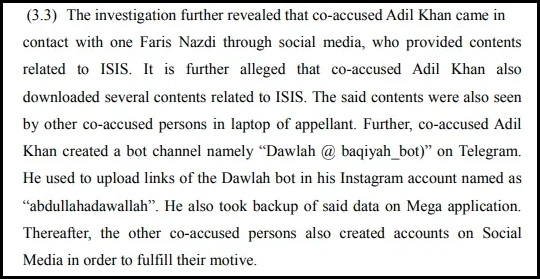
The NIA investigation further exposed that the jihadi Mohammed Shahid Khan and other co-accused were conspiring to attack the Ordnance Factory in Jabalpur, Madhya Pradesh to procure large quantities of weapons to carry out terror activities. The accused jihadists had planned to blast the factory upon failing to “capture” the factory. Addressing each other as “Mujahids” (soldiers of Islam), accused Syed Mamoor had planned to deploy three ‘Mujahids’ against each security personnel at the factory. Meanwhile, Kashif Khan was assigned the task of preparing an explosive. Jihadi Kashif shared a YouTube video link in the said WhatsApp group which gave a tutorial on how to make highly inflammable explosives using daily use items.

It also emerged that these Jihadis did not t believe in the concept of Nationalism, Democracy, Constitution and Voting system and motivated others to do so.

“They wanted to recruit like-minded people in large number to  strengthen their organization. They also decided to make monthly contribution for their cause and they also wanted to raise funds through Bait-ul-mal. During the course of investigation, various audios/videos/PDFs of ISIS publications as well as incriminating handwriting diary, digital devices, literature, pamphlets, mobile phones were seized from possession of the accused persons. The investigating agency also procured CDR between the accused persons. The accused persons got arrested by the investigating agency,” the court order mentions.

The arguments presented by jihadi Mohammed Shahid Khan’s counsel in the criminal appeal before the Madhya Pradesh HC

The advocate representing accused Mohammed Shahid Khan argued that he has been “falsely implicated” in the case and that the prosecution’s case is based on suspicion. The appellant’s counsel contended that since has no criminal antecedents, keeping him in jail will “adversely affect” his family.

Emphasising his alleged disability,  the jihadi Mohammed Shahid Khan’s counsel contended that Shahid is physically handicapped and unable to perform such dangerous/difficult tasks. “Mere exchange of religious beliefs does not constitute any offence,” jihadi Shahid’s counsel said.

The counsel further argued that Shahid Khan did not create the contentious WhatsApp group “Fisabillilah” and no weapons were seized from his possession.
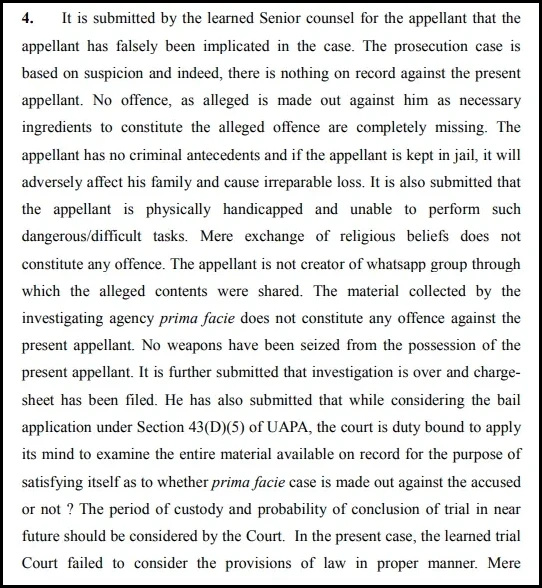
It was argued that the Trial Court did not accurately assess the provisions of the law, and that mere association with a terrorist organisation is not sufficient to attract Section 38 of UAPA, nor does mere support for a terrorist organisation entitle one to Section 39. The association and support have to be with an intention and in furtherance of the activities of the terrorist organization.

“Mere association with terrorist organization is not sufficient to attract Section 38 of UAPA and mere support to a terrorist organization is not sufficient to attract Section 39 of UAPA. The association and support have to be with an intention and in furtherance of the activities of the terrorist organization,” the appellant’s counsel argued adding that accused Shahid is a permanent resident of Jabalpur district and is “no likelihood of his absconding or tampering with the prosecution evidence.”

Prosecution’s strong counter

Appearing for the NIA, which is the respondent in this case, the counsel strongly opposed the accused Jihadi’s appeal and contended that the accused person’s crime is of serious nature and against India’s integrity and peace.

The counsel informed the court that the NIA has collected incriminating material viz. audio clips, video clips, objectionable literatures, pamphlets, handwritten documents from the possession of all the accused persons including the appellant Mohammed Shahid Khan indicating his complicity in the crime.

“He [Shahid Khan] has further submitted that Section 43 D(5) of UAPA imposes restrictions upon the Court in granting bail to accused person. The statements of witnesses recorded under Sections 161 and 164 of Cr.P.C., clearly establishes the complicity of present appellant in the alleged crime. He further submitted that it is not necessary that every person who are involved in terrorist activities must have criminal antecedents,” the prosecution argued adding that appellant Shahid Khan was fully aware of the banned terrorist outfit ISIS and its jihadist activities in India and the world.

The prosecution also refuted the claims made by the appellant about the alleged delay in the proceedings and said that “as per Section 19 of NIA Act, 2008, the trial will be conducted having precedence over other matters and therefore, there is no delay in trial proceedings,” the counsel said adding that if the accused is released on bail there is a high possibility that may flee.

The observations made by the Madhya Pradesh High Court while rejecting jihadi Shahid Khan’s appeal

Following the hearing of the opposing parties, the court referred to the Supreme Court’s decisions in Zahoor Ahmad Shah Watali (2019) and K.A. Najeeb Vs. Union of India (2021), and extensively explained the scope and interpretation of Section 43D(5) of UAPA.

The court noted that the allegations made by the prosecution against appellant Mohammad Shahid Khan are “grave and a serious threat to societal harmony.”

The bench listed the accusations made against Mohammad Shahid Khan based on the perusal of the NIA chargesheet. The court said that Shahid Khan was associated with ISIS alongside other accused persons and was in possession of incriminating materials related to Jihad and ISIS. The court noted that Shahid Khan alongside the co-accused persons was planning on disseminating the jihadist ideology of ISIS through Dawah programs and was involved in radicalising those who came into their contact to recruit them into ISIS eventually.
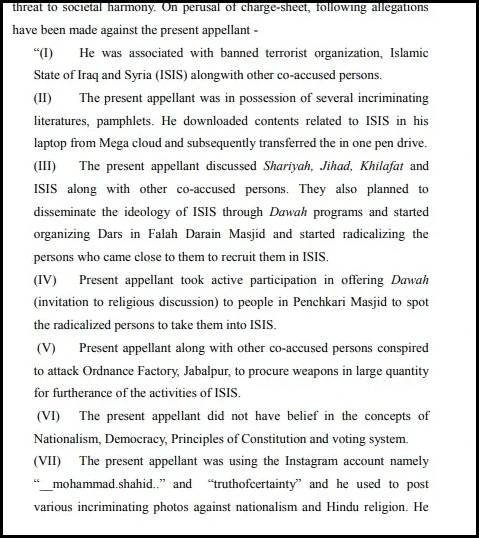
“He was associated with banned terrorist organization, Islamic State of Iraq and Syria (ISIS) alongwith other co-accused persons. The present appellant was in possession of several incriminating literatures, pamphlets. He downloaded contents related to ISIS in his laptop from Mega cloud and subsequently transferred the in one pen drive. The present appellant discussed Shariyah, Jihad, Khilafat and ISIS along with other co-accused persons. They also planned to disseminate the ideology of ISIS through Dawah programs and started organizing Dars in Falah Darain Masjid and started radicalizing the persons who came close to them to recruit them in ISIS,” the bench said.

In addition to participating in offering Dawah, the appellant Mohammad Shahid Khan was also involved in the conspiracy to attack the Jabalpur Ordnance Factory to procure weapons for the violent furtherance of ISIS activities. Moreover, the accused was posting contentious pictures against Hinduism and nationalism on his Instagram profile. The accused was also searching about ISIS, Jihad, suicide bombings, slain terrorist Osama Bin Laden and the Islamic terror outfit Taliban.

“Present appellant took active participation in offering Dawah (invitation to religious discussion) to people in Penchkari Masjid to spot the radicalized persons to take them into ISIS.  Present appellant along with other co-accused persons conspired to attack Ordnance Factory, Jabalpur, to procure weapons in large quantity for furtherance of the activities of ISIS. The present appellant did not have belief in the concepts of Nationalism, Democracy, Principles of Constitution and voting system. The present appellant was using the Instagram account namely “__mohammad.shahid..” and “truthofcertainty” and he used to post various incriminating photos against nationalism and Hindu religion. He was constantly searching about ISIS, Jihad, Taliban, Osama Bin Laden, Suicide Bombing etc,” the bench noted.

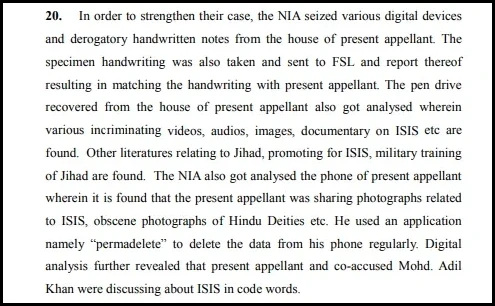
The Madhya Pradesh High Court further noted that NIA seized digital devices including a pen drive and derogatory handwritten notes belonging to the present appellant Mohammad Shahid Khan. Through forensic examination, it was confirmed that the notes were indeed written by the accused Shahid. Upon analysing the seized pen drive, the NIA found inflammatory videos, audio, images, and documentary on ISIS in addition to materials pertaining to jihad, promoting ISIS, military training for Jihad and so on.

The probe agency also examined Mohammad Shahid Khan’s mobile phone and found obscene pictures of Hindu deities alongside pro-ISIS material.

While the appellant’s counsel argued that “Mere association with terrorist organization is not sufficient to attract Section 38 of UAPA and mere support to a terrorist organization is not sufficient to attract Section 39 of UAPA”, the High Court bench noted that statements of the multiple witnesses recorded by the NIA demonstrate that Mohammad Shahid Khan and other accused were involved in the entire conspiracy.

“The witnesses also stated that the present appellant and other co-accused persons decided to make explosives from household material wherein present appellant actively participated to prepare the same. They wanted to attack Ordnance Factory, Jabalpur. The NIA also procured the CDR report of all the accused persons to show interconnection between them,” the court order reads.
Based on the evidence presented by the prosecution, the court said that there is sufficient material in the NIA chargesheet indicating Mohammad Shahid Khan’s active participation and commission of the unlawful activities that attract relevant UAPA sections.

Pertinently, the court noted that there are specific evidence showing that Mohammad Shahid Khan actively participated in activities defined unlawful in the UAPA.

“In view of the above discussion, it is clear that there is sufficient material available in the charge-sheet showing that the appellant has actively participated in and has committed unlawful activities as defined in the UAPA. There is specific material to show that the appellant advocated, abetted, or incited commission of many unlawful activities,” the court said.

After describing the definition of terrorist act as mentioned in Section 15(I) of UAPA, the court said that the evidence collected by the NIA shows that appellant Mohammad Shahid Khan was an active member of the conspiracy to attack the Jabalpur Ordnance Factory, which the court noted is an entity of defence. The court found that the conspiracy to attack the ordnance factory was to commit a terrorist act and Shahid Khan was an active participant of this conspiracy.

In addition, jihadi Shahid was also involved in other alleged terrorist acts and preparatory activities.

“The accused persons were not only supporting the activities of terrorist organization but also they wanted to stand their own organization with the intention to ruin the Constitution of India,” the court said.

While the court asserted that “no religion inherently supports violence or terror”, the bench cannot be lenient to a person accused of carrying out terrorist and other illegal activities.

“This Court cannot express undue leniency to a person who is facing serious charge of terrorism and unlawful activities. The trial is also set at full motion and there is every possibility of trial being completed in its due course. Therefore, considering the overall facts and circumstances, at this stage, we are not inclined to grant bail to the appellant,” the division bench of Justice Sushrut Arvind Dharmadhikari and Justice Anuradha Shukla noted.

The High Court dismissed jihadi Mohammad Shahid Khan’s criminal appeal and affirmed the trial court’s order denying bail to the ISIS Jabalpur module terrorist.
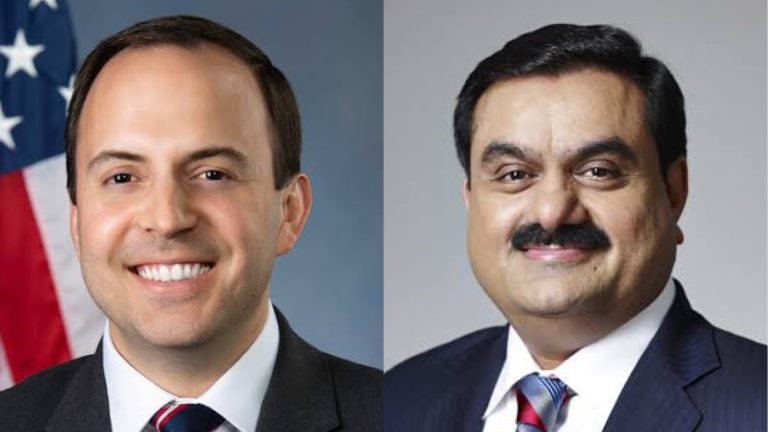

‘Chasing rumours abroad risks critical alliances with key partners’: US Congressman slams Biden govt’s decision to investigate Adani

A US Congressman has strongly opposed the outgoing Biden administration’s decision to investigate Indian business conglomerate Gautam Adani, stating that ‘selective prosecution’ over rumours abroad risks critical alliances with America’s key partners. 

Republican Congressman Lance Gooden penned a sharply worded letter to U.S. Attorney General Merrick B. Garland, criticizing the indictment of industrialist Gautam Adani and labelling it a “selective action” that could jeopardize Washington’s vital partnership with India. 

“The Department of Justice’s selective actions threaten to harm critical alliances with key partners like India, one of America’s strongest allies in the Asia-Pacific region,” Gooden, a member of the House Judiciary Committee, said in his January 7 letter, according to news agency PTI. He further urged the DOJ to prioritize addressing domestic misconduct over pursuing cases with limited jurisdiction and minimal relevance to U.S. interests.

On November 20, 2024, U.S. prosecutors charged Gautam Adani, his nephew Sagar Adani, and several executives from the Adani Group with orchestrating a $250 million bribery scheme to secure solar power project contracts in India. The indictment includes securities and wire fraud accusations, alleging the company misled U.S. investors about its anti-bribery policies while engaging in corruption.

A day later, the spokesperson for the Adani Group rubbished allegations against the Directors of ‘Adani Green’ by the US Department of Justice and the SEC.

“The allegations made by the US Department of Justice and the US Securities and Exchange Commission against the directors of Adani Green are baseless and denied,” it stated.

“The Adani Group has always upheld and is steadfastly committed to maintaining the highest standards of governance, transparency and regulatory compliance across all jurisdictions of its operations,” it pointed out.

The spokesperson for the Adani Group concluded, “We assure our stakeholders, partners and employees that we are a law-abiding organisation, fully compliant with all laws.”

Land dispute between 2 parties, Yadav man hit with an axe: How a fight between two families is being termed as ‘casteist attack’

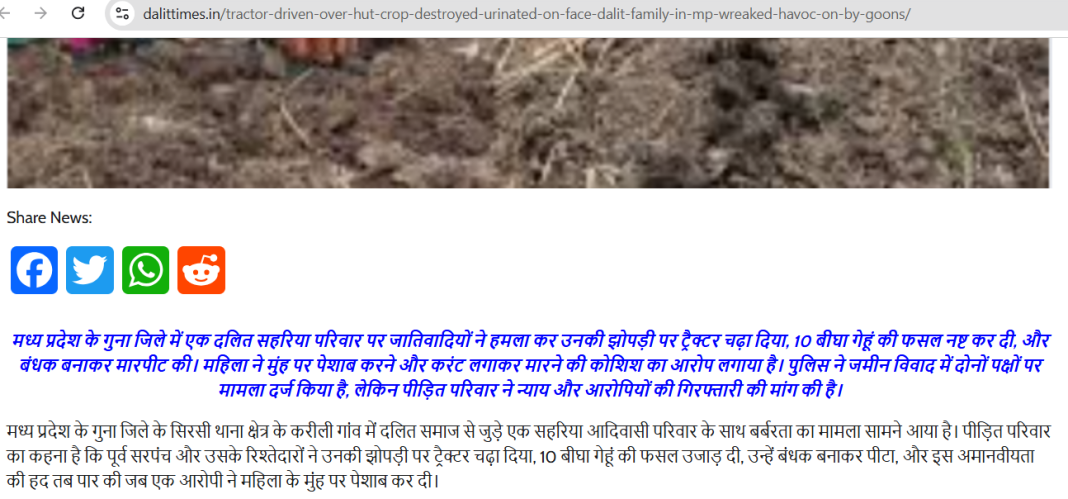
Last week, a Sahariya tribal family belonging to in Guna, Madhya Pradesh alleged that around 12-15 people belonging to the upper caste attacked them, destroyed their wheat crop, and also urinated on them. The family said that the accused got the tractor and ran it over the crop. When the tribal family tried to escape from the spot to save their lives, the accused persons gheraoed them, assaulted them, and also urinated on them.

The family in the complaint further accused that the accused persons, the family of a former Sarpanch, tried to electrocute them but could not due to the power cut. As per the complaint, the family said that the prime accused among the mob of 12-15 persons was a former sarpanch of Karili village Udaybhan Singh Yadav who was allegedly targeting them due to an ongoing land dispute between the two families. However, several media reports claimed that the issue had erupted due to the lower caste of the victims and that the upper caste people deliberately launched the attack on them.

A report by Dalit Times attempted to give casteist color to the matter as it said that the ‘Casteists’ crushed the huts of the victims with a tractor and destroyed their crops. It also reported that the complaint by the victim against the former Sarpanch was not taken seriously by the police.

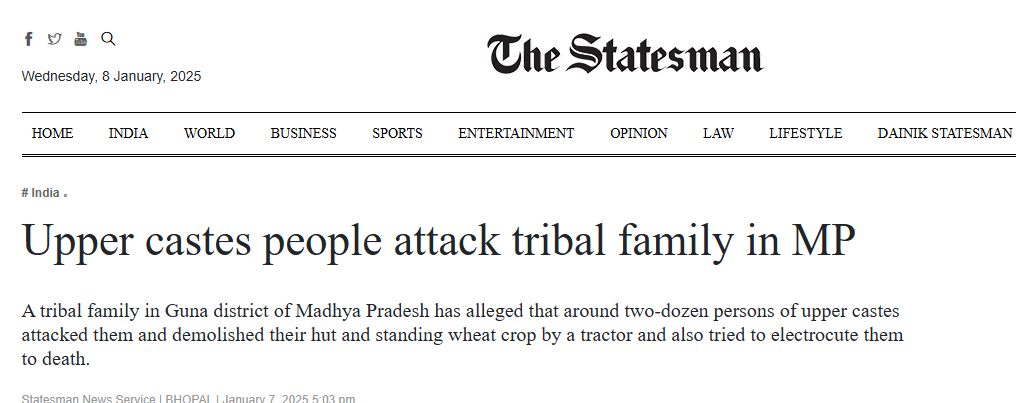
Another similar report filed by the Statesman reported that the ‘upper caste’ people attacked the tribal family in Madhya Pradesh. However, the attack was not out of caste hatred but due to a long-standing land dispute between the two families. The OBC Jankalyan Sangh also suspects that the victim’s family is making partially false allegations against the accused persons by claiming that the latter urinated on them and tried to electrocute them to death.

The incident is said to have happened in the wee hours of Monday when the Adivasi family consisting of 5-6 members was sleeping in their hut in Karili village. A woman from the family filed a complaint at Sirsi police station saying that the accused mob of around 12-15 persons led by former Sarpanch Udaybhan Singh Yadav arrived at the spot with a tractor and ran it over, destroying the wheat crop. She also said that their hut was demolished and they were threatened with death.

In the complaint, the woman further added that the accused persons assaulted them and urinated on them. “They also tried to kill us by electrocuting but could not due to power issues. When we tried to escape from the spot to save our lives, they assaulted us and threatened that we would be killed soon,” the woman said adding that the accused persons brutally assaulted their folk Hari Singh, Sonu, Gyani Singh, and Raju.

Police say urination allegations are misleading

As per the Dalit Times and other similar reports, the police did not take the complaint filed by the woman seriously and instead detained Hari Singh, Gyani Singh, and Raju for interrogation. However, Sirsi police station indicated that the allegations of urination and casteist motives do not appear to be prima facie correct.

“There is no such case of urination of making the victim drink urine. Only a case of assault has come to light. There has been a long-standing land dispute between the two parties. The action was taken after a fight broke out between the two parties at 2 o’clock last night. The issue of crop destruction by tractors has come to light,” said Sirsi officer Abhishek Tripathi.

Meanwhile, Additional SP Mansingh Thakur also confirmed the matter and said that a case has been registered from both sides in the land dispute. “The investigation into the urination episode is going on but prima facie it doesn’t appear to be true. These are tribal people of the Sahariya community. Their old land dispute is going on. They have been fighting for the land. A case has been registered on that basis. The allegations made by the victims will be analyzed and appropriate action will be taken,” he added.

Neither of the reports nor the authorities confirmed that the accused persons had tried to kill the victims and urinated on them. They pressed that the allegations were under investigation and that interrogations of the victim’s family members were underway. During this, the authorities confirmed that there had been a long-standing land dispute between the two families due to which the farm crop had been destroyed.

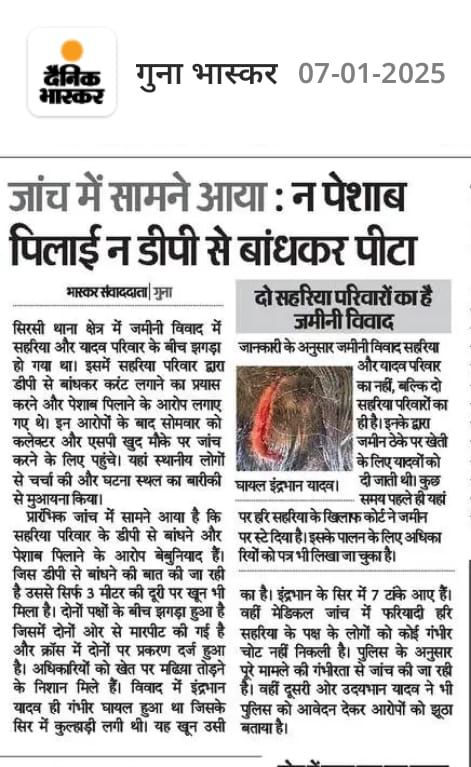
A report by Dainik Bhaskar mentioned that the tribal family had attacked the Yadavs with an axe and Indrabhan Yadav has suffered a serious head wound in the fight. No such injuries are to be seen in the members of the tribal family. The report also mentioned that the land dispute is between two families of the same tribal community and the Yadavs got involved in it because they have been renting the land to cultivate wheat crop.

Report by Bhaskar

Yadavs complain Sahariya family destroyed crops, hit them with axe

It is also said that a scuffle happened in the Monday hours of the incident and that the accused Indrabhan Singh Yadav was injured in the event. Given this, the family of Yadav along with the OBC Jankalyan Sangh has filed a formal complaint with the SP Sanjeev Kumar Sinha accusing the Sahariya family of plotting alleged false allegations against them.

In the complaint, Udaybhan Singh said that his men including his nephew were attacked by Sahariya family over the land dispute. “We had cultivated wheat on a 10-bigha plot, which the Sahariya family claims as their own. Allegedly, the Sahariya family destroyed the crop by running a tractor over it. When we protested, we were assaulted with an axe and other weapons by Hari Singh Sahariya and his family members,” the complaint by Yadavs read.

He also said that his nephew, Indrabhan was brutally assaulted and injured in the event. The Yadav family claims that the Sirsi police registered a cross-case against Indrabhan and three others under political pressure. “The land dispute is currently being adjudicated in court, and a stay order has been issued in their favor. A copy of the stay order was reportedly provided to the Tehsildar and the police station in charge, but the officials allegedly ignored it,” they added.

The national president of the OBC Jankalyan Sangh, Rajkumar Yadav, and Udhaybhan Singh have demanded strict punishment against the tribal family and claimed that the allegations leveled by the victim are all fabricated. They say that the Sahariya people are playing the victim card and taking illegal advantage of the status they have. The Yadavs have demanded an impartial investigation in the case and punishment of the accused.

Why should history be kind to Dr Manmohan Singh – a leader who oversaw many disasters

India’s Prime Minister from 2004 to 2014, Dr. Manmohan Singh passed away on December 26, 2024. Amongst the things people were remembering about him, was his one utterance that became very popular –“I hope history will be kinder to me”. I kept wondering – why? Why must history be kind to a leader who oversaw many disasters and only a few good things?

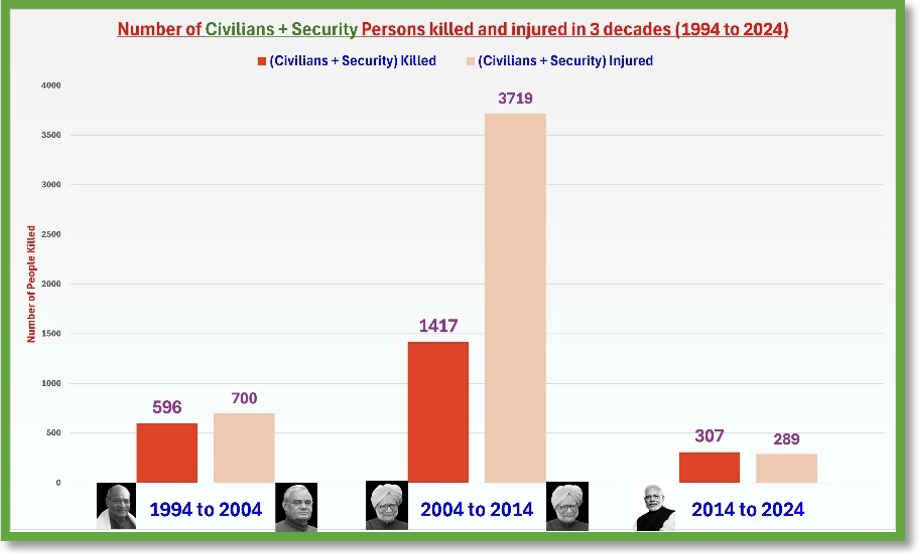
Consider this startling statistic that concerns the life of citizens of India. In the 10 years before and in the 10 years after he became the Prime Minister, India has seen far fewer deaths and injuries from terror attacks than what we saw in his 10 years as Prime Minister. 

Number of civilians and security persons killed from 1994 to 2024

English media anchors lose no opportunity to tell us how every life is important when they want to hype up isolated incidents of violence in a large country such as ours. However, they simply wish us to forget the terror that was prevalent when Manmohan Singh (and Sonia Gandhi) was ruling because it shows him in a bad light. Only the 26/11 Mumbai attacks occupy media space right now, but the list of bombings on various civilian places from 2004 to 2014 is quite long. Up until the 26/11 attacks happened, the Prime Minister of the country was so helpless that he could not even fire the woefully underperforming Home Minister. I cannot help but keep thinking why must history be kind to a leader like him? 

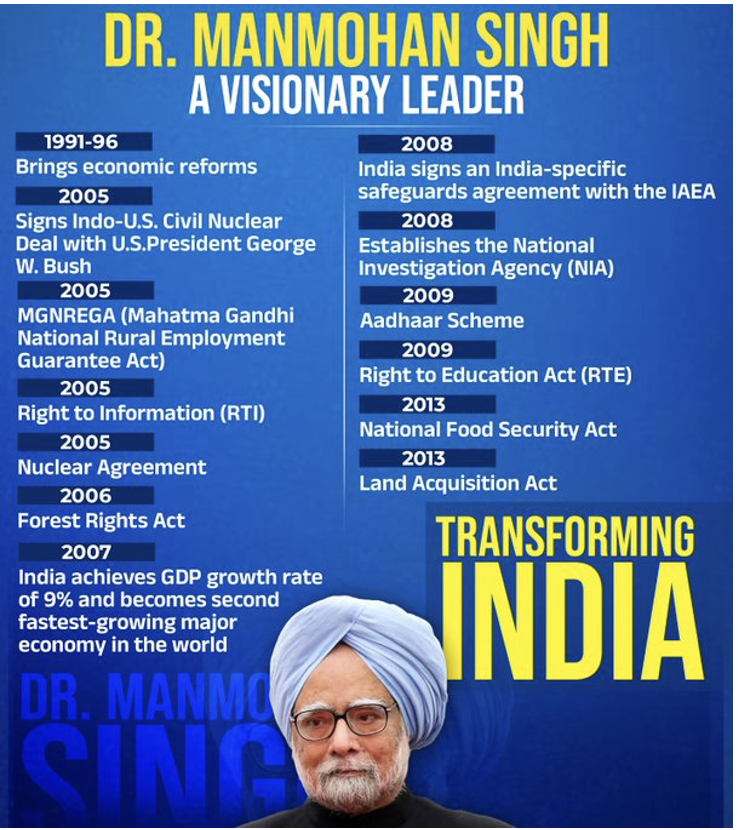
For a moment, let’s keep all media debates and arguments on his performance aside. Let’s just take a look at what his own party considers as his achievements. The Congress party released the following infographic on their X handle (formerly Twitter), after Dr. Manmohan Singh passed away. 

Prime Minister Manmohan Singh achievements according to Congress

My intention is not to debate the history and nature of these achievements. My intention is to highlight yet another startling fact. Do you notice how the infographic has zero achievements to show in 2004, 2010, 2011, 2012 & 2014? For 5 out of his 10 years in power, Dr. Manmohan Singh’s own party says he has zero achievements. Of the 12 achievements that his own party lists out, 3 of them pertain to the Nuclear Deal. His own party is confirming that his 2nd term was such a disaster that they don’t even know what to write about it. I cannot help but keep thinking on why must history be kind to a leader like him?

We spoke about the terror attacks in various places in India during his rule. The Congress party thinks that one of Dr. Manmohan Singh’s greatest achievements is to establish the National Investigative Agency (NIA) after 1000s of civilians were either killed or injured. He took 4 years to even do such a basic thing, but sure, history should be kind to him.

The English media tells us that we have been unkind to him regarding corruption. For a moment let’s leave out all the opposition and media out of this. His own ministers in UPA2 accused his own ministers of UPA1 of corruption. Were they being unkind too? The highest official in the department of Coals (Secretary) was convicted in the Coal Mines scam. The minister directly handling the Coals ministry was Dr. Manmohan Singh himself. Were the courts being unkind too? 

Bereft of any significant achievements during the 2004 to 2014 reign (as confirmed by the Congress party itself), the English media talk about him being a dignified person; a calm person etc. What good are these qualities if as Prime Minister of India, he sets a benchmark of being helpless? He famously said, “we are passing our burden to our children who have to repay this debt”. Imagine the great economist saying this to justify his actions. Why must history be kind to a leader who passes burdens to our children? 

Speaking in the Parliament sometime after winning the 2009 elections, Dr Manmohan Singh said that since the people of the country have given a higher number of seats to UPA (compared to 2004), all criticism directed against him should be put to rest. It is of course true that the people of the country voted in favour of UPA (though they still did not win 272 seats). The MNREGA, the farm loan waiver, and the Nuclear Deal – have all helped UPA retain power in 2009, despite the repeated terror attacks. That’s the beauty of democracy. 

Now, by that same yardstick, the people of the country have badly rejected Dr Manmohan Singh (and Sonia Gandhi) in 2014. The memories were so bad (and of course, Modi’s performance was also good) that the people of the country continued to reject the Congress party for 3 consecutive elections (2014, 2019 & 2024). By Dr Manmohan Singh’s own logic, why must history be kind to a man who presided over such a disastrous reign?

Sure, he has done some good things. No one is denying him credit, wherever it is due. People of the country gave UPA a higher mandate in 2009 too. More such details about his tenure and all Prime Ministers of India can be found at the PM’s Museum in New Delhi (which by the way, was built by his successor Narendra Modi!). Sentimental dialogues such as “History will be kinder to me” may play well to the galleries, but the people of the world’s largest democracy have given their verdict about his legacy. In his death, the people have also shown great respect to the departed soul. Let’s not confuse that respect with washing away the actions of his disastrous reign. There is no reason why history must be kind to Prime Minister Manmohan Singh. 

Bangladesh: Amid ongoing persecution, Hindu youth Sudeb Haldar hacked to death, activists say he was murdered for being Hindu

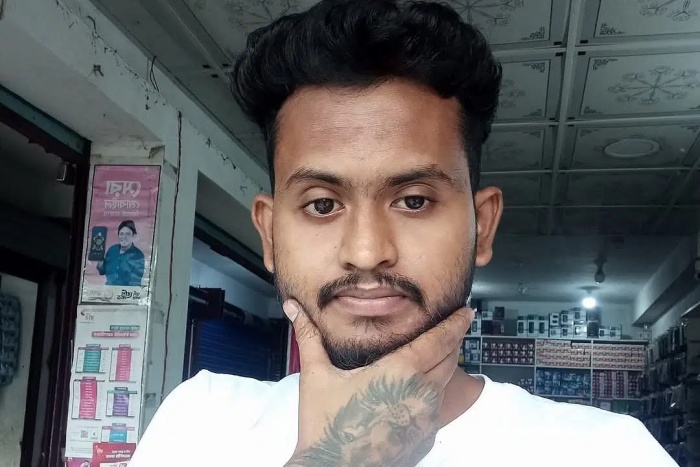
Amid the ongoing persecution of Hindus in Bangladesh, another Hindu youth has been murdered. On the 6th of January, 28-year-old Sudeb Halder, son of Subrata Halder of Betora village in Sadar upazila, was found hacked to death in the Rampur Jorapol area of ​​Nabagram Union of Sadar Upazila. He owned a mobile phone shop in the local Baukathi market. Sudeb was the youngest of two brothers and two sisters.

According to the police, Sudeb was travelling back home after closing his shop where he was indiscriminately stabbed by ‘miscreants’. On the 7th of January, the locals and his family found his hacked body lying in a crop field one kilometre away from his home and informed the police. Jhalakathi Superintendent of Police Ujjwal Kumar Roy said, “A blow to the head was found. It is believed to be a murder. The body will be sent to Jhalakathi Sadar Hospital morgue for an autopsy. A murder case will be filed in this regard.” The police also said that Sudeb was stabbed multiple times and had deep wounds on his head and neck.

Sudeb’s father, Subodh Halder, said, “My son has no enemies. I don’t understand who killed my son and why. I want the police to uncover the truth and ensure that the killers are brought to justice.”

Amid the ongoing persecution of Hindus in Bangladesh, the murder of Sudeb has raised an uproar yet again. Bangabandhu Prakasholi Parishad Secretary Sushanta Dasgupta said, “Every day, murders are happening in Bangladesh, somewhere or the other. We have investigated and found that Sudev Haldar, who was killed, had no personal enmity with anyone. We believe that he was killed only because he was a Hindu. By killing Hindus in this way, a message is being sent that this Bangladesh does not belong to Hindus. He was killed to scare Hindus into leaving Bangladesh.” 

Sudeb’s brother said that since childhood, he was living in Kolkata with his uncles and it was only during the COVID pandemic that he went back to Bangladesh to open his own mobile shop. He has claimed that it is possible that he was hacked to death after an argument with some people about mobile repair at his shop.

Attack on Hindus in Bangladesh since the fall of Dhaka

OpIndia has been vetting and reporting cases of atrocities on Hindus since the ouster of Sheikh Hasina on 5th August 2024.

There were at least 205 attacks on Hindu temples, shops and businesses within 3 days of the fall of Dhaka.

We previously exposed how Muslim students have forced as many as 60 Hindu teachers, professors and government officials to resign from their positions.

Human rights activist and exiled Bangladeshi blogger, Asad Noor, has recently revealed that the minority community is now being coerced into joining ‘Jamaat-e-Islami’.

On 6th September 2024, a procession of Hindu devotees carrying the idol of Lord Ganesha came under attack in the Kadam Mubarak area in Chittagong city of Bangladesh.

Ahead of the Durga Puja celebrations, a radical Muslim man named Yasin Mia vandalised the idols of Goddess Durga and other Hindu deities in Gouripur town in the Mymensingh district of Bangladesh on 25th September.

In another series of attacks, idols of Goddess Durga and other Hindu deities were vandalised at the Rishipara Barwari Puja Mandap and the Manikadi Palpara Barwari Pujamandap on 28th September and 1st October respectively.

The attacks were carried out in Sujanagar upazila in Pabna district in Rajshahi Division of Bangladesh. While a total of 4 idols were defaced at the Rishipara Barwari Puja Mandap, another 5 Hindu idols were destroyed at the Manikadi Palpara Barwari Pujamandap.

On 3rd October, 7 idols of Hindu deities were destroyed at the Gopinath Jiur Akhara Durga Puja mandap in Kishoreganj, Dhaka Division, Bangladesh.

On 5th November, the Hindu community came under attack from police and law enforcement authorities in Hazari Goli in Chittagong city of Bangladesh.

On 29th November, a violent Muslim mob attacked Hindu minorities and vandalised 3 temples in Patharghata in Chittagong district of Bangladesh.

The Hindu religious sites that the Muslims targeted included the Shantaneshwari Matri Temple, the Shoni Temple, and Shantaneshwari Kalibari Temple. The attack took place immediately after the conclusion of Jumma Namaz. 

On 30th November, a prominent Hindu journalist named Munni Saha was arrested by the police from Karwan Bazar in Dhaka city of Bangladesh.

A group of extremists attacked the Mahashmashan Kali Mata Mandir, vandalised 7 idols of deities and stole gold ornaments on 13th December 2024.

On 19th December, a Muslim man identified as Alal Uddin vandalised an idol at the Polashkanda Kali Temple and then attempted to create a fake alibi. The incident occurred in Haluaghat upazila in the Mymensingh district of Bangladesh.

Another 37-year-old Muslim man identified as Azharul vandalised several idols of deities in Haluaghat Upazila in the Mymensingh district of Bangladesh.

The recent arrest of Chinmoy Krishna Das Prabhu and his aides, attempts at banning Hindu organisation ISKCON and stifling Hindu protests with cases of ‘sedition’ highlight systematic persecution under the interim government of Muhammad Yunus.

There have been multiple instances of attacks on Hindus under the pretext of ‘blasphemy.’ The recent cases of Hridoy Pal, Utsab Mandal, Partha Biswas Pintu, Akash Das, Pranta Talukder and Utsab Kumar Gian are shining examples of targeted persecution.

So far, there have been many attempts to downplay violence against Hindus as ‘fake‘, ‘exaggerated‘ or ‘politically motivated‘.

Allahabad HC dismisses PIL challenging impeachment motion against Justice SK Yadav over his address at VHP event

0

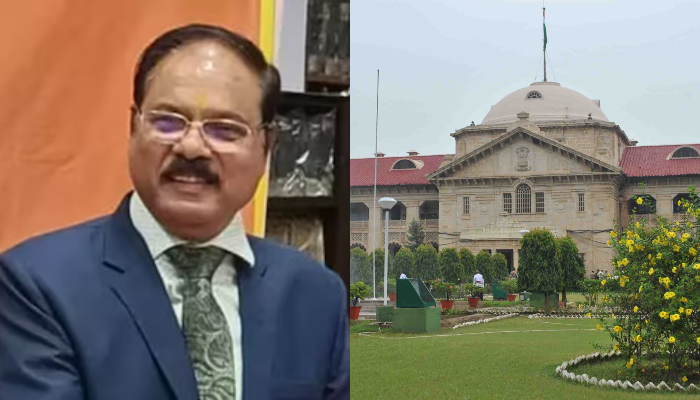
A Public Interest Litigation (PIL) against an impeachment motion submitted to the Rajya Sabha Secretary General by 55 Members of Parliament, which sought to remove Justice Shekhar Kumar Yadav for his speech at an event hosted by the Vishwa Hindu Parishad (Legal Cell) in Prayagraj, Uttar Pradesh on 8th December was rejected by the Allahabad High Court on 7th January.

Advocate Ashok Pandey’s plea was dismissed by a bench of Justices Attau Rahman Masoodi and Subhash Vidyarthi after the bench verbally expressed dissatisfaction with its maintainability. Justice Vidyathi stated, “How this PIL plea is maintainable. Can a PIL plea be filed in this case? The PIL could lie only when the cause is for a vulnerable section of the society.” Additionally, Justice Masoodi pointed out that the court will not consider the request unless it is satisfied with its maintainability.

The petitioner attempted to respond by arguing that the primary issue was whether judges have the fundamental right to free speech and expression. However, the court rejected this argument, noting that the judge is not vulnerable and can approach the court if required. As a result, the court rejected the motion.

The plea asked for a direction to the Rajya Sabha Chairman to rule against the motion against Justice Shekhar Kumar Yadav that was filed by Kapil Sibal and fifty-four other Members of Parliament. According to the appeal, Justice Yadav spoke in his role as a Hindu on subjects that are important to the community and have an impact on their daily lives. It further highlighted that as the meeting’s attendees were exclusively Hindu, the comments spoken there could not be classified as hate speech under the guidelines set forth for such public gatherings.

It added that the use of the word “Kathmu**ah” in his address did not qualify as hate speech and added that he was only voicing his viewpoint, perhaps as a person whose friends or family had endured physical and psychological abuse as a result of “Kathamu**apan.”

It prayed, “He may be a person whose some of relation or friends have faced torcher due to some incidents of love jihad. He may be a sensitive person who is aggrieved with the legal permission the Muslims to marry as many as ladies they want without attraction of any penal or civil consequence, he may be a person who moves on the road with open eyes and sees the girl child aged even five to six years going to school with hizab.”

The plea then added, “As an advocate and the judge he might have got the information that how the Kathamu**apan is stopping the muslim girls from going to school and college or how the Muslim ladies are being compelled to wear Hizab and Burka by Kathamu**a’s. He could be expressing a grievance against the Kathamullapan of certain Muslims who, by standing with Babar, obstructed the construction of the Shri Ram Janmabhoomi temple for a long time and continued to align with the actions of Aurangzeb at the Shri Kashi Vishwanath temple and the temple at Shri Krishna Janmabhoomi.”

Furthermore, it submitted that judges have the same fundamental right to free speech and expression as protected by Article 19 of the Constitution. As a result, any statements made by a judge outside of the courtroom cannot serve as justification for dismissal. It maintained that the MPs who made the proposal were clearly abusing their position, and in addition to rejecting the resolution, they ought to be cautioned not to do so in the future.

It further conveyed, “Such a warning is required as the leader of this group means Sri Kapil Sibal is in habit of dictating terms to the judges and those who don’t follow it, motion to remove them is moved.” It mentioned that the application presented to the RS does not explain how Justice Yadav’s remarks during his meeting with some members of the Dharm, to which he belongs, will be interpreted as evidence of proved misconduct or incapacity.

Justice Shekhar Yadav’s judicial roster was altered by the Chief Justice of the Allahabad High Court four days after his statement, and the alterations took effect on 16th December. He was also summoned by the Supreme Court Collegium to clarify his position on the matter after the apex court took cognisance of his speech on 10th December.

“Lekin yeh jo kathmullah hai jo…yeh sahi shabd nahi hai…lekin kehne mein parhez nahi hai kyunki woh desh ke liye bura hai…desh ke liye ghatak hai, khilaaf hai, janta ko bhadhkane wale log hai…desh aage na badhe is prakar ke log hai…unse saavdhaan rehne ki zaroorat hai (But these kathmullah… this may not be the right word… but I won’t hesitate to say it because they are harmful to the country…they are detrimental, against the nation, and people who incite the public. They are the kind of people who do not want the country to progress, and we need to be cautious of them),” the judge had stated during the event.

Where Guru Dattatreya chanted Vedas, 200 acres of donated land by Mysuru Wodeyars and queen Chennamma, now a Muslim Mujawar and Dargah: All you need to know

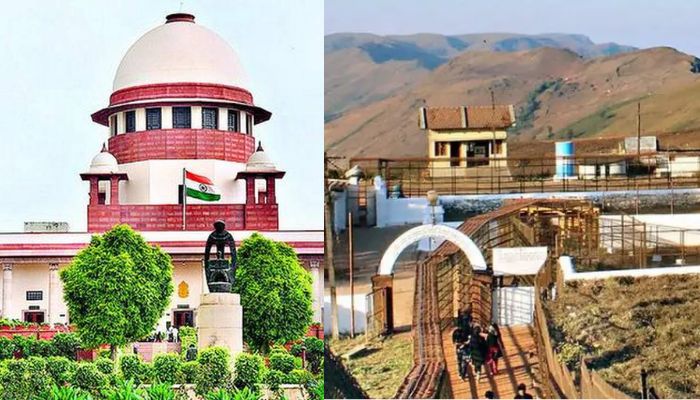
On the 7th of January, the Supreme Court allowed a final opportunity for the Karnataka government to take a decision regarding the worship rights at the holy shrine Datta Peeta of Bababudangiri in Chikkamagaluru district, which is worshipped by both Hindus and Muslims. The court directed the Karnataka government to make its decision within the next 8 weeks and said that if the state of Karnataka fails to do so, it “would be liable to pay costs as would be determined by the Court.”

CJI Sanjiv Khanna and Justices Sanjay Kumar and KV Viswanathan were hearing the challenge to the Karnataka High Court order, which rejected the State’s decision in March 2018 to allow only a Mujawar (Muslim Priest) to execute the rites at the Datta Peeta.

The High Court division bench of Justice Alok Aradhe and Justice Vijaykumar A Patil dismissed the appeals challenging the order of a single bench that set aside the state government’s decision, citing “flagrant violation of the rights of both communities guaranteed by Article 25 of the Constitution of India.”

As reported earlier, back in 2021, the Karnataka High Court had ordered the state government to appoint a Hindu priest at Datta Peeta. It also quashed an order dated March 19, 2018, by the Siddaramaiah-led Congress government which had permitted the appointment of only a Mujawar (Muslim priest) selected by Shah Khadri to enter the sanctum of the Sri Guru Dattatreya Swamy Peeta cave. The Mujawar was also made to distribute ‘teertha’ or holy water to both Hindus and Muslims and perform other Hindu rituals.

During the hearing on 7th January 2025, the Karnataka government’s counsel informed the court that As far as the shrine is (concerned), the Hindus are being led by a Hindu Pujari and the Muslims are concerned, there is a Mujawar that is taking care of the Muslim rituals.”

The court cited the sensitivity of the matter and extended the time for the Karnataka government to review its decision and notify the court of the same within the next 8 weeks. The next hearing on the matter will be held in March 2025.

“Whatever it is, some decisions are difficult, we are not saying they aren’t difficult…..we extend the time for deciding terms of Order dated 25th of January, 2024,” the bench said.

According to the order dated the 25th of January 2024, the Karnataka government was granted time to submit a report/decision on this issue. “It is submitted on behalf of the State of Karnataka that a Cabinet Sub Committee has been constituted and they are deliberating on dispute forming the core of the present special leave petition,” the court order read.

What is the controversy?

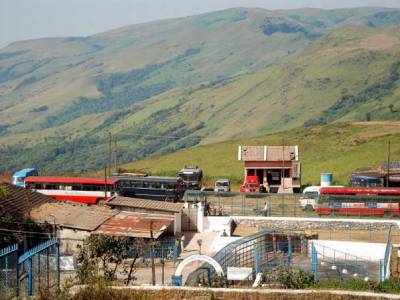
Sri Guru Dattathreya Swamy Peeta is located on the Chandra Drona Range at Bababudangiri Hills in Karnataka’s Chikmagalur district. A sacred place for Hindus, it is said that the first Guru, Dattatreya, chanted the Vedas for his disciples at this very place.

“The Mysuru Wodeyars and Rani Keladi Channamma donated 200 acres to the cave shrine to conduct Trikala Pooja,” VHP Kshetriya Sanchalak Suryanarayan had informed while talking about the significance of the place.

Image via HinduJanjagratiSamiti

Whereas, the Muslims claim it to be the place of Dada Hayat Mir Qualandar and refer it to as “Sree Gurudattathreya Bababudnaswamy Dargha.” They believe that the saint took up residence here more than 150 years ago and brought coffee seeds for the first time to India from Yemen.

However, the controversy around the peetha began when the temple in 1975 was handed over by the state government to the Wakf board from the Muzrai Department, just before the Emergency was declared in the country.

Before that, it was a major Muzarai temple under the Mysore Religious and Charitable Institutions Act, of 1927, according to court documents.

What did the Endowment commissioners’ report say?

The High Court in its order stated that as per the annual report of the Mysuru Archeological Department, 1932, Shri Guru Dattatreya Swami Peetha is a small cave in Baba Budangiri, which is sacred to both Hindus and Mohammadans. The Endowment commissioner’s report recorded Shri Dattatreya as the son of Sage Athri by his virtuous wife Anasuya and embodiment of the Hindu trinity, the gods, Brahma, Vishnu and Shiva.

It further said that 1,861 acres of land were granted to Shri Dattatreya Devaru and 111.25 acres to Shri Baba Budan Dharga separately by the then Maharaja of Mysore. This Endowment commissioner report was submitted on March 10, 2010, before the Supreme Court. It suggested that a Hindu priest should be appointed by the management committee of the shrine.

The controversy once again picked up steam in 2018, just before the Karnataka state assembly elections, when the BJP accused Congress of pandering to minority voters by ordering the compulsory appointment of a Mujawar for the peeta.

Hostility, betrayal, and a long road to justice – The chilling details of how Chandan Gupta’s family was pressurised during trial

On 3rd January, a special National Investigation Agency (NIA) court presided over by Additional District Judge Vivekanand Sharan Tripathi in Lucknow sentenced 28 accused in the Chandan Gupta murder case to life imprisonment under Section 302 of the Indian Penal Code (IPC) and other sections.

Chandan was brutally murdered during violence that occurred during the Tiranga Yatra on 26th January 2018 in Kasganj, Uttar Pradesh. The accused were convicted on 2nd January 2025. OpIndia accessed multiple court documents and FIRs related to the case. During the trial, a hostile environment was created for Chandan’s family in the Kasganj court, forcing his father to file a plea in the Allahabad High Court to transfer the case. Furthermore, the nexus of Islamists was so strong in the Kasganj court that several witnesses reportedly turned hostile as the case progressed in the courts.

Why the Chandan Gupta case was transferred from Kasganj to Etah

As the case proceeded in the Kasganj court, Sushil Gupta, father of Chandan Gupta, filed an application in the Allahabad High Court seeking the transfer of the case. The judgment dated 10th March 2022 revealed shocking details of why Sushil approached the High Court for the transfer.

According to the court document accessed by OpIndia, in his application, Sushil Gupta alleged that Munazir Rafi, one of the accused in the case, was pressuring him to enter into a compromise in the murder case. Furthermore, he said that some senior advocates in Kasganj refused to represent Chandan’s side due to Munazir’s influence and intimidation tactics.

Gupta further told the court that Munazir and his supporters, including a significant section of the local legal community, created a hostile environment for Chandan’s family, making it impossible for them to get fair legal representation. This situation left Sushil apprehensive about the possibility of an impartial trial in Kasganj.

During the hearing of the matter in the High Court, Sushil argued that his son’s murder case could not be fairly tried in Kasganj due to the hostile environment and undue influence of the accused. He highlighted that no senior advocate in the district had filed a vakalatnama on his behalf, further leaving him vulnerable in pursuing justice for his son. On the other hand, the accused’s counsel claimed that Sushil’s allegations were baseless.

After carefully examining the case, the High Court bench, led by Justice Anil Kumar Ojha, concluded that his apprehension of bias in Kasganj was reasonable. It noted that the influence of Munazir Rafi, combined with the refusal of senior advocates to represent Gupta, created an environment where justice appeared unreachable.

On 10th March 2022, the Allahabad High Court allowed the transfer application and directed the District Judge of Kasganj to transfer the case to the District Judge of Etah within two weeks. It further instructed the District Judge of Etah to assign the case to a competent court.

The court observed: “Coming to the facts of the present case, the applicant has filed an affidavit stating therein that no senior advocate of District Kasganj has filed a vakalatnama on behalf of the applicant due to the influence of opposite party no. 30 and groups of advocates supporting opposite party no. 30. In the facts and circumstances of the case, it may be a reasonable apprehension in the mind of the applicant that he will not get justice at Kasganj. Moreover, justice should not only be done, but it should be seen to be done. Keeping in view the entire facts and circumstances of the case, I deem it appropriate to transfer the aforesaid case from District Kasganj to District Etah.” Party no. 30 here was Munazir Rafi.

Munazir Rafi and murder of Advocate Mohini Tomar

Munazir Rafi is currently lodged in Kasganj jail for his involvement in the Mohini Tomar murder case. Munazir is a lawyer by profession and practices in the Kasganj court. Speaking to OpIndia following Mohini’s murder, Chandan’s brother Vivek said that Munazir’s name had come up during the investigation. He was not only part of the mob that stopped the Tiranga Yatra but also part of the mob that carried out the deadly attack on the participants, leading to Chandan’s death. Vivek said that during the attack, Munazir was holding weapons.

Munazir was also accused of pressurising Chandan’s father, Sushil Gupta, to settle the case outside court. He used his position as a practicing advocate to intimidate Sushil and create an environment where senior advocates refused to represent the Gupta family in Kasganj. This situation forced Sushil to approach the Allahabad High Court and get the matter transferred to Etah, from where it was eventually transferred to the Special NIA Court in Lucknow.

Munazir’s name surfaced in the Mohini Tomar murder case, which was mentioned in the judgment in the Chandan Gupta murder case as well. Mohini was known for her fearless advocacy. She actively opposed Munazir’s bail in Chandan’s case and was a prominent voice against him. In the complaint filed by Mohini’s husband following her disappearance in September 2024, he highlighted that her strong opposition to Munazir made her a target.

Munazir and his associates were allegedly involved in Mohini’s murder. They reportedly hired professional killers to murder Mohini. Her dead body was recovered from a canal a day after her disappearance. Munazir is facing trial in that matter.

The role of Chandan Gupta’s friends

While the Muslim community in Kasganj stood firmly with the accused killers, betrayal from Chandan’s own community was painfully evident. Two of Chandan’s close friends, Anupam Chouhan and Vivek Maheshwari, who the family was counting on as key witnesses, didn’t appear in court at all.

The biggest shock came from Chandan’s closest friend, Prateek Malu. Social media posts mention that Prateek’s family had a close bond with Chandan’s – his sisters tied Rakhi to Chandan, and the Gupta family saw him as their third son. Despite this, Prateek turned hostile during the trial and testified in favour of the killers, leaving Chandan’s family heartbroken.

The road to justice – A long way to go

The hostile environment faced by Chandan Gupta’s family throughout this trial highlights just how much remains to be done when it comes to ensuring justice in this country. From the refusal of senior advocates in Kasganj to represent the family, to key witnesses turning hostile, the challenges were immense. It was only the strong will of Chandan’s family and the determination of the state government to punish the guilty that led to the conviction of the murderers.

However, this is not the end of the road. The advocate representing the convicted individuals has already stated that they will appeal in the High Court. This means the battle for real justice for Chandan Gupta is far from over. The family’s resilience and determination will once again be tested as they continue their fight in the higher courts to ensure that the murderers remain behind bars. Justice must not only be done but seen to be done, and until that day, the struggle for Chandan’s family continues.

Deceit, sexual extortion, and pressure to embrace Islam: How Armaan sexually exploited a Hindu woman in Gwalior for over 5 years

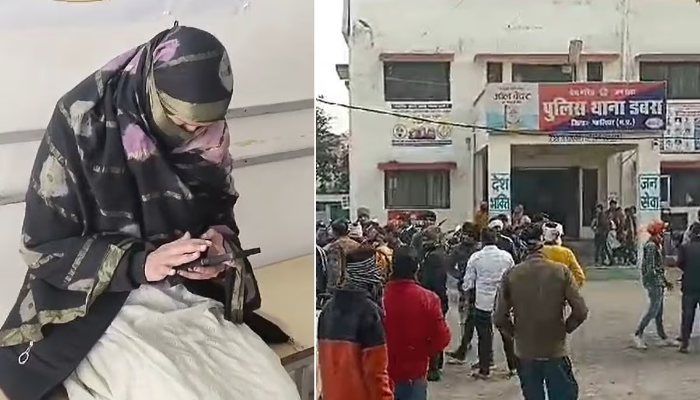
A Muslim youth sexually exploited a Hindu girl and then kidnapped her and forced her to convert to Islam in the Dabra region of Gwalior district, Madhya Pradesh. Armaan Khan initially befriended her and proceeded to sexually exploit her. He even recorded her obscene video and used it to blackmail her to continue the abuse for five years. Furthermore, he began to pressure her to embrace Islam. When she objected, he and his uncle Zahid Khan forced her to sit on a motorcycle and attempted to take her away.

The victim managed to save her life and escape from their grasp. She reached out to Dial 100, which facilitated her arrival at the Dabra City Police Station, where she complained, leading to the filing of a First Information Report (FIR) against the two suspects. Acting promptly, the police arrested Armaan while the search for Zahid continued. Reports indicate that 23-year-old Armaan Khan is a resident of Salwai village on Bhitarwar Road in Gwalior district. He had connected with the 25-year-old woman about five years ago through social media. He invited her to meet him, offering snacks and a cold drink, after which she reported losing consciousness.

Taking advantage of her condition, he filmed her after disrobing her. Once the girl regained her senses, he warned her that failure to comply with his wishes would result in him revealing their WhatsApp exchanges and the explicit videos to her brother. This marked the beginning of a prolonged cycle of blackmail, wherein he repeatedly pressured her to meet him, leading to her physical violation.

On 6th January, the offender again threatened her and pushed her to meet him. Afterward, he started to force her to become a Muslim, upon her arrival. She charged that he had been subjecting her to offensive actions regularly and now sought to change her religion against her will. He also compelled her to accompany him to Samudan village on Gwalior Road and made her ride on his motorcycle. They found Zahid Khan at the location who also exerted pressure on her to covert. The duo threatened that refusal to agree to their demand would result in her death. After hearing their menacing words, she dismounted from the two-wheeler and fled, subsequently contacting the police. She was also assisted by the passersby.

After the girl was brought to the Dabra City Police Station by the officers from the 100 dial service, representatives from a Hindu organization arrived at the station, demanding strict action. The cops listened to her ordeal and submitted a case against the perpetrators under various sections of the BNS (Bharatiya Nyaya Sanhita). They have also intensified the efforts to catch Zahid Khan. According to other reports, Armaan trapped her in a relationship to sexually abuse her and then blackmailed her to embrace Islam in the name of marriage.

Superintendent of Police Niranjan Sharma reported that the young woman has charged that Armaan Khan, was persistently exploiting her and forcing her to convert. A case has been launched against him, based on the allegations. A police team was then dispatched to his house to arrest him.

Meanwhile, Awadhesh Singh, an activist associated with a Hindu organization, expressed concerns regarding individuals from a specific community who are enticing Hindu women and converting them. He urged the police authorities to remain vigilant in this matter. He stated that they had already notified the police and requested them to take stringent measures. He highlighted the existence of numerous gangs in Gwalior that specifically prey on Hindu women, ensnaring them in romantic deceptions to facilitate their conversion. He called upon the police to identify them and take appropriate action.

How George Soros made a detailed plan to flood Europe with fake asylum seekers: Elon Musk calls radical leftist billionaire a hater of humanity

On Monday (6th January), Tesla CEO Elon Musk slammed George Soros for normalising illegal immigration in Europe and the United States.

Musk tweeted, “George Soros spent billions to create the fake asylum-seeker nightmare that is destroying America and Europe.”

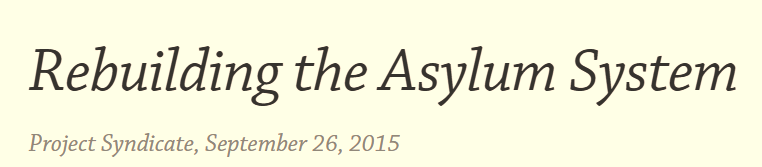
The Tesla CEO shared a screenshot from an article (archive) published on the website of Soros in 2015. Soros had himself written that article for ‘Project Syndicate.’

Plan unveiled by George Soros through his article

At the onset, the article called for a ‘common asylum policy’ for countries belonging to the European Union to avert a political crisis stemming from the large influx of migrants (particularly from Syria).

“The EU needs a comprehensive plan to respond to the crisis, one that reasserts effective governance over the flows of asylum-seekers so that they take place in a safe, orderly way, and at a pace that reflects Europe’s capacity to absorb them,” it stated.

George Soros suggested a 6-step comprehension plan to settle illegal immigrants (referred to as asylum seekers in the article) in Europe. The first step was the annual acceptance of at least 1 million or 10 lakh migrants each year.

He suggested that the burden of taking in the people be distributed fairly between the member states of the EU. The far-left billionaire asked the European Union to provide €15,000 ($16,800) for each asylum seeker for a year.

Screengrab of the article by George Soros

“It is equally important to allow both states and asylum-seekers to express their preferences, using the least possible coercion. Placing refugees where they want to go – and where they are wanted – is a sine qua non of success,” the article stated.

In the second step, Soros called upon the EU to provide funding to Turkey, Lebanon and Jordan so that they can in turn support 4 million ‘asylum seekers’. He suggested at least €5,000 per refugee annually.

“In addition, the EU also should help create special economic zones with preferred trade status in the region, including in Tunisia and Morocco, to attract investment and generate jobs for both locals and refugees,” he continued.

The far-left billionaire recommended the creation of a single ‘EU Asylum and Migration Agency’ and a single ‘EU Border Guard’ instead of 28 separate asylum systems. This was his third step of the ‘comprehensive plan.’

In the fourth stage, Soros suggested the establishment of safe channels to facilitate the movement of illegal immigrants to ‘destination countries’ via Greece and Italy. He claimed that it would help in controlling panic.

The far-left billionaire explained the 5th stage in this manner-

“The next logical step is to extend safe avenues to the frontline region, thereby reducing the number of migrants who make the dangerous Mediterranean crossing. If asylum-seekers have a reasonable chance of ultimately reaching Europe, they are far more likely to stay where they are. This will require negotiating with frontline countries, in cooperation with the UN Refugee Agency, to establish processing centers there – with Turkey as the priority.“

As part of the last step, Soros suggested the European Union to ‘mobilise the private sector’ and turn NGOs, church groups, and businesses into sponsors.

He added that for the plan to succeed, funding, human and IT capacity would also be required to match sponsors with illegal immigrants.

“The exodus from war-torn Syria should never have become a crisis. It was long in the making, easy to foresee, and eminently manageable by Europe and the international community,” Soros concluded his article.

George Soros hates humanity, says Elon Musk

In a tweet on Tuesday (7th January), Elon Musk stated, “Soros really was a genius at arbitrage, whether finance or politics…Brilliant. I just wish he loved, rather than hated, humanity.”

In October 2023, Musk lashed out at the far-left billionaire for putting human civilisation under threat during a podcast with radio host Joe Rogan.

“In my opinion, (Soros) fundamentally hates humanity. He is doing things that erode the fabric of civilization,” he was heard saying.