Home Blog Page 6800

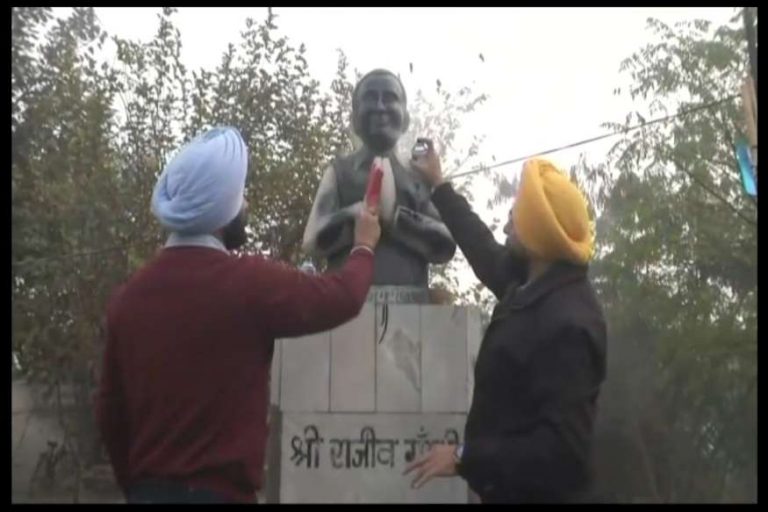
Youth Akali Dal members blacken Rajiv Gandhi statue, Congress workers ‘purify’ it with milk

Protesting against the 1984 Anti-Sikh riots, some members of the Youth Akali Dal blackened the bust of former Prime Minister Rajiv Gandhi in Ludhiana on Tuesday. The Youth Akali Dal workers sprayed black paint over the statue and demanded the revocation of Bharat Ratna awarded to Rajiv Gandhi.


After the conviction of former Congress leader Sajjan Kumar in relation to the 1984 riots, the Akali Dal had objected to the appointment of Kamalnath as the Chief Minister of Madhya Pradesh by Congress for his alleged involvement in the 1984 riots. The Party has demanded that a special session of Punjab Assembly should be called to pass a proposal for the withdrawal of Bharat Ratna from the late Prime Minister.

Last week, the Delhi Assembly had also passed a resolution demanding from the Centre the withdrawal of Bharat Ratna from Rajiv Gandhi, who was given the highest civilian award posthumously in 1991, alleging that he justified the 1984 riots. The resolution was surrounded by lots of drama as Aam Admi Party leader Alka Lamba had tweeted that the party was demanding her resignation from the membership of the party after she refused to support the resolution.

Hours after black paint was sprayed by the Youth Akali Dal members on the statue, Congress workers cleaned the statue with milk to ‘purify’ it.

Attempt by political parties to play Dalit politics over Sanjali’s death falls flat, own cousin turns out to be murderer

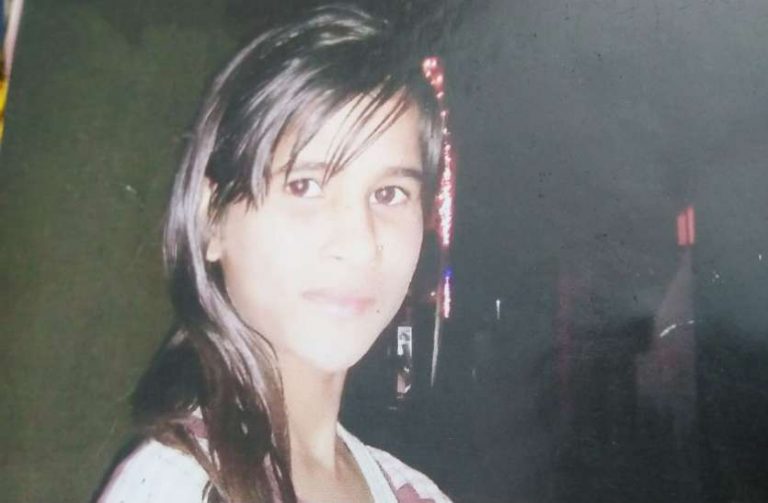
The horrific murder of a 15-year old girl Sanjali, after she was set ablaze by two bike-borne men last Tuesday has taken a surprising turn after the Uttar Pradesh police found that her own cousin brother Yogesh, who had committed suicide after the incident is behind this gruesome crime, reported Jagran.

Several political parties, especially Congress, had insensitively attempted to politicise the issue and had accused the Yogi Adityanath government of harassing members of the girl’s family including Yogesh instead of nabbing the criminals.

Uttar Pradesh Congress Chief Raj Babbar on Monday had met the family members and had accused state police of losing its effectiveness under Yogi Adityanath government. Babbar had said that the police was making up stories to target the family to hide its failure to crack the case. He went on to claim that the action of the police had driven Yogesh towards suicide.

According to reports, the UP police after a serious investigation has now found out that it was Yogesh who burnt Sanjali to death. The police have said that one-sided romantic affair of the accused had resulted in the murder of the girl. The Uttar Pradesh police had questioned Vijay and Aakash, the relatives of Yogesh, who then confessed that they had helped Yogesh in committing the murder. The Uttar Pradesh police had suspected the involvement of Yogesh in the murder of Sanjali from the very beginning.

Police have reportedly recovered the bikes used for the murder. The vehicles belong to Yogesh and Vijay. Sanjali had named Vijay as one of her main attackers in her statement to police before she succumbed to her injuries. As per reports, the police had also examined mobile chats between Sanjali and Yogesh. Sanjali’s father was attacked by some miscreants last month and Sanjali had reportedly suspected Yogesh for his involvement in the attack.

The gruesome incident took place when Sanjali, a class 10 student, was returning from Asharfi Devi Chidda Singh college, Naumeel village and Yogesh, assisted by the other two accused, attacked and burnt Sanjali by pouring petrol on her. The girl had suffered serious injuries and later succumbed to the injuries in Safdarjung Hospital, Delhi.

The incident had created a tense situation as family members of the girl had blocked the road demanding justice from the state government. The opposition parties citing an opportunity to target the government had staged protests. The Samajwadi Party (SP) and  Bahujan Samaj Party (BSP) had targeted the Yogi government and had hinted towards making Sanjali’s killing an electoral issue.

Controversial Gujarat MLA Jignesh Mevani soon jumped in to give it a casteist angle by terming it as an attack on Dalits without knowing the fact that victim’s own cousin was the prime suspect in the case. Bhim Army chief Chandrasekhar Azad created a major issue over the murder and threatened to shut the whole country down.

Now that it has been proved that Sanjali’s murder had no caste angle to it, none of the political leaders peddling casteist agendas in the last couple of days over the brutal murder of a young girl have issued apologies for using the incident to fan casteist discord among people.

Biplab Deb compares Communists with the Mughals and the British, says they try to mislead people

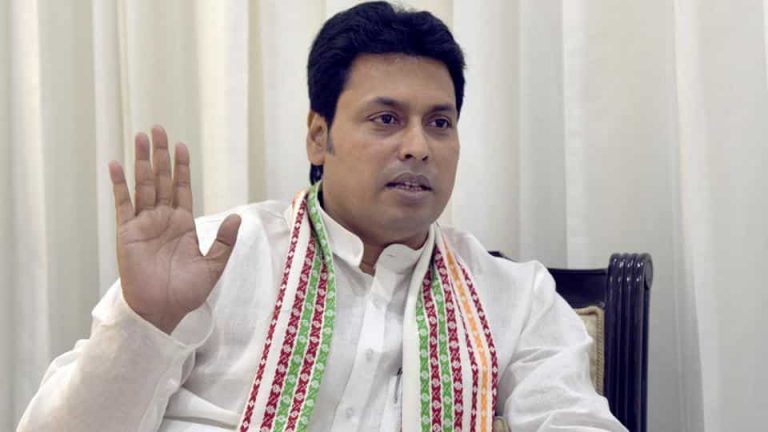
Tripura Chief Minister Biplab Deb on Monday attacked the Leftists saying that they are destroying the Indian culture. While addressing a gathering at a conference of the Akhil Bharatiya Itihas Sankalan Yojana, he said that the Communists are misleading people.

“The communists have created a batch of goons instead of cadres and trying hard to destroy the Indian culture and civilization. The communists want to gag the peoples’ voice and mislead them”, he said.

He said the people of Tripura have discarded the communist ideology and are following the ancient Indian culture and civilization. He defended his party and said that the BJP is not trying to saffronise the country. “The BJP is not trying to saffronise the country, it is the communists who have unsuccessfully tried to make the whole world red,” he said.

Comparing the communists with the Mughals and the British, he said they unsuccessfully tried to destroy the Indian culture and now communists are also trying hard to do the same. He gave the example of how Alexander had come to conquer India but he had to bow to the self-esteem of a king like Porus.

Bogibeel bridge: NDTV peddles ‘job loss to boatmen’ narrative, gets roasted on Twitter

Years after the former Prime Minister, late Atal Bihari Vajpayee, announced its construction, PM Modi is set to inaugurate the 4.94 km long double-decked railroad bridge connecting Assam and Arunachal Pradesh, which today stands complete as India’s longest railroad Bogibeel bridge.

The railroad bridge will bolster infrastructure development of Dibrugarh and Dhemaji. Major hospitals and colleges which are situated in the Dibrugarh district are set to become a big business hub after Guwahati. Connectivity with Dhemaji will give people access to premium health services in Dibrugarh. The bridge will also be a big boost for ease of troops movement to the difficult terrain of North Eastern India.

This is merely common sense that any infrastructural development which happens in a country obviously contributes to the country’s betterment. But sadly, instead of applauding the government’s initiative there are few media houses who are once again trying to squander the government’s efforts, by introspecting this superlative news in an altogether worthless perspective.

Instead of accentuating the brighter side and the bigger opportunities which will originate from this venture, media houses like NDTV are busy highlighting the trivial issues which are in reality no issues at all.

The controversial media agency, NDTV, thought it to be prudent enough to highlight the ‘job loss’ few boatmen fear, ahead of this historic development, managing to possibly report this iconic advancement in the worst possible way. Completely ignoring the strategic and economic potential that this engineering marvel can bring, NDTV preferred to peddle the narrative of some boatmen being inconvenienced.

NDTV’s perspective on India’s longest railroad bridge

Several Twitter users astounded by NDTV’s hypocritical standard reminded the media house of its duplicity.

A Twitter user pointed out how, NDTV had in October reported of the adversities the students of Assam were facing due to the lack of a bridge and now when India’s longest bridge is ready to connect Assam with Arunachal Pradesh, bettering its connectivity to various hospitals, schools etc, NDTV is managed to find a trivial excuse to belittle the achievement.


Another user further exposed NDTV’s double-standards by sharing a report it published in October, exhilarating over a bridge that was constructed in China, wondering if China’s endeavour could be celebrated by the channel then why not India’s?


There were many on Twitter who took offence over this biased reporting and castigated NDTV for the same.


Some Twitter users also pointed out the predictability of NDTV’s narrative being on par with other leftist propaganda websites like The Wire and The Quint.


Shekhar Gupta’s The Print had earlier shown similar acrimony when its crusaders indulged in writing outlandish op-eds in a deliberate attempt to belittle the Statue of Unity, the tallest statue in the world, dedicated to one of the tallest leaders in India.

Apart from twisted narratives, NDTV is also a habitual offender of peddling fake news.

It’s time we realise that why media is considered to be the fourth arm of democracy. In addition to providing entertainment and information, media plays a pivotal role in shaping public opinion and cultivating perception in the minds of common man.

Having said that, it is high time the media realizes that with power comes a lot of responsibility. The most important responsibility of the media is to report the truth, which often these so-called ‘liberal’ cabals seem to conveniently transgress.

Celebrations on Christmas and negativity during Diwali represents the Abrahamisation of the liberal mind

Like millions of people across the world, Senior Congress leader Shashi Tharoor is in quite a celebratory mood during Christmas. His Twitter feed suggests he has been visiting a lot of Churches, greeting people and participating in the festivities. And indeed, that is how it should be.


However, contrast this with Tharoor’s sentiments regarding Diwali.


Not just Tharoor, even Times Now, after it spread rampant negativity during Diwali was in quite the festive mood during Christmas. During Diwali, the news channel had asked its followers to exercise restraint to achieve their weight loss goals. Ahead of Christmas, however, it was urging them to partake in high-calorie delicacies.

It has become par for the course in recent times. Every Hindu festival is mired in negativity. From Holi to Makar Sankranti to Dussehra, efforts are made to raise environmental concerns on these particular days while ignoring them for the rest of the year. Delhi’s air quality is still extremely poor but how many activists have raised their voice against it since Diwali?

Our festivals have become events for motivated social activists to hijack them from their own agenda. No one cares about animals during Eid but everyone suddenly develops a soft spot for animals in their hearts during Jallikattu. Karwa Chauth is branded a patriarchal tradition by the same people who oppose a ban on Triple Talaq and Nikah Halala.

As I have said before, it’s because of the Abrahamisation of the elites of our society. In their hearts, liberals are quite the Abrahamics. And therefore, they are in an extremely celebratory mood during Abrahamic festivals and like Abrahamic fundamentalists, do not like Hindu festivals very well. And of course, since they are ‘secular’ or at least pretend to be, they invent ‘secular’ reasons for their opposition such as patriarchy and environmental concerns.

Hardly anyone talks about the victims of clerical sexual abuse and its shameful and abhorring cover-up by the Church during Christmas. Hardly anyone talks about the manner in which Churches protected and still protects paedophile priests and sexual predators in their ranks during the festival. Almost none of these self-proclaimed compassionate people refrain from participating in festivities with the organization that stoutly defends and protects sexual predators and paedophiles. They are reminded of social concerns only during Hindu festivals because Abrahamic fundamentalists cannot tolerate a pagan festival without having it tarnished by negativity.

It also reminds me of NSA Ajit Doval’s words in a video clip from one of his speeches that went viral on social media. In the video, Doval says that history is the greatest judge and it only favours the strong. He made the argument that the Hindu civilization has suffered so much misery because Shakti was not on our side.

The same cause can be attributed to the negativity that surrounds Hindu festivals. The Hindu civilization needs to regain its strength so that it can assert its authority. Detractors only respect strength. And it’s absolutely essential that we become strong, only then will we able to celebrate our festivals in peace and keep alive the traditions of ancestors. Only then will we be able to continue our worship of the Gods of our ancestors.

Sexual harassment accused journalist-turned-filmmaker spreads fake news again, this time about Yogi Adityanath

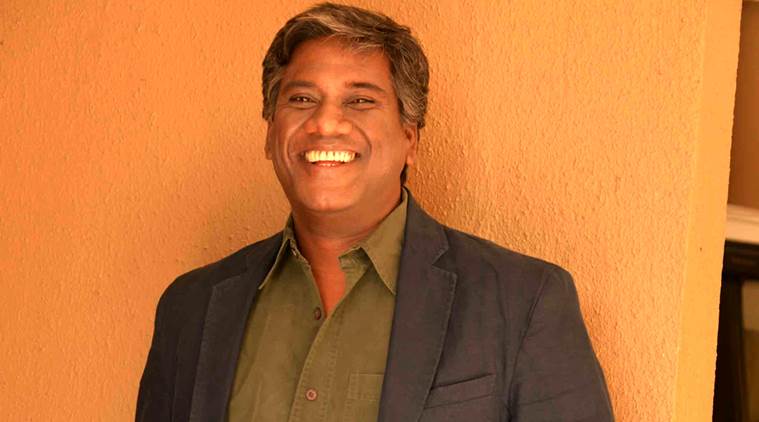
In October this year, movie director and journalist Avinash Das was caught spreading a Photoshopped image which attributed a fake quote to BJP spokesperson Sambit Patra. Even after he was countered by Patra saying that it is fake, Das had refused to apologise, instead, he had tried to justify it giving a political twist. Now again he has come up with another image which attributes a fake quote to UP Chief Minister Yogi Adityanath.

Today Avinash Das tweeted an image of what appears to a Hindi Newspaper, the headline of the news item in the image says ‘another irresponsible comment by Yogi Adityanath, said our job is to save cows, not women’. A totally outrageous comment, no doubt.


But the fact is that Yogi Adityanath never made such comment, and the news clipping posted by Das is fake, which is circulating on social media for quite some time. This fake clipping was exposed to be fake several months ago.

In April this year, website thelallantop.com had done a fact check on the image, which went viral at that time. They had found that it was actually a satire article, which was circulated as real by many people. The original article was published on satire website rhumortimes.com, which is no longer working as its domain registration has expired. The About us page of the website clearly states that it is a satire website, screenshots of which were taken by thelallantop when the satire website was available.

Screenshot of original satire by rhumortimes.com

Other than caught spreading fake images, Avinash Das was also accused of sexual harassment and other crimes in the past. Earlier, he had worked in NDTV, Dainik Bhaskar, Prabhat Khabar and few other media organisations. He worked as output editor at NDTV for several years. According to reports, he was asked to leave the organisation because he was caught using the brand of NDTV for personal benefits.

After that Avinash Das joined as editor of DB Star, a Hindi tabloid from Dainik Bhaskar group. While working there, a female student of Journalism and Mass communication had levelled charges of sexual harassment against Das. He was a guest lecturer at the institute at the Makhanlal Chaturvedi National University of Journalism and Communication in Bhopal. After the investigation by a team of the university found the allegations to be true, Avinash Das was dismissed from his job by Dainik Bhaskar.

Apart from these, a defamation case was also filed against Avinash Das by journalist Shripal Shaktawat. It was alleged that Das had posted many objectionable and false statements against Shaktawat in a blog.

Pritish Nandy shows how low one man’s IQ can fall due to hate, finds GST a ‘sin tax’

The Goods and Service Tax has become a boogeyman for the opposition and “intellectuals” who think Rahul ‘comes of age’ repeatedly, every few months. While the Congress had oppressed India with a whopping 31% indirect tax, the GST and especially the recent rate-slash on several items that benefit the middle-class has sent the band of clowns in a state of free-fall.

The Congress, for example, opposed the rate-cut tooth and nail. This is the same Congress whose President Rahul Gandhi was sliding his sleeves up in every election rally and calling GST “Gabbar Singh Tax”. The Congress specifically opposed the rate slash on 7 items that would benefit the middle-class. The out-on-bail Prince, who has suddenly found his conscience and has started talking about the interest of the people of India, deemed fit to oppose a tax cut.

While most of us were just about coming to terms with Congress’ stupendous double-speak, Rahul’s motley bunch of trick-turners decided to overshadow Rahul’s asininity by sounding even more ludicrous.

Pritish Nandy decided to display just how low one man’s IQ can possibly fall when one starts supporting Rahul Gandhi.


In a ridiculous tweet, Nandy said that he finds GST offensive. He said that the State is deciding what is “good for us” and what is “sinful”.

The enormity of the stupidity is mostly confounding. GST is a consolidated indirect tax. The government is certainly not deciding what one should eat, wear etc or what is supposed to be considered a “sin”. The GST simply puts a higher tax rate on luxury items and lower tax rates on necessities. So if you want to cruise around in a Lamborghini, you pay a higher tax compared to when, say, you want to buy Italian pasta. One would imagine at least this would sit well with Rahul Gandhi supporters, but one would be wrong.

This is not the first time that Modi baiters have travelled to the depths of moronery to pull out a hail mary argument.

Just like Pritish Nandy, Nidhi Razdan of NDTV had once wondered why the government should decide what temperature people’s air conditioner should be set to. Only, the government hadn’t done anything of the sort. The government had merely asked the manufacturers to set 24 degrees as the default setting. Government sleuths were not planning to raid people’s homes just as tired environmentalists, for example, was about to reach out for the remote and reduce the temperature to a nice, chilly 18 degrees.

Similarly, this government is merely deciding the tax one must pay on different goods. One can buy 10 luxury cars if one is willing to, and has the means to pay the taxes on it. Perhaps Pritish Nandy, just like Nidhi, thought that government agencies were going to keep an eye on everyone’s home to check the cars they drive, the food they eat or the temperature they set their AC to.

Either way, GST is a good and service tax and unfortunately, stupidity has not yet been included in GST slabs. In essence, Pritish Nandy is free to mouth-off ‘sinful’ platitudes as much as he wants.

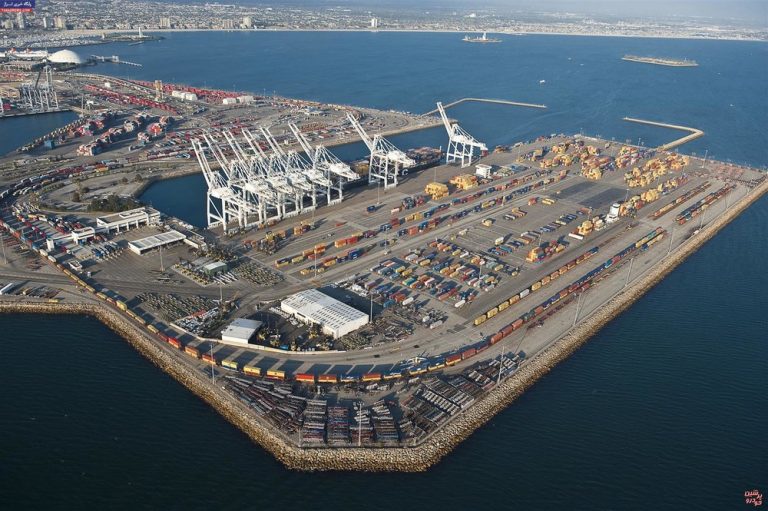
India set to bypass Pakistan as it takes over operations of strategic Chabahar port of Iran

India has formally taken the charge of operations at the strategic Chabahar port of Iran, giving a massive boost to its connectivity initiative towards the west and central Asia. The Chabahar port is one of the most successful strategic initiative taken by the Indian establishment aiding country’s efforts to support war-torn Afghanistan.

Reportedly, Iran has formally handed over the Chabahar port to India during a first meeting to implement the Chabahar Agreement signed between Iran, Afghanistan, and India. The Indian side at the meeting was led by joint secretary (Pakistan-Afghanistan-Iran) Deepak Mittal of the Ministry of External Affairs, while the Iranian team was led by Mohammad Ali Hassanzadeh, the deputy head of the Ports and Maritime Organisation.

“This is a major step forward in India’s efforts to support Afghanistan and also for regional cooperation,” an official in New Delhi said.

Behrouz Aqaei, director general of Sistan-Baluchestan Ports and Maritime Organisation, reportedly said that India Ports Global Limited (IPGL) has “officially started to run Shahid Beheshti port in Chabahar” and the company’s major tasks include loading and unloading operations, procurement and marketing.

The two sides met to discuss the matters involving customs tariffs, promoting customs transactions and rail transit, and the transportation process, Aqaei said. The meeting also included finalising the protocol to harmonise transit, roads, customs and consular matters for making the port attractive and to decrease logistics costs.

In addition to that, India and Iran are also set to finalise a “preferential trade” agreement (PTA) that will come into force in the future. Saurabh Kumar, India’s ambassador to Tehran had said talks between the two sides are being held to sign two agreements-a PTA and a joint investment agreement.

India and Iran first agreed to plans to further develop Shahid Beheshti port of Chabahar in 2003 but could not further the plan due to sanctions against Iran. In May 2016, Prime Minister Narendra Modi signed a bilateral agreement with his Iranian counterpart to refurbish one of the berths at Shahid Beheshti port and reconstruct a 600-meter long container handling facility at the port.

Chabahar is one of the most important strategic areas of influence for India, as it is located just 76 nautical miles (less than 150km) west of the Pakistani port of Gwadar, being developed by China. This makes it ideal for keeping track of Chinese or Pakistani military activity based out of Gwadar.

Chabahar, the only Iranian port with direct access to the ocean, lies in the Makran coast of south-eastern Iran is a highly energy-rich coast but underdeveloped free trade and industrial zone.

Image Source: 2thpoint.comchairan

The Chabahar project provides excellent connectivity opportunity to countries like Iran, Afghanistan and most importantly, bypasses the Pakistan land corridors and Karachi port to transport goods to the Central Asia region. India has already built necessary infrastructure in Afghanistan to bring more connectivity and also use the region for both economic and strategic initiatives.

India has already constructed the Zaranj-Delaram road in 2009 which is to provide access to Afghanistan’s Garland Highway, facilitating transport to four major cities in Afghanistan— Herat, Kandahar, Kabul, and Mazar-e-Sharif. From Chabahar, overland access to Zaranj in Afghanistan is also being built, which is about 900 km from the newly built port.

Chabahar port is important for India as it is easily accessible from Indian western ports of Mumbai and Kandla. Both Iran and India will have massive benefits from this project, as Iran receives much-needed investments in the region and India gets benefited from both strategic and economic point of view. Chabahar is set to open new trade and investment opportunities for India.

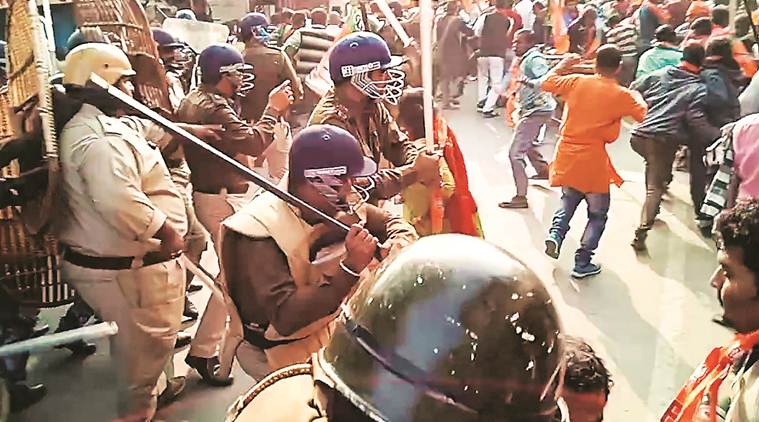
West Bengal: 14 supporters and 6 policemen injured in clashes during BJP event in Basirhat

Clashes broke out at an event organised by the BJP in Basirhat, in the North 24 Parganas district of West Bengal on Monday, leaving 14 BJP supporters and six policemen injured.

Hundreds of BJP supporters had gathered for the non-cooperation rally organised by the BJP in West Bengal’s Basirhat town, approximately 100 km north of Kolkata.

The event was called by the BJP to protest against the Mamata Banerjee government’s refusal to grant permission to the BJP’s rath-yatras named as Ganatantra Bachao Yatra. The BJP which had approached the Supreme Court against the West Bengal’s government orders has called for a week-long ‘law violation programme’, which started from Monday.

As per reports, few people from the crowd allegedly started throwing brickbats at the police personnel who retaliated by wielding lathis at the BJP supporters. Many BJP supporters and police officers were injured in the conflict.

State BJP president Dilip Ghosh, who was present in the program, calling it an unfortunate incident, claimed that the stones were pelted by some ‘outsiders’, who were not associated with his party.

Ghosh said, “We were conducting our program in a peaceful manner, but the police started lathi charge on us without any provocation. Those who pelted stones were external, they have nothing to do with BJP.”

However, Trinamool Congress’ food minister and president of the TMC North 24 Parganas district, Jyotipriya Mullick, claimed that this was a well-planned attack by the BJP workers and Dilip Ghosh should be arrested for inciting violence.

“They are trying to disrupt the peace in the state and BJP workers are responsible for the Monday’s incident. They carried stones in pockets and threw them at the cops. Dilip Ghosh should also be arrested for inciting violence at the spot, Mullick claimed.

The Mamata Banerjee government had denied permission for the Rath Yatras planned by BJP claiming that the yatras will provoke communal violence in the state.

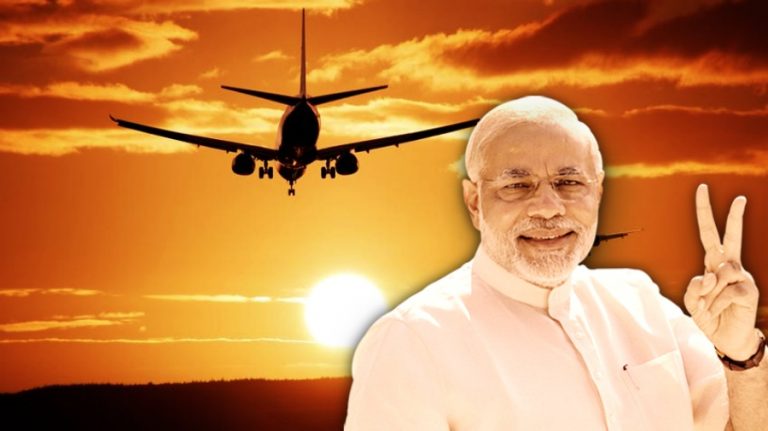
UDAN: How the Modi government is making India’s aviation sector soar

Earlier this week, an interesting aviation sector headline flashed on Indian media. In November 2018, the growth of the aviation sector slowed down to a 51-month low of 11%. In normal circumstances, a mature business will take 11% growth happily. For Indian aviation, it was a negative statistic – the growth had slowed down significantly.

Indian civil aviation market is slated to become the third largest market in the world behind that of the United States of America and China in another five years or so. Despite the individual airlines facing the heat of increased competition and high fuel prices, the market has been growing on the back of competitive airfares and increased demand.

In this backdrop, one of the demand drivers over the coming years in the civil aviation sector could be the Ude Desh Ka Aam Nagarik or UDAN program. Prime Minister (PM) Narendra Modi had spoken about the possibility of people wearing hawai chappals boarding hawai jahaj– how to make air travel affordable and possible for common citizens. For a country of India’s size, the air access has also been significantly limited. Many large towns do not even have an operational airport. Some which do aren’t served by regularly rostered flights.

This regional connectivity scheme was launched in 2016 where the government took the role of a market maker to broaden and deepen the aviation market. The idea was to bring on board some of the 425 odd Indian airports, which were unserved or underserved, with no regular scheduled flights. The government also planned to create a viability gap funding structure to promote flights from already connected cities and airports to the new regional locations.

When UDAN was planned, there was quite a lot of usual criticism around the lines of why the government should intervene. But unless there was a backstop, in this case, the central government, it would have been near impossible to develop new airports and attract airlines -after all, it was possible via a market mechanism, it would have already happened in all these years.

The government created the viability gap funding structure using a universal service type cross-subsidy model. A surcharge was levied on tickets on existing routes, which was then used to refund part of the ticket costs for the airlines flying on UDAN route. The participating airline would reserve a certain number of tickets on each flight at a low price – INR 2,500 for routes with flying time under one hour. The government would pay the airline a certain differential from the viability fund.

So far two rounds of UDAN route bidding has happened. The first was in April 2017. In this round, 128 new routes were awarded bringing aviation options to 43 regional airports of which 31 were unserved. Five airlines won the rights to fly on these routes. In the second round of bidding, 15 airlines, including those with helicopter operations, were awarded 325 routes. Bids for the third round were called in December 2018. The government now also plans to invite bids for international routes. This is being planned with an eye for connecting airports like Guwahati, which can be developed as India’ gateway to South East Asia.

The progress so far has been mixed. All the objectives of UDAN, as laid out before the first round of bidding, have not yet been met. Some airlines like Air Odisha and Air Deccan, which won the rights to fly in the first round, haven’t started operations in many cases. Some airports are still struggling to create the right infrastructure – clear flight paths and funnel approaches, perimeter security, and clear runways.

Yet, some cities have tasted success. Hubbali saw more than 45,000 flyers using the airport in July 2018. Nanded has seen connectivity increase, with an Amritsar flight which serves the Sikh pilgrims moving between the cities. Shirdi saw the upgrade of its existing airport and new flights were launched to several large cities, serving the pilgrimage destination. Adampur and Pathankot in Punjab and Nashik in Maharashtra have also benefited.

The Pakyong airport in Sikkim was constructed anew and opened to commercial flights earlier this year. Sikkim was so far only accessible via road, and the road closed many times a year due to bad weather. This airport, an engineering marvel, created a completely new commuting option for the hill state.

Several airports like Bhavnagar, Diu, Jalgaon, Jamnagar, and Mundra await the regularization of earlier flights awarded. Prayagraj has also been awarded several UDAN routes, which may get operationalized as the Kumbh Melanears.

Ultimately, even if a small fraction of all planned connectivity under UDAN thrives, it would have still served the purpose of expanding the Indian civil aviation landscape. The program was designed when Ashok Gajapathi Raju helmed the civil aviation ministry with Jayant Sinha as his deputy. Sinha has done most of the heavy-lifting in terms of planning, communication, and presenting the government point of view. Suresh Prabhu now leads the ministry, but Sinha continues to play an important role in the evolution of the program.

Since UDAN went live, India has added 25 new airports on the scheduled aviation map. Most airports existed earlier, but have been significantly upgraded to meet customer safety, security, and comfort standards. This infrastructure update is in line with the Modi government efforts, where public investment is leading the private industry participation.