Home Blog Page 6958

Bihar: 114-year-old idols of Lord Ram and Laxman stolen from Ram-Janki temple in Vaishali

0

Two idols that were more than 114-years old has been stolen from a temple in Bihar’s Vaishali district. According to reports, the incident was reported from the Mataiya village under Mahua police station area.

According to reports, the priest of the temple and local villagers notified the police after the idols were found missing early on Sunday morning. The priest of the temple, Kedar Tiwari has informed the police that he has been performing the rituals and puja in the temple for 46 years. He had locked the temple on Saturday night after the evening puja and rituals were over. Early on Sunday morning when his brother Vansh Lochan Tiwari came to the temple to clean the premises, he reportedly found the temple door ajar and the idols missing from the main pedestal.

The idols were reportedly made of Ashtadhatu (8 metals, including Gold and Silver) and together are believed to weigh around 50 Kgs. The idol of Lord Ram was 2.5 feet tall while that of Laxman was 2 feet tall reportedly. It is believed that they will be worth crores in international markets.

Local villagers had informed the police that the temple was founded in 1904 and the idols are believed to be expensive. The temple also has 14 acres of land in its name. Upon preliminary investigation, the police are suspecting that thieves had scaled the boundary wall around the temple to steal the idols.

Police officer Jaykishore Tiwari has reportedly informed the media that police teams are raiding known suspects in the area and they are hopeful of recovering the idols soon. Some media reports have claimed that the thieves have also stolen 10 smaller brass idols apart from the main idols. The local villagers are threatening protests if the police fail to catch the thieves soon.

Idol theft has been a consistent problem in temples of India. India Pride Project, a private organisation is attempting to bring back some ancient idols and artefacts that have ended up abroad. Recently, two ancient idols of Rajraja Chola and his wife that were stolen from the Brihadishwar temple in Tamil Nadu almost 50 years ago, were brought back due to the efforts of IPS officer Pon Manickavel.

Senior Congress leader Digvijay Singh: ‘Congress will lose votes if I campaign or make speeches’

A video of senior Congress leader Digvijay Singh has surfaced in which the former MP Chief Minister Singh is heard saying that Congress will lose votes in the upcoming election if he campaigns or gives any speeches.

According to ANI, Digvijaya Singh while meeting Congress workers appears to be saying that his speeches damage the Congress and lead to the cutting of votes, which is why he is not speaking at any public rally or making public appearances.

He said that Congress cannot win the state elections if party workers do not put in an effort. He further advised the party workers to work for the candidate even if he is their enemy.

“Jisko ticket mile, chahe dushman ko mile, jitao. Aur mera kaam kewal ek, koi prachar nahi, koi bhashan nahi. Mere bhashan dene se toh Congress ke vote kat te hain, isliye main jata nahi”, Digvijaya Singh said to Congress party workers in Bhopal.


The statements by Digvijaya Singh reflects the divide within the Congress in Madhya Pradesh. Ahead of the Madhya Pradesh state elections, despite Congress trying hard to project a united front against the incumbent BJP, it is reported that all is not well inside the party. We had reported about the factionalism between Kamal Nath and Jyotiraditya Scindia, which had led to poster-wars to claim the Chief Minister post after the upcoming elections.

Amidst this internal rift within the party, a Bhopal court has also directed police to register FIR against in Congress leaders Kamal Nath, Digvijay Singh, Jyotiraditya Scindia and whistleblower Prashant Pandey in the Vyapam scam case for trying to mislead the court and manipulate the investigation into the scam.

The Election Commission of India (ECI) has announced the dates for the assembly elections in Madhya Pradesh, Chhattisgarh, Rajasthan, Mizoram and Telangana. The states of Madhya Pradesh and Rajasthan will go to poll on November 28 and December 7 respectively and the results will be announced on December 11, 2018.

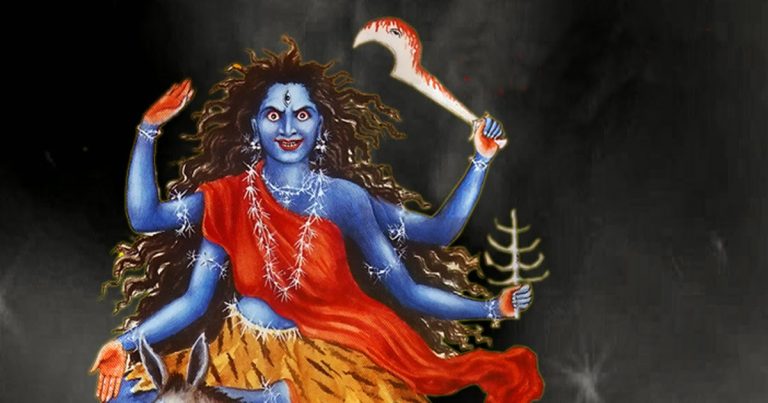
Kaalratri: The seventh form of Maa Durga, who is also the fiercest of them all

Fiercest and the most fearful form of Maa Parvati is that of Kaalratri, when She removed her outer golden skin to kill demons Shumbha and Nishumbha.

Kaalratri, the most fearful form of Maa Parvati

According to the legends, two demons, Shumbha and Nishumbha, invaded devalok and defeated the demigods. Lord Indra, along with the demigods went to Lord Shiva for the help. They prayed to Maa Parvati (also an incarnation of Maa Durga). She heard the prayer while she was bathing and hence created another goddess, Chandi to help the demigods in conquering the demons. Shumbha and Nishumbha sent demon generals, Chanda and Munda, Goddess Chandi created a dark goddess Kaalratri to kill them. Hence, She is also known as Chamunda.

Following that, a demon named Raktabija, who had the boon that if a drop of his blood falls on the ground, a clone of his would appear. When Maa Kaalratri attacked him, his spilt blood created several clones, making it difficult to defeat him. Furious at this, Maa Kaalratri drank his blood to avoid it falling on the ground, thereby killing him and thus helping Maa Chandi to kill Shumbha and Nishumbha.

Maa Kaalratri rides a donkey and is depicted with four hands, where Her right hands are in Abhayamudra (blessing hand posture) and other in Varadamudra (posture dispensing boons) and carries a sword and a deadly iron hook in left hands.

Each day of the Navratri is devoted to one of the nine avatars of Maa Durga. The nine different forms are Shailaputri, Brahmacharini, Chandraghanta, Kushmanda, Skandamata, Katyayini, Kaalratri, Mahagauri and Siddhidhatri.

AAP launches fresh fundraising drive without explaining where the previous donor list went

When the Aam Aadmi Party stormed into Indian political scenario, it arrived with a promise of changing the way political parties operate in India. It promised complete honesty and transparency in its operations, and most people believed in it. One the innovative thing the party did was to publish a list of donations it receives on its website, as a proof of transparent nature of its financial activities.

But it didn’t take long for the halo around the party to disappear. Soon, there were allegations that the party was receiving donations from dubious sources. At the core of the allegation was regarding a donation of ₹2 crore. A breakaway faction of the party, AAP Volunteer Action Manch (AVAM) had claimed that the party had received four cheques worth ₹50 lakh each from four different questionable companies. All those four donations were entered into the donation list at 12 am on April 5, 2014. It was found that the addresses of the four companies were fake, they had the same set of directors and they had no known business.

At that time, other than the official donation list on the AAP website, another independent website www.aaptrends.com was also following donations to the party. It was run by one AAP volunteer. But in the second week of April 2014, the site was suddenly shut down, creating questions among people including AAP supporters.

And towards the year 2016, the party removed the donation list for its website. During that time, the webpage for the list was still there, but it showed a message “under construction. New Version coming soon..”. But that new version never came, and now the link shows a page not found error, means the page has been removed from the site altogether.

Screenshot of AAP's websitee
Donation list webpage as seen in 2016.
screenshot of the AAP website
Donation list webpage as seen in 2018.

It was reported that the page listed many donations above ₹ 20,000, but those were not reported to the Election Commission as per rules, and thus the party removed the list itself from public domain.

This removal of the donation list was questioned by many people, including Yogendra Yadav and Anna Hazare. Former party member Yadav had alleged that the party was collecting cash donations which were not recorded.

Rebel AAP member Kapil Mishra also had alleged that the party was not revealing its total funding to the election commission and Income Tax department.

When Income Tax department checked the documents of the party, they found that the party was indeed hiding some of the receipts. There mismatch between credits to the bank account of the party and the amount disclosed by the party to the department. In 2014-15, disclosed amount was ₹13.16 crore less than the received amount. The department also had found money from Hawala operators, and there were discrepancies in its donation report, which the party had changed after pointing out the same. Based on this report by the I-T department, the EC had issued a show cause notice to the party.

During all those controversies, the party’s public donation drive had taken a backseat. But as elections come closer, AAP has restarted its online donation campaign. On Monday they launched a campaign titled ‘Aap Ka Daan, Raashtra Ka Nirmaan’.

Arvind Kejriwal launches the new fund collection drive of AAP

They have relaunched their donation page on their website, but with a significant change. They have changed the web address for the page, it was donate.aamaadmiparty.org earlier, but now it is donations.aamaadmiparty.org. Along with standalone donations, the party now have provided the option of monthly donations also.


Informing about the new fund-raising drive, AAP leader Gopal Rai in a press briefing said that the party is faced with a resource crunch and it needs the money to continue its operations. Under the campaign, the party will go door-to-door and ask people to contribute a minimum amount of ₹ 100 per month.

It is important to note that the cloud around the party’s fund collection earlier still remains. The party has not offered any satisfactory explanation for huge discrepancies in its donation records, neither they have answered why the donation list page was removed and never re-introduced on their website. The Income Tax investigation on its funding activities is not completed yet. And without clearing its name from serious allegations about fundraising activities, the party has decided to launch a fresh donation collection drive.

No, MJ Akbar has not hired 97 lawyers to fight defamation case against journalist who accused him of sexual harassment

0

Former journalist and Minister of State in the union government, MJ Akbar has been accused of sexual harassment by multiple women, which he has categorically denied. Earlier today, he sued journalist Priya Ramani for defamation after he dismissed the allegations as ‘false and fabricated’ and ‘malicious’.

The vakalatnama, a document with names of lawyers in the firm, was shared by many journalists on social media, where the celebrity journalists expressed shock and awe that the junior minister was using a battery of 97 lawyers against one woman.


Not just that, despite her busy schedule, Nidhi even counted the number of lawyers named in the vakalatnama.


However, vigilant twitterati, eager to help those in need of knowledge came to their rescue.


Of course, other ‘journalists’ too questioned the ‘might’ of Akbar, who at one point was their peer as a journalist/editor.


On being schooled, they changed their position on the case and wondered what is the need to put women on trial.


Amusingly, last year when Raya Sarkar had outed a list of academics in Indian and foreign universities, accusing them of sexual harassment, self-proclaimed feminists had asked for a ‘due process‘ instead of naming and shaming the academics. These feminists include professors of prestigious universities of Delhi like JNU and DU as well as politicians like Kavita Krishnan.

Meanwhile, after people pointed out the flaw in her logic of ’97 lawyers against one woman’, Nidhi went on to refer to defamation notice as ‘intimidation’.


A journalist associated with The Wire, Rohini Singh, who is herself facing a defamation case by Jay Shah missed comprehending the vakalatnama in the MJ Akbar’s defamation case. Shah and slapped Singh with a Rs. 100 crore defamation case after Singh accused him of financial impropriety.


She, however, said that Jay Shah’s defamation case, where she is one of the accused, does not have 97 lawyers.


Though we are not sure whether she means lawyers representing Jay Shah or lawyers named in the vakalatnama, which we are again not sure if she has read.

Bereft of new ideas, Shiv Sena resorts to the Congress hack of appeasing Muslims

0

With the BJP giving stiff competition to the Sena in its bailiwick Mumbai, the latter has resorted to eschewing the very principle its foundation was laid on. In a stunning volte-face, Shiv Sena is now attempting to woo the Muslim voters ahead of the Lok Sabha assembly elections scheduled for next year. It can be safely assumed that ‘Marathi Asmita’ is no longer a campaign watchword for the Shiv Sainiks in the run-up to the Lok Sabha elections.

Conflating the hitherto two disparate identities of Maratha and Muslim, Shiv Sena has launched ‘Me Marathi Musalman’ in one of its Dussehra rallies. Video of Shiv Sena member Naseeb Shaikh of Beed district was found chanting ‘Me Marathi Muslim’ has emerged. Shaikh, a resident of Sirsala in Parli Taluka can be seen in the video making a clarion call to his community members to come out and participate in the Sena’s Dussehra rally at Shivaji Park in Mumbai.

Shaikh claimed that Shiv Sena wanted to create awareness among people about its stand towards Muslims. “We will start a ‘Me Marathi Musalman’ drive with a saffron flag in hand,” he said. Clarifying Sena’s stance, he also proclaimed that Sena had never been against Indians or ‘patriotic’ Muslims, while the opposition continued accruing political mileage by maligning Muslims and using their community to secure vote bank.

These surprising turn of events can be attributed to Sena’s realization of being sidelined by other political parties and with their insipid central belief of Maratha supremacism no longer catching voters’ fancy. Shiv Sena was founded in 1966 by Balasaheb Thackrey on the principles of upholding pro-Marathi ideologies and Hindu Nationalism but it seems like it has decided to shun these ideologies and adopt Congress shenanigans of appeasing Muslims and seeking their support in a desperate attempt to stay relevant in the Maharashtra politics.

Since its inception, Shiv Sena had vehemently opposed appeasing minorities for votes, but fearing political irrelevance they have now espoused the very policy that they accused the Congress of using it to perpetuate the fault-lines in the society. This hints at the Sena leadership’s intellectual bankruptcy and deficiency of innovative ideas to catch voter’s fascination.

Off-late the BJP has aggressively made inroads in the grassroots politics with its innovative campaigns such as Swachh Bharat mission, Jan Dhan Yojana, Demonetisation and various other initiatives reaching the underprivileged and the poor who were ignored by previous Congress regimes.

This has caused voters of regional parties to swing towards the BJP and forced the parties to reorient their political strategy. Disillusionment among their primary voters has also caused regional parties to look beyond their traditional vote bank and tap the voters hitherto ignored.

In past, Shiv Sena has been accused of browbeating North Indians residing in Mumbai on the pretext of Marathi-illiteracy as well as snatching the jobs of fellow Maharashtrians. They are also accused of periodically whipping up a frenzy against Muslims. In 2015, Shiv Sena had endorsed vasectomy of Muslim community. In a scathing attack on PM Modi, Shiv Sena supremo Uddhav Thacrey, in 2017, claimed that India belongs to Hindus, Muslims have 50 other countries to go to. So the recent attempt by Shiv Sena to woo Muslim voters appears rather opportunistic and disingenuous effort to stall the BJP juggernaut. But as the saying goes ‘Desperate time calls for Desperate measures’, it appears that Shiv Sena is following this maxim in letter and spirit.

Gurugram Horror: Police decoding shooter Mahipal’s Facebook post trying to identify motive behind the crime

0

Hours after the dreadful Gurugram double-shooting case, wherein the official gunman to the Gurugram Additional District Judge Krishan Kant shot the latter’s seventeen-year-old son and wife, the police have intensified their investigations and are trying to extensively scrutinize Singh’s past life and affiliations to understand why he committed the crime.

The accused head constable, Mahipal Singh, whose services from the state police were terminated on Sunday, was produced before a local court later in the day. The city police have sought a week’s custody for extensive interrogation of Singh to establish the reason why he shot the duo. It has set up a Special Investigation Team to investigate the case from all angles.

Deputy commissioner of police Sumit Kuhar confirmed that Singh was particularly active on Facebook and had two Facebook profiles, both of them with the name, ‘Mahipalji’. During the course of the investigation, the police came across Mahipal’s latest Facebook post, posted a day before the crime transpired, which is being seen as a crucial evidence.

Mahipal’s Facebook post which is being investigated

The police are trying to unravel the post and establish a connection between the murder and the coded post. The police are now suspecting a pre-planned conspiracy behind the shooting.

While this angle is being investigated intensively a senior police officer, who is part of the interrogation team also said, “Mahipal is frequently changing his statements and becomes furious whenever he is questioned. He said he was depressed due to family problems”. In his statement, Mahipal claimed that he was unhappy with the judge and his family’s behaviour towards him. He had been demanding leave to go home for the past few days but was refused, the aforementioned officer said. Reports also state that he has told police that he was upset over being made to do menial jobs for the Judge’s household.

Sources believe that Singh had been watching videos related to religion and it is suspected that he had been attending ‘conversion’ camps. However, police have not been able to verify yet as to how his alleged attendance at such camps could be connected to Saturday’s shooting.

The gunman Mahipal, had open fired at the judge’s wife and son at Gurgaon’s Arcadia market near South City-II in Sector 51 here on Saturday. Mahipal fired five rounds in all. Two bullets hit the judge’s wife Ritu in the neck and torso who later succumbed to her injuries, while his son Dhruv was shot once in the head and twice in the torso, and as per latest information, has been declared brain dead and put on life support.

Ritu’s family members had earlier decided to take her body to Hisar, her native city, for cremation. They later returned to the Medanta hospital to donate her organs.

A case under section 307 of the India Penal Code (Attempt to murder) and section 27 of the Arms Act was registered at Sector 50 police station. Police said they will add other charges to the FIR today.

Is ‘Parliament House’ the new Mobile factory? Rahul Gandhi repeats old ‘Vijay Mallya’ lie with Nirav Modi’s name

We all know the deep emotional attachment Congress President Rahul Gandhi has with mobile factories. Wherever he addresses a rally, he adds the name of that place to the never-ending lists of possible mobile factories he plans to build when he comes to power. It works like a format. His speech goes, “when the people in China click a selfie, I want them to flip their mobiles and see ‘made in xxx’ written on it.” The speech has become so predictable that nowadays people on social media announce the arrival of mobile factories beforehand, looking at the scheduled speeches of Rahul Gandhi.

Just when the mobile factory jokes begun to feel a little too predictable, Rahul seems to have come up with another ‘fill in the blanks’ speech format. This time, it is about people flocking to the Indian parliament just when they are about to take off to foreign countries. No, EAM Swaraj has not planted teleportation capsules inside parliament, neither has the house started offering special travel coupons. As per Rahul Gandhi’s claim, people storm into parliament before leaving for London and finance minister Arun Jaitley extends them warm farewell wishes before they leave for the airport.

Last month, Congress had alleged that FM Arun Jaitley had ‘met’ absconding millionaire Vijay Mallya before he left for London. Vijay Mallya had stated to the press claiming the same and soon Rahul Gandhi held a press conference, asking for Arun Jaitley’s resignation. A Congress leader named PL Punia had even claimed to have ‘witnessed’ the meeting.

Arun Jaitley had denied the allegations and had explained that Mallya did abuse his privileges as an MP and tried to approach the FM inside the parliament premises, but he had refused to listen to Mallya and had advised him to ‘talk to his bankers’ instead.

Later, a fact check about the veracity of the claims had also proven that the finance minister’s statements were indeed corroborative as per the schedule of the parliament and his activities that day. Congress’ claims had fallen flat.

Now, a month later, Rahul Gandhi has made similar claims. Only he has removed Vijay Mallya’s name and filled in Nirav Modi’s. Speaking at a rally in Datia, Madhya Pradesh, the Congress prince has claimed that Nirav Modi went to the parliament house to meet FM Arun Jaitley before he flew to London.


In the live video shared above by Congress, Rahul Gandhi is seen making the claim. 9 minutes and 40 seconds into the video, Rahul Gandhi claims, ” Nirav Modi took 35 thousand crores and went to parliament house to meet Finance Minister Arun Jaitley. Arun Jaitley has himself admitted it. Nirav Modi went to meet him in parliament and said that I am going to London.”

Now, brushing aside all the disturbing mental images of Nirav Modi dragging huge suitcases of currency notes (for it was Rahul Gandhi only who had earlier claimed that PM Modi took away the demonetised notes and gave it all to Nirav Modi) all the way through the sprawling lawns of parliament building, let us for a moment think about the accusations being made here systematically.

  1. There are flights to London available from Mumbai. Why would Nirav Modi go to London via Delhi?
  2. The winter season of parliament concluded on January 05, 2018. So when exactly did  Nirav Modi meet the FM seeing that its ‘chhutti’ in the parliament during January and the PNB scam was reported in mid- February?
  3. Vijay Mallya was a member of the Rajya Sabha, but how can Nirav Modi stroll into parliament and go meeting ministers inside?
  4. For months, Nirav Modi was rumoured to be in New York City, Hong Kong and even Singapore, it is only in June that it was finally reported that he is in the UK when reports emerged that he has officially sought asylum from the UK government. So when exactly did Rahul Gandhi came to know that Nirav Modi had ‘met’ the FM before fleeing to ‘London’? Does it mean that all this while, Congres has been aware of Nirav Modi’s whereabouts and keeping the nation in dark about it?

Rahul Gandhi has a lot to answer.

People on social media have been asking the question too.


Goof-ups and jumbling up of facts is something Rahul Gandhi habitually does. Even on the issue of his current favourite topic of Rafale deal, the Congress President has been citing ever-changing facts and figures, never being certain of exactly how much money PM Modi is supposed to have ‘gifted’ Anil Ambani. Even the negotiated price of the fighter jets that he claims keeps on changing event after event.


This has happened earlier. Even on the Doklam issue, Rahul Gandhi kept on bringing allegation after allegation, speech after speech claiming how the Modi government had failed to handle the crisis and how all hell is about to break loose. But after an awkward question during his Europe tour compelled him to admit he ‘had no details’ of the Doklam issue and cannot answer how he could have handled it better, Rahul seems to have made his peace with the Doklam issue.

So far we have had mobile factories in Uttar Pradesh, Dungarpur, Mumbai, Chitrakoot, Bhopal and about a dozen other places in India. After today’s claims, it seems like now we will have a list of people who manage to enter into one of the most secured buildings in the country, the parliament house, before flying abroad. Either the parliament house would have to start a direct baggage check-in facility for the Indira Gandhi International Airport or our beloved Finance Minster will have to open a special counter for all the fleeing billionaires that are lining up to meet him before fleeing the country.

Maybe Mr Jaitley will consider gifting them special shopping coupons from www.madeinamethi.com for a range of Rahul Gandhi’s favourite merchandise as a farewell present.

Congress will be better off if Tharoor sticks to typing complicated words instead of commenting on Ram Mandir

Senior Congress leader, Shashi Tharoor, has stirred up a controversy with his latest remarks on Hindus and Ram Janambhoomi. Tharoor, while addressing the gathering, said, “While a vast majority of Hindus believes that Ayodhya was the birthplace of Lord Ram, no good Hindu would want to see a Ram temple built by demolishing somebody else’s place of worship”.

With a single remark, Tharoor has branded hundreds and thousands of devout pious Hindus as ‘bad’ merely because they disagree with Mr. Tharoor and want a Bhavya Ram Mandir to be built at the birthplace of Shri Rama. It is regrettable that politicians are insulting Hindus for merely wanting a grand Temple to be built at Ayodhya. It appears that Tharoor is unaware of the sentiment that is simmering within Hindus. The political party whose journey to power began with the Ram Janambhoomi movement currently enjoys an overwhelming share of political power in the country. If every Hindu is ‘bad’ merely because Mr. Tharoor believes so, then he is insulting the intelligence of the vast majority of the electorate which elected the BJP to power.

Thus far, the Congress party had maintained a certain ambiguity on their stance on the Ram Mandir by refusing to comment on the matter. However, considering the fact that another senior leader of the Congress party, Kapil Sibal, has attempted to delay the matter in courts on several occasions, it appears clear that unless the party comes out and states otherwise, Tharoor’s stance on the issue reflects the official opinion of the party on the matter, especially considering the conduct of one of their leaders in the court. A politician should not involve himself with the business of issuing certificates on moral conduct to the electorate. And it reflects on Tharoor as a politician that he would demonize vast swathes of the country for merely seeking something as basic as a Temple at Shri Rama’s Janmabhoomi.

The loyalty to the Babri Masjid that is displayed by certain sections of society and politicians even today is a cause for worry to the integrity of our nation. It has been established conclusively, and beyond any point of reasonable doubt, that the Babri Masjid was indeed built after demolishing a Temple in its stead. The ideology that led to the demolition of the Temple and the construction of the Babri is the same vicious ideology that led to the formation of Pakistan. It is understandable if Pakistanis and Bangladeshis are disturbed by the demolition of the Babri but why should any Indian politician or citizen be disturbed by the demolition of a building that was an enduring testimony to the hardships and misery that the Hindu people were forced through by the Muslim invaders?

Tharoor’s remarks also reveal what anglophile deracinated liberals think of Hindus. As long as Hindus don’t raise their voice against the million injustices that is afflicted on them on a daily basis, they are worthy of praise. As long as Hindus continue to carry the burden of secularism on their shoulders while being demonized as fascists, they are honourable.

As long as Hindus don’t complain against the blatant minority appeasement by the so-called secular parties and ignore the destruction of the Hindu civilization, they are exemplary citizens. But the moment Hindus start uniting under the banner of Shri Rama, the moment they start uniting under the banner of Lord Ayyappa, the moment Hindus reject the bad deal that has been enforced on them by decades of appeasement and misrule, the moment Hindus refuse to sacrifice their culture and traditions to the ceaseless march of evangelistic liberalism, they are branded evil, monstrous and vile. Anglophiles like Tharoor want Hindus to be sheep and willingly walk to the slaughterhouse without so much as a whimper.

The Congress party will be better served if Tharoor sticks to typing complicated words on social media that nobody cares about, especially at a time when the party is struggling hard to shed its anti-Hindu image. Ahead of the assembly elections in key states, the Congress party is going full throttle in its devotion towards Hindu Gods and ethos. Under such circumstances, it does not bode well for the party that a senior leader of the Congress party has come out and said that only a ‘bad’ Hindu wants a Ram Temple at Ayodhya. It even exposes the fact that the Congress’ soft Hindutva approach is merely for electoral benefits and not a sudden change of heart as some of them would have us believe.

The evolution of India’s air power in global times

The end of the Second World War with the dropping of ‘Little Boy’ and ‘Fat Man’ on Hiroshima and Nagasaki respectively changed the nature of wars from the way it was fought before. The nuclear arms race between the mighty USSR and USA had resulted in making the existing security doctrines of the rest obsolete and security experts across the world were going overdrive to protect their homeland from another nuclear holocaust. The superpowers, USSR and USA were doing everything they can, to consolidate and expand their ideological hegemony by devising new security strategies to outmanoeuvre each other.

Around the 1950s, the military blocks led by the superpowers roughly had the similar defence strategy and it was to build an extensive ‘airpower’, comprising of military aircraft, missiles, helicopters as the centrepiece of their National Security architecture. The other small powers, the third world countries simply responded to the change and mostly obeyed to what the powerful did. The fundamental strategy of both USSR and the US was around two similar ideas- First, to have a credible nuclear deterrence with the development of extremely powerful bombers with deep striking capabilities inside the enemy territories and second by protecting their areas of influence through superior air defence by building a large number of swift attack and interceptor aircraft. Most of the newly independent third world countries with neither the technological capability nor financial resources to pursue independent defence program had to fall back on either of the blocks to protect its national interests from another European onslaught.

India was no exception. Immediately after throwing out the Britishers, the Indian policymakers reacting to the global change decided to build a strong defence system which already had a British touch on it. The partition of the sub-continent had turned the newly formed Pakistan into a hostile neighbour. India like many other nations had to rely on others to boost its defence preparedness and bought defence equipment from the United Kingdom, France, the US and most importantly from the Soviet Union. In early years, Indian policymakers despite with various constraints visualised a lethal and professional armed force and designed its national security architecture based on its immediate near threats rather than getting engulfed in Cold-war politics. In this following piece, I have tried to interpret the evolution of Indian Air Force with respect to the global changes and its impact on India’s fighter force and subsequent modifications in the security architecture of the country.

Established in 1932, as an auxiliary air force for the British Royal Air Force, with having four Wapiti aircraft to possessing thousands of technologically superior and deadly flying machines, Indian Air Force has come a long way. From playing a small but effective role in the Second World War to be one of the most powerful Airforce of the world, the Indian Air Force has seen tremendous changes and adapted to it successfully since its inception.

The RAF soon after the World War wanted to limit Indian Air Force to a limited tactical regional player rather than letting IAF be an important Airpower. Instead of handing over it to India, the Britishers destroyed most of the ‘B-24 Liberator’ bombers. However, India after the independence had inherited few fighter aircraft like British built Vampires and French Mysteres. The Indian government in the 1950s decided to diversify its aircraft supply base and decided to induct French Ouragans, aka Toofani and later bought British Hunter FMK 56s and Canberra Bombers Mk58s. The Indian Airforce later acquired the powerful Folland Gnat in 1958 to strengthen their fleet, by then, IAF had a fleet of 33 squadrons, built in just 10 years.

In 1962, India Armed forces had its first challenge when it was defeated by the superior Chinese in the Indo-Sino war. The Indian Airforce had a limited role to play in the war, apart from providing support for the ground base. Then came the 1965 India-Pakistan war. For the first time, IAF actively engaged in the warfare and fought against lethal F-86s of the Pakistani Air Force. However, although Indian Air Force destroyed airfields and stuck deep inside Pakistani territory but lost most of its vintage aircraft to a superior Pakistani Air Force in the 1965 war.

The Indian government after the 1962 war decided to modernise and consolidate its Air Force. The IAF by late 60s had acquired HAL built HF-24 Maruts. The Indian Airforce went to become one of the most powerful airforces with the procurement the most lethal Russian MiG-21 and Sukhoi Su-7BM during the late 1960s and early 1970s. The Russian MiG-21, a ‘Delta-wing’ aircraft was one of the mighty aircraft of that time against the PAF’s Lockheed Martin F-104. The capability, standards and the power of the Indian Airforce were soon put to the test in December 1971 when India and Pakistan went to war over the liberation of Bangladesh. IAF with its superior and lethal aircraft easily hunted down the Pakistani Aircraft, achieved a complete air-dominance over the skies of the subcontinent.

At the height of the cold war in the 1970s, both the USSR and the US had a similar Airforce strategy of having a dominant Heavy Attack aircraft comprising of fighters and bombers to have a dominant air superiority, while developing a fleet of light fighter aircrafts to intercept and destroy enemy aircrafts from entering one’s airspace. The Americans decided to build two fourth-generation aircraft, the F-15, a heavy twin-engine aircraft to achieve air dominance and F-16, a first multi-role supersonic aircraft which was designed to operate in multiple missions. The Soviets designed MiG-29 and the powerful Sukhoi Su-27 much later as a response to the US.

India followed the superpowers and decided to buy a large number of MiG-21 and Sukhoi Su-7, as the HAL produced HF-24 Maruts did not yield sufficient results. The Indian security experts believed that the country’s principal security threat would come from its two hostile neighbours- Pakistan and China, decided to deploy a large number of MiGs and Sukhois across its air-bases facing the borders. In 1979, Indian government procured British-French jet SEPECAT Jaguar, a supersonic ground attack bomber to augment the strength of the IAF.

By 1980s, American strategic policymakers had found a breakthrough in designing a new attack aircraft which could be used for multiple missions of Air Superiority, Interceptions, Ground Attack, Reconnaissance and also to be used as a naval variant that could be launched from aircraft carriers. The US Airforce re-developed F-16 as a new multirole aircraft while the French designed Mirage-2000. Indian Airforce decided to induct Mirage-2000 as its first Multirole fighter to its fleet in 1985, making it one of the strongest and versatile aircraft even to the present day.

The ageing fleet of MiG-21 necessitated Indian Airforce to scout for a new light fighter aircraft to replace the MiGs, which was a mainstay since the 1960s and also provide the Indian Airforce with an indigenous ‘tactical air support aircraft’. The government of India, since the late 60s was planning to develop a single engine aircraft similar to Marut. The Hindustan Aeronautics Limited (HAL) was given the responsibility to develop the Light Combat Aircraft, which took more than two decades to develop its first test flight. Since the development of LCA-Tejas was still in progress, the Indian Airforce acquired Russian MiG-23, MiG-25 and announced its decision to buy MiG-27, a ground attack aircraft and MiG-29, a multi-role aircraft to be used for India’s aircraft carrier along with British Aerospace Sea Harriers. With the addition of these new aircraft, India Airforce became a formidable power in the sky.

The Kargil War of 1999 was a critical juncture concerning India’s defence preparedness, as the new Indian air fleet was yet to prove its capability in those tough conditions despite having a fearsome attack force. At first, the IAF was called to provide support for the ground forces but its responsibility was scaled up to target enemy positions on the peaks of Kargil sector. Initially, The IAF had deployed its ageing MiG 21 and MiG 27 fleet into the operation but soon found out its inability to perform the IAF’s specified roles. The Indian Airforce soon re-strategised to operate the multi-role French manufactured Dassault Mirage 2000, which was considered to best capable of optimum performance under the conditions of high-altitude seen in the zone of conflict. The Mirage-2000 not only had better equipment but also provided an option to fly at nights. The small fleet of Mirage-2000 has played a substantial role in India’s Armed Forces operations during the Kargil war to defeat Pakistan.

The Kargil war taught too many valuable lessons to both policymakers and the Indian defence establishment. The government at the centre reacted to the shortcomings of India’s defence preparedness and decided to bring in changes to the existing security architecture of the country. The Indian Air Force’s ageing fleet and the inability to procure modern aircraft and weapons were taken as a strong note by the leadership. In 2003, the government decided to invest in its indigenous LCA program with additional resources and renamed the aircraft as ‘Tejas’. In 2004, along with the indigenous LCA program, the Indian government had already finalised a deal to manufacture heavy twin-engine fighter aircraft Sukhoi Su-30 MKI as the lead air-superiority fighter aircraft of the IAF under license to HAL.

Addition to this, the Indian government was also looking to replace its ageing fleet MiG-27, SEPECAT Jaguar and Mirage-2000, decided to initiate Medium Multi-Role Combat Aircraft (MMRCA) tender. The deal was to buy 126 aircraft, with a condition to buying 74 more in the future. The government wanted to buy the 18 aircraft in a straightaway condition and the remaining to be built by the HAL under the licence with the Transfer of Technology (ToT). Two fighter aircraft-Dassault Rafale and Eurofighter Typhoon made it to the final list and the Indian government selected Dassault Rafale for exclusive negotiations, but the deal was cancelled owing to fiscal pressures and other impracticalities. But soon, the governments of India and France entered into a deal to purchase 36 Rafale aircraft in flyaway condition from France.

With the future procurement of Dassault Rafale, one of the most lethal fourth generation aircraft and the addition of Super Sukhois-the updated version of the Sukhoi-30 MKI, LCA Tejas  and with India’s decision to develop a fifth-generation medium multirole combat aircraft (AMCA), Indian Airforce will be one of the destructive airforces in the world, arguably after the United States and Russia.

Way Ahead: 

The technological advancement across the world and with the advent of new powers like China and India in the global power structure has lead to the breaking of status-quo. The nations are investing in enhancing its defence capabilities and re-thinking its approaches to maintain its hegemony and balance of power. The United States has achieved the technological mastery of building fifth generation machines of having high manoeuvrability, supercruise, low Radar Cross section (RCS) to achieve stealth. The Russians, aware of their technological limitations have been investing in building machines like S-400 systems and powerful radars to boost its defence preparedness. The Chinese have been heavily funding its Fifth-generation fighter development program and also the indigenous production of technologically superior armaments. India should take an inspiration from these countries, build partnerships through active engagement which could benefit to revive India’s own defence industry which is plagued by mediocrity, inefficiency and delay.

Reviving Indian defence industry is the need of the hour for two reasons. First, indigenisation of defence systems will provide a much-needed impetus to Indian Armed Forces to procure the critical equipment hassle-free. The technological control in Indian hands would ensure the timely supply of armaments at emergency circumstances. Second, India defence budget is the fifth largest in the world, amounting to $62 billion or Rs 4,04,365 crore and procures 60% of its weapon systems from the foreign market. The indigenous development will not only save vital forex reserves but also induce economic growth as it will bring in huge investments into the domestic economy.

The Indian government should provide an impetus to the defence manufacturing, especially in areas involving high-technology systems like fighter aircraft, Cruise Missile systems, Anti-Ballistic Defence systems, radars, nuclear submarines, Aircraft carriers by creating an enabling environment and incentivising the country’s private sector to take up the critical task. India has to move away from the archaic bureaucratic setup and develop institutional capacity to achieve self-sufficiency in its defence needs.