A wave of coordinated attacks jolted southern Thailand over the weekend (22nd and 23rd August), leaving three people injured and causing massive property damage. According to some reports, around 51 coordinated attacks were carried out in 21 districts of three Muslim-dominated, insurgency-hit provinces of Pattani, Yala, and Narathiwat. Some other reports stated that the attacks were over 70 in number and were spread across four provinces of Pattani, Yala, Narathiwat and Songkhla.
The attacks included bombings, warning shootings, attacks on local government offices, and arson targeting telecommunications infrastructure, CCTV cameras, vehicles, and property. The majority of the attacks reportedly happened in Narathiwat province, where three people were injured, followed by Yala and Pattani.
“Multiple coordinated incidents aimed at creating unrest occurred in various locations across the southern border provinces”, a statement by the Thailand military’s Internal Security Operations Command (ISOC) reportedly said. The attacks were followed by an explosion at a convenience store in Mayo district, Pattani, on Monday.
Polis Diraja Malaysia (PDRM) menerima permintaan daripada polis dan tentera Thailand bagi membantu mengesan pergerakan individu atau ejen yang mempunyai kaitan dengan kumpulan Barisan Revolusi Nasional (BRN) susulan beberapa kejadian letupan di tiga wilayah selatan Thailand,… pic.twitter.com/lglcUbmvpK
Following the attacks, Thailand’s Prime Minister Anutin Charnvirakul held an urgent meeting with high-level security officials on Sunday to review the situation. Thai security forces have been deployed at the sites of the attacks, where they are engaged in the task of collecting evidence and nabbing suspects. The attacks have also led to increased security on the country’s borders to prevent any attempts at infiltration amidst the internal chaos.
A curfew was reportedly imposed in Narathiwat province from Saturday night till Sunday morning. The attacks caused major damage to buildings and vehicles. The Thai military had intelligence about the attacks but was not sure of the time and place. “We had intelligence reports for about two months that there would be attacks on local offices,” Commander of the Thai army in the southern region, Lieutenant General Norathip Poinok, was quoted as saying.
This is the first major attack since July 2026, when Thai soldiers were attacked by around 10 attackers who opened fire at them and threw pipe bombs at a security checkpoint in Narathiwat. Five paramilitary soldiers were killed and six civilians, including a 10-year-old boy, were wounded in the attack, which happened when the Thai government was holding negotiations with the BRN.
Islamic separatist group suspected to be behind the attacks
No insurgent group has claimed responsibility for the attacks. However, it is suspected that Islamic separatist groups like the Barisan Revolusi Nasional (BRN), which are known to have the capacity to carry out attacks of this scale, might be behind the attacks. The BRN is active in the three Muslim-dominated provinces of Pattani, Yala, and Narathiwat. The Islamic insurgent group has a long-standing demand to create an Islamic state by merging the three southern provinces and separating them from the Buddhist-majority country.
The three states have a history of insurgent activities, which date back to the 1960s, when insurgent groups, including the BRN, started the fight for an independent Islamic nation. The Islamic insurgent groups have been threatening the unity and sovereignty of Thailand. They refuse to be associated with the rich cultural heritage of Thailand and want to create a separate nation for their co-religionists. For about two decades, they have been attacking Thai security forces to pressure the Thai government into fulfilling their demand for a separate Islamic nation.
The provinces of Pattani, Yala, and Narathiwat were officially recognised by the British as part of Thailand in the early 1990s under the Anglo-Siamese Treaty, which demarcated the existing political border between Thailand and Malaysia. The treaty was signed between Thailand (then the Kingdom of Siam) and the United Kingdom in 1909.
Under the treaty, the Siamese kingdom relinquished its claim over the territories of the northern Malay states of Kedah, Kelantan, Perlis, and Terengganu in favour of the British colonisers but retained its control over regions including Pattani, Yala, Narathiwat, and Satun. The three provinces were already being ruled by the Siamese kingdom, and the treaty merely recognised it. Before the treaty, the three provinces were part of the former Malay-Muslim Patani sultanate. It is based on this piece of Thai history that the insurgents have been calling for a separate Islamic nation.
The current conflict began in 2004 when the insurgents raided an army base in Narathiwat province and killed several soldiers and stole weapons. The attack triggered a chain reaction of attacks and counterattacks between the insurgents and the Thai security forces. Over 7,800 people have reportedly been killed across three provinces since 2004.
Thailand is not the only country where Islamic insurgent groups have demanded a separate Islamic state based on Muslim-majority demographics; similar demands have been witnessed in several parts of the world. The Partition of India in 1947 was also preceded by religion-based political demands made more than 80 years ago, the consequences of which continue to shape India’s political and social landscape.
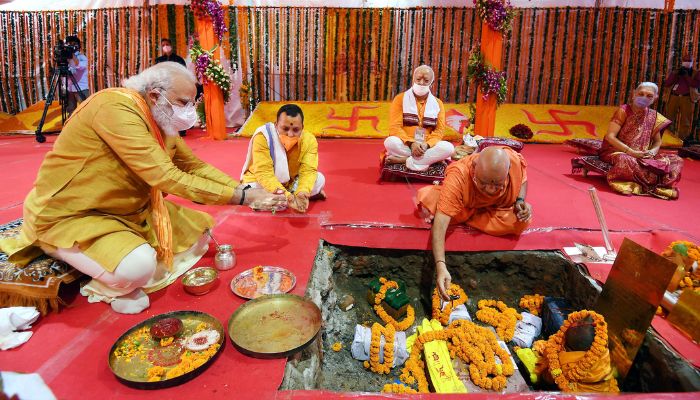
Legal reporting website Live Law recently published an opinion piece that attempted a “Constitutional examination of Bhumi Pujan ceremonies”. The Live Law article published on 23rd August 2026, lamented that the participation of constitutional functionaries, including the Prime Minister, in Bhumi Pujan, Havan, Vedic chanting, coconut-breaking and other Hindu rituals before inauguration or stone-laying of public infrastructure has become common even though Constitutionally, India is ‘Secular’ country.
The Live Law article headlined, “Can ‘Culture’ Justify Religious Rituals At State Functions? Constitutional Examination Of Bhumi Pujan Ceremonies” essentially frames Havan, Bhumi Pujan, coconut-breaking, and other such rituals at state events as ‘unconstitutional endorsement of Hinduism, that somehow violates the secularism, freedom of conscience, equality and democratic neutrality.
“…But, when viewed from the lens of constitutional law, secularism, equality, freedom of conscience, and democratic legitimacy, a pertinent question arises whether the State, acting through public officials and public institutions, can formally associate itself with rituals rooted in one particular religious tradition while claiming to remain secular and neutral toward all faiths and non-faith positions,” the article reads.
“Despite the differentiation, a fundamental principle that remains cogent is that the State itself has no religion. Therefore, the question arises when state and public institutions, through official ceremonies, appear to recognize and identify themselves with the symbols, rituals, and theological assumptions of a particular faith,” it adds.
The article conflates the American/French model of secularism with the Indian, though it admits that unlike the foreign models, the Indian interpretation of secularism was never about creating a wall of separation between religion and the State. Indian idea of secularism is more about principled engagement with all faiths rather than banishment of religion altogether from public life.
Further, the article mentions the 1994 S.R. Bommai v. Union of India case, and the 2005 Gopalakrishnan Nair vs State of Kerala case.
The Bommai case, however, actually endorses the accommodative model of principled engagement with all faiths. It does not hold that any single ritual performed by a government or constitutional official establishes theocracy. The problem would have been only when there was systemic favouritism, and the governments or those holding constitutional offices were using state machinery to propagate their religion or suppress others. There is no real constitutional or societal harm in an official partaking in a Bhumi Pujan or Havan ceremony before a ribbon-cutting.
The S.R. Bommai case was about dismissal of state governments for complicity in communal violence after the Babri Masjid demolition in Uttar Pradesh’s Ayodhya. In the Gopalakrishnan Nair case, the Supreme Court held that the management of a temple’s properties, finances, educational institutions, and administration are all secular activities, and different from spiritual and ritualistic guidance, which remains with the temple Thanthri.
Yash Mittal, the author of the Live Law article, asks that if the State has no religion, why should a government building, a court complex, a public hospital, or a highway project formally commence with rituals invoking Hindu deities or religious blessings? He further asks whether the performance of such rituals at State events amounts to the State identifying with the Hindu religious faith. The author also asks, “Does it not discriminate against citizens following other religious faiths or no faith (atheists or agnostics)? Does it not amount to the creation of a theocratic state?”
Bhumi Pujan threatens secularism, Iftar doesn’t?
The author is not content with the various court interpretations of the term ‘secularism’ and invocation of the idea of ‘Vasudhaiv Kutumbakam’, and highlights the 1986 Bijoe Emmanuel case wherein the Supreme Court protected Jehovah’s Witness Christian students who refused to sing the national anthem due to religious beliefs, emphasising freedom of conscience under Article 25.
The article describes the Andhra Pradesh High Court decision in Atheist Society of India v. Govt. of Andhra Pradesh and the Gujarat High Court’s decision in Rajesh Himmatlal Solanki v. Union of India, as merely “strengthening” the position of those opining that performance of Hindu rituals at public infrastructure inauguration or state events are religious but not non-secular acts.
However, there is more to these court interpretations than a ‘convenient rationalisation’. Their reasoning tracks the Indian constitutional practice in other contexts. For example, India’s national motto is “Satyamev Jayate”. This motto is lifted from the Mundaka Upanishad, a Hindu scripture. The state emblem, the Ashok Chakra has Buddhist provenance, even the Indian Judiciary’s motto, “Yato Dharmastato Jayaḥ” has been taken from the Hindu epic, Mahabharat and finds repeated mentions in the Shrimad Bhagwat Gita.
And yet the Indian State and Indian Judiciary remain secular. Has the judiciary turned away a Muslim or Christian or any non-Hindu petitioner because its motto is taken from Mahabharat or Shrimad Bhagwat Gita?
Has the participation of state and constitutional officials in Bhumi Pujan, including Prime Minister, Judges, Governors, Collectors, etc, ever resulted in hinderance of religious practice of non-Hindus? If a highway has been inaugurated with the Hindu tradition of coconut-breaking, does that mean the highway will exclusively be used by Hindus?
More than etymology, intent and impact matter. Regarding the Bijoe Emmanuel case, it was about more about compelled participation; the Christian students were disciplined for not singing the national anthem. However, nobody is disciplined, penalised, jailed, or denied service for not partaking in Bhumi Pujan or skipping a religious ritual at any event involving the presence of State or Constitutional officials.
This whole freedom of conscience against forced quasi-religious observance argument applies to forced individual participation. If a government or constitutional officials are not tolerant enough to passively witness a Bhumi Pujan or any such rituals, their own practice of secularism should come under question.
If we begin advocating such strict implementation of ‘secularism’ in all spheres, why should governments provide financial aid to Madarsas? Why should there be ‘minorities’ departments in state and Central governments? Why should governments at all be involved in the management of Hindu temples? Why should governments grant holidays on religious festivals? Why should the government provide Haj subsidy? Why do ministers holding constitutional office organise Iftar parties? The “whys” would be endless, and answers would compulsorily involve deviation from the very idea of secularism the Live Law article wants strictly implemented.
Author Yash Mittal also raises a ridiculous “why not the public events of stone laying ceremony, whose operational cost is borne from the public purses, be distanced from an unauthorised religious performance of a particular faith?”
Performance of a Havan, Bhumi Pujan, or coconut-breaking ceremony does not require expenditure of crores of rupees of taxpayers’ money. If the State can spend hundreds of crores on Haj subsidy, a few coconuts or a priest’s honorarium would not cost much. In fact, such expenses in most cases are not dealt with through the State treasury.
Constitutionally speaking, Article 27 restricts compulsion to pay taxes specifically appropriated for propagation or maintenance of a particular religion. The negligible costs of a religious-cultural ceremonial segment within a larger public-works event do not meet that threshold.
Live Law never raised the ‘scientific temper’ argument when states fund Madarsas imparting Islamic education, but invokes it to question Bhumi Pujan
The Live Law op-ed throws a situation wherein a Muslim, Christian, Sikh, Buddhist, Jain, Parsi or Jewish citizen attends the inauguration of a government hospital, school, court building or public infrastructure project, but the official ceremony begins with the invocation of Hindu deities. In this context, the author argues that the non-Hindu attendees would ask: “Is this a ceremony of the State, or a religious ceremony being conducted by the State?”
Why would a truly secular and tolerant non-Hindu ask such a question? Does the mere attendance, not participation, of a foundation ceremony wherein Vedic mantras are being chanted, result in the conversion of the State into a religious actor?
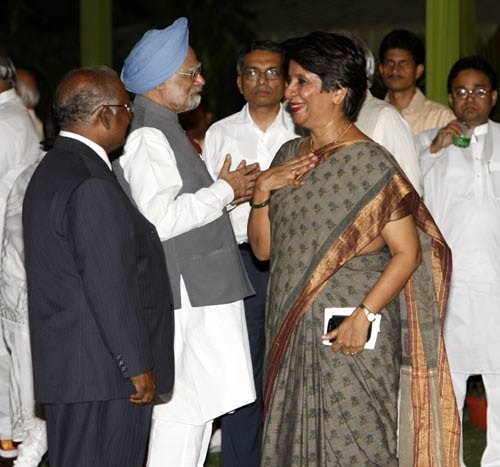
Prime Minister Manmohan Singh with Chief Justice of India K.G. Balakrishnan and Foreign Secretary Nirupama Rao. (Image source: IndiaToday)
Under the UPA government, Iftar Parties were all the rage. They were organised at the Rashtrapati Bhavan and PM’s residence too. These Iftars were attended by several notable dignitaries, including the then CJI of India. However, no raked up ‘democracy in danger’, ‘separation of state and church [read religion]’ argument then? How exactly do Iftars promote scientific temper?
Back in February 2024, former Justice Joseph Kurian asked CJI Chandrachud to drop the Supreme Court’s motto “Yato Dharmastato Jaya” (Where there is Dharma, there is Victory), taken from the Hindu epic Mahabharat. Speaking at an event organised by left-liberals and the controversial portal TheWire, former Justice Joseph suggested that the Supreme Court’s motto diverges from the national motto and, by implication, the national ethos. Back in 2018, Joseph equated the Catholic Church to the Preamble of India, but no one cried ‘secularism khatre mein hai’.
In India, the principle of separation of powers ensures that the three branches of government—executive, legislative, and judicial—function independently, but it does not preclude social or cultural contact between them. Scientific temper comes under Directive Principles, and coexists with cultural symbolism.
Hindu religious-cultural practices sans any imposition on non-Hindus, in a Hindu-majority country, are not equivalent to State establishment any more than Christian cultural references or ceremonies in Western democracies amount to violation of secularism or neutrality.
The article concludes with former Supreme Court Justice Abhay S. Oka’s suggestion that people should adopt a new practice of bowing down to the Preamble of the Constitution instead of performing religious “poojas and archanas”. The remarks are offered in the article as a final settlement or solution to the supposed debacle. However, would this practice not amount to deification of the Constitution and, by extension, its author(s)?
India does not need to blindly copy-paste or replicate the Western supposed maximalist reading of secularism and impose cultural deracination of public life. India owes its secular character to the Hindu majority. India has already lost a significant portion of its land to Islamic intolerance and exclusionary intransigence in 1947. The world’s only Hindu-majority country cannot afford to sever its Hindu civilisational roots and consciousness in the pathological pursuit of becoming as ‘secular’ as possible.
The investigation into the gruesome killing of four members of a Hindu family in Rangpur city, Bangladesh, has officially been transferred from the Kotwali Police Station to the Detective Branch (DB) of the police.
Police officials stated that this transition was executed to ensure absolute transparency and to facilitate a swift submission of the charge sheet in court. The former Investigating Officer (IO), Inspector (Investigation) Milon Kumar Chatterjee of Kotwali Police Station, formally handed over all relevant case files, collected evidence, and detailed information to the newly appointed IO, Zinat Ali, who serves as the Officer-in-Charge of the Metropolitan Detective Branch.
The police appear determined to simplify the case and mislead the public, but the transfer comes amid widespread protests that continue to brew across Rangpur as residents and civil society members firmly reject the narrative presented by the police.
Social media platforms in Bangladesh are currently buzzing with intense discussions, heated debates, and sharp questions regarding the two Hindu youths arrested in connection with the horrific murder of Ganapati Chakraborty, a retired schoolteacher, and his entire family in this northern district.
The questions have become more intense because police moved quickly from recovering the bodies to arresting two local youths and presenting a specific explanation for the killings. The families of the arrested youths, as well as relatives of the victims, have challenged parts of that account.
Four decomposed bodies found inside locked house
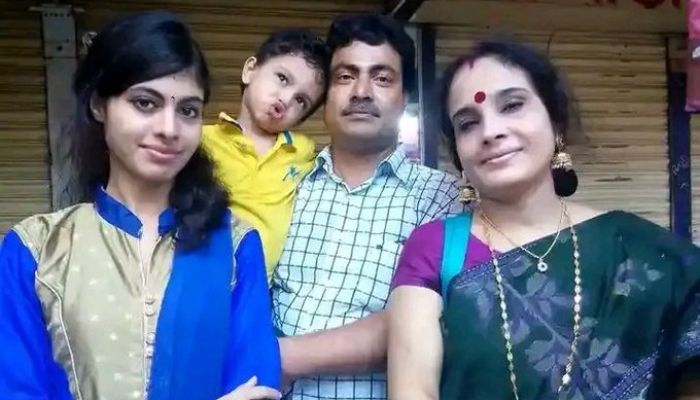
The case came to light on the night of 22nd August, when police recovered the decomposed bodies of four members of the same Hindu family from their two-storey house in the Kamalkashana-Machuapara area of Rangpur city. The victims were retired Rangpur Zilla School teacher Ganapati Chakraborty Jewel, 65, his wife Pritilata Chakraborty, 50, their daughter Agami Chakraborty, around 25, and their 12-year-old son Priyam.
Hindu school teacher along with other family members killed in Bangladesh!
Police have recovered the bodies of four people, including a retired school teacher, his wife and children, from a locked house in Rangpur. They are Ganapati Chakraborty Jewel (65), his wife Pritilata… pic.twitter.com/e71rhX8VHH
— Salah Uddin Shoaib Choudhury (@salah_shoaib) August 22, 2026
The house was locked from outside. Neighbours and relatives became suspicious after noticing that no one from the family had been seen for some time and a strong foul smell was coming from inside. Pritilata’s younger sister, Puja Chakraborty, said she had last spoken to the family by phone on Thursday night, August 20. When she could not contact them on Saturday, she went to the house with her husband at around 9 pm and found the main gate locked. She contacted Bangladesh’s emergency number 999, following which police arrived and broke open the lock.
The bodies were found in different parts of the property. Ganapati’s body was found on the roof; the bodies of Pritilata and their daughter were found around the staircase, while Priyam’s body was found inside a room, under a bed.
Ganapati had retired from Rangpur Zilla School in December last year. After retirement, he was reportedly providing homoeopathic medical services from a chamber at Rangpur Cooperative Market. His daughter had completed her master’s degree from Carmichael College, while Priyam was a Class V student at Rangpur Zilla School.
Police arrest two Hindu youths, claim confessions
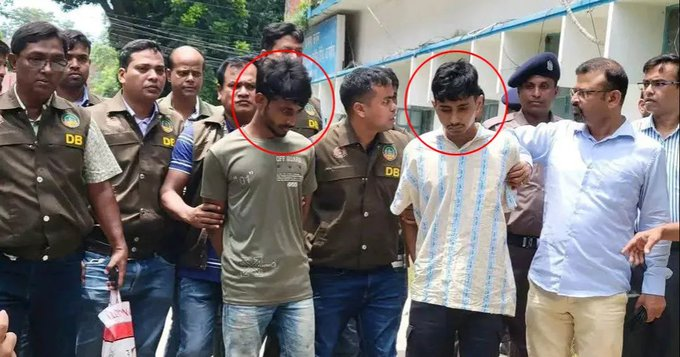
Police subsequently arrested two young Hindu men, Mugdha Das and Siddhartha Das, from the Machuapara area on Sunday night, 23rd August. Police identified them as residents and alleged that they were involved in the killings. According to police, both later gave confessional statements before Rangpur Chief Metropolitan Magistrate Court Judge Md Rafiqul Islam under Section 164 of the Code of Criminal Procedure. They were subsequently sent to jail.
Police have said the two youths were consuming yaba on the roof of Ganapati’s house when the retired teacher confronted them. According to the police version, the confrontation escalated, and the family members were killed. Police have also suggested that the crime may initially have been connected to robbery or an attempt to make the incident look like a robbery.
However, the case is nowhere near as simple as the police are making it out to be before the media. Local observers and human rights defenders strongly suspect that law enforcement is attempting to build a convenient narrative to quickly wrap up the case, cover up critical lapses, and shield the real perpetrators behind this heinous crime, which carries a communal angle similar to previous targeted attacks on Bangladeshi Hindus in recent years by Islamists.
‘This was a planned murder’: family rejects police narrative
Directly rejecting the police claim, Puja Chakraborty, the younger sister of slain Pritilata Chakraborty, voiced strong scepticism regarding the official storyline. She publicly stated, “We are sceptical about the police’s claim regarding the motive for the murder. We cannot understand anything. Police are saying that two yaba addicts allegedly killed four people one after another.”
She further revealed a horrifying detail that police had initially kept hidden: “When we received the bodies in the evening, we found that their faces had been burned. Earlier, police did not allow us to go near the bodies.” Emphasising her conviction, she asserted, “This was a planned murder.”
The angle of a planned killing has also been echoed by Ganapati’s elder brother Gopinath Chakraborty, who said a larger group could have been involved. He also questioned the circumstances surrounding the crime and demanded that the actual perpetrators be identified and punished.
Erased evidence and mounting questions over a mystery shirt
It is not just the family suggesting that this was a premeditated hit. A series of glaring discrepancies, altered crime scene conditions, and erased evidence strongly suggest that authorities are actively attempting to obscure the potential communal or organised angle.
Suspicion deepened when photos of one of the arrested suspects went viral on social media. The shirt worn by the detainee during his presentation to the media appeared virtually identical to a shirt frequently worn by a senior police officer in Rangpur, leading the public to question how an officer’s clothing ended up on an accused person.
Image via X
Deputy Commissioner of Rangpur Detective Branch Sanatan Chakraborty has dismissed the allegation that the shirt belonged to him. He told BBC Bangla that the shirt was a common one and said, “That same shirt is owned by me and at least two hundred other people in Rangpur. My shirt is right here with me. Purposeful mispropaganda is being spread regarding this.”
How did the police dress end up on the accused??
The shirt that the police were looking for the accused wearing last night is now seen on the accused. The administration's drama over the killing of four people in Rangpur seems to be continuing. pic.twitter.com/0IjwE08xWj
Yet, this explanation was directly contradicted by Binoy Das, the father of accused Siddhartha Das, who openly challenged the official version of events. Speaking to reporters, Binoy Das stated, “On late Saturday night, a large crowd including the police gathered at Ganapati’s house. Later, late that night around dawn, police came to my house looking for Siddhartha. I woke him up from his uncle’s house and handed him over to the police. He was wearing a T-shirt at the time. But later, when the police brought him before the journalists, I saw him wearing a shirt. Whose shirt is that? I have never seen him wear that kind of shirt before.”
The statement of the parents of Siddharth, accused in the brutal murder of four members of the same family in Rangpur, is very significant and heartbreaking. pic.twitter.com/tESuwebHNv
The families of both arrested youths have also said the men were away from the crime scene at the relevant time, contradicting the police account. Those claims will need to be tested against phone records, CCTV footage, forensic evidence and other independent material rather than accepted or rejected solely based on competing statements.
There are further questions about the electricity supply to the house. The new investigating officer reportedly said the accused had told investigators that they cut the electrical wire near the meter. However, a local electrician who later repaired the connection told The Daily Star that the line had actually been severed from the electric pole. Such differences are important because they can help establish whether the suspects’ account matches the physical scene.
Autopsy raises another layer of questions
The troubling discrepancies do not end with clothing. Major contradictions have emerged between the police statements and the actual autopsy findings.
Police said the four victims were strangled, and the autopsy later confirmed that strangulation/asphyxiation was the cause of death. However, when the bodies were finally handed over to relatives after autopsies at Rangpur Medical College Hospital around 7:00 PM on Sunday, family members and doctors discovered that the faces of all four victims had been severely burned with a flammable substance or chemical.
Disturbing video footage from the scene showed bloodied liquid pooled on the floor, with young Priyam lying dead on the bedroom floor, his face visibly scorched.
This directly conflicts with the earlier account from relatives who said the faces appeared burned and with an initial CID statement suggesting that a flammable substance may have been poured on the victims’ faces. CID Rangpur official Sumit Chowdhury had said investigators would collect samples and send them to the forensic department to determine what substance, if any, had been used.
The disagreement makes the forensic evidence especially important. If a chemical or flammable substance was used, laboratory testing should establish it. If the facial changes were instead caused by decomposition, as the autopsy doctor said, that should also be clearly documented. The final forensic and laboratory reports therefore matter far more than competing claims circulating on social media.
Questions have also been raised about the missing mobile phones, the electricity supply, the movements of the accused and the police explanation of how the suspects allegedly accessed the rooftop. These issues need to be checked through objective evidence, including call records, digital data, DNA testing, fingerprints and other forensic material.
A disputed claim over sexual assault
Adding to the mystery is a severe conflict regarding potential sexual assault. In a conversation recorded on a hidden camera, a mortuary attendant (dom) who assisted during the autopsies stated there were clear signs of sexual assault on the mother and daughter. However, the official forensic physician who conducted the autopsy flatly denied these claims, stating that physical examinations and lab samples showed no such evidence and dismissing the worker’s statements as entirely incorrect.
🚨 Bangladesh authorities hide crucial information in autopsy report!
Although the dom issued a statement stating that two female members of the Hindu family, Pritilata Chakraborty, wife of school teacher Ganapati Chakraborty, and daughter Agami Chakraborty, candidate, were… pic.twitter.com/HTyZ1UgNUy
— Salah Uddin Shoaib Choudhury (@salah_shoaib) August 25, 2026
How this stark contradiction between an on-ground mortuary worker and the official medical report will be resolved remains unclear, especially since police completely ignored this sensitive matter during their initial media briefings.
Police washed the house and destroyed the evidence
In another chilling revelation, the family of the arrested Hindu youth wept before cameras, asserting that their sons were being framed as convenient scapegoats to protect influential figures. The accused’s family revealed that officers altered the crime scene, saying that the house was washed and cleaned under police supervision, effectively destroying critical forensic evidence. Instead of securing the perimeter, officers were seen repeatedly entering and operating inside the residence before full forensic mapping.
🚨 BREAKING : In the Rangpur Hindu family murder, an on-duty officer allegedly washed away the crime-scene evidence with water at night before the DB probe even started.
The family of the arrested Hindu youth is weeping before cameras, saying police framed their son. They… pic.twitter.com/CHhHkQ17bK
The scale of the crime itself makes the questions difficult to ignore. Why was an entire family killed, including a 12-year-old child? If the police theory is that the killings began after a confrontation over yaba consumption, investigators must establish how that confrontation allegedly led to four deaths and whether the evidence independently supports the suspects’ statements.
"Police tried to destroy all evidence by washing Ganapati Chakraborty's house with water in the dead of night" pic.twitter.com/UWwRKQGbOp
Similarly, if robbery was involved, investigators must establish what was stolen, whether there were signs of forced entry, whether money or valuables were missing and whether forensic evidence connects the arrested men to the house. If investigators rule out a communal motive or the involvement of additional people, that conclusion should also be based on evidence rather than assumption.
Ultimately, one central question hangs over the case: Was this truly a casual, spontaneous crime committed by two young men just to buy drugs, or was it a planned, sinister execution designed to liquidate another Hindu family and instil fear across the minority community?
The fact that the victims were Hindu makes the communal angle an important possibility to examine, particularly given concerns among minority communities in Bangladesh and recent cases of Bangladeshi Hindus being murdered by Islamists. This is an important angle that the police appear to be downplaying and keeping from the public.
Demand for judicial investigation
A judicial investigation into the killings was demanded at a human chain and protest rally organised by the Bangladesh Sanatan Party (BSP) in front of the National Press Club in Dhaka on Wednesday, 26th August. Several organisations, including Bhakta Sangha Society Bangladesh, World Hindu Federation, Bangladesh Deshwali Samaj, Bangladesh Sanatan Kalyan Jote and Bangladesh Loknath Foundation, joined the programme.
As Muslims across India celebrated Eid-e-Milad on Wednesday (26th August), disturbing visuals emerged during the processions taken out during the Islamic festival. While reports of Palestinian flags being waved during the Eid procession surfaced in Karnataka, West Bengal and Maharashtra, sharp weapons were flashed, and the national flag was disrespected in Uttar Pradesh.
Palestinian flag waved by a Muslim man in Karnataka
A Palestinian flag was reportedly waved during an Eid procession in Ankola town of Karwar district in Karnataka. A man named Mohammed Raza Akbar Ali, a resident of Vitthalghat in Krishnapur, had brought the flag to the rally and waved it. He was arrested by the police and taken to the police station.
Deputy Superintendent of Police Girish said that legal proceedings were initiated against Akbar Ali. He urged people to maintain peace, assuring that appropriate action would be taken against him.
Palestinian flag raised during Eid procession in West Bengal
A similar incident came to light in the state of West Bengal, where a Palestinian flag was waved during an Eid procession in the Islampur district. West Bengal Chief Minister, Suvendu Adhikari, confirmed the incident through a post on X, where he mentioned that two foreign flags were seized by the police across the state during Eid celebrations. The police registered FIRs against the culprits.
“…our Administration maintains an uncompromising Zero-Tolerance Policy against any attempt to disrupt social harmony or misuse sacred occasions for External Political Propaganda. I appreciate the swift and decisive action taken by the Islampur District Police in confiscating unauthorized Foreign Flags, registering FIRs and initiating strict legal proceedings against those involved. Only two flags were confiscated across the State,” CM Adhikari said.
West Bengal Government stands firmly committed to safeguarding the freedom of faith, expression and cultural observances for every community. Religious flags and the pride of our Nation; the Indian Tricolour were carried with full freedom & respect throughout the State on the… pic.twitter.com/VosawePxlp
Muslims brandished weapons, played provocative songs in UP
Eid celebrations were not limited to waving Palestinian flags. In Badaun, Uttar Pradesh, Muslims, including kids, openly flashed sharp weapons during an Eid procession and played provocative songs. Visuals of the religious rally show some Muslim men and a Muslim kid sitting on top of a moving vehicle and waving large knives as the lyrics “Begunaaho pe sitam dhaane wale, teri hasti na mita du to mai Musalman nahi‘ (I am not a true Muslim if I do not eliminate those who commit atrocities against the innocent).
A video of the procession shows it passing through a busy road as Muslims flashed weapons and the threatening song blared on loudspeakers, creating an uncomfortable environment for the general public.
Tricolour disrespected in UP
In another Eid-e-Milad procession taken out in the Mahoba district of Uttar Pradesh, Muslims disrespected the national flag. The Muslims taking part in the religious procession distorted the national flag by replacing the Ashok Chakra at its centre with some Islamic words.
After the video of the Eid procession went viral on the internet, the police registered an FIR against an unidentified accused. An investigation has been launched into the matter.
Muslim mob attacked Hindus in Mumbai
A Muslim mob attacked Hindus in the Parel-Chinchpokli area of Mumbai during an Eid-e-Milad procession on the night of 26th August. The incident happened near the Laxmi Cottage building as the procession was passing through the area. According to locals, Muslims taking part in the religious procession raised provocative slogans and tore posters, creating chaos.
This is not the first time that such anti-national and nuisance-causing activities have been witnessed during a Muslim festival. A few months back, in May, widespread violence and bloodshed occurred during the Islamic festival of Eid-ul-Adha or Bakrid. Following the animal sacrifice ritual during the festival, streets in various parts of the country were seen flooded with the blood of slaughtered animals, causing great inconvenience to people.
In Madhya Pradesh’s Ratlam, a severed cow head was found on Bakrid, which triggered protests by local Hindu rights organisations. The same day, a chunk of meat was found outside the house of a Hindu family in Ujjain.
In a horrific incident on the Islamic festival, a Hindu youth named Surya Chauhan was stabbed to death by his Muslims friends who invited him to a Bakrid party in the Khoda area of Ghaziabad, Uttar Pradesh. In another disturbing incident, a Muslim man, Gada Khan, was caught cooking meat inside the Durga Temple premises on Bakrid in Uttar Pradesh’s Meerut district.
Violence, hate-mongering, provocative slogans, and activities causing public nuisance and inconvenience are recurring themes during Muslim festivals celebrated across the country.
The AI-powered smart glasses by Meta are being promoted as a new way to use technology without constantly reaching for a phone. But behind their promise of hands-free help, live translation and quick photo and video recording, growing concerns are being raised about privacy.
A major part of the concern comes from what happens to the information captured by the glasses after it is recorded. An investigation in Kenya found that workers who help train Meta’s AI systems have seen highly private material captured through the glasses, including videos from homes, bathrooms and bedrooms. Other investigations have also highlighted cases where people were filmed without knowing it and later found themselves appearing in widely shared social media videos.
Kenya investigation brings hidden data work into focus
The Kenya case began with workers employed by Sama, a company that works as a subcontractor for Meta. In Nairobi, thousands of data annotators help train AI systems by reviewing and labelling images and videos so that machines can understand objects, people and the world around them.
Their work includes identifying objects in images, following shapes and checking whether AI systems have correctly understood visual information. But some workers told Swedish newspapers Svenska Dagbladet and Göteborgs-Posten that the material they handle can go far beyond ordinary images.
Workers described seeing videos recorded inside private homes. Some said they had encountered footage showing people using bathrooms, getting dressed, having sex or accidentally exposing private information such as bank cards. One worker described seeing a man leave his glasses on a bedside table before his wife entered the room and changed her clothes.
The workers said the material can be extremely sensitive and that they are expected to continue working even when they realise they are looking into someone’s private life. They also described reviewing conversations and transcripts involving subjects such as crimes, protests and sexual comments.
The investigation also found questions around the protection of people appearing in the footage. Former Meta employees said faces in annotation material are automatically blurred, but workers in Kenya said the system does not always work properly. In difficult lighting conditions, faces and bodies can sometimes remain visible.
Meta did not directly answer several questions about how such highly private material could reach subcontractors. The company referred to its AI terms and privacy policy, which say that some interactions with its AI systems may be reviewed by humans.
How do Meta’s smart glasses work?
Meta’s smart glasses are made in partnership with eyewear company EssilorLuxottica and use the familiar Ray-Ban design. They contain a small camera, speakers built into the arms and, in newer versions, lenses capable of displaying information.
The glasses can be activated using the voice command “Hey Meta”. They can answer questions, interpret what the camera sees, take photographs and videos, handle calls, play music and podcasts, and provide features such as live translation.
Meta has presented the glasses as an all-in-one assistant that can help users at work, guide them while travelling and allow them to capture moments without taking out a smartphone. The company has also promoted privacy controls and says users remain in control of their data.
However, the way the technology works creates a difficult privacy question. The camera is built into the frame and can be less noticeable than a phone camera. A small light is meant to indicate when the glasses are recording, but users and people around them may not always notice it, especially in bright conditions.
The glasses also rely on Meta’s infrastructure for several AI functions. An investigation by Svenska Dagbladet and Göteborgs-Posten found that when the glasses were tested without an internet connection, some AI features stopped working. Network traffic showed frequent communication between the phone and Meta servers. The investigation concluded that the AI could not operate entirely locally on the phone.
Meta’s privacy terms say that voice recordings may be saved for product improvement or training when a user actively agrees. But data needed for the AI assistant to function, including voice, text, images and sometimes video, can be processed automatically. The terms also state that some interactions with Meta AI can be reviewed manually by humans.
Privacy concerns are growing
The concern is not limited to what the wearer chooses to record. People around the wearer may also be captured without knowing it.
Meta markets its glasses with the message that they are designed for privacy and controlled by the user. The company advises users to respect people’s wishes and switch the glasses off in sensitive places.
But several incidents have shown how difficult that can be in everyday life.
One of the biggest concerns is the growing use of smart glasses to secretly record strangers for social media content. Men have been seen approaching women in public places, including shopping areas and beaches, while wearing Meta’s glasses. They ask casual questions or use pickup lines, while the women do not realise that a camera is recording them. The videos are then posted online, sometimes attracting large audiences and abusive comments.
The technology has also been used for prank videos. Some creators have recorded unsuspecting people while carrying out fake petitions, embarrassing stunts or other tricks. Because the glasses look like ordinary eyewear, people may not realise that a camera is operating nearby.
This creates a different problem from traditional filming. When someone holds up a phone, the camera is usually visible. With smart glasses, the recording device can be much harder to notice.
Meanwhile, reports say that Norway is contemplating stricter rules for smart glasses, including a possible ban on facial recognition in public spaces.
Woman discovers she was secretly filmed
One such case involved a woman identified by the BBC as Alice, a name used to protect her identity.
Alice said she was walking into a London shopping centre when a man wearing smart glasses approached her. She believed he was simply trying to talk to her. She later discovered that the interaction had been recorded and posted on social media.
The video was viewed around 40,000 times before she learned about it through a friend. Alice said she felt shocked because the man had not been holding a phone or placing an obvious camera in front of her.
When Alice contacted the account and asked for the video to be removed, she said she was told that removal would be a “paid service”. She did not pay and reported the matter to police.
The Metropolitan Police said an investigation was opened but could not progress because of limited information. The man later told the BBC that he did not intend to cause distress and described his content as light-hearted interactions.
The video was later removed from TikTok, and the platform banned his account for violating its rules on bullying and harassment. But Alice said she remained worried because the person still had the original file and could upload it again.
Another woman finds her video had gone viral
A similar case involved Toluwa Omitowoju, who discovered that she had been secretly filmed by a man wearing Meta’s AI glasses.
She only found out after friends and people she had not spoken to for years began sending her the video. It had spread across social media and received more than 200,000 views.
Omitowoju said she had not known she was being filmed and had not been asked for permission before the video was posted. She said that with a phone camera, a person at least has the chance to see the device and object to being recorded. With smart glasses, she felt that this ability to refuse was being taken away.
A video of Toluwa Omitowoju received hundreds of thousands of views online — but she didn’t post it, nor did she know that she was being recorded at the time with Meta’s AI glasses.
Her story is part of growing privacy concerns surrounding people recording their surroundings… pic.twitter.com/4aHzLTv70Y
The incident is part of a wider trend in which content creators use wearable cameras to make prank and pickup-line videos involving people who have not agreed to be recorded.
Instagram head Adam Mosseri said the platform was taking action against videos that harass people or invade their privacy. Meta has also said its glasses have safety features, including a light that comes on during recording and software designed to stop recording if that light is covered.
However, a CBS News test found that the disabling mechanism did not appear to work when the light was covered after recording had already started. Meta responded that the feature is designed to prevent recording when the light is covered before the recording button is pressed.
Swedish investigation raises questions about data processing
The concerns go beyond secret filming on the street. The investigation by Svenska Dagbladet and Göteborgs-Posten also examined what happens to information once users activate the AI functions.
Reporters bought a pair of Meta Ray-Ban glasses and connected them to the Meta AI app. During testing, they found that the glasses contacted Meta servers while AI functions were being used.
The investigation also examined information given by sales staff in Sweden. Some retailers told customers that they had complete control over what information was shared with Meta, while others admitted they were not sure where the data went.
The newspapers found that the actual process was more complicated. The glasses needed Meta’s infrastructure to process information for certain AI functions, meaning that saying all information simply remained on the user’s device did not give the complete picture.
Privacy experts questioned whether users fully understand what happens to their information. Under European data protection rules, companies must be transparent about how personal data is processed and where it goes.
Kleanthi Sardeli, a data protection lawyer at the organisation None Of Your Business, said there could be a transparency problem if people do not realise that the camera is recording when they speak to the AI assistant.
The Swedish Authority for Privacy Protection also raised concerns about how clearly users understand what happens behind the scenes. Petter Flink of the authority said people may not realise how much information can be extracted from their daily lives.
Meta says users bear responsibility for how the technology is used
Meta has defended the privacy and safety features of its glasses. The company says users are informed about the possibility of human review through its terms and has said that it has teams working to limit misuse.
At the same time, Meta has said that the responsibility ultimately lies with users not to misuse the technology.
The company has also said that its glasses have a recording light and other measures intended to prevent covert recording. But critics argue that the problem is not only whether a person presses the record button secretly. It is also about whether people nearby can realistically know that they are being recorded and where that footage may eventually go.
A bigger challenge as smart glasses become common
Meta’s glasses have already become a major product in the smart-glasses market. The company says seven million pairs have been sold, while estimates cited in the investigation put Meta’s share of AI and smart-glasses sales at more than 80 %.
Other major technology companies are also moving into the market. Apple is reportedly developing smart glasses, Snap has announced a new version of its Specs, and Google is again working on smart-glasses technology.
If these products become widely used, privacy concerns could become much larger. Cameras built into ordinary-looking glasses could make it harder for people to know when they are being recorded in places such as shops, museums, hospitals, cinemas, courthouses and other public spaces.
Meta has also reportedly considered adding facial recognition to future versions, which could take the privacy issue further by allowing wearers not only to record people but potentially identify them.
The technology has clear benefits. Users can take photographs without reaching for their phones, listen to music while staying aware of their surroundings, make calls and use AI assistance while travelling.
But as smart glasses become more common, the question is no longer simply what the wearer can do with them. It is also about what happens to the people who happen to be in front of the camera and whether they have any real way of knowing, refusing or controlling what happens to their images and personal information.
The year was 2021. It had been almost 2 years since the Congress had received a massive drubbing during the Lok Sabha election. The party, which had lost relevance among the country’s youth, was hoping to reconnect with its potential voters. As such, the IT Cell of the Congress set up a website, urging the youth to become a ‘Social Media Warrior’ of the party.
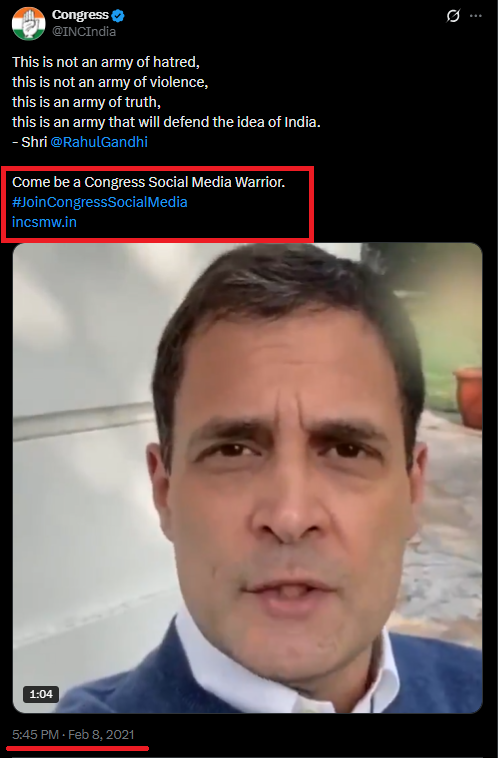
The official X handle of Congress had tweeted, “This is not an army of hatred, this is not an army of violence, this is an army of truth, this is an army that will defend the idea of India – Shri @RahulGandhi…Come be a Congress Social Media Warrior. #JoinCongressSocialMedia https://incsmw.in“
5 years later, the website designed to platform youths and turn them into ‘social media warriors’ of the Congress party redirects to an online casino and betting website.
Screengrab of the tweet by the official X handle of the Congress party
The new URL reads ‘https://www.thenascent.in/‘. The name of the site is ‘YOLO 247’, which claims to have been in operation since 2022. The month, however, is not specified. The homepage of the website carries the following description –
“YOLO247 is an online sportsbook and casino platform for players in India. Enjoy betting on 30+ sports, access to 5,000+ casino games, 100+ live dealer tables, and 24/7 betting and gaming. The platform supports deposits and withdrawals in INR for a seamless experience. Register now and get a 500% bonus on your first deposit!“
Screengrab of the online casino website
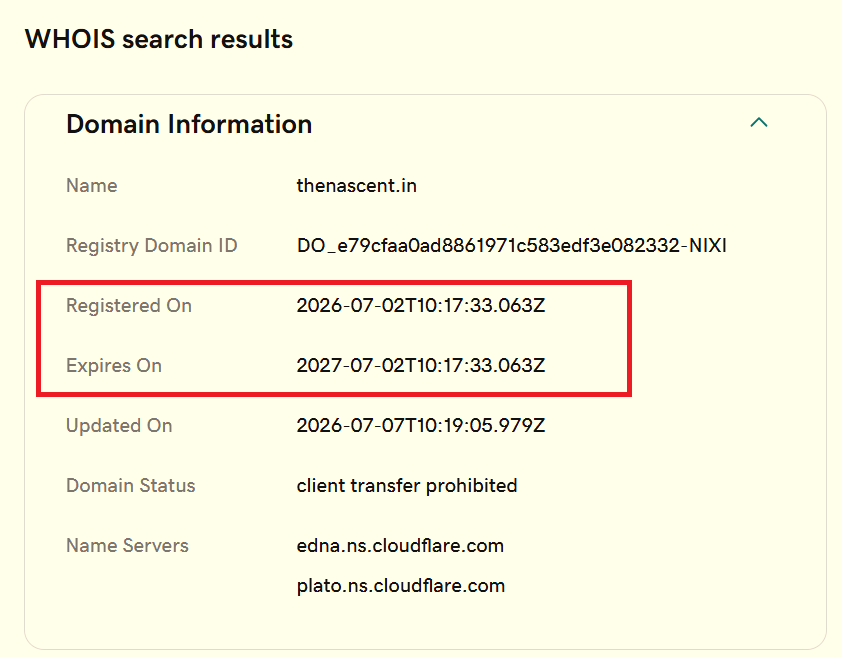
OpIndia looked up the WHOIS Database and found that the site’s ownership details have been made private. It is interesting to note that the domain was registered on 2nd July 2026, and it is due to expire around the same time in 2027.
Screengrab of the WHOIS website data
But one question remains unanswered: Why is a website set up by the Congress party redirecting the youth to a betting and casino platform?
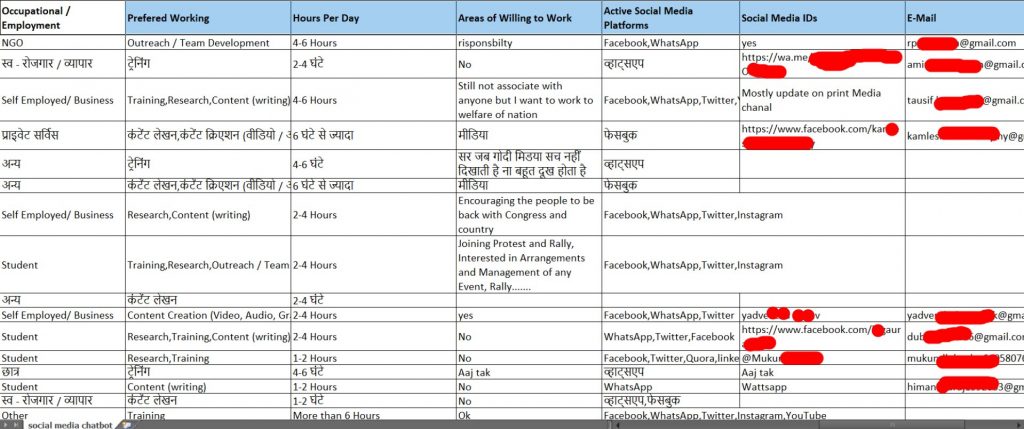
Although the Congress party collected personal details, including names, addresses, phone numbers, email IDs, social media profiles, and education details of individuals who volunteered for the cause, it was out in the open for at least 5 days after the launch of the site.
Leaked details of Congress supporters applying to become social media warriors for Rahul Gandhi
“The data can be downloaded by anyone, by simply tweaking a few queries on their website!” Twitter user @rsgovin (account now suspended) revealed in a thread.
A year after creating ‘social media warriors’, Congress leader Rahul Gandhi set out on a luxurious political pilgrimage called ‘Bharat Jodo Yatra’ in September 2022. His supposed ‘nationwide walk’ had a fleet of 59 containers, equipped with state-of-the-art facilities.
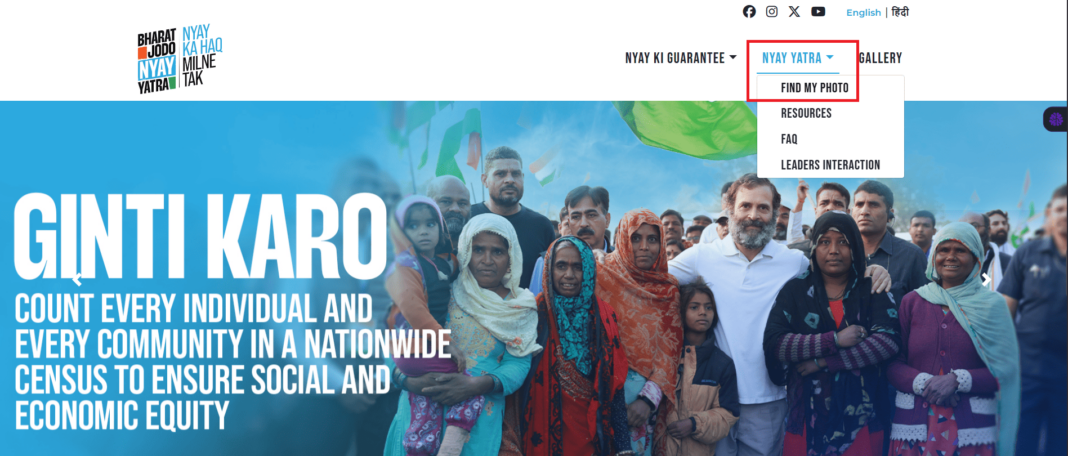
Nonetheless, the Congress party launched yet another website in the hopes of mobilising voters, although it had no impact on the outcome of the 2024 Lok Sabha election. The website was named after ‘Bharat Jodo Yatra’ and had the following URL -‘https://bharatjodoyatra.in/‘
Screengrab of Bharat Jodo Yatra website
Unlike the website for ‘Social Media Warriors’, the one for ‘Bharat Jodo Yatra’ continues to exist. But if you click on the ‘Nyay Yatra’ menu and hover over the ‘Find My Photo’ tab, then you are faced with the same problem.
The website designed by the Congress party redirects you to another site that carries the URL: ‘https://bjnyphotos.in/. Interestingly, this too is a betting and casino site named ‘Winexch’.
The homepage says clearly – “Winexch is an Indian licensed online betting platform offering 1000+ games across sports and casino categories for Indian players. With a 100% Welcome Bonus up to ₹20,000 on the first deposit and a minimum entry of ₹500, Winexch delivers cricket, kabaddi, live casino, and slots with Indian payment support including UPI and Net Banking.“
Screengrab of the online casino website
The website is identical in its layout design and content to the one for ‘YOLO 247’.
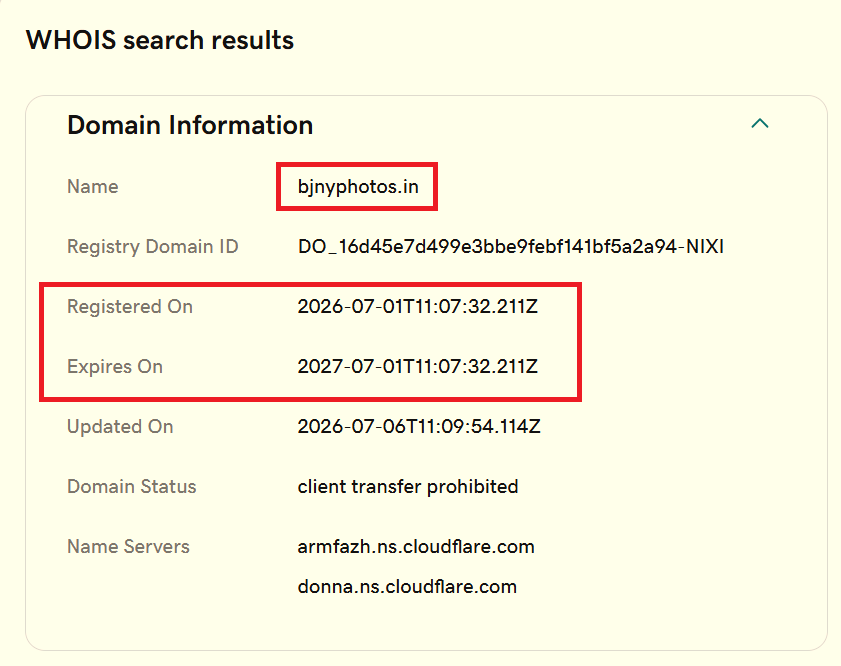
OpIndia again looked up the WHOIS Database and found that the site’s ownership details have been made private. It is again interesting to note that the domain was registered on 1st July 2026, and it is due to expire around the same time in 2027.
As such, it is clear that the ‘Winexch’ domain was registered a day earlier than the one for ‘YOLO 247’.
Screengrab of the WHOIS website data
How did the Congress party allow redirection to 2 different betting and casino platforms? Obviously, it couldn’t have been done without the administrative permission and supervision of the administrators of the website.
Congress needs to explain why it allowed the domains to expire if its intention was to run a service for volunteers.
Coincidentally, some Congress party leaders had objected when the Modi government sought to ban betting apps in India through the implementation of the Promotion and Regulation of Online Gaming Bill, 2025.
It remains to be seen how swiftly the party acts to undo the damage it is causing to the country’s youth through its own political sites.
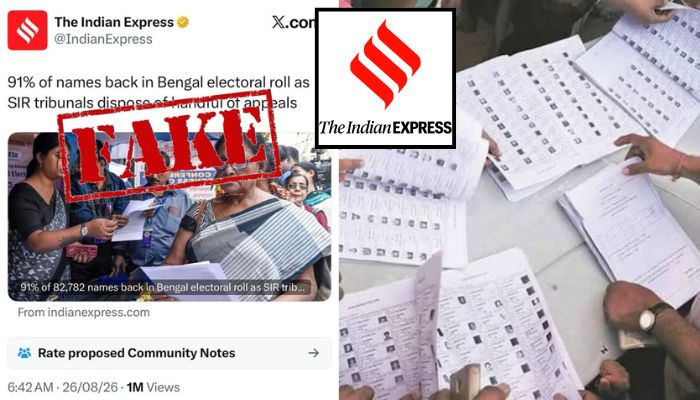
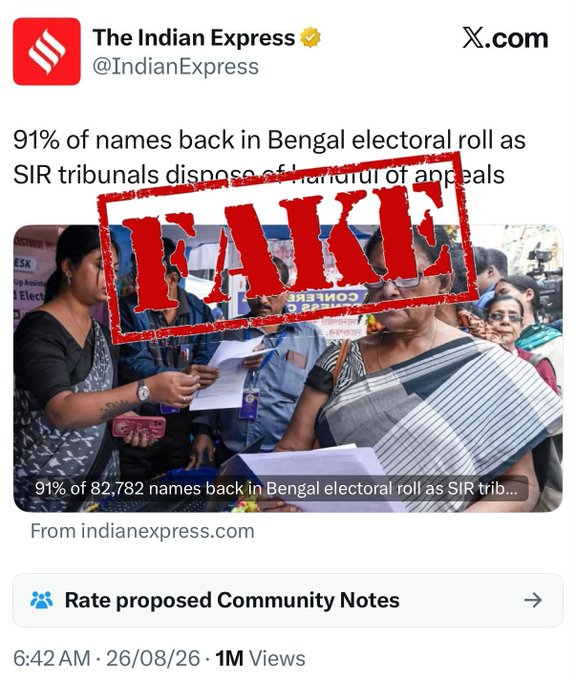
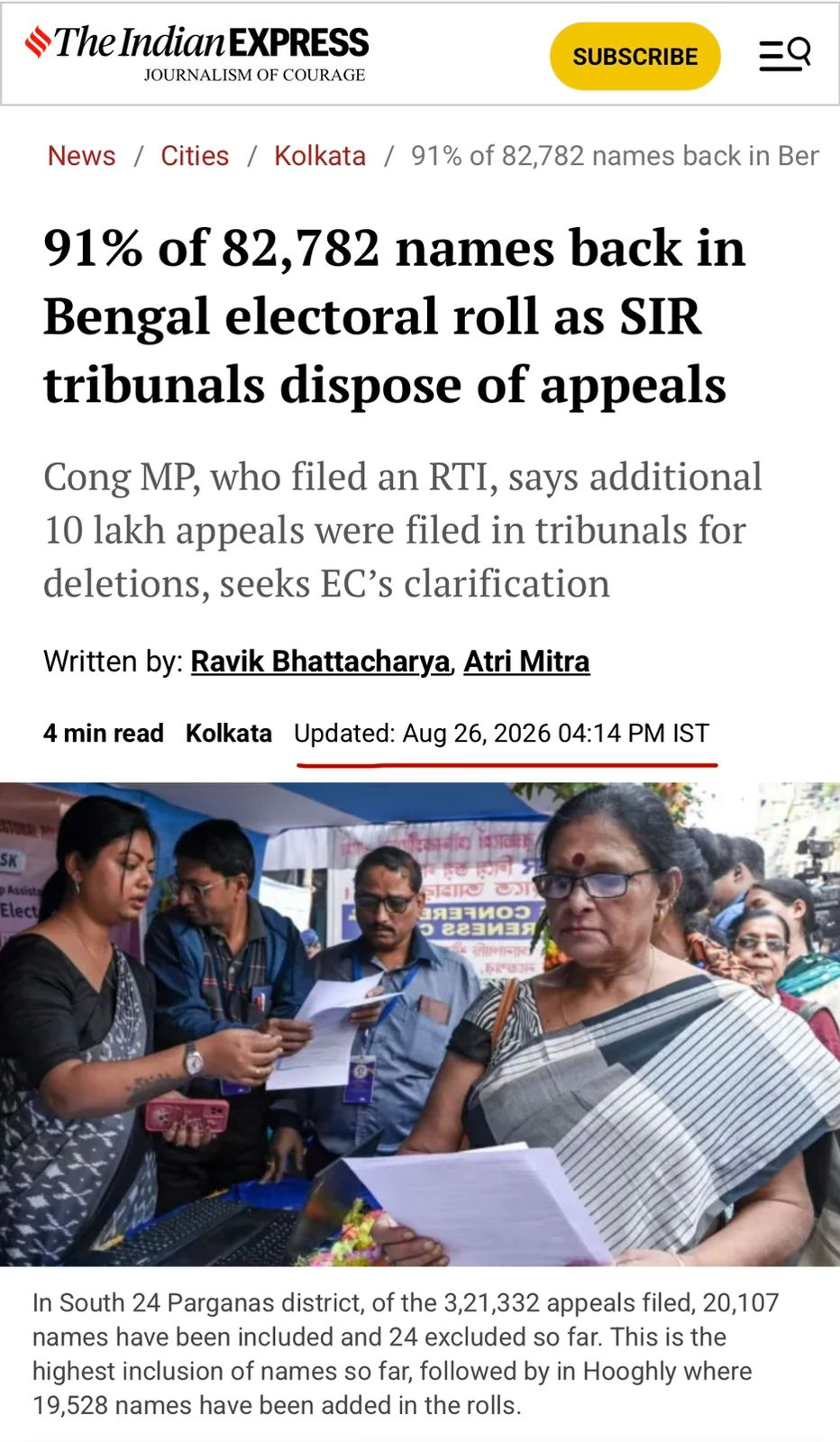
The Indian Express published a report on Wednesday, 26th August, with the headline, “91% of names back in Bengal electoral roll as SIR tribunals dispose of handful of appeals.”
91% of names back in Bengal electoral roll as SIR tribunals dispose of handful of appeals https://t.co/Ml090Kacao
The headline quickly faced criticism on social media, with users pointing out that the 91% figure referred only to 82,782 appeals disposed of by the Special Intensive Revision (SIR) appellate tribunals, and not to the nearly 27 lakh voters whose names were marked “Not Eligible.”
Following the social media backlash, The Indian Express subsequently changed the headline. The new headline reads: “91% of 82,782 names back in Bengal electoral roll as SIR tribunals dispose of appeals”. Unlike the earlier headline, the revised headline clearly specifies that the 91% figure relates to the 82,782 appeals disposed of so far and therefore does not create the same misleading impression.
What The Indian Express reported
According to the report, the SIR appellate tribunals in West Bengal have so far disposed of 82,782 appeals. Of these, 75,443 names, or 91%, were added back to the electoral rolls, while 7,339 names, or 8.86%, were excluded.
The newspaper said the Election Commission (EC) revealed these figures in response to an RTI application filed by Congress MP Isha Khan Chowdhury.
The report also said that 38,10,620 appeals have been filed before the SIR appellate tribunals. This number is significantly higher than the 27,28,500 voters who were marked “Not Eligible” during the adjudication process.
Congress MP Isha Khan Chowdhury questioned the difference between the two figures.
“The major concern is that 38,10,620 appeals were filed against 27,28,500 voters recorded as ‘Not Eligible’ – a difference of 10,82,120 appeals. The Election Commission filed these to exclude voters who had voted in this year’s Assembly elections. This requires immediate clarification by the Election Commission,” Chowdhury said.
Pointing to the 75,443 names restored out of the 82,782 disposed appeals, Chowdhury said, “more than 91% of the disposed cases have resulted in restoration” and questioned whether genuine voters had initially been deleted.
Congress leader Prasenjit Bose, who heads the party’s SIR panel, also said that only around seven lakh of the 27 lakh voters excluded during the adjudication process had filed appeals seeking inclusion.
“We informed the Supreme Court that the state government officials are claiming that only 7 lakh out of the total 27 lakh deleted electors have filed appeals so far. The rest of the appeals have been filed by EC or individual objectors,” Bose said.
Why the old ‘91%’ headline was misleading
The original headline was misleading because it did not clearly mention the denominator behind the 91% figure. It was giving the readers the impression that 91% of the 27 lakh voters deleted during the SIR process have had their names restored. That is not what the EC data cited in the report shows.
The 91% figure applies only to the 82,782 appeals that have been disposed of so far. Of these, 75,443 names were restored. It does not mean that 91% of the nearly 27 lakh voters marked “Not Eligible” have been restored to the electoral rolls.
This distinction is particularly important because the tribunals have disposed of only around 82,000 appeals, while more than 27 lakh voters were marked “Not Eligible” during the adjudication process.
Moreover, according to the information presented before the Supreme Court, only around seven lakh of these 27 lakh voters filed appeals seeking inclusion. A large number of voters deleted during the adjudication process therefore have not approached the tribunals.
The newspaper’s decision to change its headline after the criticism addresses this particular issue. By adding “in 82,782 appeals disposed of by tribunals”, the revised headline makes clear that the 91% figure is limited to cases already decided.
‘Not even 1/3rd’ of deleted voters appealed
A Times of India report further highlighted this distinction. During the Supreme Court hearing, it was informed that against the 27 lakh-plus deletions on grounds of “logical discrepancy”, only around seven lakh people had filed appeals seeking restoration.
Senior advocate Gopal Sankaranarayanan told a bench headed by CJI Surya Kant that of the 38.1 lakh appeals filed before the tribunals, around 31 lakh were filed by people challenging the inclusion of names, claiming those individuals were ineligible to vote.
This means that nearly 20 lakh of the 27 lakh voters deleted for logical discrepancies had not filed appeals against their deletion.
The Supreme Court noted that a substantial number of appeals were actually challenging inclusion rather than seeking it. The EC was asked to provide a breakup of the appeals into those seeking inclusion and those seeking exclusion of names.
The court also expressed concern over the slow disposal rate. The 19 appellate tribunals had disposed of only around 82,000 appeals in four months. It directed the EC to suggest ways to speed up the process, including the possibility of increasing the number of tribunals.
The old headline was misleading because it presented the 91% restoration figure without making its limited scope clear. The figure relates to 82,782 disposed appeals, not the entire 27 lakh voters deleted during the SIR adjudication process.
China has long been running hacking campaigns against its friends and adversaries alike through its proxy networks for cyber espionage. The US authorities have detected and disrupted a major Chinese proxy network. On 26th August, the US Justice Department and the Federal Bureau of Investigation (FBI) announced the disruption of a global botnet used by a Chinese state-sponsored group known as QTFY to target US critical infrastructure.
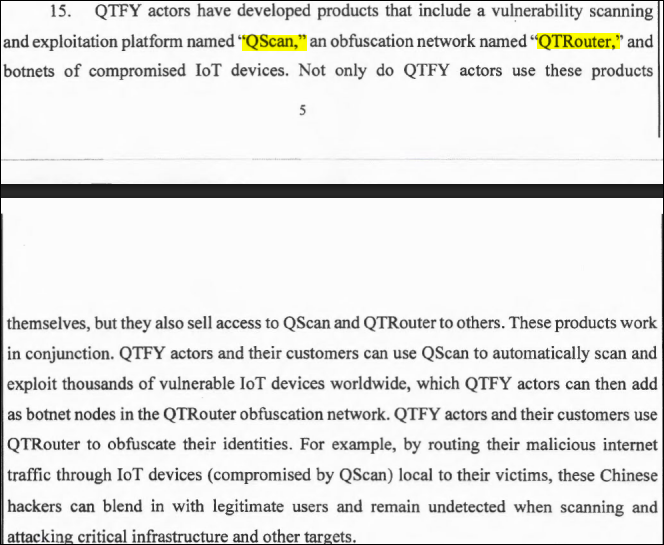
Chinese state-sponsored group QTFY created hacking platforms QScan and QTRouter to target US critical infrastructure
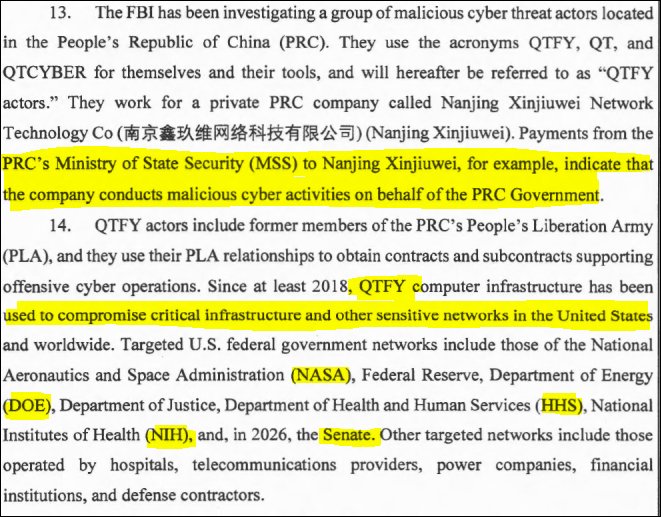
The hackers affiliated with the Chinese state-sponsored QTFY group were employed by Nanjing Xinjiuwei Network Technology Company, a China-based tech company. The QTFY group created and operated QScan and QRouter computer hacking services.
In a press release, the US Justice Department said, “The Justice Department and FBI announced court-authorised domain seizures today to deny malicious cyber actors access to two complementary hacking platforms known as “QScan” and “QTRouter,” used to target U.S. critical infrastructure and other sensitive networks. As described in court documents unsealed in the Southern District of California, a People’s Republic of China (PRC) state-sponsored group known as “QTFY,” employed by China-based Nanjing Xinjiuwei Network Technology Company (南京鑫玖维网络科技有限公司), created and operated QScan and QTRouter.”
The US authorities claim that the cyber-espionage group QTFY offered computer hacking services to its paying customers, including the Chinese government’s Ministry of State Security and the People’s Liberation Army (PLA). These services included QScan and QTRouter.
Today, the @FBI and @TheJusticeDept announced the disruption of a global botnet used by Chinese state-sponsored group known as QTFY to target U.S. critical infrastructure.
Our investigation attributes QTFY to the Nanjing Xinjiuwei Network Technology Company, which sells stolen… pic.twitter.com/I5xOueyg2U
“Payments from the PRC’s Ministry of State Security (MSS) to Nanjing Xinjiuwei, for example, indicate that the company conducts malicious cyber activities on behalf of the PRC Government,” the US authorities said.
First, QScan scans and automatically infects thousands of internet-of-things (IoT) devices globally, then these targeted IoT devices are added to the QTRouter network of QTFY-controlled devices.
Notably, an internet of things (IoT) device is any computing device accessible on the Internet, including home routers, security cameras, smart TV devices, smart appliances, etc.
The QTRouter comprises compromised IoT devices, commercial proxy service devices and leased virtual private servers.
The QTRouter then functions as an obfuscation network, allowing QTFY and related Chinese cyber-espionage actors to hide the Chinese origin of their computer intrusion activities “because the malicious communications appear to originate from computers (such as those compromised by QScan) that are outside of the PRC and may even be local to the targeted networks.”
Since the seized domains were hard-coded into both the QScan and QTRouter malware and used for essential tasks such as communication and authentication, “the court-authorized seizures made QScan and QTRouter inoperable,” the US Justice Department said.
Chinese state-sponsored QTFY cyber-espionage network included former PLA members
As per the US Justice Department and the FBI, the QTFY actors included former members of the Chinese military, the People’s Liberation Army. These ex-military personnel leveraged their PLA relationships to secure contracts and subcontracts supporting offensive cyber operations.
The QTFY network has been active since 2018 and has been used to compromise critical infrastructure in the US, including the Senate.
The targeted US institutions included the “National Aeronautics and Space Administration (NASA), Federal Reserve, Department of Energy (DOE), Department of Justice, Department of Health and Human Services (HHS), National Institutes of Health (NIH), and, in 2026, the Senate,” the court affidavit reads.
In addition, the QTFY network also targeted hospitals, telecommunications providers, power companies, financial institutions, and defense contractors.
From cyber-espionage networks, spy recruitments, secret police stations, funding propaganda networks and election interference: How China serves its interests and weakens adversaries
From the 2025 Plug X surveillance malware removal by the FBI post-infection by the China-sponsored hacker group Mustang Panda, the 2024 Flax Typhoon group’s IoT infection for Chinese government customers, the 2023 Volt Typhoon network dismantlement to the now disrupted QTFY network, China has erected numerous cyber-espionage and hacking networks targeting critical infrastructure in the US and worldwide.
China’s tactics comprise a blend of human intelligence, cyber-espionage, and economic leverage to achieve its objectives.
The ruling Chinese Communist Party (CCP) has devised numerous tactics to further its interests on foreign soil and weaken its ‘adversaries’ from within.
Recently, it was reported that the British Royal Navy surveillance or spy drones used by elite special forces were found sending basic operating data to an IP address in China. The discovery was made during a routine cyber vulnerability assessment. Investigators found that cameras fitted to the drones contained some components made in China and were sending “heartbeat communications” to an IP address in the country.
While the British authorities denied any leakage of sensitive information, the discovery created national security concerns because the drones had been used near the headquarters of the Special Boat Service (SBS) in Poole, Dorset.
Last year, British domestic security and counter-intelligence agency MI5 warned MPs that Chinese intelligence services were “relentless” in their efforts to interfere with and influence Parliament. The warning included concerns that employment websites such as LinkedIn could be used to collect sensitive information.
The warning came weeks after a case involving two men, including a parliamentary researcher accused of spying for China, collapsed. The case was affected by the Labour Government’s inability to describe Beijing as an enemy.
Back in 2020, the Conservative government ordered Huawei to be removed from Britain’s 5G network following security concerns.
In India, the Indian government banned around 59 Chinese apps, including TikTok, WeChat, and UC Browser, in 2020, after it emerged that some apps originating from China were stealing user information and sending it to Chinese servers. The Modi government said that these apps were banned as they “engaged in activities which are prejudicial to sovereignty and integrity of India, defence of India, the security of the state and public order”.
In April 2020, the Modi government effectively excluded Huawei from India’s 5G core networks and faced sustained restrictions on telecom contracts and equipment.
Notably, Huawei has long been under the scanner globally over allegations that Huawei devices and equipment collect sensitive data of foreign countries and pass them to the CCP in China. In 2022, the FBI investigation found that Chinese-made Huawei equipment was capable of disrupting US nuclear arsenal communications. Huawei equipment could not only intercept commercial call traffic but also critical communications made by the US Strategic Command via restricted airwaves.
In March this year, it was reported that India was pushing out Chinese CCTV makers including TP Link, Hikvision and Dahua out of the internet-connected camera market in the country. Back in 2021, the Indian government stated that around 10 lakh CCTV cameras installed in government institutions were sourced from Chinese companies. It acknowledged that video data captured through such devices could be transferred to servers located abroad, raising serious security concerns.
Beyond weaponisation of technology, China also relies on conventional spy recruitment methods. In early August 2026, it was reported that a former French Navy pilot, Pierre-Henri Chuet, came under formal investigation in France over allegations of passing sensitive military information to Chinese operatives.
Chuet made at least two undeclared trips to China in September 2018 and August 2019 while he was still serving in the French Navy. The trips were organised through the Test Flying Academy of South Africa (TFASA), a South African aviation company, which reportedly arranged training programs for Chinese military personnel.
The French Navy pilot under investigation had falsely claimed that during Operation Sindoor in May 2025, Pakistan’s Chinese-made fighter jets had shot down Indian Air Force (IAF) Rafales.
In September 2020, an Indian journalist, Rajeev Sharma, was arrested by a special cell of Delhi police under the Official Secrets Act for spying for China. Sharma was accused of passing sensitive information, including defence secrets, to Chinese intelligence. One Chinese woman and her Nepalese associate were also arrested for paying him large amounts of money routed through shell companies.
In December 2020, Afghanistan arrested 10 Chinese citizens on charges of espionage and operating a terror cell in the capital city of Kabul. The accused were allegedly collecting information about Al-Qaeda to nab Eastern Turkestan Islamic Movement (ETIM) jihadis in Afghanistan, an internationally recognised terrorist group that China accuses of fomenting separatism in the Xinjiang Uyghur Autonomous Region (XUAR).
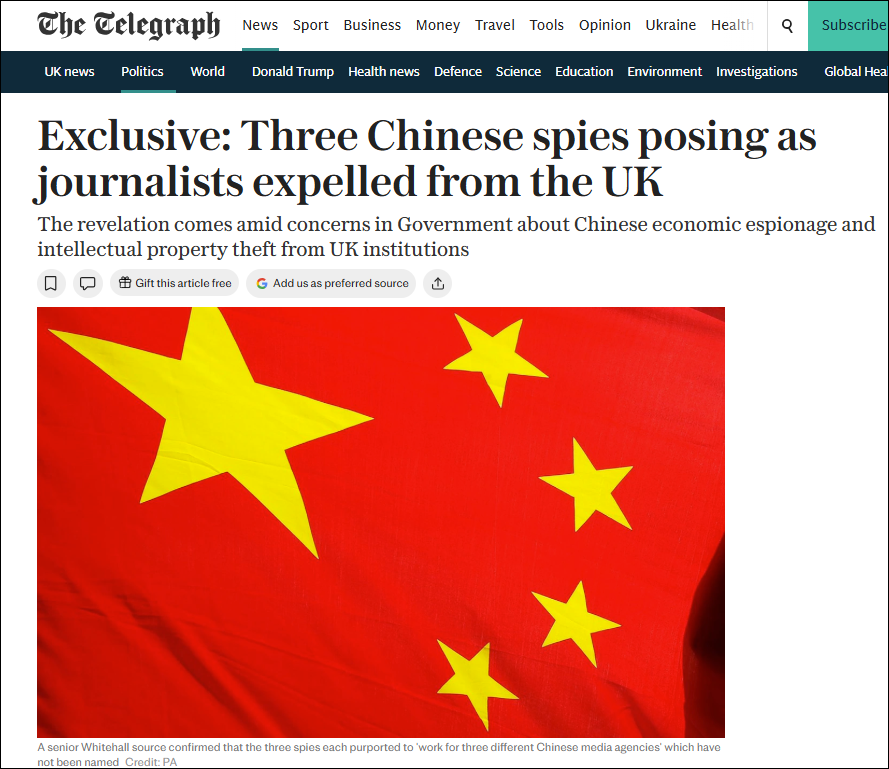
Back in February 2021, the UK media reported that the authorities had expelled three Chinese spies who had posed as journalists.
The MI5 concluded that the three worked for China’s Ministry of State Security (MSS) but had been using the cover of working for the country’s press agencies.
In July 2021, four Chinese nationals were charged in the US for being part of a Chinese global espionage campaign in which 12 countries including the US were targeted between July 2009 and September 2018.
In July 2020, when the US was grappling with the COVID pandemic, the Trump administration accused Chinese citizens of stealing scientific research and told the country’s diplomats in Texas to leave. The former US Secretary of State, Mike Pompeo had then called the Houston Chinese consulate as a ‘hub of espionage activities”.
Recently, it was reported that secret email exchanges indicated that US health official colluded with scientist Peter Daszak to dismiss Wuhan lab leak theory about Corona virus’s Chinese origins.
China infiltrated corporates and foreign consulates for spying
In December 2020, it was reported citing the leaked CCP documents that the CCP through a recruitment agency executed a well-coordinated infiltration by getting its members employed in senior, specialist and advisory positions in consulates of countries such as India, UK, USA and Australia.
It must be recalled that Shaoquette Moselmane, an Australian MP was investigated in 2020 on charges of being a member of a global Chinese spy ring. Moselmane was highly pro-China and vocal about his inclination towards China.
China infiltrated foreign academia
The CCP has long faced allegations of having concocted a spy ring at top US universities, including Boston and Harvard. China sends trained spies disguised as students, who are tasked with stealing intellectual property and research documents from the university labs and send it back to China. In many cases, these spies are Chinese military officials masquerading as ‘students’.
Interestingly, Chinese students form the second largest pool of international students studying in US universities after India. In May 2025, the Trump administration announced its plans to revoke the visas for Chinese students, including those having links with the Chinese Communist Party or studying in critical fields.
The US authorities discovered about the Chinese spy ring in the US academic ecosystem in 2020, following the arrest of Professor Lieber, who was a research scientist at Harvard. Two Chinese spies posed as researchers were also charged as agents of a foreign government. The Chinese spies lied about their research work and used their access to smuggle research samples out of the US.
In October 2022, the US authorities indicted four Chinese nationals including three Ministry of State Security (MSS) intelligence officers for spying for China. The Chinese nationals, identified as Wang Lin, Bi Hongwei, Dong Ting, aka Chelsea Dong, and Wang Qiang, were entrusted to recruit individuals, particularly, professors, former law enforcement officials, state homeland security officials, for the Chinese government.
In 2025, Greece arrested four Chinese nationals, two men, a woman, and a teenager near the Tanagra airbase for spying on Rafale fighter jets.
China’s secret police stations on foreign soil
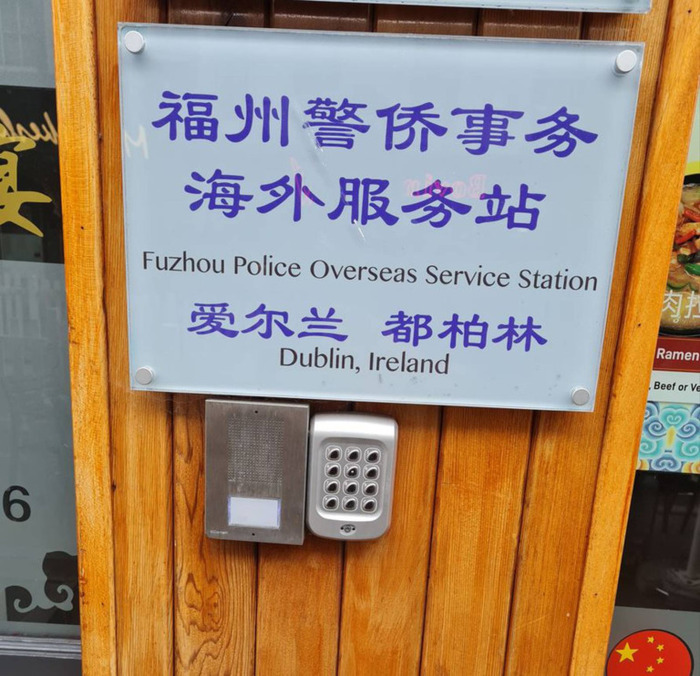
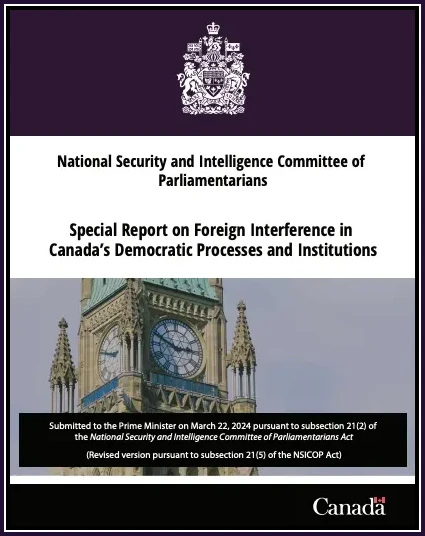
In the recent years, intelligence agencies of various countries have raised alarms that China is running illegal police stations on foreign land in at least 21 countries on five continents. Countries such as Ukraine, Canada, Ireland, France, Spain, Germany, and the United Kingdom have such arrangements for Chinese police stations, and the leaders of the majority of these countries publicly question China’s rise and its deteriorating human rights records.
China has also been accused of using consulates and courts in other countries to suppress dissent against the CCP.
In January 2025, the Daily Caller News Foundation (DCNF) report found that China was imposing its legal system on American soil through a network of nonprofit organisations in the United States linked to a Chinese Communist Party (CCP) intelligence agency.
In December 2024, an American citizen pleaded guilty to involvement in operating a secret Chinese police station in Manhattan’s Chinatown.
Reports indicate that the CCP’s objective behind operating such illegal police stations is to suppress anti-China sentiments across the world, to spread communist ideology, bring back Chinese expats who violated Chinese law while abroad and to interfere in the governance and democratic processes of other countries.
Ashley Tellis, Neville Roy Singham and CCP’s narrative control network
For the CCP, narrative control both domestically and globally is crucial for clinging to power and furthering its interests. For authoritative regimes, the military is the main source of power and control; however, for the CCP, information/narrative is the key.
Be it suppressing the truth of the Tiananmen Square massacre to firewalling anti-government criticism, the CCP regime is of the view that its survival and unquestioned rule is contingent on narrative control. It is for this reason that the CCP has kept tight control over media, social media, public and private institutions, and even businesses.
China has cultivated assets in the US and other rival countries that not only extract sensitive information but also facilitate the CCP in maintaining a grip over how these countries and the perceives China.
In 2025, the US Department of Justice charged Ashley J. Tellis, a senior adviser to the U.S. State Department and a contractor with the Pentagon’s Office of Net Assessment, for espionage and unlawful retention of classified documents.
Tellis, notorious for peddling anti-India propaganda, is accused of removing sensitive military documents from secure facilities and meeting Chinese officials multiple times in Virginia between 2022 and 2023. Federal prosecutors allege that Tellis discussed “emerging technologies” and “Iran–China relations,” and was seen carrying manila envelopes and accepting gift bags from Chinese representatives.
Tellis’s modus operandi was also being replicated in India. In August 2023, The New York Times published an explosive exposé revealing that Neville Roy Singham, an American millionaire “working closely with the Chinese Communist Party’s media machine,” was funnelling money to NewsClick, a far-left Indian portal.
Delhi Police chargesheet filed in 2024 described the Chinese state as the “ultimate paymaster”, with funds routed to stoke anti-India narratives, especially regarding Kashmir, and farmers’ protests. The case is ongoing in the court.
In 2021, OpIndia published an investigative report on the links of NewsClick and uncovered how it was linked to several individuals who regularly spew venom against India, from Urban Naxals to those like Teesta Setalvad, Abhisar Sharma and several others.
OpIndia previously reported about how the CCP created a transnational network of non-profits, activist groups, think tanks, and media outlets, operating as its propaganda machinery. The CCP orchestrated a pro-China information laundering network helmed by Neville Roy Singham, the US-born tech tycoon who sold his IT consulting firm Thoughtworks for about $785 million in 2017 before relocating to Shanghai.
This information laundering network erected at the CCP’s behest modifies raw activism into polished propaganda, which is then amplified by the Roy-Singham-funded network to sow discord in the US and other democracies while burnishing China’s image as a ‘benevolent’ counterweight to ‘imperialism’, particularly American imperialism, with the ongoing left-wing activism in Cuba being a textbook case of this.
From pro-Palestine activism in the US, influx of far-left activists in Cuba amidst President Trump’s rising interest in the country, to ‘No War’ activism over the Iran war, these seemingly spontaneous and genuine anti-war protests are in reality, a part of well-organised, well-funded, and politically-motivated campaign, orchestrated by organisations and activists all finding their roots in the Neville Roy Singham’s network of philanthropic organisations, think thanks, media, and activists, intellectuals, celebrities, political organisers and comrades.
As reported earlier, Neville Roy Singham funnelled over $278 million directly into his pro-China propaganda network since 2017, with total money flows exceeding $591 million across 223 transactions spanning five continents through the year 2025. The massive amount was pumped into over a thousand interconnected organisations, of which around 200 are directly involved in creating and propagating pro-China and anti-America messaging at the CCP’s behest.
China’s foreign election interference
For years, China has been accused of meddling in and influencing elections in several countries through numerous tactics. In mid-July 2026, US President Donald Trump declassified and publicised several intelligence and law enforcement documents from 2020, alleging that China acquired 200 million American voter data and exploited vulnerabilities in the US election system to influence the poll in Joe Biden’s favour.
China has also been accused of meddling in Canadian elections. In June 2024, a Canadian intelligence watchdog, the National Security and Intelligence Committee of Parliamentarians (NSICOP), released a report titled: Special Report on Foreign Interference in Canada’s Democratic Processes and Institutions. It uncovered the extensive interference of China in Canada’s electoral and legislative affairs. The redacted report mentions how certain Canadian MPs colluded with China.
The report also mentioned the CCP’s alleged illegal attempts to intervene in Canadian elections, bribing Canadian officials, and using covert techniques to exploit Canada’s indigenous people for resource extraction, as mentioned in the non-redacted 2019 version of the report.
The NSICOP report stated that China used social media alongside the legacy media to influence the opinions of Canadian voters, ethnocultural groups and parliamentarians.
During the 2021 federal election in Canada, the Security and Intelligence Threats to Elections Task Force (SITE) noted that mainstream media and social media activities aimed at discouraging voters from supporting the Conservative Party. While a direct link to the Chinese government did not emerge, the pattern indicated a coordinated campaign orchestrated by China.
In addition to Canada, China has also weaponised social media to influence elections in India and the US. In 2023, Facebook’s parent Meta revealed that it took down a network of 4789 China-based fake and misleading accounts. These accounts were created with the purpose of propagating misleading information about sensitive issues related to US politics, US-China relations, and Indian politics.
While China obviously denies any wrongdoing, there is a clear pattern of the CCP’s covert and sinister activities to undermine its perceived adversaries and rivals.
A chilling incident came to light in Sector 20 of Noida, Uttar Pradesh, where a 13-year-old Hindu boy was brutally murdered, and his body was dumped in a bag. The Noida Police reportedly found the victim, Ayush Shukla’s, mutilated and semi-decomposed body stuffed in a bag in a park in Sector-54 on the night of 21st August. Three minor accused have reportedly been detained by the police in connection with the incident.
Ayush went missing after he went to attend a birthday party
Ayush, who studied at Kendriya Vidyalaya in Sector 24, went missing on 17th August (some reports mention 16th August), when he left home to attend a birthday party. When Ayush did not return, his mother, Yogmaya, went to the police station and informed the police that her son did not return. The victim’s mother said that she paid multiple visits to the Sector-12/22 police post and the Sector-24 and Sector-20 police stations, but the police refused to register a missing person’s report, citing jurisdiction issues.
As per reports, two days after Ayush’s body was found by the police, it was sent for post-mortem. The police showed a photograph of the body to the victim’s family on Monday night (24th August). The next morning, the victim’s family visited the mortuary where Ayush’s body was kept and identified it through his belt and a kalawa tied around his wrist.
What Ayush’s mother said
Ayush’s mother, Yogmaya, works at the Bhangel Community Health Centre (CHC) on a contractual basis. She lives in a rented house in Sector 20 with her children, while her husband lives in Lucknow. Ayush was the only son among her three children.
According to Yogmaya, some Muslim boys named Asad, Asrad, Asrad’s friend, and another took Ayush with them, saying that there was a birthday party. She said that the Muslim boys took Ayush to their place, where they brutally stabbed him to death, chopped his body into pieces and dumped it in a drain. She said that Ayush’s hands and legs have not been found. She has refused to cremate her son until her killers are killed in an encounter.
“I will perform my only son’s last rites only when his killers are killed in an encounter. They stabbed him repeatedly. His hands and legs have not even been found. Despite recovering the body, police did not inform us,” the mother reportedly said.
#NOIDA में खोड़ा जैसी वारदात से हड़कंप!#नोएडा के चौड़ा गांव में 14 साल के आयुष शुक्ला की हत्या से सनसनी। आरोप है कि असद जन्मदिन की पार्टी के बहाने आयुष को घर से बुलाकर ले गया था। इसके बाद चाकू से हमला कर हत्या किए जाने का आरोप है। बताया जा रहा है कि असद ने दोस्तों के सामने आयुष… pic.twitter.com/7yyReKP8a4
— निशान्त शर्मा (भारद्वाज) (@Nishantjournali) August 25, 2026
The incident has triggered outrage in the entire neighbourhood, as Ayush’s family and neighbours are demanding stringent action against the killers.
Minor Hindu boy Ayush Shukla brutally murdered and dismembered by three Muslim accused in Noida.
His body was stuffed into a sack and dumped in a drain. A horrific crime that has left a family shattered.
Police issues statement, says accused and victims belong to the same community
While Ayush’s mother said that some Muslim boys killed her son, the police issued a clarification in the matter.
Additional DCP Manisha Singh stated that a case was registered immediately upon receiving the family’s complaint on 24th August. She added that a minor has been taken into police custody in connection with the case, while a search for the other accused is underway.
थाना सेक्टर-24 नोएडा क्षेत्रांतर्गत दिनांक 25.08.2026 को वादिया द्वारा तहरीर दी गई कि उनका 13 वर्षीय पुत्र हैप्पी उर्फ आयुष शुक्ला घर से खेलने के लिए अपने दोस्तो के घर गया था, जिसके बाद वापस नहीं आया। वादिया की तहरीर पर सुसंगत धाराओं में अभियोग पंजीकृत है। मुख्य बाल अपचारी को… pic.twitter.com/Fse0GYA5IY
— POLICE COMMISSIONERATE GAUTAM BUDDH NAGAR (@noidapolice) August 25, 2026
Addl DCP Singh further said that no visible external injuries were found on Ayush’s body during the post-mortem examination. Viscera samples have been preserved to determine the exact cause of death.
The incident has refreshed the painful memories of a similar incident that happened in the Khoda area of Ghaziabad in Uttar Pradesh in May. A 17-year-old Hindu boy, Surya Chauhan, was stabbed to death by his Muslim friends after being invited to a Bakrid gathering.
The Jammu and Kashmir State Investigation Agency (SIA) has again started the inquiry into the Wandhama massacre, in which 23 Kashmiri Pandits lost their lives in the Ganderbal region of central Kashmir, after 28 years. The move is part of a larger effort to probe long-standing cases of targeted killings during the peak of terrorism in the valley. The intention is to uncover new evidence regarding the deaths as well as trace and convict the perpetrators.
According to sources, the agency has also intensified its inquiry into the assassination of Justice Neelkanth Ganjoo, who awarded a death sentence to JKLF (Jammu Kashmir Liberation Front) founder Mohammad Maqbool Bhat and that of well-known Kashmiri Pandit lawyer Tika Lal Taploo, who was the vice-president of Jammu and Kashmir BJP (Bharatiya Janata Party) and an RSS (Rashtriya Swayamsevak Sangh) member, reported India Today.
It also reopened the cases about the deaths of writer Sarwanand Koul Premi and his son Virender Koul, as well as Kashmiri Pandit nurse Sarla Bhat. The insiders revealed that SIA raided many places in Kashmir a few days ago in relation to Taploo’s murder and the Wandhama horror. Terrorists and those who assisted them in carrying out these heinous acts are currently being identified by investigators to determine their roles in the attacks.
The agency is also looking into the larger terror network that is involved in these assaults, including potential financial handlers, white-collar terror conspirators and overground aides who are believed to have provided safe homes and reconnaissance. Simultaneous raids have been conducted across north, south and central Kashmir to retrieve digital devices, financial information and historical papers that might help authorities in filling in any gaps in the case. Moreover, the SIA is pursuing leads that remained unsolved for decades through public outreach and digital forensics.
“SIA Kashmir has already launched a focused investigation into these decades-old cases as a mission of utmost importance. All-out efforts are underway to unravel the underlying conspiracies, unearth and establish credible evidence, and identify the perpetrators strictly based on evidence and witness testimony. The objective is clear: to bring these cases to their logical conclusion on the merits, ensuring that truth prevails and those responsible are brought to justice,” a senior official shared.
What was the Wandhama massacre?
The gruesome tragedy happened overnight on 25th January 1998 during Shab-e-Qadr, the holiest night of Ramadan and on the eve of India’s Republic Day. Nearly 20 terrorists with their Kalashnikov rifles arrived at the doors of Kashmiri Pandit families staying in their ancestral homes in Wandhama. The assailants raised no suspicion because they were wearing Army camouflage. They then asked for tea to buy time to contact their collaborators who were covering the residences.
The terrorists completed the coordination and unleashed gunfire on the vulnerable Hindus. Some were hauled up from their homes and had bullets sprayed into their bodies, while others were shot dead at point-blank range with AK-47 rifles. Such an act of targeted savagery and violence had not been witnessed against the community since the 1990 atrocities that prompted the exodus of Kashmiri Pandits
Nine women, nine men and four children were among the twenty-three fatalities. The bodies also included those of five visitors who had travelled from Jammu to meet their relatives in the area. The jihadis claimed the lives of four families that fateful night. Vinod Kumar Dhar, a 14-year-old boy, managed to survive the brutality after going into hiding as his family members were being slaughtered.
However, he was so traumatised that he refused to leave the house whenever army officials showed up. “He just saw people in army uniform killing his family members with brutality and was so afraid,” recounted Kashmiri Pandit activist Sanjay Tickoo. The boy did not step outside until the next morning when Jammu and Kashmir Police reached in their khaki attire.
Afterwards, the attackers desecrated temples and set the Hindu homes on fire, annihilating the Kashmiri Pandit community from Wandhama. Notably, these defenceless victims had decided to remain in Kashmir and did not leave even after terrorism erupted in the region in the early 1990s. The episode caused the community to flee the valley for the second time.
The police attributed the brutality to Pakistan-based Lashkar-e-Toiba (LeT) as Kashmiri Pandits in Jammu and Delhi staged rallies. Nine protestors were hurt as demonstrators in the national capital marched in the direction of the National Human Rights Commission on 26th January and clashed with the cops.
The aftermath
The survivor, who is presently employed by the government on a compensatory basis, reportedly told the authorities that the gunmen were in Army disguises. A formal complaint was submitted at the Ganderbal Police station on his allegations and further statements from the families who escaped the assault. A probe was initiated, but its results were not disclosed.
S L Bhat, the Kashmir Divisional Commissioner at the time, was one of the first to react to the carnage and called it the “worst incident” he had ever seen. He added that “foreign mercenaries” were responsible for the murders. The backlash against the insufficient security arrangements intensified as the Army unveiled that the perpetrators were identified as a gang of 10 to 12 foreigners who were assisted by local terrorists.
According to a spokesperson for the defence ministry at the time, the natives were known to have links to some local political figures, which emboldened them to commit the attack. Hizbul Mujahideen terrorist Hamid Bhatt, also known as Hamid Gada, was neutralised in 2000 by the Jammu and Kashmir Police after it was established that he was responsible for that attack.
He was reportedly the son of the guardian of the renowned Kheer Bhawani temple and had ascended to the highest ranks of Hizbul Mujahideen in the valley after being inspired by Jamaat-e-Islami.
Reopening of old cases
SIA has reopened several cases which revolve around the murders of the Kashmiri Pandits throughout the past three years. The case of retired judge Neelkanth Ganjoo, who was murdered in Srinagar on 4th November 1989, was revisited in 2023. He was attacked because he condemned Maqbool Bhat to death in 1968.
The case of Sarla Bhat, a nurse who worked at the Sher-e-Kashmir Institute of Medical Sciences (SKIMS) in Srinagar, was reopened by the SIA in August of last year. On 18th April 1990, terrorists kidnapped her from her hostel, and her body was discovered the following day with several gunshot wounds. In June, the agency filed a 737-page chargesheet in a court regarding the matter.
On 14th September 1989, Tika Lal Taploo was shot dead outside his residence in Srinagar. It was among the first targeted killings of prominent Kashmiri Pandits as terrorism established roots in the valley. The case is presently under investigation by the SIA.
Similarly, the May 1990 double homicide of 65-year-old Kashmiri Pandit poet and writer Sarwanand Kaul Premi as well as his 27-year-old son Virender Kaul in their hometown of Soaf Shali in Kokernag of Anantnag is also being examined. SIA searched nine places in the union territory on 12th August in relation to the case.