Home Blog Page 9

Russia offers LNG at 40% discount to South Asia amid global supply crunch caused by disruptions in the Strait of Hormuz: Read Moscow’s rationale behind the move and India’s stand on it

Russia is once again trying to turn global turmoil into an economic opportunity. In a significant development, Moscow has started offering liquefied natural gas (LNG) shipments at steep discounts, as much as 40% below prevailing spot market prices, to buyers in South Asia. The move comes on Wednesday, 8th April, at a time when global gas supplies are under severe strain, making cheaper alternatives highly attractive for countries like India and Bangladesh.

According to a report by Bloomberg, these discounted cargoes are being marketed through little-known intermediary firms based in China and Russia. The intermediaries are saying that they can provide paperwork to show that the shipments are from non-Russian sources, like Oman or Nigeria, and remove any traces of true origin.

The move comes as disruptions in the Middle East have throttled roughly one-fifth of global LNG supply. 

Global crisis reshaped energy markets  

The backdrop to this development is a rapidly deteriorating geopolitical situation, particularly in West Asia. The effective closure of the Strait of Hormuz, combined with attacks on Qatar’s massive export facilities, has sent Asian spot LNG prices soaring, creating acute pressure on import-dependent economies across South Asia. 

Although a ceasefire was recently announced, it has failed to fully restore stability. The United States’ refusal to accept certain demands from Iran has meant that the Strait remains largely inaccessible, keeping energy flows restricted. As a result, countries heavily dependent on LNG imports, especially in South Asia, are facing mounting pressure to secure alternative supplies.

Bangladesh, for instance, sourced nearly 60% of its LNG from Qatar last year. With those supplies disrupted, it has been forced to rely on expensive spot market purchases. Similarly, India has had to cut gas supply to key sectors like fertiliser production due to reduced availability and rising costs.

In this scenario, Russian LNG, despite sanctions, has started to appear as a viable fallback option.

Sanctions continue to complicate Russian exports   

However, Russia’s ability to fully capitalise on this opportunity remains constrained by Western sanctions. The European Union’s 19th sanctions package, announced in October 2025, includes a ban on importing Russian LNG, set to take effect from April 25, 2026. The sanctions also include asset freezes on major Russian companies.

Similarly, the United Kingdom has imposed asset-freeze sanctions on key Russian oil giants like Rosneft and Lukoil. These measures are part of broader efforts to restrict Moscow’s revenue streams following its invasion of Ukraine.

Due to the fear of these sanctions, most international companies refrain from buying Russian LNG for fear of being targeted with US-led sanctions. To date, only China remains a reliable importer of sanctioned Russian LNG via a fleet of shadow ships.

Russian energy still finds buyers  

Despite these hurdles, Russian energy continues to find demand in the global market. The Kremlin recently stated that there has been a “huge number of requests” for Russian energy from different parts of the world amid the ongoing crisis.

Russia has also been ramping up production from its sanctioned projects, including Arctic LNG 2 and Portovaya. Nevertheless, those projects have yet to achieve their full potential due to the lack of sufficient transportation means and potential consumers.

On the other hand, the economic situation within Russia becomes more complicated. The state reported its budget deficit at 4.58 trillion roubles (about 1.9% of its GDP) in Quarter 1 of 2026. Additionally, Russia’s energy infrastructure faces further Ukrainian attacks that affect the output and revenue.

Strategic opportunity behind the discount strategy

Russia’s aggressive discounting strategy is not just about clearing excess supply; it is a calculated move shaped by shifting global dynamics. The disruption of energy flows through the Strait of Hormuz has created a significant gap in supply, particularly for Asian markets that rely heavily on Middle Eastern energy.

An estimated 66% of LNG passing through the Strait is destined for Asia, making the region especially vulnerable to disruptions. For countries like India, where dependence on crude oil through the Strait reached as high as 55% in early 2026, securing alternative sources has become a top priority.

This situation gives Russia a strategic edge. With Gulf supplies constrained, Moscow can position itself as an alternative supplier. Reports suggest that millions of tonnes of Russian crude were left without buyers earlier this year, and discounted LNG is now being used as a tool to attract new markets.

Following recent geopolitical tensions, Russia’s fossil fuel export earnings have reportedly risen, with daily revenues increasing by 14% compared to February averages. This highlights how Moscow is leveraging the crisis to stabilise its energy sector.

Discounted LNG will give a major financial boost to Russia

Russia’s ongoing strategy to sell discounted LNG is also translating into a significant financial boost, despite Western sanctions and global pressure.

According to a report by Reuters, Russia is expected to see a sharp rise in revenue from its key oil-related taxes amid the ongoing global energy crisis. The report states that earnings from Russia’s biggest single oil tax are likely to double to around $9 billion in April.

Unlike export duties, which were scrapped in 2024 as part of Russia’s long-term tax reforms, the country now relies heavily on production-based taxes for revenue. The mineral extraction tax, a key source of income for the Russian government, is expected to rise significantly due to higher global prices and steady production levels.

As per Reuters’ calculations based on early production data and prevailing oil prices, Russia’s mineral extraction tax on oil output is projected to reach around 700 billion roubles (approximately $9 billion) in April. This is more than double the 327 billion roubles collected in March and also marks a roughly 10% increase compared to April last year.

For the full year 2026, Russia has already projected earnings of about 7.9 trillion roubles from this tax alone. This indicates how Moscow is still managing to benefit financially from global instability, even as sanctions continue to restrict its access to traditional markets.

India’s cautious yet flexible approach 

India, one of the largest energy importers in the region, is treading carefully. The Indian government had earlier made it clear that it would not purchase any LNG from Russian projects, which were banned because of sanctions. 

But then again, India’s policies with respect to energy tend to be quite flexible as well. For instance, India resumed oil imports from Iran recently due to a waiver eased by the US, marking a shift since 2019. 

India’s need for cheap oil is obvious from the statistics, as it increased its imports of crude oil from Russia by 90% in March 2026 compared to February amid the ongoing conflict in the West Asian region. India is increasingly reliant on these discounted barrels to keep its economy afloat and expects the United States to extend waivers on Russian oil purchases to help stabilise global prices. 

While Indian companies like Petronet LNG and GAIL remain vulnerable to rising input costs, the government’s ability to secure discounted energy is seen as a vital buffer against inflation. 

As the global supply remains tight, the pressure on India to eventually accept discounted Russian LNG, perhaps through the very intermediaries and masked paperwork currently being offered, will only grow. For New Delhi, the challenge remains a delicate dance between maintaining strategic ties with the West and ensuring the lights stay on at home. 

The global LNG market is currently in a state of flux, shaped by geopolitical tensions, supply disruptions, and shifting alliances. Russia’s move to offer discounted LNG highlights how energy is increasingly being used as a strategic tool in international relations.

The Wire demands reservations for ‘Dalit Christians’, attacks the Supreme Court’s verdict, accuses BJP of playing politics: The autopsy of a flawed argument

On 24th March (Tuesday), the Supreme Court upheld a decision by the Andhra Pradesh High Court stating that only Hindus, Buddhists and Sikhs can identify as members of a Scheduled Caste community and demand protection under the Scheduled Castes and Scheduled Tribes (Prevention of Atrocities) Act. It outlined that embracing any other religion, including Christianity or Islam, will result in the “immediate and complete loss of Scheduled Caste status from the moment of conversion, regardless of birth.”

This, as was anticipated, displeased the leftists and liberal hypocrites who, on other occasions, claim to respect the judiciary as the paramount Constitutional institution and adhere to its rulings, but only when it is advantageous for them. This is their most crucial caveat regarding democracy, media, the Election Commission and even the Constitution. Otherwise, this faction always stands in opposition, not on the grounds of merit but ideology and vested interests.

The Wire attacks the Supreme Court for sticking to the Constitution

On 9th April (Thursday), “The Wire” published an article reflecting similar frustration and associated the fresh development with the “Dalit Christians” of Punjab. “In Punjab, the Supreme Court’s ruling that Christians cannot be classified as Dalit has caused unrest,” by Kusum Arora, contended that it has struck a sensitive chord throughout the nation, particularly within the community in the northern state.

“The state with the highest proportion of Scheduled Castes – nearly one-third (31.9% as per Census 2011) of the population – also has a history of caste-based discrimination,” she wrote. Arora cited the recent case of Chinthada Anand vs. State of Andhra Pradesh, in which a pastor requested protection under the SC/ST (Prevention of Atrocities) Act 1989 from the Supreme Court but was refused.

“The judgement denying this protection has led to widespread concern among Dalit Christians in Punjab, who primarily belong to the Valmiki, Majhbi Sikh and Ad-dharmi communities, the major Scheduled Caste groups of the state,” the piece complained.

She added that approximately 1.5 percent of Punjab’s population is Christian, according to Census 211 and the number is on the rise owing to the ministries and churches emerging “in villages, towns and cities around Jalandhar, Hoshiarpur, Kapurthala, Amritsar, Tarn Taran, Gurdaspur, Ferozepur and Pathankot districts in the Majha and Doaba regions.”

“The Dalit Christians mostly live in the Doaba region, a belt with over 32% of the Punjabi Dalit population across faiths. Conversely, the Majha belt has a sizeable population of the Valmiki community and Majhbi Sikhs, who, too, have a significant number of followers of the Christian faith,” she informed.

The fundamental argument of the author seemed to neglect the legal stipulations of the land. In fact, she wanted the top court to violate them to accommodate conversions. It almost suggested that she wished for the judiciary to act as a facilitator in this regard.

BJP wants anti-conversion law, the court fanned the fire: The article bats for illicit conversions

How can any such tirade not include attacks on the Bharatiya Janata Party, and Arora did not disappoint. “Recently, Union Home Minister Amit Shah, during a ‘badlav’ (change) rally at Moga in the state, said the BJP would ban religious conversion in Punjab through a new law. In this context, the Supreme Court’s judgement has added to the fears among Dalit Christians, even though the BJP – Shah’s party – is a marginal player in Punjab’s politics,” she stated.

It is crucial to recognise that Punjab has been plagued by unlawful conversions, prompting many to voice their worries. Last year, reports unveiled that 3.5 lakh individuals had converted to Christianity over the past 24 months. Notably, these figures are more related to fraudulent assurances of healing illnesses, financial and material rewards, job offers and other similar promises rather than genuine faith.

The Punjab Bachao Morcha announced its intention to pursue legal action against this epidemic linked to “miracle cures” within the state. Its president, Tejasvi Minhas, advocated for the implementation of an anti-conversion bill in Punjab to curb the conversions orchestrated by “self-styled godmen and pastors.”

“Around 65,000 pastors are operating in the state and engaging in conversions through enticement, coercion and fake miracle cures in violation of the Drugs and Magic Remedies (Objectionable Advertisements) Act, 1954 and several sections of the Bharatiya Nyaya Sanhita (BNS),” the organistaion informed. It also promised confidentiality and an incentive Rs 2 lakh to anybody who could produce “proof of illegal conversions.”

This exemplifies the severity of the problem. However, the media house hungers for further perpetuation of these activities, which not only mislead innocent persons into abandoning their beliefs due to false assurances but also endanger the lives and well-being of the impoverished and underprivileged population, who should consult medical professionals rather than Christian clergy for treatment. Arora is likewise indifferent to scientific temper or blind faith, which turns into a central issue when a Hindu dares to visit a saint or sage.

The “discriminatory” Indian state

The Wire then used interviews to claim that the court’s judgment is contrary to the sentiments of the Dalit Christian and Muslim communities staying in the country, as well as mentioned the controversial Sachar Committee report to evoke a sense of victimhood for these people.

It quoted Professor Emanual Nahar, Punjab’s former chairman of the Minority Commission, who stated, “The Majhbi Sikhs and Ravidassia were included in the list of Scheduled Castes in 1956, when parliament passed the first amendment (to the constitution), and added the Buddhists following the second amendment in 1990. Christians and Muslims were left to fend for themselves.”

He added that while the Ad-dharmi, Ravidassia, and Ramdasia Sikh communities in Punjab prospered through reservations, the Valmiki, Christians and Muslims who converted had to endure challenges and were exposed to social, educational, economic and political stagnation.

Nahar then challenged the home minister to “take action, but he should reveal the data on how many people changed their religion under pressure,” insisting “Punjab is a remarkable state, which has never bowed to such sentiments.” He expressed his plan to reach out to the Members of Parliament to request them to address the issue and seek the President’s intervention.

While the arbitrary inquiries might not yield an immediate response, the relentless support for unauthorised conversions suggests a sinister agenda. Furthermore, the “remarkable,” sensitive border region has been grappling with malicious schemes to change its demographic landscape, which could even lead to a national security threat, specifically because of outsider missionaries, which was recently witnessed in Rajasthan.

“The court does not consider Muslims and Christians as natives of India when, fact is, they have lived here since ages,” similarly voiced the President of Punjab Christian Movement, Hamid Masih and pointed out the Presidential Order of 1950, which confined the Scheduled Caste status to Hindus.

“The court overlooked the caste system and focused on religious conversions,” and asked, “will the court consider a Christian a (native) Indian citizen if they were to convert to Hinduism?” Afterwards, Masih accused Shah of divisive political actions and provoking communal sentiments before the assembly elections.

“Look – only the Dalits benefit from reservation under the Scheduled Castes category. The rest, including the Muslims and Christians, face discrimination,” he reiterated. “The Dalit Christians in Punjab are either working in the private sector or as daily wagers, leaving them with no scope of economic growth. In the church, at least they are treated equally and with respect, which they fail to get in other religions,” he alleged, lamenting “no provision of jobs for Christians under Punjab government.”

Masih emphasised that there is no discrimination in the Church and it is also the first and foremost premise peddled by Abrahamic Faiths to convert others under the guise of equality. The concept of caste is associated with Hinduism by them. Therefore, does it not undermine their submissions for reservations?

How can there be any discrimination against them when their adopted religions do not acknowledge caste? Isn’t the core of conversion and severing ties with their original roots aimed to free themselves from this practice? Thus, why they should be granted access to the perks of caste-based reservations? Are they devoid of the native religion but purport to be bound by caste? Irony indeed suffers countless deaths.

More portrayal of the “victimhood” narrative for reservations

The entire piece embodies an extensive assortment of contradictions, declaring equality following conversions and at the same time crying discrimination and soliciting reservations. It is sheer discrimination that Dalit Sikhs, Hindus and Buddhists in Punjab get the benefit of reservation, but those Dalits who convert their religion to Christianity end up in penury just because they fall under the minorities category,” conveyed Tarsem Peter, President of Pendu Mazdoor Union.

According to him, several pastors started setting up independent ministries after the Modi government ceased the overseas flow of funds for Christian missionaries. “Following this change, there has been a steep rise in the ministries, who promise and preach miraculous changes in people’s their economic and physical conditions,” he added.

Peter maintained that governments and politicians exploit the system, and then swiftly hit out at the saffron party, Rashtriya Swayamsevak Sangh, and the “Godi” media for trying to stop illegal conversions.

He confessed that investment from abroad has been directed towards converting people, which has been one of the key reasons for the introduction of the Foreign Contribution (Regulation) Amendment bill. Additionally, how are the Muslim and Christian communities qualified for the laws specially tailored for the Dalits? Can Hindus exercise their rights on regulations formed to appease the former, including the Muslim Personal Law, which allows the second-largest religious group to flout the statutes with impunity.

Hence, how can they expect to be awarded every privilege irrespective of the validity of their demands? “The government talks about Amrit Kaal and Digital India, then why this discrimination with us? They should understand our suffering,” stated Christian Jasbir Sandhu. He also talked about the serious economic hardships of Dalit Christians and charged the BJP with exploiting the issue for political purposes, showing alarm over the ruling.

“The BJP knows that largely, the minorities do not support them. As Punjab Assembly elections are due early next year, they have started raking up this issue to seek votes. Perhaps, the BJP does not know that the seed of hatred can never grow in Punjab. Punjabis have always remained together, irrespective of caste or religious preferences,” Sandhu vented out.

First off, the programs and schemes initiated by the centre are designed to steer the country towards progress, and not to enable illicit religious conversions. However, the government is obliged to address any action that could be detrimental to India’s security, social structure and national interest.

There are various groups in the country dealing with tough financial conditions who do not push for any special measures to assist them or improve their situation. In truth, they are often used as primary targets for conversions by wicked actors.

“Most Dalits do visit a church but have not adopted Christianity officially. At the same time, there are converted Christians in Punjab, who still avail benefits under Scheduled Castes category,” Sandhu then underscored, verifying how some people are abusing reservations and breaking the law.

Sandhu insisted that attending church is about social equality for a Dalit, as it did not influence their life and problems, adding “Neither has our condition improved nor have our sufferings come to an end.”

The inconsistencies are quite bewildering. If the Church has conferred equality upon them, then why do they still confront discrimination that is absent in their religion? You cannot have your cake and eat it too. While no one is denying their struggles, the weak foundation of their argument and the absurdity of their demands are evident.

However, it is imperative that the Dalit Hindus are not subjected to a grave injustice through the appropriation of their share and its transfer to others which is the goal of this cabal that feigns to be pro SC-ST.

The legal battle

The article then pointed out how Dalit Christian organisations are campaigning for the reservation quota via pleas. It also brought up the case of Christian pastor Chinthada Anand, who was admonished by the Andhra Pradesh High Court for misusing the SC/ST Act in relation to an alleged assault. It declared that the registration of the FIR (First Information Report) under act was illegal due to the complainant’s conversion to Christianity.

“Meanwhile, the Union government in October 2022 appointed a three-member Commission of Inquiry headed by Justice K.G. Balakrishnan to examine the feasibility of granting Scheduled Caste status to Dalits who choose a faith other than Hinduism, Sikhism or Buddhism, specifically focusing on Christians and Muslims,” Arora stated afterwards.

“The commission has received objections from groups such as the Dr Ambedkar Anusuchit Jati Adhikari Karmchari Manch, who have been arguing that extending Scheduled Caste status to converts will dilute the existing rights and benefits of existing beneficiaries,” she observed, highlighting the stand of the Dalit Hindu community on the matter.

The definitive verdict

A bench of Justices PK Mishra and NV Anjaria referenced Clause 3 of the Constitution (Scheduled Caste) Order 1950, which explicitly mentions that “no person professing a religion other than Hinduism” can assert Scheduled Caste status. The apex court declared that the restriction was permanent and irrevocable.

“No statutory benefit, protection or reservation or entitlement under the Constitution or enactment of parliament or state legislature can be claimed by or extended to any person who by operation of Clause 3 is not deemed to be a member of the Scheduled Caste. This bar is absolute and admits no exception. A person cannot simultaneously profess and practice a religion other than the one specified in Clause 3 and claim membership of the Scheduled Caste,” the order noted.

Why no reservations to non-Indic communities

The unlawful conversions have transmogrified into a menace throughout India, and providing Scheduled Caste status to the converts would only strengthen elements such as the predatory evangelists who view the nation as a golden spot to pressure people to embrace their faith. Likewise, the conversion bogey is driven by non-discrimination and thus how can they claim reservations that are founded on caste? These two cannot coexist parallelly.

It would be profoundly unfair to the Dalit Hindus who have chosen to remain loyal to their beliefs despite the temptations and deprive them of adequate rightful opportunities, such as in the fields of education and employment, to advance in their lives. The government exclusively taxes the wealth of Hindu temples, which could have been utilised to aid the needful members of the community. Consequently, they have to be dependent on reservations while Muslims and Christians can put all their resources for the upliftment of their communities.

Dalit Hindus are against any such move and the fears of the community that will be directly impacted cannot be overlooked. Last but not least, India is already encountering massive issues with conversions related to love jihad, changai sabhas (prayer meetings) and criminal pastors. The country can never have a law that would further strengthen their sinister ambitions.

Exclusive: Justice Yashwant Varma says ‘burned cash’ storehouse was accessible to domestic staff, didn’t have security, raises questions on investigation and lack of CCTV footage

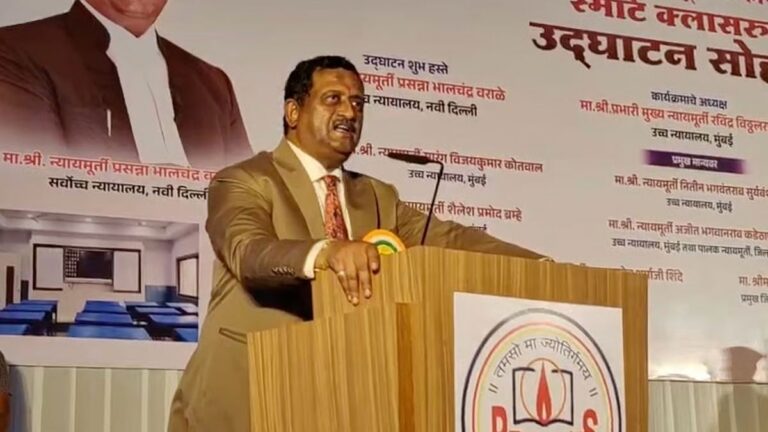
The President of India has received the resignation of Justice Yashwant Varma of the Allahabad High Court. The resignation comes as Justice Varma faces an ongoing in-house inquiry by the judiciary and the threat of parliamentary removal proceedings, which had been set in motion last year.

He has also withdrawn from the proceedings before the Judges Inquiry Committee constituted by the Lok Sabha to examine the charges against him in connection with the alleged recovery of cash from a storeroom at his official residence.

In a 13-page letter to the Judges Inquiry Committee, Justice Varma has maintained his innocence and asserted that he wasn’t even home when the fire erupted, leading to the alleged discovery of a large amount of money inside his storeroom. “During the Holi break of the High Court in 2025, my spouse and I travelled for a short vacation with friends on 12.03.2025. While we were at a remote location with limited mobile connectivity, a fire occurred in a storeroom located within the premises,” he stated in a letter. The occurrence happened on 14th March, but he claimed to have been communicated concerning it on 15th March.

Varma conveyed that some of the Delhi Fire Services and Delhi Police officers who were present at the event captured videos and pictures of the currency, but he was not made aware of it and learned about it along with the investigation that was started against him later. He added that the visuals were uploaded to the Supreme Court website, “and the entire episode was sensationally reported in the media with the clear narrative that the cash belonged to me.”

‘Storehouse a standalone unit in the premises, but used by staff and servants only’

Justice Varma has mentioned that the storeroom was a standalone facility open to his domestic staff and was devoid of any security oversight. “The undisputed factual position that I have consistently set out from the very beginning is that the storeroom was a detached structure adjacent to the staff quarters, physically separated by boundary walls from the family living quarters and my office. It was accessible from the back gate of the premises, which was not manned by any security,” the former justice stressed.

He wrote that domestic workers, maintenance professionals, and others frequently utilised and accessed it for routine duties and to store ordinary products including unwanted furniture, bottles, cutlery, mattresses, soiled carpets, outdated speakers, garden tools, and CPWD material. “The storeroom was usually kept unlocked and, even when locked, the key was never in my possession or under my instructions. I myself had visited the storeroom only four or five times in the entire two years of my stay,” Varma claimed.

“A CCTV camera was positioned directly facing the entry to the storeroom, with its live footage streaming to the guardroom and being recorded on equipment completely outside my control. The CRPF guards and my Personal Security Officers reported to persons other than myself, and thus, the entire security apparatus was never under my control,” he insisted, remarking that it defies reason and common sense to indicate that such a position can be used for hoarding cash.

Varma than contends that he has never been subjected to such charges in his judicial career as a high court judge, which has extended over 13 years. He expressed that he was not given the opportunity to cross-examine the in-house committee witnesses, and that the preliminary report should not be considered evidence.

Varma charged that all probes against him “proceeded on unstated suggestions, insinuations and imputations requiring me to disprove assumed facts and innumerable presumptions. This has resulted not only in a reversal of the burden of proof as we commonly understand but also in placing upon me the onerous obligation of proving multiple negatives.”

According to him, the allegations imply that the occupier of the property should bear a substantial burden of care, requiring that they should be cognisant of and accountable for any offensive objects or supplies that might be spotted or uncovered in any section of the property, regardless of whether they were placed there voluntarily or with their knowledge. Therefore, it is demanded of the occupier to be mindful of and liable for everything that could possibly be identified in any part of the premises.

Verma further insisted that the materials which were detrimental to him were extracted from the IHC record were utilised, while those beneficial to him were disregarded including 27 out of 54 witnesses which were left out.

“In any event, the evidence that was actually led falls far short of establishing even a prima facie case on any of the three charges. In proceedings of this nature, which seek to determine whether a sitting Judge is guilty of misbehaviour warranting removal, it is incumbent upon those prosecuting the charges to first establish a foundational case through credible evidence. Only then can any burden shift to the Judge to lead defence evidence. Here, that threshold has not been crossed on any charge,” he declared.

Varma pointed out that a standard of proof is equivalent to a criminal trial, beyond reasonable doubt, as described by earlier inquiry committees of judges. An analysis of the existing record should have resulted in the dismissal of the proceedings rather than expecting him to substantiate his defence.

‘Was it even genuine Indian currency? Why was no CCTV footage produced’, asks Justice Varma

Varma submitted that there was never any evidence that the money found in the storage on the property by the Delhi Police and Delhi Fire Services Officers was authentic Indian cash. “No CCTV footage from the premises was produced. The conclusion in the CFSL Extraction Report, that data from the CCTV hard drive could not be accessed, is highly suspect. The DVR itself was never received for forensic examination, as admitted by the CFSL Expert during cross-examination,” the letter read.

Varma asserted that there can be no assumption of his ownership, knowledge or accountability if there is no proof that the property (or the storage) was secured under his competent authority at the pertinent time. “The charge therefore fails at its very foundation,” he announced.

According to Varma, a charge was lodged that material objects and the environment at the scene were modified or taken away while he had control over the premises after the fire was put out and prior to any lawful inspection or sealing while he did not take steps to preserve the evidence, thereby allowing its disturbance. He countered that the evidence presented is opposed to this and confirmed that both the Delhi Fire Services and the Delhi Police had made independent decisions not to report or confiscate the cash long before he came to knwo about the instance.

Varma emphasised that the allegations implying he offered an “evasive explanation” and “denied” the existence of cash are inaccurate. “A plain reading of my written response dated 22.03.2025 shows no denial of the discovery of cash. I stated only that the cash did not belong to me or my family members, that neither I nor my family had any knowledge of its presence, and that no one had reported seeing any cash after the first responders left the premises. That position has remained consistent throughout. No evidence has been led to demonstrate that my knowledge or involvement was different from what I stated,” he outlined.

Varma has withdrawn from the proceedings and concluded, “I withdraw with the deepest sadness, conscious of the gravity of my decision and with the hope that history will one day record the unfairness with which a sitting High Court Judge was treated and that has marked this entire episode from its inception.”

Background of the case

The scandal erupted on 14 March 2025 when a fire broke out in a storeroom at Justice Varma’s government bungalow on Tughlak Crescent in New Delhi, while he was serving on the Delhi High Court. Firefighters and police officers who responded to the blaze reported seeing stacks of ₹500 notes, some burning, others partially burnt, scattered on the floor. Officials later confirmed to an inquiry committee that the cash was found in a room under the judge’s control.

Following the incident, the Supreme Court constituted an in-house panel, which concluded that cash had indeed been discovered and that Justice Varma exercised “covert or active control” over the storeroom. He was promptly transferred back to his parent court, the Allahabad High Court, in late March 2025. He took the oath of office there on 5 April 2025, but was not assigned any judicial work.

Justice Varma initially refused calls to resign in May 2025, prompting the Chief Justice of India to recommend his removal. An impeachment motion signed by more than 140 MPs was admitted by Lok Sabha Speaker Om Birla in August 2025, and a three-member inquiry committee was formed to examine the charges.

The Supreme Court later dismissed Justice Varma’s challenge to the removal proceedings, clearing the path for Parliament to act. Under Indian constitutional rules, removal by Parliament would have stripped him of his pension and other retirement benefits. By resigning voluntarily, he is expected to retain those entitlements.

Christian pastor Joel Webbon calls Hinduism ‘insanely demonic’ Alex Stein’s podcast: Read how both Americans are notorious for mocking Hinduism using lies

In recent years, there has been an alarming mainstreaming of Hinduphobia in the United States. Incidents of temple vandalism, online slurs, racist attacks on American Hindus, and Christian extremists openly mocking and vilifying Hinduism on podcasts have become a disgraceful ‘normal’. In a fresh attack on the Hindu faith, Christian pastor Joel Webbon called Hinduism an “insanely demonic” religion during his appearance on the podcast of Comedian and notorious Hinduphobe, Alex Stein.

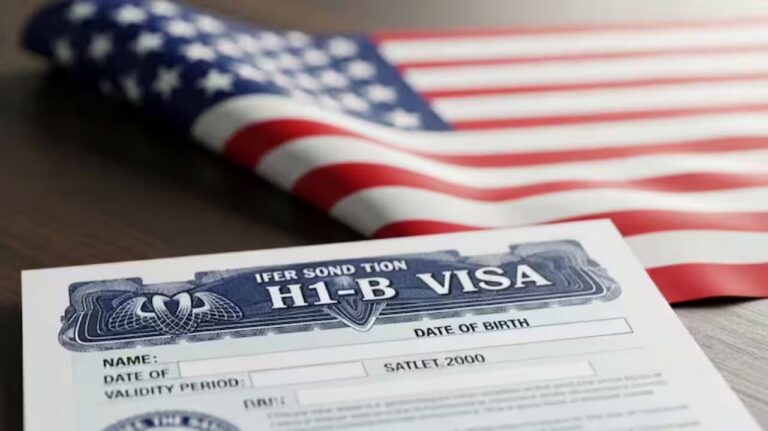
The clown-to-clown conversation took place in a segment of the episode ‘After Hours with Alex Stein’ podcast, which was aired on 8th April 2026. The discussion centred on the supposed demographic and cultural ‘changes’ in Texas, H1-B visas, Indian immigration, and Texas somehow turning into a “Little Mumbai”.

During the conversation, pastor and founder of Right Response Ministries, Joel Webbon, resorted to vilifying Hinduism when Alex Stein pivoted to mocking the religion’s practices and asking Webbon to rank its “craziness” relative to other religions like Scientology.

“Hindus “like to worship the cow, they drink the cow pee, they eat the cow poop.Is that one of the most demonic religions? How does Hindu rank on levels I guess craziness of religion. Is Hinduism crazier than Scientology?” Stein asked.

Stein’s question, riddled with hatred and ignorance, received an equally hateful and ignorant answer from Joel Webbon.

Webbon responded: “Oh… Scientology is pretty crazy. Yeah. No… Hinduism is insanely demonic because it’s not monotheistic. It’s literally millions of gods. And if you’ve ever watched—there have been videos that have gone viral of Hindu temples where they’re pouring blood-looking liquid on themselves or chopping off the head of a goat and then drinking the blood—so it is very pagan, very demonic, polytheistic. Hinduism is satanic in a lot of ways.”

The Christian pastor further proceeded to contrast Hinduism with Islam, saying that both “send you to hell” but Hinduism is “terribly pagan” and does not align with “western culture values.”

Webbon’s diatribe triggered a backlash from the Hindu community on social media.

Shridhar Vembu, the Chief Scientist at Zoho, called out Webbon for labelling Hinduism as some primitive and regressive faith, and wrote on X, “As a Hindu, I believe the entire Universe is the manifestation of the Divine. All of it – the river, the tree, the snake, the stone, the earthworm, the cow, the monkey, the elephant – all of it is divine manifestation. That belief is not Demonic, it is not Satanic, that is the path to living in harmony with nature and with other human beings. Arrogant, intolerant monotheism – see the video below – that goes around labelling reverence for all of nature as “demonic” and “satanic”- that belief is what makes men do evil.”

Vembu further highlighted how Christians used to run crusades and invade nations in the name of ‘civilising’ them, and wrote, “History supplies ample evidence. Hindus did not run crusades. Hindus did not burn witches at the stake. Hindus did not invade nations and enslave people in the name of bringing “Civilization” and “God” to “pagans”.”

Similarly, Suhag Shukla, the Executive Director of the Hindu American Foundation (HAF) also criticised Joel Webbon’s Hinduphobic remarks, and wrote, “Hindus are demonic! Oh the horror. They’re saying it with a straight face…so remember, this is the attitude that fueled & justified crusades around the world and the genocide of Native Americans—who like us “pagan” Hindus, see divinity in nature, in the feminine (and masculine), and in various forms.”

Joel Webbon and Alex Stein sounded like typical 15th or 17th-century entitled Christian fanatics who looked down upon those who did not share their faith and toiled for a self-imposed imperative of spreading Christianity in distant ‘pagan-dominated’ lands to ‘civilise’ the ‘heathens’.

Webbon’s argument rests on the usual evangelical critique that conveniently labels Hinduism as extremely polytheistic and idolatrous, and its certain practices like animal sacrifice, cow worship, and use of diverse substances as offerings to deities. The Christian extremists use half-truths and twisted narratives to declare Hindu rituals as ‘pagan depravity’ and the religion downright “demonic” or “satanic”.

Pastor Joel Webbon’s factually incorrect, hateful and oversimplified rhetoric comes from a strict Christian monotheistic framework. Hinduism, however, is too vast and diverse a faith to be comprehended from a singular or monotheistic lens. Hinduism or Sanatan Dharma does not fit at all in the Abrahamic concept of ‘demonic’ or ‘satanic’.

Webbon’s claim that there are “millions of Gods” in Hinduism is also incorrect. Hindu gods are no demons, and there are no 330 million gods, as many Christian extremists mindlessly claim. Hinduism does venerate many Devas (deities); however, the religion is rooted in the Vedic wisdom that all deities are manifestations or aspects of that one ultimate reality, Brahma, also spelt Brahman (not the Brahmin caste). Despite there being a multiplicity, the core of the Hindu concept of God remains that there is only one God, one absolute truth and one unchanging reality, which the Hindu scriptures describe as “Hari Om Tat Sat”.

The Rig Ved, the oldest Vedic text, explicitly states,

 “इन्द्रं॑ मि॒त्रं वरु॑णम॒ग्निमा॑हु॒रथो॑ दि॒व्यः स सु॑प॒र्णो ग॒रुत्मा॑न् । एकं॒ सद्विप्रा॑ बहु॒धा व॑दन्त्य॒ग्निं य॒मं मा॑त॒रिश्वा॑नमाहुः ॥
इन्द्रं मित्रं वरुणमग्निमाहुरथो दिव्यः स सुपर्णो गरुत्मान् । एकं सद्विप्रा बहुधा वदन्त्यग्निं यमं मातरिश्वानमाहुः ॥ (1.164.46)

This hymn means: “They call him Indra, Mitra, Varuṇa, Agni, and he is heavenly nobly-winged Garutmān. To what is One, sages give many a title.”

Much before Jesus Christ supposedly walked this earth, Hindus had the Vedic wisdom guiding their daily lives and spiritual journey towards One God, Brahman, through Yajna, and other rituals. The Upanishads, particularly the Chandogya and Brihadaranyaka Upanishads, further reinforce the Vedic concept of there being only one God, who may have diverse names and manifestations.

Later, the Shrimad Bhagavad-Gita reveals Lord Krishna, the avatar or human reincarnation of Lord Vishnu, as the Almighty, not without emphasising the divine unity. Take this shlok for example:

yo yo yāṃ yāṃ tanuṃ bhaktaḥ śraddhayārcitumicchati
tasya tasyācalāṃ śraddhāṃ tāmeva vidadhāmyaham

This verse from Chapter 7 of the Gita means, “Whatever celestial form a devotee seeks to worship with faith, I steady the faith of such a devotee in that form.”

While there is a more profound interpretation of this verse spoken by Lord Krishna, in simple terms, particularly in context of this discussion, it can be understood as: no matter which deity or God and in whichever manner you worship with true devotion, Lord Krishna makes your devotion in that believed form of God firm yet it is him who is ultimately accepting and giving the fruits of your prayers.

Dvaita, Advaita Vedanta, Shakta tradition, Vaishnavs, Shaivas, and more such sects exist and thrive within the Hindu fold as one. There is nothing demonic about polytheism. In fact, a Christian extremist’s description of Hinduism as demonic is nothing but a theological polemic. Hinduism has no Satan figure and no concept of eternal damnation for infidels, heathens, or simply non-believers, in the Christian sense. Hinduism is the path of Moksha (liberation) from the cycle of birth and rebirth through knowledge, devotion and Dharma. From a Hindu religious perspective, Jesus Christ, if believed to be real, will not be labelled a non-believer or infidel, as the Vedas, the authoritative text of the Hindu faith, do not have any such theological category. One can either be an Ārya (noble) or an Anārya (ignoble) based on one’s conduct.

Practices like animal sacrifice too are not mainstream but confined to specific traditions within the Hindu fold. These rituals are highly regulated and permitted to be performed only by specific learned practitioners and not by anyone.

While Webbon did not detail what he meant by Hindus offering their deities “blood-looking liquid”, it can be assumed that he was most probably talking about Sindoor or Kumkum. There is no mainstream Hindu tradition of offering blood to Devi Devtas in Hinduism.

Pastor Joel Webbon and comedian Alex Stein condescendingly claimed that Hindus eat cow dung and consume cow urine. Again, this is a misrepresentation of the relevance of cow worship in Hinduism. The cow is revered as a symbol of life, growth, and non-violence. The Panchagavya use exists for medicinal and ritual purposes in some contexts; however, it is not a daily practice or “eating cow poop” or “drinking cow pee”. This is more an hate-drive exaggeration that has been used to mock Hindus not only by the likes of Webbon and Stein, but also by Islamic terrorists.

Pluralistic civilisations and polytheistic faiths are not ‘demonic’ by default, just because Hinduism don’t have a Christian equivalent to crusades, inquisitions, and forced and deceitful conversions, does not mean the world’s most ancient religion and its adherents are ‘insanely demonic’.

Joel Webbon and Alex Stein: Two Christian fanatics notorious for mocking Hinduism

Pastor Joel Webbon regularly slanders religions other than Christianity. In recent times, Webbon has faced backlash for demonstrating doctrinal animosity towards Hindus and their faith.

In October 2025, Joel Webbon made abusive remarks on X, targeting Hindu deities in response to a Diwali greeting post. The incident began when Kash Patel, the Director of the Federal Bureau of Investigation, extended Diwali wishes from his official X handle. In response, Webbon quote-tweeted Patel’s message with a derogatory comment, stating: “Go back home (to India) and worship your sand demons. Get out of my country.”

The ‘sand demons’ jibe was directed at idols or murtis, which in Hinduism serve as tangible symbols through which devotees focus their devotion, perform rituals, and establish a spiritual connection with the divine.

‘Comedian’ Alex Stein has been even worse in his expression of blatant Hinduphobia. In February this year, Stein wore a traditional Kurta and a Tilak on his forehead as a caricatured Hindu persona at the Plano City Council.

Stein peddled hatred and lies against Hindus and said, he was being “bullied for drinking and eating special stuff that in your culture is not very respected but in my culture it has lots of healing properties. “I worship cows, but cow is not animal, cow is divine mother, her milk is Amrit nectar from heaven her urine Gomutra is purest medicine straight from the gods, her dung Gobar is holy old blessing for health and prosperity. Please, mayor, I beg you, let me eat the cow dung. It has healing properties.

Local media reports that Stein regularly uses municipal government meetings to further his Christian extremist and racist agenda.

While America has had a long and opprobrious history of targeted attacks and vilification of Hindus, there has been a dramatic surge in such attacks ever since Donald Trump came to power in 2025. Beyond online hate campaigns and podcasts, Christian extremists are working at organisational levels to vilify Hindus.

In November 2025, the New York State Council of Churches (NYCOC), through its Religious Nationalisms Project (TRNP) joined forces with the Islamist group, the Indian American Muslim Council (IAMC), to hold anti-Hindu seminars.

OpIndia reported earlier how White and Christian supremacists ignited the H1-B visas debate after Donald Trump nominated American-born Indian Sriram Krishnan as senior policy advisor for Artificial Intelligence at the White House Office of Science and Technology Policy.

The online discussion soon snowballed into a full-fledged campaign against H1-B visas for highly-skilled Indians. This was followed by derision and insults directed at Hindus and Hinduism.

The Christian supremacists have normalised slandering and mocking Hindu deities, labelling them ‘demonic’ and ‘false gods’. In September last year, Alexander Duncan, the Republican Senate candidate for Texas, called Lord Hanuman a ‘false god’ and objected to the construction of his statue in the US, saying that America is a ‘Christian’ nation, although by law, America is not a Christian nation.

In July 2025, a video of a White American berating an Indian man with “Why are you in my country? I don’t like you guys here. There are too many of you guys here. Indians! You guys are flooding all the white countries. I am tired of it. Americans are sick of this sh**. I want you to go back to India…”

In Irving, Texas, three masked men carrying “Don’t India My Texas” signs showed up in a suburb where thousands of Indian tech professionals reside in October 2025.

Last year’s Diwali in America witnessed an unprecedented online hate against American Hindus and Hinduism. From vilifying FBI Director Kash Patel and US Director of National Intelligence, Tulsi Gabbard for wishingeveryone a happy Diwali, mocking the Trump administration for celebrating Diwali in the White House, attacking JD Vance’s Hindu wife Usha Chilukuri, and questioning Vivek Ramaswamy’s Hindu faith, to making absurd ‘Indians poaching wildlife in Canada and America’ claims, Indians and Hindus have been constantly targeted for their faith.

Besides, White racists and Christian supremacists have been villainising Indian Americans to lend credence to their ‘White Replacement Theory’. In fact, ‘Nuke India’ calls by these Christian extremists have also become a new ‘cool’ among American racists and Hinduphobes.

Unlike Islam and Christianity, Hinduism poses no proselytising threat. India, the natural homeland of Hindus, has never invaded a country with the intent to alter its religious demography or impose Hindu faith on non-Hindus. Muslims and Christians, however, have invaded lands and destroyed civilisations to establish their religious supremacy.

From the orientalist caricatures in the 19th-20th century, fears of ‘eastern/Asian mysticism’ eroding Protestant ‘purity’ to anti-Hindu violence and online hate, American Hindus have faced constant attacks. The unchecked expression of Hinduphobia by the many Joel Webbons, Alex Steins, Alexander Duncans, Nick Fuentas, Elijah Schaffer and others might become the precursor of religion-based violence against Hindus in the coming times.

Did Justice Nagarathna say Sabrimala treats women as ‘impure for 3 days’? Read what happened in court as Govt objected to ‘untouchability’ observation in 2018 verdict

The Sabarimala controversy is once again at the forefront of national legal discourse due to the Supreme Court’s current nine judge bench hearing. However, it would be completely missing the bigger constitutional point if the issue were reduced to a straightforward question of whether or not women were allowed to enter one temple. The underlying legal framework governing religious freedom, denominational rights, judicial examination of religious acts, and the definition of constitutional morality in India is currently being explored in addition to the long-standing Sabarimala dispute. Because of this, the current hearing affects not just Lord Ayyappa’s followers but the nation’s whole religious legal framework.

Much of the discussion on social media following the first day of arguments has also been misleading. Justice B.V. Nagarathna made a comment that was taken out of context and turned into a cheap political slogan, as if the Court had somehow approved the notion that women were ‘untouchable’ by divine command. That interpretation is not only unfair, but also legally reckless. The discussion centred on the constitutional interpretation of Article 17, the particular historical extent of untouchability, and whether or not that clause can be expanded to include any kind of exclusion imposed by a religious practice. Put simply, the Court was being asked to accurately read the Constitution, not to endorse discrimination.

What is the court actually hearing?

The first crucial thing to grasp is that the current bench is not limited to hearing solely the Sabarimala entrance question. The nine-judge bench’s reference raises more significant issues about the relationship between the Constitution’s provisions of equality and dignity and Articles 25 and 26. The Court is examining what legal thresholds should be used when a custom seems to violate constitutional rights, how far religious communities can control their own practices, and how far the Court itself can examine those practices.

CJI Surya Kant, along with Justices B.V. Nagarathna, M.M. Sundresh, Ahsanuddin Amanullah, Aravind Kumar, A.G. Masih, Prasanna B. Varale, R. Mahadevan, and Joymalya Bagchi, make up the bench currently unravelling this intricate web of religion and law.

The following is a layman’s explanation of the seven major concerns they are reviewing:

1. The limits of religious freedom:

 Article 25 protects the freedom to profess, practice, and propagate religion. However, this privilege is contingent upon public order, morality, and health. Before the State can intervene, the Court must specify the precise boundaries of an individual’s rights.

2. The clash of rights (Art 25 vs Art 26)

What happens when a person’s right to worship (Article 25) clashes with a religious denomination’s right to control its own internal affairs (Article 26)? Is it possible for an individual to force a community to change its traditions in order for them to take part? Critics contend that a denomination’s right to control its own places of worship cannot be superseded by an individual’s freedom of conscience.

3. The meaning of Constitutional Morality

The 2018 judgment mainly relied on Constitutional Morality, a broad concept that judges are increasingly using to overturn legislation. Because they see them through a contemporary, Westernized lens. Traditionalists contend that constitutional morality cannot be a blank check for unelected judges to overrule thousands of years of established religious traditions.

4. Courts determining essential religious practice?

 Should courts, presided over by judges versed in modern law, have the authority to determine what constitutes a ‘essential religious practice’ for an ancient religion? The Center has consistently maintained that the Court should not function as priests and that the judiciary’s creation of the ERP test has flaws.

5. The scope of state interference

Are a religious community’s rights limited to the particular restrictions of public order, morality, and health listed in Article 26, or are they also subject to other fundamental rights in the Constitution (such as Article 14 on Equality)? Every gender specific or tradition specific practice in India would become unlawful overnight if Article 14 were to apply strictly to sacred places.

6. Defining a religious denomination

What does the Constitution say about a religious denomination or a ‘section of Hindus’? Advocate C.S. Vaidyanathan asked the Court to consider the Hindi translation of the Constitution, which employs the phrase Sampradaya, during the recent proceedings. He maintained that Hinduism is fluid and pluralistic, and that putting it into rigid, Western style organizational hierarchies (such as a Church) deprives native traditions of constitutional protection.

This is important because many outsiders see the hearing as a replay of the 2018 issue. It isn’t. The Court is currently dealing with a reference that surfaced during the review step and encompasses broader legal problems, many of which were never limited to Sabarimala alone. The truth is that a temple issue has turned into a constitutional test about equality, religion, and the role of the judiciary itself.

Why did Article 17 come up?

The social media outrage over Article 17 has disguised more than it has revealed. Article 17 eliminates untouchability. However, in constitutional and historical terms, that word has a very specific meaning rooted in caste oppression and social exclusion experienced by India’s untouchable communities. It was never intended to be a blanket term for all forms of exclusion, no matter how unjust or offensive they may be.

The Solicitor General’s remark to Article 17 makes sense because of this. His main argument was that the Court should exercise caution in equating a religious practice that is being contested with untouchability in the strict sense of the Constitution. That is also how Justice Nagarathna’s statement should be interpreted. She did not say that women should be excluded or that the deity wants them to be excluded. It was because the constitutional term ‘untouchability’ has a very definite legal history and cannot be stretched beyond recognition, making it impossible to casually state that women are ‘untouchable’ on some days and not on others.

That is an important distinction. The Court did not endorse discrimination. It clarified legal categories. A judge may reject a faulty constitutional comparison without endorsing the challenged behaviour. The online fury is thus based less on legal reading and more on selective clipping, which is unfortunately becoming the most popular approach of making constitutional arguments on social media.

The 2018 judgment in context

The 2018 Constitution Bench judgment in Indian Young Lawyers Association v. State of Kerala is necessary to fully understand the purpose of the current proceeding. In that judgment, the Sabarimala temple’s ban on women of menstrual age was overturned by a majority of the Supreme Court. The majority concluded that the practice was against the freedom of religion, equality, and dignity guaranteed by the constitution. It reasoned that the exclusion was not a fundamental religious practice worthy of constitutional protection and that the followers of Lord Ayyappa did not, for the purposes of Article 26, form a distinct religious denomination.

Supporters of the decision saw it as an essential remedy for a discriminatory custom. Critics saw it as a grave invasion of a living religious tradition’s internal affairs. That gap has never truly closed. The controversy around women’s admission to a single temple is still ongoing. It is a question of whether courts should act as final arbiters of what is vital in religion, or whether they should pay more attention to the tradition’s own understanding of its practices. 

The 2018 judgment became historically significant since it dealt with more than just a temple entry controversy. It demonstrated the Court’s willingness to prioritize constitutional equality over long standing religious customs when they appear to contradict. That was a risky but contentious move. The current nine judge bench is effectively being asked whether that approach should be refined, curtailed, or articulated in a more principled manner.

The core concept: Sui generis and Naishtika Brahmacharya

The theology of Sabarimala, which SG Mehta and advocates like C.S. Vaidyanathan have masterfully presented in the 2026 hearings, is essential to understanding the justification of the practice. In Hinduism, a god in a temple is seen as a living, legal person with unique qualities, rights, and character, rather than just a symbol. Lord Ayyappa appeared in Sabarimala as a Naishtika Brahmachari, a god who observes strict, perpetual chastity.

Before the nine-judge panel, SG Mehta argued, “This unique attribute of the deity can’t be tested by the Supreme Court.” It doesn’t mean that women aren’t equal. In fact, as Mehta pointed out, India has always held women in higher regard. The only purpose of the restriction is to honour the principles, the religion, and the particular sampradaya (tradition) of that particular temple.

Why didn’t the review end the matter?

Following the 2018 decision, review petitions were filed, and the matter entered a new level of constitutional complexity. Rather than simply concluding the case at the review stage, the Court referred broader questions to a larger bench. That ruling is significant because it reveals that the Court acknowledged that the legal issues highlighted by Sabarimala were not isolated. They were linked to a broader set of cases involving religious autonomy, denominational rights, and the idea of essential religious practices. 

This is where the nine-judge bench enters the picture. The Court did not assemble such a huge bench solely to debate who can enter a temple. It did so because the disagreement raised fundamental constitutional doctrines that had previously been invoked in cases but were now being questioned or disputed. In layman’s terms, when an legal concept causes problems in several cases, the Court frequently has to pause and define the concept itself. That is the actual significance of this hearing. It is a doctrinal cleanup operation, not a publicity gimmick. The Court is attempting to establish the appropriate framework for deciding religious freedom matters.

Conclusion

Sabarimala remains a significant and controversial case since it involves religion and constitutional reform. The 2018 decision altered the legal landscape by placing equality and dignity at the forefront of the argument. The subsequent review and reference broadened the argument to include questions concerning how Indian courts should interpret religious practice, denominational rights, and judicial action.

Because of this, the current nine judge bench is justified, and it would be deceptive to reduce the hearing to a social media catchphrase. Justice Nagarathna’s remark was not an endorsement of exclusion, and the Solicitor General’s allusion to Article 17 was not directed at women. Both were involved in a significant constitutional discussion regarding precision, history, and the legal process. Precision is not pedantry in a sensitive subject like religion, it is a need.

If anything, the hearing demonstrated that constitutional interpretation requires patience. Traditions deserve respect. And public discourse requires more seriousness than selective fury. The Court is currently attempting to clarify a problematic area of law that has persisted for years. That effort should be read carefully rather than dragged into a quarrel.

“Never had a relationship with Epstein or Ghislaine Maxwell’: Melania Trump denies being a victim of convicted sex offender Jeffrey Epstein or being associated with him

On Thursday (10th April), the US First Lady, Melania Trump, issued a rare public statement wherein she denied association with convicted sex offender Jeffrey Epstein. Melania Trump said that she was neither Epstein’s victim nor was introduced by him to her husband and US President Donald Trump.

“The lies linking me with the disgraceful Jeffrey Epstein need to end today…I have never been friends with Epstein.  Donald and I were invited to the same parties as Epstein from time to time, since overlapping in social circles is common in New York City and Palm Beach,” Trump stated.

Melania Trump also denied having any links with Ghislaine Maxwell, the main accomplice of Jeffrey Epstein.

“To be clear, I never had a relationship with Epstein or his accomplice, Maxwell.  My email reply to Maxwell cannot be categorized as anything more than casual correspondence.  My polite reply to her email doesn’t amount to anything more than a trivial note. I am not Epstein’s victim.  Epstein did not introduce me to Donald Trump.  I met my husband, by chance, at a New York City party in 1998.  This initial encounter with my husband is documented in detail in my book, MELANIA.  The first time I crossed paths with Epstein was in the year 2000, at an event Donald and I attended together.  At the time, I had never met Epstein and had no knowledge of his criminal undertakings,” Trump stated.

Melania Trump added that numerous fake images and statements about Jeffrey Epstein and her have been circulating on social media for years now.

Further refuting the allegations of her association with Epstein, Trump said, “I am not a witness or a named witness in connection with any of Epstein’s crimes.  My name has never appeared in court documents, depositions, victim statements, or FBI interviews surrounding the Epstein matter. I have never had any knowledge of Epstein’s abuse of his victims.  I was never involved in any capacity—I was not a participant, was never on Epstein’s plane, and never visited his private island.”

“I have never been legally accused or convicted of a crime in connection with Epstein’s sex trafficking, abuse of minors, and other repulsive behavior,” she continued.

The US First Lady also highlighted how “several individuals and companies have been legally obligated to publicly apologize and retract their lies about me, such as The Daily Beast, James Carville, and Harper Collins UK.”

Melania Trump demands a congressional hearing

Reading her statement in the Grand Foyer on Thursday, Melania Trump called for a congressional hearing focused on  survivors of Epstein’s crimes, saying that the accusations against her came from “individuals and entities looking to cause damage to my good name.”

The US First Lady added that those behind targeting her are financially and politically motivated.

“Now is the time for Congress to act.  Epstein was not alone.  Several prominent male executives resigned from their powerful positions after this matter became widely politicized.  Of course, this doesn’t amount to guilt, but we still must work openly and transparently to uncover the truth,” she said.

“I call on Congress to provide the women who have been victimized by Epstein with a public hearing specifically centered around the survivors.  Give these victims their opportunity to testify under oath in front of Congress, with the power of sworn testimony.  Each and every woman should have her day to tell her story in public, if she wishes, and then her testimony should be permanently entered into the Congressional Record. Then, and only then, will we have the truth,” added.

Melania Trump did not take media questions after reading her statement on Thursday at the Grand Foyer of the White House. Her call for a congressional hearing on the matter is significant, as lying there will be a crime of perjury.

Melania Trump’s name appears multiple times in the Epstein Files

The US First Lady’s statement comes after the Department of Justice confirmed that former Attorney General Pam Bondi would not be appearing for a subpoena before the House Oversight Committee on 14th April. The subpoena addressed Bondi’s handling of the DOJ documents about Epstein.

The controversy began when Melania Trump’s name appeared in the tranche of Epstein files documents published in January this year. Donald Trump’s name had also appeared in the files.

While Melania Trump claimed to have had only a passing acquaintance with Jeffry Epstein, she was photographed with Jeffrey Epstein several times at a party at Donald Trump’s Mar-a-Lago beach club in 2000.

A partially redacted 2002 email exchange reportedly between Melania Trump and Ghislaine Maxwell was posted online in January this year by the US Justice Department.

“Sweet pea thanks for your message. Actually plans changed again and I am now on my way back to NY. I leave again on Fri so I still do not think I have time to see you sadly. I will try and call though.<br><br> Keep well<br><br>Gx<br>At 03:40 PM 10/23/2002-0400, you wrote:<br><br><blockquote type-cite class-cite cite><font face=”Bookman Old Style, Bookman”color=”#0000FF”>Dear G! <br>How are you? <br>Nice story about JE in NY mag.You look great on the picture. <br>I know you are very busy flying all over the world. How was Palm Beach? I cannot wait to godown. Give me a call when you are back in NY. <br>Have a great time! <br>Love, <br>Melania</font><font face=”arial”> </font></blockquote></html>,” the US DOJ-released email file reads.

A purported email sent to Jeffrey Epstein’s co-conspirator, Ghislaine Maxwell, shows Melania Trump lauding how Maxwell looked in a photo.  “Nice story about JE in NY mag. You look great on the picture. I know you are very busy flying all over the world. How was Palm Beach? I cannot wait to go down. Give me a call when you are back in NY. Have a great time! Love, Melania,” Melania Trump wrote.

Interestingly, Melania Trump admitted to having written a friendly email to Maxwell during a media interaction on Thursday. However, she made no mention of the email in which she praised a profile of Jeffrey Epstein in New York magazine in 2002 as a “nice story”. The profile contained a quote from Donald Trump, heaping praises on Epstein.

Another email sent by “Jeffrey E.” to author Michael Wolf reads, “achlles heal , melania, transcipt. melania also focused on dates of porn star, before birth of baron or after. . they also now have two army people escorting her to kids school :)”

Another controversial email mentioning Melania Trump’s name, sent to Jeffery Epstein in 2016, reads, “I remember flying back with Donald on his plane the first weekend I went to v=sit you in Florida was the weekend he met Melania and he kept on coming out=of the bedroom saying ‘ wow what a hot piece of ass’.”

Who was Jeffrey Epstein?

Jeffrey Epstein was an American financier who was convicted by a Florida state court for procuring a child for prostitution and soliciting a prostitute. He served 13 months in jail and was arrested again in July 2019 after being charged with sex trafficking of minors in Florida and New York. He died a month later in August while undergoing trial. Authorities deemed the death a suicide, but there have been questions around the circumstances and handling.

Epstein files are investigative documents containing files, records, videos, and contacts compiled by federal agencies during the investigation into Epstein’s criminal activities. The files are said to contain flight logs from Epstein’s private aircraft, contact lists, accounting records, and even video evidence of abuse.

During his presidential election campaign, Donald Trump promised to release the Epstein Files in public, which would have exposed numerous celebrities who were at some point in time involved in sexual abuse at Epstein’s Island. Trump himself was reported to have had links with Jeffrey Epstein.

While biographer Michael Wolf has consistently been levelling serious allegations against Donald Trump and his wife Melania Trump regarding their relations with Jeffrey Epstein and his sexual abuse scandal, with Melania threatening a $1 billion lawsuit, the fresh controversy erupted after the release of another tranche of Epstein files January this year.

Back in 2017, Michael Wolf claimed that Jeffrey Epstein told author Michael Wolff he “had sex with Melania a full year before” she met Donald Trump. Wolf also claimed that Trump and Melania’s first encounter was on Epstein’s plane, Lolita Express. Melania had strongly denied these claims back then.

With Melana Trump’s fresh statement and online chatter, conspiracy theories have picked up steam again.

‘Civilisation will die’, ‘back to the Stone Age’, ‘a fate worse than Maduro’s’ and more: Understanding Trump’s penchant for using threats and coercion as tools of diplomacy

President Donald Trump of the United States possesses a unique ability to dominate the news, not only because he holds one of the most powerful positions in the world but also because of his propensity to create headlines with remarks that can range from outrageous to downright genocidal, regardless of the situation. He recently consented to an uncertain peace agreement for 2 weeks with Iran; however, this occurred before he issued a series of shocking statements designed to intimidate the regime with the supremacy of American military capabilities.

Likewise, other nations have also been subjected to Trump’s startling comments aimed at forcing them to comply with Washington’s directives. Additionally, close partners, comprising the North Atlantic Treaty Organisation (NATO), have experienced a similar confrontational approach for opposing his policies in relation to Europe and other regions. The president has deployed every weapon, including tariffs to obliteration, from his arsenal of offensive diplomacy, if it can even be labelled as such.

The whole civilisation will die tonight

“A whole civilisation will die tonight, never to be brought back again. I don’t want that to happen, but it probably will,” Trump posted on Truth Social, delivering a stark threat amid the escalating war with Iran on 7th April. He subsequently asserted that there has been a “total and complete” change in government, where different, smarter, and less radicalised minds prevail, and perhaps “something revolutionarily wonderful” was on the cards. He ominously described the event as one of the most significant moments in the lengthy and intricate history of the world. “47 years of extortion, corruption, and death will finally end,” he declared.

Trump had threatened to destroy all bridges and power plants if the blockade on Gulf oil was not lifted by Iran, which vowed retaliation against the allies of the United States in the Middle East. The clock ticked, and attacks on the latter’s infrastructure grew intense as an airport, a petrochemical factory, road and railway bridges were hit. Kharg Island, the location of Iran’s primary oil export terminal, which Trump publicly considered seizing, was also bombed.

He frequently targeted public infrastructure, such as energy plants, and even resorted to abusive terms to insist on the opening of the “Strait of Hormuz.” “Tuesday will be power plant day and bridge day, all wrapped up in one, in Iran. There will be nothing like it. Open the f**king strait, you crazy b**t**ds, or you’ll be living in hell. Just watch. Praise be to Allah,” he announced on 5th April.

Will bomb Iran back to the Stone Age

Trump and his officials routinely predicted that Iran would be returned to the Stone Age through relentless bombings. “Iran’s navy is gone. Their air force is in ruins. Most of their leaders are dead. Never in the history of warfare has an enemy suffered such clear losses in a matter of weeks. Thanks to the progress we have made, I can say tonight that we are on track to complete all of America’s military objectives shortly, very shortly,” he highlighted in a speech at the White House on 1st April.

“We’re going to hit them extremely hard over the next two to three weeks. We are going to bring them back to the Stone Ages where they belong,” Trump warned, emphasising that the measures were “on the cusp” of terminating Tehran’s “sinister threat” to the US and the world, while the nuclear risk had also been eliminated.

All potential Iranian leaders are dead

On 3rd March, Trump informed that recent attacks on Iran killed the senior leadership and preferred successors of his administration. He mentioned that those who have not yet been reported dead will be confirmed in the near future.

“Most of the people that we had in mind are dead. We had some in mind from that group that is dead. Now we have another group, they may be dead also, based on reports. So, I guess you have a third wave coming in. Pretty soon, we’re not going to know anybody,” he conveyed during an Oval Office meeting with German Chancellor Friedrich Merz, after the assassination of Ayatollah Ali Khamenei. “Venezuela was so incredible because we did the attack and we kept govt totally intact,” he added, astonishingly.

“And the leader of the pack is gone. And as you know, 49 people were taken out in the first hit. And I guess there was another hit today on the new leadership, and it looks like that was pretty substantial also,” Trump pointed out. “Just about everything’s been knocked out. They have no navy; it’s been knocked out. They have no air force. It’s been knocked out. They have no air detection, that’s been knocked out. Their radar has been knocked out,” he further detailed concerning the assault.

No peace in Greenland without a Nobel Prize

Trump was not given his much-desired Nobel Peace Prize, which was handed over to Venezuela’s opposition leader María Corina Machado in October 2025. Afterwards, the former expressed that he no longer feels obligated to care only about peace. He accused Norway of not awarding him the honour in a scathing letter to Prime Minister Jonas Gahr Støre, who clarified that the decision was made by an independent committee rather than the government.

“Considering your country decided not to give me the Nobel Peace Prize for having stopped 8 wars plus, I no longer feel an obligation to think purely of peace, although it will always be predominant, but can now think about what is good and proper for the US,” Trump responded after Støre and Finnish President, Alexander Stubb urged him for deescalation over Greenland.

Trump has continually shown his desire to take control of the resource-rich, autonomous Arctic island, within the Kingdom of Denmark, and imposed 10% tariff on 8 European states for not supporting him in his demands. He later rescinded the move.

Trump contended that Denmark was unable to defend Greenland from China or Russia. “Why do they have a right of ownership anyway? There are no written documents; it’s only that a boat landed there hundreds of years ago, but we had boats landing there, also,” Trump asked. “I have done more for NATO than any other person since its founding, and now, NATO should do something for the United States. The world is not secure unless we have complete and total control of Greenland,” he further stated.

On 9th April (Thursday), Trump restated that NATO has never been there to assist the United States during difficult times and this trend will persist in the future, ominously adding, “remember Greenland, that large, poorly managed, piece of ice,” after a two-hour White House meeting with the Secretary General of the bloc, Mark Rutte. He has used diverse platforms, in media, politics and otherwise, to lay claim to the precious territory.

The Trump administration wanted aid from NATO in the conflict against Iran and dispatched ships to secure the Strait, but was refused. He mocked the group as “coward” and “paper tiger,” and is currently mulling a proposal to penalise the nations he believes were unhelpful, which would entail removing US soldiers from their lands and putting them in places that were more supportive of the military camping, reported The Wall Street Journal. He previously revealed that he was prepping for this step.

Fate worse than Maduro’s

The Trump administration threatened that more military action might put the overthrown Venezuelan President Nicolas Maduro’s inner circle at risk of suffering a similar fate to coerce them into toeing the US line. Washington could execute another operation if the South American country’s interim rulers refused to cooperate.

“If she doesn’t do what’s right, she is going to pay a very big price, probably bigger than Maduro,” he stated while talking about Delcy Rodriguez to The Atlantic. This unfolded after he lauded her after Maduro and his wife were apprehended. “If they don’t behave, we will do a second strike,” he later told journalists.

According to Trump, Rodriguez should grant private businesses and the United States “total access” to Venezuela’s struggling oil infrastructure as well as its dilapidated roads and bridges. “I just say that she will face a situation probably worse than Maduro,” he cautioned and reminded that the captured president “gave up immediately.”

Notably, the accusation that Maduro was in command of the “Cartel de los Soles,” an organisation that various US government platforms asserted was involved in narco-terrorism were dropped by the Department of Justice. Moreover, it is not even an outfit but rather a colloquial expression to describe politicians tainted by drug money.

Military invasion in Nigeria

Last November, Trump declared that if Nigeria failed to take decisive action against the massacre of Christians, he had instructed the Defence Department to get ready for “fast, vicious and sweet” possible military action. Additionally, the US government would immediately cease all aid and support to the country, which is the largest oil producer and most populous region in Africa.

He remarked that the US troops “may very well go into that now disgraced country, guns-a-blazing, to completely wipe out the Islamic Terrorists who are committing these horrible atrocities.” This aggressive ultimatum was made just a day after Trump declared Nigeria a “country of particular concern” for its inability to uphold religious freedom.

Trump could have easily extended a helping hand to address the menace of jihad and protect the Christians, but the inclination towards invasion is difficult to shake off for his Western mind.

Conclusion

Trump does not value politeness and is recognised for his odd “sense of humour” and absurd statements. He never hesitates to threaten both his adversaries and allies if they are perceived as not conforming to his administration’s policies and objectives. He utilises “tough” diplomacy and military force as tools. He resorts to the latter when he presumes that it would not result in significant consequences and employs the former to “punish” nations with economies like India, as that is his only available recourse.

More importantly, he also tends to reverse his decisions upon strong opposition, as demonstrated by the tariffs on New Delhi or the extension of deadlines, and then the establishment of a ceasefire with Iran, which presently seems exceedingly vulnerable. However, the propensity to heighten disputes with further bloodshed and violence is consistently evident and reflected in his startling threats.

2 Hindus found innocent in Delhi riots case: False testimonies by Muslim ‘witness’ who lied in multiple cases, ‘victim’ who absconded from hospital and more – What judgement says

The Karkardooma Sessions court in Delhi on Wednesday (8th April) upheld the discharge of two Hindus, named Ajay and Gaurav Panchal, who were accused in a case relating to the 2020 anti-Hindu riots. Expressing “grave suspicion” on the police investigation and the prosecution’s version of the case, Additional Sessions Judge (ASJ) Sameer Bajpai dismissed a criminal revision petition filed by the Delhi Police challenging the trial court order of discharge.

Ajay and Gaurav Panchal were booked by the Delhi Police in connection with a rioting incident during the February 2020 anti-Hindu riots in Delhi. The Delhi Police filed an FIR against the accused in March 2020, alleging the commission of offences punishable under Sections 147, 148, 149, 427, 435, 323, 188 and 34 of the Indian Penal Code. While examining the facts of the case, the trial court had noted that the accused were arrested under the FIR in question based on the testimony of one Mohammed Aslam, whom the court treated as a stock witness. Notably, a stock witness usually appears as a witness in multiple cases, often on the side of the police or prosecution. Such a witness is relied on by an investigating agency to back its version of events. However, courts do not usually rely on the testimony of a stock witness and subject it to greater scrutiny.

Contentions of the Delhi Police against the discharge of the accused

In July 2022, the trial court discharged the accused, after which the Delhi Police approached the Sessions Court. The Delhi Police contended before the Sessions Court that the trial court made grave errors in discharging the accused. The prosecution challenged the trial court order both on the question of law and on the facts. It contended that the trial court failed to appreciate the evidence presented before it and erred in declaring Mohammed Aslam a stock witness, treating the delay in filing the FIR as a discrepancy, and raising suspicion on the statement of the complainant.

Contentions of the accused against the prosecution’s case

The respondents (accused) pointed out several discrepancies in the prosecution’s case. They argued that the prosecution’s case lacked merit and the investigation conducted by the Delhi Police was manipulative. “Further, the falsity of the case can be seen from the very fact that the respondents have been made accused persons in at least 5-6 FIRs of the same kind of incident, which was not possible,” the respondents emphasised in their submission before the Sessions Court. They also accused the police of picking innocent persons and implicating them while the actual culprits were roaming free.

Observations made by the Sessions Court regarding the trial court’s decision

While hearing the criminal revision petition of the Delhi police, the Sessions Court examined the trial court’s findings in detail and upheld its decision to discharge the two accused. The Additional Sessions Judge analysed the grounds relied on by the trial court in passing the impugned order. Here is a pointwise summary of the observations made by the Sessions Court regarding the discrepancies highlighted by the trial court:

Unexplained delay in filing the FIR

In its judgment, the trial court questioned the unexplained delay, first on the part of the complainant in informing the police about the alleged attack on him and the subsequent filing of the FIR by the police. The complainant was allegedly attacked by the accused on February 25, 2020, and he informed the police about the attack on March 3, 2020. The trial court was not satisfied with the Delhi Police’s explanation, which cited a shortage of staff at the Jyoti Nagar police station on the day of the incident. Agreeing with the trial court on the point of delay in the lodging of the FIR, the Sessions Court noted, “The Ld. Trial Court was correct in observing that the reason for the delay, i.e. the chaotic situation due to widespread protests, was left to the presumption of the Court, whereas a reasonable explanation about the delay should have been there on record.”

Suspicion as to the injuries alleged by the complainant and the mismatch in the names stated in the MLC and the Complaint

The trial court doubted that the injuries to the complainant were caused by the alleged attack by the accused. It also questioned the credibility of the medical report adduced by the complainant. The trial court pointed out the inconsistency in the Medico-Legal Certificate (MLC), dated February 25, 2020, submitted before it by the complainant. The MLC mentions Mohd. Ishaq S/o Mohd. Hanis R/o Maharajpur, Uttar Pradesh, was the injured, while the complaint to the police was made by Mohd. Tisam S/o Mohd. Anish R/o E-84/114, Rajeev Gandhi Camp, Chitra Vihar, Preet Vihar, Shakarpur, East Delhi.

The complaint, in his initial statement, told the court that his name was inadvertently mentioned as Mohd. Ishaq in the MLC, but he could not explain why the name of the father and the place of residence were also different in the MLC and the complaint. Additionally, the trial court took notice of the fact that the doctors who issued the MLC did not give a final opinion, as the complainant absconded from the hospital and never returned, when the Investigation Officer (IO) asked him to furnish the treatment papers from another hospital to which he had gone.

“The Ld. Trial Court further correctly observed that the MLC shows that the injured/complainant absconded from the Hospital and even on giving notice u/s 91 Cr.P.C., the complainant failed to provide the treatment papers from another Hospital and as such the injuries to the complainant cannot be attributed to the alleged act of the accused persons,” the Additional Sessions Judge said, agreeing with the trial court.

No details of the police official deployed at the place of occurrence of the incident, and no CCTV footage

The Sessions Court agreed with the trial court’s observations regarding the lapses on the part of the police in obtaining evidence, including the CCTV footage of the place of occurrence of the alleged attack, as well as the details of police officials who were deployed in the area. “The Ld. Trial Court was further correct in observing that the police did not make any effort to find out as to which officer was already present or deputed at the scene of occurrence after receiving the PCR calls, and further no attempt was made to find any witness, and further no photographer or videographer had been deputed by the police to capture the scene of occurrence,” the Sessions Court noted.

Criticising the police inaction, the Sessions Court further said that the failure of the police in collecting material evidence through CCTV footage, etc., had the effect of letting the real culprits go free.

Major discrepancies in the statements of the complainant

The trial court also noted that the statement of the complainant did not have the details about the identification of the persons who allegedly attacked him. The court further pointed out a contradiction in the statement made by the complainant in his complaint dated March 3, 2020, and the statement subsequently recorded by the IO under section 161 of the CrPC.

In the statement made in the complaint, the complainant said that when he returned from the hospital to the spot of occurrence of the incident, he found that his vehicle had been burnt, which meant that the vehicle was not burnt in his presence. But in the later statement recorded by the IO, the complainant said that he could identify the persons who set his vehicle on fire. Besides, in the statement given to the IO, while the complainant gave a general description of the rioters aged 20-25 years, he also said that he could identify them if they appeared before him in future.

Regarding the discrepancies pointed out by the trial court in the complainant’s statements, the Sessions Court said that such inconsistencies raise suspicion about the prosecution’s case. “…this is also a major contradiction in the two statements of the complainant and creates doubt in the story of the prosecution. The Court observes that these kinds of contradictions would come only when the manipulations are done, and the case is cooked up,” the Sessions Court stated.

Suspicious manner of identification by the complainant of the accused persons, who were arrested in a different case

The trial court was not convinced by the manner of identification of the accused persons by the complainant. The court noted that the accused were arrested and brought to the police station by HC Raj Kumar, in connection with a different FIR about two months after the incident. In a strange coincidence, the complainant was also present at the police station on the exact same date and time, without being called by the IO, to inquire about the progress in his case. He saw the accused in the police station and immediately identified them.

“It is also not convincing as to how could the complainant identify the accused persons after a gap of around two months between the date of the incident and the date of chance identification at the police station, considering firstly, the general nature of the description given by him in his supplementary statement recorded on 03.03.2020 and secondly, the fact that he would have had little opportunity to identify them as a part of the mob which attacked him, without attributing such specific role to them, as got so permanently and irrevocably etched in his memory,” the trial court noted.

Furthermore, the trial court examined the statement of HC Raj Kumar as recorded by the IO, where he explained how he came to arrest the accused. The court did not find the statement to be reliable. “… he (HC Raj Kumar) had stated that one Mohd. Aslam (stock witness) met him near Meet Nagar Flyover, and informed him that two persons “who were involved in the riots of 25.02.2022″ are sitting in bushes near the railway line beneath the Meet Nagar Flyover, and upon this information, dripping with the generality and casualness, the investigating officer proceeded to arrest both the accused persons, recorded their disclosure statements wherein they stated that they can get the weapons of offences, i.e. a danda and an iron pipe recovered, and upon this disclosure, again very conveniently, the investigating officer recovered both the aforesaid articles from the very place of arrest, which also was an open space, not hidden from the public and not within the possession of the accused persons, as is visible from the comparison of their disclosure statements in the FIR no. 60/20 PS Jyoti Nagar, with the statement of HC Raj Kumar in the present case,” the trial court said, raising suspicion on Kumar’s statement.

The trial court pointed out that HC Raj Kumar was not an eyewitness to the alleged incident and that Mohd. Aslam, named by him, was not mentioned in the list of prosecution witnesses. “A perusal of the initial complaint of the complainant police shall also reveal that the place of the incident, the place of arrest after around two months, and the place of the alleged recovery of the incriminating material are roughly the same, which speaks volumes about the manner in which the present investigation has been conducted by the police. It is also clear that even HC Raj Kumar is not an eyewitness to the commission of the alleged offences, and the person by the name of Mohd. Aslam, upon whose information he allegedly acted, has not been cited in the list of prosecution witnesses,” the trial court said.

The Sessions Court agreed with the doubts raised by the trial court about the manner of identification of the accused by the complainant and the circumstances surrounding the arrest of the accused and the recovery of the weapons. The Sessions Court said that the procedure of arrest and the recovery of weapons, as described by the police, was vitiated due to non-compliance with the law. “…the recovery of the articles, i.e. a Danda and an iron pipe, would not fall within the purview of Section 27 of the Indian Evidence Act and clearly hit by the bar as imposed by Sections 25 and 26 of the Act. It is observed that the police did not even take the police remand of the accused persons in order to recover the alleged weapons, i.e. Danda and iron rod and immediately after their arrest, judicial custody of the accused persons was obtained,” the Sessions Court observed.

While dismissing the criminal revision petition, the Additional Sessions Judge upheld the findings of the trial court and said that it was “difficult to believe the prosecution material at its face value”.

The case of missing loyalty: The Wire Editor Arfa Khanum Sherwani chooses Ummah over nation, mocks India while hailing the Islamic Republic of Iran as ‘vishwaguru’

The conflict in West Asia reached a brief cessation after a 2-week precarious ceasefire was announced between the United States and Iran on April 7th (Tuesday). However, this peace was short-lived, even more so than expected, as reports of attacks continued to surface, including severe Israeli bombings in Lebanon. Iran also complained about the non-fulfilment of all terms of the 10-point proposal it had submitted and threatened to withdraw from the agreement. Pakistan, which allegedly brokered the deal, is facing accusations of presenting distinct versions of the documents to both Tehran and Washington.

The accord did not result in any resolution as controversies erupted and tensions continue to escalate in the region. However, the usual suspects in India took the opportunity to mock the country and praise the Iranian regime as the world’s most powerful. Arfa Khanum Sherwani from the propagandist website “The Wire” has been jubilant since the declaration, insisting that the Islamic Republic is not only a “superpower” but also a “vishwaguru” (global leader).

Prime Minister Narendra Modi has often invoked the term from numerous national and international forums as well as public addresses to articulate his aspiration for India’s enhanced global prominence. However, the ambitious vision for a nation of over a billion of her fellow citizens is a target of ridicule for Arfa, who has been excessively enthusiastic about the truce that merely exists only on paper and not in practice.

The Iranian Embassy in South Africa remarked, “Say hello to the new world superpower,” and in a striking display of “more loyal than the king,” she complied.

The ‘journalist’ proclaimed that Iran “defeated” America to emerge as the ultimate “vishwaguru,” in an earlier tweet. Similarly, she has been consistently retweeting posts from Iran and its embassies both within India and abroad, asserting victory following the news of a pause in the deadly assaults between Iran and United States.

In a video released on “The Wire,” Arfa proudly conveyed that the halt is not only in relation to the war but also the pretension of the United States to be an uncontested global authority. She referred to this development as the most embarrassing blow endured by the country in recent history at the hands of an entity that does not even possess an air force. “Both the US and Israel possess nuclear capabilities, yet they were brought to their knees by a sanctioned Iran,” she added gleefully.

Arfa went on to argue that the Islamist state has created its own “universe” over the last 50 years. She mentioned that her audience, knowing their allegiance, would be both astonished and pleased to learn how such a small and weak country, which has endured confrontations and conflicts for the last five decades, pushed American might to capitulate after hearing the 10 points presented by the mullah government. She poked fun at the White House for failing to achieve its long-sought “regime change” goal and even labelled Pakistan as the fresh “messiah” of peace.

Arfa maintained that Iran was met with dismissal when it challenged that the faceoff would persist, defeat was not going to be accepted, and the triumph would be accomplished on its own conditions. “However, we were all wrong, and only Iran and its leadership were correct,” she gloated and depicted the demands with a derisive laugh to illustrate her joy.

Arfa praised Iran for “exacting revenge” for the purported Israeli “atrocities” against the Palestinian people. Moreover, she rejected the oppression of females by the hardline government, contending that they are empowered through higher education and employment in both public and private sectors which is also applicable to the Iranian community in foreign lands. “Iran has sustained for 40 days against a nation that invests billions of dollars to penetrate its soft power through advertising, Hollywood and other sources, exposing it,” she reaffirmed.

Arfa then showcased her interview with another anti-India voice, Aakar Patel, as they united to hail Iran and deprecate its “foes” in their conversation. They both even charged the Indian government with prioritising elections over 1 crore Indians stranded in the Gulf and criticised PM Modi’s visit to Israel.

Ideology above nation

The armistice, although unstable, does not provide Arfa with relief regarding the impending military altercation; rather, it serves as her chance to portray India as a subordinate on the global stage while glorifying Iran as an invincible force. She even wrote a Quranic verse, “You honor whom You will, and You humble/disgrace whom You will,” to clearly insinuate that the loyalty lies with the religion, which always supersede the feelings of nationality, if any exists within this cabal that perceives the hostile neighbour, notorious for terrorism, as peacemaker just for their hateful campaign.

On the other hand, the regular successful rescue operations of Indians from critical situations, the effective management of price hikes due to the energy shortage following the takeover of the Strait of Hormuz, choosing national interests and acting with sovereignty without succumbing to external pressures by the centre do not count for such elements whose only aim is to view everything through the prism of their ideology. Additionally, the Modi government not only issues regular advisories but also facilitates the repatriation of those who do not comply with the official directives.

Nevertheless, this specific faction cannot help but paint it negatively through a false narrative. Additionally, they refuse to acknowledge the considerable evidence provided by the defence forces and the government on their significant decisions, such as “Operation Sindoor” or the “Balakote airstrike,” while aking for further clarification but accept Pakistan’s word as a “mediator.”

Thus, Arfa’s disgraceful antics represent just another display in this ongoing disinformation campaign, where India consistently appears to fall short, and no amount of effort or factual persuasion will deter them, as the truth is invariably the first casualty of their deceptive propaganda. Islamo-leftists are devoted only to their religion and ideology, which extends beyond the borders of their nation, popularly known as “Ummah” in Arabic.

Karnataka: NIA court convicts 4 Bangladeshi nationals in transnational human trafficking case; Read how illegal entry, fake Indian IDs and trafficking network were uncovered – Exclusive details

On 8th April, a Special NIA court in Bengaluru convicted four Bangladeshi nationals, Zakir Khan, Badal Houladar, Kabir Talukdar and Mohammed Bachchu Gharami, in a transnational human trafficking case.

The four were sentenced in a 2023 case that was registered suo motu by NIA in November that year. There were a total of fourteen accused in the case and the convicted individuals are Accused No 9 to Accused No 12.

The court has sentenced all four to three years of rigorous imprisonment. They were also fined Rs 15,000 under Section 14 and Section 14A(b) of the Foreigners Act, Rs 5,000 under Section 3 of the Passport Entry into India Act, with additional imprisonment in case of default.

Notably, all four had pleaded guilty in the last hearing that happened on 9th March this year. The court directed that all substantive sentences would run concurrently and the period already spent in judicial custody would be set off against the sentence. The court further ordered that the accused be deported to Bangladesh if not required in any other case after the completion of the sentence.

The trial of the remaining accused will continue and the next date of hearing is 15th April.

OpIndia went through over 20 court documents related to the case.

How the case began

The case originates from specific intelligence inputs received by the National Investigation Agency in early November 2024 regarding a transnational human trafficking network operating in Karnataka. The network was linked to facilitators in Assam, Tripura and Bangladesh.

The information received by the investigation agency indicated that Bangladeshi nationals were being illegally brought into India. They were being provided fraudulent Indian identity documents and employed in waste segregation units under exploitative conditions. Based on these inputs, NIA registered the case and initiated searches at multiple locations.

On 7th and 8th November 2023, raids were conducted on several locations including one at a garbage dumping yard at Horamavu Main Road in Seegehalli, Bengaluru. According to the deposition of one of the witnesses recorded in October 2025, who accompanied NIA officials as an independent witness, the investigating team identified a tarpaulin shed at the location based on the intelligence inputs.

When they knocked at the shed, a person came out who was identified as Mirazul, accused no 8 in the case. The officials conducted a search and recovered multiple Aadhaar cards, PAN card, bank passbook, ATM card, driving licence, mobile phone with SIM cards and additional SIM cards. Mirazul was arrested and the items were seized.

Subsequently, other locations linked to other accused were raided and the investigators recovered Bangladeshi documents, passports, Bangladeshi currency and identity records. They recovered Bangladeshi documents and passport copies from accused no 1, identified as Firdoush Bapri alias Firdous Mohammed Moksed.

Similarly, Bangladeshi passport and documents were recovered from accused no 2, Muhammad Oli Ullah, Bangladesh currency, passport related material and documents from accused no 4, Masud Sardar, Bangladesh issued birth certificate from accused no 9, Zakir Khan and more.

As investigation moved ahead, investigators found that several accused possessed Indian identity documents including Aadhaar cards, PAN cards, ration cards and voter ID cards despite being Bangladeshi nationals. This indicated that the documents were procured via fraudulent means.

Witness statements recorded during investigation and court hearings stated that the accused collected money from Bangladeshi nationals and trafficked them into India through the Indo Bangladesh border near Benapole. Victims were promised jobs and valid Indian identity documents.

Once they arrived, they were confined in sheds and made to work in waste segregation units for meagre wages. When they demanded better employment, the accused threatened that they would be handed over to police and arrested.

How the trial proceeded and why court rejected bail applications

According to the court documents accessed by OpIndia, several accused applied for bail and claimed they were innocent. However, based on the investigation and evidence, the court rejected several bail pleas over time.

In an order passed on 4th April 2024, the court rejected the bail application of accused no 6 identified as Suma Shaikh Zakir. He claimed in his plea that he was innocent and falsely implicated in the case. He further claimed that he had been living in Bengaluru for over 20 years. He sought bail on medical grounds claiming a knee fracture.

The prosecution opposed the plea and stated that chargesheet material showed he was actively involved in trafficking Bangladeshi nationals. The prosecution further contended that Zakir failed to provide valid proof that he was an Indian national. It was also argued that if released on bail, he could abscond and threaten witnesses.

While rejecting the bail plea, the court observed that witness statements and seized documents prima facie showed that Zakir was indeed a Bangladeshi national and he trafficked persons into India, confined them in sheds and forced them into labour for meagre wages. The court held that the possibility of absconding and influencing witnesses could not be ruled out.

First batch rejection of bail pleas

On 8th April 2024, the court rejected bail pleas filed by Firdoush, Mohammed Sohag Gazi, Zakir Khan, Mohammed Kabir Talukder and Mohammed Bachchu Gharami. The accused claimed in the plea that they were innocent and the allegations against them were baseless. They further argued that they belonged to respected families and have no criminal past. They also contended that they were in custody for over six months.

While opposing the bail pleas, the prosecution informed the court that the accused trafficked at least 22 Bangladeshi nationals into India on false promises of employment. They confined the illegal immigrants in waste segregation godowns. The prosecution argued that the accused also entered India illegally, possessed fraudulent Indian identity documents and were part of a transnational trafficking network.

Witness statements identified them as Bangladeshi nationals who brought victims into India. The prosecution also pointed to recovery of Bangladeshi documents, passports and currency from residences of accused.

While rejecting the plea, the court observed that there was prima facie material showing illegal entry into India, fraudulent procurement of Indian identity cards and trafficking of Bangladeshi nationals for forced labour. The court noted that the offences the accused were booked under were punishable with life imprisonment and victims were under the influence of the accused.

The court considered the seriousness of the allegations, risk of absconding and possibility of witness tampering and rejected the bail.

Bail rejection of main accused Firdoush

Just two months after that, on 22nd June 2024, the court rejected the bail application of Firdoush. The prosecution described him as the key organiser of the trafficking network operating in Bengaluru. The defence claimed that the alleged victims were working voluntarily in waste segregation units and were not confined or forced into labour.

The defence further claimed that Firdoush was an Indian citizen and had been residing in Bengaluru for years. They also argued that he had already undergone substantial judicial custody while pointing to delay in trial. They also claimed parity with other accused who had sought relief from the court.

The prosecution strongly opposed the bail plea and placed reliance on statements of rescued victims, seizure material recovered during raids, and documentary evidence that indicated that Firdoush played a central role in trafficking Bangladeshi nationals into India.

The prosecution submitted that Firdoush and his associates lured victims from Bangladesh with promises of employment and legal identity documents. After entering India illegally, they were housed in temporary sheds and forced to work on minimal wages. Furthermore, Firdoush controlled movement of the victims, collected money from them, and arranged forged Indian identity documents including Aadhaar and other records.

The prosecution told the court that several documents seized during searches linked Firdoush directly to other accused and to Bangladesh nationals. These included mobile phone data, contact numbers with Bangladesh country codes, identity papers of suspected Bangladeshi nationals, and records that indicated coordination for illegal entry into India.

The NIA also argued that the accused had failed to produce credible proof of Indian citizenship and that authenticity of documents relied upon by him was under verification.

While rejecting the bail, the court observed that the material placed on record showed prima facie involvement of the accused in a well structured human trafficking operation. The court noted that witness statements indicated victims were transported across the Indo Bangladesh border and then shifted to Bengaluru where they were made to work at waste segregation godowns. The court also recorded that the allegations included illegal entry into India, fabrication of identity documents, and trafficking for labour exploitation.

The court emphasised the seriousness of the allegation and the organised nature of the network. It observed that Firdoush was alleged to be the principal coordinator who facilitated illegal entry of Bangladeshi nationals into India, arranged accommodation, and controlled their employment.

The court held that if he was released on bail, there was a real possibility that he could abscond, particularly because his nationality itself was disputed. The court also noted that witnesses were vulnerable and could be influenced, especially as several victims were allegedly under the control of the accused earlier.

The court rejected the argument regarding delay in the trial and observed that the investigation involved multiple accused and a transnational element which justified the time taken by the investigation agency. It further noted that the plea was successive in nature and no substantial changes in circumstances had been shown since the earlier rejection of bail.

The court concluded that the accusations were serious, punishable with severe penalties, and supported by documentary and oral evidence at the prima facie stage. The court rejected the bail noting that his release at that stage could hamper trial.

Series of bail applications rejected

For months, several bail pleas were submitted in the court by the accused in the case and all of them were rejected. On 23rd September, the court rejected bail pleas of Mohammed Oli Ullah and Mohammed Bellal. Both claimed innocence and argued lack of material linking them to offences.

However, the prosecution argued that they were Bangladeshi nationals who illegally entered India and forged Indian identity documents, and trafficked victims. The court observed that the documents recovered from them during searches and witness statements indicated both of them were involved in the case. The court rejected the bail plea stating there was risk of absconding and influencing witnesses.

Then on 13th November, the court rejected the bail plea of Muhammed Idris. The defence claimed that he was an Indian citizen working as a waste picker. The prosecution stated he received trafficked victims in Bengaluru, confined them and forced them into labour.

The court observed that witness statements, seized documents and mobile phone data containing Bangladeshi contacts indicated his involvement in trafficking. The court noted that authenticity of identity documents was under verification and that he failed to produce citizenship proof and rejected the bail plea.

Framing of charges

On 19 May 2025, the Special NIA Court framed charges against all fourteen accused after examining the charge sheet, seizure material and witness statements. The court held that there was sufficient prima facie material indicating the existence of an organised trafficking network bringing Bangladeshi nationals into India and employing them in waste segregation units in Bengaluru. The court observed that the allegations disclosed offences relating to criminal conspiracy, human trafficking, illegal entry, illegal stay, and violations of passport and immigration laws.

The court first recorded that Firdoush, Muhammed Oli Ullah, Amol Chandra Das, Masud Sarder, Md Sohag Gazi, Suma Shaikh Zakir, Sk Md Bellal, Md Mirazul Islam, Muhammed Sahajalal Haldar and Muhammed Idris had allegedly entered into a conspiracy over a long period prior to November 2023. As per the prosecution case accepted at the stage of charge, they identified Bangladeshi nationals, arranged their illegal entry into India through agents operating near the Indo Bangladesh border, and lured them with promises of employment, accommodation and Indian identity documents. The court held that these allegations constituted prima facie criminal conspiracy to traffic foreign nationals into India.

The court further observed that Firdoush, Muhammed Oli Ullah, Amol Chandra Das, Masud Sarder, Md Sohag Gazi, Suma Shaikh Zakir, Muhammed Sahajalal Haldar and Muhammed Idris were alleged to have directly trafficked Bangladeshi nationals into India and transported them to Bengaluru. The victims were allegedly confined in sheds and waste segregation godowns where they were made to work for long hours for meagre wages. Witness statements indicated that victims were threatened with police arrest and deportation if they attempted to leave. The court held that these allegations disclosed offences of trafficking for forced labour.

Separate allegations were recorded against Sk Md Bellal and Md Mirazul Islam. The court noted that these two accused allegedly trafficked specific victims identified as CW 31 and CW 32 into India under similar false assurances. After being brought into India, the victims were allegedly confined and forced to work in waste segregation units. The court observed that threats of arrest and deportation were allegedly used to control their movement.

The court also recorded that all fourteen accused, namely Firdoush, Muhammed Oli Ullah, Amol Chandra Das alias Sujib, Masud Sarder, Md Sohag Gazi, Suma Shaikh Zakir, Sk Md Bellal, Md Mirazul Islam, Zakir Khan, Md Badal Houladar, Md Kabir Talukder, Md Bachchu Gharami, Muhammed Sahajalal Haldar and Muhammed Idris, had allegedly entered India illegally without valid documents and continued residing in Bengaluru for several years. They were also alleged to have possessed Indian identity documents such as Aadhaar cards, PAN cards, ration cards and voter IDs which were suspected to have been obtained fraudulently.

The court further observed that the accused allegedly facilitated illegal entry of other Bangladeshi nationals by arranging border crossings and promising documentation. These acts, according to the court, attracted offences under the Foreigners Act relating to illegal entry, illegal stay and abetment of infiltration. The court also held that the accused entered India without valid passports and remained in violation of passport laws, attracting provisions of the Passport Entry into India Act and relevant rules.

After considering the witness statements, seizure material, and documentary evidence, the court concluded that there were sufficient grounds to proceed to trial against all fourteen accused for conspiracy, trafficking, illegal migration and related offences.

Discharge application of Suma Shaikh Zakir rejected

On 25th March 2025, the discharge application of Suma Shaikh Zakir was rejected. He claimed innocence and relied on Indian identity documents. The prosecution cited seizure of a Bangladeshi SIM card, visiting cards, mobile phones and chats with Bangladeshi numbers. The court held that witness statements and seized materials created grave suspicion and warranted trial.

Bail pleas of Amol alias Sujib rejected

On 23rd August 2025, bail of accused no 3 Amol Chandra Das alias Sujib was rejected. He claimed Indian citizenship and parity with Suma Shaikh Zakir. The prosecution argued he illegally entered India and trafficked Bangladeshi nationals. The court noted the plea was successive and risk of absconding existed.

On 24th January 2026, bail of accused no 4 Masud Sarder was rejected. He claimed Indian citizenship and denied involvement. The prosecution cited recovery of Bangladeshi currency, passport details, vaccination certificate, mobile phones and birth registration certificates. The court also relied on a letter dated 4th September 2025 stating his birth certificate was not found in official records. The court held that he illegally entered India, obtained fraudulent identity documents and trafficked victims. Bail was rejected.

Guilty plea and conviction

During proceedings, accused nos 9 Zakir Khan, 10 Badal Houladar, 11 Kabir Talukdar and 12 Mohammed Bachchu Gharami pleaded guilty on 9th March 2026. On 8th April 2026, the court convicted the four and sentenced them to three years rigorous imprisonment with fines. The court ordered sentences to run concurrently and directed deportation after completion of sentence.

Trial continues

The case involves fourteen accused including Firdoush, Muhammed Oli Ullah, Amol Chandra Das, Masud Sarder, Md Sohag Gazi, Suma Shaikh Zakir, Sk Md Bellal, Md Mirazul Islam, Zakir Khan, Md Badal Houladar, Md Kabir Talukder, Md Bachchu Gharami, Muhammed Sahajalal Haldar and Muhammed Idris. With accused nos 9 to 12 convicted after pleading guilty, the trial against the remaining accused continues and the matter is listed for 15th April.