Home Blog Page 946

“Muslims grew from 14% in 1951 to 40% now, we have lost many districts”: Assam CM Himanta Biswa Sarma raises concern over changing demography

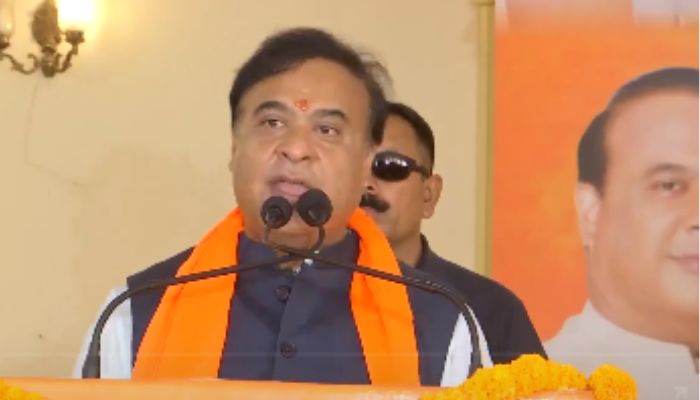
On Wednesday (17th July), Assam Chief Minister Himanta Biswa Sarma expressed grave concerns about the changing demographic composition in the Northern eastern border state. He asserted that demographic change was a matter of concern. He emphasised that this is not a political issue but rather for him, this is a “matter of life and death”. 

CM Sarma also highlighted how the demographic composition has drastically changed in Assam over the last several decades. He mentioned that Muslims who comprised around 12-14% of the total state population in 1951 have reached 40% now. He added that we have lost many districts. 

Addressing a press conference in Jharkhand’s capital, Rachi, CM Sarma said, “Changing demography is a big issue for me. In Assam, the Muslim population has reached 40 percent today. In 1951, it was 12 percent.”

He added, “We have lost many districts. This is not a political issue for me. It is a matter of life and death for me.”

It is pertinent to note that Assam CM Sarma has been vocal about the issue of illegal immigrants and has taken stern action against encroachment in the state.


Assam CM Sarma is the party in charge of the upcoming Jharkhand assembly elections. Addressing the press, he blamed the JMM-led Jharkhand government for not taking stern actions against ‘illegal immigrants’ (ghuspatiye) who are trapping tribal girls and marrying them. He added that the administration was not doing due diligence and enforcing laws already in place. He added that after coming to power, the BJP will put in place laws to ensure that intruders don’t trap tribal girls and that nobody would be able to exploit them.

He said, “There is a problem of illegal immigrants coming from outside in Jharkhand and luring tribal daughters. All this is happening under the protection of JMM-Cong. Assam is a border state. I am fighting infiltrators every day, why has the Jharkhand government given up in this matter?” 

He explained that the detention and deportation of illegal immigrants is the duty of the state government.  

Earlier this month, on 1st July, Sarma had expressed concerns about the prevalence of criminal activities among people from a “particular religion”. 

“I am not saying that crime is committed only by people of a particular religion but recent incidents since the just concluded Lok Sabha elections is a matter of concern,” Sarma was quoted as saying by Hindustan Times. 

On 23rd June, he expressed concerns about the surge in communalism stating that the Bangladeshi-origin minority community is the only one in Assam which indulges in communalism.

Soon after forming a state government in June 2021, he expressed concerns about the population explosion. He had said, “Population explosion is the root cause of economic disparities and poverty among minority Muslims in Assam.” 

‘Final decision on job quota to be taken after discussion’: Karnataka CM Siddaramaiah after drawing severe flak on Kannadiga job reservation bill

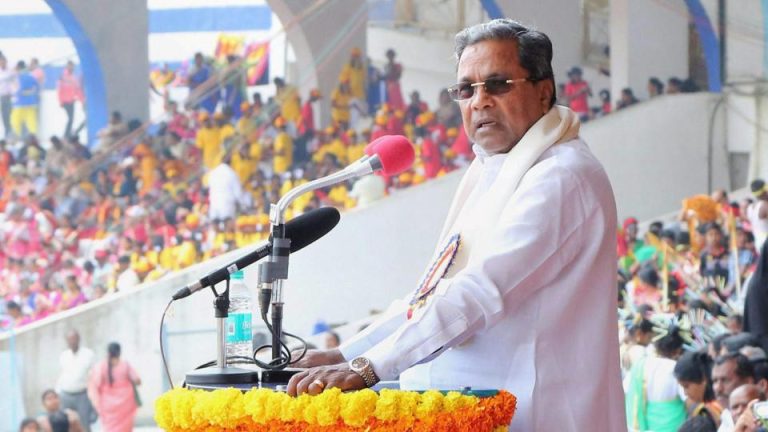
After drawing severe flak from several quarters, including industry leaders and experts, Karnataka CM Siddaramaiah appeared to backtrack on the government’s proposal to extend a 100 per cent job quota for Kannadigas.

Taking to X, Siddaramaiah tweeted that the bill is still in the anvil and yet to take the final form.

“The bill intended to implement reservation for Kannadigas in private sector institutions, industries and enterprises is still in preparation. A final decision will be taken after a comprehensive discussion in the next cabinet meeting,” Siddaramaiah tweeted in Kannadiga on X.

On Monday (16th July), the Congress government in Karnataka held a cabinet meeting headed by CM Siddaramaiah. It decided to present seven bills including 100% reservation for Kannadigas in Category C and D jobs in all private industries in the state. However, the legislation extending reservations in the private sector has triggered massive opposition from top Industry leaders and within the state government. 

Notably, after facing massive backlash, CM Siddaramaih reportedly deleted his post that highlighted the Cabinet’s decision to extend reservations in the private sector. Additionally, two of his senior ministers have slammed the Labour Ministry for bringing the draft bill without consulting other Ministries and holding discussions with Industry bodies. 

Significantly, one of the draft bills seeks to reserve 50% of management jobs and 75% of non-management jobs for local Kannadigas in the private sector. According to news agency ANI, the bill to provide 100% job reservation for Kannadigas in C and D grade jobs was approved in the Cabinet meeting. The bill is called the State Employment of Local Candidates in the Industries, Factories and Other Establishments Bill, 2024. Officials from the Labour Department said that the Bill will be presented and passed in the same session.

A day after the Cabinet meeting, CM Siddaramaiah hailed his government for the move describing it as a “Pro-Kannada government”. However, the Chief Minister went on to delete the post after facing backlash for the move. 

In the now-deleted post, Siddaramaiah had written, “The Cabinet meeting held yesterday approved a bill to make it mandatory to hire 100 per cent Kannadigas for ‘C and D’ grade posts in all private industries in the state. Our government wishes that the Kannadigas should avoid being deprived of jobs in the land of Kannada and be allowed to build a comfortable life in the motherland. We are a pro-Kannada government. Our priority is to look after the welfare of Kannadigas.” 

Muzaffarnagar Police asks hotel owners and vendors to display name ahead of Kanwar Yatra, usual suspects cry ‘religious discrimination’: The fallacy and an unwitting admission

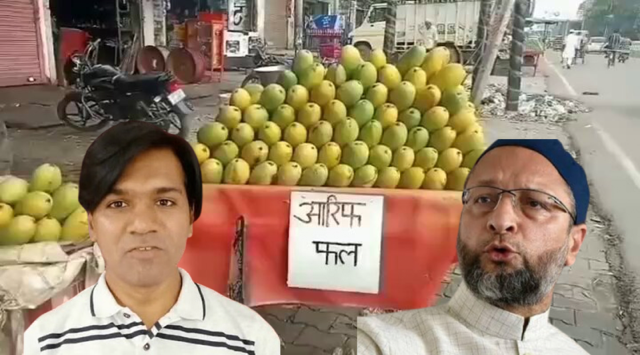
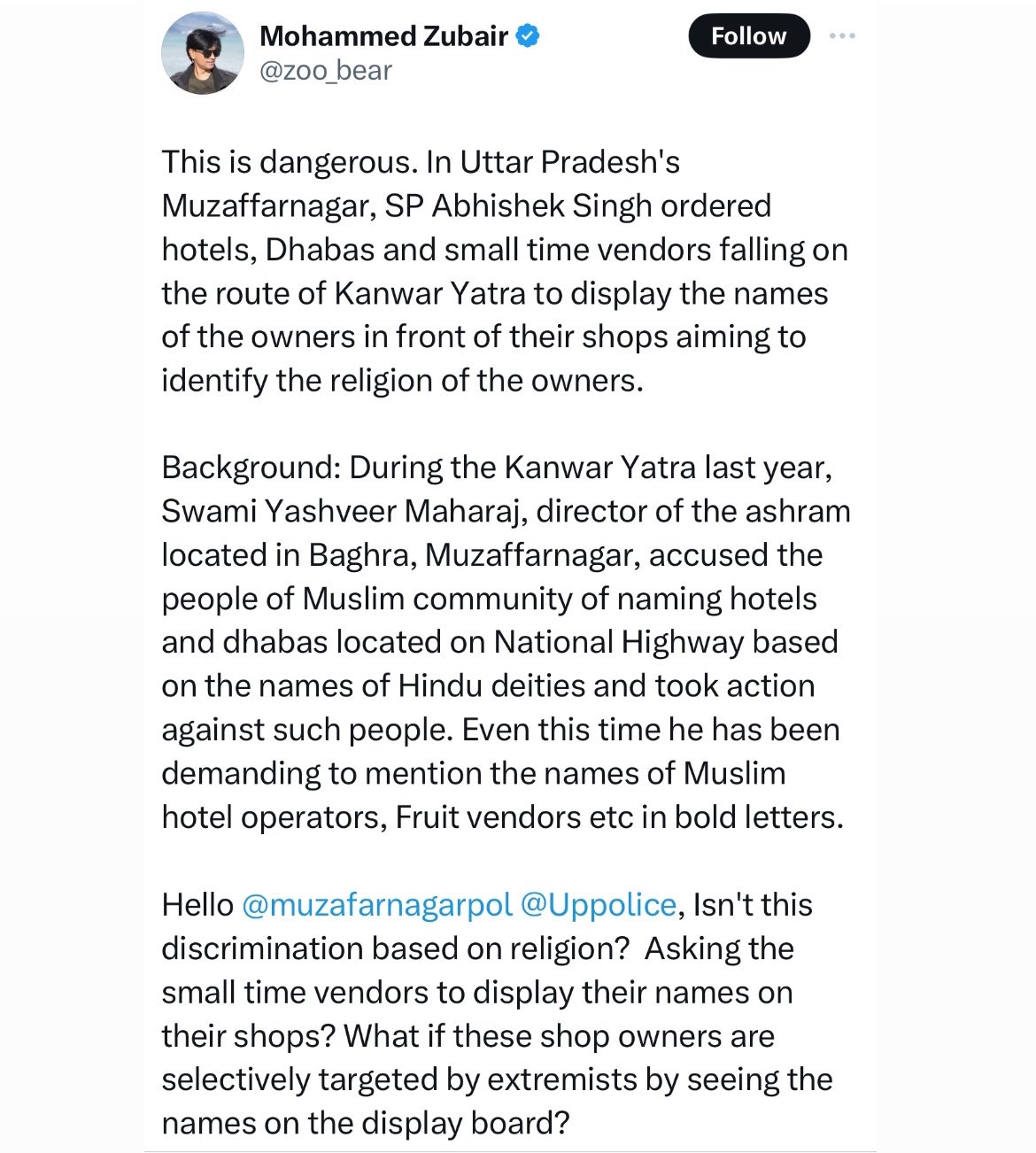
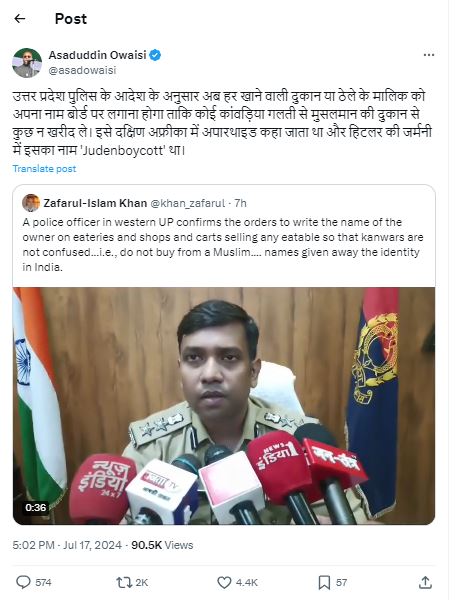
The UP state government and local administrations have started to heighten security measures to ensure the smooth and hassle-free completion of the Kanwar Yatra. This year the Kanwar Yatra will start on 22nd July and conclude on 2nd August. In the Muzaffarnagar district of Uttar Pradesh, the local administration has issued an order asking hotels, dhabas, and carts selling food items to write the name of their proprietors and operators running the shop or cart. However, alleged fact-checker Mohd Zubair, AIMIM Chief Asaddudin Owaisi, and Islamists have started to cry hoarse alleging religious discrimination. 

Notably, the Muzaffarnagar SSP addressed the media where he shared information about the administration’s decision. Speaking to media channels, SSP Abhishek Singh said that dhabas, hotels, eateries, and carts selling food items that fall on the Kanwar Yatra mark have been asked to write the names of proprietors and operators. He added that this could avoid confusion for the Kanwariyas and avert arguments or confrontations as well as avoid any untoward incident. He added that eateries have started to follow the order out of their volition. 

However, the SSP added, “Kanwariyas can buy goods from anywhere.” 

In line with the administration’s orders, many cart sellers and eateries in the region have started to display names on banners or paper boards. Police personnel from police stations like Nai Mandi, Chhapar, Purkaji, Mansoorpur, and Khatauli have started to enforce the order. In the city area, many eateries near Meenakshi Chowk have started to put up posters with their names written on them. 

It is pertinent to note that the administration’s order comes in the wake of the allegations that many Muslim eatery owners put up posters with false Hindu names which have often created concerns for vegetarians and led to scuffles over the issue of deceiving customers or hurting the sentiments of the Kanwariyas.  

Last year during the Kanwar Yatra as well as days ahead of this year’s yatra, Swami Yashveer Maharaj made serious allegations that a large number of Muslim eatery owners hid their identity and displayed posters with fake Hindu names. 

He said that they have dotted the routes of the Kanwar Yatra. Given this, Swami Yashveer Maharaj demanded that the administration should ask eatery owners to display the names of their owners or operators. 

He said, “Some people from a particular community operate shops during the Kanwar fair by putting up boards with the names of Hindu deities, due to which there is a possibility of hurting the sentiments of Shiva devotee Kanwariyas. The identity of people from a particular community operating shops by putting up boards with the names of Hindu deities should be made public. The police should run a campaign for this.”

He also warned that if the administration doesn’t take action in this matter within a week, they will organise protests and agitations. 

Islamists crying hoarse over the issue

The administration’s orders come in the wake of allegations that certain Muslim shop owners were deceiving and hurting the sentiments of Kanwariyas by using fake Hindu names and serving fast non-compliant food in the holy month. According to the administration, this has been done to avoid confrontation and avert any untoward incident that could create a law and order situation. However, Islamists have started to cry hoarse alleging that displaying the name of the shop/cart owner is “religious discrimination”. 

Mohammed Zubair, who describes himself as a ‘fact-checker’ but often indulges in selective ‘fact-checking’ to push the left’s agenda, described the order asking vendors and shop owners to maintain transparency and display their names on their shop as ‘dangerous’ and whipped up hysteria claiming such a move had a potential of ‘discrimination on the grounds of religion’.

AIMIM Chief Asaduddin Owaisi went further and equated it with South Africa’s “apartheid” and Germany’s “Judenboycott”.  

Several other X users also alleged discrimination and equated it to Nazism.

However, their outrage over the administration’s order to simply put the names of the street vendors and the hotel owners on their board betrays an unwitting admission that many mask their real identities by using deceptive names for their shops. One can only guess the real reason why street vendors and hotel owners would want to keep their identities hidden from their customers.

Nonetheless, the SSP categorically noted that the Kanwariyas can buy goods from anywhere. It only ensures that the Kanwariyas who may have an inclined propensity to search for their dietary intake-compliant eatery in the holy month, don’t fall prey to miscreants owners who put banners showing images of Hindu deities but are being run by Muslims who don’t adhere and respect to their dietary compliance.   

Ironically, alleged fact-checker, AIMIM Chief, and Islamists who defend communal certification like Halal tooth and nail despite it being religious discriminatory by the agency of preferring only Muslim slaughterers are arguing against and alleging that if fasting Kanwars prefer to dine or have food items from Hindu sellers, it is religious discrimination. 

Halal Certification and Halal economy

For a meat product to be halal, the animal must be slaughtered only by a Muslim. To achieve economies of scale, the meat industry ends up operating large-scale abattoirs to produce all their meat. They end up using only Muslims at these abattoirs as it has simply become cheaper to produce all their meat together, instead of running separate abattoirs for halal and non-halal meat. In such a scenario, many Hindu communities, especially some Dalits, who were traditionally butchers, miss out on employment opportunities in the sector. Considering the meat industry is worth several billion dollars, this is a huge sector where only people from one religion are finding jobs because of halal policies. Click here, to read reasons why the Halal economy has to be restricted.

Most businesses have started serving only halal meat now to save the cost of maintaining 2 supply chains, for halal and non-halal meat. People who may not be comfortable with halal meat, or people with religions where only jhatka meat is allowed, no longer have any choice in the matter. If they are ordering meat at a restaurant, they get halal only by default.

Islamists who conveniently turn a blind eye to the blatant religious discrimination through halal certification go hammer and tongs shouting and screaming ‘discrimination’ when it does not even exist, like in the current case where the administration has merely asked shop owners to display their names and allowed Kanwars to make informed choices for their food preferences. The possible cause for this hyperventilation among the usual suspects is not the imagined ‘discrimination’ but the likelihood of fostering a satvik economy that could be institutionalised to challenge the hegemony of the halal economy.

‘No one was allowed to vote in by-polls’: West Bengal BJP leader Locket Chatterjee

0

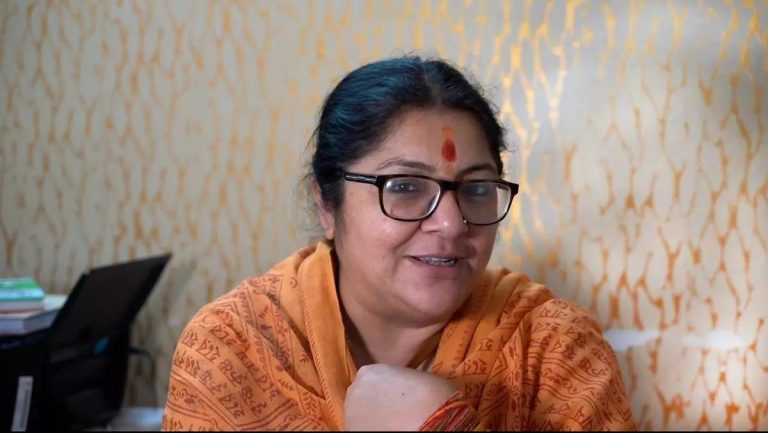
Bharatiya Janata Party leader Locket Chatterjee on Wednesday alleged that no one was allowed to vote in the by-polls.

“There was no election in the by-election… in the polls, no one was allowed to vote. Suvendu da also said that Hindu people were not allowed to vote,” Chatterjee told ANI.

Notably, the BJP had lost all four seats in the recently held Assembly by-polls to the ruling Trinamool Congress.

BJP leader further stated, “Winning and losing is a part of elections. But, it is not that the West Bengal BJP has come to an end or that there is a need for a new formation…Our vote percentage did not reduce…BJP is the biggest party in the country. Our next mission is 2026.”

Earlier, West Bengal Leader of Opposition Suvendu Adhikari had alleged that more than 50 lahks “Hindus” were not allowed to vote in Lok Sabha polls and over two lahks were refrained from voting in the by-polls respectively.

Adhikari told ANI that he will start a legal battle against this.”Democracy is dead in Bengal. We have started a mass movement today. Nearly 50 lakh Hindus were not allowed to vote in the Lok Sabha elections. More than 2 lakh Hindus were not allowed to vote in the 4 by-polls held in the state. I am launching a portal. Whoever was not allowed to vote, can register themselves and full secrecy will be ensured. I will start a legal battle also,” he said.

Trinamool Congress continued on its winning spree in the West Bengal Assembly by-polls, clinching all four seats, three of which were earlier held by its rival Bharatiya Janata Party (BJP).

In the recently concluded Lok Sabha elections, the BJP’s seat count decreased from 18 to 12. The TMC secured 29 out of the 42 seats in West Bengal.

‘Honi ko kaun taal sakta hai, jo aaya hai, use ek din jana hai’: Bhole Baba downplays Hathras stampede, says those who died were anyway destined to die

Surajpal alias Bhole Baba, the self-styled godman who presided over a religious incident that led to the death of over 120 people in Uttar Pradesh’s Hathras district, tried to downplay the tragedy stating that people who died in the stampede were anyway destined to die.

‘Honi ko kaun taal sakta hai, jo aaya hai, use ek din jana hai (No one can prevent the turn of fate, one who has taken birth, has to die one day),” Bhole Baba said in an interview with news agency IANS.

Who is Bhole Baba?

Surajpal hails from Bahadur village in Etah district and comes from Jatav Samaj. He claims to be a former employee of the Intelligence Bureau (IB). However, as per reports, he had worked with the state police and allegedly took VRS 26 years ago to begin delivering religious sermons. He then started giving religious and spiritual sermons and changed his maiden name and now goes by various aliases Bhole Baba or Narayan Sakar Hari. There is a dispute about his claims of being in IB with media reports stating that he was allegedly in the Local Intelligence Unit (LIU) of the state Police.

Bhole Baba claims that he directly received preachings from the Almighty and is claimed that he is not a follower of any ‘guru’. His Satsangs are referred to as ‘Manav Mangal Milan Sadbhavna Samagam.’ They are mostly organised on Tuesdays in Aligarh in Uttar Pradesh. He is often seen in a white suit, tie, and shoes, and sometimes in kurta-pajama.

He is more popular as ‘Sakar Vishwa Hari Baba’. Bhole Baba is often accompanied by his wife at sermons. As per reports, his followers are mostly people from the lower economic strata. They particularly hail from the Agra and Aligarh divisions of the Braj region. 

Hathras stampede tragedy

On Tuesday, July 2, a stampede at a private religious event in Hathras claimed 121 lives, leaving many others injured. The stampede took place during a Satsang for Sant Bhole Baba. Most of the dead in the tragedy are women.

A religious congregation was organised at Phulrai village in the district in which a large number of devotees were present. There was a stampede at the end of the congregation when hundreds of devotees tried to leave the venue together leading to a stampede.

 The venue was small and overcrowded. Because of the suffocation in small areas in hot and humid weather, the devotees rushed out as soon as the Satsang ended, leading to the stampede.

Swati Maliwal assault case: Delhi Police files chargesheet against Kejriwal’s close aide Bibhav Kumar

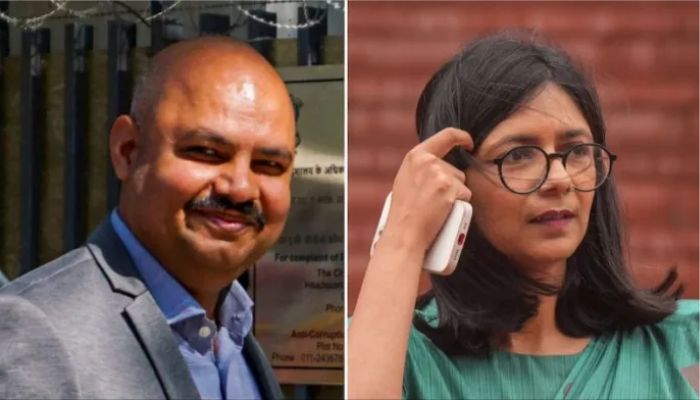
On Tuesday (16th July), the Delhi Police filed a chargesheet against Bibhav Kumar, an adviser to Delhi Chief Minister Arvind Kejriwal, in connection with an assault on Aam Aadmi Party MP Swati Maliwal. The 500-page charge sheet was filed in the courtroom of metropolitan magistrate Gaurav Goyal. Bibhav Kumar appeared in court by videoconference owing to judicial custody, which the magistrate extended until 30th July.

On the 30th of July, when a judgement regarding taking cognizance of the chargesheet will be made, Bibhav Kumar must be physically present in court. Notably, the chargesheet contains statements from 50 witnesses.

Notably, Bibhav Kumar has been booked under several sections of the Indian Penal Code including wrongful restraint (Section 341), assault with intent to outrage a woman’s modesty (Section 354), assault with intent to disrobe a woman (Section 354B), criminal intimidation (Section 506), insult to a woman’s modesty (Section 509), attempt to commit culpable homicide (Section 308), and destroying evidence or providing false information (201).

It has been alleged that Bibhav Kumar attempted to format his phone and send data to his mother’s phone. He also tampered with CCTV camera video at Kejriwal’s and his personal residences. He also refused to provide his phone password to officials. Other than Swati Maliwal and Bibhav Kumar, security personnel from the chief minister’s residence will act as witnesses.

As reported earlier, Delhi CM Arvind Kejriwal’s close aide Bibhav Kumar was arrested from Kejriwal’s house. In her complaint to the police, Rajya Sabha MP Swati Maliwal had said that Bibhav Kumar attacked her at CM Kejriwal’s residence on May 13 with “full force, slapping and kicking her in the chest and abdomen.”

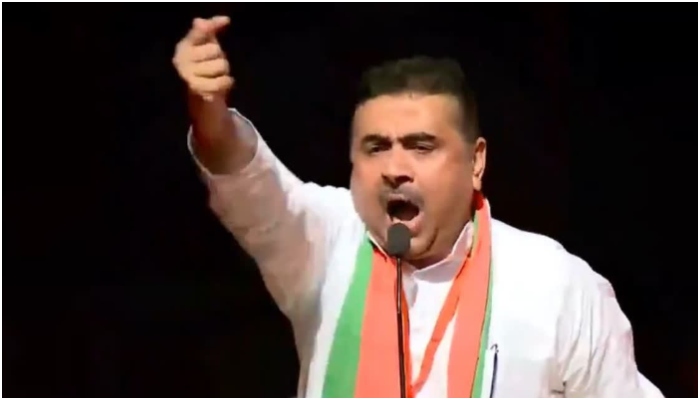
BJP’ Suvendu Adhikari calls for dissolution of minority wing, gives a new clarion call ‘Jo hamare sath hum unke sath’, later clarifies he meant all nationalists

On Wednesday (17th July), the BJP leader from West Bengal indicated that the center and the state should work for the betterment of those who support them and the national development. He slammed the minority community and said that all those, be they Hindus or Muslims who think about the nation first can expect complete support and cooperation from the state. He opined this as he called for the dissolution of the party’s minority wing.

“I have spoken about nationalist Muslims and you all said “Sabka sath, sabka vikas”. But I shall say it no more! Rather we shall now say “Jo hamare sath hum unke sath. Sabka sath sabka vikas band karo!” No need for minority morcha,” Suvendu Adhikari said while speaking at the BJP state executive meeting in Kolkata.

Prime Minister Narendra Modi introduced the ‘Sabka Saath, Sabka Vikas’ expression in 2014 to encourage inclusive and holistic development for all Indians, regardless of caste or religion.

As a backlash developed over his words, Adhikari stated that PM Modi’s ‘Sabka Saath, Sabka Vikas’ slogan represented the NDA government’s aim, and he meant to emphasize that the BJP in Bengal should connect with those who support them politically.

“Sabka Saath, Sabka Vikas is PM Modi’s slogan, and it won’t change with my words… What I meant was the BJP in Bengal should align with those who support them politically, and we should keep a safe distance from those who won’t come with usâ€æ it is not connected with the administration or development,” Adhikari said.

“Swami Vivekananda himself said that one should have faith in one’s religion and show respect for the religion of others. There is no need to disrespect the religion of others,” he further said.

However, later he said that his statements were wrongly perceived and that he completely believed in Prime Minister’s call for Sabka Saath, Sabka Vishwas.

“My statement is being taken out of context. I am clear that those who are Nationalists, stand for this Nation and Bengal, we should be with them. Those who don’t stand with us, work against the interest of Nation and Bengal, we need to expose them,” he added.

“Also, like Mamata Banerjee, we shouldn’t divide people in majority and minority, but see them as Indians. I embody in letter and spirit, Prime Minister’s call for Sabka Saath, Sabka Vikas, Sabka Vishwas, Sabka Prayas,” he clarified.

Meanwhile, Assam CM and BJP leader Himanta Biswa Sarma also made similar claims concerning the changing demography of the state. He said that the Muslim population in the state of Assam was increasing and that was a point of concern for him.

“Changing demography is a big issue for me. In Assam, Muslim population has reached 40% today. In 1951, it was 12%. We have lost many districts. This is not a political issue for me. It is a matter of life and death for me,” he added.

While addressing the Vijay Sankalp Sabha in Ranchi, Jharkhand, Sarma further said that the state should look into infiltrators and work to remove them. “The infiltrators first enter Assam and West Bengal and then go to Jharkhand, Bihar and Chhattisgarh…Jharkhand HC has directed the State government to detect the infiltrators and deport them. It is the responsibility of the state government to detect and deport. It is not the responsibility of the Central government to do this. I do this work in Assam daily. If you are not fulfilling your responsibility and say that Delhi should do it, then why are you in the chair? You should leave the chair and we will do this work,” he said.

He indicated that the Center should not be blamed and that the state should work to get the infiltrators out of the area.

Karnataka proposes 100 pc quota for Kannadigas in private firms: How Congress govt’s move promoting regional chauvinism would spell doom

On Monday (16th July), the Congress government in Karnataka held a cabinet meeting headed by CM Siddaramaiah. It decided to present seven bills including 100% reservation for Kannadigas in Category C and D jobs in all private industries in the state. However, the legislation extending reservations in the private sector has triggered massive opposition from top Industry leaders and within the state government.

Notably, after facing massive backlash, CM Siddaramaih reportedly deleted his post that highlighted the Cabinet’s decision to extend reservations in the private sector. Additionally, two of his senior ministers have slammed the Labour Ministry for bringing the draft bill without consulting other Ministries and holding discussions with Industry bodies. 

Significantly, one of the draft bills seeks to reserve 50% of management jobs and 75% of non-management jobs for local Kannadigas in the private sector. According to news agency ANI, the bill to provide 100% job reservation for Kannadigas in C and D grade jobs was approved in the Cabinet meeting. The bill is called the State Employment of Local Candidates in the Industries, Factories and Other Establishments Bill, 2024. Officials from the Labour Department said that the Bill will be presented and passed in the same session.

A day after the Cabinet meeting, CM Siddaramaiah hailed his government for the move describing it as a “Pro-Kannada government”. However, the Chief Minister went on to delete the post after facing backlash for the move. 

In the now-deleted post, Siddaramaiah had written, “The Cabinet meeting held yesterday approved a bill to make it mandatory to hire 100 per cent Kannadigas for ‘C and D’ grade posts in all private industries in the state. It is our government’s wish that the Kannadigas should avoid being deprived of jobs in the land of Kannada and should be allowed to build a comfortable life in the motherland. We are a pro-Kannada government. Our priority is to look after the welfare of Kannadigas.” 

Conspicuously, the Congress government blamed North Indians for taking away the jobs from the locals and necessitating the government to bring this draft bill. The bill has been drafted by the Labour Department. It claimed that the jobs of industries operating in the state are going to the states of North India. It states that industries that get infrastructure including land and water from the state should give reservations for jobs to the locals, and this has been approved in the cabinet meeting.

Content of the draft bill that has stirred a massive row in the state

Regarding the appointment of ‘Local Candidates’, the bill states, “Any industry, factory or other establishments shall appoint fifty per cent of local candidates in management categories and seventy per cent in non-management categories.” 

As per the bill, a local candidate is defined as a person born in Karnataka or living in the state for 15 years and can speak, read, and write in Kannada. 

According to the bill, if the candidates did not have Kannada as a language in their secondary school certificate, they must pass a Kannada proficiency test as specified by the ‘Nodal Agency’. 

In case, the industries fail to get enough qualified local candidates, they will have to take steps to train local candidates within three years while collaborating with the government. 

According to the bill, even if the company fails to get a sufficient number of local candidates, they may apply for relaxation. However, the bill mandates that the relaxation provided shall not be less than 25% for management level and 50%-management level jobs. 

The bill also proposes penalties for failure to comply with the Employment of Local Candidates Act. These penalties range from Rs 10,000 to Rs 25,000.

Strikingly, the draft of the bill does not mention the 100 per cent reservation for Group C and D posts. Additionally, the Labour Minister also issued a clarification in which he didn’t mention 100% reservation in C and D categories jobs. 

Siddaramaiah government takes a U-turn on 100% reservation, issues clarification as well as give assurance of “wider discussions”

On Wednesday (17th July), hours after the decision and CM Siddaramaiah’s post mentioning 100% reservation for Group C&D categories stirred a hornet’s nest, Karnataka Labour Minister Santosh S Lad issued a clarification about the Chief Minister’s post which was later deleted. 

The Labour Minister clarified that the state government has capped reservations in private firms at 70% for non-management roles and 50% for management-level positions. 

In the clarification statement, the Labour Minister claimed that if people with such skills are not available, the company can “outsource” people. 

Industries bodies oppose the bill, and demand it should be scrapped 

The Pro-Kannada organisations hailed the state government for this move describing it as a boon for locals. However, many industry leaders argued that the government should focus on skills not quotas. Many industrialists claimed that it is a “discriminatory” and regressive law because of which the industries in the state may suffer adversely. According to many Industry leaders, the decision may force many of the companies to relocate to other states and will deter talent and investment from coming into the state.

The Chairman of Manipal Global Education Services, Mohandas Pai described the bill as “fascist” and “unconstitutional” adding that the bill should be “junked”.

Biocon executive chairperson Kiran Mazumdar Shaw also opposed the move arguing that the government should focus on skill and talent.

The co-chairman of ASSOCHAM Karnataka and the co-founder of YULU, RK Misra described the bill as “shortsighted”. He argued that if a government officer is appointed in every private company to monitor its implementation, it will scare away Indian IT and Global Capability Centres. 

Will hold wider consultation: Priyank Kharge slams Labour Ministry and says other ministries not consulted yet

When the controversy escalated and several Industrial leaders criticised the government’s move, State IT Minister Priyank Kharge and Minister for Commerce & Industries said that they would hold discussions with the Chief Minister. They also added that the state government will now hold wider consultations and discussions on this matter.

Ramifications of the move

As pointed out by many industry leaders and legal experts, the draft bill brought by the Congress government in Karnataka is discriminatory and regressive as it seemingly violates both Article 14 – Equality of all citizens and Article 19 which allows every citizen freedom of movement including the right to reside and work in any part of the country.

On numerous occasions, the courts have struck down reservations for locals in private jobs and legislations that breach a certain limit (50% in most cases). Several industrialists have highlighted how the Punjab and Haryana High Court quashed a law that mandated 75% reservation in private sector jobs for residents of Haryana. 

Furthermore, the legislation mandating job quotas for locals has an implicit clause that the companies can seek relaxation in case they fail to avail enough skilled locals for the job which renders it prone to misuse and corruption. This could lead to moral policing by regional and linguistic chauvinistics as was witnessed in the form of violent protest against shop owners in the name of non-compliance of 60% Kannada language on signages on banners. The ambiguity and scope for favouritism/witch-hunt and government/police intervention in the day the day-to-day functioning of the company’s operation also builds a terrorising atmosphere for non-local owners in starting or running their operations.   

Pertinent to note that employment generation for local youths to avoid and mitigate intra and inter-state migration among other related problems has been a major focus area for all state governments in coordination with the Union government. Political parties – with regional parties having higher propensity – have been more inclined towards introducing restrictive measures and job quotas for locals just for the sake of vote bank consideration. 

However, Congress’ Karnataka government’s decision to go through the populist measure is a counterintuitive one as rather than focusing on enlarging the pie (state’s economy) – which requires newer investment – it has a chilling effect on meritocracy, ease of doing business, investment opportunities and render the companies prone to “corruption”, “bureaucratic red-tapism”, and sends the state back to the “License quota raj” period, Pre-LPG reform era. It also left them at the mercy of regional and linguistic chauvinist groups to spare them from wanton violence as they could torment any company they dislike in the name of “not following the law which has a great amount of ambiguity.”

Haryana CM announces 10% reservation for Agniveers in state govt jobs, Rs 5 lakh interest-free loan facility

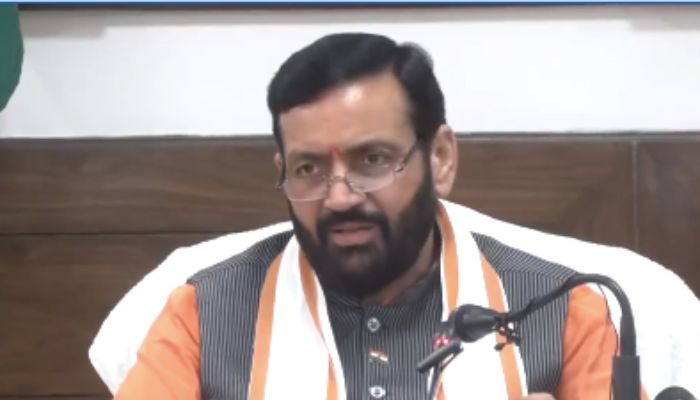
On the 17th of July, Haryana Chief Minister Nayab Singh Saini announced a 10% horizontal reservation for the Agniveers in state government jobs, as well as an interest-free loan of up to Rs 5 lakh. This reservation will apply to several state government posts including mining guard, forest guard, constable, SPO and jail warden.

During a press conference on Wednesday, the Haryana chief minister stated that Prime Minister Narendra Modi’s Agnipath scheme, implemented on June 14, 2022, is a scheme for the benefit of the nation.

“Agnipath scheme was implemented by PM Modi on 14th June 2022. Under this scheme, Agniveer is deployed in the Indian Army for 4 years. Our government will provide 10% horizontal reservation to Agniveers in Haryana in direct recruitment to the posts of Constable, Mining Guard, Forest Guard, Jail Warden and SPO recruited by the state government…,” CM Saini said.

Furthermore, the Chief Minister said that Agniveers will receive a three-year exemption from the maximum age requirement for government posts in Groups B and C.

“We will provide these Agniveers with a relaxation of three years in the maximum age prescribed for government posts in Groups B and C. In the case of the first batch of Agniveers, the age relaxation will be five years. Our government will provide 5% horizontal reservation for Agniveers in direct recruitment to civil posts in Group C and 1% horizontal reservation in Group B. If Agniveer is given a salary of more than Rs 30,000 per month by any industrial unit, then our government will provide a subsidy of Rs 60,000 per annum to that industrial unit

‘Threat to society, release could lead to violence’: How HC rejected Gauhar Chisthi’s bail multiple times before Ajmer court acquitted him for raising ‘Sar Tan Se Juda’ slogans

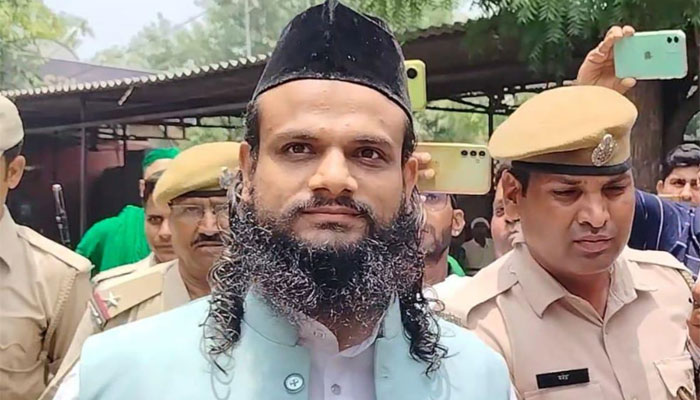
On 16th July, the Ajmer Sessions Court acquitted Khadim Gauhar Chishti and 6 others in connection to raising the ‘Sar Tan se Juda (STSJ)’ slogans against former BJP spokesperson Nupur Sharma outside the Ajmer Sharif Dargah. Gauhar Chishti is a Khadim of the Ajmer Dargah, who had threatened to behead those who insulted Prophet Mohammad in June 2022. After the video of the incident went viral on social media, Gaurhat Chishti left Ajmer and took refuge in Hyderabad. He was later arrested by the police in July that year. The accused had been languishing in jail ever since. He had also met the killers of Udaipur tailor Kanhaiyalal.

What happened on the day?

According to the court documents, on 17th June 2022 at around 3 PM at Nizam Gate, Gauhar Chishti and others did not follow the conditions imposed by the police on silent protest against former BJP spokesperson Nupur Sharma and started giving provocative speeches using a loudspeaker attached to a rickshaw. At that time, there were 2,500-3,000 people at Nizam Gate. When police tried to convince them to stop, the “Gustakh-e-Nabi ki ek saza, sar tann se juda, sat tann se juda” slogan was raised.

A case under Sections 117, 188, 504, 506, and 34 of the Indian Penal Code was registered. Furthermore, based on the evidence collected, Chishti was found linked to the murder of Kanhaiyalal and one other murder case. It was found that the slogans and provocative speeches could have led to the murders. Section 302 was added to the matter. Interestingly, during the investigation, Siddiqui claimed that the phone that he used to communicate with Muslim groups on WhatsApp was in his room at his house. However, later he claimed his relatives hid it and the phone was never recovered.

The bail application of Gauhar Chishti and Tazim Siddiqui was rejected by the Sessions court

Initially, Saiyyad Gauhar Hussain Chishti approached the Magistrate court for bail. However, on 28th August 2022, his bail plea was rejected. In the court, Gauhar Chishti claimed that he did not say anything against the country or the society. He was handed over the mic by the people and said whatever he felt. There was no intention to cause communal tension. He claimed that he was falsely implicated in the case.

Chishti further claimed that he was not linked to any terrorist organization. His father was old and there was no one to take care of him. The prosecution opposed the bail plea and said that the provocative speech given by him led to the murder of Kanhaiyalal in Udaipur. The court noted that Chishti has a criminal history. Based on the arguments and evidence, his bail plea was rejected.

In the case of Tazim Siddiqui, it was argued that he was implicated falsely in the case. Furthermore, no evidence was found against him. He was falsely linked to the murder of Kanhaiyalal. However, the prosecution opposed the bail and pointed out that the conditions of the silent protest were broken by the accused. His bail plea was rejected.

After the bail pleas were rejected by the lower court, Gauhar Chishti and Siddiqui approached Sessions Court for bail. The judgment in Chishti’s plea was pronounced with the bail plea of Tazim Siddiqui as both pleas were linked to the same case. On 6th September 2022, Sessions court rejected their bail plea. Justice Madanlal Bhati dismissed the petition based on the facts attached to the case.

Arguments from the defense

The defense lawyer appearing for Chishti argued that there was no prima facie evidence to support the charge against his client. The counsel claimed that the initial remand report presented by the police was later falsely substantiated to register the case. Furthermore, he pointed out that the co-accused in the case, Fakar Jamal and Moin Khan were granted bail in the same case by the Jaipur Bench of Rajasthan High Court.

In the case of Tazim Siddiqui similar arguments were presented. The defense argued that his name was present in the original FIR and statements recorded under Section 161 of CrPC. The counsel further argued that Siddiqui’s name was mentioned only in a supplementary statement. Furthermore, the mobile phone using which he allegedly sent the incriminating WhatsApp messages was not recovered by the police. The defense pointed out that there were no pending criminal cases against Siddiqui apart from the current one.

Prosecution’s argument

Replying to the defense’s arguments, the prosecution opposed the bail applications. He presented a charge sheet against Gauhar Chishti and Siddiqui and other co-accused in the case. The prosecution informed the court that the investigation against the additional accused was pending and pointed out that the bail applications of the co-accused were rejected by the same court. The prosecution argued that Chishti and Siddiqui were involved in inciting violence using provocative slogans and messages. He said those provocative slogans led to the horrific murder of Kanhaiyalal in Udaipur.

Previous bail applications and the argument of precedent

The bail applications of Fakar Jamal and Moin Khan were rejected by the same court on 18th July 2022. However, the Jaipur Bench of Rajasthan High Court granted both of them bail on 2nd September 2022. The defense appearing for Chishti and Siddiqui used this precedent to argue that his clients deserve to get bail. However, the court found that the circumstances in the case of Chishti and Siddiqui were different from Jamal and Khan.

Court’s Judgment

After reviewing the evidence and witness statements, the court said that Chishti and Siddiqui were prima facie involved in inciting violence. The court said that the charges against both of them were serious. The court further added that if the bail was granted to them, they might tamper with the evidence or try influencing the witnesses. The court noted the active role of the accused in the case and pending investigations against them while rejecting the bail. The court said that the ongoing custodial investigation was in place and it was necessary to continue their custody to ensure law and order in the region.

The bail plea of Gauhar Chishti rejected multiple times by the Rajasthan High Court

Following his bail plea rejected by the Sessions Court, Chishti approached the Rajasthan High Court for bail. On 30th September 2022, Chishti’s first bail plea in the Rajasthan High Court was rejected. The prosecution argued that the “peaceful protest” was organized with the state’s permission. Furthermore, the FIR was filed after a delay of seven days and originally bailable offenses were added. However, after pressure from the media, the state added Sections 302 and 115 of the IPC which are non-bailable without any evidence.

It was argued that co-accused in the case were granted bail in the matter. Chishti’s counsel argued that his wife was 8 months pregnant and father was old and ailing and he was the sole bread earner of the family. It was further argued he had no role in the Kanhaiyalal and Umesh Kohle murder cases.

The prosecution argued that Chishti’s case was highly distinguishable from the co-accused case which was on bail. It was contended that Chishti was a habitual offender and his case was on a different footing.

It was further contended that the permission was granted only for a peaceful protest with conditions. The terms and conditions included that it was the responsibility of the organisers to maintain law and order during the protest. Furthermore, conditions included that there should be no provocative speeches or slogans during the protest that might hurt the religious sentiments of anyone. However, despite the terms and conditions, “Gustakh-e-Nabi ki ek saza, sar tan se juda” slogans were raised in the presence of 3,000 people.

It was further submitted that the video clips of the slogans and speech were circulated widely online leading to the Udaipur and Amrawati incidents where victims were beheaded on account of religious hatred.

It was further contended that Chishti was a habitual offender and every year, as a precautionary measure, prohibitory orders were issued against him to maintain peace and communal harmony.

The court said, “The alleged recovery of multiple mobile phones and the fact of the active arrest of the applicant made from another State further reflects the alleged active participation of the applicant. The prohibition orders passed in the case of the applicant, every year under Section 107 of CrPC, also distinguish the case of the applicant from the co-accused who have been enlarged on bail and further reflect his criminal antecedents. The slogans raised in the said case were different and they were not provocative, motivated, vindictive, and lonesome towards the abetment of crime as per the slogan raised. Learned AAG had also submitted that on account of the said slogans, certain victims were beheaded at Udaipur and Amravati. Considering the above, it cannot be ruled out that if the applicant is released on bail, he can pose a threat to the society at large and affect the law and order situation in the State.” Based on the evidence and circumstances, his bail was rejected without any comments on the merits or demerits of the case.  

Gauhar Chishti again approached the High Court for the bail. On 24th April 2023 claiming change in circumstances. His counsel argued that the co-accused against whom the same charges were framed were out on bail on the orders of the High Court. Furthermore, it was argued that Chishti could not affect witnesses as primary witnesses were police personnel. Hence, he should be granted bail on the grounds of parity.

The prosecution argued that his bail was rejected based on merit and said there was no material change in the circumstances. It was argued that if he was released on bail, he might disturb peace and harmony and might cause violent protests. Furthermore, multiple video CDs and mobile phones were recovered from him.

The court rejected the bail considering the overall facts and circumstances of the case but without commenting on the merits or demerits of the case.

Later, Chishti approached the High Court claiming he should be granted bail as his wife and infant daughter were not medically fit. However, on 4th August 2023, the court dismissed the plea stating the daughter and wife of Chishti live in the same household as the family where several adults can take care of the medical needs of both. Furthermore, the court asked the Jurisdictional Police Officer to arrange a good pediatric physician to duly evaluate the child’s health and prescribe the required course of treatment in the interest of justice. Also, it was directed to arrange for a physician to provide necessary medical assistance to the wife.

Tazim Siddiqui granted bail by the Rajasthan High Court

On 29th September 2022, the Rajasthan High Court granted bail to Tazim Siddiqui. It was argued that co-accused in the case were granted bail. The bail plea was accepted based on the overall facts, bail to co-accused and circumstances of the case. However, the court did not comment on the merits or demerits of the case. He was released on a personal bond of Rs 50,000 and two sureties of Rs 25,000 each.


The bail plea of Faqar Jamali and Moin Khan was rejected by the Sessions Court

Initially, Jamali and Khan approached the Magistrate Court for bail but it was rejected. Then they approached Sessions Court for bail. The defense argued that Jamali’s name was not included in the FIR. Furthermore, he argued that Jamali was not directly involved in raising the slogans or killing anyone.

In the case of Moin Khan, the defense claimed that he was not linked to the matter in any way. He further argued that Khan’s son was getting married on 24th July and he should be granted bail to attend the wedding.

The prosecution opposed the bail and said that the investigation team found evidence that these two were involved in giving provocative speeches. Furthermore, both of them were present at the scene when the slogan “Gustakh-e-Nabi ki ek saza, sar tann se juda” was raised by Chisthi. They appeared in the video recorded by Chisthi’s supporters.

The prosecution further added that on 30th June 2022, when Jamali was presented in the court, he showed a “V” sign with his fingers which means “victory”. It showed he believed that they succeeded in their motive. The prosecution also informed the court that Jamali threatened the investigating officer that he should talk to his deputy and CI properly otherwise the situation with turn against him and he would shoot them both. The incident was reported by Constable Bharat Singh. However, the defense rejected the claims and accused police of falsely adding the allegations.

In the judgment, the court said that the argument that Jamali’s name was not there in the first FIR could not be accepted. Furthermore, the court took note of the fact that the accused were present at the scene when Chishti gave a provocative speech. Based on the arguments and evidence present, the court rejected the bail.

On 2nd September 2022, Jamali and Khan were granted bail by the Rajasthan High Court. The court considered the submissions by defense counsel that they were not named in the FIR. Considering all facts and circumstances without expressing any opinion on the merits or demerits of the case they were granted bail on personal bond of Rs 50,000 each with two sureties each of Rs 25,000.

The bail application of Riyaz Hassan Dal was rejected by the Sessions Court

In the case of Riyaz Hassan Dal, the defense argued that he was dragged into a false case without any evidence. He further argued that the complainant, who is a constable, named him on the directions of his senior officials. He further argued that he was named in the case to destroy his life by making him an accused in the Kanhaiyalal murder case.

The defense said that the allegations leveled against Dal in the charge sheet had no basis and could not be proven. He argued that his client was not at flight risk and was ready to comply with all conditions imposed for bail.

The prosecution opposed the bail stating that the High Court rejected the bail plea of Chishti on 30th September 2022. He further argued that his name was not there in the FIR as there were around 3,000 people present at the scene. It is not essential that every name has to be included in the FIR. However, the role of the accused in the procession was well established. He was present at the meeting that was held before the silent protest which made it clear that he was aware of the planning of the crime. Furthermore, he was seen in the videos recorded at the scene.

The defense argued that though Jamal and Khan got bail from the High Court, the bail pleas of Chishti and Siddiqui were rejected by the High Court. In that case, the argument of precedent cannot be taken into consideration.

Based on the arguments and evidence, the Sessions Court rejected Dal’s bail plea.

On 7th November 2022, the Rajasthan High Court granted bail to Riyaz Hassan Dal. The bail plea was accepted based on the overall facts and circumstances of the case. However, the court did not comment on the merits or demerits of the case. He was released on a personal bond of Rs 50,000 and two sureties of Rs 25,000 each.