

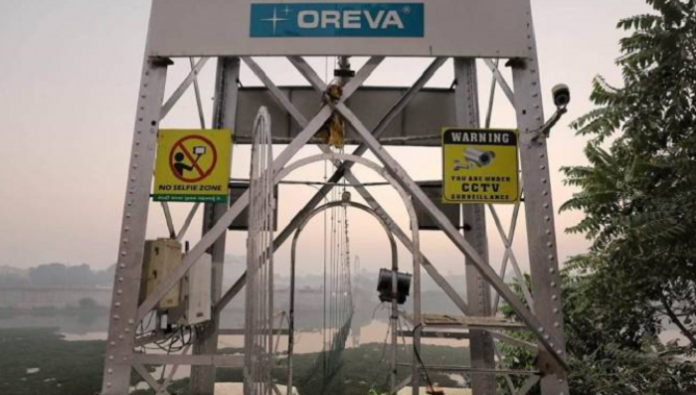
On Wednesday, Morbi and Rajkot Bar Association informed that they have decided not to take up the case and represent the nine accused of Oreva company who have been arrested in the Morbi Bridge collapse incident which claimed 135 lives on Sunday.
Gujarat | Nine accused (of Oreva co.) in #MorbiBridgeCollapse have been arrested. Morbi Bar Association & Rajkot Bar Association have decided to not take their case and represent them. Both the Bar Associations have passed this Resolution: AC Prajapati, sr adv, Morbi Bar Assn pic.twitter.com/CzZzy3OyAo
— ANI (@ANI) November 2, 2022
Those arrested include managers from Oreva, the company that renovated the Morbi bridge, ticket takers, bridge repair contractors, and three security officers tasked with crowd control.
Morbi Deputy Superintendent of Police PA Zala, who is investigating the tragic bridge collapse, alleged on Tuesday that the British-era suspension bridge collapsed due to poor maintenance. Zala told the local court that the bridge’s cables were rusted and that if the cables had been repaired, the incident would not have occurred.
The bridge, which was over a century old, had recently reopened after its repair and renovation work. Noticeably, 400 people were on the bridge at the time of the incident, as the ancient bridge could not withstand the weight.
According to The Indian Express report, one of the managers of the Oreva company, which was tasked with bridge renovation, stated in court that the company was not at fault and that the unfortunate incident occurred due to God’s will. “It was God’s will (Bhagwan ni ichchha) that such an unfortunate event occurred,” Deepak Parekh stated in the court of Chief Judicial Magistrate and Additional Senior Civil Judge MJ Khan. Parekh is one of nine accused held by the administration in the aftermath of the incident.
So far, the police investigation into the case has revealed that the contractors tasked with renovating the bridge were not qualified engineers. “They did the fabrication work.” “The investigation indicates that the bridge may have collapsed due to the aluminum planks on the bridge,” Public prosecutor HS Panchal confirmed on Tuesday.
Meanwhile, Gujarat observed a day of mourning on Wednesday to remember those who died in the Morbi cable bridge mishap.
“Took part in a peace prayer in Ahmedabad for the souls of those who died in the Morbi tragedy and for God to give strength to their families to bear this trauma, and paid heartfelt tributes to the deceased. The entire state of Gujarat is mourning with the families of the deceased,” Gujarat CM Bhupendra Patel tweeted.
Ahmedabad | Gujarat CM Bhupendra Patel attends the ‘Shradhanjali’ program for #Morbi tragedy victims.
— ANI (@ANI) November 2, 2022
The death toll in the Morbi bridge collapse incident that happened on October 30th stands at 135 so far. pic.twitter.com/rE4SPhx5zm
On Tuesday, Prime Minister Narendra Modi visited the Morbi bridge collapse site to assess the situation. Gujarat Chief Minister Bhupendra Patel joined PM Modi. Several NDRF and Indian Army teams have been deployed in the area where the search operation is taking place in the Machchhu River.


