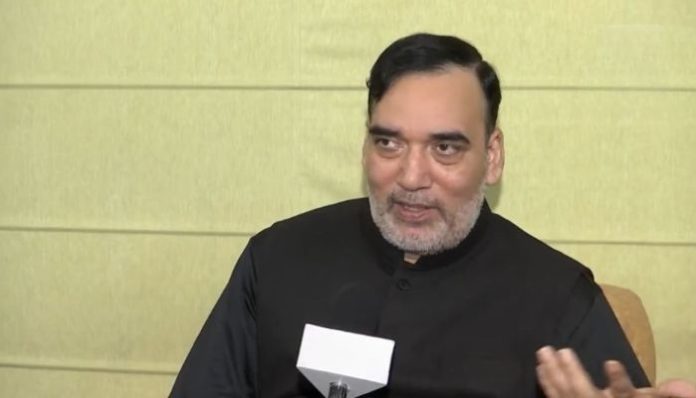
Delhi is one of the most polluted cities in the world by all parameters, whether it is the Delhi air, or the water in Yamuna flowing through Delhi, it tops almost all charts when it comes to pollution. Only recently, Pakistan’s Lahore beat Delhi as the most polluted city in the world. However, now, Delhi Government’s Environment Minister Gopal Rai has said that tonight is the most important night when it comes to Delhi pollution.
Notably, tonight is Diwali night, the most celebrated Hindu festival. Gopal Rai appealed to residents to avoid bursting firecrackers amid rising pollution concerns, warning that the city’s air quality index (AQI) has increased and stressing that incidents of firecracker use at night would be addressed.
Even though Delhi’s Air Quality has been terrible for weeks, and firecrackers had no role to play in it, Aam Aadmi Party has put the blame on Diwali and banned firecrackers in the national capital. Apparently, this will help improve Delhi’s air which has been toxic for weeks.
Earlier, Aam Aadmi Party had blamed Uttar Pradesh buses for pollution in Delhi, and now it seems, they are ready to blame Hindu festival Diwali. AAP leader Satyendar Jain even went as far as saying he was arrested in a money laundering case because he wanted to clean Yamuna in Delhi.
Notably, there is a comprehensive ban in Delhi on the manufacture, storage, sale, and use of firecrackers. However, when Aam Aadmi Party’s supremo Arvind Kejriwal was released from Tihar Jail on bail, the city saw plenty of fireworks.
Blaming Diwali for the poor Air Quality in Delhi, Gopal Rai said, “In some places, the AQI has increased but tonight is very important. If we all try to come together and keep one thing in mind that we have to celebrate Diwali with diyas and distribute sweets and not create problems for children and elders in our homes by burning crackers. If the whole of Delhi takes care of the lives of our children and elders, then I think that we can save Delhi from the smoke that happens every year after Diwali.”
He further said, “Such incidents (of bursting firecrackers) are coming to notice and the police are working on them on the ground. Such incidents happening at night will also be stopped…I believe it is more important than police enforcement that we all fulfill our duty to humanity.”
Apparently, 377 teams have been formed to enforce the crackers ban across Delhi, even though there is no attempt to address the real causes of pollution in Delhi.