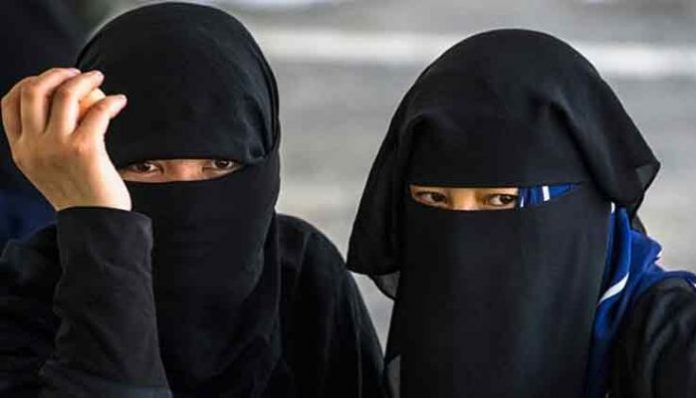
Kazakhstan’s President, Kassym-Jomart Tokayev, has signed a law banning the wearing of clothing in public that conceals an individual’s face. The new law allows exceptions only in limited circumstances, which are clearly defined within the legislation.
According to local media reports, the Kazakh parliament had passed the bill, which was subsequently forwarded to the president for final approval. The legislation prohibits any form of face covering in public spaces. However, face-covering garments are permitted in specific cases, such as when required by law, for official duties, medical purposes, protection from extreme weather, or during participation in sports and cultural events.
Local authorities argue that face-covering veils hinder law enforcement’s ability to identify individuals, posing a threat to public safety. As per media reports, the move aligns with Kazakhstan’s commitment to secularism. It aims to strengthen national identity while distancing the country from religious practices considered “foreign.”
In March 2024, President Tokayev described the niqab as an outdated form of clothing imposed on Kazakh women by newly radicalized groups. He emphasized that it contradicts the country’s traditional values.
Previously, the government had banned hijabs in schools in 2017 and again in 2023, targeting both students and teachers. In 2023, the decision sparked protests, with many schoolgirls refusing to attend classes in opposition to the hijab ban.
“This principle must be strictly observed in all spheres, including education. School is, first and foremost, an educational institution where children come to gain knowledge. Religious beliefs, on the other hand, are a choice and a private matter for each citizen,” President Tokayev was quoted as saying by The Times of Central Asia.
The decision follows a similar move by neighboring Kyrgyzstan, which passed a law in January 2025 banning the niqab—a face-covering veil worn by some Muslim women—in public spaces. Kyrgyz lawmakers justified the law by arguing that such attire impedes identification in government buildings and other public areas. In the months following the ban, authorities conducted raids in several cities to enforce the law.
Other countries in the region, such as Uzbekistan and Kyrgyzstan, have also implemented bans on face-covering veils, in 2023 and 2025 respectively.
While Islam is the dominant religion in Kazakhstan, the country is not a wholly Muslim state like Saudi Arabia or Iran. The constitution guarantees freedom of religion, and Kazakhstan officially upholds secularism, maintaining a clear separation between religion and state institutions.