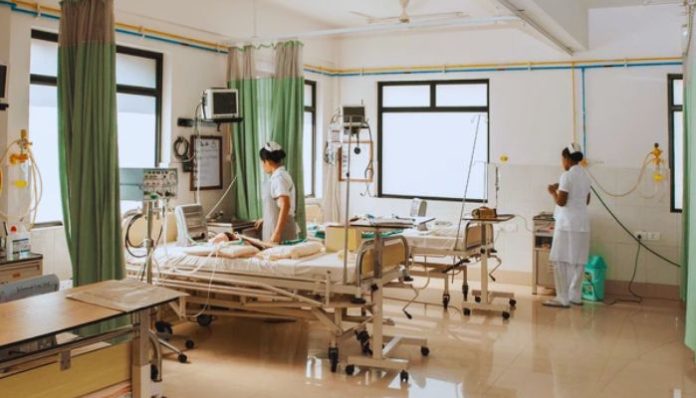
Value of human life, unity, and importance of robust modern healthcare infrastructure, Covid pandemic taught India a lot. Now, the Bihar government is mapping every healthcare service in the state to tackle a Covid-like healthcare emergency if it arises in the future. Geo-mapping of major private and public hospitals to local village pharmacies is being conducted across the state.
This unique geo-mapping initiative was launched in October 2024. So far, around 20,000 healthcare units have been mapped under this initiative. The mapped healthcare units include pharmacies, private labs, private solo practitioners, nursing homes, hospitals and medical colleges. The drive is on to cover all the hospitals, clinics, pathology labs and diagnostic centres and even local pharmacies in all of the state’s 38 districts. This information will then be collated in a dashboard.
Scheduled to conclude by the end of 2025, this geo-mapping exercise is being undertaken by the Bihar State Health Society in collaboration with Asian Development Research Institute (ADRI). The dashboard listing all healthcare units across the state would help policymakers detect and bridge gaps. It, however, is yet to be decided whether this dashboard will be accessible to the public.
Speaking about the rationale behind conducting the healthcare geo-mapping, Sanchita Mahapatra, senior health scientist at ADRI said that the initiative is meant to plug holes in the healthcare delivery system to avoid the chaos witnessed during the Covid pandemic.
This dashboard would function with and without internet connection and will store data locally and sync it with a remote server once a connection is available.
“We also drew up a comprehensive list of private healthcare units in each district using data from various sources, including the government. Using a real-time dashboard for accuracy, we geo-mapped from state headquarters to block towns,” Mahapatra said.
Meanwhile, teams also visited block-level units to understand why private players are often the first point of contact for the public, especially in rural or underserved areas, Indian Express reported.
Explaining the importance of mapping healthcare units, According to ADRI’s member secretary and economist Asmita Gupta, said: “Besides a host of other benefits, this mapping could put in place a system of understanding the delivery of over-the-counter medicines and health outcome.
Notably, nearly 80% of state’s healthcare units have been mapped. Now, efforts are on to map private health services in “hard-to-reach regions and at villages”.
This exercise, however, is not without challenges, especially mapping flood-prone and border areas. In addition, tracking and recording health vulnerabilities that vary seasonally is also a challenge since, it is difficult to establish a pattern of diseases, especially in Bihar’s migrant population. Despite the challenges, the officials say that geo-mapping is helping better the delivery of healthcare services.
Highlighting that around 70% of communicable diseases go to private hospitals and pathological labs, Ragini Mishra, the state epidemiologist with the Bihar State Health Society said: “The census of private health services has the potential of creating a network between healthcare seekers and providers.”
Mishra added that the biggest takeaway of the geo-mapping is “improving disease surveillance, seeking better response during pandemic outbreaks and getting a comprehensive picture of how people have been using private and public healthcare facilities.”