

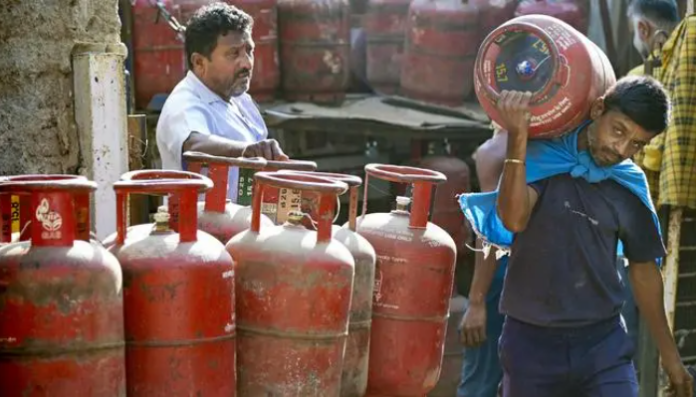
On 9th March (Monday), the Ministry of Petroleum & Natural Gas has instructed oil refineries to increase Liquefied Petroleum Gas (LPG) production, with the additional output designated for domestic consumption, in light of the continuous conflict in the Middle East affecting energy trade supplies.
“In light of current geopolitical disruptions to fuel supply and constraints on the supply of LPG, the Ministry has issued orders to oil refineries for higher LPG production and using such extra production for domestic LPG use,” the official statement read.
The minimum interval for booking a household LPG refill has also been extended. “The ministry has prioritised domestic LPG supply to households and introduced 25 day inter-booking period to avoid hoarding/black marketing. Non-domestic supplies from imported LPG are being prioritised to essential non-domestic sectors such as Hospitals and Educational institutions,” it further conveyed.
In light of current geopolitical disruptions to fuel supply and constraints on supply of LPG, Ministry has issued orders to oil refineries for higher LPG production and using such extra production for domestic LPG use.
— Ministry of Petroleum and Natural Gas #MoPNG (@PetroleumMin) March 9, 2026
The ministry has prioritised domestic LPG supply to…
The release added, “For LPG supply to other non-domestic sectors, a committee of three EDs of OMCs have been constituted to review the representations for LPG supply to restaurants/hotels/other industries.”
The Modi govt invokes emergency measures to ensure LPG supplies
The government has formally enforced a stringent natural gas rationing policy spanning all industries to manage major supply interruptions in light of the dispute in the Middle East, reported NDTV Profit. The Natural Gas (Supply Regulation) Order was passed after foreign suppliers exercised force majeure provisions in the wake of blocked LNG supplies over the Strait of Hormuz.
The centre created a supply hierarchy through this emergency step to ensure distribution for vital industries. All current commercial agreements and Gas Sale Agreements (GSAs) are superseded by this directive. The Petroleum Planning and Analysis Cell (PPAC) would notify a pooled pricing, and the Gas Authority of India Limited (GAIL) will oversee natural gas supplies to carry out the mandates.
Government Invokes Emergency Measures To Tackle Gas Supply Shortage: Check Sector-Wise Allocation
— NDTV Profit (@NDTVProfitIndia) March 10, 2026
Read More: https://t.co/rhWdK6orh6 pic.twitter.com/lnsvnrvnl2
City gas networks and critical fuel providers are now drawing their entire historical needs to safeguard the citizens. However, substantial gaps are being borne by heavy industries. According to current operational statistics, the supply allocation is as follows:
- Compressed natural gas (CNG), pipeline compressor fuel, LPG production, and domestic piped natural gas (PNG) all averaged 100% over the previous six months.
- Tea industries, manufacturing, and other industrial consumers accounted for 80% of the previous six-month average.
- Fertiliser production was 70% of the previous six-month average.
- Petrochemical plants, power plants and oil refineries accounted for 65% of the previous six-month average.
This natural gas shortage has transpired along with the country’s ongoing LPG challenge. Policymakers are still considering a formal reprioritisation directive, but industries are currently confronting supply cutbacks of 20% to 35%. Moreover, energy-intensive industries, such as the enormous ceramics manufacturing cluster in Morbi of Gujarat, have started to shut down plants or hunt for alternate fuels.
Shortage of LPG hit Bengaluru and Chennai hotels
Hotel and restaurant industry groups in Bengaluru and Chennai have highlighted a shortage of commercial cooking gas cylinders due to the geopolitical unrest. According to the Bangalore Hotels Association, hotel and restaurant operations throughout the city are probably going to be impacted from 10th March.
“Since the gas supply has stopped, the hotels will be closed from tomorrow. Since the hotel industry is an essential service, common people, students, and medical professionals, who rely on the hotels for daily meals, will be affected. In addition, our hotel industry will also face difficulties until the gas supply returns to normal,” a formal release mentioned.
It added, “Oil companies had said that there would be no disruption in gas supply for 70 days. However, the sudden stoppage of supply is a big blow to the hotel industry. Therefore, we expect the concerned Union Ministers to take immediate action in this regard and resume commercial gas supply and provide support to the hotel industry. Hotels will be closed from tomorrow due to the gas supply being cut off.”
#Bengaluru & #Chennai Hotels Associations says that they won’t be able to operate their restaurants starting tomorrow due to a shortage of commercial cooking gas. Reports of LPG distributors have completely stopped supplying commercial gas cylinders.
— Hi Hyderabad (@HiHyderabad) March 10, 2026
How's at Hyderabad? pic.twitter.com/v4aVIJ48BO
“Without gas, food and refreshments will not be available at the hotels starting tomorrow. Hotels will not open. We have spoken and sent communications to central ministers and also informed MPs from Bengaluru. Without gas, it will not be possible to prepare food, so the government should respond immediately,” expressed PC Rao, the body’s honorary president.
The Chennai Hotels Association complained that things have “now become even more critical.” The outfit’s president M Ravi, wrote a letter to Prime Minister Narendra Modi and outlined, “The food industry works on a 24 x 7 basis for many hospitals who require the food to be supplied on time, besides IT Parks, students at college hostels, train and business travellers will all be affected, if the supply of commercial LPG is hindered.”
“There are also banquet bookings undertaken by many star hotels and restaurants which will also be affected. The short supply of commercial LPG to the food industry will also hinder the dependence of the large public across Tamil Nadu,” he asserted and asked PM Modi to provide the food industry with a constant supply of commercial LPG.
Similar scenes unfold in Maharashtra
Mumbai’s hospitality industry is also experiencing an energy crisis, with roughly 20% of hotels and restaurants having to stop their services due to an enormous shortage of commercial LPG cylinders. Prominent restaurants in places like Dadar, Andheri and Matunga have already started limiting their menus, eliminating slow-cooked dishes like Rava Dosa and Dal Makhani. They have restricted their operation hours to save their gas supplies.
Mumbai Hotel Association, Aahar stated that in the next two to three days, up to 50% of hotels would close if the situation persists. The amount of LPG stock they possess will determine how long they can afford to stay open. However, Aahar has not officially decided whether or not to close hotels, and instead, hotel owners will have to make that call.
Plants in Nagpur, Pune and Mumbai have significantly reduced their supply of commercial LPG. Deliveries to eateries and cloud kitchens have fallen drastically. According to reports, 9,000 eateries and bars might have to halt business.
There is a serious LPG cooking gas scarcity in Mumbai, where refill wait periods might reach eight days, as per some reports. The supply of commercial cylinders to lodging facilities and dining establishments has entirely ceased, which could lead to a problem for restaurants. Bookings have increased since Monday morning, indicating panic buying. Families with two cylinders hurried to dealer locations to schedule refills.
“Moreover, a new notification from the Union Ministry of Petroleum stipulates that domestic consumers can only book a new refill 25 days after receiving one cylinder. It is not like last week when you could book the next cylinder within a day or two. At least the domestic 14.2 kg cylinder is still available. The supply of commercial LPG cylinders has been completely halted since Sunday. This will lead to a crisis for hotels and restaurants that purchase these large cylinders,” warned a suburban dealer, reported The Times of India.
The shortfall is now spreading throughout Mumbai’s food business, according to Vijay Shetty, head of the India Hotels and Restaurant Association. According to him, an increasing number of eateries are already having trouble getting commercial LPG cylinders. “As of today, 10–20 per cent of our members are facing problems. By tomorrow, it will be 60 per cent. By the day after tomorrow, it will be 100 per cent impact on restaurants, forcing them to shut,” he stated, reported India Today.
Furthermore, the Ministry of Petroleum and Natural Gas directed the Pune Municipal Corporation (PMC) to temporarily close the gas-based crematorium furnaces. The ministry ordered on 5th March that the nation’s available propane and butane will be essentially utilised for residential LPG supply.
LPG worries hit multiple states
Oil marketing companies stopped shipping non-domestic LPG cylinders throughout Punjab on 8th March. This impacted larger industrial and 19-kilogram commercial cylinders. Distributors were told to refuse any refill reservations inside the 25-day period, according to authorities, who maintained the step was necessary to protect domestic supplies in the face of declining imports.
Several districts are rigorously adhering to central directives in Andhra Pradesh as well. Distributors have been told to prioritise domestic demand and stop making new commercial allocations. Since thousands of people depend on their services either directly or indirectly, thousands of hotels and small restaurants have reported a major decrease in supplies. They are appealing to the government to guarantee continuous LPG delivery.
The distributors in Rajasthan are instructed to stop making new reservations for commercial usage, resulting in an unexpected shortage of LPG cylinders for hotels, restaurants, dhabas, and roadside food vendors throughout the state. Deepak Gehlot, president of LPG Distribution Federation of Rajasthan, informed, “Distributors are instructed not to place new indents or orders for commercial cylinders starting Monday,” reported The Times of India. A distributor from Jaipur stated, “We are currently out of stock. Supplies may resume in three to four days; until then, even domestic consumers will have to wait.”
Hyderabad and other parts of Telangana are no longer receiving commercial LPG shipments, and the current inventories have been carefully rationed, as per reports. Officials stated that because supplies are unpredictable, the measure is vital but only temporary.
Industry associations have called for a partial rollback, citing pressure on Tamil Nadu’s eateries and food enterprises, after oil suppliers froze the shipping of new commercial cylinders in Chennai and Coimbatore.
The government of Himachal Pradesh has used the Essential Commodities framework to invoke emergency powers. Indian Oil Corporation, Hindustan Petroleum, and Bharat Petroleum have been directed to minimise non-essential usage and prioritise propane and butane for residential cylinders.
The suspension of non-domestic LPG cylinder delivery by the Union Ministry of Petroleum and Natural Gas created uncertainty for businesses that depend on LPG in Kolkata. The ministry instructed oil marketing companies to immediately cease distributing non-domestic non-exempted (NDNE) LPG cylinders until further notice. Nonetheless, hospitals will continue to receive commercial LPG. Likewise, a 21-day lock-in period for home LPG refills has been implemented by Indian Oil Corporation (IOC) and Bharat Petroleum Corporation Ltd (BPCL) after a recent high increase in bookings.
FHRAI, NRAI raise an alarm
Concerns about a severe scarcity of commercial LPG cylinders were voiced by the hotel and restaurant sector after suppliers blocked supplies. Citing recent government orders for the disruption, it requested the centre to intervene. The National Restaurant Association of India (NRAI) and the Federation of Hotel and Restaurant Associations of India (FHRAI) both reported extensive supply interruptions, stating that hotels and restaurants nationwide were having difficulty obtaining cooking fuel, which is essential to day-to-day operations.
FHRAI pointed out “widespread disruption at the ground level” in a letter to Petroleum and Natural Gas Minister Hardeep Singh Puri. It stated that a number of wholesalers had halted deliveries after the 5th March 5. The association called on the government to formally clarify that the hospitality and food service industries are not subject to any limitations. Jaison Chacko, Secretary General of FHRAI, urged all oil marketing firms to “ensure the seamless distribution of commercial cylinders” to stop further damage to the hospitality sector.
Similar worries were expressed by the NRAI, which added that the situation has started to “severely impact” eateries and, consequently, the public’s access to food services. It stated that vendors on the ground have expressed their inability to deliver commercial LPG cylinders to restaurants, contrary to reports implying that there was no government ban on their supply.
As per news articles, the Government has clarified that there is no ban on supply of commercial LPG cylinders for the restaurant industry. However, the ground situation is different, with suppliers expressing inability to supply the same.
— NRAI (@NRAI_India) March 9, 2026
This is severely impacting the…
NRAI has even written to the Minister of Petroleum and Natural Gas, Hardeep Singh Puri, requesting the centre’s intervention to make sure an ongoing supply of commercial LPG cylinders to restaurants. It warned that disruptions could have a serious negative impact on the industry and the availability of cooked food for the public.
It wrote a letter on 7th March and highlighted that the restaurant industry is heavily reliant on commercial LPG for day-to-day operations and that any inconvenience might result in a huge number of businesses closing.
According to the letter, suppliers nationwide suggested that the supply of commercial LPG cylinders to eateries would be discontinued. The NRAI highlighted the sector’s economic impact, stating that it has an annual revenue of over ₹5.7 lakh crore and represents over five lakh restaurants throughout India. It is one of the biggest service sectors in the nation and directly employs over eight million people.
Notably, the price of LPG cylinders was also raised last Saturday owing to the dispute between the United States and Israel. Commercial LPG cylinders were increased by Rs 115 and residential cooking gas by Rs 60. It is important to note that key oil imports through the Strait of Hormuz, a conduit for international energy supplies, have been severely strained by recent intensifications in the Middle East conflict. As a result, India is already experiencing a severe gas supply shortage, which has already resulted in de facto supply cuts across key industries.
India procures 1 mt LPG supply from USA, more purchase underway
has procured 1 million tonnes from the United States. India has acquired 20 very large gas carriers (VLGC) cargoes, equivalent to 1 million tonnes, from the US. However, the national consumption each month requires 40 VLGC cargoes.
India has also invoked the Essential Commodities Act, 1955, to regulate the availability and proper distribution of petroleum products and natural gas in the country.
Breaking News: Govt of India invokes Essential Commodities Act, 1955, to regulate the availability and proper distribution of petroleum products and natural gas in the country pic.twitter.com/Dl1QLIMSIj
— OpIndia.com (@OpIndia_com) March 10, 2026
As per the Petroleum Planning and Analysis Cell, the total cumulative LPG production in India during April 2025 to January 2026 stood at 10.642 million metric tonnes (MMT). The production in January 2026 alone was 1.158 MMT. The government is not planning to increase the domestic production of LPG to reduce dependence on imports.


