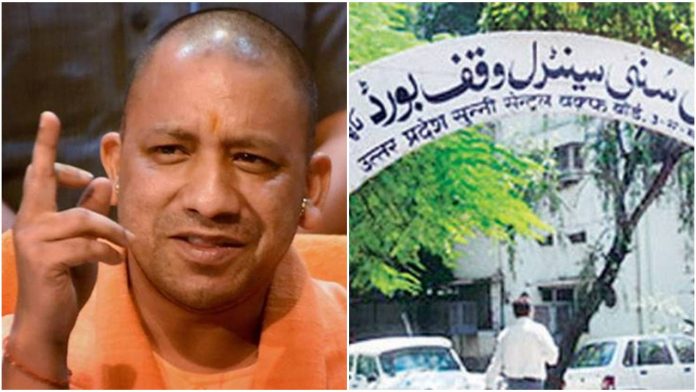
The Uttar Pradesh government has taken over the control of Shia and Sunni Waqf Boards, after their five-year term ended last week and elections to the boards were postponed because of the coronavirus lockdown.
According to the reports, Uttar Pradesh Minister for Minority Affairs Mohsin Raza said that CEOs will be appointed by the government in the meantime to look after the work of the two boards.
“Both the boards were constituted during the previous Samajwadi Party regime and large-scale irregularities have been committed by both the boards while dealing with Waqf properties. Muttawalis (caretakers) of Waqf properties have been appointed without adhering to rules. The government has already recommended a CBI inquiry into this,” said Minister Raza.
The Sunni Waqf Board’s tenure was completed on March 31, while that of the Shia Waqf Board ended on May 18.
Notably, at present, all the files and documents related to the Supreme Court’s decision on the Ayodhya Mandir case and the consent for the construction of a mosque on five acres of land at any other place in Ayodhya are with the outgoing chairman of Sunni board, Zufar Farooqi. Farooqi said that he was willing to hand over the concerned files to the designated authority of the state government.
The governance, administration and supervision of waqfs boards in Uttar Pradesh are done under the provisions of Uttar Pradesh Muslim Waqfs Act, 1960. Both Shia and Sunni Waqf Boards are statutory bodies under the law passed by Uttar Pradesh legislative assembly.
Earlier, the outgoing Shia board chairman Waseem Rizvi had written a letter to UP govt seeking an extension of his term due to the prevailing situation. However, Sunni Board chairman Zufar Farooqui didn’t seek any extension.
Waqf Boards have more than 3 lakh properties in Uttar Pradesh
Reportedly, there are around 3 lakh Sunni waqf properties and 7,225 Shia waqf properties in the state of Uttar Pradesh. These properties are controlled by these respective Waqf boards.
Meanwhile, Waseem Rizvi, former chairperson of the Uttar Pradesh Shia Central Waqf Board, has written a letter to the state government seeking an extension of its five-year tenure.
“Powers resting with the board under the Waqf Act can only be fulfilled by the board and not by a government-appointed administrator. The election process should have begun long before the pandemic struck, but nothing was done,” said Waseem Rizvi, who is a four-time chairperson of Shia Waqf Board between 2005 and 2020.
However, Sunni Central Waqf Board’s former chairperson Zufar Farooqui has not sought an extension. The Sunni Waqf Board had earlier intimated the government in February last week about completion of tenure.