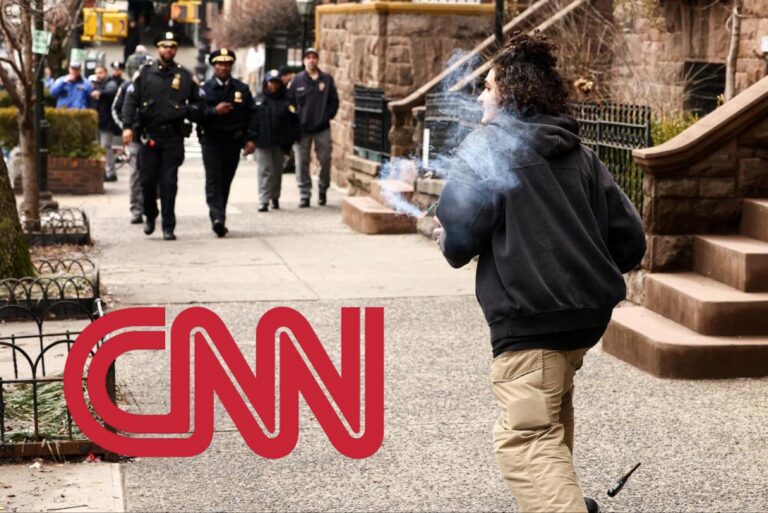
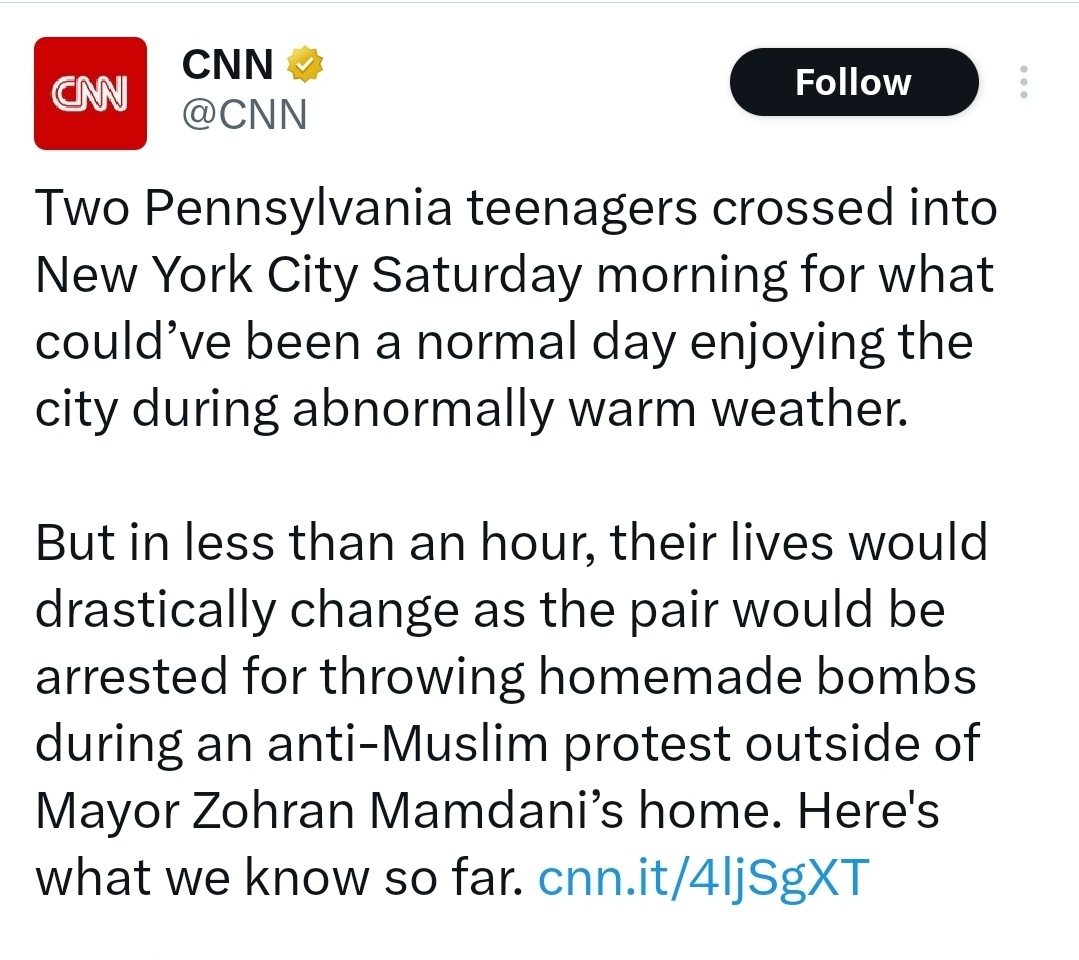
The credibility crisis facing legacy Western media deepened this week after CNN was forced to delete an astonishingly tone-deaf post that appeared to humanise two ISIS-inspired suspects who hurled homemade explosive devices outside the residence of New York City Mayor Zohran Mamdani near Gracie Mansion.
The now-deleted tweet read like the opening paragraph of a travel blog rather than a report about a suspected terror incident.
“Two Pennsylvania teenagers crossed into New York City Saturday morning for what could’ve been a normal day, enjoying the city during abnormally warm weather,” CNN wrote.
Only later in the post did the network casually mention that the pair had allegedly thrown homemade bombs packed with screws and bolts during a protest outside the mayor’s residence.
In other words, an ISIS-inspired attack attempt involving explosive devices was framed as a pleasant spring outing gone wrong.
The backlash online was immediate and brutal.
Social media users were stunned that a major global news organisation could describe suspected terrorists in such sympathetic terms.
One widely shared comment captured the absurdity perfectly: “Two ISIS-inspired teenagers drive from Pennsylvania to NYC, bring IEDs packed with screws and bolts, and throw them at an anti-Muslim protest outside Gracie Mansion. CNN: Shame their nice day enjoying the city didn’t work out.”
Two ISIS-inspired teenagers drive from Pennsylvania to NYC, bring IEDs packed with screws and bolts, and throw them at an anti-Muslim protest outside Gracie Mansion.
CNN: Shame their nice day enjoying the city didn’t work out.
“Two Pennsylvania teenagers crossed into New York City Saturday morning for what could've been a normal day enjoying the city during abnormally warm weather.” https://t.co/zjBpJpZQj6pic.twitter.com/TntRNd3XuC
Yet another user identified the reporters behind the piece, Gloria Pazmino and Taylor Romine, accusing them of downplaying what appeared to be a jihad-inspired attack by describing the perpetrators merely as “Pennsylvania teenagers.”
The outrage forced CNN into damage control mode.
The network eventually deleted the tweet and issued a clarification admitting that the post “failed to reflect the gravity of the incident” and therefore breached its editorial standards.
A post regarding the two individuals arrested for throwing homemade bombs outside of New York City Mayor Zohran Mamdani’s home failed to reflect the gravity of the incident thereby breaching the editorial standards we require for all our reporting. It has therefore been deleted.
Several users pointed out that even in its initial framing of the incident, CNN had inserted another questionable narrative: describing the gathering outside the mayor’s residence as an “anti-Muslim protest.”
However, it is worth noting that the protest taking place outside the residence was not an anti-Muslim event at all. CNN’s framing appeared to inject a politically convenient label that shifted attention away from the alleged perpetrators and toward the protesters themselves.
In other words, the framing accomplished two remarkable things simultaneously: it softened the portrayal of the suspected bomb-throwers while casting the surrounding protest in a negative ideological light.
For many observers, this was not an isolated editorial lapse but a textbook example of a broader pattern that has increasingly defined sections of Western media.
When Islamist extremism surfaces, the language often becomes curiously restrained. At times, facts of the incidents are obscured for the fear of “fanning Islamophobia.” The perpetrators are humanised as “teenagers”, “youth”, or merely “individuals”, with no ideological or religious moorings to drive them towards committing such atrocities.
In fact, the ideological motivations behind the violence are often buried several paragraphs deep, if they are mentioned at all. Meanwhile, contextual framing frequently shifts attention toward the surrounding political environment rather than the act of violence itself.
The result is a bizarre moral inversion where suspected terrorists are subtly humanised while the ideological backdrop is reframed to dilute the seriousness of the crime.
CNN’s tweet was a perfect case study in this phenomenon. The first line focused on a “normal day enjoying the city.” The second line mentioned the bombs. One would imagine that if individuals transport explosive devices packed with shrapnel into a major metropolitan area, the explosives, not the weather, would be the headline.
But that assumption apparently no longer holds in the editorial culture of certain legacy media organisations.
What made the episode even more revealing was how accountability arrived. It did not come from CNN’s editorial oversight mechanisms. It came from ordinary social media users who instantly spotted the absurdity and called it out.
Within minutes, screenshots of the tweet spread across the internet, accompanied by ridicule and anger. The network eventually had no choice but to delete the post.
But deletion does not erase the deeper question. How did such framing pass through editorial review in the first place? Major networks like CNN operate with multiple layers of editorial scrutiny. Tweets and headlines are reviewed, approved and distributed through structured workflows. A narrative that trivialises an ISIS-inspired attack cannot simply appear out of thin air.
It reflects a newsroom culture where such framing no longer triggers alarm bells. And that culture is precisely why public trust in legacy media institutions continues to erode. Increasingly, audiences believe that these organisations are less interested in reporting events as they are and more interested in shaping narratives that align with ideological preferences.
CNN’s deleted tweet is therefore not just an embarrassing social media mistake. It is a revealing glimpse into the editorial instincts of an industry that once claimed to be the guardian of truth.
If describing suspected terrorists as unfortunate teenagers whose pleasant day in the city went wrong passes as acceptable journalism in elite newsrooms, then the crisis facing Western media is far deeper than a single tweet.
And no amount of post-facto deletions can restore credibility once the public has seen behind the curtain.
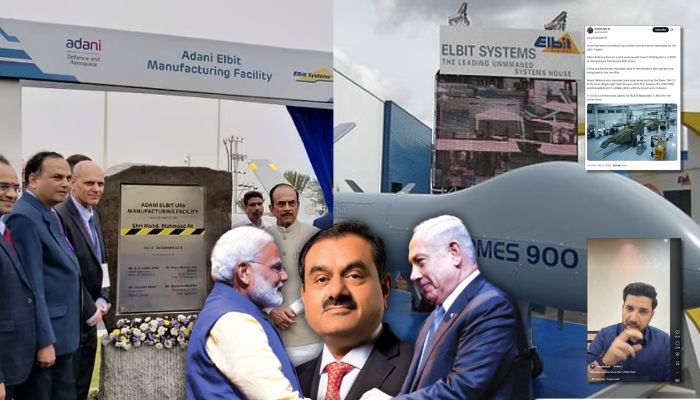
Islamists have their loyalties exported to foreign countries and leaders. This misplaced loyalty often reflects in the unapologetic expression of support and solidarity of countries and leaders based on religion, even at the cost of undermining India’s foreign policy and national security. The same lot that was devastated and snivelling over the assassination of Iran’s Supreme Leader, Ayatollah Syed Ali Khamenei, in Israeli strikes, has channelised their anti-Israel sentiments towards hatred against India’s defence manufacturing by targeting the India-Israel joint Adani-Elbit Advanced Systems India drones manufacturing factory in Hyderabad.
While spreading anti-India hate, they are very conveniently forgetting they live in India, and defence manufacturing keeps their own homeland safe from external threats.
Indian Islamists are painting a dangerously distorted picture of the Adani-Elbit joint venture in Hyderabad. Social media is replete with videos and posts claiming that India is somehow actively exporting weapons, particularly Hermes 900 UAV drones, to Israel against Iran. They are fuelling hatred against India’s defence manufacturing amidst escalating conflict between Israel and Iran. The insinuation is that the Hyderabad factory of the Adani-Elbit joint venture is enabling the Israeli aggression, first in Gaza, and now in Iran.
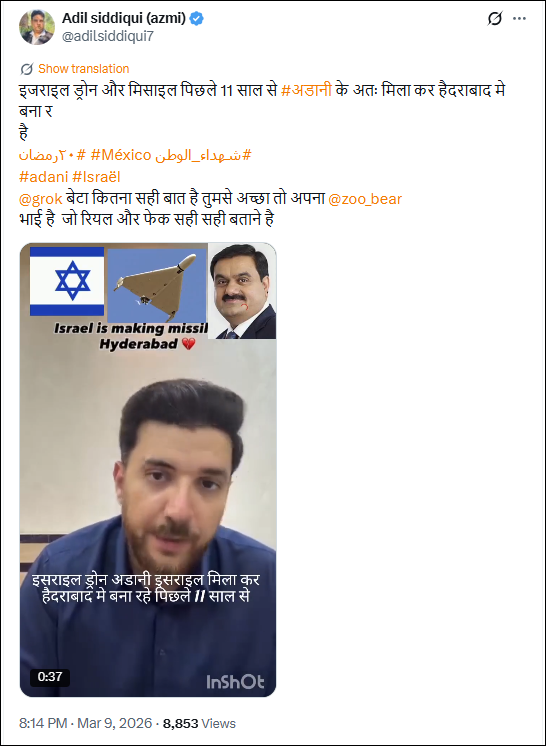
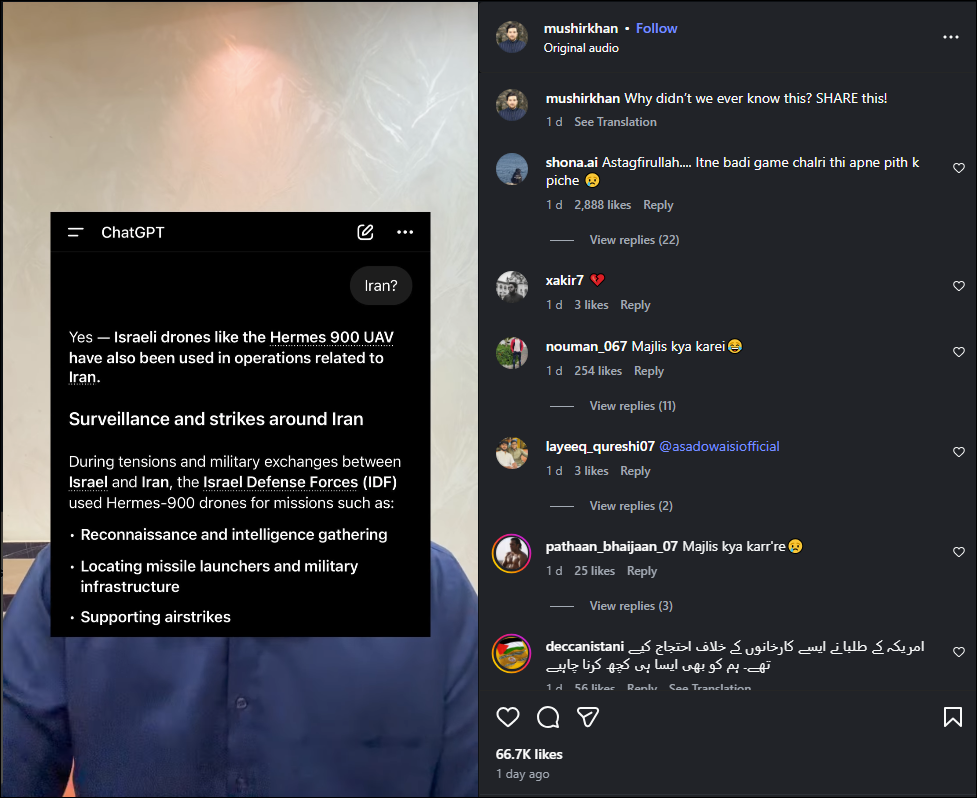
Islamists are writing posts and making emotional videos, often with exact location details of the Adani-Elbit JV’s Hyderabad factory. In one such post, a Muslim man named Mushir Khan claimed that Israel has been making drones and missiles in India for the last 11 years, and that these drones and missiles were used in Israel’s war against Palestine earlier, and are now being used against Iran. “Nobody likes it, when in your neighbourhood there is a factory making weapons for a foreign country,” he said.
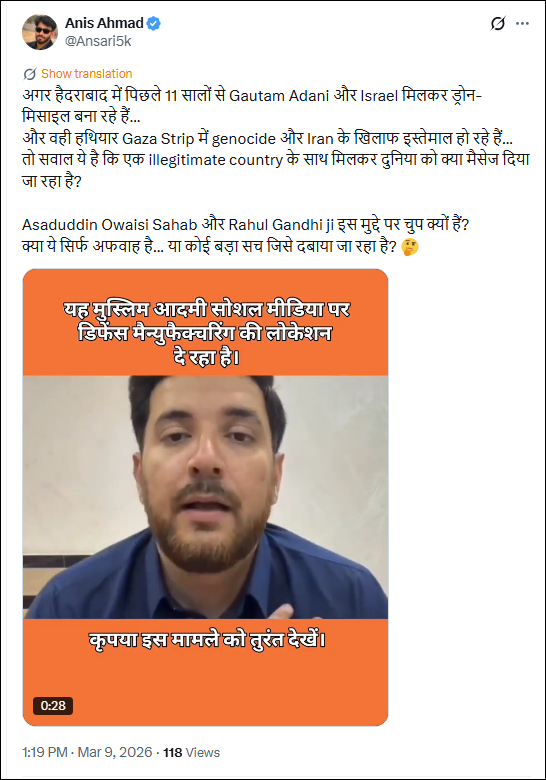
One Anis Ahmed shared the same video on X. He wrote, “If, for the past 11 years, Gautam Adani and Israel have been collaborating in Hyderabad to build drone-missiles… and those very weapons are being used for genocide in the Gaza Strip and against Iran… then the question is, what message is being sent to the world by partnering with an illegitimate country? Why are Asaduddin Owaisi Sahab and Rahul Gandhi ji silent on this issue? Is this just a rumour… or a big truth that’s being suppressed?”
One Adil Siddiqui also amplified the distorted claim that “Israel is making missiles and drones in India,” to target Gaza and Iran, sharing Mushir Khan’s video.
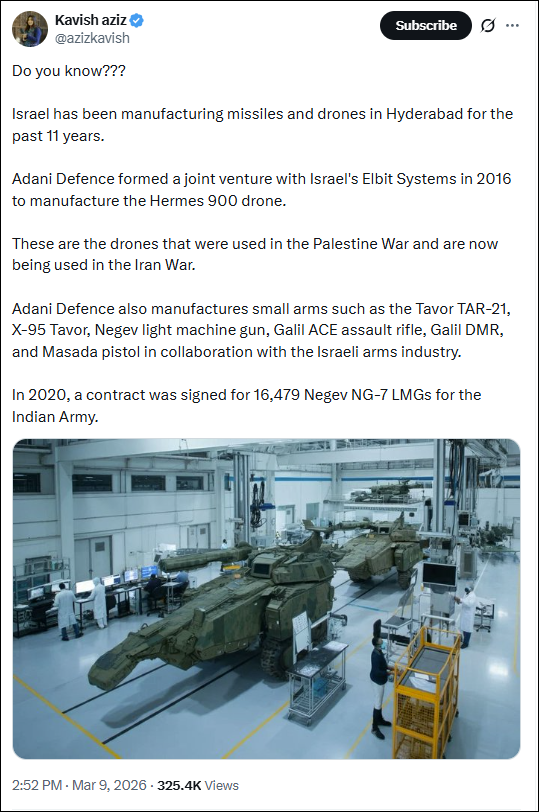
Kavish Aziz, a notorious Islamist and Hindu-hater, also amplified the claim that Israel is making weapons in India, which are being used in Iran after Palestine.
“Do you know??? Israel has been manufacturing missiles and drones in Hyderabad for the past 11 years. Adani Defence formed a joint venture with Israel’s Elbit Systems in 2016 to manufacture the Hermes 900 drone. These are the drones that were used in the Palestine War and are now being used in the Iran War. Adani Defence also manufactures small arms such as the Tavor TAR-21, X-95 Tavor, Negev light machine gun, Galil ACE assault rifle, Galil DMR, and Masada pistol in collaboration with the Israeli arms industry. In 2020, a contract was signed for 16,479 Negev NG-7 LMGs for the Indian Army,” Aziz posted on 9th March.
India supplied Adani-Elbit-made drones and missiles to Israel against Palestine and Iran? Islamists go on propaganda overdrive to score Ummah points
Before delving into the mindset of these Islamists, who see even issues like defence manufacturing from an Islamic Ummah lens, it is imperative to make some facts clear.
The Adani-Elbit defence manufacturing facility in Hyderabad does not essentially make missiles.
Back in 2016, Adani Defence and Aerospace and Israeli defence manufacturer Elbit Systems had formed a joint venture, Adani-Elbit Advanced Systems India Ltd to manufacture Hermes 900 Medium Altitude Long Endurance unmanned aerial vehicles in India. In 2018, the Adani Elbit JV opened its first UAV manufacturing facility in Telangana’s Hyderabad. The version of the Hermes 900 made in India by the JV is called Drishti 10. While the Indian armed forces are the company’s primary customer, it is free to export the drones as well.
It must be recalled that in 2024, the Indian Islamo-leftist cabal had been outraged over reports of India supplying 20 Hermes 900 drones manufactured at the Hyderabad Adani-Elbit facility to Israel. These, however, formed only a tiny chunk of India’s overall defence ecosystem. The Adani-Elbit defence manufacturing factory primarily caters to Indian defence needs, not those of Israel.
Those drones are primarily protecting India, where these Islamists live, and are meant to keep them safe.
The portrayal of India as a large weapons exporter to Israel is detached from reality. Contrary to the narrative that India has been arming Israel against Palestine first, and now Iran, India is Israel’s largest arms buyer, accounting for 34% of Israel’s total defence exports. Israel supplied India with Barak-8 missiles and Heron drones in recent years.
In the Gaza war’s case, India has explicitly stated that it will not directly supply arms or ammunition to Israel for immediate use in Gaza, and that all exports are governed by an end-user agreement. It was confirmed earlier by Adani Defence and Aerospace that Hermes 900 drones were purpose-built for surveillance and reconnaissance missions and cannot be used for attack roles.
Coming back to the Iran-Israel war, there is zero evidence that India has exported Hermes 900 drones or any ‘missiles’ to Israel for use against Iran. This entire claim that the Adani-Elbit defence manufacturing unit in Hyderabad is making drones for Israel’s war against Iran is an absolute propaganda spin.
Hermes 900 is an Israeli drone, and Israeli defence forces already use a large number of Hermes 900 drones and their earlier versions, like Hermes 450 drones made by Elbit in Israel. Hermes is actually one of the most widely used military drones in the world, and several countries have purchased it for their forces. Merely because the Hyderabad Adani-Elbit facility manufactures Hermes 900 drones, it does not automatically mean that India is exporting these drones to Israel for combat use in Iran.
The Muslim influence Mushir Khan relied on a ChatGPT response to his query about Israel using Hermes 900 surveillance drones in its offensive against Iran. However, the chatbot nowhere mentions that the drones used in anti-Iran operations are manufactured in India. It is obvious that Israel is using locally-made Hermes 900 UAVs, and yet, Khan and other Islamists are twisting facts to peddle a false and sinister narrative.
India maintains a balanced approach, whether it is in the context of the Israel-Palestine war or the ongoing war between Iran and Israel-US. The Modi government has maintained a balance in ties with Israel through defence tech partnerships, with Iran through energy and logistics ties, and Arab states via elaborate economic relations. India is the only country to have good relations with countries which have a historical enmity or are at war, be it Russia-Ukraine, Israel-Palestine, Thailand-Cambodia, and Israel-Iran, or Iran-Gulf countries.
Although the location of the Adani-Elbit defence manufacturing facility in Hyderabad is not secretive, highlighting map images comes across as an attempt to incite a protest or even an attack.
Framing the Adani-Elbit defence manufacturing joint venture between India and Israel as some sort of ‘betrayal’ to Iran is baseless, dishonest and essentially a betrayal by Indian Islamists against India. The propaganda being run by Indian Islamists is nothing short of a dog-whistling campaign designed to incite low-IQ communal hatred, paint a target on the Adani-Elbit manufacturing facility in Hyderabad, harm India’s own defence sector, and rally domestic and global outrage against India as a ‘war enabler’.
Islamists forget that they are living in a safer and stronger India, not war-torn Gaza or Iran
Weapons manufactured in a country not only keep that country safe, but they also buy crucial military leverage and strategic relations, making that nation stronger in combat and diplomacy. Any defence manufacturing plant in India that supplies to the Indian military and exports to other nations is an essential pillar that keeps India safer and stronger in the world.
These Islamists, who are safe in India, far away from war-torn Gaza, and Iran, are forgetting that it is a strong and stable India with healthy diplomatic and strategic relations that is making it possible.
India’s foreign and defence policy is not and should not be governed by the emotions or ‘religious’ sentiments of those who hold foreign leaders and countries in higher regard than their own country and its interests.
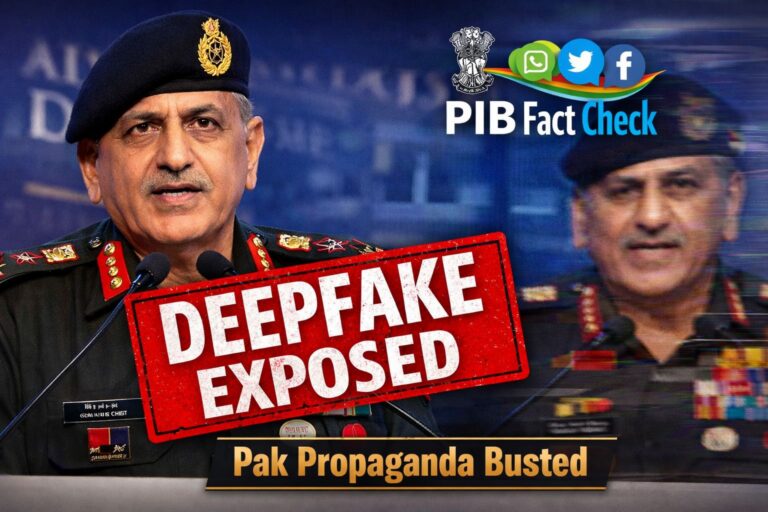
The Indian Islamist campaign against the India-Israel joint venture operating in Hyderabad is akin to the propaganda campaign that Pakistani jihadis have been doing since the war between Iran and Israel+America erupted in late February 2026. Pakistani propaganda social media accounts fabricated and amplified videos of Indian Defence Minister Rajnath Singh, Foreign Minister S Jaishankar, and Indian Army Chief Upendra Dwivedi ‘admitting’ that India aided Israeli attacks against Iran, framing these false statements as India’s ‘open betrayal’ against Iran to incite global hatred against India. This ‘India betrayed Iran’ rhetoric, rooted in falsehoods, speculations, and outright propaganda, is being pushed even as India offered sanctuary to at least three Iranian naval ships, with Iran even thanking New Delhi.
The Indian Islamists are proving to be no different from India-hating Pakistani jihadists. Their conduct is essentially a blend of ‘Islamic Ummah solidarity’ with Iran and Palestine, anti-Modi bias, and, of course, opportunistic rabble-rousing while forgetting the interests of their own nation. The Islamists know for sure that portraying the Modi government as ‘pro-Israel’ would automatically make them seem “anti-Muslim”. It is not that a significant section of Indian Muslims does not already see the BJP and the Modi government as ‘anti-Muslim’; however, the underlying motive of the ongoing propaganda seems not to be confined just to generating hatred against India’s defence manufacturing but appears to be extending to stirring unrest in the country.
It was seen how, after reports of the killing of Iran’s supreme leader Ayatollah Syed Ali Khamenei in Israeli strikes emerged, protests by Shia Muslims erupted in Lucknow, Jammu and Kashmir, Kargil, and other areas. Many even expressed willingness to go to war-torn Iran and fight Israel and America for Khamenei, while most never even condemned the persecution of Hindus in Bangladesh and Pakistan. Such religion-based support for foreign leaders and countries, even at the cost of going against India’s official foreign policy, is dangerous and treasonous.
Although the context varies, the pattern of dog-whistling is akin to what was seen during the Nupur Sharma ‘blasphemy’ episode back in 2022. The same Islamist lot had dog-whistled against the former BJP spokesperson for quoting a Quranic fact. In no time, ‘Sar tan se Juda’ calls began to be made by rioting Muslim mobs across the country, with outrage spilling over to Gulf nations. In what appears to be almost a redux of the Nupur Sharma episode, Islamists are now dog-whistling against the Hyderabad factory of the Adani-Elbit joint defence venture as a war between Iran and the US-Israel alliance rages on.
Earlier wars were fought with swords and bows, but today wars involve missiles, drones, cyber attacks, and advanced technology. Conflicts such as the Russia-Ukraine war and the Nagorno-Karabakh conflict have shown how relatively inexpensive drones and loitering munitions can easily alter the balance of power on the battlefield. Iran’s Shahid-136 drone, a low-cost Uncrewed Combat Attack System, has surprised with its efficiency.
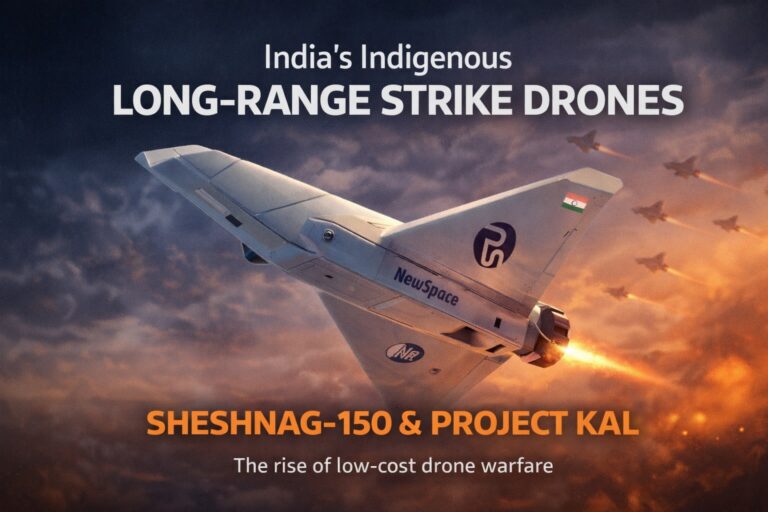
It has emerged as one of the most influential platforms driving this shift in military strategy. The concept of mass-produced attritable drones has gained traction among military powers, including the United States, with its Low-cost Uncrewed Combat Attack System. Acknowledging the strategic ramifications of this change, India has also stepped up efforts to develop domestic long-range strike drones, such as Project KAL and the Sheshnag-150, indicating a wider shift towards affordable, mass-produced unmanned warfare systems.
How Iran’s Shahed drones changed warfare
One of the most influential developments in modern drone warfare has been the introduction of Iran’s Shahed-136 drone, a low-cost drone designed for long-range, precise strikes. It operates as a Kamikaze drone, which means it crashes straight into the target while carrying an explosive payload, unlike conventional drones that return after completing the mission. It is designed with a relatively simple delta-wing structure, which makes it inexpensive to manufacture while still capable of travelling long distances. According to reports, the cost per unit is approximately $20,000–$50,000, which is significantly lower than that of conventional missiles or advanced combat aircraft.
The Shahed-136 has a range of approximately 2000-2500 km with a capacity of around 40–50 kg explosive payload. It works on GPS and inertial navigation guidance and is launched by the trucks or racks. During the Russia-Ukraine war, it gained global traction when Russia deployed the system under the name Geran-2 to target Ukrainian infrastructure and military positions. These drones were frequently used in large numbers simultaneously, allowing them to overwhelm air defence systems. The Shahed-136 has a strategic advantage because it creates uneven costs. To stop these kinds of drones, air defence systems need to use expensive missiles. For instance, one Patriot interceptor missile can cost about $4 million, which means that protecting against dozens of cheap drones can quickly become too expensive.
Because of this imbalance, militaries around the world have had to rethink their traditional defence strategies. Many countries are now investing in mass-produced, attritable drones that can attack in swarms, rather than relying solely on high-value platforms like fighter jets or cruise missiles.The success of the Shahed-style drone concept has also influenced other countries. The United States has reportedly developed a similar platform, the Low-Cost Uncrewed Combat Attack System, based on the same idea: striking from a long distance at low cost.
JUST IN: 🇺🇸The U.S. has reverse-engineered Iran's Shahed drone to make the LUCAS, a $35,000 clone. pic.twitter.com/Mkgu7yWRQv
With the growing dominance of drones in modern wars, it becomes significant for India’s security situation to adopt this kind of warfare. India has two active strategic fronts against China and Pakistan. India’s operational landscape is complex, with high-altitude mountains, deserts, and densely populated border areas. In this kind of terrain, unmanned systems are highly useful because they enable continuous surveillance, rapid intelligence gathering, and precise strikes without risking pilots or large troop deployments. Drones are especially useful in sensitive areas like the Line of Actual Control and the Line of Control, where tensions can rise quickly and response time is very important. Recent global conflicts have reinforced the strategic importance of unmanned systems.
The Iran-Israel conflict, the Russia-Ukraine War and the Nagorno-Karabakh conflict between Azerbaijan and Armenia showed how cheap drones can break down advanced air defence networks and change the way battles are fought. From India’s perspective, it becomes more important and relevant as its adversaries also expand their drone capabilities. China has invested heavily in a wide range of unmanned platforms, while Pakistan has built up its drone arsenal by working with outside suppliers and building up its own capabilities. Given the situation, it is essential for India to rapidly strengthen both its offensive drone capabilities and its counter-drone defences. India has already been integrating drones more actively in its military operations. During the operation Sindoor, India used UAVs (Unmanned Aerial Vehicles), a technical term for drones. It showed how India’s tactical doctrine is changing. Drones are increasingly used with precision standoff weapons to carry out targeted strikes. India has also improved its defences by adding layered air-defence networks and homegrown counter-drone technologies that can find, block, or destroy enemy UAVs.
To address emerging battlefield realities, India is accelerating the development of indigenous combat drones capable of long-range precision strikes. One prominent project in this initiative is the Sheshnag-150, a domestically developed loitering munition designed for swarm attacks and deep-penetration missions against enemy targets.
Sheshnag-150: India’s home-made drone
One of India’s most notable efforts to develop a long-range, low-cost strike drone is the Sheshnag-150. It is an indigenous loitering munition being developed by Bengaluru-based defence startup NewSpace Research and Technologies. It is one of India’s most prominent attempts to create a long-range, affordable strike drone. The drone is intended to give the Indian military an affordable weapon that can carry out swarm attacks and deep-strike operations against adversaries.
It is inspired by the growing use of long-range kamikaze drones worldwide, including the Shahed-136. The Sheshnag-150 integrates cutting-edge autonomous and swarm technology specifically designed to meet India’s operational needs. In Sheshnag-150, the range is approximately 1000-1200km, with a capacity of 25-40kg of explosive. It has more than 5 hours of endurance, meaning it can stay in the air for over five hours over a single mission without landing. These specifications enable the drone to penetrate deep into enemy territory and strike strategic targets, including logistics hubs, radar systems, and military installations.
Swarm technology and autonomous aoordination
Swarm technology enables multiple unmanned aerial vehicles (UAVs) to coordinate and collaborate to perform a range of tasks that would be too inefficient or impossible for a single drone to complete. Each drone may have a comparable function or one of several specialised functions, such as communications relaying, data collection, or weaponry. In Sheshnag-150, it is one of the defining features: an AI-enabled swarm capability. Instead of operating as a single platform, multiple drones can be launched simultaneously and coordinate their movements autonomously. In this type of attack, Several drones are launched together from different locations and operate as a coordinated group rather than as individual platforms. These drones can communicate with each other and adjust their flight paths in real time to adapt to changing battlefield conditions. Within the swarm, some drones may act as decoys to distract or confuse enemy air defence systems, forcing them to engage multiple targets simultaneously. Meanwhile, other drones in the formation exploit the gaps created in the defence network and penetrate deeper to strike the intended targets. This coordinated approach enables swarm drones to overwhelm sophisticated air defence systems, significantly increasing the chances of a successful strike.
Project KAL: India’s long-range strike drone
Alongside the development of the Sheshnag-150, India is also working on another indigenous drone programme, Project KAL. The project is being developed by the Noida-based defence company IG Defence. It aims to create a long-range loitering munition capable of deep-penetration strike missions. It is designed as a Kamikaze drone. Project KAL is expected to deliver an explosive payload directly to enemy targets after identifying them in flight.
According to the report, the drone may have a range of about 1,000 kilometres and an endurance of three to five hours. This allows it to travel deep into hostile territory before striking strategic targets. Unlike conventional missiles, such drones can adjust their flight path during the mission. This enables operators to identify and engage targets with greater precision.
If Project KAL is successfully operationalised, it could complement systems like the Sheshnag-150. This would expand India’s indigenous arsenal of long-range, low-cost strike drones. It would strengthen the country’s ability to conduct precision attacks while reducing reliance on expensive missile systems.
Expanding India’s drone arsenal
In addition to new strike-drone initiatives such as Project KAL and Sheshnag-150, India is gradually building a diverse unmanned aerial systems ecosystem to support training, combat, and surveillance across its armed forces. Intelligence, surveillance, and reconnaissance missions frequently employ long-endurance platforms such as the Heron Mk2 and Searcher Mk II, especially along sensitive frontiers like the Line of Actual Control (LAC). Moreover, India is also advancing its capabilities through projects like DRDO’s TAPAS-BH-201 (Rustom), which is expected to strengthen the country’s medium-altitude surveillance capacity. Nagastra-1, loitering munitions provide frontline troops with portable strike capability, while systems like Rudrastra, a VTOL loitering UAV tested in 2025, add flexibility for operations in difficult terrain. In addition, India is set to acquire MQ-9B SeaGuardian drones to enhance maritime surveillance in the Indian Ocean Region, while future projects such as the stealth Ghatak UCAV aim to expand India’s deep-strike capabilities. Together, these platforms illustrate how India is gradually developing a comprehensive drone arsenal that combines imported systems with indigenous innovation to meet the evolving demands of modern warfare.
Conclusion
The growing use of drones in modern warfare has become a crucial part, significantly altering the character of warfare and making unmanned systems a central component of military strategy. It is evident that a relatively inexpensive unmanned platform can have a major impact on the battlefield over traditional methods. These developments have encouraged the countries to rethink their traditional doctrine and invest in mass-produced, cost-effective drone systems.
For India, it is a strategic necessity to adapt to these advancements. Over time, strengthening domestic unmanned systems has become increasingly crucial as their capabilities have grown. Projects like KAL and Sheshnag-150 demonstrate India’s efforts to develop cost-effective long-range strike drones capable of operating in challenging combat environments. Future military capabilities will be greatly influenced by the capacity to create, implement, and mass-produce unmanned systems as warfare continues to change. In this quickly evolving era of drone warfare, India hopes to improve its operational flexibility while lowering reliance on foreign systems by investing in domestic technologies and bolstering its military industrial ecosystem.
Amidst a raging war in Iran, several Indian students stuck there are appealing to the Modi government to bring them back home safely. At present, over 9,000 Indian nationals, mostly medical students from Jammu and Kashmir, are stranded in Iran’s capital, Tehran, and the city of Qom. Many stranded students are raising concerns that they are being told to travel to Armenia and then arrange flights to Delhi on their own. However, this situation would probably have never arisen had these students heeded repeated warnings and advisories issued by the Indian government urging them to leave Iran.
Multiple advisories, none heeded: Indian students in Iran ignored safety warnings
The videos and emotional appeals from Indian students stranded in Iran invoke a similar fear and panic here in India, as they might be experiencing while being stuck in a war-torn country. On 9th March, a ‘protest’ was staged in Srinagar, Jammu and Kashmir, by parents of several Indian students stranded in Iran. They requested Prime Minister Narendra Modi, the External Affairs minister, J&K LG and Chief Minister Omar Abdullah to intervene immediately to ensure the safe return of their children.
In a video message, one Kashmiri Indian student stranded in Iran said, “The situation is frightening. We are fine as of now, but we cannot be sure about our safety. Attacks are happening even at the places where students were relocated.”
One of the parents who participated in the protest in Srinagar said students have been advised by the Indian mission in Iran to stay wherever they are, or they can leave for the Armenia-Iran border at their own risk, after having pre-booked Armenia-Delhi flight tickets.
It is being made to seem as if the Modi government has gone the American way of leaving its nationals in conflict-torn countries on their own. Even students who were evacuated by the Indian embassy from the war epicentre in Iran on Indian taxpayers’ money are appealing to the Indian government to bring them back to India on an urgent basis, despite being aware that the airspace is closed. The body language, the level of entitlement, and the insinuation by several stranded Indian students that somehow the government is now doing ‘enough’ to repatriate them is enraging, to put it mildly.
These are the students who were evacuated by the Indian embassy from the war epicenter in Tehran to a safer city on taxpayers’ money.
And now they want India to evacuate them urgently to India, despite fully knowing that the airspace is closed.
It must not be forgotten how many Indian students in Iran were making videos dismissing concerns raised in India about their safety, and not taking the advisories seriously, until the sounds of American and Israeli missiles hitting civilian areas fell on their ears.
On January 14, 2026, India asked its nationals to leave Iran. Back then, Indian students insisted: “We’re safe, and the University is meeting our demands.”
Today, the same students are pleading with the Indian government to speed up evacuation.
Protests, requests, demands, and political blame-games, the situation would not have come to this if the students had gauged the seriousness of the prevailing tensions and the Indian government’s advisories issued weeks prior to the February 28 US-Israel attack on Iran.
The first advisory by the Indian Ministry of External Affairs was issued on 14th January 2026, when protests and the Iranian Mullah regime’s crackdown had begun to take a violent turn. Indian nationals were urged to defer all non-essential travel to Iran amidst escalating nationwide protests.
Advisory for Indian nationals regarding travel to Iran
This was followed by a stronger warning on 14th February, explicitly advising Indian nationals, including students, pilgrims, and traders, etc, to leave Iran by any available means. The Indian embassy also opened 24/7 helplines to assist Indians in Iran.
Just nine days later, on 23rd February, the MEA issued an advisory reiterating in starker terms the message to Indian nationals in Iran to leave the country at the earliest, terming the security environment there as deteriorating. The registration on the MEA’s portal for those still stuck in Iran was also mandated.
“In continuation of the advisory issued by the Government of India on 5 January 2026, and in view of the evolving situation in Iran, Indian nationals who are currently in Iran (students, pilgrims, business persons and tourists) are advised to leave Iran by available means of transport, including commercial flights. The 14 January 2026 Advisory is hereby reiterated that all Indian citizens and PIOs should exercise due caution, avoid areas of protests or demonstrations, stay in contact with the Indian Embassy in Iran and monitor local media for any developments,” the MEA said on 23rd February.
These were not vague suggestions or fearmongering. The MEA made clear and repeated calls to action based on real-time assessments of rising tensions, including the brewing Israel-Iran war.
Despite the advisories, Indian students chose to stay put. In fact, the MEA confirmed that even after a full-fledged war broke out, many students refused the Indian embassy’s offer for assistance.
This was confirmed by the MEA on 3rd March in a fresh advisory. “In view of the developing situation, all Indian nationals in Iran are advised to exercise utmost caution, avoid unnecessary movements and remain indoors as far as possible. Indians may also continue to monitor the news, maintain situational awareness and await any further guidance from the Embassy of India.
Due to heightened risk perception in Tehran, the Embassy of India has relocated most Indian students who were in Tehran to safer locations outside Tehran. The Embassy has made arrangements for their transportation, food, and accommodation. Only a small number of students who declined the Embassy’s offer remain in Tehran,” the Indian Embassy in Iran said, adding that while some left Iran via Armenia, many chose to stay back in the war-torn country.
The airspace is closed, the land borders are not safe, and practically no place in Iran is safe from American and Israeli airstrikes. Now, if something goes wrong with the stranded students who “chose” to stay back due to academic pressures of appearing for exams and fear of invalidation of their degree, general carelessness or whatever reason, the Indian government would get the blame. The government cannot send chartered flights to Tehran to bring Indians back home while Iranian skies are mired with Israeli missiles.
The awareness, the deliberate dismissal of the seriousness of the situation and the eventual entitlement-laden evacuation appeals when flights are cancelled, and airspace is closed, show that many, if not most, students prioritised their personal timelines and comfort over official warnings. They gambled on staying earlier but are now expecting a free pass. This entire episode comes across as a classic case of blaming the authorities for a self-inflicted predicament.
Given the Modi government’s commendable track record of evacuating Indian citizens from crisis-hit regions, the evacuation operations will continue to bring every stranded Indian back from Iran; however, the situation remains complicated due to constant attacks on Iran and the closure of air and sea routes.
Consider this it’s 1973, and the globe is in a state of chaos. When Arab countries stopped selling oil to the West, prices skyrocketed and were four times higher in a matter of months. Everyday people rush for gas, factories close in Europe, and cars queue up for blocks in America. However, in India, a young country still finding its feet, leaders did more than just hang on; they played a strategic game. They made covert agreements with the Soviet Union, exchanging clothing and agricultural products for inexpensive oil paid in rupees rather than dollars. Indian manufacturing and lights continued to function thanks to this astute trading. Better yet, it absorbed excess Soviet oil that may have disrupted other markets.
This anecdote, which most people have forgotten, demonstrates India’s early ability to maintain stability throughout difficult times. Fast forward to March 6, 2026 as tensions with Iran escalate, the United States claims to grant India a temporary 30-day waiver to continue purchasing Russian oil. Ships avoid attacks, missiles fly, and the crucial Strait of Hormuz, which handles one-fifth of the world’s oil, appears poised to choke. Experts fear that prices could soar beyond $150 per barrel. This is serious business for India, which purchases 85% of its oil from outside and consumes 5.5 million barrels a day. However, under the steadfast leadership of Prime Minister Narendra Modi, India transforms weakness into strength by employing astute diplomacy and audacious actions to defuse the international crisis once more.
Why does India matter so much here?
It’s easy. The nation is the third-largest oil consumer in the world. By 2030, it might have more thirst than any other location and be at the forefront of growing demand. Because of its influence, India’s decisions have an international impact. A problem with its supplies? Everyone is affected by price increases, from American drivers to African industries. India, meanwhile, is not alarmed. To acquire good deals, it spreads out its purchases and makes use of its scale.
This ability shines brightly now and has rescued the day in previous crises. India’s Soviet partnership during the oil shock of the 1970s wasn’t a coincidence. It was signed in 1976 and brought in 5.5 million tons of oil over a four-year period for Indian commodities without the need for dollars. This agreement, linked to the 1971 Indo-Soviet friendship treaty that helped liberate Bangladesh, routed cheap oil through Iraq. It reduced India’s expenditures by half and contributed to the construction of major facilities such as Bombay High. Indira Gandhi’s team pioneered this road of smart independence, but Modi’s government has strengthened it by increasing oil reserves and forging new alliances.
More recent storms, where India’s actions verge on the predictive, vividly echo these historical murmurs. When the US benchmark oil contract (West Texas Intermediate) plummeted to a negative $37 during the 2020 COVID abyss, oil literally paying buyers to take it away, New Delhi didn’t back down; instead, it prospered. In order to reduce the import cost from April to July by 63% to $12.4 billion and strengthen buffers against rebound shocks, refiners chartered 20 supertankers for floating storage, accumulating 40 million barrels at fire sale prices.
This tanker gate windfall filled PM Modi’s fledgling Strategic Petroleum Reserves (SPR), a 5.33 million tonne network at Visakhapatnam, Mangaluru, and Padur facilities, greenlit in 2018 and increased under his watch, granting 74 days of supply in emergencies, exceeding IEA criteria. India coordinated a 5 million barrel release when the IEA tapped global stocks in 2022, a smooth ballet that moderated price increases caused by the conflict in Ukraine without causing domestic pressure. Such foresight is not fortunate. Rather, it is the proactive, uncompromising Modi doctrine, which turns crisis into opportunities and guarantees that India not only survives but also creates peace for a nervous world.
The history of silent leadership is most visible in the Russia-Ukraine conflict, as India’s aggressiveness became the world’s vent. Prior to 2022, Russian crude accounted for only 1% of imports. After the invasion, that number skyrocketed to 40%, with 1.5 million barrels per day at $20 discounts, amounting to approx $166 billion by early Jan 2026. Moscow’s shipments were halted by Western sanctions, but Indian giants such as Reliance’s Jamnagar, the world’s largest refinery, devoured Urals grade and turned it into aviation fuel that ironically powered Europe’s fleets affected by the restrictions, bringing in $6 billion in refined reward. Without this Indian alchemy, as insiders refer to it, Brent could have pierced $200 per barrel and set off a recessionary fire.
Rewriting rules of global #Oil trade: As EU weans from Russian refined product, India becoming de-facto refining hub for Europe, RBC says. India buying record amounts of severely discounted #Russia crude, running its refiners above capacity, & capturing econ rent of crack spreads pic.twitter.com/TDbIBYgmrH
— Holger Zschaepitz (@Schuldensuehner) May 31, 2022
The Iran flare up now brings this story back to life with compelling urgency. Tankers have been redirected due to Israeli retaliation and Tehran’s missile salvos, increasing freight by $4,00,000 per leg and setting the stage for a 3% increase in costs. India’s Gulf lifelines, the Saudi and Iraqi streams, falter, but the US waiver restores Russian taps, a practical reversal of tariff tough negotiations. This action highlights New Delhi’s might and is reminiscent of the Iranian waivers in 2018, when PM Modi obtained six-month exemptions for nine million barrels per month despite Trump-era restrictions.
When it comes to Russia, there is another crucial factor. Despite US tariffs, India had yet to actually ‘stop’ buying Russian crude. The government stated that India imported over 20% of its crude from Russia in February this year, amounting to over 1.04 million bpd.
By 2012, India had successfully negotiated similar nods under previous agreements, combining payments in Rupees to avoid sanctions. India’s 250 million ton refining capacity exports $100 billion a year, supplying 15% of Europe’s aviation fuel and reducing shocks by 10-15% since 2022, despite critics’ murmurs of dependency. This is not opportunism in Modi’s India; it is orchestration, a subtle leaning towards risky investments that pay global returns.
India keeps global oil prices stabilised
Some in Washington and Europe complain that India supports rogue actors by purchasing their energy and even discussing more severe sanctions. However, those thoughts quickly evaporate when they recall connections, such as the US need for cheap Indian pharmaceuticals. Modi’s clear eyed perspective has sculpted it as a gentle reminder of double standards. It is supported by history, India sets the tone rather than following the herd when it comes to epidemic hauls.
India’s influence grows in the future. By 2030, oil consumption might reach 9 million barrels per day, supporting more than one third of global development. Modi’s agenda, which includes $10 billion bets on U.S. shale and more reserve locations like Mangalore, blends fossil fuels with green aspirations like solar agreements. India maintains composure during conflicts like those in Ukraine or Iran, acting as a steady hand on the wheel. India’s calm leadership is not only astute in the volatile world of oil, but it also serves as the glue that keeps prices and lives in check.
Tarun Kumar, a 26-year-old Dalit youth, was beaten to death on 4th March after a fight over an unintentional spill of coloured water from a balloon. The Holi festivities took a grim turn for the Hindu inhabitants of the JJ Colony in southwest Delhi when a violent mob of Muslims assaulted him, even after the issue was settled after the family issued an apology.
The brutal crime, which should have elicited widespread condemnation and outrage from everyone, instead provided yet another opportunity for the Islamo-leftist cabal to distort the truth in support of the assailants by fabricating a false narrative and attacking the victim. The Islamists started a campaign asserting that the incident was not instigated by a sheer intention to take an innocent life but rather by allegations of molestation involving a Muslim woman.
A video featuring a woman crying victimhood soon began to circulate on social media and was promptly used by these elements to assert that her statement was the true reason behind the incident. A user posted the footage and wrote that the dispute “started with a 20-year-old named Prince throwing dirty water balloons at a Muslim lady. She called him out. Drunk men then misbehaved with her, which triggered the chain of events.”
I always knew there was another side…
The Uttam Nagar case didn't start with a murder. It started with a 20 y/o named Prince throwing dirty water balloons at a Muslim lady. She called him out. Drunk men then misbehaved with her. That misbehavior is what triggered the chain of… pic.twitter.com/aF37gxkUAO
The person subsequently attempted to argue that “removing her victimhood to create a more favourable narrative is disingenuous” while insisting that Muslims should introduce their perspective more promptly as “delayed truth always loses to instant propaganda.”
However, contrary to the statement, the cheerleaders of the jihadists were quick to respond after what seemed like a unified instruction to cast the Hindus as villains and justify the act, effectively whitewashing the deadly assault by perpetuating the bogus allegations online without any evidence. The unwavering commitment to the maintenance of falsehoods only to excuse the crimes of their co-religionists is not only concerning but also noteworthy.
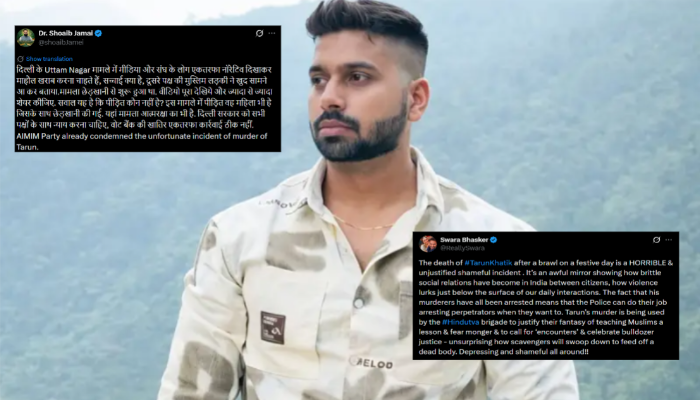
The video was also uploaded by All India Majlis-e-Ittehadul Muslimeen Dr Shoaib Jamai, who announced that the woman’s words represented the absolute truth. He also dragged the Rashtriya Swayamsevak Sangh (RSS), remarking that they aimed to vitiate the atmosphere. The woman was designated as the “victim” while the violence was characterised as “self-defence.”
“The Delhi government should do justice to all sides. One-sided action for the sake of vote banks is not right. AIMIM Party has already condemned the unfortunate incident of the murder of Tarun,” he added performatively to not be perceived as a polarising figure.
दिल्ली के Uttam Nagar मामले में मीडिया और संघ के लोग एकतरफा नॉरेटिव दिखाकर माहौल खराब करना चाहते हैं, सच्चाई क्या है, दूसरे पक्ष की मुस्लिम लड़की ने खुद सामने आ कर बताया.मामला छेड़खानी से शुरू हुआ था. वीडियो पूरा देखिये और ज्यादा से ज्यादा शेयर कीजिए. सवाल यह है कि पीड़ित कौन… pic.twitter.com/NQbxLFXpTD
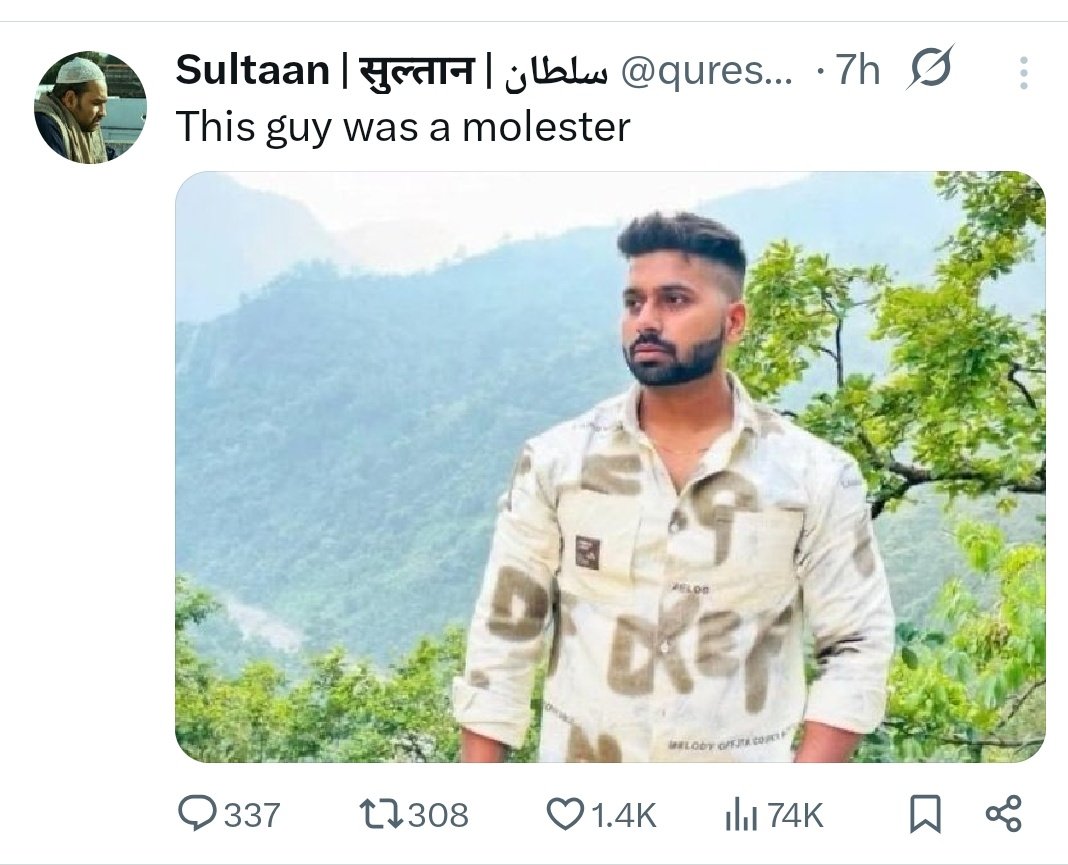
There appeared to be some inconsistencies in the script as another account declared the deceased to be a molester who forcefully played Holi with a Muslim woman. “Out of anger, both families had fought with each other. Both sides got injured. The main molester passed away. That Hindu family burned the house of the Muslim family. Is this justice?” she asked.
Dear World look here. A hindu man Tarun molested his neighbour's Muslim girl by playing Holi forcefully. Out of anger both the family had faught with each other. Both the side got injured. Main molester passed away. That Hindu family burned the house of Mus family,is this… https://t.co/qjEqVrP7HQ
This radical individual sought to draw the world’s attention to India to highlight the “atrocities” committed against minorities. However, the lie was debunked by the Community Notes, which read, “There is no evidence that Tarun molested anyone. He was not even in the area and was returning to his home when he found out Muslims were attacking his family.”
This unfounded charge was also put forth by another member of this extremist faction, who first locked her account and then deleted it after being called out by netizens for peddling disinformation.
Sultaan also labelled Tarun as a molester to advance the fabrications to hold him responsible for his brutal killing and to rationalise the actions of his religious brethren.
“Journalist” Meer Faisal adopted an alternative approach to sanitise the murder by stating that Tarun had not apologised, adding that the “tensions between the two families had been escalating for some time.” He then “quoted” locals to contend that the latter had returned from the gym with his companions to unleash an attack on the Muslims, however, suffered a blow to the head and collapsed instantly.
Meer insisted that “several individuals from the Muslim family side were seriously injured during the confrontation. A 13-year-old boy is currently admitted to Safdarjung Hospital and remains in the ICU (Intensive Care Unit), while at least one or two others reportedly sustained broken ribs.”
The narrative circulating online regarding Tarun’s death is incomplete and misleading. Contrary to some claims, no apology was issued from his side. While the immediate trigger for the dispute is said to have been an argument over a balloon, locals state that tensions between the… pic.twitter.com/THeQxgIJPj
However, Meer shortly unveiled his real colours after feigning condemnation for the occurrence by shifting the focus and accusing “Hindutva,” the preferred scapegoat for this wicked faction, of plundering and setting fire to the accused’s house, alongside promoting communal discord. He essentially implied that Tarun was not without fault, but rather an instigator who caused his own demise, and Hindus wanted to exploit the instance to attack Muslims.
Swara Bhasker, infamous for her ability to amplify trivial matters into major controversies to criticise Hindus, blamed the death on “brittle social relations” and “violence lurking just below the surface of our daily interactions,” instead of outlining the fanatic mindset of the culprits. However, such “impartial analysis” is solely reserved for Hindus and not her ideological allies.
Moreover, it takes little for these persons to remove their “secular” mask to expose their true selves, and consequently, she also aligned herself with the “anti-Hindutva” agenda. “Tarun’s murder is being used by the Hindutva brigade to justify their fantasy of teaching Muslims a lesson, fear monger and to call for encounters and celebrate bulldozer justice – unsurprisingly, how scavengers will swoop down to feed off a dead body. Depressing and shameful all around,” she charged.
The death of #TarunKhatik after a brawl on a festive day is a HORRIBLE & unjustified shameful incident . It’s an awful mirror showing how brittle social relations have become in India between citizens, how violence lurks just below the surface of our daily interactions. The fact…
Hindus demanding justice are termed as “scavengers” by the flop actor, while those who preyed upon a vulnerable man and took his life are considered a result of fragile social connections and an aggressive society. This is a disgraceful mockery of the victim, his family, and their deep anguish.
Background of the matter
An 11-year-old girl was playing Holi on her rooftop when she tossed a water balloon at her father below. A woman from a nearby Muslim home was splashed with water as it fell on the road, sparking a fight between the two households. The Hindu family’s apology initially put an end to the matter, which intensified later that evening.
Tarun was riding home on his bike after celebrating Holi when he was pulled over by a group of 40-50 Muslims and severely assaulted with iron rods, bricks, stones and other objects. Afterwards, 7 people were apprehended and identified as: brothers 49-year-old Umardeen and 36-year-old duo Jummadeen and Kamruddeen, while 25-year-old Muzaffar, 18-year-old Tahir and a 17-year-old boy are their relatives. They live in the nearby Uttar Nagar.
A resident of the locality unveiled, “It was nothing. It was just a small balloon. The balloon did not even touch the woman. It hit the ground, and only a splash of water touched her. She was around 45 years old. She abused the family. The family said it was a mistake and asked her to forgive the children. But they did not listen. Instead, they called their people.”
The person further mentioned, “At least 40 to 50 people came. They beat everyone in the house, including Tarun’s father, his uncle and even his mother. They entered the house and broke things. They tore his mother’s clothes and even her blouse. She was lying unconscious. They destroyed everything. They planned to kill Tarun. He had come home late and was not present earlier, so he did not know anything about the incident.”
“Later, when Tarun arrived, he had not even parked his bike when they started beating him. Everyone started beating him, men, women and even girls. Whoever had whatever in their hands started attacking him. They kept beating him until he died,” the neighbour expressed.
The Scheduled Castes and Scheduled Tribes (Prevention of Atrocities) Act has been added to the case, which already consisted of sections 103(1) (murder), 110 (attempt to commit culpable homicide) and 3(5) (common intention) of the Bharatiya Nyaya Sanhita (BNS). Furthermore, Municipal Corporation of Delhi (MCD) conducted a demolition drive and removed illegal portions of a property connected to the accused, citing encroachments over drains that could impede water flow during the monsoon.
No bleeding hearts for the Hindus
India is a unique nation where Muslims are perpetually seen as victims and Hindus are invariably accused, irrespective of the facts of the incident. The jihadis will take any opportunity, from Muslim-majority areas to water balloons, to fulfil their bloodlust, as their advocates will downplay their grave violations without a second thought.
The Islamo-leftists jump on the anti-Hindu bandwagon not just over minor issues but also by disseminating bogus information to malign them, as demonstrated in various cases, including the attacks on churches and pushing Muslims to chant “Jai Shri Ram.” However, their primary strategy is to either gloss over the crimes committed by their beloved community or to find a way to target Hindus for merely requesting action against the offenders.
The tall statements of neutrality and impartiality clearly serve only to marginalise Hindus when the other community remains unencumbered by such pressures and does not even hesitate to take a life in reaction to a water balloon during Holi. This is the ugly truth of secularism forced upon the majority community, which continues to suffer to preserve the warped “idea of India.”
A controversy is brewing over the proposed Electricity Amendment Bill, 2025. As the bill is expected to be tabled in the Parliament during the ongoing Budget Session, the All-India Power Engineers Federation (AIPEF) staged a protest against it on 7th March 2026. A meeting was held in Uttarakhand’s Dehradun, wherein it was decided that a nationwide strike would be held on 10th March.
Modernisation of India’s private sector or its backdoor privatisation? What is the Electricity Amendment Bill 2025?
The Electricity Amendment Bill, 2025, is a proposed legislation by the Modi government aimed at amending the Electricity Act, 2003. The proposed legislation seeks to modernise and reform India’s power sector. Introduced in October 2025, in draft form by the Ministry of Power, the bill is formulated to address challenges such as inefficient distribution, fiscal losses of state-owned distribution companies (discoms), and the need for greater sustainability and competitiveness.
The Electricity Amendment Bill 2025 addresses three core concerns:
Persistent financial losses in distribution companies (discoms) due to poor billing efficiency and high aggregate technical and commercial (AT&C) losses.
Lack of competition in electricity supply, with consumers tied to a single discom, limits service quality and innovation.
Cross-subsidisation distortions, where industrial users pay inflated tariffs to subsidise other categories, make Indian manufacturing less competitive.
As per the Ministry of Power, the Electricity Amendment Bill, 2025, “aims to create a future-ready electricity sector that delivers reliable, affordable, and high-quality power to every consumer: farmers and households, to shops and industries.”
The Bill, if passed, would mark a departure from the old monopoly supply model and encourage a performance-driven approach, where both public and private utilities compete fairly to improve consumer service. The proposed legislation protects subsidised tariffs for farmers and low-income households.
Building on previous reforms and an unsuccessful Electricity Amendment Bill,2022, the 2025 bill offers a platform for the Centre and States to work together, giving a big role to the states in shaping policies.
The Bill aims to bring about certain structural changes by rationalising cross-subsidy, promoting cost-reflective tariffs, and enabling direct procurement of power by industrial users.
The proposed legislation seeks to “dismantle longstanding barriers to India’s manufacturing competitiveness, making industrial power more affordable, reliable, and responsive to market demands, and at the same time protecting the subsidised tariff for farmers and other eligible consumers,” the Central government says.
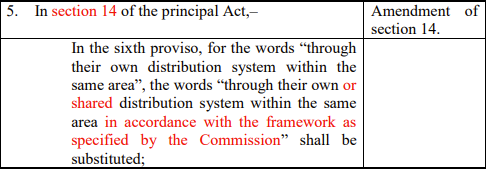
Among the core changes proposed in the Electricity Amendment Bill, 2025, is the provision to allow multiple distribution licenses, both public and private, to operate in the same area. In a move towards breaking the monopoly of state discoms, give consumers a choice of suppliers, just as like telecom providers, and encourage efficiency via competition.
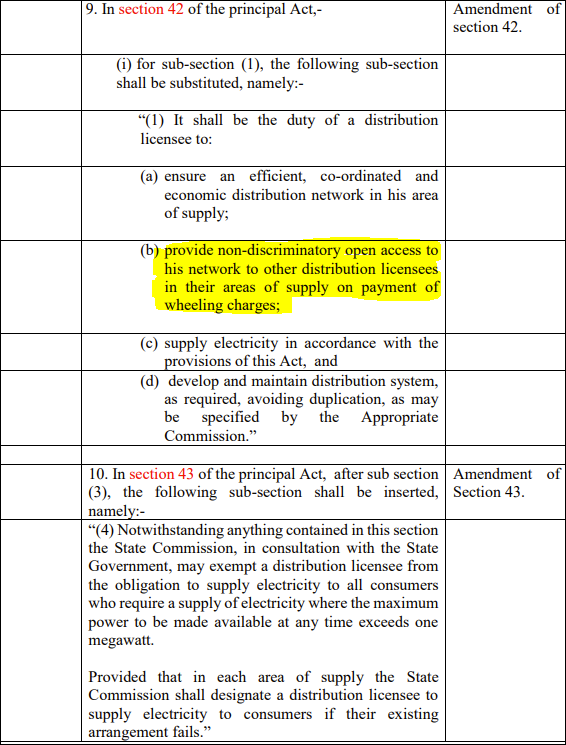
As per the amendment proposed for Section 42 to the principal Act, private companies can use the existing infrastructure, like wires and networks of state-owned discoms to supply electricity by paying a wheeling charge for network usage.
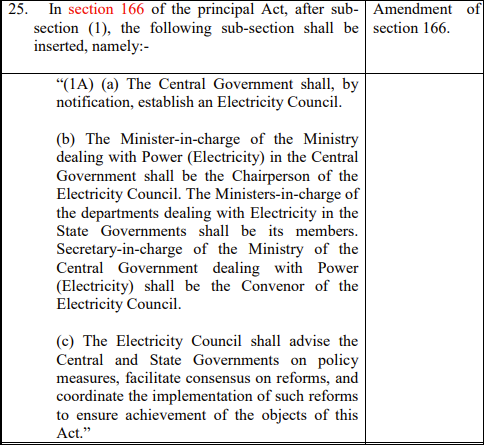
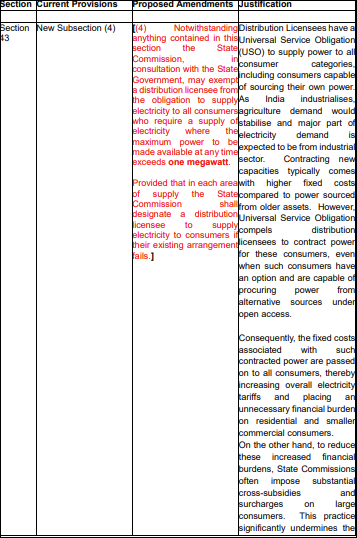
The draft bill states that licensees must develop and maintain efficient distribution systems while avoiding duplication. State Electricity Regulatory Commissions (SERCs) shall be empowered to exempt licensees from the universal supply obligation (USO) for consumers like large industries, requiring over 1 MW. The Commissions can also designate a fallback supplier in case of arrangement failure. Under Section 166, the Bill also provides for the establishment of an Electricity Council for Centre-State policy coordination and consensus-building.
“India already operates a successful Inter-State Transmission System (ISTS) built on shared infrastructure. Both public and private Transmission Service Providers (TSPs), including Powergrid (a CPSU), compete to develop ISTS assets under the oversight of the Central Electricity Regulatory Commission (CERC). Monthly payments made by users are fairly redistributed among the TSPs. This model has helped reduce costs and construction time for ISTS projects while maintaining high reliability,” the Ministry of Power states.
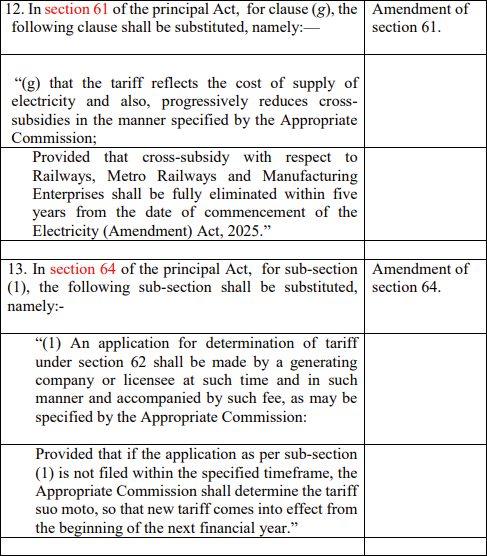
Regarding tariffs and subsidies, sections 61 and 64 of the Electricity Amendment Bill mandate cost-reflective tariffs to cover supply costs, with a progressive decrease in cross-subsidies. Cross-subsidies for railways, metro rail, and manufacturing enterprises must be eliminated within five years.
The State Electricity Regulatory Commissions (SERCs) will have the power to determine tariffs suo motu if utilities fail to file petitions. This is to ensure annual revisions from 1st April. The draft states that state governments shall retain flexibility to specific categories, like farmers and low-income households, through payments or a direct mechanism to ensure there is no undue burden on consumers.
Notably, while those opposed to the Electricity Amendment Bill 2025 allege ‘backdoor privatisation’ of the power sector, the Bill contains no mandate for privatising public assets. The framework only enables the entry of private players for the use of existing infrastructure. This, however, is not a free-of-cost arrangement. As mentioned earlier, the private suppliers can use public power supply networks only after paying wheeling charges. Moreover, the proposed legislation encourages the development and maintenance of supply infrastructure without duplication.
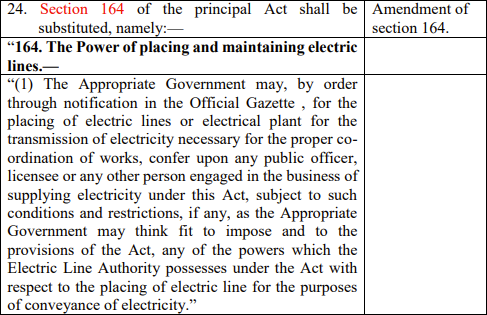
“The Appropriate Government may, by order through notification in the Official Gazette, for the placing of electric lines or electrical plant for the transmission of electricity necessary for the proper coordination of works, confer upon any public officer, licensee or any other person engaged in the business of supplying electricity under this Act, subject to such conditions and restrictions, if any, as the Appropriate Government may think fit to impose and to the provisions of the Act, any of the powers which the Electric Line Authority possesses under the Act with respect to the placing of electric line for the purposes of conveyance of electricity,” the amendment to Section 164 of the Electricity Act 2003 reads.
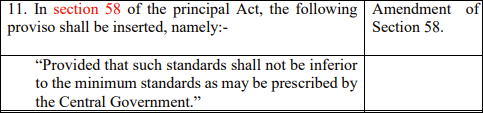
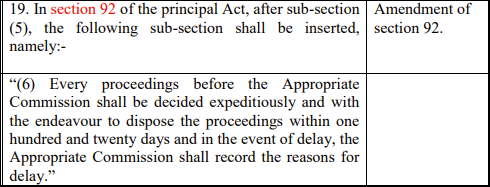
The bill also lays special emphasis on consumer protections through amendments in Sections 43, 58, and 92. It provides for enhancing reliability by requiring minimum performance standards, which would not be inferior to central guidelines, and mandating expeditious proceedings within 120 days by the Commissions.
The proposed legislation ensures that consumers with requirements above 1 MW gain supplier choice, while smaller ones stay protected under designated suppliers.
The legislation proposed by the Modi government strengthens obligations for non-fossil energy procurement, with 35-45 paise/kWh penalties for non-compliance. It also promotes power market development, including new instruments and trading platforms.
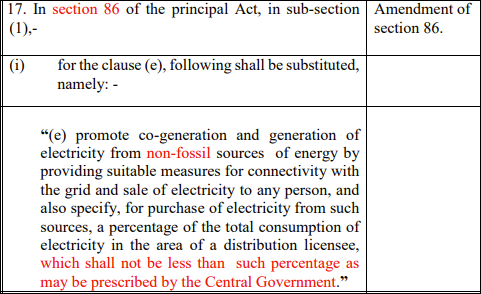
The amendment to Section 86 of the principal Act, states, “(e) promote co-generation and generation of electricity from non-fossil sources of energy by providing suitable measures for connectivity with the grid and sale of electricity to any person, and also specify, for purchase of electricity from such sources, a percentage of the total consumption of electricity in the area of a distribution licensee, which shall not be less than such percentage as may be prescribed by the Central Government.”
Besides promotion of non-fossil energy, the proposed Electricity Amendment Bill 2025 introduces definitions for energy storage systems and electric line authorities. The Bill bolsters regulatory accountability by allowing Commission members to be held liable for negligence and expands the Appellate Tribunal for Electricity (APTEL) to up to seven members.
In the draft bill, the Central government has given detailed justifications for each proposed amendment.
Why is the All-India Power Engineers Federation opposing the proposed Electricity Amendment Bill?
The All-India Power Engineers Federation, however, has raised strong objections against the proposed Electricity Amendment Bill. The AIPEF dubs the proposed legislation a move towards backdoor privatisation of the power sector.
During a media interaction on Saturday, AIPEF chairperson Shailendra Dubey alleged that despite stakeholders, including power sector employees, engineers, farmers’ organisations, and consumer groups submitting their objections, the Central government seemed to be “pushing the Bill without proper discussion and democratic consultation.”
“When views were invited on the proposed amendments, it was the responsibility of the govt to transparently disclose how those objections were examined and addressed. Ignoring these objections and rushing the legislation undermines the democratic process. If passed, the Bill will open doors to further privatisation in the power sector, which is not in the public interest,” Dubey told the media.
He further claimed that such policies would weaken the public electricity system and adversely affect electricity employees, farmers, and consumers.
The AIPEF argues that allowing private firms to further enter distribution, that too, without building their own infrastructure, would lead to “cherry-picking” of profitable industrial and commercial consumers. The Federation fears that if profitable consumers are cherry-picked by private consumers, the public discoms will be left with nothing but loss-making and agricultural segments, leading to the weakening and eventual collapse of the state utilities.
However, if we go by the justifications and explanatory notes in the draft bill, the amendments do not mandate privatisation; rather, it focusses on avoiding wastage of resources while also offering consumers diverse choices. Since allowing multiple licenses in the same area under the principal Act left a window for unnecessary duplication of distribution networks, resulting in wastage of scarce capital and land resources, the amendment allowing “own or shared networks” would ensure that “network expansion and augmentation are carried out efficiently without duplication.”
Regarding “cherry-picking” of profitable consumers by private firms, the exemption of discoms from Universal Service Obligation (USO) for r >1 MW consumers essentially unlocks massive electricity demand from industries by allowing them access to affordable power, reducing tariff distortions, and backing industrial expansion for job creation and growth. As discussed above, the proposed legislation addresses potential supply gaps by designating a fallback supplier at a “premium over the cost of supply”, preventing discom collapse.
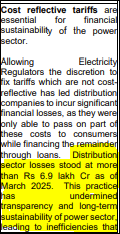
Here, the main issue is not private entry but chronic discom losses that stand at Rs 6.9 lakh crore. Private entry would relieve discoms from procuring costlier power for high-demand users, the government believes.
All images contain relevant excerpts taken from the draft Electricity Amendment Bill 2025. (Source: Ministry of Power)
However, the concern that if private entities are allowed to use public infrastructure for power distribution and earn profits, there is a possibility that the private players deliberately avoid building infrastructure seems valid.
Why would private companies invest millions in poles, wire, substations, and right-of-way (ROW) acquisitions when they can just pay wheeling charges and use public infrastructure and earn wider profits? Why would private players build infrastructure of their own only where strategically necessary and rely heavily on the sharing model elsewhere?
However, since the Universal Service Obligation continues for most consumers, with exemption only for large users> 1 MW, if private players neglect obligations, SERCs would have the power to enforce standards, impose penalties, or revoke licenses.
The Centre needs to offer better explanations and, if required, safeguards; otherwise, this debate over carriage and content separation can lead to wider opposition from stakeholders.
Moving ahead, the AIPEF contends that phasing out cross-subsidies and mandating cost-reflective tariffs would lead to a significant surge in electricity bills, especially for farmers and low-income households.
The government, on the contrary, emphasises protections for vulnerable groups. In alignment with the Supreme Court judgment in the BSES Rajdhani Power Ltd. & Anr. vs. Union of India & Ors. Case, Centre states that mandating cost-reflective tariffs to cover supply costs and prevent losses; however, the explanatory note in the draft explicitly states that the State government will retain the flexibility to support specific consumer groups by providing advance subsidies on their behalf.
The AIPEF also cites the case of Mumbai and Delhi, stating that privatisation of the power sector in these places resulted in no competition or consumer choice. In Delhi, there are no alternatives to TATA Power and BSES even after more than two decades. In Mumbai, multiple licenses and the entry of private players have led to disputes and court cases between TATA and Adani, while consumers suffer.
The Central government contends that the changes proposed in the Electricity Amendment Bill 2025 will boost economic productivity, industrial competitiveness, offer consumers diverse choices, and bolster job growth without eroding public welfare or dismantling public discoms. However, the AIPEF remains adamant that any development in the power sector can be achieved effectively via public utilities, and that reliable and affordable power supply to all consumer categories is “best ensured by state-owned discoms.”
The Modi government presents the Electricity Amendment Bill 2025 as a necessary reform to modernise India’s power sector, introduce regulated competition, phase out cross-subsidies for cost-reflective tariffs, establish the Electricity Council for federal coordination, and improve transparency and accountability. The Union Ministry of Power aims to diversify supply options for consumers, curb inefficiencies in like network duplication, improve the fiscal health of discoms, bolster service quality and reliability, as well as support reliable and affordable power, in alignment with the goals of Viksit Bharat 2047.
However, there is also a strong opposition to these changes, with the All-India Power Engineers Federation (AIPEF) framing them as large-scale backdoor privatisation intended to undermine public sector dominance. Those opposed to the Electricity Amendment Bill 2025 essentially favour preserving the existing model of state-owned discoms holding often a monopoly-like responsibility for universal supply, citing social welfare to prioritise monopoly against market-driven competition. It, however, remains to be seen if and to what extent the Centre government accommodates the demands and concerns of AIPEF and others opposed to the bill.
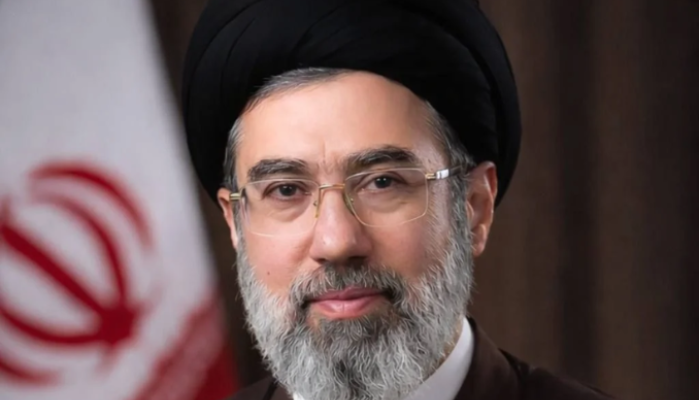
On 8th March, Iran’s Assembly of Experts declared Sayyed Mojtaba Hosseini Khamenei to be the third Supreme Leader of the Islamic Republic in the midst of an intensifying crisis in the Middle East. He replaced his 86-year-old father, Ayatollah Ali Khamenei, who was neutralised on 28th February in a military strike by the United States and Israel.
The representatives of the Assembly of Experts appointed and introduced Ayatollah Sayyid Mojtaba Hosseini Khamenei (may God protect him) as the Third Leader of the Sacred Islamic Republic of Iran under Article 108 of the Constitution. pic.twitter.com/gZgvEI7Ds2
Zahra Haddad Adel, Mojtaba’s wife and the daughter of a previous speaker of parliament, also perished in the attack along with their son. The fresh announcement came following indications of a divide among Iranian officials as the country awaited the verdict of the 88-seat Assembly of Experts, a body of clerics responsible for picking the Supreme Leader.
The 56-year-old has mostly kept a low profile in contrast to the late Khamenei, as only a few images and videos of him have ever been released. He has never held a public office, delivered speeches or offered interviews. However, there have been long-standing suspicions that he had significant authority over Iran. He was regarded as “a combination of aide-de-camp, confidant, gatekeeper and power broker.”
Meet Mojtaba Ali Khamenei
Mojtaba is the second-oldest son of Ayatollah Ali Khamenei and was born on 8th September 1969 in Mashhad, which is a holy Shia city and grew up while the latter attempted to topple the Pahlavi regime. He attended the esteemed Alavi High School in Tehran when the family relocated there post the 1979 revolution.
He served in the Habib ibn Mazahir Battalion of the 27th Mohammad Rasulullah Division during the last years of the Iran-Iraq War after enlisting in the Islamic Revolutionary Guard Corps (IRGC) at the age of 17. He has a stronger connection to the organisation than his father, who has denied rumours of a split and swore allegiance to him. He developed enduring relationships with his comrades who went on to occupy high-profile jobs within the Iranian military institution.
Mojtaba taught and acquired his religious education from conservatives in the seminaries of Qom, the nation’s centre of Shia theological education, which is located south of Tehran. He was largely regarded as a Hojjatoleslam, a mid-level religious rank, instead of a senior Ayatollah deemed eligible for the top assignment.
Interestingly, he travelled to the United Kingdom’s private institutions four times between 2004 and 2008 for infertility treatment. He received medical care at the Wellington and Cromwell Hospitals in London.
“His marriage, to the daughter of former Majles Speaker Hadad Adel, followed two ‘temporary marriages’ and occurred relatively late in life, reportedly due to an impotency problem treated and eventually resolved during three extended visits to the UK,” read the diplomatic cables of the United States, which were made public by WikiLeaks in the late 2000s.
The meteoric rise to power
The younger Khamenei was referred to as “the power behind the robes” in the cables, based on Associated Press (AP). He had tapped his father’s phone and was referred to as his “principal gatekeeper.” However, he had been creating his own power base in the nation.
A 2008 cable conveyed that Mojtaba “is widely viewed within the regime as a capable and forceful leader and manager who may someday succeed to at least a share of national leadership; his father may also see him in that light.” It added, “Mojtaba is, however, due to his skills, wealth, and unmatched alliances, reportedly seen by a number of regime insiders as a plausible candidate for shared leadership of Iran upon his father’s demise, whether that demise is soon or years in the future.”
He ran the Supreme Leader’s office like a “fortress” long before he was appointed and was viewed as the real force. He worked behind the scenes but proved to be a crucial link between IRGC appointments and intelligence operations. His name emerged to be affiliated with a web of covert power and critical security apparatus, while his brothers mainly stayed within the comparatively safe limits of cultural or administrative roles attached to their father’s leadership.
Notably, hardliner Mohsen Araki, Alireza Arafi, who is one of the three members of the temporary council in charge of the nation and Hassan Khomeini, the grandson of the founder of the Islamic Republic in 1979, were competitors for the spot. However, Mojtaba’s selection illustrated how he consolidated support.
Moreover, he is considered more in favour of building nuclear weapons than his father and could adopt a more aggressive stance on Iran’s nuclear program. Additionally, he has resisted reformers who want to work with the West to end the nuclear campaign.
The grave accusations and US sanctions
The reformist faction accused Mojtaba of manipulating elections and using the Basij force to suppress peaceful demonstrators amid the Green Movement of 2009. A violent crackdown on these leaders and their supporters had ensued after the controversial re-election of ultra-conservative president Mahmoud Ahmadinejad in 2009, which set off a massive movement. Mojtaba also played a key part in his first election in 2005.
Importantly, all-volunteer Basij forces have been at the centre of the onslaught against multiple waves of agitations in the country, including the latest uprising, which claimed the lives of thousands of people at the hands of the troops.
Mahdi Karroubi, who ran for president in both 2005 and 2009, called Mojtaba “a master’s son” and highlighted that he had tampered with both votes. However, the senior Khamenei apparently termed him “a master himself, not a master’s son.” It was mentioned that money was distributed to religious outfits via the IRGC and the Basij militia to influence the polls.
The United States Treasury Department placed sanctions on Mojtaba in 2019 and noted that he represented the Supreme Leader in “an official capacity, despite never being elected or appointed to a government position” aside from functioning in the latter’s office. It insisted that he was handed over responsibilities “to advance his father’s destabilising regional ambitions and oppressive domestic objectives” and joined hands with the commander of the IRGC’s Quds Force and Basij, a religious unit connected to the guards.
The Supreme Leader’s billion-dollar empire
Mojtaba owns a $3 billion global property and asset empire. According to sources, he has been intimately involved in the transactions, some of which date back at least to 2011, without putting the holdings in his own name, reported Bloomberg. They claimed that his financial dominance has included everything from Persian Gulf ships to Swiss bank accounts and British luxury property worth more than £100 million ($138 million).
The network of companies aided him in transferring money, estimated to be in the billions of dollars, into Western markets, despite sanctions slapped by Washington against him in 2019. This consists of luxury European hotels from Frankfurt to Mallorca, a mansion in an area known as the “Beverly Hills of Dubai” and premium real estate in several of London’s most elite neighbourhoods, including a £33.7 million house which was purchased in 2014.
Money for the deals had been routed through accounts at banks in the United Kingdom, Switzerland, Liechtenstein and the United Arab Emirates. Insiders disclosed that the sale of his country’s oil had been the main source of the funds. Many of the acquisitions are made in the name of Ali Ansari, an Iranian businessman who had been sanctioned by the British.
Mojtaba and his family also controlled billions of dollars and business properties dispersed throughout Iran’s several bonyads or foundations, which were financed by the state firms and other wealth earlier managed by the shah.
The Press Information Bureau (PIB) has debunked a viral video falsely showing Indian Army Chief General Upendra Dwivedi claiming India shared intelligence with Israel about an Iranian warship. PIB confirmed the clip is an AI-generated deepfake being circulated by Pakistani propaganda accounts.
🚨 Deepfake Video Alert
Pakistani propaganda accounts are sharing a digitally manipulated video of the Indian Army Chief General Upendra Dwivedi, making false claims that when the Iranian ship crossed the international waters, as Israeli strategic allies, it was our duty to… pic.twitter.com/itQ63pXGuF
In the fabricated video, General Dwivedi appears to say that under a “new strategic deal” with Israel, India informed Israeli authorities about the location of an Iranian naval vessel, identified in some posts as IRIS Dena, after it entered international waters. The clip further claims that the information enabled a U.S. submarine to strike the vessel.
PIB’s Fact Check Unit clarified that the Army Chief never made any such statement and labelled the video a deliberate attempt to mislead the public.
The original footage comes from General Dwivedi’s address at the Raisina Dialogue, where he spoke about India monitoring regional developments while maintaining neutrality. The manipulated version shows clear signs of tampering, including mismatched lip movements, unnatural phrasing, and AI-generated audio overlays.
PIB urged people to verify suspicious content through official channels and report misinformation via WhatsApp (+91 8799711259) or email [email protected].
The fake video surfaced amid rising Iran–Israel tensions and has been widely circulated on X by accounts linked to foreign disinformation networks. Independent fact-checkers have also confirmed it as a deepfake.
Many users on social media demanded stricter action against propaganda accounts, with some calling for Pakistan-based handles spreading such content to be blocked in India.
This is part of a broader pattern. Over the past year, several deepfake videos targeting General Dwivedi have circulated online, including false claims about Indian military during Operation Sindoor and internal policies. Each has been debunked by PIB, highlighting the growing use of AI-driven disinformation to target Indian institutions and influence public perception.
The Supreme Court of India has decided to formulate fresh guidelines to promote sensitivity among judges when the courts are dealing with cases that involve sexual offences and vulnerable victims. According to media reports, there is unease within the judiciary over a previous attempt to address gender stereotypes in courtrooms.
On 10th February, the apex court set aside the Allahabad High Court’s judgment in a POCSO case. In that matter, the High Court had drawn a distinction between “preparation” and “attempt”. The Court took a broader view of the case and asked the National Judicial Academy in Bhopal to constitute a committee of experts to prepare a comprehensive report on developing such guidelines. A three-judge bench headed by Chief Justice of India Surya Kant, along with Justice Joymalya Bagchi and Justice N V Anjaria, passed the judgment.
The committee will be chaired by former Supreme Court judge Justice Aniruddha Bose. It will include domain experts including practitioners, academicians and social workers. The committee will study earlier attempts and propose draft guidelines for how judges and the judicial system should approach cases involving sexual offences and other sensitive situations involving vulnerable victims or witnesses.
According to the Indian Express report, the move comes amid internal discomfort over a 2023 Supreme Court publication titled “Handbook on Combating Gender Stereotypes” that was introduced during the tenure of former Chief Justice of India DY Chandrachud.
Case that triggered the discussion
The directions from the apex court came during proceedings in a suo motu case initiated by the Supreme Court after an Allahabad High Court ruling that drew a distinction between “preparation” and “attempt” to commit rape in a POCSO case. The High Court had concluded that the actions of the accused did not amount to an attempt to rape and had therefore modified the charges accordingly.
However, the Supreme Court did not agree. It held that the allegations clearly indicated that the accused had moved beyond preparation and had begun executing their intent. It restored the original charges and set aside the High Court’s judgment.
In the broader context, the court accepted the concerns raised by counsel regarding insensitivity that sometimes seeps into judicial reasoning in sexual offences, specifically when minors and vulnerable victims are involved.
The court acknowledged that compassion and empathy must accompany the application of legal principles when courts deal with such cases.
Judges reportedly uneasy about 2023 gender handbook
The 2023 handbook was introduced as an effort to help judges recognise and avoid gender stereotypes in court proceedings and judgments. However, reports suggest that several judges expressed dissatisfaction with both the process and parts of the content of the handbook.
On the procedural side, some judges reportedly felt that a document meant to guide the judiciary should ideally have been discussed before the full court before being adopted. On the substantive side, certain portions of the handbook were viewed as problematic by some members of the judiciary.
The Indian Express cited unnamed sources familiar with the matter and noted that a section discussing stereotypes about sexual violence and caste is among the points of contention. The handbook states that a stereotype exists suggesting that “dominant caste men do not want to engage in sexual relations with women from oppressed castes” and therefore accusations of rape by such women against dominant caste men may be false.
Source: SCI
It then argues that historically, sexual violence has been used as a tool of social control and that dominant caste men have used such violence to reinforce caste hierarchies. According to sources quoted in reports, some judges felt that the Supreme Court should avoid making sweeping generalisations that could appear to attribute wrongdoing to entire communities.
‘Too Harvard oriented’ – CJI calls for practical guidance
During the hearing on 10th February, CJI Kant also criticised the technical language of the handbook and described it as overly academic and “Harvard oriented”. The court observed that assigning complex or forensic meanings to aspects of sexual offences could make such documents inaccessible to survivors, their families and ordinary citizens who interact with the legal system.
In its order, the bench emphasised that any future guidelines should be framed in language that is simple and easily understood by laypersons. The court also noted that many victims and complainants come from vulnerable backgrounds and may not have legal training or linguistic proficiency. Hence, guidelines must be accessible and grounded in practical realities rather than complicated academic terminology.
The Supreme Court has also stressed that the guidelines should reflect India’s social realities and linguistic diversity. The committee has been encouraged to identify offensive or insensitive expressions used in different regional contexts so that victims are better able to articulate their experiences before courts.
Furthermore, the court has directed that the guidelines should avoid heavy and complicated expressions drawn from foreign legal frameworks. They should instead be rooted in the ethos and social fabric of India. The committee has been asked to submit its report within three months.
A recalibration before the debate snowballs
While the 10th February order of the apex court does not explicitly criticise the 2023 handbook, the developments surrounding it suggest that the judiciary has recognised the need to revisit the exercise before it evolves into a wider institutional controversy.
The 2023 Handbook on Combating Gender Stereotypes was introduced with the stated objective of helping judges identify and avoid stereotypical assumptions in cases involving sexual violence. However, parts of its content appear to have generated unease among some members of the judiciary.
The concerns reportedly centred on certain sociological formulations in the handbook, including references to caste hierarchies and sexual violence. Reportedly, some judges felt these amounted to sweeping generalisations about entire communities.
For a document that has been issued by the Supreme Court, the language and formulation carry institutional weight. Courts are expected to adjudicate disputes involving individuals from diverse social backgrounds. However, broad sociological assertions within official material issued by the judiciary can sometimes be interpreted as institutional positions instead of academic observations.
In recent times, there have been discussions around institutional documents that have escalated quickly and taken the form of controversies. A recent example that should be considered here is the controversy surrounding the University Grants Commission’s (UGC) Promotion of Equity in Higher Education Institutions Regulations, 2026.
The guidelines, which were stayed by the apex court in the last week of January this year, structurally presume the General Category as perpetrators in matters of caste discrimination.
While the two issues are not related, both illustrate how institutional texts dealing with sensitive social questions can generate intense debate when the language used in these documents gives sweeping generalisations about social hierarchies. Against that backdrop, the Supreme Court’s move appears to reflect a cautious recalibration rather than a direct repudiation of the earlier handbook.
Another point raised during the hearing was the accessibility of the text. CJI Kant remarked that the handbook appeared “too Harvard oriented”. His remarks suggested that the language and conceptual framing were overly academic and difficult for laypersons to understand.
The bench emphasised that guidelines meant to shape judicial behaviour should ultimately serve the needs of litigants and victims who interact with courts, many of whom may not be familiar with technical legal or academic terminology.
The court’s order therefore signals a shift in approach. Instead of allowing the debate around the handbook to deepen, it has chosen to restart the exercise through a consultative mechanism. With this order, the Court has effectively pressed pause on the earlier framework while trying to build a more widely accepted one.
The move can be seen as an institutional course correction. The judiciary understands the need for sensitivity and empathy while dealing with sexual offence cases. However, the court has also indicated that the tools used to promote such sensitivity must have carefully drafted notions. Such documents should be discussed within the judiciary and should not trigger any controversy.