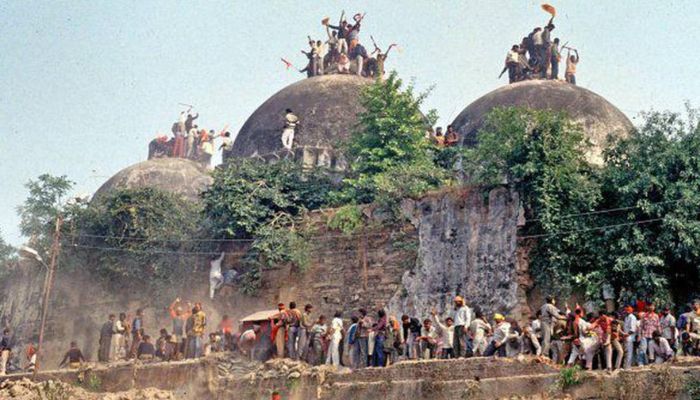
In a positive development, the National Council of Educational Research and Training (NCERT) has omitted the name of ‘Babri Masjid’ from its Class 12 Political Science textbook, reportedThe Indian Express.
The disputed structure, which was built by the general of Mughal tyrant Babur at the top of an existing Ram temple, has been stripped of its illegitimate name and renamed ‘three-domed structure.’
According to The Indian Express, the description in the old textbook included a “16th century mosque built by Mughal emperor Babur’s General Mir Baqi”.
Correction and addition of historical context
It has now been replaced with the following sentence – “a three-dome structure (that) was built at the site of Shri Ram’s birthplace in 1528, but the structure had visible displays of Hindu symbols and relics in its interior as well as its exterior portions”.
At the same time, it has been made clear that the disputed structure was constructed at the site of Hindu temple.
“In 1986, the situation regarding the three-dome structure took a significant turn when the Faizabad (now Ayodhya) district court ruled to unlock the structure, allowing people to worship there. The dispute had been going on for many decades as it was believed that the three-dome structure was built at Shri Ram’s birthplace after demolition of a temple,” the new context in the Class 12 political science textbook reads.
The NCERT book also refers to the unanimous 5-0 verdict of the Supreme Court of India, which paved the way for the reconstruction of the Ram Mandir at the birthplace of Shri Ram, and the Pran Prathistha ceremony of the Ram Mandir.
“The verdict allotted the disputed site to the Shri Ram Janmabhoomi Teertha Kshetra Trust for the construction of Ram temple and directed the concerned government to allot appropriate site for the construction of a Mosque to the Sunni Central Waqf Board. In this way, democracy gives room for conflict resolution in a plural society like ours, upholding the inclusive spirit of the Constitution. This issue was resolved following the due process of law based on evidences such as archaeological excavations and historical records. The Supreme Court’s decision was celebrated by the society at large. It is a classic example of consensus building on a sensitive issue that shows the maturity of democratic ethos which are civilizationally ingrained in India,” it reads.
It must be mentioned that the NCERT textbooks have been revised 4th time since 2017, to reduce syllabus burden and disruptions in learning caused due to Covid-19 pandemic.
Response of NCERT
While speaking about the revision in Class 12 textbook, NCERT director Dinesh Prasad Saklani toldPTI, “Why should we teach students about riots?”. The purpose of the textbook was not to create violent, depressed citizens.”
“Hatred, violence are not the subjects of teaching in school… (They) shouldn’t be focus of textbooks,” he emphasised. Saklani further added, “If anything becomes irrelevant, it will have to be changed.”
Earlier in April this year, NCERT informed, “Content is updated as per latest development in politics. Text on Ayodhya issue has been thoroughly revised because of the latest changes brought by the Supreme Court’s Constitutional bench verdict and its widespread welcoming reception.”
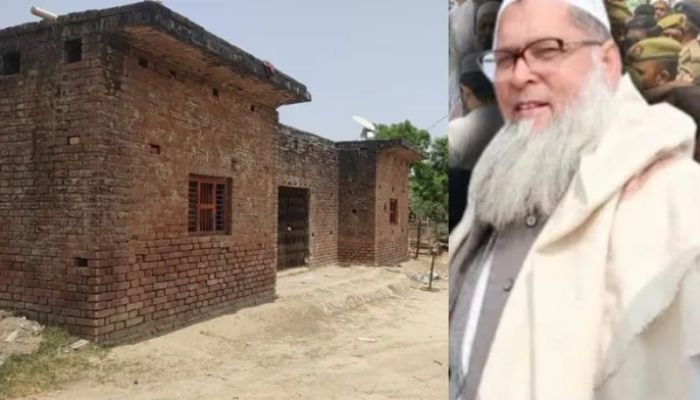
Earlier this month, a madrassa operator named Maulana Farooq was murdered on 7th June 2024 in the Pratapgarh district of Uttar Pradesh. The motive behind the Pratapgarh Maulana murder case was found to be a monetary dispute between the accused and the victim. A few individuals from the Hindu community were accused in this case. Following the incident, a Muslim mob took the law into their own hands. They not only pelted stones at the police but also tried to enter the houses of the accused.
The police managed to control the situation using force. Seeing the unrest, many people from the Hindu community in the village fled their homes in fear. Despite numerous assurances from the police, they are not ready to return. The names of those who have left the village include Dinesh Chandra Pandey, Jaiprakash Pandey, Rajesh Chandra Pandey, Anil Kumar Pandey, Ramakant Pandey, and Lala Pandey, among others.
According to reports, the incident took place in Sonpur village, within the Jethwara police station area of Pratapgarh. Violence erupted in the region on 7th and 8th June during which Muslim mob resorted to stone pelting. The violent mob also tried to storm the homes of the accused. Since then, police have been stationed in the village. Given the situation, many people from the Hindu community locked their homes and went to stay with their friends and relatives.
Several Hindu families have become refugees out of fear. The district administration has assured them of providing security and keeping them safe multiple times. Despite this, many families are not ready to return home. No action has been taken yet against those who vandalised their homes. It is also alleged that the violent mob targeted the homes of Hindus who had nothing to do with the killing of Maulana Farooq.
Samajwadi Party leaders went only to Maulana’s house
Meanwhile, despite numerous efforts by the administration to persuade them and various police restrictions, members of the Samajwadi Party reached the house of the deceased Maulana Farooq. On Saturday (15th June), they first broke through the police barricade and then reached the house of the deceased. This delegation from the Samajwadi Party included former minister Kamal Akhtar and former MLC Udayveer Singh. However, no one made any attempt to visit the homes of the affected Hindus.
Hindu organisations warned not to take unilateral action
Meanwhile, Hindu organisations have also intervened in this matter. Several Hindu organisations in Pratapgarh have united and announced that they will not tolerate unilateral action in any form. They have also appealed to the administration to ensure the safety of the Hindus in the village. They also slammed the Samajwadi Party for raising a one-sided story and criticised them in the harshest terms. The Pratapgarh Police stated that they are monitoring the situation and have given necessary instructions to the concerned officials.
संबंधित प्रकरण में उच्चाधिकारीगण के नेतृत्व में थाना प्रभारी आसपुर देवसरा व जेठवारा को संयुक्त रुप से जांच एवं विशेष सतर्कता हेतु निर्देशित किया गया है।
Pratapgarh Maulana murder case: 3 individuals including a woman arrested so far
So far, the police have arrested a total of 3 accused in the Maulana murder case. One of them is a woman. The arrested accused are named Devi Prasad Pandey, Chandramani Tiwari, and his wife Sita Tiwari. All of them have been charged under sections 147, 148, 302, and 34 of the Indian Penal Code (IPC).
No Communal angle Pratapgarh Maulana murder case, was murdered over a dispute over monetary dispute
After the murder of Maulana Farooq, several Islamic and leftist social media handles attempted to give it a communal colour. They tried to portray it as a targeted killing of Muslim scholars in Uttar Pradesh. This entire group linked together the deaths of Muslim clerics who were killed for various reasons in the Moradabad, Shamli, and Pratapgarh districts of Uttar Pradesh.
मुरादाबाद: यूपी में तीन इमाम की हुई हत्या के मामले में AIMIM ने मुख्यमंत्री के नाम @DMMoradabad को दिया ज्ञापन
⏩प्रतापगढ़, शामली और मुरादाबाद में तीन इमामों की बेरहमी से हुई हत्या
⏩AIMIM ने किया प्रदर्शन, इमाम-पंडितों-पुजारी की प्रदेश स्तर पर सुरक्षा के प्रबंध की मांग की… pic.twitter.com/qWllZtORgS
— Mohammed Naseeruddin (@naseerCorpGhmc) June 13, 2024
Several X users insinuated that the three maulanas killed recently in separate incidents in UP were somehow targeted in religiously motivated crimes, however, the reality was totally different. In fact, in two of the three said cases the land and monetary dispute emerged as the motive behind the killing while in one case unknown attackers killed a maulana but the motive of the killing was yet to be ascertained.
Meanwhile, police investigation has made it clear that none of these murders were targeted killings or driven by communal motives. In the Shamli case, it was the son who had murdered his father. In the Pratapgarh case too, police investigation revealed that the motive behind the murder was a dispute over money and land. During police interrogation, the arrested accused Chandramani Tiwari, on 11th June, stated that he comes from a very poor family.
Tiwari said that he earns a living by selling milk and doing some farming. The accused and the deceased Maulana had good relations. Due to a lack of money, the accused had sold approximately 10 biswa of land to Maulana. A dispute arose over this transaction involving money and land. Because of this, in a fit of rage, the accused murdered Maulana with a shovel.
Pertinently, the deceased Maulana’s son Mufti Mamoon had said that there was no communal angle to the case even though some locals and Islamists on social media alleged that it was a communally motivated crime. Meanwhile, Jethwara police station SHO, Dharmendra Singh said, “It was neither a property dispute nor a communal crime per say, the accused alleged that he had given some money in advance which he wanted to be returned to him.”
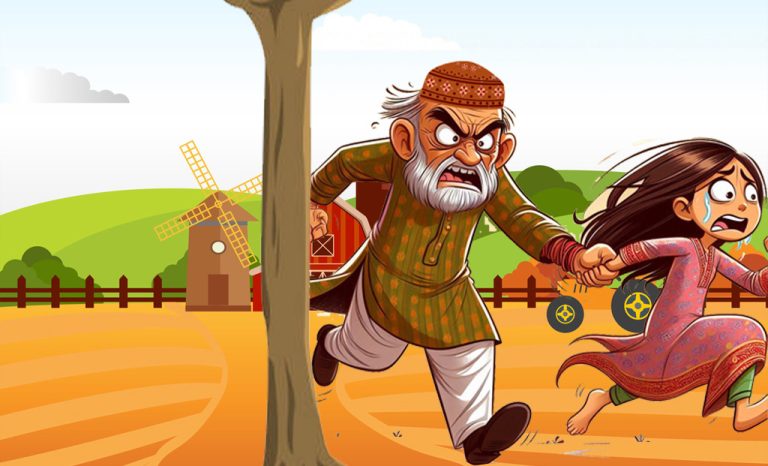
The authorities in Peshawar which is in Pakistan’s Khyber Pakhtunkhwa province, arrested a 72-year-old man for attempting to marry a 12-year-old girl. An attempt to marry the juvenile was thwarted by the cops in Charsadda who also apprehended the Nikkah Khwan (a person who solemnizes the marriage). The girl’s father, Alam Syed, had consented to sell her to the man for PKR 500,000, according to the police. However, the cops interfered shortly before the Nikah (Islamic wedding ceremony) and took the septuagenarian, identified as Habib Khan, and the Nikah Khwan into custody.
A case under the Child Marriage Act has been filed against the two along with the minor’s father who managed to abscond from there. An estimated 30% of girls in Pakistan get married before the age of 18, making it one of the countries with the highest rates of child marriage worldwide. The legal age of marriage is 16, but enforcement remains a challenge. The Child Marriage Restriction Act of the British era established the minimum age for marriage, but the maximum punishment of one month in jail and a fine of Rs 1,000 is considered to be insufficient to discourage offenders.
Khyber Pakhtunkhwa, the province where the attempted marriage occurred, is one of two provinces that haven’t enacted more robust legislation to address child marriage. United Nations International Children’s Emergency Fund (UNICEF) reported that 18.9 million Pakistani girls tie the knot before they reach 18 years of age and 4.6 million get married before they turn 16. In similar incidents. an 11-year-old girl in Rajanpur, Punjab, was pressured to wed a 40-year-old man while another young girl was compelled to marry a 50-year-old landlord in Thatta, Sindh. However, both were saved by the timely intervention of law enforcement officials.
A 70-year-old man was detained by the authorities on 6th May for marrying a 13-year-old girl in Swat. The marriage was organised by her father. When the authorities learned of the situation, they moved swiftly to arrest the two men. The underage girl was sent to the hospital for her medical examination and the Nikah Khwan along with witnesses of the ceremony were also nabbed.
No country for Hindu girls
The Pakistani authorities make a concerted effort to protect young Muslim girls from the terrible fate of marrying much older men at a young age. However, minorities, particularly Hindus, are not accorded the same privileges. In the Islamic nation, minor girls from minority communities like Hindus and Sikhs are regularly abducted, forcibly converted and married by Muslims, who prepare fake documents claiming the girls are over 18 years old and they have consented to the conversion and the marriage. Even after the victim girls tell the truth, the authorities and the courts don’t trust them, but rely on the forged documents to send the girl back to the abductors.
On 13th June, a startling story from Pakistan’s Karachi region surfaced about the kidnapping of a 16-year-old Hindu girl and her forced marriage to a young Muslim man. She was abducted by Sameer Ali, son of Gul Hassan, who lived in the town of Shahdabkot and was forcefully converted to Islam as well as given a new name ‘Hameeda’ after conversion. He successfully managed to present her as a 19-year-old adult in the submitted affidavit and claimed that she married him out of love and her own free will.
He pressured her to sign the document which read, “I have not been abducted by anyone to perform this marriage and I am giving this affidavit in my full senses without any force, pressure, or undue influence that I am going to solemnize my marriage with Sameer Ali with my personal decision without any force by anyone.”
Last year, Sohana Sharma Kumari, a 14-year-old girl, was taken away from her house in the Sindh province’s Benazirabad area. Her tutor and his assistants abducted her at gunpoint in front of her mother and her father Dilip Kumar reported the occurrence to the authorities. Afterwards, she appeared in a video and disclosed that she had converted to Islam and wed a Muslim man under pressure while her parents countered that she was still underage.
The cops recovered her from a house in the district after five days following much social media outrage. She was taken to the Larkana district court where she made a statement to the judge asserting she had been kidnapped and coerced into becoming a Muslim. She also stated that she wanted to go back to her parents. Nonetheless, the judge sent her to a women’s shelter home and postponed the case to a later date since it seemed as though she was under “pressure” while narrating her ordeal.
It is noteworthy that in numerous instances of this kind, the victim girls have expressed a desire to return to their parents, however, Pakistani courts place them in foster homes instead. Her father also told the media that all the documents produced by the accused to prove that she had embraced Islam and married a Muslim of her own free will were fake. “I don’t know how government officials can stamp such documents when the girl is 14 years old,” he stated.
Reshma, a Hindu girl from the Bagri group in the Garhi Sabhyo district of Sindh province, was abducted in 2020 and later revealed to be married to a Muslim male named Dil Murad Chandio. She and her spouse appeared before a court in Dera Allahyar, where she alleged that she was over 20 years old and married the man voluntarily and without any duress or compulsion. She added that her name was changed to Basheeran after she converted to Islam.
Her testimony was considered by the judicial magistrate, who granted her permission to remain with her spouse. Her parents, however, lodged a complaint at the Jacobabad Sadar police station. According to the girl’s parents, the man abducted their daughter, married her against her will and then pushed her to become a Muslim but the court legitimised their union and authorised them to stay together.
Kidnapping and forced conversions of young Hindu girls in the interior of Sindh have become a menace for Hindu families. Such cases have increased dramatically in interior Sindh in recent times with aggrieved parents flooding lower courts with applications demanding justice and the return of their daughters, sisters and spouses. Pakistan Darawar Ittehad (PDI), a minority organization, even arranged a protest demonstration in March 2023 from the Karachi Press Club to the Sindh Assembly Building. Several affected families participated in the event from their rural areas.
The President of the PDI, Shiva Kachhi, unveiled that although the group made an effort, it was unusual for a Hindu girl to be returned to her family because the police were generally unwilling to assist them. “There have been dozens of cases since last year and most of these girls are underage be it Sheela Meghwar, who was abducted from Mirpur Mathelo in Ghotki on March 19 this year, Chanda Maharaj, Simran Kumari, Pooja Kumari, Satran Oad, Kaveeta Bheel, Vijjya Kumari or Sohana now,” he mentioned.
He added that in one instance, the police disregarded a complaint even when the father of the kidnapped girl informed them that the person who held her hostage and forced her marriage already had two wives and four kids and worked as a labourer. “How can a 14-year-old girl decide to marry a man twice her age and already with two wives and who was a labourer,” he asked. Notably, Hindus are the largest minority group in Pakistan, although their numbers are rapidly declining owing to regular and repeated persecution.
The United Nations also expressed dissatisfaction with the ongoing crimes against women from minority communities in Pakistan on 11th April. A group of UN experts chastised the Islamic Republic for pressuring Christian and Hindu women into marriage and converting them to Islam, in a Geneva statement. which read, “Christian and Hindu girls remain particularly vulnerable to forced religious conversion, abduction, trafficking, child, early and forced marriage, domestic servitude, and sexual violence. The exposure of young women and girls belonging to religious minority communities to such heinous human rights violations and the impunity of such crimes can no longer be tolerated or justified.”
“Perpetrators often escape accountability with police dismissing crimes under the guise of ‘love’ marriages,” according to the experts. Furthermore, the UN press release stressed that child marriage, early marriage, or forced marriage are never acceptable. International law points out that if the victim is a minor (anyone under the age of eighteen), then consent in a marriage remains irrelevant. It noted, “A woman’s right to choose a spouse and freely enter into marriage is central to her life, dignity, and equality as a human being and must be protected and upheld by law.”
The UN urged Pakistan to uphold its international human rights obligations, ensure that those guilty of such violations are brought to justice and strengthen the implementation of current laws that protect against forced marriage as well as the abduction and trafficking of girls from the minority community.
Conclusion
Leaders of Hindu organizations have repeatedly voiced their opposition to girls from the community being kidnapped and converted to Islam. They charged that Sindh has become a hotspot for these kinds of crimes with Hindu females being abducted and brazenly converted to Islam under coercion as well as driven into marriage with their captors. All of it, though, has no impact on the authorities, as the situation continues to deteriorate at a rapid pace.
Honestly, these instances are not surprising considering the horrors inflicted on the marginalized minorities especially Hindus which struggle to survive in Pakistan on a daily basis by both its institutions and its individuals. However, one may anticipate a more passionate approach when it comes to the subject of crimes against children but this is not the case in Pakistan, where the people view all non-Muslims, including defenceless young Hindu girls, as inferior beings who deserve to suffer at the hands of their tormentors by virtue of their religion.
There, otherwise, can be no other justification for the impunity granted to the rapists and abductors, and the fact that legal institutions including the police and judiciary along with their media aid and abet such dangerous elements with blatant shamelessness despite overwhelming evidence and steadfast pleas from the families of the victims.
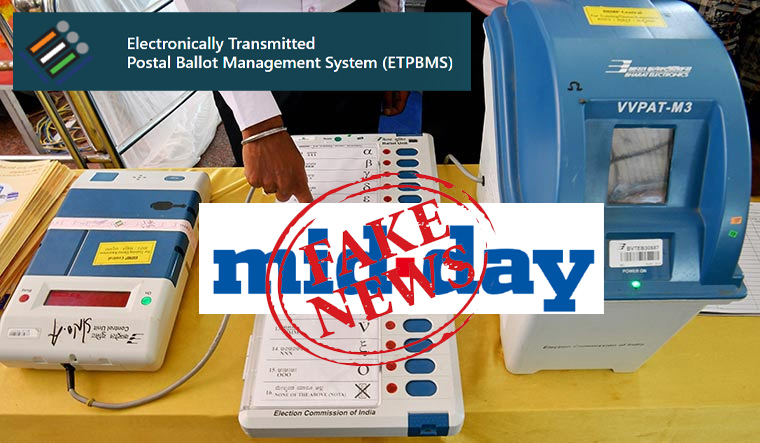
After better-than-expected results secured by the opposition parties in the Lok Sabha elections, attacks on Electronic Voting Machines have almost stopped. However, some sections continue to create doubt about India’s secure electronic voting system. On 16 June, Mid-Day published a sensational report claiming that a relative of newly elected Shiv Sena MP Ravindra Waikar was able to connect to EVMs using his mobile phone.
The report claimed that a mobile phone was used for generating the OTP that unlocked the EVM machine, which was used inside the NESCO Centre during the counting of votes on June 4. The report states that police have launched an investigation into the case and sent the phone for examination to the Forensic Science Laboratory (FSL).
Notably, the report didn’t say what did Mangesh Pandilkar, Ravindra Waikar’s relative, do after ‘unlocking the EVM by generating OTP on his phone’. It just noted that Waikar won by 48 votes, but didn’t say Pandilkar increased votes in the EVM using his phone. On the other hand, towards the end of the report, it states that an Electronically Transmitted Postal Ballot System (ETPBS) for Service Voters was present in the centre. It states that another accused Dinesh Gurav used the same phone to generate OTP to unlock the postal ballot system.
Mid-Day claimed, “During the counting of votes through the EVM machine, the candidate Amol Kirtikar was ahead but when the votes on the Electronically Transmitted Postal Ballot System were counted, Kirtikar lagged behind, eventually losing the race to Waikar.” The report tried to insinuate that the Shiv Sena candidate won because his relatives used a phone to unlock an EVM and an ETPBS by generating OTPs.
Following the publication of the report, attacks on the EVMs have resumed on social media. As expected, Congress MP Rahul Gandhi used the report to resume his attacks on EVMs.
EVMs in India are a "black box," and nobody is allowed to scrutinize them.
Serious concerns are being raised about transparency in our electoral process.
While the police have launched a probe over the use of a phone inside the counting centre in Mumbai, the Mid-Day report is grossly misleading. It claims Mangesh Pandilkar used a phone to generate OTP to unlock an EVM, which is a completely baseless claim. Electronic Voting Machines are not connected to any network, and they can’t be ‘unlocked’ remotely by generating an OTP.
After the voting is done, EVMs are sealed physically, and the authorised polling agents of the candidates along with polling officials sign on the seal. The EVMs are then stored in strong rooms where also agents of candidates are allowed to keep a vigil. On the counting day, after the EVMs are taken out, the counting agents of the candidates are allowed to check the seals and the signatures. After everything is found to be ok, the seal is broken, and the result button is pressed to see the number of votes polled by each candidate in that EVM.
At no stage from allocating EVMs to polling booths to voting to counting, there is any provision to lock or unlock EVMs remotely using OTPs. The EVMs are sealed and unsealed physically, not electronically. Therefore, the claim that the Shiv Sena MP’s relatives used a phone to OTP to unlock EVMs is completely fake news.
The report also talked about the Electronically Transmitted Postal Ballot System being unlocked by the same phone.
What is ETPBS
The ETPBS has been used to replace the previous postal ballots used by service personnel for voting. However, even in this system, the votes are not sent electronically. The ETPBS is used to send the ballot papers electronically to the service voters.
The electronic ballots are sent to the voters in an encrypted form with multiple levels of security like passwords and PINs. After receiving and downloading the postal ballots, the respective service voter prints the ballot, marks the vote and sends it to the concerned Returning Officer via post.
The system was introduced to remove the hassles and delays in sending the blank postal ballots to service voters, such as printing each ballot, putting them in envelopes, putting the address etc, which took too much resources and time. Now, the ballots are sent in an encrypted electronic form, like sending a form via mail. But the votes are still cast on paper ballots only.
Electronically Transmitted Postal Ballot System is the name of the system used to send postal ballots in electronic form, it is not some specific machine like EVM. The system works on standard computers and networks. ECI has a portal for the ETPBS, where the respective election officers can log in from any internet-connected computer to generate and send postal ballots.
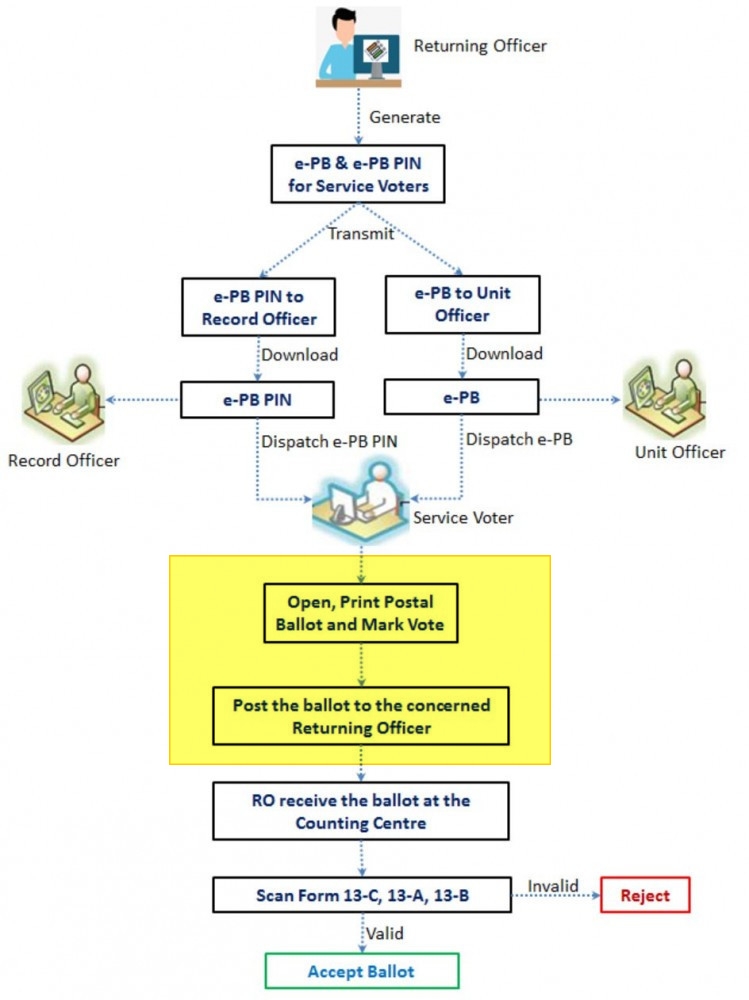
ETPBS Process flow from ECI website
To log into the portal, the Returning Officer needs to provide an OTP received on the officer’s registered phone number. After that, the RO prepares password-protected postal ballots for the constituency and uploads them into the system. The ballots are then immediately sent to the concerned voters electronically. To send the ballots, the service voter electoral roll data is used which contains the links between the service voter, unit officer and the record officers.
At the service unit end, the designated officer logs into the system using a password and OTP and downloads the postal ballots. The password-protected postal ballots are then sent electronically to the service voters of that unit. PIN to open the ballot is sent to the voter separately, to ensure that only the concerned voter can open the ballot.
After receiving the ballot, the service voter prints the ballot and marks the vote on it. The voter also needs to sign a form along with it. After that, the ballots are put in a specific envelope provided to the voter, it is sealed, and it is sent by post to the respective Returning Officer.
Therefore, although the system has the words “Electronically Transmitted Postal Ballot”, this refers to one waty of the transmission, sending the ballot to the voters. The voters do not send any electronic vote, they print the ballots and send those printed ballot papers for counting.
Counting of postal ballots
The postal ballots are counted at the beginning of the counting in the morning. They are not counted at last after counting EVMs, as claimed by Mid-Day.
Unique serial numbers are printed on the envelopes which are also recorded in the system, and they are verified before the counting. Therefore, the counting officer needs to log into the Electronically Transmitted Postal Ballot System during the counting process, to verify the serial numbers.
However, the ETPBS does not store any vote. Therefore, even if someone manages to get into the system, the votes can’t be manipulated. The postal votes are on printed ballot papers, any phone or OTP can’t manipulate them.
Therefore, the claim that Ravindra Waikar overtook Amol Kirtikar after Dinesh Gurav ‘unlocked’ the system using the phone is completely misleading. The claim that ETPBS is also used after using EVM machines is also wrong and misleading. Counting of postal ballots starts 30 minutes before the counting of EVMs, therefore the ETPBS is also used before the EVM counting begins, to verify the postal ballots received.
There is no use of the system after EVMs are counted. As the number of postal ballots is relatively small, they are generally completely counted in the first hour of counting itself. After EVM counting is over, VVPAT slips from 5 random VVPAT machines are counted.
Therefore, it can be concluded that the Mid-Day article is completely fake as its headline says that Ravindra Waikar’s kin had a phone that unlocks EVM. No EVM can be unlocked with a phone.
What actually might have happened
From the police quotes included in the report, it seems to be a simple case of a phone found inside the counting station without authorisation. There is no quote from any police officer talking about any EVM or OTP or unlocking anything.
The report quotes senior inspector Rampiyare Rajbhar of Vanrai police station saying, “We have sent the mobile phone to forensics that will be looking into the call records. We are also checking if the mobile phone was used for any other reasons. We have recorded the statement of the other candidates and a notice has been sent to the accused Mangesh Pandilkar and Dinesh Gurav. They will have to come to the police station for the investigation. They seem to be cooperating with us for now if this stops, we will issue an arrest warrant.”
Another cop said, “Now, we are now looking at CCTV cameras of the NESCO centre which might help us know how the mobile phone made its way inside the centre. We are also exploring the angle if more accused are involved in this crime or to find out who supplied this mobile phone.” Here, the ‘crime’ seems to be the presence of the phone inside the centre, not anything related to OTP or EVMs.
From these quotes, it is clear that police have not mentioned anything about unlocking EVMs or generating OTPs. They are investigating how the phone was carried inside the counting centre where it is prohibited, checking call records, and if it was used for any other purpose. The police have not said the phone was used to access or unlock EVMs or ETPBS, which seems to be the addition of the Mid-Day report’s author.
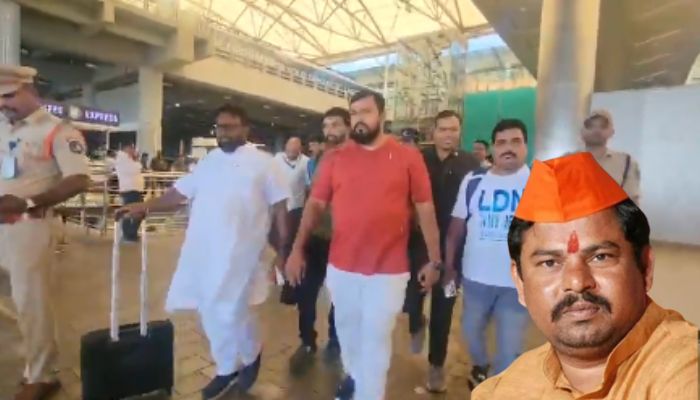
On Sunday (16th June), the Telangana Police took BJP MLA from Goshamahal T Raja Singh in custody from the airport when he was en route to Medak. He was slated to meet the party’s state unit who were attacked by goons over the issue of cow protection.
Taking to X, he informed about the development and wrote, “Arrested by Telangana Police at the airport while on the way to Medak to meet @BJP4Telangana Karyakartas who were attacked by goons.”
He earlier stated that he would visit the hospital in Medak and meet Gaurakshaks who were attacked by the goons. Following the development, members of the BJP and BJYM (the party’s youth wing) staged a protest after which the Police arrested them. The BJP leader Singh accused the Medak Police of taking one-sided action and supporting the attackers.
In another post, he wrote, “Yesterday in Medak, some goons attacked Gau Rakshaks while they were performing Gau Raksha. Medak Police has one-sidedly supported the attackers. All BJP and BJYM Karyakartas have been arrested by the police while the attackers roam freely. Today, I will visit the hospital and meet the Gau Rakshaks who were attacked and injured by the goons.”
Yesterday in Medak, some goons attacked Gau Rakshaks while they were performing Gau Raksha.
Medak Police has one-sidedly supported the attackers.
All BJP and BJYM Karyakartas have been arrested by the police while the attackers roam freely.
It is pertinent to note that clashes erupted between two communities over the alleged illegal transport of cows on Saturday. The Police imposed Section 144 near Ramdas Chowrasta in the Medhak district of Telangana. Notably, Section 144 of the Criminal Procedure Code (CrPC), which prohibits gathering of four or more people in an area, is usually implemented to avoid any protests that could lead to violence and riots.
Medak Superintendent of Police Office B Bala Swamy said, “The police imposed Section 144 in the area and the situation is under control now.”
A few persons have already been taken into custody and an investigation is ongoing as cases are being registered against both parties and the situation is under control for now, the senior police officer said.
According to him, the scuffle broke out when the Bharatiya Janata Yuva Morcha (BJYM) leaders stopped the transportation of the cows, and instead of giving a complaint, they staged a protest.
Swamy said, “The scuffle led to two persons receiving injuries. After that, both parties staged a protest on the road. The hospital where the injured persons were receiving treatment was also attacked.”
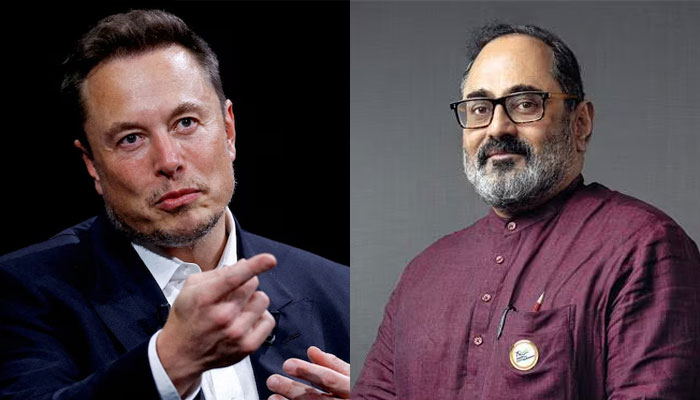
On Monday (16th June), former Minister of State for the Ministry of Electronics and Information Technology Rajeev Chandrasekhar gave a befitting reply to Tesla chief Elon Musk after the latter called for eliminating Electronic Voting Machines (EVMs).
Chandrasekhar said that Musk’s views could apply to the US and other places where internet-connected voting machines are used but the Indian EVMs are different as they have no connectivity, no Bluetooth, Wi-Fi or internet.
Elon Musk quoted a post about irregularities found in Puerto Rico elections. He wrote, “We should eliminate electronic voting machines. The risk of being hacked by humans or AI, while small, is still too high.”
This is a huge sweeping generalization statement that implies no one can build secure digital hardware. Wrong. @elonmusk 's view may apply to US n other places – where they use regular compute platforms to build Internet connected Voting machines.
— Rajeev Chandrasekhar ?? (@RajeevRC_X) June 16, 2024
His post went viral on social media, especially among the left-liberals, opposition leaders and their supporters who have repeatedly questioned the authenticity of the EVMs in India.
Quoting Musk, Rajeev Chandrasekhar came out in support of Indian EVMs and said, “This is a huge sweeping generalization statement that implies no one can build secure digital hardware. Wrong. Elon Musk’s view may apply to the US and other places – where they use regular computing platforms to build Internet-connected Voting machines. But Indian EVMs are custom designed, secure and isolated from any network or media – No connectivity, no Bluetooth, Wi-Fi, Internet. i.e. there is no way in. Factory-programmed controllers that cannot be reprogrammed. Electronic voting machines can be architected and built right as India has done. We would be happy to run a tutorial Elon.”
Musk did not back off and claimed that “Everything can be hacked” in a reply to Chandrasekhar’s post to which the former minister said, “Technically you are right – anything is possible. E.g. with quantum computing, I can decrypt any level of encryption, with lab-level tech and plenty of resources, I can hack any digital hardware/system including flight controls of a glass cockpit of a jet etc. But that’s a different type of conversation from EVMs being secure and reliable vis a vis paper voting. And we can agree to disagree.”
Technically ur right – anything is possible E.g..wth quantum compute, i can decrypt any level of encryption, with lab level tech n plenty of resources, i can hack any digital hardware/system incldng flight controls of a glass cockpit of a jet etc etc. But thats a different type…
— Rajeev Chandrasekhar ?? (@RajeevRC_X) June 16, 2024
Indian EVMs are secure
Despite repeatedly going through scrutiny and succeeding in proving effectiveness, Indian EVMs have faced criticism, especially from individuals with vested interests and opposition parties. Interestingly, I.N.D.I. Alliance won 230+ seats via EVMs in Lok Sabha Elections 2024.
Despite their unexpected gain in a number of seats, the opposition is still crying over the authenticity of EVMs. OpIndia’s detailed report on why Indian EVMs are safe can be checked here.
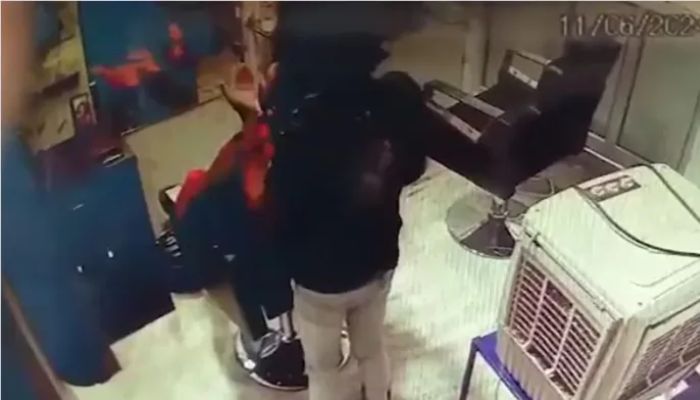
After Shamli in Uttar Pradesh, a shocking incident has now emerged from Lucknow, where a barber has been arrested for spitting on his hand and then massaging the customer’s face with his saliva.
The incident was caught on camera and the CCTV footage of the act went viral on social media on Saturday (15th June).
In the viral video, salon operator Mohammad Zaid is seen rubbing his saliva on the face of customer Pandit Ashish Kumar. Subsequently, the customer filed a complaint at the Sushant Golf City police station.
A barber spat on his hand and used his spit to massage a customer's face at a salon in Lucknow.
As per reports, the customer, Pandit Ashish Kumar is a resident of Unnao. He works in a canteen and used to visit this salon as it was near his work area. The incident unfolded on Tuesday (11th June) when he went to the salon for a massage.
The accused, Zaid was captured on the CCTV footage in which he could be seen spitting on his hand and using his saliva to massage Kumar’s face after shaving. But, Kumar was unaware of the act at that time.
यूपी : लखनऊ के सैलून में थूक वाली मसाज। सैलून संचालक जैद गिरफ्तार हुआ। इससे पहले शामली में भी थूक मसाज की video सामने आई थी। pic.twitter.com/XFrcq8XX9s
However, Kumar became suspicious of Zaid’s act. Afterward, he requested the salon to see the CCTV footage. He was horrified to see the barber’s act of using saliva to massage his face.
When he confronted Zaid about this, he started threatening him. Subsequently, he went on to file a complaint with the police against Zaid.
Inspector Anjani Kumar Mishra said that based on the complaint, a case has been registered against the accused Mohammad Zaid. The Lucknow Police also arrested the accused barber Zaid. The Police are further investigating the incident.
A similar case of spitting unfolded in Shamli
Earlier this month, on 8th June, a similar case was reported from Shamli in UP. A video of the incident went viral in which a barber named Amjad was seen spitting and then massaging the customer’s face with saliva.
After the video went viral, Shamli SP Abhishek instructed Thana Bhavan police station in-charge Satish Kumar to investigate and take legal action. Within 6 hours of this, the police caught Amjad.
– शामली में घटिया मानसिकता की वीडियो वायरल,
– सैलून का काम करने वाले एक युवक की थूक लगाकर मसाज करने का वीडियो वायरल,
– शामली के गांव भनेड़ा उद्दा में बस स्टैंड पर ही करता है सैलून का काम,
– घटिया हरकत करने वाले का अमजद पुत्र इरफान निवासी भनेड़ा उद्दा बताया जा रहा है नाम,… pic.twitter.com/uUEdPrTH3w
Police said that the person who made the video viral identified the barber as Amjad. When the video was investigated, it was found that this nefarious person runs a salon at the village bus stand.
Amjad is a resident of Bhaned village and his father’s name is said to be Irfan. Police then registered a case in this matter.
Several such cases of spitting have come to light in the past as well. Three years ago, a video of spitting on roti before baking it in a tandoor near Fountain Chowk in Shamli Kotwali went viral. At that time, the police arrested the accused. Similarly, a video of a Muslim youth spitting on tandoori bread before packing it at a hotel in Loni, Ghaziabad, went viral. He was also arrested.
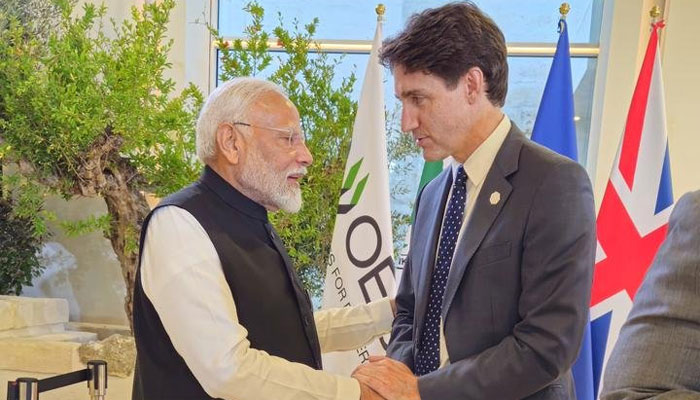
On 15th June, Canadian Prime Minister Justin Trudeau expressed his desire to work with India to address some “very important issues”. His statement came during the meeting with the Indian Prime Minister Narendra Modi on the sidelines of the G7 summit in Italy. Notably, the diplomatic relations between India and Canada were strained after Trudeau accused India of killing Khalistani terrorist Hardeep Singh Nijjar on Canadian soil in June 2023. The allegations were made by the Canadian PM in the Parliament soon after he returned from the G20 meeting that was held in India.
The meeting between PM Modi and Canadian PM Trudeau took place on the sidelines of the G7 summit in Apulia, Southern Italy where PM Modi was invited as a guest by Italian Prime Minister Giorgia Meloni. The meeting was the first between the two leaders since the tensions between the two nations escalated. PMO shared an image of him with Trudeau shaking hands captioned “PM Narendra Modi and Canadian PM Justin Trudeau met during the G7 Summit in Italy.”
The bilateral ties between India and Canada have been under severe strain since the unsubstantiated allegations were made against India regarding Nijjar’s murder. Furthermore, Canada also accused India of meddling with its previous elections without any substantial proof. However, Trudeau’s recent statement indicates the Canadian PM wants to repair the damaged relationships.
On the other hand, bilateral meetings between PM Modi and leaders of several different countries including Italy, France and Japan were held. The meeting between PM Modi and Trudeau was more of a courtesy one. Speaking to the media, Trudeau said, “I’m not going to get into the details of this important, sensitive issue that we need to follow up on, but this was a commitment to work together, in the coming times, to deal with some critical issues.”
Canadian Press news agency quoted spokesperson Ann-Clara Vaillancourt of the Canadian PM office saying, “Of course, there are important issues between our two countries right now. You can appreciate that we won’t be making any further statements at this time.” The office added that the two leaders had a “brief discussion on the bilateral relationship”.
Hardeep Singh Nijjar’s murder and Canada’s accusations against India
On 18th September 2023, Canadian Prime Minister Justin Trudeau dug a deep grave for the India-Canada relationship as he accused Indian agents of being involved in the murder of Khalistani terrorist Hardeep Singh Nijjar on Canadian soil.
In the Canadian Parliament, he said, “Over the past number of weeks, Canadian Security Agencies have been actively pursuing credible allegations of a potential link between the agents of the Government of India and the killing of a Canadian citizen, Hardeep Singh Nijjar.” “In the strongest possible terms, I continue to urge the government of India to cooperate with Canada to get to the bottom of this matter,” Trudeau added in his statement.
His allegations led to a diplomatic standoff between India and Canada. Hitting back at the Trudeau government, the Indian government denounced Canada’s allegations as “absurd” and “motivated” and asked Ottawa to furnish solid proof. The Indian government also pointed out that for internal political compulsions, Trudeau was pandering to the Khalistani extremists. Nearly six months after he aired the allegations in the Canadian Parliament and nine months after Nijjar’s killing, Trudeau’s government has not yet shared any “credible” evidence in this matter.
Nijjar, who was designated a terrorist by the National Investigation Agency (NIA) in 2020, was shot and killed as he came out of a Gurdwara in Surrey, British Columbia, on the evening of June 18, 2023. Video footage of Nijjar’s killing recently surfaced online which Canadian media described as “contract killing”. Amid Canada’s failure to indict Indian involvement, “credible” reports had indicated that it could have been a case of “gang violence”.
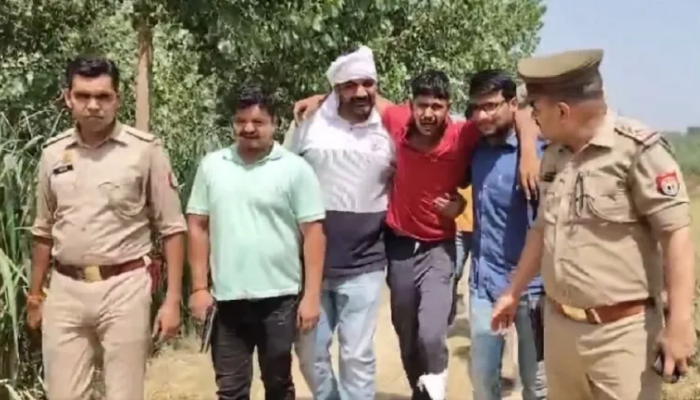
A suspected cow smuggler named Sufiyan was apprehended following an encounter in Muzaffarnagar, Uttar Pradesh. The police are looking into his history sheet as he already has multiple cases filed against him. The accused fired at the cops when they stopped him during a check and they then engaged in a gunfight with him being shot in the leg. A video of him pleading, “I made a mistake this time, I will not do it again. Please forgive me,” has become viral on social media.
According to media reports, the Kotwali police and (Special Operation Group) SOG team of Muzaffarnagar were checking vehicles close to the Kali River. When the police motioned for a bike rider to stop for checking, he sped up and escaped from the check post.
The cops pursued him, and the accused lost his balance and fell down. Seeing himself surrounded by police, he fired at them. The policemen returned fire and was shot in his leg. After that, police nabbed him and took him to a hospital for treatment of his wound. The accused was then identified as Kaif alias Sufiyan from Shamli.
It was then found that the perpetrator is wanted by three police stations in the Shamli district. He has also been involved in cow smuggling and has been described as a cow smuggler in the Royal Bulletin report. Meanwhile, he was recorded begging the authorities to let him go and assured them, “I made a mistake sir, please forgive me once. This will never happen again.” He can be seen walking with the help of other people alongside cops.
“गलती हो गई साहब.. एक बार माफ़ी दे दो, आगे से ऐसा नहीं होगा”
मुजफ्फरनगर में चेकिंग के दौरान गौतस्कर से पुलिस की मुठभेड़
Police mentioned that a pistol, cartridges and a motorcycle had been recovered from the culprit. Cases of cow slaughter and theft are registered against him in the police stations of Shamli district. The cops are currently examining his history sheet.
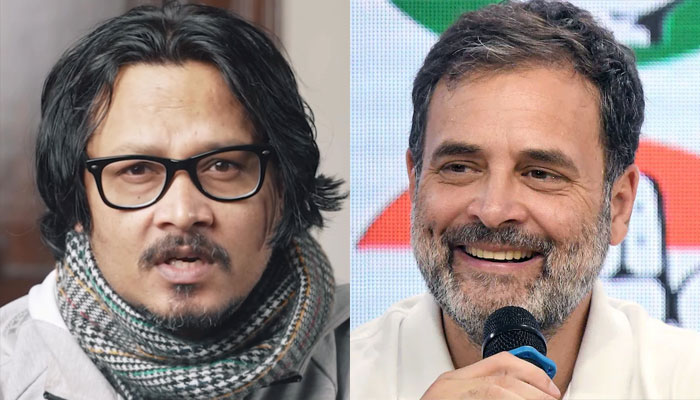
On 15th June, an FIR was registered against journalist Ajeet Bharti at High Grounds Police Station in Bengaluru based on the complaint of one BK Bopanna, lawyer and secretary of Karnataka Pradesh Congress Committee’s legal cell claiming that Bharti falsely claimed that Rahul Gandhi intended to restore the Babri Masjid in place of Ram Mandir in Ayodhya.
The FIR has been registered under Sections 153A and 505(2) of the Indian Penal Code (IPC). The FIR comes after an FIR was registered against X user Befittingfacts over flimsy grounds.
#Breaking: An FIR has been registered against Ajeet Bharti in Bengaluru for spreading fake communal propaganda using the name of Rahul Gandhi Ji under sections 153A and 505 (2) of IPC 1860.
In his complaint, Bopanna accused Bharti of making false claims against Rahul Gandhi in a video. He claimed that Bharti’s statement spread false information with the “intent to provoke dissent and hatred among various religious groups” and was aimed to “disturb public peace and incite disorder”. He further claimed that Bharti’s behaviour promoted public mischief and incited communities against each other “sowing seeds of discord and hatred among various religious communities” that would lead to disruption of peace and harmony in the society.
Alt News’ Zubair’s role in targeting Ajeet Bharti
It has to be noted that it was Alt News’ Mohammed Zubair who first targetted Ajeet Bharti over the video. Zubair, who is known for sharing trimmed videos to set a narrative, shared a small 40-seconds clips of Ajeet Bharti trimmed from a long video. While sharing the video, Zubair wrote, “When did Rahul Gandhi say in any of his speeches that Ram Mandir will be removed and he would bring back Babri Masjid? They repeatedly spread disinformation because they know they are protected by BJP and the opposition will not take any action against them.”
When did Rahul Gandhi say in any of his speeches that Ram Mandir will be removed and he would bring back Babri Masjid? They repeatedly spread disinformation because they know they are protected by BJP and the opposition will not take any action against them. pic.twitter.com/TzSgaVlONs
The truth behind Ajeet Bharti’s statement on Rahul Gandhi
The video here is part of a Live Session that Ajeet Bharti had on 14th June. In the session, he was referring to a latest interview of actor Naseeruddin Shah. 10 minutes into the session, this particular portion appears.
Bharti said, “He talked a bit about his childhood, saying that he, too, was targeted for being Muslim and that he used to target others as well. So, it’s not like it wasn’t happening in the country. Many people wondered how Gulfaam Hassan had a change of heart, but where he was trying to lead was, and if you are a good speaker, you can twist the narrative and lead it in a certain direction. He was trying to say that there was an undercurrent, it was beneath the surface. But when Modi came, he saw potential in it and utilized it in his favor. Even if we accept for a minute that Modi utilized it, show me a speech where Modi is saying to remove the police for 15 minutes and we will show what Hindus can do, or Modi is taking the name of a specific community and saying that we will demolish all their religious sites because our temples were there first. Modi has never made such statements to date. Some BJP leaders might have made such statements, but some top leaders of other parties have given such speeches. Rahul Gandhi has claimed that we will remove the Ram Temple and bring back Babri. It is clearly stated that there is a conspiracy to label Hindus as terrorists. Earlier, the terrorism that was happening was not attributed to any religion, but when it comes to saffron terror, it is being pushed forward.”
It is evident from the video that Ajeet never said Rahul Gandhi said so in a speech or a rally. What Ajeet was saying was said first by former Congress leader Acharya Pramod Krishnam had said in a statement. On 6th May, it was reported that Acharya Pramod had said in a statement that Rahul Gandhi wanted to voerturn Ram Mandir verdict. He had said, “I have spent more than 32 years in the Congress and when the Ram Mandir decision came, Rahul Gandhi in a meeting with his close aides said that after the Congress govt was formed, they will form a superpower commission and will overturn the Ram Mandir decision just like Rajiv Gandhi overturned the Shah Bano decision…”
Bharti, who was just paraphrasing what a former Congress leader had said is now facing action in Karnataka, which is currently being ruled by Congress.
Interestingly, it appears that Congress party has come out in offensive mode and using state machinary to settle score with prominent right-wing voices. Earlier, an FIR has been filed against an X user for posting a picture claiming Congress leader KC Venugopal was consuming alcohol at a restaurant. In its complaint, Congress identified Shashank Singh as the person responsible for spreading what it said was fake news. “Shashank Singh not only posted a false caption with the picture but also tagged the Kerala Police, urging them to take action against Shri KC Venugopal Ji,” it stated.“This is a serious accusation, particularly given that Shri KC Venugopal Ji is a highly respected leader of the Indian National Congress and represents hundreds of thousands of Indian citizens in Parliament,” the complaint stated.