India’s foreign exchange reserves jumped USD 4.307 billion to touch a new lifetime high of USD 655.817 billion during the week that ended June 7, official data from the Reserve Bank of India (RBI) showed.
The reserves have been rising on and off for a long time now. So far in 2024, they have risen over USD 30 billion, on a cumulative basis.
According to the latest data released by the Reserve Bank of India (RBI), India’s foreign currency assets (FCA), the biggest component of the forex reserves, rose by USD 3.773 billion to USD 576.337 billion.
Gold reserves during the week rose by USD 481 million to USD 56.982 billion.
India’s foreign exchange reserves are now sufficient to cover around 11 months of projected imports, according to a recent RBI report. In the calendar year 2023, the RBI added about USD 58 billion to its foreign exchange kitty. In 2022, India’s forex kitty slumped by USD 71 billion cumulatively.
Forex reserves, or foreign exchange reserves (FX reserves), are assets that are held by a nation’s central bank or monetary authority. It is generally held in reserve currencies, usually the US Dollar and, to a lesser degree, the Euro, Japanese Yen, and Pound Sterling.
The country’s foreign exchange reserves last touched their all-time high in October 2021. Much of the decline after that can be attributed to a rise in the cost of imported goods in 2022.
Also, the relative fall in forex reserves could be linked to the RBI’s intervention, from time to time, in the market to defend the uneven depreciation in the rupee against a surging US dollar.
Typically, the RBI, from time to time, intervenes in the market through liquidity management, including through the sale of dollars, to prevent a steep depreciation in the rupee.
The RBI closely monitors the foreign exchange markets and intervenes only to maintain orderly market conditions by containing excessive volatility in the exchange rate, without reference to any pre-determined target level or band.
(This news report is published from a syndicated feed. Except for the headline, the content has not been written or edited by OpIndia staff)
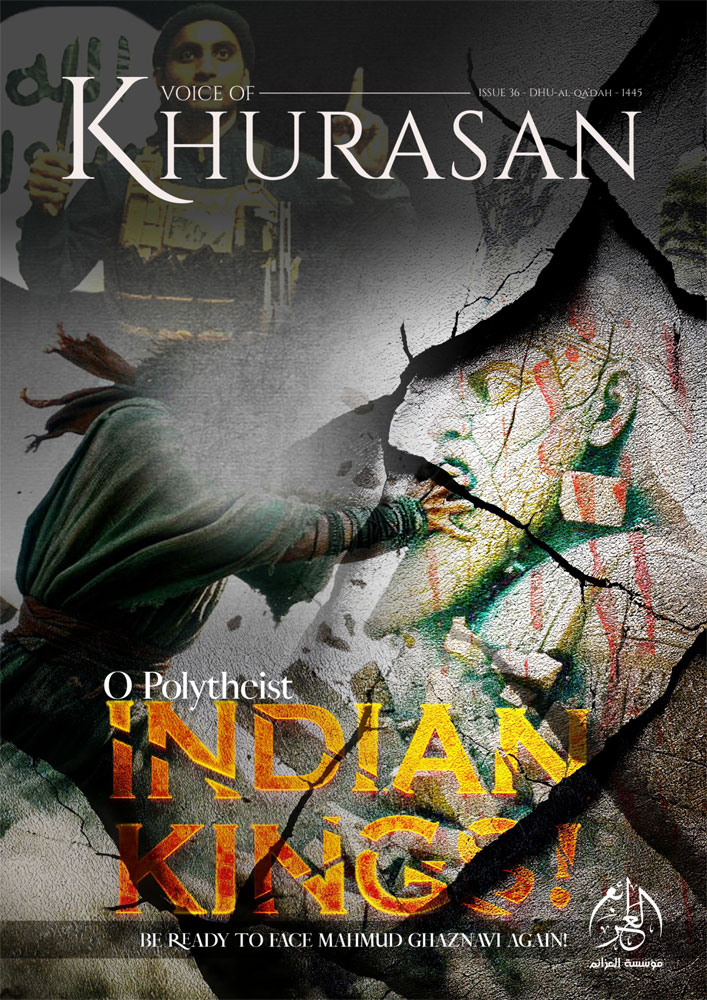
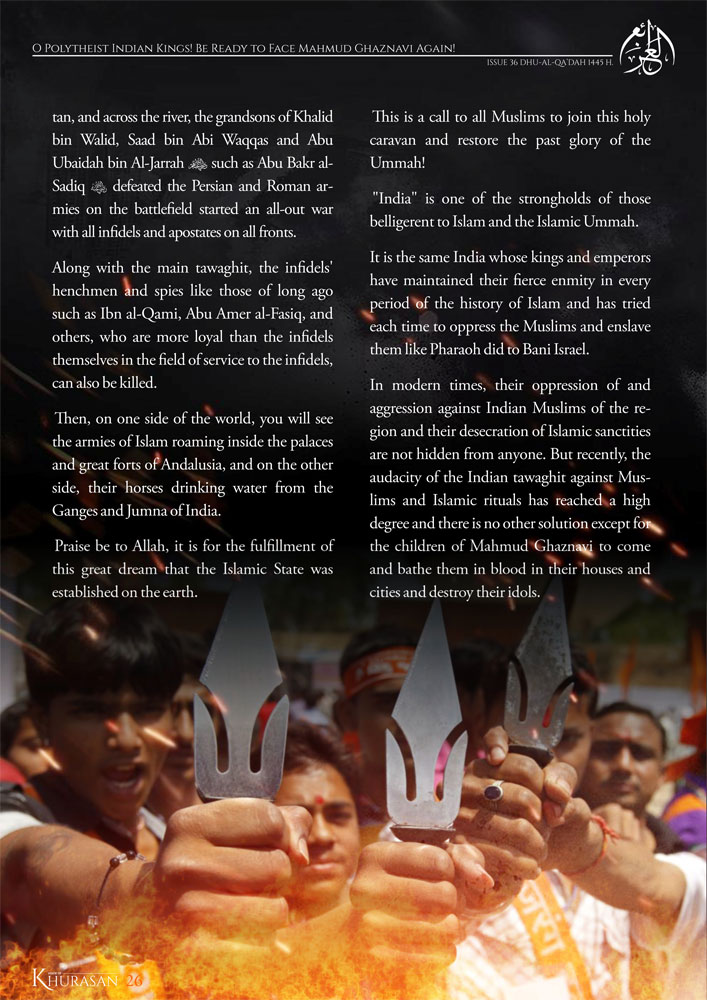
In the latest edition of the ISIS-backed magazine “Voice of Khurasan”, there is a section targeting India, Prime Minister Narendra Modi, Hindus, and Hindu leaders. The magazine openly called for Hindu genocide and accused Indian Hindu leaders of being anti-Muslim.
The cover page article titled “O Polytheist Indian Kings! Be ready to face Mahmud Ghaznavi again!”, called for Hindu genocide and urged Islamists to launch violent jihad against India and its leaders. The article attempted to invoke historical Islamic conquest to call for genocide against Hindus.
Source: VOK
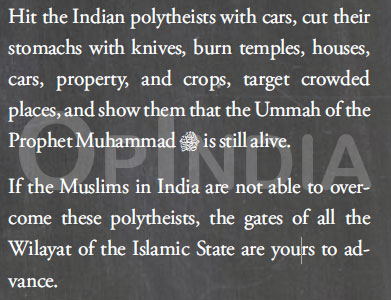
The article read, “Hit the Indian polytheists with cars, cut their stomachs with knives, burn temples, houses, cars, property, and crops, target crowded places, and show them that the Ummah of the Prophet Muhammad is still alive.” It further called out Islamists living worldwide to attack India if Indian Muslims are unable to attack Hindus. It read, “If the Muslims in India are not able to overcome these polytheists, the gates of all the Wilayat of the Islamic State are yours to advance.”
Source: VOK
The article spoke of the global conflict between Islam and its “perceived enemies” which include India. It claimed that the disbelievers from both East and West were united in their efforts to destroy the Islamic Ummah. ISIS in the magazine said non-Muslims were occupying Muslim lands, dishonoring Muslim women, and mocking Islamic Sharia. It further said that the problem was within the Muslim community as Muslims have fallen in love with the earthly life and have a fear of death that prevents them from engaging in Jihad.
Targeting Hindus, Indian, and Hindu leaders
The India-focused article described Indian leaders, specifically the leaders of the Bharatiya Janata Party (BJP) oppressors of Muslims. It glorified historic Islamic invaders like Muhammad bin Qasim and Mahmud Ghaznavi, who led invasions into the Indian subcontinent centuries ago. Using such figures, the author called for the revival of their conquests. The article urged modern-day Muslims to reclaim the Indian subcontinent and advocated for violent jihad as the means to achieve the goal.
Target on Prime Minister Narendra Modi
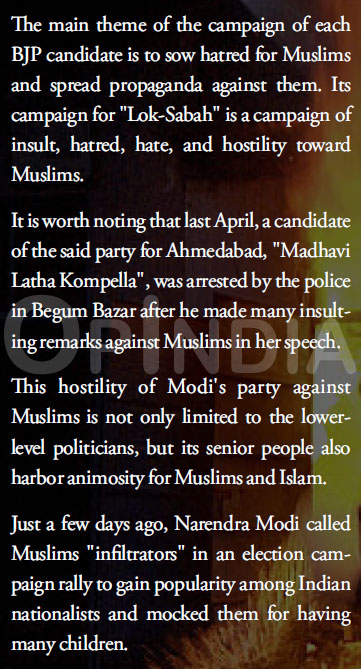
ISIS specifically targeted the Prime Minister of India, Narendra Modi, and accused him of being a staunch enemy of Islam. ISIS used the same tropes as the liberals to say PM Modi and BJP of ill-treating Indian Muslims. Highlighting the construction of Bhavya Ram Mandir in Ayodhya following the court-ordered demolition of an illegal structure (the Magazine referred it to as Babri Masjid), ISIS called it a key grievance. The article further accused PM Modi of mocking Islamic rituals and policies and described his administration as an extremist Hindu nationalist regime responsible for subjugating Muslims.
Source: VOK
ISIS said PM Modi called Muslims “infiltrators” during his election speech. It is pertinent to remember that ‘liberals’, Indian Islamists, and the Congress had spread misinformation at the time to claim PM Modi called all Indian Muslims infiltrators when he was talking about illegal immigrants that have entered India from Bangladesh, Myanmar, and other locations.
Derogatory comments on Ram Mandir
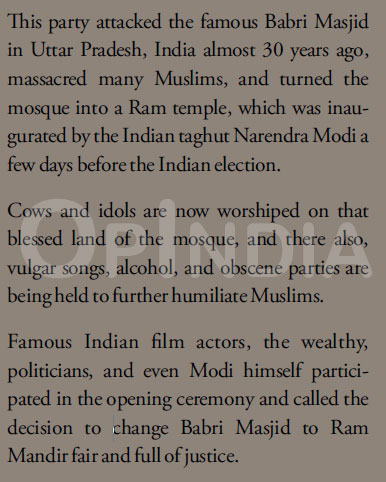
From the magazine, it was clear that ISIS wanted the Ram Mandir at Ayodhya attacked. While asking Muslims to attack the Temple, ISIS said that vulgar songs were being played at the premises during obscene parties where alcohol is served to further humiliate Muslims. It read, “Cows and idols are now worshipped on that blessed land of the mosque, and there also, vulgar songs, alcohol, and obscene parties are being held to further humiliate Muslims.”
Source: VOK
ISIS also expressed dismay over the fact that PM Modi, film personalities, businessmen, and politicians participated in the Pran Prathishta ceremony in January 2024. The article read, “Famous Indian film actors, the wealthy, politicians, and even Modi himself participated in the opening ceremony and called the decision to change Babri Masjid to Ram Mandir fair and full of justice.”
ISIS puts a target on Nupur Sharma
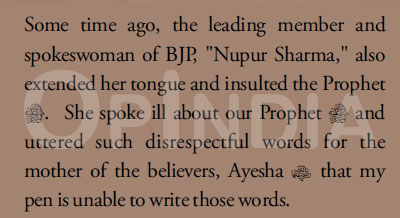
ISIS in its magazine put a target on the former BJP spokesperson Nupur Sharma. The so-called controversial remarks by Sharma were indirectly mentioned in the article describing them as deeply offensive. Notably, the remarks against Nupur Sharma came at a time when she has started to make limited public appearances and congratulated PM Modi on winning the General Elections third time in a row. ISIS used the incident to justify the call for violent jihad against India. The piece asserts that such insults are part of a broader pattern of disrespect and hostility towards Islam and Muslims by Indian political leaders.
It is worthy to remember here that the remarks that were made by Nupur Sharma had the same assertions that several Islamic scholars, including Zakir Naik, have made. It is almost important to note that Nupur Sharma was responding to Tasleem Rehmani during the Times Now debate after he had insulted Lord Shiva and the Shivling which was found at the Gyanvapi premises. Islamist propagandist Mohammad Zubair of AltNews edited the clip of Nupur Sharma to claim that she had insulted Islam without showing what she was responding to. It was immediately after Mohammad Zubair had shared the edited clip that Nupur Sharma had started getting rape, murder, and Sar Tan se Juda threats.
Source: VOK
Jihadis’ new target BJP leader Madhvi Latha Kompella
Madhvi Latha Kompella was the BJP candidate from Hyderabad who challenged AIMIM chief Asaduddin Owaisi in the Lok Sabha Elections 2024. Though she did not succeed in her fight against Owaisi, she managed to give the AIMIM cadre sleepless nights and Owaisi had to come down on road for campaigning. Madhvi has now become a fresh target of Islamists. The article mentioned that she was allegedly arrested in 2023 for her remarks against Muslims. This incident is cited as another example of the systemic anti-Muslim rhetoric and actions perpetuated by the BJP. The article uses this to underscore its narrative of oppression and justify its call for violent retribution.
Threats and incitement to violence by ISIS
ISIS has dog whistled in its article claiming that India and its surrounding areas have become anti-Muslims. It read, “In general, the Indian polytheists and cow-worshipping fools are inexorably hostile to Islam, and the enmity of Narendra Modi and the BJP party is exactly like the enmity of Pharaoh with the Bani Israel. In India today, about 220 million Muslim people are spending nights full of horror and barbarism in slavery and subjugation to Hindus.”
ISIS urged the Muslims in India to engage in violent acts against non-Muslims. The article called for assassination, bombings, and other forms of terrorism and portrayed as if these actions were a religious duty to avenge perceived wrongs against the Muslim community. The piece glorifies violent jihad and calls for attacks on Hindu temples, public places, and political figures, advocating for the destruction of idols and the killing of those it deems enemies of Islam.
The dangerous implications of the calls for genocide by ISIS
The article poses a significant threat to the national security of India as the magazine is widely circulated on Telegram channels and social media platforms including Facebook and others. By inciting violence and providing ideological justification for terrorist acts, it can inspire lone-wolf attacks and coordinated terrorist activities. The specific targeting of political leaders, public figures, and religious sites increases the risk of high-profile attacks that can cause widespread fear and destabilization.
Source: VOK
The authorities have to take such threats seriously and act accordingly. The article published in Voice of Khurasan is a clear indication of the threats India is facing. The explicit threats against Prime Minister Narendra Modi, Nupur Sharma, Madhvi Latha Kompella, and attacks on religious sites along with the general call for violence against non-Muslims, necessitate urgent and robust counter-terrorism measures to safeguard national security.
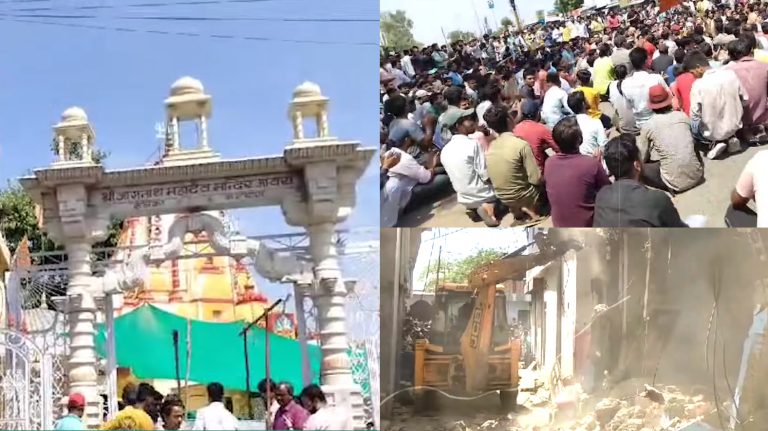
Massive protests erupted on the streets of Ratlam’s Jaora area in Madhya Pradesh after a severed head of a cow was found in the premises of Lord Jagannath temple on Friday. Following protests by Hindus, police arrested two accused in the case, and their houses were demolished.
The incident came to notice after the priest of the Jagannath Mahadev temple in Jaora of Ratlam district reached the temple in the morning. As soon as reaching the temple, the priest spotted the bleeding head of a cow’s calf on the campus. He immediately informed the police and local residents, and Hindu groups and local devotees reached the temple soon. The incident provoked outrage among Hindus, with Hindu organisations shutting down the market of Jaora and blocking the four-lane road.
A large group of protestors marched to the Jaora police station, demanding immediate arrest and public prosecution of the accused. Police and administration officials, including CSP Durgesh Armo, DIG Manoj Singh, and district collector Rajesh Batham, tried to calm down the protestors. However, when it didn’t work and the crowd refused to leave, police had to resort to firing tear gas shells and executing lathi charge to control the situation.
In the meanwhile, police started an investigation immediately, and identified two accused persons from CCTV footage. The police then reached their residences and detained them, who have been identified as Zakir and Shakir.
The Hindu groups had insisted on taking out a procession to the houses of the accused after they were identified, but the police didn’t allow them to do so.
As per ASP Rakesh Khakha, CCTV footage showed that two miscreants arrived on a motorcycle and threw pieces of beef into the temple at 2.41 AM on the nigh between 13 and 14 June. After that, a case was filed under relevant sections and the two culprits were nabbed. The ASP said that they are being questioned to learn if they were provoked by someone else for the act.
ASP Rakesh Khakha added that allegations of unauthorised constructions in the houses of the accused were found, and therefore the constructions were bulldozed with the cooperation of the district administration. Senior police officials were present during the demolition of the houses.
The Jagannath Mahadev temple was purified on Friday evening and the entire temple was cleaned.
In view of the situation in the city, a large number of policemen have been deployed on the spot to prevent any further escalation. A curfew-like situation prevails in the city, with police deployed at every intersection. City Qazi Hafiz Bhuru Bhaijaan has condemned the incident and demanded strict action against the culprits. He has appealed to the people to maintain peace.
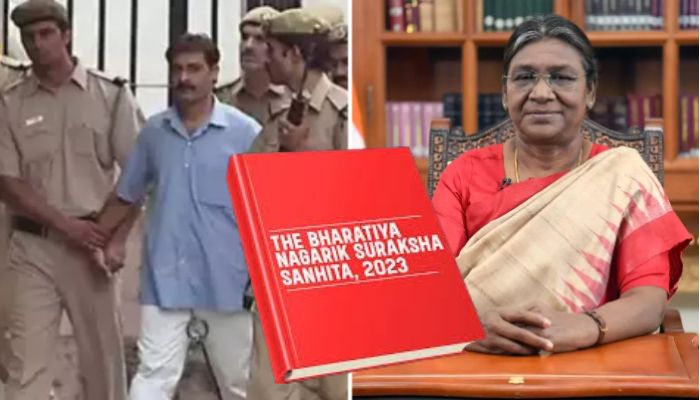
President Droupadi Murmu recently rejected the mercy petition of Pakistani terrorist Arif Mohammed, who was convicted and sentenced to death after being found guilty in the 2000 Red Fort attack case. In the 22nd December 2000 attack which involved terrorists opening fire on the 7 Rajputana Rifles regiment stationed inside the Red Fort grounds, three army jawans were killed in action.
While it took 24 long years to bring the Lashkar-e-Taiba (LeT) close to much-deserved punishment, the terrorist and criminal sympathising ‘ecosystem’ suffering from the sinister “every sinner has a future” syndrome might soon start the hue and cry over it.
As if this travesty of justice was not enough that even to punish a Pakistani terrorist who killed innocent people it took over two decades, the LeT terrorist could still petition the Supreme Court under Article 32 of the Constitution to have his sentence commuted on the grounds of inordinate delay.
Arif Mohammed was convicted and sentenced to death by trial court in 2005, and the verdict was upheld by Delhi Court in 2007 and the Supreme Court in 2011. The Supreme Court then rejected a review petition filed by him in 2012 and a curative petition in 2014. In the same year, the apex court ruled that death sentence cases should be heard by three-judge benches. Accordingly, he was allowed to reopen his plea. But in 2022, the Supreme Court rejected his review petition again.
In February 2023, the Tihar Jail wrote to a city court to issue a death warrant against Arif. Soon after that, he filed a mercy petition with the president of India. Therefore, the president took a decision to reject the decision in just over a year. However, this does not bar Arif from approaching the Supreme Court again seeking relief claiming that the President took more time in dispossing his plea.
The precedents set by the cases of Islamic terrorists Ajmal Kasab, Yakub Memon, and Afzal Guru show that ’eminent intellectuals’ and self-proclaimed ‘human rights defenders’ may soon invoke humanity, compassion, and whatnot to ensure that Pakistani terrorist Mohammed Arif breathes even after killing Indian soldiers.
Project 39A and its fixation with protecting death-row convicts
While the so-called ‘eminent intellectuals’ including lawyers, scholars, politicians and actors coming together to sign mercy petitions of terrorists, as was seen in the case of the 26/11 Mumbai attacks terrorist Ajmal Kasab, is widely known, there is an initiative operating with the sole purpose of saving convicted criminals from the death penalty. Project 39A, which is an initiative of the National Law University Delhi has been working to protect death-row convicts.
Interestingly, Project39A has lamented the rejection of terrorist Arif Mohammed’s mercy plea by President Murmu and highlighted how this is the second mercy plea declined by President Murmu.
“The mercy petition of Mohd Arif has been rejected by the President. This is President Murmu’s 2nd mercy rejection during her tenure; Vasanta Dupare’s mercy plea was rejected in April 2023. While Ram Nath Kovind rejected 6/6, and Pranab Mukherjee rejected 30/34, three Presidents before that – Pratibha Patil, APJ Abdul Kalam and KR Narayanan – were far more reluctant to reject mercy petitions. Narayanan did not reject a single mercy petition,” Project39A posted on X.
While Ram Nath Kovind rejected 6/6, and Pranab Mukherjee rejected 30/34, three Presidents before that – Pratibha Patil, APJ Abdul Kalam and KR Narayanan – were far more reluctant to reject mercy petitions. Narayanan did not reject a single mercy petition.
— Project 39A, National Law University, Delhi (@P39A_nlud) June 13, 2024
Notably, Project 39A has in the past used one of LeT terrorist Mohammed Arif’s mercy petitions to rescue death-row convicts. In its report titled: Death Penalty and the Indian Supreme Court (2007-2021),Project39A said that 13 cases were reopened and re-heard after the 2014 judgment on writ petitions filed by Arif, Yakub Memon and some other death row convicts.
Although Arif’s plea was rejected, the Supreme Court’s 2014 ruling on the Lashkar terrorist’s petition had directed oral hearings in open court for review petitions pertaining to death penalty cases; as a result, several review petitions were reheard, several death sentences were commuted, and six prisoners were acquitted in one case.
Project 39A used Mohammed Arif’s review plea to save death row convicts. There was one such case pertaining to Narayan Chetanram Chaudhary who was accused of the gruesome murders of six members of the Rathi family and their maid in 1994. He was given the death penalty in February 1998 but was released in March 2023 after the Supreme Court determined he was only 12 years old at the time of the crime. In July 1999, the Bombay High Court confirmed his guilt and the death penalty. In August 2013, the Supreme Court rejected the petition for the same reason as before: it did not comply with the relevant section of the revised Juvenile Justice Act.
Following the 2014 Supreme Court decision regarding Mohammed Arif’s petition, Project 39A submitted a review petition to reopen Narayan’s case in October 2014. Eventually, Narayan was set free by the Supreme Court after 28 years. Interestingly, just a few months later, Narayan landed back in Yerwada prison over his alleged involvement in a case of smuggling opium from Rajasthan to Pune.
The Delhi NLU’s legal research and advocacy group’s sympathy for convicted criminals and especially for the LeT terrorist Mohammed Arif, it is likely that the group may come up with a campaign to seek sympathy for the LeT terrorist and how he has suffered mental trauma over the years and thus it would not be ‘ethically’ and ‘morally’ right to execute him.
It is worth recalling how back in 2022, Project 39A organised an event wherein Chennai’s Asian College of Journalism invited a convict in the Rajiv Gandhi assassination case, AG Perarivalan for a guest lecture. The lecture was titled: “The denial of justice and a quest unfinished”, which in itself indicated the institution’s intention of painting the criminal as an innocent victim of the Indian state. Back then, Project 39A claimed that Perarivalan was ‘dehumanised’ by the judiciary and the ‘system’. They also claimed that his release was ordered after “grave doubts were cast on his role in the Rajiv Gandhi assassination”. This, however, was not the case, his involvement in the former Prime Minister’s assassination was proven. However, Perarivalan was released on the grounds that he has served 29 years out of 32 years of jail term in solitary confinement.
How Bharatiya Nagarik Suraksha Sanhita will end the scope for seeking ‘mercy’ for terrorists
Notably, under the existing laws, the Pakistani terrorist could still petition the Supreme Court under Article 32 of the Constitution to have his sentence commuted on the grounds of protracted delay despite the President rejecting his plea. There have been some cases wherein the courts overturned or commuted death sentences despite the rejection of mercy petitions by the President. This was seen in the V. Sriharan alias Murugan vs. Union of India (2014).
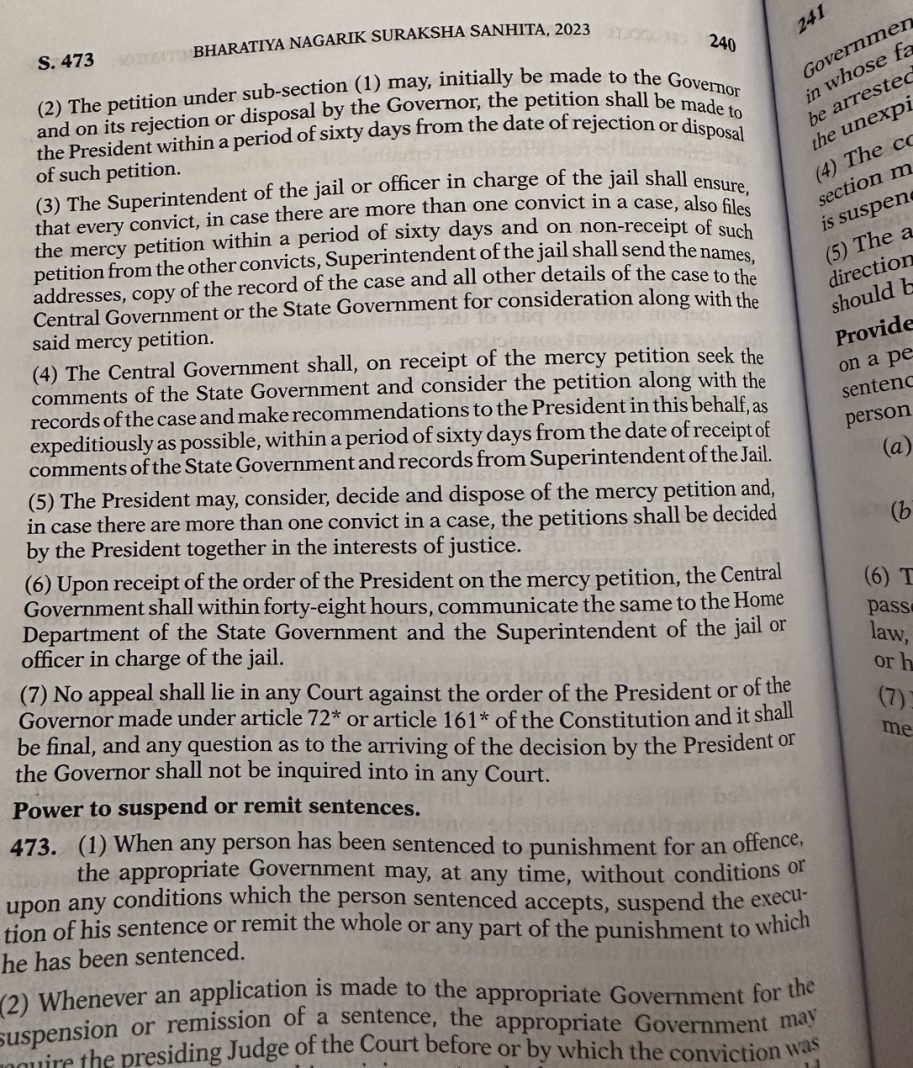
Currently, the convicts are free to challenge the rejection of a mercy petition by way of a writ in the Supreme Court. The Bhartiya Nagarik Suraksha Sanhita (BNSS), which goes into effect on July 1, 2024, includes a specific provision that prohibits writ petitions disputing the denial of mercy petitions by the President.
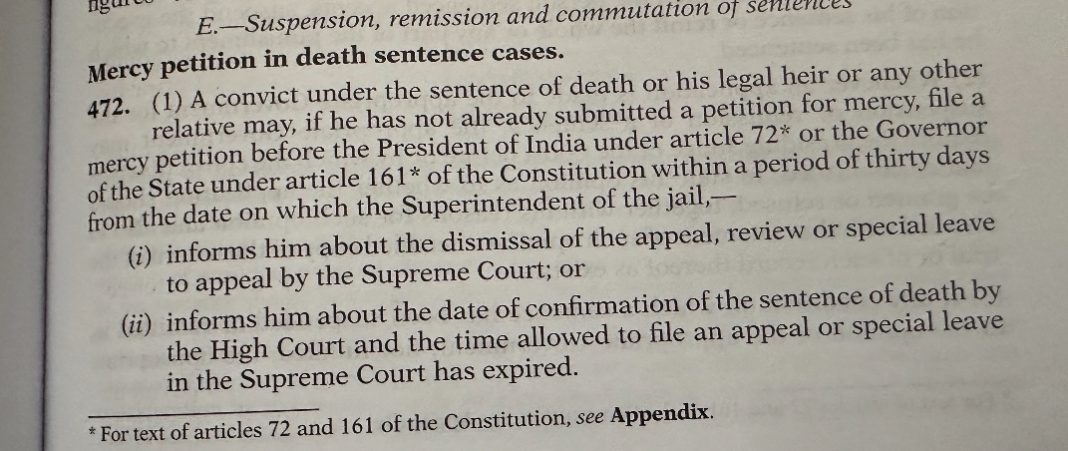
Under BNSS Section 472(1), convicts can file mercy petitions within a period of thirty days from the date on which the Superintendent of the jail,—(i) informs him about the dismissal of the appeal, review or special leave to appeal by the Supreme Court; or (ii) informs him about the date of confirmation of the sentence of death by the High Court and the time allowed to file an appeal or special leave in the Supreme Court has expired.
Notably, the BNSS will replace the existing CrPC. BNSS Section 472(7) states that the President’s decisions on mercy petitions are final. Courts cannot question or review the grounds for President’s pardons or commutations.
Interestingly, even before BNSS came into effect the usual players have been vehemently opposing it. In this vein, Supreme Court lawyer Indira Jaising has urged for ‘consensus building’ before implementing the Bharatiya Nagarik Suraksha Sanhita (BNSS), Bharatiya Nyaya Sanhita (BNS), and the Bharatiya Sakshya Adhiniyam (BSA). In her letter to Union Law Minister Arjun Ram Meghwal, Jaising contended that the civil liberties of citizens including freedom of speech, right to assembly, right to associate, and the right to demonstrate can be criminalised under these three codes.
She went on to say that, while substantive criminal law cannot be applied retrospectively, procedural laws such as the BNSS and BSA which will replace the CrPC and the Evidence Act respectively, may be applied to a pending case based on whether or not prejudice will be caused to the accused.
It is worth recalling how Indira Jaising after CAA was notified in March this year argued that giving voting rights to the persecuted Hindus arriving from the neighbouring Islamic countries would affect the Indian ‘minorities’ because the persecuted Hindus and other non-Muslims who came from Afghanistan, Pakistan and Bangladesh would get voting rights. Jaising also has a history of banned terrorist organization Popular Front of India (PFI) and demanding the release of the 2020 Delhi anti-Hindu riots alleged mastermind Umar Khalid.
It is likely that several opposition parties and their supportive ‘eminent citizens’ may use LeT terrorist Mohammed Arif’s case to oppose the implementation of Bharatiya Nyay Sanhita. The ecosystem notorious for seeking mercy for Ajmal Kasab, Yakub Memon and Afzal Guru may also be reactivated to save the Pakistani terrorist from execution by invoking humanity, compassion, “execute justice not people”, constitution, and probably even ‘idea of India’ even it causes denial of justice to the victims, unnecessary economic and resource burden.
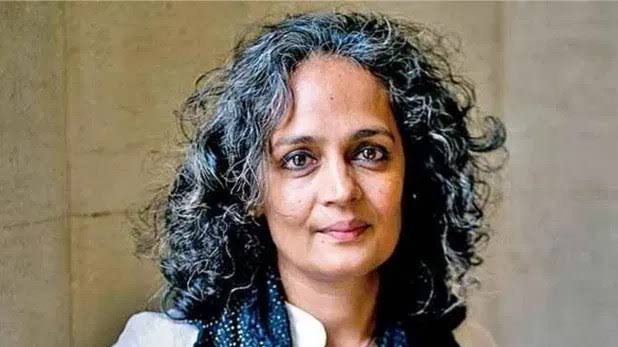
Delhi Lieutenant Governor Vinai Kumar Saxena granted permission on Friday to prosecute author Arundhati Roy under the stringent Unlawful Activities Prevention Act (UAPA) for her alleged ‘provocative’ speech at a 2010 event, PTI reported, citing Raj Niwas officials.
“Delhi Lt Governor VK Saxena has sanctioned the prosecution of Arundhati Roy and former Central University of Kashmir International Law Professor Dr. Sheikh Showkat Hussain under section 45 (1) of the Unlawful Activities (Prevention) Act in the case,” a Raj Niwas official said. Last October, Saxena had also sanctioned their prosecution under section 196 of the CrPC for offences punishable under various sections of the Indian Penal Code.
“The topics discussed and addressed at the conference promoted the separation of Kashmir from India,” said the Raj Niwas official.
In addition to Roy and Sheikh Showkat Hussain, other speakers included the late Hurriyat leader Syed Ali Shah Geelani, SAR Geelani (the anchor of the conference and a prime accused in the Parliament attack case), and Varavara Rao.
The complainant, Sushil Pandit, a Kashmiri activist, filed a complaint under Section 156(3) of the CrPC with the Metropolitan Magistrate Court in New Delhi. The court directed the registration of an FIR on November 27, 2010, when Congress-led UPA government was in power.
It was alleged that Geelani and Arundhati Roy strongly asserted that Kashmir was never part of India, was forcibly occupied by the Indian Armed Forces, and that every effort should be made for the independence of Jammu and Kashmir from India. Recordings of these statements were provided by the complainant.
As a result, an FIR was registered and an investigation was conducted, the officials added. Roy has been a vocal critic of the Modi government, expressing opposition on various issues.
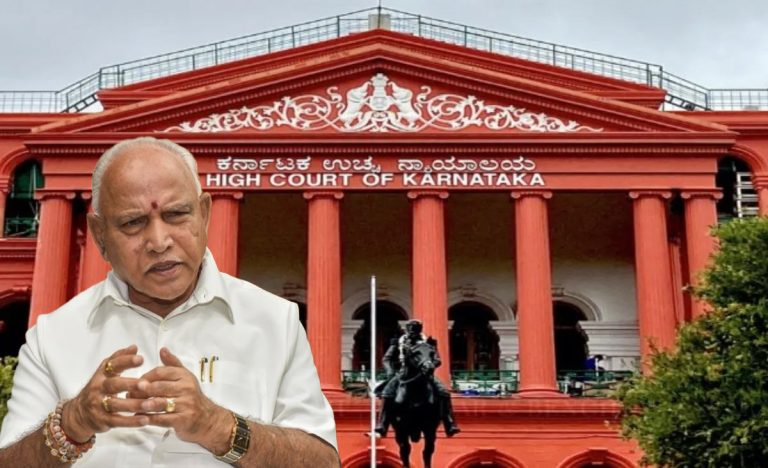
The arrest of the former Karnataka chief minister and BJP leader BS Yediyurappa, was stayed by the Karnataka High Court on 14th June, in relation to a case brought against him under the Protection of Children from Sexual Offences Act, 2012 (POCSO Act). The intention to arrest him was called into question by Justice S Krishna Dixit who also noted that there was “something hidden” in the case. The court noted that Yediyurappa had appeared for questioning responding to an earlier summon, therefore he should be granted the requested time for the next questioning as he is in Delhi.
The court noted that he is a former CM, not an ordinary person, and there is no possibility of him fleeing the country. The state’s claim that the former chief minister had flown to Delhi, arguing prior party engagements, hours after receiving a notice on 11th June to appear before the investigating officer was also not deemed credible by the court.
Advocate General (AG) Shashi Kiran Shetty stated, “(Plane) ticket was booked only after notice was issued to him.” However, the court noted that Yediyurappa was not likely to run away, having served as chief minister before. The court further observed that he had responded to the notification dated 11th June by saying that he would be meeting with the investigating officer on 17th June.
The court asserted, “He is not some Tom, Dick or Harry. He is a former chief minister of the state. Is it your case he will flee the country? What can he do by leaving to Delhi from Bangalore.” Ultimately, the single-judge bench ruled that the former chief minister should not be subjected to coercion, especially because he had offered in writing to appear before the investigating officer on 17th June.
The court mentioned, “We cannot immediately jump to the conclusion that a case is made for arrest and detention for custodial interrogation of the petitioner who has been former chief minister of state and (is of advanced age) and has ailments natural to that age. Proceedings for arrest and detention of petitioner are put on hold till the next date of hearing.” Nonetheless, the court stressed that Yediyurappa must present himself before the jurisdictional police for investigation on 17th June.
The high court’s ruling follows the issuance of a non-bailable warrant for Yediyurappa by a Bengaluru court on Thursday, which was related to a case involving an alleged sexual assault of a 17-year-old girl when she went to his house with her mother to ask for assistance. Earlier today, Karnataka Home Minister G Parameshwara said that police will bring Yediyurappa from Delhi to Karnataka to execute the arrest warrant.
On 14th March, the alleged victim’s 54-year-old mother (the complainant) reported the incident to the inspector of the Sadashivanagar police station. She alleged that Yediyurappa had physically taken the minor girl into a room and then harassed her sexually behind closed doors.
The complainant further stated that Yediyurappa reportedly attempted to downplay the situation by giving money when he was confronted about his action. The girl’s brother filed a case in court against the four-time former chief minister of Karnataka. On suspicion of sexual harassment of a juvenile, the police filed a first information report (FIR) in accordance with sections 8 of the Protection of Children from Sexual Offenses (POCSO) Act and 354(A) of the Indian Penal Code.
However, the high court questioned the case’s validity during the hearing. Advocate CV Nagesh, representing Yediyurappa, contended that the mother of the girl who submitted the complaint has a history of submitting baseless petitions. The complainant’s reliability may need to be investigated, the court said in response. Additionally, the complainant’s death from illness on 26th May has been reported to the court. The court also voiced reservations with the process by which Yediyurappa’s arrest warrant was obtained, and expressed doubt that there is something hidden in the matter.
Notably, the court highlighted, “The way things have happened, there is doubt that there is something hidden in this matter,” to which the AG answered, “Nothing hidden, milord.” The court then asked, “Here is an ex-Chief Minister. He scrupulously complied with first notice. Then, you issue one more notice, it is your power, privilege and authority. And he said I will come on 17th. It is not his case he (Yediyurappa) will never come back to Karnataka! He said he is coming back in writing – still you want to arrest him? If an ex-Chief Minister is treated that way, I am just wildly thinking, what will happen to layman?”
The state was asked to submit a statement of objections by the court, which then issued notice in the case. Two related cases were being heard by the court, one of which was Yediyurappa’s request for anticipatory bail. He submitted a second plea in which he requests that the POCSO case against him be dismissed. Notably, the former chief minister was the subject of an arrest order issued yesterday by NM Ramesh, the Additional City Civil and Sessions Judge (Fast Track Special Court-I).
Sandeep C Patil, Yediyurappa’s lawyer conveyed, “We had approached the High Court. We had brought the petition challenging the malafide action on the part of the investigating agencies. The court was today of the opinion that since Yediyurappa, being a former chief minister, keeping in mind his age and also his conduct of having taken part in the investigation, this is not a case where the investigator should have gone to court and got a warrant,” in front of the media.
He added, “There should not be any kind of arrest as he is cooperating. So therefore any such warrant or otherwise is put on hold. And any course steps also the investigator cannot take from now on. He has already written a letter, communicating that I am going to appear on 17th June. In all probability, he will appear on the 17th of June.” According to a statement from his office, Yediyurappa had asked for anticipatory bail at a special court, the People Representative Court, requesting protection from arrest in connection with the POCSO statute filed against him.
Meanwhile, the BJP has alleged a conspiracy by the Congress in the case to divert attention from a corruption case involving Minister B Nagendra. BJP MLA Mahesh Tenginkai said, “It looks like a part of a conspiracy by Congress but BS Yediyurappa will come out clean from this case”
BJP Karnataka yesterday alleged that Karnakata Congress is trying to arrest Yediyurappa “based on a complaint from a mentally unstable woman.” They posted on X that Congress is doing this due to its humiliating defeat in the Lok Sabha elections.
Following the humiliating defeat in the Lok Sabha elections, Congress leaders have become busy plotting various conspiracies against the BJP.
Congress, resentful towards the BJP, is now attempting to arrest our respected leader, @BSYBJP ji, based on a complaint from a mentally…
They added that Congress leader and former home minister G Parameshwara had himself stated that the “complaint from the mentally unstable woman was malicious and without merit.” BJP added that the woman had filed 53 cases against various people, including her own children and her husband.
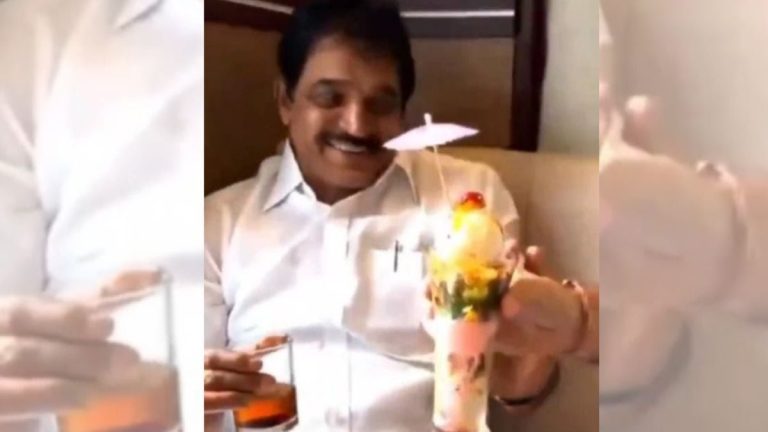
An FIR has been filed against an X user for posting a picture claiming Congress leader KC Venugopal was consuming alcohol at a restaurant.
“A fake news is being circulated by the account @BefittingFactsIt falsely alleges that the black tea being consumed by Shri @kcvenugopalmp is alcohol in a restaurant,” the official X account of Congress tweeted.
“This has been purposely done to malign his image. We have taken congnisance of this mischief and Congress MLC Dr. Venkat Narsing Rao Balmoor has lodged a complaint with the Cyber Crimes Police Station in Hyderabad,” the tweet further said, adding, “Fake news won’t be tolerated and the guilty will be made to bear the consequences.”
A fake news is being circulated by the account @BefittingFacts
It falsely alleges that the black tea being consumed by Shri @kcvenugopalmp is alcohol in a restaurant. This has been purposely done to malign his image.
In its complaint, Congress identified Shashank Singh as the person responsible for spreading what it said was fake news. “Shashank Singh not only posted a false caption with the picture but also tagged the Kerala Police, urging them to take action against Shri KC Venugopal Ji,” it stated.
“This is a serious accusation, particularly given that Shri KC Venugopal Ji is a highly respected leader of the Indian National Congress and represents hundreds of thousands of Indian citizens in Parliament,” the complaint stated.
The original post on X claimed that the restaurant lacked a license to sell alcohol but was nonetheless serving it to Congress leaders.
KC Venugopal was traveling with Rahul Gandhi to Wayanad when they stopped for lunch at the White House restaurant in Thamarassery.
While Congress has been swift in taking action against a social media user, the BJP is yet to initiate proceedings against those responsible for spreading video of BJP president JP Nadda consuming Yogi Kanthika with fake claims that he was eating gutkha and khaini.
Amid the ongoing controversy regarding the NEET UG 2024 exam results, the Bihar Police has arrested around 13 persons including four examinees and their family members who suspiciously helped the aspirants in the MBBS entrance test.
“Investigation into the “paper leak” was handed over to the Economic Offences Unit (EOU) of the Bihar Police on Friday. The case was being investigated by a special team of the Patna Police till now,” concerned authorities confirmed.
“A total of 13 people, including four examinees and their family members, have been arrested so far. Besides, one of the arrested accused is also involved in the Bihar Public Service Commission’s (BPSC) Teachers Recruitment Exam (TRE)-3 paper leak case. All the accused are in judicial custody and EOU sleuths will start their custodial interrogation,” an EOU release said.
“Police have already seized incriminating documents and electronic devices from the possession of the accused. Investigations so far have revealed that the question papers of NEET-UG and their answers were provided to around 35 aspirants before the May 5 exam. Further investigation is underway,” the release added.
Earlier, the Gujarat police detained three people in connection with the NEET UG 2024 paper leak charges after the district collector received information that some authorities were engaging in malpractice. The investigators entered the NEET examination centre and arrested the culprits.
The arrested officials were later identified as Tushar Bhatt, a physics instructor serving as deputy superintendent at the NEET examination centre, and Parsuram Roy and Arif Vora, coordinators. According to Gujarat police, students and teachers made a deal worth Rs 10 lakh to help them pass the exam. The police discovered Rs 7 lakh cash from Tushar Bhatt’s car, which was obtained as an advance, with the remaining 3 lakh to be handed after the exam.
While reports of paper leaks are emerging, the NTA authorities have claimed that no NEET papers were leaked though around 63 cases of using unfair means to get through the examinations have been reported.
The saga began on 4th June after the National Testing Agency (NTA) declared the results of the recently conducted NEET UG-24 exams.
A plea was filed against the NTA stating that grace marks were awarded to 1563 students who appeared for the NEET exam on May 5th. As per the plea, these grace marks aided some of the students to secure top ranks, also scoring 718 or 719 out of 720 which is technically impossible, given the negative marking system. 67 students have scored 720/720, out of which 50 got grace marks for an error in the Physics paper and for loss of time. The plea demanded a thorough investigation of the case, risking the future of around 24 lakhs who appeared for the exam across 4750 centres in India.
Notably, on Thursday (13th June), the Centre informed the Supreme Court that it has cancelled the decision to award grace marks to 1563 candidates who appeared for NEET UG-2024. The Centre also said that these 1563 students have been given the option to go ahead without the grace marks or appear for a re-test which will be held on 23 June. Meanwhile, several petitions have been filed to the SC claiming paper leaks and a significant increase in high scores. However, the NTA clarified that no papers were leaked though 63 cases were found who used unfair means to get through the examination.
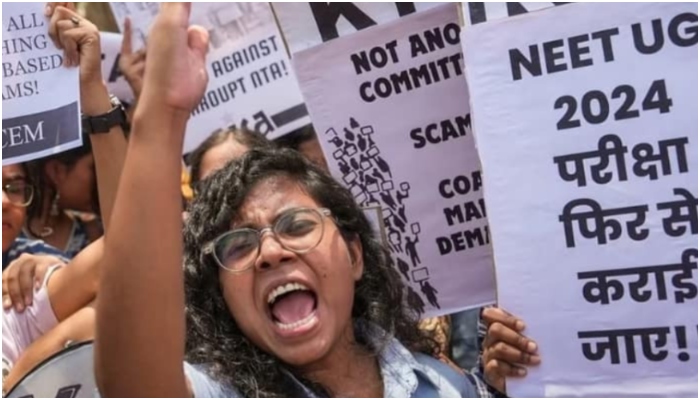
The students on Friday continued to protest against the NTA demanding the re-examination of all the students and not just 1,563 of them, who were given grace marks. They also demanded a CBI inquiry into the case. Union education minister Dharmendra Pradhan meanwhile stated that the government will not tolerate any malpractices and irregularities in the conduct of competitive exams like NEET-UG, adding that even the accountability of the National Testing Agency (NTA) will also be fixed in cases lapses are found.
“The government is committed to protecting the interests of NEET examinees. I want to assure you that the government will not tolerate any irregularities and malpractice in the conduct of the medical examination. Anyone found guilty of involvement in such practices will be strictly punished. The ministry will also fix the accountability of the NTA. In case any lapses are found at the agency’s level, action will be taken. All concerns of students will be addressed with fairness and equity,” he was quoted as saying.
Pradhan stated that there is no substantial evidence to support the allegations of paper leaks during this year’s NEET-UG exam. He also met with some NEET candidates and their parents on Friday to discuss their concerns.
The Union Education Minister stated that NEET-UG was held in over 4,500 centres, with only six of them reporting erroneous question distribution. “Just because of the six centers, we can’t question the sanctity and credibility of the entire system…,” he said.
When asked if the government will take steps to bring some reforms in the way NTA conducts entrance, Pradhan said, “NTA is a competent agency. However, no institution is perfect, and we work on bringing reforms continuously.”
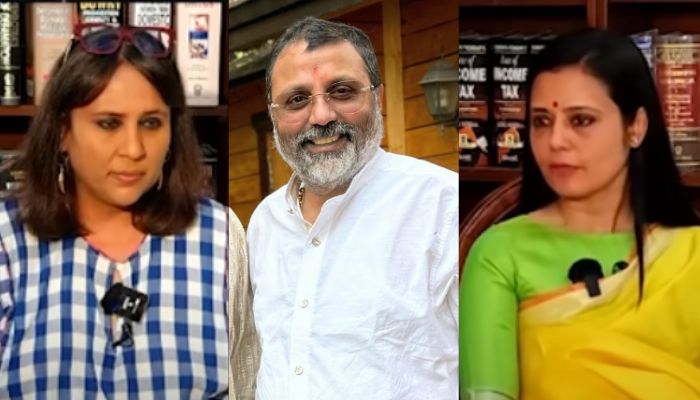
On Friday (14th June), a video of Mahua Moitra abusing BJP leader Nishikant Dube went viral on social media.
In the video, the Trinamool Congress (TMC) MP from Krishnanagar claimed, ” I mean I am only angry that the narrative was not about me fighting the BJP and the narrative was not about me fighting Modi.”
“The narrative was me getting into some brawl with some Jharkhandi piece of you know what faecal matter,” she was heard saying. Despite being elected as MP, Mahua Moitra had no qualms about abusing a fellow Parliamentarian due to differences in political affiliation.
Horrible!
Mahua Moitra calls people as "Jharkhandi piece of fecal matter"
Just because she is a liberal, Mahua Moitra can abuse people any way she wants?
The controversial video is part of a 40-minute interview of Mahua Moitra with ‘journalist’ Barkha Dutt. It was uploaded on the YouTube channel ‘Mojo Story’ on 10th June this year.
On being asked about her inappropriate choice of words, the TMC MP justified, “I think I used the phrase because I think I’m also a human being.” The video was posted on X (formerly Twitter) by political commentator Abhishek Banerji.
On 8th December 2023, Lok Sabha expelled Trinamool Congress’s MP Mahua Moitra based on the recommendations of the Ethics Committee in a cash-for-query case. Moitra was expelled hours after the Ethics Committee report was tabled in Lok Sabha.
On 14th October last year, the Indian political scene experienced a major tremor as BJP MP Nishkant Dubey wrote to the ethics committee seeking an inquiry against TMC MP Mahua Moitra in the ‘Cash for Query’ matter.
He based his complaint on the letter written by Supreme Court lawyer Jai Anant Dehadrai, who alleged that most of the questions asked by the TMC MP in Lok Sabha directly or indirectly benefit businessman Darshan Hiranandani.
Dehadrai also accused Moitra of “kidnapping” his pet dog Henry, adding another layer of complications to Mahuagate. Moitra filed a case against Dubey and Dehadrai but never denied accepting gifts.
Interestingly, she has also been accused of sharing her Lok Sabha credentials with Hiranandani so he can post questions independently. Hiranandani has reportedly turned approver in the case and submitted an affidavit suggesting the allegations against Moitra are true.
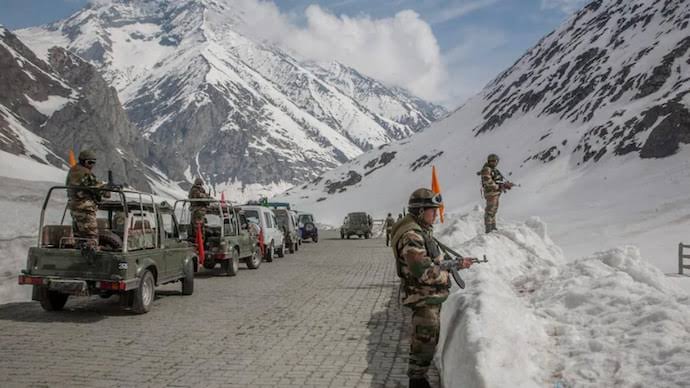
Today, 15 June 2024, marks the 4th anniversary of the tragic Galwan Valley clashes between Indo-China troops, resulting in significant casualties on both sides and profoundly altering the relationship between the two countries. Four years on, the relations between the two neighbours remain strained. The border deadlock persists despite numerous military and diplomatic efforts.
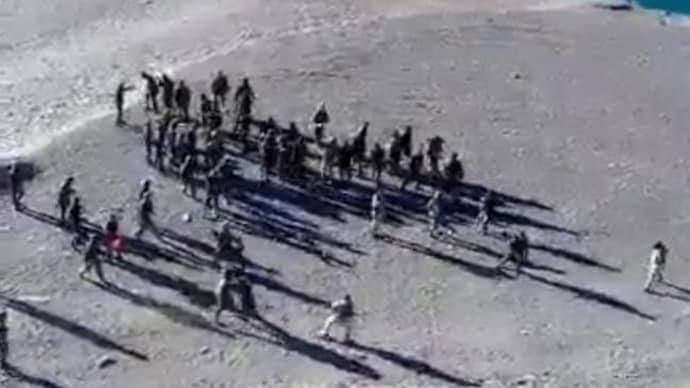
It all started with the border standoff along the India-China border in Eastern Ladakh. Chinese troopers who weren’t used to being challenged over their salami slicing, found themselves up against an Armed forces motivated to not cede an inch of their territory and give them a bloody nose if need be. This resulted in a scuffle between the two forces at Pangong Tso lake two months before the fateful Galwan Valley clashes.
On June 15, 2020, the Chinese troops had attacked the Indian troops along the LAC near the Ladakh border. The clashes had resulted in India losing 20 of its soldiers. China initially denied facing any casualties in the attack. However, after months of denial, China later acknowledged the loss of at least 5 of its soldiers, although independent reports suggested Beijing lost around 35-40 soldiers in the clashes.
Clashes between Indian and Chinese troops at Pangong Tso lake
The fallen Indian soldiers were honoured by the government and their last rites were performed in the presence of government representatives, accorded them the due status of martyrs. PM Modi and the COAS had also visited to meet and speak to the injured soldiers.
China, on the other hand, went to great lengths to paper over the murky details of clashes lest it triggers a turn of domestic events out of Beijing’s control. However, months after the border skirmish, in February 2021, China conferred posthumous awards upon four PLA troops thus officially recognising the casualties from the Galwan clash for the first time. Earlier, an image of a tombstone of a deceased PLA soldier provided the first evidence of Chinese casualty in the clashes.
Subsequently, a report published by an independent Australian media organisation, The Klaxon, revealed for the first time that there have been significant casualties on the Chinese side as well.
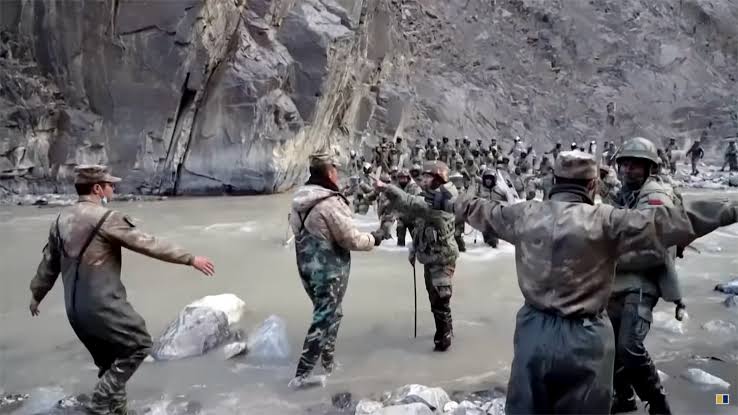
Clashes between Indian and Chinese troops at LAC
“At least 38 PLA troops were washed away and drowned” on the night of June 15 when the clash happened at the Galwan River,” the report said. It also said that evidence has also emerged that strongly suggests The Chinese side have intentionally conflated facts and imagery of two separate but similar clashes that occurred just over a week apart in Galwan.
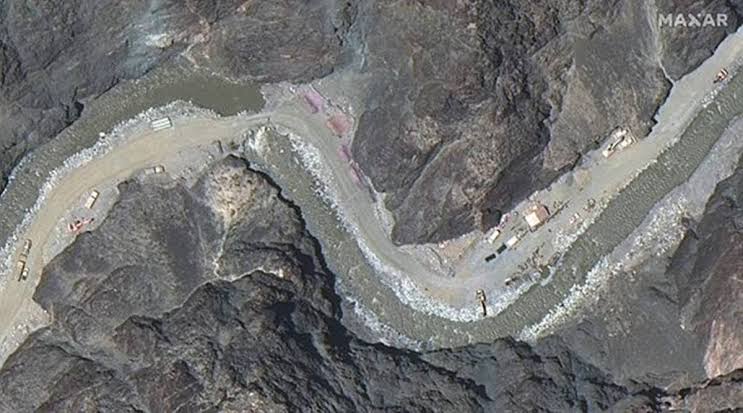
According to the report, from April 2020, Chinese forces began constructing temporary infrastructure in the Galwan Valley, including tents, dugouts, and machinery. By May, skirmishes erupted between Indian and Chinese troops at various locations along the China-India border, including Pangong Lake in Ladakh.
A report titled “Galwan Decoded,” prepared by social media researchers, asserted that China’s public accounts were largely fabricated. The report was published following a year-long investigation, which involved discussions with mainland Chinese bloggers, information from Chinese citizens, and media reports later deleted by Chinese authorities, the researchers chose to remain anonymous for security reasons.
The report noted that although many blogs and pages were removed by Chinese authorities, digital archives from mainland China tell a different story. It claimed that numerous Chinese soldiers died while attempting to cross the fast-flowing Galwan River. China acknowledged only Junior Sergeant Wang Zhuoran’s death by drowning, while PLA Battalion Commander Major Chen Hongjun, Private Chen Xiangrong, and Junior Sergeant Xiao Siyuan were reported as killed by Indian forces.
The report also included a now-deleted document stating that Wang Zhuoran’s unit was ordered to “perform a support mission” in June 2020. The document described comrades being swept downstream and Wang Zhuoran saving four before getting trapped by stones at the river’s bottom, leading to his drowning due to exhaustion.
The Klaxon report linked the origins of the Galwan clash back to May 22, 2020, when Indian soldiers attempted to build a temporary bridge over the Galwan River. The report specified that on this date, Indian troops led by Colonel Santosh, commander of the 16th Bihar Regiment, constructed a temporary bridge over a stream of the Galwan River to facilitate the monitoring of Chinese activities. The Chinese were constructing their own infrastructure in the buffer zone, and the Indian bridge construction provoked a strong reaction from the Chinese side.
On June 6, 80 PLA soldiers arrived to dismantle the bridge, leading to a confrontation with nearly 100 Indian troops. Following this standoff, both sides agreed to withdraw personnel from the buffer zone and dismantle any facilities that crossed the line.
However, the Chinese did not uphold their promise and began dismantling the Indian bridge instead of removing their infrastructure. In response, on June 15, 2020, Col. Santosh Babu and his troops went to the disputed area in the Galwan Valley at night to remove the Chinese encroachments. Col. Qi Fabao of the Chinese side, along with approximately 150 soldiers, was present.
A close-up of LAC along the Galwan Valley where clashes erupted between Indo-Chinese troops
Rather than engaging in dialogue, Fabao ordered his troops to form a battle formation, disregarding the mutual agreement made on June 6, 2021. When Fabao attacked, he was quickly surrounded by Indian troops. To rescue him, PLA battalion commander Chen Hongjun and soldier Chen Xiangrong engaged in a physical scuffle with Indian troops using steel pipes, sticks, and stones to cover their commander’s escape.
Interestingly, the report reveals that Colonel Qi Fabao was “hit in the head by an Indian army soldier and rushed back with serious injuries.” Additionally, “China’s Hongjun and Xiangrong were immediately neutralized by the Indian army.” Another Chinese soldier, Xiao Siyuan, who was recording the incident, was attacked and severely injured by an Indian soldier and later succumbed to his injuries. Reportedly, after Col. Fabao left and the PLA soldiers saw the bodies of their major commanders, they panicked and retreated.
Wang Zhuoran and his companion Ma Ming, whose company was ordered to support the mission, stepped forward to help their scattered, retreating comrades by guiding them to safety. It is reported that the PLA soldiers, not having time to wear water pants, hurriedly decided to cross the icy Galwan waters at night to continue their attack. The report suggests that at this point, “The river rose suddenly, causing injured comrades to slip and be washed downstream.” Information from those who attended Wang’s funeral indicates that Junior Sergeant Wang Zhuoran successfully pushed four of his comrades across the river, but his legs became stuck in stones at river’s bottom.
A book titled ‘India’s Fearless 3: New Military Stories of Unimaginable Courage and Sacrifice,’ authored by HT’s Rahul Singh and India Today journalist Shiv Aroor, corroborated the stark betrayal and treachery associated with the Chinese forces, along with other stories of remarkable valor exhibited by India’s uniformed soldiers.
The book highlighted Chinese deceit in the Galwan Valley, the effects of which still influence the Indian Armed Forces’ cautious approach to China. It revealed that the attack on Indian forces was premeditated, with the Chinese aiming to unilaterally change the status quo and impose heavy losses on the outnumbered Indian troops to force them into retreat.
However, they encountered resolute and determined Indian forces who thwarted the Chinese plans and inflicted significant damage. Havildar Dharamvir Kumar Singh, a member of the 16 Bihar Regiment, recounted to the authors how the Chinese forces were at least three times more in number than the Indian soldiers in the Galwan Valley.
“There were less than 400 of us. We soon discovered that the number of Chinese soldiers advancing towards us was maybe three times that. We had been fighting smaller numbers of Chinese for two hours before that. But this was their main force, launching an all-out assault against us,” the book quoted Havildar Dharamvir Kumar Singh as saying.
China’s old habit of salami slicing its neighbours’ territorities, its iron-fist control over information and domestic repression to suppress dissent and challenge to CCP’s supremacy underscores the issues facing the Modi government in his third term against a hostile nation with an authoritarian leader at its helm who is bent on flouting the ‘rules based world order’ to “restore” China’s global hegemony.
As PM Modi takes office for the third time, 15th June is not just a sombre day to commemorate the supreme sacrifices of our soldiers and the unscrupulous army it is up against, but against the challenges it may face as Xi Jinping tightens his authoritarian grip over China and amid a highly volatile world marred by invasions, terror attacks, wars, and Climate Change.