Home Blog Page 152

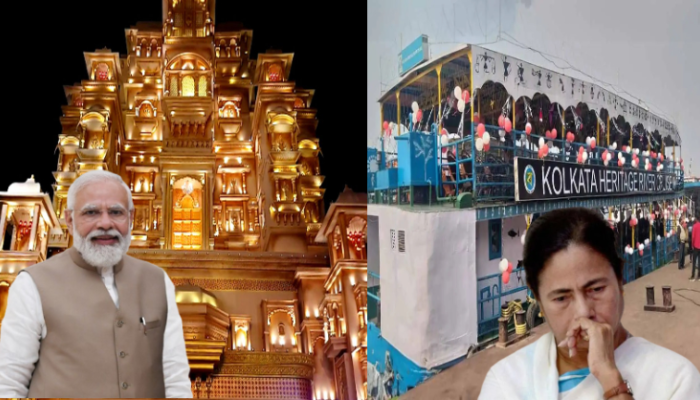
Mamata govt’s war against private industry: Bengal govt removes all incentives given to save money for ‘welfare schemes’, job creators move HC

0

Several of India’s biggest industrial houses have approached the Calcutta High Court to challenge the West Bengal government’s controversial move to revoke all industry incentives granted since 1993. Companies including UltraTech Cement, Electrosteel Casting, Grasim Industries, Nuvoco Vistas and Dalmia Cement have filed petitions in the court in which they called the government’s legislation “unconstitutional”. The High Court has fixed 7th November as the date for a combined hearing of the appeals.

Notably, in March 2025, the Mamata Banerjee-led government in West Bengal passed The Revocation of West Bengal Incentive Schemes and Obligations in the Nature of Grants and Incentives Bill, 2025, which was notified in April. The bill retrospectively withdraws all benefits provided under industrial policies since 1993. Subsidies on land, tax refunds, electricity, interest repayments, and other state-supported measures have been scrapped. The government justified the move by arguing that funds should be diverted towards “socio-economically disadvantaged and marginalised” groups.

In its petition, Electrosteel Casting sought a declaration that the Act is “ultra vires and unconstitutional and the provisions contained therein are null and void and of no effect.” Industry department officials admitted that several companies complained they could no longer operate profitably after the announcement, but the government only promised that a “new industrial policy” was being drafted.

A familiar story – Bengal’s hostility to industry

This clash between the West Bengal government and industry is not an isolated development. For decades, industries operating in the state have seen a similar pattern that has dismantled the base for industrial growth. From the Left Front era that drove out major business houses with militant trade unionism and anti-capital rhetoric, to Mamata Banerjee’s Trinamool Congress government that rode to power on the back of anti-land acquisition movements in Singur and Nandigram, the state’s ruling establishments have consistently prioritised populism and ideological appeasement over industrial growth.

In July 2025, the Union Government of India revealed that over 6,600 companies have left West Bengal since 2011, when Banerjee came to power. Over 2,200 departed in just the last five years. Many of these companies have shifted their base to Uttar Pradesh, Maharashtra, Gujarat, and Delhi. In 2024, Britannia shut down its decades-old factory in Kolkata. Earlier, Tata was driven out of Singur. Jute mills in the state continue to collapse.

The politics of welfare over growth

For the Mamata Banerjee-led government, the withdrawal of incentives is not about economics but about politics. Assembly elections are scheduled for 2026 and welfare subsidies are at the centre of her strategy.

Critics, however, have argued that such policies condemn Bengal to stagnation. While other states lure investors with land at nominal prices and pro-business policies, Bengal keeps driving them out. The state’s share in India’s industrial output has slipped from over 10% to around 3.5% since the 1960s. West Bengal was once known as the “Manchester of the East”. However, now the state exports labour instead of goods. Lakhs of youth have been forced to migrate to Delhi, Kerala, or Maharashtra for survival.

From industrial hub to socialist swamp

The trajectory is unmistakable. The Left destroyed the industrial culture of West Bengal with their hostility to private enterprise. Then, after them, Banerjee finished the job with her politics of “Ma-Mati-Manush” that translated into mob resistance to factories and appeasement of vote banks. Today, the state is reduced to a dilapidated, poverty-stricken swamp of socialism, where mafias control contracts, infiltrators are courted, and genuine investors are shunned.

The petitions filed by the industry giants in the High Court are not just about incentives. It is about whether West Bengal still has a future as a destination for investment. For the people of Bengal, this should be a reminder that their once-proud industrial heartland continues to be sacrificed at the altar of political populism.

Modi govt rolls out GST 2.0: Read significant changes made and how they promise relief for Indian consumers

On 22nd September, the new GST (Goods and Services Tax) rates will be implemented to welcome the festive season, providing significant relief to Indian taxpayers and enhancing the spirit of celebration. Ultra-luxury and sinful items will now be subject to a 40% tax under the new structure which imposed two crucial tax rates of 5% and 18%.

The lower GST rates on around 375 products will lower the cost of a number of goods and services, including medications, kitchen necessities, electronics, equipment and automobiles. Many household products such as TVs, vehicles and bikes will be more accessible which will benefit the middle class.

Customers can also accomplish their dream of buying a four-wheeler because several car models have now become affordable. Furthermore, multiple food items, including paneer, roti, parantha and khakra among others are now exempt from taxes. Education will also be financially cheaper for the citizens. The tax reduction on a variety of farm products will greatly assist  India’s agriculture industry as well.

On 21st September Prime Minister Narendra Modi had informed the country that the next generation of GST reforms would take effect on the first day of Navratri. He added that the fresh system which he called the “GST Bachat Utsav” will guarantee savings for all citizens and advance India’s economic development.

PM Modi promised that cost of everyday necessities for the populace will be decreased. His address transpired after Union Finance Minister Nirmala Sitharaman presided over the 56th meeting of the GST Council. The government anticipates that GST 2.0 would lower the cost of products and services for households, reduce disagreements and make compliance easier.

Main features of GST 2.0

The previous four-tier structure with rates of 5%, 12%, 18% and 28% is to two wide slabs by GST 2.0:

  • 5% goes towards essentials and everyday staples such food grains, medications, basic dairy products and instructional materials.
  • 18% for the majority of common goods and services, including consumer services, transportation and manufacturing.
  • Sin and luxury items like tobacco, pan masala, aerated beverages, high-end cars, gambling, casinos, internet gaming and race clubs would now be subject to a 40% tax.

State governments are releasing their respective State GST (SGST) notifications to implement the updated Central GST (CGST) rates which were announced by the Union Finance Ministry last week.

Singnificiant points of the major development

Life insurance policy exemption from GST: Individual life insurance policies are no longer covered by GST. This comprises unit-linked insurance plans (ULIPs), endowment policies, and term insurance plans. The waiver has also been applied to reinsurance of these individual life plans.

Health insurance exclusion from GST: Individual health insurance policies, such as family plans and policies tailored to the needs of senior citizens are spared from GST under the fresh rules.

Transportation service tax rates: Road passenger transportation will be charged a 5% tax rate in the absence of an input tax credit (ITC). However, if they so desire, transport companies might opt to pay 18% with ITC. Business and other premium classes will continue to be liable to an 18% tax, while economy class tickets will continue to be subjected to a 5% tax.

GST on local delivery services: The e-commerce operator (ECO) becomes liable for GST if an unregistered service provider uses them to perform local delivery services. The delivery provider will be responsible for paying the tax if they are registered under the GST.

GST rate for local delivery services: The standard rate for local delivery services is set at 18%.

GST on medicines: Drugs that were previously subject to a 12% tax will now be at a 5% tax. The Finance Ministry stated that medications will be taxed at 5% tax rather than being completely exempt. It explained that manufacturers would no longer be able to claim ITC on inputs like raw materials and packaging if medications were fully excluded. Their production expenses would increase as a result. However, 36 crucial life-saving medications for heart problems, uncommon diseases, cancer and genetic disorders are now completely tax-free.

GST on leasing and renting: When items are leased or rented without an operator, the tax rate is the same as that of the actual goods. For instance, leasing an automobile without a driver will also be subject to 18% GST if the sale of the vehicle carries this charge. This also holds true for other products.

GST rates on imports: The revised rates under GST 2.0 will also apply to imports. Integrated GST (IGST) will be levied at the new rates starting from 22nd September, unless a specific exemption has been notified.

Difference between plant-based and UHT milk exemptions: Dairy-based Ultra High Temperature (UHT) processed milk is completely exempt. However, plant-based milk is not covered by the waiver. Almond milk and similar beverages were subject to 18% GST up to this point, but soy milk was only subject to 12%. All plant-based milk beverages, including soy milk will henceforth be subject to a unified 5% tax.

GST reduction for face powders and shampoos: The rate has been lowered for face powders and shampoos. The Finance Ministry clarified that the drop was intended to streamline the GST system rather than to benefit big businesses.

GST 2.0 serves the interests of the Indian consumers

Taxes on an array of basic necessities and consumer goods will now be reduced.

  • There would be no taxes on UHT milk, chapati, paratha and parotta. Products such as cheese, paneer, ghee, and butter will be taxed 5%. Packaged items such as bhujia, pasta, biscuits, chocolates, cornflakes, and namkeens will also be subject to a similar rate.
  • Dates, cashews, pistachios, and almonds which were formerly subject to a 12% taxwill now only be prone to a 5% tax. Confectionery and refined sugar will also be moved to the 5% range.
  • Books, medical equipment, and life-saving medications will either be tax-free or have a 5% tax.
  • The 0% GST category will also apply to products including notebooks, graph books, exercise books, pencil sharpeners, erasers, uncoated pape, and paperboard. Additionally, globes, atlases, wall maps and maps will all be free of GST.
  • TVs, dishwashers, and washing machines fall from 28% to 18%. Toothpaste, dental floss, hair oil, and shampoo will drop to 5%.
  • Instead of 28% tax, small cars and motorcycles with engines up to 350cc will only pay 18%.
  • Health and life insurance policies will no longer be impacted by taxes.
  • Construction materials, seeds, fertilisers, and crop inputs will drop from 12% to 5%.
  • The rate for hotel rates under ₹7,500 will now be 5% rather than 12%.
  • There will be a 5% tax on economy tickets.

The government has undertaken a crucial action to augment savings and improve the financial situation of the public. However, some things are likely to see a price increase as a result of the new GST guidelines.

  • A 40% tax will now be applied on cigarettes, gutkha, zarda, pan masala and aerated liquids that include added sugar.
  • Costs for coal-based sectors will rise as tax on coal went from 5% to 18%.
  • Luxury cars and bikes larger than 350cc will be subject to 40% tax.
  • The 40% threshold will also apply to gambling and leisure activities like casinos, horse racing, lotteries and IPL tickets.

PM Modi’s crucial address to the nation

“From tomorrow, with the sunrise of Navratri, next generation GST reforms will come into force. In a way, the nation will celebrate a GST Bachat Utsav, where every family’s savings will grow,” PM Modi mentioned while talking about the vital decision taken by his government. He conveyed that the poor, middle class, neo-middle class, farmers, shopkeepers, traders, and women would all profit from this move as it would bring joy to homes.

The prime minister highlighted that the 2017 GST revisions fulfilled the goal of “One Nation, One Tax” by releasing the country from decades of tax difficulties and now the lowered slabs will help with compliance and encourage investment. He emphasised that MSMEs (Micro, Small, and Medium Enterprises), cottage industries and small traders will gain from lower GST rates and streamlined processes since they will boost sales and lessen the tax burden.

This is the largest overhaul of India’s consumption tax since the introduction of the Goods and Services Tax (GST) in 2017. It is expected that the reforms will increase demand in important areas. Reduced vehicle costs could draw in new customers and promote improvements, increasing demand for parts manufacturing, and finance. Likewise, sales across FMCG networks, retail chains and e-commerce platforms are projected to surge when discounted prices on appliances and household products coincide with the festive season.

PM Modi pointed out that MSMEs were the backbone of India’s economic might during its thriving era and pushed them to produce top-notch goods with pride using the phrase “Made in India.” He emphasised that citizens are now enjoying a “double bonanza” because to lower GST rates and income tax relief of up to ₹12 lakh. He further stated that the public would save more than ₹2.5 lakh crore a year as a result of this joint relief.

Was Trump’s big H1B announcement just another big talk to appease the MAGA fanbase? Read how it went through climbdowns and clarifications

On 19th September (local time), President of the United States, Donald Trump, signed a proclamation titled Restriction on Entry of Certain Non-immigrant Workers which sent shockwaves immediately. The new rule requires a US $1,00,000 payment on new H-1B visa petitions submitted by aliens outside the US. The order came into force on 21st September 2025 at 12:01 AM EDT. The justification offered was two-fold. First, it was said that the rule was brought to curb abuses of the H-1B system, and second, to protect American workers from being undercut by lower-paid foreign labour.

However, the proclamation’s wording left several doorways to confusion and questions. Would the new fee apply only to new applicants or also to existing visa holders? Would travel or re-entry be affected? And what about renewals or change of employer petitions? Uncertainty spread quickly among tech companies, foreign nationals, and immigration attorneys.

The effect was immediate. As there was very little time between the signing of the proclamation and the time when the rule came into force, companies asked employees planning to travel to postpone their plans, those who were already out of the country to come back immediately within 24 hours, and more such instructions followed. Reports suggest that those who had boarded planes deboarded following the proclamation reports going viral to avoid any problems in re-entering the US.

Clarifications offered – easing panic, but not everything fixed

The panic was widespread with industry experts criticising the Trump administration. Within hours, the White House and US Citizenship and Immigration Services (USCIS) moved to clarify the policy and softened some of the more alarming interpretations. The USCIS FAQ confirmed that the $1,00,000 payment is a one-time fee on new H-1B petitions submitted after the specified deadline. It explicitly does not apply to any petition submitted before 12:01 AM EDT on 21st September 2025.

Furthermore, current H-1B visa holders, including those who were not in the US, were spared the fee for re-entry, renewals, and travel tied to their existing status. The policy does not affect them, as per the clarifications. This specific distinction was enough to calm some nerves among those who feared they would be forced out or made to pay simply to re-enter the US.

However, not every point was completely resolved. Some statements from officials had earlier implied that renewals or re-entries might be affected, leading to confusion. Major employers advised employees abroad to return before the deadline, and several dependents, travel plans, and HR advisories reflected panic.

The political dimension – staging toughness or policy clarity?

The framing of the announcement suggested strong political motives. It sounded tough on immigration, providing protection to American workers which appeals to the MAGA base. This is not new in US politics. What is new is how fast the backpedalling began once reactions from businesses, foreign governments, and foreign-born workers amplified.

There are signs that the broad brush of the original announcement was less about precise regulation and more about signalling. The policy, once perceived to affect all H-1B holders, caused reputational risk and possible economic fallout as companies started to scramble to advise staff, flights were booked in haste, and international relations began to unsettle. The clarification that followed gave room for damage control.

In 2016, Trump explicitly framed the H-1B visa programme as a tool that employers were using to “substitute for American workers at lower pay.” He had promised to “end forever the use of the H-1B as a cheap labour programme” and to impose “an absolute requirement to hire American workers first for every visa and immigration programme.” Not to forget, in his first term in the White House, his administration had restricted H-1B visas stating that it was used by empplyers to replace American workers with lower-paid foreign workers.

This is the kind of language that has recurred throughout his political career and mirrored the current justification for the hike. Interestingly, following the 2024 US election that brought Trump back to power, he continued to emphasise protecting American jobs over outside talent. However, in December last year, he sided with Elon Musk in defending aspects of the H-1B visa programme, despite hard-liners in his base pushing for stricter limits.

Reuters reported that while Trump said he is “always been a believer in the visas,” it was pointed out that his administration’s wider immigration rhetoric and policy proposals repeatedly stressed putting American workers first. With the new rule, the fear among H-1B visa holders or aspirants has finally started to come true.

Who really pays – and who breathes easier

In terms of the impact of the new rule, the clearest burden falls on future applicants. Anyone filing new petitions after 21st September 2025, especially those outside the US, will be required to pay the $1,00,000 fee. This will raise the cost of applying and will hugely impact the budgeting for firms. This may discourage smaller companies or less highly paid positions from sponsoring H-1B visas.

Meanwhile, those who have current H-1B status, who have already filed petitions, or whose visas were issued before the deadline, can relax for the time being as their rights to re-entry, renewal, and continued stay are protected under the clarified guidelines. However, even among them, the initial panic will likely leave some distrust, especially if enforcement or further guidance is vague. Also, the way the Trump administration has been behaving, there is always a chance that the rule may apply to existing H-1B visa holders in the future, in case the US President wants to make everyone dance to his will.

Conclusion – big talk first, subtler effect afterwards

It is now publicly known that the Trump administration is more of a classic case of “big talk” followed by moderation. The original proclamation forced attention, stirred fear and made headlines. However, when push came to shove, much of the real effect was narrowed, clarified, and exemptions introduced.

Does this mean the policy is insignificant? No. It is not. The barrier has just been raised for incoming H-1B applications. The precedent of imposing steep fees may change how employers and foreign workers plan. But for many, especially those currently holding H-1Bs, the worst fear seems to have been averted, for now, thanks to the climbdowns.

In the end, the announcement seems to have been engineered more to satisfy political expectations than to immediately disrupt the workforce landscape in the US. Whether future legal challenges and implementation will bring further revisions remains to be seen.

Assam: Zubeen Garg’s cremation to take place on Tuesday at Guwahati’s Kamarkuchi with full state honours, Jorhat to get second memorial

0

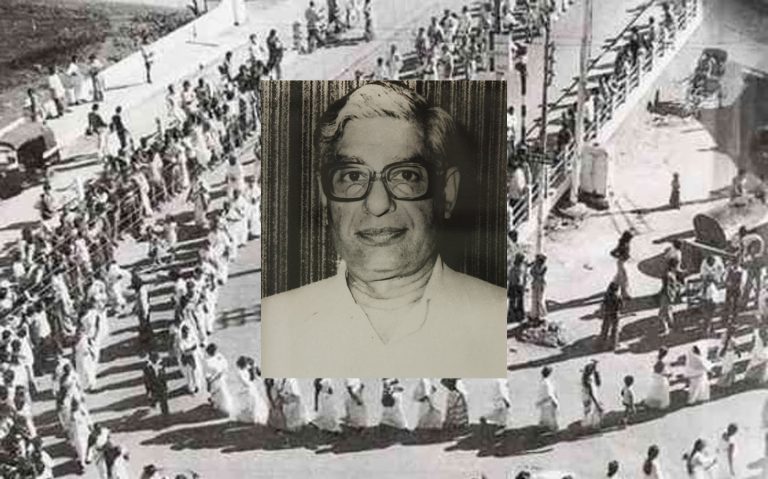
Assam Chief Minister Himanta Biswa Sarma on Sunday announced that cremation of Assam’s cultural icon Zubeen Garg will take place on September 23 with full state honours. The cremation will take place at Kamarkuchi near Sonapur on the outskirts of Guwahati, which will be developed as a memorial after the last rites. The location and the time were finalised in a cabinet meeting on Sunday evening.

The CM said that a plot of 10 bigha owned by the state government near Dichang resort on the National Highway has been selected by the government. Locals are using the place to run a nursery and a crematorium, and they have agreed to vacate the entire site for Zubeen Garg. The CM also said that a nearby private plot has also been offered by the owner who owns a hotel in Guwahati.

CM Himanta Biswa Sarma said that state govt had initially planned to hold the cremation in Jorhat, which is being demanded by the people of Jorhat, where Zubeen Garg spent his childhood, but his family preferred Guwahati. He said, ‘We thought Tezpur has Jyoti-Bishnu (memorials of Jyoti Prasad Agarwala and Bishnu Rabha), Guwahati has memorial of Bhupen Hazarika, therefore Jorhat can have Zubeen Garg.

But Zubeen’s family said that as they are currently located in Guwahati, they will need to travel to Jorhat every time they want to visit the cremation site. Moreover, Zubeen’s 85-year-old ailing father won’t be able to travel for 6-7 hours to Jorhat. Three ministers of the govt met with the family today afternoon for final discussion, but the family including Zubeen’s wife Garima reiterated their preference for Guwahati. Therefore, the Sonapur site has been finalised, the CM said. He said that the family has the final say on the matter, and the govt can’t impose its decision.

The CM said that there is another difficulty in selecting Jorhat; Zubeen Garg’s body has already started to swell as he died three days ago, and the cremation can’t be extended much. The 25 km journey from Airport to his Kahilipara residence took around 6 hours, therefore, the 300 km journey to Jorhat may take days, as people everywhere on the route will want to pay their last respects by stopping the vehicle.

Therefore, ashes of Zubeen Garg will be taken to Jorhat, and a second memorial will be built there, the CM said.

Himanta Biswa Sarma visited the site today morning and then again in the evening after the cabinet meeting. He surveyed the site and give instructions to officials to prepare everything for cremation on 23rd September, including installation of giant LED screens. The highway will be close for heavy vehicles till 2 PM, so that the entire road can be occupied by people witnessing the cremation.

He said that after the cremation, engineers and designers will work on the proposed memorial, and the design should be finalised in 2-3 months.

The mortal remains of the late singer are currently kept at the Bhogeswar Baruah Sports Complex (Sarusajai Stadium) for his fans and well-wishers to pay their tributes before his funeral. The CM announced that the place will be remain open round-the-clock, allowing lakhs of fans to pay their last respects to the legendary singer.

As per latest reports, around 15 lakh people gathered in Guwahati to have a glimpse of their beloved singer. Thousands of people spent the whole night near the airport and Zubeen’s house, and lakhs joined the vehicle carrying the mortal remains from airport. As a result, the journey took around 6 hours.

People from across the state have arrived and are arriving in Guwahati to pay their last respect, and massive sea of humanity will continue tonight, tomorrow and then Monday night before the final journey to the cremation ground begins at 8 am on Tuesday.

The state government had declared a three-day mourning till September 22, but it has been extended by another day for his cremation on 23, the Chief Minister added. Govt offices and educational institutions will remain closed on that day. CM Sarma also said the Singapore government has issued the singer’s death certificate, which states that he died due to drowning. However, the actual reason will be mentioned in the postmortem report, which have not been issued yet.

Professor’s anti-Hindu tweet goes viral, Surat’s VNSG university clarifies he is no longer associated with them, legal options being examined

Surat-based Veer Narmad South Gujarat University (VNSGU) has issued a clarification after social media outrage over a professor’s alleged Hinduphobic posts. Users on X circulated screenshots of several tweets by the professor Madhusudan Raj and demanded strict action, even tagging Gujarat Police. The VNSGU has said that although he used to work in the university, he left in 2021.

One of the tweets that triggered anger was about a Hanuman statue in Texas. An American account had suggested removing the statue linking with the hiked fee for H1B visa, and Madhusudan Raj had retweeted it adding the words “Smash it.” Social media users accused him of openly spreading hatred against Hindu beliefs.

The American’s tweet had said, ” Now that we are kicking out all of the H1B Indians it shouldn’t be too hard to get the government to take down this hindu demon monkey statue in Fort Bend County, Texas.” And professor Madhusudan Raj supported the comment, asking the statue to smashed.

After the controversy, many people began tagging VNSGU, claiming that Madhusudan Raj was serving as an Assistant Professor there. In response, the university clarified through its Human Resources department that while he was once a faculty member at VNSGU, he had resigned back in 2021. The university confirmed that he has had no association with them since then.

Officials also said that the university is reviewing the matter and will issue a detailed statement. They stressed that VNSGU has nothing to do with his personal views or his current activities.

Reports suggest that Madhusudan Raj is now living abroad. His X profile describes him as a “Born again Christian.”

The controversy has grown because this is not the first time his posts have attracted attention. He has previously made several remarks against Prime Minister Narendra Modi, Hindus, and Gujaratis. In some past posts, he called PM Modi a “clown” and compared India’s condition under him to that of a dictatorship. He also ridiculed religious practices, temples, and faith, which many online users called deeply offensive.

Given the seriousness of these repeated posts, the university has said that legal options are under consideration, though it underlined that Raj is no longer part of their faculty.

Ex-IAS Amitabh Thakur goes to court for source based news by ANI, claims news agency published ‘false news’ about ECI; says can’t trust police

0

On 11th September, a Lucknow Court registered a complaint against news agency ANI’s Editor Smita Prakash on a petition claiming that the agency circulated false news attributed to the Election Commission of India (ECI). The petition was filed by ex-IAS officer Amitabh Thakur. Judicial Magistrate-III passed the order and the next hearing is scheduled for 26th September. According to a statement issued by Thakur on social media platform X, the court has called him to record his statement.

Court registers complaint

In its order, the court said it is passing the order without entering into the merits and said, “Heard and perused the complaint and written submissions. At this stage, without entering into the merits of territorial jurisdiction or sufficiency of grounds, the complaint is found to be in order procedurally. In view of the provisions of Chapter XV BNSS, the complaint is liable to be registered as a complaint case…Let this case be registered as a Complaint Case. The Complainant is directed to appear on 26.09.2025 for recording of his statement under oath.”

Thakur’s allegations against ANI

In his complaint, Thakur claimed that ANI repeatedly attributed statements to the ECI which were not available on its official website or verified social media handles. Thakur argued that this amounted to ANI publishing unverified and misleading reports in the Commission’s name. Notably, news agencies like ANI often publish reports based on statements given by sources (named and unnamed) from different departments, including the Election Commission of India (ECI).

Thakur specifically cited a post made by ANI on 1st August 2025 at 3:08 PM that carried a statement citing the Election Commission countering Rahul Gandhi’s allegations of vote theft. According to him, this was one of several examples where ANI published news without any official press note, press conference or verified release from the ECI.

In his written submission, he stated, “…best of the applicant’s knowledge, many news have been relayed by ANI, being run by the OP Ms Smita Prakash, as being that of the ECI, without any official fact or evidence to back it up, completely on its own.”

Why he avoided the police route

In his appeal, Thakur claimed that he did not approach the police to file an FIR as he feared the police might be influenced in such a matter. Hence, he preferred to move the court directly and sought cognisance of his complaint against Prakash for alleged criminal malfeasance.

Who is Amitabh Thakur?

Amitabh Thakur, National President of Azad Adhikar Sena, is a retired 1992-batch IPS officer from the Uttar Pradesh cadre, a B-Tech graduate and an IIM Lucknow alumnus. Earlier, he accused Mulayam Singh Yadav of threatening him in 2015. Thakur is not new to controversies. In 2021, he was arrested on abetment to suicide charges.

In August 2021, a woman and a man self-immolated outside the Supreme Court of India. The woman, who later died, said in a statement that former BSP MP Atul Rai had sexually harassed her and that officials including Thakur supported Rai in the matter. She accused Thakur of taking money from Rai to support him in the case. Thakur had also announced his intention to contest elections against UP Chief Minister Yogi Adityanath.

Unnikrishnan is the name given to people who indulge in immoral activities: Kerala Congress spokesperson Jinto John insults Lord Krishna, triggers outrage

0

The Youth Congress could lead to further embarrassment for the grand old party owing to an abject display of Hindu hatred by one of its leaders and spokespersons, during a discussion on a TV channel. Consistent with the party’s history of Hindumesia and attacks on the beliefs of the majority population in the country, its spokesperson from Kerala, Dr Jinto John, recently exposed his bigoted ideology and animosity towards the Hindu community and its faith.

The conversation concerned the alleged cyberbullying directed at K J Shine, the leader of the Communist Party of India (Marxist) and Unnikrishnan, a party MLA. However, John made a highly offensive remark about Lord Krishna which provoked a significant backlash from the Bharatiya Janata Party. he maliciously claimed, “In Kerala, Unnikrishnan is the name given to people who indulge in immoral activities.”

However, the statement soon led to a political storm in the state. “The word ‘Unnikrishnan’ has great sentimental value in the hearts of Hindus. It involves reverence and love. It is natural for people who lead a low life to think of immoral activities when they hear the word Unnikrishnan. Do not think that Hindus will keep silent if anyone defames their deity,” retaliated BJP leader B Gopalakrishnan and demanded a public apology from John and his party.

However, sensing that his outrageous comments could potentially lead to further trouble, John expressed regret and insisted that it was merely a slip of the tongue. “It occurred in the middle of an argument with the channel anchor,” he added. Meanwhile, Sunny Joseph, the president of the KPCC (Kerala Pradesh Congress Committee) informed that he had not yet been contacted about disciplinary action regarding the issue.

John’s defamatory post against K J Shine had already prompted the CPM leaders to boycott him in channel debates. There is reportedly dissatisfaction inside the Congress with the actions of some Youth Congress leaders which are believed to have placed the leadership in a difficult situation.

Nemom Shajeer, the leader of the Youth Congress escorted MLA Rahul Mamkootathil to the assembly session, despite the fact that the former was suspended from the party’s core membership. The leaders are yet to take any action in this matter. A KPCC leader also voiced, “There is no control over the youth leaders who are on a rampage in Kerala politics.”

‘Nagrik Devo Bhav’ – GST ‘Bachat Utsav’ reforms to begin from 22 September, first day of Navratri: PM Modi

0

On 21st September, Prime Minister Narendra Modi addressed the nation announcing that next generation GST reforms will come into effect from 22nd September, the first day of Navratri. PM Modi said that the new structure, which he termed as “GST Bachat Utsav”, will ensure savings for every citizen and boost India’s growth story.

He said, “From tomorrow, with the sunrise of Navratri, next generation GST reforms will come into force. In a way, the nation will celebrate a GST Bachat Utsav, where every family’s savings will grow.”

Relief for families and middle class

PM Modi highlighted that daily essentials including food items, medicines, soaps, toothpaste, health and life insurance, and many services will either be tax-free or taxed only at 5%. Products earlier falling under the 12% slab have now largely been moved to 5%. He said this would directly benefit the poor, middle class, neo-middle class, farmers, shopkeepers, traders and women, bringing festive cheer to households.

Simplified tax structure

PM Modi recalled how before GST, India was trapped in a maze of multiple taxes including octroi, entry tax, sales tax, excise, VAT and service tax. Transporting goods across cities involved multiple check-posts and paperwork, often leading to higher costs for consumers. He said GST reforms introduced in 2017 freed the nation from decades of tax complications, realising the dream of “One Nation, One Tax”. The new reforms will now reduce slabs to primarily 5% and 18%, making compliance easier and boosting investment.

PM Modi recalled an instance reported in a foreign newspaper where a company found it easier to send goods from Bengaluru to Europe and then back to Hyderabad, rather than directly transporting them within India. He said this example illustrated the heavy burden of multiple taxes and tolls before GST, when businesses struggled daily with delays, paperwork and rising costs that were ultimately passed on to ordinary citizens.

Boost for MSMEs and Atmanirbhar Bharat

PM Modi stressed that reduced GST rates and simplified procedures will benefit MSMEs, cottage industries and small traders as it will increase sales and reduce tax burden. He added that India’s economic strength during its prosperous times rested on MSMEs and urged them to manufacture world-class products with pride in ‘Made in India’.

He stressed that Atmanirbhar Bharat is not just a slogan but a collective responsibility, with MSMEs playing a central role in shaping India’s manufacturing strength. PM Modi said, “Just as our freedom was strengthened by the mantra of swadeshi, our prosperity too will come from swadeshi. Let every household and every shop become a symbol of it.”

Double benefit for citizens

PM Modi underlined that citizens are now receiving a “double bonanza” with relief in income tax up to Rs 12 lakh and reduced GST rates. He said this combined relief will lead to savings of over Rs 2.5 lakh crore annually for the people. Stressing the mantra of “Nagrik Devo Bhav”, he said, “This is why I am calling it a Bachat Utsav,” and urged citizens to take pride in purchasing Indian-made goods.

Call to states for cooperation

PM Modi also appealed to the state governments and asked them to join hands with the Centre in accelerating manufacturing, creating a conducive environment for investment, and taking forward the mission of Atmanirbhar Bharat. He concluded his address by extending Navratri greetings and wishing the nation prosperity through the GST Bachat Utsav.

Allahabad High Court dismisses singer-activist Neha Singh Rathore’s plea, says her tweets against PM Modi were derogatory and cannot be ignored

The Allahabad High Court has dismissed a petition filed by Bhojpuri singer and activist Neha Singh Rathore, who had asked for the quashing of an FIR registered against her over a series of social media posts. The court said that the allegations made against her showed a clear case for police investigation and directed her to cooperate with the authorities.

The order was passed on Friday, 19th September, by a division bench of Justice Rajesh Singh Chauhan and Justice Syed Qamar Hasan Rizvi. The bench told Rathore to appear before the investigating officer on 26th September at 11 a.m. sharp and cooperate with the investigation until the police submit their final report.

The judges observed that the charges against her were not baseless and prima facie pointed to a cognizable offence. They also remarked that the timing of her tweets was important and sensitive, since they were posted immediately after the Pahalgam terror attack.

Earlier booked by Lucknow police

In April this year, Lucknow’s Hazratganj police had booked Rathore under different sections of the Bharatiya Nyaya Sanhita (BNS). The FIR was based on her posts on the social media platform X (formerly Twitter). In those posts she wrote, after the terror attack in Pahalgam, Modi came to Bihar to threaten Pakistan so that he could garner votes in the name of nationalism.

She had also written that instead of finding terrorists and admitting its mistake, the Bharatiya Janata Party (BJP) wanted to plunge the country into war. 

“In the Bihar elections, they can either get votes in the name of Hindu-Muslim or India-Pakistan; there is no third option, and these people will choose those two options,” she further wrote in one of the posts.

The court said, she used name of PM in disrespectful manner

While rejecting her plea, the High Court noted that Rathore had used the “name of the Prime Minister of India in a derogatory and disrespectful manner.” The judges said that her posts not only targeted the Prime Minister but also the Home Minister and suggested that the BJP government was willing to sacrifice the lives of soldiers and even risk war with a neighbouring country for its political gains.

The court pointed out that many such tweets were part of the case diary, and several had been specifically mentioned in its order. According to the bench, “The comments she made, the petitioner has used a religious angle, Bihar election angle, accusing the Prime Minister by name and saying that the B.J.P. Government is sacrificing the lives of thousands of soldiers for its vested interest, pushing the country into a war with a neighbouring country.”

Rathore’s lawyer, Advocate Kamal Kishore Sharma, argued that her posts fell under the right to freedom of speech guaranteed by Article 19(1)(a) of the Constitution. He said she had simply expressed her views and that no state authority had the right to suppress her voice.

The State, however, was represented by Government Advocate V.K. Singh, joined by advocates S.N. Tilhari and Vipul Kumar Singh, who opposed the petition and defended the FIR.

Following an examination of the arguments and evidence presented, the Allahabad High Court declined to cancel the FIR and asked Rathore to cooperate fully in the probe that was already in progress. With this ruling, the singer will now be required to appear before the investigators later this month and keep cooperating until police submit their report.

From Purnia to Darbhanga, Hindu faith under attack as Islamists try to incite and create unrest ahead of Bihar Vidhan Sabha election

As the Bihar Assembly elections approach, certain elements are making efforts to vitiate the atmosphere. Their aim is evident: to divide the society, instigate discord between Hindus and Muslims and exploit this for vote-bank politics. Two recent events in Purnia and Darbhanga illustrated how some individuals are trying to provoke religious sentiments by stirring tensions.

The defacement of the Goddess Durga idol in Purnia and the dispute regarding the immersion of the idol of Baba Vishwakarma in Darbhanga have pointed out that peace and harmony in Bihar are under threat. We will look into these occurrences and understand how they are nothing but a tool to gain political advantage.

Attack on idol of Goddess Durga

The destruction of the Goddess Durga idol at Majgama Haat in Purnia incited widespread outrage in the area. These idols were in the process of being created for Durga Puja, a significant holy festival for the Hindu community. On the morning of Friday, 19th September, people noticed the damage and their anger boiled over.

Locals detained a Muslim youth accused of vandalization. The furious crowd assaulted him, tied his hands with a rope, blocked the road and began arson. The situation escalated to the point where authorities had to intervene. They managed to save the young man from the mob and secured him in a government facility.

However, the enraged mob also turned against the cops. This event led to a tense environment in Purnia. The residents flooded the streets, setting tires ablaze and the police faced challenges in restoring order. Nonetheless, the pressing question remains: why did this happen? Was it merely the action of a person or was there a meticulously designed conspiracy at play?

Chaos over idol immersion in Darbhanga

An unrest erupted regarding the immersion of the idol of Baba Vishwakarma in Kataharia village located within the jurisdiction of the Singhwara police station in Darbhanga. This marked the inaugural celebration of Baba Vishwakarma Puja in the village. A procession was organized for the immersion, however, some persons raised objections and halted the procession from traversing their village.

This led to a charged atmosphere as locals asserted that the procession adhered to the approved route, yet the protest erupted unexpectedly. The authorities attempted to manage the situation. The Sub-Divisional Magistrate (SDM) and Sub-Divisional Police Officer (SDPO) arrived at the apot with a substantial police presence but their efforts were ineffective.

The administration eventually had to alter the procession’s route to prevent further disputes. Consequently, the idol was transported for immersion via the Gaighat police station area in Muzaffarpur district which was a longer path. This incident provoked the ire of the local populace. A young man remarked, “We offer juice during their festivals but today the route of our sacred event was blocked.” It is apparent that the religious sentiments of the people have been wounded, leading to anger.

What is the motive behind these incidents

Upon reviewing these two incidents in Bihar, it is evident that there is a deliberate attempt to disturb the atmosphere prior to the Bihar Assembly elections. The instances in Purnia and Darbhanga are not coincidental. Both events have provoked religious sentiments and their timing appears to be meticulously orchestrated.

Major festivals like Durga Puja are approaching in the state with the assembly elections likely to follow soon after. Hence, some individuals are attempting to incite tension between Hindus and Muslims, thereby polarizing the voting demographic. Voter polarization is a well-established aspect of Bihar’s political dynamics.

Certain parties, particularly those that profess to be supportive of Muslims such as the Rashtriya Janata Dal (RJD) and All India Majlis-e-Ittehadul Muslimeen (AIMIM) intend to capitalize on such incidents. Their goal is to unify Muslim voters and convey that the Bharatiya Janata Party (BJP)-Janata Dal United (JDU) alliance is against their interest.

Development vs political conspiracy

The timing of the Purnia incident is particularly significant. Prime Minister Narendra Modi recently unveiled projects totaling ₹40,000 crore there. Initiatives related to trains, airports and other development projects were inaugurated. Bihar is swiftly advancing along the path of development. The BJP-JDU coalition government has made efforts to improve law and order while fostering development. Nevertheless, as discussions about development intensify, few elements tried to disrupt the peace and harmony.

The Mahagathbandhan believes that it is unable to confront the NDA on the plank of development. Therefore, it seeks to provoke religious and communal problems. The events in Purnia and Darbhanga serve as exmaples of the same. Incidents such as the vandalism of idols and the obstruction of idol immersions stir public emotions and propagate animosity within society. As a result, the focus shifts away from development, prompting individuals to become mired in emotional issues.

Strategy to vitiate the atmosphere before the polls

All communities in Bihar coexist and participate in each other’s festivals. So, why are such incidents taking place? It is evident that this is a ploy by certain individuals aiming to divide society. The residents of Bihar, regardless of being Hindu or Muslim, uphold values of peace and fraternity. However, some political factions want to disrupt this unity for their own gain.

A similar scenario was observed in Darbhanga. A young man remarked that he takes part in the festivals of the Muslim community, so why was route to his festival obstructed? This question lingers in the minds of all Biharis. People recognize that this is merely a component of a political strategy.

Such events are expected to escalate prior to the assembly elections in Bihar. Additional controversies may arise concerning idol immersion during significant festivals such as Durga Puja. The objective is to create a rift between Hindu and Muslim voters. Certain parties aim to consolidate Muslim voters in their favor. This type of political ploy poses a threat to the development and peace of Bihar.

The occurrences in Purnia and Darbhanga are manifestations of a conspiracy intended to poison the atmosphere leading up to the Bihar elections. These incidents are a strategy to split society and polarize the votes. However, the people of Bihar are discerning. They understand that their true priorities are development, employment and peace. It is crucial for us to recognize these political gameplans and come together to advance the state. The strength of Bihar is rooted in its peace and harmony which cannot be shattered by anyone.