Home Blog Page 1799

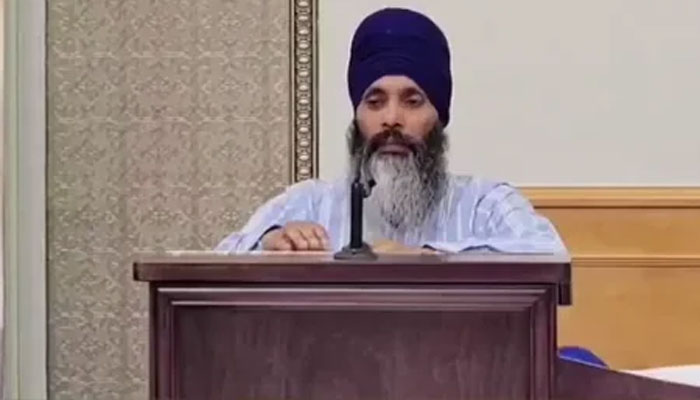
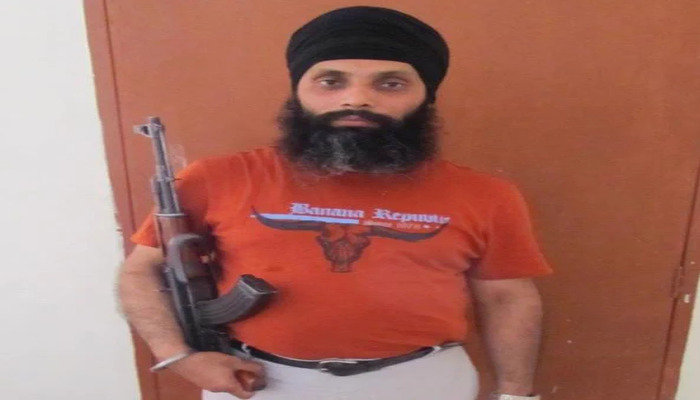
Khalistani terrorist Hardeep Singh Nijjar, for whom Justin Trudeau is destroying India-Canada relations, has been on USA’s ‘no-fly’ list since 2019

0

Canada has readily compromised its already strained diplomatic ties with India over the slain Khalistani terrorist Hardeep Singh Nijjar. It all started on Monday, September 18 when Canadian PM Justin Trudeau, without any relevant evidence to back his claim, accused India of the killing of Nijjar on Canadian soil. This baseless allegation, which India vehemently denied, triggered a huge diplomatic row and sent relations between the two countries plummeting.

As tensions between Canada and India rise, and Canada, despite being aware of his criminal antecedents, tries to persuade the world that Nijjar was merely a religious leader, it has surfaced that Hardeep Singh Nijjar was found to be at flight risk in the United States and was on the country’s ‘no-fly’ list since 2019.

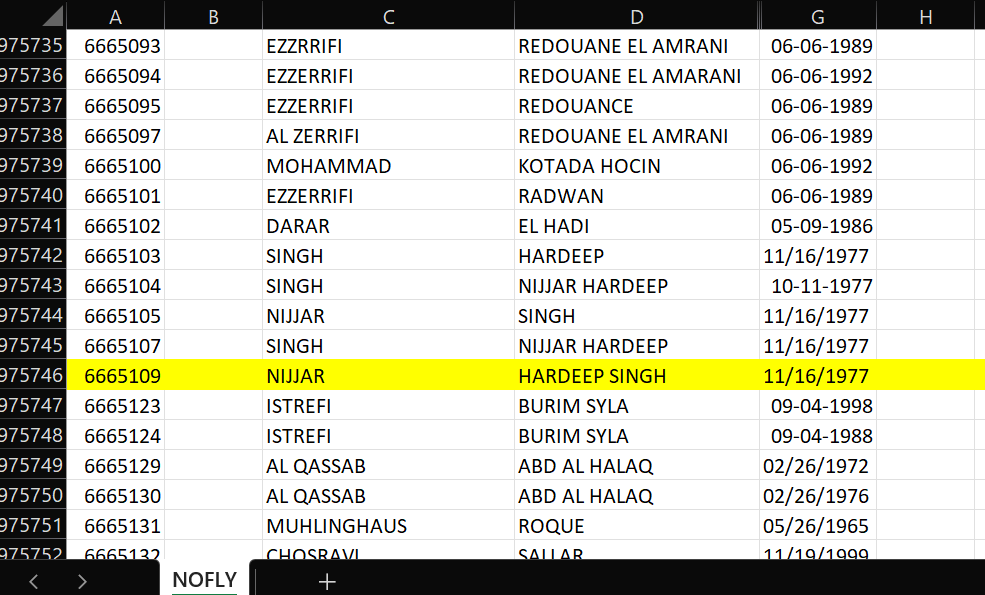
Several social media users today took note of this after X user going by the handle @journo_vinay posted screenshots of USA’s 2019 ‘no-fly,’ which was leaked in January this year. The list had the slain Khalistani terrorist Hardeep Singh Nijjar’s name on it.

Nijjar, the chief of Khalistan Tiger Force (KTF) — a Sikh extremist organisation banned by India and a “designated terrorist” was killed in a targeted shooting at British Columbia in Canada’s Surrey in June 2018.

Notably, in January this year, a 2019 copy of the U.S. government’s Terrorist Screening Database and “no-fly” list became public after a foreign hacker obtained the confidential documents from an unsecured server belonging to a commercial airline.

The no-fly list is a small subset of the US government Terrorist Screening Database (also known as the terrorist watchlist) that contains the identity information of known or suspected terrorists. The database is maintained by the FBI’s Terrorist Screening Center. 

Digital media company The DailyDot was the first to report on the leak in January this year. According to the report, the hacker, while looking for unsecured servers online, stumbled upon “NoFly.csv” and “selectee.csv” files which had over 1.5 million entries, including names and dates of birth of people recognized by the FBI as ‘known or suspected terrorists; who are barred from boarding aircraft.

The ‘no-fly’ list was established under the George W. Bush administration, initially as a small list of individuals prohibited from flying on commercial flights due to perceived threats. Following the 9/11 terrorist attacks, the list was formalized and expanded to include individuals identified by the FBI as potentially posing a threat to civil aviation or national security.

This ‘no-fly’ list included the name of Hardeep Singh Nijjar, a wanted Khalistani leader in India, whom Canada has been desperately siding with. 

Nijjar’s name appeared in USA’s 2019 ‘no-fly’ list

Meanwhile, regardless of Trudeau’s recent backing for the Khalistani terrorist, it has been revealed that Nijjar was also on Canada’s no-fly list in 2017-18.

Earlier in the day OpIndia reported how a dossier prepared by the Indian intelligence agencies mentioned that Hardeep Singh Nijjar was an associate of terrorists belonging to the Khalistan Commando Force (KCF). The agencies said that Nijjar was associated with Gurdeep Singh alias Deepa Heranwala. Gurdeep Singh was involved in more than 200 killings in the late 1980s and early 1990s.

According to the dossier, Nijjar fled to Canada in 1996 on a forged passport under the name “Ravi Sharma” and worked as a truck driver and plumber. It adds that Nijjar was in contact with Pakistan-based KTF chief Jagtar Singh Tara and went to Pakistan in April 2012 under the guise of a Baisakhi jatha member. Tara radicalised him, and the Pakistan spy agency Inter-Services Intelligence (ISI) groomed him, with the former providing him with weapons and explosives training in 2012 and 2013. According to the dossier, Tara sent US-based Harjot Singh to Canada in 2013 to instruct Nijjar on how to use a handheld GPS device.

The dossier listed several other criminal activities of Nijjar. According to the dossier, Nijjar was declared a terrorist by the Home Ministry on July 1, 2020, and the National Investigation Agency announced a cash reward of Rs 10 lakh on July 22, 2022. Despite that, the KTF head functioned with impunity in Canada.

The Indian agencies said that even after an Interpol Red Corner Notice (RCN) was issued against Nijjar in November 2014, Canada only placed him on the “no-fly list”.

Punjab: Kabaddi player murdered in Kapurthala, body thrown outside house, killers knock the door to announce the murder to his parents

0

On September 19, a local kabaddi player named Hardeep Singh alias Deepa was murdered by unknown assailants and his mutilated body was thrown outside his house in Dhilwan tehsil in Punjab’s Kapurthala district.

Hardeep was attacked by sharp-edged weapons, including swords and then dumped in front of his residence. The perpetrators also taunted the player’s parents after the murder.

In a complaint filed with the police, the deceased’s father Gurnam Singh said Hardeep had a dispute with Harpreet Singh Happy, also a resident of Dhilwan. As per the complaint, on the evening of September 20, Hardeep left with his bank documents. At around 10:30 PM, someone knocked at their gate following which Gurnam Singh and his wife went to the terrace and saw Harpreet Singh along with five unknown individuals assaulting their son. They left after announcing that they have killed Hardeep, the father said in his complaint.

Personal enmity is reportedly the reason behind the crime. Hardeep had an argument with another man in the neighbourhood named Harpreet Singh alias Happy. The investigating officer, Kuldeep Singh, informed that numerous cases had been filed against them at the Dhilwan Police station. He informed, “Based on the father’s complaint, a case of murder has been registered against Happy and his five associates.”

Punjab Chief Minister Bhagwant Mann’s Aam Aadmi Party government has come under fire from Sukhbir Singh Badal of the Shiromani Akali Dal (SAD) who charged that there was a “Jungle Raj” in the state. Badal further asked the chief minister to step down.

The president of Shiromani Akali Dal stated, “Shocked to learn about the brutal killing of a young Kabaddi player at vill Dhilwan in Kapurthala. See the level of fearlessness of the murderers; they knocked at the door and told the parents, ‘We killed your brave son.’ This isn’t an isolated incident. There is complete Jungle Raj prevailing in Punjab, where murders, loot, snatchings and robberies are becoming an everyday affair.”

The Firozpur MP tagged the chief minister’s official account and added, “It’s a proven fact that Bhagwant Mann is unable to handle the situation. He should step down without any further delay.”

Open source, available on the internet: British Columbia Premier David Eby on briefings by Canadian intelligence agency on Khalistani terrorist Hardeep Singh Nijjar

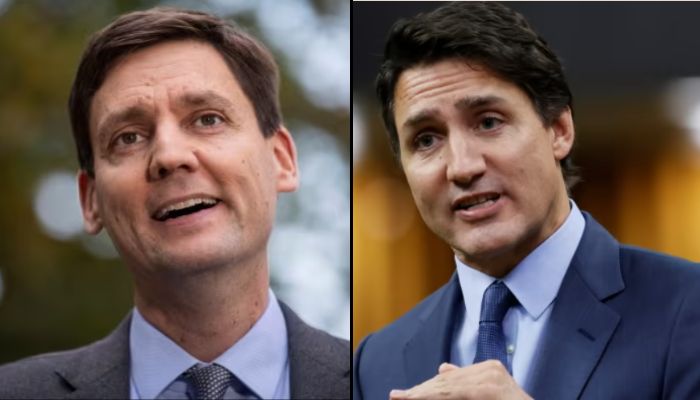
Two days after Justin Trudeau-led-Canadian government accused Indian agencies of killing Khalistani terrorist Hardeep Singh Nijjar, the Premier of British Columbia David Eby on Friday (September 22) informed the media that the ‘intelligence briefing’ received by him was based on open-source, internet material.

“The only briefing I’m able to receive from the CSIS (Canadian intelligence agency) are open information briefings or open source briefings which is information that’s available to the public doing an internet search – Which I found frustrating,” Eby was heard as saying.

Trudeau had sparked a diplomatic standoff with India, based on unfounded intelligence reports about the killing of Hardeep Singh Nijjar, which are still under the purview of investigation of the Canadian Intelligence Agency (CSIS).

David Eby, who represents the New Democratic Party in Canada and is an ally of the Trudeau government, expressed frustration that the government was withholding information about the Khalistani terrorist.

He added that Trudeau reached out to him before speaking in the Parliament about the matter. “I expressed my frustration in the meeting with the CSIS director about our inability to get more concrete information,” the Premier of British Columbia emphasised.

He also sought reforms with the Canadian Intelligence Agency so that it can share more information with provincial leaders and not just open source, easily available material on the internet.

“If that’s what’s required, let’s make it happen, because the only way that we’re going to make traction on this is by the federal government trusting the provincial government with information and being able to act on it in our local communities,” Eby added.

Earlier on September 19, the Premier of British Columbia was seen reiterating the talking points of Justin Trudeau and calling for non-interference by foreign governments in the internal affairs of Canada.

“Today, Prime Minister Trudeau announced the Government of Canada has credible evidence of links between the Government of India and the assassination of Hardeep Singh Nijjar outside a gurdwara in Surrey,” he claimed while downplaying the terror links of Hardeep Singh Nijjar

The Background of the Controversy

Hardeep Singh Nijjar, the head of Guru Nanak Sikh Gurdwara Sahib and a wanted Khalistani terrorist in India, was shot dead in Surrey by two unidentified assailants on June 18 this year. He was a wanted terrorist by the Indian Government. The 46-year-old hailed from the village Bhar Singhpura of Jalandhar.

On Tuesday (September 19), the Canadian government expelled one Indian diplomat after PM Justin Trudeau blamed India for the killing of Khalistani terrorist Hardeep Singh Nijjar.

The development came after Canadian Foreign Minister Melanie Joly informed in a presser that the allegations of India’s involvement are being investigated. She termed the killing an attack on Canada’s sovereignty and informed that as a consequence, Canada has expelled one top Indian diplomat.

In a swift response, the Ministry of External Affairs stated that any allegation of India’s involvement in Nijjar’s killing is ‘absurd and motivated’. It has also expelled a senior Canadian diplomat in response to Canada’s hostile behaviour towards India, and open support to anti-India terrorists.

MEA spokesperson Arindam Bagchi shared on X, “The High Commissioner of Canada was summoned today and informed about India’s decision to expel a senior Canadian diplomat based in India. The Concerned diplomat has been asked to leave India in the next five days.”

Vacate occupied territories, act against cross-border terrorism: India slams Pakistan at United Nations General Assembly

0

On Friday, September 22, India slammed Pakistan at the United Nations General Assembly, demanding an end to cross-border terrorism, the dismantling of terror infrastructure, and the vacating of Pakistan-occupied Jammu and Kashmir (PoK). This came in response to Pakistan’s interim prime minister, Anwar Ul Haq Kakar, once again raking the Kashmir issue during his address at the 78th session of the United Nations General Assembly (UNGA) in New York.

India exercised its response prerogative to Pakistan’s UNGA speech, condemning Islamabad for repeatedly exploiting global platforms to disseminate anti-India narratives. India asserted that Jammu and Kashmir is an integral part of India, and Pakistan had no locus standi to comment on the issue.

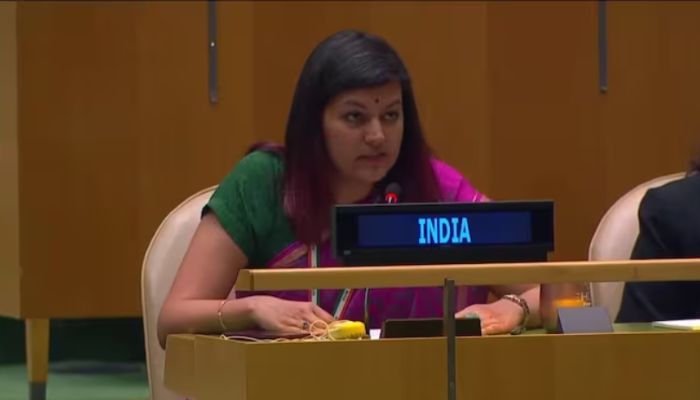
First Secretary at UN for the second committee of UNGA, Petal Gahlot, said, “Pakistan has become a habitual offender when it comes to misusing this forum to peddle baseless and malicious propaganda against India. Member states of the UN and other multilateral organisations are well aware that Pakistan does so to deflect the international community’s attention away from its own abysmal record on human rights.”

Petal Gahlot said, “We reiterate that the Union Territories (UTs) of Jammu and Kashmir are an integral part of India. Matters pertaining to the UTs of Jammu and Kashmir and Ladakh are purely internal to India. Pakistan has no locus standi to comment on our domestic matters.”

Gahlot further added, “In order for there to be peace in South Asia, the actions that Pakistan needs to take are threefold. First, stop cross-border terrorism and shut down its infrastructure of terrorism immediately. Second, vacate Indian territories under its illegal and forcible occupation. And third, stop the grave and persistent human rights violations against the minorities in Pakistan.”

The diplomat emphasised that Pakistan should undertake credible and verifiable measures against those responsible for the 2008 Mumbai terror attacks rather than engaging in technical sophistry. Addressing Pakistan’s concerning human rights record, Petal Gahlot pointed out instances of assaults on minority communities in Pakistan.

She said, “As a country with one of the world’s worst human rights records, particularly when it comes to minority and women’s rights, Pakistan would do well to put its own house in order before venturing to point a finger at the world’s largest democracy. A glaring example of the systemic violence against minorities in Pakistan was the large-scale brutality perpetrated against the minority Christian community in Jaranwala, in Pakistan’s Faisalabad District in August 2023, where a total of 19 churches were gutted and 89 Christian houses were burnt down.”

She added, “The condition of women belonging to minority communities in Pakistan, notably Hindu Sikhs and Christians, remains deplorable. According to a recent report published by Pakistan’s own Human Rights Commission, an estimated 1,000 women from minority communities are subjected to abduction, forced conversion and marriage in Pakistan every year. Pakistan has been the home and patron to the largest number of internationally prescribed terrorist entities and individuals in the world.”

Earlier in the day, interim Pakistani Prime Minister Kakar delivered his speech at the 78th session of the United Nations General Assembly in New York. During his address, he once again raked the Kashmir issue at the assembly.

India has consistently voiced its apprehensions regarding Pakistan’s backing of cross-border terrorism, emphasising that dialogue cannot coexist with terrorism. India has presented proof on numerous international platforms illustrating Pakistan’s aid to terrorist organisations.

Canadian Opposition leader Pierre Poilievre condemns hateful comments against Hindus after SFJ chief Gurpatwant Singh Pannun’s threat

0

Canadian Opposition leader Pierre Poilievre on Saturday (23 September) took to X, formerly Twitter, to condemn the “hateful comments” targeting the Hindu community in Canada.

The Conservative Party leader’s remarks come just three days after Gurpatwant Singh Pannun, leader of the banned Khalistani terrorist group Sikhs For Justice (SFJ) issued threats to the Hindu community. Pannun had told the Hindus residing in Canada to leave the country.

Poilievre wrote that every Canadian deserves to live without fear in the country. “Every Canadian deserves to live without fear and feel welcomed in their community. In recent days, we have seen hateful comments targeting Hindus in Canada. Conservatives condemn these comments against our Hindu neighbours and friends. Hindus have made invaluable contributions to every part of our country and will always be welcome here.”

In a hateful video, the SFJ chief Pannun had said, “Indo-Canadian Hindus, you have repudiated the allegiance to Canada and the Canadian constitution. Your destination is India. Leave Canada, go to India.” The terrorist reportedly announced protests outside the Indian embassies in Ottawa, Toronto, and Vancouver on 25 September.

On September 21, a Canadian Hindu MP Chandra Arya of the Liberal Party wrote a post on X criticising the Trudeau government for its inaction. He said, “I can’t understand how glorification of terrorism or a hate crime targeting a religious group is allowed in the name of freedom of speech and expression. There would be an outrage in Canada if a white supremacist attacked any group of racialised Canadians asking them to get out of our country. But apparently this Khalistani leader can get away with this hate crime.”

Along with the opposition, Hindu groups have also spoken out against the hate speech. The Hindu Forum Canada (HFC), on September 20, wrote to Canada’s Minister of Public Safety, Dominic LeBlanc, calling for decisive action in response to Pannun’s hateful video message against Hindus.

On the same day, the Indian World Forum issued a statement condemning pro-Khalistani elements for threatening Hindus in Canada.

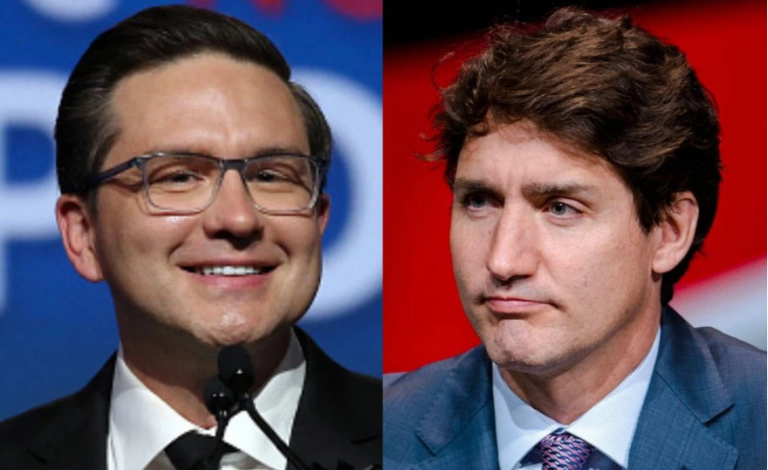
Pierre Poilievre of the Conservative Party of Canada has been emerging as a popular choice for the post of Prime Minister among Canadians with Trudeau’s ratings falling to a dismal low. According to polls, Trudeau is now viewed as the worst prime minister in 50 years.

Video of slain Khalistani terrorist Hardeep Singh Nijjar, celebrating the death of Indira Gandhi, General Vaidya and Punjab CM Beant Singh goes viral

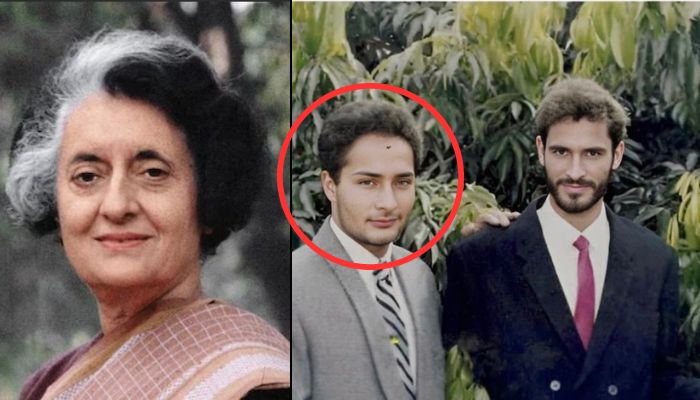
On Wednesday (September 20), a video of the slain Khalistani terrorist Hardeep Singh Nijjar eulogising the killers of Prime Minister Indira Gandhi, General Arun Kumar Vaidya and Punjab Chief Minister Beant Singh went viral on social media.

In the video, Nijjar was heard saying, “The same Indira Gandhi who attacked (conducted Operation Blue Star) was assassinated and put on a spaceship on 31st October. General Singh Vadiya, who attacked the Akal Takht (Golden Temple) with his forces and thought of himself as a great commander, was put on a spaceship in Pune.”

He further said, “Lalit Makhen, who was also involved in the 1984 riots, was put on a spaceship by Jinda and Sukha. The butcher, Punjab CM Beant Singh, who vowed to remove turban from the heads of Sikhs was also eliminated in bombing attack and put on a spaceship by Dilawar, Tara and Hawara. This is our legacy.”

The video was shared by anti-Khalistani activist Puneet Sahani on X (formerly Twitter) with the caption, “This is what Canadian citizen Hardeep Singh Nijjar would exhort from Khalistani Gurdwaras! Assassinating Indian PM, Chief of Army Staff, Sikh CM of Punjab…being a human bοmb etc is proud legacy of their movement!”

The development came a day after Canadian Prime Minister Justin Trudeau hailed Nijjar as a Canadian citizen, who was supposedly killed by Indian security agencies on Canadian soil. He had also expelled a top Indian diplomat, thus prompting a full-fledged diplomatic standoff with India.

Nijjar, who was killed on June 18 this year in Surrey by unidentified gunmen, was granted Canadian citizenship in 2007 despite his involvement in immigration fraud and open allegiance to the cause of secession and terrorism.

The slain Khalistani extremist was influenced by other dreaded terrorists such as Gurdeep Singh Deepa Heran Wala, whom Nijjar met as a teenager.

According to the Khalistani extremist website ‘1984’ tribute, Gurdeep Singh Deepa Heran Wala was involved in more than 217 murders, and multiple bomb blasts and bank robberies.

He also attacked the ‘Ekta Yatra’ led by BJP leader Murli Manohar Joshi from Punjab to Delhi in January 1992. A total of 4 BJP workers were killed while 19 others were injured. Gurdeep Singh Deepa Heran Wala also attacked police officers and CRPF personnel and killed one person every 9th day.

He committed suicide in 1992 after being ambushed by the police.

Anti-India activities of Hardeep Singh Nijjar

Nijjar ran a plumbing business in Surrey. He travelled to Geneva in 2013 to appeal to the UNHRC to recognize the 1984 anti-Sikh violence as a genocide. In what capacity, with whose backing or sponsorship did he manage to reach to a global institution like the UNHRC is worth thinking about.

In June 2014, Nijjar openly called for the separation of the Indian state of Punjab at the UN Headquarters. Five months later, in November 2014, India issued a warrant for Nijjar’s arrest through the Interpol’s National Central Bureau in New Delhi.

The warrant described him as a “mastermind/active member” of the Khalistan Tiger Force (KTF) terrorist group. The warrant also mentioned that Nijjar’s name had surfaced following the 2007 bombing of the Shingar Cinema in Punjab.

According to the summary of the case, the suspects arrested for the blast confessed that they were “acting under the instructions of Hardeep Singh Nijjar”.

In 2016, a second Interpol notice made fresh allegations against Nijjar, calling him the “mastermind and key conspirator of many terrorist acts in India”.

He was wanted for acts of terrorism and recruitment and fundraising and faced a possible life sentence. Nijjar denied the charges in a letter to Canadian PM Trudeau calling them “baseless and fabricated”.

Moreover, in March 2019, Nijjar was charged with assault but the case was stayed the same December.

Nijjar was also embroiled in a dispute over a commercial printing press which he had taken from Ripudaman Singh Malik, who was acquitted of involvement in the deadly 1985 Air India bombings.

The machine was purchased by Malik and a partner who intended to use it to print Sikh scriptures. Malik handed over the press to Nijjar in November 2020 “for safekeeping”.

But Nijjar refused to return it. Malik was murdered in July 2022. A lawsuit then followed in February 2023 seeking the return of the equipment.

“Not a religious leader but a terrorist”: Canada took no action against Hardeep Singh Nijjar despite receiving Indian dossier detailing his crimes

0

Amidst diplomatic tensions between India and Canada over Canada’s baseless allegations against regarding the killing of Khalistani terrorist Hardeep Singh Nijjar, the Indian agencies have stated that Canada did not take any action despite being informed of Nijjar’s crimes. The Canadian government is still pushing the narrative that Nijjar was just a religious leader despite being informed about the criminal cases of murder and terrorist activities of Khalistan Tiger Force (KTF) terrorist Nijjar.

The Indian agencies said that even after an Interpol Red Corner Notice (RCN) was issued against Nijjar in November 2014, Canada only placed him on the “no-fly list”. It is notable that Hardeep Singh Nijjar had entered Canada using a forged passport.

Reportedly, the dossier prepared by the Indian intelligence agencies mentioned that Hardeep Singh Nijjar was an associate of terrorists belonging to the Khalistan Commando Force (KCF). The agencies said that Nijjar was associated with Gurdeep Singh alias Deepa Heranwala. Gurdeep Singh was involved in more than 200 killings in the late 1980s and early 1990s.

According to the dossier, Nijjar fled to Canada in 1996 on a forged passport under the name “Ravi Sharma” and worked as a truck driver and plumber. It adds that Nijjar was in contact with Pakistan-based KTF chief Jagtar Singh Tara and went to Pakistan in April 2012 under the guise of a Baisakhi jatha member. Tara radicalised him, and the Pakistan spy agency Inter-Services Intelligence (ISI) groomed him, with the former providing him with weapons and explosives training in 2012 and 2013. According to the dossier, Tara sent US-based Harjot Singh to Canada in 2013 to instruct Nijjar on how to use a handheld GPS device.

The dossier mentioned that Nijjar, after becoming KTF’s operations chief, began training, funding and operationalising the members of the Khalistani terror outfit.

After Jagtar Singh Tara was deported from Thailand to India in 2015, Hardeep Singh Nijjar took over as KTF’s operations chief. At this point, the Red Cross notice against him was issued.

It is notable that Nijjar’s initial bids to get political asylum in Canada were denied twice. According to the dossier, Nijjar took over as the head of Guru Nanak Gurudwara in Surrey by threatening his own cousin, the temple’s former president, Raghbir Singh Nijjar.

Furthermore, the dossier notes that Nijjar in 2015 provided arms training to Mandeep Singh Dhaliwal in British Columbia’s Mission Hills. He organised training camps to train Dhaliwal about how to use sniper rifles, AK-47 assault rifles and pistols. Dhaliwal arrived in Punjab to kill local Shiv Sena leaders and fan communal tensions, however, he was nabbed by Punjab police in June 2015.

According to the dossier, Nijjar and Arshdeep Singh Dalla alias Arsh Dalla trained a module of four KTF members, who carried out the targeted assassinations and kidnappings between 2020 and 2021. According to the report, three module members were apprehended and disclosed the names of Nijjar and Dalla.

In September 2021, three KTF terrorists trained by Nijjar and Dalla, Kanwarpal Singh, Kulwinder Singh and Kamalpreet Singh, hailing from Moga, were involved in the plot to kill SSP Harminder Singh Gill and two crime investigation agency officials in Moga.

The dossier also listed several other criminal activities of Nijjar. He had provided funds for getting Manohar Lal Arora and his son. In an attack in 2020, Manohar Lal Arora was shot dead, however, his son managed to escape.

According to the dossier, Nijjar was declared a terrorist by the Home Ministry on July 1, 2020, and the National Investigation Agency announced a cash reward of Rs 10 lakh on July 22, 2022. Despite that, the KTF head functioned with impunity in Canada.

Notably, the diplomatic relations between India and Canada took a turn for the worse after Canadian Prime Minister Justin Trudeau on Monday, 18th September 2023, accused the Union government of being behind the fatal shooting of wanted Khalistan leader Hardeep Singh Nijjar. India, however, rejected the allegations levelled by the Trudeau administration, terming them “absurd” and “motivated”.

Rajasthan: Drug smugglers shoot, and run over a police constable; 241 kg poppy husk recovered after injured constable alerts team

0

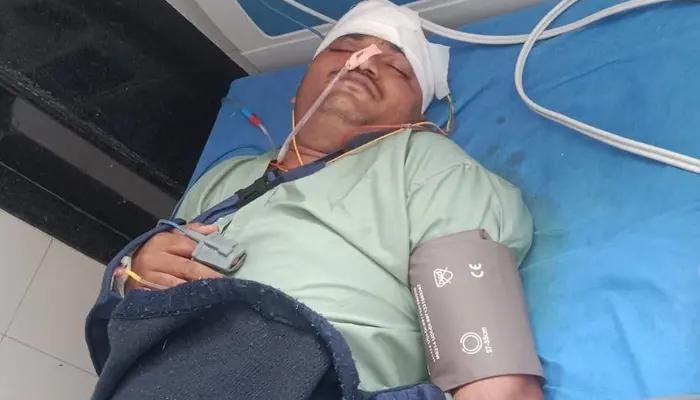
On the night of Thursday, 21st September, drug smugglers attacked police at a forest department checkpost in the Baran district of Rajasthan. First, they opened fire on a police constable, then they ran over him with their car, resulting in the constable sustaining multiple injuries. He was subsequently hospitalised.

Constable Sujan Singh attempted to apprehend the criminals at the checkpost and despite suffering grave injuries, including gunshot wounds and fractures, Singh alerted his team to the situation.

The constable suffered serious injuries and fractures on both his legs and collarbones. The constable is under treatment at a hospital in Eklera town and his condition is stable.

After being informed, the police team reached the spot. The smugglers abandoned their vehicle and escaped under cover of darkness. Sarthal Station House Officer (SHO) Mahaveer Kirad disclosed that 241 kg of poppy husk was recovered from the abandoned vehicle left behind by the culprits. A 7.65-bore pistol, bullets, and a country-made pistol were also recovered from the vehicle.

Mahaveer Kirad said that following intelligence reports of smuggling through this route in a black car, checkposts were set up under Sarthal police jurisdiction for interception. During a routine vigil, Singh noticed a suspicious vehicle from Patalapani village. The occupants of the car fired at Sujan Singh, who fell down injured. The smugglers then ran over him, he said. The police teams are making efforts to arrest the drug smugglers who escaped after attacking the police constable.

Sai Pallavi refutes rumours of marriage with Rajkumar Periyasamy, says mahurat pooja photo was cropped and circulated with disgusting intentions

Actor Sai Pallavi puts a full stop to secret wedding rumours with the director which sparked after the picture went viral on social media.

In the viral pictures, Sai and Rajkumar Periyasamy can be seen dressed in traditional outfits and wearing red garlands around their necks. 

The actor has finally clarified that the picture is actually from the mahurat pooja of her new film titled ‘SK 21’ and it’s been intentionally cropped and circulated with paid bots and disgusting intentions.

On Friday, Sai Pallavi took to X (formerly Twitter) handle and wrote, “Honestly, I don’t care for Rumours but when it involves friends who are family, I have to speak up. An image from my film’s pooja ceremony was intentionally cropped and circulated with paid bots & disgusting intentions. When I have pleasant announcements to share on my work front, it’s disheartening to have to explain for all these jobless doings. To cause discomfort like this is purely vile.”

Recently, on Sai Pallavi’s birthday, Rajkumar shared a few pictures from the pooja ceremony and wrote, “Happy birthday dear @Sai_Pallavi92 You are the best and May God bless you with everything that’s best as always! I feel blessed to have you too by my side in this! Thank you for being there.”

Meanwhile, Sai Pallavi will reportedly be seen in a film with Aamir Khan’s son Junaid Khan. 

As per a source, the two have been roped in for a love story. 

“The preparation of Junaid’s untitled next has started. Sai Pallavi apparently will be the leading lady in the film. This will be Junaid’s next project, after his YRF debut film. A Sunil Pandey directorial, the film is touted to be a love story,” the source said in a statement. 


(This news report is published from a syndicated feed. Except for the headline, the content has not been written or edited by OpIndia staff)

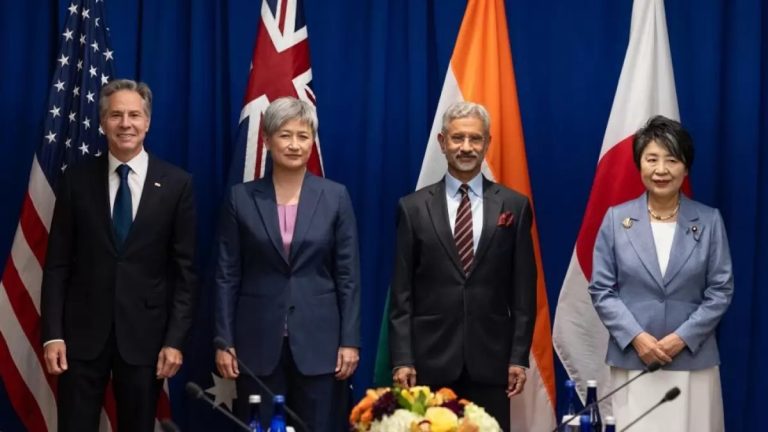
Respect for sovereignty and territorial integrity underpin the development of the Indo-Pacific region: Joint statement of Quad Foreign Ministers

A joint statement by the QUAD nations was issued after the foreign ministers of the group met in New York today. In a veiled attack on China, the Quad grouping reaffirmed that respect for sovereignty and territorial integrity underpin the development of the Indo-Pacific region and expressed serious concern about the militarisation of disputed features, the dangerous use of coast guard and maritime militia vessels, and efforts to disrupt other countries’ offshore exploitation activities.

The Quad or the Quadrilateral coalition is a plurilateral framework comprising India, Australia, Japan and the US. It was formed in 2017 to counter China’s aggressive behaviour in the Indo-Pacific region.

Indian External Affairs Minister S Jaishankar, US Secretary of State Antony Blinken, Australian Foreign Minister Penny Wong and Japanese Foreign Minister Kamikawa Yoko met in New York on 22 September on the sidelines of the 78th session of the UN General Assembly.

“We reaffirm our conviction that international law, respect for sovereignty and territorial integrity, and the maintenance of peace and security in the maritime domain underpin the development and prosperity of the Indo-Pacific,” the statement said.

Referring to Chinese aggression in the Asia Pacific region, it said, “ We emphasize the importance of adherence to international law, particularly as reflected in the United Nations Convention on the Law of the Sea (UNCLOS), to address challenges to the global maritime rules-based order, including with respect to maritime claims, and in the South and East China Seas. “

It said that the grouping supports an open, stable, and prosperous Indo-Pacific underpinned by effective institutions and we reaffirm our unwavering support for ASEAN’s unity and centrality, the ASEAN-led regional architecture – including the East Asia Summit and ASEAN Regional Forum – and practical implementation of the ASEAN Outlook on the Indo-Pacific. 

The full statement is given below:

We, the Secretary of State of the United States and the Foreign Ministers of Australia, India, and Japan, met in New York City during the 78th United Nations General Assembly to reaffirm our unwavering support for the United Nations, the enduring importance of upholding mutually determined rules, norms, and standards, and to deepen Quad cooperation in the international system.

The Quad reiterates its steadfast commitment to a free and open Indo-Pacific that is inclusive and resilient.  We recommit to advancing the vision Quad leaders articulated in Hiroshima on 20 May 2023:  a region that is peaceful and prosperous, stable and secure, free from intimidation and coercion, and where disputes are settled in accordance with international law.  We strongly support the principles of freedom, the rule of law, sovereignty and territorial integrity, and peaceful settlement of disputes; and oppose unilateral attempts to change the status quo.  We seek to maintain and strengthen stability in the Indo-Pacific, where competition is managed responsibly.

We reiterate our commitment to the UN Charter and call for all countries to uphold its purposes and principles, including refraining from the threat or use of force against the territorial integrity or political independence of any state.  We underscore our commitment to upholding international law as the foundation for stability and equitable treatment of all member states.

We are steadfast in our support for full implementation of the 2030 Agenda for Sustainable Development and achievement of all the Sustainable Development Goals (SDGs), so no one is left behind, and reiterate that the SDGs are integrated, indivisible, and balance the three dimensions of sustainable development:  economic, social, and environmental.  We underscore the importance of achieving the SDGs in their entirety without selectively prioritizing a narrow set of such goals and reaffirm that the UN has a central role in supporting countries in their implementation.  We underline the primacy of the 2030 Agenda and its SDGs as a consensus document supported by all member states and call on member states and the UN to protect it.  The Quad’s practical action in the Indo-Pacific is advancing the 2030 Agenda for Sustainable Development and its SDGs by delivering sustained economic and social value, that is responsive to regional partners.

We affirm our support for a UN that solves the consequential challenges of our time and safeguards our shared and interconnected resources.  We are committed to advancing a comprehensive UN reform agenda, including through expansion in permanent and non-permanent seats of the UN Security Council.  In this regard, we call for a UN Security Council that is more representative, transparent, effective, and credible.  We underscore the need to address attempts to subvert the international system, including in the UN, and promote accountability.

We support an open, stable, and prosperous Indo-Pacific underpinned by effective institutions and we reaffirm our unwavering support for ASEAN’s unity and centrality, the ASEAN-led regional architecture – including the East Asia Summit and ASEAN Regional Forum – and practical implementation of the ASEAN Outlook on the Indo-Pacific.  We respect Pacific-led regional organizations, foremost the Pacific Islands Forum (PIF), and are committed to supporting Pacific Island countries in line with the objectives of the 2050 Strategy for the Blue Pacific Continent endorsed by PIF leaders.  We are also further strengthening our cooperation with partners in the Indian Ocean region, including through the Indian Ocean Rim Association, to address the region’s most pressing and important challenges.

We commit to advance the initiatives announced by our leaders in Hiroshima to support the Indo-Pacific region through practical cooperation, including on climate change and clean energy supply chains, and on infrastructure through the Quad Infrastructure Fellowships Program and the Quad Partnership for Cable Connectivity and Resilience.  We continue to advance the development of a secure and trusted telecommunications network with a network modernization project and Open Radio Access Network deployment in Palau, progress on Quad cybersecurity initiatives — and explore avenues to share Earth Observation data to monitor extreme weather events and support climate adaptation.  We support the private sector-led Quad Investors Network to facilitate investment in critical and emerging technologies.  Such efforts help ensure the resilience of communities in the face of climate change and other global challenges.  We are pleased to soon carry out the second tabletop Quad Pandemic Preparedness Exercise through the Quad Health Security Partnership to enhance the region’s capacity to prevent, detect, and respond to outbreaks of infectious disease.  We will also continue to leverage our collective expertise to respond to challenges such as disinformation.

We are driving practical, positive outcomes for the region through the Quad Maritime Security Working Group.  The Indo-Pacific Partnership for Maritime Domain Awareness is supporting regional partners combat illicit maritime activities and respond to climate-related and humanitarian events.  We look forward to the Quad Humanitarian Assistance and Disaster Relief Working Group convening our second tabletop exercise in Brisbane, Australia, to strengthen the Quad’s readiness to support regional partners in times of humanitarian disaster.

We also discussed the recent Quad Counterterrorism Working Group’s Consequence Management Exercise, which explored the capabilities and support Quad countries could offer regional partners in response to a terrorist attack and look forward to the upcoming Quad Counterterrorism Working Group meeting and tabletop exercise in Honolulu, Hawaii in December which will focus on countering the use of emerging technologies for terrorist purposes.  We continue to cooperate on countering the use of the internet and other technologies for terrorist and violent extremist purposes.  We are committed to countering terrorism in all its forms and manifestations, including preventing the international and cross border movement of terrorists, and countering terror finance networks and safe havens.  We stressed the need for a comprehensive and balanced approach to effectively curb terrorist activities through whole of nation and whole of international community efforts.

We reaffirm our conviction that international law, respect for sovereignty and territorial integrity, and the maintenance of peace and security in the maritime domain underpin the development and prosperity of the Indo-Pacific.  We emphasize that disputes should be resolved peacefully and in accordance with international law, without threat or use of force.  We emphasize the importance of adherence to international law, particularly as reflected in the United Nations Convention on the Law of the Sea (UNCLOS), to address challenges to the global maritime rules-based order, including with respect to maritime claims, and in the South and East China Seas. We emphasize the importance of maintaining freedom of navigation and overflight consistent with UNCLOS and reiterate our strong opposition to any unilateral actions that seek to change the status quo by force or coercion.  We continue to express serious concern about the militarization of disputed features, the dangerous use of coast guard and maritime militia vessels, and efforts to disrupt other countries’ offshore exploitation activities.

We express our deep concern over the war raging in Ukraine and mourn its terrible and tragic humanitarian consequences.  We underscore the need for a comprehensive, just, and lasting peace in Ukraine in accordance with international law, consistent with the principles of the UN Charter.  We are deeply concerned about the global food security situation and support the efforts of the UN in the resumption of the Black Sea Grain Initiative (BSGI).  In the context of this war, we concur that the use, or threat of use, of nuclear weapons would be unacceptable.  We underscore that the rules-based international order must respect the sovereignty and territorial integrity of all states.

We condemn North Korea’s destabilizing launches using ballistic missile technology and its continued pursuit of nuclear weapons in violation of multiple UN Security Council resolutions (UNSCRs).  We reaffirm our commitment to the complete denuclearization of North Korea consistent with UNSCRs, and we urge North Korea to abide by all its obligations under the UNSCRs and engage in substantive dialogue.  We stress the importance of addressing proliferation of nuclear and missile technologies related to North Korea in the region and beyond and urge all UN Member States to abide by the related UNSCRs including the prohibition on the transfer to North Korea or procurement from North Korea of all arms and related materiel.  We reconfirm the necessity of immediate resolution of the abductions issue.

We remain deeply concerned by the political, humanitarian, and economic crisis in Myanmar and again call for the immediate cessation of violence, the release of all those unjustly detained, unhindered humanitarian assistance, resolution of the crisis through constructive dialogue, and a return to Myanmar’s transition towards inclusive federal democracy.  We are also concerned with the implications of the ongoing situation in Myanmar on neighboring countries including a rise in transnational crime such as drug and human trafficking.  We reaffirm our strong support to ASEAN-led efforts and the ASEAN Five-Point Consensus.  We also continue to encourage the international community to work together in a pragmatic and constructive way to support an end to the violence in Myanmar.

We, the Quad Foreign Ministers, continue to advance the vision set by our Leaders – that the Quad’s multilateral cooperation will deliver concrete outcomes for the benefit of all people throughout the Indo-Pacific.  We intend to meet in person for the next Quad Foreign Ministers’ Meeting in Japan in 2024.