Home Blog Page 292

Punjab: YouTuber Jasbir Singh, with over 1 Million subscribers, arrested for spying for Pakistan, has links with Jyoti Malhotra and Pakistani espionage network

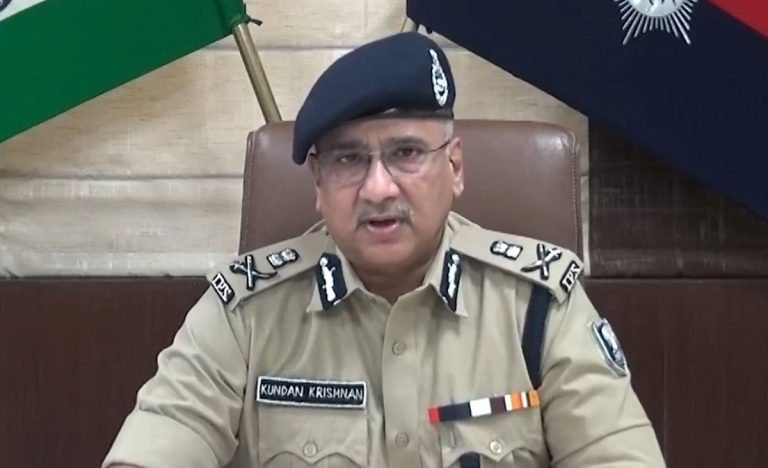
A major espionage network, with suspected ties to handlers and terrorist organizations located in Pakistan, has been uncovered by the Punjab Police. Jasbir Singh, a YouTuber from Mahlan village in Rupnagar of Ropar district was taken into custody by the authorities, shared DGP (Director General of Police) Punjab Police on Wednesday, 4th June.

The State Special Operations Cell (SSOC) in Mohali has started a thorough inquiry into the actions of Jasbir Singh who runs “Jaan Mahal” YouTube channel with over 1.1 million subscribers. The inquiry has been initiated based on intelligence inputs.

Jasbir is allegedly linked with PIO (Pakistan Intelligence Operative) Shakir, also known as Jatt Randhawa, who is a member of a terrorism-supported espionage network. Jasbir was also in frequent touch with Ehsan-ur-Rahim, also known as Danish, a Pakistani national and expelled Pak High Commission staffer as well as Hisar-based YouTuber Jyoti Malhotra, who is currently in custody on espionage charges.

“Investigations have revealed that Jasbir attended the Pakistan National Day event in Delhi on Danish’s invitation, where he met Pakistani Army officials and vloggers. He travelled to Pakistan on three occasions (2020, 2021, 2024), and his electronic devices contained multiple Pakistan-based numbers, now under detailed forensic scrutiny,” informed DGP Punjab Police.

Jasbir even tried to remove any evidence of his correspondence with these PIOs following Jyoti Malhotra’s arrest in order to evade investigation. A First Information Report (FIR) has been filed at SSOC Mohali.

DGP Punjab Police added, “Investigations are underway to dismantle the broader espionage-terror network and identify all collaborators. Punjab Police reaffirms its unwavering commitment to safeguarding national security and neutralizing all threats posed by such anti-national elements.”

OpIndia Ground Report: Village where constable Saurabh Deshwal was killed has 90% Muslim population, houses locked, local Muslims blame police to defend Qadir gang

“Nobody fired a bullet here. He (constable Saurabh Deshwal) died of a police bullet and now the police is harassing us. Do you think we are miscreants?” These are the words of the Muslims of the village, where SOG constable Saurabh Deshwal, who had gone to arrest history-sheeter Qadir, was surrounded and killed by goons.

The SOG constable was killed on 25th May 2025 in Ghaziabad’s Nahal village. OpIndia reached Nahal village on 28th May after the incident. Here we met some of Qadir’s neighbours and talked to them. All the houses within a distance of about 300 metres from Qadir’s four-storey mansion are locked.

The people living here have gone to their relatives’ or acquaintances’ places. Although some of Qadir’s neighbours spoke to us on camera about helping the police administration in its action, however, the reality is that there is silence in the entire market.

We met the Imam of the mosque located about 200 meters before Qadir’s house. Imam Mohammad Fakruddin said that he was unaware of the incident, “I am from outside and have been leading prayers in the mosque for about one and a half years, but since the incident people are not coming to the mosque.” The Imam said that whatever has happened is wrong.

90% of the population of Nahal village is Muslim

OpIndia then reached outside the four-storey bungalow of history-sheeter Qadir. We saw that a huge police force was deployed there. Some policemen were resting while some were patrolling. Some were sitting on chairs in front of the bungalow.

Meanwhile, an old man Fateh Mohammad, who was found in front of the mansion, said that he used to set up a chole bhature shop in the market, but since this incident happened, the shop is closed. When asked about Qadir, he said that he does not know Qadir but he does not consider anyone guilty in this incident.

Fateh Mohammad said that now the police is harassing them. He claimed that the police is picking up innocent people from their homes. Fateh Mohammad said that the village has 90% Muslim and 10% non-Muslim population. Here our team found a Muslim youth wearing a cap. He was sitting on a bike.

He too repeated Fateh Mohammad’s claim. He refused to recognise Qadir. OpIndia met an old man named Irfan here. He told that Qadir is his nephew and he had threatened to kill him seven days ago.

OpIndia reporter’s question enraged Qadir’s neighbour

OpIndia also reached out to Qadir’s neighbour, a shopkeeper. On one hand, he denied knowing anything about the incident; on the other, he blamed the police. The shopkeeper claimed that Saurabh Deshwal died of a police bullet. He said, “Saurabh died of a police bullet. Were we sitting with bullets in our hands at night?”

The Muslim shopkeeper also misbehaved with OpIndia team. The shopkeeper got agitated with the questions and pushed us and tried to get violent. After this, we tried to talk to 15-20 people but most of them claimed to be unaware of the incident and refrained from saying anything against the accused Qadir.

Silence prevails in Saurabh Deshwal’s village, Saurabh Deshwal’s family in shock and disbelief

After leaving Nahal, Ghaziabad, the OpIndia team reached Badhev village in Shamli. This is Saurabh Deshwal’s village. There is silence all around in the village. In the afternoon, the deserted streets of the village seemed to be mourning Saurabh’s sacrifice.

The local villagers are in shock over the brutal murder of Constable Deshwal. Here we reached Saurabh Deshwal’s house located in the middle of the village. About 10-15 people were sitting inconsolably in the verandah of the incomplete 3-storey house. Among them was father Uttam Kumar, wearing an old kurta.

The shock and trauma of losing his son has dried up Uttam Kumar’s tears. Looking at his father immersed in deep grief, it seems that he cannot believe that his son is no more in this world. When asked, he says that he was very brave. He expects justice from the Yogi government.

Anger was clearly visible in the eyes of Saurabh’s cousin sitting on the cot next to him. He says that Saurabh was very friendly and brave. Saurabh Deshwal’s family members said that he used to spend his time serving cows. Another relative sitting here wants Qadir to meet the same fate as Vikas Dubey and Atiq Ahmed.

Meanwhile, Saurabh’s mother and wife were crying inconsolably inside the house. His wife was distraught. We were told that Saurabh Deshwal got married in 2020. His wife and mother did not have the strength to talk. Considering their emotional state, OpIndia did not speak to them.

While returning from Saurabh’s house, a woman said that all the accused should be killed in an encounter and a bulldozer should be run on Qadir’s house. You can see this ground report of OpIndia on the YouTube link given above.

It is worth noting that in this case, the police have arrested many criminals including Qadir and his brother Adil. An announcement has been made to give ₹50 lakh as compensation to Saurabh Deshwal’s family. However, his family says that they want their son back.

Elon Musk lashes out at Trump-backed tax and spending bill, calls it a ‘disgusting abomination’

On 3rd June (local time), billionaire Elon Musk fiercely criticised US President Donald Trump’s flagship legislation and branded it a “disgusting abomination” in a series of posts on social media platform X. Notably, the bill, which has been named “One Big Beautiful Bill” by Trump, is already facing internal Republican rifts as it heads for a Senate vote.

Musk, who recently exited his short-lived role as chief of the Department of Government Efficiency (DOGE), accused lawmakers of recklessly inflating the deficit. He wrote, “Shame on those who voted for it: you know you did wrong.” He lambasted the bill’s extensive military and border allocations alongside its tax extensions.

Bill could add trillions to debt, say critics

The “One Big Beautiful Bill Act” was passed by the House by a single vote. It now seeks to make Trump’s 2017 tax cuts permanent while boosting defence and border expenditure. However, the Congressional Budget Office estimates it would add nearly USD 3.8 trillion to the country’s USD 36.2 trillion debt over the next decade.

Musk accused Congress of “making America bankrupt” and warned that the federal deficit could balloon to USD 2.5 trillion. His remarks received support from several Republican “deficit hawks,” notably Senators Mike Lee and Ron Johnson, who are pushing for deeper spending cuts and fiscal discipline.

Rand Paul joins Musk in blasting Trump’s ‘Big Beautiful Bill’

Senator Rand Paul has joined Elon Musk in denouncing Donald Trump’s “Big Beautiful Bill,” and drew a firm line against what he sees as reckless fiscal policy. Paul criticised the bill’s massive borrowing implications, warning it would balloon the deficit by up to USD 5 trillion and accused fellow Republicans of sticking to Biden-era spending levels. When Trump lashed out, calling Paul “clueless,” the Kentucky senator fired back with numbers, and a message, “The math doesn’t add up.”

In a post on X, Rand quoted Musk and said some of Republicans, pointing towards himself, are trying to stop the bill to which Musk said “Thank you”.

Divided Republicans, divided priorities

Republicans are grappling with diverging interests despite holding a 53-47 Senate majority. The fiscal conservatives are demanding drastic cuts. On the other hand, those from rural states aim to protect Medicaid and other support schemes.

In a statement, Senator Jerry Moran expressed concerns over hospital reimbursements and disability services, saying the party must “find the votes” to balance both cuts and care. Senator John Thune, on the other hand, dismissed Musk’s comments and affirmed the GOP’s commitment to the bill. “We have an agenda we campaigned on, and we’re going to deliver,” he said.

White House Press Secretary Karoline Leavitt also brushed off Musk’s outburst, stating, “The president already knows where Elon Musk stood on this bill. He is sticking to it.”

A test of Musk’s political clout

It had only been a week since his formal exit from the government when Musk’s intervention came. Though he has donated around USD 300 million to Trump’s last campaign and Republican causes, Musk has vowed to scale back political involvement.

The bill will go for Senate voting before the 4th of July deadline. However, growing opposition shows it has a tough path ahead.

With inputs from ANI.

Bangladesh doesn’t want to keep its own citizens? Yunus govt objects to India’s pushback measures, says ‘deportation protocols’ are being violated

On 3rd June, Md Touhid Hossain, the foreign affairs adviser for Bangladesh’s Muhammad Yunus government, accused India of declaring “people” as foreigners and “pushing” them into his nation without following the proper procedure, according to a report in “The Times of India.” Hossain stated that Dhaka would send a diplomatic message to New Delhi over the matter.

India started deporting illegal Bangladeshis after a nationwide verification effort following the Pahalgam terror attack on 22nd April. The exercise has only accelerated since “Operation Sindoor” commenced in the wee hours of 7th May.

Hossain claimed that “India is resorting to cross-border push ins”, despite the fact that each case is evaluated separately by India during the deportation process and only verified citizens are subsequently returned. He added, “We will send a new, substantive letter. We see that push-ins are still happening, but it is not something we can physically stop.”

India has sent Bangladesh a list of people belonging to the neighbouring country. According to Hossain, some of them have been approved by Dhaka after examination. He said that Bangladesh is striving to make sure all activities follow the proper protocols and a formal structure is in place for handling consular concerns. He informed that Bangladesh and India continue to communicate on a daily basis.

Hossain conveyed that there has been no fresh reaction from the relevant parties about the pending extradition of ousted Prime Minister Sheikh Hasina. A second letter has not yet been sent, although he indicated that it might be issued if needed.

After a countrywide verification exercise, the authorities are believed to have repatriated over 2,000 illegal immigrants from Bangladesh after “Operation Sindoor.” They added that during that time, an equal number of immigrants willingly crossed the border between India and Bangladesh as a result of the panic caused by the crackdown. The sources revealed that government action is majorly taking place in Tripura, Meghalaya and Assam along the Bangladesh border.

Approximately half of all individuals who have been sent back have come from Gujarat, which was one of the first states to start the round-up. The sources further disclosed that a significant number of immigrants have also been returned from Delhi and Haryana as well, with the remainder being rounded up from Assam, Maharashtra and Rajasthan.

Meanwhile, veteran Congress leader Kapil Sibal approached the Supreme Court in response to the Assam government’s efforts to send back illegal immigrants. On 2nd June, the Supreme Court issued notice on a habeas corpus petition against the Assam government’s alleged ‘illegal’ detention of a Bangladeshi woman named Monowara Bewa who was out on bail since 12th December 2019.

After hearing the petition of the Bangladeshi woman’s son, a bench of Justices Sanjay Karol and Satish Chandra Sharma issued notice to the respondents. In this case, senior advocate Kapil Sibal represented the petitioner and claimed that a Superintendent of Police ‘threw’ the Bangladeshi woman out of India flouting the court order, even as a civil appeal in challenging Guwahati High Court’s order, which upheld her declaration as a foreigner, is pending before the Supreme Court since 2017.

Tehran Police rescues 3 Indian men who went missing in Iran, youth from Punjab lured with Australia immigration were abducted for ransom

The Tehran Police on Tuesday (3rd June) traced and rescued three Indian men went missing in Iran on 1st May. The three Indians identified as Husanpreet Singh from Sangrur, Jaspal Singh from SBS Nagar, and Amritpal Singh from Hoshiarpur disappeared shortly after reaching Tehran.

The Iranian embassy in India posted on X on Tuesday informing about the three men being found by the Tehran Police.

On 28th May, the families of the three victims informed the Indian embassy after losing contact with them post their arrival in Tehran. Relatives of the Indians have alleged that an agent from Hoshiarpur had promised to route them to Australia for employment opportunities via Dubai and Iran, assuring temporary shelter in Tehran. However, the family members said that the men were kidnapped on arrival, with abductors demanding Rs 1 crore ransom and sharing a disturbing video showing the captives tied with yellow ropes and bleeding. Last contact with the missing Indians was made on 11th May.

On May 29, the Iranian embassy in India said that it was investigating the case. The men were reportedly rescued from their abductors in a police operation in Varamin in south Tehran.

‘Bangladeshi’ Azad Choudhary builds illegal houses in Assam’s Jorhat, names area ‘Dhaka Patti’, Muslims gather in huge numbers to oppose the demolition drive

The Jorhat District Administration in Assam carried out a demolition drive on Tuesday (3rd June), to remove encroachment on government land at Kabristan Road. A team of the Jorhat District Administration accompanied by police and CRPF personnel reached the area to take down illegal residential and commercial structures in the area.

However, the demolition drive faced massive protests by local Muslims who came out in support of a person named Azad Choudhary, whose illegal properties were among the properties demolished by the Jorhat Municipality Board.

As per some reports, Azad Choudhary is suspected of being a Bangladeshi national who illegally constructed properties on government land. He reportedly named the area where illegal structures belonging to him were located as ‘Dhaka Patti’, after the capital of Bangladesh.

Despite protests by local Muslims, the situation remained under control due to the presence of teams of police and the CRPF. Regarding the demolition drive, the Municipality Board said that there were no personal or political motives behind carrying out the demolition and that it was in compliance with the legal protocols.

The demolition drive comes after prolonged protests by a local civil body called Bir Lachit Sena which has been demanding the removal of illegal structures built on government land.

As per reports, the Municipality Board had served notices to Choudhary in 2016, 2020 and again in 2025 to vacate the government land that he had illegal occupied. “He was asked to vacate the land but failed to comply. His claim that he leased the property is unfounded — we have no official records supporting it,” said a Municipality Board member.

Choudhary, however, denied having recieved any notice and claimed that the land was leased to him in 2014. He added that the Municipality has not been collecting rent for the land in recent years due to litigation involving third-party claims. Choudhary alleged that the demolition was politically motivated.

Bombay HC allows Muslims to slaughter animals at dargah inside Vishalgadh Fort during Bakrid and Urs despite ongoing legal battle against illegal encroachment around it

The Bombay High Court has given permission for animal slaughter at Vishalgadh Fort in Kolhapur district during the upcoming Muslim festivals. This animal slaughter will be done at the disputed dargah inside the fort. This permission has been given in view of the upcoming Muslim festivals of Bakrid and Urs, that will be celebrated at this dargah.

Meanwhile, Hindus have been constantly raising the matter of illegal Muslim encroachments inside this fort with 156 illegal encroachments, mostly around this dargah. The area where the Dargah was located earlier was quite small which has now been expanded to more than a thousand square feet. The Hindu community protestors say that the expansion of the Masjid behind the Dragah has been undertaken without the state’s permission, hence illegal. 

This order was given by a bench of Justice Dr. Neela Gokhale and Firdos Pooniwala on Tuesday (June 03, 2025). The bench said, “It is to be noted that in an order issued on June 14, 2024, permission was given to sacrifice animals and birds in ‘a closed and private area’ near the dargah, not in any ‘open or public place’.”

The court said that the order, like last year, will be applicable this year as well. This year as well, animals can be sacrificed inside the fort on the festival of Bakrid on June 07 and during Urs from June 08 to June 12. The court said that sacrifice should not be done in a public place outside the fort.

The dargah had challenged the government’s ban on animal slaughter

In the year 2023, Hazrat Peer Malik Rehan Mira Saheb Dargah Trust of Vishalgadh had filed a petition in the court. The trust had challenged the ban on animal slaughter imposed by various departments of the state government, Directorate of Archaeology, Kolhapur Superintendent of Police and Chief Executive Officer of the Zila Parishad.

The administration had said that Vishalgadh Fort is a protected monument and according to the Maharashtra Ancient Monuments and Archaeology Act 1962, cooking and serving food is also prohibited at such sites. The administration had called the slaughter of animals a violation of this rule.

At the same time, Muslims were opposing the ban. They claimed that the place of sacrifice is not inside the Dargah premises, but on a private land about 1.4 km away from it.

Inside Chhatrapati Shivaji Maharaj’s fort, 100+ illegal encroachments

Vishalgadh Fort is about 1000 years old. This fort is an integral part of the heroic life of Chhatrapati Shivaji Maharaj. The Muslim community has made illegal encroachments in the fort. The temples inside the fort have been left in a dilapidated state. Currently there are 20 to 24 Hindu temples here, but they are in a very bad condition.

According to official documents, there are 156 structures inside the Vishalgadh Fort, which have been built illegally. More than 100 of these belong to the Muslim community. Encroachment has been done here using iron sheets and cordoning off an area.

Chinese nationals arrested in the US for smuggling agroterrorism pathogen, FBI confirms

On 4th June, Director of the Federal Bureau of Investigation (FBI) Kash Patel confirmed that a Chinese national, Yunqing Jian, has been arrested for allegedly smuggling a hazardous biological pathogen into the United States. The case is being investigated by FBI Detroit in collaboration with Customs and Border Protection. The recent arrest has sparked concerns over agroterrorism and Chinese infiltration in US research institutions. Notably, US President Donald Trump recently announced that visas of those Chinese students who support the CCP government would be terminated.

Fungus capable of devastating crops and harming humans

In a post on X, Patel said that Jian was an employee at the University of Michigan. She reportedly brought Fusarium graminearum into the country. It is a highly dangerous fungus that causes head blight, a disease affecting vital crops including wheat, maize, rice and barley. The fungus is classified as an agroterrorism agent due to its capacity to trigger widespread agricultural destruction and inflict health issues in both humans and livestock. The fungus is linked to billions in annual economic losses globally.

In a statement, United States Attorney Gorgon stated, “The alleged actions of these Chinese nationals, including a loyal member of the Chinese Communist Party, are of the gravest national security concerns. These two aliens have been charged with smuggling a fungus that has been described as a ‘potential agroterrorism weapon’ into the heartland of America, where they apparently intended to use a University of Michigan laboratory to further their scheme.”

US Custom and Border Protection, Director of Field Operations Marty C Raybon stated, “Today’s criminal charges levied upon Yunqing Jian and Zunyong Liu are indicative of CBP’s critical role in protecting the American people from biological threats that could devastate our agricultural economy and cause harm to humans; especially when it involves a researcher from a major university attempting to clandestinely bring potentially harmful biological materials into the United States. This was a complex investigation involving CBP offices from across the country, alongside our federal partners. I’m grateful for their tireless efforts, ensuring our borders remain secure from all types of threats while safeguarding America’s national security interests.”

What is Fusarium graminearum and how does it damage crops?

Fusarium graminearum is one of the most destructive fungal pathogens in global agriculture. It causes head blight, a floral disease in cereal crops like wheat, barley, oats, maize and rice. Head blight leads to shrivelled, discoloured grains, reduced yields, and contamination with toxic compounds called trichothecenes. These toxins are harmful to both humans and livestock. The fungus spreads rapidly under humid conditions, posing a major threat to food security, agricultural economies and ecosystem stability worldwide.

Source: Seed World

Allegations of CCP links and smuggling conspiracy

According to the FBI, Jian had previously received Chinese government funding for similar research and had expressed loyalty to the Chinese Communist Party (CCP). Her boyfriend, Zunyong Liu, works at a university in China and also studies the same pathogen. He was found to have smuggled the same fungus via Detroit Metropolitan Airport. He initially lied to the authorities but later confessed.

Director Patel warned, “This case is a sobering reminder that the CCP is working around the clock to deploy operatives and researchers to infiltrate American institutions and target our food supply.”

Both Jian and Liu face charges of conspiracy, smuggling, making false statements, and visa fraud.

Rahul Gandhi’s “Narender Surrender” jibe is a gift to Pakistani propaganda machines: How his rhetorics risk undermining India’s diplomatic edge

At a time when India has emerged victorious in the face of terror with the resounding success of Operation Sindoor, Rahul Gandhi’s latest barb—”Narender Surrender“—is not just ill-timed; it is irresponsible, misleading, and tactically aligned with Pakistani talking points. Coming on the very day Pakistan officially admitted in a confidential dossier that Indian airstrikes hit eight more targets than initially disclosed, Gandhi’s jibe does more than attack Prime Minister Modi—it plays straight into the hands of Rawalpindi’s psychological warfare.

India’s retaliation to the Pahalgam terror attack, where Pakistan-backed terrorists brutally murdered Hindu tourists in cold blood—confirming their identity by forcing them to strip—is not just a military response. It is a statement of resolve. Nine terror camps across PoK were decimated in Operation Sindoor, sending a loud and clear message: India will not tolerate cross-border terror. The military confrontation that followed saw a panicked Pakistan rushing to the US, grovelling before Washington to mediate—a humiliating retreat for a nuclear-armed state caught off guard.

Yet, amidst this national resurgence, Rahul Gandhi chose to coin a phrase that might as well have been written in the ISPR’s propaganda cell. The phrase “Narender Surrender” attempts to invert the reality of the situation, making it seem as though it was India that was on the backfoot, when in fact it was Pakistan that blinked first, and hardest. His comment offers Islamabad the perfect soundbite to peddle the narrative that it was Pakistan’s military might—not Indian strategic restraint and dominance—that drove New Delhi to the table. Nothing could be further from the truth.

But this is not the first time Rahul Gandhi has flirted dangerously close with Pakistan’s narrative playbook.

In a tweet following Operation Sindoor, Gandhi falsely claimed that External Affairs Minister S. Jaishankar admitted to “informing Pakistan at the start of our attack,” implying that India’s actions were compromised or timid. This is a gross and deliberate misrepresentation of Jaishankar’s words.

Here’s what the EAM actually said:

“At the start of the operation, we had sent a message to Pakistan saying we are striking at terrorist infrastructure. We are not striking at the military. So, the military has an option of standing out, and not interfere in this process. They chose not to take this good advice.”

Fact-checks by the Press Information Bureau (PIB) and India’s defence authorities confirm that this message was delivered after the strikes were concluded—a standard diplomatic de-escalation move. Not a warning. Not a concession. Certainly not a surrender.

So, why would Rahul Gandhi choose to distort facts at such a sensitive time?

The answer lies in political desperation. After the Pahalgam attack, the national mood has shifted strongly in favour of Prime Minister Modi, whose decisive leadership and calibrated military response have drawn praise even from typically skeptical quarters. The Congress Party, long struggling to reclaim relevance, sees this moment of national unity not as an opportunity to support India’s sovereignty—but as a chance to puncture Modi’s political capital.

But this strategy is deeply flawed. In trying to tarnish Modi, Rahul Gandhi ends up tarnishing India’s credibility. His statements are not merely political missteps; they are rhetorical grenades that Pakistan is all too eager to catch and throw back.

One must ask: When India is locked in a narrative and diplomatic battle with a state that funds terror and manipulates truth through its global proxies, what does it say about a senior Indian leader who repeats that state’s lines verbatim?

Democracy thrives on dissent. But dissent divorced from facts, especially in the midst of national crises, isn’t brave—it’s reckless. Rahul Gandhi has every right to question government policy. But in doing so, he also carries the responsibility of not undermining the very nation he seeks to lead.

Words matter. And in geopolitics, they echo far beyond the intended audience. It’s time Rahul Gandhi realized that his political theatre must not come at the cost of national unity and strategic messaging—especially when lives are at stake and the enemy is listening—desperate to use Indian voices to discredit what Indian Armed Forces gained on ground.

‘Loose tongue’ to ‘sentiments were hurt’: From Nupur Sharma to Sharmishta Panoli, how courts are emboldening Islamists and curbing space for free speech

India has freedom of speech. Yes, India has freedom of speech as long as you use it to spew venom against Hinduism. India has freedom of speech as long as you berate your own country. This freedom of speech, however, ceases to exist once you intentionally or unintentionally offend the perennially offended ‘minority’ community—Muslims. Once you have offended those who must not be offended, there is no scope for redemption, no apology, no regret, and no law can protect you from wrath of bloodthirsty Islamists. Sharmishta Panoli, 22-year-old girl has come into the radar of Indian Islamists over an Instagram video against Pakistan, which ended up offending ‘Indian Muslims.’

Sharmishta Panoli,  a law student from Symbiosis Law School in Pune, was arrested by Kolkata Police on 30th May 2025, from Haryana’s Gurugram. The arrest came after Islamists unleashed an online mob against the Hindu influencer, who issued rape and death threats including the Islamist-favourite ‘Gustakhe Nabi ki ek saza, Sar tan se juda’ threat. The Indian Muslim social media users also began tagging the police, demanding her arrest.

Instead of chasing the Muslim social media users who doxxed and gave ‘Sar Tan se Juda’ threats to the Hindu influencer, the Mamata Banerjee’s police force have arrested Sharmistha instead.

The controversy began on 14th May when a Pakistani Muslim handle attempted to whitewash the massacre of 24 Hindus during the Pahalgam terror attack. Islamic terrorists had confirmed religious identity of the victims before shooting them dead. An enraged Sharmishta mocked the Pakistani Muslim handle for believing that India started a war without any reason and asked if she had heard of Pahalgam and other Pakistan-sponsored terror attacks.

Sharmishta further asked if Indian forces should just sit and do nothing about these terror attacks. The video was taken out of context by Pakistani and Indian Muslims alike to allege insult to Islam and Prophet Muhammad.

The Hindu influencer soon deleted her video and even tendered an unconditional apology. However, Islamists have an undeclared ‘never apologise, never forgive’ rule, which essentially means that when they insult Hindu gods or hurt sentiments of other non-Muslim communities, they are not supposed to apologise, rather, either double down or play victim, on the contrary, if a Hindu or a non-Muslim even criticises Islamic traditions, let alone, making derogatory remarks, then there is no scope for apologise and move on.

But what emboldens Islamists to go after anyone they declare a ‘blasphemer’ or ‘Gustakh-e-Nabi’, so much so, that no action is taken against those who literally issue threats of beheading someone for their words, while accused person, despite apologising, is subjected to harassment of all sorts and is arrested.

As unfortunate and outrageous as it sounds but it is the judiciary, the system and Muslim-appeasing socio-political ecosystem that fuels the intransigence of petulant Islamists.

On 3rd June 2025, the Calcutta High Court rejected the bail plea of Sharmishta Panoli, saying “heavens will not fall” if the ad-interim bail plea is not accepted and the case is heard later for bail.

While hearing a plea against the trial court’s remanding her to 14-day judicial custody, Justice Partha Sarathi Chatterjee said that the video in question was seen and that sentiments of Muslims were hurt. He added that while the court wants freedom of speech, it does not mean that sentiments of others can be hurt.

“This video was made on social media, it was heard. This incident has led to a section of people’s sentiment being hurt. We have freedom of speech but that doesn’t mean you will go on to hurt others. Our country is diverse, with all persons. We must be cautious. So day after tomorrow. Heavens will not fall,” Justice Chatterjee said as the petitioner’s counsel apprised the court that Sharmishta is a student with attention deficit and hyperactivity disorder and staying in jail is a problematic for her.

The court deduced that Sharmishta’s video hurt the sentiments of Muslims, however, what about those issuing Sar tan se juda threats to the young girl. What about the rape and death threats she continues to receive? Islamists are most of the time offended, and otherwise ready to get offended, but does that mean a person’s life can be put at risk, or ruined, especially after she has apologised and deleted the video in question? Why is it that courts take sentiments of Muslims unrealistically seriously, however, the same seriousness disappears when Hindu sentiments are hurt?

The Sharmishta Panoli case reminds of the 2022 Nupur Sharma case. In May 2022, Nupur Sharma was one of the panellists on the Time Now show along with Taslim Ahmed Rehmani on the Shivlinga found at the Gyanvapi disputed structure site. During the debate, Rehmani used derogatory language against Bhagwan Shiv that irked then-BJP spokesperson Nupur Sharma. Sharma countered her and questioned how would he react if she used the same language for Islam and the Prophet.

Though it was a counter statement, Alt News’ co-founder Mohammed Zubair found it to be the perfect opportunity to ruin Sharma’s life. He cunningly trimmed Rehmani’s remarks that came before Sharma’s counter remarks and presented as if Sharma was insulting Prophet Mohammed. The propaganda against Sharma worked and it sparked an international outrage.

Regardless of the fact that what Sharma said about the Prophet’s marriage to the 9-year-old Ayesha, which is mentioned in multiple Islamic hadiths, Nupur Sharma was branded as a ‘blasphemer’, with Islamic organisations openly declaring that she should be murdered.

Following the witch-hunt against Sharma, there were protests and riots across the country carried out by Sar tan se juda shrieking Islamist mobs. People who supported Sharma were threatened by Islamists online and offline. FIRs were filed not only against Sharma but also against those who supported her.

Not to forget, Kanhaiya Lal, a Hindu tailor from Udaipur, Rajasthan, and Umesh Kolhe, a businessman from Maharashtra’s Amravati, were brutally murdered by Islamists for simply supporting Sharma. Kanhaiyalal was beheaded by two Riaz and Ghous Mohammed, for sharing a post in support of Sharma. The jihadis recorded a video after brutally murdering the Hindu man and raised sar tan se juda slogans while justifying their act. Ironically, the Muslim man who informed the killers about the Hindu tailor’s presence in his shop, was granted bail by Rajasthan High Court last year.

Similarly, bloodthirsty Islamists brutally hacked chemist Umesh Kolhe, 54, to death while he was on his way back home after shutting his store in Maharashtra.

Umesh Kolhe and Kanhaiyalal had not even said or posted anything against any religion but only extended support to Sharma who was at the receiving end of a barrage of rape threats, death threats, Sar tan se juda threats and whatnot.

When Nupur Sharma approached the Supreme Court seeking clubbing of FIRs against her, the two-judge bench that heard the matter seemed to have already formed an opinion against her based on the disinformation and misleading propaganda running in media and on social media. Justice Surya Kant, in his oral observations, blamed Nupur Sharma for what was happening in the country.

Blaming Nupur Sharma for the Islamist mob violence across the country as well as killing of Kanhaiyalal and Umesh Kolhe, for stating something even Muslim scholars and scriptures state, the Supreme Court judge had said, “You have ignited the whole country. You possess a loose tongue. Power has gone to your head. You should apologise to the nation.”

While Sharma had already apologised, much like it is happening in the case of Sharmishta Panoli, her apology, however heartfelt, could not satiate the quench of bloodthirsty Islamists. For Islamists, the only appropriate punishment for those who ‘hurt’ their religious sentiments is when either they do sar tan se juda of the ‘blasphemer’ or the court outrightly orders their hanging, nothing in between.

Although, the Calcutta High Court’s remarks in Sharmishta’s case were not as scathing as the ones made in Nupur Sharma’s case, there is a disturbing pattern. The pattern of advertently or inadvertently justifying Islamist outrage no matter how violent and destructive by outrightly blaming the accused person.

While Islamists mobs cry that since the so-called ‘Gustakh blasphemer’ has displayed the temerity of actually holding an opinion, that person needs to be hanged, the courts also make remarks that suggest that even they agree that the person should be punished and conveniently blame them. This, however, does serve the purpose of upholding the law, rather, it only serves the purpose of lending legitimacy to the street veto of the Islamists. In a nutshell, it is like telling the accused person, “Ab gustakhi karoge, toh ye sab [threats, riots and even killings] to hoga hi”.

This, however, is not confined to one Nupur Sharma or Sharmishta Panoli, there have been numerous cases wherein accusations of offending the ever-offended Muslim sentiments resulted in violence, riots and killings of Hindus. The 2019 Kamlesh Tiwari killing, the 2022 Kishan Bharwad killing are among many such cases wherein Islamists deemed certain comments or social media posts ‘blasphemous’ and resorted to silencing the ‘Gustakh’ and drawing joy from having taught Kafir a lesson.

It is high time, however, for the courts, politicians and general public to understand that Islamists are perennially offended and can resort to violence using any real, imaginary, assumed or trivial excuse to initiate threats and violence against people. Be it Hindu processions passing in front of mosques, Hindus playing bhajans during their festivals, or putting up religious flags or even celebrating a cricket match victory in ‘Muslim area’, or a movie on a Hindu historical figure who endured Islamist barbarism and chose death over conversion to Islam, can offend Islamists enough to resort to stone pelting, arson and killing. All in the name of ‘hurt sentiments’.

While upholding communal harmony and even laying emphasis on protecting religious sentiments is not wrong, however, by validating claims of ‘hurt sentiments’, especially of those who are essentially ready to do mob justice with the accused, if courts fail to punish the person and call for the accused’s beheading, courts only embolden Islamists.

Political parties supporting Islamists to appease their Muslim votebank, as seen in the case of Sharmishta, wherein TMC has gone all out in support of Islamists, courts putting these curbs on speech embolden those who get offended at the drop of a hat and now day by day they are reducing the space for free speech.