Home Blog Page 3235

Gyanvapi hearing: Muslim side wanted to keep washing their feet and spit on the Shivling, SC order protects site, allows Namaz

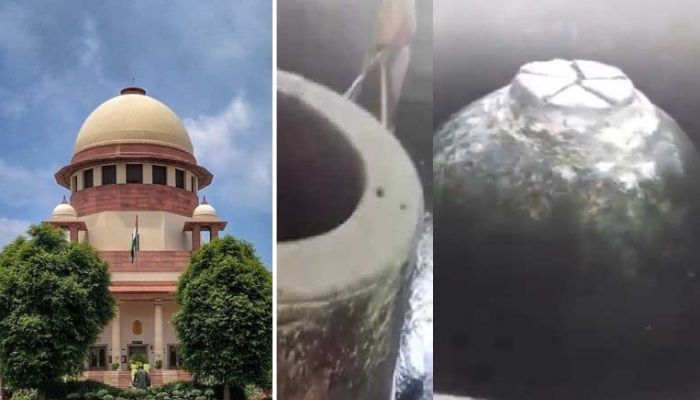
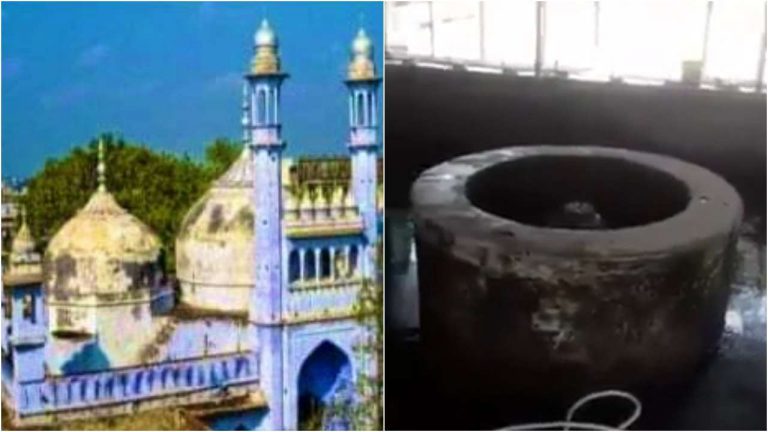
The Supreme Court on Tuesday was hearing the appeal by Mosque Committee against permission granted for a survey to be conducted at the disputed Gyanvapi structure. Senior Counsel Huzefa Ahmedi, who was representing the Muslim side before the bench led by Justice DY Chandrachud argued that while no report was filed before the trial court, an application was filed saying that Shivlinga was found at the washing up area on the premises of the disputed structure.

Ahmedi argued that under the garb of the survey commission proceedings, Muslims were restricted entry into the mosque. To this, Justice Chandrachud said that this was not the relief which was granted, but the premises were sealed where what is claimed to be Shivling is found.

While arguing that the Shivling so found was nothing but a fountain, Ahmedi said, “This is a fountain, they say the fountain was drained out and they say from the head of the fountain they saw Shivling. Wazukhana has been used since time immemorial.”

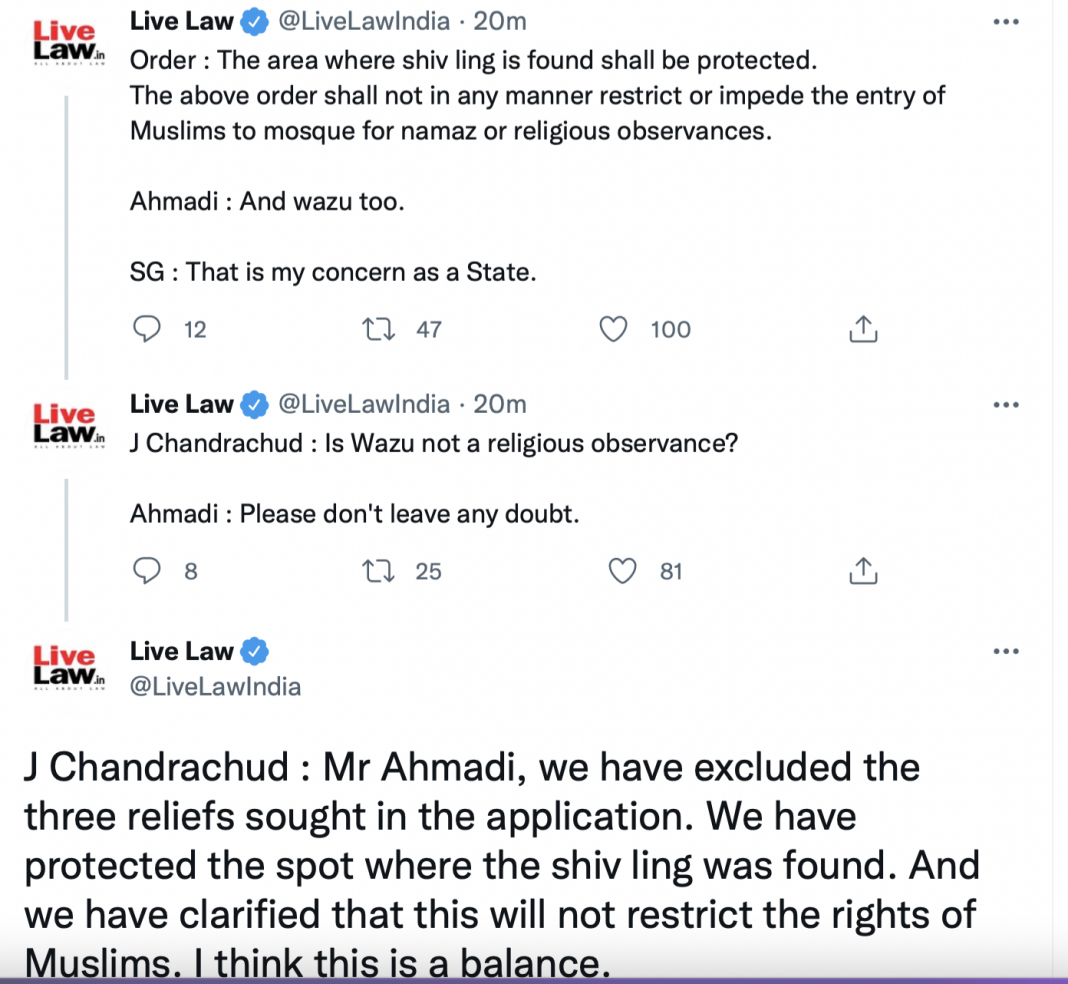
Justice D Y Chandrachud pronounced an order extending that the Varanasi DM shall ensure that the area where the Shivling is reported to have been found shall be duly protected. It also maintained that the order in any manner should not restrict or impede the right of the Muslims to use the Mosque for religious purposes. The order passed by Justice DY Chandrachud is returnable on Thursday, May 19, until the next hearing takes place on the same day.

Ahmedi then insisted on allowing the usage of the Wazukhana to the Muslim side. It is to be noted that Wazukhana is a place where namazis who visit the mosque to offer prayer wash their hands and legs, and wash their mouths before the prayer. Responding to Ahmedi’s concerns, Chandrachud responded that the area where the alleged Shivling is found will be protected, while allowing Muslims to offer Namaz at the so-called mosque.

Justice Chandrachud also asserted that protecting the Shivling area while allowing Muslims the access to the mosque is the ‘balance’ they can have for now.

It is notable here that despite knowing that the Gyanvapi structure is built on the site of a former Hindu temple and now the Shivling having been found there, the Muslim side wanted to keep using the site for washing their feet and hands, and washing their mouths.

The matter is placed for a further hearing on Thursday, May 19, 2022.

‘Unless he is your father’: Assam CM Himanta Biswa Sarma asks why did Akbaruddin Owaisi visit Aurangzeb’s burial site

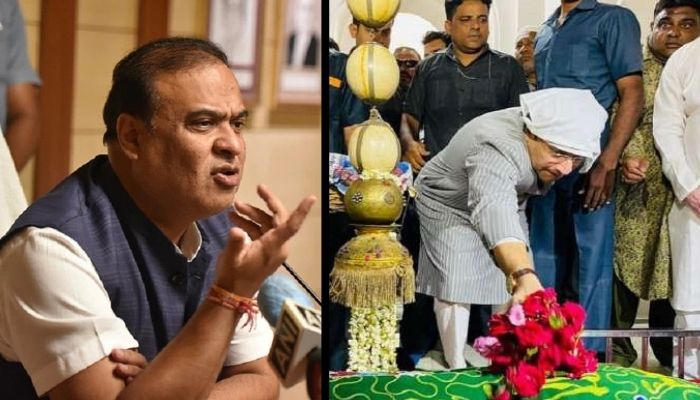
On Sunday (May 15), Assam Chief Minister Himanta Biswa Sarma slammed AIMIM leader Akbaruddin Owaisi over the latter’s visit to the grave of Mughal tyrant Aurangzeb in Aurangabad city of Maharashtra.

The BJP leader made the remarks during the ‘Frankly Speaking’ show, hosted by news anchor Navika Kumar, on Times Now. On being asked about Owaisi’s recent grave visit, Sarma inquired, “Why would anyone visit the grave of Aurangzeb? Tomorrow, he will express his interest to visit the tomb of Al-Qaeda terrorists.”

“Why do you visit the grave of Aurangzeb, who destroyed this country? Unless he is your father! If Aurangzeb is your father, then, I won’t object. But else, why will you go?” the Assam Chief Minister took potshots at the AIMIM leader.

“What inspiration will you take from the Mughal tyrant? If required, take inspiration from Chhatrapati Shivaji Maharaj or Lachit Borphukan,” he emphasised. Furthermore, Himanta Biswa Sarma asked, “By taking inspiration from Aurangzeb, do you want to take this country back to the dark ages?”

On being questioned about the BJP’s plan to change the names of streets, the Assam CM minced no words. He responded, “Don’t you think that the names should be changed?”

“Should their names be on the streets who destroyed your temples, committed unspeakable atrocities on your women or forced your ancestors to convert?” he concluded.

The background of the controversy

Although Mughal ruler Aurangzeb had been infamous for persecuting the Hindu community, AIMIM leader Akbaruddin Owaisi had visited the tomb of Aurangzeb on May 12 this year. The controversial AIMIM leader paid his respects to the Mughal tyrant and was accompanied by Aurangabad MP Imtiyaz Jaleel and former MLA Waris Pathan.

Akbaruddin Owaisi had gone to Aurangabad to lay the foundation stone of the School of Excellence. Former Maharashtra Chief Minister Devendra Fadnavis had condemned Owaisi’s visit to Aurangzeb’s grave and said that one day even a dog won’t pee on his identity.

“Owaisi had bowed his head before the grave of Aurangzeb and you kept watching. Have some shame. Owaisi, hear me out. One day, even dogs will also not pee on the identity of Aurangzeb when the hues of saffron will spread across Hindustan,” Fadnavis had remarked.

Amish Tripathi announces book launch of ‘War of Lanka’, fourth in the Ramchandra series, explains why publication was delayed

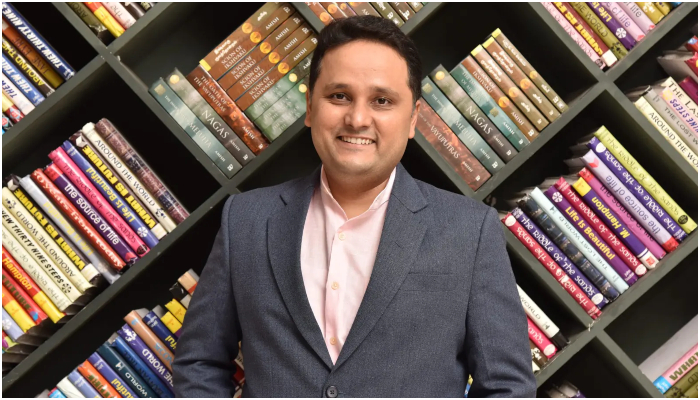
Best-selling author of the Shiva trilogy and the Ramchandra series, Amish Tripathi on Tuesday announced the launch of his new book ‘War of Lanka’, the fourth book of the Ram Chandra series. He stated that the publication of the book was put on hold due to the shutting down of the publishing company of his previous books, the Westland Books.

“To all my readers, From my heart to yours. Your impatience is a sign of love. It tells me that you wait. I can’t thank you enough for this love. And, I hope you like the book when you read it. Amish”, he tweeted on May 17 extending apologies to his readers for delaying the publication of the fourth book of the Ramchandra series. “Many of you have been writing to me for updates on the War of Lanka. Your frustration is justified, my sincere apologies for the delay,” he said.

He reiterated that Amazon India shutting down the publishing company, Westland Books, was a piece of really bad news and that it caused a holdup in the publication of the book ‘War of Lanka’. As he signed the agreement with the new publisher, he stated that the launch date of the book will soon be announced.

In one of his exclusive interviews with the Telegraph India, the author had said that the book ‘War of Lanka’ would end with the death of Ravana and the return of Lord Rama to Ayodhya, where the traditional Ramayan ends. “I aim to write a fifth book sometime later to give a sense of conclusion. This will be a multi-linear narrative. Every perspective sounds equally credible. A story runs on the shoulders of the characters. The three principal characters in Ramayana are Lord Rama, Goddess Sita, and Ravan but it essentially follows Rama’s journey,” he had said.

Tripathi is known for his book series the Shiva Trilogy and Ram Chandra Series. The Shiva Trilogy was the fastest-selling book series in Indian publishing history, followed by the Ram Chandra series which was the second fastest-selling book series. The earlier three books of the Ramchandra series are Ram: Scion of Ikshvaku, Sita: Warrior of Mithila, and Ravan: Enemy of Aryavarta.

He also recently launched his new mythological series named the ‘Legends of The Ramayana’, which is streaming on Discovery+. In an interview with Opindia, he had said that he learned a new thing every day while making the series, and it brought him closer to Lord Ram and Goddess Sita. In the series, he narrates the epic with the perfect balance of professionalism and sincerity by traversing 5,000 kilometres in the footsteps of Lord Rama.

Punjab: DGP seeks paramilitary forces from the center to tackle deteriorating law and order in the state

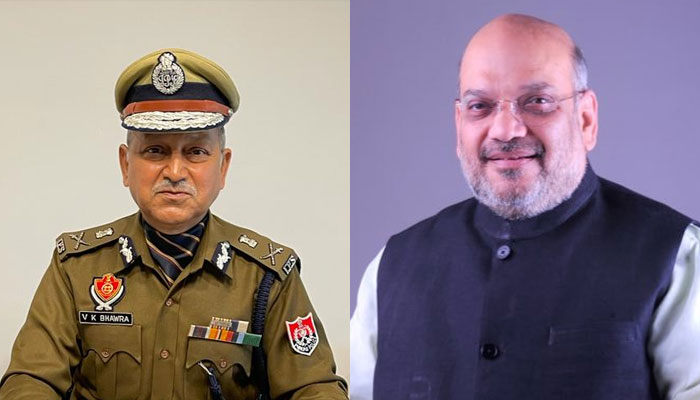
Viresh Kumar Bhawra, Director General of Police, Punjab, has sought support from the Central government to tackle the deteriorating law and order situation in Punjab. As per reports, DGP Bhawra has written to the Union Home Minister and sought at least ten companies of paramilitary forces.

The request sent by Punjab DGP came days after the intelligence headquarters of Police in Mohali was attacked with an RPG. Notably, in the past few months, a large cache of explosives and weapons has also been recovered from the state.

Zee PHH said in a report that the Punjab Police has not clarified where these companies will be deployed. There have been attempts to disrupt the law and order situation in the state. Keeping such incidents in mind, Punjab Police has sought the paramilitary forces from the center.

Attack on Intelligence office in Mohali

On May 10, an explosion was reported at the Punjab Police Intelligence Headquarters in SAS Nagar Mohali. The incident took place at around 7:45 PM. The blast occurred outside the building. The attackers used Rocket Propelled Granade (RPG) for the attack. No casualties were reported in the matter. National Investigation Agency (NIA) was called for an investigation into the case.

Sikhs For Justice, a Khalistani outfit, took responsibility for the attack. However, Punjab Police said Babbar Khalsa International (BKI) and Pakistan’s ISI initiated the attack. Six Khalistani terrorists were arrested by the Police. ZEE Punjab mentioned that the request for paramilitary forces was sent after interrogating the accused in the case.

Communal tension in Punjab

Since Aam Aadmi Party came to power in the state, multiple incidents of communal tension have also occurred. The most notable was the Patiala Violence, in which Maa Kali Temple was attacked by Khalistanis on April 29. A Hindu leader affiliated with Shiv Sena had organized an anti-Khalistan march in Patiala. In response, Khalistani Sikhs gathered to protest against the march. The situation got violent, and in the aftermath, the Khalistani Sikhs attacked the temple. They damaged the shops located outside the temple. 

Ayodhya… Kashi… Mathura : Plea submitted in District Court to secure Shahi Idgah Masjid after Shivling discovered at wuzukhana in Gyanvapi premises

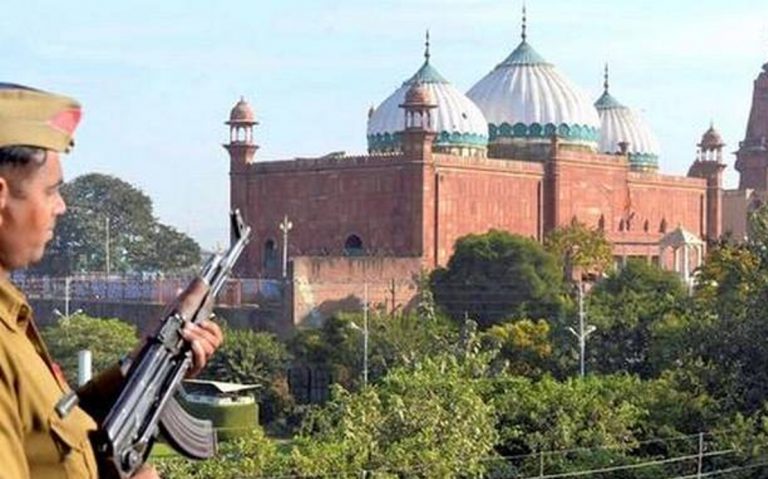
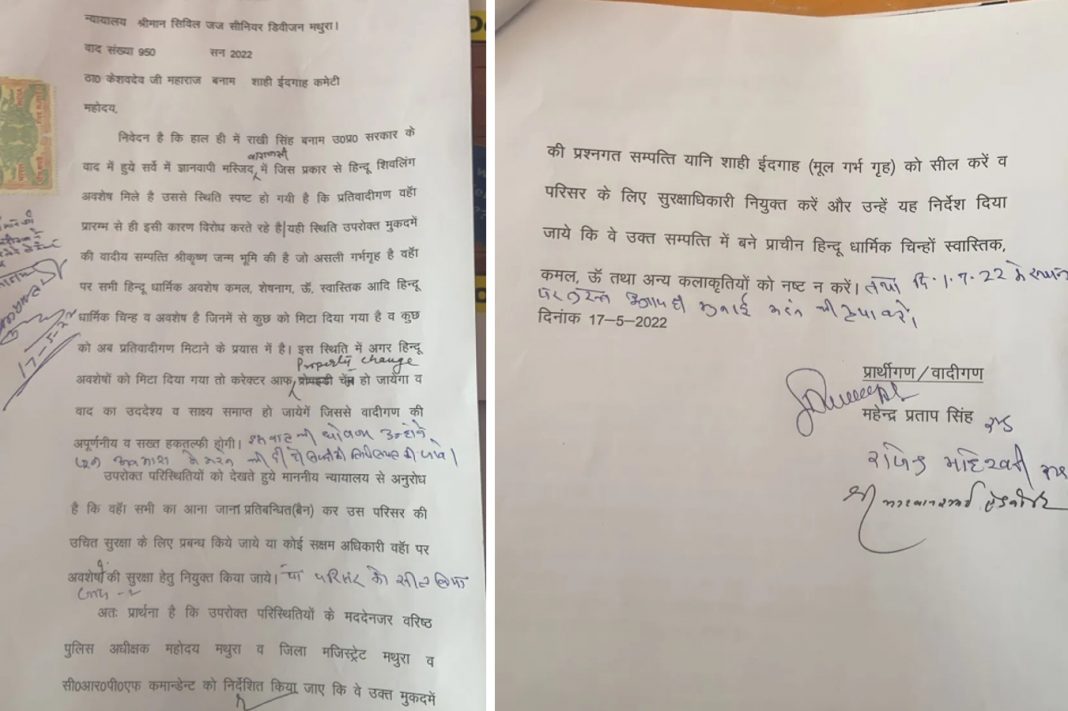
A plea was filed in a Mathura court, requesting that the Shahi Idgah Masjid be sealed and that security be deployed to protect Hindu sacred artefacts from being vandalised. Advocate Mahendra Pratap Singh, who represents five claimants in the Krishna Janmabhoomi-Shahi Idgah Masjid lawsuit, referenced the retrieval of the Shivling from the Gyanvapi mosque in his appeal.

In his appeal, advocate Mahendra Pratap Singh argued that there are remnants of Lotus, Sheshnag, Om, Swastik, and other Hindu religious symbols in the actual sanctum sanctorum. He added that some of them have already been destroyed, and the defendants are currently attempting to vandalise the others.

The plea. (Source: Republic Bharat)

He stated that if the evidence is eliminated, the basis for the dispute would be lost, and the petitioners will suffer tremendous damage. As a result, he asked the court to prohibit individuals from visiting the mosque property. The petition was heard by the Civil Judge, Senior Division, Mathura on Tuesday and adjourned till July 1.

The court has also agreed to hear a plea seeking videography of the disputed Shahi Idgah mosque. Manish Yadav, Mahendra Pratap Singh, and Dinesh Sharma are among the petitioners who have called for the appointment of an attorney commissioner to conduct the video survey in the Shahi Idgah mosque grounds in Mathura.

According to the petitioners, the Shahi Idgah mosque was built after a part of the Shri Krishna Janmabhoomi temple, which spanned 13.37 acres of land, was demolished. They want the mosque demolished and the property surrounding the temple returned to them.

Demand has also been made in one case to demolish the Shahi Idgah mosque established in Shri Krishna Janmabhoomi. The court-filed lawsuit demanded the destruction of a mosque reportedly erected on the orders of Mughal Emperor Aurangzeb in the 13.37-acre complex of Katra Keshav Dev Temple near Lord Krishna’s birthplace in 1669-70. This case’s hearing at Mathura’s sessions court concluded on May 6. The court reserved its judgement in this case until May 19.

Domestic wheat prices fall up to 8 per cent after India imposes export ban: Details

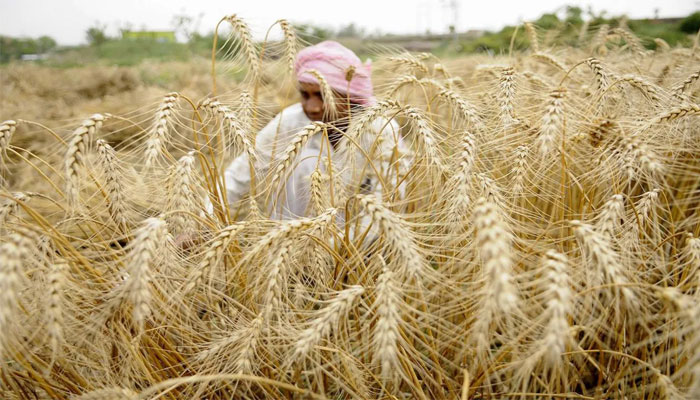
Following the restrictions imposed by the Government of India on wheat export, the price of wheat is coming down for the consumers. As per reports, the wheat price has declined up to 8% to Rs 2,125 per quintal from the previous price which was Rs 2,325 per quintal. The price drop was seen in response to the Government order imposing restrictions on wheat export owing to multiple reasons, including hoarding of Indian wheat by China and lesser production of wheat compared to previous years.

In Punjab and Haryana, the procurement is almost complete. A few farmers reportedly sold their produce at Rs 2,020 per quintal, which was a little above the MSP. Anjani Agarwal, president of Roller and Flour Millers Federation of India, said in a statement that the timely ban on wheat export would increase domestic availability. He said, “The decision to ban wheat export was timely, and it would increase domestic availability of grain and prices would soften.”

The global wheat market is struggling to meet the demand amid Russia’s ongoing military action against Ukraine. Notably, the government has not put any restrictions on shipments where the export of wheat was committed by the Indian government under a bilateral understanding with neighbour countries and vulnerable nations to meet their food security needs. Also, the shipments under transitional arrangements where the letters of credit have been issued before the ban would be allowed.

Earlier, the Flour millers’ association RFMFI welcomed the decision of the government to ban wheat export. Notably, Aggarwal had said that RFMFI had written to the government to regulate export. He said, “It is a very good decision by the Government at this stage, as this will prevent unnecessary panic in the country about wheat supply and prices.”

He added that the price of wheat and wheat flour would get stable after the ban. It was expected to sharply rise due to less production. He said, “Atta (loose) prices are ruling at Rs 26-28 per kg, while packaged Atta prices stood at Rs 28-30 per kg. The prices of atta could have risen to Rs 40 per kg or even more. Prices will stabilise now.”

Govt announced relaxation

On May 17, the Government of India announced relaxation in its order restricting wheat exports. The government decided to allow the export of the consignments that have been handed over to Customs for examination and registered into their systems on or prior to May 13, as per the news agency ANI.

The China factor

The government sources speaking to OpIndia also confirmed that there is also a China factor behind the sudden decision to ban the export of wheat.

The senior officials in the Ministry of Commerce and Industry said that there is a sudden shortage of wheat worldwide, and China is using this opportunity to hoard wheat. They added that China is importing wheat on a large scale to store it to disrupt the global market soon.

With India continuing to flood international markets with wheat, it will lead to higher purchases by the Chinese, especially the Indian wheat. This will only aggravate the problem as China will dictate the supply of wheat at a time when there is a glut in the supply. It is notable that India is the second-largest producer of wheat, while China tops the chart.

Considering the strategic objectives, the Government of India has taken preventive steps to stop China from hoarding Indian stock and has decided to ban wheat exports. The prudent step by the Modi government is being hailed as pro-poor as this will only benefit the poor and ensure affordable prices of wheat in the domestic market.

‘Dont waste court’s time’: Delhi HC imposes Rs 10,000 fine on ex-CBI chief M Nageswara Rao, had filed petition over Twitter ‘bluetick’

On May 17, Tuesday, the Delhi High Court imposed a fine of Rs 10,000 on ex-CBI director M Nageswara Rao for re-filing a petition seeking restoration of the blue tick verification for his Twitter account. The court, last month, had dismissed his similar plea against Twitter for unverifying his account on the microblogging website.

The single-judge bench of Justice Yashwant Varma reprimanded the ex-CBI director for wasting the court’s time. Varma was of the view that a similar plea with identical prayers was disposed of by the Court vide order dated April 7, 2022, by giving liberty to Rao to re-apply for verification.

“We passed an order on 7 April. What has constrained you to approach the court immediately? Your client seems to have a lot of free time. Do you want a return gift from us,” the bench remarked.

Advocate Raghav Awasthi, who represented Rao, argued that even after reapplying for the tag last month, Twitter has not reinstated his client’s ‘blue tick’ verification.

The court, however, said that there is no justification for filing the writ petition despite its earlier disposal. “The petition is thus dismissed with Rs 10,000 cost,” the bench stated.

Rao has petitioned the High Court, claiming that his Twitter account did have a blue tick, but that it was removed in March 2022. The dismissed petition also requested that the Centre designate or earmark one or more Compliance and Grievance officers within the Ministry solely to handle grievances or complaints from users of social media platforms such as Twitter, Facebook, and Instagram relating to compliance with the law and rules, including user identity verification, so that the general public is not subjected to unnecessary harassment.

While the case was filed through Advocate Mukesh Sharma, the petitioner was represented by Advocate Raghav Awasthi.

It may be noted that last year, Twitter arbitrarily removed ‘blue-tick’ verification from Vice President of India M Venkaiah Naidu’s personal Twitter handle. The micro-blogging site had not provided any explanation so far as they acted against the Vice President of India. However, after massive backlash, Twitter restored the verification badge on the Twitter profile of the Vice President of India.

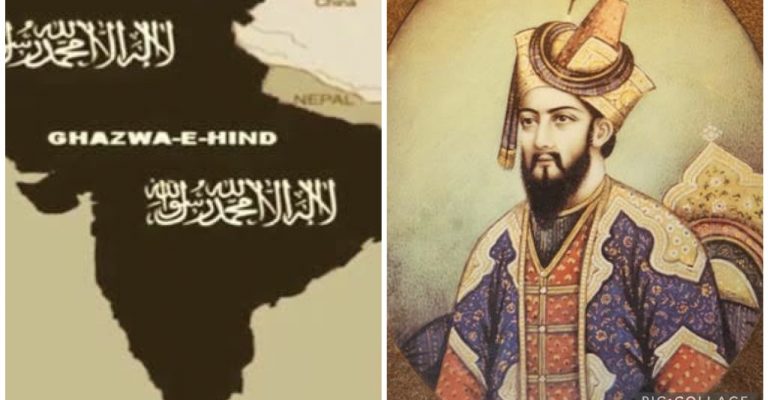
Ghazwa-e-Hind: The Islamic prophecy that explains why the likes of Owaisi feel proud of Mughal tyrant Aurangzeb and his anti-Hindu deeds

Aurangzeb, the tyrannical Mughal ruler who slaughtered innumerable Hindus and non-Muslims, ordered the demolition of temples, including the hallowed Kashi Vishwanath temple and commissioned the construction of a mosque over it, is regarded as a respectable figure among Islamist circles. Despite savagery inflicted by him on fellow Indians, Aurangzeb remains a hero to a legion of radical Muslims who hail him as a loyal Islamic warrior who was dutifully committed to fulfilling the Islamic prophecy of Ghazwa-e-Hind, a fantasy that refers to the complete conquest of India by invading Islamic forces.

How Aurangzeb and other Islamic invaders of the medieval era continue to inspire contemporary Islamists

Earlier yesterday, AIMIM chief Asaduddin Owaisi responded to former Maharashtra CM Devendra Fadnavis’ remarks over his younger brother Akbaruddin Owaisi’s visit to Aurangzeb’s tomb. Speaking to news agency ANI, Owaisi responded to Fadnavis’ attacks against Akbaruddin Owaisi, stating, “I don’t respond to such Tom, Dick and Harry…Aurangzeb grave is a protected monument and It’s the PM’s responsibility to protect it.”

Owaisi was also visibly miffed with the Varanasi court order that sealed the Gyanvapi structure after a Shivling was found from the mosque’s Wuzukhana, where Muslims wash their hands and feet, gargle and clean themselves before offering namaz. Dismissing that it was a Shivling, Owaisi said the structure was a fountain and dog-whistled Muslims to not lose the disputed structure.

“When I was 19-21, the Babri Masjid was snatched away from me. But we will never lose a Masjid again in front of the 19-20-year-olds. Do you take an oath that we will not lose any more mosques?” he asked a frenzied crowd.

Amidst chants of ‘Naara-e-Takbeer’ and ‘Allahu Akbar’, his supporters vowed to protect the disputed structure of the Gyanvapi mosque. “They must know that we will not lose any more of our mosques. We know all your tactics,” Owaisi remarked.

Later on Aaj Tak, the AIMIM chief leaned on the Places of Worship Act, 1991, to defend his stance and rail against the court order, stating that the place could not be sealed as per the aforementioned Act. Moreover, he asserted that Muslims should be allowed to continue offering their prayers in the mosque despite reports suggesting that a Shivling was found in its wuzukhana. Defending the Gyanvapi mosque, where a Hindu temple was reportedly destroyed and converted into a mosque by Mughal tyrant Aurangzeb, Owaisi said the Places of Worship Act, 1991, provided security to monuments and religious places that existed at the time of India’s independence.

However, he conveniently missed out on listing down the exemptions stated in the Act. The law exempts any place of worship, which is an ancient and historical monument or an archaeological site covered by the Ancient Monuments and Archaeological Sites and Remains Act, 1958. When asked as he seems to be a conscientious upholder of the law, will he accept the Ram Temple at the Ayodhya after the Supreme Court verdict? Owaisi said he will continue to treat the site as Babri Masjid even though the apex court had ordered the site to be handed over to Hindus for building a Ram Temple.

Owaisi is not an outlier in his veneration of Mughal tyrants and in his defence of Islamic marauders and plunderers who destroyed Hindu temples and structures and built mosques over them to humiliate the indigenous natives. There are several others, including eminent individuals, who share a similar enthusiasm for defending and exalting Mughal ruler Aurangzeb.

In response to Fadnavis’ critical remarks against Owaisi’s visit to Aurangzeb’s tomb, Srinagar Mayor Junaid Mattoo posted a eulogising tweet to Aurangzeb, who had been infamous for committing unspeakable atrocities on the Hindu community. “May Allah (SWT)’s mercy and blessings be upon Hafiz-e-Quran, Shahenshah Hazrat Muhi-ud-Din Muhammad Aurangzeb (R.A.) and his grave,” Mattoo tweeted.

Besides Mattoo and Asaduddin Owaisi, there are several other Muslim clerics who have made no bones about their respect and admiration for Mughal ruler Aurangzeb. For Islamists, Aurangzeb and other Islamic rulers, who killed Hindus, destroyed idols, and constructed mosques atop the ruins of Hindu temples, remain a source of undying inspiration and “heroes” who expanded the frontiers of the Islamic empire.

Amidst the survey of the contested Gyanvapi structure, an Islamist discussing in favour of the mosque hailed Aurangzeb and described him as his ancestor.

Three years back, Maulana Ansar Raza of Gareeb Nawaz Foundation, one of the influential voices among the Muslim cleric community, hailed Mughal ruler Aurangzeb on live television. In a news debate hosted by late Rohit Sardana, Raza said he is proud of being a follower of Aurangzeb and that the Mughal emperor should be praised instead of being denigrated as a plunderer and traitor.

A few years back, Maulana Ansar Raza had refused to denounce Mohammed Ibn Qasim, a Muslim ruler responsible for carrying out large-scale slaughter of Hindus. In a debate with Tarek Fatah on Zee News, Raza not only refused to decry Ibn Qasim, but he even hailed Mahmood Ghaznavi as his hero. Ghaznavi or Mahmud of Ghazni is infamous for raiding the Somnath temple 17 times and destroying its revered idol into four pieces, an affront meant to show Hindus their place and establish the might of Islam.

The reason why none of them feels a modicum of guilt or remorse over the atrocities committed by Aurangzeb or for that matter anyone from Muhammad Bin Qasim to Tipu Sultan is that these despots are seen as faithful servants fulfilling the prophecy of Ghazwa-e-Hind—an Islamic supremacist fantasy of turning India into a Muslim caliphate.

Ghazwa-e-Hind: An Islamist doctrine forecasting the dominance of Islam over India

The term Ghazwa-e-Hind or a holy raid of India has been used by the Pakistani terrorists and Islamic zealots against India for decades. The concept of Ghazwa-e-hind roots in several works of Islamic literature named Hadiths. The doctrine predicts an onslaught upon citizens of India by Islamist forces and its take over by them. The doctrine prophesizes a pitched battle between Hindus and Muslims before (qayamat), resulting in a decisive victory of Muslims over Hindu India.

As per the prediction, the battle to the end will start in modern-day Syria, with forces marching toward India. Islamic armies carrying black flags will supposedly come from Khorasan and conquer India to turn it into an Islamic state.

Thus, for the likes of Owaisi, Mattoo and scores of Muslim fundamentalists, Aurangzeb, Bin Qasim, Ghazni and other Muslim rulers were not plunderers and pillagers who wreaked havoc on the lives of non-Muslims, particularly Hindus, but they were steadfast devotees of Prophet Muhammad who took upon themselves the “noble task” of spreading Islam and bringing the land of “kaafirs” under Islamic rule.

However, ironically and unfortunately, sympathisers of the Islamists dismiss the prophecy as a contrived paranoia concocted with the aim to stoke fears against Muslims. Many others downplay the supremacist fantasy as a relic of the past. An article published in leftist rag ThePrint argued that fears surrounding the clarion call of Ghazwa-e-Hind, which is popular among Islamists, are unfounded as it has already happened, during the medieval times when a large part of India was ruled by successive Muslim rulers.

However, this is a grossly mistaken assumption because the prophecy talks about India being conquered in its entirety and subsumed in the global Islamic caliphate, with the overwhelming population of the country being turned into adherents of Islam. Apparently, this prophecy has gained currency among a large section of Pakistanis, including cricketer Shoaib Akhtar, and Pak-based terror organisations, the Pakistan Army, who regard it as their religious duty to wage an armed ‘jihad’ against India to fulfil the prophecy stated in their Hadiths.

Whether it is the indoctrinated Pakistanis or rabid Islamists in India, they consider Ghazwa-e-Hind an unfinished project, an incomplete crusade led by characters like Aurangzeb, the Mahmud of Ghazni, Qutub-ud-din Aibak and others for its completion. It is this conviction that Muslim invaders of India were on a religious duty to fulfil the Islamic prophecy of Ghazwa-e-Hind that fuels the contemporary veneration for the Muslim tyrants and engenders a poignant longing for the medieval times among the present-day Islamists.


Hindu petitioners say a door to Shivling inside the disputed Gyanvapi structure has been blocked by debris, ask court to grant access

On May 17, Tuesday, Hindus petitioners urged the Varanasi court to grant them access to an eastern door that leads to the Shivling found inside the disputed Gyanvapi structure during a videography survey on May 16. These are the petitioners, based on whose plea the Varanasi court had ordered a videography survey of the disputed Gyanvapi Mosque structure. It was on the third day of this survey when a Shivling was discovered inside the Wuzukhana in the disputed Gyanvapi structure.

After the discovery, the Hindu side’s lawyers argued before the court that there is a door from the east that leads to the Shivling just below the Wazukhana, but it is blocked by debris. The lawyers contended that the court must allow them entry to the room that provides access to the Shivling.

Vishnu Jain, one of the lawyers representing the Hindu petitioners, said, “we haven’t been able to reach the room as the passage has been filled with debris. Hence, we are also demanding that the wall in front of the Nandi idol facing the Shivling be removed.”

On May 16, speaking to the media, Sohan Lal Arya, petitioner in the Gyanvapi mosque case, who accompanied the Court commission on mosque survey in Varanasi, said, “Shivling….for which the Nandi was waiting… The moment things became clear the chants of ‘Har Har Mahavdev’ resonated in mosque premises.”

After petitioner Sohan Lal Arya informed that a Shivling was found inside the complex of the disputed Gyanvapi structure, a Varanasi court Monday issued an order that directed authorities to immediately seal the area where the Shivling was found. In its order, the court stated that the Shivling discovery is substantial evidence and asked the CRPF commandant to secure the premises and prevent Muslims from entering the place where Shivling was found.

It stated that, at a time, only 20 Muslims should be allowed to enter the premises to offer Namaz. It also asked authorities to make sure that the Muslims are barred from performing Wuzu (washing up) in the Gyanvapi premise’s pond, the place from where the Shivling has been discovered.

FIR filed against comedian Bharti Singh for hurting sentiments of Sikh community with her joke about beards

An FIR has been lodged against comedian and reality-show host Bharti Singh for hurting the sentiments of the Sikh community. The FIR followed a viral video in which the famous comedian can be heard talking about the benefits of having a beard in a funny way. The Sikh community took offense to the video saying she is mocking the appearance of a Sikh with her joke on beards, resulting in the FIR.

In the video, Bharti can be heard talking about the benefits of having a beard and a mustache. She said that if you have a beard, you can dip the hair in the milk while drinking and taste sewaiyaan (a sweet dish). Following this, several people got offended saying she is making fun of the Sikh community with her jokes.

Even Shiromani Gurdwara Prabandhak Committee (SGPC) took note of her joke and demanded strict action against her through their Amritsar handle.

Following the outrage, an FIR was lodged against Bharti Singh on May 16, under Section 144 (2) of the Indian Penal Code (IPC) for hurting the religious sentiments of a community.

Following the outrage, Bharti Singh took to her Instagram account to say that she didn’t mean to offend anyone with her joke. She also clarified that her joke wasn’t targeted at any particular community.

Incidentally, Bharti Singh also hails from Amritsar, Punjab, and lived there for most of her life before making a move to Mumbai to pursue her comedy career.