Home Blog Page 376

Air India starts one-time inspection of Boeing 787 Dreamliner planes as per DGCA order, checks already completed on nine aircraft

A day after Directorate General of Civil Aviation (DGCA) ordered Air India to conduct one-time inspection of its fleet of Boeing 787-8 and Boeing 787-9 planes, the airline said that it is in the process of completing the safety checks. In a statement issued on X, Air India said that it has already completed the directed checks on nine of the Boeing 787 aircraft, and are on track to complete this process for the remaining 24 aircraft within the given deadline.

The one-time checks are being done on the planes before they are cleared for next operations. Air India added that some of these checks could lead to higher turnaround time and potential delays on certain long-haul routes, especially those to airports with operating curfews.

Air India had 34 Boeing 787 Dreamliner widebody jets in its fleet, which has been reduced to 33 now after the crash. The other Indian airline that operates the aircraft is IndiGo, which has 6 planes on lease from Norse Atlantic.

DGCA on Friday ordered enhanced safety inspections for Air Indias’ fleet of Boeing 787 planes after the Ahmedabad crash. DGCA said that as a preventive measure, Air India has been directed to carry out several additional maintenance actions on B787-8/9 aircrafts equipped with GEnx engines.

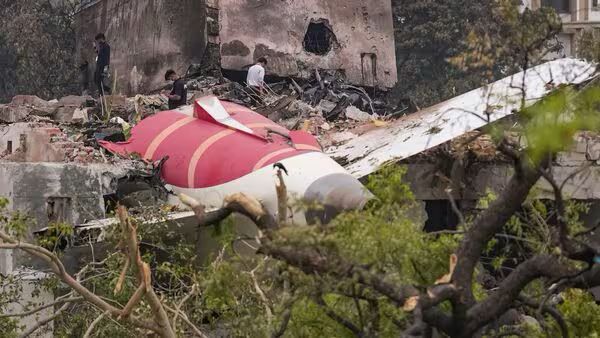
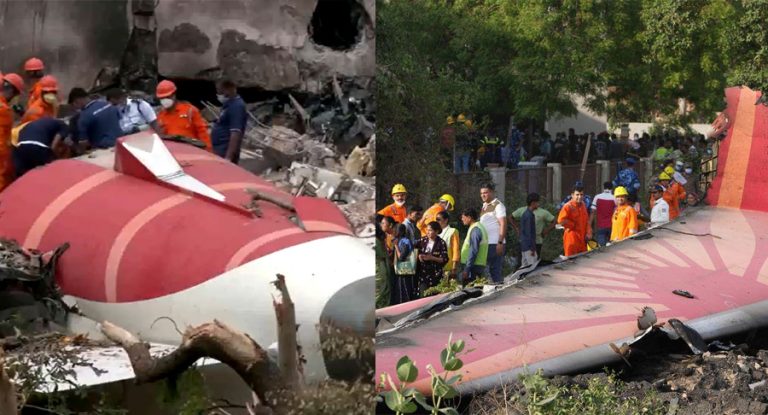
Aircraft Accident Investigation Bureau (AAIB) has already started investigation into the crash of the plane shortly after taking off from Ahmedabad Air port. Teams of National Security Guard (NSG), National Disaster Response Force (NDRF), Air Force, Forensic Science Laboratory (FSL), Fire rescue forces, Aircraft Accident Investigation Bureau (AAIB), Directorate General of Civil Aviation (DGCA) and Central Industrial Security Forces (CISF) are inspecting the wreckage of the ill-fated London-bound Air India 171 flight and collecting material to be inspected.

Boeing, GE Aerospace and NTSB have sent teams to help in the investigatuion to find out the cause of the crash. The blackbox containing the cockpit voice recorder and the digital flight data recorder has been recovered from the wreckage.

As per reports, while calling mayday, the pilot said that he had no power, no thrust, and the plane was going down. This indicates that the both engines failed soon after the take off. Analysis of the flight data recorder will help in finding the cause of the same.

At least 274 people have died in the crash, including 241 people onboard. Only one passenger from the plane survived. The rest victims include doctors who were present in their hostel buildings when the plane hit.

Khawaja Asif’s comedy hour: Pakistan ‘hacked’ IPL floodlights and Indian dam gates in response to Operation Sindoor, apparently

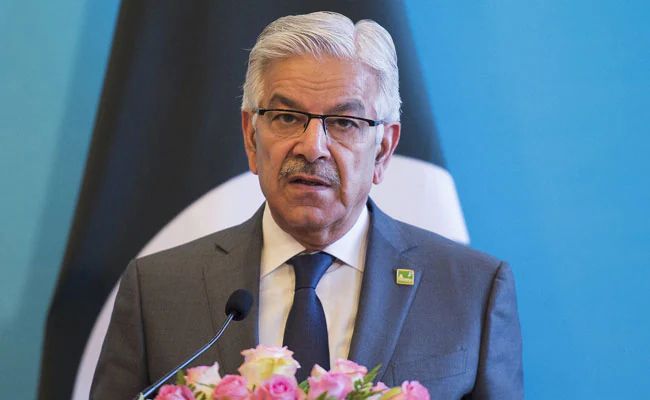
In a remarkable display of national comedy disguised as parliamentary speech, Pakistan’s Defence Minister Khawaja Asif stunned the Parliament by claiming that Pakistani “cyber warriors” had hacked floodlights during IPL matches and even gained access to Indian dam gates.

Yes, you read that right. A country that can’t keep its own lights on now claims to be switching off India’s stadium floodlights — remotely. Asif’s claim is so ludicrous it makes science fiction sound like documentary.

According to the minister, Pakistan’s home-grown cyber tech can now override the control systems of India’s tightly secured hydroelectric dams. Because clearly, dam infrastructure is operated via unsecured public Wi-Fi with “1234” as the password.

This laughable claim comes just months after Operation Sindoor, where India dismantled nine terror camps and neutralized 11 Pakistani Air Force bases, leaving Islamabad diplomatically and militarily cornered. Now, instead of rebuilding, Pakistan’s Defence Minister wants his citizens to celebrate fantasy cyber victories while the real economy sinks and power outages roll on daily.

But what adds rich irony to this episode is Asif’s own track record of fantasy-driven claims. This is, after all, the same minister who — when asked by CNN’s Becky Anderson to furnish proof that Pakistan had downed five Indian fighter jets, including Rafales during Operation Sindoor — confidently pointed to “Indian social media” as evidence.

“It is all on social media… Indian social media, not ours,” he insisted, before stumbling when pressed for actual data.

At this point, it’s less of a defence strategy and more of a stand-up routine. Unfortunately for Pakistanis, they’re paying the price for his punchlines.

What are India’s strategic petroleum reserves and how they help secure Indian energy needs in case of any oil crisis resulting from escalating Middle East crisis, explained

On the night of 12th June, Israel launched a strategic military attack on Iran, leading to escalation of tensions in the Middle East. The global markets are concerned that the conflict may disrupt crude oil supplies. There are several countries, including India, that heavily rely on crude oil imports. However, India is in a strong position to tolerate any external shocks. The reason behind such sustainable supply of crude oil amid tensions is the consistent expansion of its Strategic Petroleum Reserves (SPR). The programme to stockpile crude oil predates Prime Minister Narendra Modi. However, since he took office, India’s SPRs have increased exponentially.

How India built a crude oil shield

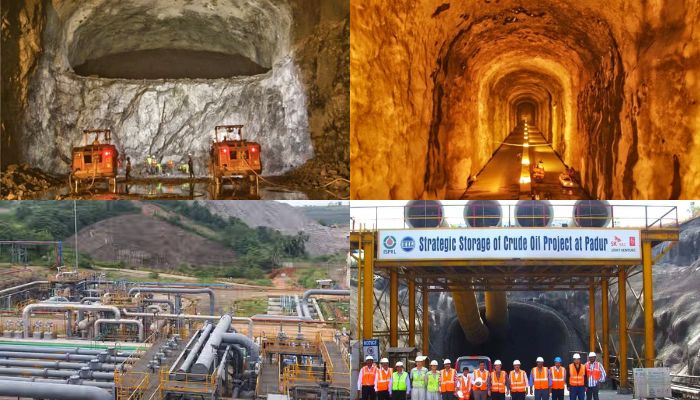
The Indian Strategic Petroleum Reserve Limited (ISPRL) comes under the Ministry of Petroleum and Natural Gas. Currently, there are three facilities managed by ISPRL, located in underground rock cavern storage. The total capacity of ISPRL is 5.33 million metric tonnes (MMT) of crude oil. These facilities are located in Visakhapatnam, Mangaluru and Padur. Out of these, Padur holds the maximum stockpile of crude oil (2.5 MMT), followed by Mangaluru (1.5 MMT) and Visakhapatnam (1.3 MMT).

The main aim of building these reserves is to ensure energy security at the time of global geopolitical uncertainties. These reserves act as a buffer that can be used to meet crude oil demand in case there is a disruption in supply or a surge in prices in the market.

Notably, these storage facilities are built in underground rock caverns. These are considered to be one of the safest and most secure methods for storing hydrocarbons. From these storage facilities, crude oil can be supplied to the refineries via pipelines or coastal shipping.

Expansion of SPR under Modi government

While the concept of strategic reserves predated the Modi government, under his leadership, the programme has significantly expanded. In July 2021, the Union Cabinet approved construction of two more SPR facilities, which will increase the stockpile by 6.5 MMT. One of them is being constructed in Chandikhol, Odisha, and the other in Padur, Karnataka.

Earlier phases of the programme were funded entirely by the government. However, these two SPRs are being developed under a public-private partnership model. It has not only reduced the burden on the government but also allowed private investment in national energy security infrastructure.

In a reply in the Lok Sabha in March 2025, Minister of State for Petroleum Suresh Gopi confirmed that the aim of the expansion is to enhance India’s ability to counter external shocks. The government and oil marketing companies (OMCs) continuously assess the technical and commercial feasibility of increasing storage capacity further. He also pointed out that the government is identifying new sites for future reserves.

Diversified sourcing strategy

Not to forget, India is not only building reserves but also strategically diversifying its crude oil import sources. While the Middle East remains a significant supplier, Indian oil PSUs have also built strong ties with countries across Africa, North and South America, and the Asia-Pacific region.

Notably, India has signed long-term contracts with suppliers for liquefied natural gas (LNG) in Australia, the US, and the UAE. This diversification removes the risk of overdependence on any single region and provides a stable supply network.

Ethanol blending and alternative fuels

Another important aspect of making India less dependent on suppliers is the aggressive push for fossil fuel substitution through biofuels and gas-based energy. One such initiative is the Ethanol Blended Petrol (EBP) Programme. Under this programme, petrol is blended with ethanol to reduce crude import dependence. The government has set a target of a 20% ethanol blending rate in petrol by the end of 2025, which was earlier set at 2030.

According to data presented in Parliament, ethanol production has surged, specifically grain-based ethanol, which now accounts for 51% of the total output in 2023–24. The government has stated that concerns about food security are unfounded and that cereal production figures exceed domestic demand. Furthermore, there is enough buffer stock to fulfil the grain needs of India.

The ethanol industry is estimated to reduce carbon emissions by 10 million tonnes and save up to ₹40,000 crore annually on crude imports.

Strengthening clean fuel ecosystem

The government is also promoting Compressed Bio Gas (CBG), biodiesel, green hydrogen, and electric vehicles as part of a multi-layered clean energy strategy. The Sustainable Alternative Towards Affordable Transportation (SATAT) initiative aims to deploy CBG as a vehicle fuel, further reducing reliance on conventional petroleum products.

In the past decade, policy reforms and incentives have been rolled out to encourage domestic exploration and production of oil and natural gas. On the other hand, refiners are being pushed towards efficiency upgrades and greener processes. The idea is to transition from a petroleum-dependent economy to a cleaner, more diversified energy mix with security through a strategic stockpile.

Infrastructure, cost and management

The initial construction of the SPRs came at a cost of Rs 4,098 crore for the three operational sites. Padur was commissioned in December 2018, Mangaluru in 2016, and Visakhapatnam in 2015. An additional 0.3 MMT compartment at Visakhapatnam is utilised by Hindustan Petroleum Corporation Limited (HPCL) under a cost-sharing model, enhancing utility with marginal cost increase.

The reserves are managed by ISPRL. In times of disruption, the release and replenishment of stocks are overseen by an empowered committee of the Government of India.

Strategic relevance in a volatile world

India has proactively built and expanded its crude oil reserves and the process is still ongoing. This stockpile has become more crucial in the backdrop of escalating hostilities in the Middle East. Notably, a significant portion of the world’s oil flows through the Middle East, and even a partial disruption would have ripple effects across global energy markets.

In the event of a blockade or supply freeze, India has the ability to draw upon its SPRs for weeks or even months. It not only softens the blow of potential price shocks but also ensures that critical sectors of the economy do not face fuel shortages.

Conclusion

At a time when energy security is once again under the global spotlight, India stands out as a country that has quietly but effectively prepared for the worst. The visionary planning, strategic investment in infrastructure, and clear policy thrust on diversification and renewables have created a framework that insulates India from external shocks to a significant degree.

Fake followers, silent meetings and social media chest thumping: The mystery surrounding Assam Congress President Gaurav Gogoi

Since the beginning of 2025, the political climate in Assam has taken a dramatic turn. It intensified when Chief Minister Himanta Biswa Sarma raised concerns regarding Gaurav Gogoi’s links with Pakistan.

From claiming that his family received a salary from Pakistan, visited the country, met the Pakistani High Commissioner and had issues related to his child’s citizenship, the Chief Minister continued to put out new information in the public domain.

Meanwhile, Gaurav Gogoi remained largely silent. After being appointed as the President of the Congress party, he admitted to some of the accusations. This includes his visit to Pakistan, although he stated that these were personal matters.

How relevant is this controversy in current politics?

From the Congress party’s perspective, they appear to consider it irrelevant which is why they proceeded to appoint him as president. It should be noted that this is not the only allegation levelled against him.

Gaurav Gogoi was also previously accused of dismantling the Opposition Unity Forum led by then-president Bhupen Bora by collecting money in exchange for a ticket during the Behali elections. These controversies likely contributed to the party’s humiliating loss in the panchayat elections in his Lok Sabha constituency.

Additionally, the Biplab Sharma report revealed allegations that Gogoi accepted gold ornaments from Rakesh Paul, one of the main accused in the APSC scam. Moreover, allegations related to Neela Tej (blue blood/dynasty politics) still exist.

Another possible reason Congress selected Gaurav as president might be that Rahul Gandhi does not view him as a national-level face of the party due to his links with Pakistan. Many of these developments appear to be a mix of accusations and counter-narratives.

The ‘Congratulations Gaurav’ trend

Now let us turn to another issue. Since Gaurav became Congress president, a specific trend has emerged on social media—‘Congratulations Gaurav’.

However, not everything seen on social media can be trusted. Today’s platforms are flooded with fake followers and bot accounts.

Even so, the surge of support on Gaurav’s account cannot be dismissed outright as fake or bot-generated. Those who follow social media trends can clearly sense that IT Cells have had a role to play in this.

The concept of IT Cells may have originated in India with the Bharatiya Janata Party but today IT Cells play a critical role in global politics.

The recent elections in the United States are a strong example. Even in India, smaller political parties now actively operate their own IT Cells.

Many of those who slander BJP supporters as “Rs 1500-paid trolls” are unknowingly or knowingly part of Congress or opposition IT Cells. It is all part of a larger narrative.

The surge of ‘Congratulations Gaurav’ posts on the day he became president may have been initiated by the Congress IT Cell but many people joined in voluntarily.

However, who were they? Since 2016, the government has taken strict action against suspicious citizens. Despite political opposition it has acted against individuals and institutions promoting radical teachings.

Yet Congress-backed groups have not stopped. They have continued to promote a narrative that the BJP is anti-Muslim. This narrative has found some success as evidenced in the ‘Congratulations Gaurav’ trend.

From the moment he became president, Gaurav’s social media feed has been filled with congratulations from suspicious accounts.

These individuals seemed to believe that the weakened Congress party would now be revived under Gaurav and that he would put an end to Himanta Biswa’s actions against these radical groups.

Let us now consider the BJP’s response. When a meeting in Jorhat saw low attendance the BJP’s IT Cell highlighted it widely and people started reacting on their own.

In response efforts were made to gather larger crowds in central Assam. Ironically this led to a backlash as suspicious individuals again flooded those meetings to ‘Congratulate Gaurav’ and images of these people began circulating on social media.

Even accounts from Bangladesh began posting such messages which was noticed by the common people of Assam. This negative impact forced the Congress leadership to reconsider its strategy.

Around this time a WhatsApp message began circulating stating that people wearing topis would not be allowed at the Guwahati meeting. Congress termed this message fake but visuals showed that people in topis were indeed not allowed in the front rows at Gaurav’s Guwahati event.

Perhaps the Congress leadership began to realise they were losing the battle on social media and in the minds of the people of Assam. Initially encouraged by the online buzz and the views Gaurav’s videos were receiving Congress even mocked the Chief Minister—whose posts generally receive millions of views—by comparing their own higher engagement. They followed a model used by Karnataka’s Congress IT Cell.

But within two days they realised that the support was not coming from indigenous people. It was a reflection of the very narrative they had tried to promote for political gain over the years. Their enthusiasm faded and Congress once again attempted to revise its social media strategy.

Silent Meetings and Social Media Silence

While Gaurav was celebrating his appointment as president in Assam, The state was battling floods. Many questioned why there was any celebration at all.

After all, he had merely become his own party’s president, not won an election. The celebration appeared to be a calculated move to gain political mileage.

However this too backfired. While the Chief Minister and his administration visited flood-affected areas Congress was seen celebrating with a crowd of suspicious individuals which further damaged its image.

Earlier the Himanta Biswa government had taken bold steps by demolishing several madrasas after receiving intelligence about radical religious training being conducted under the guise of religious education.

Several madrasa administrators were found to have links with extremist groups in Bangladesh and Pakistan. These demolitions faced strong protests from radical religious leaders who attempted to instigate communal unrest.

One such figure was Maulana Ahmed Sayeed Govindpuri. After Gaurav became president he had a pre-planned itinerary in Barak Valley to meet this individual and visit multiple madrasas.

However following the incidents in Jorhat and Guwahati Congress attempted to mask this original itinerary by officially calling it a visit to flood-affected areas.

During the day Gaurav was seen visiting one or two camps draped in a traditional gamosa but by night away from the public eye and under ghost protocol he followed through with his original plan. He visited madrasas and held a private meeting with the radical Maulana Govindpuri.

Interestingly the people who had been regularly updating Gaurav’s every move on social media suddenly chose to keep these meetings under wraps. There could be two reasons for this:

1. These meetings were genuinely meant to be confidential.

2. After realising that most of Gaurav’s social media support came from Bangladeshi and suspicious accounts the party decided to adopt a backfoot strategy.

If the first reason is true it signals a dangerous future. It would suggest that if Congress comes to power again it may try to impose an even heavier burden of illegal immigrants on Assam in a more aggressive way due to its previous political miscalculations.

If the second reason is true it reflects Congress’s double standards. They are happy to exploit suspicious communities for political narrative-building but are equally ready to discard them when it suits their political interests.

Social media is rife with falsehoods but amid the chaos the truth often appears unpalatable. The facts and insights discussed above stand as a testimony to that reality.

Indian Navy successfully lands salvage team from helicopter on MV Wan Hai 503 vessel, on fire for 6 days

0

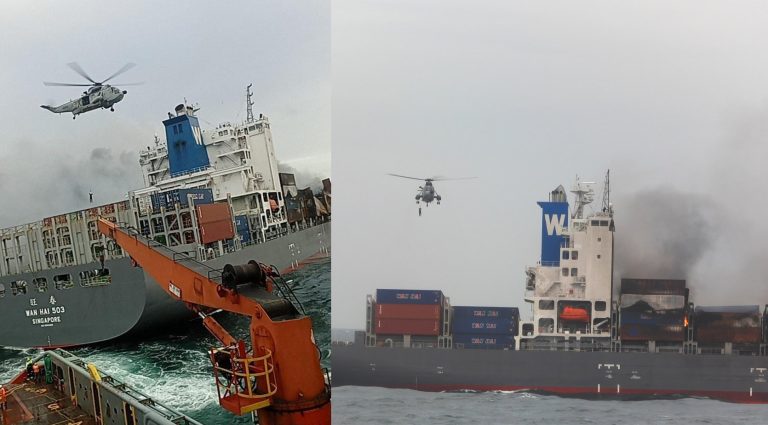
The Indian Navy successfully undertook the aerial insertion of the salvage team onboard the distressed vessel MV Wan Hai 503, which has been on fire since 9 June.

In a post on X, the Indian Navy said, “The salvage team, which embarked the Seaking helicopter at @IN_Garuda, #Kochi, was winched down the vessel on #13Jun 25, amidst challenging weather and sea conditions and fire onboard.”

The salvage team connected the tow with the Salvage Tug Offshore Warrior, after which the salvage team was successfully extracted by Naval helicopter. Towing operations of the vessel have commenced.

INS Sharda and OSV MV Triton Liberty are actively engaged with the India Coast Guard and other maritime agencies to augment the salvage operation, the Indian Navy said.

“This swift insertion and extraction of the salvage team by the Indian Navy has significantly augmented the ongoing salvage efforts,” it added.

Earlier in the day, in a significant development in the salvage operations of MV Wan Hai 503, the vessel’s tow was successfully transferred from Indian Coast Guard (ICG) ships to the ocean-going tug Offshore Warrior on 13 June 2025. This shift was essential to progress the operation, as ICG vessels have limited bollard pull – a term denoting the towing capacity of a ship, said ICG.

For the past few days, ICG ships had been maintaining the vessel’s position away from the coast. However, sudden deterioration in weather conditions, accompanied by strong westerly winds, caused the vessel to drift rapidly towards the shoreline. The adverse weather restricted aerial operations and delayed the embarkation of the salvage team members onto the vessel, said ICG.

Despite these challenges, around 1700 hours on 13 June, a Navy Sea King helicopter successfully launched from Kochi with the salvage team and winched them onboard the distressed vessel under extremely difficult conditions.

Subsequently, a 600-metre tow rope was connected to the ocean-going tug approximately 20 nautical miles off Kochi. This crucial joint operation involving the Indian Coast Guard, Indian Navy, and Indian Air Force enabled the salvors to take over the vessel from the ICG and continue the firefighting and salvage work.

The vessel is currently being towed westward at a speed of approximately 1.8 knots and is now nearly 35 nautical miles off the coast.

Three Indian Coast Guard Offshore Patrol Vessels are escorting the vessel while also continuing essential firefighting efforts. At the time of this report, only thick smoke and a few remaining hotspots are visible onboard Wan Hai 503 – a testament to the effective and sustained firefighting operations carried out by the ICG, which helped prevent a potential environmental disaster.

The ICG is closely coordinating with the Directorate General of Shipping to ensure the vessel remains at least 50 nautical miles from the Indian coastline until a suitable fate is decided by the owners of the vessel, in line with internationally accepted practices.

According to the ICG, this marks a major stride in mitigating a hazardous situation and safeguarding the coastal environment. The situation is expected to further stabilise with the anticipated arrival of additional firefighting tugs to support the ongoing operation.

“The Indian Coast Guard remains ever-prepared to respond to such contingencies and continues to work in close synergy with sister services, state authorities, regulatory agencies, and private salvors to ensure the safety of life, property, and the marine ecosystem,” said ICG.


(This news report is published from a syndicated feed. Except for the headline, the content has not been written or edited by OpIndia staff)

After Congress attacked PM Modi claiming that US invited Pakistan Army chief Asim Munir to Army Day parade, White House confirms no foreign military leader invited

Congress party does not seem get over its old tendency of prioritising its political interests over national ones. Ever since India carried out its highly successful Operation Sindoor against Pakistan following the Pahalgam terror attack, Congress leaders have been helping Pakistan’s narrative through their attempts to cast aspersions on Modi government by questioning the success and the outcomes of the operation.

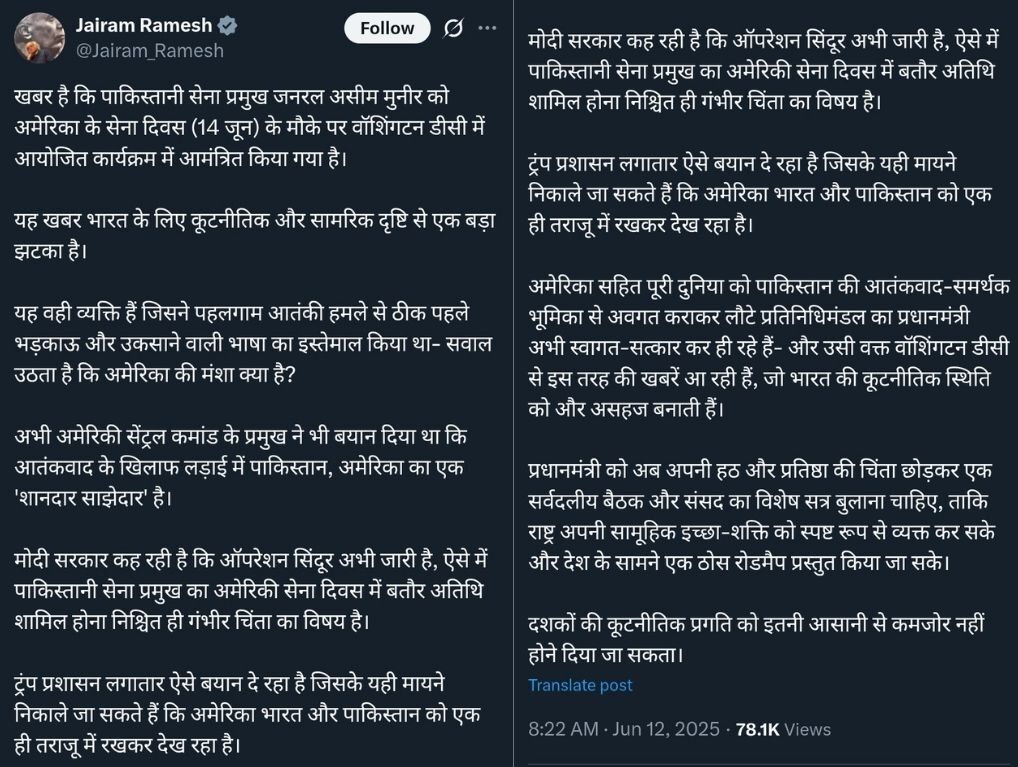
Recently, senior Congress leader and MP Jairam Ramesh attacked Prime Minister Modi writing a long post on X. In his post, Ramesh claimed that Pakistan’s Army Chief Field Marshal Asim Munir, was invited by the United States to take part in the country’s Army Parade on 14th June in Washington, which marks the 250th anniversary of the US Armed Forces.

Ramesh used the news to take a dig at Modi and raise doubts on India’s global standing. “Modi Government is saying that Operation Sindoor is still going on, in such a situation the participation of Pakistani Army Chief as a guest in US Army Day is definitely a matter of serious concern. The Trump administration is constantly making such statements which can only be interpreted to mean that America is looking at India and Pakistan on the same scale. The Prime Minister has just welcomed the delegation that returned after informing the entire world, including the US, about Pakistan’s role in supporting terrorism – and at the same time, such news is coming from Washington DC, which makes India’s diplomatic position even more uncomfortable,” Ramesh wrote on X on Thursday (12th June).

Screenshot of the post of Jairam Ramesh (via X)

“The Prime Minister should now put aside his stubbornness and concern for prestige and call an all-party meeting and a special session of Parliament, so that the nation can clearly express its collective will and a concrete roadmap can be presented to the country. Decades of diplomatic progress cannot be easily undermined,” he added.

Some media reports had also claimed that Asim Munir will attend a military parade commemorating the 250th anniversary of the United States Army. He is reportedly

Washington denies inviting Munir

However, the news of the Pakistani Army Chief being invited by the US turned out to be fake after the White House denied extending invitation to any foreign military leader. “This is false. No foreign military leaders were invited,” a White House official reportedly said.

Despite being a senior politician, Ramesh did not consider it necessary to verify the news based on which he was undermining India’s global position.

This is not the first time that a Congress politician is seen spreading lies, Congress leaders have indulged in such irresponsible beheviours on several occasions in the past.

Operation Rising Lion: Israel’s Mossad tricked top Iranian military leaders to gather at one place before striking the spot with precision

Launching a full-fledged attack on Iran on Thursday (12th June) under its ‘Operation Rising Lion’, Israel, once again, demonstrated its military and intelligence prowess in front of the world. Israel carried out precise missile strikes targeting Iran’s nuclear facilities, military commanders and ballistic missile facilities. Israel’s strikes resulted in some high-profile casualties in Iran including the top commander of Iran’s Revolutionary Guards, Hossein Salami, General Mohammad Bagheri, who led the country’s armed forces, and General Amir Ali Hajizadeh, who ran the ballistic missile program of the Revolutionary guard, Senior Revolutionary Guards commander Gholam Ali Rashid and some top nuclear scientists.

In a display of exceptional intelligence accuracy, Israel’s intelligence agency, Mossad, reportedly tricked the top Iranian Air Force commanders into gathering for a meeting and eliminated them in its strikes. An Israeli official told Fox News that Israel gathered some specific information using which it influenced the behaviour of Iran’s top commanders. “We carried out specific activities to help us learn about them, and then used that information to influence their behaviour,” the official was quoted as saying.

“We knew this would lead them to meet-but more importantly, we knew how to keep them there,” the official added. The official said that the strikes proved to be more effective than anticipated.

Israel was able to gather all crucial intelligence by planting its agents deep inside Iran, including at the highest level. “The Mossad worked with a huge number of people—a mass of agents deep inside Iran, operating at the highest level of penetration imaginable. Some of these agents were retrained as commando fighters to carry out mission-critical operations,” the official revealed.

The attacks involved three-layers of strikes. “We eliminated vast areas of Iran’s surface-to-surface and surface-to-air missile infrastructure, a massive number of senior scientists, and large portions of their air defence systems,” the official divulged. Israel even set up a drone base and place precision missiles inside Iran, which were activated to coordinate with Israel’s Air Force.

“We established a drone base inside Iran, and at zero hour, Mossad operatives retrieved them from hiding spots. We placed precision missiles on numerous vehicles and embedded additional missiles throughout the country, hidden inside rocks. We activated this entire array in precise coordination with the Israeli air force,” said the official.

Israel’s reasons to attack Iran

Israel’s strikes against Iran came after the talks between the US and Iran regarding the latter’s nuclear program broke down. The US and Iran have had 5 rounds of discussion so far since April 2024 and a sixth round was to take place this month before which Israel launched an attack on Iran. Israel has been accusing Iran of enriching uranium to weapon-grade, which has been denied by Iran.  Considering Iran’s open support for terrorist organisations like Hamas and Hezbollah, Israel views the possibility of Iran developing a nuclear weapon as a threat to its existence. As a result, it launched a massive attack on Iran targeting its nuclear facilities to eliminate its chances of developing a nuclear weapon.

Israel’s attack on Iran is said to be the most intense attack on Iran since the Israel-Iran war of the 1980s. Israeli airstrikes were retaliated by Iran, which launched hundreds of ballistic missiles into Israel’s airspace most of which were neutralised by the country’s air defence system.

How Israeli intelligence eliminated 30 terrorists at once

Israeli’s intelligence agency has exhibited its exceptional capabilities in the past as well. Last year in September, Mossad carried out one its most effective anti-terrorist operations against the Islamic terrorist outfit Hezbollah in Lebanon using pagers booby-trapped with explosives. The sophisticated attack left thousands of Hezbollah terrorists injured and over 30 dead.

The operation was meticulously carried out following the ghastly terrorist attack in Israel on October 7, 2023. The preparation for the pager explosion has been going on for years before the attack. The long-term operation began by setting up a legitimate company in Hungary to supply communication devices to Hezbollah, which was duped into buying thousands of rigged walkie-talkies and pagers without realising they were made in Israel. Israel carefully planted booby-traps in the devices for almost ten years, using them to eavesdrop, while retaining the capacity to remotely detonate these walkie-talkies.

What may have caused the Air India crash in Ahmedabad? A deep dive into probable technical failures

On the morning of June 12, 2025, a routine Air India flight from Ahmedabad turned into a national tragedy. The Boeing 787-8 Dreamliner lifted off the runway with what seemed like a normal take-off — but within seconds, the aircraft struggled to gain altitude. Eyewitness videos showed the jet barely climbing, then dipping before crashing in a fiery explosion just beyond the airport perimeter. More than 270 people lost their lives thus far.

In the wake of the tragedy, a dominant theme across newsrooms and online discussion forums is the causes that may have doomed the ill-fated Air India Dreamliner.

NDTV journalist Shiv Aroor spoke with veteran pilot Captain Rakesh Rai, who not only flew the 787-8 Dreamliner for Air India but also piloted the ill-fated aircraft that crashed on June 12 several times in his career. Right at the outset, Captain Rai cleared that everything he would be speaking will be in the realm of suppositions and speculations, since the content of the Black Box is not yet been made public.

Captain Rai listed down several scenarios, including a possible human error on the pilots’ part that led to the catastrophic crash resulting in the death of over 265 people. According to him, the altitude of the plane was so precarious, it left little time for the pilots to course correct and prevent an imminent crash. Pointing to the video that had gone viral in the aftermath of the accident, Captain Rai highlighted the fatal error of landing gear not being retracted, which he added may have contributed to the drag and prevented the plane from gaining altitude.

While the final investigation report by the Directorate General of Civil Aviation (DGCA) will take months, aviation analysts and experts have begun dissecting the limited evidence available. Drawing upon known aircraft behavior, historical incidents, and the unique flight profile of the crash, we explore the possible causes behind the devastating mishap.

Scenario 1: Single engine failure + gear not retracted = High drag and stall

One of the most plausible theories is that the aircraft suffered a single-engine failure right after rotation — possibly due to a bird strike or internal engine malfunction. While Boeing 787s are designed to fly with one engine, the situation requires fast and accurate action by the crew.

In such high-stress moments, it is not uncommon for pilots to miss standard procedures like retracting the landing gear. Leaving the gear down adds significant aerodynamic drag. Combined with an engine out, the aircraft could have rapidly lost its ability to climb.

If the airspeed dropped below what’s called the “V2 minimum control speed,” the aircraft could stall. At 300–400 feet above ground, there’s almost no room for recovery from a stall, especially in a heavy aircraft on takeoff.

Scenario 2: Rare but catastrophic dual engine failure

While extremely rare, a dual engine failure — possibly due to simultaneous bird strikes, fuel contamination, or an unnoticed systemic failure — cannot be ruled out. Without engine power, the aircraft essentially becomes a large, powerless glider.

In this state, the pilots wouldn’t have the thrust needed to retract landing gear or maintain airspeed. Within seconds, drag would overcome lift, leading to a stall and rapid descent. A Boeing 787 at take-off weight cannot glide far from 400 feet — meaning any recovery was practically impossible.

Assuming that all fundamental checks were diligently carried out before the aircraft was cleared for take-off, a simultaneous failure of both engines appears to be the least likely scenario.

Scenario 3: Flap configuration error

Another potential failure is a misconfiguration of the take-off flaps. Flaps are extended during take-off to generate additional lift at low speeds. If the crew retracted the flaps prematurely — or worse, if they were never extended in the first place due to a checklist oversight — the aircraft would have severely reduced lift during its critical climb phase.

In scenarios where pilots confuse the flap lever with the landing gear lever (a rare but documented error under high stress), it could result in a sudden and fatal loss of lift, especially if the aircraft was already struggling with thrust.

Scenario 4: Auto-throttle or sensor malfunction

Modern jets rely heavily on automated systems. If a faulty airspeed or angle-of-attack sensor gave the wrong data to the flight computer, the autothrottle may have reduced engine power prematurely. A false stall warning could have led the crew to push the nose down, resulting in loss of altitude.

Similarly, a blocked pitot tube or a malfunctioning flight control system could mislead the pilots about their actual airspeed or angle of climb, setting the aircraft on a fatal trajectory without clear awareness in the cockpit.

Scenario 5: The wrong engine was shut down

This chilling possibility has precedent in aviation history — when pilots misidentify a failing engine and accidentally shut down the working one. If one engine failed and the crew mistakenly turned off the operational engine, the aircraft would instantly lose all thrust.

With such low altitude and no remaining power, the crew wouldn’t have the time or altitude to restart the correct engine or glide to safety.

Scenario 6: Sabotage or technical tampering

Though purely speculative and without public evidence, some aviation forums and social media users have raised the possibility of sabotage — ranging from deliberate tampering with systems during ground handling, to a security breach in engine servicing.

Any such scenario would drastically change the direction of the investigation and, if proven, raise serious questions about airport security and Air India’s internal procedures.

The common denominator: Loss of thrust + high drag + low altitude

Regardless of the initiating event — engine failure, flap error, or system malfunction — the one constant in all plausible scenarios is this: the aircraft experienced a sudden and unrecoverable loss of climb performance, possibly caused by reduced thrust. Without enough thrust and with increased drag (possibly due to gear or flap configuration), the plane stalled and crashed before the crew could stabilise it.

Human factors and seconds that matter

Modern aviation is a marvel of engineering, but when things go wrong in the first 60 seconds after take-off, the margin for error is razor-thin. Whether it was a mechanical failure, misjudgment in the cockpit, or a rare confluence of both, the Air India crash in Ahmedabad will likely underscore the critical importance of training, checklists, and real-time decision-making under pressure.

Until the cockpit voice recorder (CVR) and flight data recorder (FDR) reveal more, all explanations remain hypothetical. But what’s clear already is that in aviation, even the smallest error or failure — occurring at the worst possible time — can end in catastrophe.

NSG, NDRF, Air Force, FSL, Fire Rescue Force, AAIB, DGCA, and CISF teams inspect the wreckage of crashed Air India Boeing 787 aircraft

0

Teams of National Security Guard (NSG), National Disaster Response Force (NDRF), Air Force, Forensic Science Laboratory (FSL), Fire rescue forces, Aircraft Accident Investigation Bureau (AAIB), Directorate General of Civil Aviation (DGCA) and Central Industrial Security Forces (CISF) ON Saturday inspected the wreckage of the ill-fated London-bound Air India 171 flight.

Meanwhile, residents of the neighbourhood where the plane crashed recalled their horrific experience and said that it felt like an earthquake or a bomb blast for the first few moments.

Speaking to ANI, Rekha Kshtriya, a woman who has lived in the area for over 13 years, said she was doing her usual chores when she first heard a loud noise. She immediately came outside and rushed to the crash site.

“… Around 1.30 PM, we heard a loud noise. Although we are accustomed to hearing loud noises, this time, it felt like our eardrums would burst. It seemed like an earthquake. Our house, our dining table, everything was shaking violently. The sound seemed like that of a bomb blast. Then we went outside and learned a plane had crashed… We saw broken pieces of the aircraft spread everywhere. The whole sky was filled with black smoke. High flames were rising everywhere,” she told ANI.

Priyanshu, another resident sharing his experience of that day, said, “The area was filled with black smoke. I was at home. Fire spread from one building to another… I felt like an earthquake or a bomb blast.

“A resident, Bahadur Kshatriy, living about 500 metres from the crash site said he, along with his friends and security personnel, helped rescue five people from the rubble. However, he noted that the survivors were in critical condition.

“… My house is 500m from the crash site. I heard a loud bang. First, I wondered if it was a massive storm or earthquake… The people were shouting that a plane had crashed. When I went and saw, there was smoke everywhere. There was fire all around. We went up to the mess where students were shouting for help. Along with Army personnel, we rescued five students alive from the debris. But they were in an extremely serious condition… Then we thought that there could be someone stuck under the debris downstairs. We found a body in an awful condition…”,” he said.

The AI-171 Boeing Dreamliner 787-8 aeroplane bound for London’s Gatwick had crashed shortly after it took off from the Ahmedabad International Airport on Thursday. The airline said only one out of the 242 people on board the aircraft survived the crash. 


(This news report is published from a syndicated feed. Except for the headline, the content has not been written or edited by OpIndia staff)

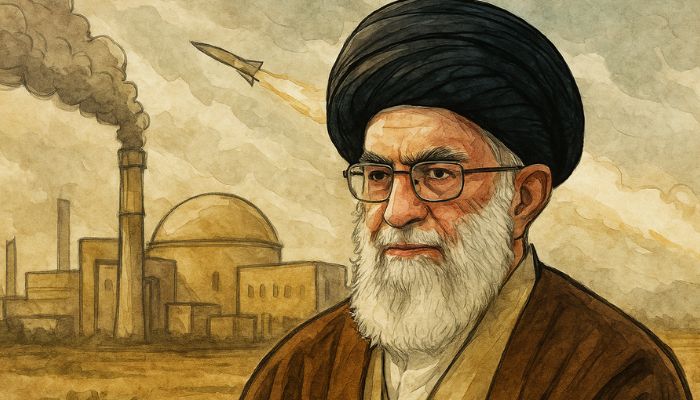
With Israel and Iran at the brink of a war, read all about Iran’s nuclear program and how the threat posed by it has led to escalation of tensions between the two countries

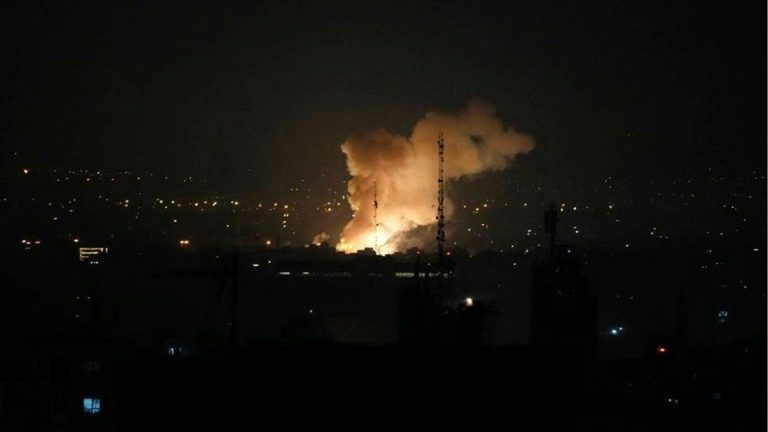
On the night of 12th June, Israel launched a series of coordinated airstrikes targeting key nuclear infrastructure and personnel in Iran. Israel’s attack dealt the biggest blow to Iran’s nuclear program in years. The strikes began late Friday (local time) and were focused on the Natanz and Fordow enrichment sites. Several nuclear scientists and military officials associated with Tehran’s atomic operations were also killed in the strikes.

The Prime Minister of Israel, Benjamin Netanyahu, called the offensive “a strike at the head of Iran’s nuclear weaponisation program”. He vowed to continue the strikes until the threat is eliminated. In retaliation, Iran launched a cache of missiles into Israel. Explosions were reported over Jerusalem and Tel Aviv.

As the tension in the region escalates and fears of open war mount, it is critical to understand what Iran’s nuclear program is, how it evolved over the decades, and why it has become the a cause for international alarm.

How Iran’s nuclear program began

Iran did not start its nuclear journey in secrecy. In fact, it began in 1957 with the help of the United States under President Dwight D. Eisenhower’s “Atoms for Peace” program. At that time, pro-Western Shah Mohammad Reza Pahlavi ruled the country. It was seen as a stable regional ally of the West. Support from the US and Europe enabled Iran to develop its nuclear infrastructure, including reactors and research capabilities.

By the 1970s, Iran had ambitious plans to build as many as 20 nuclear reactors. However, things did not go as planned following the Islamic Revolution of 1979. The Shah was deposed and the current theocratic regime came to power. The revolution delivered a major jolt to Iran’s relationship with the West, particularly the United States. Following the regime change, the US abruptly withdrew its support and imposed restrictions on nuclear cooperation.

Since then, Iran’s nuclear program has largely taken place in the shadows. In the early 2000s, when the Natanz enrichment site was revealed as part of a covert network of facilities that were not disclosed to the International Atomic Energy Agency (IAEA), Tehran came under the radar of Western powers. Iran continued to claim that its nuclear activities were for peaceful purposes. However, as it failed to report sites to the international body, Western intelligence agencies raised concerns about Iran’s nuclear program.

Why the program is controversial

The controversy surrounding Iran’s nuclear program is the enrichment of uranium. The process can be used either for peaceful energy production or, when taken to higher levels, for developing nuclear weapons. Iran has claimed that its intentions are peaceful. However, its behaviour over the years has raised serious concerns among international agencies.

In the early 2000s, international inspectors discovered traces of highly enriched uranium at the Natanz facility. Iran temporarily suspended enrichment. However, it was resumed in 2006. Iran argued that it was permitted under the Non-Proliferation Treaty (NPT), to which it is a signatory. Despite the argument laid down by Iran, the IAEA consistently raised concerns over the scale of enrichment, the concealment of sites, and lack of transparency.

In 2015, Iran signed a landmark agreement with six world powers. The Joint Comprehensive Plan of Action (JCPOA) imposed strict limits on Iran’s nuclear activities in exchange for relief from economic sanctions. It required Iran to cap enrichment at 3.67%, reduce its stockpile of uranium, and dismantle many centrifuges. It also allowed the IAEA to conduct rigorous inspections of the nuclear sites in Iran.

In 2018, the agreement unravelled when the Trump administration unilaterally withdrew the US from the deal. The Trump administration labelled it “a disaster” and reimposed sanctions. Iran responded by breaching the deal’s restrictions and ramping up enrichment to 60% purity. For a nuclear bomb, 90% purity is required, and Iran was getting closer to it. Iran also removed IAEA monitoring equipment from its facilities.

Iran’s secrecy surrounding its newer sites, specifically the development of a third enrichment facility and its refusal to cooperate with inspectors, has added fuel to suspicions that the Islamic country’s true intentions are different from what it claims, namely energy production or peaceful use of nuclear power.

What is enriched uranium and why it matters

Enriched uranium is a critical component in both nuclear power generation and nuclear weapons. Natural uranium consists of about 99.3% uranium 238, which is not suitable for fission. Only 0.7% is uranium 235, which is the fissile material needed to generate nuclear energy or build a bomb.

Uranium needs to be enriched to increase the concentration of uranium 235 for nuclear applications. For civilian nuclear reactors, enrichment levels of 3% to 5% are required. However, to produce a nuclear weapon, uranium must be enriched to approximately 90% purity.

During the enrichment process, uranium is converted into gas form and spun at extremely high speeds in machines called centrifuges. These devices separate uranium 235 from uranium 238. Iran has developed increasingly advanced centrifuge models over the years. Machines developed by Iran, such as the IR 6 and IR 9, enrich uranium faster and more effectively than earlier versions.

As of 2024, Iran reportedly amassed a stockpile of over 400 kilograms of uranium enriched to 60%. If further enriched to weapons-grade, it would have enough uranium to produce multiple nuclear bombs. The IAEA has warned that no other nation holds this level of uranium enrichment without having an actual weapons program.

The concern is not limited to the growing stockpile but also the speed at which it can now “break out”, the time required to enrich sufficient material for a nuclear weapon. Western intelligence agencies suggest that Iran may do so in as little as one to two weeks, making it a potentially short leap from nuclear capability to weaponisation.

Could Iran build a nuclear bomb and how soon?

Technically, Iran does not have a nuclear weapon yet. Furthermore, the Islamic nation has repeatedly claimed that it has no intention to do so. However, analysts agree that Iran now possesses both the knowledge and the infrastructure to cross that threshold, if it chooses.

According to the IAEA, Iran has enough material for multiple nuclear warheads if it further enriches uranium to 90%. Experts point out that the remaining technical leap, while significant, is not a major obstacle for a country with Iran’s scientific expertise and decades of nuclear development.

As Iran’s “breakout time” has shrunk dramatically, US intelligence and IAEA estimates put the timeline for becoming a nation with a nuclear bomb at roughly one to two weeks. This means that while Iran may not yet have a fully developed nuclear warhead, it could theoretically create one in an extremely short span of time, especially if diplomatic channels collapse or external pressures mount.

Notably, weaponising uranium is only one part of developing a usable nuclear weapon. Iran would also need to build a reliable delivery system, most likely a missile warhead, and ensure miniaturisation and detonation mechanisms. These steps would require additional time, testing, and technical sophistication. However, considering the opacity surrounding its current nuclear program, the exact timeline to full weaponisation remains uncertain, and this is exactly what worries the international community.

Why Israel and the West fear a nuclear Iran

For a country like Israel, a nuclear Iran is not just a strategic challenge but an existential threat. Israel’s Prime Minister Netanyahu has repeatedly warned that Iran’s leaders have openly spoken of wiping Israel off the map. He has argued that granting a regime with such rhetoric access to nuclear weapons would be equal to inviting catastrophe.

Following the recent strikes, Netanyahu said, “Eighty years ago, Jews were victims of a Holocaust perpetrated by the Nazi regime. Today, the Jewish state refuses to be the victim of a nuclear Holocaust perpetrated by the Iranian regime.”

Israel’s concerns are not limited to the possibility of a direct nuclear strike. A nuclear-armed Iran could embolden Tehran to act more aggressively across the Middle East. If Iran becomes a nuclear state and shows aggressive military behaviour in the region, the chances of retaliation would be limited. It would amplify support to proxy groups like terrorist organisations including Hezbollah in Lebanon, Hamas in Gaza, and various Shia militias in Syria and Iraq. All of these groups have engaged in conflict with Israel.

The US has similar concerns. While Washington acknowledges that Iran is not currently in possession of nuclear weapons, its proximity to weapons-grade enrichment is seen as deeply disturbing. The potential of a nuclear arms race in the Middle East, should Iran succeed in making a nuclear bomb, adds another layer of risk. Regional rivals such as Saudi Arabia have already indicated they would seek similar capabilities if Iran becomes a nuclear power.

What Israel’s strikes have achieved so far

Israel’s recent strikes on Iran’s nuclear infrastructure represent the most direct military intervention yet in Tehran’s atomic ambitions. On Friday, explosions were reported at multiple strategic sites, including the Natanz nuclear facility, which is long considered the heart of Iran’s uranium enrichment operations. Israeli defence sources claimed that underground halls housing advanced centrifuges at Natanz were plunged into darkness after power systems were destroyed, halting the enrichment activity.

According to Iranian state media, Fordow, another key enrichment facility buried deep within a mountain, was also targeted. Though its depth made it difficult to reach with conventional air munitions, satellite images and IAEA reports suggest limited damage may have been inflicted. A third site, Isfahan, which houses a uranium conversion facility, was also reportedly hit in the wider campaign.

Furthermore, the strikes were aimed at the human and organisational backbone of Iran’s nuclear program. Reportedly, six nuclear scientists and several members of the Islamic Revolutionary Guard Corps (IRGC) tasked with securing nuclear assets were killed in the strikes. Israeli intelligence sources later indicated that the targeted scientists were believed to be instrumental in Iran’s covert weaponisation research.

These operations might have set Iran’s nuclear progress back temporarily. However, analysts caution against declaring them a decisive blow. Iran has spent years decentralising its program and building redundancy into its nuclear infrastructure. Moreover, several of its technical experts and advanced centrifuges remain intact. Reports suggest that a comprehensive dismantling would require sustained strikes, cyber operations, and potentially ground forces, something Israel may not be equipped or politically able to carry out alone.

Uncertainty ahead

The recent confrontation between Israel and Iran marks a dangerous new chapter in the decades-long struggle over nuclear proliferation in the Middle East. Israel has sent a strong message by striking Iran that it will not tolerate the Islamic Republic inching any closer to a bomb.

However, the consequences of this escalation remain unclear. Iran has vowed to respond with “maximum force” and hinted at further enrichment and possibly withdrawal from remaining international nuclear obligations. For its part, the IAEA has confirmed that Iran’s declared stockpile of enriched uranium continues to grow, even as access to inspect key sites remains limited.

One thing is certain that the question is no longer just whether Iran could build a bomb, but whether the region, and the world, can afford the consequences if it does.