Home Blog Page 4332

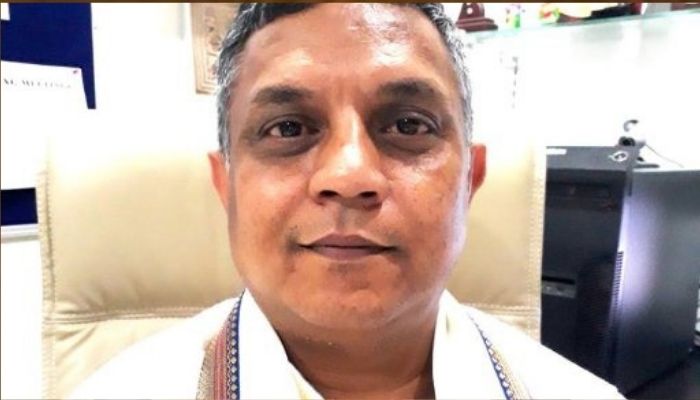
BJP worker forced to flee West Bengal after TMC thugs vandalised his resort

Amidst the ongoing violence in West Bengal following the victory of the Trinamool Congress (TMC), it has now come to light that a BJP worker has been forced to leave the State. Reportedly, the BJP worker has been identified as one Ganesh Ghosh.

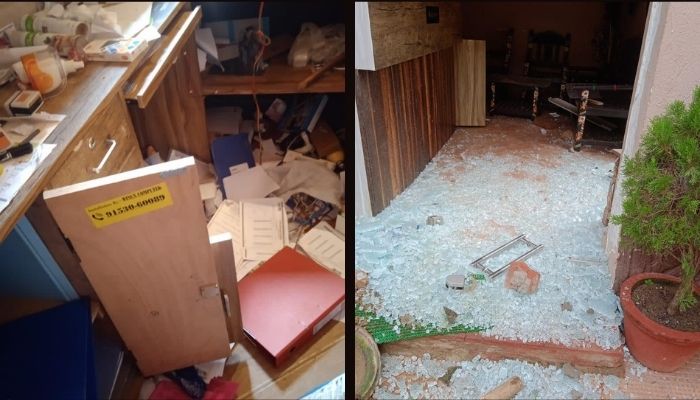
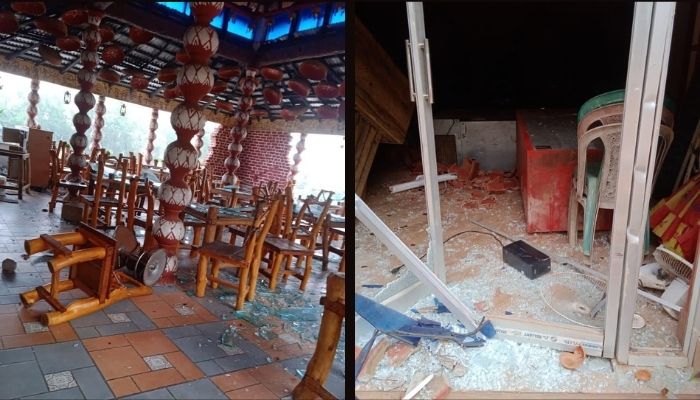
He was compelled to flee West Bengal along with his family members after the Trinamool Congress goons wrought havoc at his resort. The miscreants attacked Ghosh’s resort in Shakuntala village in Khoai Haat in Shantinektan. The resort is located just 5 minutes away from the Vishwa Bharati University.

Several images have now surfaced on social media, which captures the extent of the damage done to the BJP worker’s property. Visuals show that the glass panes of windows and doors were broken by the miscreants. They had also damaged the furniture and did not spare the glass pane on tables.

Broken pieces of glass can also be seen lying scattered on the floor. Fearing a threat to his life, Ganesh Ghosh was left with no option but to leave the state altogether.

Vandalism by Trinamool Congress goons

Concerns are now being raised about the fate of thousands of BJP workers who now stand vulnerable to violence by TMC supporters and workers.

TMC goons attack BJP workers in West Bengal

On Sunday (May 2), the residence of an active BJP worker named Bishwanath Dhar was attacked by TMC goons. The incident took place in Ghola Mallikpara in Panihati municipality in the North24 Parganas district of West Bengal. Reportedly, the hoodlums first destroyed the CCTV cameras and then began looting the BJP worker’s residence. They broke open the almirah and stole cash and ornaments. On their way out, they also damaged his Maruti car and a Royal Enfield (bullet) bike.

In another incident, a BJP worker was assaulted mercilessly at his own residence allegedly by the workers of the ruling TMC. The incident took place in Kismatdapat village of Trimohini in the South Dinajpur district of West Bengal. Reportedly, TMC goons ambushed the victim’s house and attacked him. The BJP worker sustained head injuries and bled profusely. The miscreants also entered his house and vandalised the property.

On Sunday (May 2), a BJP worker named Avijit Sarkar took to Facebook to narrate the harrowing tale of violence that he was subjected to by the TMC goons. The video was uploaded just hours before he was lynched to death by the miscreants. “I don’t know how to come live (on Facebook). They hurled bombs right in front of my eyes and vandalised my house and the party office. My only mistake is that I am a BJP worker.,” he recounted. He said that the attack took place in Ward no. 30 in the Beleghata neighbourhood in Kolkata under the supervision of TMC leaders Paresh Paul and Swapan Samandar.

Twitter permanently suspends Kangana Ranaut’s account for demanding action against ‘monster’ Mamata Banerjee for Bengal violence

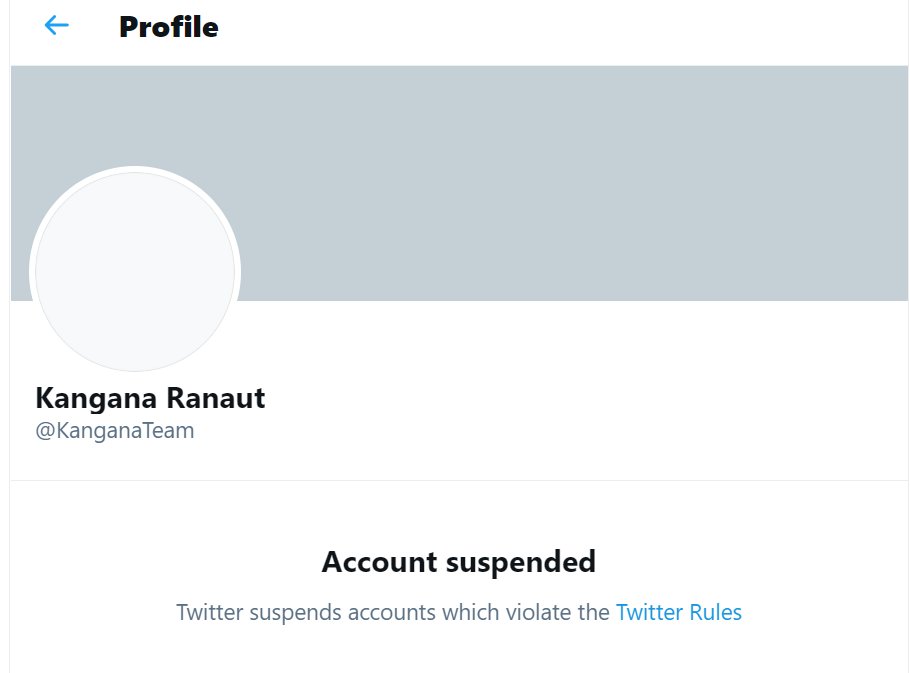
Twitter has suspended the account of Bollywood superstar Kangana Ranaut for demanding action against ‘monster’ Mamata Banerjee in the aftermath of massive post poll violence in West Bengal. According to reports, her account has been permanently suspended.

Twitter suspends Kangana Ranaut

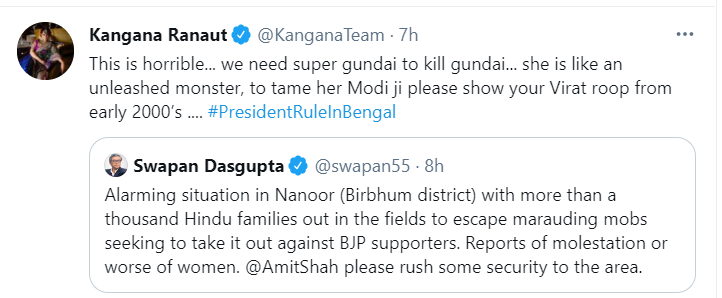
Kangana Ranaut was responding to a tweet by BJP leader Swapan Dasgupta where he had said that the situation was alarming in Nanoor, Birbhum district. Dasgupta had said that a thousand Hindu families had fled into the fields to escape mobs targeting BJP supporters.

Dasgupta said that molestation and worse of women had been reported. Kangana Ranaut, quoting the tweet, had requested Narendra Modi to show his ‘Virat Roop’ from early 2000s. Her account was suspended for the same. She will not be able to come back on Twitter using that account.

A spate of violence has erupted in West Bengal following the declaration of results on Sunday. Reports of gang-rape of BJP polling agents have also come forward. There have also been reports of Muslim TMC workers thrashing female BJP karyakartas.

The Trinamool Congress, meanwhile, is now in denial mode, completely denying that any of this is happening despite the overwhelming photographs and videos of the incidents surfacing on social media. The West Bengal Police has said that the news of the BJP woman being raped is ‘fake’.

The Congress party and the CPI(M) have also accused TMC of unleashing a spate of violence against their workers as well. The BJP has announced a nationwide dharna on 5th May in response to the brutal attacks against its workers.

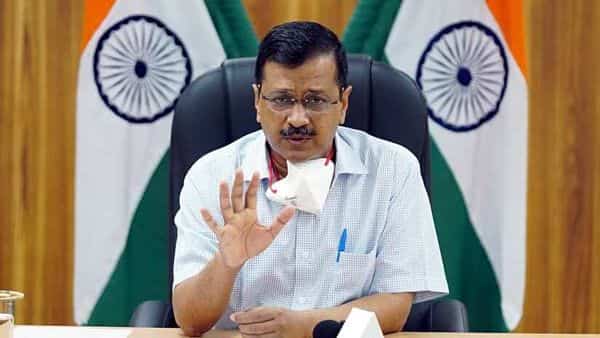
Kejriwal announces two months ‘free ration’, two weeks after Central govt already announced it

On Tuesday, Delhi CM Arvind Kejriwal announced to hand out ‘free ration’ to all ration card holders in Delhi for a period of two months.”We have decided that all ration card holders in Delhi, around 72 lakhs in number, will be given free ration for the next 2 months,” said Kejriwal.

Interestingly, this announcement comes two weeks after the Central Government had already promised free ration for two months till June.

On April 23, the Central Government had announced that it will provide free food grains under the PM Garib Kalyan Ann Yojana for the months of May and June 2021. Under this plan, 5 kilograms of free food grains would be provided to the beneficiaries which amount to around 80 crore people in the nation.

The Central Government will potentially spend more than Rs 26,000 crores on this initiative which has been put in place keeping in mind the prevailing COVID-19 crisis affecting the country.

We will provide 5-kg additional food grains for free to PDS beneficiaries under the PMGKAY for two months — May and June. This time, we are not providing pulses under this scheme,” Food and Public Distribution Secretary Sudhanshu Pandey had told PTI at the time.

Kejriwal also assured Delhiites that the duration of the scheme is not related to the lockdown measures, and that lockdown measures will not go on for another two months.

“It doesn’t mean that the lockdown will continue for 2 months. It is just being done to help the poor going through financial issues,” the Delhi CM said.

Delhi is now entering it third consecutive week of lockdown measures, with the Delhi Government extending the lockdown for a second time. The National Capital has been under lockdown since April 19.

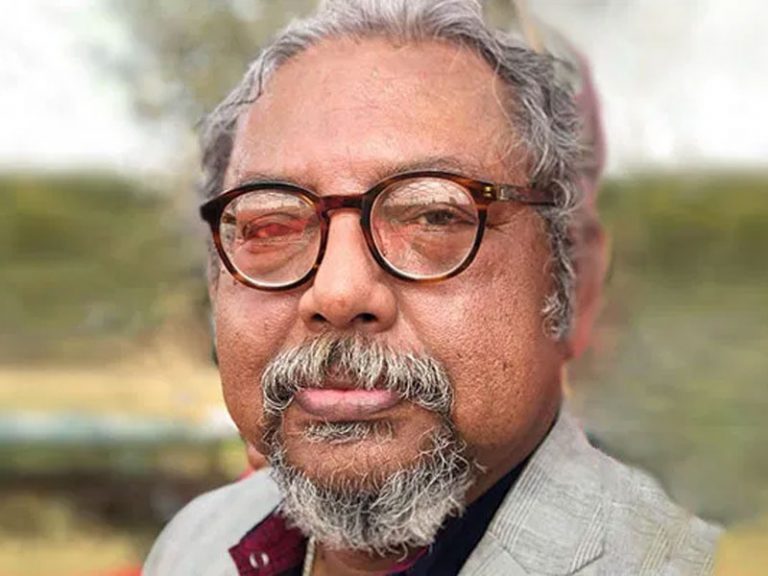
Veteran journalist Kanchan Gupta loses his father to Covid, family gave up ventilator so others could live

On May 4, Kanchan Gupta, Veteran Journalist and former advisor to Atal Bihari Vajpayee narrated the saddening tale of his father battling Covid-19. While informing about the demise of his father, Gupta narrated how his father was a frontrunner in installing oxygen units in hospitals during his whole working life.

Gupta said that his father spent his working life setting up oxygen units at hospitals. In the 1960s, his work drew the attention of Tatas as well. He subsequently moved to set up oxygen units at Tata Main Hospital and other hospitals.

He added that his father was rarely at home due to his busy work schedule. At that time, the technology was not advanced, and spare parts were often imported by a handful of suppliers. He said, “Those were low technology days. Something like a pressure gauge had to be sourced from a particular shop in Calcutta which imported them. He would go personally to check and buy.”

Kanchan Gupta thanked the doctors and healthcare workers

While remembering his father, Kanchan heartily thanked the ambulance driver who carefully shifted his father to the hospital. He thanked all the doctors, nurses and healthcare workers who tried their best to save him and eased his pain during his last hours. He said, “And my gratitude to the doctors, nurses and staff who tried their best, eased his pain, and remained by his side till the end.”

Guptas decided not to use a ventilator

One of the hardest decisions for a family would be to reject ventilator support. Kanchan said that he and his brother decided not to use the ventilator for their father as there was no hope of survival left. Putting him on a ventilator would have blocked the machine that could save someone else’s life. He said, “That machine would have been needlessly blocked. Better a #COVID19 patient with higher chances should get it. Baba would have wanted it that way. My late mother would have approved.”

Last rites will be done as per protocol

He added that they did not burden the already overwhelmed local cremation ground by insisting on last rites before others in the queue. Gupta decided to let municipal authorities book the slot at the electric crematorium and do the needful. He further added that the last rites of his father would be possibly done by a night of May 4 as per the Covid-19 protocols.

Kanchan Gupta is a veteran journalist and former advisor to former PM Atal Bihari Vajpayee. He is currently serving as Chairman, Raja Rammohun Roy Library Foundation, Kolkata, and is a member of the Prime Minister’s Committee on Netaji 125th Anniversary.

Kanchan’s father, with his widowed mother and siblings, had fled to India during 1947-50. While working on a book on the plight of Hindu Bengali refugees from East Pakistan as perceived through Bangla literature, he wrote a tweet thread in which he mentioned that the refugees from East Pakistan were deemed as ‘Permanent Liability’ by Nehru Government that included his family.

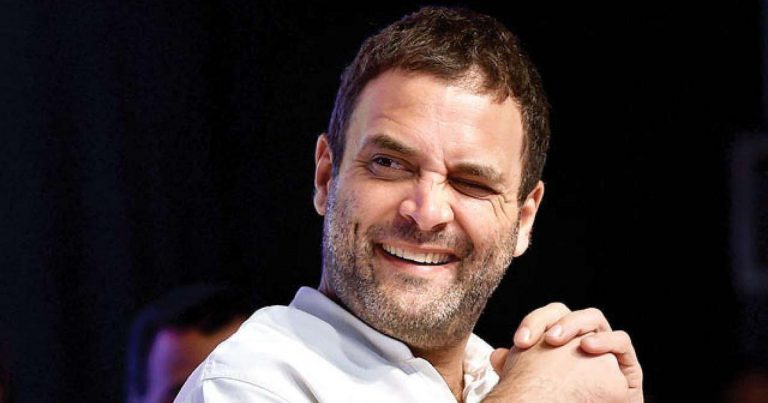
Rahul Gandhi goes from ‘lockdown won’t work’ to ‘lockdown only solution’ for the raging coronavirus outbreak

As India grapples with the ferocious second wave of the coronavirus outbreak, senior Congress leader and former party president Rahul Gandhi has pompously suggested what he has long been protesting against. After opposing the complete lockdown for a long time, Rahul Gandhi today took to Twitter to assert that the only way to stop the coronavirus now is to have a complete lockdown.

“GOI doesn’t get it. The only way to stop the spread of Corona now is a full lockdown- with the protection of NYAY for the vulnerable sections. GOI’s inaction is killing many innocent people,” Gandhi tweeted earlier this morning.

Gandhi’s suggestion to institute a rigorous lockdown is in stark contrast to his previously held stance. For a long time now, Gandhi has been railing against the imposition of lockdown, arguing that its enforcement doesn’t yield the intended result. However, much like his about-faces on several issues, Rahul Gandhi has now made another staggering u-turn. This time on whether to impose or not a complete lockdown.

Rahul Gandhi has persistently opposed the imposition of lockdown in the fight against the pandemic

On 29 March 2020, almost a week after PM Modi announced a nationwide lockdown, Rahul Gandhi wrote a letter to PM Modi on the coronavirus crisis. In that letter, Rahul Gandhi expressed his disapproval for the lockdown and expressed his concerns about the same.

In April 2020, within a month after PM Modi announced a strict lockdown in the last week of March, Rahul Gandhi raised questions on the efficacy of lockdowns in battling the coronavirus pandemic. When several advanced countries and developed economies were imposing lockdowns to fight the novel contagion, Mr Gandhi was sowing doubts about the strategy of defeating the virus with a lockdown. He passionately argued that lockdown is not a solution to the coronavirus as it could only “pause” the situation.

Then in May 2020, days after Rahul Gandhi criticised the government for enforcing complete lockdown, the Gandhi scion once again lambasted the Centre for imposing countrywide lockdown to combat the coronavirus. At a time when several European nations were witnessing an alarming spread of the virus, India was largely unscathed by the ravages of the rampaging pandemic. However, Mr Gandhi continued to protest against it, claiming that the purpose of the lockdown had failed even though India was then amongst the nations with the lowest infections compared to its geographical expanse and population size.

Nevertheless, as has been the case with the Wayanad MP, he gets smitten to an idea that he thinks would help him in rallying support for himself and then goes trotting out the same thing again and again, without heeding to the feedback as to whether it is proving to be helpful or not. After Demonetisation in 2016, for months on end, Mr Gandhi kept harping about its consequences, but his rants did not help him in stopping his political decline. He kept losing elections after elections in various states across the country and then the General elections in 2019.

In September 2020, Rahul Gandhi once again denounced the imposition of lockdown, perhaps in a bid to revive his political fortunes. Gandhi had then said that the lockdown is not an attack on the coronavirus but the poor and proved to be a “death sentence” for the unorganised sector. In an attempt to seek the support of the poor, Gandhi exaggerated and sensationalised the ill effects of lockdown while brushing under the carpet that it has significantly helped India in staving off the initial bout of the coronavirus outbreak.

Months later, Gandhi has vacillated from protesting the lockdown to supporting and endorsing it. He now wants the government to impose a complete lockdown to defeat the coronavirus. In this regard, Gandhi issued an additional tweet, elaborating on why he wants the government to impose a lockdown now.

“I just want to make it clear that a lockdown is now the only option because of a complete lack of strategy by GOI. They allowed, rather, they actively helped the virus reach this stage where there’s no other way to stop it. A crime has been committed against India,” Gandhi said.

Congress and Rahul Gandhi’s role in the spread of the coronavirus outbreak

While Gandhi blames the government of India for “actively helping” the virus in this state, it pertinent to note that he himself and the Congress party played a pivotal role in the resurgent coronavirus outbreak in the country. When the lockdown restrictions were imposed in the country, Rahul Gandhi and others fiercely questioned the efficacy of the lockdown and continuously urged the government to open up the country. Rahul Gandhi also attended rallies in states where elections were to be held. Congress leaders in Punjab actively exhorted the ‘farmers’ and other protesters to march towards Delhi and launch demonstrations against the newly introduced farm laws in Punjab and along the Delhi border.

The Congress party, too, supported these demonstrations where social distancing norms were rarely followed, and people went around without masks. It is alleged that the mass gatherings may have played a significant role in the spread of the UK variant of the virus in Delhi and its surrounding regions. Analysts attribute this dangerous surge of infections in the national capital to the ‘farmers’ protests besides other causes.

Last year, when the Indian government imposed a strict lockdown, Congress leader Rahul Gandhi vigorously opposed it. This year, when the central government has left it on the local governments to decide if they want to impose lockdowns in their states, Rahul Gandhi wants the centre to impose a full lockdown. No matter what, opposing the Centre seems to be the policy adopted by the Congress party and Rahul Gandhi. Opposing the Centre is the only coherent policy that Congress and Rahul Gandhi are consistent with. In essence, this compulsive contrarian attitude of Rahul Gandhi and the Congress party reflects that they don’t have any actionable plan on fighting the dangerous pandemic, and all they are leaning on is mindlessly opposing the central government.

Life of scientist Gobardhan Das in danger as TMC mob attacks houses of BJP supporters, hurl crude bombs

Amidst the ongoing violence unleashed by the party workers of the Trinamool Congress, following its victory in the West Bengal Vidhan Sabha polls, it is now being reported that scientist Gobardhan Das, who was BJP’s candidate from Purbasthali Uttar, is facing a life-threatening situation due to TMC goons.

On Tuesday (May 4), fellow scientist and political commentator Anand Ranganathan took to Twitter to draw the attention of Union Home Minister Amit Shah to the ordeal faced by Gobardhan Das. It must be mentioned that Das was given a ticket by the BJP to contest from the Purbasthali Uttar constituency. Reportedly, Gobardhan Das has been forced into house arrest after TMC goons attacked several houses belonging to the BJP volunteers in his village.

His residence was also ambushed by the miscreants, resulting him being trapped in his own house along with other family members. Anand Ranganathan further informed that the TMC mob had been hurling countrymade crude bombs at his house. Seeking immediate help, he tweeted, “TMC hordes have attacked BJP volunteers’ homes in his village. He is trapped inside his home with his family and elders. They are hurling country-made bombs at his home. Help.”

Home Ministry takes cognisance of the matter

In a subsequent tweet, Anand Ranganathan has informed that the Ministry of Home Affairs have taken cognisance of the matter. The Ministry officials spoke to Gobardhan Das and has sent a team of Central Armed Reserve Force (CRPF) to his village.

Gobardhan Das is a scientist and a Professor of Molecular Medicine at the Jawaharlal Nehru University in Delhi. He is also the Adjunct Professor of Pathology and Genomic Medicine at the Houston Methodist Hospital in USA. Several incidents of violence against BJP workers have come to light since the Election Commission of India (ECI) declared the results of the West Bengal State Legislative polls.

TMC goons attack BJP workers in West Bengal

On Sunday (May 2), the residence of an active BJP worker named Bishwanath Dhar was attacked by TMC goons. The incident took place in Ghola Mallikpara in Panihati municipality in the North24 Parganas district of West Bengal. Reportedly, the hoodlums first destroyed the CCTV cameras and then began looting the BJP worker’s residence. They broke open the almirah and stole cash and ornaments. On their way out, they also damaged his Maruti car and a Royal Enfield (bullet) bike.

In another incident, a BJP worker was assaulted mercilessly at his own residence allegedly by the workers of the ruling TMC. The incident took place in Kismatdapat village of Trimohini in the South Dinajpur district of West Bengal. Reportedly, TMC goons ambushed the victim’s house and attacked him. The BJP worker sustained head injuries and bled profusely. The miscreants also entered his house and vandalised the property.

On Sunday (May 2), a BJP worker named Avijit Sarkar took to Facebook to narrate the harrowing tale of violence that he was subjected to by the TMC goons. The video was uploaded just hours before he was lynched to death by the miscreants. “I don’t know how to come live (on Facebook). They hurled bombs right in front of my eyes and vandalised my house and the party office. My only mistake is that I am a BJP worker.,” he recounted. He said that the attack took place in Ward no. 30 in the Beleghata neighbourhood in Kolkata under the supervision of TMC leaders Paresh Paul and Swapan Samandar.

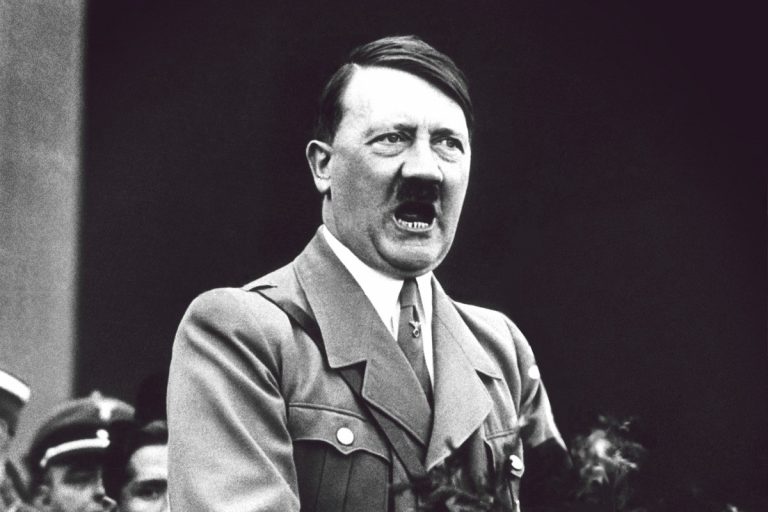
New documentary reveals Hitler liked women urinating on him during sex, had incestuous relationship with his niece

A new documentary film titled ‘Hitler’s Secret Sex Life’ was recently released, shedding light on the sexual psychology of German dictator Adolf Hitler, who is known for exterminating six million Jews during his rule in Germany. It explores the outlandish claims about Hitler being a voyeur and a porn addict.

The documentary, which was released on Sunday on Sky History, says that Hitler liked women urinating on him during sex and had an incestuous relationship with his niece. Besides, the dictator also reportedly liked women to kick him and relished in performing sadomasochistic acts.

While Hitler claimed to observing abstinence, protesting against prostitution, and declaring men who succumb to lust as weak and pitiful, he invited strippers and prostitutes to put on private shows at his mountain retreat. After becoming the chancellor of Germany in 1933, Hitler became a “full-blown porn addict”, the documentary claims.

Reportedly, the official Nazi photographer Heinrich Hoffmann was asked to supply pornographic films to Hitler which he played most nights in his private theatre in the Chancellery.

The mysterious death of his niece

The documentary claims that Hitler had an incestuous relationship with his niece Geli Raubal, who was later found dead at his apartment in Munich, Germany, under mysterious circumstances. In the short film, Geli was forced to take part in sexual activities by her uncle Adolf Hitler. The relationship is believed to have lasted for six years, following which Geli was found dead after being shot in the chest in 1931, fuelling suspicions that the Fuhrer murdered her.

According to a report published in The Sun, Geli reportedly claimed that Hitler demanded “simply repulsive” things from her. The report says Hitler made her undress, squat over his face and, when he was sexually aroused, he would ask her to urinate on him. Geli described the act as “extremely disgusting to her”.

In another instance, the documentary looked at Hitler’s sexual fetishes with actress Renata Mueller, who fell to her death after engaging in sadomasochistic acts with Hitler. She had also revealed that Hitler had pleaded with her to kick him. Mueller had reportedly told film director Alfred Ziesler that she kept kicking Hitler as he lay on the floor asking for more.

The documentary also touched upon the rumours that Hitler was unable to have sex with Eva Braun, the girlfriend of 13 years who he married on the eve of their joint suicide in 1945. Eva’s gynaecologist had reportedly claimed that her vagina was “so narrow” that sex would have been incredibly painful, and her hairdresser claimed that she confided in her that they did not have sex.

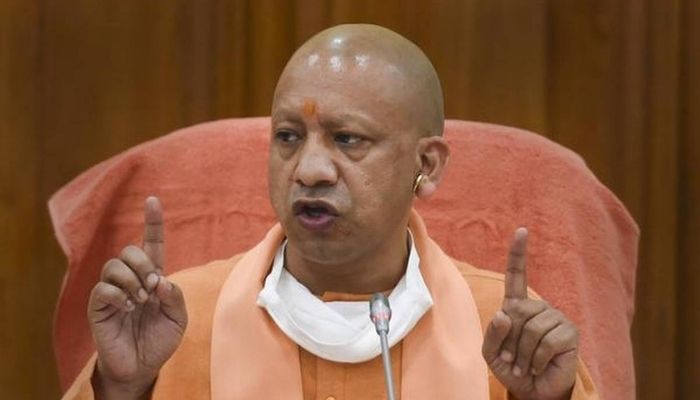
‘You have only 4 days left’: Uttar Pradesh CM Yogi Adityanath receives death threat

Yogi Adityanath, the Chief Minister of Uttar Pradesh, has yet again received death threats from an unidentified miscreant on Thursday (April 29).

As per reports, the said threat call was received by the Uttar Pradesh police on its Whatsapp emergency number ‘112’ on Thursday at 7:58 pm. The unidentified caller had threatened that Yogi Adityanath had ‘only four days left’ to live. He had also challenged the police to arrest him within four days, else he would go about with his nefarious plan on the 5th day.

A complaint was filed with the Sushant Golf City police station. The police have launched a probe into the matter and are now trying to trace the accused. The information about the threat call was passed on by the police officials to the Commander of the Control room Headquarters, Anjul Kumar. He then notified his senior officials about the matter. Following this, the ADG (Law and Order) Prashant Kumar informed the ADC Security Headquarters.

Yogi Adityanath had received death threats in the past

This is not the first time that the Uttar Pradesh CM has received threat calls. In November last year, the Lucknow police apprehended a minor boy in Agra for issuing death threats to Uttar Pradesh Chief Minister Yogi Adityanath via social media. As per reports, the 15-year-old accused had sent a message to the Whatsapp number (112) of the emergency service of the Uttar Pradesh police. He had threatened to ‘blow up the Uttar Pradesh CM’. The police were able to trace the threat message to Agra with the help of Surveillance and cyber team.

In a Whatsapp message sent to the social media cell of UP Police’s integrated emergency response centre UP112 in June last year, a person threatened to kill Cheif Minister Yogi Adityanath “with a bomb”. He has also warned of bomb blasts at 50 different places in Uttar Pradesh. In the written message on Whatsapp, an unidentified person has said that “we will blow up the entire state and the Uttar Pradesh government will keep watching.”

Victim blaming to brazening it out: TMC top leadership responds to the violence unleashed by goons after poll result

A day after the ruling TMC retained power in West Bengal, goons unleashed violence on political opponents, especially the BJP and the communist parties. Multiple reports have come forth beginning Sunday afternoon, at the time of counting where TMC showed early trends of winning the elections. The violence continued on Monday.

In a video shared by BJP leader Kailash Vijayvargiya, one can see how the goons were thrashing women workers of the BJP in Nandigram, where Mamata Banerjee lost to BJP’s Suvendu Adhikari.

Similar scenes of violence were witnessed against communist party cadres as well.

Communist party leaders took to Twitter to share images of violence unleashed in aftermath of TMC’s victory in West Bengal.

Amid all this, TMC’s top leadership has not only blamed the victims but also brazened out the violence.

Top TMC leadership waters down post-poll violence

TMC chief and West Bengal Chief Minister Mamata Banerjee appealed to maintain peace while inflaming passion.

“I appeal to everyone to maintain peace and not indulge in any violence. We know BJP and Central Forces have tortured us a lot but we have to maintain peace. At present, we have fight COVID19,” Banerjee said.

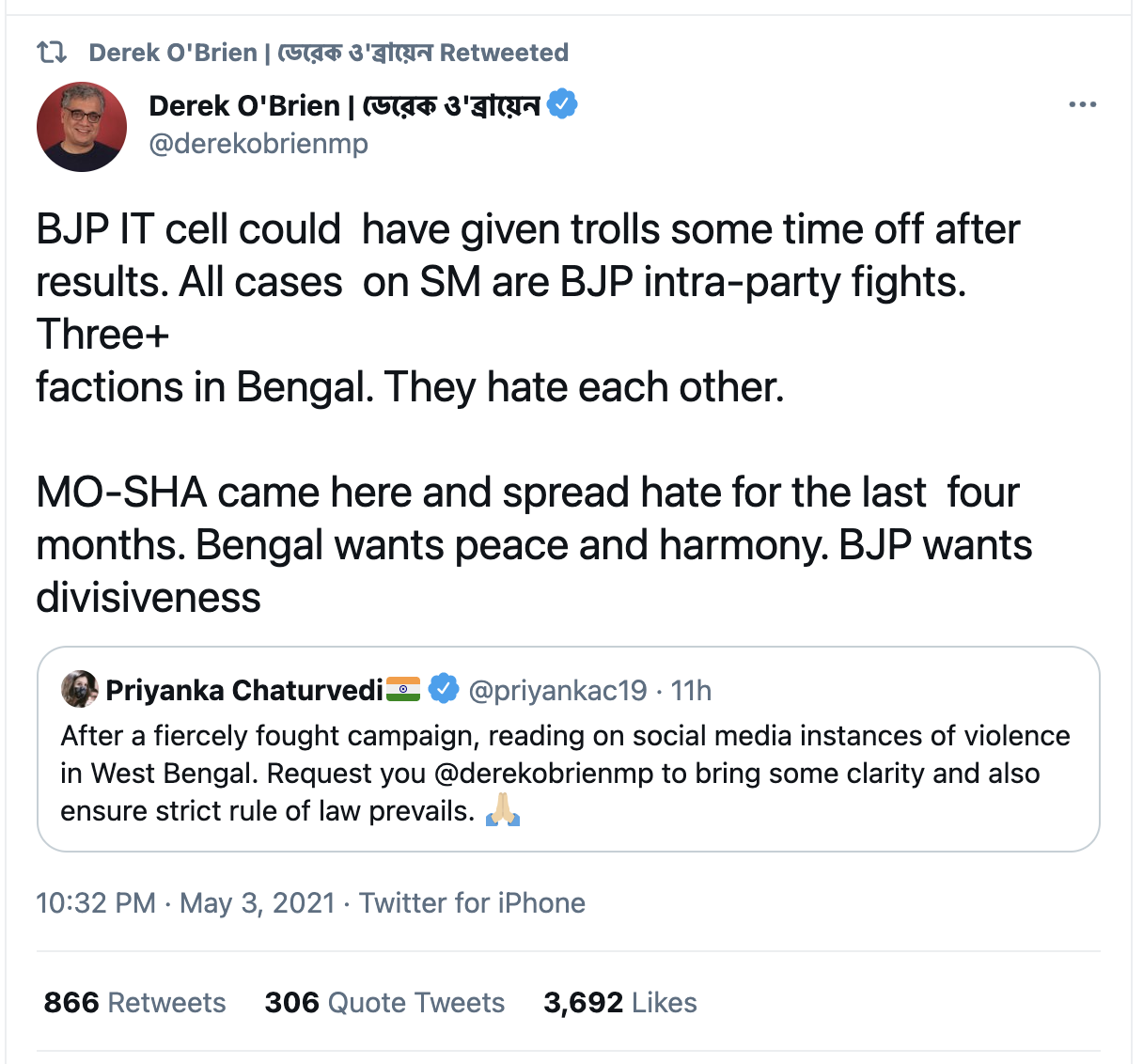
Derek’s tweet

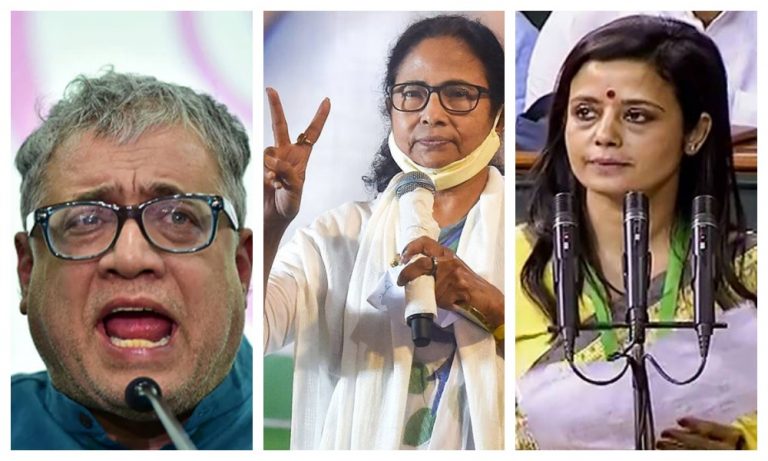
TMC MP Derek O’Brien resorted to victim blaming and claimed that the gruesome scenes of violence unfolding in West Bengal are ‘intra party’ fights. He accused PM Modi and HM Amit Shah of ‘spreading hate’. On Tuesday morning, he even retweeted his tweet brazening out the violence.

Wire journalist

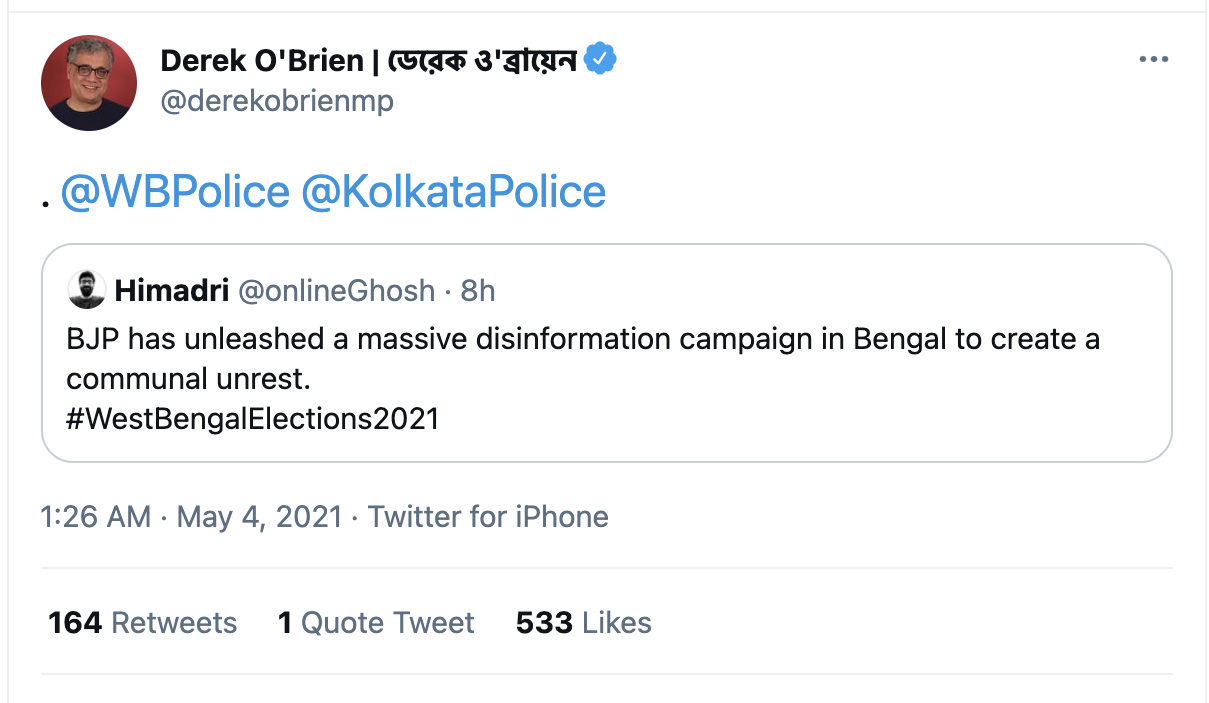
The Wire journalist Himadri claimed that the BJP has ‘unleashed a massive disinformation campaign in Bengal’. This, too, was retweeted by Derek while tagging the Bengal Police, insinuating that all the videos and images of injured supporters of BJP as well as Left parties are ‘massive disinformation campaign’ by the BJP.

Derek retweeting Agino Niyogi

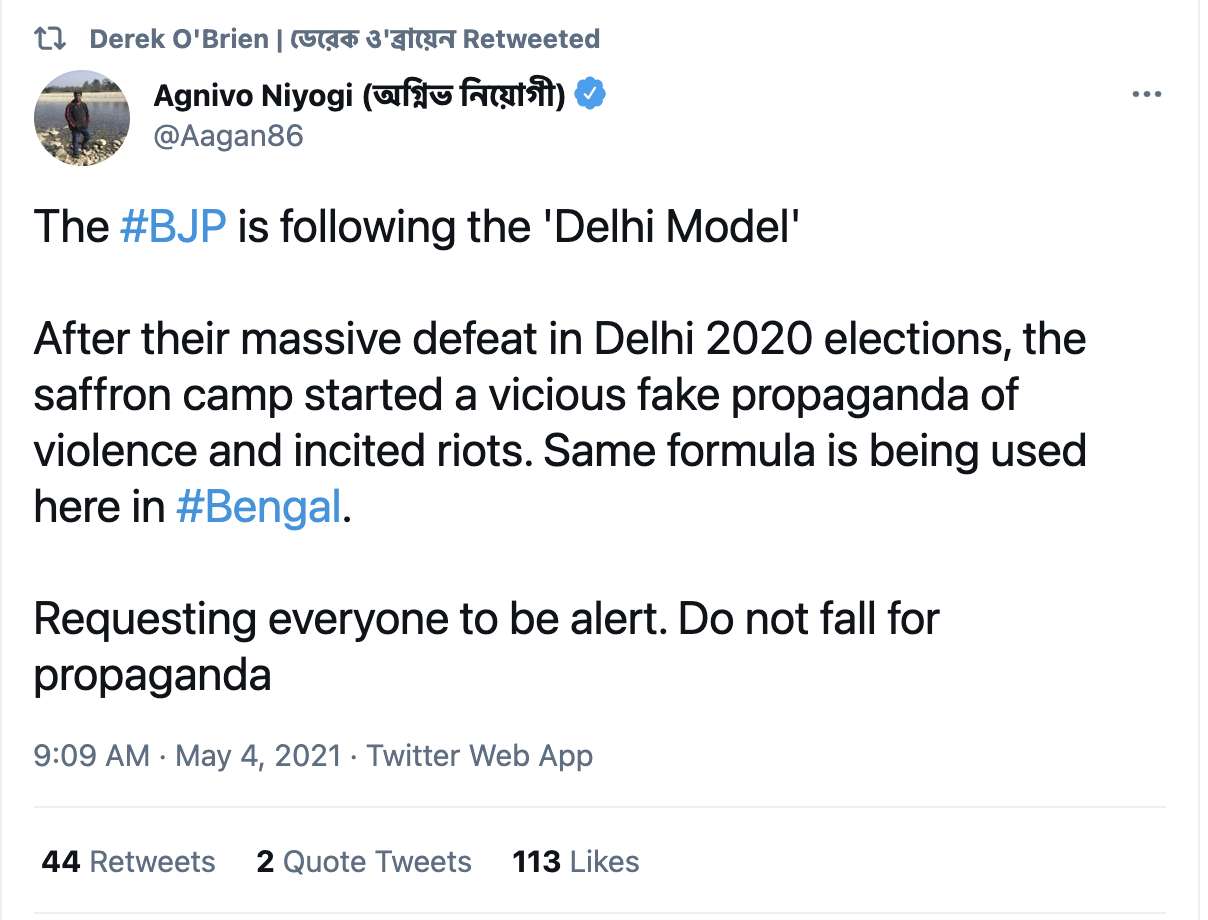
Similarly, TMC supporter Agnivo Niyogi tweeted that the violent scenes from West Bengal is ‘propaganda’. This, too, was retweeted by Derek O’Brien.

Mahua Moitra’s tweet

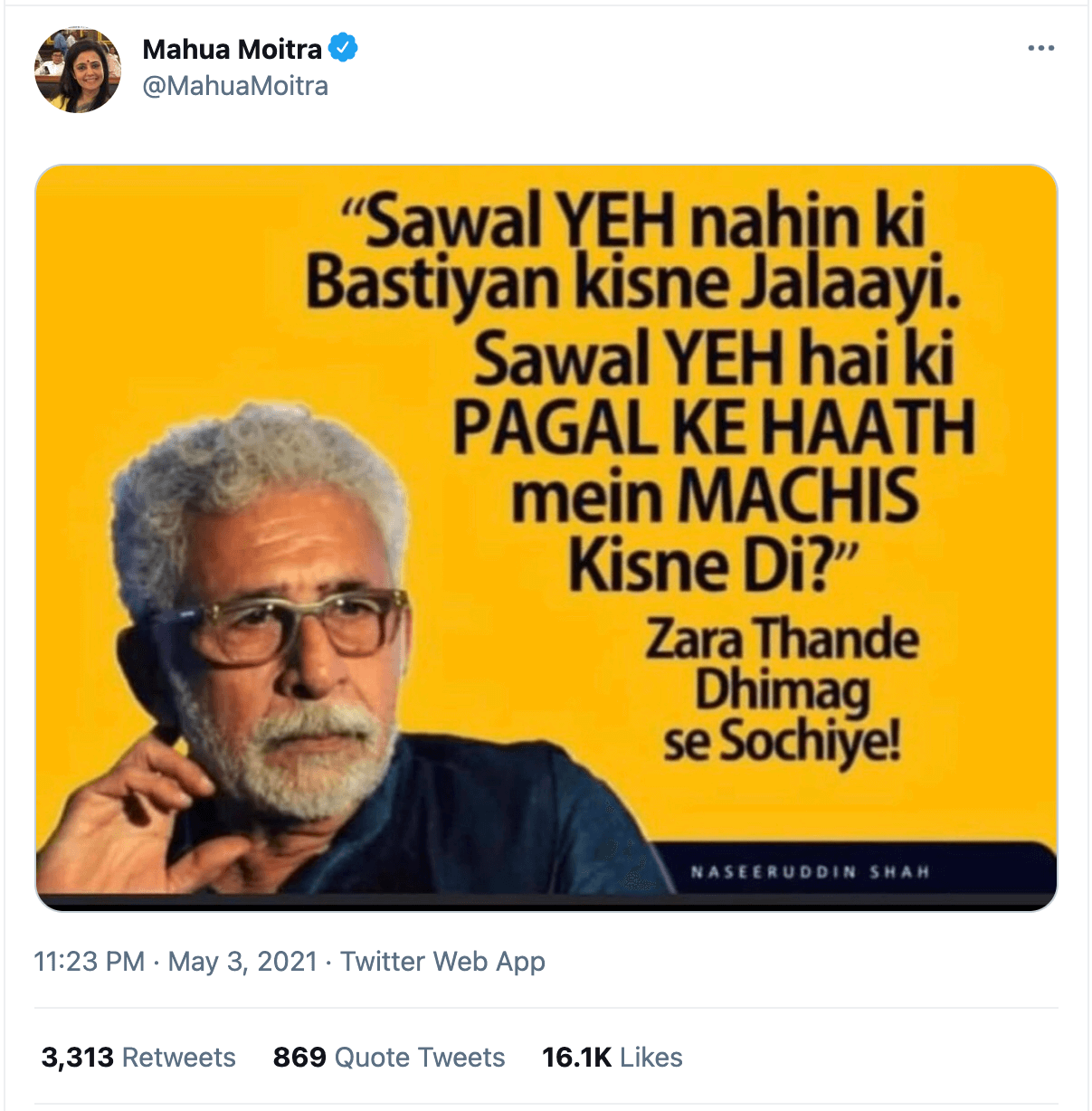
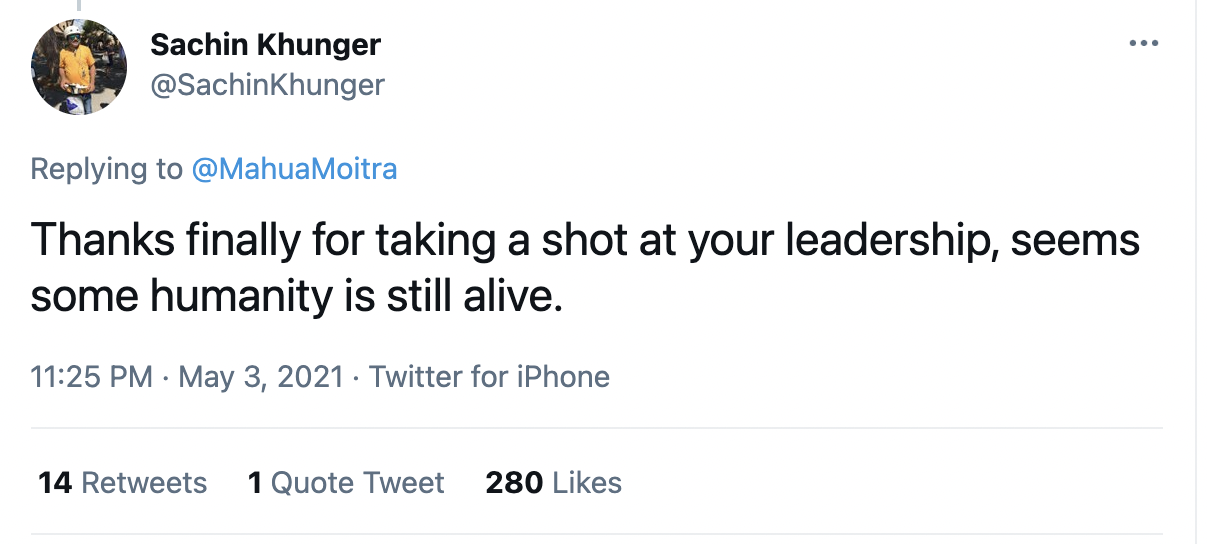
TMC MP Mahua Moitra posted an image late last night which said, “Sawal yeh nahin ki bastiyan kisne jalaayi. Sawal yeh hai ki pagal ke haath mein maachis kisne di? Zara thande dimag se sochiye.” (Question is not who burnt down the village, but the question is who gave the mad person the matchstick to set the fire? Think with a cool mind.)

Many netizens guessed who might have given the matchstick to the mad person.

Vidya Krishnan’s tweet

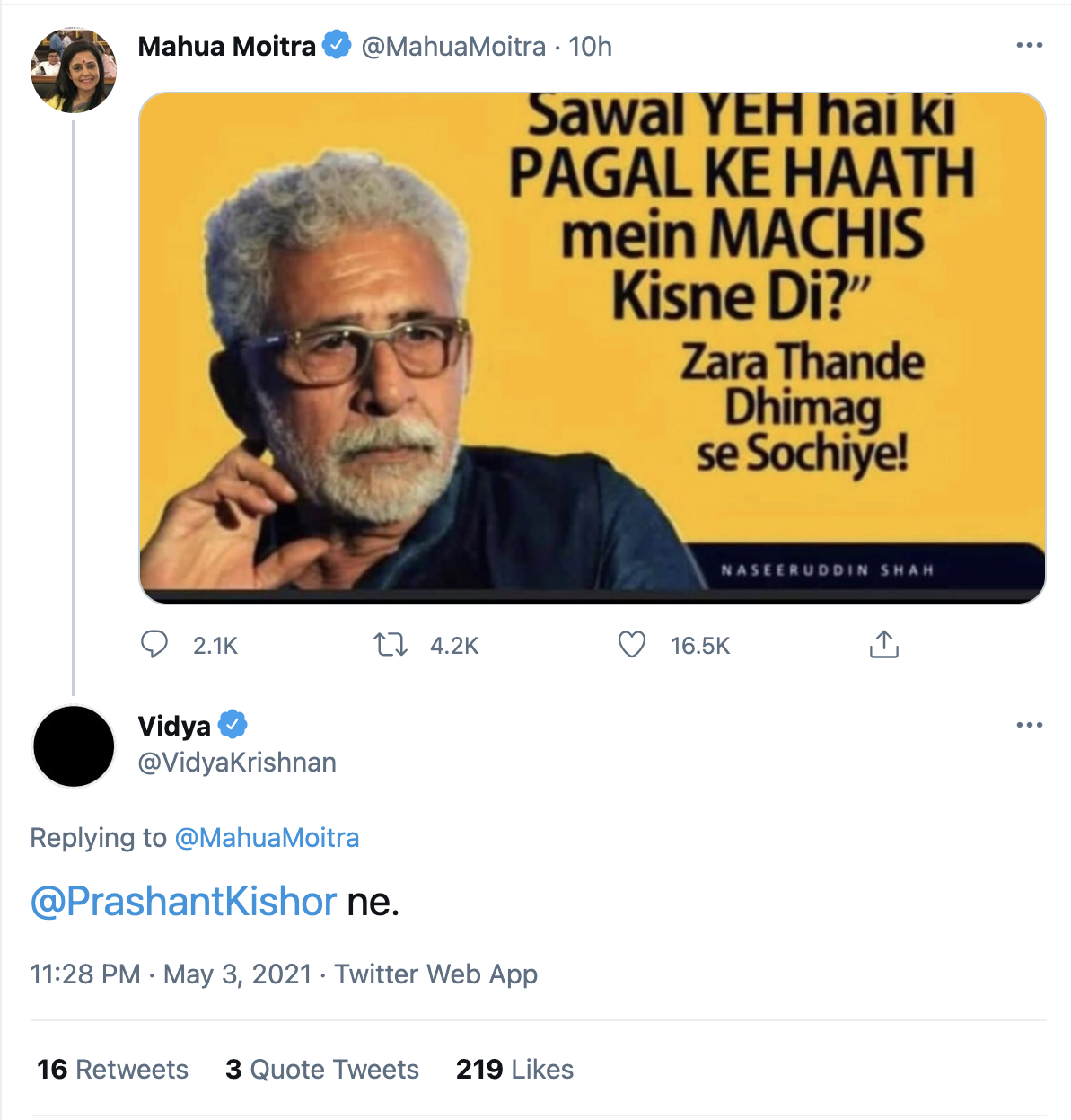
The Caravan Magazine journalist Vidya Krishnan pointed out that the matchstick was handed over to the ‘mad person’ by poll strategist Prashant Kishor. Kishor was hired by TMC and Mamata Banerjee for the 2021 West Bengal state assembly elections.

Reply to Mahua

Some even hailed her for her inadvertent honesty.

West Bengal has been engulfed in post-poll violence as numerous BJP and Left workers are attacked, beaten up and also killed. Many shops are looted and law and order situation in the state has gone for a toss. However, it seems the people at the top have chosen to turn a blind eye to what is happening in the state termed as ‘sweetest part of India’

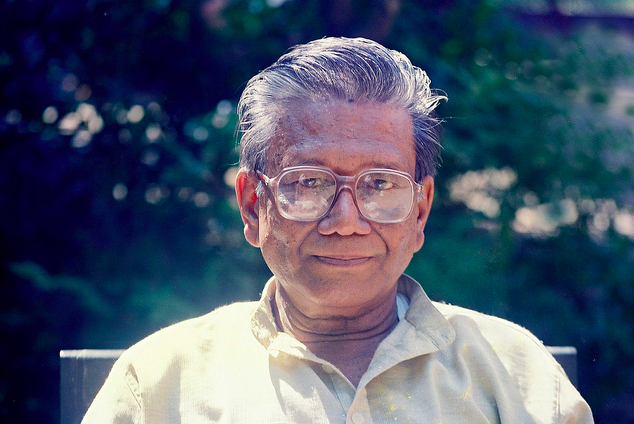
Manoj Das the storyteller: Alive forever, in a million smiles and a million memories

On 27 April 2021, Manoj Das said farewell to the material world. One of the most celebrated and gifted authors of modern times, the favourite of generations of Odia readers, finally breathed his last after a prolonged illness due to old age. He was 88 and for most of that 88 years, he has created magic, absolute magic with his pen.

Manoj Das was born in a small coastal village named Sankhari in the Balasore district of Odisha. The village, the Talasari beach, the Subarnarekha river and the Chandaneswar Temple nearby all played a crucial part in his formative years, and they all feature multiple times in his stories and memoirs. He was born on 27 February 1934 and after his higher education, he had worked briefly as a lecturer in Cuttack before joining the Aurobindo Ashram where he spent most of his life as a lifelong disciple of Shri Aurobindo’s philosophy and as a lecturer of English at the Puducherry University. He had many honours before his name, Sahitya Academy Award, The Saraswati Samman, Padmashri and Padma Bhushan.

None of the above actually matters, not to his readers. For he is one of the rare authors who transcend time, position, awards and recognition. He was a creator of extraordinary magic. He has woven tales of human emotions, experience, sorrows and joys with such finesse that for his readers, it doesn’t matter whether he is at Puducherry or in heaven because he is always there in the pure happiness of a brilliant, perfect story that brings fond memories. For me, and for many like me, Manoj Das will always be in the winds of the beach, in the trees around the villages, in the berry bushes of his childhood, in the old buildings of his stories, and in the countless stories that continue to enthral us with their impeccable word flow, mesmerizing plots and simple, clean humour.

Leagues ahead of his contemporaries

Manoj Das’ stories were perhaps best described by Ruskin Bond. Speaking at a literary festival in Bhubaneswar once, Bond had told that Manoj Das is the best storyteller in India when it comes to describing Indian village life, even better than RK Narayan.

We use the term ‘blessed by Maa Saraswati’ for extraordinary writers and artists. But I think many Odias readers will agree that in Manoj Das’ case, it was not just blessings. It is as if Maa Saraswati herself wrote with his pen. The purity of language, the freshness of his plots, the simplicity of his characters, the extensive shades of human nature, and myriad experiences of life not only delight the reader, they transport them back through the pages to the very set up, to feel every bit of the emotions felt by the characters and to live every moment immortalised in those stories.

Simples lives, extraordinary stories

Manoj Das wrote dozens of novels, short stories, travelogues, essays, and memoirs. In all his writing, the one thing that is common is the purity of language and the narration that just makes it all….. ‘alive’. Though he is more recognised for his English writings, we Odias don’t see him as an English writer. Odias are fortunate because we get to read the real Manoj Das, the stories, the words and the sentences where he poured down his heart, leaving a magic trail of his extraordinary gift for generations to come.

No English translation can absorb how the protagonist Bhanu Singh felt in the story ‘Bibastra’ (naked). In that story, the protagonist, the simple caretaker of an old palace owned by an erstwhile royal family suddenly gets a letter from his employer, informing him that he must prepare for a good welcome and comfortable stay for some of the old queen’s “foreign” friends, who are apparently “nudists’. The poor man undergoes a near-nervous breakdown, going through all the 5 stages of grief: denial, anger, bargaining, depression, acceptance, to finally come to terms with the fact that to ‘properly’ welcome the ‘nudists’, he must be naked himself.

Just when he was about to slip into despair, Bhanu Singh has an epiphany, an encounter with the local deity in the beach side temple that was recently looted by vandals. In a cool night on that coastal village, Singh realises that everything in god’s creation is, in fact, “bibastra”. From the blue sky to the endless sea, to the temple deity whose clothes were stolen, when all of them are ‘Bibastra’, why would he, a mere mortal, be afraid of sheding his garments.

In ‘Bhutuni: Eka Bidaya’ (The she-ghost: A farewell), there is an entire village that loves and cares for the ghost of a young girl that is said to live in an old bungalow. As if she was one of their own daughters. The villagers have ‘adopted’ the she-ghost and have come to empathise with her, for the pain and violence she had to endure in her life, and for the ‘kindness’, she had shown to them. So much is the love of the villagers for the ghost that they even oppose the government when the authorities plan to demolish the old bungalow. The authorities do not budge, and finally, the villagers decide to find a new home for the ghost, a tree. On the day of her scheduled ‘departure’ with the guidance of a famous Tantrik, the entire village weeps, as if their own daughter is being driven away harshly.

In countless such characters, situations, and setups, Manoj Das transports the readers into his own wonderland, where his words are woven into intricate fabrics of folklore, beliefs, hopes and ambitions, losses and victories, achievements, and heartbreaks. Tales where his flawless sentences work like notes of a heavenly melody, taking the reader with them in a reading journey that is, inside the minds of the writer and reader both, as colorful as the beautiful landscapes he describes.

Contrasts, characters and tropes

The stories of Manoj Das are remarkable not just for the vastness of the types of characters he chooses, but for the sheer courage of him as a storyteller. His stories are not bound by the usual tropes of love, loss, romance, and revenge that most writers dabble in. He tells stories of an old woman who was believed to have been taken by a giant crocodile, who, as per folklore, had made her his wife (Kimbhirini). He tells the story of Lakshmi, a little girl who speaks with the god (Lakshmi Ra Abhisara). He tells the story of a reluctant young man who, due to unavoidable circumstances, is forced to become a revered Guru or Godman, though in reality he possesses no spiritual powers. (Akasha Ra Isara). There is a fearful, timid history teacher who eventually comes to believe that he was the mighty horse that took emperor Prithviraj Chouhan to countless battles, and gains enough confidence to scare off a gigantic bodybuilder twice his own size (Pruthvirajanka Ghoda). These are just a handful of examples of the hundreds of worlds he created for us.

Manoj Das’ writings often also feature the theme of contrasts, where seemingly opposite characters and circumstances are flawlessly blended into a picture of brilliant shades. In his stories, a brave, selfless patriot who withstood the rigors of the cellular jail in Andamans is found belittled and ridiculed by post-independence Gandhian ‘Netas’ (Ota). An old man in his last moments learns that the love of his youth was not one-sided after all, as the girl he had loved had written him a reply, affirming her feelings for him. The poor old man’s ghost is then seen searching for that torn-away letter that was thrown away decades ago by an intermediary near a bridge (Janharatira Setu).

He is the storyteller who has never shied away from bringing together the material world with the spiritual, the natural with the supernatural, reality with the lore, and living with the spirits.

Conclusion

This article is not an obituary. Before I sat down to write it, I had a long discussion with fellow reader and friend Sambit, and we talked about how ‘timeless’ Manoj Das’ stories are. I was introduced to them by my father, when he brought home the ‘Sachitra Bijaya’ magazine. A large part of my childhood and adolescence has been about Manoj Das’ stories.

As Sambit and I discussed, one thing was certain in my mind. It is impossible to write an article about Manoj Das’ stories and do them justice. It is never going to be complete, it is never going to be enough. How do you hold the sea storm inside your palms? How can one contain the sunlight in a little lamp? How can mere mortals write down and list the immortal infinity of countless creations inside the finite restrictions of an article? How does something as insignificant, and as regular as death binds a writer who is alive in a thousand stories?

There indeed is no need for an obituary. A writer of Manoj Das’s stature can only be celebrated for the genius of his creations, not mourned. Never. It does not really matter whether he lived in Sankhari, or in Aurobindo Ashram. It does not matter where his material body took its last breath. Manoj Das will be alive in a million smiles, and a million memories.