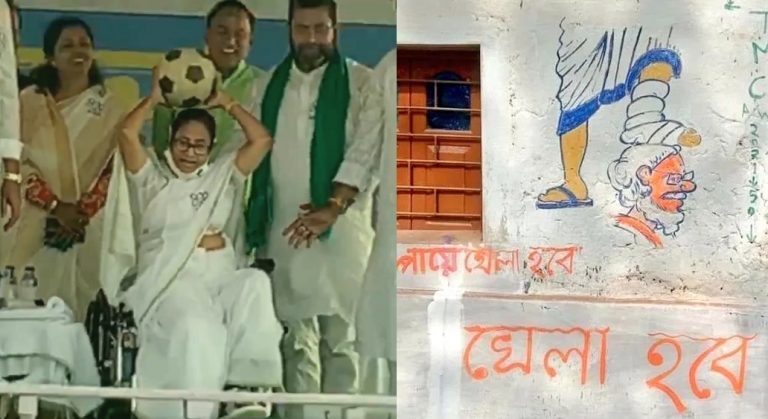
On March 31, just a day before Bengal votes in Nandigram, Chief Minister Mamata Banerjee passed a football to the crowd in the Howrah rally. The CM took the ongoing theme around football in the Bengal elections to a new level, where she again brought a real football to an election rally, in line with TMC’s war cry ‘khela hobe’ (game is on).
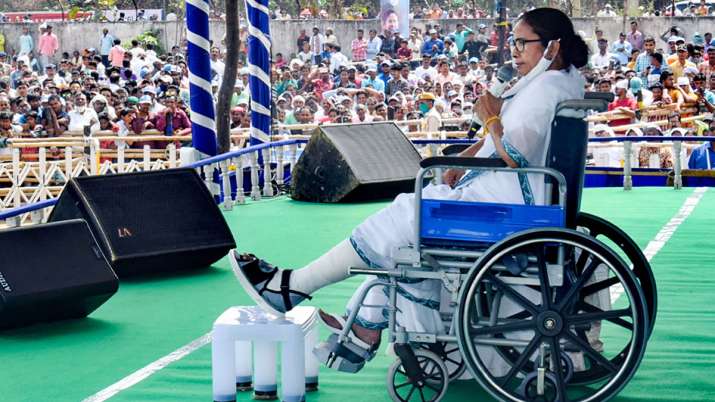
During a public rally in Howrah, Mamata took a football and juggled it with her hands while sitting on a wheelchair. After that, she tried to bounce the ball like a basketball, but couldn’t manage it. Every time she dropped the ball on the stage, it moved away instead of bouncing back to her hands, and her aides had to play fetch to get the ball back to her. Repeating the same a couple of times, Mamata Banerjee threw the ball to the crowd, amid the chants of ‘khela hobe’.
This is not the first time Mamata Banerjee has metaphorically attacked her opponents using a football. On March 27, in a rally in Narayangarh of Paschim Medinipur, she threw a ball from the stage and said, “BJP bowled out!” It may be noted that she had pretended to play cricket using a football on that occasion.
‘BJP bowled out’: Mamata Banerjee plays with Football at rally; says she walks 4 hrs daily https://t.co/ElYixMbN0N
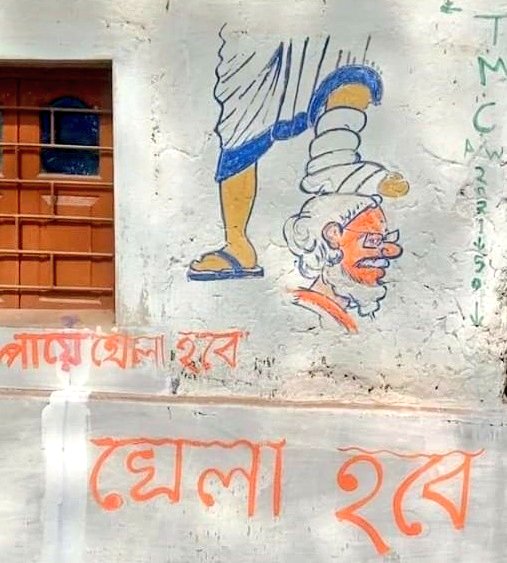
Since Mamata Banerjee was allegedly hurt by a pole during an election rally, she attended rallies with a plaster on her injured leg. After that, a caricature titled “Khela Hobe” with her plastered leg and a football created by Sandeep Adhwaryu was published in Times Of India.
TOI caricature by Sandeep Adhwaryu
Based on that cartoon, some TMC members had made a wall painting in Bengal in which Mamata Banerjee was seen hitting PM Modi’s head instead of a football. Notably, when Banerjee was injured during a rally in Nandigram, she had alleged that she was attacked by 4-5 people. However, it was later revealed that the whole incident was an accident.
A wall with Mamata Banerjee and Prime Minister Narendra Modi’s caricature with the former kicking the head of Prime Minister. Image source: twitter handle of BJP India
PM Modi took note of the cartoon
PM Modi took note of the wall painting and talked about it during a rally in Bankura, West Bengal. He referred to the controversial murals and said, “if you want, you can keep your foot on my head or kick me, but I will not let you kick the development of Bengal. I will not let you kick the dreams of Bengal.”
While addressing a rally in Bankura in West Bengal, Prime Minister Narendra Modi referred to the murals being drawn on walls in West Bengal where CM Mamata Banerjee is shown putting her leg on his head. This comes after TMC workers have been busy creating the images and circulating the same on Social Media. It shows West Bengal CM Mamata Banerjee putting her bandaged foot on Prime Minister Modi’s head.
The much-anticipated voting in Nandigram
Nandigram has become a matter of honour for both TMC and BJP in ongoing Assembly Elections in West Bengal. Mamata Banerjee is contesting from the Nandigram seat against Suvendu Adhikari, who is contesting on BJP’s ticket. Adhikari was one of the most trusted members of Banerjee’s army before he left TMC and joined BJP in December last year. His departure from TMC was seen as a big blow to Banerjee’s desire to come back in power.
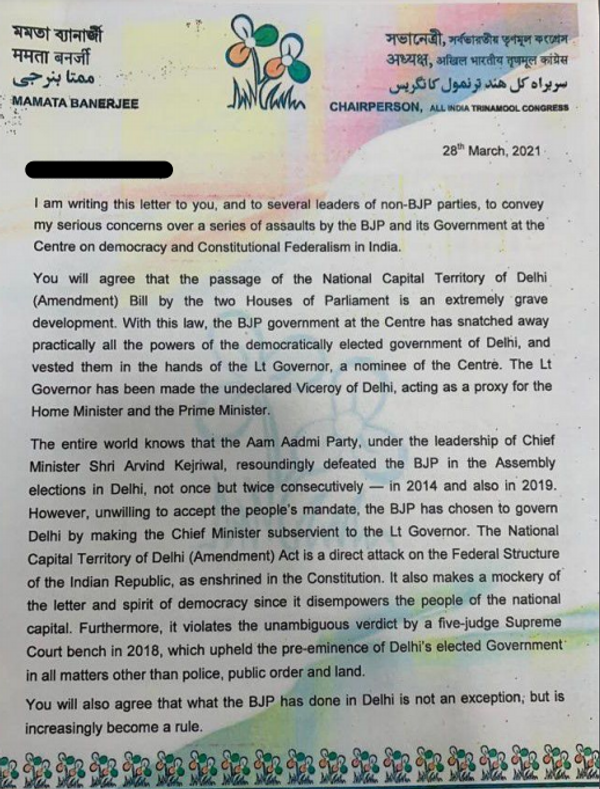
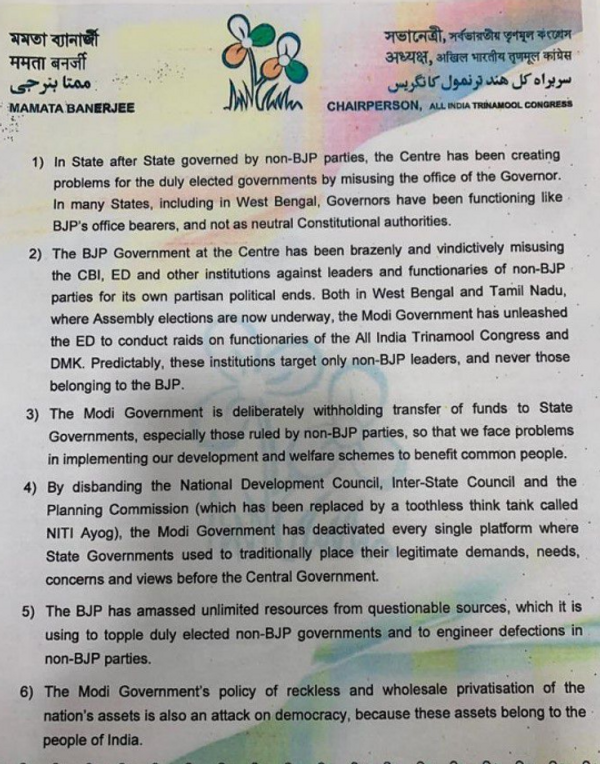
Even though the results of the ongoing assembly elections will be declared on 2nd May, West Bengal Chief Minister Mamata Banerjee seemed to have conceded that she can’t defeat BJP on her own, and therefore sought help from all the opposition parties in combating BJP. Mamata Banerjee has sent a letter to all the major opposition parties asking them to come together to defeat BJP. The letter comes just after the first phase of polling in the state, indicating Mamata’s worry and lack of confidence in retaining power in West Bengal.
Mamata Banerjee writes to leaders incl Sonia Gandhi, Sharad Pawar, MK Stalin, Tejashwi Yadav, Uddhav Thackeray, Arvind Kejriwal, Naveen Patnaik stating, "I strongly believe that the time has come for a united & effective struggle against BJP's attacks on democracy & Constitution" pic.twitter.com/OLp7tDm9pU
The letter was sent to 15 non-BJP leaders including Congress chief Sonia Gandhi, NCP chief Sharad Pawar, DMK chief MK Stalin, Jharkhand CM Hemant Soren, Delhi CM Arvind Kejriwal, Odisha CM Naveen Patnaik, Andhra CM Jagan Mohan Reddy, RJD chief Tejashwi Yadav, SP chief Akhilesh Yadav as well as NC chief Farooq Abdullah and PDP chief Mehbooba Mufti. Mamata Banerjee in the letter states, “I am writing this letter to you, and to several leaders of non-BJP parties, to convey my serious concerns over a series of assaults by the BJP and its government at the Centre on democracy and Constitutional Federalism in India.” It may be noted that Congress is contesting against TMC in West Bengal, in alliance with left parties.
Citing the passage of the National Capital Territory of Delhi Amendment Bill by both the houses of the Parliament as an example, Mamata Banerjee expressed her displeasure and alleged foul play. Alleging that since BJP could not win against two-time CM Arvind Kejriwal in Delhi, they adopted new means to control the capital.
Addressing other key concerns in pointers, she alleged that the Centre is deliberately withholding the transfer of funds to state-governments, especially the ones ruled by non-BJP parties; that the BJP has amassed unlimited resources from questionable sources and that Modi government’s policy of privatization of national assets is an attack on democracy.
Letter by Mamata Banerjee to leaders of major opposition parties
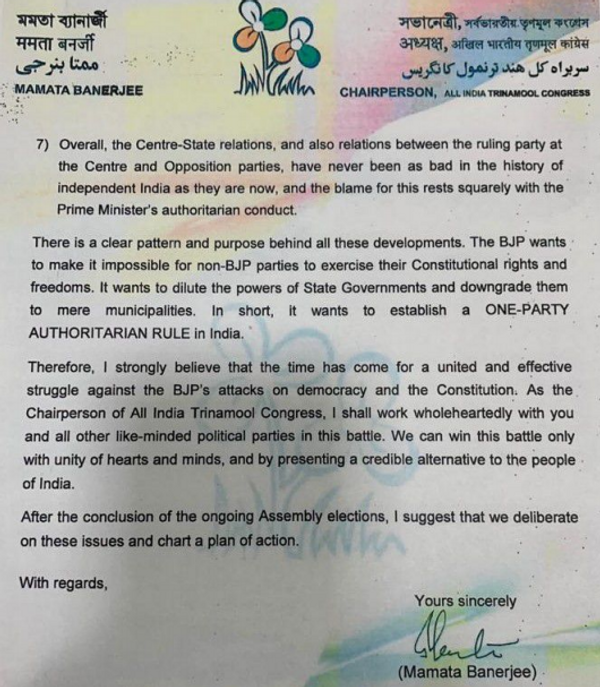
Mamata Banerjee also alleged that the central govt was interfering with the functioning of non-BJP state governments by using Governors and probe agencies like the CBI and ED. She also claimed that BJP wants to establish a ‘one-party authoritarian rule’, saying, “Overall, the Centre-State relations, and also relations between the ruling party at the Centre and Opposition parties, have never been as bad in the history of independent India as they are now, and the blame for this rests squarely with the Prime Minister’s authoritarian conduct.”
The letter ends with a call to unite and fight against the alleged “one-party authoritarian rule” in India. Mamata Banerjee wrote, “I strongly believe that the time has come for a united and effective struggle against the BJP’s attacks on democracy and the Constitution… We can win this battle only with the unity of hearts and minds, and by presenting a credible alternative to the people of India.” She also recommended the parties to come together and deliberate on this matter after the ongoing Assembly elections.
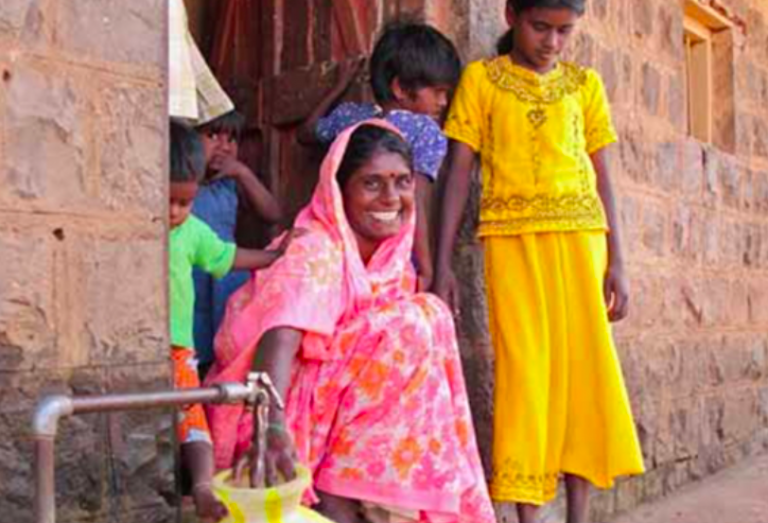
PM Narendra Modi’s ambitious scheme of providing piped water to every household in the country has started with a massive success, as it has exceeded its target so far since its launch in 2019. The flagship ‘Har Ghar Nal Se Jal’ has provided tapped water to approximately 4 crore rural households, which is almost 20% more than the target.
The initiative since the launch in 2019 has provided over 4.03 rural households with tap water connections, which is more than the number of rural households with water connections at that time. 100% rural households of Goa, Telangana and Andaman & Nicobar Islands now have tap water connections with states like Puducherry, Haryana and Gujarat inching close to the cent per cent mark, according to the Jal Sakti ministry.
Announced by PM @narendramodi on 15.08.2019, with the aim to provide tap water supply to every rural home by 2024, #JJM has reached over 4 Crore homes. About, 7.25 Crore (38%) i.e. more than 1/3rd of rural homes are getting potable water through taps. https://t.co/89m6k5kRLGpic.twitter.com/BvyGBrwiqD
Historically, access to clean and safe piped water has been very poor in India. Out of 19.19 crore rural households in India, only 16.87% of households had tap water connections till August 15, 2019, since the time of independence. This means, at the start of the scheme, only around 3.2 crore rural households had water connections, and that number has more than doubled after the launch of the scheme.
Concerned about the lack of safe drinking water for the rural households, Narendra Modi had launched the time-bound initiative- the Jal Jeevan Mission on August 15, 2019. The aim of the initiative is to provide safe and adequate drinking water through individual household tap connections to all rural households in India by 2024. The initiative also touches upon other sustainable measures for water conservation, recharge and reuse through greywater management and rainwater harvesting.
It is unfortunate, however, that so many people lack access to water even 70 years after Independence.
Work on the Jal Jeevan Mission will progress with great vigour in the years to come: PM @narendramodi
The Jal Jeevan Mission is simultaneously focusing on providing potable drinking water to public institutions such as government schools, Anganwadi centres, health and wellness centres.
The mission in spite of achieving a remarkable feat is still short of target in several states, including West Bengal, Uttar Pradesh, Assam etc, which have been the worst-performing states in providing access to potable drinking water to rural households.
Prime Minister Narendra Modi in his political rallies in West Bengal expressed his displeasure over TMC depriving the state of the Centre’s piped water scheme. The state currently has covered just about 9% of rural households with tap water connections.
Narendra Modi while addressing a rally in West Bengal made a stunning revelation. He informed, “Around 3.6 crore rural households have been brought under the water supply project. But in Bengal, only 9 lakh households have received direct drinking water supply in their homes. The central government had sanctioned Rs 1,700 crore for the project but, unfortunately, only Rs 690 crore have been duly used and rest is drained out.”
The ‘Jal Jiwan Mission’ is very important for West Bengal as many people do not receive water from taps & all this is happening despite the state having a woman Chief Minister: Prime Minister Narendra Modi#BattleForBengalpic.twitter.com/j8V48EdrD9
In another rally at Purulia, the Prime Minister claimed that the proposed Purulia Piped Water Supply Project — funded by JICA — has been going on for nearly eight years and is still “far from completion”.
In a press note released by the office of Gajendra Singh Shekhawat, Union Minister of Jal Shakti, informed that despite the CoVid-19 pandemic and resultant lockdowns, the speedy implementation of Jal Jeevan Mission provided 3.16 Crore rural households with tap water connection. Making a crucial strategic shift, the mission will now focus on providing an assured supply of potable water to every home rather than mere infrastructure creation.
Jal Jeevan Mission is working in partnership with the States with an aim to provide potable water in adequate quantity and of prescribed quality on regular and long-term basis. Extensive planning exercise was undertaken by the States/ UTs following ‘bottom-up approach’. Accordingly, they have firmed up the Action Plan to provide tap water connection to every rural household. While implementing, States are giving priority to water quality-affected areas, village in drought prone and desert areas, Scheduled Caste/ Scheduled Tribe majority villages, aspirational districts and Sansad Adarsh Gram Yojna villages.
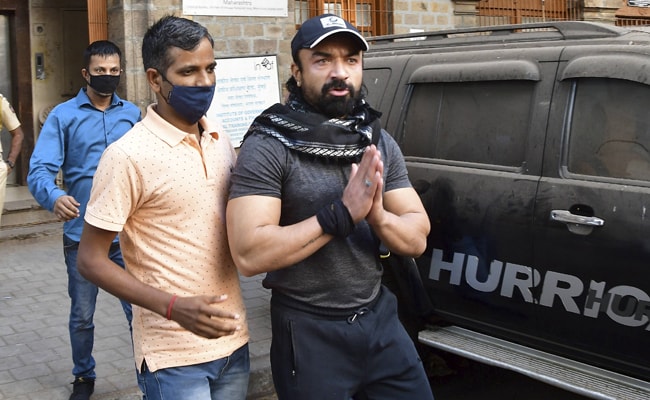
A day after being detained in connection with a drug probe, actor Ajaz Khan has been remanded to NCB custody till April 3. Khan was taken into custody yesterday from the Mumbai airport upon his arrival from Rajasthan. The agency had said that they had found alprazolam tablets from his residence during searches in the city’s Andheri and Lokhandwala areas.
Actor Ajaz Khan remanded to Narcotics Control Bureau (NCB) custody till April 3.
Earlier today, the Narcotics Control Bureau arrested actor Ajaz Khan after 8 hours of interrogation in connection with a drug case. But the embattled actor has refuted allegations levelled against him and claimed his innocence, stating that only 4 sleeping pills were found at his home and that they were being used by his wife as antidepressants after suffering a miscarriage.
However, the NCB officials claimed Khan is arrested for his connection with Batata Gang. The 4.5 grams of Alprozol tablets were recovered by chance during his house search but he is mainly arrested for his association with Batata Gang, the NCB said.
The NCB officials claimed that Ajaz Khan is a part of narcotics peddler Shadab Farooque Shaikh alias Shadab Batata’s syndicate. Shaikh was arrested last Thursday and over 2 kilograms of the banned mephedrone drug were recovered from him. Khan was arrested based on the revelations made by Mr Batata.
After the drug angle came forward in connection with the Sushant Singh Rajput death case, the Narcotics Control Bureau had tightened its noose around the alleged Bollywood-narcotics syndicate with searches, interrogations and arrests.
NCB detains Ajaz Khan from Mumbai Airport in connection with a drug probe
The Narcotics Control Bureau (NCB) had yesterday taken actor Ajaz Khan into its custody. Reportedly, the NCB had also conducted raids at various locations related to the actor. The actor was taken into custody after he returned to Mumbai from Rajasthan.
Ajaz Khan is reportedly accused of being a member of the Batata gang. Shadab Batata, son of Farooq Batata, was arrested earlier by the NCB and drugs worth Rs. 2 crores was reportedly recovered from the same. Shadab Batata is accused of supplying drugs to Bollywood celebrities.
Ajaz Khan has found himself on the wrong side of the law earlier as well. He was arrested by the Mumbai Police in April 2020 for communal remarks he made in a Facebook Live video.
In his Facebook Live video, Ajaz Khan had essentially said, “If an ant dies, a Muslim is responsible, if an elephant dies, a Muslim is responsible. If there is an earthquake in Delhi, a Muslim is responsible, i.e a Muslim is responsible for any incident. But have you ever thought about who is responsible for this conspiracy?”
Modi has done more for the environment than any other PM in recent history. Unfortunately, most journalists and intellectuals do not give him due credit for it. Therefore, it is not surprising that almost all appreciation that Modi gets is from international bodies, including the World Economic Forum (WEF), specifically for the role he played pertaining to the Paris Agreement. Recently, Modi also received the CERAWeek Global Energy and Environment Leadership Award “for his commitment to expanding India’s leadership in sustainable development”, in the words of IHS Markit vice chairman and Pulitzer Prize winning author Daniel Yergin.
What you get instead is cheap wisecracks on Modi’s comments related to global warming when the PM was communicating with school children. Or when he talked about extracting moisture from the air using windmills, a tested technology. Nonetheless, as we will demonstrate in this piece, numbers that highlight India’s progress are overwhelmingly in Modi’s favour.
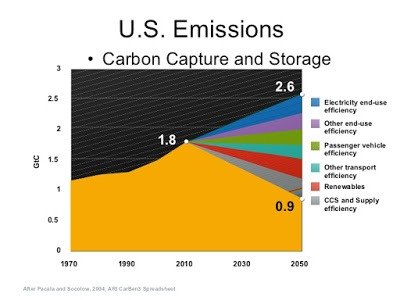
As an environmentalist, we greatly value the work that the Modi Government has done on this front. To give it some perspective, let us look at this well-known slide from Al Gore’s “An Inconvenient Truth”. What the slide shows is the carbon emissions can be reduced readily to pre-1970 levels by acting on several achievable fronts. The Modi Government has addressed climate challenge holistically by addressing electricity consumption and generation, household fuel consumption, vehicle emissions, and transport efficiencies.
Slide from Al Gore’s presentation on how to reduce CO2 emissions to below 1970 levels
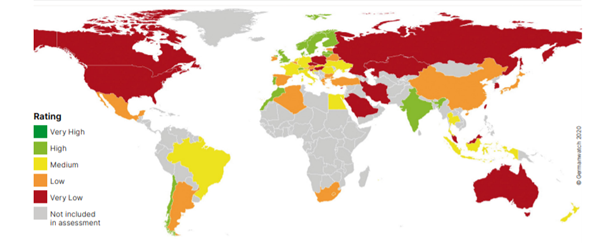
Before moving on to the constituent factors, we can have an overall look at where India stands on the Climate Change Performance Index. As can be seen below, India is rated very high, at par with some of the Scandinavian nations and Chile. This is even as the vast majority of G20 countries are trailing in the rankings. India’s track record of being the only “2°C compatible” country was flagged in a report released by a coalition of 14 global thinktanks. According to the IEA, India is already on track to exceed the commitments made in its nationally determined contribution (NDC) under the Paris Agreement.
Source: CCPI 2021
To appreciate the steps India took to reduce its emissions of greenhouse gases, we can look at the various components that Al Gore talked about.
Electricity Consumption
Progress on electricity end-use efficiency has been achieved primarily through the National UJALA (Unnat Jyoti by Affordable LEDs for All) mission. Over 36 crore LEDs, which are up to 75% more efficient than incandescent bulbs (ICBs) have been distributed, reducing about 38.6 million tonnes of CO2 emissions per annum. Effectively, now every household has an LED bulb that has been distributed by the Government.
Importantly, the Central government carried out multiple initiatives to bring down LED bulb prices through bulk purchasing and promoting local production. This, along with other factors, helped bring down the price of an LED to about INR 70 from INR 400 in 2014 in just five years. The scheme has also been successful in bringing about the rapid adoption of LEDs, and as per surveys, most low-income households would go for an LED bulb when the time comes for replacement.
We however do note that while the share of incandescent bulbs (ICBs) in total lighting devices sold had reduced, it still amounted to a sizeable 43% in 2018, with about 46 crore lighting points with ICBs as of 2017, indicating that the program is around halfway through. That said, the share of LEDs is now an impressive 46%, compared with less than 0.4% in 2014. Another area where the scheme can improve is the rural penetration of LEDs, as surveys show that the scheme has so far been urban-centric.
Transport Vehicle Reforms
In this domain, work has mostly concentrated on electric vehicles, cleaner fuel through stringent requirements, and expanding public transportation.
The transport sector is a key contributor to climate change, accounting for 23% of global energy-related greenhouse gas (GHG) emissions. The overall transport sector in India is estimated to emit about 15% of the CO2 emissions, which are increasing at a rapid rate –more than 6% per annum. An analysis of air quality in New Delhi alone shows that transport accounts for 19%, 39%, and 81% share in annual PM10, PM2.5, and NOx (toxic gases causing respiratory ailments) emissions respectively.
To promote cleaner fuels, the Modi government acted proactively by leapfrogging from BS-IV norms to BS-VI, skipping the intermediary stage. As a result, the emission norms of all models of two-wheelers in India are ahead of Europe (2021) and Japan (2022).
The government has also charted an ambitious plan to push for electric vehicles (EVs). NITI Aayog aims to achieve 40% electrification of cars and two-wheelers by 2032 (nearly 100% for commercial applications). While this is an ambitious target, even compared to China (20% by 2025), it demonstrates the Government’s intent to rapidly move to EVs.
The Government’s INR 100 billion programs under the FAME-II (faster adoption and manufacturing of electric vehicles) scheme, which materialized on 1st April 2019, aims to encourage faster adoption of electric and hybrid vehicles by incentivizing the purchase of electric vehicles and establishing the necessary charging infrastructure for EVs. According to the Ministry of Heavy Industries and Public Enterprises (MHIPE), the subsidies allotted by the government under the FAME-India program have benefitted about 285,000 buyers of electric and hybrid vehicles to the tune of INR 3.6 billion.
The GST reduction on EVs from 12% to 5% and the additional income tax deduction of INR 1.5 lakhs on interest paid on loans taken to buy electric vehicles will provide further impetus. The GST framework can, however, be improved by removing the confusion related to hybrids, although the rates indicate an EV-backing stance. India would also need to invest substantial sums to create battery capacity (USD 10bn- USD 30bn), which could be taken up with private players as well. Investments would also be needed in charging infrastructure, going up to USD 20bn for equipment alone. We, therefore, view the high duties on fossil fuels favourably, as they would help shore revenues for this transition, even though they are politically damaging.
Another step taken by the Indian Government focuses on improving transport efficiency by developing a metro train network across India, increasing efficiencies at Indian Railways, and the bullet train project.
When the Modi government was formed in 2014, only five cities had metro services, which has increased to 18 cities in 2021, and will rise to more than 25 by 2025. The length of operational lines also jumped to 760 km in January 2021 as against less than 260 km before 2014. As per the Union Ministry of Housing and Urban Affairs, by 2024-2025, India will have over 1,700 km of metro network, the second highest after China. Increased metro coverage should not only help reduce urban congestion, but also emissions from 2-and 4-wheelers.
Indian Railways is also taking sustainable efforts to reduce its carbon print by 33% by 2030. There is a target in place for 100% electrification of India’s railways by 2022, up from 51% in 2019. This should significantly reduce diesel consumption, with locomotives driven by power derived largely from solar plants.
Finally, the bullet train project should help shift travelling from aviation to trains, which emit up to 90% fewer greenhouses gases compared to airplanes.
India has also recently launched the National Hydrogen Energy Mission, which will help reduce dependence on fossil fuels for mobility. The policy might also mandate fertilizer, steel and petrochemicals industries to shift to green hydrogen use.
Household Cooking Fuel
The Ujjwala Scheme (PMUY), where families below the poverty line (BPL) are provided free LPG (liquefied petroleum gas) connection has also helped in significantly reducing air pollutants. Ujjwala scheme has been praised profusely by the WHO report on global pollution in 2018.
The success of the scheme can be gauged from the fact that India’s active LPG domestic consumers have almost doubled in the last five years, from 14.86 crores in April 2015 to 27.87 crore in April 2020. LPG gas penetration has now reached an impressive 97.5% in Apr-2020, compared to 56% in the same month in 2015.
Most of the BPL families used coal, wood, crop residuals, dung and kerosene as a cooking fuel. By comparison, LPG is significantly cleaner. Notably, the carbon footprint of LPG is 20% lower than that of fuel oil and 50% lower than coal. LPG therefore helps to reduce CO2 emissions and helps to reduce Black Carbon (BC) emissions, which are not only the second biggest contributor of global warming, but also cause serious health problems.
Moreover, according to the State of Global Air Report 2019, published earlier by the Boston-based Health Effects Institute (an independent global health and air pollution research organization), an estimated 846 million people in India were exposed to household air pollution in 2017. That is 60% of the country’s population. A huge chunk of this number is said to consist of people living in rural areas, where coal, wood, crop waste and other types of biomass are still used for cooking.
That said, one of the major challenges before the government is that the annual average refill by a PMUY consumer is 3.28 cylinders compared to seven for others. To register full gains of Ujjwala, government should now start focusing on refuelling among low-income segments and rural areas, as huge number of households are not refuelling or using LPG as secondary source and still depending on traditional fuels.
Renewable Energy
The milestones achieved by Modi’s dispensation on renewable energy are another example of his distinctive commitment towards environmental goals. Even during his tenure as the Chief Minister of Gujarat, Modi came up with the ingenious idea of canal-top solar plants, which not only saved the problem of land for solar power but also reduced evaporation of water and increased the efficiency of panels by 2.5-5.0% by keeping them cool.
India emerged from nowhere over the last five years to become the fifth largest country in the world – after China, the US, Japan and Germany – in terms of total installed solar power capacity. In terms of new capacity additions, India ranks second in the world, after China.
Soon after coming to power in 2014, PM Modi had set a target of achieving 175 GW of renewable energy capacity by 2022. The target was considered too ambitious and difficult to achieve. Yet, progress in this domain has proved the critics wrong, and by the end-2020, 136 GW of capacity had already been installed, from merely 2.6 GW in March 2014. It is expected that India’s clean energy capacity will reach 220 GW by 2022 (including hydropower) — surpassing the initial 175 GW target. Even International Energy Agency’s recent report in 2020 highlighted the narrowed gap between coal and renewables significantly in India during the lockdown period.
India has an even more ambitious target of 450 GW of renewable energy capacity by 2030. By that year, the government wants to meet half of the country’s power demand with renewable energy resources. Also, as per IEA, India will add just 25 GW of net coal-fuelled capacity by 2040, compared to an additional 690GW of solar during this period.
To achieve the ambitious target, the Indian government has invested thoughtfully in the entire value chain, along with much-needed policy reforms. These calibrated actions resulted in an 80% drop in setting up Solar PV projects between 2010- 2018, observed by IRENA (International Renewable Energy Agency). As per the World Economic Forum, India is now producing the world’s cheapest solar power. Between 2010 and 2018, setup costs in India fell by 80%, the most precipitous decline of any country.
India has also been taking incremental, but important steps towards moving to a solar energy-focused economy. It is the only country in the world that hosts an all-solar airport (Kochi). The Agriculture ministry has also launched an ambitious scheme – Pradhan Mantri Kisan Urja Suraksha Utthan Mahabhiyan (PM KUSUM) – under which 20 lakh farmers would be provided funds to set up standalone solar pumps to replace kerosene-based irrigation pumps.
Conclusion
The above summary of initiatives under Modi leadership are not exhaustive, and merely intends to show the commitment of theModi government towards climate change. As a leader, he has conceived and executed multiple climate-friendly initiatives, even during his tenure as Chief Minister of Gujarat. He was the first provincial leader to establish a department dedicated to addressing challenges emanating from climate change. Modi stated in 2009 that as an individual, climate change is a moral issue for him, therefore all his policy initiatives across sectors have shown a stamp for climate concerns. By personally leading the tree plantation drive, Namami Ganga, metro rail network across cities, and driving solar and wind energy installations, he has shown climate change is imbibed in the governance DNA of Modi dispensation. While the Modi government’s successful actions to address climate change in India have become a template for various governments globally, especially in the developing world, the achievements have been under-appreciated in India. Critics should evaluate the initiatives without a prejudiced mind. Years ago, it would have been unimaginable that India would be rated at par with some of the Scandinavian nations in terms of climate change action, ahead of the vast majority of G20 countries. That alone deserves a standing ovation.
TMC MP Mahua Moitra launched an attack on BJP’s Giriraj Singh on social media today, writing that he belongs to a “Chotiwala Rakshasa” gotra (clan). This attack comes in response to Giriraj Singh’s tweet addressing Mamata Banerjee’s “Shandilya” gotra comments at a rally in Nandigram yesterday. In her speech, Mamata played the gotra card, claiming that she belongs to the Shandilya Gotra, but says that her gotra is “Maa-Mati-Manush” whenever asked.
Union Minister Giriraj Says Mamata’s from ‘Rohingya Clan’
Proud of it.
Far better than being from the Chotiwala Rakshasa Clan!
In his tweet, Giriraj Singh had satirically criticized the incumbent Bengal CM for her gotra comments, writing, ‘Mamata Didi, now we’ll have to figure out whether the gotra of Rohingya and infiltrators is Shandilya as well?” It is of note that Mamata Banerjee belongs to the same Brahmin caste and gotra which Mahua Moitra referred to as “Chotiwala Rakshasa”.
ममता दीदी, अब तो पता करना होगा कि रोहिंग्या और घुसपैठियों का भी गोत्र शांडिल्य है क्या?
— Shandilya Giriraj Singh (@girirajsinghbjp) March 30, 2021
Many Twitter users took issue with Mahua Moitra’s tweet, discerning it as “Hinduphobic” and “Anti-Brahmin”. This perception arises from Moitra’s remark “Chotiwala Rakshasha” which is calling “chotiwalas” i.e. devout Brahmin observers of Hinduism who follow the Shikha tradition of Brahmins, a “Rakshasha” which literally translates to monsters.
A ‘Moitra’ calling Hindus Kafir for Muslim votes is everything that’s wrong with Mamata’s appeasement and discriminatory politics.” says one Twitter user.
A 'moitra' calling Hindus Kafir for Muslim votes is everything that's wrong with Mamata's appeasement and discriminatory politics.
— Princess Woke Liberal ?️? (@workingboxwala) March 31, 2021
“Thanks for making fun of Hindus, Bengal is paying back !!”, another tweet read.
Thanks for making fun of Hindus, Bengal is paying back !!
Giriraj Singh responded to Moitra’s remarks, writing, “Shikha/Chutia is an integral part of Sanatan civilization and India’s culture, therefore it is not wise to abuse that for the sake of votes.”
“Keep washing Rohingya’s feet, soon India will ask for an answer,” he added.
शिखा/चुटिया हिंदुस्तान की सनातन सभ्यता और संस्कृति का अभिन्न अंग रहा है और वोट की खातिर सनातन को गाली देना उचित नही है। रोहिंग्या के पैर धोते रहिये …जल्द ही हिदुस्तान जवाब मांगेगा । https://t.co/M6UtCvN2Pc
— Shandilya Giriraj Singh (@girirajsinghbjp) March 31, 2021
‘Shandilya’ is one of the eight major Brahmin Gotras. According to the Bhagavata Purana, Shandilya was a prominent rishi and the progenitor of the ‘Shandilya’ gotra.
Mamata Banerjee has brought up her Brahmin caste in her campaigning before. On March 9 in a Nandigram rally, Banerjee said, “I would like to tell him that I belong to a Brahmin family and he should not play the religion card with me. Don’t teach Hindu dharma to me.”
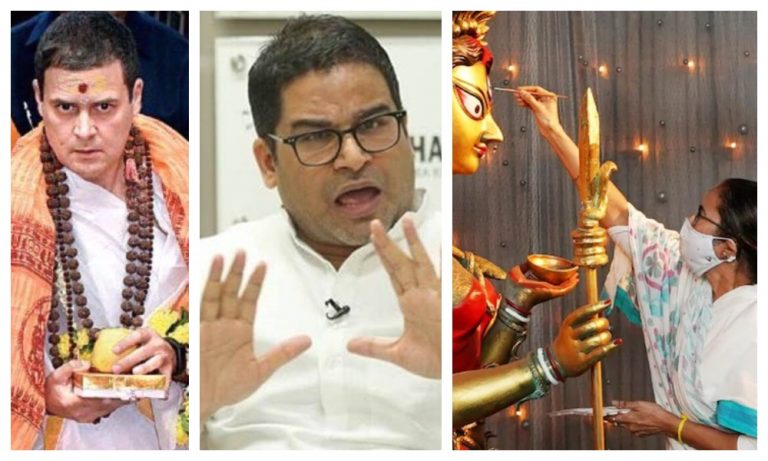
What starts from getting his politician-clients admitted to a hospital, the fancy trail ends at getting them photographed in a temple just before the elections. Such is the artistry of Prashant Kishor’s toolkit. In a political landscape where caste politics play bigger roles than development, there is a new entrant: Gotra
Turning his clients from a ‘true secular’ (here the meaning of secular is demeaning Hindus while holding others close to heart), to a ‘saccha Hindu’, seems to be an integral part of Prashant Kishor’s strategy.
In one such final attempt, West Bengal CM was heard citing her ‘Gotra’ in a political rally. Mamata Banerjee, suddenly taking a trip down the memory lane, narrated, “During my 2nd campaign, I visited a temple where the priest asked me my ‘gotra’. I told him – Maa Maati Manush. This reminds me of my visit to Tripura’s Tripureshwari temple where priest had asked me my ‘gotra’ & I had told him too ‘Maa Mati Manush’, actually I’m Shandilya.”
During my 2nd campaign, I visited a temple where the priest asked me my ‘gotra’. I told him – Maa Maati Manush. This reminds me of my visit to Tripura’s Tripureshwari temple where priest had asked me my ‘gotra’ & I had told him too ‘Maa Mati Manush’, actually I’m Shandilya: WB CM pic.twitter.com/EpxQWOHh0M
So while Banerjee catered to the ‘secular’ voters by claiming how her party’s motto is her ‘Gotra’, she slyly mentioned how she is a Brahmin with Shandilya Gotra. In Hinduism, Gotra is broadly lineage which means that people belonging to same Gotra are descendants of an unbroken line of same male ancestor. So, ‘secular’ Mamata is now not only a Hindu, but a Brahmin belonging to a particular Gotra, Shandilya.
What seems to be the last resort, Kishor gets his politician clients to visit temples, chant religious slogans or even recite ‘Chandi Path‘. When none of it seemed to have worked for Kishor or his client, the politician was made to reveal her lineage in the final attempt to prove her Hindu-ness.
Well, this is not the first time that the politicians were seen rushing to prove their Hindu identity.
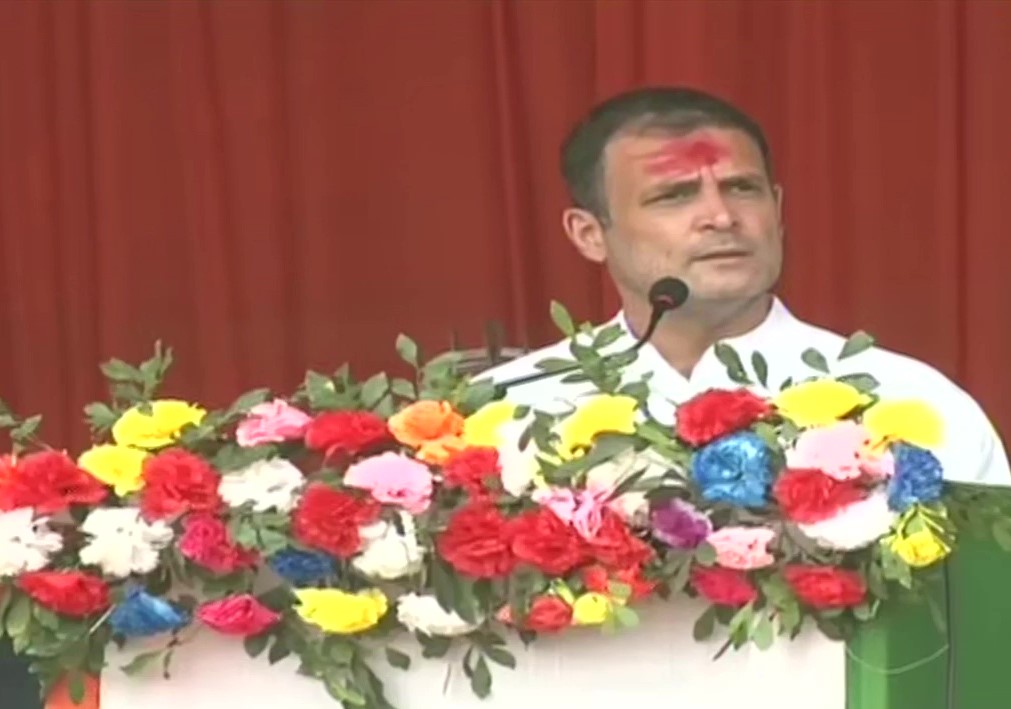
In 2018, when BJP criticized the Congress leader, Rahul Gandhi for his temple photo-ops, he retaliated saying that he is a ‘Shiv Bhakt‘. During a temple visit in Pushkar, a priest who performed puja for the leader informed that “(Rahul) Gandhi came and offered prayers at the ghat. He also said his gotra is Dattatreya. Dattatreya are Kauls and Kauls are Kashmiri Brahmin”.
Rahul Gandhi addressing a rally in Assam. Image Source: ANI
Which is surprising, since Gotra depends on unbroken line of male ancestors and his grandfather, Feroze Gandhi is believed to be Parsi, who do not have the Hindu system of caste and gotras. Now, some biographers and writers have claimed that Feroze Gandhi ‘converted’ to Hinduism for his marriage with Indira, but Indira had denied any such ‘conversion’.
Further, even if he did get ‘converted’, the he does not get a Gotra. Essentially, Rahul Gandhi using his great grandfather’s Gotra to identify himself as Hindu Brahmin, is technically wrong. Some even suggested he adopted his grandmother’s Gotra, which she had ‘adopted’ from her father. But that argument is as hollow as everything else Rahul Gandhi does.
But it seems like Kishor does not quite care about getting facts right if it solves the purpose.
However, Prashant Kishor’s ‘gotra’ strategy is giving a tough fight to Ravish Kumar’s ‘kaun jaat ho‘, who has no qualms in asking people on-screen what caste they belong to.
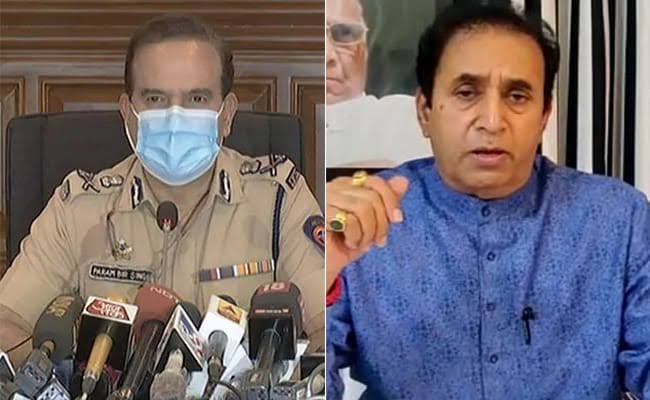
The Bombay High Court on Wednesday slammed the former Mumbai police commissioner Param Bir Singh, asking him how could an investigation be initiated against Maharashtra Home Minister Anil Deshmukh without an FIR against him. The court also remarked that Param Bir Singh failed in his duty as a cop for not filing an FIR in the case.
The court noted that Param Bir Singh was not “a layman” and added that without an FIR there is no scope of the court to intervene or ask a probe agency to investigate.
CJ: You remained silent when you found out that your boss was indulging in a crime. You failed your duty as a police officer if you did not register FIR.#ParamBirSingh#AnilDeshmukh#CBI
Chief Justice Dipankar Dutta told Singh, “You remained silent when you found out that your boss was indulging in a crime. You failed in your duty as a police officer if you did not register an FIR.”
The observation was made by the division bench of the Bombay High Court led by Justice Dipankar Datta. The bench was hearing Singh’s petition seeking direction for an “impartial and fair” CBI probe into the alleged malfeasance by Home Minister Anil Deshmukh.
Senior advocate Vikram Nankani, representing Singh, said that his client’s complaint needs to be looked into as it “involves high personalities and comes from a senior IPS officer”.
“In our submission, I do not want to say that this is a case of a whistleblower. These are hard facts that coming from a person who occupied the highest position in the city that this is something that should be looked into and then an independent agency can be appointed,” he said.
“Where is your FIR? How can there be an investigation without an FIR? We are just expressing our mind, our prima facie observation is without an FIR, no investigation can be conducted. And can such a prayer be maintainable in PIL… Show us a judgement where there is no FIR and the investigation was transferred to CBI…The first step in the wheel of justice is investigation. If there is no FIR there is no investigation,” the bench observed.
Chief Justice Dipankar Datta said that an FIR was a must if CBI has to investigate. Datta asked if any citizen, with regard to his (ex-CP’s) complaint, will directly approach the Chief Minister and noted that the department would be approached primarily and not the CM directly. He further asked Param Bir Singh to register an FIR and then approach the judiciary to ask for an agency investigation.
Former Mumbai Commissioner Param Bir Singh had initially moved SC seeking action against his transfer
It is pertinent to note that the former Mumbai police commissioner had initially approached the apex court of the country seeking a CBI probe but later withdrew his plea after the Supreme Court asked him to move the high court. The court observed that there is no doubt that the matter is ‘quite serious’ but the petitioner should first approach the Bombay High Court. Singh had sought quashing of the order transferring him from the post of Mumbai CP, alleging it to be arbitrary and illegal.
In a letter addressed to Chief Minister Uddhav Thackeray earlier this month, Singh alleged that Deshmukh had called police officers to his official residence several times in the last few months and instructed the now-suspended tainted police officer Sachin Vaze to collect Rs 100 crores a month from bars, restaurants and other establishments in Mumbai.
Deshmukh, in his defence, rubbished the charges as baseless and called it a conspiracy to vilify the state government.
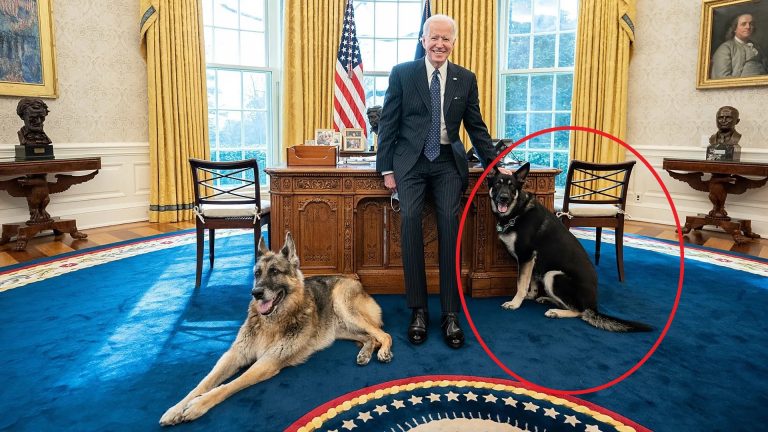
US President Joe Biden’s dog, named Major, was involved in a 2nd biting incident just a few weeks after another biting incident involving a Secret Service employee, according to the White House.
Major, a 3-year-old German Shephard, was out for a walk when the incident occurred according to the First Lady Jill Biden’s press secretary, Michael LaRosa. Major is one of Joe Biden’s two German Shephard dogs, the other dog named Champ.
In an email statement, LaRosa clarified that the person who was bitten was treated by the White House medical unit “out of an abundance of caution” and that the person later went back to work “without injury.” Jill Biden’s press secretary also gave an explanation for Major’s behavior.
“Major is still adjusting to his new surroundings and he nipped someone while on a walk,” said LaRosa.
The biting incident took place on Monday afternoon on the White House South Lawn and the person bitten is said to be a National Parks Service employee.
A few weeks ago, Major was involved in another biting incident in which he bit a Secret Service employee at the White House, causing a “minor injury”, according to White House Press Secretary Jen Psaki. After this incident, both the dogs, Major and Champ were sent back to Joe Biden’s home state of Delaware. However, the dogs had since then returned to the White House.
In an interview with ABC News after the first biting incident, Joe Biden had said that the bite did not penetrate the victim’s skin and that Major was receiving additional “training” at home in Delaware.
“You turn a corner, and there’s two people you don’t know at all,” he said. “And he moves to protect. But he’s a sweet dog. Eighty-five percent of the people there love him. He just — all he does is lick them and wag his tail.” said U.S. President Biden.
The Biden family adopted Major in 2018 from the Delaware Humane Association, after fostering him as a puppy. Major is first dog from a dog shelter to occupy the White House and has appeared alongside Biden numerous times.
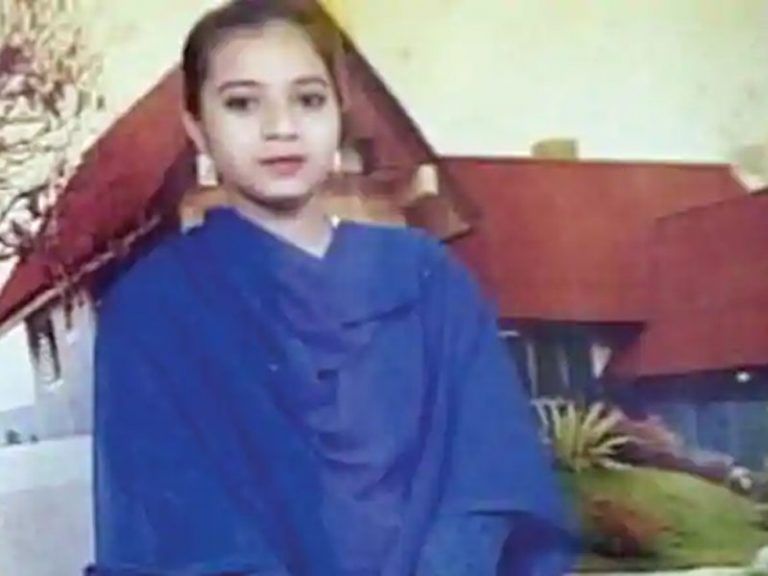
On March 31, a special CBI court in Ahmedabad discharged three police officers who were accused in the alleged extrajudicial killing of four, including Ishrat Jahan, Javed Shaikh alias Pranesh Pillai in June 2004. IPS officer GL Singhal retired police officer Tarun Barot and Anaju Chaudhari, the last three accused in the case, had filed the discharge applications on March 20.
Ishrat Jahan encounter case: CBI court discharges last three accused police officials including Tarun Barot and GS Singhal
‘Nothing on record suggest Ishrat Jahan and four others were not terrorist’
While narrating the order, Special CBI judge VR Raval noted that prima facie, there is nothing on the record that may suggest that Ishrat Jahan and three others, who were killed in the encounter, were not terrorists.
The court said, “The order is passed with the application of mind and Government has also come to the conclusion that the offences committed by the present applicants are such which have been committed while discharging their official duties as police officers and also the investigation against the accused is not proper and there is no evidence against the accused.”
CBI did not appeal against the discharge of four officers earlier
As the proceedings against the three were dropped, and the trial came to its end, the proceedings can only be resumed if CBI decides to appeal against the discharge orders. However, going by the track record in the case, the chances of such appeal are dim. Notably, CBI had not appealed against the discharge of four other officers earlier, and those discharge orders were also cited as a ground for the discharge of the last three accused.
Ishrat Jahan Encounter Case
On June 15 2004, Ishrat Jahan, Pranesh Pillai, Amjad Ali Rana and Zeeshan Johar were killed near Kotarpur waterworks on the outskirts of Ahmedabad. They were believed to be Pakistani nationals. Ahmedabad City Detection of Crime Branch led by Vanzara was involved in the encounter. DCB had claimed that the four were operatives of Lashkar-e-Taiba and were on a mission to kill then-Chief Minister Narendra Modi.
In 2013, the Central Bureau of Investigation had filed a charge sheet in the case and named seven police officers P P Pandey, Vanzara, N K Amin, J G Parmar, Singhal, Barot, and Chaudhary as the accused. They were charged with abduction, murder and destruction of evidence. In 2018, Pandey, who was then- commissioner of police (crime), Ahmedabad City, was discharged from the case. In May 2019, the Special CBI court discharged Vanzara and Amin from the case. Parmar was abated from the case following his death in September 2020.
When Amin and Vanzara were discharged, the CBI court had relied on the fact that the Gujarat government did not give permission to prosecute them. CBI did not oppose or challenge the discharge orders. However, Shamima Kauser, mother of Ishrat, had opposed the orders at that time. Under section 197 of the CrPC, the government’s sanction is necessary for the prosecution of a public servant for an act done as part of the official duty.
On March 20, the special public prosecutor of CBI submitted a sealed report in which the state government had refused to grant permission to prosecute the last three accused in the case. Taking the discharge of the other accused into consideration, the discharge orders were passed by the court on March 31 for Singhal, Chaudhari and Barot.