Home Blog Page 4550

US President Joe Biden casually drops the N-word during Munich Security Conference, accused of racism on social media

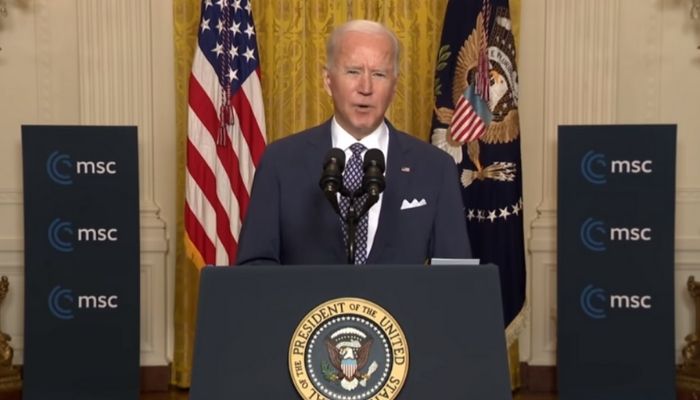
On Saturday (February 20), the incumbent United States President Joe Biden used a racial slur during his 18-minute address at the Virtual Munich Security Conference.

At about 15 minutes into the speech, Biden said, “Look, the range of challenges Europe and the United States must take on together is broad and complex. I am eager to hear, nigger (sic) here next from my good friends and outstanding leaders such as Merkel (German Chancellor) about her thoughts and the way forward.”

(Video Courtesy: Youtube/CNBC Television)

Netizens miffed after Joe Biden drops the N-word

Several social media users called out President Joe Biden for his remarks. However, the US President did not bother to issue a clarification or cite an apology for casually used the word ‘n*gger’. One Twitter user wrote, “When the “N” word is ok…ONLY if you’re Joe Biden.”

Another user pointed out the hypocrisy of the left-liberal lobby and emphasised that Donald Trump would have been ostracised for the use of the word. “Don’t worry guys, Joe Biden saying the N-word was just a mental typo…Imagine if Trump had this sort of misspeak,” tweeted Owen Carruthers.

Another user pointed out the US President’s history with casual racism. “Joe Biden said “poor kids and white kids”, he said Black people and Hispanics don’t know how to use the internet, now he says the N word because he is senile… America is so much better than electing a joke of a person like this,” wrote Dean.

The N-word is considered as one of the hateful words that were first uttered in the 17th century. Its origin can be traced back to the Spanish word ‘negro’, which is often used by white supremacists to deliberately offend the African-American community. “The word is being policed because black folks did not have a choice in the matter at a certain time when it was used to their disadvantage, to abuse and to inscribe and reinforce the sense of black people as inferior by white people,” race expert Dr Jacqui Stanford told BBC in October last year.

Joe Biden says African-Americans and Hispanics don’t do how to get online

During his first Town Hall as the President of the United States, Joe Biden courted controversy for claiming that Latinos and people of the African-American community do not know how to get ‘online’. The town hall took place on Wednesday (February 17) night in the Milwaukee city of Wisconsin.

On being asked about the poor vaccination rates in the two communities, he replied, ““Not everybody in the community–in the Hispanic and the African American community, particularly in rural areas that are distant and/or inner-city districts–know how to use–know-how to get online to determine how to get in line for that COVID vaccination at the Walgreens or at the particular store.”

Following social media backlash, he issued a clarification saying that he was referring to the older members of the two communities who aren’t tech-savvy. The Democratic party President has earned the nickname of ‘sleepy joe’ for speaking gibberish and losing track of his own speeches on several occasions
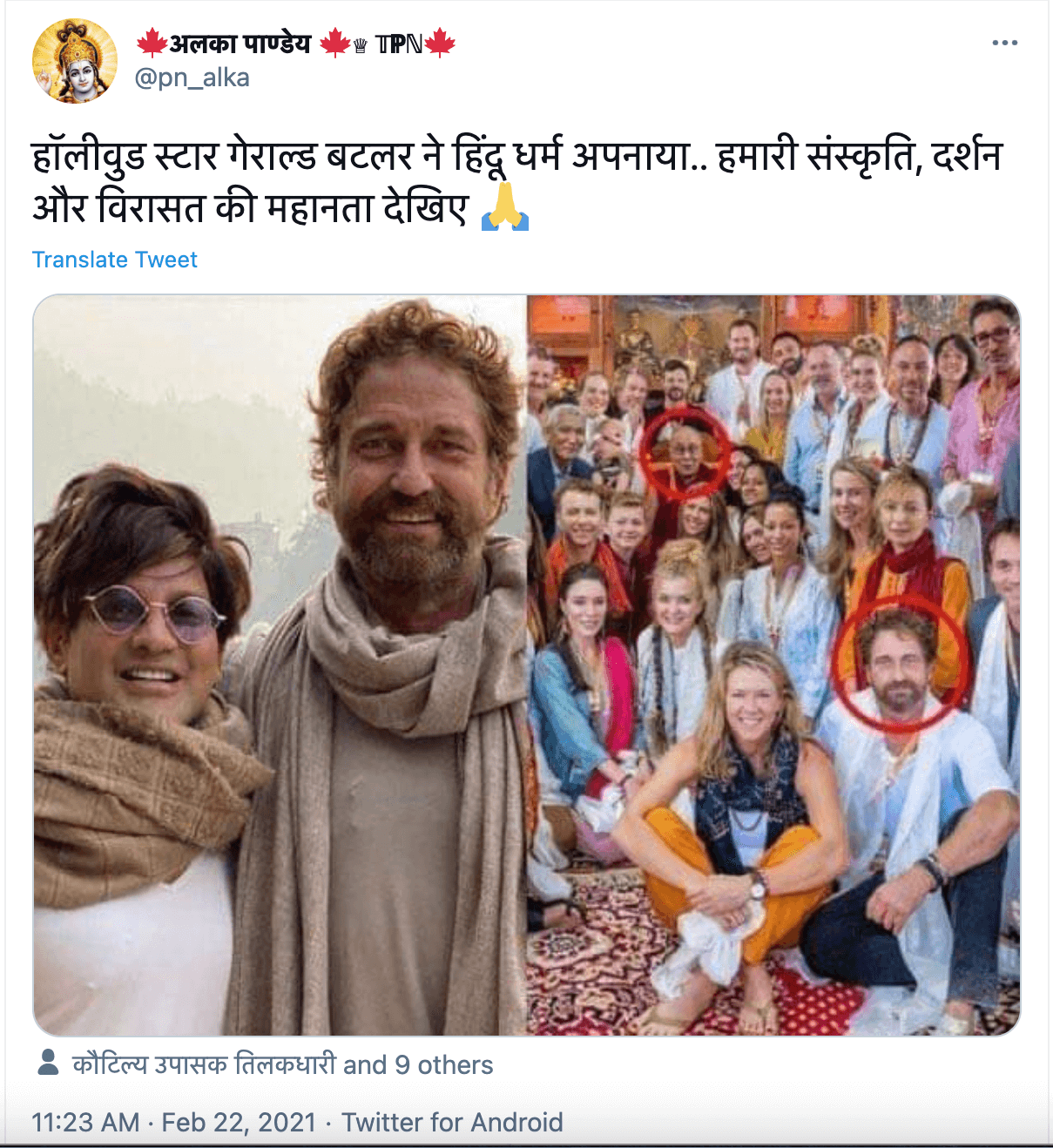
Fact-check: Has Hollywood actor Gerard Butler embraced Hinduism

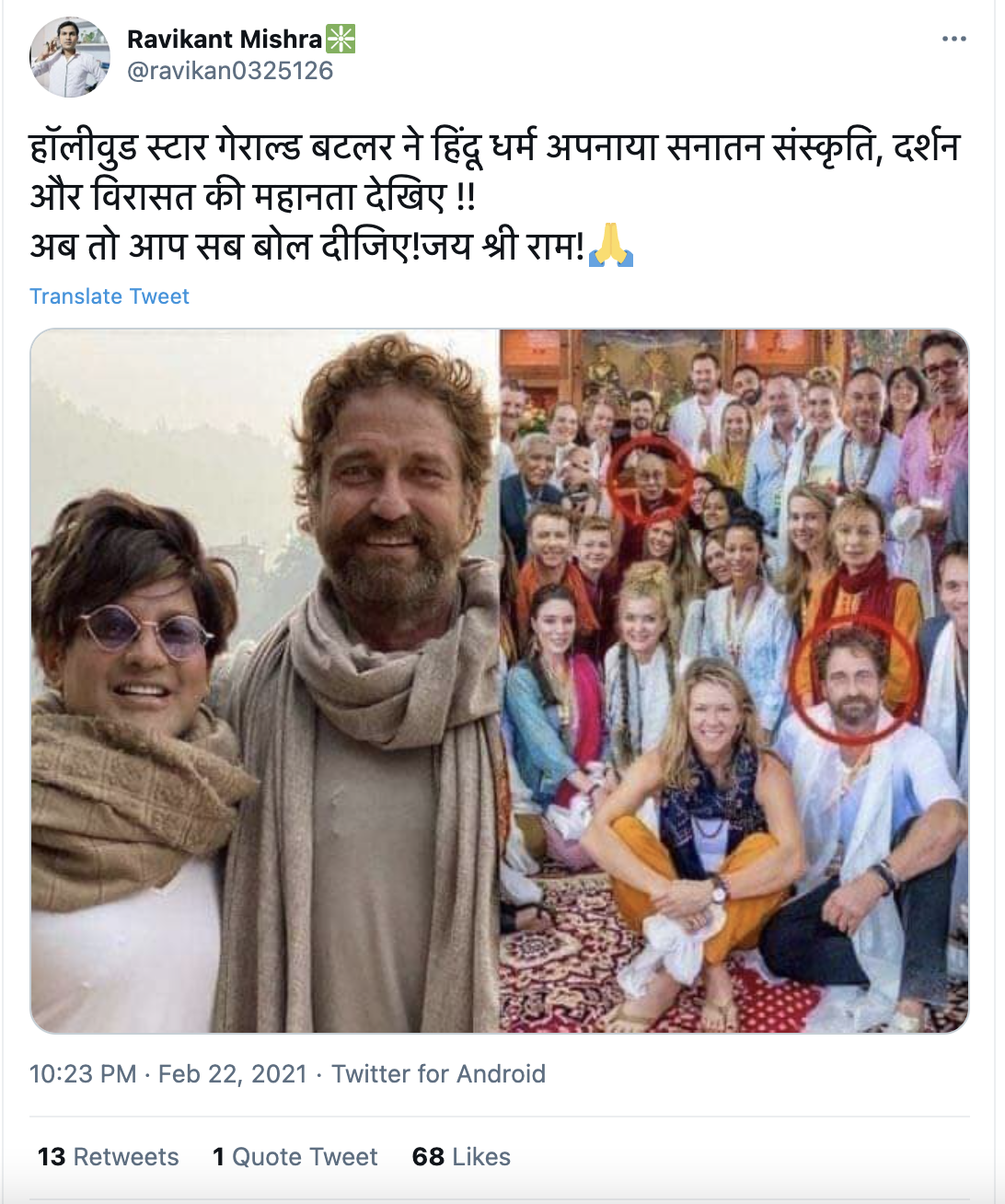
Social media has been buzzing with reports that Hollywood actor Gerard Butler has embraced Hinduism.

Tweet claiming Gerard Butler has embraced Hinduism

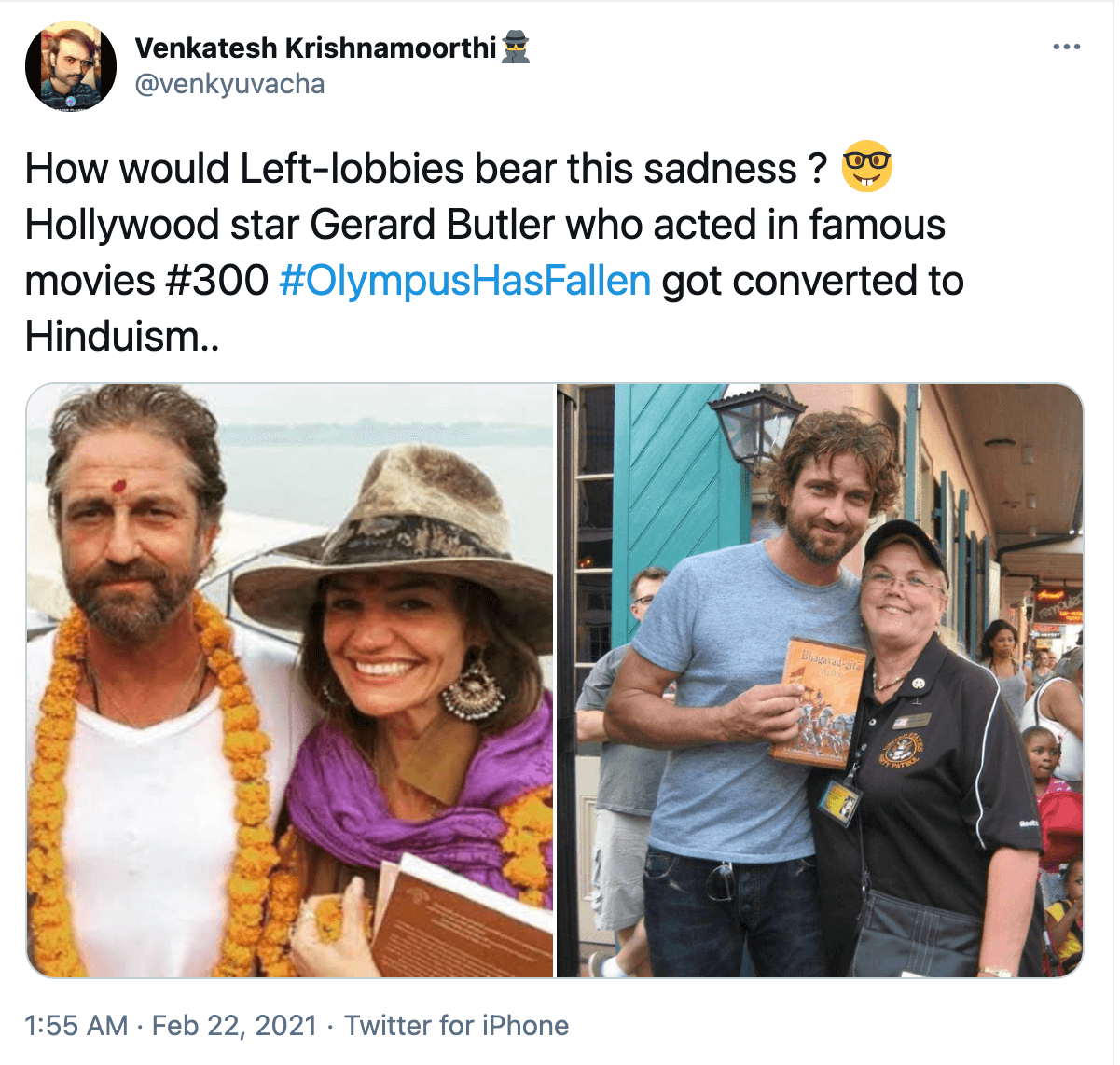
The tweet claimed that Hollywood star Gerard Butler has embraced Hinduism. Tweet with same images and similar text was also shared by other social media users.

Tweet claiming Gerard Butler has embraced Hinduism

Another tweeted showed him with a copy of Bhagwad Geeta.

Tweet claiming Gerard Butler has embraced Hinduism

Similar claims were made by one online portal which published a report in January 2020 that Butler along with his girlfriend has embraced Hinduism.

Online portal claiming Butler has embraced Hinduism

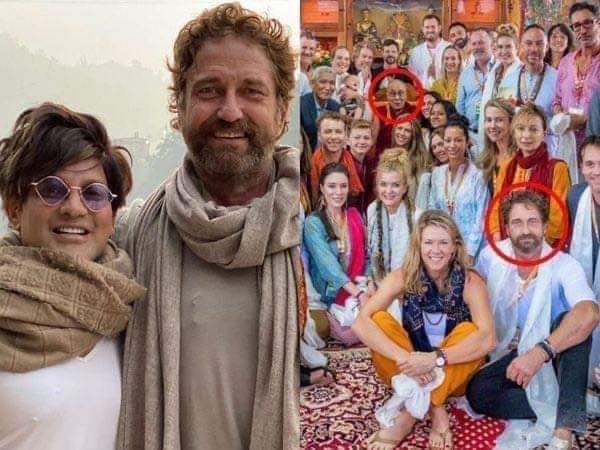
However, that is not true. In December 2019-January 2020, Butler was vacationing in India and had visited Varanasi and Rishikesh and Karnataka where he met the Dalai Lama.

The images shared by the above posts are from his vacation.

Here is the image of Butler with industrialist Yash Birla who had accompanied him to Rishikesh.

The second image shared with the claim that Butler has embraced Hinduism is from the same trip when he had visited the Ganden Shartse Monastery in Karnataka. This is where he had met the Dalai Lama.

Butler, during his India visit had also explored the Ghats at Varanasi and a Yoga retreat centre. He had visited Varanasi over ten years ago as well and has always found the experience magical. Last year, he had also meditated on the Ghats and did a private puja.

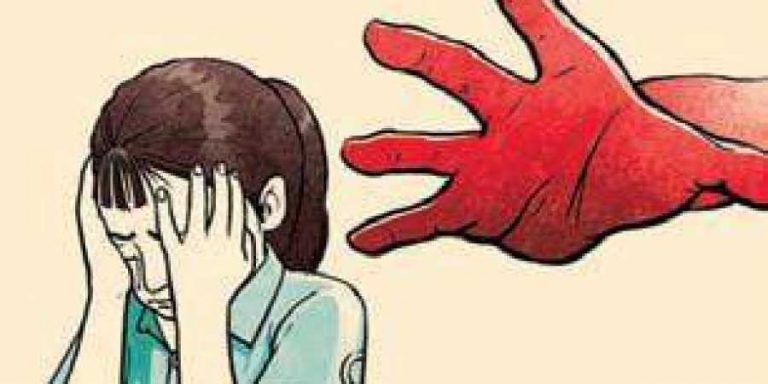
Punjab: Contractor Mohammad Feroz rapes minor daughter of migrant worker for two months, victim found pregnant

The Kharar Police in Mohali near Chandigarh has filed a case against one Mohammad Feroz for raping a minor for two months. As per reports, the accused is a resident of Zhungi EDN City Kharar and works as a contractor. He is absconding, and the Police have claimed he will be arrested soon.

The family of the victim is also migrant workers. The mother of the 16-year-old victim filed the complaint against Firoz. Investigating officer Lakhwinder said that the mother told them her husband had left her and her children ten years ago. She has a son and a daughter. On February 20 night when the woman woke up, she saw Firoz raping her daughter. Upon noticing the victim’s mother, Feroz fled the scene.

The victim is one month pregnant

The victim told her mother that Firoz had threatened her and has been raping her for two months. She complained that Firoz had threatened her that if she told anyone he would kill her. Police took the victim for medical, where it was revealed that she is one month pregnant. The victim’s family are migrant workers who live in a makeshift hut at the construction location.

Case registered against Feroz under POCSO

Based on the mother’s complaint and the medical report, Police filed a case under Section 376 of the Indian Penal Code and Section 6 of the Protection of Children from Sexual Offences (POCSO) Act. After searching for Firoz, the police have arrested him. The accused will be presented before court on Tuesday.

Firoz originally hails from Madhepur, Bihar. He works in Chandigarh as a building construction contractor.

As Narayanasamy govt in Puducherry collapses, India inches towards Congress-mukt Bharat

The grand old party which is struggling to find its relevance is slowly disappearing from Indian political landscape. On 22nd February 2021, the V Narayanasamy government in Puducherry failed to prove majority and subsequently collapsed. With this, only three states in India have a Congress chief minister: Punjab, Rajasthan and Chhattisgarh.

Congress has alliance government in states like Jharkhand and Maharashtra, but we all know how Maharashtra is coping under the ‘best chief minister’.

Let that sink in.

After 2014 Lok Sabha elections when the BJP formed a full majority government at Centre, Congress had majority government in 9 states and was an alliance partner in 4 states.

Now, Congress has full majority in only two states, Punjab and Chhattisgarh, and alliance partner in three states, Jharkhand, Maharashtra, Rajasthan.

In 2018 state assembly elections, Congress formed majority government in Chhattisgarh while alliance government in Rajasthan, Karnataka and Madhya Pradesh. Since then, Karnataka government led by JDS’ H D Kumaraswamy collapsed in July 2019, in just over a year of forming the government. Similarly, Madhya Pradesh government led by Kamal Nath collapsed in March 2020, after rebel Congress leaders led by now BJP MP Jyotiraditya Scindia quit Congress en masse and joined the BJP.

In the North East, BJP has formed alliance government in Assam, Arunachal Pradesh, Tripura, Sikkim, Manipur, Nagaland, Meghalaya and Mizoram.

Meanwhile, Punjab, which is one of the only two states Congress has full majority government, goes to polls next year in 2022.

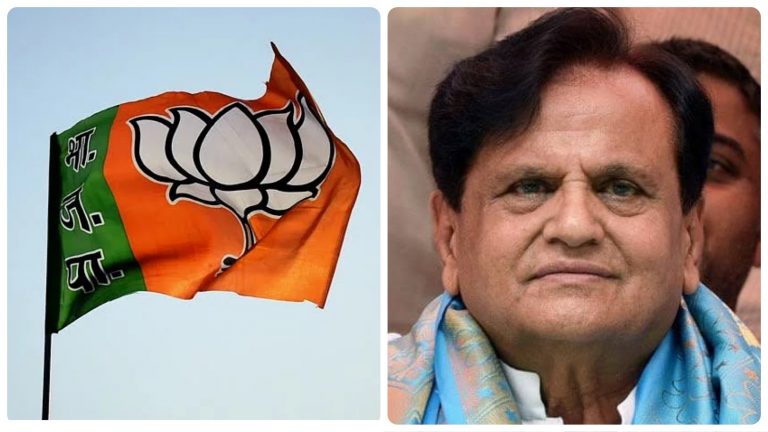
BJP wins unopposed Gujarat Rajya Sabha seat held by Late Ahmed Patel for Congress

The Bharatiya Janta Party(BJP) on Monday won both Rajya Sabha seats in Gujarat unopposed after the seats had fallen vacant following the demise of Congress MP Ahmed Patel and BJP MP Abhay Ganpatray Bhardwaj.

The Rajya Sabha seats were won by BJP candidates Dinesh Anavadiya and Ram Mokariya after bypolls were held on the two seats due to the demise of demise of Mr Patel and Mr Bhardwaj.

Anavadiya, the state’s BJP OBC Morcha president, is also a senior party leader from the Banaskantha district and has served as the director of the Gujarat State Road Transport Corporation between 2014-17. Mokariya, on the other hand, is a founder-chairman of a courier company besides being a loyal partyman for over four decades. 

The victory of the two BJP candidates was expected on Thursday last week, the last day of nominations, when none of the Congress candidates turned up to file their nominations for the Rajya Sabha seats. 

One of the two Rajya Sabha seats was held on by Congress veteran Ahmed Patel until his demise in November 2020. 

BJP wins the Rajya Sabha seat held by Congress veteran Ahmed Patel

Ahmed Patel had held on to his Rajya Sabha seat for years on end. He had been elected to the Upper House five times from Gujarat, his native state, and served Congress in various capacities including its treasurer. 

Most notably, Patel scraped through a nail-biting victory in the 2017 Rajya Sabha elections when the Congress loyalist returned to the upper house for the fifth time in a hard-fought contest.

BJP had never been able to secure a victory over the Rajya Sabha seat until Ahmed Patel was alive. Patel breathed his last on 25 November 2020 after he had suffered complications due to COVID-19 in a Gurgaon hospital.

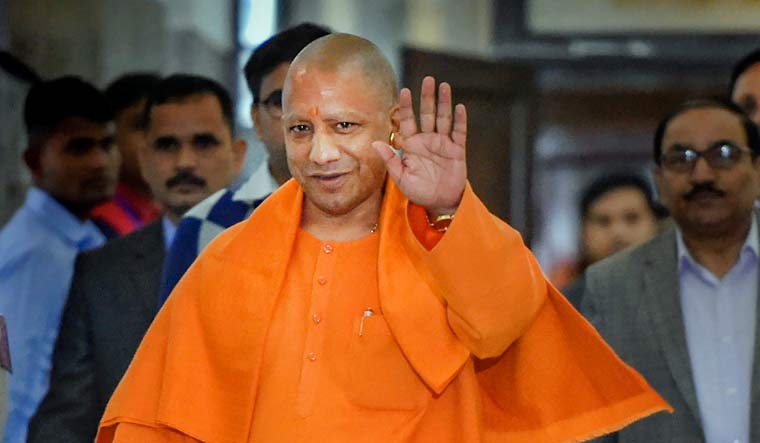
Yogi Adityanath chalks up plan to make Uttar Pradesh ‘atmanirbhar’: UP Budget focuses on education, farmers, infrastructure among other things

0

With the aim of making Uttar Pradesh ‘atmanirbhar’, the Yogi Adityanath-led state government on Monday presented a Rs 5,50,270.78 crore budget for 2021-22 in the state Assembly.

The budget, which was presented by Finance Minister Suresh Kumar Khanna, placed added emphasis on the need to make Uttar Pradesh ‘self-reliant’ following a clarion call given by PM Modi, urging people to become ‘atmanirbhar’ in the wake of widespread disruptions faced due to the coronavirus pandemic.

Here are the salient highlights of the budget presented in the UP Assembly:

Major push for infrastructural development

With an eye on taking the infrastructural capability of the state to the next level, the UP finance minister today announced Rs 10, 029 crores for housing, Rs 2,200 crore for Amrit Yojana, Rs 2,000 crores for Smart City Project, Rs 1,000 crores for Mukhya Mantri Samagra Sampada Vikas Yojana, Rs 7,000 crores for PM Awas Gramin and Rs 5,000 crores for PM Sadak Yojana.

State Finance Minister Suresh Khanna announced that Rs 1,326 crore has been given for Delhi-Meerut RRTS, while Rs 100 crore each have been proposed for Gorakhpur-Varanasi Metro. The approved cost of the Kanpur Metro Rail project is Rs 11,076 crore. A provision of Rs 597 crore is proposed for the project in the budget of the financial year 2021-2022.

The Yogi Adityanath government has also increased the budget for the development of the state’s expressways. Rs 1,107 crore has been proposed for Purvanchal Expressway, Rs 1,492 crore for Bundelkhand Expressway, Rs 860 crore has been passed for Gorakhpur Link Expressway project and Rs 7200 crore for Ganga Expressway.

All round development of Ayodhya

The focus of the UP budget has also been on the overall development of the holy city Ayodhya. A total of Rs 140 crore have been allocated for the same and the development of Suryakund in Ayodhya. The name of the airport under construction in the district Ayodhya will be Maryada Purushottam Shriram Airport Ayodhya and a provision of Rs 101 crore is proposed for it. Additionally, Rs 300 crore has been proposed for Ram Mandir to Ayodhya Dham Road and Rs 100 crores have been proposed for tourism in Ayodhya.

A University in every division

The Yogi Adityanath-led government has also laid out an ambitious plan to overhaul education in the state. According to the budget, a university will be established in every division and Rs 200 crore have been earmarked for setting up model colleges in 26 districts across the state. The government has also committed Rs 18, 172 crores under the Samagra Shiksha Abhiyan programme.

Benefits extended to the state’s farming community

Even as the protests by a section of so-called ‘farmers’ continue along the Delhi border against the three newly introduced Farm Laws, the UP government has placed greater emphasis on helping the farming community of the state by providing them with pensions, subsidised loans, and improving irrigation facilities.

Khanna announced Rs 3,100 crore for farmers’ pension, Rs 400 crore for loans to farmers on subsidised rates, Rs 700 crore for irrigation, Rs 600 crore for Krishi Durghatna Yojana, and Rs 100 crore for Atma Nirbhar Krishik Samanvit Vikas Yojana.

Yogi Adityanath lauds financial budget 2021-22

Chief Minister Yogi Adityanath has called the financial budget 2021-22 of the state government an all-inclusive budget representing the emotions of the state’s 24 crore people. Lauding the finance minister for providing the first paperless budget, the chief minister said with ‘Sabka Saath Sabka Vishwas’, the budget aims to bring, taps, electricity, roads, water in every household, alongside making every village digital.

Speaking with the media after Suresh Khanna presented the budget in the Assembly, Yogi Adityanath said the budget would help in connecting rural areas for the first time with modern banking facilities, provide common service centre, and employ women in community toilets. Such initiatives, Yogi said, would give a new dimension to the state’s efforts in empowering women and helping the rural population to become self-reliant.

Referring to the importance of financial discipline in the wake of problems in revenue collection during the Corona period, the Chief Minister stressed the need of improving ‘Ease of Living’ and attaining ‘Self-reliant Uttar Pradesh’ to speed up the efforts for holistic and inclusive development and self-reliance of various sections.

Yogi Adityanath also spoke about the initiatives that the government has brought in to help different sections of society. He highlighted the Kisan Accident Insurance Scheme for farmers, ensuring social security for nearly one crore migrant workers in unorganised sector and schemes such as Mukhyamantri Saksham Suchitran Yojana for children suffering from anemia.

“The measures such as establishment of Sainik Schools and one State University each, Establishment of Medical Colleges with PPP model in unserved districts, Establishment of Law University in Prayagraj, Extension of Jal Jeevan Mission Scheme, Road connectivity development in rural areas, International Airport in Ayodhya and Kushinagar would take the country to great heights,” CM Yogi Adityanath said.

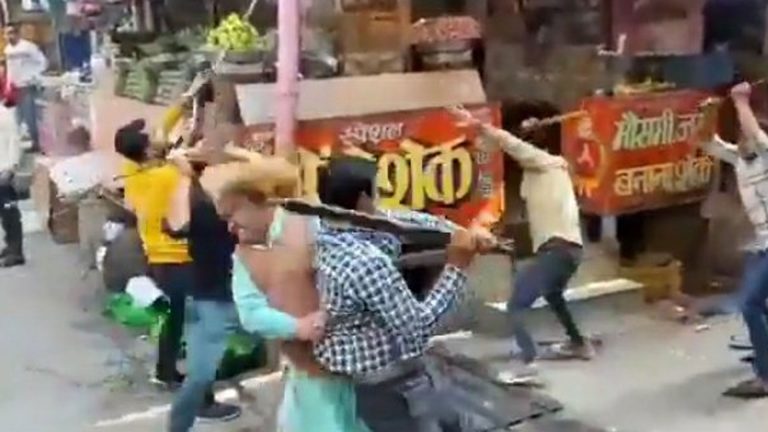
Video of UP shopkeepers engaging in hand-to-hand combat goes viral, netizens unleash their creative best

Shopkeepers in the Baraut police station area, District Baghpat, Uttar Pradesh, were spotted engaging in hand-to-hand combat. The video of the fight went viral on social media. Baghpat Police was informed about the incident. The situation is currently under control.

As per the Police, the clash took place between the owners of two chaat shops over calling customers to their shops. Police have arrested eight people from both sides, and a probe has been initiated. “There is no problem of law and order in the region,” said Police.

Netizens unleashed their creativity

Amused by the clash video, netizens took no time to unleash their creativity while commenting on the viral video. While some compared it with WWE, others posted memes or added music in the background.

An old man with a weird hair style won everyone’s heart with his fighting skills.

The Indian WWE!

Entry of Chota Bheem

The Rock will be delighted…

While the visuals gave way to much laughter on social media, we can all be glad that no one appears to have been seriously injured in the fight.

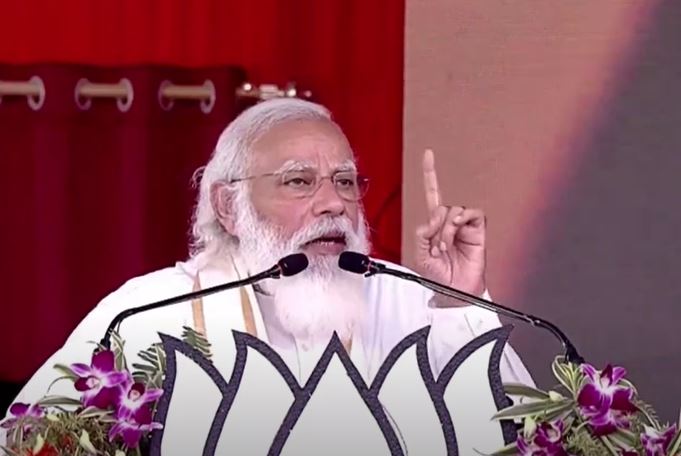
‘West Bengal people fed up with ‘cut’ culture, made up their mind for ‘asol poriborton’: PM Modi addresses a sea of people in Hooghly

Addressing a sea of people assembled in West Bengal’s Hooghly district, PM Narendra Modi launched a blistering attack at the Mamata Banerjee led ‘tolabaaz’ government in West Bengal.

“Centre transfers money directly into bank accounts of farmers and poor. But monetary benefits of schemes of the Bengal government does not reach the poor without the consent of all the ‘tolabaaz’ of TMC. This is why TMC leaders are getting richer and normal families are becoming poorer,” PM Modi said while addressing a public meeting in Hoogly, days ahead of the much awaited Bengal Assembly elections.

“Central govt has provided Rs 1,700 crore for relief work after Amphan to the TMC govt in Bengal. The state govt has only spent Rs 609 crore. The leftover Rs 1,100 crore has been siphoned off by TMC,” Prime Minister Narendra Modi said in Hooghly. 

“This proves the TMC govt does not care about the poor, needy and women of Bengal,” he added.

Prime Minister Modi is in Bengal to inaugurate the extension of the Metro Railway from Noapara to Dakshineswar and flag off 1st service easing out access to Kali Temples at Kalighat and Dakshineshwar, 3rd line between Kalaikunda and Jhargham.

PM Modi slams TMC for endorsing “cut-cut culture” in West Bengal

Slamming the incumbent Trinamool Congress government for endorsing the “cut-cut culture” and the “Syndicate Raj” in the state, Modi claimed that for something as small as renting a flat, people in Bengal have to pay “cuts” to the “syndicate”, whose presence seems to be getting stronger, under Mamata Banerjee’s leadership, with every passing day. 

The Prime Minister said that the natives of West Bengal, living across the globe want to contribute to the growth of the state, but are unsure as to how they should steer clear of those associated with the syndicate.

Upliftment not possible until the menace of Syndicate Raj is not curbed in the state: PM Modi

West Bengal’s upliftment is not possible till the time cut-money culture persists here, till the time administration protects goons and the menace of Syndicate Raj is not curbed in the state, which the Prime Minister said was not possible under the Trinamool Congress government, insinuating that the TMC leaders either patronise with the goons of the syndicate or are themselves involved in the racket.

Giving the example of the once-thriving Jute and Iron and Steel industries of West Bengal, PM Modi said there was a time when the jute mills of Bengal fulfilled the needs of the entire country. People from all nearby state came to Calcutta (what Kolkata was formally known as) to make a living. Industries, which boomed in the state were spoken and discussed all across the country and people longed to work in Calcutta (now Kolkata).

However, the already deteriorating conditions worsened under the TMC government, which has acted as a deterrent to the growth of the industries in the state. Now, the people of West Bengal are being forced to move out in order to earn a living.

“The BJP govt will bring changes in the industrial policies for development in the state. We will take quick decisions for swift development,” Prime Minister Modi said. Informing that the BJP government at the centre has already been making efforts to revive the Jute industry, by making it mandatory for Wheat and sugar companies to use Jute bags Modi assured that if BJP is voted to power in West Bengal, one of its primary agendas would be reviving the Jute industry, which once upon a time, had an overwhelming concentration in the state.

Lashing out at the Trinamool Congress, the Prime Minister accused the Mamata led government in the state of West Bengal of corruption and not carrying out the development work in the state. “Out of 1-1.75 crore houses (in WB), only 9 lakh have water pipeline. The way the state government works, no wonder how many more years it’ll take to deliver water to the poor. This shows that TMC doing injustice to ‘Bengal Ki Beti’. Can they be forgiven?” PM Modi asked.

Talking about the Centre’s plan for Bengal in the coming year, PM Modi stated that this year ‘rail and metro’ connectivity would be the government’s priority.

Public of West Bengal want “asol poriborton”: Modi

Addressing the sea of people in Hooghly West Bengal, the Prime Minister said “Kamal khilana hain, poorva bhav se parivartan lana hain. Lotus will bring ‘asol poribartan’ that youth aims for in West Bengal, said PM Modi.

Pitching for a BJP government in the poll-bound West Bengal, the Prime Minister said that the BJP government should be formed not just for “political poribartan” (political change), but for “asol poribartan” (real change) in the state.

He ended his address by reiterating that it has now become imperative to bring a government in West Bengal which will listen to the common people and realising this need of the hour, the people in Bengal are avowing: “Aar Noy Annyay (no more unjust), aamra asol poribortan chai (we need the real change)”, said PM Modi as chants of “Bharat Mata ki Jai” and “Vande Mataram” resonated at the PM’s rally in Hoogly.

PM Modi’s address in West Bengal Hooghly can be viewed here.

Bombay High Court ‘skin-to-skin’ judgment: Trivialising Statutory Provisions safeguarding victims of sexual assault?

In a recent judgment, the Bombay High Court while acquitting a 39-year old man of the offence of sexual assault under Section 8 of the Protection of Children from Sexual Offences Act, 2012 (“the Act”), held that the act of pressing the breast of a child in the absence of the top is removed or, the accused inserting his hand inside the top and pressing the victim’s breast would not fall within the definition of “sexual assault” under Section 7 of the Act.

According to the facts of the case, a 12-year old girl was taken by the appellant to his house, on the pretext of giving her guava. While they were at the appellant’s house he pressed her breast and attempted to remove her salwar, at which point the mother of the girl reached the spot and rescued her. An FIR was lodged by the mother following which the Special Court, Nagpur registered charges under Section 8 of the Act as well as under Sections 361, 354, 342 and 309 of the Indian Penal Code (“IPC”).

The Special Court held that the appellant had committed an offence under Sections 354, 363 and 342 of the IPC as well as under Section 8 of the Act. While Section 8 lays down the penalty for the commission of the act of “sexual assault”, Section 7 lays down the definition of said expression.

According to Section 7, in order for an act to qualify as “sexual assault” under the Act, firstly, the act must be committed with sexual intent, and secondly, the act must involve either touching the vagina, penis, anus, or breast of the child or, making the child touch the vagina, penis, anus or breast of such person or any other person or, doing any other act with sexual intent which involves physical contact without penetration (Satish Ragde v. State of Maharashtra, Criminal Appeal no. 161 of 2020).

In an appeal against the order of the Special Court, the Bombay High Court acquitted the appellant under Section 8 primarily because according to the Court’s interpretation of Section 7, “touching” necessarily implied “direct physical contact”, i.e., “skin-to-skin contact” (Satish Ragde v. State of Maharashtra, Criminal Appeal no. 161 of 2020). Since in the present case, the act of groping had taken place without the removal of the top of the child, the Court held that there was no skin-to-skin contact, and therefore the appellant was not guilty of the offence of sexual assault.

It is a well-known principle of statutory interpretation that if the circumstances are such that the plain and literal interpretation of a statutory provision produces a manifestly unjust result, which the legislature would have never intended to imply while framing the provision, then in such situations the court has the power to modify such language in order to achieve the desired result and produce a rational construction (CIT v. J.H. Gotla, (1985) 4 SCC 343). This is usually referred to as the ‘golden rule’ of statutory interpretation or purposive interpretation.

A plausible argument can be made that Bombay High Court has interpreted the definition of the term “sexual assault” in a very restrictive manner. By categorizing “groping” in concomitance with “direct skin-to-skin contact” as sexual assault on one hand, but groping through clothes as not constituting sexual assault, the court has, in effect defeated the very purpose behind the insertion of the provision.

In the absence of any precondition of “direct contact” being either expressly or impliedly laid down in the statute, the Court should have interpreted the provision in line with what the legislators must have intended, i.e., to protect children from sexual assault, harassment and exploitation and to secure the best interests of the child (Dr. Manjula Krippendorf v. State (NCT of Delhi), (2017) 15 SCC 133).

Purposive interpretation of the provisions of the Act is not unprecedented. In Jabbar v State, (2018 SCC OnLine Del 9327) the Delhi High Court had held that the provisions of the POCSO Act had to be interpreted in a “child-centric” manner since the intention and purpose behind the statute was to prevent the commission of sexual offences against children. It is difficult to comprehend that the legislature would have intended to draw a distinction between groping in the “absence of skin-to-skin contact”, and groping involving “direct physical contact” so as to classify one of these acts as constituting sexual assault but not the other.

It is also worth noting that during the entire course of the judgment, no reason has been provided by the Court either substantiating or even remotely explaining the reason as to why its interpretation of Section 7 would not take within its ambit touching “without direct skin-to-skin contact”.

In this context, it is important to take into account the statutory provisions pertaining to the offence of “sexual assault” in other jurisdictions. Under Scottish law, Section 20 of the Sexual Offences (Scotland) Act 2009 states that if a person engages in any form of sexual activity in which said person has physical contact (whether bodily contact or, contact by means of an implement and whether or not through clothing) with a child, then the person commits the offence of “sexual assault” (Section 20, Sexual Offences (Scotland) Act, 2009).

Additionally, Californian law defines sexual assault to include the intentional touching of the genitals or intimate parts, including the breasts, genital area, groin, inner thighs, and buttocks, or the clothing covering them of a child (Section 11165.1, AB-1775 Child Abuse and Neglect Reporting Act, 1980 Attachments area).

Presently, the Supreme Court has stayed the order of the Bombay High Court, stating that the latter’s decision would set a ‘very dangerous precedent’ and cripple the intentions behind the Act of punishing sexual offenders.

In a country where the rates of the commission of offences like sexual assault are increasing in an unfettered manner, it becomes imperative for the judiciary to step in and stand in support of the victims as opposed to interpreting statutes in a manner that ends up giving leeway to the perpetrators. Although this does not imply that judicial legislation is called for, but a very careful approach to statutory interpretation, especially when it comes to provisions such as Section 7, is the need of the hour.

Republic Day violence: Accused Jaspreet Singh, who climbed on the Red Fort tomb, arrested by the Delhi Police

0

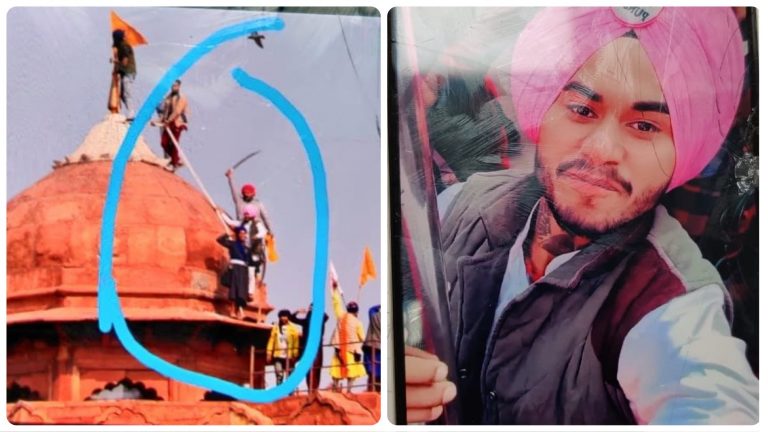
In the most recent development in the Republic Day violence case, Jaspreet Singh, a Delhi resident was arrested by the Special Cell of the Delhi Police on Monday in connection with the violence that marred the national capital during the tractor rally on January 26.

The 29-year-old was seen in offensive gesture holding steel tensile installed at the Red Fort and has been accused of climbing up one of the tombs located on both sides of ramparts of the iconic monument during the January 26 violence. Jaspreet is also known as Sunny and is a resident of Swaroop Nagar.

Delhi Police have so far arrested over 100 people in connection with the violence that broke out at ITO and Red Fort during the farmers’ Republic Day ‘Tractor Parade’. Last week, the Police, tightening its noose around the culprits, released photos of 220 people allegedly involved in the violence that erupted on Republic Day. The police had also appealed to the public to share any photos or videos of the violence.

Deep Sidhu arrested by Delhi Police; gangster Lakha Sidhana still on the run

Among those arrested is the Punjabi actor and Khalistani supporter Deep Sidhu for his role in instigating violence and the vandalisation at Red Fort on Republic Day during the farmers’ tractor rally. Sidhu was traced by Delhi Police using advanced surveillance technology.

Another accused in the case, gangster Lakha Sidhana is still on the run and had recently released a video, urging people to meet at Punjab CM Captain Amarinder Singh’s ancestral village Mehraj in Bhatinda for a Kisan rally to be held on February 23.

The Delhi Police special cell also arrested one Maninder Singh Moni, a mechanic who was seen swinging swords at the Red Fort on January 26. According to the police, the sword dancing by Moni motivated violent protesters to attack personnel stationed at the Red Fort.

Republic Day riots in Delhi

Delhi on Republic Day this year was convulsed with large scale violence after rioters disguised as ‘farmers’ entered Delhi to unleash violence, injuring nearly 400 policemen. Many of those rioters, driving tractors, reached the Red Fort and hoisted religious flags and alleged Khalistani flag on its domes and the flagstaff at the Red Fort while desecrating the national flag.

The police have so far registered 38 FIRs in connection with the Republic Day violence and have arrested over 100 people. They had also issued lookout notices against 44 people, including the alleged ‘farmer’ leaders, who they believed had instigated the rioters to indulge in violence.