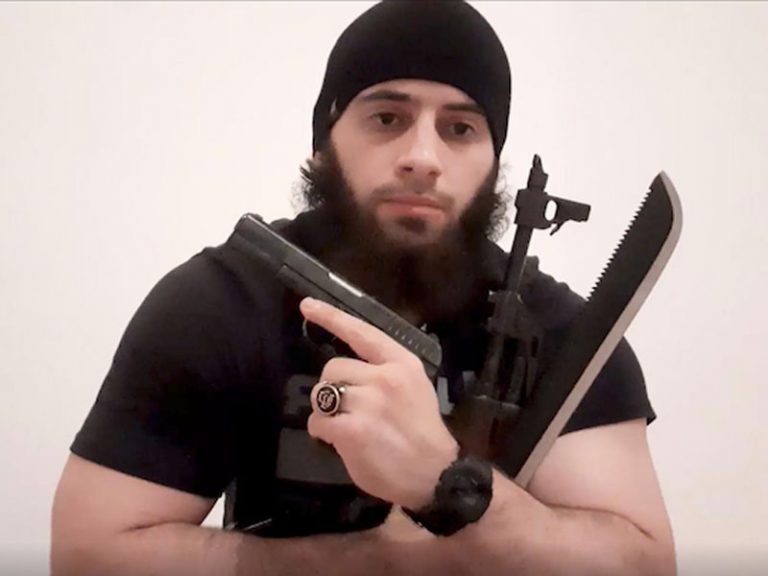
As per the report published in Austrian daily Kronen Zeitung, the ISIS terrorist identified as Abu Dagnah Al-Albany, the man behind the attack that took place on November 2 across central Vienna, wanted to cause a bloodbath of the Catholic Youth group in Ruprechtskirche during the prayer time in the evening. He had failed as the door was locked by the timer.
Karl Nehammer, the Interior Minister, is working on increasing the security at the local churches for the Christmas season.
The main target was the Catholic group at the church
When the Catholic Group was holding a non-public prayer hour in the Ruprecht Church, the terrorist wanted to attack with an assault rifle. However, as the gates of the church were locked, he failed. The WEGA agents shot him dead a few moments later in front of the church. The shocked women and children were interviewed by the investigation team “Investigative Group 2 November”.
The authorities have announced that they will release the interim report of the Commission detailing the breakdown of the investigation carried out by anti-terror forces before Christmas.
Attack details provided by Archdiocese official
Michael Prüller, the spokesman of the Vienna Archdiocese, detailed the situation during the attack. When the shots were fired, 17 people present in the church reacted with the presence of mind and hid after switching off the lights. They stayed hidden until 2:30 AM on Tuesday until the police gave them the all-clear so that they could go home.
The Vienna Attack
On November 2, the ISIS terrorist had opened fire across Vienna. As per Vienna Police, at around 8 PM local time, several shots were fired at a busy street in the city centre. The attack happened at six locations. Three, including the attacker, were killed. On November 3, the Vienna authorities confirmed that the attacker was affiliated with the terrorist organization ISIS.
Further investigation revealed that he was released early on terror charges in 2019. At that time, he defended himself by claiming that he went to the ‘wrong mosque’. On November 6, Austria announced that they are shutting down radical mosques that were visited frequently by the terrorist.
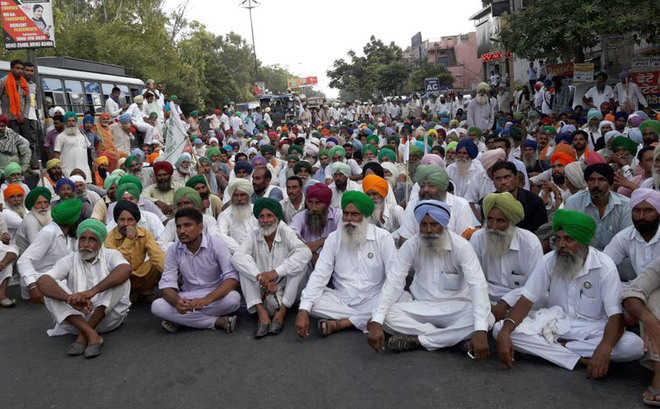
The Bharatiya Kisan Union (BKU), the farmer organisation which is at the forefront of the ongoing farmer protests seems to be making a complete U-turn so far as their demands regarding the farm laws are concerned. The BKU has been opposing the new farm laws introduced by the central government by alleging that the new laws were not meant for the benefit of farmers. The new farm laws, inter alia, liberate the farmers from the clutches of middlemen (Arhityas) and allow them to sell the produce to the buyer of their choice outside the APMC (Agricultural Produce Market Committees Act) markets at fair prices.
Strangely, the ‘farmer groups’ protesting against the new farm laws have recently been praising the old system that included middlemen and demanding the old system to be restored claiming that it was the ‘best’. Asking the government to define ‘middlemen’, the protesting farmer groups had said that whom the government called ‘middlemen’ were mere service providers who just charged a commission for providing services like unloading trolleys for farmers. However, this is in complete contradiction to the demands raised by the farmer groups last year.
— Bhartiya Kisan Union (@BKU_KisanUnion) March 2, 2019
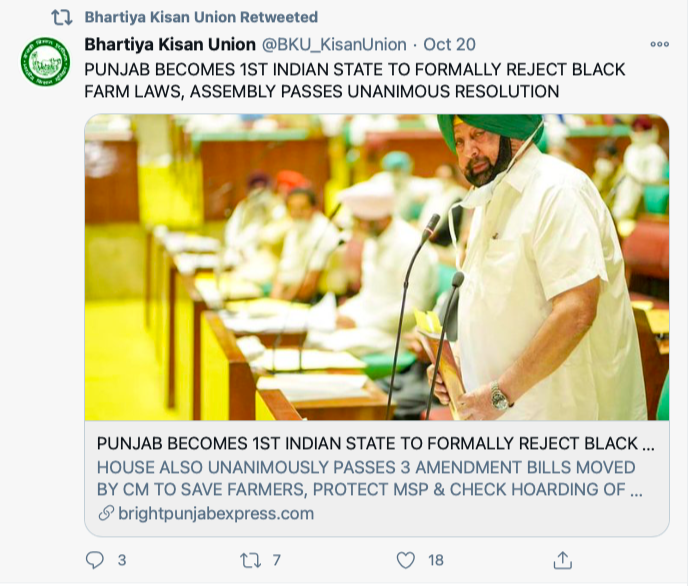
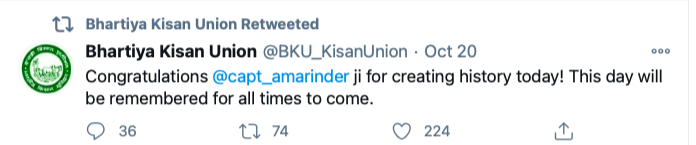
In 2019, the BKU had supported the then Union Minister for Consumer Affairs, Food and Public Distribution, late Ram Vilas Paswan after he demanded Punjab Chief Minister Captain Amarinder Singh to do away with Arhitya system and ensure direct payment to farmers as is provided under the new farm laws. The farmers’ union had welcomed the demand for eliminating commission agents who burdened farmers with huge debts and the decision to introduce direct online transactions. Strangely, farmer groups from Punjab are now seen demanding that the reforms must be taken back and the old system of ‘middlemen’ be restored. The same BKU has been now hailing Punjab CM Amarinder Singh for ‘rejecting’ the new farm laws that have provisions to free farmers from the clutches of middlemen.
Tweet from BKUTweet from BKU hailing Punjab CM for ‘rejecting’ the centre’s new farm laws
Calling the new farm laws as ‘black laws’, the BKU has been showering praises on Punjab CM now for ‘rejecting’ them.
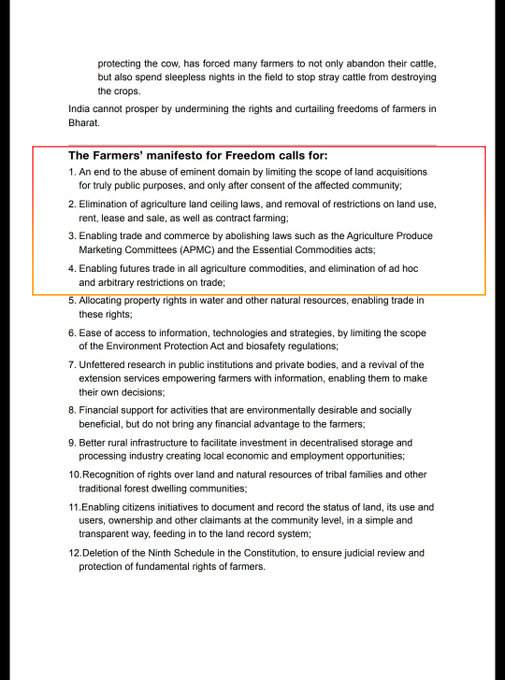
Last year’s manifesto had asked for the abolition of APMCs, and Essential Commodities Act
1/4 This is Kisan Manifesto prepared by KCC. It is a very comprehensive document which details out problems and solutions to agriculture crisis. Liberalisation/ Freedom of agriculture is the essence. All political parties should adopt these suggestions if they are sincere (cont) pic.twitter.com/xmQz4E0bAC
— Bhartiya Kisan Union (@BKU_KisanUnion) April 3, 2019
Further, the BKU manifesto of 2019 prepared by All India Kisan Coordination Committee contained the same things as are provided by the new agricultural laws. One of the demands mentioned under twelve broad points in the manifesto was to abolish the APMC Act and the Essential Commodities Act for “enabling commerce and trade”. The BKU also demanded for abolition of the ninth schedule from the Constitution of India for the protection of the fundamental rights of the farmers. The manifesto also mentioned demands for freedom to sell, rent and lease farm land, better rural infrastructure, trade in future commodities and so on.
Demands made by the manifesto prepared by All India Kisan Coordination Committee
However, when the current farm laws made provisions ending the monopoly of APMCs, offering farmers the freedom to sell their produce anywhere, made the necessary amendments to the Essential Commodities Act, gives farmers the freedom to buy and sell from anywhere, and also enable farmers to get a fair price for their produce with several provisions, it is surprising to see the BKU resisting these reforms and taking a 180 degrees turn on what they themselves have been demanding so far.
Fear-mongering around farm laws
Ever since the central government introduced the new farm laws, there have been constant attempts by opposition parties to spread misinformation among farmers about the laws. The three bills carrying Prime Minister Modi’s vision of ‘One India One Agriculture Market’ aim to empower farmer by providing a farmer-friendly mechanism. The ongoing protests being held in the name of farmers are being used by anti-national elements like pro-Khalistani voices and separatist groups to create mayhem.
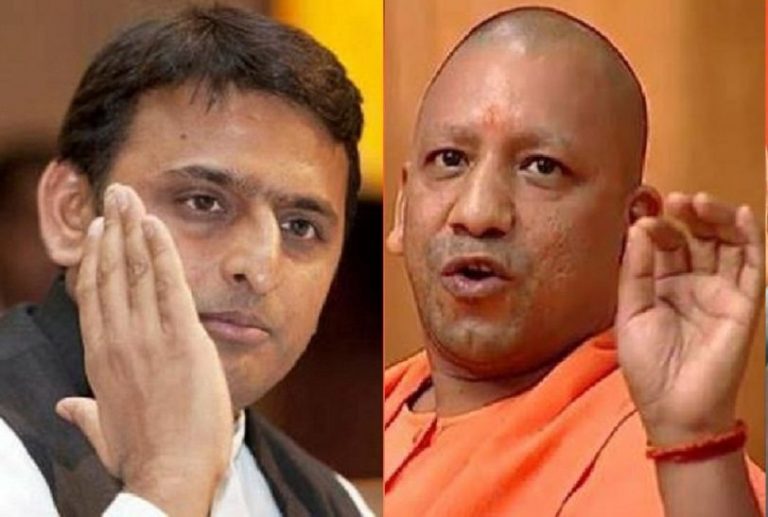
On Tuesday evening, a distressed daughter reached out to former UP Chief Minister Akhilesh Yadav. Prateeksha Yadav Preet, a Mainpuri resident, tweeted to Yadav pleading for medical assistance for her father who had met with an accident earlier.
@yadavakhilesh जी आज आपके सैफई में, चिकित्सक की व्यवस्था नहीं हो पाई,,पिता जी का एक्सिडेंट हो गया है और वहां पूरा दिन बदहाल हालत में,,, आखिर आगरा के लिए रवाना हो रहे हैं, हालत इतनी नाज़ुक है dr. जबाव दे चुके हैं, आपसे उम्मीद आर्थिक मदद की भी है,, और @DR_RCMISHRA JI से संपर्क pic.twitter.com/3TvmOzbwiM
“In your Saifai, there is no way to arrange for medical assistance. My father met with an accident and his condition has been deteriorating. We are finally leaving for Agra. His condition is so critical that doctors have given up. We hope to get some financial assistance from you,” she tweeted.
Akhilesh Yadav, as well as his father and Samajwadi Party patriarch Mulayam Singh Yadav, were born in Saifai which falls under Mainpuri parliamentary constituency. Mulayam Singh Yadav currently represents Mainpuri in Lok Sabha.
The tweet was brought to notice of Uttar Pradesh government which swung into action to help the ailing man. Shalabh Mani Tripathi, Media Advisor to UP CM Yogi Adityanath reached out to her on Twitter and arranged for medical assistance for her.
Mr Rakesh Ahooja of Rainbow hospital Agra just briefed about the patients conditions and he assured all help and good care by doctors ; wishing speedy recovery.
As informed by the UP administration, the doctors at hospital in Agra have been informed about the man’s health. They have assured all help and assistance.
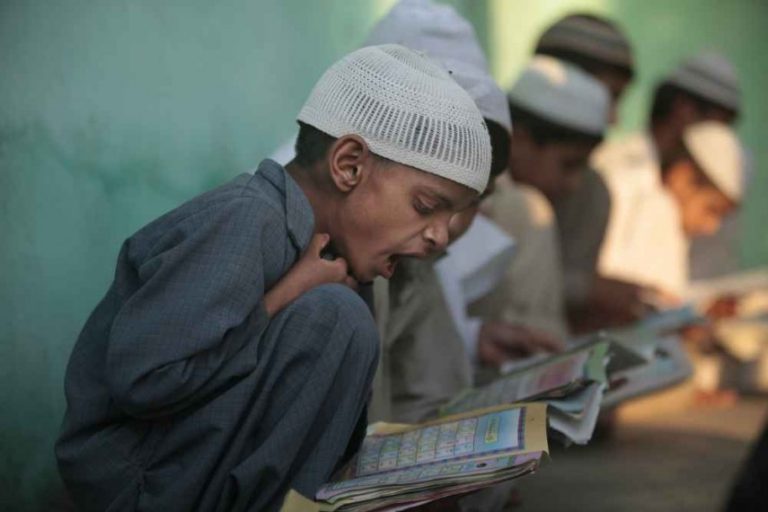
A 14-year-old Muslim youth escaped from his house in Delhi after his parents constantly pressurised him to attend a local madarsa. The Muslim youth had fled his home from Delhi’s Jamia Nagar and was reportedly found begging for a living in Mumbai.
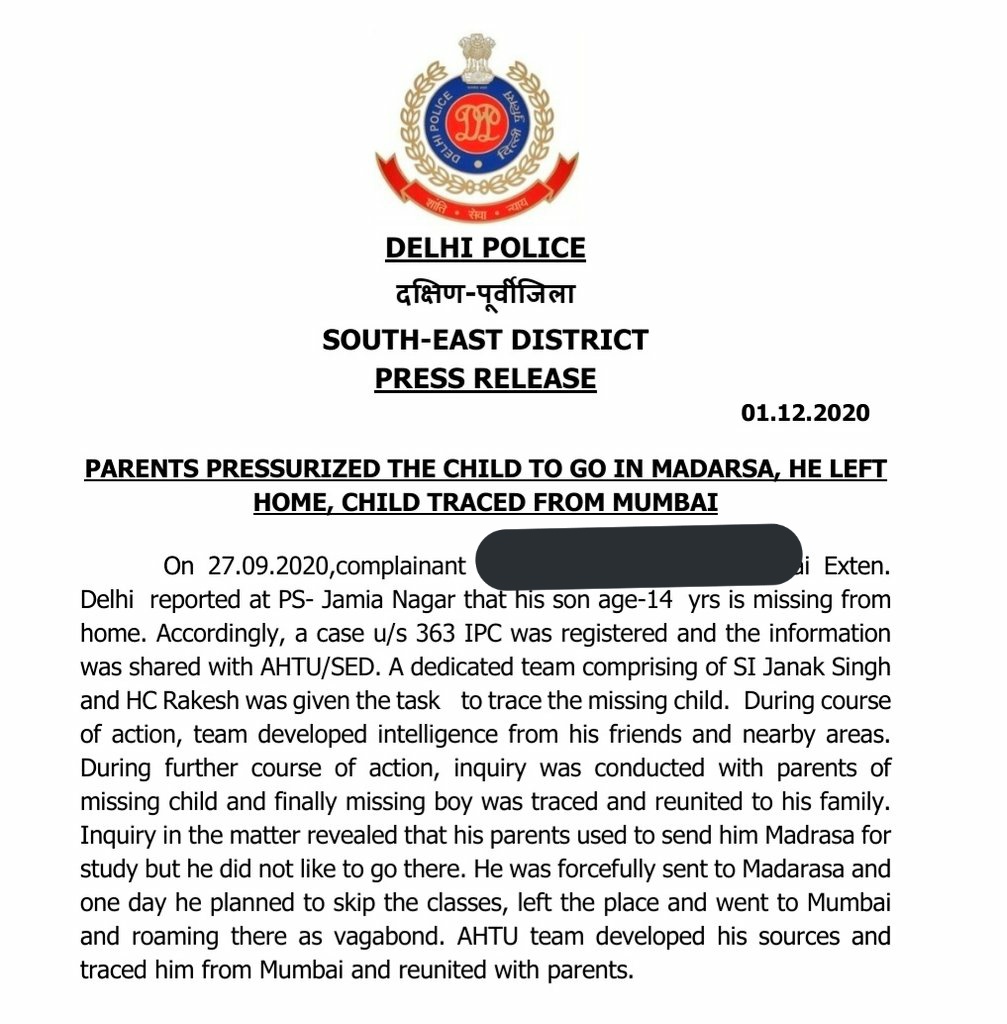
Journalist Raj Shekhar Jha shared a statement released by the Delhi police which stated that the parents of the 14-year-old boy had filed a missing complaint at the Jamia Nagar Police Station in September stating that their son was missing from home. Accordingly, the police filed a case and the information was shared with other police stations.
The Delhi police set up a dedicated team comprising of SI Janak Singh and HC Rakesh to trace the missing child. During the course of investigation, the task force questioned his friends and neighbours of the family. The parents of the missing child were also questioned. After a few days, the missing boy was traced and reunited to his family.
As the Delhi Police inquired further, to their shock, it was revealed that his parents forced their son to attend a local madarsa for studies which did not like. The parents used to forcefully send the kid to madarsa and one day the boy, suffering from constant pressure, skipped the classes and left the city.
The Delhi police, through its sources and intelligence gathering, got to know that the 14-year-old boy was in Mumbai. Later, they traced him to Mumbai and reunited with parents.
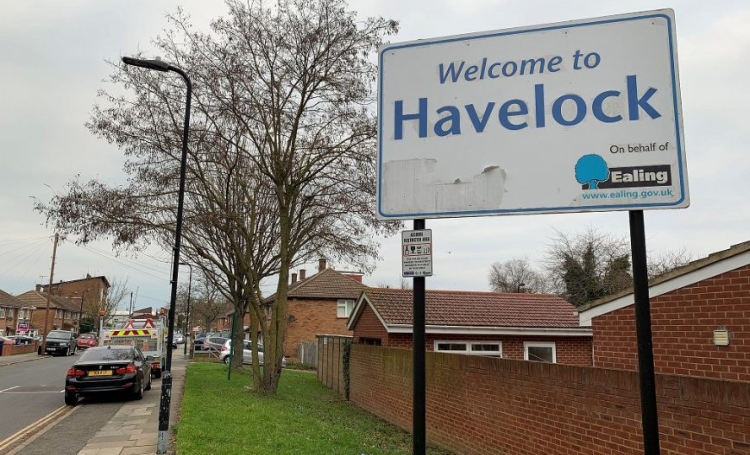
A part of the famous Havelock Road in London’s Southall district will be renamed after Guru Nanak, announced the Ealing Council, the local authority for the London Borough of Ealing that includes Southall, last week. The decision was taken by the cabinet on July 14 to celebrate and commemorate Guru Nanak, the founder of Sikhism. According to the Ealing Council, the part of Havelock Road between King Street and Merrick Road will be renamed ‘Guru Nanak Road’.
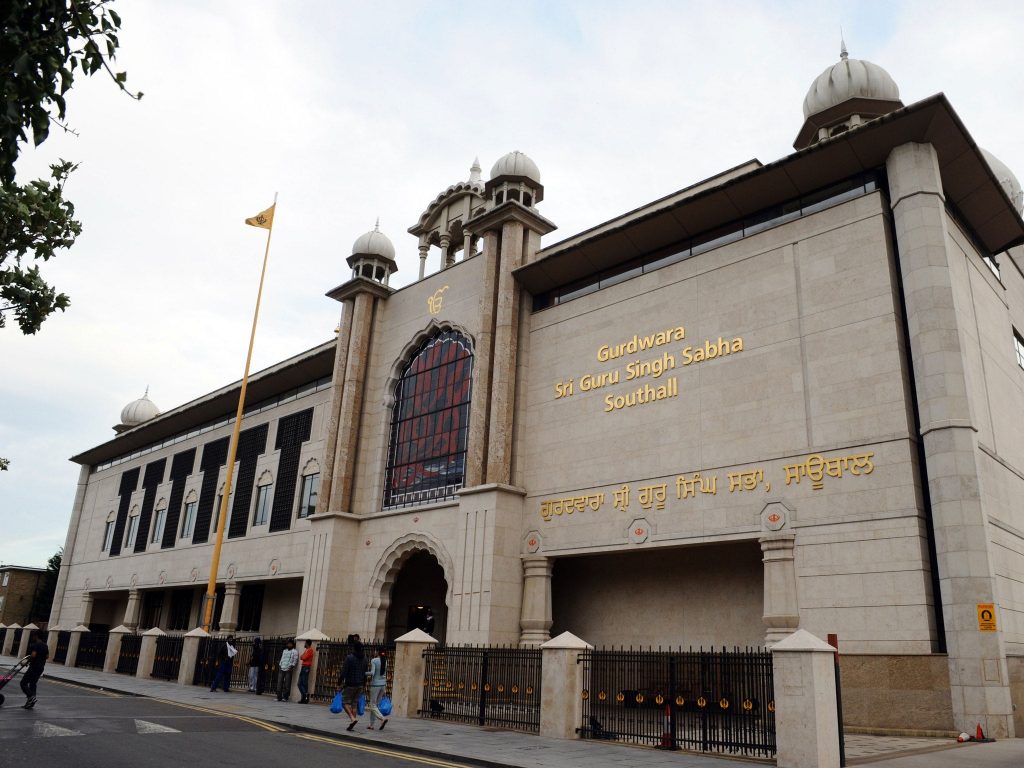
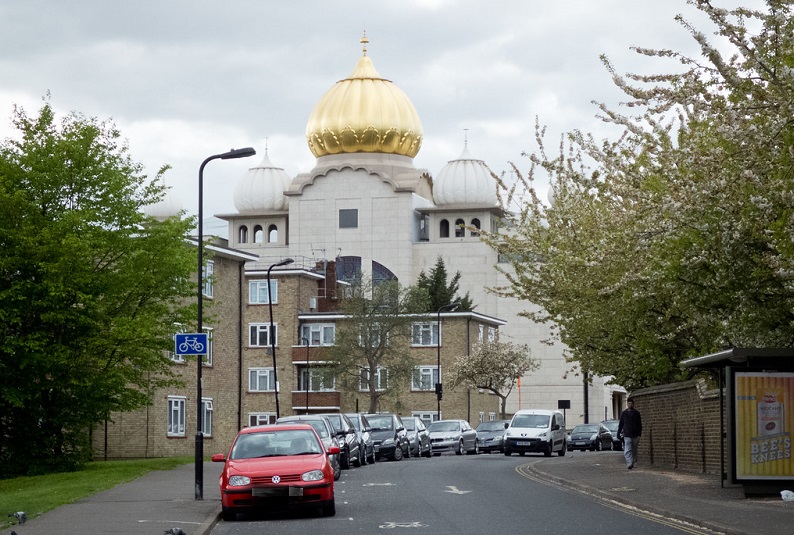
Southall is home to a large Sikh community and the largest gurdwara outside India, Gurdwara Sri Guru Singh Sabha, is also located on Havelock Road.
Image sourec: Edward Anderson on TwitterImage sourec: Edward Anderson on Twitter
While announcing the decision the cabinet noted: “Following the decision by the cabinet on 14 July to celebrate and commemorate the founder of Sikhism, Guru Nanak, it has been decided to make an order to rename part of Havelock Road,” furthering that such decisions should ‘respect and balance cultural and historical identities, sensitivities and heritage’.
Authorities concerned carried out consultations directly with Southall residents and businesses which will be directly impacted by the move, including the Royal Mail. The decision was taken in accordance with the Street Naming Protocol. The cabinet said that the name change will come into effect early in 2021 and the council will be writing to households, businesses and organisations impacted in advance of the change.
Havelock Road in Southall, London was named after colonial British general Sir Henry Havelock
The Havelock Road is named after the colonial British general Sir Henry Havelock of the East India Company who is known to be responsible for the death of many freedom fighters during the Sepoy Mutiny in Cawnpore (now Kanpur) in 1857.
Before that, he had participated in several wards in British India. Havelock took part in the First Afghan War in 1839, the Gwalior campaign against the Maratha forces in 1943, and after that, he had taken part in the Sikh wars in 1945-46. The First Anglo-Sikh War was fought between the Sikh Empire and the East India Company during that period in and around the Ferozepur district of Punjab. It had resulted in Sikhs losing significant parts of Punjab to the East India Company, apart from being forced to pay an indemnity of 15 million rupees.
1857 Sepoy Mutiny
The revolt of 1857 was the conscious beginning of the Independence struggle against the colonial tyranny of the British. There are various names for the revolt of 1857 – India’s First War of Independence, Sepoy Mutiny, etc. The revolt began on May 10, 1857, at Meerut as a sepoy mutiny. It was initiated by sepoys in the Bengal Presidency against the British officers.
Hundreds of sepoys were bayoneted or fired at in a frenzy of British vengeance. British soldiers, led by Major General Sir Henry Havelock, killed several freedom fighters in Allahabad, Kanpur and Lucknow on November 24, 1857. After crushing India’s first freedom struggle, the Britishers named many islands, towns and cities in the names of British army officers. An island in Andaman was also named after Major General Sir Henry Havelock.
In December 2018, the Havelock Island in Andaman was renamed as Swaraj Deep, under the leadership of PM Narendra Modi, as a tribute to Netaji Subhas Chandra Bose. Bose had hoisted the Indian flag at Port Blair on December 30, 1943, and proclaimed the Andaman and Nicobar Islands as territories liberated from British rule. He had subsequently named Andaman Island as Shaheed and Nicobar Island as Swaraj.
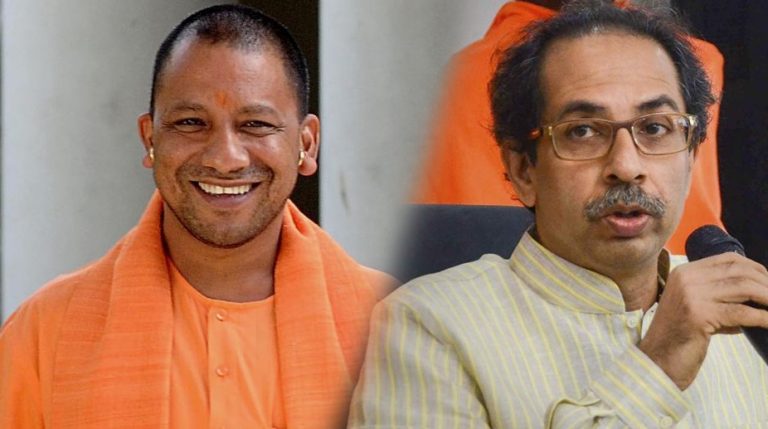
Uttar Pradesh Chief Minister Yogi Adityanath is set to visit Maharashtra tomorrow to encourage industrialists and celebrities to make investments in the state. CM Yogi is first expected to visit the Bombay Stock Exchange (BSE) to attend the listing of Lucknow Municipal Corporation bonds. He will also meet the top executives of several companies including Tata group, L&T, Hiranandani etc. Lucknow is the first north Indian city to release the bond of its municipal corporation. Municipal corporations of Ghaziabad, Varanasi, Kanpur Nagar and Agra are also expected to release their bonds soon.
In order to attract investments for the upcoming Film City in Uttar Pradesh, CM Yogi will meet celebrities from the Mumbai film industry to encourage them to invest in the state. Celebrities who are expected to meet the Chief Minister include actors Randeep Hooda, Jimmy Shergill, filmmakers Subhash Ghai, Rajkumar Santoshi, Boney Kapoor, Bhushan Kumar, Neeraj Pathak, Tigmanshu Dhulia and trade analysts Taran Adarsh, Komal Nahta. Grakhpur MP Ravi Kishan is also expected to be part of the meeting.
This year in September, CM Yogi had announced that country’s biggest film city will come up at Gautam Buddh Nagar in Uttar Pradesh. In the same month, CM Yogi had held a meeting via video conference with representatives from the film industry regarding the Film City. The state government has identified 1000 acre land for the project.
Maharashtra CM irked by CM Yogi’s visit
Annoyed by CM Yogi’s visit to Maharashtra, Chief Minister Uddhav Thackeray today warned him that he would not allow anyone to “forcibly” take businesses away from the state. However, Thackeray clarified that he was not jealous of anyone’s progress if it happened through ‘competition’. Speaking at an event the Maharashtra CM said, “We are not jealous if someone progresses, we do not have any problem with someone’s progress if one competes. But if your are going to forcibly take anything away, then of course, I won’t let it happen and you (industrialists) will not be willing to go”.
CM Yogi’s decision of setting of country’s biggest Film City in Uttar Pradesh did not go down well with the Maharashtra CM who had taken a veiled dig at CM Yogi saying that attempts to shift the film industry would not be tolerated.
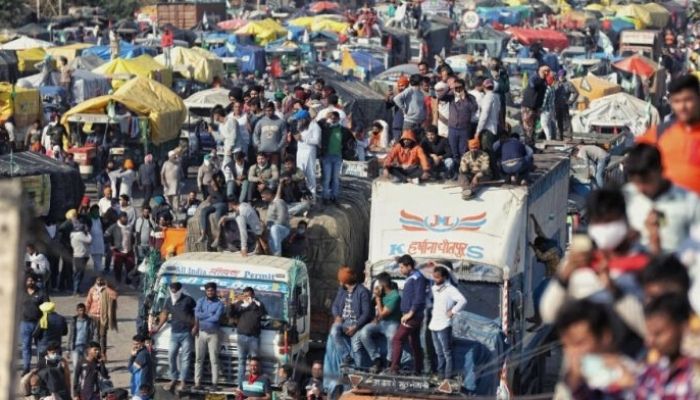
With the ‘organic’ anti-farm law agitation intensifying across Delhi and the National Capital Region (NCR), Delhiites are faced with insurmountable inconvenience. The residents of Delhi have become the scapegoat in the tussle between the ‘farmers’ and the Union government. While the protestors remained unresolved in their demands, Delhiites have been facing an array of issues, starting from traffic woes, to unavailability of potable drinking water and loss to local businesses. While the citizens of the city are suffering due to the farmer protests, the Delhi govt is actually supporting the protests and providing them with various amenities to enable them to continue holding the city for ransom for more days.
Owing to the farmer agitation, the Delhi police closed the Tikri and Singhu borders for traffic movement. The cops also increased the checking of vehicles, leading to clogged roads and ‘serpentine queues’ of vehicles. Besides, alternate routes between Haryana and Delhi also remained jam-packed. While talks between the protestors and the government are underway, the Delhi police placed concrete barriers at all entry points to Delhi from Haryana and Uttar Pradesh.
“Tikri border is closed for any Traffic Movement. Badusarai and Jhatikara Borders are open only for two-wheeler traffic. Available Open Borders to Haryana are following Borders – Jharoda, Dhansa, Daurala, Kapashera, Rajokri NH 8, Bijwasan/Bajghera, Palam vihar and Dundahera,” the Delhi traffic police stated in a tweet on Tuesday.
Traffic Alert
Tikri border is closed for any Traffic Movement. Badusarai and Jhatikara Borders are open only for two wheeler trafficAvailable Open Borders to Haryana are following Borders Jharoda,Dhansa ,Daurala,Kapashera, Rajokri NH 8,Bijwasan/Bajghera,Palam vihar and Dundahera
It further added, “Singhu Border is still closed from both sides. Please take an alternate route. Traffic has been diverted from Mukarba Chowk & GTK road. Traffic is very very heavy. Please avoid outer ring road from the signature bridge to Rohini & Vice versa, GTK Road, NH 44 & Singhu border.”
Traffic Alert
Singhu Border is still closed from both sides. Please take alternate route.Traffic has been diverted from Mukarba Chowk & GTK road.Traffic is very very heavy. Please avoid outer ring road from signature bridge to Rohini &Vice versa, GTK road, NH 44 & Singhu border
Local businesses take a major hit amidst farmer agitation
On Sunday, ABP News reported that several shops have been forced to remain shut along the Singhu border, thereby causing severe loss to local businesses. Due to the farmer agitation, most shops remained closed in the area, except for a few eateries. The shopkeepers are witnessing inconvenience due to delay in delivery of goods and significantly lower footfall of customers. An employee at a local store, Rahul Jha, narrated, “For the past 4-5 days, even if we open our shops for sometimes, we shut our shops even if a small thing happens… The biggest problem is that we are neither receiving goods nor able to sell it (to customers). And our stock is depleting.”
( Video Credits: ABP News )
Common men suffers as water tankers stop delivery
On Monday, ABP News also reported that owing to farm agitation, people are deprived of potable drinking water near Tikri border. The Delhiites, who would depend on free water supply from tankers, had to suffer as tanker services were disrupted due to intensified protests and border closure. As such, people in the area are now forced to buy water amidst the economic distress. It is important to mention that the tap water is non-drinkable and cannot be used for cooking. Despite the economic hardship, the local residents are now forced to spend ₹20-₹30 per day on drinking water.
#FarmerProtest: पिंकी अपने बच्चे के साथ उस इलाके में रह रही हैं जिसको किसान आंदोलन की वजह से बंद किया गया है. अभी तक इनके घरों तक जो पीने का पानी टैंकर के जरिए आता था अब वह बंद की वजह से नहीं आ रहा जिसके चलते पीने के पानी को खरीदना पड़ रहा है.@ReporterAnkitG की रिपोर्ट pic.twitter.com/YQ48WhSn9B
In September 2020, the Central Government announced three new agriculture sector reform laws named Farmers Produce Trade and Commerce (Promotion and Facilitation) Act, 2020, The Farmers (Empowerment and Protection) Agreement on Price Assurance, and Farm Service Act, 2020, and The Essential Commodities (Amendment) Act, 2020. The main aim of these reforms is to provide a better platform for the farmers to sell their produce.
Simultaneously, several clauses protect farmers’ rights on how they want to sell the crop, timely payments, and more. Despite several clarifications by the Central government that the MSP provisions will remain as is, opposition parties have repeatedly indulged in spreading misinformation and accused the government of trying to end MSP provision. PM Modi had come down heavily on the parties opposing the farm laws on September 18 and said those who had kept farmers tied to restrictions for decades are now lying about agricultural reforms.
Unwarranted comments by Canadian Prime Minister Justin Trudeau on the ongoing farmers’ protest has attracted sharp reactions from India after he became the first world leader to comment on the issue. India dismissed the remarks calling it “ill-informed and unwarranted, especially when pertaining to the internal affairs of a democratic country,” external affairs ministry spokesperson Anurag Srivastava said.
While, in a terse message, India asked the Canadian leaders to refrain from commenting on India’s internal matter and maintain the sanctity of diplomatic conversations, the so-called liberals jumped on to the opportunity to once again invoke the ‘Howdy, Trump event’ and reweave the lies associated with the event, peddled by them when Joe Biden was declared the 46th president-elect of the United States.
Remark from Justin Trudeau gets the ball rolling for the anti-Modi brigade
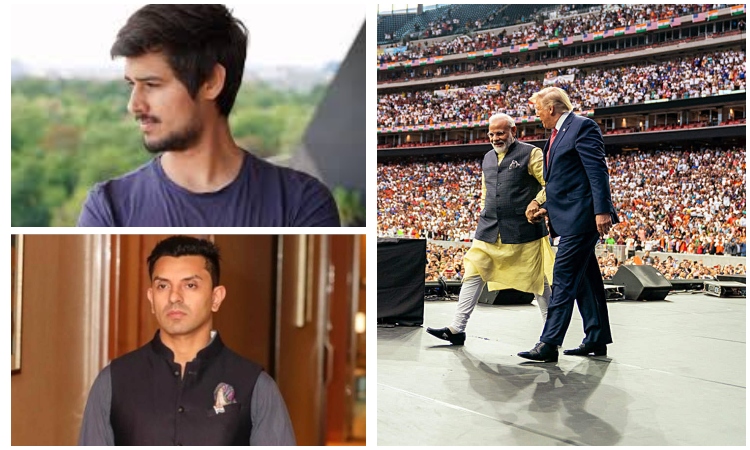
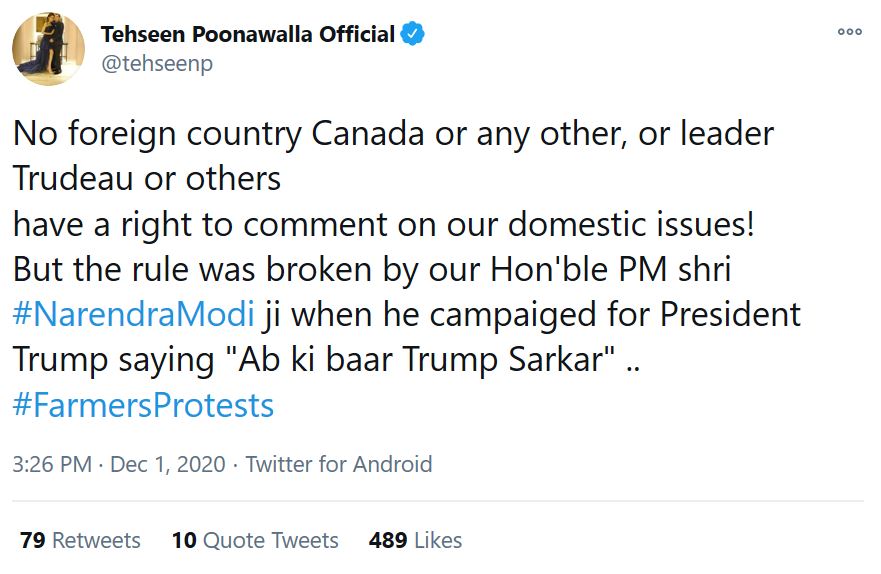
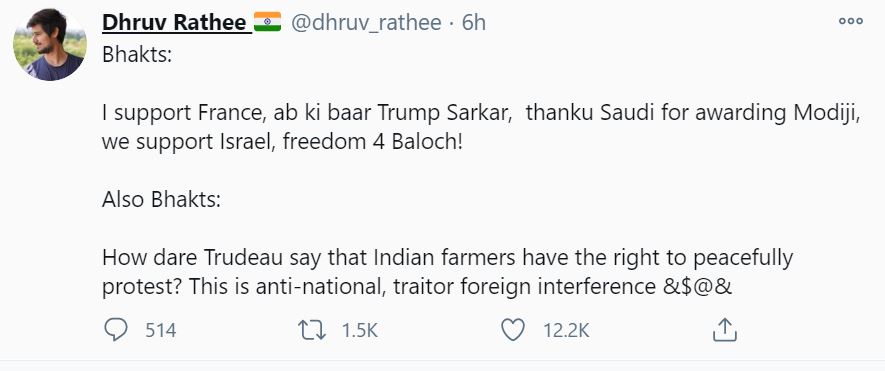
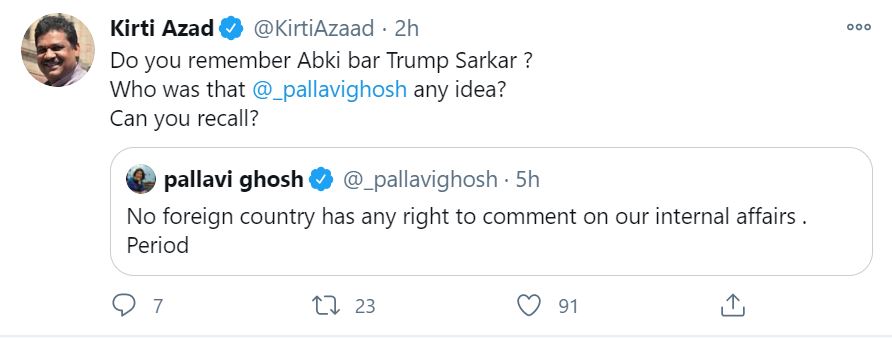
As soon as some social media users slammed the Canadian PM for commenting on India’s internal affairs, few leftist liberals resorted to peddling the same blatant lies, claiming that last year Prime Minister Modi had proclaimed on American soil “Ab ki Baar, Trump Sarkar” to allege that it was a clear case of interference in other nations’ internal affairs. Vocal Congress supporter Tehseen Poonawalla and Pro-AAP vlogger Dhruv Rathee took the lead in peddling the same lie all over again.
The Congress loyalists were soon joined by their other allies.
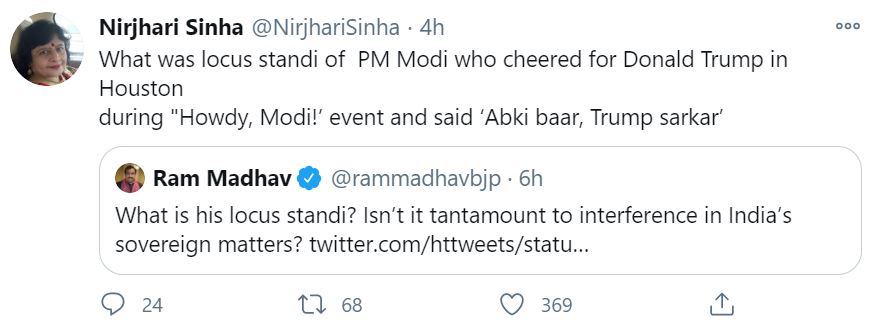
Congress-friendly journalists and media personalities also got in on the act. Director of Pravda Media Foundation, the parent company of the Congress-backed Fact fudger AltNews took to Twitter to write: “What was locus standi of PM Modi who cheered for Donald Trump in Houston during “Howdy, Modi!’ event and said ‘Abki baar, Trump sarkar’. Her Tweet was in response to the National General Secretary Ram Madhav who said that the Canadian PM’s remarks tantamounts to interference in India’s sovereign matters.
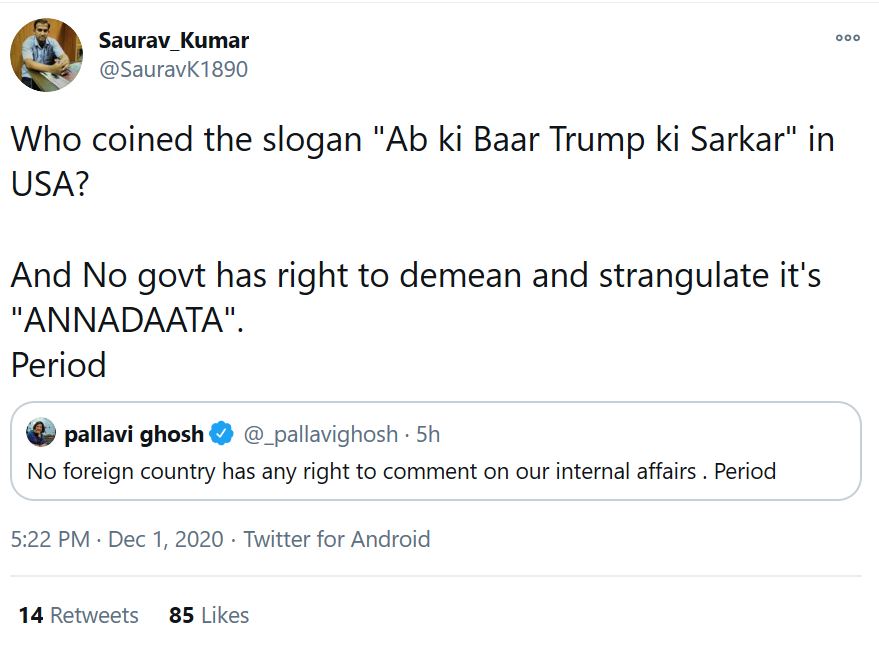
Journalist contributing to leftist media portals The Wire also joined in to spread the same lie. Responding to CNN News18 journalist Pallavi Ghosh who wrote: “No foreign country has any right to comment on our internal affairs . Period”, Saurav Kumar wrote: “Who coined the slogan “Ab ki Baar Trump ki Sarkar” in USA? And No govt has right to demean and strangulate it’s “ANNADAATA”. Period”.
Many other ‘liberals’ jumped on to the bandwagon.
Who raised slogan ,” Ab ki baar, #Trump sarkar”??? Is is not interference in internal matters of #USA???
Question- Howcome Modiji was saying “Ab ki baar Trump sarkar”.I think their elections are their internal affair. Pointing out areas for improvement is always welcome it’s called constructive criticism.
This is a lie which the ‘liberals’ had peddled when Joe Biden defeated Donald Trump to become the 46th president-elect of the United States. In a fresh attempt to berate Modi, riot convicted Congress leader Hardik Patel and senior Congress leader Manish Tewari had attempted to spread lies that Prime Minister Narendra Modi had endorsed President Trump for the 2020 US Presidential elections.
Hardik Patel, soon after expressing his wishes to Biden, had resorted to peddling blatant lies by claiming that last year Prime Minister Modi had proclaimed on American soil “Ab ki Baar, Trump Sarkar”. Not just Hardik Patel, Congress MP Manish Tewari also took to Twitter to share a news report saying PM Modi cheered for Donald Trump in Houston by saying ‘Abki baar, Trump sarkar. Other Congress-friendly journalists and media personalities, as well as politicians, also joined in to spread the lies that PM Modi had endorsed Trump for President.
PM Modi didn’t really endorse Donald Trump
Contrary to the claims made by these anti-Modi liberals, PM Modi had never endorsed or tried to interfere in the 2020 US elections. The claims made by Patel and Tewari were misleading as PM Modi was just referring to a campaign run by Donald Trump campaign team prior to 2016 US Presidential elections.
At the mega ‘Howdy Modi’ event held in Houston in September last year, Texas, Prime Minister Modi had reminded the audience as to how during the 2016 US Presidential campaigning, Donald Trump had said ‘Abki Baar Trump Sarkar’ while appealing to the Indian diaspora in the US.
As per reports, the Indian security forces recently entered as far as 200 meters inside Pakistan territory to find the starting point of the tunnel on India-Pakistan border which was discovered last month. The tunnel was believed to be used by Pakistani terrorists who were eliminated in the Nagrota encounter. “Security forces went inside Pakistan for almost 200 meters which was the starting point of the tunnel, used by the terrorists eliminated last week by Indian forces,” a top official said.
On November 22, a 150-meter long tunnel was detected by the security forces near the India-Pakistan border in Samba sector of Jammu and Kashmir. It is believed that the terrorists were using the tunnel to infiltrate inside Indian territory. The security forces had recovered mobile phones from the four terrorists killed during an operation in Nagrota that helped in uncovering the tunnel.
J&K: Tunnel detected near International Border in Samba sector by BSF & J&K police.
“It seems terrorists involved in Nagrotra encounter used this 30-40 metre long tunnel as it’s a fresh one. We believe they had a guide who took them till highway,” says N S Jamwal, IG, BSF Jammu pic.twitter.com/ghmueuhAR2
Rakesh Asthana, DG, Border Security Forces (BSF) said, “On the basis of the analysis of mobile phones recovered from terrorists eliminated by security forces, on November 22, BSF unearthed a tunnel used by terrorists to infiltrate in Samba sector.” DG Asthana did not share more details about the operation. The tunnel was detected in a joint operation by Border Security Force and Jammu and Kashmir police.
NS Jamwal, Inspector General, BSF Jammu Frontier, said, “It seems terrorists involved in Nagrotra encounter used this 150-metre long tunnel as it’s a fresh one. We believe they had a guide who took them till highway.”
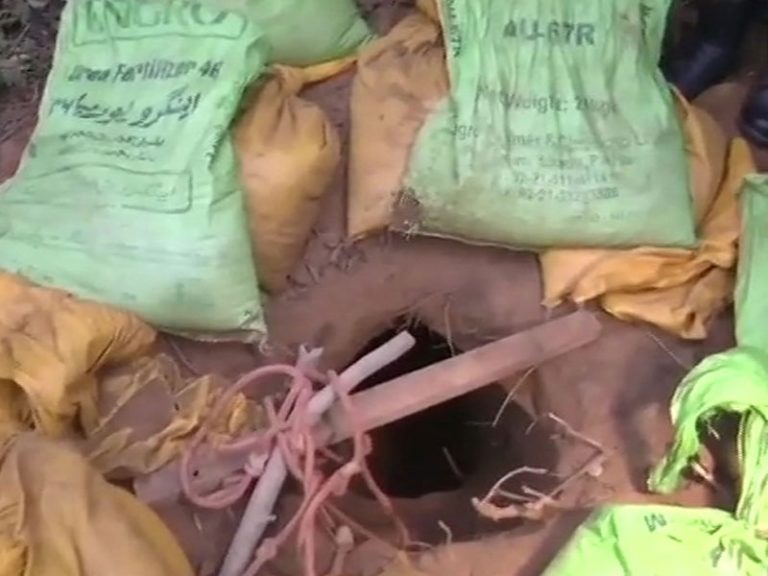
The tunnel was covered in thick bushes carefully and meticulously concealed with soil and wild growth. The security forces found sandbags that were used to strengthen and reinforce the mouth of the tunnel. Those bags had markings of Karachi, Pakistan. The tunnel was made by skilled personnel with proper engineering effort.
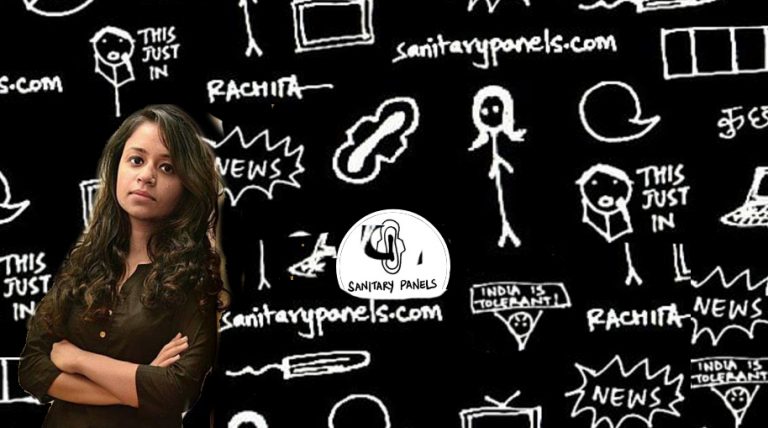
The Attorney General KK Venugopal has granted consent to a law student to initiate contempt proceedings against comic artist Rachita Taneja for Tweets saying they are an “audacious assault and insult to the institution.” According to reports, while granting the consent, the AG stated that the Tweets by Sanitary Panels has a clear implication that Supreme Court is biased towards the ruling political party BJP, which is somehow interested in protecting Republic TV Editor-in-chief Arnab Goswami.
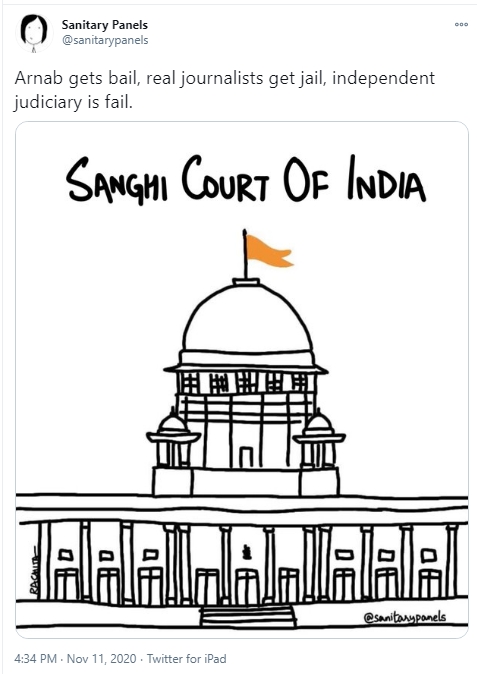
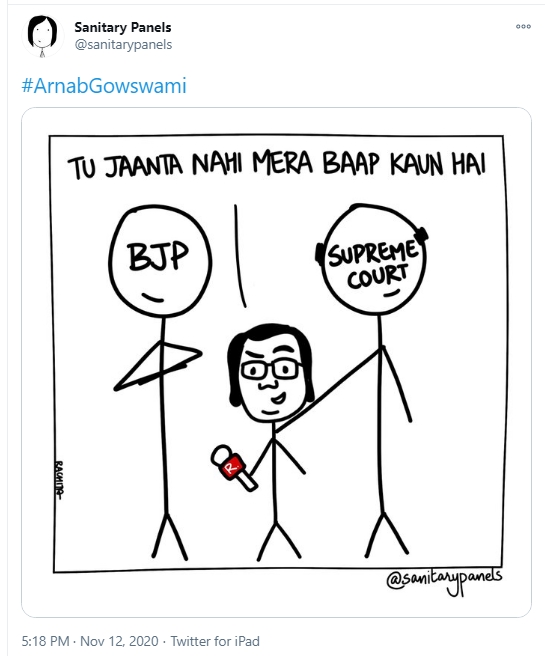
A law student had approached the Attorney General urging him to grant the necessary permission to initiate a contempt proceeding against comic artist Rachita Taneja, the founder of webcomic Sanitary Panels, following her two Tweets dated November 11 and 12. Through her stick cartoons, the comic artist had insinuated a quid pro quo relationship between the Apex Court and the Central government, alleging that on the govt’s direction, the court granted interim relief to Republic TV Editor-in-chief Arnab Goswami.
insinuating that the Supreme Court is biased towards BJP and RSS and because of this prejudice, the cartoons had claimed that the court had absolved Arnab Goswami of the abetment to suicide charge. She had Tweeted those cartoons after the Supreme Court had granted interim bail to journalist Arnab Goswami.
In his letter seeking permission to initiate contempt proceedings against the cartoonist, law student Aditya Kashyap had attached an excerpt of another tweet dated August 7 this year, which stated: “Let’s not forget how we got here.” The caption is accompanied by a caricature that depicts a similar relationship between the judiciary, especially retd. Chief Justice Ranjan Gogoi and the Central government in delivering the Ayodhya Judgment.
Referring to a Tweet posted by the founder of webcomic Sanitary Panels on November 11, where in the comic artist referred Supreme Court of India as a ‘Sanghi Court of India’, in an apparent reference to Rashtriya Swayamsevak Sangh (RSS) with a caption: “Arnab gets bail, real journalists get jail, independent judiciary is fail”, the AG observed that the Tweet carries a gross insinuation against India’s Apex court to the effect that the Supreme Court of India has ceased to be an impartial organ of the state. The Tweet is clearly calculated to undermine the public confidence in the independence and the impartiality of the Supreme Court of India.
Speaking about the Tweet dated November 12, the AG said that through her cartoon, Taneja has implied that BJP is somehow interested in protecting Arnab Goswami and has prevailed upon the Supreme Court to do so. It said that, therefore, the clear implication would be that the Supreme Court of India is biased towards the ruling BJP, and would tailor its judgement for the benefit of the ruling party.
The AG was referring to Rachita Taneja’s Tweet where she depicted Republic TV’s chief Arnab Goswami with the Supreme Court of India and the Bharatiya Janata Party on his either sides and Arnab saying: “Tu jaanta nahin mera baap kaun hain”, which translates to: “you do not know who my father is”. By this cartoon, the cartoonist had insinuated that both the BJP and the Supreme Court were biased towards Arnab Goswami.
Slamming the cartoon artist for her tweets which were an “audacious assault and insult to the institution”, the Attorney General gave a go-ahead to contempt proceeding against Rachita Taneja.
Sanitary Panels founder Rachita Taneja’s past hateful Tweets
Webcomic Sanitary Panels founder Rachita Taneja is known for her controversial, hateful and often Hinduphobic Tweets. Through her cartoons, Rachita Taneja has regularly indulged in mocking and berating the ruling Bharatiya Janata Party and people associated with it. In April, soon after the demise of actor Irrfan Khan, the cartoonist had posted a deplorable Tweet wherein she wished death on Bollywood actor Akshay Kumar while mourning actor Irrfan Khan’s demise. This animosity against Akshay Kumar was evidently because the superstar has been a vocal supporter of PM Narendra Modi and has never shied away from expressing his admiration for the latter.
Taneja’s tweet had drawen a lot of criticism online which impelled her to temporarily deactivate her Twitter account.
These are, however, only few examples of her hateful Tweets. Following the Supreme Court verdict on Ram Janmabhoomi case where the apex court decided in favour of constructing the Ram Mandir, Taneja had taken to Twitter to abuse the temple. Taneja’s comics which many times reek of Hinduphobia has been commissioned and published by various international publications like Forbes India.
Supreme Court observed that Maha police had failed to establish charges against Republic TV chief in the suicide case
Meanwhile, the Supreme Court had recently detailed the reasons for providing interim bail to Arnab Goswami on November 11 in the 2018 Anvay Naik suicide case. It had said that prima facie evaluation of FIR lodged by Maharashtra police does not establish the abetment of suicide charge against him in the 2018 Anvay Naik suicide case. The Supreme Court said that as Maharashtra police had failed to establish charges against Republic TV chief in the suicide case, it was necessary to grant bail to Arnab Goswami. The court had torn into the authorities saying that the criminal law should not become a tool for selective harassment of citizens.