Home Blog Page 4820

Malegaon blasts: Bombay High Court accepts intervention plea of the victim’s family against Lt Col Purohit’s petition

0

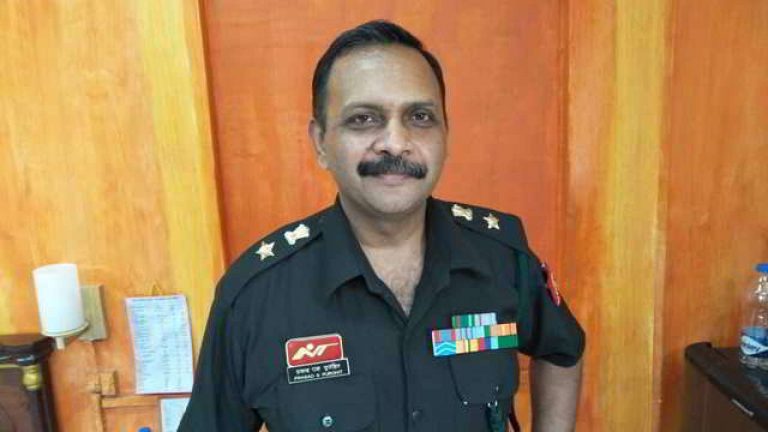
On Friday, the Bombay High Court accepted the intervention plea of the father of a victim in the 2008 Malegaon blast. The application was filed in response to a writ petition by ‘accused’ Lt. Col. Shrikant Prasad Purohit, questioning his prosecution in the bomb blast case without a valid sanction for the purpose.

A 2-Judge Division Bench of Justices SS Shinde and Justice MS Karnik had reserved the order on Wednesday, after listening to both the parties. Senior Advocate BA Desai representing petitioner Nisar Ahmed Haji Sayed Bilal had emphasised the right of his client to heard in the case. He informed that the petitioner was allowed to intervene in the same case in the trial court and also before the Supreme Court in other matters.

However, representing Lt. Col. Purohit, senior advocate Mukul Rohatgi stated that his client had been framed in the case, just for doing his duty. Rohatgi stated, “He was infiltrating ‘these groups’ on behalf of the military intelligence branch and no prior sanction to prosecute Lt Col Purohit was sought before the cognizance of the offence was taken. After being released on bail he was reinstated in service. Whatever he was doing, he was simply discharging his duty.” Rohatgi added that gross injustice has been meted out to Lt. Col. Purohit.

Malegaon Bomb Blast case

A bomb blast took place at Bhiku Chowk in Malegaon on September 29, 2008. The incident injured several people and led to 6 fatalities. Lt. Col. Purohit, BJP MP Pragya Thakur, Sameer Kulkarni, Ajay Rahilkar and Sudhakar Chaturvedi and others were named as accused in the case. Four of the accused in the Malegaon blast case, namely, Lokesh Sharma, Dhan Singh, Rajendra Chaudhary and Manoj Narwariya, were granted bail by the Bombay High Court last year in June.

The National Investigative Agency (NIA) had informed the Bombay High Court that a day-to-day trial of the case will begin from December. As of now, 140 eyewitnesses have been examined out of 400. The trial was temporarily stalled, following the transfer of the presiding judge and because the new judge could not assume charge immediately owing to Coronavirus pandemic.

After spending nearly a decade in jail, without any charge sheet, Lt Col. Shrikant Prasad Purohit was finally granted bail in 2017. He was reinstated into his position in the Indian Army with a resounding welcome. Many reports and statements by former bureaucrats had pointed out that Lt Col Purohit was maliciously framed, with planted ‘evidence’ by the former UPA government to fan the imaginary ‘saffron terror’ narrative and distract the public from the scams of the Congress-led government.

The same bench of Bombay HC was slammed today by SC for refusing bail to Arnab Goswami

On Friday, the apex court questioned another decision of the same Division Bench of the Bombay High Court, comprising of justice SS Shinde and Justice MS Karnik. Slamming the Bombay High Court for its reluctance to grant bail to Arnab Goswami, the Supreme Court bench pointed out that the High Courts ought to take a final call on whether FIR should be quashed or not. The Bombay High Court abdicated its constitutional duty as protector of liberty by failing to take prima facie view of the FIR, the SC noted.

The apex court also observed that Bombay High Court has failed to do its duty by disabling itself from exercising its jurisdiction and added that the Bombay High Court should be circumspect in considering the facts of the case but should not close itself off when considering the denial of liberty of the citizen. The top court also said that the High Courts must exercise its power with caution.

Murti restored a week after Hoysala-era Mahakali murti at Doddagaddavalli temple was found damaged: Read details

0

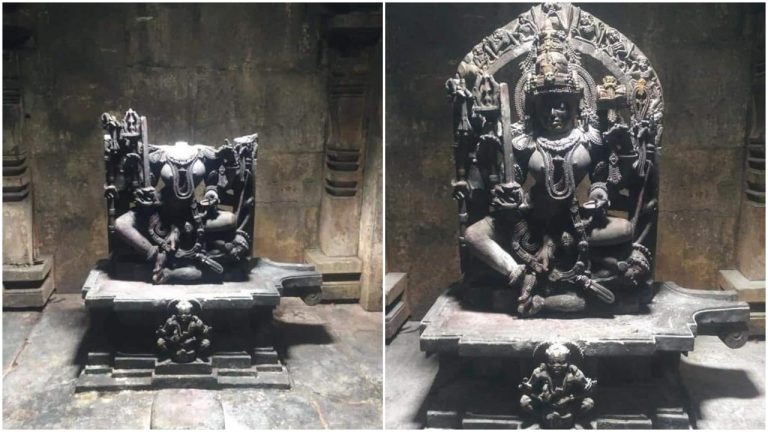
A week after a Mahakali murti at the Doddagaddavalli Temple near Hassan district, Karnataka was found damaged, the sculptors have restored the Hoysala-era murti to its original form. Last week, the murti of Mahakali at the iconic 12th century Doddagaddavalli temple constructed by the Hoysala dynasty was found damaged.

The incident had come to light on Friday morning when local people visited the Archaeological Survey of India (ASI) monument and found that one of the murtis of the deity was damaged. It was suspected that miscreants in search of hidden treasure took advantage of the lack of security and vandalised the murti in the process.

The incident had caused massive outrage across the country with people slamming the authorities for their sheer negligence. Several Hindus demanded accountability from the ASI for failing to protect the historical Hindu architecture and had asked them to get out of temple management if they can protect Hindu temples.

Following the outrage, the ASI authorities have now restored the broken murti of deity with the help of sculptors. The murti has now been temporarily restored and has been placed inside the temple, however, it will not be worshipped.

The ASI authorities said that they have decided to commission expert sculptors from Tamil Nadu to create another murti of Goddess Mahakali to be placed inside the 12th century Hoysala-era Doddagaddavalli Temple. The newly crafted murti will replace the desecrated murti of Mahakali, which will then be worshipped.

According to Hindu traditions, offering prayers before the desecrated murti is considered inauspicious and it is generally believed that worshipping such desecrated murtis will bring bad luck. 

The Lakshmi Devi temple, an architectural wonder, is located in Doddagaddavalli, a village in Hassan District of Karnataka. The Lakshmi Devi Temple, built in a Chatuskuta style (four shrines), is one of the earliest known temples built in the Hoysala style. The temple was built by Hoysala King Vishnuvardhana in 1113 CE.

PM Modi to review the progress of COVID-19 vaccine development in Ahmedabad, Hyderabad and Pune

0

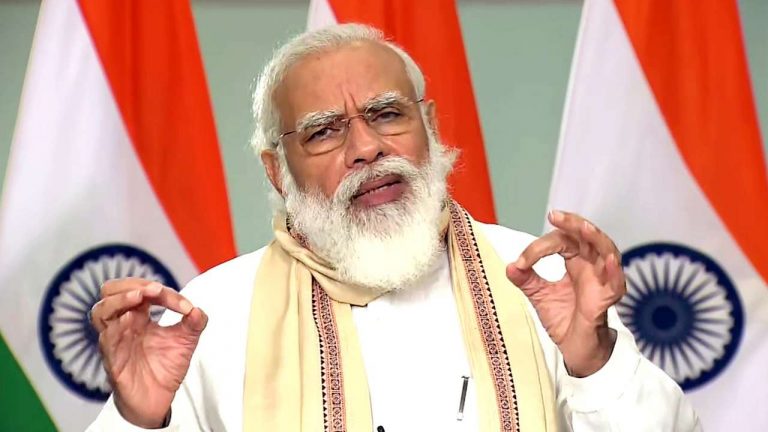
Prime Minister Narendra Modi will take off tomorrow for his three-city visit during which he will be reviewing the development process the COVID-19 vaccines. During his three-city visit, the Prime Minister will be visiting Zydus Biotech Park in Ahmedabad, Bharat Biotech in Hyderabad and Serum Institute of India in Pune to take stock of the progress of vaccine preparations.

<

PM Modi will meet and have discussion with scientists regarding the COVID-19 vaccine to get a first hand view of the preparations and challenges.

The vaccine being developed at the Zydus Biotech Park is called ZyCov-D. Similarly, the vaccine candidates of Bharat Biotech is named called Covaxin. Pune’s Serum Institute of India is developing the Oxford-AstraZeneca vaccine. All three vaccine candidates are currently undergoing phase three trials. Gennova Biopharmaceuticals, a Pune-based biotechnology company, is set to begin Phase 1 human trials of its vaccine candidate. It is the only Indian company to have worked on making an mRNA-based vaccine, like Moderna and Pfizer.

Earlier, PM Modi had asked the states to start working on cold storage facilities for the vaccine. During a coronavirus review meeting held a few days ago that was attended by eight states, PM Modi had emphasised a synchronised action by the state governments to collectively decide the path forward. Uttar Pradesh government has launched a massive exercise to set up mechanisms to store the COVID-19 vaccine so that it can be administered to people without difficulty.

Haryana Health Minister first to get vaccinated

Haryana Health Minister Anil Vij was administered a trial dose of Bharat Biotech’s Covaxin at a hospital at Ambala on November after Phase three trial of the Bharat Biotech’s COVAXIN began in the state. Vij had volunteered to get vaccinated as the first volunteer in the Phase 3 trials that will be conducted on 26,000 volunteers.

Apart from these companies, Hyderabad-based Dr Reddy’s Lab is also working for the clinical trials of the Russian Sputnik V vaccine.

‘Such conduct does not befit a parliamentarian’, Bombay HC tears into Shiv Sena MP Sanjay Raut for his despicable remarks against Kangana Ranaut

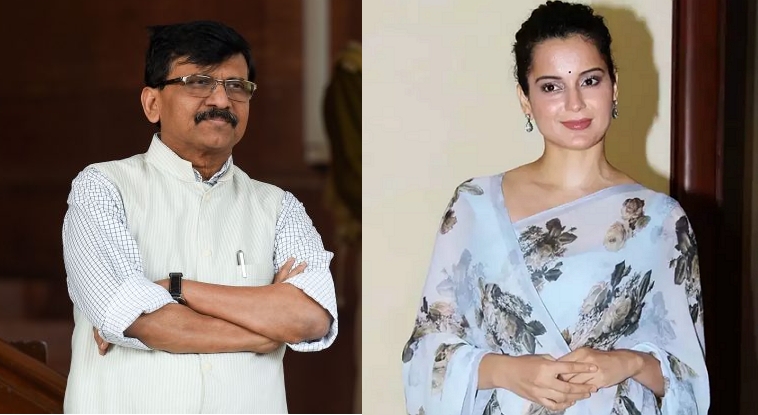
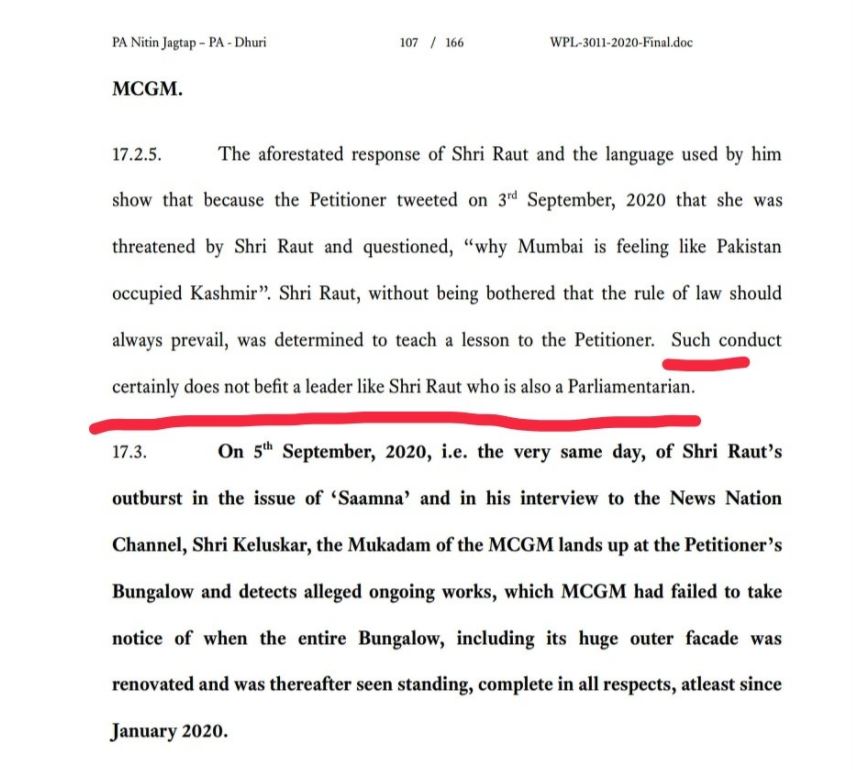
The Bombay High Court while quashing the demolition notice sent to actor Kangana Ranaut by Brihanmumbai Municipal Corporation and accusing the Maharashtra State government with “malafide intent”, also took note of the despicable remarks made by Sanjay Raut against the actor. Tearing into the Shiv Sena MP, the Bombay HC bench comprising of Justices S J Kathawalla and RI Chagle opined that such conduct certainly doesn’t befit a leader like Sanjay Raut who is also a Parliamentarian.

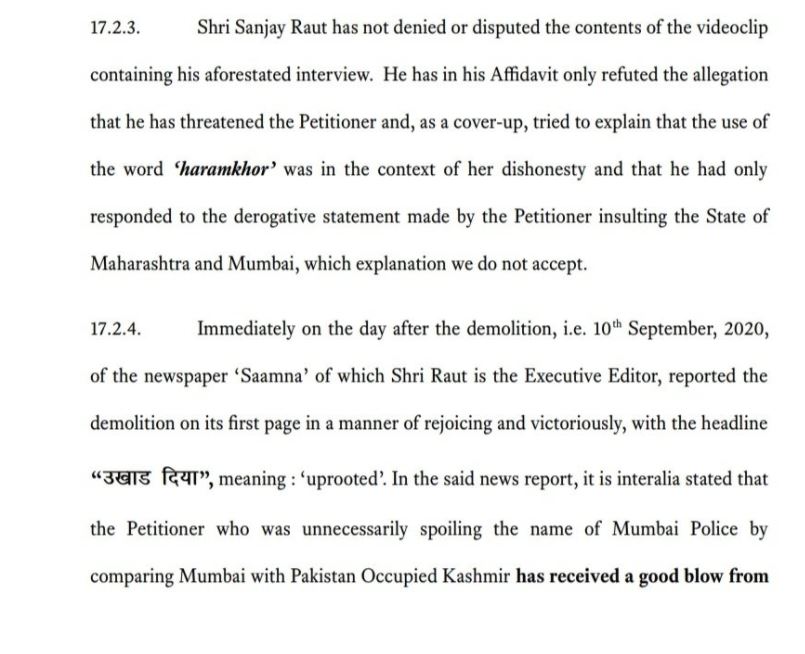
In the order, the Bombay HC refused to accept the explanation Sanjay Raut had earlier provided for the ‘haramkhor’ remark he had directed towards Kangana Ranaut when the latter had likened Mumbai to Pakistan Occupied Kashmir in the wake of Azaadi graffiti seen on the streets of the city and the subsequent inaction of the Mumbai Police. Condemning the parliamentarian for his remark laced with vitriol, the court observed that Sanjay Raut had neither denied not expressed any sort of repentance for comments he made in his interview with the News Nation channel on September 5.

Excerpt for the Bombay HC order, source: Live Law

The court furthered that a day after BMC conducted the demolition at Kangana Ranaut’s Mumbai office-cum-residential bungalow located at Chetak Row House, in Pali Hill, Bandra (west), Shiv Sena mouthpiece Saamana, of which Raut is the Executive Editor, reported the demolition on its first page in a manner of rejoicing and victoriously, with the headline “Ukhaad diya” (uprooted).

The Bombay High Court opined that the editorial published in Saamana implied that the demolition drive was an act of revenge, which the Maharashtra Government had taken against the actor for her Tweet dated September 3, wherein she compared Mumbai to Pakistan Occupied Kashmir. “In the said report, it is inter alia stated that the Petitioner (Kangana Ranaut) who was unnecessarily spoiling the name of the Mumbai police has received a good blow”, stated the order.

Excerpt for the Bombay HC order, source: Live Law

It said that the language used by Sanjay Raut show that Kangana Ranaut was threatened by him. “Sanjay Raut, without being bothered that the rule of law should always prevail, was determined to teach a lesson to the Petitioner”, read the Bombay HC’s order.

‘Malafide intent’: Bombay HC slams BMC for demolishing Kangana Ranaut’s house

The Bombay HC had also slammed the Uddhav Thackeray government for attempting to stifle the voices of dissent. It opined that is not befitting for the state government to take mala fide action against a citizen however distasteful their views might be.

“There are materials to indicate that the action of demolition smacks of malafides and would refrain from making findings on malice in fact for want of facts”, observed the two-judge bench of the Bombay HC hearing a writ petition filed by actor Kangana Ranaut challenging the demolition of her bungalow by the Mumbai civic body at the behest of the state government.

Sanjay Raut threatens, goes on a misogynistic tirade against Kangana

The faceoff between the Maha Vikas Aghadi government and Kangana was triggered after the latter in her Tweet compared Mumbai to Pakistan Occupied Kashmir in the wake of Azaadi graffiti seen on the streets of the city and the subsequent inaction of the Mumbai Police. Irked by the actor’s Tweet, Raut in an interview to the News Nation called Kangana a ‘haramkhor’.

On being asked by the News Nation reporter whether he will take unlawful steps to prevent Kangana Ranaut from entering Mumbai, Sanjay Raut replied, “What is law? Did that girl respect the law in the manner in which she spoke? Why are you acting as the lawyer of that ‘haramkhor’ girl?”

Moreover, in addition to this vitriolic and misogynistic remark, Raut had in an article in Sena mouthpiece Saamana, threatened actress Kangana Ranaut not to travel back to Mumbai after she had expressed fear stating that that the city police force was more threatening to her than the ‘movie mafia’.

Odisha: Multi-millionaire IFS officer facing vigilance raid says his son gets a salary of Rs 1 crore per month, calls charges fabricated

0

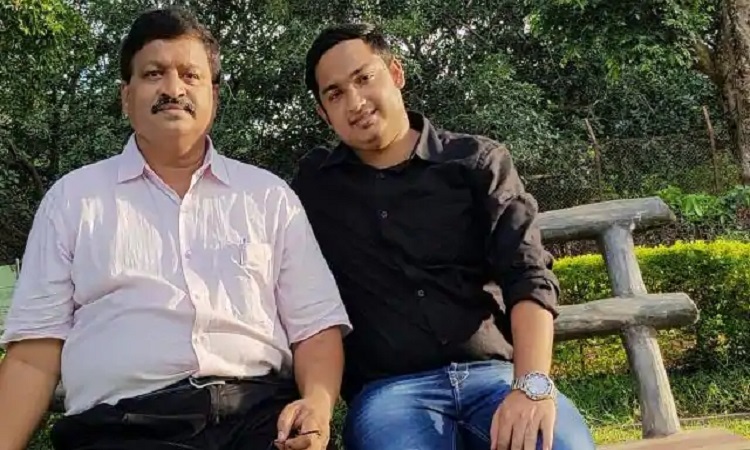
Odisha IFS officer Abhay Pathak, who is facing a large-scale vigilance raid for massive amounts of his disproportionate assets spread across Bhubaneswar, Pune and Patna, has claimed that his son earns a salary of Rs 1 crore per month.

According to the reports, Dr Abhay Kant Pathak, the 1987-batch IFS officer, who was raided by the sleuths of Vigilance Directorate of Odisha on Wednesday over disproportionate assets and unimaginable wealth has said that allegations against him are false. Pathak claimed that his son earned a salary of Rs 1 crore from his employers and not through any corrupt means.

“My son Akash earns a monthly salary of Rs 1 Crore from his employers and not through any corrupt means. The allegations against him are false and fabricated,” said Pathak to the vigilance officials while he was taken to the Capital Hospital for undergoing medical check-up on Friday.

The Vigilance officers had brought Akash to Bhubaneswar from Mumbai for questioning on Thursday in connection with the disproportionate assets case probe launched against his father.

“The allegations against me are false. This is a vindictive action and everything will be proved in the court,” said Akash after he was brought back to Bhubaneshwar.

It is also being reported that both the father and son will soon be arrested by the Vigilance department.

Odisha Vigilance department raids IFS officer Abhay Pathak

On Thursday, the Odisha Vigilance department carried out massive raids against Dr Abhay Kant Pathak which discovered that Pathak has accumulated unimaginable wealth over the years.

More than 150 officers and staff of various divisions of Vigilance Directorate of Odisha simultaneously raided five places in Bhubaneshwar, seven places in Mumbai and Pune, and some regions of Bihar and Rajasthan in the last few days.

Since June 2018, Pathak is serving as Additional PCCF Plan Programme and Afforestation at the office of PCCF, Odisha. The investigation agencies have not revealed the exact amount of disproportionate assets as the investigation is still underway.

Abhay Pathak led a lavish life, travelled in chartered plane

The vigilance officers have seized a considerable amount of cash and other incriminating documents. During the raid at Pathak’s house, the Vigilance department had found evidence of cash deposits amounting to Rs 9.4 crore in the bank accounts of Pathak’s son Akash. The Vigilance officials said that Rs 60 lakh cash was recovered during the searches.

Addition to the cash, gold ornaments weighing 800 grams was also found during the searches. The anti-corruption wing has also found documents related to purchase of gold ornaments worth Rs 23 lakh by Pathak’s family.

“Details of his assets and their value would be known after everything is collated,” an officer added. The reports suggested that a central agency had alerted the Odisha government that Pathak and his family had air travelled at least 20 times to Mumbai, Delhi, Patna, and Pune during the lockdown and post-lockdown period. 

Another detailed report by Odia daily Sambad stated that the Pathak family had hired chartered planes for the 20 trips taken during the lockdown period and have spent upwards Rs 4.5 crores on the flights alone. The chartered planes reportedly belong to a private company named Kalinga Aero and Allied Services Pvt Ltd.

The report also states that in the simultaneous raids, bills for hotel bookings, lavish banquet halls and other luxuries worth over Rs 2 crores have been recovered so far from the IFS officer’s residential properties in Bhubaneswar. The officials also found out that more than Rs.1 crore was paid towards the rent of some luxury apartments and a farmhouse.

The vigilance officials also recovered bills of more than 90 lakhs paid at Hotel Taj Mahal Palace, Mumbai and advance booking amount of Rs.20 lakh at Taj Lake Palace, Udaipur in Rajasthan. The lavish apartment building at Bhubaneswar had Italian marble flooring, ivory furniture and other luxuries. The Pathak family also owns several high-end luxury cars and had hired private security with expensive salaries for personal bodyguards.

Foreign travel details of tours to Malaysia, Hong Kong, United Kingdom, United Arab Emirates, Maldives etc. have also been obtained, the official said. The amount of the cash, jewellery, bills, expensive furniture, furnishings and financial documents found in the raid is so vast that the vigilance department has reportedly hired CAs and interior designers to estimate their total value.

Son is accused in forgery case

Pathak’s son Akash had been named in a crime branch FIR in May for alleged forgery and fraud. Tata Motors had filed an FIR alleging that Akash has been pretending to be an MD at the company and cheating people, promising them jobs. The police’s inaction to act on the FIR has drawn criticism after the vigilance raids were highlighted in the media.

From the mass suicide in Jodhpur to the effect of rules of CAA not being notified: The Left propaganda against CAA continues

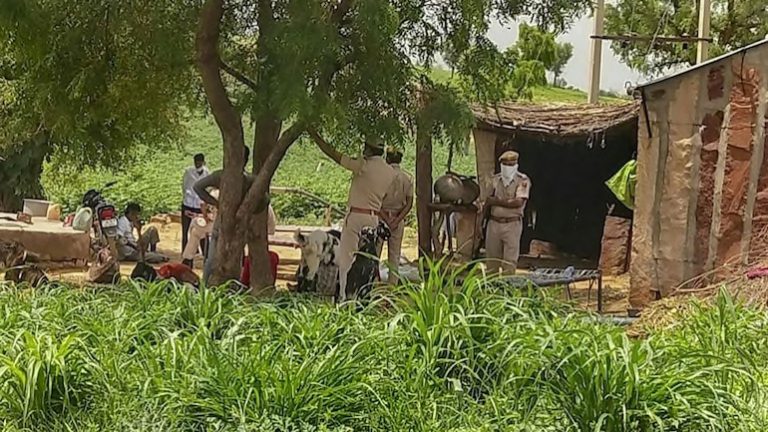
About three months ago, 11 Bheel refugees from Pakistan committed mass suicide due to domestic infighting in Dhechu, Jodhpur. We at Nimittekam, dispatched our Jodhpur district coordinator Shri Bhag Chand Bheel to the Dhechu village when we heard about the incident. From there, Bheel reported that the whole incident was an unfortunate culmination of internal discord in the family.

The state police too could not find any criminal angle in this suicide. The only man of the family who was left alive, Keva Ram Bheel, gave a statement to the police on record, that this tragedy happened due to family infighting and had nothing to do with government apathy. 

While everything point to the fact that the unfortunate incident was a result of a family dispute, the narrative inside India and overseas was deeply concerning. Media in India went out of the way to make it look like either a mass murder or a mass suicide due to official apathy towards Hindu refugees from Pakistan. In fact, even a criminal angle was suggested by the Indian media.

A so-called activist, whom I choose not to name, sitting in Jodhpur gave interviews to various media outlets to get his few moments of fame and merrily blamed the administration for these deaths. The Pakistani media lapped up these lies and turned it into propaganda, alleging that Pakistani Hindu refugees are not safe in India. 

The Pakistani Hindu council made a lot of hue and cry about it and even did a demonstration outside Indian High Commission . 

Thus, a stray incident was converted into a tool to malign the exemplary work by the Government of India and send a message to the Hindus and Sikhs in Pakistan that it was no use looking at the Indian state or Indian people for a safer and better future in India. 

And then, the Coronavirus pandemic was upon us. 

Due to Covid, there has been no movement of Hindus and Sikhs of Pakistan to India because the embassies and the borders have been shut down since March 2020. 

Because of these two reasons, more than 2000 Hindu families have converted to Islam in Sindh and Punjab province of Pakistan . 

Hindus who had been standing for the faith of their ancestors against the worst kind of atrocities by Islamists were forced to yield and lead to the ultimate surrender of their faith.

Of course, Covid is a factor none can predict and control and the loss of Hindu families to abject hunger and poverty is something we will have to live with. 

But why on earth should we succumb to lies peddled by the media and Islamists to malign the CAA and the hard work of organisations like Nimittekam in extricating Hindus and Sikhs out of the hell hole of Pakistan?

People like me and my dear friend Jai Ahuja, who heads Nimittekam now, went hoarse explaining that the death of 11 Hindu refugees was a suicide, but no one listened. Even news portals sympathetic to Hindu causes yielded to the propaganda. The net result was despondency in one crore Hindus and Sikhs of Pakistan and a bad name for the Indian government. Both could only lead to more conversions of Hindus to Islam. 

Working for the last ten years with the Indian union and state governments, I can vouch that the only approach to Pakistani Hindu issues has been one of extreme compassion and concern. Even the much-maligned Indian bureaucracy has been very helpful and went out of the way to accommodate the issues of these unfortunate Hindus of Pakistan. 

Just when the dust around Dhechu suicides was settling, we get another news heading from a newspaper and the whole Leftist ecosystem goes radioactive. 

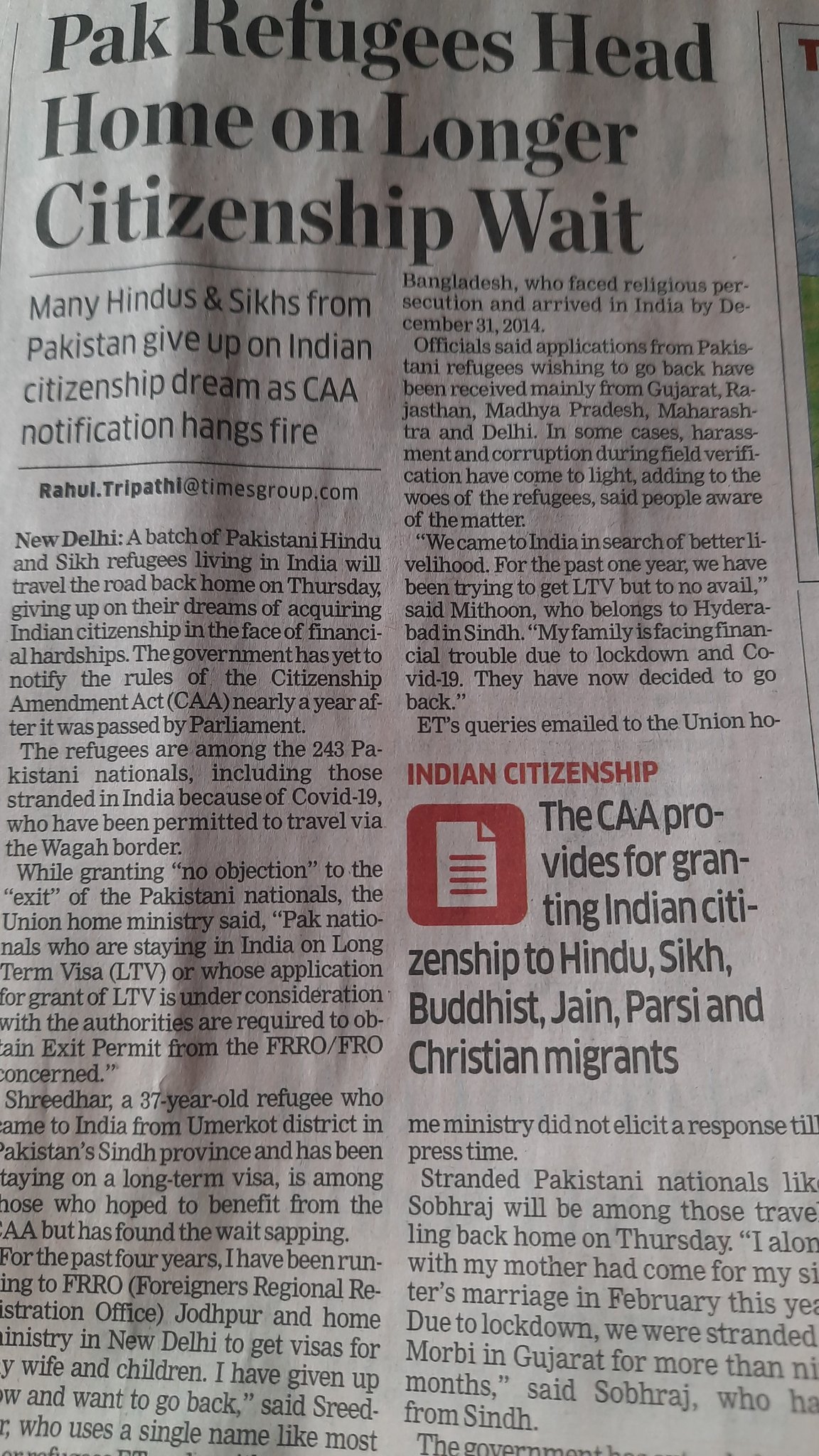
This time it is about 243 Hindus and Sikhs of Pakistan going back to their native nation. The article maliciously links this returning of Pakistani citizens to non implementation of the CAA. 

Article by Times of India on CAA

Before this news is used by the Pakistan media to peddle a white lie amongst Hindus and Sikhs of Pakistan, we must counter this false news point by point. 

Firstly, these Hindus are not officially refugees in India but have overstayed in India due to the shutdown of travel after Covid epidemic. Hence, they are Pakistani citizens who were here on visit Visa or religious visa and they have to go back. 

Second, the process to grant a refugee status for a Hindu or Sikh from Pakistan is clearly laid out by the Ministry of Home Affairs (MHA) for decades now. Briefly, it requires an Indian citizen to sponsor a Pakistani Hindu, the application is then vetted by the security agencies of India and then the visa is granted by the Indian embassy in Islamabad. None of these people mentioned in this article belongs to this category. 

Third, every Pakistani citizen is a security risk for India. We can never be sure when a Jihadi will masquerade as a Hindu and enter India to wreak havoc on our society. Not only such a possibility means a terror attack, but a very bad name to one crore Hindus trapped in Pakistan and the whole issue will be maligned beyond redemption. If the officials of MHA want to send back these Pakistanis, they must have their solid reasons. 

Fourth, there are myopic and self-absorbed people in Jodhpur who are milking this issue of Pakistani Hindus to further their Leftist, anarchist agenda and have deep connections with media houses whom these media people keep popping up from time to time. 

Fifth, CAA has no role in this situation because CAA is only applicable to refugees who entered India prior to 31st December 2014, and CAA applies only an only to legal refugees. 

The consequence of all this noise around the Pakistani Hindu issue will be more panic and persecution of Hindus and Sikhs in Pakistan leading to more conversions. It is high time we realise that when the very same Leftists who were egging on the Shaheen Bagh protests are now shedding crocodile tears for Hindus of Pakistan, it can only mean one thing: To malign Narendra Modi government and create fissures within Hindu community. 

Have we ever seen these Media reporters write about the horrors that Hindus and Sikhs face in Pakistan every day? Do we ever have op-eds on three Hindu/Sikh girls being picked up from their homes and forcibly converted every day? Do we ever hear these newspapers writing on the exemplary work being done to rehabilitate these forgotten Hindus of Pakistan in India? Do we ever hear of the NGOs and Ashrams like Sadhani Darbar Of Raipur who is housing thousands of these refugees with them? Do we hear these newspapers telling us that six city councils of the USA have passed resolutions against the CAA? 

No. Because the Left trumpets have a singular agenda of maligning Narendra Modi and Hinduism. For that, they will even manufacture a victim out of Hindus of Pakistan whom they were resisting in Shaheen Baghs and various editorials till yesterday. The very same group that was denouncing CAA as discriminatory is going to town with the appeal that CAA rules haven’t yet been drafted! 

So one the one hand they cry foul when CAA is passed and on the other hand they cry when CAA drafting is delayed. 

While the delay is certainly unfortunate, but charting it to the lack of intent of the Modi government would either be agenda-driven or ignorant. There are certain eventualities which were unpredicted and unprecedented. The COVID pandemic, for example. While the demand is always for the immediate execution of an important law like the CAA, impugning motives to the delay is erroneous.

Goebbels uttered a simple truth once – A lie told one hundred times becomes the truth. 

Modern-day Leftists and media persons have taken Goebbels to a new level. Lies can not only be told a hundred times to make it true but can also be turned on its head to suit our narrative and confuse the opponent.

Is the central govt recruiting Rohingya Muslims who have illegally infiltrated into India? Not really: Here are the facts

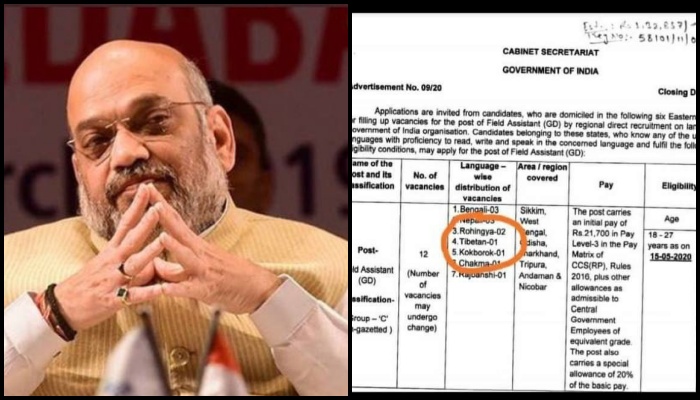
Earlier today, a concerning message went viral on social media claiming that The Research and Analysis Wing (R&AW or just RAW), which deals with gathering foreign intelligence, counter-terrorism, counter-proliferation etc, is recruiting Rohingya Muslims who have infiltrated illegally into India and pose a grave security risk. At the very outset, the claim would appear fantastical since an intelligence wing would presumably not need the media to point out that it could be dangerous to recruit infiltrators.

However, a notification of the government of India that called for recruitment, issued in December 2020, raised alarm bells.

The notification that caused a furore

Based on the notification, several people assumed that the government of India was recruiting Rohingya illegal immigrants for government jobs.

Further, there were claims on social media that this recruitment is actually for R&AW, and thus, the concern over the extent of infiltration only increased.

The question that was raised by several on social media was whether the Home Ministry had recognised Rohingyas as a legitimate group of citizens and/or refugees.

However, the concern raised seems to be a result of poor interpretation of the circular that was doing the rounds on social media.

What does the circular for recruitment say? is RAW recruiting Rohingya Muslims?

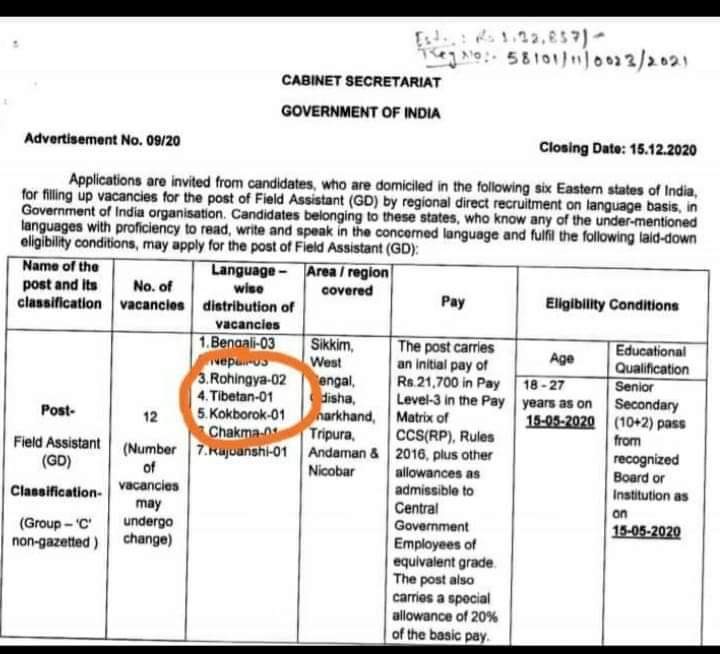
The circular released by the Cabinet Secretariat stated the following:

“Applications are invited from candidates, who are domiciled in the following 6 eastern states of India, for filling up vacancies for the post of Field Assistant (GD) by regional direct recruitment on a language basis, with the government of India organisation. Candidates belonging to these states, who know any of the under-mentioned languages with proficiency to read, write and speak in the concerned language and fulfil the following laid-down eligibility conditions, may apply for the post of Field Assistant (GD)”.

The following languages were listen for the purpose of this recruitment under the head “Language wise distribution of vacancies”.

i. Bengali-03

ii. Nepali-03

iii. Rohingya- 02

iv. Tibetan-1

v. Kokborok – 01

vi. Chakma-1

vi. Rajbanshi- 01

It is point number 2 that created the confusion to begin with.

Under the languages listed, one of the languages listed was “Rohingya”. Instead of interpreting it as the language spoken by the Rohingya Muslims in Rakhine, several people assumed that the notification actually spoke about Rohingya Muslims themselves, and not their language.

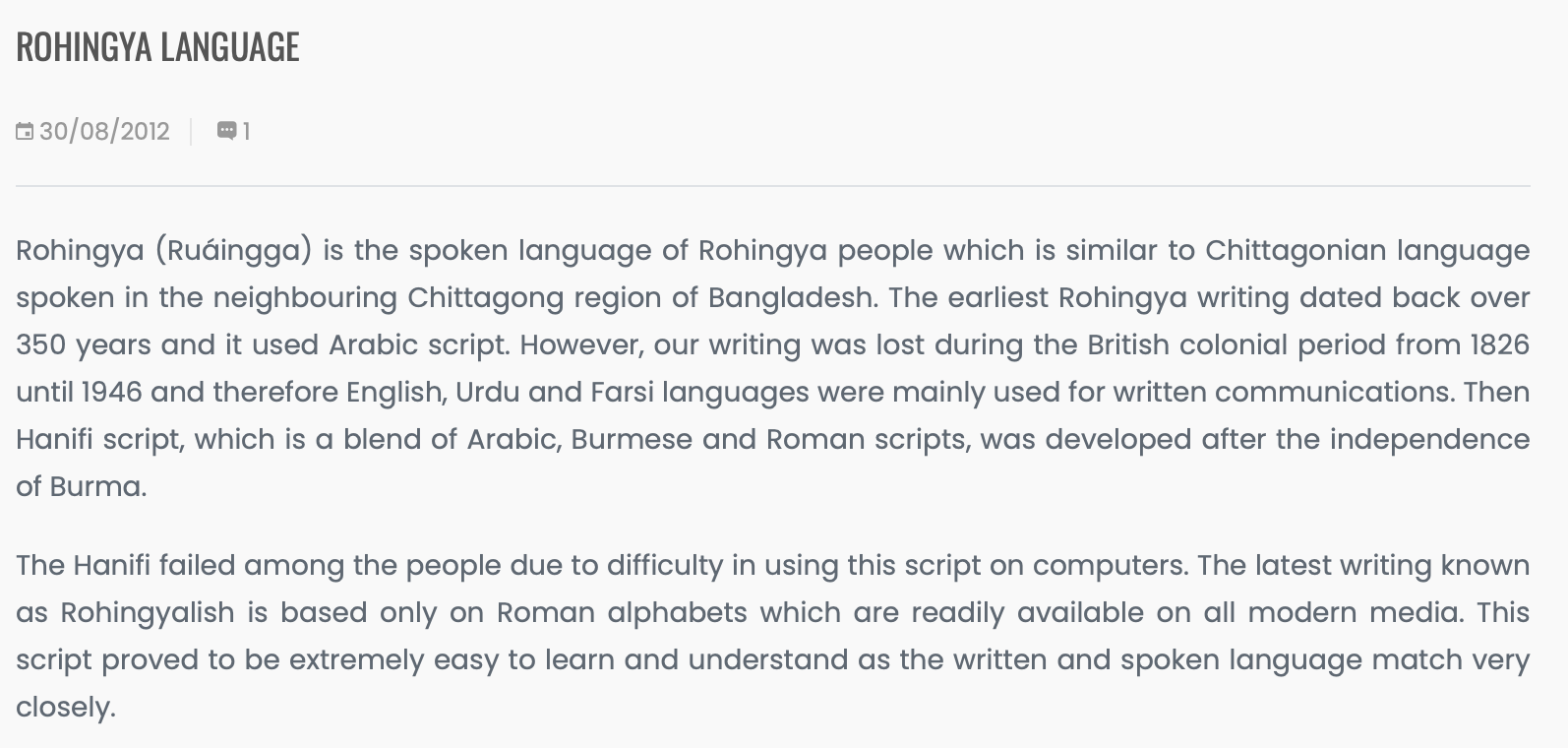
Several websites like Rohingya Post and Rohingyalanguage.com explain the genesis of the language called Rohingya, spoken by the Muslims of Rakhine.

Source: Rohingya Post
Source: Rohingyalangauge.com

Essentially, the notification means that the government of India was recruiting individuals who could claim to be proficient in the language of Rohingya, and not Rohingya Muslims themselves.

With the rumours about this posting being for individuals to work in R&AW, the significance of hiring people who know how to read, write and speak in Rohingya is not lost. R&AW is often involved in gathering intelligence about security threats, and thus, a recruit who would be able to speak, write and understand the Rohingya language would be invaluable to intelligence gathering.

The infiltration of Rohingya Muslims in India and the Indian government’s stand

India has seen massive infiltration by Rohingya Muslims from Rakhine. The government of India has maintained a tough stand against the infiltration. After the Citizenship Amendment Act was enacted by the Modi government, Home Minister Amit Shah had vociferously responded to Muslim leaders and said that Rohingya Muslims pose a security threat and would not be allowed to settle in India.

It is important to remember here that India is not a party to the 1951 Convention on Refugees and neither the 1967 Protocol. Therefore, no international convention is binding on India. Even if we take into account the international conventions, the Rohingyas are clearly bypassing a safe haven in the form of Bangladesh to reach India for the purpose of gaining material benefits. Thus it makes them economic migrants when they enter India and not persecuted minorities. Furthermore, Rohingyas have been rejected by Thailand along with Malaysia and Indonesia, both of which are Islamic countries. Rohingyas have also massacred Hindus in the Rakhine State of Myanmar.

Meanwhile, the Indian government has continued to maintain a strong stance against Rohingyas. Not too long ago, it was reported that 1300 Rohingyas had fled to Bangladesh from India fearing deportation to Myanmar. Rohingyas have also been regularly apprehended by local law enforcement. Union Ministers have also said that they pose a security threat to the country.

In October last year, Seven Rohingya Muslims who were lodged in jail since 2012 for illegally entering India were sent to Myanmar border for deportation. The government has also decided to deport 23 more Rohingyas, who have been staying at various detention camps in Assam after they were caught staying illegally in the state. Thus, at a time when the government has made its stance on Rohingyas clear, that illegal immigrants posing a serious threat to the country are being normalised through football is indeed a cause for grave concern.

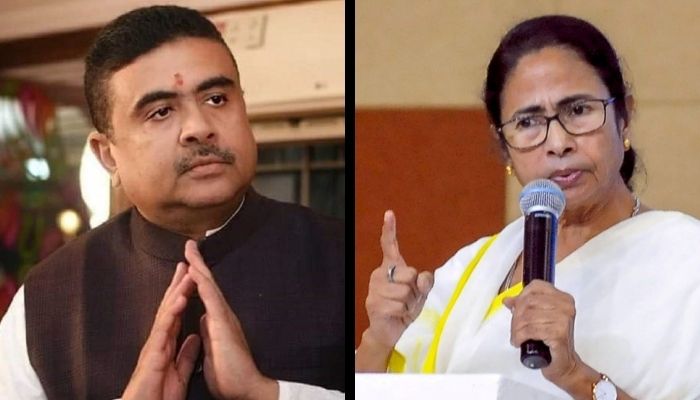
West Bengal: Trouble brews for TMC as Cabinet Minister Suvendu Adhikari resigns as Transport Minister

0

A day after being replaced as the Chairman of the Hooghly River Bridge Commissioners (HRBC), TMC leader Suvendu Adhikari resigned as the Transport Minister of West Bengal on Friday. This was informed by West Bengal Governor Jagdeep Dhankhar on Twitter.

He tweeted, “Today at 1:05 pm a resignation letter of Mr Suvendu Adhikari from office as minister addressed to Hon’ble Chief Minister has been forwarded to me. The issue will be addressed from a constitutional perspective.” Governor Jagdeep Dhankhar also shared the resignation letter of Suvendu Adhikari.

“I do hereby tender my resignation from my office as Minister. Steps may be taken for its immediate acceptance. I am simultaneously by e-mail this to His Excellency-Governor of West Bengal, for doing the needful at his end. I thank you for giving me the opportunity to serve the people of the State, which I did all through with a commitment, dedication and sincerity,” Suvendu Adhikari had written to the Governor.

Influential TMC leader Suvendu Adhikari hints at his exit

It has been rumoured for last several weeks that Suvendu Adhikari will quit the party and join BJP. Earlier this month, TMC had accused the minister of helping BJP. This was fuelled by Adhikari’s visit to Nandigram, where he didn’t mention the name of his party or Mamata Banerjee in his speech. Adhikari is considered as one of the main architects of the Nandigram movement which had helped Mamata Banerjee led TMC to overthrow the long left rule in the state.

On Thursday, TMC leader Suvendu Adhikari resigned from his position as the Chairman of the Hooghly River Bridge Commission. Adhikari, who holds influence in over 35 constituencies and is the former Minister for Transport, Irrigation and water resources, has been replaced by TMC MP Kalyan Banerjee. Ever since his resignation from the Transport Department, rumours are rife about his exit from the party.

Reportedly, Suvendu Adhikari has been skipping key cabinet meeting and holding rallies, not under the flag of Trinamool Congress or the posters of party supremo. Mamata Banerjee had sent election strategist Prashant Kishor to Adhikari’s residence but he had refused to meet him. A desperate attempt was also made to pacify Adhikari through senior party leader Sougata Roy but the talks have remained ‘inconclusive.’ While speaking on the development, a TMC source conceded, “The Adhikari family always decides as a family.”

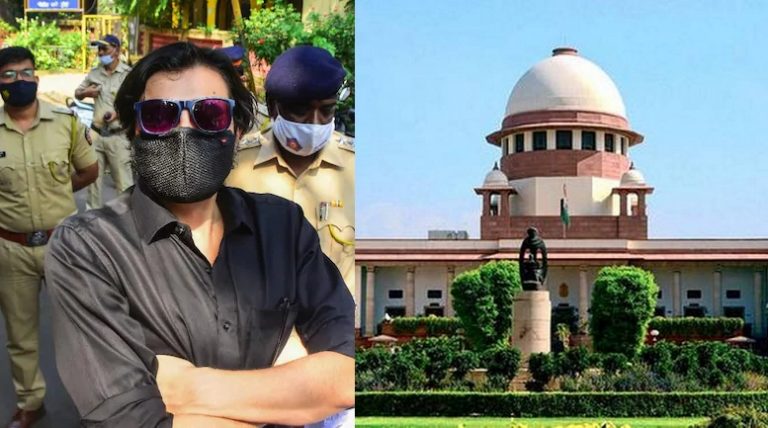
‘Courts must ensure that law is not used for selective harassment of citizens’: Read details of the 6 scathing observations by SC in Arnab Goswami’s bail verdict

0

The Supreme Court of India today delivered the detailed judgement giving the reasons behind granting bail to Republic TV editor in chief Arnab Goswami. The apex court had granted Goswami interim bail on 11th November, after his bail plea was rejected by the Bombay High court. In the detailed judgement [PDF] in the case issued to today, the Supreme Court bench of Justice DY Chandrachud and Justice Indira Banerjee has made several critical comments against the High Court for ‘abdicating its duties’ in protecting the liberty of a citizen. Here are a few major observations made by the bench in the 55-page judgement.

Fit case for protection under Article 226 and Section 482 CrPC

While rejecting the bail plea of Arnab Goswami, the Bombay High Court had said that High Courts should use Article 226 of the constitution and the section 482 of the CrPC to grant interim bails only in very rare and extreme circumstances, and Arnab Goswami’s case does not fall under this category. But the Supreme Court rejected this argument by the High Court, saying that the plea was appropriate to be considered under section 482 of CrPC.

High Court didn’t evaluate the FIR

The apex court was highly critical of the Bombay High Court for delivering a 56-page verdict without even evaluating the charges mentioned in the FIR. The HC had itself said that it is not considering the contents of the FIR, as that would be taken up when it hears the main petition seeking to quash the FIR. But the Supreme Court objected to it, saying that High Court has misdirected itself in declining to enquire prima facie on a petition for quashing the FIR. The High Court must evaluate whether the charges mentioned in the FIR justifies the sections of law applied against the accused, which was not done in this case. The court said that even if FIRs are taken at their face value and accepted in their entirety, they do not prima facie constitute any offence or make out a case against the accused.

Noting that the High Court order didn’t evaluate the most basic issue, the verdict states that the High Court failed to apply its mind to a fundamental issue which needed to be   considered while dealing with a petition for quashing under Article 226 of the Constitution or Section 482 of the CrPC.

The Supreme Court said that as the High Court failed to evaluate whether the allegations mentioned in the FIR justifies the application of Section 306 of the IPC, the task was having to be done by the Supreme Court.

The Supreme Court went in to detail in explaining how it is necessary to evaluate the FIR, and how the courts have the jurisdiction under section 482. The verdict cites several past judgements in the matter.

Active role of accused needed in abetment of suicide case

The apex court verdict explains in details the circumstances under which section 306 on abetment of suicide case be slapped on a person. Explaining the section 306 of the IPC along with section 107, the court says that the accused must play an active role in a suicide, which may be harassment leading a person to commit suicide, aiding in committing suicide etc, and the accused must have indulged in a conspiracy to instigate a person to commit suicide. The court cites several judgements where the section 306 was dropped, as no direct link between a suicide and the accused were found in those cases.

The verdict also states that even if someone is mentioned in a suicide note, it will not attract section 306, unless the accused provokes, incites, urges or persuades someone to commit suicide. It says that examples like mere non-payment of salary, assigning more or less work to employees, etc can’t be ground for abetment for suicide case, but when there are specific charges of harassment against the accused which leads to suicide, the charge can be justified.

Offence prima facie not established

This is the most important segment of the verdict, which rules that the offences mentioned in the FIR does not establish the abetment of suicide charge. While the court’s other observations are mainly regarding grant of bail, this observation actually virtually sets the fate of the case. After going through the details of the case, the Supreme Court verdict says that “it cannot be said that the appellant was guilty of having abetted the suicide within the meaning of Section 306 of the IPC.”

The three accused named in the FIR are accused of not paying due amounts to Anvay Naik, and it can’t the ground for applying the abetment of suicide charge, the court said. It noted that there is a disconnect between the FIR and the provisions of Section 306 of the IPC.

Once again noting that the High Court did not consider whether prima facie the ingredients of the offence have been made out in the FIR, it said, “If the High Court were to have carried out this exercise, it would (as we have held in this judgment) have been apparent that the ingredients of the offence have not prima facie been established.”

As the HC failed to evaluate the FIR under section 482, it disabled itself from considering the bail application under article 226, the court said. If the High Court were to carry out a prima facie evaluation, it would have been impossible for it not to notice the disconnect between the FIR and the provisions of Section 306 of the IPC, the verdict said.

Human liberty and the role of Courts

The Supreme Court verdict contains a separate section titled “Human liberty and the role of Courts”, and it elaborates the role of the judiciary in protecting the liberty of citizens. It said that courts must ensure that the criminal law does not become a weapon for the selective harassment of citizens. “Courts should be alive to both ends of the spectrum – the need to ensure the proper enforcement of criminal law on the one hand and the need, on the other, of ensuring that the law does not become a ruse for targeted harassment,” the verdict said.

The court referred to Arnab Goswami’s allegation that he has been targeted by the Maharashtra govt due to his opinions on his TV channel, and said that High Court failed to prima facie evaluate the FIR under this circumstance. “The High Court abdicated its constitutional duty and function as a protector of liberty,” the verdict says.

Courts can bypass hierarchy

The court also responded to the arguments of lawyers of Maharashtra govt and Naik’s family that High Court was right in not granting bail as bail plea should have been filed in lower court. Saying that while it is correct that the procedural hierarchy of courts in matters concerning the grant of bail needs to be respected, there was two failures by the high court in this matter. They are, declining to evaluate the FIR, and declining to grant interim bail. The verdict notes that as the offences in the FIR does not support the charge of abetment of suicide, the High Court could have used its authority to grant relief.

The court said, “the doors of this Court cannot be closed to a citizen who is able to establish prima facie that the instrumentality of the State is being weaponized for using the force of criminal law. Our courts must ensure that they continue to remain the first line of defense against the deprivation of the liberty of citizens. Deprivation of liberty even for a single day is one day too many. We must always be mindful of the deeper systemic implications of our decisions”.

One accused had no direct dealings with Anvay Naik

A significant matter came to light in the verdict, where one of the accused has said that he had no direct dealings with Anvay Naik, who had named three persons in his suicide note. It is notable that the suicide note names three individuals, Arnab Goswami, Feroz Sheikh, and Nitesh Sarda. While Arnab Goswami and Nitesh Sarda have said that their companies had given job orders to Anvay Naik’s company, and some payment had been withheld due to disputed over work done, Feroz Sheikh has denied any direct link.

Gopal Sankaranarayanan, appearing for Sheikh, told the court that his client’s company iCastX Technologies had hired the services of Atos India Private Limited for the work of construction, renovation and refurbishing of their office premises. This Atos India in turn had sub-contracted the work to CDPL, the company owned by Naik. Hence, there was no contract between the two companies.

If this contention is true, it would mean that for any due to Naik’s company, Atos India would be responsible, not iCastX Technologies.

Mumbai police and Maharashtra govt not named

Although the Supreme Court verdict is very critical of the Bombay High Court, the verdict does not mention Mumbai Police, which arrested Arnab Goswami, and Maharashtra govt, which had ordered reopening of the closed case. But even though directly not named, the judgement is very critical for them. The order says that the offences does not establish the abetment of suicide case, which means that both the state government and the state police are wrong in pursuing the case, after the same was closed by a court.

The Bombay High Court will start hearing the petition seeking to quash the FIR on 10 December. But with the apex court of the country already rolling that the charges under section 306 is not made out, it will be interesting to see how the High Court goes ahead with the case.


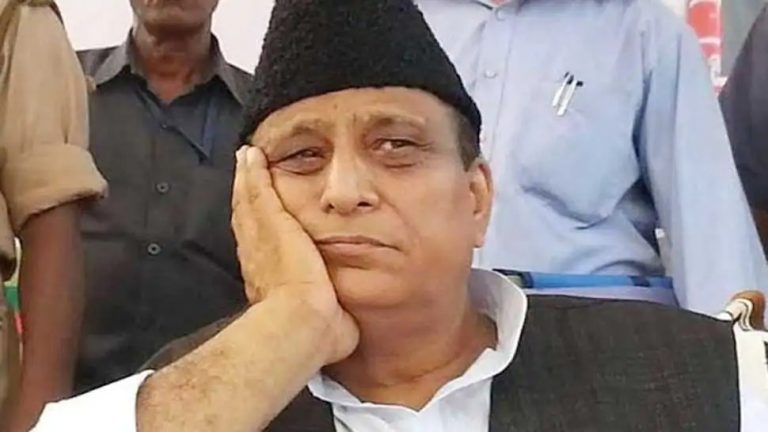
Azam Khan named as accused in Water Corporation recruitment scam by SIT, warrant sent to Sitapur jail

A Special Investigation Team (SIT) probing the Uttar Pradesh Water Corporation recruitment scam during the Samajwadi Party rule has found Rampur MP and former state minister Azam Khan’s involvement. The SIT has made Azam Khan an accused and has sent a warrant to the Sitapur jail where the MP is lodged, as per reports.

This comes after Allahabad High Court yesterday rejected the bail plea of Azam Khan and his son Abdullah Azam Khan in a forgery case. The SIT has sent the warrant to Sitapur jail where Azam Khan, his son and his wife are currently lodged. Sitapur Jail Superintendent DC Mishra confirmed that the SIT had made Azam Khan an accused in the recruitment scam and had sent a warrant in the jail. The SIT will soon file a charge sheet before the court.

The recruitment scam under Azam Khan

A case was filed against Khan in April 2018 in relation to the alleged recruitment scam. There were allegations of irregularities in recruitment against Khan when he was heading the recruitment board of the Water Corporation between 2016-17. The alleged irregularities related to the recruitment for around 1300 vacancies for various posts in the Water Corporation includes the posts of Assistant Engineer and Junior Engineer. Some officials of the Water Corporation had alleged irregularities in the recruitment after which investigation was initiated in the case.

The investigation of the matter was handed over to the SIT after the Yogi government came to power in the state. The Yogi government had also revoked the recruitments made for the posts of Junior Engineers and clerks. The SIT has investigated more than a dozen people including Azam Khan and former City Development Secretary SP Singh in relation to the recruitment scam. The investigation has been concluded by the SIT in which it found Khan guilty.

It is notable here that Azam Khan was the Urban Development and Water Resources minister in the Akhilesh Yadav government.

Cases against Azam Khan and his family

Azam Khan’s son and former Suar MLA Abdullah Azam Khan was found to have forged his birth documents citing a wrong date of birth, making him eligible for the 2017 assembly elections when he was actually not meeting the age criteria. The court had declared his election invalid. A string of cases has been filed against Azam Khan, his wife Tanzeen Fathima and Abdullah.

In September last year, Khan was booked on allegations of ‘stealing goats’ following a complaint filed in October 2016. This was followed by an FIR filed against Khan for allegedly stealing two lion statues installed at Rampur Club. Khan was also booked for stealing electricity. In February this year, a PMLA court had ordered the attachment of properties belonging to Khan, his wife and his son after non-bailable warrants were issued against them in one of the cases.

Khan is also known for passing lewd comments against former Samajwadi Party member Jaya Prada who was contesting against Khan on BJP ticket in 2019 ok Sabha polls.