Home Blog Page 4852

Rajasthan: Petty fight over cricket game turns communal in Udaipur, 6 injured, 3 arrested

0

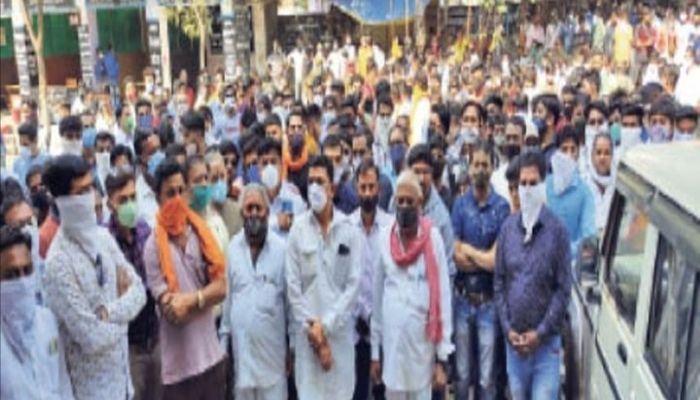
On Sunday, a scuffle broke out between two groups while playing cricket at the Government Higher Secondary School in Salumber in Rajasthan and culminated into a communal clash.

As per reports, different groups were playing on different pitches on the playground. The controversy began when the ball from one side went to the other side. After a heated exchange of words, one group brutally assaulted the other with stumps and bats. During the incident, 5 people had sustained injuries to their head. They are identified as Sohan, Nilesh Bhoi, Gautam, Ashok and Moin Khan. When the outgoing school councillor Sohanlal Bhoi tried to intervene and pacify both the groups, he was severely injured on the head. He, along with two other injured youth, were administered first aid and referred to the Maharana Bhupal government hospital.

On being informed about the incident, the police rushed to the spot. ASP Mukesh Sankhla, DSP Ratan Chawla, Station in-charge Sankhani Hanwant Singh Sodha, Station in-charge (Saradha) Anil Bishnoi, Station in-charge (Semari) Karmveer Singh, Station in-charge (Lasadiya) Surajmal, Station in-charge (Jhallara) to Bhayalal, Station in-charge (Gingla) Tej Karan Singh was alerted. The police have filed a case, based on a complaint by father of Nilesh Bhoi, Jagdish Bhoi, against 19 named and 50 unnamed accused. A day after the incident, the police have arrested Mohammed Adil, Moin alias Jen-ul-Haq and Mohammed Irfan on Monday in connection to the case.

Mob creates mayhem on streets, police cracks down on them

After the incident, mob led by one community created mayhem on the streets at Chungi Naka. The mob broke the temporary chairs, kept at the Chungi Naka in the aftermath of the Coronavirus outbreak, and blocked the road. This led to a scuffle between the police and the mob. The police had to take strict measures to restore the law and order situation in the area. On Monday, the members of the Sarva community took out a silent protest from Bhoi Wada junction to the sub-division office and demanded appropriate action.

Delhi: Police nab 2 suspected terrorists named Abdul Latif and Ashraf Khatana, arms and ammunition recovered

0

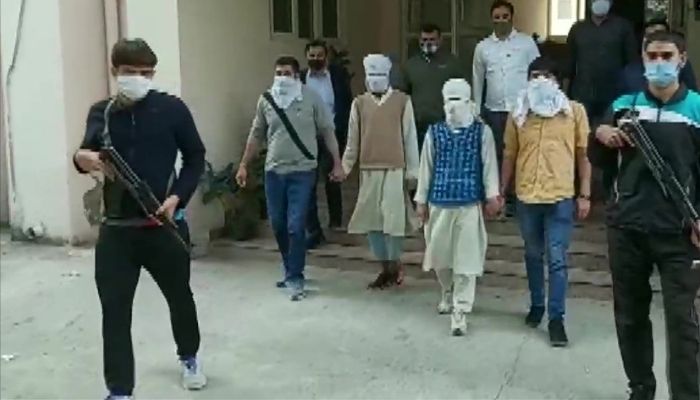
On Monday, the Delhi police apprehended two suspected terrorists from Sarai Kale Khan area near Delhi-Uttar Pradesh border.

As per reports, the two suspected terrorists have been identified as 20-year-old Ashraf Khatana and 22-year-old Abdul Latif. They hail from Kupwara and Baramulla district of the Union Territory of Jammu and Kashmir respectively. The police have seized two semi-automatic pistols and 10 live cartridges from the duo.

“At around 10.15 pm, two suspected terrorists identified as Abdul Latif Mir (22), a native of Baramulla district, and Mohammad Ashraf Khatana (20), a native of Kupwara district, have been arrested by our team,” said DCP Special Cell Sanjeev Yadav.

The police informed that they had laid a trap near Millennium Park in Sarai Kale Khan area based on a tip-off and nabbed the two around 10:15 pm on Monday night. The cops further stated that their arrest helped avert a possible terror attack in Delhi. An investigation has been initiated into the matter.

ISIS terrorist nabbed from Karol Bagh

Earlier, an ISIS terrorist named Abu Yusuf was nabbed from the Ridge Road between Karol Bagh and Dhaula Kuan in Delhi on August 21 night after a brief exchange of fire between the terrorist and the police personnel. The Delhi police had recovered 15 kg of explosives, two pressure-cookers IEDs (Improvised Explosive Devices), and a pistol from Yusuf. Reportedly, the cops had received inputs about Yusuf from Central Intelligence authorities. The ISIS terrorist had done a recce of the area, prior to advancing with his nefarious plans. Abu Yusuf has revealed that he wanted to bomb a crowded place in the National Capital as a retaliation to the construction of Ram Mandir in Ayodhya. 

Punjab: BJP to contest all 117 seats alone in 2022 assembly elections after the break-up with SAD

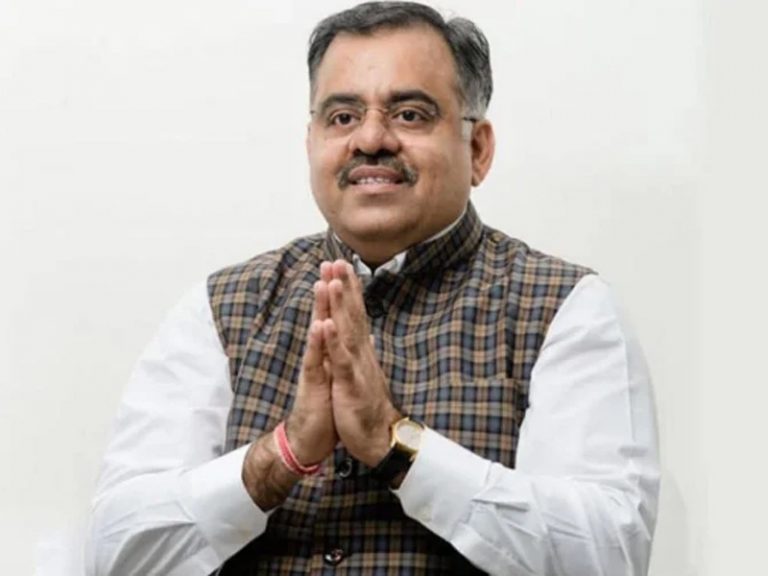
BJP’s General Secretary for Punjab Tarun Chugh has announced that the Bhartiya Janata Party is gearing up to contest all 117 seats in Punjab Assembly elections on its own in 2022.

BJP’s long-term ally in Punjab Shiromani Akali Dal (SAD) broke its association with NDA over the farm laws around two months ago. Chugh said that the party is building up the groundwork to contest all seats. He said, “BJP is strengthening its organisation on a war footing to contest all 117 Assembly seats in Punjab.”

Ten new district offices in Punjab

BJP President Jagat Prakash Nadda will virtually inaugurate ten district offices in Punjab on November 19. BJP has allied with SAD for more than two decades. As SAD was the senior partner in the alliance, it got a significant chunk of seats. While SAD had contested 94 out of 117 Assembly seats and 10 out of 13 Lok Sabha seats over the years, BJP got only 23 Assembly seats and 3 Lok Sabha seats.

The breakup over farm laws

In September 2020, SAD announced that they are breaking alliance with NDA over three new agriculture sector reform laws named Farmers Produce Trade and Commerce (Promotion and Facilitation) Act, 2020, The Farmers (Empowerment and Protection) Agreement on Price Assurance, and Farm Service Act, 2020, and The Essential Commodities (Amendment) Act, 2020. SAD MP Harsimrat Kaur Badal resigned from her post of Union Minister, Ministry of Food Processing Industries, on September 17, marking her opposition over the new laws. PM Modi had came down heavily on the parties opposing the farm laws on September 18 and said those who had kept farmers tied to restrictions for decades now lying about agricultural reforms.

Poor elections performance of SAD-BJP alliance in 2017 and 2019

In Punjab State Assembly Election 2017, the SAD-BJP alliance had performed poorly and won only 18 seats, with SAD willing on 15 and BJP winning on 3 seats. In the 2019 Lok Sabha elections, SAD-BJP alliance managed to win only 4 out of 13 Lok Sabha seats in Punjab.

Bengaluru Riots Case: Absconding Congress leader Sampath Raj arrested by crime branch

0

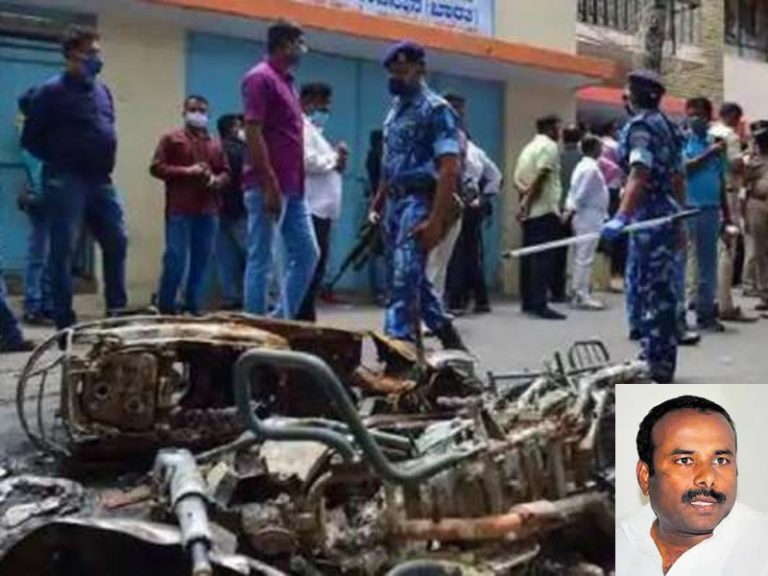
The Karnataka Police has arrested Congress leader and former Bengaluru mayor R Sampath Raj in connection to Bengaluru riots in which four people were dead. Raj had escaped from a private hospital where he was admitted for the treatment of Covid-19. He was absconding for the past several weeks. During the treatment, he had filed anticipatory bail applications that were rejected.

As per the reports, police also arrested one of Raj’s associates named Riyazuddin on November 16 and another Congress corporator named Abdul Rakeeb Zakir for helping him escape. The Congress corporator from Devara Jeevanahalli municipal ward was hiding at Nagarhole in Mysuru with the help of Zakir, who was also wanted in the Bengaluru Riots case.

The Bengaluru Riots Case

On August 11 this year, a violent Islamist mob had started rioting in the city over an alleged inflammatory post against Prophet Muhammad by Congress MLA R Akhanda Srinivasa Murthy’s relative on Facebook. As per the reports, Raj had sent messages to his aide to gather a mob and attack Murthy’s residence, who is Raj’s political rival.

The mob set Murthy’s residence and other houses in Pulakeshinagar on fire. They also burnt down Devara Jeevanahalli and Kadugondanahalli police stations, suspecting the nephew might be present there. Three people were killed in police firing, while one later died due to injuries he suffered in the riots. The situation came under control on August 12, around 1 AM. More than 300 vehicles were destroyed in the violence.

Involvement of Sampath Raj

In the charge sheet filed by the Central Crime Branch, Sampath Raj was charged for conspiracy of causing violence with the help of Zakir and several others. The investigation agencies said that the Congress leader Sampath Raj had joined hands with radical Islamic organizations such as SDPI to target his own party’s Dalit MLA Akhanda Srinivasa Murthy. CCB named 52 people in the 850-page charge sheet. Raj and Zakir were named accused number 51 and 52, respectively.

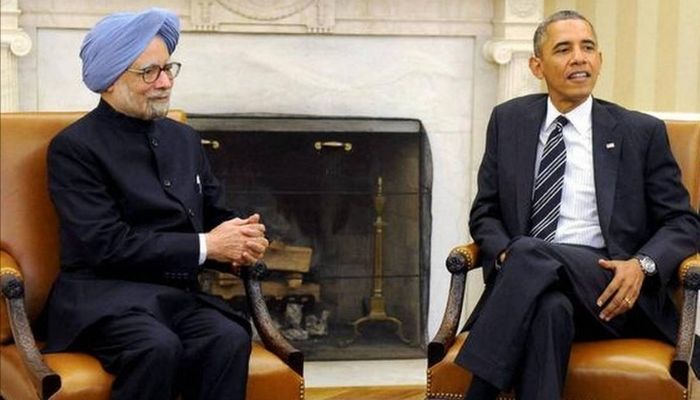
Manmohan Singh was chosen by Sonia to become PM as he posed no threat to Rahul Gandhi, says Obama’s book

The former US President Barack Obama has stirred the hornet’s nest ever since excerpts from his new book, criticising Congress scion Rahul Gandhi, have surfaced online. The first volume of his 768-page memoir titled, ‘A Promised Land’ covers the first term of his Presidency and is set to release on Tuesday.

Barack Obama has reportedly made crucial observations about ex-Indian Prime Minister Manmohan Singh. He wrote, “Singh and I had developed a warm and productive relationship. While he could be cautious in foreign policy, unwilling to get out too far ahead of an Indian bureaucracy that was historically suspicious of U.S. intentions, our time together confirmed my initial impression of him as a man of uncommon wisdom and decency…. What I couldn’t tell was whether Singh’s rise to power represented the future of India’s democracy or merely an aberration.”

Although he referred to Manmohan Singh as wise, thoughtful and honest, Barack Obama stated that his rise to power was facilitated by Sonia Gandhi, who saw no threat to her son Rahul Gandhi from him. “In fact, he owed his position to Sonia Gandhi…more than one political observer believed that she’d chosen Singh precisely because as an elderly Sikh with no national political base, he posed no threat to her forty-year-old son, Rahul, whom she was grooming to take over the Congress Party,” the former US President wrote.

Manmohan Singh was reluctant to retaliate in the aftermath of 26/11

Recounting his conversation with Manmohan Singh, Obama stated that Singh had told him that the call for religious and ethnic solidarity could be intoxicating and easily exploited by politicians in India and everywhere else during uncertain times. “He feared that rising anti-Muslim sentiment had strengthened the influence of India’s main opposition party, the Hindu nationalist Bharatiya Janata Party (BJP),” Obama wrote.

He has also reportedly written that Manmohan Singh was reluctant to retaliate against Pakistan after the 26/11 attacks and that decision caused him political damage.

At the conclusion of Barack Obama’s trip to India in 2010, the US President wondered about India’s political future when Manmohan Singh had come to see him off. “In the dim light, he (Singh) looked frail, older than his seventy-eight years, and as we drove off I wondered what would happen when he left office. Would the baton be successfully passed to Rahul, fulfilling the destiny laid out by his mother and preserving the Congress Party’s dominance over the ‘divisive nationalism’ touted by the BJP?” Obama has wondered.

The scathing remarks of Barack Obama on Rahul Gandhi

“Rahul Gandhi has a nervous, unformed quality about him as if he were a student who’d done the coursework and was eager to impress the teacher but deep down lacked either the aptitude or the passion to master the subject”, Barack Obama had stated in his new book titled,’ A Promised Land.’

According to a book review by the New York Times, the autobiography by Obama is ‘more political than personal’. The book is reportedly is a harsh self-assessment by Obama of his Presidential tenure and his life including his first stirring of social awareness in his teenage years. The book also talks about his VP and the current US President-elect Joe Biden along with various other issues.

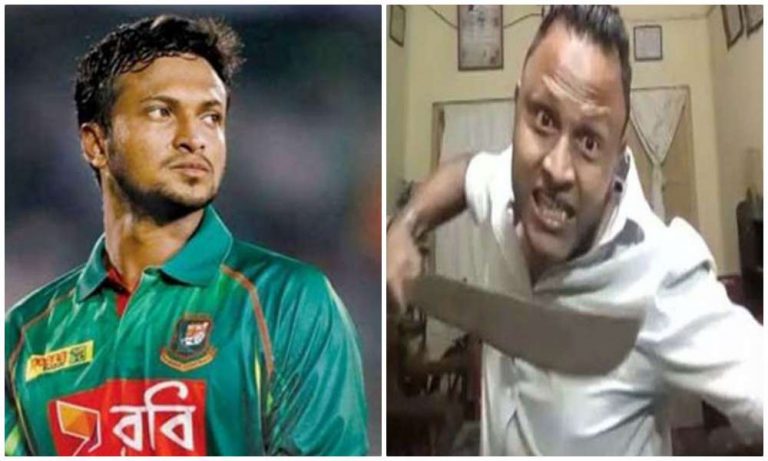
Bangladesh: Youth threatens to slaughter cricketer Shakib Al Hasan over allegations of blaspheming by inaugurating Kali Puja in Kolkata

Bangladeshi youth named Mohsin Talukdar in Sylhet, Bangladesh, went live on Facebook to threaten all-rounder cricketer Shakib Al Hasan to hack him to death over allegations of inaugurating a Kali Puja program in Kolkata, India. On Sunday, little after midnight, Mohsin went live on Facebook and threatened to hack Shakib to death.

He said that he was happy when Shakib went and performed Hajj. However, he was upset that Shakib allegedly went to India to inaugurate a Kali Puja program. “It has hurt the hearts of the Muslims. I will hack him to death if I see him,” he reportedly said in his Facebook live. He also expressed anger at Shakib for misbehaving with a fan who wanted a selfie with him.

On Monday morning, Mohsin again came live on Facebook and apologised for threatening Shakib Al Hasan. He said that after offering Fajr prayers, he realised threatening to slaughter someone was not right. “I apologise for that,” he said. Mohsin further added that he has prayed for Shakib’s salvation for having inaugurated Kali Puja program. “I prayed that Allah may guide him. Although I said a lot of things out of excitement, it was not right. I apologize for that,” he said.

Meanwhile, police has said that a case has been registered against him and several teams are working to arrest Mohsin.

Mohsin’s family members claim he was mentally disturbed. As per Dhaka Tribune, Mohsin’s brother said that the family is ashamed of what he said. “On behalf of our family, we apologize to Shakib, the pride of Bangladesh,” his brother said.

Shakib denies inaugurating Kali Puja program

Meanwhile, Shakib Al Hasan has denied media reports of inaugurating Kali Puja program in Kolkata on November 12. It was alleged that he cut the ribbon and light the lamp while inaugurating the 59th Shyama Puja of “Amra Shobai Club” at Kankurgachi in East Kolkata. He also sought apology from his supporters for ‘hurting their sentiments’ through various incidents in recent past.

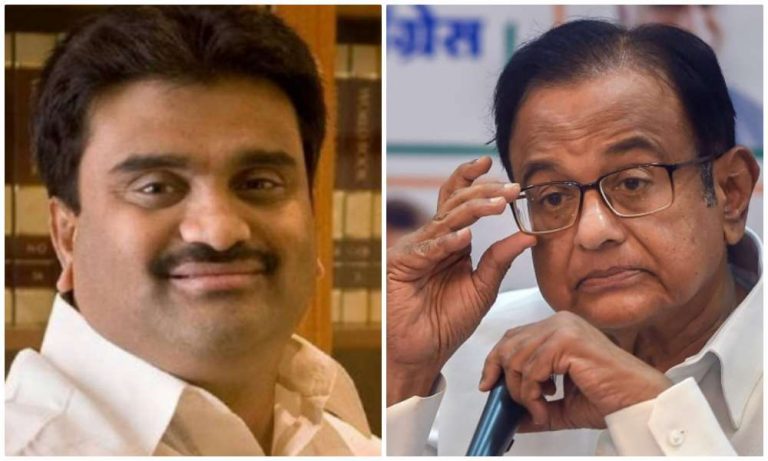
Vasan Eye Care founder dies under mysterious circumstances, P Chidambaram allegedly used his company to launder black money

Vasan Eye Care founder AM Arun has reportedly died under mysterious circumstances early on Monday morning after he allegedly suffered chest pain. The 51-year-old was brought to Kauvery Hospital where he was declared dead on arrival. Some of his relatives raised suspicion over his death. Following which, the police have registered a case of suspicious death.

As per police, the relatives have raised suspicion that AM Arun could have killed himself and created a ruckus at the hospital. Based on their statements, a cause under section 174 of CrPC was registered by Teynampet police. As per police, preliminary verbal postmortem report by doctor suggests it is a natural death with no traces of either suicide or murder. However, more details will be available once viscera reports is ready.

AM Arun’s closeness to P Chidambaram

As per reports, AM Arun was a close aide of Congress leader and former union finance minister P Chidambaram and his son Congress MP Karti Chidambaram. There were allegations that the Chidambarams used loss-making Vasan Eye Care to launder black money. In 2015, the Income Tax officials had searched his residence in Chennai and Vasan Eye Care hospitals in Mylapore. The Enforcement Directorate (ED) had also investigated the financial dealings of the group.

A 2015 article on The New Indian Express alleges that P Chidambaram and his Karti, through front companies, specifically Advantage Strategic Consulting Pvt. Ltd, received black money through Vasan. In the New Indian Express article, Chartered Accountant and columnist S Gurumurthy alleges that P Chidambaram owned Vasan Eye Care through companies in Mauritius and Singapore. Chidambaram, however, had denied the allegations.

Darul Uloom Haqqania: The ‘University of Jihad’ in Pakistan that routinely sends ‘graduates’ to fill the ranks of Taliban and other terror orgs

Across the world, Pakistan holds the distinction of being identified as the “pernicious cradle of terrorism”. It has constantly and unapologetically supported Islamic terrorism, most notably against India, Afghanistan, the United States and many other Western nations. Terror organisations like Al Qaeda, Lashkar-e-Taiba, Taliban and several other outfits have free rein in Pakistan. In fact, they have mushroomed and enjoyed unfettered state support in Pakistan.

Pakistan has also emerged as a safe haven for the terrorists where the government, both political and Pakistani Army, goes to great lengths, to hide, safeguard and protect terrorists that serve to fulfil their covert propaganda. As a result, it has been on FATF grey list since June 2018 for providing a conducive environment for the terrorists and terror outfits to operate and proliferate on its soil.

But what has fuelled this transformation of an Islamic nation to a terror factory? What has made Pakistan the sought-after destination for all the terrorists in the world, given that even Al Qaeda terrorist and the mastermind of the US 9/11 attacks Osama Bin Laden was found hiding in Pakistan’s Abbottabad? Where do terror organisations that operate in Pakistan draw fresh blood from? How do they seamlessly transition their leadership without undergoing any visible hiccups?

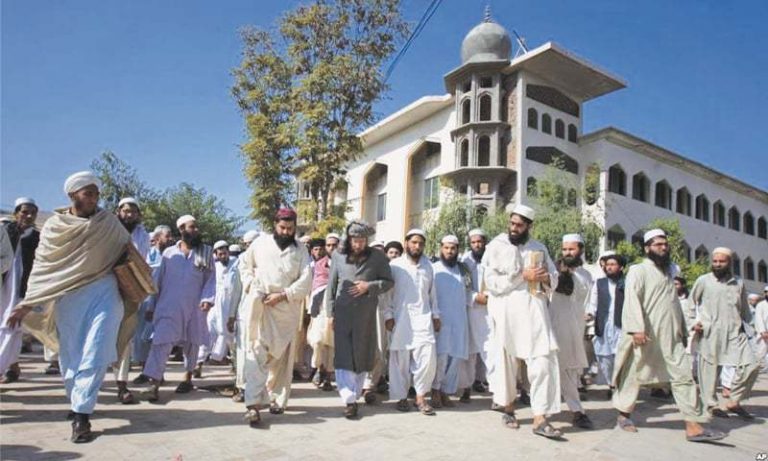
Darul Uloom Haqqania- The “University of Jihad”

A news report by the AFP recently attempted to answer these questions. The report centred around an influential Islamic seminary, that is infamous for constantly churning out terrorists that have gone on to become linchpins of various terror outfits active in the country. Darul Uloom Haqqania, the Islamic seminary dubbed as the “university of jihad” is the organisation that has played a central role in sowing seeds of Islamic jihad among impressionable individuals and provided terror organisations with much-needed manpower.

In the process, the Darul Uloom Haqqania has provided the who’s who of Taliban’s top leadership, including the ones who are striking a hard bargain with the Kabul government to end the protracted war that has gone on for about 20 years now. The budding jihadis, who are part of the seminary are not only proud of their alma maters but they also draw their inspiration to continue their religious fight against what they perceive as the enemies of Islam.

The sprawling campus of Darul Uloom Haqqania is nestled in Pakistan’s Akora Khattak, roughly about 60 kilometres (35 miles) east of Peshawar and is home to about 4,000 jihadis, who are provided free clothing, shelter and food. Indoctrination and radicalisation continue unabated in the seminary, with the attendees systematically brainwashed into waging war against the foreign troops.

Darul Uloom is an alma mater to several current and past Talibani leaders

The Haqqani network, the dreaded ultra-violent wing of the Talibani network derives its name from the Islamic seminary, where its leaders once taught and successive leaders studied. Some of the terrorists who later launched attacks against their own country have also been linked to the seminary. It is alleged that suicide bomber who assassinated former Pakistan PM Benazir Bhutto was the graduate of the Haqqania university.

A couple of years ago, terrorists assassinated the then custodian of Darul Uloom Haqqania, Maulana Samiul Haq. The 81-year-old hardcore religious preacher was stabbed to death in November 2018 while he was in his home. Haq had become the custodian of the seminary, one of the largest and oldest in Pakistan, in 1988 after the demise of his father Maulana Abdul Haq, who had founded the religious institute in 1947.

Samiul Haq had resolutely backed the Afghan mujahideen in the war against the Soviet occupying forces in the 1980s and later the Taliban when they launched attacks against the US-NATO forces in Afghanistan.

The influence that Haqqania university wielded on Pakistani Taliban was demonstrated most notably during 2014-2015 when the former Pakistan Prime Minister Nawaz Sharif requested Samiul Haq to use his heft on the terror outfit to reach a settlement for ending the conflict in the country. Interestingly, this was the time when the Pakistani Taliban had gone rogue and started orchestrating and executing attacks inside the country. The Peshawar army school attack in December 2014 was attributed to the Pakistani Taliban (Tehrik-i-Taliban Pakistan).

Unlike Western Universities that feed talent to the corporate boardrooms and other multinational organisations, the Haqqania madrassa instead provided a steady stream of indoctrinated youth trained in combat training to the terror organisation involved in insurgent and terror activities. Many of the analysts expect that a large section of the Afghan graduates from the madrassa seamlessly transitions into accepting positions in the Taliban structures.

Darul Uloom Haqqania enjoys unfettered financial assistance from the Pakistani government

Though the nature of Haqqania’s activities has been writ large, it has predictably attracted state patronage by the sham Pakistani government, where political leaders put up an absurd pretence of a functional democracy but in reality act as mere puppets, whose strings are eventually in the hands of the military leaders. Haqqania has been at the receiving end of monetary aid to the tunes of millions of dollars from the Imran Khan’s government in Pakistan.

In 2018, the Khyber Pakhtunkhwa (KP) government in Pakistan approved a staggering Rs 277 million grant for Darul Uloom Haqqania seminary. This was not the only occasion when the contentious “university of jihad” had received a gracious grant from the Pakistani government. In 2016-2017, the seminary had received Rs 300 million aid. For decades now, the organisation has prominently featured as one of the top beneficiaries of the aid granted by the Pakistani government.

Ironically, Pakistan Prime Minister Imran Khan had in 2018 supported the financial assistance extended to the Islamic seminary known for grooming future terror leaders. Amusingly enough, Khan had claimed that the monetary aid would help the seminary students to assimilate in the Pakistani society, bring them into the mainstream and keep them away from radicalisation.

Many also believed that extending grants to radical seminaries such as Haqqania is not only a strategic decision but financially prudent as well, considering that Pakistan is a chronically poor and impoverished country and by extending financial assistance to madrassas, the Pakistani government farms out the work of educating the youth to these organisations while also extracting the benefits of raising an armed militia to carry out its stealth terror activities against its arch-enemies India and Afghanistan and even western nations.

Afghan leaders believe Pakistan’s continued assistance to Darul Uloom Haqqania University is proof of their support to the Taliban

Much like India, Afghanistan, too, has consistently attacked the Pakistani government for its persistent support to these radical organisations. Afghan leaders argue that Pakistan’s approval and financial support to the madrassas is a clinching proof of its support to the Taliban. They claim that by bankrolling such organisations, Pakistan continues to foment unrest in Afghanistan.

Most recently, the leaders of the seminary were seen supporting the Taliban insurgency in Afghanistan in a video posted online, drawing a sharp response from Kabul, which is already hard-pressed following the abrupt and hasty pullout announced by the United States. This has further cemented the Afghan view that Pakistan is in cahoots with the Talibani leaders.

Sediq Sediqqi, the spokesperson of the Afghan President Ashraf Ghani, told AFP that seminaries like Haqqania are responsible for the birth of radical Islam, empowerment of the Taliban and the subsequent threat escalation against Afghanistan. This has been a common realisation among a broad range of Afghan political leaders across the political spectrum.


Children beaten up, tortured, sexually abused and shackled in chains by teachers in several Islamic schools in Sudan: Report

0

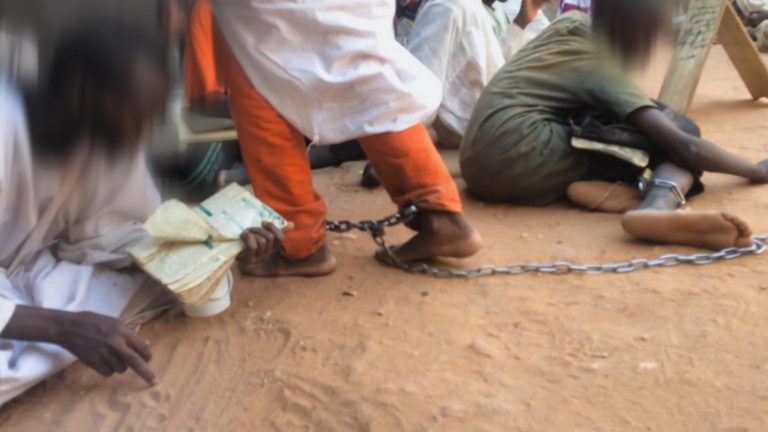
Thousands of children, some as young as 5-years-old are routinely beaten, tortured, sexually abused, shackled in heavy chains in Islamic schools, known as Khalwas, across Sudan in Northeast Africa, a documentary by BBC News Arabic has revealed.

The shocking revelation came after a journalist working in Sudan for BBC, who was a former khalwa student himself, secretly filmed visits to 23 schools across Sudan over an 18-month period, documenting the routine abuse.

The footage which showed malnourished, unhealthy children being forced to sleep on the floor, inside the Khalwas, even in sweltering conditions has been time and again shared by the news channel. It shows students, some as young as five-years-old, shackled in heavy iron chains and being physically abused. The teachers reportedly whip the children for the slightest of their mistakes.

One of the victims revealed: “We can be in groups of six or seven all chained together, and they [the sheikhs] make us run around in circles. Whenever one of us falls over we have to get up again because they keep whipping us … They say that this is good for us.”

The reports also suggest that the younger boys in these Islamic schools are regularly raped by older students. These Islamic schools are managed by Sheikhs, who are politically so well connected that the impoverished families of these children seldom muster up the courage to register a complaint against the school authorities.

For the uninitiated, Khalwas are traditional Islamic schools in Sudan where children are taught to memorise the Quran. The Islamic schools, which number more than 30,000 across Sudan, are typically run by sheikhs and provide students with food, drink and shelter, for free.

The documentary mainly exposes how two minor boys, Mohamed Nader and Ismail, were imprisoned and tortured for five days, without being given food or water in one Khalwa, al-Khulafaa al-Rashideen, run by some Sheikh Hussein. The boys, who the reporter Al-Hamdani visited in the hospital, were nearly beaten to death.

‘Beating is packed with benefits,’ claims owner of Khalwa

Speaking to the channel, the owner of the school had reportedly admitted that the 14-year-olds had been imprisoned, shackled and beaten in his Khalwa. Though he conceded that hitting the children were wrong, he insisted that the practice of beating and shackling was “packed with benefits”. However, he denied that sexual abuse had been taking place.

Though Sheikh Hussein denied allegations that sexual abuse, including rape, had taken place in his school, one of the victims Mohamed Nader told the BBC the practice was widespread and that he had seen boys being raped by older students of the Islamic school.

Meanwhile, according to the report, four people, including three teachers and the head of the school, Sheikh Hussein, were charged over Mohamed Nader and Ismail’s case, but all were later released on bail and are yet to face trial.

Mohamed Nader’s mother has hoped that after the removal of the Sudanese politician and dictator Omar al-Bashir’s government last year, these atrocities on the children would end and the families of the victims would have a better chance to bringing those responsible to justice.

Though authorities are evaluating the state of Khalwas across Sudan, the minister of religious affairs said that it was impossible to “solve a problem caused by 30 years of the old regime overnight”.

Islam­ic gov­ern­ment of Sudan helping mili­tia groups in the persecution of minorities

Since its independence in 1956, Sudan has been ravaged by war. For years, activists have charged the Islam­ic gov­ern­ment of Sudan with sup­port­ing Arab mili­tia groups which in turn attack Chris­t­ian and tra­di­tion­al­ist areas of south­ern Sudan and force the African cap­tives into slav­ery. 

‘Life of Bharat’s patriotic saint will inspire generations to come’: BJP leader recommends JNU be renamed as Swami Vivekananda University

0

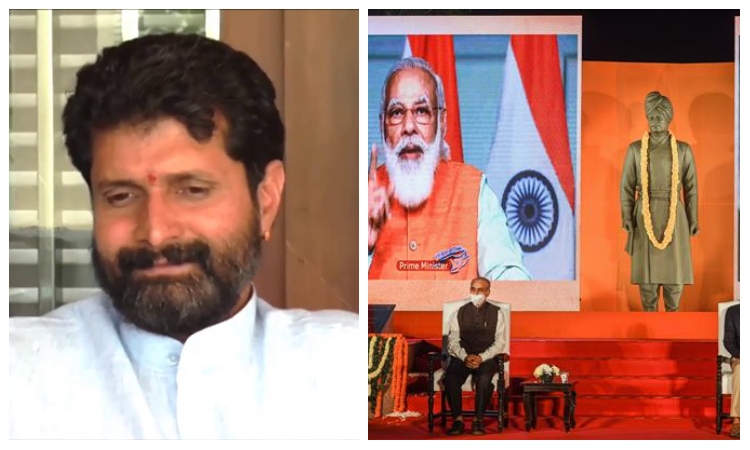
BJP National General Secretary and former Karnataka minister CT Ravi has proposed on social media that the Jawaharlal Nehru University (JNU) be renamed after Swami Vivekananda so that the coming generations are inspired by the national icon’s life and views.

The BJP leader said: “It is Swami Vivekananda who stood for the “Idea of Bharat”. His philosophy & values signify the “Strength of Bharat”. It is only right that Jawaharlal Nehru University be renamed as Swami Vivekananda University. Life of Bharat’s patriotic Saint will inspire generations to come”.

Prime Minister Narendra Modi unveils the statue of Swami Vivekananda at the campus

CT Ravi’s suggestion came after Prime Minister Narendra Modi, last week, unveiled the statue of Swami Vivekananda in the Jawaharlal Nehru University campus in New Delhi via video conferencing. Speaking on the occasion PM Modi had wished that the statute would inspire and energise everyone and would instil courage and compassion that Swamiji wanted to see in everyone.

Swami Vivekananda’s statue defaced by JNU students

The statue of Swami Vivekananda was approved by the Executive Council of the JNU in June 2017. The decision has however not gone down quite well with the students’ and teachers’ unions of the varsity. Last year, Swami Vivekananda’s statue was defaced at Delhi’s JNU. The incident had come to light after a video depicting messages directed towards BJP at the statue’s base went viral. The statue was defaced with messages that read “Fascism will die”, “Bhagwa” and other abuses directed towards the ruling party.

Post the incident, a complaint was filed by the JNU administration with the police alleging that the statue was defaced and derogatory messages were written on it during the violent protests in the JNU against the hostel fee hike.