Home Blog Page 4851

Voters are not ready for ‘liberal values’: Congress Salman Khurshid blames people for his party’s repeated election loss

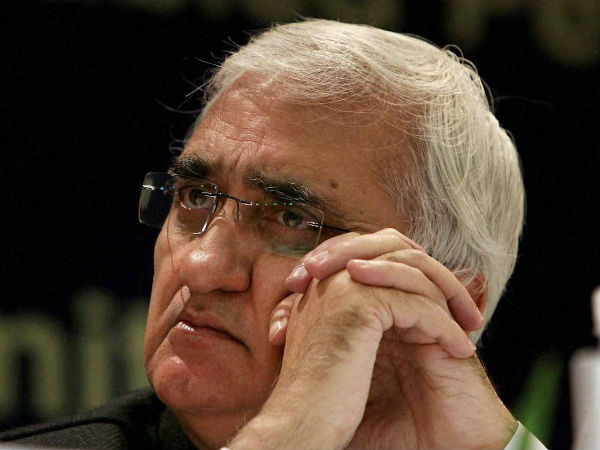
After losing the Bihar Assembly elections, Congress leader Salman Khurshid has put the blame on the voters. Khurshid, whose name has recently come up in the Rs 3,600-crore AgustaWestland scam said that the voters in Bihar ‘resisted liberal values’.

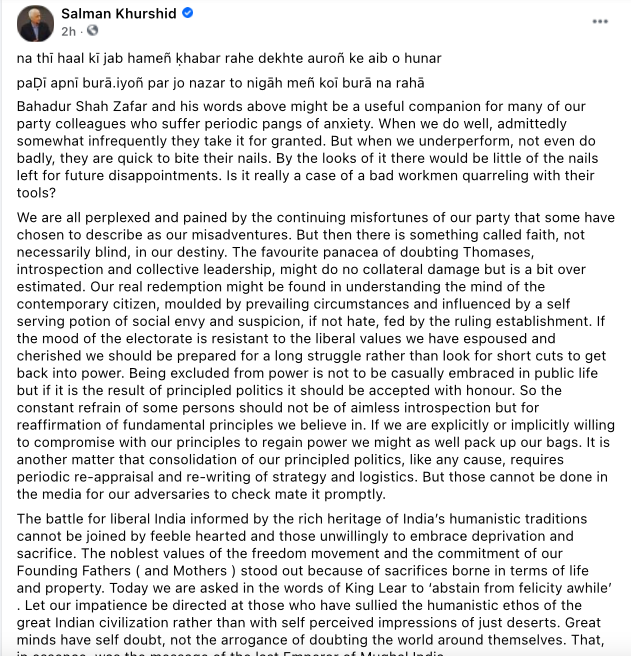
Khurshid said in a Facebook post that “If the mood of the electorate is resistant to the liberal values we have espoused and cherished we should be prepared for a long struggle rather than look for short cuts to get back into power.” In a long post, Khurshid praised the last Mughal emperor and also indirectly targeted Congress leaders who are criticising the party and its leadership after the repeated election debacles.

Khurshid’s Facebook post

Sharing some advise of ‘introspection’ for his party colleagues who “suffer periodic pangs of anxiety”, Khurshid wrote, “When we do well, admittedly somewhat infrequently they take it for granted. But when we underperform, not even do badly, they are quick to bite their nails. By the looks of it there would be little of the nails left for future disappointments. Is it really a case of a bad workmen quarreling with their tools?”

In that post, he also advised the same ‘party colleague’ to refrain from criticising the Congress, saying, “It is another matter that consolidation of our principled politics, like any cause, requires periodic re-appraisal and re-writing of strategy and logistics. But those cannot be done in the media for our adversaries to checkmate it promptly.”

At a time when the party should introspect about performing so poorly in the elections, the Congress party, as usual, is looking outside for reason for the reasons for their defeat. It has become a norm for the opposition parties, including Congress, to blame to either raise fingers at the election process, usually by finding faults in EVMs, or to the declare the voters not mature enough to recognise the so-called liberal parties’ worth. Congress has been trying really hard to return to power by forging all sorts of alliances with other parties but nothing seems to work for the grand old party. Congress’ performance has been equally humiliating in the bypolls held in Gujarat, Manipur, Uttar Pradesh and Madhya Pradesh.

Earlier, another Congress office-bearer had termed the Bihari people as ‘poor and greedy’, for not voting Congress to power.

People don’t consider Congress as an alternative: Kapil Sibal

Recently, Senior Congress leader, during a rare moment of truth, admitted that people no longer consider Congress as an effective alternative. Speaking during an interview after losing the Bihar Assembly elections, Sibal said it was clear from the Bihar Assembly elections as well as the by-elections held in several states that people did not consider Congress party as an effective alternative. “In some of the constituencies in Uttar Pradesh, the Congress candidates in the by-elections notched up less than 2% of the votes cast. Three of our candidates in Gujarat lost their deposits”, said Sibal asking the party to introspect for its consistently bad performance in elections.

The Dravidian Movement and the Devadasi Abolition Act: Did a ‘Brahiminical conspiracy’ oppose reforms to the practice as alleged?

The Dravidian movement has long claimed the mantle of progressive politics in Tamil Nadu. Among their claims in support of women’s emancipation was their contribution to the passing of the Devadasi Abolition Act.

This is portrayed as a change brought about by the sustained campaign of the Dravidian movement towards ending this practice. However, as Historian and writer Ma Venkatesan has studied, the truth is quite different.

Historical Background

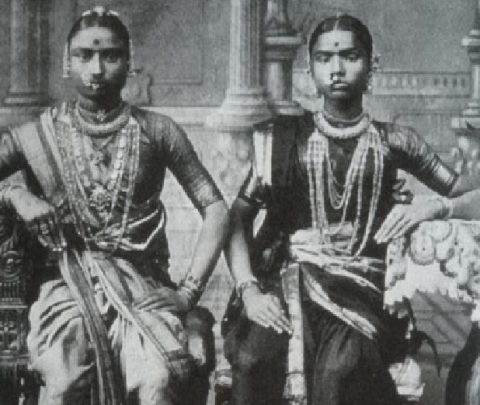
All over India, there was the practice of dedicating young women exclusively to the service of the temple. They were symbolically married off to the presiding deity of a temple. Their services were in the form of various work related to the functioning of the temple. The main function was to provide music and dance performances as offerings to the deity. Their duties were not restricted only to this function.

They had a say in the administration of the temple and had roles in managing the flower arrangements, decorations and the conduct of the festivals. Manickavasagar, the Saiva Saint, describes their duties as a composite of

  • Singing and performing auspicious songs, primary among them being songs related to ritual and devotion. Artistic compositions were for festive occasions in the temple.
  • Offering incense and camphor in ritual
  • Adorning the temple for festivals
  • Suspending garlands of flowers and precious materials.

There were two categories of such dedications to the temple – one was a higher-status devadasi, who was given a land grant from the temple’s endowment, also known as inam lands. These were similar to craftsmen, priests in socio-economic status due to their minor landholdings.

Another category were those women who had been dedicated to singing and performance of other folk arts. They were supported on a share of the pooled village harvest. In earlier times, the devadasis were relatively well-off, enjoyed a high status and were independent enough to give endowments and gifts of their own.

An inscription of the time of the Chola ruler, Rajaraja III (1226 CE) at Thiruvizhimalai temple describes how the king rectified grain acquisition by transferring the responsibility from two Sivabrahmanas who had misappropriated grain to the devaradiyar (devadasi) of the temple.

Another inscription describes a Devadasi woman as Anukki Pattalinangai, the term anukki denoting her relationship as a partner of the Chola ruler Rajadhiraja I, who contributed gold, jewels and covered the roof of the shrine in gold in her own capacity.

While they were considered wedded to the deity and nitya-sumangalis, or always auspicious, they did not have to be celibate. They took consorts from landed upper castes. Some were even consorts of royal men. The 12th Century Kamikagama calls them daughters of Shiva. In Saivaite temples, this Agama describes a ritual of initiation by the Sivacharya or Priest of the Temple by touching them on their head with a staff.

Women thus initiated were called Shirodandini or Talaikkoli in Tamil. This matches with description of the Chief Devadasi as Talaikkoli in inscriptions. The 7th Century Shivadharmottara, a Upagama text that codifies practice of Shaiva temple worship, describes their status as servants of Shiva, who, by virtue of their service are assured a place in Rudra’s world. This same assurance is given to their offspring also.

There is evidence that this was a widespread practice across the Greater Indosphere, including in Cambodia.

There is no evidence that formal marriage was denied to these dedicated women. The word used is ganika or courtesan, but a nuanced view indicates that they had no obligation to remain unmarried. European travellers’ accounts before the colonial period give no evidence of large-scale exploitation of these women.

During Vijayanagara times, the system of two-fold categorization of public women continued – the devadasis who were dedicated to ceremonial functions at temples and courtesans who were entertainers and informal companions of nobles and royalty.

Over time, the system had degenerated to such an extent that many of them, along with artisans and priests, lived in penury. Part of the reason must have been the devastation of the Indian countryside during the 17th and 18th Century and the impoverishment of the temple economy. We get a glimpse of the processes at work from the records of Thomas Roe, the English traveller to the court of Jehangir.

By this time, the temple economy had deteriorated to such an extent that he records only dancing girls for entertainment and pleasure purposes. A similar process was carried over the long years of deterioration of the temple economy in Southern India between the 16th and 18th Centuries. During the colonial administration, their unconventional lifestyle attracted the curiosity of the Christian Europeans. To British eyes, their lifestyle must have been seen as a deviation from Christian norms.

From the mid-century onwards, Indians started getting Western education in larger numbers and those with Western education were at the forefront of public opinion. By this time, the devadasi system was seen as an abhorrent practice and these women considered to be living in sin.

In an era where women were cloistered and restrictions placed upon their movement, public appearance and education, these women who performed in public, had agency in owning and disposing of property and were free in their choice of life partners caused no end of consternation to the English-educated public.

That said, the social practice had also degenerated to such an extent that the women were entirely dependent upon their consorts, now patrons for their livelihood. Their social status was much degraded and many women were now susceptible to exploitation.

Their children did not have acceptability in society and were often subject to social discrimination. Even in Madras, schools would sometimes refuse to admit children from devadasi families.

The way forward to solve this social discrimination seemed to be to outlaw the practice of dedicating women to the devadasi life. Even at that time, there was opposition, mostly from within the community itself and among traditionalists who were loath to let go of a custom from very old times.

The colonial British government which did wish to impose its writ on native customs, was content to let this be resolved within the Hindu community itself. However, by the second and third decade of the 20th Century, opinion makers and influencers in India were of the unanimous opinion that the custom had to go and that the communities from which the Devadasis came from should be turned towards the same kind of marriage and lifestyle customs as the rest of the Hindu community.

Land and Devadasis

Among the primary concerns of the colonial British administration was to maximize resource and revenue extraction from their Indian dominions. One aspect of consternation to the British administration was the large bank of inam lands. In ‘Castes of Mind’ Nicholas Dirks described his study of land ownership patterns in early 19th Century Pudukkottai. 70% of the cultivable land was inam lands.

Of these, 70% was lands given as inam to artisans, artists, temples, Brahmins, mathams, annadhana chatrams, traveller choultries and shrines for Muslim saints and the remaining 30% for members of the administration, guards, servants and military retainers. He further proposes that even in highly militarized states, only 50% would have been inam lands for military purposes. Thus, 25% of inam lands would have been earmarked for artisans, dancers, musicians and village officials

Form this, we get a picture where in pre-colonial times, native Hindu kingdoms set aside close to 15% of land for the purpose of the native economic system centred around the temple. Given this information, it is no surprise that the devadasis were highly regarded and were able to make endowments by themselves.

Every time a woman was dedicated as a devadasi, it was obligatory to make a settlement upon the family of inam lands. This would be from the common land of the temple or from a patrons’ personal property. It is possible that one of the motivations for the atrocity literature produced and the campaign against the practice was the British administration wanting to keep more lands under the taxable net.

Voices of Reform

Some of the most articulate voices for change came from within the community itself. The most articulate voices for preservation of the practice also came from within the community, notably the dance performer and public intellectual Balasaraswati.

Here we present two of the individuals who called for reform.

Dr Muthulakshmi Reddy

We must spend some time on the life story of Dr Muthulakshmi Reddy, one of the remarkable personalities of social life in Madras of the early 20th Century. She was born to a Brahmin father, a College Principal in the then Pudukkottai State, a minor principality in today’s Tamil Nadu, and a mother from the Isai Velalar community.

Contrary to social convention, she was educated in school, then she made her way to Madras to study Medicine and qualified as the first woman House Surgeon in the Madras Maternity and Ophthalmic Hospital. She married a man of her choice, Dr Sundara Reddy from a different caste at the age of 28. She was the force behind such lasting philanthropic endeavours as the Avvai Home for Orphaned Girls, Adyar Cancer Institute and opened the way to provide scholarships for Dalit girls and a hostel for Muslim girls to pursue studies. She worked against trafficking of women for sex work.

Among her major concerns was the state of women in her community. She was particularly forceful in her argument to abolish the devadasi system. In 1927, the Women’s India Association nominated her to the Madras Legislative Council as Vice President. It is in the Council that she brought the Bill to abolish the devadasi practice in 1930. We will discuss the events related to this Bill in a later section, where we shall evaluate a key claim of the Dravidian movement.

Muvalur Ramamirtham Ammal

Muvalur Ramamirtham Ammal had a far harder path in life than Dr Muthulakshmi. She was from an economically backward family and had been dedicated to a devadasi temple by her parents, even though her clan did not have a tradition of women joining temple service. The inam properties and marginal financial security this brought was an attraction in the desperately poor rural India of the late 19th Century/early 20th Century.

She gave up her devadasi position and married to lead a regular family life. She joined the Self-Respect Movement at the time that EV Ramasamy broke away from the Congress. In 1936, she wrote a novel – Dasgalin Mosa Valai or Mathi petra minor, which in English translation means The treacherous net of the Devadasis or the Wisdom gained by the Minor. It is an ideological account of scheming devadasi women who snare rich young men for money. It contrasts their behaviour with that of ‘reformed’ devadasis who have married and begun to lead a respectable life.

She stayed in the Self-Respect movement until 1949, and saw the passing of the Devadasi Abolition Bill in 1947.

Abolition of Devadasi practice

While we have described some of the key activists that worked towards the abolition of the Devadasi system in Madras Presidency, let us look at the situation in other parts of India.

Mysore State 1909

The earliest opposition against the devadasi system in Mysore State came from the Maharaja himself. Nalwadi Krishna Raja Wodeyar IV, took over the reigns of administration in 1902. He began to build a reputation as an administrator, patron of the arts and social change agent. His solution for the injustices in the devadasi system and the poor social position of these women was to outlaw it altogether. In 1909, he signed a Royal decree outlawing the practice of gajja puja – a ritual performed to dedicate a woman as a devadasi and symbolically marry her to the deity.

Travancore and Cochin 1930

Due to the intervention of the Maharani of Travancore Pooradam Thirunal Sethu Lakshmi Bayi, who in 1930 was the Regent of Travancore, ruling on behalf of her nephew the Maharaja Chitra Tirunal, the Travancore Kingdom banned the practice of devadasi dedication.

The Kingdom of Cochin followed suit soon.

The First attempt in Madras Presidency 1930

In 1926, the third elections to the Madras Presidency Legislative Council were held. The Swaraj Party, a breakway faction of the Indian National Congress, despite not having a majority, was asked to form the Government. This election expanded the Legislative Council by 5 nominated seats to include women.

Dr Muthulakshmi Reddy was pressed by her colleagues at the Women’s Indian Association, led by Kamaladevi Chattopadhyay, to accept a nomination to the Legislature. As part of her brief, she decided to move the House to pass a new Bill she had drafted.

She recounts in her memoir – ‘My Experience As a Legislator’ – the positive response her proposal received from various quarters, including Gandhi writing in Young India, from women of the Devadasi community in Cochin, from members of the Telugu Kalavantulu community and from Erode Municipality, which at the time was led by Balasubburayulu Naidu.

She also mentions the positive reception accorded to it by Sir Krishnan Nair of the Justice Party, the Ministerial Group or the ruling Swaraj Party, Congress Party members. The Law Member Sir CP Ramasamy Iyer was appreciative of the motion but had misgivings about the feasibility of making the motion a practical legislation.

Eventually, the Bill was defeated on technicalities, which included a dilatory motion made by Sir Krishnan Nair himself.

Bombay Devadasis Protection Act, 1934

In 1934, the Bombay Presidency brought about a bill to protect women from the devadasi custom by means of an order from the Bombay High Court. It made it an offence to dedicate women to the custom.

Madras Devadasis (Prevention of Dedication) Act, 1947

In 1947, as part of the devolution of powers to Indians, Madras Presidency was placed under a Premiership. Omandur Ramasamy Reddy of the Indian National Congress became the Premier. Under his leadership, progressive legislation – Madras Temple Entry Authorization Act 1947 that gave free and universal access to temples to all Hindus, regardless of case and Devadasi Dedication Abolition Act of 1947, which finally abolished the Devadasi system were passed.

Conclusion

The prevailing narrative is that the Devadasi system was nurtured by the Brahminical order and sustained by dominant castes for the purpose of sexual slavery of poor and marginalized women. This narrative fails to take into account historical status of devadasi women, the participation of multiple castes in the system or the gradation in caste within the devadasi community itself.

That this was a popular custom and had no codified sanction in the core Dharma Shastras is ignored in the discourse. The Dharma Shastras cognize the existence of devadasi or public courtesans and temple artistes. Over time, especially with the withering away of the temple economy, the function of courtesan and temple artiste converged. Narratives influenced by Victorian Christian mores further gave a fillip to the worsening social status of these women.

It may be noted that Dr Muthulakshmi was encouraged to pursue an education by her Brahmin father, stayed at PS Krishnaswamy Iyer’s Madras home while a young medical student or that the Brahmin leaders of the Congress Party welcomed the removal of this system.

The Dravidian ideologues also claim that Brahmin Diwans influenced the rulers of Princely States to sustain the Brahminical order. The truth of those claims aside, the Diwans of Mysore in 1909 were Madhava Rao Patankar and Ananda Rao Thanjavurkar, both Deshasta Brahmins from Thanjavur and the Diwan of Travancore in 1930 was Subramanya Iyer.

Of note, too, is the fact that the two bills against the devadasi system were both passed when the Justice Party was not in power. Nor was the Self-Respect Movement of any significance in influencing either legislation. The times were in favour of this social change. Any opposition to this came from within the community itself.

Now, we come to the event which is offered up as clinching evidence that it was a Brahminical system that established and sustained the devadasi practice. Satyamurti, the Congress/Swarajya leader is said to have claimed that women dedicated to the devadasi practice were guaranteed to enter heaven by virtue of their position. Dr Muthulakshmi is said to have retorted – ‘Then why don’t you dedicate women from your community to this devadasi system?’

First, we do not know the provenance of this particular story. It makes no appearance in Dr Muthulakshmi’s own memoirs. Another version of this story is of Dr Muthulakshmi remarking to Satyamurty – ‘So far it has been women from our community that have sung in public, now it will be the turn of your women’.

The second is most plausible, given that Satyamurthy and Muthulakshmi had known each other for decades in 1929, having been classmates in the FA class at Maharaja’s College, Pudukottai. This might have been no more than a minor discussion, as opposed to being a heated debate. In any case, Dr Muthulakshmi’s words would prove prophetic, as a 10-year-old D K Pattamal from a conservative Dikshitar family had begun to perform in just this time period.

D K Pattamal paved the way for a generation of Brahmin women to perform Carnatic music on stage. Brahmin men had begun to perform music publicly a generation earlier. In a few years, a lady called Rukmini Devi from a conservative Brahmin family took up sadir and reformulated the art to Bharatanatyam, a marker of high culture.

It also led to the next Dravidian accusation of Brahmins having cornered the sphere of high culture to themselves. We will examine this claim at a different time.

References

  • Hindus In Social Reform” Part 6 in Vijaya Bharatam
  • In Perennial Oppression: Internalized Ideologies of the Devadasis K A. Geetha Journal of International Women’s Studies, 5th World Conference on Women’s Studies, Bangkok, April 2020
  • Pg 391 History Of Early India From The Origins To AD 1300 – Romila Thapar
  • Rudraganikas: Courtesans in Siva’s Temple? – Some Hitherto Neglected Sanskrit Sources – Dominic Goodall Cracow Indological Studies Vol. XX, No. 1 (2018), pp. 91–143
  • https://www.latestlaws.com/wp-content/uploads/2015/11/Tamil-Nadu-Devadasis-Prevention-of-Dedication-Act-1947.pdf
  • ‘My Experience As a Legislator’ Pages 108 – 120 Dr Muthulakshmi

How come MIM did not face the “outsider” jibe in Bihar?

A very curious thing happened in the recent Bihar elections. A party that is known mostly around Hyderabad managed to win five seats. All the way from Telangana. The JMM from neighboring Jharkhand contested elections as part of the RJD led Mahagathbandhan but still didn’t win any. Nobody knows if the Trinamool Congress, from neighboring Bengal, even contested anything.

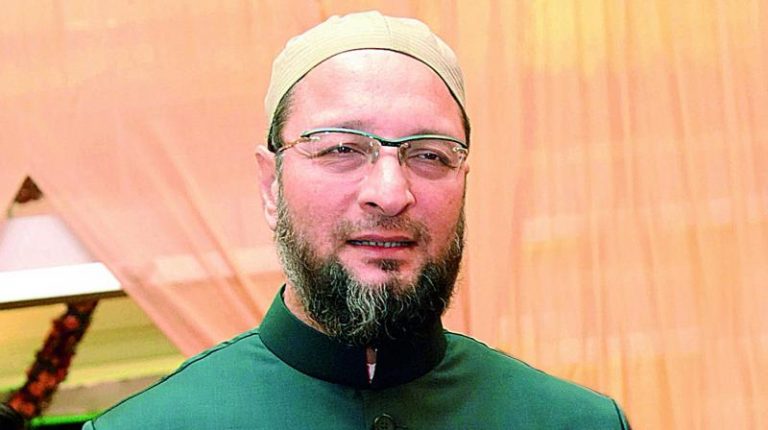
On the face of it, you could say that this is good for national integration. It is good that voters of Seemanchal have embraced with open arms all the ideas on bijli, sadak, paani, education, employment and health that Mr. Owaisi has brought from Hyderabad. Why should it matter where he is from?

And yet, there is something unique about the success of MIM. If indeed Indian democracy has matured so much, why isn’t it rubbing off on any other party? The MIM, for instance, has seats in Maharashtra. The Shiv Sena also contested elections in Bihar but lost deposits on all seats. How come the people of Bihar were not inspired by the ideas of “best CM”?

What is different about the appeal of MIM that parties like Shiv Sena or JMM or TMC don’t have?

In Indian elections, one of the most difficult tags to overcome is that of being an “outsider.” Elections are all about connecting with people. Our nation is so diverse that anyone with even a slightly different regional, linguistic, dietary or even caste background is bound to trip up somewhere.

You must have seen the accusing headlines. The BJP accused of Hindi imposition in southern states. BJP accused of imposing dietary restrictions in the North East. BJP accused of being outsiders in Bengal and so on.

Even the BJP. Even with the massive nationwide appeal of PM Modi, the BJP is regularly tripped up by the diversity of India. All parties, big or small.

Except MIM. They don’t seem to trip. Mr. Owaisi snaps his fingers and voters of Bihar begin relating with him seamlessly. They say he is going to Bengal next. Parties like the TMC seem terrified by this prospect. Why?

Think about it. Why would TMC worry that MIM might take their votes away?

Why is the most entrenched party in Bengal so scared of a party from Hyderabad? Are they similarly scared that the ruling TRS from Telangana might come and take their votes? What about DMK or ADMK? If MIM can suddenly start eating up TMC votes, why not Chautala’s INLD from Haryana?

Let us assume that Mr. Owaisi is only bringing good ideas on bijli-paani-sadak from Hyderabad. Surely then some party from say Haryana or Karnataka could come and entice voters of Bengal with another set of good ideas on development.

Let us also assume that Mr. Owaisi is a master communicator. This year, he very likely mastered the local customs of Bihar and appealed to them in a way they could understand. In six more months, I suppose he will be able to master the local customs of Bengal and appeal to them in a way they can understand. Outstanding achievement. Superhuman almost.

Or is there another explanation? Could these assumptions be flawed? Is it possible that MIM’s voters in Bihar and potential voters in Bengal are able to see a common thread that goes beyond regional variations?

What could be common between the old city area of Hyderabad, Aurangabad in Maharashtra, Seemanchal in Bihar and Malda-Murshidabad in West Bengal? What could be this common thread? Does anyone know?

Like I said, this is very good for national integration. Let us hope that everyone starts seeing common threads, not just the people in certain areas. Why should this maturity remain limited to a few segments of the population? Let it spread. Nothing more liberal than that, right?

This Bengal election, let all parties, including the “liberal” ones, agree not to accuse any Indian political leader of being an outsider in Bengal. Not on the basis of language or dietary habits or regional origin. We are all Indians. We are all insiders everywhere in India. And we should all see the common threads. Why should only Seemanchal see a common thread with the old city of Hyderabad? Let Kolkata also see the common thread with Varanasi. Deal?

Sameet Thakkar, arrested for ‘baby penguin’ remark, finally released from jail, a day after receiving bail

0

Sameet Thakkar, who got arrested for posting tweets against CM Uddhav Thackeray, his son Aditya Thackeray and Nitin Raut, was granted bail on Monday by a metropolitan magistrate in Mumbai’s Esplanade court. However, he was released only on Tuesday well past noon, his sister Sneha Singhvi informed on social media.

According to Sneha Singhvi, his family had been waiting outside the jail since 8 AM waiting for his release. The court had ordered his release on cash bail or Rs.25,000 or a PR bond of Rs.20,000. Chandansingh Shekhawat, Thakkar’s advocate, said yesterday that he would get released from jail after completing formalities on Tuesday morning.

Earlier, Thakkar also approached Supreme Court seeking release on bail with his counsel Mahesh Jethmalani. The Supreme Court had rejected his application and asked Thakkar to approach the appropriate forum. Advocate Rahul Chitnis appearing for the Maharashtra government, stated in Supreme Court that they would not oppose Thakkar’s bail as his interrogation is over.

Arrest of Sameet Thakkar

Sameet Thakkar, a Nagpur resident, got himself in soup after posting tweets against the Thackerays and Nitin Raut. Three cases were registered against Thakkar in Nagpur, VP Road police station Mumbai, and BKC Cyber Police. He approached Bombay High Court to get bail and requested the court to quash all FIRs against him. The court provided him protection from the arrest but asked him to cooperate in the investigation.

He was first arrested on October 24 by Nagpur Sitabuldi police and spent nine days in custody. He was rearrested on November 2 after the court granted him bail. BKC police then arrested him on November 10 after he got bail on November 9. He was finally granted bail in the third case on November 16.

Uttar Pradesh: Man forces woman to convert to Islam after sexually abusing her in Gorakhpur district

0

A woman from Goida in Gorakhpur has accused a man from her village of sexually abusing her. As reported by Jagran, the woman alleged that the man is now pressurizing her to convert to Islam, failing to which he will upload her objectionable video on social media. The police has currently taken him into custody and interrogating him.

Man made an objectionable video to blackmail the woman

As per the reports, the husband of the woman lives outside the city. She got into a relationship with a man from her village. He made an objectionable video when he saw an opportunity from a mobile phone. For the last few days, he had been pressurizing the woman to leave her husband, convert to Islam, and live with him. When the woman refused to convert, he threatened her that he would make her video viral.

The woman informed her husband about the threats, who called the man and scolded him. He then told his wife’s maternal family about the threats. Her family members rushed to Goida and took her to the police station to file a complaint. Goida station in-charge, DK Singh, said the police force had been deployed in the region as the case involves two different communities.

Twitter corrects ‘mistake’ after spreading misinformation in its fact-check of Donald Trump

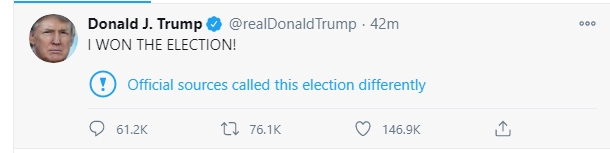
Twitter appears to be so eager to fact-check US President Donald Trump that it does so without bothering to check whether it has all the facts at hand as well. On Monday, we had pointed out that Twitter was peddling misinformation its fact-check of Trump’s claims regarding the US presidential elections. The social media platform had claimed that “official sources” had called the elections for Democratic nominee Joe Biden.

Twitter fact-checks Donald Trump
Twitter fact-checks Donald Trump, peddles misinformation

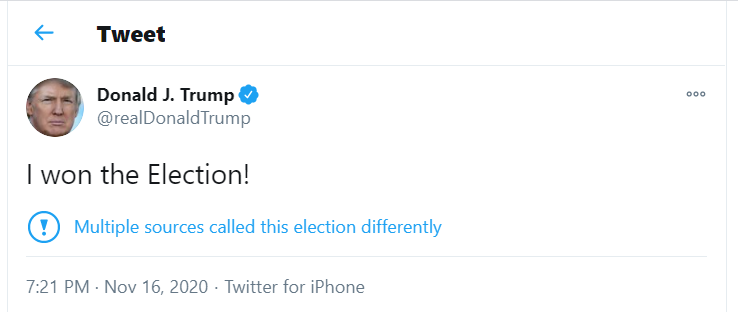
Since then, Twitter appears to have rectified its fact-check. The label is still there but now it says, “Multiple sources called this election differently”. Clicking on the label takes one to news reports and tweets by journalists and news networks that report that Joe Biden is projected to become the 46th President of the United States.

Twitter rectifies its misleading fact-check

It was only after ‘fact-checking’ the President that Twitter appears to have realised that the mainstream media is not an “official source” of information on the results of the US Elections and the media has no role to play in the election of the US President. Currently, recounts and law suits are underway across numerous states and the official process is not over yet.

While it is extremely unlikely that Donald Trump will be president for a second term, officially, he is still not out of the race yet. Therefore, when constitutional procedures have not ruled out Donald Trump completely, it is preposterous for social media giants to claim that “official sources” have already called this election.

Marriages taking place forcefully for religious conversion by either fraud or cheating to be null and void: MP govt mulls on Religion Bill

After Uttar Pradesh and Haryana, the Madhya Pradesh government led by Shivraj Chouhan is also in no mood to spare the perpetrators who indulge in forceful religious conversion through fraudulent means under pretext of love. Madhya Pradesh Home Minister Narottam Mishra has said that the government is preparing to introduce Madhya Pradesh Freedom of Religion Bill, 2020 in Assembly which would provide for 5 years of rigorous imprisonment to the perpetrators who coerce vulnerable girls to convert their religion, either by allurements, force or fraudulent means.

He said that the government is also proposing that such crimes be declared a cognizable and non-bailable offence.

There will be provision to declare marriages taking place forcefully, out of fraud or by tempting someone, for religious conversion, null and void. Those assisting in committing this crime will also be considered a party to the crime. Under this, the person who has been converted, their parents/siblings will have to mandatorily file a complaint for action. The religious leader who is converting the person will have to inform District Magistrate one month in advance. We’ll introduce this Bill in the next session, added Narottam Mishra.

Earlier this month, the Madhya Pradesh government had hinted about bringing in a new law to check the menace of love jihad in the state. While speaking to the media in Bhopal, CM Shivraj Singh Chouhan had stated that the state government is contemplating legal provisions and considering appropriate legal provisions against the nefarious practice.

This is the third BJP-ruled State that has been considering such legislation. Prior to this, the States of Haryana and Uttar Pradesh Chief Ministers had made similar announcements.

Yogi Adityanath warned those involved in ‘love jihad’ to mend ways

Uttar Pradesh Chief Minister Yogi Adityanath on October 31 had issued a stern warning to the miscreants indulging in so-called ‘love jihad’ by concealing their identities and entrapping girls and women for sexual and financial exploitation and later forcefully convert them to Islam. In September this year, the UP government had said that it is likely to promulgate an ordinance against forced religious conversions.

Haryana government to bring law against the crime

Similarly, the Haryana government has been mulling over introducing a law to deal with the cases of love jihad. The gruesome murder of a 21-year old college student named Nikita Tomar in broad daylight due to attempted love jihad in Mewat had necessitated Haryana Government to take some stringent action to stop the growing menace in the state.

New RIMS Director has to stay in guest house because scam convicted Lalu Yadav has been staying in his official bungalow

Rashtriya Janata Dal (RJD) chief and fodder scam accused Lalu Prasad Yadav was shifted to the Regional Institute of Medical Sciences’ (RIMS) director’s bungalow in August, to allegedly save him from the Covid-19 crisis.

The newly appointed RIMS director Padam Shri Dr Kameshwar Prasad took charge of the office on Sunday. As per the regulations, he should have got the allotted bungalow as soon as he took charge as a director. However, he has to stay in the state guest house in Moradabadi for some time as per an ABP News report.

When Lalu was shifted to the guest house allegedly to save him from the coronavirus infection, the RIMS director’s post was empty. In a statement, Dr. Prasad said that he does not know how circumstanced Lalu was shifted to the bungalow. “If the circumstances are in control, the bungalow will get vacated,” he further added.

Lalu has been staying in RIMS to get medical attention for the last two years. Since August this year, Lalu has been staying in RIMS’s director’s bungalow. During the Bihar elections, there were allegations that Lalu was operating RJD’s functionalities from the said bungalow.

Lalu was granted bail in three cases linked to Fodder Scam, as he has completed half of the sentence. In the fourth case, he may get bail in the next hearing on 27th November. In case he gets the bail, he will go back to his residence in Bihar; otherwise, RIMS administration will have to shift him to another location.

The Kelly’s Bungalow, located in Ranchi’s posh area with a three-acre green campus, was lying vacant when Lalu’s security personnel were found COVID-19 positive. He was earlier paying rent for Rs 1000 per day at the special room allocated to him in RIMS. There was a political debate when it was reported that the RIMS administration did not have any protocols for letting the Director’s bungalow out for rent to a patient, or the bungalow’s rent.

The multi-crore Fodder scam

RJD President and former Chief Minister of Bihar, Lalu Prasad Yadav, was convicted in four fodder scam cases. He was sentenced to jail for 14 years. It has been two decades since the fodder scam was unearthed. The multi-crore scam involved many politicians and bureaucrats siphoning off several crores of rupees on the pretext of purchasing fodder, medicines, and animal husbandry equipment for ‘vast herds of fictitious livestock’ over 20 years.

Then finance commissioner VS Dubey unearthed the scam after he got hold of financial irregularities of massive proportions while reviewing the performance of various departments of the Bihar government. During the investigation, he found that money was withdrawn in excess of the allocation by some of the departments, and the animal husbandry department topped the list of withdrawals.

Lalu Prasad Yadav’s conviction

A special CBI court in 2013 convicted Yadav in the first scam case involving the withdrawal of Rs 37.7 crores from the Chaibasa treasury. In a second case involving the Deoghar treasury of Rs 89 lakhs in December 2017. Later in another case, Lalu and Jagannath Mishra were found guilty of the third fodder scam involving the Chaibasa district treasury of Rs 33.67 crores. In March 2018, a special CBI court in Ranchi pronounced RJD chief Lalu Prasad Yadav guilty in the fourth fodder scam. Lalu Prasad was sentenced to five years of jail term and a fine of Rs 10 lakhs.

Yadav was imprisoned in Jharkhand jail, but he spent a large portion of his sentence at RIMS allegedly undergoing treatment.

Kanpur: 6-year-old girl who was found dead on Diwali night was raped, liver extracted for black magic

Shocking details have emerged in the kidnapping and the gruesome murder case of the 6-year-old minor girl who had gone missing on Diwali night and was later found dead in the forest near her house in Ghatampur area in Kanpur on Sunday morning. Probing the minor girl’s mysterious disappearance and murder, the cops have revealed that the 6-year-old was raped before being murdered by two men on Diwali night. Her liver was extracted as a part of occult practice.

Kanpur police said that two more arrests have been made in the case and the two main accused- Ankur and Beeran who were arrested yesterday have been sent to jail.

Kanpur girl’s liver was extracted as a part of ‘black magic’

The Kanpur police revealed that the two accused received money from one of the girl’s relatives named Parshuram to get her liver for occult practice. Parshuram had assigned the task to his nephew Ankur, who along with other person Beeran raped and killed the victim and later extracted her liver. 

According to reports, Parshuram’s wife, who had been childless since her marriage in 1999, believed that eating the organ as part of some occult rituals would help her have a child. Parshuram and his wife paid Rs 1500 to the accused to get them the child’s liver. Ankur and Beeran in turn used the money to buy themselves alcohol.

The Kanpur minor was raped before being strangulated to death

Police said that after the two accused were arrested, they confessed that they had raped the minor girl before strangulating her to death. Later, they had cut open her stomach to remove her organs. Based on this information, Kanpur police arrested Parshuram and his wife.

A first information report was filed against the four accused under Sections 302 (murder) and 201 (causing disappearance of evidence of offence) of the Indian Penal Code. The police later added gangrape charges and sections of the Protection of Children from Sexual Offences (POCSO) Act to the FIR.

The minor’s autopsy report shows shock and hemorrhage due to antemortem injuries as cause of death.

“On Diwali night, the girl went missing while playing outside her home. Local residents and the police looked for her but could not find her through the night,” Kanpur Nagar DIG Preetinder Singh said.

“Next morning, her mutilated body was found around a kilometre from the village near a jungle. Senior officers, along with forensic teams and dog squad, visited the spot and later we found that two youths from the neighbourhood had abducted the girl on the pretext of giving her a packet of potato chips. The duo tried to sexually assault her, and when faced resistance they tied her hands”, Singh furthered.

Yesterday we reported that the minor girl went missing on Saturday, Diwali evening when the rest of the family was preparing for the puja. The family tried searching for her in the neighbourhood but in vain. They even searched the nearby jungle using torches and flashlight but could not find her.

On Sunday, when some villagers were passing through the village, they discovered her body. As per senior officials, her injury marks suggest she was killed with a sharp object. Her belongings like her clothes and slippers were found nearby.

Yogi Adityanath directs strict action against accused

Uttar Pradesh Chief Minister had directed officials to take strict action against the accused for the heinous crime. He had also announced assistance of Rs 5 lakh for the family of the victim. UP Government also said that the matter will be heard in fast-track court so that the perpetrators are brought to justice at the earliest.

AgustaWestland scam: Key witness had named Salman Khurshid, Kamal Nath’s son, and Ahmed Patel, says report

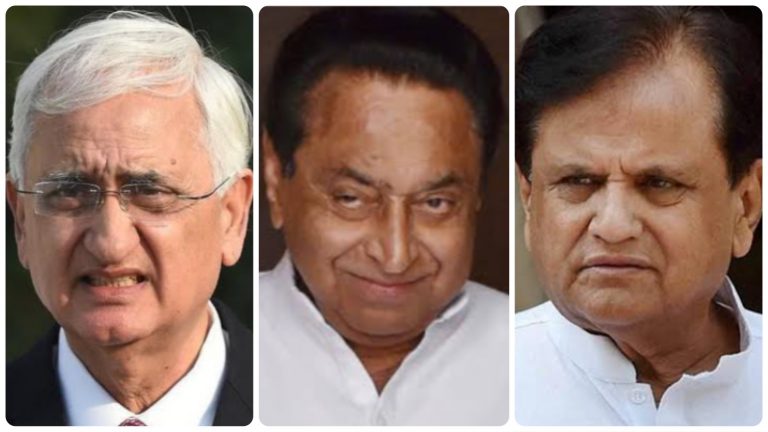
One of the prime accused turned approver in the AgustaWestland scam, Rajiv Saxena, has named key Congress leaders and their relatives over alleged involvement in the Rs 3,600-crore VVIP chopper scam. In his interrogation in connection with the scam, Saxena named senior Congress leader Salman Khurshid, Kamal Nath’s son Bakul Nath and Sonia Gandhi’s close aide Ahmed Patel.

Saxena, who was picked up by UAE government security agencies in Dubai and later extradited to India on January 30, 2019, and who later turned approver, was interrogated by the Enforcement Directorate, which attached his assets worth Rs 385 crore. The ED has now approached the apex court to revoke the approver status of Rajiv Saxena for not revealing the complete disclosure of facts in the case.

According to Saxena’s deposition, which was accessed by Indian Express, along with other important documents such as copies of bank statements, accounts of offshore companies, and email communication between key stakeholders, he had allegedly admitted to carrying out several hawala transactions and setting up a complex web of offshore structures for the co-accused.

The most essential part of Saxena’s statement involves how the alleged kickbacks of the Agusta Westland deal, which was later cancelled by the UPA II government, ran through two companies—Saxena’s Interstellar Technologies and Global Services—owned by Christian Michel, who was extradited to India in December 2018 and remains in jail.

Kickbacks received included benefits for political leaders and bureaucrats for influencing the decision: Saxena

As per Saxena’s confession to Enforcement Directorate, the kickbacks also entailed the benefits for the political leaders and bureaucrats at the time who played a crucial role in influencing the decision in favour of the Agusta Westland. Some of the payoffs, through direct and indirect means, were routed to India with the help of structures built by him, Saxena has admitted, as per the Indian Express report.

In the supplementary charge sheet filed on September 17, 2020 by the CBI, Saxena was said to be the owner of 99.9% shares of Interstellar Technologies in 2000. He, along with Gautam Khaitan, received 12.4 million euros in their company’s bank account from Augusta-Westland. Subsequently, this amount was further distributed among middlemen, leaders and officials. He cited defence affairs intermediary Susheen Mohan Gupta and Kamal Nath’s nephew Ratul Puri as key players in the transaction.

Both of them were also taken in custody, but are currently out on bail. Gupta and Khaitan were accused of using names of senior Congress leaders such as Salman Khurshid and Kamal Nath as if they were in thick with these leaders. Saxena used to refer to Kamal Nath as “Kamal Uncle” and refer Ahmed Patel with his name’s abbreviation AP.

Bakul Nath’s company used to launder money received in kickbacks: Saxena

In addition to this, Saxena also cites a critical link with a company named Pristine River Investments. “We(Gupta and myself) received bridge funding through Pristine River Investments, a company managed by John Docherty for Bakul Nath, son of Kamal Nath. Therefore, indirectly funds from Interstellar Technologies and Global Services were used to pay off the loans from Pristine River Investments,” Saxena said.

Kamal Nath and Salman Khurshid refute allegations levelled against them

Meanwhile, Kamal Nath has rubbished the allegations, claiming that he had nothing to do with the companies or the transactions of his nephew Ratul Puri, as per the Indian Express report. The former Madhya Pradesh chief minister also contended that his son Bakul Nath, who is an NRI based out of Dubai, has no inkling of any company named such as Pristine River. The Congress leader, defending his son, said there are no documents or bank accounts to prove his son’s connection with the organisation.

On the other hand, Khurshid has expressed surprise over his name being cropped up as a part of the Agusta Westland investigations. Khurshid admitted that he knows Dev Mohan Gupta, the father of Sushen Mohan Gupta, by the virtue of being a close family friend and besides knowing him well, he has no connection with anyone involved in the case, including Rajiv Saxena.

Ratal Puri, Kamal Nath’s nephew, has claimed that he has never been involved in any defence agreement. However, interestingly, Saxena had admitted on one occasion Rata Puri had visited him in Dubai after his wife Shivani Saxena was arrested by the ED in December 2018.

In 2019, Puri was arrested under the Prevention of Money Laundering Act (PMLA) for bank fraud. Puri appeared before the investigating agency in the chopper scam, after which he was also arrested in July 2019. Following this, taking cognizance of the FIR by the CBI, a criminal case was registered against him and others. In one other case, he was accused of committing fraud to the tunes of ₹ 354 crores.