Home Blog Page 5011

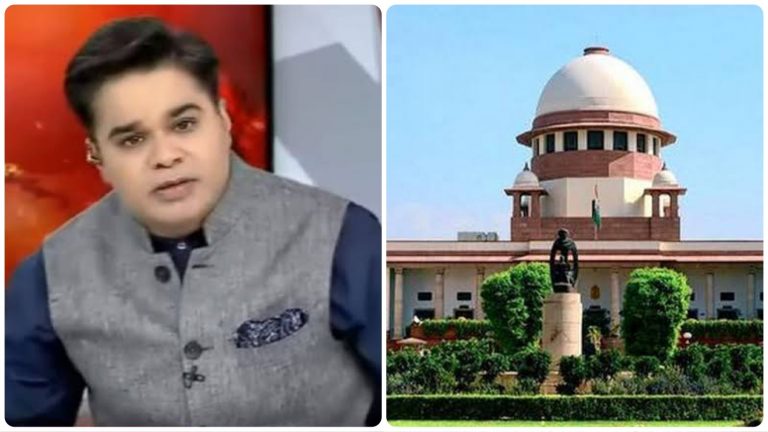
“People are deeply hurt”: Congress-ruled Rajasthan press for coercive action against journalist Amish Devgan in alleged defamation of Moinuddin Chisti

0

The Congress government in Rajasthan has shown an unusual alacrity in prosecuting journalist Amish Devgan for his allegedly derogatory remarks for the Sufi Saint Moinuddin Chisti on his prime time show “Aar Par” on CNN-News18 telecasted on June 15.

Representing the State of Rajasthan, Advocate Manish Singhvi argued against the quashing of the multiple FIRs filed against the embattled journalists for his remark against the much hallowed Sufi Saint of Ajmer where he described him as a “lootera”.

While Devgan’s counsel attributed the remarks to “slip of tongue” and argued that the multiple FIRs filed against the journalist should be quashed citing his unconditional apology, the prosecution counsel, Singhvi pressed for FIR and investigation into the malicious and deliberate intent of the journalist to make the objectionable remarks and thereby hurt the religious sentiments of the people.

“FIR is the only machinery to carry out the probe. An investigation needs to take place, and thereby charge-sheets need to be filed. Court has to prima facie considered the charge sheet and the statement of witnesses. A prima facie case needs to be made out,” Singhvi contended.

As many as 7 FIRs had been filed against the journalist in Rajasthan, Madhya Pradesh, Uttar Pradesh, Maharashtra & Telangana. Advocate Sidharth Luthra, on behalf of journalist Amish Devgan, submitted before the bench comprising Justices AM Khanwilkar & Sanjiv Khanna that the FIRs stipulate offences under Sections 153A, 153G, 295A, 298, 5050(2) of IPC & 66(f) of the Information Technology Act against Devgan but none of the FIRs & their contents justify their requisite ingredients in terms of the Indian Penal Code.

However, Singhvi today argued that essential ingredients of Section 295A (Deliberate and malicious acts, intended to outrage religious feelings) are there and therefore an investigation and FIR against Devgan cannot be quashed.

The State of Rajasthan’s counsel also added that the apology tendered by Amish Devgan was submitted after 30 hours from the broadcast of the show, reiterating before the court the need for an investigation to determine if the apology was an afterthought or genuine. Luthra, in his submissions, had yesterday stated that his client had offered an unconditional apology for his inadvertent error before the first FIR was filed against him and sought quashing of the FIRs against him.

Journalist Amish Devgan mistaken refers to Moinuddin Chisti as “lootera” while talking about Alauddin Khilji

Devgan was hosting a show on June 15 about the Place of Worship Special Provision Act on his show ‘Aar Par’, when he called the Sufi Saint a “lootera”. Following the show, several police complaints and FIRs were filed against the anchor in various parts of the country.

Mr Devgan had tendered an apology on Twitter a day after the show was telecasted, saying he was referring to Muslim ruler Alauddin Khilji and had mistakenly named Chisti, also known as Khwaja Gareeb Nawaaz (benefactor of the poor). The journalist also added in his tweet that he has himself sought the saint’s blessings in the past.

In July this year, the Supreme Court had ordered a stay on an investigation and coercive action against the journalist in connection with the case.

Junglee Rummy scales ahead by understanding skill gamers’ personas

0

The Indian online gaming industry is growing at an exponential rate. The user-centric approach has been recognized as one of the fundamental factors of the increasing adaptability and usability of online games. The KPMG X Google report “Online Gaming in India: Reaching a New Pinnacle” shows that the Indian online gaming industry is about to add 190 million gamers and become a USD one billion opportunity by 2021, from USD 290 million in 2016.

The advent of the digital age has revolutionized the gaming industry. The internet has opened the door to a whole new realm of opportunities for this industry and multiplied the number of players. There has been a constant legal battle between the game of skills and games of chance. A game is classified as a skill game or game of chance/luck on the basis of the outcome of the game. If the result predominantly depends on the skill of the player and not on chance, the game is considered legal and playing it for cash, as well as free, is legally allowed.

Understanding the “Game of Skill”

According to the law, a game of skill is one in which success depends predominantly on superior knowledge, training, attention, experience, adroitness, personal attributes, and capabilities of the player. The skill and expertise of the player play a dominant role in determining the outcome of the game. Among the various games of skill, the card game rummy has gained vast popularity in India. Popular online gaming operators like Junglee Rummy have added more exciting features to the game with the changing time to cater to the needs and wishes of millions of players.

Embracing the challenging times, mobile game operators are moving towards more value-driving products. With an increased focus on local development, the user-behavior has become the main focus for developing new skill-based games. The advancement in technology and the easy availability of cheap network services have made mobile devices a favorite medium for players. The advantage of playing games on the mobile is taking the player to the next level. India is rapidly moving towards improved age and gender parity among online gamers. Given the current situation, the majority will continue to play on mobile phones in 2021.

Indian Skill Gamers – how operators keep them engaged

India is a young country with about half of its population under the age of 25. A user-centered approach is fundamental in the usability of an app or gaming platform. Platforms like Junglee Rummy focus on the product and keep the user engaged through different attractions. The regular cash and free tournaments on their rummy app ensure that players stay entertained and engaged.

Gamers play and stay engaged with online games for specific needs such as productive entertainment, socializing, skill enhancement, and much more. Initially players used to play online games for just entertainment and took to online gaming for a change from their routine. But eventually social communities of gamers started building and people started playing for social interaction. They make new friends and socialize over games. Online games have become a means to connect with like-minded people.

With the increasing number of online players and online game operators, the thrill of competing, winning and acquiring high status in the community of gamers has become a big attraction. Junglee Rummy understood the pain points of users and made sure that their games work smoothly even with a low speed internet connection and can be played on almost all the smartphones/tablets, as well as computers and laptops. The easy accessibility, seamless user interface, and 24X7 customer support by Junglee Rummy ensure that gamers never get stuck anywhere and all their problems are solved in no time.

Skill Games X Junglee Rummy

As discussed above, growth in the country’s gaming industry is being fuelled by enhanced connectivity, changing ways of social interaction, and a growing young population. Junglee Rummy closely associated itself with the local players and created online rummy contests to celebrate every small event with them. Special events and tournaments were organized during all the popular Indian festivals, such as Holi, Diwali, Christmas, Republic Day, Independence Day, etc. to add more spark to the festivity and the spirit of gaming.

A strong and booming Junglee Rummy community of over 12 million registered users is the embodiment of Junglee Rummy’s success as India’s most trusted online rummy platform. As the trend of online gaming increases, Junglee Rummy keeps enhancing the gaming experience it offers.

The fierce competition among game operators gives the ever-expanding user base a wide range of choices. To stay in tune with the growing user-base and increasing expectations of players, a deep understanding of the behavior and personas of skill gamers is essential. Only constant improvement and catering to changing player preferences can ensure continued user engagement.

Transparency for thee but not for me: Here’s why foreign funded NGOs hate the FCRA amendment bill

The Foreign Contributions (Regulation) Amendment Bill, 2020 that was passed in the Lok Sabha on September 21 and Rajya Sabha on the 23rd of December had a chilling effect on several NGOs that are considering the amendment as blow to their financial freedom and functioning. The amendment to the Foreign Contributions (Regulation) Act, 2010 seeks to enhance transparency, accountability and to strengthen the compliance mechanism while allowing the genuine NGOs to continue working for the welfare of the society.

Salient features of the proposed amendment to the FCRA are:

  • It will prevent public servants from receiving foreign donations.
  • The NGOs registered under the FCRA will not be able to use more than 20% of their foreign funds towards meeting their administrative expenses (earlier the limit was 50%)
  • In order to be registered or renew license under the FCRA, all the directors, office bearers or primary functionaries of the NGOs will be mandated to provide their Aadhar number. In case these individuals are foreigners, they will be required to submit the copies of their passport or Overseas Citizen of India (OCI) card.
  • It provides for the surrender of license by NGOs post inquiry and clearance from the Central government.
  • The NGOs will be able to receive foreign contributions in their designated FCRA bank account in the State Bank of India in Delhi only.

During the Parliamentary debate on the proposed FCRA amendment. BJP MP SP Singh mentioned about the government reports on how in the northeastern parts of the country insurgency has increased through the foreign funds received under the FCRA. Few days ago, the Home Ministry had suspended the licenses of 13 NGOs after the allegations of forced religious conversion.

Opposition by NGOs

The amendment appears to have hit the expected targets as soon after the amendment was proposed in the Lok Sabha, several NGOs started opposing the bill. Oxfam India CEO Amitabh Behar took to Twitter and called the amendment a “devastating blow” that would create obstacles for the foreign aid that could uplift the poor. The Voluntary Action Network India (VANI) which is an umbrella body of voluntary organisations in India, had strongly opposed the proposed amendment and has demanded the Bill to be sent to a select or standing committee of Parliament for scrutiny. The organisation termed the amendment an attempt to stifle the NGOs.

In no time many similar voices joined the clamour against the amendment bill. Some went to call it an anti-poor bill alleging that it will make its impossible for the NGOs to function.

Some others registered their opposition by declaring the amendment as “the worst financial law” the country has.

An NGO named Arpan, registered in Mumbai, also opposed the amendment by supporting the demand of VANI for sending the for scrutiny to an Parliamentary Committee.

Another organistaion named the Population Foundation of India (PFI), also supported VANI’s call for scrutiny of the amendment.

NGOS in Tamil Nadu and Delhi likely to get affected

Expert on FCRA NGOs @by2kaafi has listed out some of the NGOs based in Delhi and Tamil Nadu that might be affected by the proposed amendment. As per the analysis by @by2kaafi, the NGOs that are likely to be affected in Delhi include:

  • Muneer Social Welfare Society
  • Appropriate Technology India
  • Action Aid Association
  • CDH International Foundation of India
  • Industrial Global Union
  • Ecoles de la Terre Welfare Society
  • Indian Olympic Association
  • Vision Foundation for Development Management
  • Saint Hardyal Educational and Orphans Welfare Society
  • Centre for Budget and Governance Accountability
  • Delhi Network of Positive People
  • Nand & Jeet Khemka Foundation
  • Indian Head Injury Foundation
  • Sightlife India
  • The Special Child Trust

The NGOs in Tamil Nadu that are likely to be affected include:

  • ECI Inter Church Aid & Service Association (Chennai)
  • In His Steps International Charitable Trust (Madurai)
  • Association for Rural Development (Madurai)
  • Institution for Rural Development Trust (Chingleput)
  • Faith Prayer & Tract League (Chennai)
  • Salvation Army India-South Eastern Territory
  • Integrated Research & Reconstruction Organization (Kumbakonam)
  • Oasis Ministries International (Chennai)
  • Families for Children (Coimbatore)
  • National Women Development Trust (Cumbum)
  • Boys Town Society (Madurai)
  • In New Democratic Integrated Action Trust (Okkur)
  • The Jesus Mission (Chennai)
  • Hope Public Charitable Trust (Chennai)
  • Bharathi Trust (Tiruvallur)

An Analysis of the Proposed Amendment

An analysis of the proposed amendment by @by2kaafi and @zeneraalstuff provides a glimpse of what the implications of the amendment will be.

  • Provision Preventing Public Officers from Receiving Foreign Aid: The will require the public officers to give up their positions in the FCRA-NGOs while holding a public office but it does not restrict them from doing so before or after their tenure. Since this will cause loss of extra income to many individuals, they might engage in malpractices to make up for that. Such public servants might find a way around by becoming members of non-FCRA NGOs and then making a member of such NGO a representative in an FCRA-NGO and thus control the latter through proxy. FCRA NGOs can also be run through Benamis.
  • FCRA Funds to be Spent Directly by the Organisation: In this case, the NGOs will be required to build their own capacity to deliver instead of relying on other partners for implementation. Large NGOs that have been liaising with foreign donors and have been coordinating the distribution of funds in India will be affected by in a way that may render them as pure administrative cost centres. This rule, however, could be bypassed by forming various for-profit entities that could work on contract with FCRA NGOs.
  • Administrative Expenses to be restricted to 20% of the Foreign Fund: This provision will reflect on the activities like soft conversions for which funds are distributed while accounting them under administrative expenditure. This will also lead to pay cuts, transition of full-time positions to contract based positions, reduction in rental expenses, etc. However, alternate means of income can be created in the form of travel and conference expenses and research grants.
  • Primary Inflow through an SBI Bank Account in Delhi: This will enable the government to keep a track of all the FCRA transactions and the sources of the fund flow allowing cross-verification with source organisation’s tax filings. However, the same entity can use multiple accounts for remittances.
  • Conditions to be Fulfilled for Registration as well as Renewal: The registration will be renewed every five years. Earlier there were no conditions required to be fulfilled for the renewal of the registration. This can put restrictions on renewal of registration of the NGO found in violation of the FCRA.

Why the opposition to the amendment?

Thus, the opposition that the amendment has received makes it clear that foreign-funded NGOs, although they seek transparency and accountability from others, are not willing to subject themselves to the same. Some of these NGOs appear to truly believe that they are so morally superior to the rest of us that they do not deserve to be held to the same standards as everyone else.

The amendment proposed, that awaits the President’s assent, should not elicit the manner of response that it has. Increase transparency and accountability from participants in the democratic process, and they are political organisations which regularly interfere in the internal affairs of the country, should be welcomed by everybody. But quite clearly, that is not the case.

Going forward, we can expect more incendiary criticism from the opposition and foreign-funded NGOs regarding the same. But nevertheless, it is a positive development that has long been required. However, it remains to be seen the precise effects that the new law forces on the operations of the NGOs on the ground.

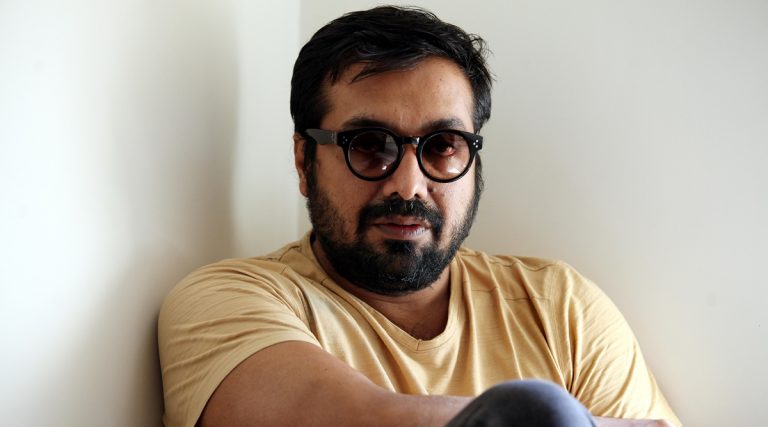
‘He pushed me on the sofa and forced himself on me’, says actress who accused Anurag Kashyap of rape: Here is what she told police

Actor Payal Ghosh has registered an FIR against filmmaker Anurag Kashyap after she accused him of sexual misconduct in 2013. In her statement to the Versova police, the actress confirmed meeting the director 3 times back in 2013. She revealed that it was during the third meeting in his house that Anurag Kashyap suddenly pushed her to the sofa, opened his pants and forced himself on her. “I tried to shout a lot but he pressed my mouth and raped me,” she said in her police statement.

According to the statement, the three meetings took place in a span of a few days in August 2013. While the first one was with her manager at Kashyap’s office in Aram Nagar, Andheri, the next two were at his house at Yari Road, where she had met him alone, confirmed the 30-year-old actress.

Payal Ghosh’s second meeting with Anurag Kashyap at his residence

Divulging details about her second meeting with director Anurag Kashyap, Payal said that he appeared to be decent. “During the second meeting I had a discussion with Kashyap for over two hours when he told me about his film career and achievements. I had dinner with him and after the meal he asked me to stay longer but I left saying that the driver would get late.”

The third time Payal Ghosh met Anurag Kashyap

She revealed that after a few days she received a text message from Kashyap, who offered her a role and asked her to meet him at his house to discuss the same. He had asked her to specifically wear a salwar kameez so that no one could recognise her, recollected the actress.

“Around 7:30 pm I reached Anurag Kashyap’s house in my Honda city car. He was sitting inside and smoking. The house smelled really bad and when I asked him, he said he was smoking marijuana. He also offered me a smoke but I refused. He took me to another room to show me his collection of films. While showing me the cassettes of his old films, he suddenly pushed me to the sofa, opened his pants and forced himself on me. I tried to shout a lot but he pressed my mouth and raped me,” she said in the statement.

Payal said that as soon as she got a chance she escaped from there. At first she did not share her experience with anyone, but a few days later, she opened up in front of her manager and driver. Payal recollectd how she was keen on filing a complaint against the director then, but she was stopped by her close friends, who warned her that she probably would not get work in the film inductry if she speaks against an influential director like Anurag Kashyap.

“The Me Too movement gave me some courage. I shared it with my sister and cousin brother this month and after consulting my kin, we decided to file a complaint,” she said in the statement.

As stated by the actress in her police statement, her manager, who use to handle her social media accounts, had sent Anurag Kashyap a Facebook friend request on her behalf in 2013 and had fixed the first meeting with the director. 

Anurag Kashyap normalised the incident saying that physical relationships between filmmakers and actresses were very common in the film industry

We had reported earlier, how Ghosh alleged that Kashyap had justified his act by saying that physical relationships between filmmakers and actresses were very common in the film industry. Ghosh had called Kashyap a hypocrite for speaking on the issues of women empowerment and patriarchy and on the other hand allegedly trying to sexually abuse her.

Payal Ghosh had made these serious allegations against the filmmaker during an interview with ABN Telugu.

After the video of Payal Ghosh came to the notice of National Commission for Women (NCW) chairperson Rekha Sharma, she advised Payal to send a detailed complaint to them on the issue and assured that the commission will look into the matter.

Initially, the Mumbai police had made actress Payal Ghosh wait till 2 AM, but did not file a sexual assault complaint against Anurag Kashyap. However, a day later the Mumbai police registered an FIR under the Penal Code Section 376 (I) (rape), 354 (assault or criminal force to woman with intent to outrage her modesty, 341 (wrongful restraint) and 342 (wrongful confinement), against filmmaker Anurag Kashyap and initiated an inquiry in the matter.

According to reports, Anurag will soon be called for questioning regarding the alleged seven-year-old incident. 

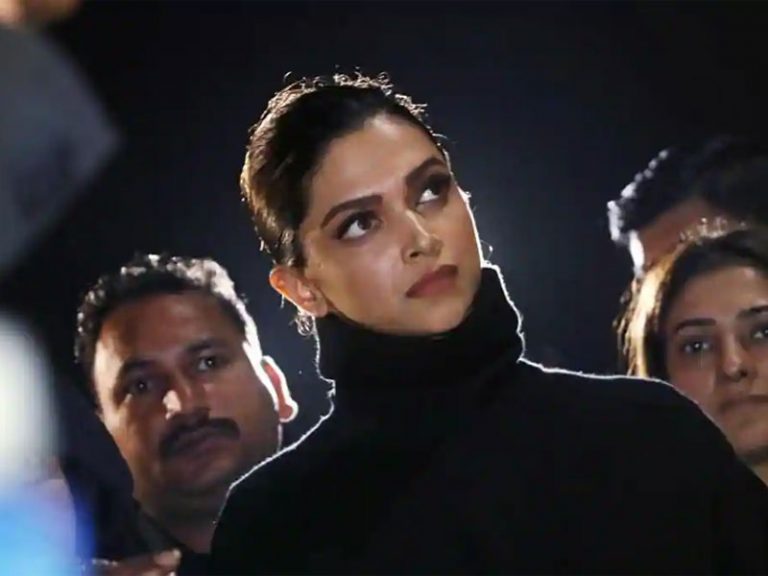
Deepika Padukone was the admin of the drug chats WhatsApp group, says Times Now report

As per a Times Now report, the Narcotics Control Bureau (NCB) sources on Saturday revealed that Bollywood actress Deepika Padukone was the admin of the WhatsApp group in which the conversations regarding drugs were found.

According to the reports, ahead of the interrogation of Bollywood actress Deepika Padukone in the drug case by the Narcotics Control Bureau, it has been disclosed that the Bollywood actress was the admin of the group in which the alleged conversation regarding the procurement of drugs had taken place.

The Times Now report states that Deepika, Karishma and Jaya Saha were all admins of the group. It stated that two mobile numbers belonging to Deepika were added in the group.

Deepika’s name had emerged in the drug abuse probe earlier this week after her WhatsApp conversations went viral. A series of WhatsApp conversations had gone viral recently where the actress’ was allegedly asking for hash (or hashish, a drug made from cannabis plant) from a certain person named ‘K’, who many believe is her manager, Karishma Prakash.

The drug conversation allegedly between Deepika Padukone and others on 28th October 2017 went something like this:

10:03 AM (+91-992——-) ‘D’ (believed to be Deepika): K…Maal you have?

10:05 AM (+91-961——-) ‘K’: I have but at home. I am at Bandra…

10:05, K: I can ask Amit if you want

10:07, Deepika: Yes!! Pllleeeeasssee

10:08, K: Amit has. He’s carrying it

10:12, Deepika: Hash na?

10:12, Deepika: Not weed

10:14, K: What time are you coming to Koko

10:15: Deepika: 1130/12ish

10:15: Deepika: Till what time is Shal there?

K: I think she said 11:30 because she needs to at the other place at 12

NCB summons Deepika Padukone for interrogation

Deepika Padukone’s manager Karishma Prakash was also summoned by the NCB for questioning. The update comes after Rhea Chakraborty’s talent manager Jaya Saha’s name appeared in some of the text messages with the former. As per a report by Republic TV, both, ‘D’ and ‘K’ were part of the WhatsApp group that had discussed drugs. Republic has confirmed that the ‘D’ in drugs chat was Deepika Padukone.

The NCB, which has launched an investigation into the drug peddling and procurement cases in Bollywood, had also summoned Deepika Padukone for further questioning the drug case. The actress is expected to appear before the NCB officials for interrogation on Saturday.

Along with Deepika, Sara Ali Khan and Shraddha Kapoor have also been summoned by the Narcotics Control Bureau in connection with the drug mafia case.

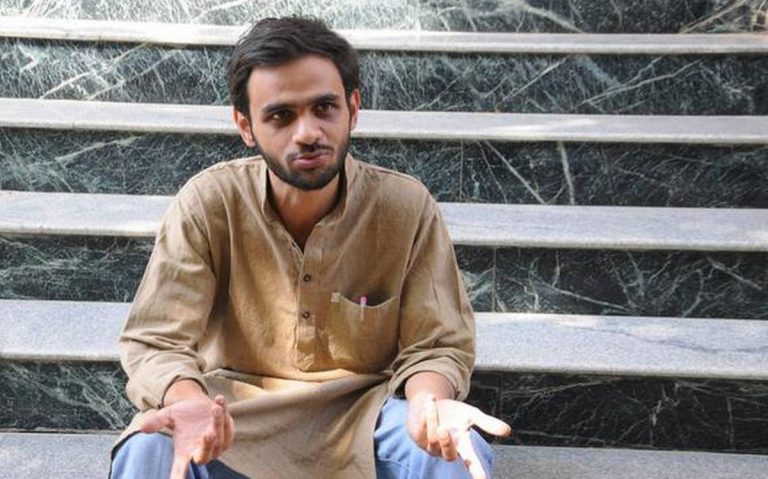
Delhi Riots: Defenders of Umar Khalid reach the third stage of grief, they are now ‘bargaining’ with Police for action against Kapil Mishra and others

0

In recent times, it appears to have become extremely fashionable for a certain section of former IPS officers to come out of the closet and criticise Delhi Police for its investigation into the riots that occurred in Delhi in the month of February. There appears to be a concerted campaign to prevent the law from taking its own course with regards to the charges against some favoured ‘activists’ among the ‘intellectual’ elite such as Umar Khalid.

There are five stages of grief: Denial, anger, bargaining, depression, acceptance. The defenders of Umar Khalid and others currently appear to have reached the third stage after ranting and raving against their arrest. Now, they appear willing to at least concede that the charges against the JNU ‘scholar’ are in the grey zone and require judicial adjudication.

Yashovardhan Azad, former IPS officer and Central Information Commissioner, made such comments in an article for the Hindustan Times on Thursday. He conceded that electronic data and statement by witnesses have added “heft” to the charges. He said, “While social activists maintain that Umar Khalid and company are mere dissenters and protesters of CAA and National Register of Citizens (NRC), the Delhi Police maintain that they have unimpeachable evidence against them regarding well-planned sit-ins and blocking of roads, collection of acid and incendiary devices, funding through the Popular Front of India (PFI) and confrontation with the state law and order machinery.”

“For the case to succeed, the prosecutors have to convince the judge that the acts of the accused extended beyond sit-ins and protest speeches which come under the ambit of democratic dissent, to the instigation of riots and confrontation with the state leading to the killing of two policemen and injuring 108 others. Hence, this issue is in a grey area awaiting a judicial verdict,” he added.

We receive some clarity regarding the motivations behind this unexpected concession in the succeeding paragraphs. The ex-IPS officer appears to be extremely sad that no action has been taken against Kapil Mishra, Anurag Thakur and Pravesh Sharma. He declares mournfully, “When history looks back at the worst communal riot since Partition in Delhi, it is the failure to hold to account rabble-rousers from the ruling dispensation which will torment the sentinels of democracy.”

Thus, we clearly see the bargaining tactics at work here. Since ‘civil society’ and other activists want a ‘safe exit’ from the ruckus, where they can still claim some sort of a moral victory, it is their fervent desire that the three BJP leaders mentioned be sacrificed to satisfy their ego. They are even willing to concede that Umar Khalid and others may be guilty. But they only wish that the Delhi Police also extend their courtesies by taking action against Kapil Mishra and the rest. Yep, it is definitely the third stage of grief.

The former IPS officer quoted Julio Ribeiro to bolster his own argument regarding ‘reservations’ surrounding the Delhi Riots investigation. Although, he disagreed much with what Ribeiro had said himself. Open-Letter specialist Ribeiro is still in the second stage of grief (anger), thus, the approach of Azad is bound to be different.

Unlike Ribeiro, Azad conceded that one should wait for a judicial verdict on the matter of Umar Khalid. Furthermore, he has complimented Delhi Police for the stellar work they have done thus far. He also appears to discard the notion that Delhi Police has been persecuting a particular community selectively when he mentions that 1,575 individuals, including 776 Hindus and 799 Muslims, have been arrested.

However, the objective of all such praise appears to be strengthening their hand at the bargaining table. It is extremely unlikely that it will work, the Delhi Police appears to be well aware of the task at hand and is unlikely to fall for such tactics. Furthermore, they appear unwilling to let activists teach them how to perform their own job.

The title of Azad’s article on Hindustan Times was ‘How the Delhi riots probe polarised society‘. It is a rather inaccurate description of what exactly happened. In fact, it is a complete inversion of the truth. The truth of the matter is, Indian society is extremely polarised at the moment as it is. Thus, it was not that the investigation into the Delhi Riots polarised society, it was that society was extremely polarised and therefore, formed their opinions on the investigation based on their personal political inclinations.

It is a sign of our times that former IPS officers are coming forward to deliberately undermine their successors out of a misplaced sense of moral superiority. The inevitable consequence of it will be a great distrust among the public regarding the institutions of the Republic. There are other arguments that were thrown in a very matter-of-fact tone as if these are established facts and not mere assumptions.

Towards the beginning of the article, in the first paragraph itself, the author says, “The police dithered for a considerable time before taking firm action when they should have crushed the violence right away. Soon, the riots spread like wildfire across the smoke-grey skyline of the Capital, engulfing new areas and snuffing out more and more innocent lives.” Once again, the former IPS officer appears far more willing to blame the police than the actual instigators of the violence.

In December, the Police actually acted proactively after riots broke out to put an end to the violence. They entered the Jamia Milia University to flush out the rioters. And we are well aware how ‘civil society’ reacted to that. It was portrayed as a crackdown on ‘dissent’ despite all evidence to the contrary. In this particular incident as well, the Police did try initially to prevent the situation from escalating, however, they terribly miscalculated the monstrosity of the anti-CAA protesters.

Two police officers had actually gone to converse with the mob of anti-CAA protesters and ask them to convey their grievances to the ACP. But then, they were held hostage by the mob and they managed to escape with great difficulty. This was before constable Ratan Lal was lynched to death by the Islamist mob. Thus, to claim that the Delhi Police made no effort at preventing their riots is preposterous. Furthermore, all of us score 10/10 on hindsight but the fact of the matter is, when a great many people are hell bent on unleashing chaos on the streets, the streets generally tend to witness anarchy.

And that is precisely what happened. The Delhi Police deserves credit for the fact that the spree of violence was brought under control in 36 hours. While the article condemns the Police for not taking action, it has hardly any of it to offer for the individuals who organised a conspiracy to unleash violence in the streets. Tahir Hussain and Khalid Saifi, for instance, believed to be key conspirators in the matter, do not find a single mention in the article.

The use of molotov cocktails, stone-pelting and other means to maximise the violence also ensured that the Delhi Police could not effectively curb the violence straightaway. The former IPS officer also demands action against Kapil Mishra and others. But what did they do exactly? They raised slogans that were considered problematic by the ‘intellectual’ elite. That is the only thing they are accused of.

They did not pelt stones, they did not organise mobs, they did not throw molotov cocktails. It appears that ‘civil society’ wants them punished merely to uphold ‘secularism’, even if they did not contribute to the violence in any shape or form. The chargesheets filed in the Delhi Riots case reveal that a lot of planning had gone into instigating the riots and Kapil Mishra was involved with none of it. And yet, they want him to be punished anyway.

Quite clearly, former IPS officers seek action against Kapil Mishra and others solely for the sake of their own political biases as a consequence of which they have already deemed him guilty of crimes he did not commit. A judicial verdict is necessary to prove the guilt of Umar Khalid and others, the article says, but the author has already judged Mishra guilty. And nothing could convince them otherwise. It only further illustrates the fact that it is not the Delhi Riots investigation that polarised the public, in reality, it is due to the political polarisation among ‘civil society’ that the investigation is being questioned.


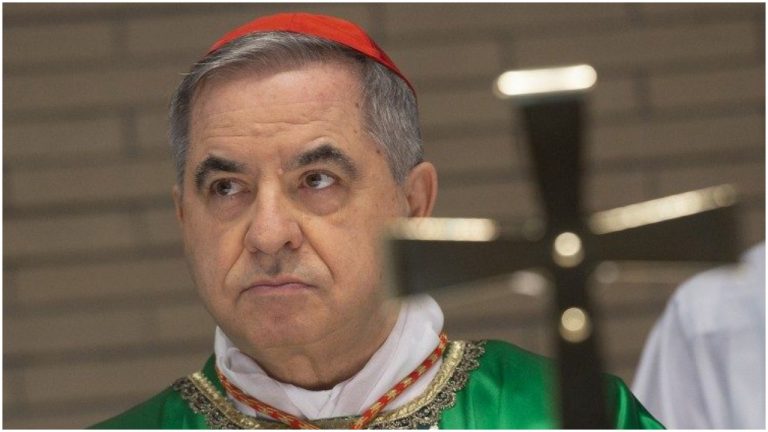
Cardinal Angelo Becciu, one of the most powerful in the Vatican, resigns amidst financial scandal allegations

0

Cardinal Angelo Becciu, one of the most powerful Vatican cardinals, has resigned on Thursday from the saint-making office and also renounced his rights as a cardinal amid a financial scandal that has reportedly implicated him indirectly.

According to the reports, Becciu, who was one of the most powerful in the Vatican’s secretariat of state, has been implicated in a financial scandal involving the Holy See’s investment in a London real estate deal that resulted in a loss of millions of euros for the Vatican.

Reportedly, Cardinal Becciu had caught up in a real estate scandal, which has now led to his resignation from the powerful position in the Vatican Church. The cardinal has also given up his right to take part in an eventual conclave to elect a pope. The resignation is being said as one of the most mysterious episodes to hit the Vatican in years.

“The Holy Father accepted the resignation from the office of Prefect of the Congregation for the Causes of Saints and from the rights connected to the Cardinalate, presented by His Eminence Cardinal Giovanni Angelo Becciu,” a one-line statement late on Thursday said.

The last cardinal to give up that right of electing a pope was Cardinal Theodore McCarrick of USA, who had resigned over a sex scandal in 2018.

Becciu has worked for the last six years as the Substitute for General Affairs, a role akin to the secretary of state, one of the most powerful positions in the Vatican chief of staff. The 72-year-old was elevated as Cardinal in 2018 and also had responsibility for the department that oversees beatifications and sainthoods.

Meanwhile, the Vatican prosecutor has placed several Vatican officials under investigation. However, it is yet to start a probe to unearth Becciu’s role in the scandal. Becciu has defended the original investment and denied any wrongdoing.

Vatican financial scandal

In October 2019, we had reported on the alleged financial scandal linked to the Vatican. The scandal had surfaced after an investigation was launched to know how $200 million worth of charity funds parked in Swiss Bank accounts ended up financing a luxury property development in London’s upscale Chelsea district that generated large profits for a company that managed the investment for the Holy See.

The project to construct 49 luxury apartments at 60 Sloane Avenue was under the scanner of the Church officials after funds worth $200 million held in Swiss bank accounts controlled by the Secretariat of State was transferred to a Luxembourg investment fund called Athena Capital. The Vatican is said to be engaged in the project since 2014.

After suspecting financial irregularities, an investigation was launched by Vatican police and raids were conducted at the offices of the Holy See’s Secretariat of State and its Financial Information Authority or AIF. 

At that the time of investment, Cardinal Becciu was the in charge of the administrative duties of the Secretary of State, the second-ranking official from 2011-18 and reported on a daily basis to Pope Benedict and later Pope Francis.

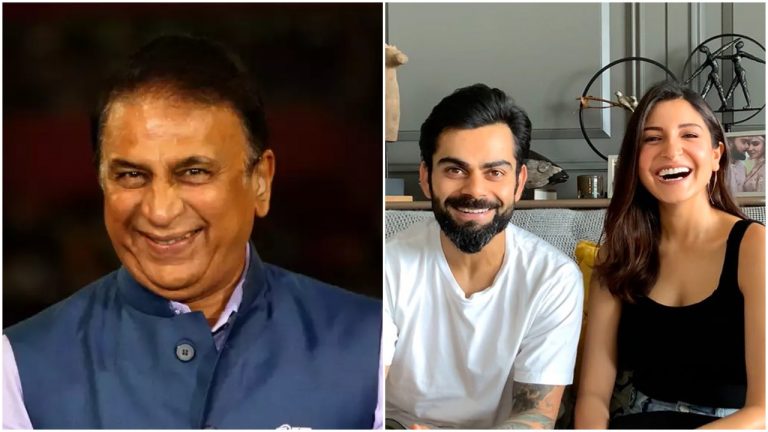
Fact Check: No, Sunil Gavaskar didn’t make sexist comment against Virat Kohli’s wife Anushka Sharma during an IPL game

On Friday, legendary Indian batsman Sunil Gavaskar found himself in the middle of a controversy for allegedly making an unsavoury comment against Virat Kohli and his wife Anushka Sharma after RCB captain’s worst performance during an IPL game on Thursday.

While commentating during the IPL match between Royal Challengers Bangalore and Kings XI Punjab, the former Indian captain Sunil Gavaskar criticised Virat Kohli over his poor performance against Kings XI Punjab after the RCB captain dropped two important catches and also got out much early in the game.

Gavaskar, who was commentating when Virat Kohli came to bat at the third over of the second innings, made a remark that involved Virat Kohli’s actor wife Anushka.

Referring to the poor form of Virat Kohli, Gavaskar wittingly said, “Lockdown tha to sirf Anushka ki bowling ki practice ki unhone, wo video dekhi hai, usse to kuch nahi hona hai.” (He only faced Anushka’s bowling during the lockdown, I have watched that video, nothing is going to happen from that)”. Sunil Gavaskar was referring to a video that had gone viral on social media in May this year, where Virat Kohli and Anushka Sharma were seen playing cricket on the terrace of their house. A full Lockdown was in force at that time, and sportspersons were not allowed to visit playgrounds.

A day later, on Friday, media networks and TV channels went on to make misleading claim that the legendary batsman had made unsavoury remarks against Virat Kohli.

Addition to various media networks, social media users too descended on Twitter to slam Gavaskar for his alleged sexist comment on Anushka Sharma and also called BCCI for the sacking of Sunil Gavaskar from the commentary team.

Fact-Check

Contrary to the media outrage against the legendary batsman, in reality, Sunil Gavaskar did not make any sexist or vulgar remark against Bollywood actress Anushka Sharma.

In fact, Sunil Gavaskar was referring to the viral video of the couple playing cricket that had surfaced during the country’s coronavirus lockdown.

Here is the video that Sunil Gavaskar was referring to during his commentary on Thursday.

Sunil Gavaskar was indeed referring to the video of Virat Kohli and Anushka Sharma playing on top of their residence during the coronavirus lockdown contrary to the claims of various social media users who attributed vulgar comments to the former Indian captain.

Triple Talaq case petitioner Ishrat Jahan files police complaint after in-laws allegedly tried to rape, harass and assault her

0

BJP leader and petitioner in the sensational Triple Talaq case, Ishrat Jahan, has lodged a complaint against her husband and brother-in-law at the Golbari police station in Howrah, West Bengal.

She has alleged that she has been held captive in her own home in Pilkhana in Howrah. Ishrat Jahan has accused her brother-in-law of trying to rape her at her home at around 12 pm on Thursday, in the presence of her husband. She alleged that her husband did not do anything to stop the sexual assault. The activist has claimed that her clothes were also ripped apart.

They forced me out of the house, claims Ishrat Jahan

According to the victim, her husband and brother-in-law would also physically assault her. Earlier, she had accused her mother-in-law of torturing her. Ishrat Jahan has further alleged that her in-laws had snatched away her money, and ornaments. While showing the assault marks on her neck, she stated, “They forced me to vacate the house as they wanted to sell the property. 7-8 men tried to forcefully grab and kill me. I have somehow managed to save my life and get out of the house.”

The police have initiated an investigation into the case. However, none of the accused has been arrested so far. Ishrat Jahan has been at the forefront of Triple Talaq case which later culminated into the historic Triple Talaq Bill . The Bill barred Muslim men from spontaneously terminating the contract of marriage. She had moved the apex Court after her husband, who lived in Dubai then, disowned her by chanting ‘Talaq’ three times on the phone.

Ishrat Jahan receives death threats for participating in Hanuman Chalisa recital

Last year, Ishrat Jahan had participated in the mass Hanuman Chalisa recital event at the Sankatmochan Hanuman temple in Dobson Road in Howrah. Following the event, Ishrat was allegedly threatened with her life and was asked by her landlord Manazir Hussain to vacate her house. As per Ishrat’s complaint, when she was returning home from her child’s school, she was stopped at the Nand Ghosh road by one Mustafa Ansari and her landlord Manazir Hussain along with over a hundred people.

As per reports, Ishrat and her child were forced out of their home after the landlord’s threats. She has reportedly taken shelter in another person’s house at Rosemary Lane. She has stated that she lives alone with her child and is fearing for her safety after the Muslim community members have issued her threats.

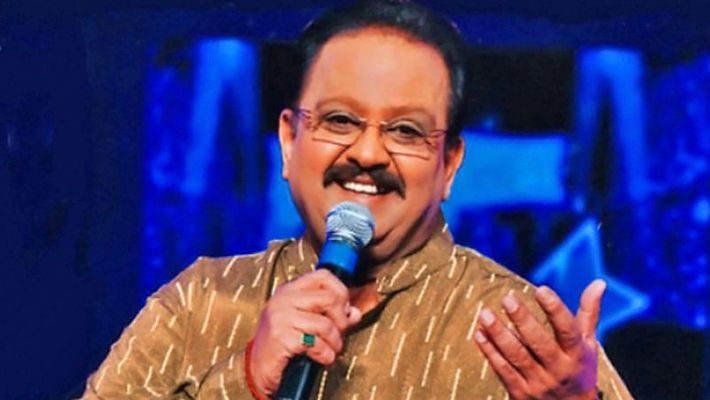
Legendary singer SP Balasubramanyam passes away at 74 after battling Coronavirus

Legendary singer SP Balasubramanyam, who had tested positive for Covid-19, passed away today at the age of 74. He was undergoing treatment at a hospital in Chennai on August 5, after he showed minor Covid-19 symptoms. He had recovered from Coronavirus as he had tested negative on 4th September.

In the last 24 hours, however, his condition had worsened and he was put on maximum life support, hospital authorities said, as reported by the Times of India. A statement issued by MGM Healthcare in Chennai, where he was admitted on 5th August, said that he passes away at 13.04 hours on 25th September.

On Wednesday, the hospital authorities had confirmed that the legendary singer SP Balasubramanyam had spiked a fever and was in a critical condition.

It was previously believed that SP Balasubramanyam was responding well to treatment and could be discharged, however, his condition worsened in the past 24 hours.

Filmmaker Venkat Prabhu had confirmed on Twitter that the veteran singer had passed away after battling Coronavirus at 1:04 PM on the 25th of September 2020.

In early August, SP Balasubrahmanyam shared a video on social media to inform his fans that he has tested positive for COVID-19. On August 14, his health deteriorated and he had to be shifted to the intensive care unit (ICU) and put on a ventilator. 

SP Balasubramanyam started his cinematic journey in 1966 with the Telugu film ‘Sri Sri Sri Maryada Ramanna’ and then there was no looking back, he made an extraordinary contribution to music across many languages. He had sung over 1,000 songs in various languages including Tamil, Telugu, Hindu etc.