Home Blog Page 5091

BMC removes illegal loudspeaker at Mankhurd for which Karishma Bhosale was heckled by Muslims, was sent notice by Mumbai police

0

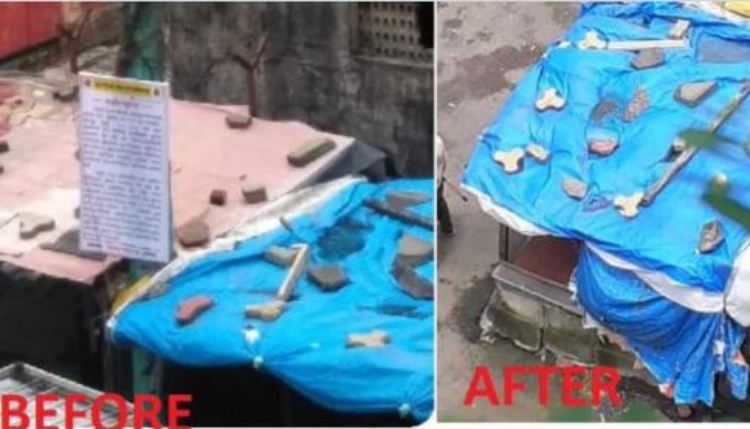
The Municipal Corporation of Greater Mumbai, also known as Brihanmumbai Municipal Corporation (BMC) has removed the illegal loudspeaker belonging to the Noori Ilahi Sunni Welfare Association’s mosque in Mankhurd, for which the Mumbai police under the Maha Vikas Aghadi government in Maharashtra had on June 29 issued a notice to Karishma Bhosale and her mother for requesting the mosque authorities to lower the volume of loudspeaker that blared azaan.

Karishma Bhosale who had objected to the volume of azaan that blared through the loudspeakers installed in her neighbourhood has taken to Twitter to confirm the news.

BJP’s Mumbai General Secretary Vivekanand Gupta, who had also supported Karishma Bhosale in her protest against the illegal use of the loudspeaker by the mosque in Mankhurd, also took to the microblogging site to share the news.

BMC removed the loudspeaker that is fine, but actually Mumbai police should have done it: Adv. Vivekanand Gupta on the removal of loudspeaker in Mankhurd

When OpIndia spoke to Adv. Vivekanand Gupta, he said that the task which the Mumbai police should have done in the month of June was ultimately carried out by Brihanmumbai Municipal Corporation (BMC) today. He apprised that the pole on which the loudspeaker was fixed, stood on BMC’s road, because of which the civic body had put up a notice somewhere in the month of July, informing the mosque that if they did not remove the illegal loudspeaker at the earliest, it would be removed by the civic body. And today the Municipal Corporation finally removed it, confirmed Gupta.

Criticising the Mumbai police, he said that the Mumbai police under the Maha Vikas Aghadi government instead of issuing a notice to Karishma Bhosale and her mother should have followed the Supreme Court and High Court guidelines and remove the illegal loudspeaker in the locality. “BMC removed the loudspeaker that is fine, but actually Mumbai police should have done it”, said Gupta slamming the Mumbai police for not doing its duty sincerely.

Gupta asserted that though many Hindu organisations, like VHP, Bajrang Dal and Durga Vahini Sena had supported Karishma Bhosale in her endeavour and provided her protection from the local Muslim who had ominously intimidated her for requesting to lower the volume of azaan, BJP’s Kirit Somaiya had specially put in a lot of effort and provided all kind of support to Karishma.

BJP national executive member Kirit Somaiya, has also taken to Twitter to confirm the news.

Mumbai Police had issued notice to Karishma Bhosale calling her request in “inappropriate”

The notice issued by Mumbai police on June 29 was addressed to Karishma’s mother, Varsha Ganesh Bhosale, which stated that it was inappropriate on the part of Karishma to have visited the Noori Ilahi Sunni Welfare Association’s mosque in Mankhurd and asked its authorities to reduce the volume of azaan that blared through its loudspeaker.

The notice read that such acts pose a threat to “law and order situation” in the region and directed Karishma and her mother to abide by the rules, failing which they will be booked under Section 188(Disobedience to order duly promulgated by public servant) for violating the notice served under Section 149 and appropriate action will be initiated against them.

Karishma Bhosle accosted, heckled by local Muslims

We reported how Karishma Bhosale, a resident of Mankhurd, was accosted, heckled and intimidated by a raft of belligerent Muslims after she visited the Noori Ilahi Sunni Welfare Association’s mosque with her request. In a series of tweets, Ms Karishma expressed the ordeal she had to go through at the mosque on Twitter. 

From cheap goods to telecom: How China’s industrial hegemony and guerilla marketing tactics can hurt India

Be it the battlefield or business environment, Chinese have always tried to strain India’s economy in all possible aspects. After conquering and destroying the smartphone manufacturing market, Chinese companies are yet again ready to barge-in and take over the telecom equipment/ infrastructure space.

While there are supporters of Chinese players giving the logic that they provide products and services at a cheaper rate than other players, but one has to wonder how is it, that only the Chinese companies can often offer disruptive pricing and no other players or indigenous or any other foreign players can afford to sell products at that price?

The answer to this question is that while other players focus their energies on developing and bringing new technologies, the Chinese focus on stealing patented and unpatented technologies from around the world through sophisticated cyber-attacks, thereby developing cheaper products. China often rides on the back of copied technologies with an agenda to destroy the domestic industry in the strategic core sectors of the target nation. In fact, due to them simply stealing the technology, their costs are vastly low because they hardly have to invest in Research and Development.

Several years back, Chinese companies set up production facilities outside India to circumvent the Indian judicial system to benefit from brazen and unlicensed use of copied and stolen Indian intellectual Property to supply to the world. Then, they tested waters by exporting goods such as optical fibre and cables to India, that were made by unlicensed use of Indian intellectual property. They successfully circumvented Indian scrutiny and Intellectual Property system by routing supplies through a complex maze of legal entities. They got bolder with their brazen and aggressive Intellectual Property theft and started importing machines using copied Indian technologies such as optical fibre draw towers to set up factories in India.

In 2019, Delhi High Court had restrained ZTT India Pvt Ltd. from marketing optical fibres manufactured using technology which had been patented by an indigenous leader of optic fibre manufacturing in India. Similarly, the World Bank has also banned the company of fraudulent practices under the Lusaka Transmission and Distribution Rehabilitation Project in Zambia.

As the final battle to control Indian telecom infrastructure begins, Chinese are coming armed again with copied Intellectual Property technologies, and hence with no need of investment on R&D, to manufacture cheap optical fibre and cables in India. 

Trading with China will hinder India’s ‘Atmanirbhar’ dream

As India is getting ready for the next revolutionary wave in the telecom sector 5G, Fibre Optical cables and Fibre Optics will play a major role in this journey. After driving overcapacity in critical sectors including steel and aluminium, telecom equipment is its next target. In the optical fibre cable market, western companies are struggling against the tide of overcapacity, plunging global prices to non-competitive levels, driving companies out of the market and leaving the world with only one supplier, China. 

Moreover, Chinese players are dumping fibre optic cables in the global market and now in India, i.e. exporting less the price they sell in their market, with a clear intension to kill the indigenous players India.

The COVID-19 pandemic has already strained the manufacturing sector. While the government is taking crucial steps to support the domestic players with ‘vocal for local’, it is time we start understanding how Chinese players have been ruining other markets and are now ready to make India dependent on Chines imports. 

Job loss

Amid pandemic India is also suffering job losses across sectors and levels. With initiatives like ‘Atmanirbhar’, the government is attempting to create new job opportunities by supporting SMEs and domestic players to manufacture goods and services in India itself. The Chinese finished products are imported at cheap rates, stealing the business opportunity from local players.

Ultimately, with long prolonged loss, these companies are facing will lead to job loss again. However, if local manufacturers get more business contracts and can increase their overall manufacturing capacity, they will encourage hiring more people at the manufacturing units. 

Stealing India’s Intellectual Property

To counter the threat posed by Chinese applications to the country’s sovereignty and security, the government of India took a bold move to ban 59 Chinese mobile applications last month. Similarly, it’s also time that the Indian government starts identifying how Chines players have been copying designs, technologies of other players in the sector to ruin their name from the industry.

This is the time when the nation’s Intellectual Property is at risk, the nation’s ability to become Atmanirbhar is at risk, and India ability to withstand backdoor Chinese economic invasion is being tested. It is the time to take a step back and say NO to Chinese. 

Indian companies are expanding western partnerships to keep China out

The pandemic has obstructed the planned economic growth of not just India, but the entire world. However, government’s ‘self-reliance’ vision has thrilled Indian manufacturers not just in telecom, but other sectors as well to start investing in the new age technologies, increase manufacturing capacity to cater to the demand of Indian and supply to foreign markets as well. Talking about the telecom sector, shunning Chinese-made products, is also opening doors for western companies to partner with Indian tech giants and together target the 500 million potential user market which still doesn’t have internet access. 

Google recently announced an investment of $4.5 billion in India’s Jio Platforms, the unit of Reliance Industries overseeing music, movie, and telecommunications ventures. Facebook bought a 9.99% stake worth $5.7 billion last month. Since April, Jio has raised more than $20 billion from investors including General Atlantic, Qualcomm, Intel, and Silver Lake. 

Industry bodies demand reservations for domestic players for BSNL 4G tenders:

The domestic telecom gear makers body TEMA has urged the government to provide 20-30 per cent reservation for indigenous companies in the proposed BSNL 4G services tender. Moreover, with the souring border relations, it is expected that Chinese telecom giants will be barred from 5G deployment in India, a similar move U.K. has already taken. 

It is time we realise how Chinese have been trying to create a hegemony across industries with its guerrilla marketing strategy forcing domestic players to shut their shops in their homegrown markets.  

(The article has been written by Akul Mehta, a Telecom & Cyber Security Consultant)

Mumbai Police records statement of journalist Faye D’Souza’s husband in the ‘fake views’ scam involving singer Badshah

In an important development in the fake influencer scam case being probed by the Mumbai police, today the police recorded the statement of Sagar Gokhale, the chief operating officer of digital marketing company Qyuki, the company that had provided fake views for the videos of singer Badshah. Sagar Gokhale is the husband of journalist Faye D’Souza.

Last week, rapper Aditya Prateek Singh Sisodia alias Badshah was questioned in connection with the fake views and likes scam, where he had confessed that he had paid Rs 75 lakh to the company Qyuki to buy fake views for the video of his song Pagal Hai on YouTube. He had bought the views in order to set a world record for most YouTube views in the first 24 hours. The singer had claimed that the music video for ‘Pagal Hai’ had been watched 75 million times in the first day of its release, beating other previous records.

After the revelation by the singer, the police had questioned Sagar Gokhale, the COO of the company. But during the questioning, he expressed ignorance about the case, and blamed his dead colleague for the same. He said that he is not much aware of the company’s affairs, and the company’s co-founder and managing director Samir Bangara knew more about the functioning of the company. It may be noted that Bangara died in a bike accident in June this year.

Gokhale also said that the CFO and video network manager of the company would know more about the case related to the video of Badshah. Following his statement, the police have issued summoned for them.

The Mumbai police had recovered an invoice from Badshah, showing that an amount of Rs 75 lakh was paid to Qyuki. While the invoice shows the payment was made for advertising, the police say it was paid for inflation in number of views and not for advertising.

According to the company data of Qyuki, Sagar Gokhale is one of the three directors in the company. He is also a director in five other companies. In one of those companies, Freemedia Interactive Private Limited with two directors, his wife Faye D’Souza is the other director.

The fake views and likes case was busted after two celebrities had complained that fake accounts were created in their names on social media. The complaints were filed by singer Bhoomi Trivedi and other by actor Koena Mitra. Following this, the police had found that accounts were created by some companies to provide fake followers, likes, comments and other social media related services. During the subsequent probe, the Mumbai police had unearthed more than 50 companies that were involved in selling social media followers, likes and comments.

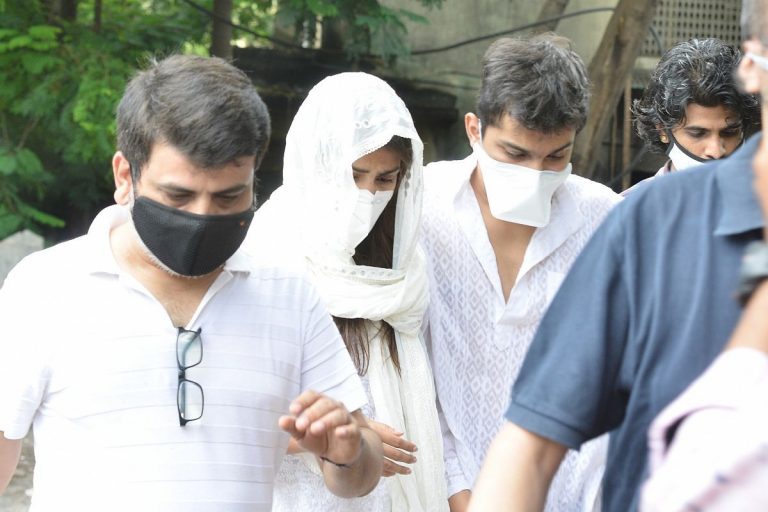
ED questions Rhea Chakraborty over alleged mismatch in income and expenses, asks to submit financial records: Read details

0

The Enforcement Directorate (ED) has recently questioned actor Rhea Chakraborty for almost 18 hours. They are now examining the financial transactions made from Sushant Singh Rajput’s accounts in the last year. According to the sources quoted by Indian Express, ED has not yet found any “substantial direct transfers” from Rajput’s account to Rhea or her family members.

Indian Express reported that ED has only found withdrawals amounting to Rs 55 lakh from his primary account with Kotak Bank. At the beginning of the last financial year, Rajput had Rs 15 crore in his account. He used the money to make tax and travel-related payments, among other expenses. The agency also noted that there is no joint account belonging to Rhea and Sushant.

Mismatch in Rhea’s income and expenses

The sources said that the agency questioned Rhea for the alleged mismatch between her income and expenses. They have asked her to submit records of her income and investments. As per the reports, Rhea and her brother are directors in at least two firms set up by Rajput named Front India For World Foundation (incorporated in January 2020) and Vividrage Rhealityx Private Limited (incorporated in September 2019).

KK Singh, the father of Sushant Singh Rajput, had lodged an FIR in Patna, Bihar on 25th July 2020. On 31st July, ED had registered a case of money laundering against Rhea and her relatives based on the FIR. In his complaint, Singh alleged that Rhea has siphoned off Rs 15 crore from Sushant’s accounts in one year. Singh requested in his complaint that a probe should be initiated in all accounts help by Sushant. He also asked that his credit card statements should be checked and see if there were any transfers made to Rhea or her family or associates.

Mobile and gadgets seized

According to a report published in The Statesman, ED has seized mobile phones and other gadgets belonging to Rhea and her family members. ED said that the answers Rhea Chakraborty, her brother Showik, and her father Indrajit gave during interrogation were not satisfactory. They have seized four mobile phones, two belonging to Rhea, one to Showik and one to her father. They have also seized two iPads and one laptop. The gadgets are sent for forensic investigation.

IANS quoting sources noted that the ED will check if there are deleted messages from conversations between Rhea and Sushant, Rhea and her family members or people associated with Sushant. ED will also examine if there was any discussion about financial transactions between Sushant, Rhea and their family members.

As of now, Rhea, Showik and Indrajit have not shared any details of the properties they own. ED has asked them as well as the banks to provide all the details of any property owned by either of them and other family members.

Sushant Singh Rajput’s death

Rajput allegedly ended his life by suicide on 14th June 2020. His father KK Singh had filed a complaint in Bihar against Rhea and her family for pushing him to the point where he ended his life. CBI took over the case on union government’s order after a formal request from Bihar police. ED also registered a money laundering against Rhea based on the FIR lodged by Bihar police. While there have been many allegations of foul play being involved in the suspicious death, Sushant’s family has alleged that Rhea has been exploiting him financially and has been blackmailing him.

Fact-check: Did water enter Delhi Transport Corporation bus when incessant rains flooded the national capital

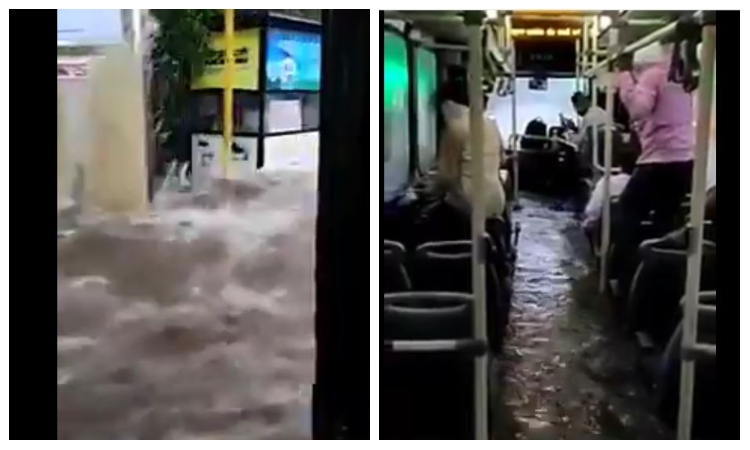
As Delhi experiences the heaviest spell of rains this monsoon season, leading to waterlogging in several parts of the national capital, throwing traffic out of gear, an unsubstantiated video claiming to be related to the devastating impact of the deluge is doing the rounds on the Internet. The video, which went viral on social media, was shot from a bus plying on a road which is seen submerged in knee-deep water. In fact, the video shows how the flood-water has also entered the bus from which the video is being shot.

Social media posts attributed this video to today’s spell of rain in the national capital. Some poked fun at Delhi CM Arvind Kejriwal, claiming that under his leadership, Delhi has been transformed into Venice, and the people of Delhi are touring Venice in a DTC bus.

Some questioned as to who should be held accountable for this.

While another Twitter user alluded that today’s spell has converted Delhi into Kerala.

While, it is true that the national capital’s infrastructure also kind of collapses in monsoon, this particular video shared by the Twitter users, however, is that of Jaipur. The video was uploaded on a Youtube Channel on August 11, 2020, with the caption: “Water enters the low-floor bus during the heavy rains in Jaipur”.

Heavy rains lashed Jaipur on August 11 throughout the day. The rains continued till late in the night and many areas of the city were affected due to waterlogging.

Meanwhile, Delhi and its surrounding areas witnessed very heavy rain today. According to the India Meteorological Department (IMD), the Ayanagar weather station recorded 99.2 mm rainfall, the maximum in the city, till 8.30 AM. The Palam and Ridge weather stations gauged 93.6 mm and 84.6 mm precipitation respectively. The Safdarjung observatory, which provides representative figures for the city, recorded 68 mm rainfall, according to the IMD.

The downpour, which was reportedly the heaviest spell of rains this monsoon season, however, led to waterlogging in several parts of the national capital, throwing traffic out of gear.

Pictures shared by ANI showed waterlogging near New Delhi Railway Station and at an underpass in the Dwarka in South-West part of the city.

Every year, the monsoons bring a set of recurring problems for the national capital, flooding the same areas year after year. One such is the Metro Bridge underpass. Last month, when Delhi received its first spell of rain, Minto Bridge near New Delhi Railway Station witnessed severe water-logging in which two vehicles got stuck including a DTC. One driver had died after a bus and tempo had completely submerged under the bridge.

Chinese media publishes propaganda of Pakistan’s Ambassador to China but refuses to carry India’s rebuttal: Here are the full details

A day after the first anniversary of abrogation of Article 370 which made erstwhile state of Jammu & Kashmir an integral part of India without any riders attached and subsequent division into two union territories, the Chinese state-run media ran a Pakistani propaganda piece citing Pakistan’s ambassador to the Communist country.

Global Times publishes Pakistani propaganda

Interviewing Moin ul Haque, Pakistan’s Ambassador to China, Global Times claimed that 200 innocent Kashmiris were killed in one year. Haque also claimed that in past one year, 50 cases of rape and molestation and nearly 1000 cases of destruction of house and property were reported from Kashmir.

The Global Times, which is the English language mouthpiece for China’s ruling party, also referred to the union territory of J&K as ‘India-occupied Jammu & Kashmir’.

The Indian Embassy in Beijing today took to Twitter to call out Chinese state media for refusing to carry India’s response to the above baseless allegations.

In its response, Indian Embassy reiterated that the Union Territory of Jammu & Kashmir is an integral part of India and its affairs are internal affairs of India. Pakistan has no locus standi, India asserted. The Indian Embassy in China stated how in one year since the historic decision, there have been considerable social gains in the union territory. New educational and healthcare infrastructure is being created. 50 new educational institutions have been established in the region in last one year, largest addition in 70 years.

India also pointed out that while India is trying to bring peace and stability in the valley, Pakistan has continued the cross-border terrorism to debilitate the region. India also pointed out Pakistan’s absurdity in releasing new political map claiming Gujarat’s Junagadh as its territory. India also asked Haque to look inward and show a mirror to his own ‘regime’ before trying to meddle in India’s affair.

Tricolour is slowly replacing the black flag in Chhattisgarh’s worst Naxal-hit regions as villagers embrace peace and development: Report

0

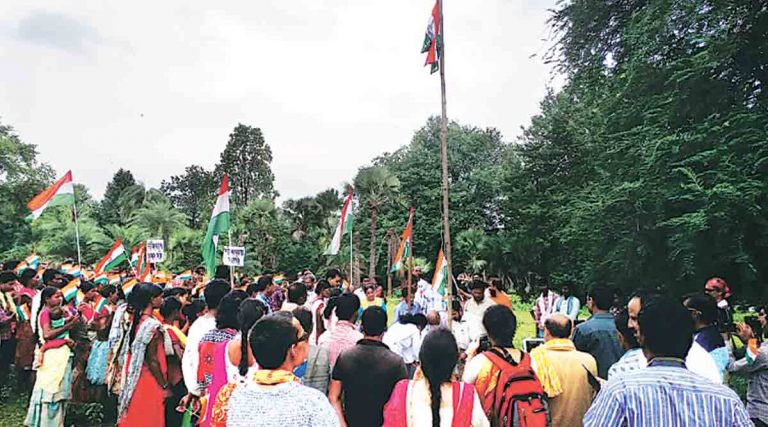
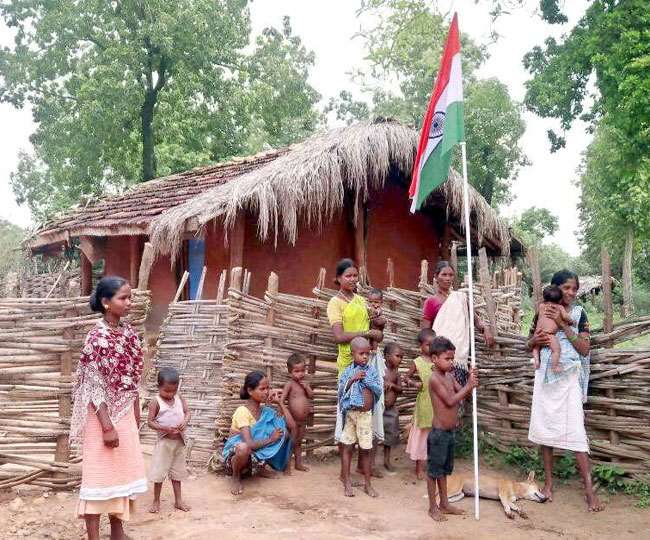
The winds of change have begun to blow in hundreds of villages in Naxal-hit Bastar division in Chhattisgarh. The black flags, which suggested the dominance of the Naxals in these regions are gradually being replaced with the National flag.

According to a report by Dainik Jagran, ignoring all the threats coming their way, the brave villagers of Chhattisgarh’s Bijapur, Dantewada, Sukma, Bastar, Kondagaon, Narayanpur and Kanker districts have been instating national flags in different parts of their villages during various occasions. This initiative is helping to cripple the supremacy of Naxals in these regions.

Oppressed villagers discarding the threat of left-wing terrorism

The unfurling of the Tiranga seems to be a way in which these oppressed villagers are expressing umbrage against left-wing terrorism domineering these Adivasis for decades. This small change marks the elimination of Naxalism from these areas in Chhattisgarh. Many schools in the Bastar district, which is considered a core area of Naxal activity, have started initiating flag hoisting ceremony on occasions like Independence Day and Republic day or any other national festival, in which the villagers participate extensively. In some villages, the Prabhat Pheri (early morning rounds) ritual is also being performed.

In 2017, the villagers in Chandameta and Mundagarh near Odisha border had hoisted the national flag irrespective of Naxalite threats. Naxals expect the villagers to boycott celebrations and raise black flags to protest against what they claim are imperialist designs to encroach upon their jal, jangal and zameen (water, forests and land). However, despite the threats, in 2017, the villagers in Chandameta and Mundagarh in Bastar district had hoisted the national flag on Independence day.

In the same year, over 12,000 people in Dantewada, the Naxal hit southern region of Chhattisgarh had sung the National Anthem together at the local Stadium on January 25- the National Voters’ Day. Having witnessed Naxal violence in the past, the District has been taking progressive steps to promote civic engagement and providing a nurturing environment for all its residents and officials.

Gompad in Sukma district of Bastar, Chhattisgarh, made headlines for the first time in August 2016 when villagers hoisted the tricolour for the first time since independence. Earlier, Naxalites used to hoist black flags in these villages and register their opposition to the country and the government, and also force people to hoist the black flag. Gradually, the tricolour has replaced these black flags, as villagers have started unanimously rejecting the left-wing extremism.

National Flag unfurled for the first time in Gompad in Sukma district of Bastar, image via Dainik Jagran

The national flag unfurled on a 100 feet high flag mast in a CRPF complex in Naxal-hit Sukma region in Chhattisgarh

On June 13, 2019, the national flag was unfurled on a flag mast that is 100 feet high at a new CRPF complex in Konta in Sukma. The flagpole is the highest in the entire Bastar Division.

Bastar has been a hotbed of violent Naxal activities. Just before the 2019 Lok Sabha election, an Improvised Explosive Device (IED) was used by the Naxals to attack a convoy. BJP MLA Bhima Mandavi and four security personnel were killed when their convoy was attacked by Naxalites. 

Decline in violence in Naxal-hit regions in Chhattisgarh with tribals returning to the mainstream

Gradually, Chhattisgarh has seen a decline in Naxal violence. The authorities have been encouraging the tribals to give up arms and return to the mainstream. In June this year, the police in insurgency-hit Dantewada district of Chhattisgarh had launched a novel initiative, named in local Gondi dialect as ‘lon varratu’, meaning ‘return to your village’, to encourage Naxals, who carried cash rewards on their heads, to give up arms and join the mainstream by urging them to return to their villages.

Last month, it was reported that five Naxals, three of them collectively carrying a reward of Rs 5 lakh, had surrendered in Chhattisgarh’s Dantewada district. Since the initiative ‘lon varratu’ was launched in June 2020, 58 Naxals had surrendered in Dantewada until July 15, Superintendent of Police Abhishek Pallava said.

Congress link emerges in Bengaluru riots, husband of party’s corporator named as an accused in FIR

Two days after the horrific riots unleashed by Muslim mobs in Bengaluru city, shocking details are emerging regarding the involvement of Congress party leaders in the violence that took place on Tuesday night in the city.

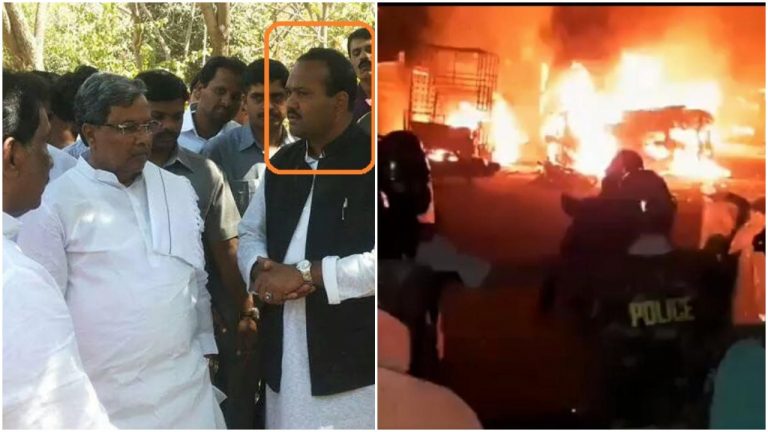
According to the reports, Kaleem Pasha – one of the masterminds of the riots, is the husband of Congress corporator from Nagavara Irshad – Begum. The Bengaluru police have named Kaleem Pasha as 7th accused in the FIR, who according to the police is also one of the conspirators behind the deadly violence that took place on Tuesday night.

On Wednesday, the Bengaluru police had nabbed a local SDPI leader Muzammil Pasha for orchestrating the violence. Along with Muzammil Pasha, the Bengaluru had also booked Jaffar and Kaleem Pasha, who had allegedly instigated the Muslim mob to pelt stones and torch vehicles near the police station. 

Kaleem Pasha active member of the Congress party, close to leadership.

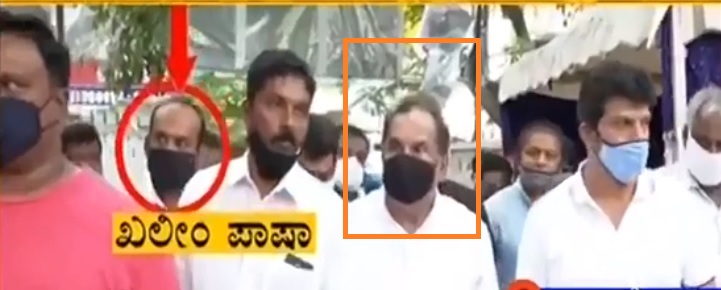
Kaleem Pasha, who is a former corporator of Nagavara ward, reportedly has close links with the party leadership and is known to be an associate of former Karnataka Home Minister KJ George.

Image Source: Suvarna news

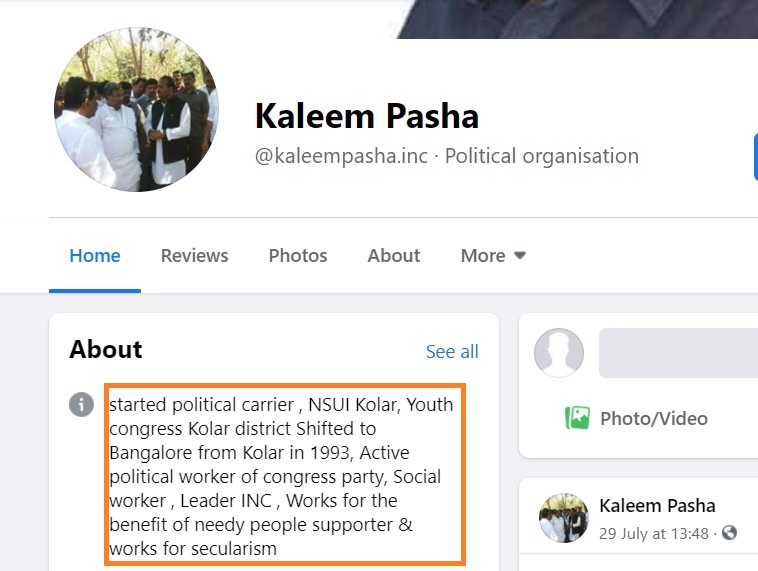
The Facebook profile of Kaleem Pasha also highlights the fact that the accused was an active Congress worker. Ironically, Kaleem Pasha in his Facebook post claims to ‘work for the benefit of the needy people and supporter of secularism’.

Image Source: Khaleem Pasha

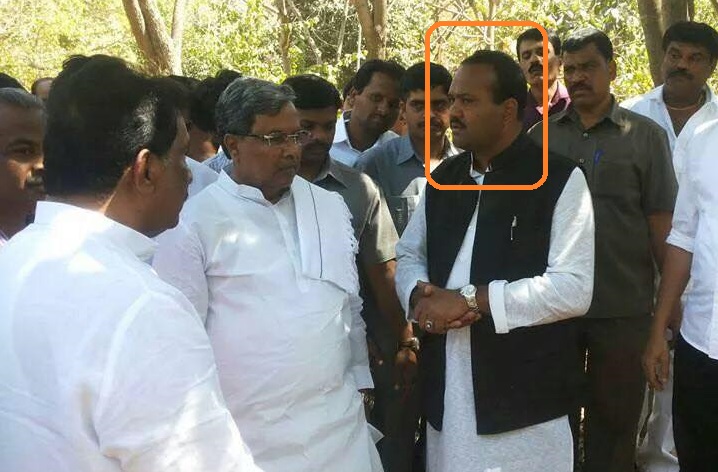
In an image shared by Pasha in his Facebook profile, he can be seen with former Chief Minister and senior Congress leader Siddaramaiah.

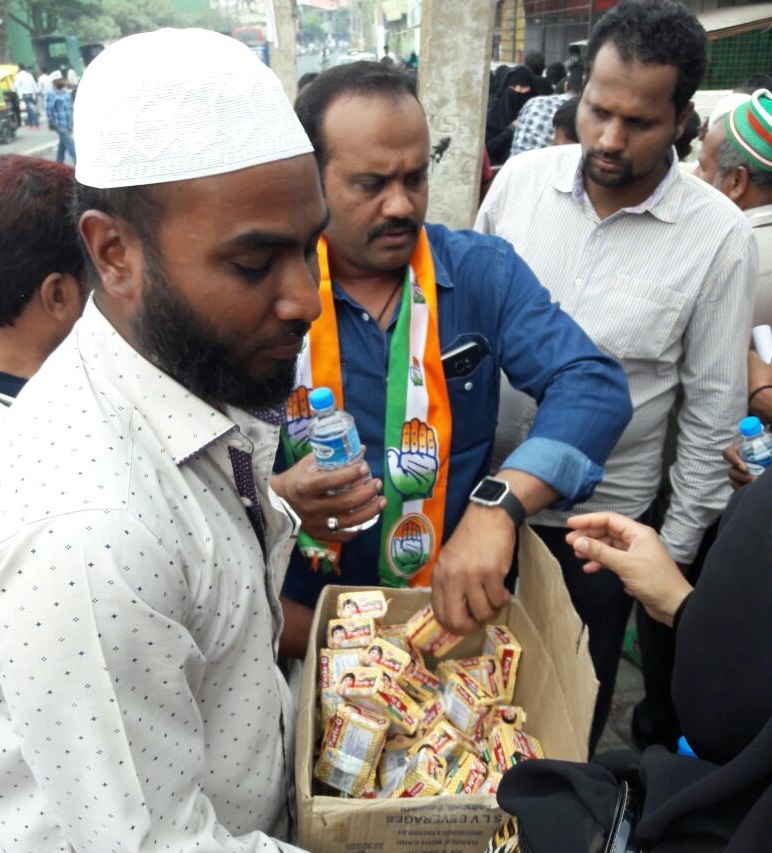
In another image, Kaleem Pasha can also be seen wearing Congress party shawl.

Bengaluru police files FIR in riots case

Meanwhile, the Bengaluru police have filed multiple cases against the 17 main accused in connection with the August 11 violence, which includes Congress leader Kaleem Pasha and also SDPI leader Muzammil Pasha.

In another FIR, the Bengaluru Police have booked five people in connection with the riots in the city that was unleashed on Tuesday evening. Reportedly, the five people had led a mob of 200-300 Islamists during the Bengaluru riots, called for ‘hacking the cops to death’.

The FIR states that these Islamists who were armed with machetes, stones, rods and other weapons allegedly raised slogans of “kill the cops and finish them” as they ransacked KG Halli and DJ Halli police stations on the night of August 11. 

Bengaluru riots: A pre-planned attack by Islamists on police personnel

Three people were killed and more than 60 police personnel were injured in the stone-pelting and the subsequent riots unleashed by the irate Muslim mobs. At least 10 vehicles, including Innovas of two DCPs, were damaged in front of the stations. The mob also set fire to the vehicles in front of the DJ Halli police station.

During the pre-planned attack, the Muslim mob, carrying petrol bombs and other weapons, also barged into the nearby police quarters and attacked the premises. The Muslim mob was seen raising Islamic slogans like ‘Allah-hu-Akbar’ and ‘Nara-e-Taqbeer’ outside the police station.

Meanwhile, on Wednesday, the Karnataka Home Minister Basavaraj Bommai said that a district magistrate will hold an inquiry into mob violence in Bengaluru and also informed that so far 146 people have been arrested.

‘Temples are spreading COVID-19’: 5 reasons why that is untrue and mere propaganda, driven by Leftists and Islamists

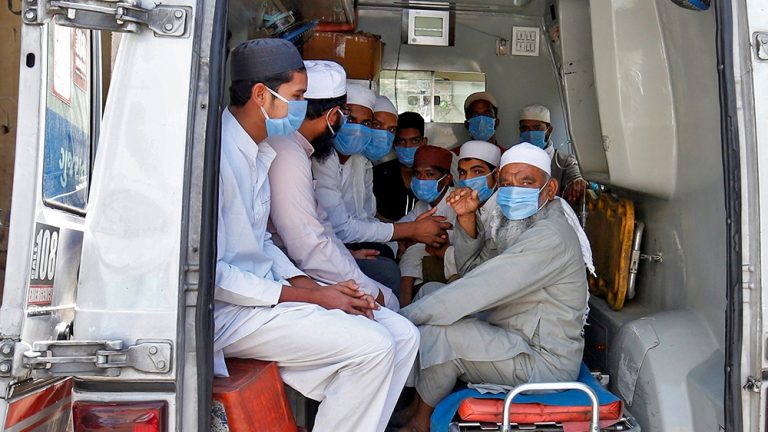
In a frightening flashback to March 2020, we remember the Left and Islamists justifying the Tablighi Jamaat incident, which had led to over 30% of Coronavirus infections in the country at that time (both directly and indirectly). The Left argues that religious gatherings were permitted at that time, and there hadn’t been any notification from Delhi Police against the gathering (which has already been disproved, with a video of a Delhi Police officer requesting Jamaat authorities to cancel the gathering).

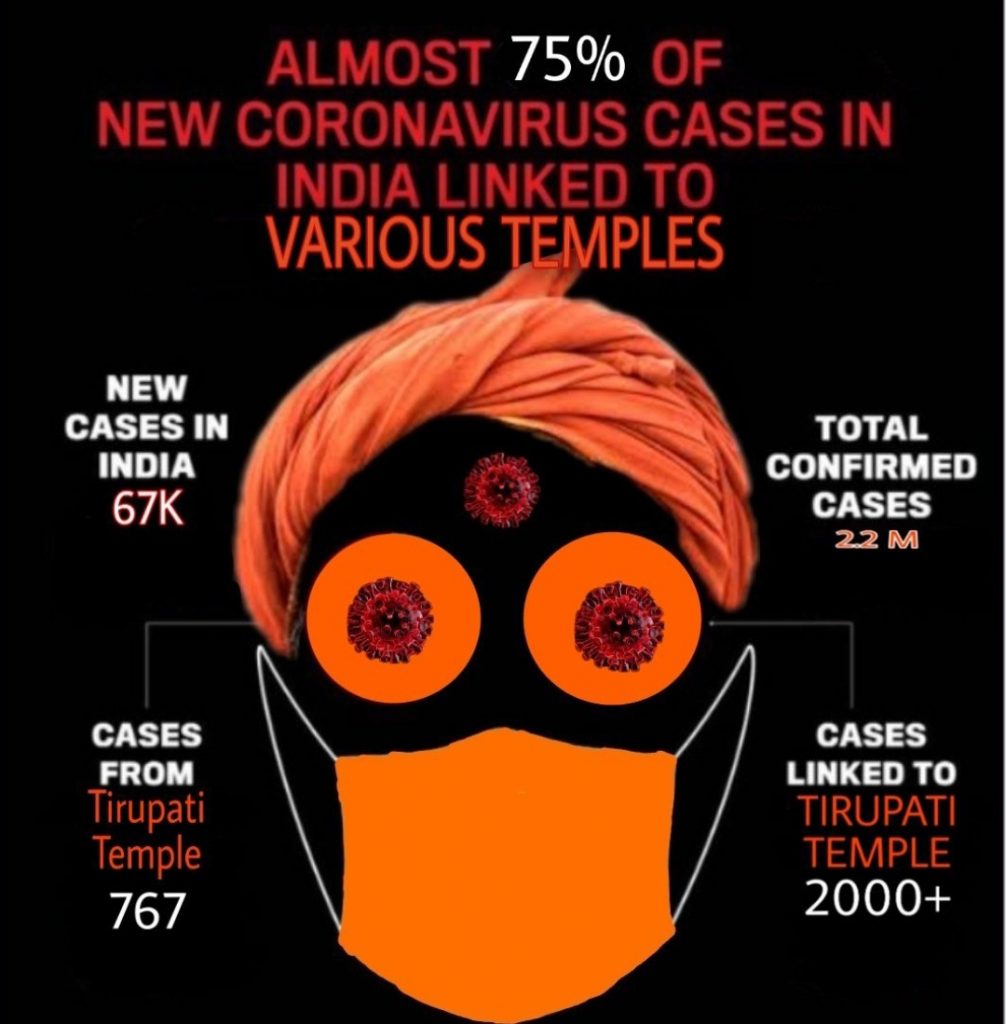
Coming back to August 2020, the same Left-liberals and Islamists have started to trend “#TirupatiVirus” on Twitter, claiming that 75% of India’s COVID-19 cases are linked to temples. The infographic which shows this data is claimed to be an “unofficial infographic” by the India Today news channel.

The image doing the rounds on social media

While the Left ecosystem labelled everyone who criticised the Jamaat as “Islamophobic” in early 2020, they seem to be comfortable calling the outbreaks of the Coronavirus in Tirupati as “Tirupati Virus”, in an attempt to blame the virus outbreak on Hindus.

Though the blatant hypocrisy and double standards of the Leftist ecosystem are very apparent in this case, the misinformation spread by them raises concerns. There are several holes in their claims which demolish their attempts to demonise Hindus. Here are 5 such reasons:

1. No credible source to prove the claim

At the time of writing, there has been no evidence to prove that the rise of Coronavirus cases in the country are linked to temples. The source from which the infographic allegedly gives this estimate is not mentioned.

2. Tirupati devotees did not hide from government authorities

Unlike the attendees of Tablighi Jamaat Markaz in Delhi, Tirupati devotees did not take refuge in their temples to hide from government authorities and in the process, spread the virus further. The devotees readily got themselves tested and quarantined.

3. Tirupati devotees do not claim that the Coronavirus is ‘a punishment for non-believers’

During the Markaz of the Tablighi Jamaat, Maulana Saad claimed that the Coronavirus is a ‘punishment by Allah for non-believers’, and that Muslims ‘need not worry about the virus’. Tirupati devotees had a scientific temper and co-operated with the authorities and doctors.

4. Tirupati devotees did not misbehave with healthcare workers

Tirupati devotees at no point of the time resisted treatment from healthcare workers and did not harass the frontline warriors of COVID-19. The Tablighi Jamaat attendees had reportedly misbehaved and molested the nurses working in a Kanpur hospital.

5. No foreigner was present in the Tirupati temple procession

The Tablighi Jamaat incident led to a massive outbreak of COVID-19 in the country because of the presence of outsiders in the event, despite guidelines advising them not to do so. Before the Markaz, COVID-19 wasn’t that widespread in the country. However, the Markaz led to a massive outbreak of the virus. The Tirupati temple procession had only domestic pilgrims and no foreign national was present.

There has been a laughable comparison of the two events. The Leftists have yet again managed to expose their own hypocrisy and double standards by blaming temples for a rising number of COVID-19 cases in Tirupati.

Environmental Impact Assessment (EIA) Draft notification 2020 explained: Facts vs allegations of harming the environment

Congress Party and a lot of non-governmental organisations (NGOs), especially from Tamil Nadu, are criticising the draft Environmental Impact Assessment (EIA) 2020, issued by Narendra Modi Government, saying that it will harm the environment.

In the month of March 2020, Ministry Of Environment, Forest and Climate change had proposed certain amendments which are incremental to the EIA 2006 which was issued on 14 September 2006, in the super-session of EIA 1994. The Notification was issued under relevant provisions of the Environment (Protection) Act, 1986.

What is Environmental Impact Assessment (EIA)?

EIA is a management tool to minimize adverse impacts of developmental projects on the environment and to achieve sustainable development through timely, adequate, corrective and protective mitigation measures. In a layman’s words EIA, is a process to evaluate the environmental impact of a proposed project (be it railways, bridge, roads, buildings). A decision-making tool whereby people’s views are taken into consideration for granting approval to any developmental project or activity.

History of EIA in India

The Indian experience with Environmental Impact Assessment began over 20 years back. It started in 1976-77 when the Planning Commission asked the Department of Science and Technology to examine the river-valley projects from an environmental angle. On 27 January 1994, the then Union Ministry of Environment and Forests, under the Environmental (Protection) Act 1986, promulgated an EIA notification making Environmental Clearance (EC) mandatory for expansion or modernisation of any activity or for setting up new projects.

The Ministry of Environment, Forests and Climate Change (MoEFCC) notified new EIA legislation in September 2006. The notification makes it mandatory for various projects such as mining, thermal power plants, river valley, infrastructure (road, highway, ports, harbours and airports) and industries including very small electroplating or foundry units to get environment clearance.

Changes in 2006 to Environment Protection Act, 1986

The Act was amended in 2006 making the EIA report mandatory for mining, thermal power projects, river valley projects, infrastructure development and electroplating and foundry units. The 2006 amendment also put the onus of clearing the projects on the State government. Till then, it was the responsibility of the Union government.

Environment Impact Assessment Notification of 2006 has decentralized the environmental clearance projects by categorizing the developmental projects in two categories, i.e., Category A (national level appraisal) and Category B (state-level appraisal).

Read- Govt of India bans Greta Thunberg ‘inspired’ Fridays For Future website after they spam Environment Minister’s mailbox

Category A projects are appraised at the national level by Impact Assessment Agency (IAA) and the Expert Appraisal Committee (EAC) and Category B projects are appraised at the state level.

State Level Environment Impact Assessment Authority (SEIAA) and State Level Expert Appraisal Committee (SEAC) are constituted to provide clearance to Category B process. ‘B’ was further categorised into B1, which required an EIA report, and ‘B2’, that does not require such a report.

What was the Need For The 2020 Draft Notification?

The Hon’ble High Court of Jharkhand through its order dated 28 November, 2014 ruled that the proposal for environment clearance must be examined on its merits, independent of any proposed action for alleged violation of the environmental laws. The Notification clearly provides that cost of remedial measures would be imposed on the violators seeking environmental clearance after an assessment of the damage caused to the environment.

National Green Tribunal (NGT) ruling in 2018

How do the effects of sensitive environmental issues emerge from natural and man-made causes led the NGT to pronounce various directions. The NGT also emphasised on the priority areas regarding the environment that can be strengthened with appropriate environmental monitoring mechanisms.

The Major Change: Post Facto Approval

One of the major changes, which is misinterpreted by those opposing the EIA 2020 is the Post Facto Approval. It can be seen that the opposition argues against the EIA that ANY project can begin operation without environment clearance and then seek Post-Facto Approval. The fact is that the post-facto approval will apply only for those projects that are currently in operation without which have not been given a green signal with respect to environment clearance. No new project can seek post-facto approval. Further, the exemption of Environment Clearance is on specific projects and not all. Here is an Excerpt from the Draft EIA 2020 Section 4.

Requirement of Prior Environment Clearance or Prior Environment Permission:-
(1) New projects or activities including expansion or modernization of project or activities listed in the schedule under Category ‘A’; Category ‘B1’; and Category ‘B2’ that are required to be placed before Appraisal Committee as specified in the Schedule, shall require Prior Environment Clearance from the concerned Regulatory Authority before start of any construction work or installation or establishment or excavation or modernization, whichever is earlier, on site or before expanding the production and / or project area beyond the limit specified in the prior-EC or prior-EP, as the case may be, granted earlier.

(2) New projects or activities including expansion or modernization of project or activities listed in the schedule under Category ‘B2’ that are not required to be placed before Appraisal Committee as specified in the Schedule, shall require Prior Environment Permission from the concerned Regulatory Authority before start of any construction work or installation or establishment or excavation or modernization, whichever is earlier, on site or before expanding the production and / or project area beyond the limit specified in the prior-EC or prior-EP, as the case may be, granted earlier.

(3) It is, however, clarified that ‘construction work’ for the purpose of this notification shall not include securing the land by fencing or compound wall; temporary shed for security guard(s); levelling of the land without any tree felling; geotechnical investigations if any required for the project

In fact under the earlier EIA 2006, any “Category B2” projects did not require an Environment Impact report. But the EIA 2020 also requires few of the Category B2 projects require Prior Environment Clearance process to be placed before Appraisal Committee.

Further, the post-facto approval are only for 40 categories of projects which are declared as non-mining by the State governments, solar thermal power plants, and units inside approved special economic zones or notified industrial clusters. For example, extraction of ordinary clay or sand by manual mining, by the Kumhars (Potter) to prepare earthen pots, lamp, toys, etc. as per their customs, extraction of ordinary clay or sand by manual mining, by earthen tile makers who prepare earthen tiles, removal of sand deposits on agricultural field after flood by farmers, customary extraction of sand and ordinary earth from sources situated in Gram Panchayat for personal use or community work in the village etc. Refer to the link [PDF] for all the categories.

Further, the EIA clearly states that ANY NEW PROJECT, will require the permission for operations It gives exemption to certain B2 projects which are exempted to be placed for appraisal committee but still required Prior Permission to operate. Refer the above excerpt

Approval for infrastructure projects

Opponents of the draft argue that no environment clearance is required for infrastructure projects and thus roads can be constructed taking away lands of poor farmers.

However, EIA 2020 only speaks of those projects concerning National Defence and Security or Involving strategic considerations NOT all infrastructure projects. The draft also exempts industries of “strategic importance” from getting environment clearance. This is in line with India’s defence requirements.

Truth About Exemptions To Public Hearings

As per the opposition proposed legislation exempts public hearing. According to the draft notification, all projects require public hearings. The only exemptions are for things such as modernisation of irrigation systems, projects under notified industrial areas, projects that don’t have an environmental impact and those of national defence importance.

Below is an excerpt from the draft EIA 2020 on public hearing:

Public Consultation
The public consultation shall ordinarily have two components comprising of:
a. A public hearing at the site or in its close proximity, district wise in case of the project area located in more than one district, to be carried out in the manner prescribed in the notification, for ascertaining concerns of local affected persons;
b. Inviting responses in writing from other concerned persons having a plausible stake in the environmental aspects of the project;
c. In addition, if required, based on the nature of project, public consultation through any other appropriate mode may be recommended by the Appraisal Committee, or the Regulatory Authority, on case to case basis;

(1) However, the Regulatory Authority may decide on the feasibility and requirement of Public Hearing and/or consultation in the case of defence projects being considered
(2) All Category ‘A’ and Category “B1” projects of new or expansion proposals or modernization with capacity increase more than 50 percent shall undertake Public Consultation.

Time cut in Public hearing:

The cut in the time given for public consultations is very much fair as this would reduce the manoeuvring by anti-social elements and vested interests and three months is sufficient time for the hearing.

There have been several amendments issued to the EIA Notification, 2006, from time to time, for streamlining the process, decentralization and implementation of the directions of Courts and National Green Tribunal. Though the EIA Notification, 2006 has helped in realizing necessary environmental safeguards by assessing environment impacts due to the proposed projects, that require Prior Environment Clearance at the planning stage itself, the Central Government seeks to make the process more transparent and expedient through implementation of online system, further delegations, rationalization, standardization of the process, etc.

Draft EIA 2020 is against corruption. The public hearing for projects is a very ugly process in reality. There are deliberate reasons to provoke Locals to obstruct and delay the project, who when bribed, allow the project in their locality.